

Beginners Guide to Setting Up Your First Aquarium
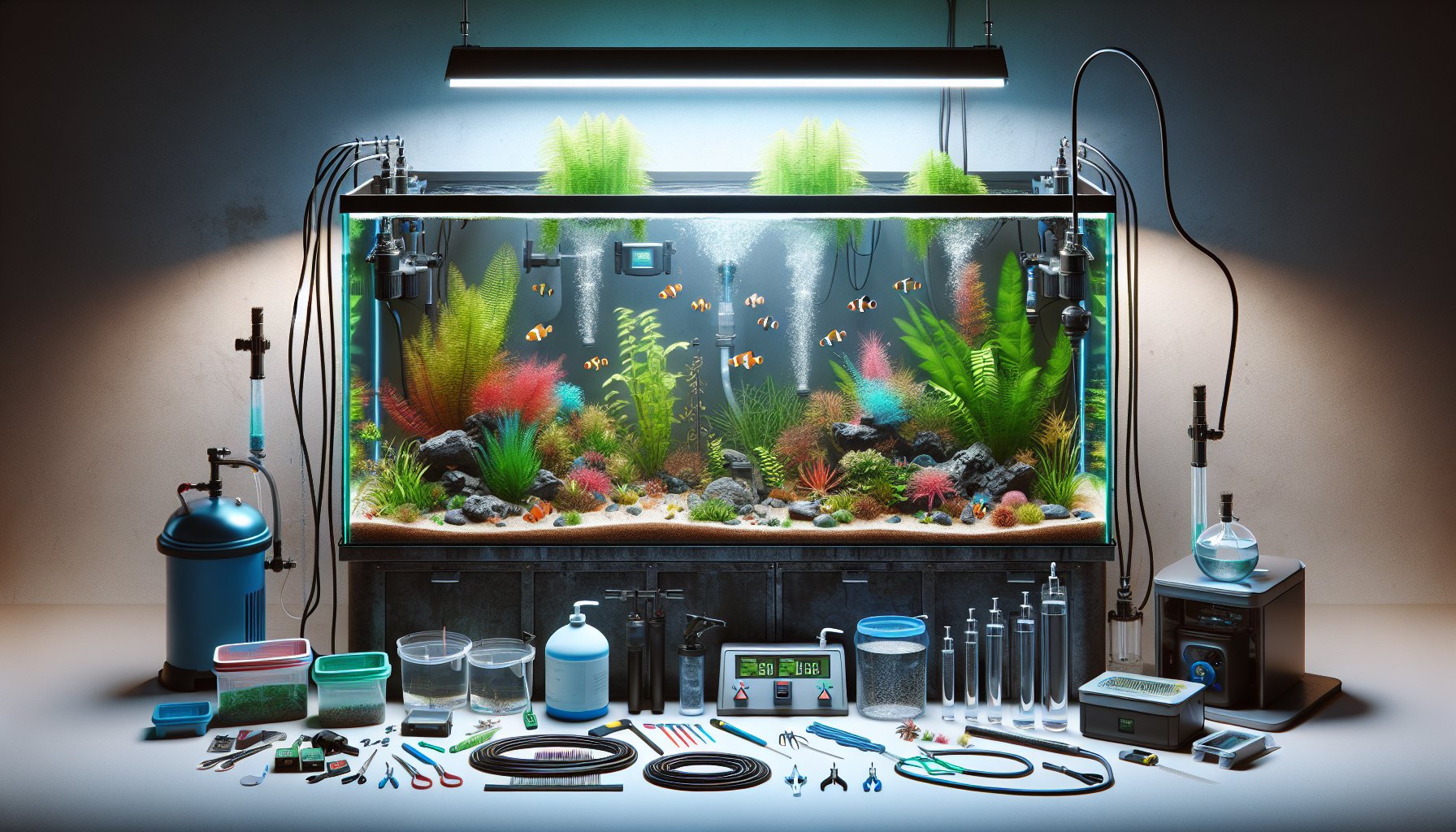
Quick Summary
A friendly walk-through of everything a new aquarist needs to get started, from choosing tank size and equipment to adding water and decorations. This guide focuses on avoiding common beginner mistakes and building confidence before the first fish ever goes in.
Key takeaways
- Start with a tank of 20 gallons or more if you can-bigger tanks are more stable and forgive small mistakes.
- Set up the filter and heater first, then run the tank for several weeks so it's ready for fish; use a test kit to confirm ammonia and nitrite are at 0 before adding any livestock.
- Use a water conditioner every time you add tap water, and match temperature to avoid shocking fish later.
- Choose a simple layout with safe decorations and thoroughly rinsed gravel or sand; leave open swimming space and make sure nothing has sharp edges.
- Add fish slowly and don't overcrowd-introduce a small number at first and feed lightly to keep water clean.
- Plan for regular upkeep: change 20-30% of the water weekly, and rinse filter media in old tank water (not tap water) to keep it working well.
Setting up your first aquarium is one of those hobbies that looks simple until you're standing in a pet store aisle staring at 40 different bottles of "magic water conditioner." The good news: you don't need fancy gear or secret tricks. You just need a solid plan, a little patience, and a setup that makes life easy for you and the fish.
This guide walks you through the whole first setup-from picking a tank to filling it, decorating it, and getting it ready for fish (without rushing the part that bites most beginners). I'll keep it practical and based on what actually works at home.
1) Start with the right tank (size, shape, and where it goes)
Most beginners accidentally choose a tank that's too small. Tiny tanks swing in temperature and water quality fast, and you end up chasing problems. A slightly bigger tank is usually easier, not harder.
My go-to beginner size
If you've got the space and budget, a 20-gallon long is a sweet spot. For really tight spaces, a 10-gallon can work-just expect a little more maintenance and fewer fish options.
Recommended beginner tank sizes (freshwater)
- 5 gallon: Only for a single betta or a small shrimp/snail tank (not a "community" tank).
- 10 gallon: Good starter size if you're careful with stocking and water changes.
- 20 gallon long: Great for most beginner community fish and forgiving water chemistry swings.
- 29-40 gallon: Even more stable, but heavier and takes more space.
Pick a good spot before you buy anything
A filled aquarium is heavy. Like, "I'm not moving this without draining it" heavy. Choose the spot first, then match your tank size to it. You want a level surface, away from direct sunlight, and close enough to an outlet that you're not running sketchy extension cords.
- Avoid windows (sun = algae + temperature swings).
- Keep it away from heaters/vents (more temperature swings).
- Make sure the floor can handle the weight (especially upstairs).
- Leave room behind the tank for hoses, filter, and your hands.
- Put it somewhere you'll actually enjoy it-if you see it daily, you'll catch problems early.
About stands and furniture
A tank needs full support across the entire bottom (unless it's a rimmed tank designed otherwise). Random dressers and "looks sturdy" tables can twist or sag over time. Use a real aquarium stand or something that's genuinely built for the load.
2) The basic gear you actually need (and what you can skip)
You can keep this simple. The core is: a filter, a heater (for most tropical fish), a light, a thermometer, and a way to test water. Everything else is either convenience or a rabbit hole.
Filter: your tank's engine
Get a filter rated for a bit bigger than your tank size. Ratings are optimistic. I like sponge filters for simplicity (especially for shrimp and gentle fish) and hang-on-back (HOB) filters for easy maintenance.
- Sponge filter: cheap, gentle flow, great biological filtration; needs an air pump.
- HOB filter: easy to service; watch intake strength with small fish/shrimp.
- Canister filter: awesome but overkill for most first tanks (and pricier).
Don't replace filter media on a schedule
A lot of beginner headaches come from tossing the filter cartridge every month. That's where your beneficial bacteria live. Rinse sponges/media in old tank water and reuse it. Replace only when it's literally falling apart.
Heater and thermometer
If you're keeping tropical fish (most community fish, bettas, etc.), you'll want a heater. Pick a reliable brand, and always use a thermometer-heaters fail more often than people think (sometimes "on," sometimes "off").
- Rule of thumb: 3-5 watts per gallon for typical indoor rooms.
- Place the heater near filter flow so warm water circulates.
- Use a simple stick-on or glass thermometer to verify temps.
Light (and don't overdo it)
If you're doing a basic fish-only or low-tech planted tank, you don't need stadium lighting. Too much light + a new tank usually means algae. Aim for a light with a timer so you're not guessing every day.
Easy lighting schedule
Start at 6-8 hours a day. If algae shows up fast, reduce the hours before you buy a bunch of algae "fix" bottles.
Water conditioner and test kit
If your water has chlorine or chloramine (most city tap water), you need a conditioner. For testing, grab a liquid test kit if you can-it's more consistent than strips and lasts a long time.
- Water conditioner (dechlorinator): non-negotiable for tap water.
- Liquid test kit: ammonia, nitrite, nitrate, pH.
- Optional but handy: a GH/KH test if your water is very hard/soft or you want shrimp.
Stuff that makes life easier (optional, but I love it)
- Gravel vacuum/siphon: simplifies water changes significantly.
- Bucket used only for the aquarium: avoids soap/cleaner residues.
- API-style ammonia alert badge: not a replacement for testing, but a nice extra signal.
- Power strip with drip loops: keeps cords neat and safer.
- Background film: hides cords and makes fish colors pop.
3) Substrate and decorations: make it fish-friendly (and easy to clean)
Your choices here affect maintenance and the fish's comfort more than people expect. The best setup is the one you can clean without tearing the whole tank apart.
Gravel vs sand vs planted substrates
- Gravel: forgiving, easy to vacuum, great for most community tanks.
- Sand: great for bottom-dwellers (corys, loaches), but you'll vacuum differently (hover above it).
- Planted soil/substrate: great for plants, can be messy at first, and often benefits from a cap of sand/gravel.
How much substrate?
Aim for about 2 inches for a basic tank. If you want lots of rooted plants, 2.5-3 inches is easier.
Hardscape: rocks and wood
Wood and rock make the tank look natural fast, plus fish use them as landmarks and hiding spots. Just be picky about what you put in.
- Use aquarium-safe driftwood (it may tint the water with tannins-totally fine, and many fish like it).
- Avoid random backyard branches unless you know the wood type and it's pesticide-free.
- Some rocks raise pH/hardness (like limestone). If your tap is already hard, that can push it too far.
- Check for sharp edges-if it can snag a nylon stocking, it can snag fins.
Decorations and hiding places
Fish relax when they have cover. Even "confident" species behave better with a few caves, plants, or wood to break up sight lines.
Skip the tiny novelty ornaments with pinhole openings
If a fish can squeeze in, it can get stuck. Anything with tight holes or rough seams has caused more rescues than I can count.
4) Live plants (optional, but they help a lot)
You don't need plants to keep fish, but they do make the tank more forgiving. They soak up some waste, give fish cover, and make the whole setup feel "alive." If you're nervous, start with easy plants that don't care if you're still figuring things out.
Easy starter plants that rarely disappoint
- Anubias: tie or glue to wood/rock (don't bury the rhizome).
- Java fern: also attach to wood/rock; tough as nails.
- Cryptocoryne (crypts): plant in substrate; may "melt" then regrow-don't panic.
- Amazon sword: bigger plant, likes root tabs in gravel.
- Floaters (frogbit, salvinia): great for nitrate uptake; keep them from blocking all light.
Plant melt isn't always failure
A lot of store-grown plants were raised emersed (above water). They can drop old leaves and grow new underwater leaves after a couple weeks.
5) Step-by-step setup (the part that feels like progress)
Here's a straightforward build order that avoids the usual messes and "why is my water cloudy?" moments.
- Rinse the tank (water only). No soap-ever.
- Level the stand and place the tank (use a foam mat if the tank/stand requires it).
- Rinse substrate until the water runs mostly clear (sand takes patience).
- Add substrate and hardscape (rocks/wood). Push rocks down to the glass so they're stable.
- Add a plate/bowl on the substrate and pour water onto it to avoid blasting a crater.
- Fill halfway, then plant live plants (easier with some water in).
- Install filter and heater (heater stays off until it's submerged and acclimated ~15-30 minutes).
- Fill the rest of the way, add dechlorinator, start filter, then turn on heater.
- Set your light timer (start at 6-8 hours).
- Let everything run and check for leaks, weird noises, and stable temperature.
Cloudy water on day 1-3 is normal
New tanks often get a bacterial bloom or stirred-up dust from substrate. Let the filter run, don't overreact, and avoid dumping clarifiers in unless you really know what's causing the cloudiness.
6) The nitrogen cycle (the beginner mistake that kills fish)
This is the part nobody wants to hear: your tank isn't "ready" just because it has water and a filter running. Fish waste breaks down into ammonia, and ammonia burns gills. You need beneficial bacteria in the filter to convert ammonia → nitrite → nitrate. That build-up period is what people mean by "cycling."
Don't do a "test fish"
Using a hardy fish to "start the tank" is rough on the fish and usually ends in stress, disease, or death. You've got better options now.
Fishless cycling: the simplest safe method
My preferred method is fishless cycling with an ammonia source. It takes a few weeks, but you start your tank with confidence instead of hoping for the best.
- Get a liquid test kit (ammonia, nitrite, nitrate).
- Add a source of ammonia (pure household ammonia with no scents/surfactants, or a commercial aquarium ammonia).
- Aim for a small, measurable dose (commonly around 1-2 ppm to start).
- Test daily or every other day. You'll first see ammonia, then nitrite, then nitrate.
- Keep feeding small amounts of ammonia so bacteria don't starve.
- You're close when the tank can process your ammonia dose to 0 ammonia and 0 nitrite within ~24 hours and you have rising nitrate.
- Do a large water change to bring nitrate down before adding fish.
Cycling speed: what changes it
Warm water, good oxygenation/flow, and seeded media (like a used sponge from a healthy tank) can speed things up. New sterile filters usually take longer.
Quick way to "seed" a new tank
If you have a friend with a healthy aquarium, ask for a piece of their filter sponge/media or some used biomedia. Put it in your filter. That's basically a starter culture. Just don't accept media from a tank with sick fish.
7) Water testing: what you're looking for (without obsessing)
Testing can feel intimidating, but you're really watching a few numbers. During cycling, tests tell you where you are in the process. After the tank is running, tests tell you when maintenance needs to happen.
The big four (and what they mean in plain English)
- Ammonia: should be 0 in an established tank. Any measurable amount is a red flag.
- Nitrite: should be 0 in an established tank. Also a red flag.
- Nitrate: the "end product." Some is normal; too much means more water changes / fewer fish / more plants.
- pH: less about chasing a perfect number and more about stability. Most beginner fish handle a range if it's steady.
Chasing pH causes more harm than a slightly "imperfect" pH
Those pH up/down bottles can make your tank swing all over the place. Pick fish that fit your tap water instead of constantly trying to remake your tap water.
8) Planning your first fish (stocking, compatibility, and patience)
The best first fish are the ones that match your tank size and your tap water, and that you actually like watching. The worst plan is buying whatever looks cool and hoping it'll all "sort itself out."
A few beginner-friendly stocking ideas
These are just examples to show what "reasonable" looks like. Exact numbers depend on tank size, filtration, and how consistent you are with water changes.
- 10 gallon: 1 betta + a snail (or shrimp if the betta allows it), or a small school of nano fish (like ember tetras) with a snail.
- 20 gallon long: a school of tetras/rasboras + a small group of corydoras + a couple snails.
- 29 gallon: a bigger school + corys + a centerpiece fish like a dwarf gourami (if temperament works).
Common beginner traps at the fish store
Goldfish for small tanks, plecos for algae control, and "this fish stays small" without context. Goldfish need big tanks, most plecos get huge, and lots of fish are sold as babies.
Add fish slowly (your filter needs time to adjust)
Even after cycling, don't dump in a full community all at once. Add a small group, wait a week or two while you test, then add the next group. It's way calmer for the fish, and you're less likely to trigger an ammonia/nitrite spike.
9) Bringing fish home: acclimation and first-week routine
The first week sets the tone. Keep things quiet, lights low, and don't overfeed. Most early fish losses come from stress + water quality + overeating.
Simple acclimation that works
- Turn off or dim the tank light.
- Float the bag for 15-20 minutes to match temperature.
- Add a small amount of tank water to the bag every 5 minutes (repeat a few times).
- Net the fish into the tank (avoid pouring store water into your aquarium).
- Leave lights off for a few hours and let them settle.
Drip acclimation?
Drip acclimation is great for shrimp and sensitive fish, but the simple method above works for many common community fish. If you're buying shrimp, look up drip acclimation and take your time.
Feeding: less than you think
Overfeeding is basically a hobby tradition, and it causes cloudy water, algae, and water quality problems fast. Feed small amounts they can finish quickly, and don't stress about skipping a day.
- Start with once a day (or even every other day for the first week).
- If food hits the bottom uneaten, you fed too much.
- Mix food types (flake/pellet + frozen foods) once the tank is stable.
10) Maintenance that doesn't feel like a second job
Aquariums don't need daily work, but they do need consistent small habits. The goal is boring stability, not constant tinkering.
Weekly routine (easy mode)
- Water change: 20-30% is a common baseline for many beginner tanks.
- Gravel vacuum: focus on open areas; don't obsess under every decoration every time.
- Wipe glass: use an algae sponge/magnet (no household sponges).
- Quick check: temperature, filter flow, and a look at fish behavior.
Monthly-ish routine
- Rinse filter sponge/media in a bucket of old tank water (never under hot tap).
- Trim plants and remove dead leaves.
- Check tubing/impellers for gunk if flow has dropped.
Don't "deep clean" everything at once
If you scrub the decor, replace the filter media, and vacuum every inch of substrate in the same day, you can knock your biofilter back. Spread big cleaning tasks out.
11) Common beginner problems (and what I'd do first)
Green algae everywhere
Usually too much light, too long of a photo period, or overfeeding in a young tank.
- Cut light to 6 hours for a couple weeks.
- Feed a bit less and remove uneaten food.
- Add easy plants or floaters to compete for nutrients.
- Scrape glass and do normal water changes-don't panic-buy chemical fixes.
Cloudy white water
Often a bacterial bloom in a new tank, or from overfeeding. Let the filter run, keep up water changes, and check ammonia/nitrite.
If ammonia or nitrite show up with fish in the tank
Do a water change right away, reduce feeding, and test daily until you're back to 0/0. This is where having a conditioner that detoxifies ammonia temporarily can help as a stopgap, but water changes and fixing the cause are the real solution.
Fish gasping at the surface
- Check ammonia/nitrite immediately.
- Increase surface agitation (aim filter output up a bit, add an air stone).
- Confirm temperature isn't too high (warm water holds less oxygen).
Filter flow dropped
Usually a clogged intake sponge, gunked impeller, or packed media. Clean gently in old tank water and you'll usually get flow back.
12) A simple checklist before the first fish goes in
If you want one quick confidence check, this is it.
- Tank is level, running quietly, and leak-free.
- Temperature is stable for a few days (not bouncing day/night).
- Ammonia: 0
- Nitrite: 0
- Nitrate: present (and not sky-high)
- You have dechlorinator, a siphon, and a bucket ready for water changes.
- You've chosen fish that match the tank size and have a plan to add them in stages.
The hobby gets easier after the first month
The early stage is the fussiest because the tank is new and you're learning the rhythms. Once the filter is mature and you've got a routine, it turns into a relaxing habit instead of a constant project.
13) Quick "do this, not that" beginner cheat sheet
- Do: buy a bigger tank if you can. Not that: start with a tiny tank because it looks easier.
- Do: cycle the tank fishless. Not that: add fish on day one.
- Do: reuse and rinse filter media in tank water. Not that: replace cartridges on a schedule.
- Do: start with a light timer and shorter photo period. Not that: blast 12 hours of light and fight algae later.
- Do: pick fish that suit your tap water. Not that: chase pH with bottles.
- Do: feed lightly and watch fish behavior. Not that: feed until they stop eating.
Found this guide helpful? Browse more topics.
Back to Aquarium Guides