

Eheim Aquarium Thermostat Heater (100W)
Adjustable submersible glass aquarium heater with an internal thermostat to keep tank water at a stable set temperature.
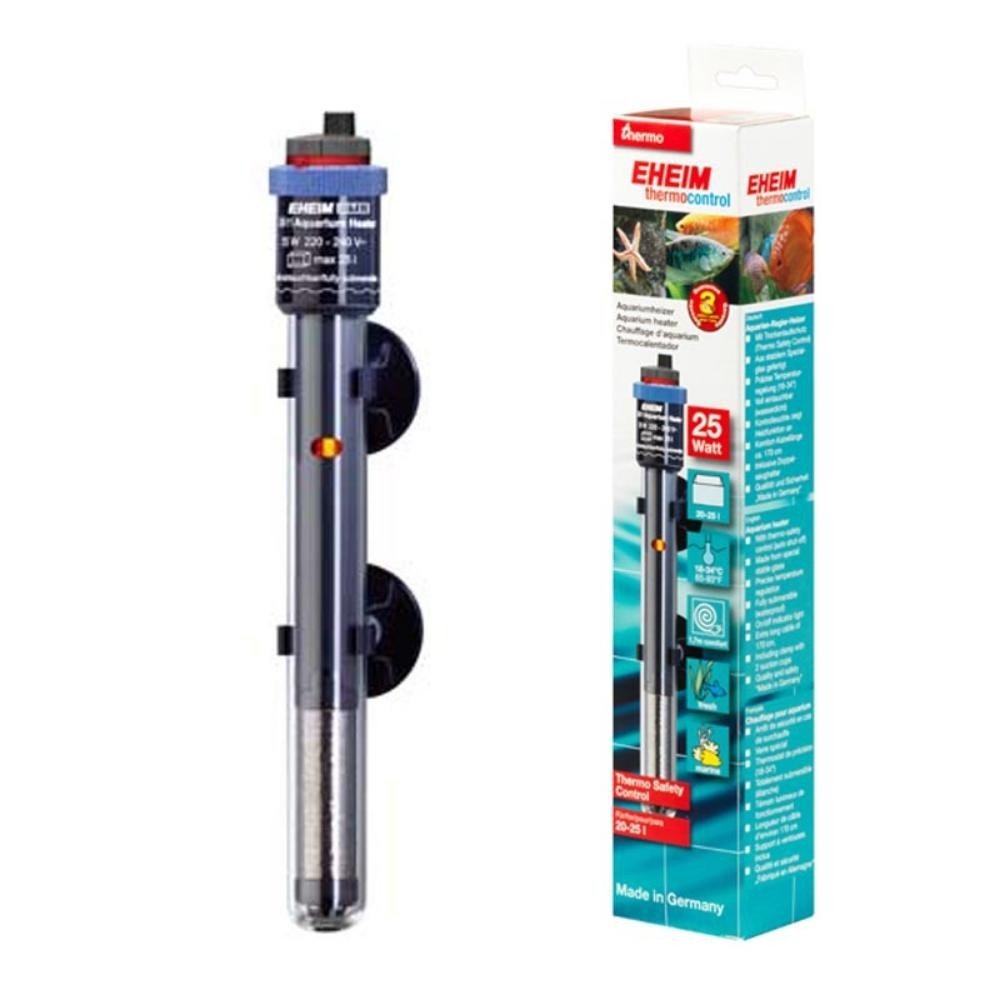
About this product
This is EHEIM's 100W adjustable thermostatic heater (the classic rod-style heater line often sold as Thermocontrol/Jager). It mounts with suction cups, runs fully submersed, and uses a lab-glass jacket to spread heat more evenly while acting as a heat shield. Typical adjustment range is 18-34 C with about +/-0.5 C control accuracy, and it includes a dry-run shutoff (Thermo Safety Control). It is generally sized for roughly 100-150 L (about 25-40 US gallons) freshwater or marine tanks.
Product details
- Category
- Filtration & Water Care
- Brand
- EHEIM
- Model
- thermocontrol 100 (3614010)
- Price (USD)
- $28 - $40
- Price (GBP)
- £35 - £39
- Type
- Product
Overview
The Eheim Aquarium Thermostat Heater (100W) is a fully submersible glass heater with an adjustable dial and a built-in thermostat. You set the temperature you want, drop it in the tank (with decent flow around it), and it cycles on and off to hold that temp.
I have used the 100W size on a smaller community tank, and it has been the classic "set it and forget it" heater for me. Not flashy, but it just sits there quietly doing its job without drama.
Quick sizing reality check
100W is usually right for small to mid-size tanks, but the room temperature matters a lot. If your tank sits in a cold room or near a drafty window, you may need more wattage than you think.
What It Does (And What It Does Not)
This heater warms the water to the set point and maintains it by cycling. It does not actively cool, and it does not fix temperature swings caused by a tiny tank, a cold room, or poor circulation.
In real use, the biggest benefit is stable temperature without fiddling. Once I found the right dial position for my tank, it stayed consistent day to day.
Build Quality and Materials
This is a glass heater with a protective guard and suction cup mounting. The glass feels thick enough that I am not nervous handling it, but it is still glass. If you are the type to clack hardscape around during maintenance, you have to stay aware of where it is.
The adjustment ring/dial feels solid and not wobbly. The markings are usable, but like most heaters, the printed numbers are more of a suggestion than a promise. I treat the dial as a starting point and verify with a separate thermometer.
Glass heater reality
If you do big water changes with the heater exposed to air, unplug it first. Hot glass plus cold air or splashes is how heaters crack.
Performance in Real-World Use
Once the tank was up to temperature, it held steady with small, normal heater swings. I run a separate thermometer (you should too), and I saw a pretty stable line unless the room temperature changed a lot overnight.
The on/off cycling felt predictable. It would click on, warm, then rest. Nothing rapid-fire or weird. That is usually what makes me trust a heater long-term: no constant flickering, no struggling to catch up, no random overshoots.
Recovery after water changes was good for a 100W. If I did a larger water change with slightly cooler water, it would take a bit to climb back up, but it never felt like it was running at the edge of its ability in a properly sized tank.
Use flow to your advantage
Place the heater near filter outflow or where there is steady circulation. You will get more even tank temps and fewer warm/cool pockets.
Setup and Ease of Use
Setup is straightforward: rinse it off, mount it with the suction cups, set the dial to your target temperature, and let it sit submerged for a bit before plugging it in. After that, you just watch your thermometer over the next day and fine-tune the dial if needed.
- Pick a spot with decent flow and a place you will not smack with a gravel vac.
- Mount it fully submerged and level or vertical (whatever your tank layout allows), with the dial accessible.
- Let it sit in the water 15-30 minutes before powering it on (helps avoid thermal shock).
- Set the dial, then confirm the actual tank temp with a separate thermometer over 24 hours.
- Make tiny adjustments, wait, and re-check. Chasing the number every hour just makes you crazy.
The only "annoying" part is the same thing with most adjustable heaters: the dial setting is not perfectly calibrated out of the box. Once you learn where your tank lands (for example, my dial ended up slightly above the number I wanted), it is simple.
Who This Heater Is Best Suited For
This is a good fit if you want a reliable, no-nonsense heater for a small tropical community tank, a shrimp tank that needs stable temps, or a quarantine setup where you want dependable heat without fuss.
- Small community tanks with steady indoor room temps
- Shrimp and planted tanks where stability matters more than rapid heat-up
- Quarantine/hospital tanks (especially if you already trust Eheim gear)
- Hobbyists who prefer simple hardware over app features
If you keep fish that really hate temp swings (discus, some wild-caught species) or your fish room gets cold, I would still use it, but I would pair it with a heater controller for extra peace of mind.
Pros and Cons
Pros
- Stable temperature once dialed in
- Simple to set up and operate
- Predictable cycling, no weird behavior in day-to-day use
- Solid feel for a glass heater
Cons
- Glass body means you need to be careful during maintenance
- Dial markings are not perfectly accurate (common, but still true)
- 100W can be underpowered in cold rooms or larger tanks
- Suction cups are fine, but like all suction cups, they can get less grippy over time
How It Compares to Alternatives
Compared to cheap no-name heaters, this feels more consistent and less "mystery box." The budget heaters I have tried often work... until they do not, and the cycling can be erratic. With the Eheim, I have seen more predictable behavior, which matters more to me than a fancy display.
Compared to higher-end heaters with external controllers or built-in digital readouts, the Eheim is simpler and less feature-heavy. You do not get a precise temperature readout on the heater itself, and you will still be relying on a separate thermometer to confirm where you landed.
Compared to plastic-shelled or titanium heaters, the big tradeoff is durability versus simplicity. Titanium can take more knocks and is great for rough maintenance or big cichlid tanks. Glass is fine for most calm community setups, but you have to treat it like glass.
My preferred upgrade path
If you want extra safety without changing heaters, add an external temperature controller. It can cut power if a heater ever sticks on, and it also smooths out some room-temperature swings.
Value for Money
It usually costs more than the bargain heaters, but for me it has been worth paying a bit extra for consistent performance and fewer worries. A heater is one of those pieces of gear where failure can ruin your week fast, so I care more about trust than saving a few bucks.
If your budget is tight, you can absolutely run a cheaper heater and be fine, but I would at least pair it with a controller or keep a very close eye on temperature. With the Eheim 100W, I still monitor, but I am not constantly second-guessing it.
Practical Tips From Use
- Use a separate thermometer and treat the heater dial as a baseline, not gospel.
- Unplug the heater during water changes and wait a few minutes before plugging it back in.
- Put it where water moves. Dead spots make heaters look "inaccurate" because the tank is uneven.
- If the room gets cold at night, consider bumping wattage or adding a controller rather than cranking the dial.
Bottom Line
The Eheim Aquarium Thermostat Heater (100W) has been a steady, trustworthy heater in my day-to-day fishkeeping. It is not trying to impress you with features. It just keeps the water warm and stable once you dial it in. If you want a simple adjustable heater from a brand that tends to behave predictably, this one has treated me well.
More filtration & water care
Browse more filtration & water care options or read our equipment guides.