

Day's catfish
Nedystoma dayi
Day's catfish features a sleek, slender body with a striking dark brown to olive-green coloration and prominent barbels.
This page includes AI-generated images. Why am I seeing AI images?
About the Day's catfish
Nedystoma dayi is a small ariid catfish from turbid freshwater rivers in central-southern New Guinea. Its whole vibe is lurking along the bottom in murky water and picking off aquatic insect larvae, so its look and lifestyle are very much a "river-bottom" fish rather than a showy planted-tank centerpiece.
Also known as
Quick Facts
Size
20 cm (7.9 in) SL
Temperament
Semi-aggressive
Difficulty
Advanced
Min Tank Size
55 gallons
Lifespan
5-10 years
Origin
Oceania (New Guinea)
Diet
Carnivore/insectivore - insect larvae, worms, shrimp, meaty frozen foods
Water Parameters
24-30°C
6.5-8
5-20 dGH
Need a heater for this species?
This species needs 24-30°C in a 55 gallon tank. Use our heater calculator to find the right wattage.
Calculate heater sizeCare Notes
- Give it a big footprint tank (4 ft long minimum) with sand, driftwood, and tight caves - they wedge themselves in and will freak out in open space.
- Keep flow and oxygen high like a river tank; if the surface is still at night, expect stress and lazy breathing.
- Aim around neutral water (about pH 6.8-7.5) and mid-20s C (24-28 C) with low ammonia/nitrite; they do not forgive dirty water or big swings.
- Feed after lights-out: sinking carnivore pellets plus chunks of shrimp, fish, earthworms; skip feeder fish and do not live on bloodworms alone.
- They are peaceful but predatory - anything that fits in the mouth becomes food, so avoid small tetras, livebearer fry, and tiny bottom fish.
- Pick tankmates that are too big to swallow and not nippy (larger barbs, robust danios, bigger loaches); fin-nippers will harass them when they are resting.
- Watch for barbel wear and belly scrapes from sharp gravel - if whiskers start shrinking, switch to sand and up your water changes.
- Breeding in home tanks is rare; if you ever see a fat female and a male guarding a cave, keep the tank dim and hands-off because they spook and abandon easily.
Compatibility
Good Tankmates
- Medium-to-large barbs that can take a little attitude - stuff like tinfoil barbs or other bigger, fast barbs. They are quick enough to stay out of the catfish's way and not get bullied nonstop.
- Sturdy midwater fish like larger rainbowfish (Boesemani, turquoise, etc.). They are active, not delicate, and they do not usually pick at the catfish.
- Bigger gouramis (three-spot/blue/gold, snakeskin, pearl if it is not getting pushed around). They tend to hold their own and stay up in the water column while the catfish does its prowling.
- Robust cichlids that are not murder machines - think larger, steadier types like severums or keyhole-type setups where everyone has space. Works best in a roomy tank with lots of wood and sight breaks.
- Other tough, similarly sized bottom fish when the tank is big - like larger loaches (clown loach sized) or a big pleco. Give multiple caves so nobody has to fight over the same spot.
- Fast, medium-large danios or similar zippy schooling fish. They are basically too quick to hassle and too hard to catch, so everyone mostly ignores each other.
Avoid
- Small fish that fit in its mouth - guppies, endlers, small tetras, tiny rasboras. Day's catfish is an opportunistic night hunter and will absolutely turn your nano fish into snacks.
- Slow fish with long fancy fins - bettas, fancy guppies, long-fin angels. Even if it is not trying to be a jerk, the catfish can nip or just bulldoze them, and the slow ones get stressed.
- Other bottom-territory bruisers in tight quarters - smaller aggressive catfish, some big predatory cichlids, or anything that wants the same cave. You will see wrestling matches at feeding time and ripped fins.
Where they come from
Day's catfish (Nedystoma dayi) is one of those South Asian river catfish that looks "plain" in photos, then turns into a seriously impressive fish once it settles in and starts cruising at night. They come from warm, moving waters where the bottom is sand, silt, leaf litter, and scattered rocks.
Think rivers and floodplain channels that change with the seasons. That background matters, because this fish tends to do best in a tank that feels like a riverbank, not a bright planted community setup.
Setting up their tank
This is an advanced fish mostly because of size, strength, and mess. They are built like a torpedo and they eat like one too. Give them space to turn, a bottom they can sift, and filtration that can handle big meals.
- Tank size: bigger than you think. I would not bother under 5 ft length, and 6 ft is where it starts feeling comfortable.
- Footprint matters more than height. They use the bottom and midwater, especially after lights out.
- Substrate: sand is my pick. Fine sand lets them root around without wearing down their barbels.
- Hardscape: rounded rocks, driftwood, and a couple of solid caves. They like having a "home base" to wedge into.
- Flow and oxygen: moderate to strong flow plus lots of surface agitation. These fish act way more confident in well-oxygenated water.
- Lighting: keep it subdued. Floating plants or dim LEDs make them show themselves more.
Lids are not optional. A startled Nedystoma can launch, and they are strong enough to shove loose glass tops out of place. Cover gaps around hoses too.
For water numbers, aim for the warm side of tropical freshwater and keep things steady. I have had the best luck with mid-70s to low-80s F and neutral-ish pH. The exact number matters less than stability and clean water.
Use prefilter sponges on intakes. They will investigate everything, and it also saves your canister from turning into a sludge trap after heavy feeding.
What to feed them
They are predators and scavengers. In my tanks they learn routines fast, and they will come out for food once they feel safe. The trick is giving them meaty foods without turning the tank into a nutrient soup.
- Staples: sinking carnivore pellets and quality catfish sticks (something that holds together and does not cloud instantly).
- Frozen: prawns/shrimp, fish fillet, mussel, krill, bloodworms for smaller individuals.
- Live (optional): earthworms are a great conditioning food and usually accepted immediately.
Skip feeder fish. Besides parasite risk, it can lock them into hunting behavior and makes tankmate choices harder.
Feeding schedule: I like a smaller meal most evenings rather than massive dumps of food. If you want a good rhythm, feed after lights go down and keep an eye on leftovers the next morning. If food is still sitting there, you fed too much.
How they behave and who they get along with
Day's catfish is mostly a nighttime bruiser. Not a mindless killer, but absolutely a "if it fits, it disappears" fish. They spend the day tucked under wood or in a cave, then patrol once the room gets quiet.
- Temperament: assertive predator, not a delicate community catfish.
- Activity: crepuscular/nocturnal. Expect more action at dusk and after dark.
- Territory: they will claim a favorite hide. More hides = fewer issues.
Tankmates need to be big enough to not be viewed as food and sturdy enough to handle a bit of chaos at feeding time. I have had the best luck with medium-large, confident fish that occupy midwater and do not sleep on the bottom.
Do not keep them with small fish, small loaches, or bottom sleepers you like. If it rests on the substrate at night and is mouth-sized, it is at risk.
Also keep in mind they can be grabby about food. If you keep slower tankmates, you will end up target-feeding the catfish or the others will get outcompeted.
Breeding tips
Realistically, breeding Nedystoma dayi in a home aquarium is not something you see often. Most fish in the hobby are wild-caught, and spawning likely ties into seasonal changes (big water changes, temperature shifts, and heavy feeding) plus space.
If you want to try anyway, the best "hobbyist approach" is to keep a well-fed group in a very large tank, give them lots of cover, and simulate a rainy season with larger, cooler water changes and increased flow. Just know that even if they spawn, raising fry from a big predatory catfish is a whole project on its own.
If you ever get a confirmed male/female pair or see courtship behavior, document it. Any solid breeding notes on this species are genuinely useful to the hobby.
Common problems to watch for
Most issues I have seen with these come down to three things: stress from a too-bright/too-busy setup, poor water from heavy feeding, and injuries from rough decor or bad netting.
- Barbel wear: usually from sharp gravel or filthy substrate. Switch to sand and step up maintenance.
- Mouth and snout damage: they can spook and slam into glass or rocks. Keep hardscape smooth and give them shaded cover.
- Bloating/constipation: common if you feed lots of dry foods without variety. Mix in shrimp, worms, and smaller meals.
- Ich and skin issues after import: wild fish can arrive stressed. Quarantine, keep oxygen high, and avoid sudden parameter swings.
- Filter clogs and nitrate creep: big meaty foods create a lot of waste. Expect to clean filters and do meaningful water changes.
Use a soft, oversized net or a tub to move them. Getting a spined catfish tangled in a net is a bad time for you and the fish.
If your fish never comes out and seems "invisible" for weeks, that is usually the tank telling you something. Dimming the lights, adding a proper cave, and reducing daytime commotion often flips the switch. Once they feel secure, they get bold fast.
Similar Species
Other freshwater semi-aggressive species you might be interested in.
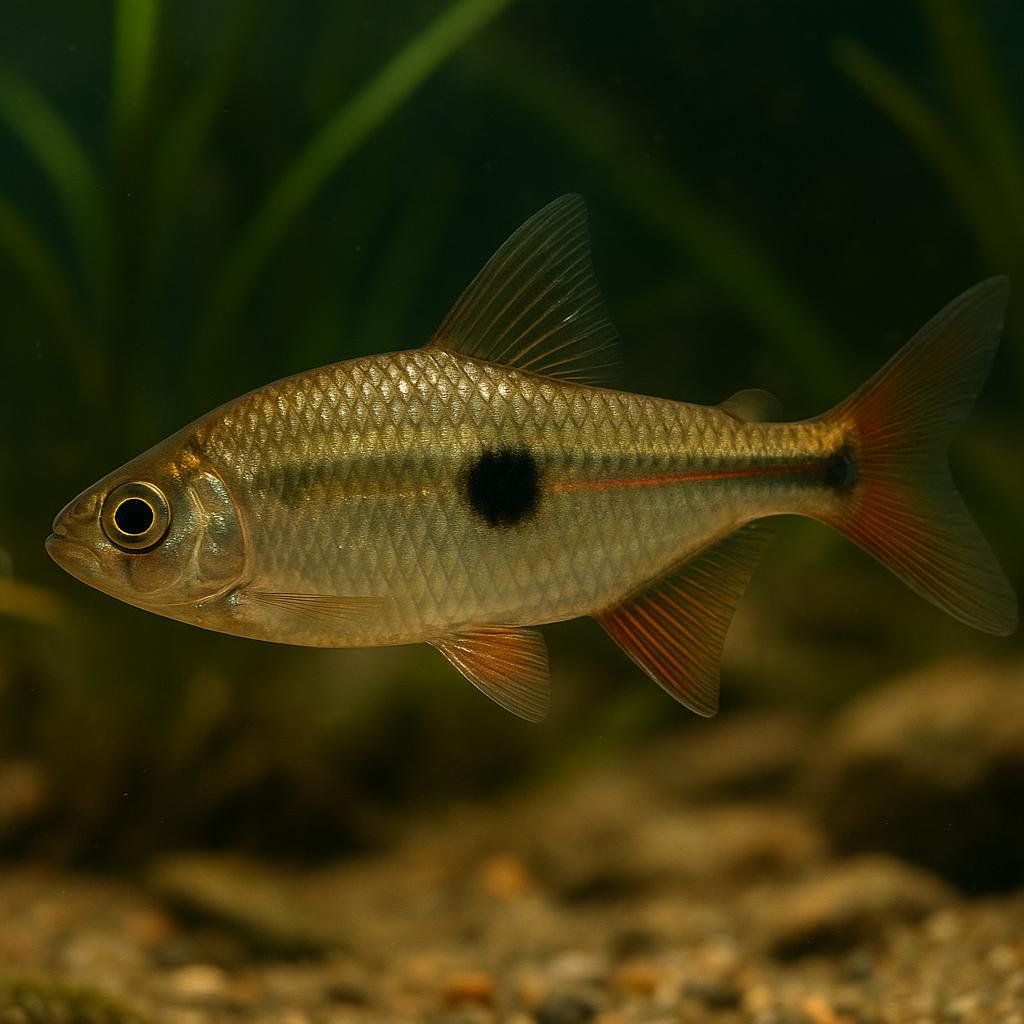
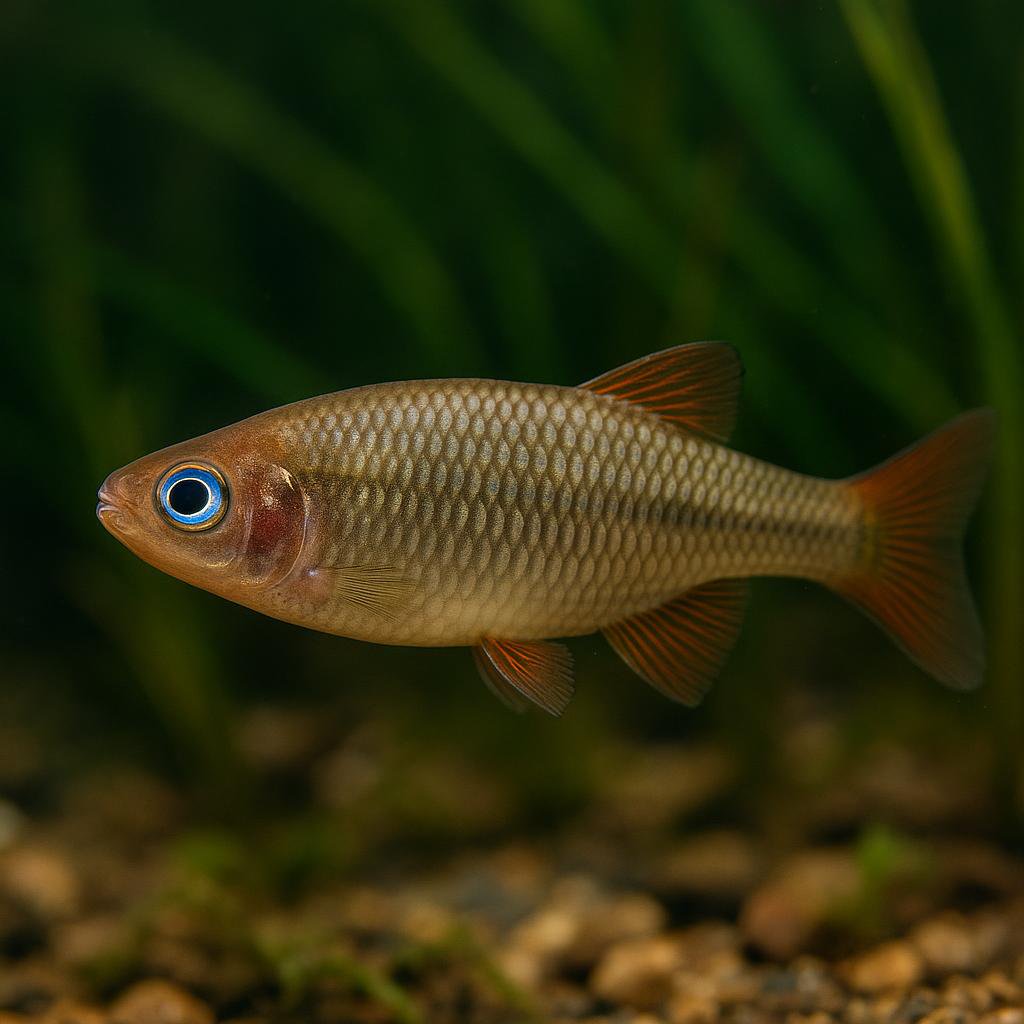
Jupiaba kurua
Small South American characin endemic to the upper rio Curuá (rio Xingu basin, Brazil). Reaches about 8.7 cm SL and inhabits clearwater rivers. Distinguished by dark dots on the bases of many lateral scales and a distinct dark caudal‑peduncle spot. Reported diet indicates omnivory, including aquatic insects, small fishes, and fragments of Podostemaceae and filamentous algae.
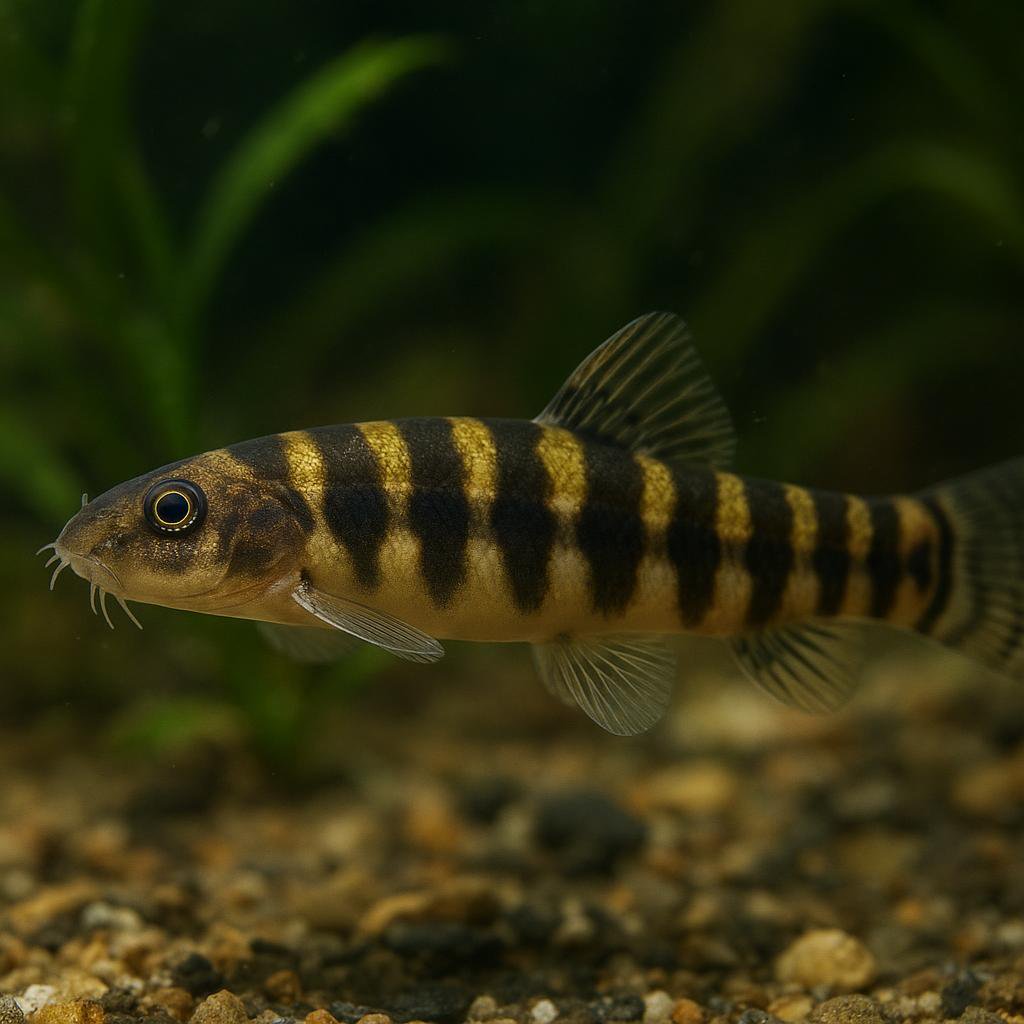
Altipedunculata stone loach
Schistura altipedunculata
Schistura altipedunculata is one of those little stream loaches that wants clean, well-oxygenated water and a bunch of rock nooks to claim as home. It is a bottom-hugger that will spend its day scooting from crevice to crevice, and it tends to get a bit spicy with its own kind if you do not give it enough hiding spots.
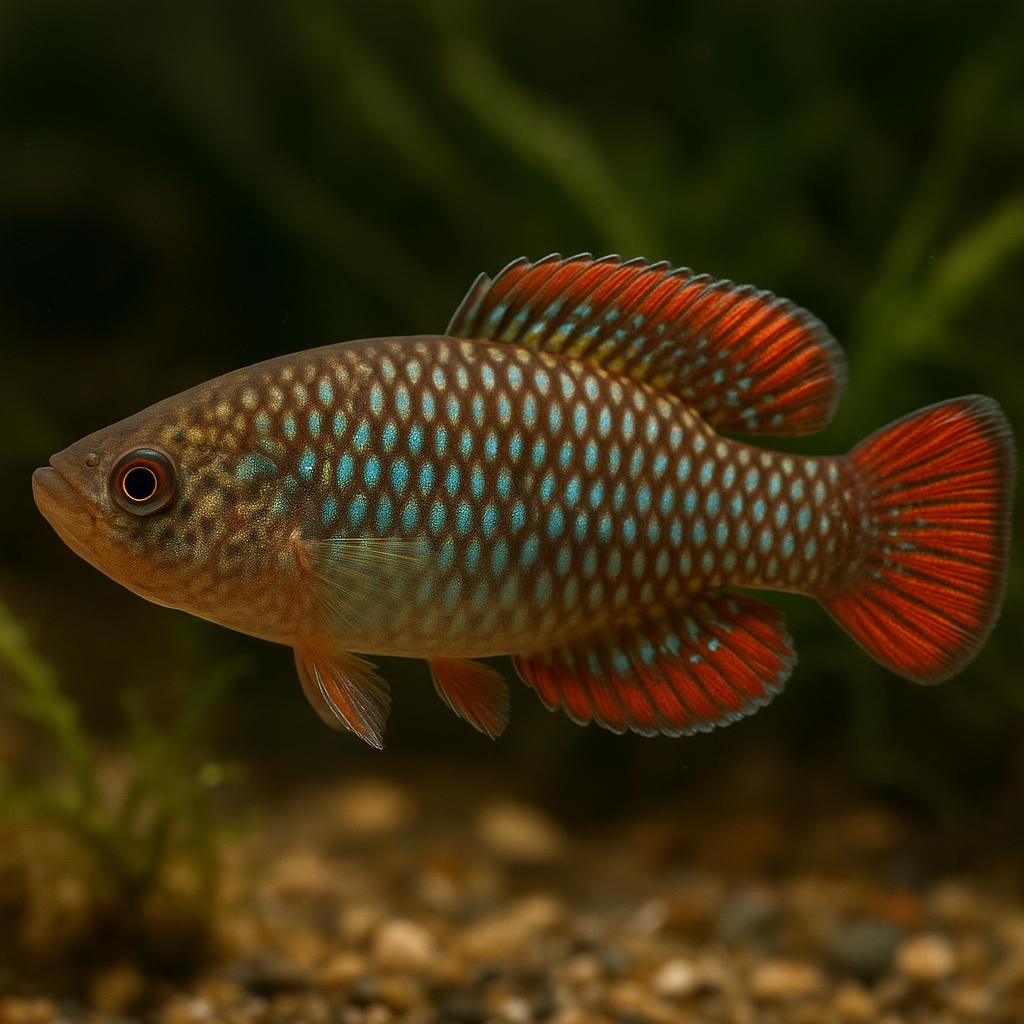
American flagfish
Jordanella floridae
Jordanella floridae is that little Florida native with the red-and-cream striping that really does look like a tiny flag once a male colors up. They graze algae like champs (especially stringy/hair algae), but they have a bit of attitude - give them plants and space so the bossy behavior stays manageable. Bonus: the male guards the eggs and will actively fan them, which is pretty fun to watch.
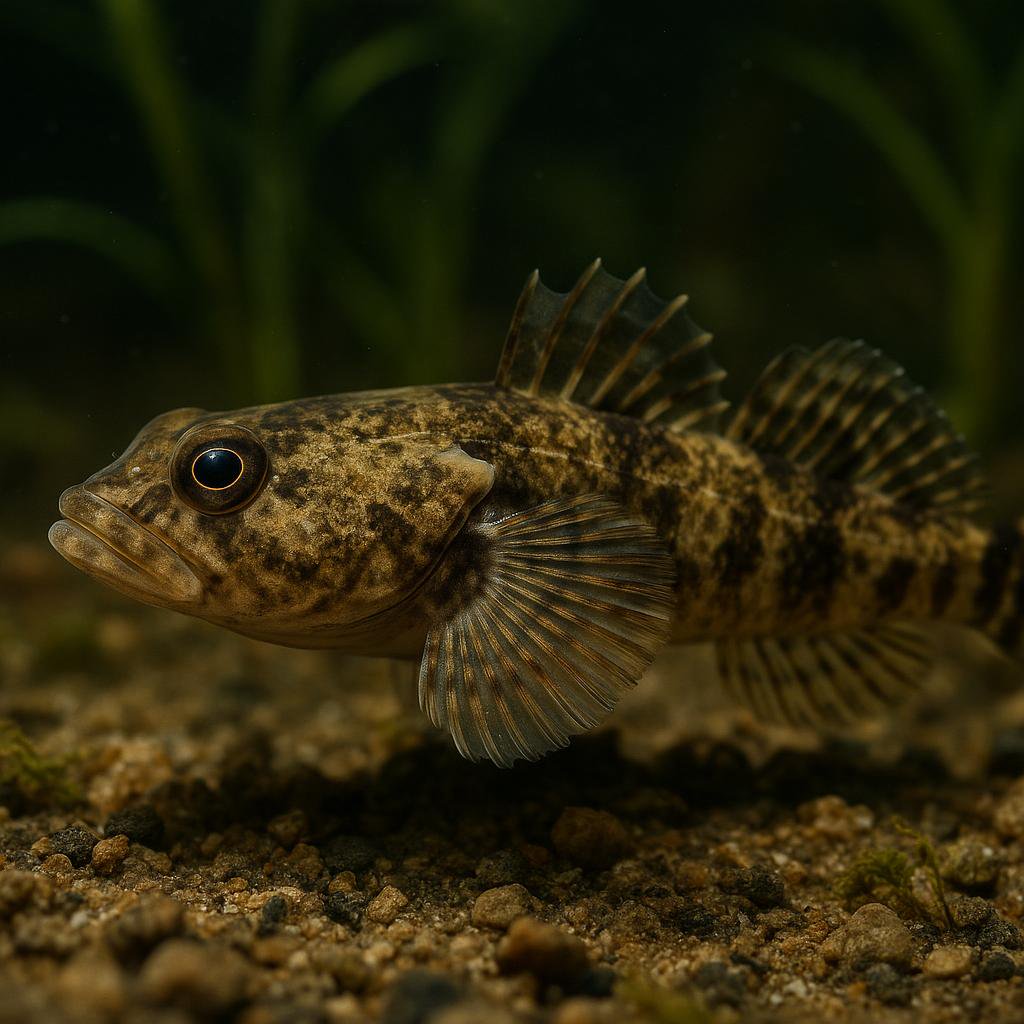
Amur sculpin
Alpinocottus szanaga
This is a little coldwater sculpin from the Amur drainage - a bottom-hugging, rock-and-gravel fish that spends its day wedged under stones and darting out to grab food. Super cool behavior and attitude, but it is absolutely not a warm tropical community fish - it wants chilly, fast, oxygen-rich water and will bicker with other bottom fish.
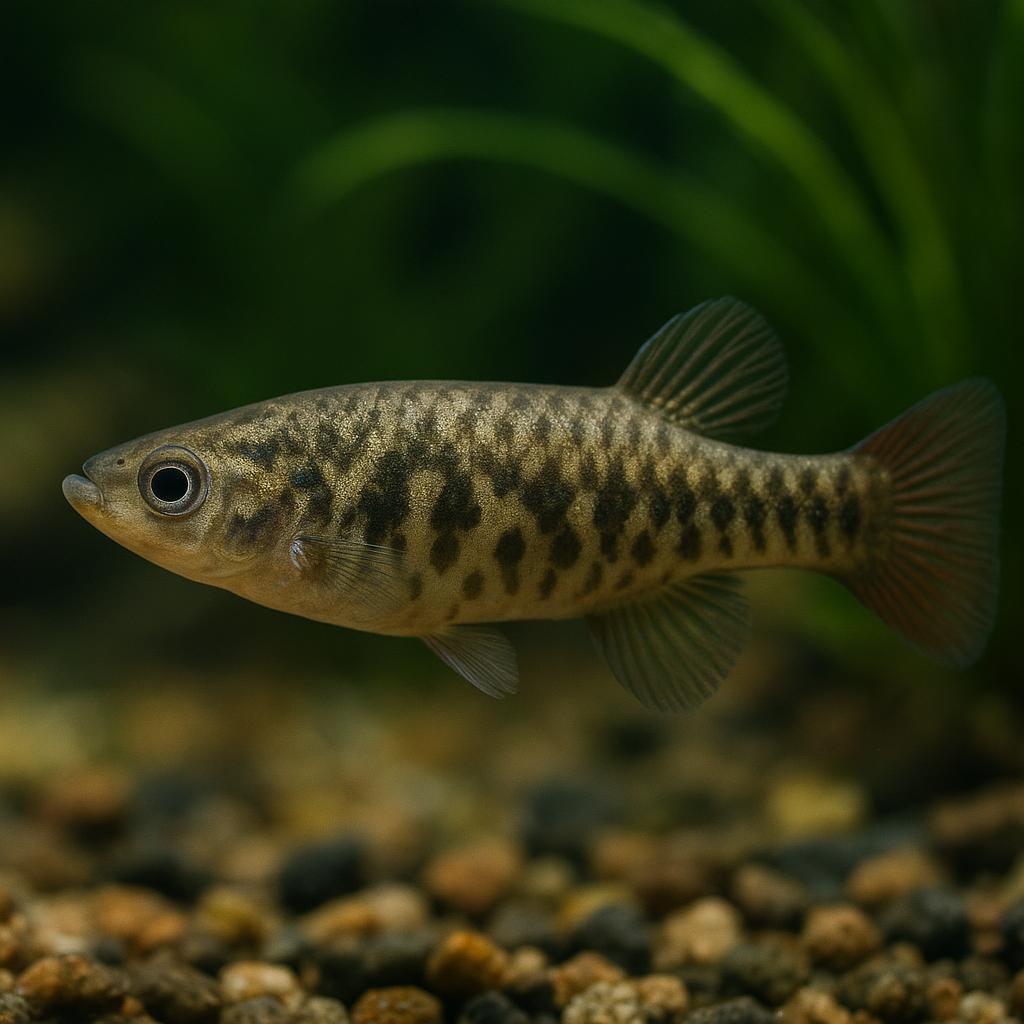
Anitápolis livebearer
Jenynsia weitzmani
Jenynsia weitzmani is a freshwater anablepid livebearer endemic to southern Brazil (currently known only from the type locality near Anitápolis, Santa Catarina). Like other Jenynsia (onesided livebearers), reproduction involves lateralized mating morphology/behavior; aquarium care guidance is not well-documented for this species specifically.
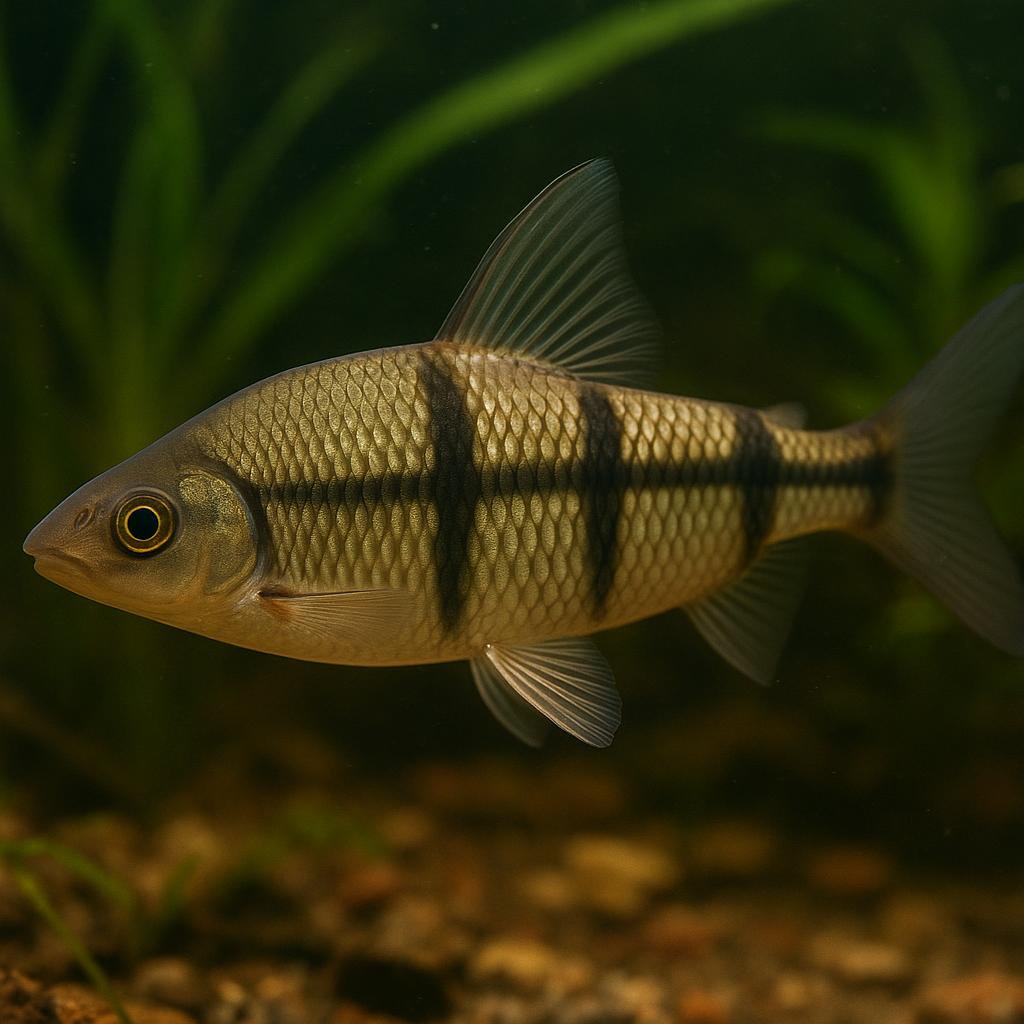
Aracu-comum
Schizodon vittatus
Schizodon vittatus is a large South American anostomid (family Anostomidae). Reported maximum size is about 35 cm standard length; it is harvested/consumed in parts of Brazil and is not commonly covered by mainstream aquarium husbandry references.
More to Explore
Discover more freshwater species.
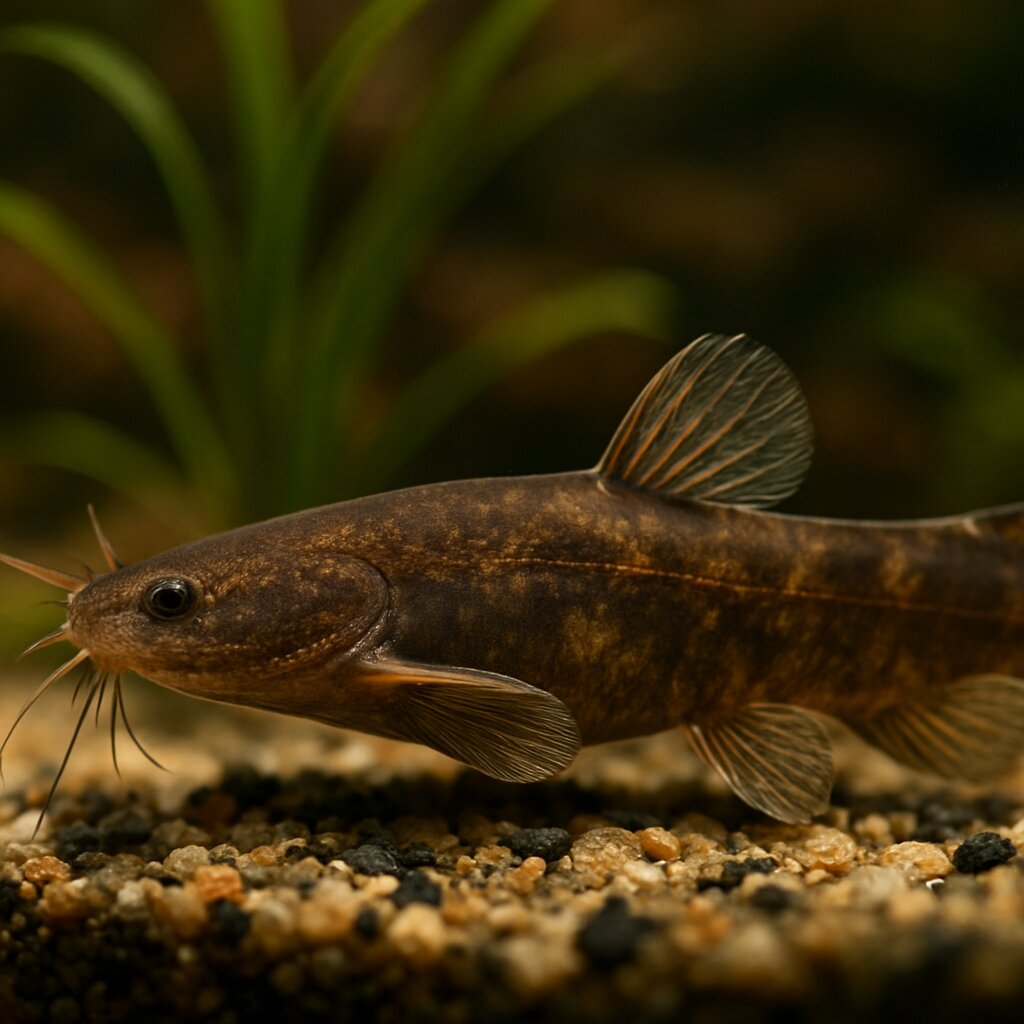
Amphilius dimonikensis
A small loach catfish endemic to the Mpoulou River in the Mayombe (Dimonika Biosphere Reserve), Republic of the Congo. Amphilius dimonikensis has a subtle banded pattern and inhabits fast, clear streams over rock and sand. In aquaria, prioritize strong, well-oxygenated flow with rounded stones and sand to mimic hillstream conditions.
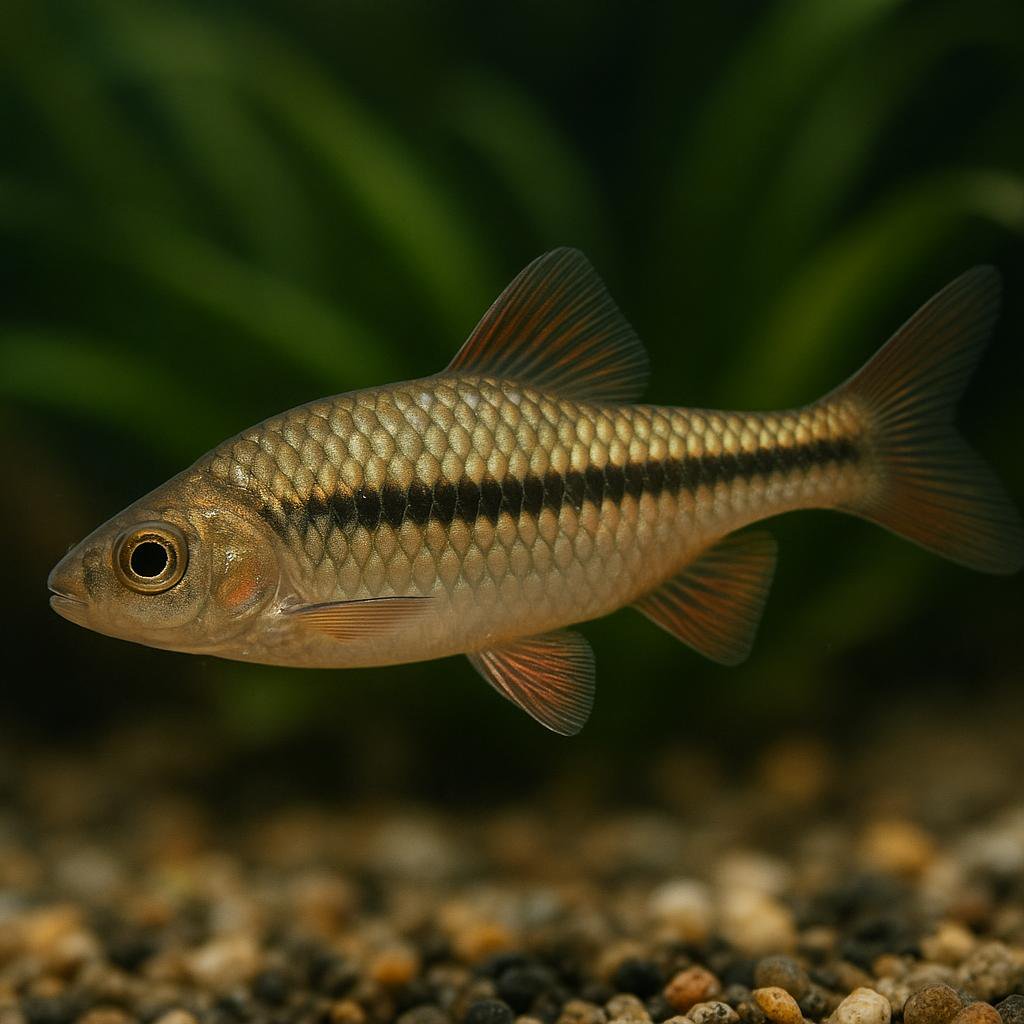
Aboina barb
Enteromius aboinensis
Enteromius aboinensis (the Aboina barb) is a small West African barb with a clean black midline stripe and a little spot right at the base of the tail. It does best when you treat it like a proper schooling fish - keep a decent group and give it plants around the edges with open swimming room in the middle.
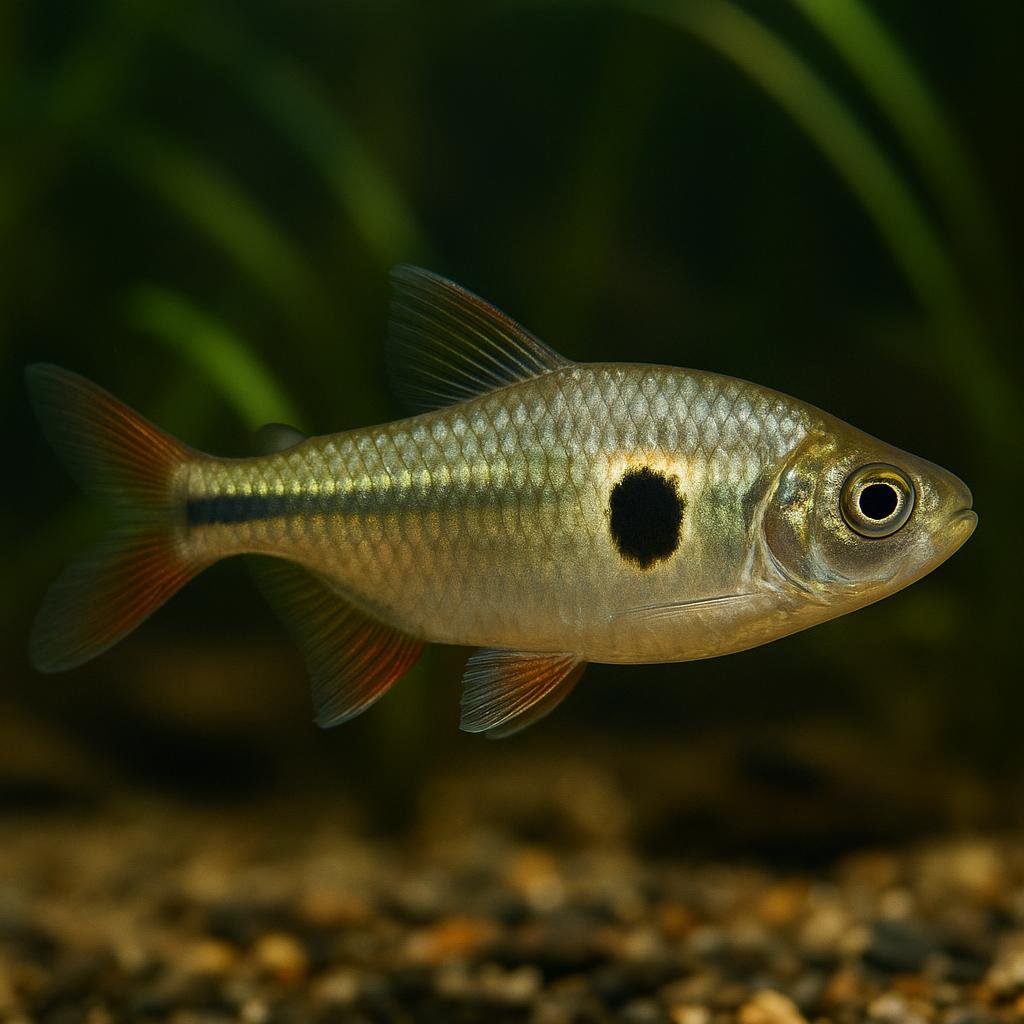
Ajuricaba tetra
Jupiaba ajuricaba
Jupiaba ajuricaba is a South American freshwater characin from the Amazon basin in Brazil (rio Negro, rio Solimões, and rio Tapajós basins). It reaches about 9.5 cm SL and is diagnosed by a narrow dark midlateral stripe, an elongated humeral spot, and an ocellated spot on the upper caudal-fin lobe. Wild specimens have been collected from blackwater forest streams and also oxbow-lake habitats.
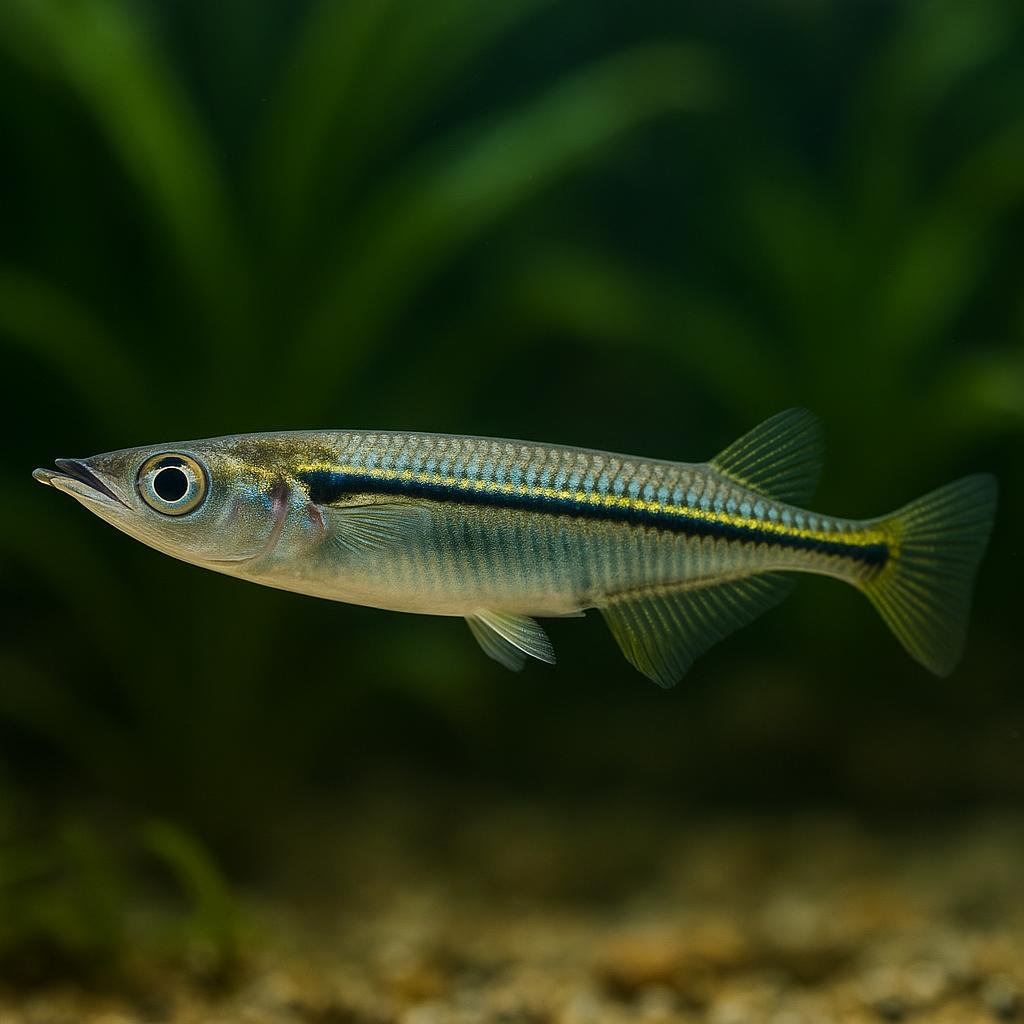
Allen's river garfish
Zenarchopterus alleni
A poorly known freshwater halfbeak endemic to West Papua (Mamberamo River), described from a single specimen (~13 cm SL). Beyond basic habitat/occurrence, little is published about its ecology or aquarium suitability; assume it is a surface-oriented, jump-prone halfbeak only by analogy with related taxa.
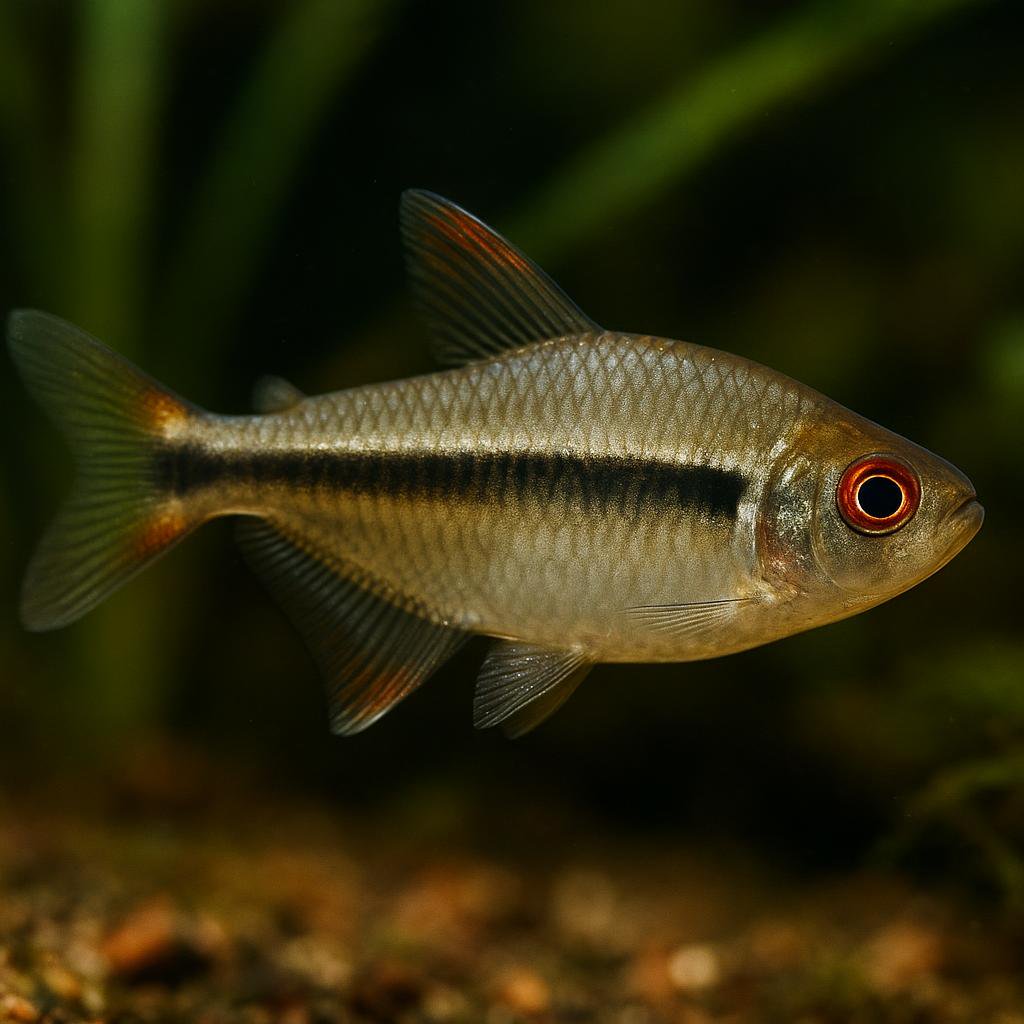
Amapa tetra
Hyphessobrycon amapaensis
This is a tiny, super sleek little tetra with a clean red stripe down the side that really pops once its settled in. It does best in a planted, slightly tinted "creek-style" setup and looks way cooler when you keep a proper group so they school and flash that line together. If you can give it soft, slightly acidic water and a calm community, its an easy fish to fall for.
Amatlan chub
Yuriria amatlana
Yuriria amatlana (the Amatlan chub) is a little Mexican native minnow from the Ameca River basin. Its wild range is pretty limited and it is listed as Endangered, so its care info in the aquarium hobby is basically nonexistent and its availability is usually low. In the original species description, preserved fish show a dark lateral stripe with a darker patch on the caudal peduncle, and they can have tiny barbels at the mouth corners.
Looking for other species?