

Manyara tilapia
Oreochromis amphimelas
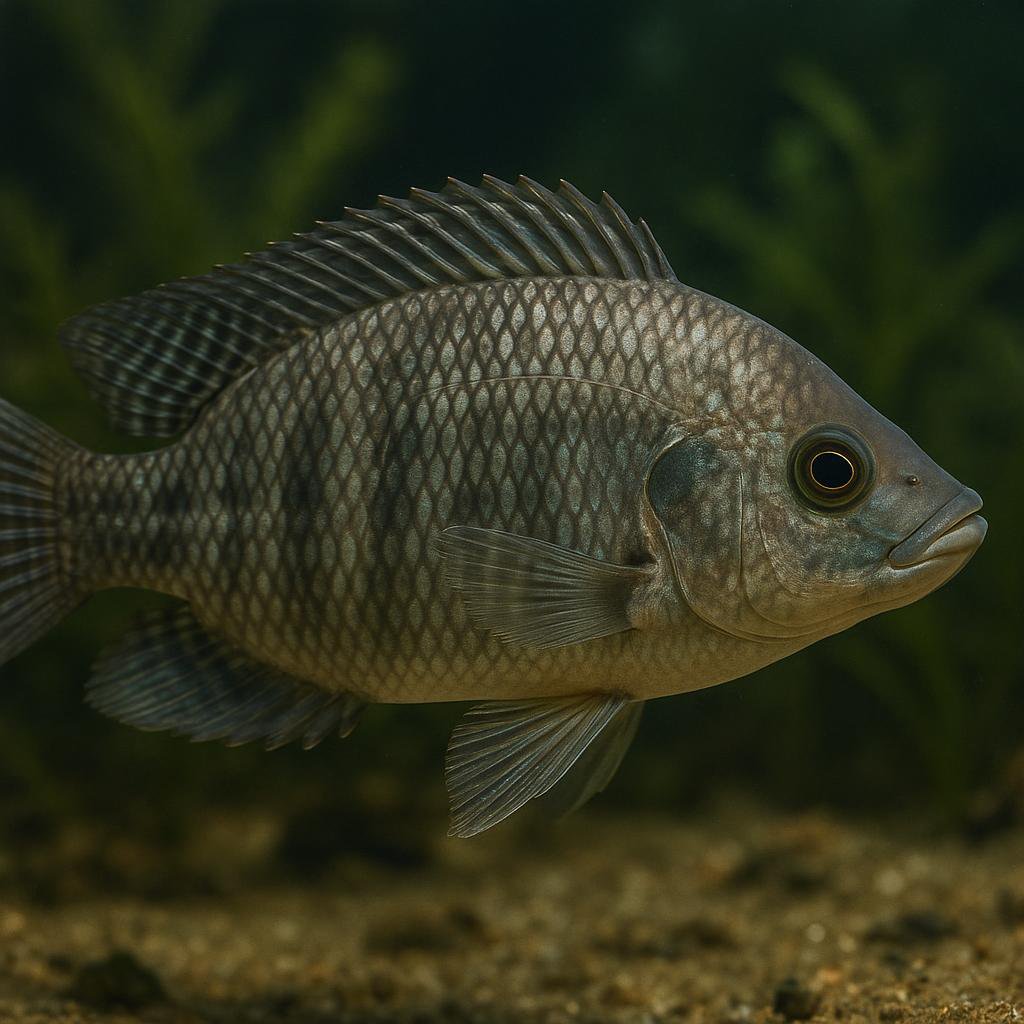
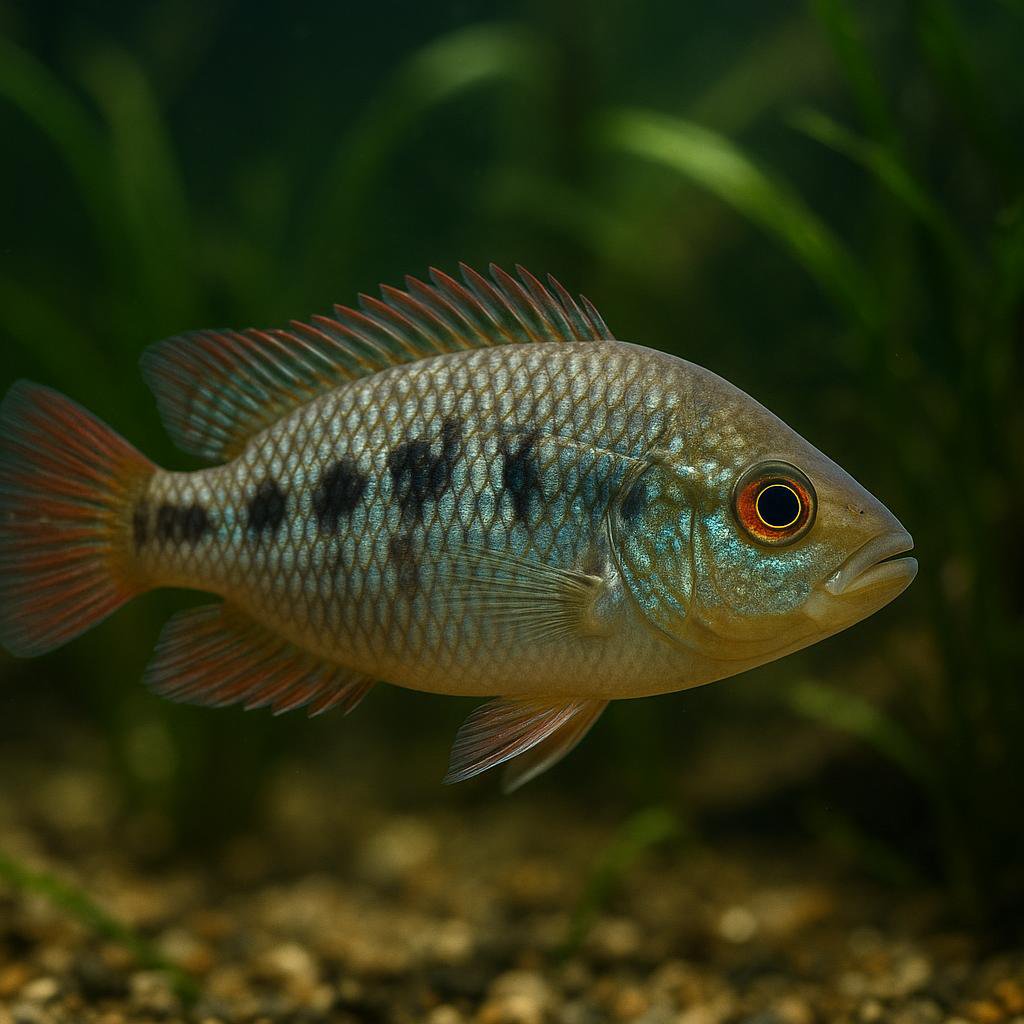
Manyara tilapia features a streamlined body with a distinctive dark vertical stripe and vibrant blue to greenish scales that shimmer under light.
This page includes AI-generated images. Why am I seeing AI images?
About the Manyara tilapia
Manyara tilapia is a Tanzanian Rift Valley tilapia endemic to closed-basin saline/alkaline (soda) lakes such as Lakes Manyara, Eyasi, Kitangiri and Singida. Territorial males can show dark/black underside and fins with pinkish-red on the flank and caudal fin, and the species is a mouthbrooder (reported primarily maternal).
Also known as
Quick Facts
Size
28 cm SL (about 11 inches)
Temperament
Semi-aggressive
Difficulty
Advanced
Min Tank Size
75 gallons
Lifespan
5-10 years
Origin
Africa (Tanzania)
Diet
Microphagous/omnivore grazer - spirulina-based pellets/flakes, veggie-heavy foods, small frozen foods
Water Parameters
24-28°C
7.5-9
10-25 dGH
Need a heater for this species?
This species needs 24-28°C in a 75 gallon tank. Use our heater calculator to find the right wattage.
Calculate heater sizeCare Notes
- Give them space and hardscape - a big footprint tank with piles of rock and a few caves works way better than plants (they will dig and redecorate). Sand or fine gravel is your friend because they sift and spit it constantly.
- In the wild this species occurs in closed-basin alkaline/saline lakes where salinity and alkalinity can fluctuate seasonally. Focus on consistently hard, alkaline conditions; if adding salt/minerals, keep changes gradual and stable rather than swinging parameters.
- These guys are messy cichlids, so overfilter and do big water changes. If nitrates start creeping up, they get cranky and you will see more fin nips and bloat issues.
- Feed like a tilapia: mostly veggie-based pellets, spirulina flakes, blanched greens, and occasional protein (shrimp, krill, worms) as a treat, not the main diet. If you hammer them with high-protein foods every day, they are bloat magnets.
- Tankmates: stick with other tough brackish fish that can handle hard, salty water and some attitude. Avoid slow or delicate fish and anything that needs soft/fresh water (most community fish and many catfish are a bad match).
- They are mouthbrooders, and breeding is easy once a pair settles - the male will claim a rock or cleared patch and turn into a bully. If you want fry, pull the holding female to a quiet tank or you will watch the whole tank stress her out until she spits early.
- Watch for digging-related rockslides - stack rocks on the glass or on eggcrate, not on the sand. Also keep an eye on lip locking and relentless chasing; sometimes you have to rehome a bully or break up territories with more rockwork.
Compatibility
Good Tankmates
- Other brackish-tolerant tilapia that are similar in size (best as a group in a big tank, lots of rockwork, and be ready to separate pairs once they start breeding)
- Robust, similarly-sized fish that tolerate hard, alkaline, mineral-rich conditions (specific tankmates are not well-documented for this rare species; proceed cautiously).
- Scats (Scatophagus argus) - they are armored little pigs and usually shrug off the posturing, just do not cram them in a small tank because both species get bulky
- Archerfish (Toxotes spp.) - works in larger brackish setups where everyone has space, since archers are quick and tend not to get bullied if they are not tiny
- Hardy, brackish-tolerant catfish like ariid catfish (sea catfish types) - good as 'bottom muscle' in big tanks, but skip this if your tank is on the small side
Avoid
- Small bottom-dwelling gobies (e.g., knight goby) may be harassed or outcompeted; only consider robust, similarly-sized fish that tolerate hard, alkaline, mineral-rich water in very large systems.
- Small, peaceful community fish (tetras, rasboras, guppies) - they look like snacks once the tilapia are settled in, and they get stressed by the constant chasing
- Slow fish with fancy fins (angels, bettas, fancy goldfish) - fin damage is super common, plus most of these are a bad match for brackish anyway
- Other aggressive territory hogs like big cichlids (oscars, jaguars, convicts) - you will end up with nonstop fights unless the tank is huge and you like playing referee
- Tiny bottom dwellers (corydoras, small loaches) - they get pinned into corners and outcompeted for food, and a lot of them do not really appreciate brackish long-term
Where they come from
Manyara tilapia (Oreochromis amphimelas) are from the Lake Manyara area in Tanzania. It is one of those places where the water chemistry can swing hard depending on season, evaporation, and inflow. That background explains a lot: these fish handle mineral-rich water well, and they act like they own whatever puddle they are in.
You will see them listed as brackish-friendly. In my experience they do best in hard, alkaline water with a little salt rather than soft, acidic setups.
Setting up their tank
Give them space first, then worry about decor. They are active, strong, and messy in the way most tilapia are. A cramped tank turns into a stress box fast, especially once a pair starts claiming the whole footprint.
- Tank size: bigger is always easier. I would not do adults in anything under 75 gallons, and 125+ gallons is where behavior gets way calmer.
- Footprint matters more than height. They use the bottom and midwater constantly.
- Use a tight lid. They can spook and thump the surface hard.
Substrate is personal preference, but they like to dig and move stuff. Sand lets them do that without shredding their mouths. Expect the aquascape to be redesigned nightly.
- Substrate: sand or fine gravel.
- Hardscape: big rocks and sturdy driftwood (if your water stays alkaline). Build stable piles that cannot topple when they excavate.
- Plants: assume they will be uprooted or chewed. If you want green, try tough stuff attached to rock (Anubias) or go with floating plants and accept losses.
For brackish, you are not trying to make a reef. Think slightly salty, very hard, and alkaline. I use marine salt mix (not aquarium salt) so the minerals are rounded out, and I mix it outside the tank so I am not dumping dry salt on fish.
These fish hate unstable water more than they hate specific numbers. Pick a salinity and stick to it. Constantly fiddling with salt and pH is how people get random deaths and mystery stress.
- Temperature: 75-82F (24-28C).
- pH: alkaline (around 7.8-8.6 is a comfortable window).
- Hardness: medium-hard to very hard is fine.
- Salinity: light brackish is plenty for most keepers. If you go higher, ramp up slowly over days, not hours.
Filtration needs to be overbuilt. They eat a lot, poop a lot, and stir the bottom. I run big canisters or a sump and aim for strong mechanical filtration you can rinse often. Add extra oxygen too. A big air stone or powerhead makes a noticeable difference in how "clean" the tank feels.
Pre-filter sponges on intakes save you time. With tilapia, you will be cleaning gunk constantly, so make it easy on yourself.
What to feed them
They are not picky, which is both a blessing and a trap. Manyara tilapia do best on a mostly plant-based diet with some protein mixed in. If you hammer them with high-protein foods all the time, you often end up with bloaty, sluggish fish.
- Staple: quality spirulina or herbivore cichlid pellets.
- Veggie rotation: blanched zucchini, spinach, shelled peas, romaine (sparingly), nori sheets clipped to the glass.
- Protein treats: krill, mysis, chopped shrimp, earthworms, insects (small amounts, not every day).
I feed smaller portions 1-2 times a day and do one "light" day a week. They will beg like dogs either way. Watch their bellies and their poop. Long white stringy poop or swollen bellies usually means the menu needs a reset.
If you are dealing with bloaty behavior, switch to spirulina pellets plus peas for a few days and stop the rich stuff. It has pulled more than one tilapia back from the edge for me.
How they behave and who they get along with
They are classic tilapia: bold, busy, and ready to argue. As juveniles they can look "community friendly" for a while. Then they hit size and hormones and suddenly you have a fish that can claim half the tank.
- Temperament: pushy, especially around food and spawning.
- Digging: constant. They will excavate under rocks.
- Hierarchy: you will see lip-locking, shoving, and chasing as they sort things out.
Tankmates are tricky because brackish narrows the options, and tilapia are not gentle. If you want a calmer life, keep them species-only and focus on a nice group in a big tank. If you mix, pick fish that can handle themselves and the water chemistry.
Do not pair them with slow, delicate brackish fish. Anything timid will get stressed into disease even if it is not directly attacked.
- Better bets (depending on your salinity): other robust, similarly sized cichlids with a compatible attitude; tough brackish species like larger scats or monos (in big tanks); some gobies if they are not bite-sized.
- Avoid: livebearers and small schooling fish (they become snacks or stress targets), fancy fins, and anything that needs soft/acidic water.
Group size matters. A lone fish can be a jerk because it has nobody to spread aggression around. A pair can be worse because they team up. A bigger group in a big tank can actually be smoother, but you need the room and the filtration.
Breeding tips
They are mouthbrooders like many Oreochromis. If you keep a mixed group and feed well, spawning usually happens without you trying. The male will pick a site, dig a crater, color up, and start pushing everyone else away from his "property".
- Spawning setup: open sand area with a few rock boundaries so territories have edges.
- Sex ratio: 1 male to 2-4 females helps. Two males in a smaller tank is asking for trouble.
- Water changes: steady, frequent changes often trigger spawning behavior.
Once the female is holding, her mouth looks fuller and she stops eating like normal. If the tank is busy, she may get bullied while holding. You can either move her to a quiet tank or let nature happen and accept that you might not get many fry.
If you move a holding female, match temperature and salinity exactly and keep the transfer low-stress. A rushed move is a good way to make her spit or swallow the brood.
Fry are easy to raise if you get them past the first week. Crushed spirulina flake, baby pellets, and newly hatched brine shrimp work. Keep the water clean and do small, frequent water changes because they grow fast and foul water fast.
Common problems to watch for
Most issues I have seen with Manyara tilapia come down to either water quality, diet, or aggression. They are tough fish, but they are not forgiving of a neglected tank.
- Bloat / digestive issues: usually from too much protein, not enough fiber, or dirty water. Look for swollen belly, stringy poop, hiding.
- Hole-in-the-head and erosion: often linked to long-term water quality and nutrition problems (and sometimes chronic stress).
- Fin damage and missing scales: from fighting, especially during spawning cycles.
- Ich or velvet: can show up after big temperature swings, new fish, or salinity changes.
Fast salinity changes are a silent killer. If you are adjusting brackish levels, do it gradually and mix your water ahead of time. "I topped off with salty water" is a common way people accidentally spike salinity.
If something looks off, I check three things right away: ammonia/nitrite (should be zero), nitrate (keep it reasonable with water changes), and whether a dominant fish is pinning others in a corner. Fixing bullying with a divider or re-scape can solve "mystery illness" surprisingly often.
Similar Species
Other freshwater semi-aggressive species you might be interested in.
Jupiaba kurua
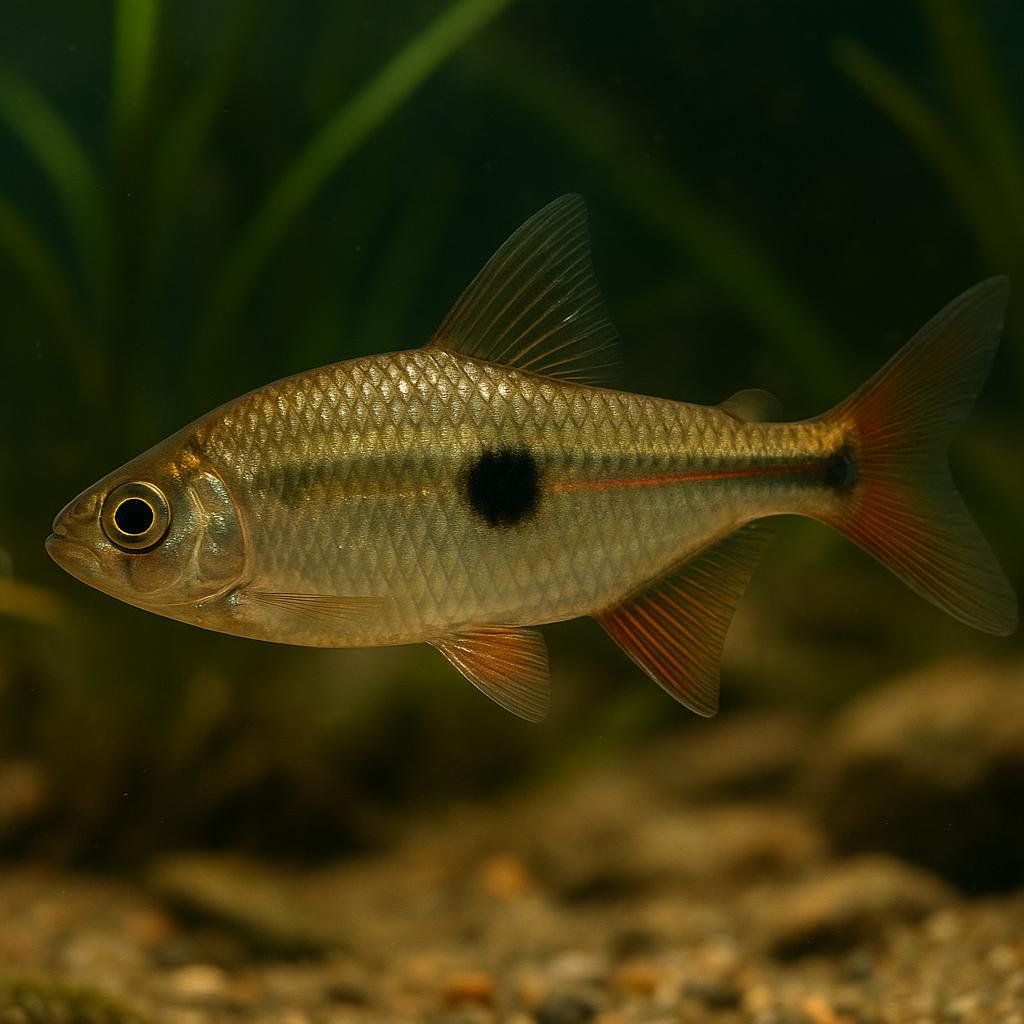
Small South American characin endemic to the upper rio Curuá (rio Xingu basin, Brazil). Reaches about 8.7 cm SL and inhabits clearwater rivers. Distinguished by dark dots on the bases of many lateral scales and a distinct dark caudal‑peduncle spot. Reported diet indicates omnivory, including aquatic insects, small fishes, and fragments of Podostemaceae and filamentous algae.
Altipedunculata stone loach
Schistura altipedunculata
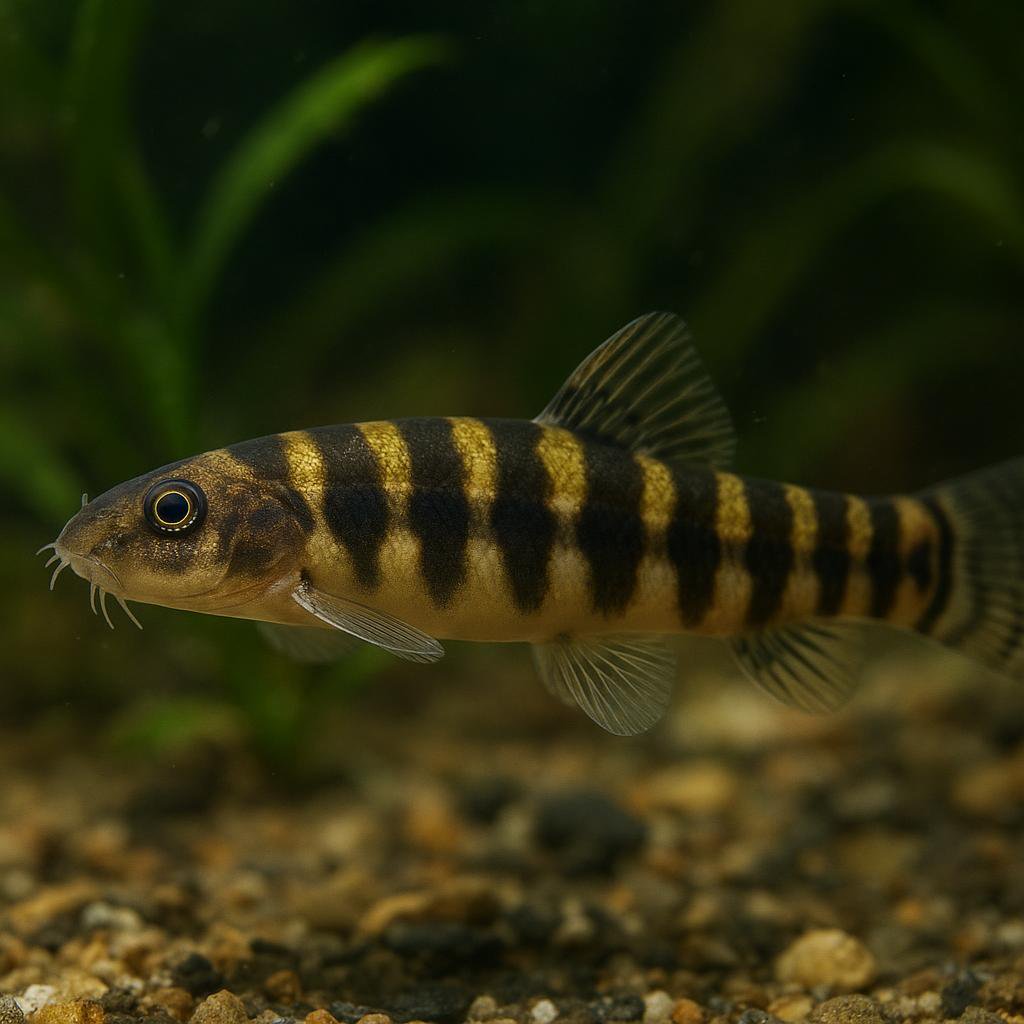
Schistura altipedunculata is one of those little stream loaches that wants clean, well-oxygenated water and a bunch of rock nooks to claim as home. It is a bottom-hugger that will spend its day scooting from crevice to crevice, and it tends to get a bit spicy with its own kind if you do not give it enough hiding spots.
American flagfish
Jordanella floridae
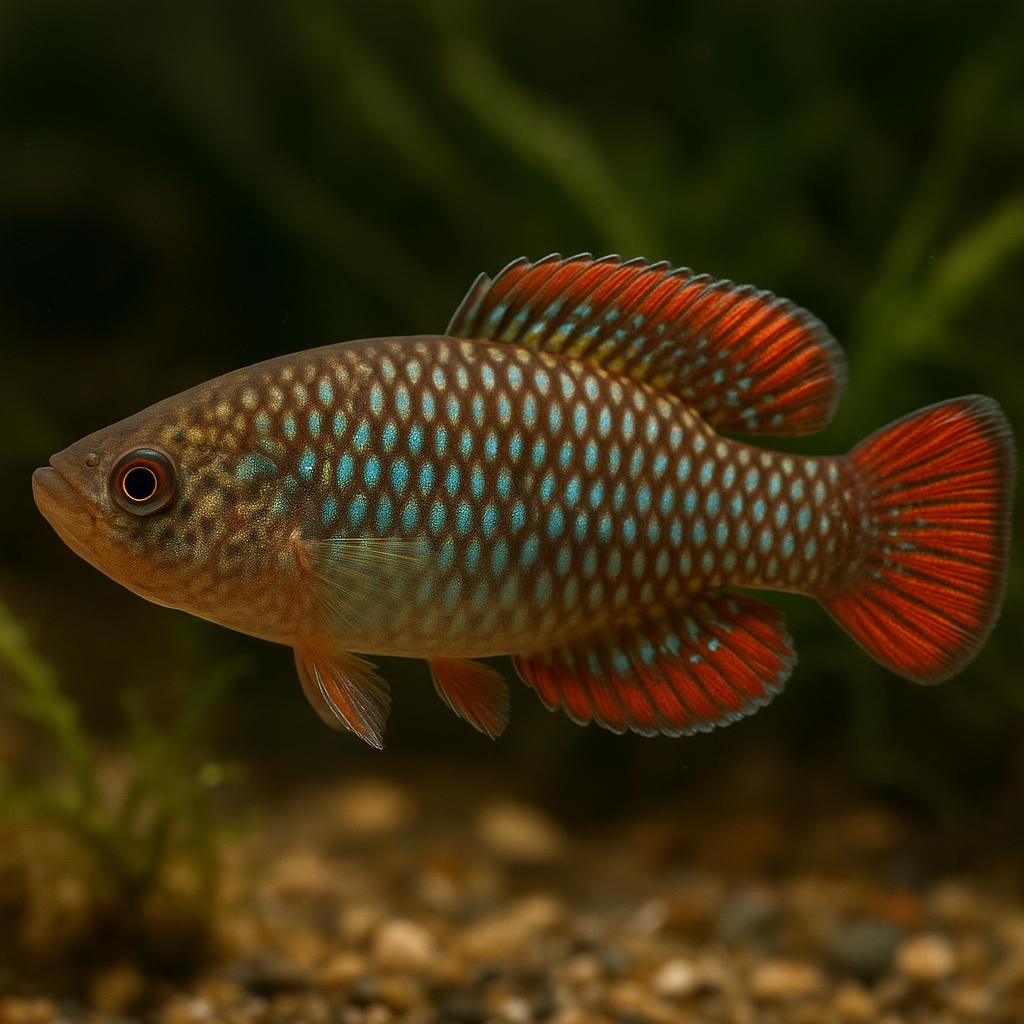
Jordanella floridae is that little Florida native with the red-and-cream striping that really does look like a tiny flag once a male colors up. They graze algae like champs (especially stringy/hair algae), but they have a bit of attitude - give them plants and space so the bossy behavior stays manageable. Bonus: the male guards the eggs and will actively fan them, which is pretty fun to watch.
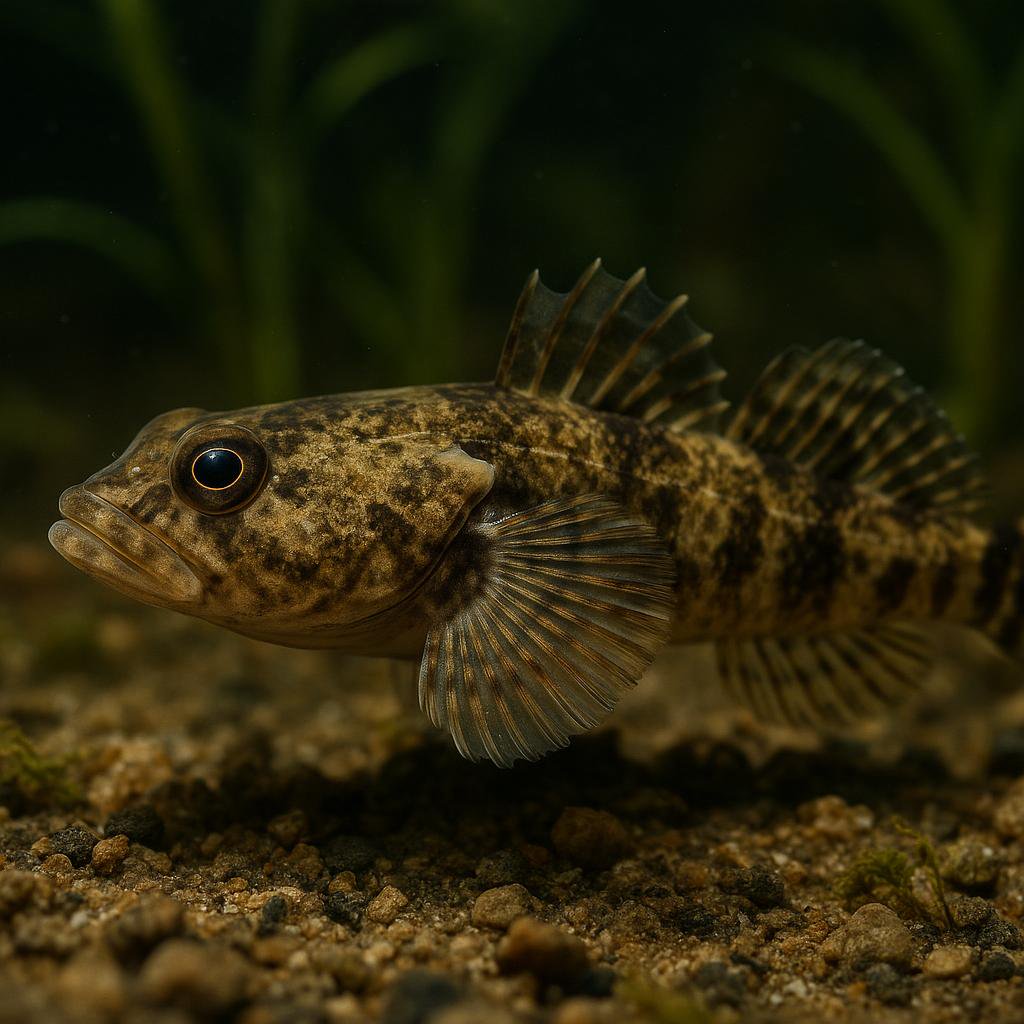
Amur sculpin
Alpinocottus szanaga
This is a little coldwater sculpin from the Amur drainage - a bottom-hugging, rock-and-gravel fish that spends its day wedged under stones and darting out to grab food. Super cool behavior and attitude, but it is absolutely not a warm tropical community fish - it wants chilly, fast, oxygen-rich water and will bicker with other bottom fish.
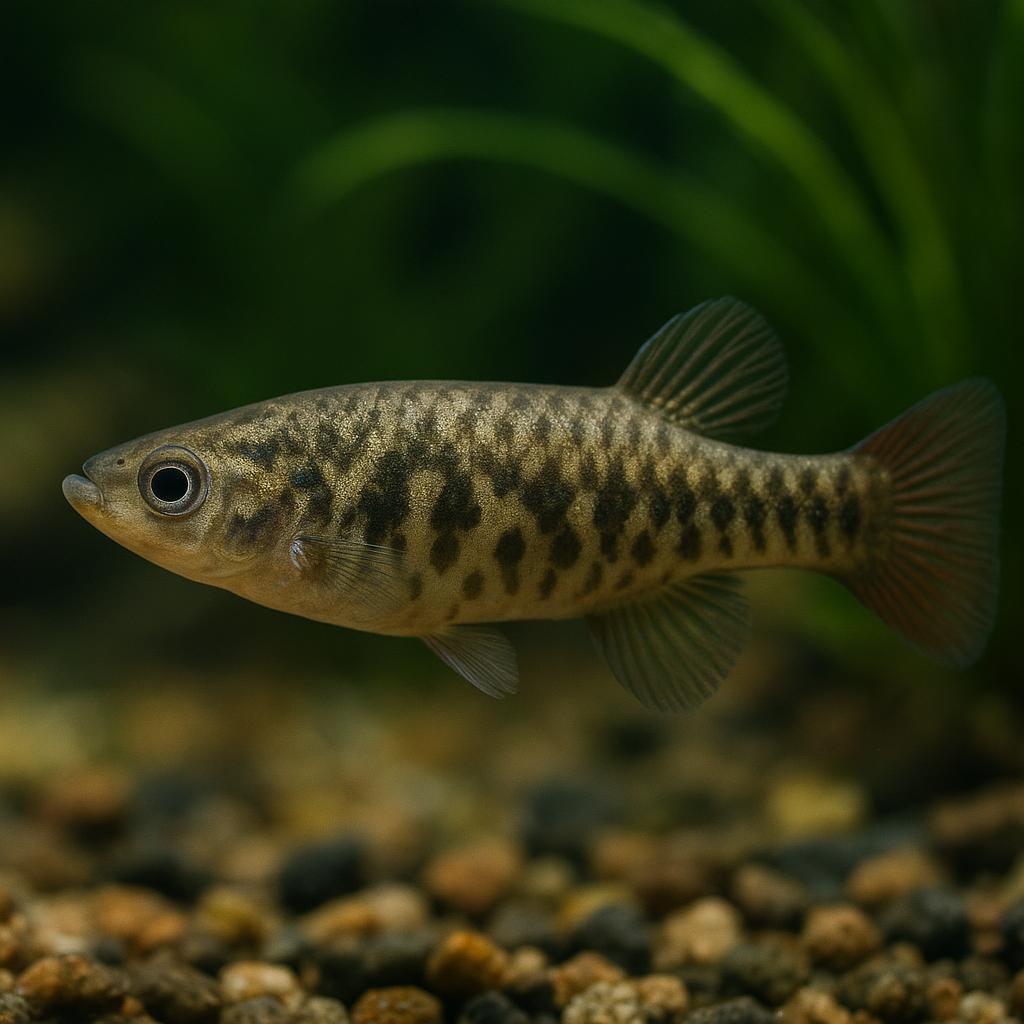
Anitápolis livebearer
Jenynsia weitzmani
Jenynsia weitzmani is a freshwater anablepid livebearer endemic to southern Brazil (currently known only from the type locality near Anitápolis, Santa Catarina). Like other Jenynsia (onesided livebearers), reproduction involves lateralized mating morphology/behavior; aquarium care guidance is not well-documented for this species specifically.
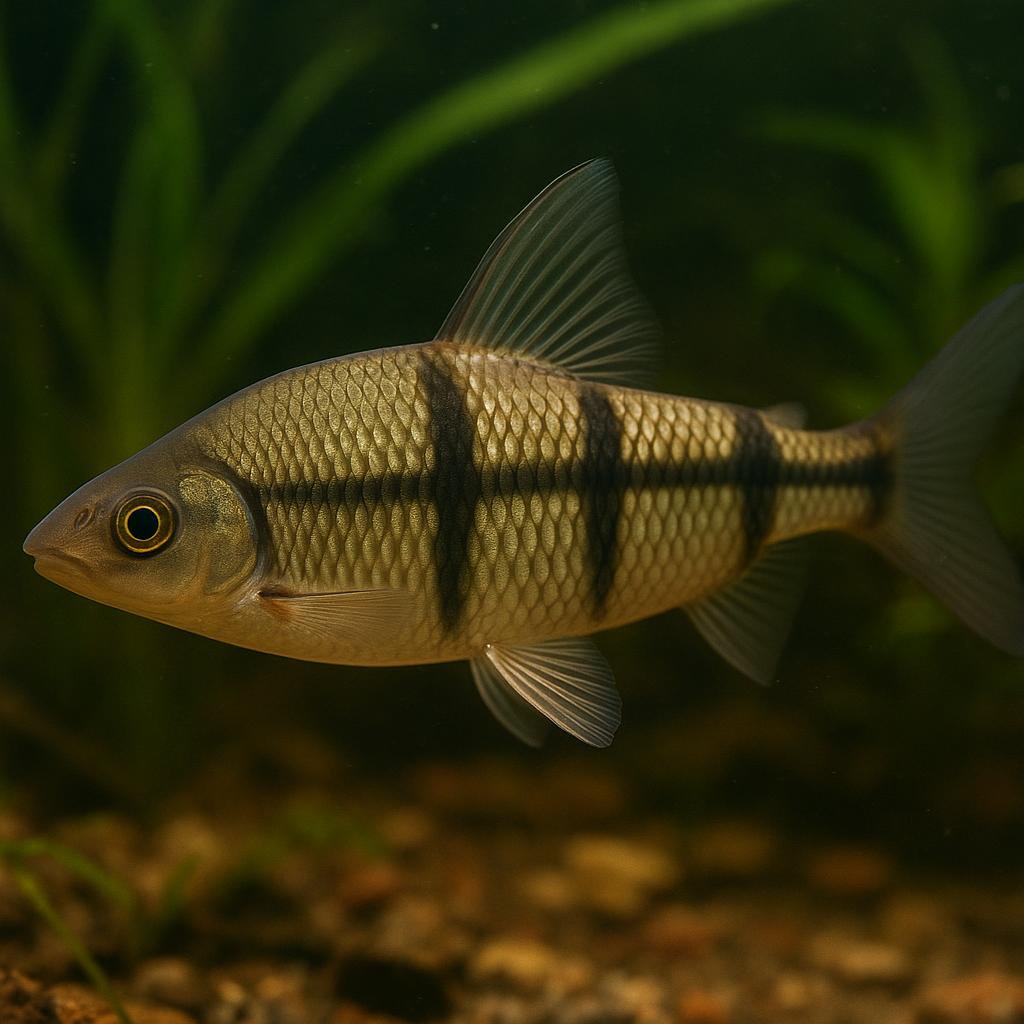
Aracu-comum
Schizodon vittatus
Schizodon vittatus is a large South American anostomid (family Anostomidae). Reported maximum size is about 35 cm standard length; it is harvested/consumed in parts of Brazil and is not commonly covered by mainstream aquarium husbandry references.
More to Explore
Discover more freshwater species.
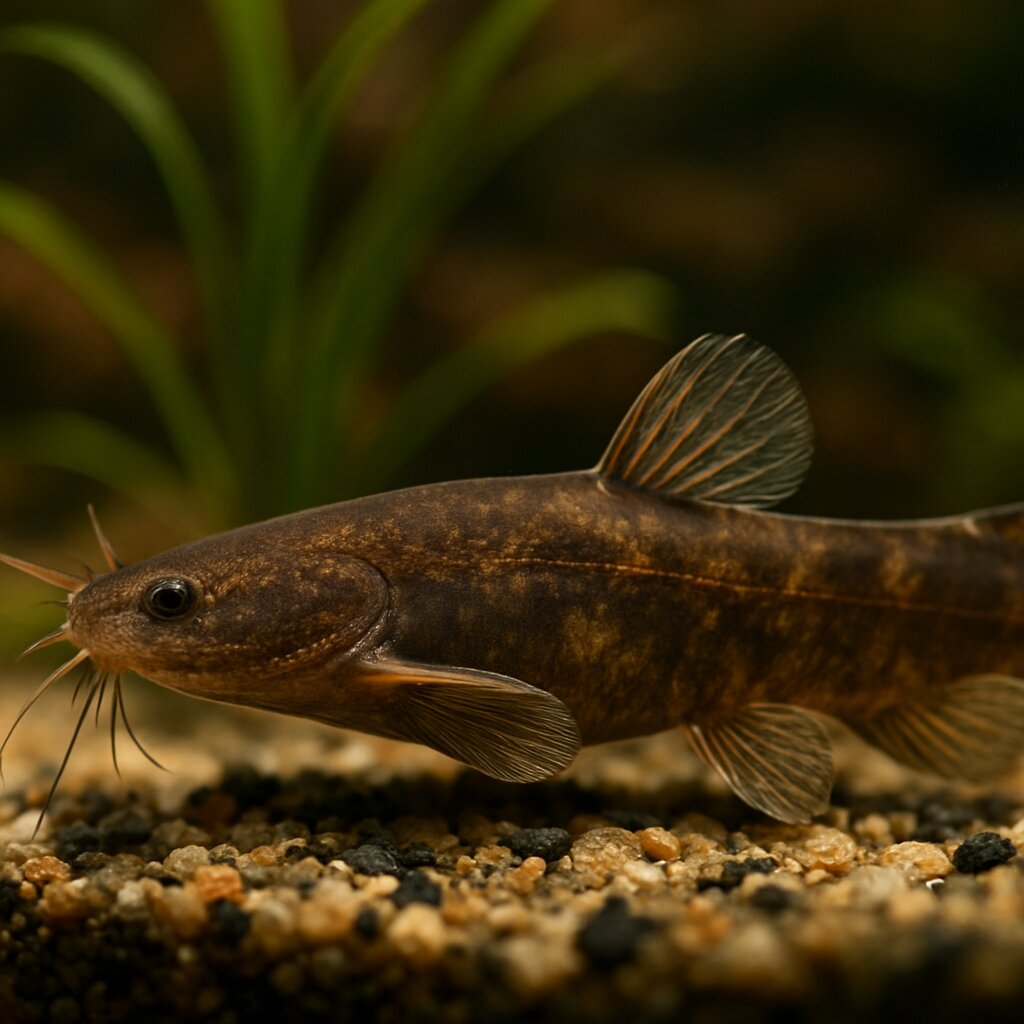
Amphilius dimonikensis
A small loach catfish endemic to the Mpoulou River in the Mayombe (Dimonika Biosphere Reserve), Republic of the Congo. Amphilius dimonikensis has a subtle banded pattern and inhabits fast, clear streams over rock and sand. In aquaria, prioritize strong, well-oxygenated flow with rounded stones and sand to mimic hillstream conditions.
Aboina barb
Enteromius aboinensis
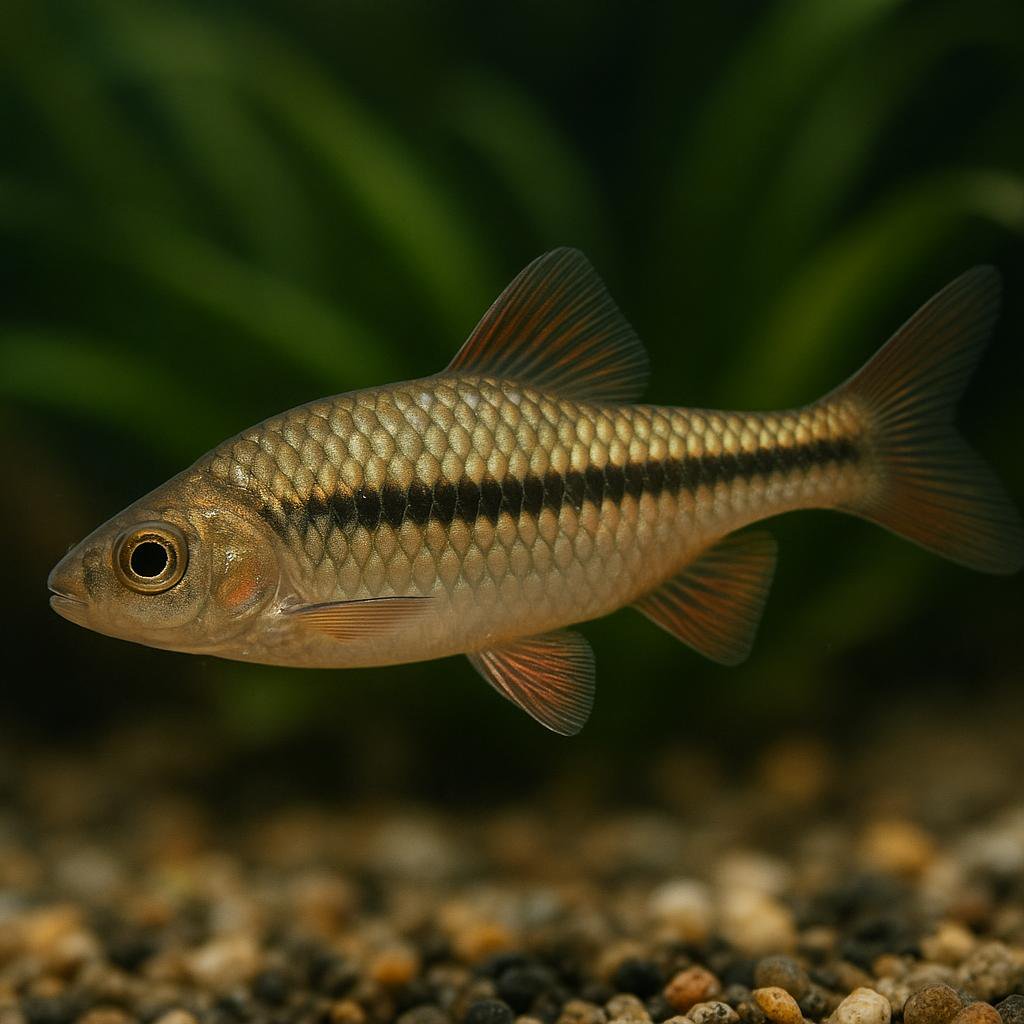
Enteromius aboinensis (the Aboina barb) is a small West African barb with a clean black midline stripe and a little spot right at the base of the tail. It does best when you treat it like a proper schooling fish - keep a decent group and give it plants around the edges with open swimming room in the middle.
Ajuricaba tetra
Jupiaba ajuricaba
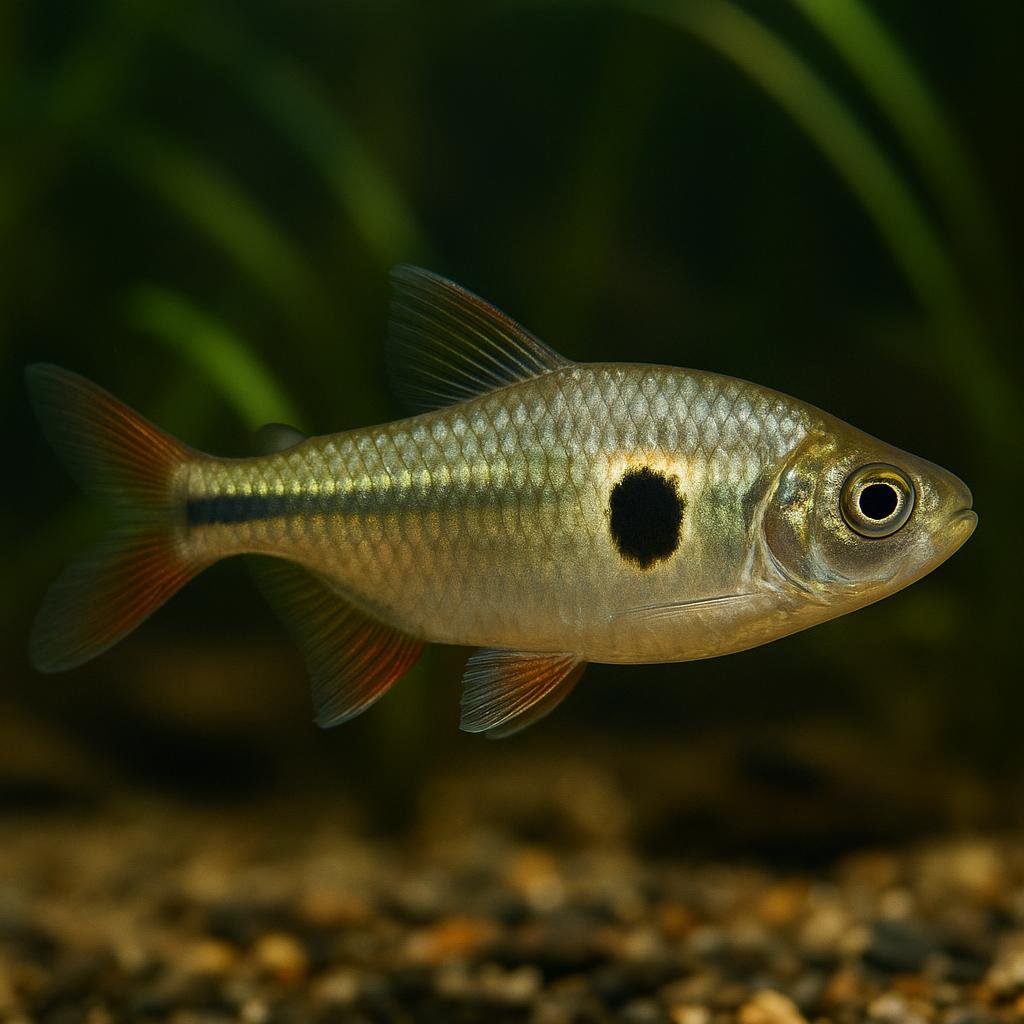
Jupiaba ajuricaba is a South American freshwater characin from the Amazon basin in Brazil (rio Negro, rio Solimões, and rio Tapajós basins). It reaches about 9.5 cm SL and is diagnosed by a narrow dark midlateral stripe, an elongated humeral spot, and an ocellated spot on the upper caudal-fin lobe. Wild specimens have been collected from blackwater forest streams and also oxbow-lake habitats.
Allen's river garfish
Zenarchopterus alleni
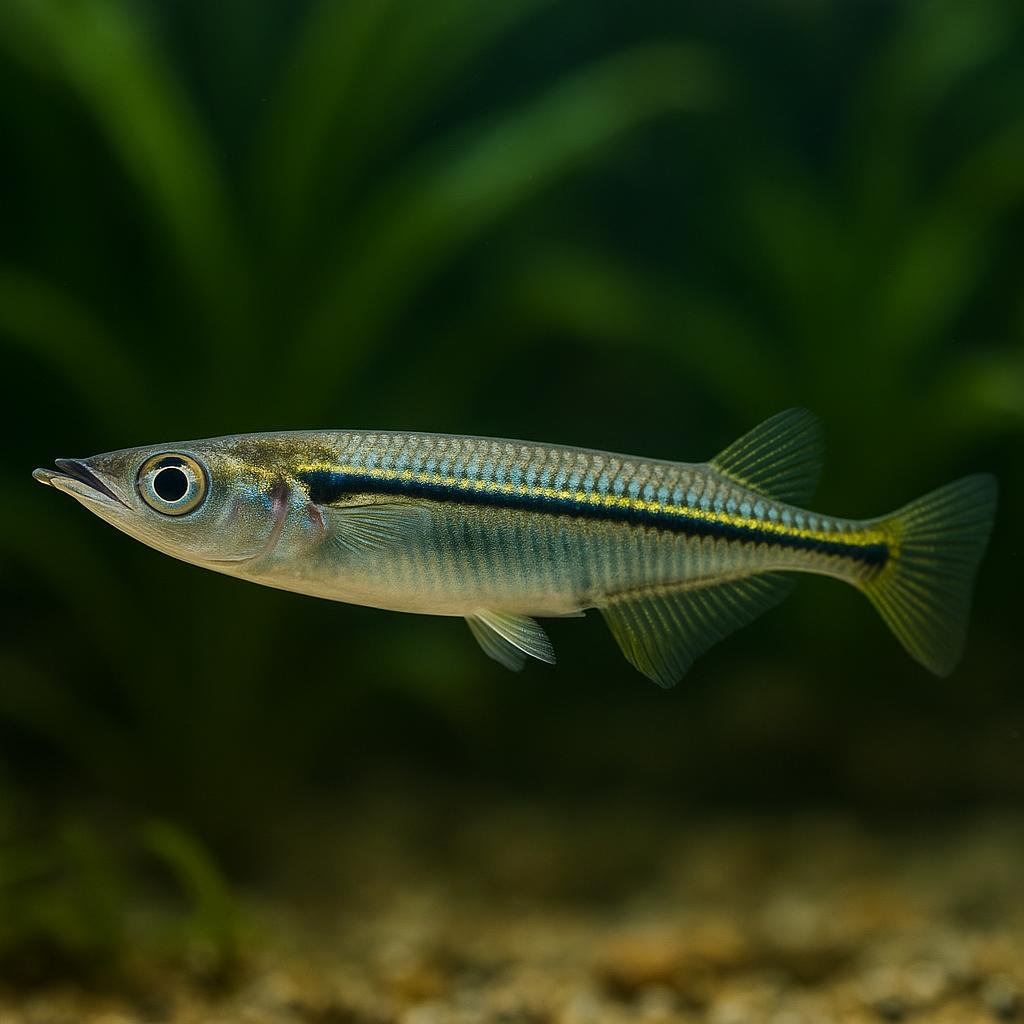
A poorly known freshwater halfbeak endemic to West Papua (Mamberamo River), described from a single specimen (~13 cm SL). Beyond basic habitat/occurrence, little is published about its ecology or aquarium suitability; assume it is a surface-oriented, jump-prone halfbeak only by analogy with related taxa.
Amapa tetra
Hyphessobrycon amapaensis
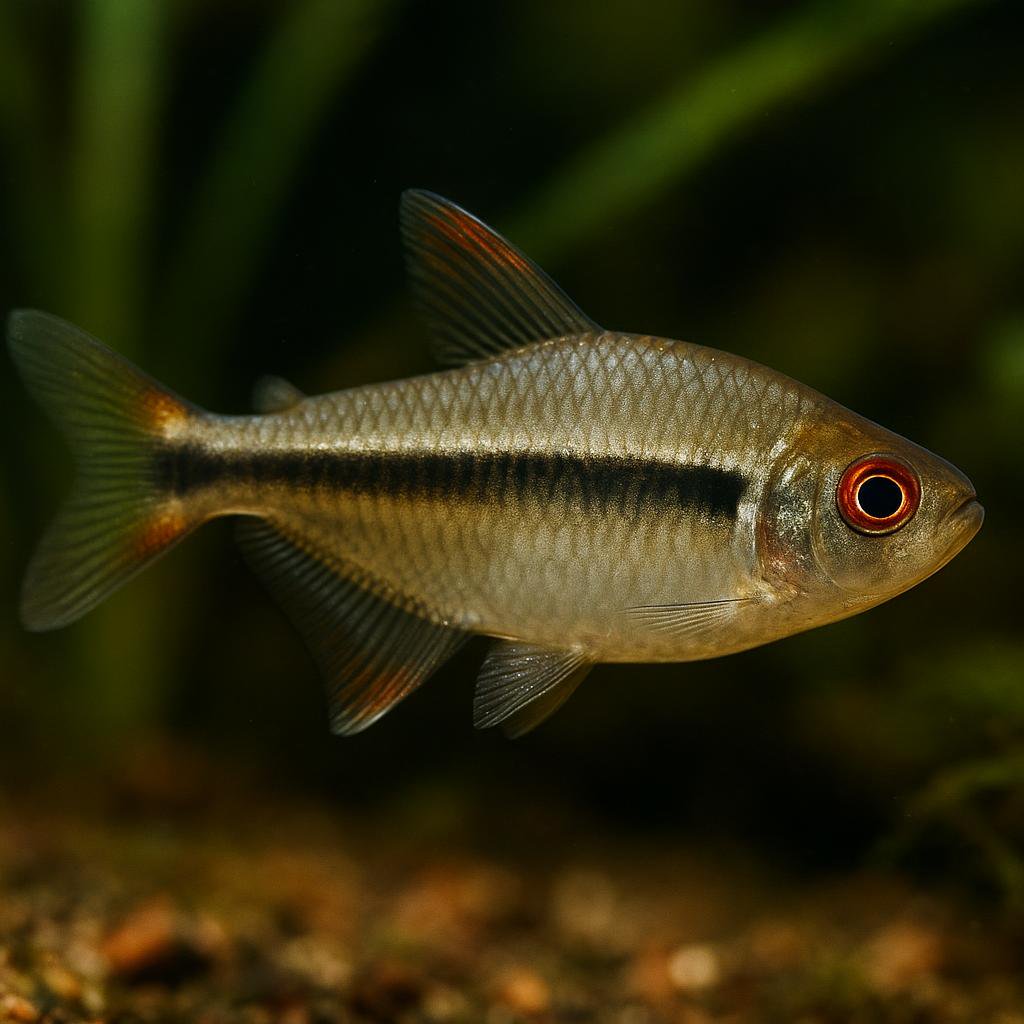
This is a tiny, super sleek little tetra with a clean red stripe down the side that really pops once its settled in. It does best in a planted, slightly tinted "creek-style" setup and looks way cooler when you keep a proper group so they school and flash that line together. If you can give it soft, slightly acidic water and a calm community, its an easy fish to fall for.
Amatlan chub
Yuriria amatlana
Yuriria amatlana (the Amatlan chub) is a little Mexican native minnow from the Ameca River basin. Its wild range is pretty limited and it is listed as Endangered, so its care info in the aquarium hobby is basically nonexistent and its availability is usually low. In the original species description, preserved fish show a dark lateral stripe with a darker patch on the caudal peduncle, and they can have tiny barbels at the mouth corners.
Looking for other species?