

Flag-tailed glass perchlet
Ambassis miops
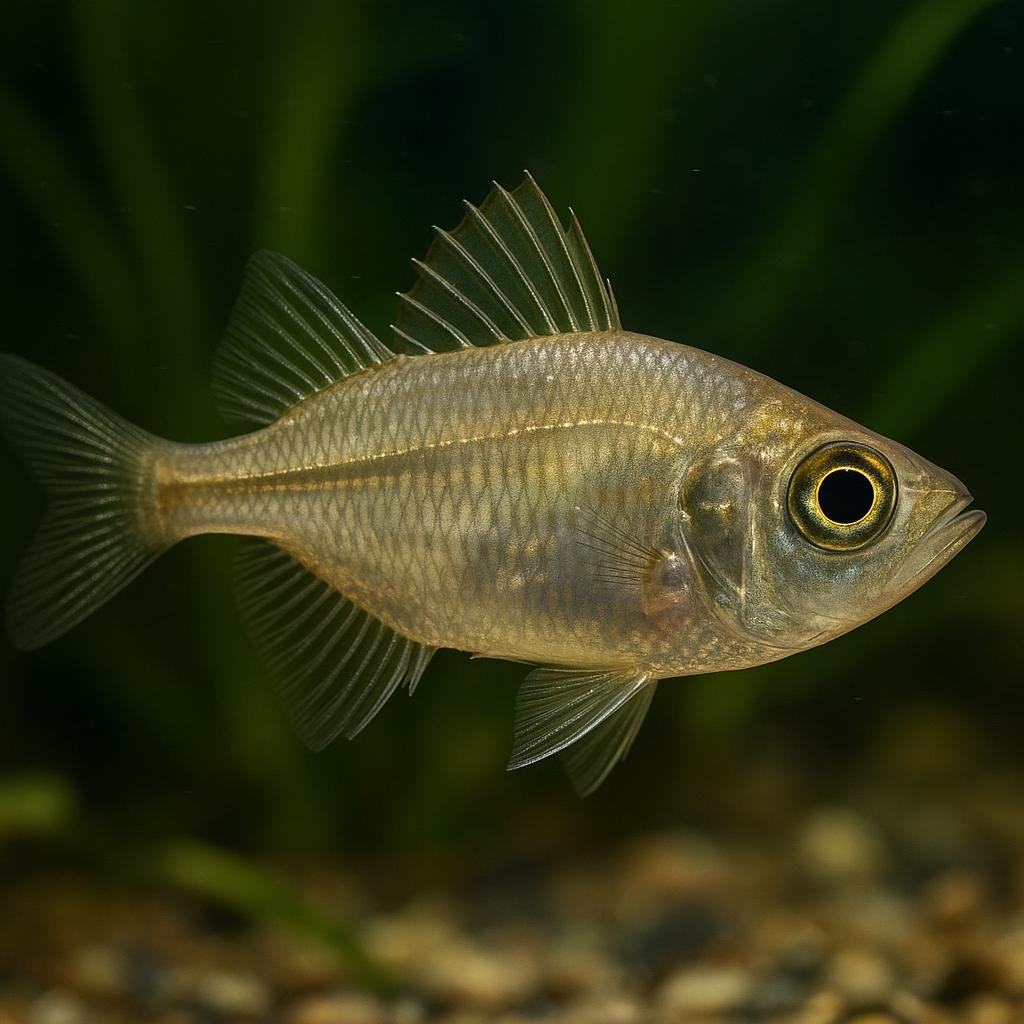
Flag-tailed glass perchlet features a translucent body with iridescent blue-green accents and a distinctive flag-like tail fin.
This page includes AI-generated images. Why am I seeing AI images?
About the Flag-tailed glass perchlet
Ambassis miops is a small, see-through little perchlet from Indo-Pacific estuaries and river mouths - you can often see the silvery organs and spine line inside the body when it turns just right. They tend to hang out in loose groups along weedy edges in slow-to-moderate flow, and that flag-like tail pattern is the quick giveaway once you spot it.
Also known as
Quick Facts
Size
10.3 cm
Temperament
Peaceful
Difficulty
Intermediate
Min Tank Size
20 gallons
Lifespan
3-5 years
Origin
Indo-Pacific
Diet
Carnivore/micro-predator - small crustaceans and insects; in aquariums use small frozen/live foods plus fine pellets
Water Parameters
26.2-29.3°C
7-8.5
5-20 dGH
Need a heater for this species?
This species needs 26.2-29.3°C in a 20 gallon tank. Use our heater calculator to find the right wattage.
Calculate heater sizeCare Notes
- Keep them in a group (6+). A pair or trio turns skittish and you will mostly see them hiding in the corners.
- Go brackish from the start: aim around SG 1.005-1.010 (about 7-14 ppt) and keep it steady. They do way better long-term in slightly salty water than in fresh.
- They are jumpy when spooked, so use a tight lid and avoid blasting them with bright light. A darker substrate plus clumps of plants (Java fern, Anubias, or even fake plants) and some driftwood gets them out in the open.
- They like flow and oxygen, not a dead-still tank - run a decent filter and point the output along the surface. If you see them hanging at the top gulping, bump up aeration and check ammonia right away.
- Feeding: think small, meaty stuff - live/frozen brine shrimp, mysis, daphnia, chopped bloodworms. Many ignore flakes at first, so start with frozen/live and sneak in pellets once they are eating confidently.
- Tankmates: stick to other peaceful brackish fish that will not outcompete them at meals (small monos when young, bumblebee gobies, knight gobies with care, mollies). Avoid fin-nippers and speed demons like many barbs, and avoid big predators because these guys are see-through snacks.
- Watch for wasted-away bellies - they can arrive with parasites and they do not handle dirty water well. Quarantine if you can, and if one keeps spitting food or losing weight, treat for internal worms/protozoa sooner rather than later.
- Breeding is possible in brackish: they scatter eggs in fine-leaved plants or spawning mops, and the adults will eat them. If you want fry, move the adults out after spawning and be ready with tiny foods (infusoria/rotifers first, then baby brine).
Compatibility
Good Tankmates
- Other flag-tailed glass perchlets (Ambassis miops) - they really do best in a little group (like 6+). In a shoal they stay calmer, color up more, and you see way less bickering.
- Bumblebee gobies (Brachygobius) in the same brackish range - they hang out on the bottom and mostly ignore the perchlets. Just make sure everyone is getting food because both can be pokey eaters.
- Knight gobies (Stigmatogobius) - solid brackish companion if the tank has sand and caves. They are more "tough" than aggressive, and the perchlets stay midwater so they do not clash much.
- Figure-8 puffers (Tetraodon biocellatus) - only if you have a mellow individual and a roomy tank. Ive seen this work when the puffer is well-fed and not a fin inspector, but you have to watch it closely.
- Mollies (common/sailfin types) - easy brackish fish that can handle the salt and dont bother the glass perchlets. They are active but not usually mean, and they help "unstick" shy fish at feeding time.
- Archerfish (Toxotes) juveniles in a big brackish setup - perchlets are quick and tend to keep out of the way, so this can work if the archerfish are not big enough to view them as snacks.
Avoid
- Anything big enough to eat them - grown archerfish, scats, monos, big sleepers. Flag-tailed glass perchlets are bite-sized and will eventually disappear one by one.
- Fin nippers and bullies - tiger barbs and a lot of the more aggressive/brackish-leaning livebearers. The perchlets are peaceful and get stressed when theyre constantly chased or pecked.
- Crabby or hyper-territorial brackish fish - like some larger gobies in tiny tanks, or brackish cichlids. The perchlets want to hover and feed in peace, not dodge charges all day.
- Slow, delicate fancy-finned fish (especially freshwater stuff people try to "make work") - theyre not the right salinity match, and the perchlets can get a little grabby at feeding time with timid fish.
Where they come from
Flag-tailed glass perchlets (Ambassis miops) are little see-through perchlets from coastal areas - think mangroves, estuaries, and slow, tidal creeks. Theyre used to water that swings between fresh-ish and salty depending on the tide, which is why they do best in a real brackish setup instead of plain freshwater.
The cool part is watching a school of them in brackish water under decent lighting. You can see their bones and guts like tiny living X-rays, and the flaggy tail spots make them stand out more than most glassfish.
Setting up their tank
These are schooling fish. If you keep 2 or 3, they get jumpy and hidey and the bolder one often bullies the rest. In a group, they settle down and act like the fish you actually wanted.
- Tank size: 20 gallons is a workable starting point for a small group, but 30+ gallons makes everything easier (more swimming room, less bickering).
- Group size: 6 minimum, 8-12 looks way better and spreads any chasing out.
- Filtration: moderate flow with good oxygenation. They like clean water, but not a river.
- Cover: they will jump if spooked, especially new arrivals. A lid saves headaches.
For the brackish side of things, I keep them at low-to-mid brackish. You dont need a marine reef situation. A steady specific gravity around 1.005 to 1.010 has been a sweet spot for me, and stability matters more than chasing a perfect number.
Mix salt in a bucket, not in the tank. Use marine salt mix (not table salt). A cheap refractometer beats swing-arm hydrometers for brackish accuracy.
Decor-wise, give them open midwater to cruise, plus some structure so the group can relax. Roots, rock piles, and tough brackish-friendly plants (or fake plants) work. If you can do mangrove-style wood and leaf litter looks, they really pop against it.
- Temperature: mid-70s F is fine (around 24-27 C).
- pH: theyre pretty forgiving in brackish, usually 7.5-8.5 ends up happening anyway.
- Substrate: sand is nice if you want a natural estuary vibe, but they dont care much.
What to feed them
Theyre small-mouthed micropredators. In my tanks they ignored flakes at first, then some learned, but youll get the best color and behavior on meaty foods. If youre used to livebearers that vacuum up anything, these guys can feel a bit picky early on.
- Great staples: frozen baby brine shrimp, cyclops, daphnia, finely chopped mysis.
- Live treats: baby brine shrimp, grindal worms, small mosquito larvae (where legal/safe).
- Pellets/flakes: can work if small enough, but dont be surprised if they spit it out at first.
New imports often come in skinny. Feed small amounts 2-3 times a day for the first couple weeks, and watch bellies. They fill out fast once they recognize food.
Aim the food into the water column. Theyre midwater pickers, not bottom grazers, and they can lose out if you keep them with fast, aggressive eaters.
How they behave and who they get along with
In a proper group theyre active, a little twitchy, and they do that classic glassfish hover-and-dart thing. Youll see short chasing sprees, especially around feeding time, but it should look like pecking-order stuff, not constant harassment.
Theyre not fin-nippers in my experience, but they will eat very small shrimp and tiny fish fry if it fits. Think of them as peaceful predators.
- Good tankmates: other calm brackish fish that wont outcompete them, like smaller gobies, bumblebee gobies (with compatible salinity), knight gobies (if the tank is big), and some brackish-tolerant livebearers.
- Avoid: big, boisterous feeders (theyll get out-eaten), fin-nippers, and anything that views small fish as snacks.
- Skip: delicate long-finned fish. Not because the perchlets shred fins, but because brackish and active schooling fish can stress them.
Dont mix them with freshwater-only community fish long term. They might survive for a while in fresh, but youre stacking the deck against them with stress and disease.
Breeding tips
They can spawn in aquariums, but its not the easiest project because the eggs and larvae are tiny and the adults will happily snack. If you just want to see spawning behavior, a well-fed group in a planted/brushed-up tank might surprise you.
- Conditioning: heavy feedings of small live/frozen foods for a couple weeks.
- Spawning setup: a separate tank helps a lot. Add fine-leaved plants, spawning mops, or dense cover for eggs.
- After spawning: pull the adults or move the eggs. Otherwise the spawn usually disappears overnight.
If you try raising fry, youll need very small first foods (infusoria, rotifers, or commercial liquid fry foods) before they can take baby brine shrimp. Its doable, just more like raising tiny egg-layers than livebearers.
Common problems to watch for
Most issues I see with these come from two things: keeping them in freshwater because the store had them that way, and bringing home a stressed, half-starved group and expecting them to bounce back on flakes.
- Shyness, hiding, glass-surfing: usually too small a group, too much traffic, or not enough cover.
- Skinny fish that wont eat: common with new arrivals. Try live/frozen foods and dim the lights the first day or two.
- White spot/ich-like outbreaks: often from salinity swings or stress. Keep the salinity steady and quarantine new fish if you can.
- Mysterious losses after water changes: check your mixing. Big swings in specific gravity or temperature can hit them hard.
Dont top off evaporation with saltwater. Evaporation leaves salt behind, so you top off with fresh water. Save saltwater for water changes.
If you give them stable brackish water, a real school, and small meaty foods, theyre honestly pretty rewarding. Watching a tight group hover in the current with that little flag tail pattern is one of those niche brackish setups that makes you glad you didnt just do another freshwater community.
Similar Species
Other brackish peaceful species you might be interested in.
African moony
Monodactylus sebae
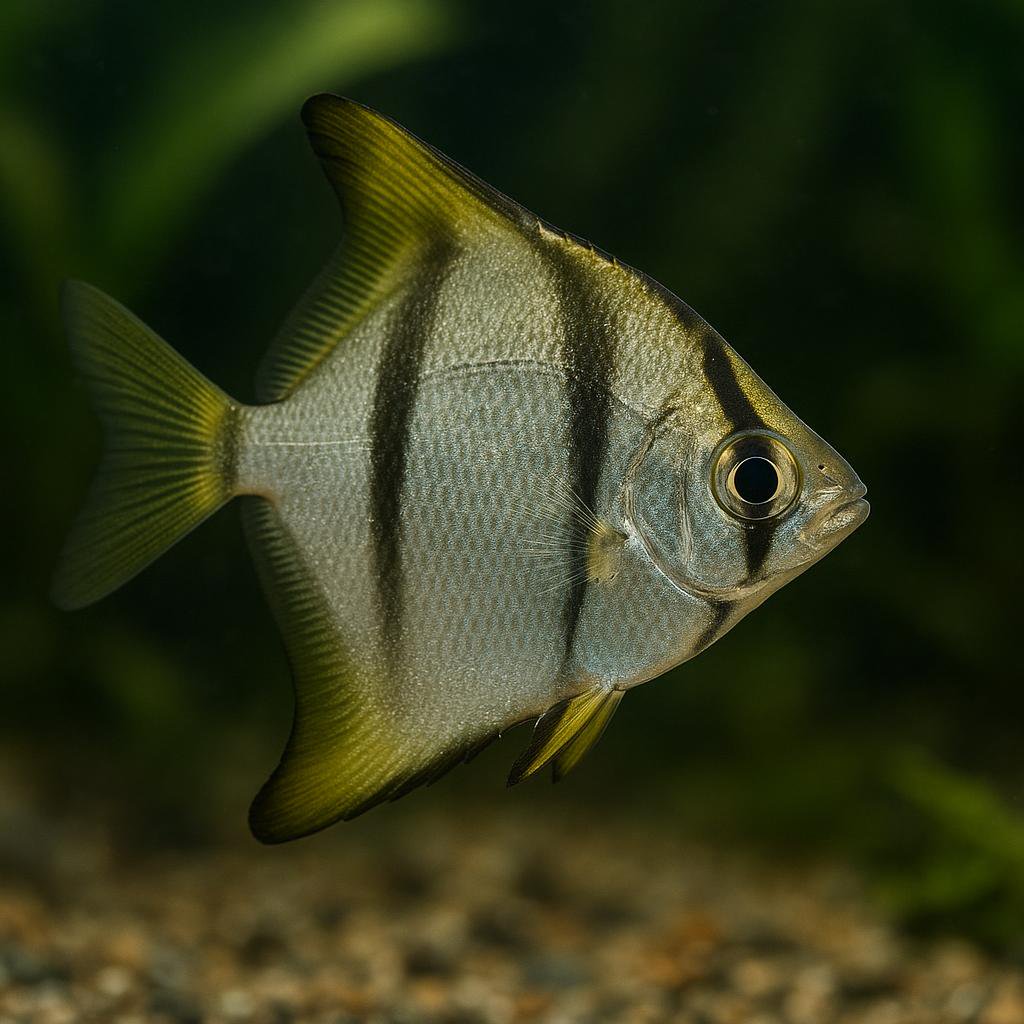
This is that shiny, diamond-shaped "mono" that cruises around in a tight pack and looks like a little silver dinner plate with black bars when it's young. The big thing with African moonies is they're euryhaline-so they'll tolerate freshwater as juveniles, but they really shine long-term in brackish (and can be transitioned toward marine as they mature). Give them a big, open tank and a group, and they turn into nonstop, super fun midwater swimmers.
American shadow goby
Quietula y-cauda
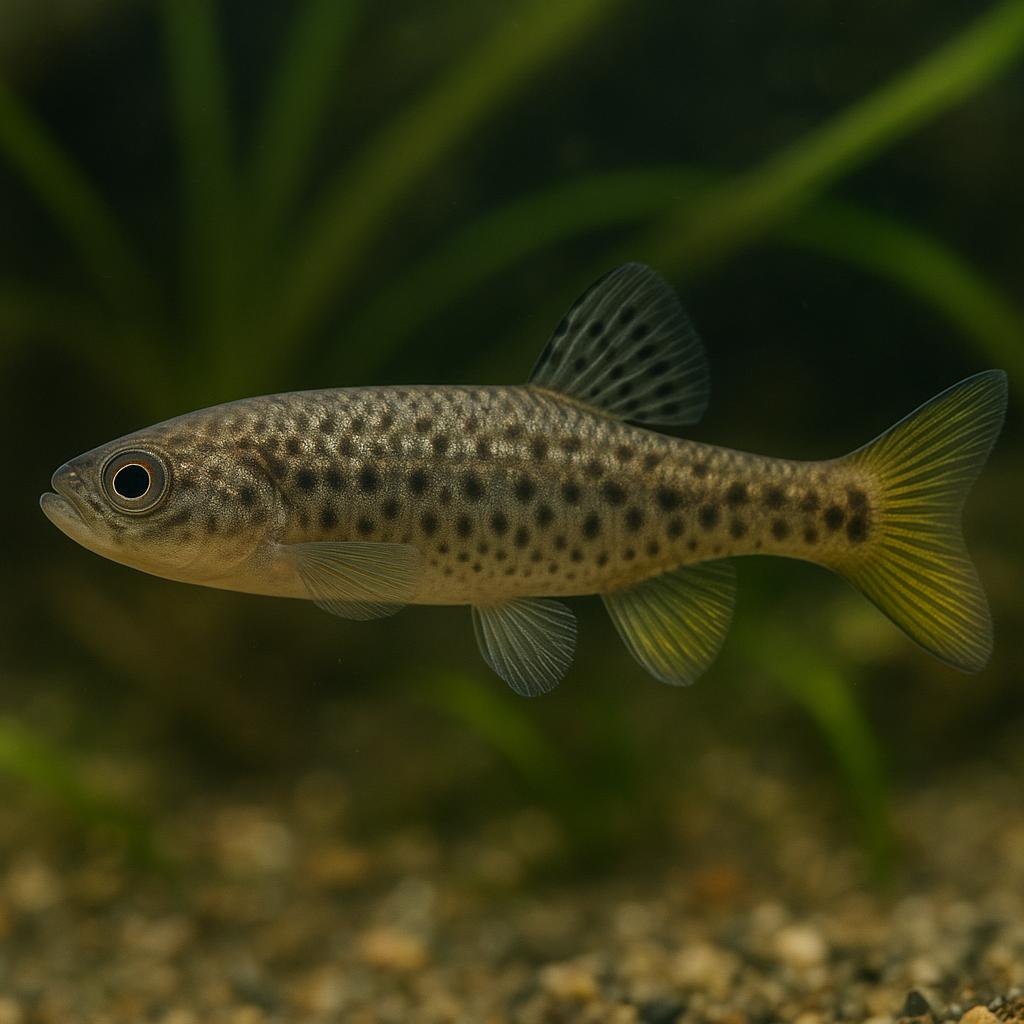
This is a little mudflat goby from California down into the Gulf of California that loves hanging tight to the bottom and vanishing into burrows. The neat tell is that sideways Y-shaped blotch right at the base of the tail, plus the row of dark spots along the side. Its whole vibe is brackish estuary life - calm water, soft substrate, lots of hiding holes.
Banded-tail glassy perchlet
Ambassis urotaenia
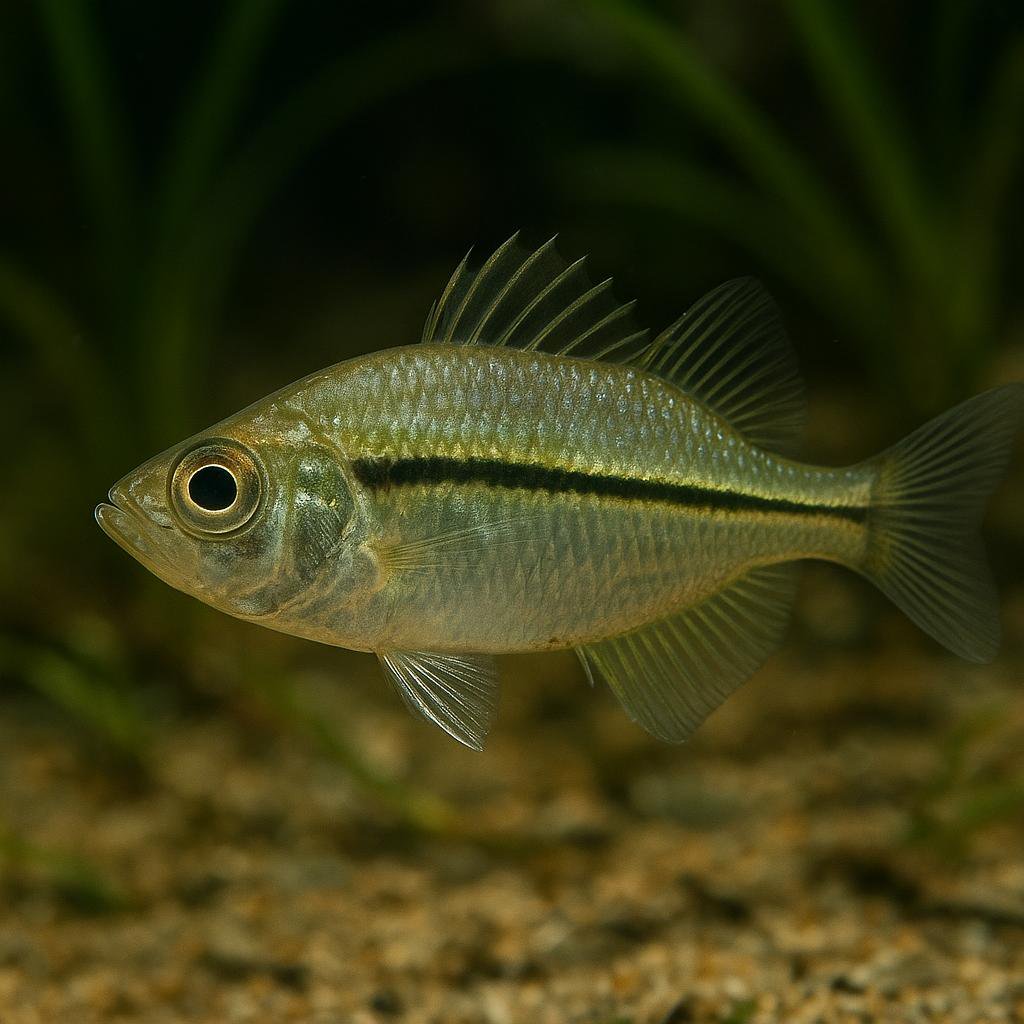
This is one of those see-through glassy perchlets where you can literally watch the organs shimmer when it turns-super cool in the right lighting. In the wild it hangs around river mouths and mangroves and cruises in groups, so it does best when you keep a little gang of them and give them some open swimming room.
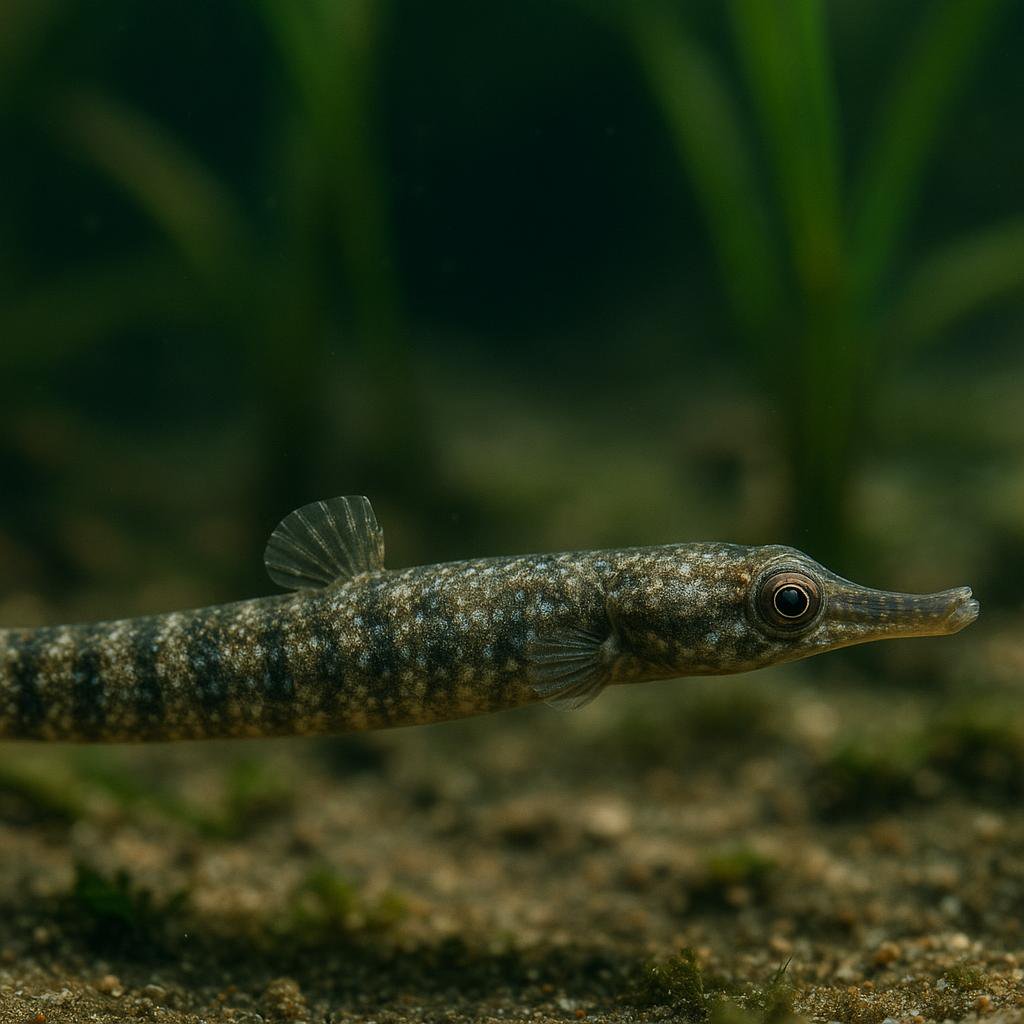
Barbed pipefish
Urocampus nanus
Urocampus nanus (barbed pipefish) occurs in protected inshore and estuarine habitats among seagrass (Zostera) in the Northwest Pacific (southern Japan and adjacent coasts). Like other syngnathids, males brood eggs in a pouch under the tail and produce fully formed young.
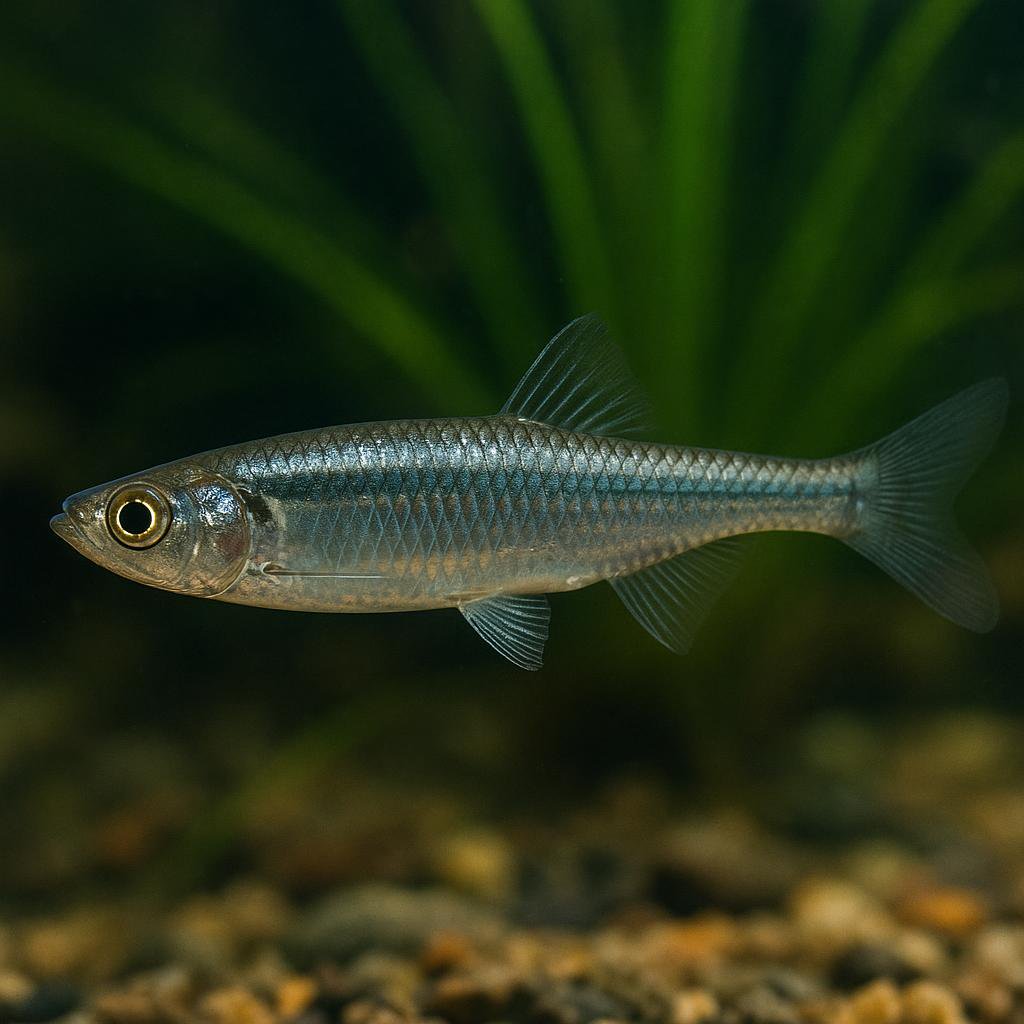
Beach silverside
Atherinella blackburni
This is a little coastal silverside that cruises the shallows in loose groups and flashes like a tiny chrome dart when the light hits it right. In the wild it hangs around beaches, estuaries, and lagoons, picking at small drifting foods in the surf zone. It is cool, but its real "gotcha" is that it is an open-water, salt-tolerant schooling fish that does best in bigger, well-oxygenated setups rather than a typical planted community tank.
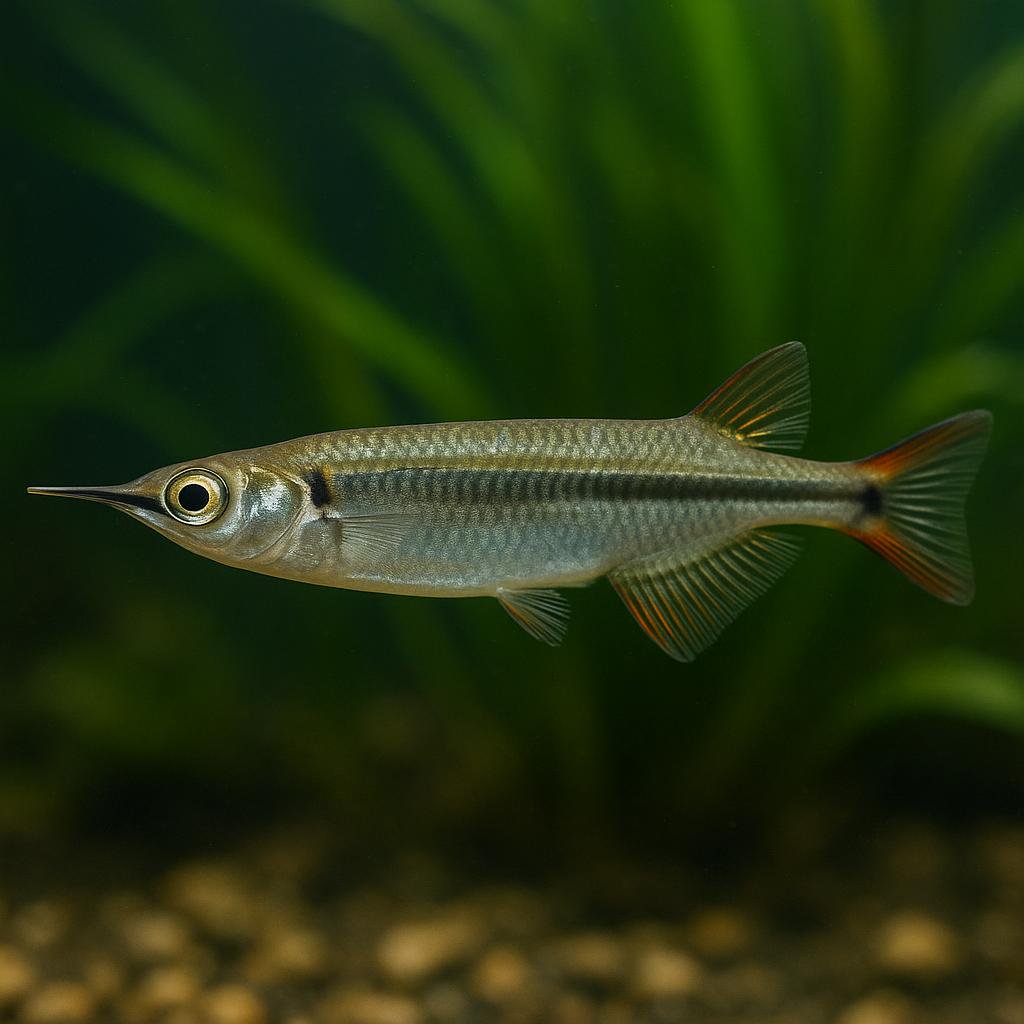
Buffon's river-garfish
Zenarchopterus buffonis
This sleek, surface-dwelling halfbeak has a distinct dark stripe along the snout and is typically found at the surface in coastal waters, estuaries, and rivers where it feeds on terrestrial insects. In aquaria it does best with floating/surface foods and a secure cover, and it requires brackish (or marine) conditions long-term. Reproduction is internally fertilized; FishBase lists the species as ovoviviparous.
More to Explore
Discover more brackish species.
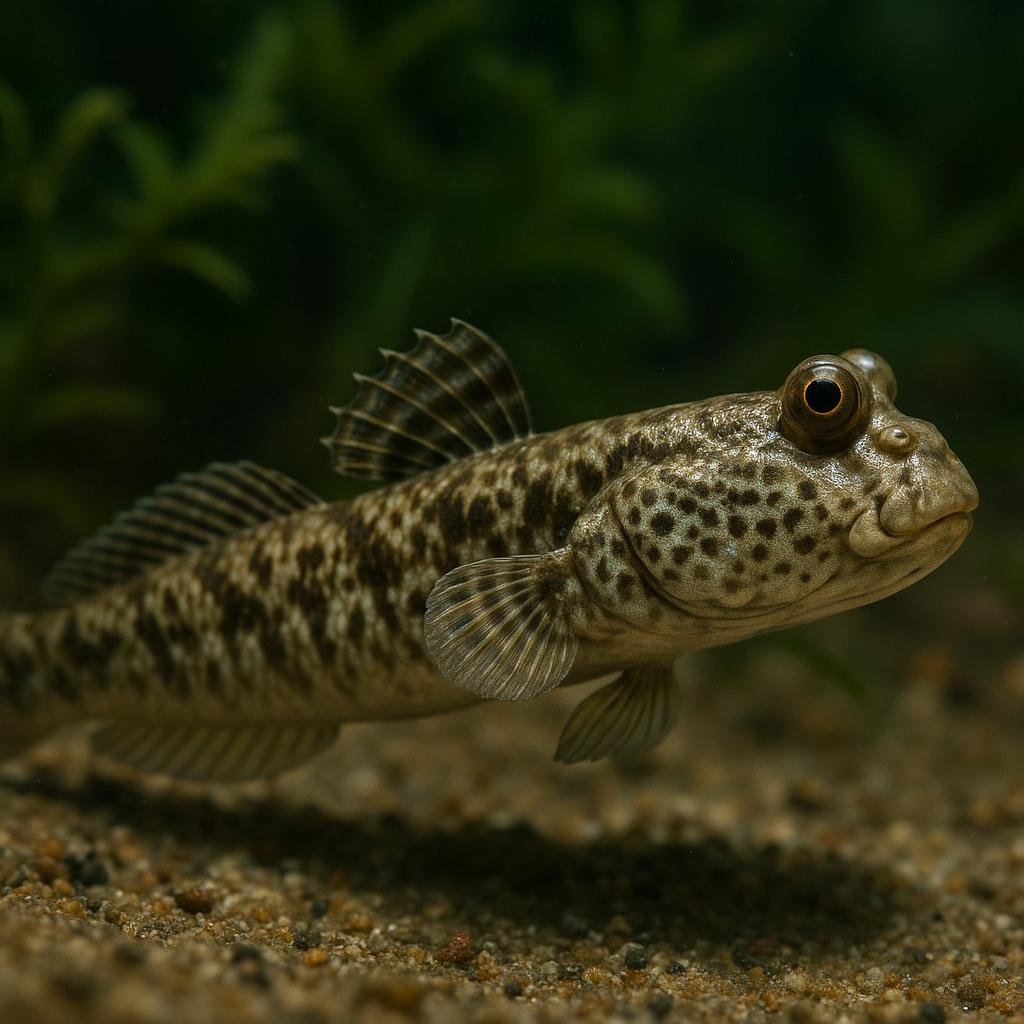
Atlantic Mudskipper
Periophthalmus barbarus
This is that wild little amphibious goby that straight-up climbs around on land like it forgot it was a fish. They've got big googly eyes, tons of personality, and they'll perch, hop, and patrol their territory-honestly more like a tiny crabby lizard than a "regular" aquarium fish.
Banded Archerfish
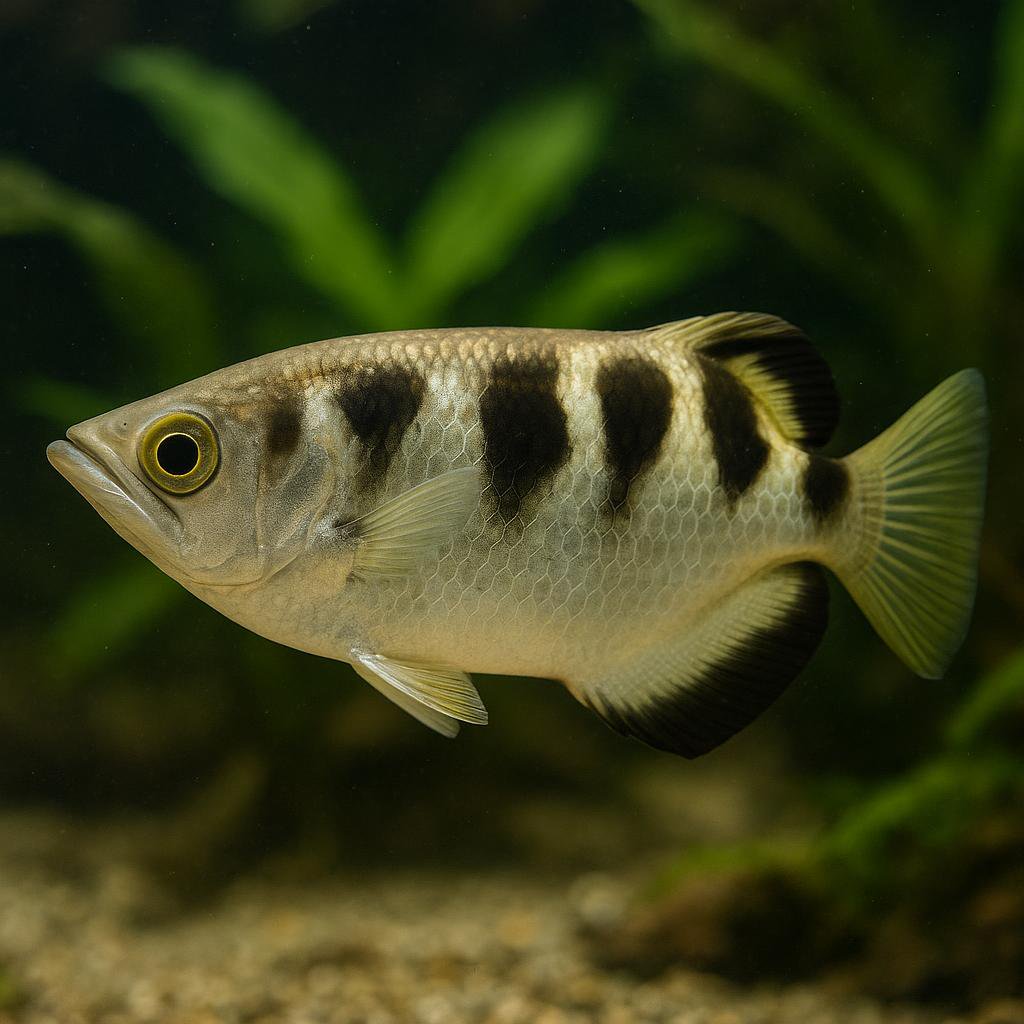
Toxotes jaculatrix
This is the fish that literally spits jets of water to knock insects off branches-watching one "take aim" is unreal. They're super aware of what's going on outside the tank and will even learn to beg and snipe food from the surface once they settle in. Give them height and some open swimming room and they act like little aquatic sharpshooters.
Banded mulletgoby
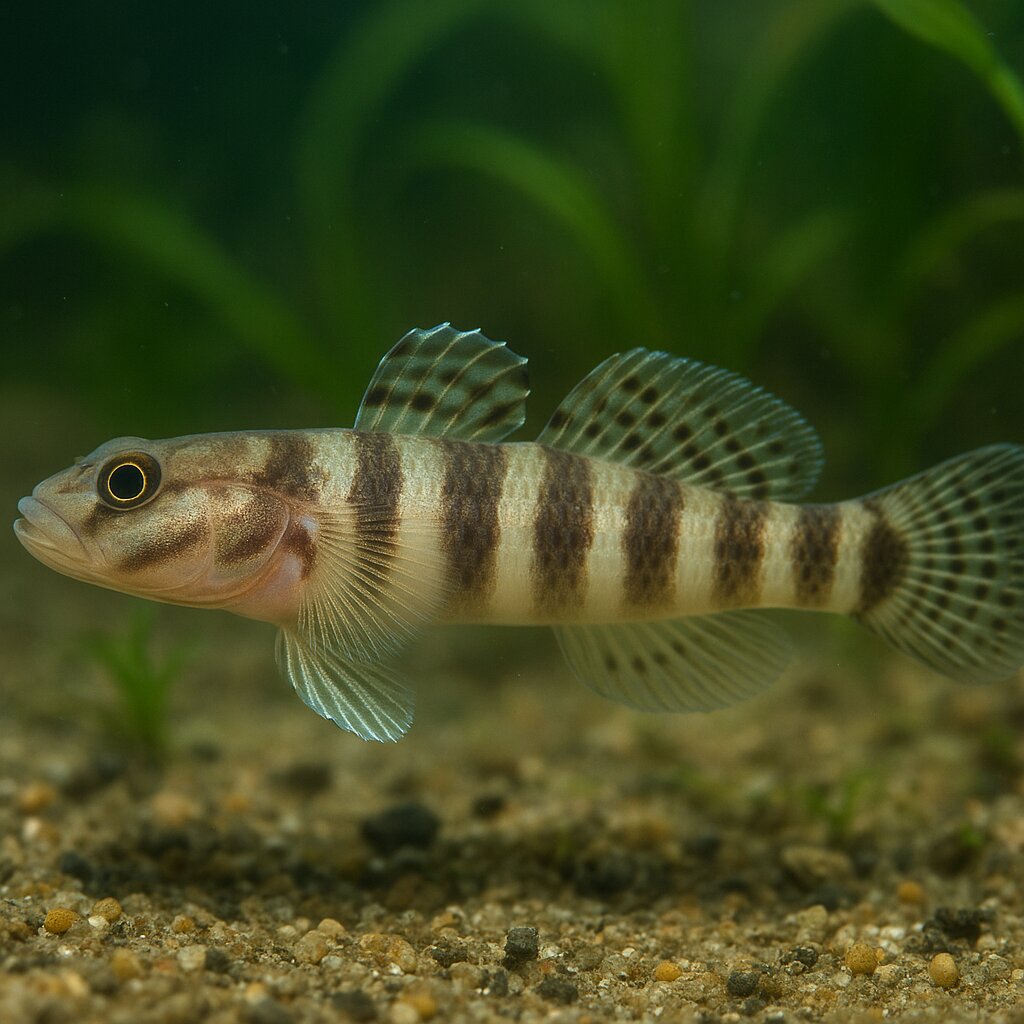
Hemigobius hoevenii
Neat little mangrove goby that hugs the bottom and hangs around leaf litter. The bold diagonal bars and tail spot look great, and it hunts like a tiny ambush predator, darting out for bites. Keep it gently brackish and it settles in nicely, cruising among roots and wood.
Barred mudskipper
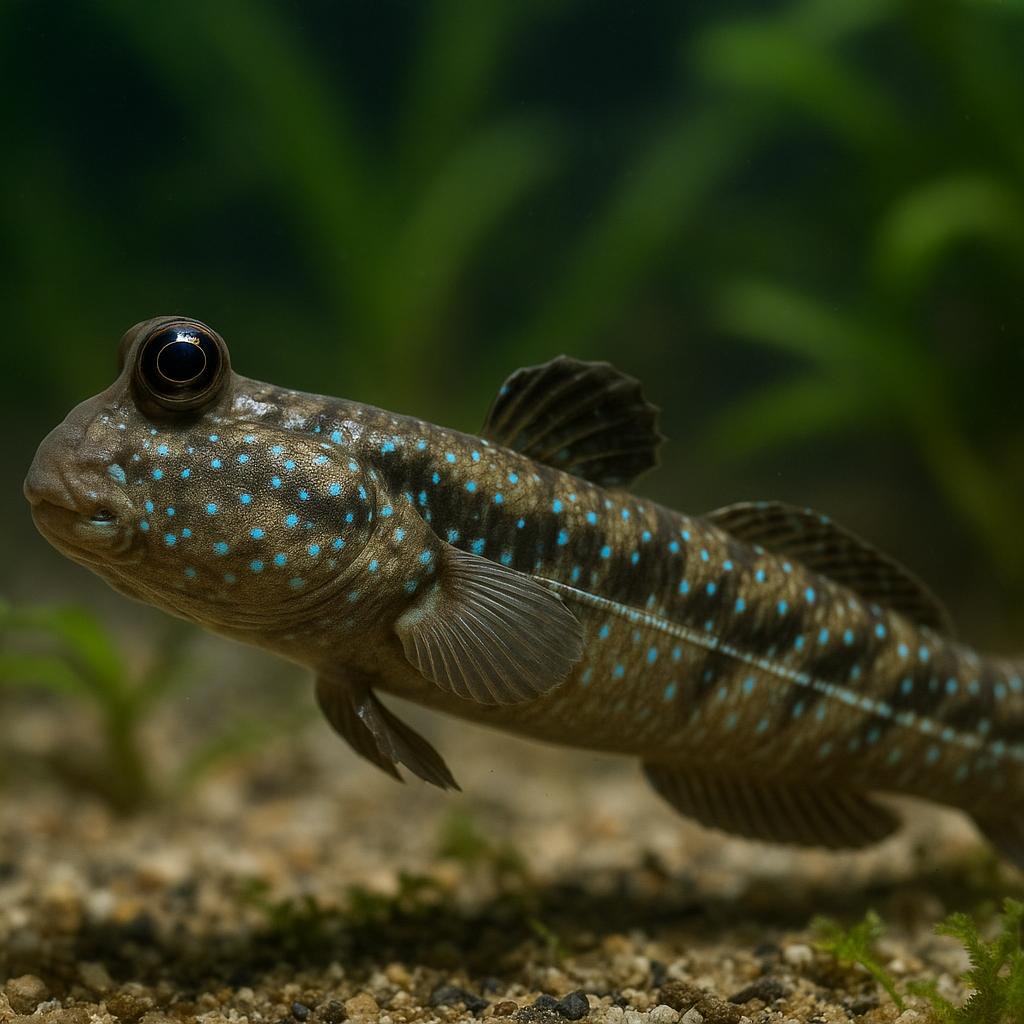
Periophthalmus argentilineatus
This is one of those classic "walks around like it owns the place" mudskippers-big goofy eyes, climbs, hops, and spends a ton of time out on the mud when it's humid. In the wild it lives on intertidal mangrove/nipa mudflats and even shuttles between little pools and open air, hunting worms, insects, and small crustaceans. It's super fun to watch, but it really wants a brackish paludarium setup (not a normal aquarium).
Bellfish
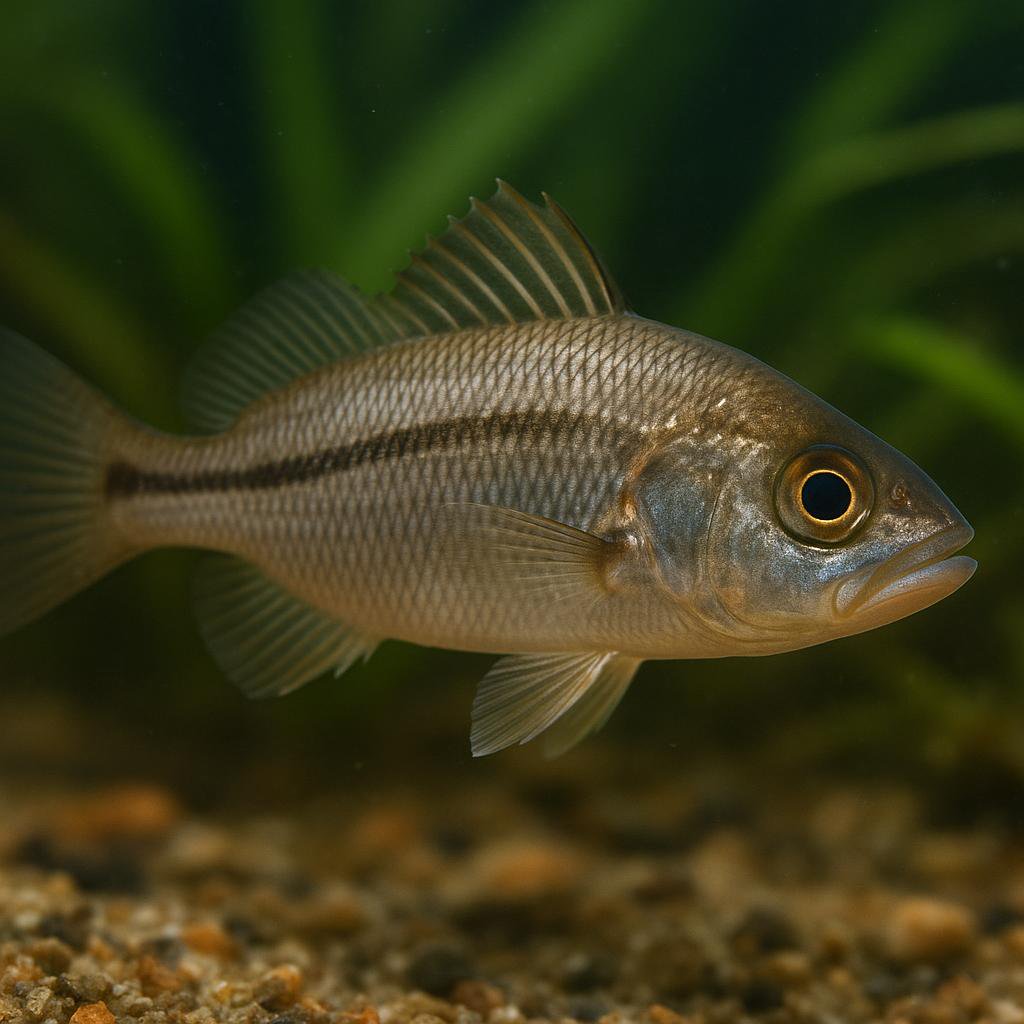
Johnius fuscolineatus
Johnius fuscolineatus (Bellfish/African bearded croaker) is a small coastal sciaenid from the southwestern/western Indian Ocean (Mozambique, South Africa, Madagascar), occurring in shallow marine waters (reported 0–50 m) and also associated with coastal/estuarine habitats.
Blotched eelpout
Zoarces gillii
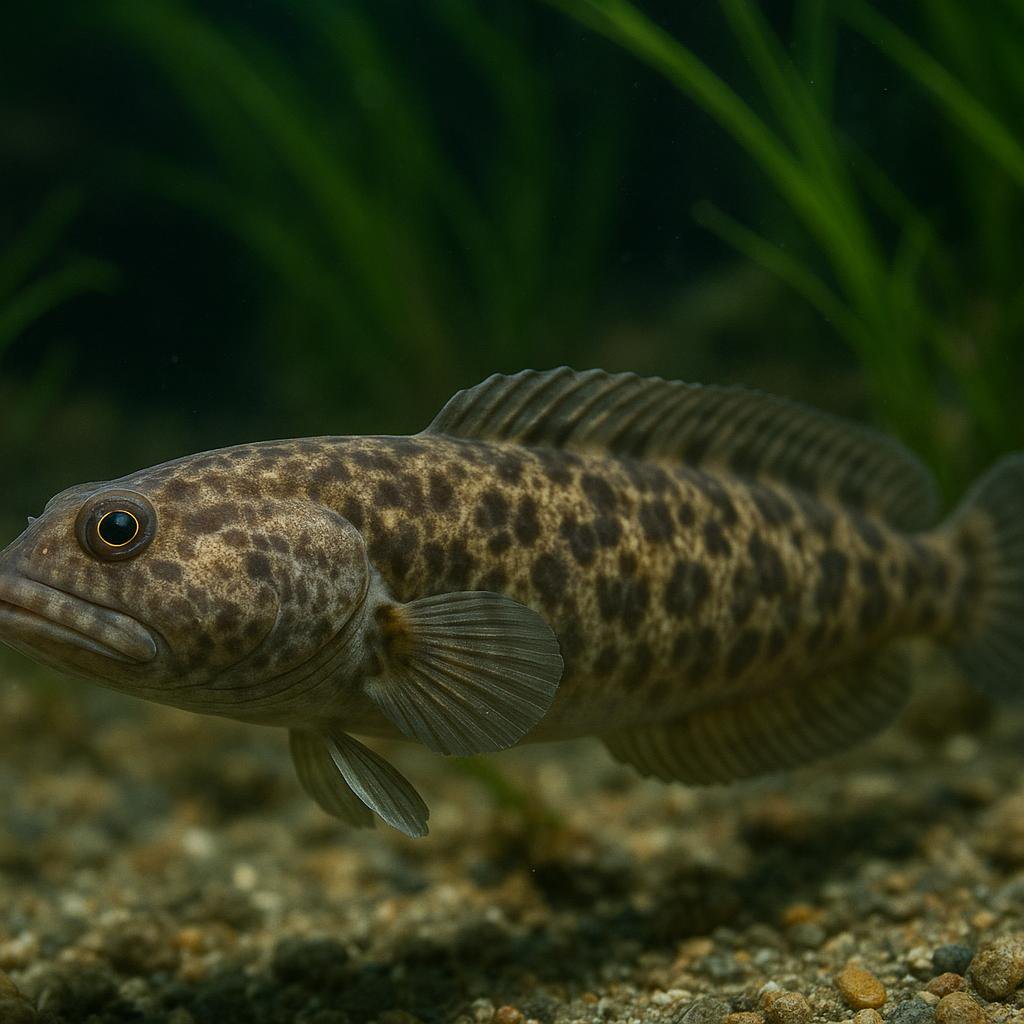
Zoarces gillii is a cold-temperate eelpout from the Northwest Pacific that hugs the bottom over sandy-mud inshore areas and even pushes into estuaries. It's got that long, eel-like body and a sneaky, sit-on-the-bottom predator vibe - very much a cool-water, brackish-to-marine oddball rather than a typical tropical aquarium fish.
Looking for other species?