

Barbed pipefish
Urocampus nanus
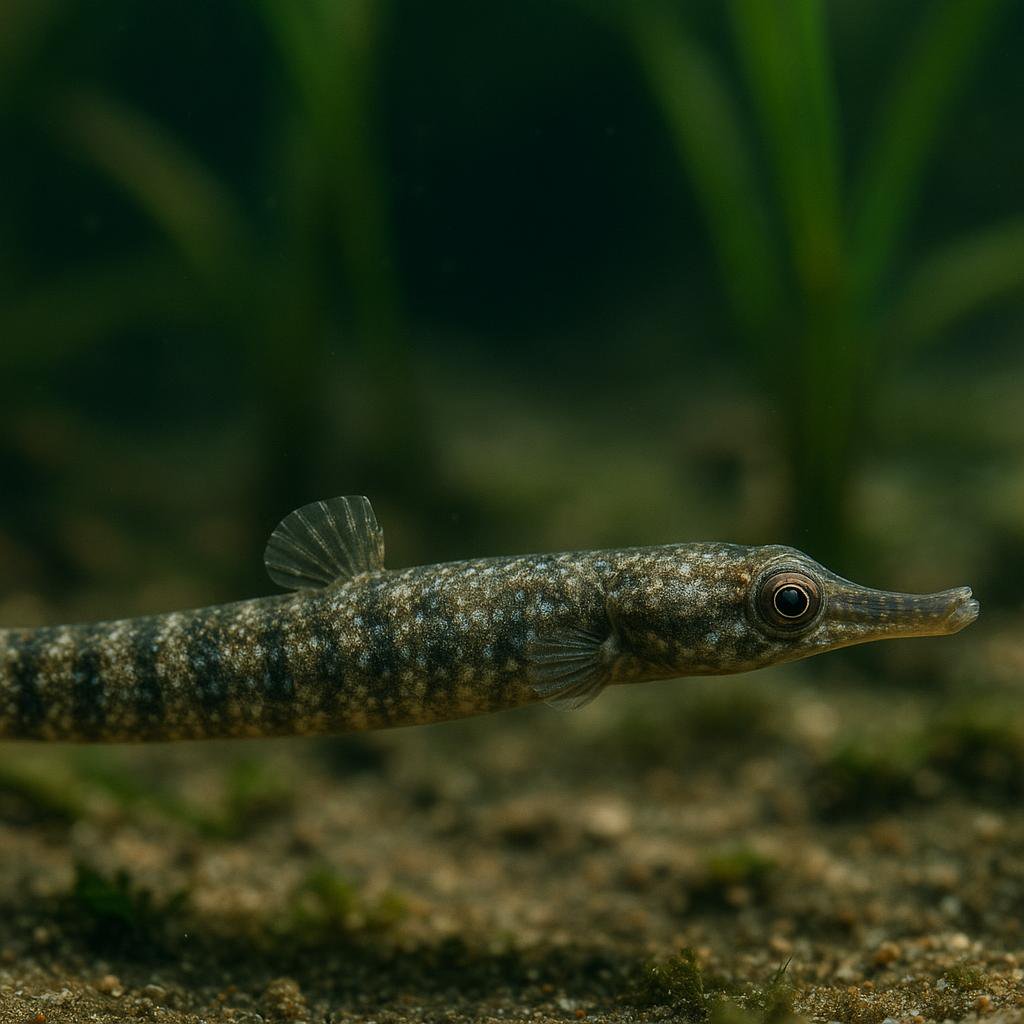
The Barbed pipefish has a slender body covered in bony plates, featuring distinctive barbed spines along its back and a mottled green-brown coloration.
This page includes AI-generated images. Why am I seeing AI images?
About the Barbed pipefish
Urocampus nanus (barbed pipefish) occurs in protected inshore and estuarine habitats among seagrass (Zostera) in the Northwest Pacific (southern Japan and adjacent coasts). Like other syngnathids, males brood eggs in a pouch under the tail and produce fully formed young.
Also known as
Quick Facts
Size
13.4 cm
Temperament
Peaceful
Difficulty
Expert
Min Tank Size
20 gallons
Lifespan
3-5 years
Origin
Northwest Pacific (southern Japan and adjacent coasts)
Diet
Carnivore/micro-predator - copepods and other small crustaceans; in captivity needs small live/frozen foods (e.g., enriched brine, copepods, small mysis)
Water Parameters
20-26°C
8-8.4
7-12 dGH
Need a heater for this species?
This species needs 20-26°C in a 20 gallon tank. Use our heater calculator to find the right wattage.
Calculate heater sizeCare Notes
- Give them a long, mature brackish tank with tons of hitching posts (macroalgae, branching rock, fake gorgs) and gentle flow - they get stressed when they cannot grab on.
- Keep salinity stable (this species is recorded from protected inshore/estuarine habitats and is listed as marine and brackish in FishBase); choose and maintain an appropriate specific gravity based on your collection locality and acclimation history, and prioritize excellent water quality and low nitrogen waste.
- They are slow, picky hunters, so plan on live foods: enriched baby brine, copepods, and small mysis; target-feed with a pipette near their snout so the fast fish do not steal it all.
- Start a pod culture/refugium or you will be buying food nonstop - a steady supply of tiny prey is basically the whole game with Urocampus.
- Tankmates: tiny, calm brackish stuff that will not compete at feeding time (small gobies, bumblebee gobies with caution); avoid anything nippy or fast like monos, scats, archerfish, and most puffers.
- Skip sharp decor and high-velocity powerheads - they snag tails and get sucked to intakes, so sponge-guard everything and keep the aquascape smooth.
- Watch for wasted bellies and rapid breathing - by the time you notice they are thin, they have been losing the food race for weeks; separate and target-feed if one starts falling behind.
- Breeding is cool but not casual: males brood the eggs, and you will need a nursery with constant tiny live foods (copepods/rotifers) because the babies do not take flakes or pellets.
Compatibility
Good Tankmates
- Nerite snails (and other small brackish-safe snails) - totally ignore the pipefish, help with algae, and they do not compete much at feeding time
- Amano shrimp (if your salinity is in their comfort zone) - good cleanup crew, generally peaceful, and they do not hassle pipefish
- Bumblebee gobies (Brachygobius spp.) - small, brackish-friendly, perch-and-wait types, and they are usually chill with pipefish as long as you feed enough tiny foods
- Halfbeaks (brackish species) - they mostly stick to the surface, are not usually bullies, and they leave pipefish alone if the tank is not cramped
- Small, calm livebearers like mollies (in brackish) - they are active but usually not nasty, and they can coexist if you make sure the pipefish get target-fed
Avoid
- Figure 8 puffer - sounds tempting in brackish, but in practice they are curious and nippy and will stress pipefish to death
- Knight goby (Stigmatogobius sadanundio) - too boisterous and predatory once it sizes up, and it will outcompete them hard at mealtime
- Archerfish - cool fish, wrong vibe here: fast, bold eaters that will starve pipefish out and generally make them hide all day
Where they come from
Barbed pipefish (Urocampus nanus) are little coastal pipefish from the Indo-Pacific. You usually find their cousins in sheltered spots like seagrass beds, mangrove edges, and quiet estuaries where the water swings from salty to slightly fresh depending on tides and rain.
That background matters because they are built for slow, cluttered habitats and steady grazing on tiny live foods - not open water, not strong flow, and definitely not a community tank feeding frenzy.
Setting up their tank
Think of their tank like a calm brackish lagoon with lots of things to wrap a tail around. They are not fast swimmers, so you are setting the tank up so the pipefish can hang out, hunt, and not get pushed around.
- Tank size: I would not do less than 15-20 gallons for a pair or small group, mostly for stability and food production.
- Salinity: keep it in the low-brackish range and stable (around 1.005-1.012 specific gravity works for many keepers). Pick a number and stick to it.
- Temperature: mid-70s F is a comfortable target. Avoid hot swings.
- Flow: gentle, with dead spots broken up just enough that food does not rot everywhere.
- Filtration: oversized biological filtration plus a sponge prefilter on any intake. Pipefish and bare intakes do not mix.
- Lighting: moderate. Enough for macroalgae and your eyes, not a blasting reef spotlight.
Decor-wise, give them hitching posts everywhere: fake seagrass, branching macroalgae (Caulerpa is common in brackish setups), gorgonian-style decor, or even zip-tied plastic craft mesh covered in algae. The goal is lots of vertical and angled structure so they can anchor and peck for food.
These are expert fish mostly because of food and stability. A brand-new brackish tank that is not mature yet is a rough place for them. Let the tank season, build microfauna, and get your feeding routine nailed down first.
If you can, seed the tank with live rock or live sand that has been kept brackish (not straight marine, not freshwater), and add some macroalgae. A refugium section or a hang-on breeder box full of chaeto/macro works surprisingly well as a pod factory.
What to feed them
This is the make-or-break part. Barbed pipefish are slow, deliberate hunters with tiny mouths. Most of them will ignore flakes and pellets forever. Plan on live and frozen foods sized for a small pipefish.
- Best staple in my experience: enriched live baby brine shrimp (BBS) and enriched adult brine for larger individuals.
- Also great: live or frozen mysis if they are big enough and will take it (many need smaller prey).
- Really useful: copepods (Tisbe-type), amphipods (small), and other cultured microcrustaceans.
- Occasional: chopped frozen foods if they will accept it, but do not count on it.
I have had the best luck target-feeding with a turkey baster or pipette. Turn the flow down, gently puff a cloud of live food right in front of their hitching area, and give them time. They do not rush. If tankmates are present, they will steal everything before the pipefish even line up a shot.
Enrich brine shrimp. Plain brine is like feeding popcorn. Use a quality enrichment (HUFA-type) for 12-24 hours before feeding, especially if brine is your main food.
Watch the belly. A pipefish that is eating well has a gently rounded abdomen, not pinched behind the head. The nice part is they are easy to read once you get used to them.
How they behave and who they get along with
They are calm, curious little sticks. Most of the day is hitching, scanning, and pecking at tiny moving dots. They do better in pairs or small groups if you have the space and can keep food heavy, but one can also do fine if it is not competing.
- Good tankmates: other slow, peaceful brackish fish that do not outcompete them (often: none, or very carefully chosen).
- Avoid: puffers, scats, monos, most gobies that pounce on pods, fast eaters, fin nippers, and anything curious that mouths at them.
- Inverts: small snails and some hardy brackish shrimp can work, but large hungry shrimp may steal food constantly.
Honestly, they shine in a species tank or a pipefish-first tank. The more you try to turn it into a mixed brackish community, the harder feeding gets.
They are not aggressive, but they do get stressed by chaos. If they are always hiding, changing hitching spots constantly, or breathing fast, something in the tank is bothering them (flow, tankmates, or water quality).
Breeding tips
Like seahorses, pipefish dads carry the young. You will usually notice courtship as gentle parallel swimming and lots of attention between a pair, then the male develops a more obvious brood area and starts looking a bit fuller.
If you get them spawning, the hard part is raising the babies. The fry are tiny and need tiny live foods multiple times a day. Think rotifers and very small copepods right away, then newly hatched brine later. A separate rearing container with gentle air and daily small water changes is way easier than trying to raise them in the display.
Do not go into breeding assuming baby brine shrimp alone will do it. For most pipefish fry, that is too big at the start and you will lose them fast.
Common problems to watch for
- Starvation: the most common issue. They can look fine for a while, then drop weight quickly. Watch body shape and feeding response.
- Getting outcompeted: even peaceful fish can make them fail just by being quicker at food.
- Intake accidents: weak swimmers + strong filter intakes is a bad combo. Use sponges and keep flow gentle.
- Sudden salinity changes: top off evaporated water with fresh water, not saltwater, and do not swing specific gravity around during water changes.
- Bacterial issues and tail problems: stress and dirty water show up as sores, frayed fins, or tail tip damage from rough decor.
- Gas bubble problems: can happen in syngnathids if conditions are off. Keep temps reasonable, avoid supersaturation, and keep water clean.
If something looks off, my first move is always the boring stuff: test ammonia/nitrite, check nitrate, check salinity with a calibrated refractometer, and look at temperature swings. Then I watch an actual feeding. Most pipefish problems show up there before they show up anywhere else.
Avoid copper medications with pipefish. If you need to treat disease, research syngnathid-safe options and consider a separate hospital tank with very gentle aeration and stable salinity.
Similar Species
Other brackish peaceful species you might be interested in.
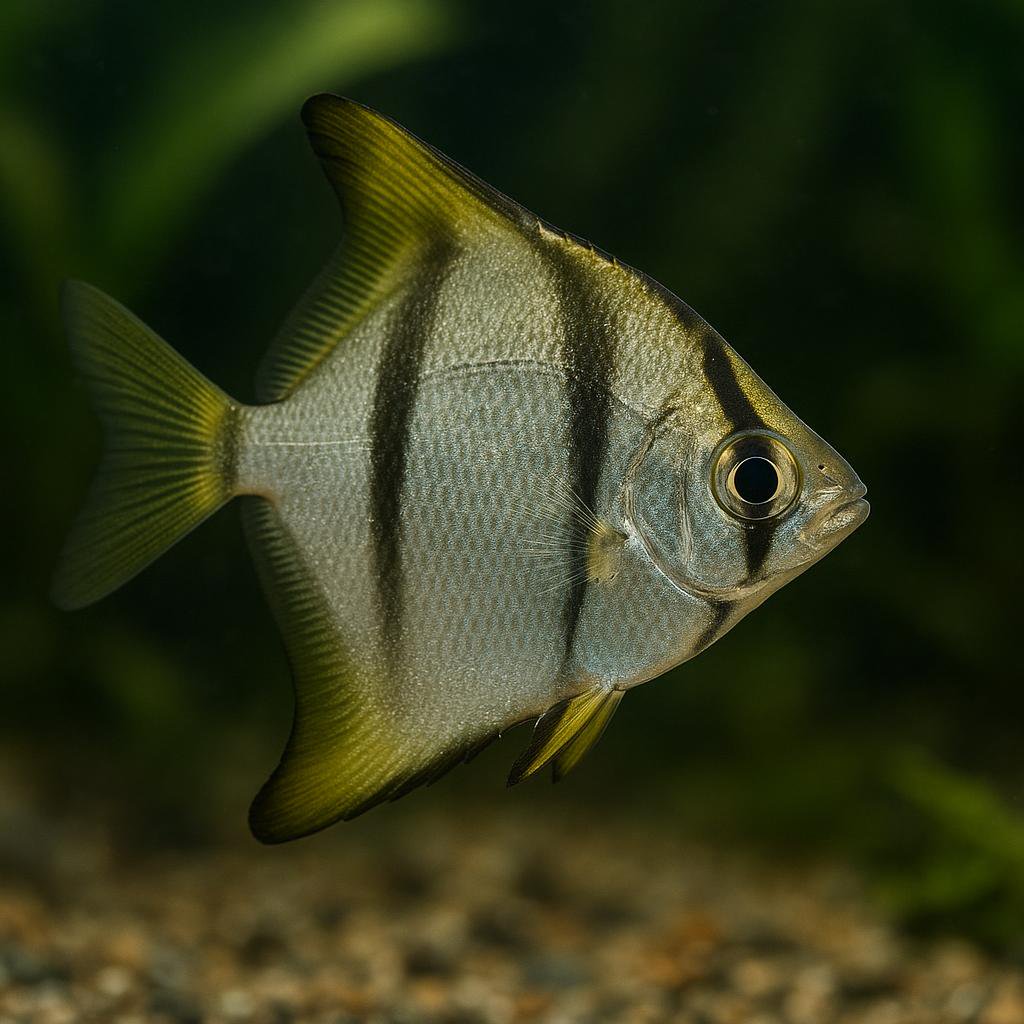
African moony
Monodactylus sebae
This is that shiny, diamond-shaped "mono" that cruises around in a tight pack and looks like a little silver dinner plate with black bars when it's young. The big thing with African moonies is they're euryhaline-so they'll tolerate freshwater as juveniles, but they really shine long-term in brackish (and can be transitioned toward marine as they mature). Give them a big, open tank and a group, and they turn into nonstop, super fun midwater swimmers.
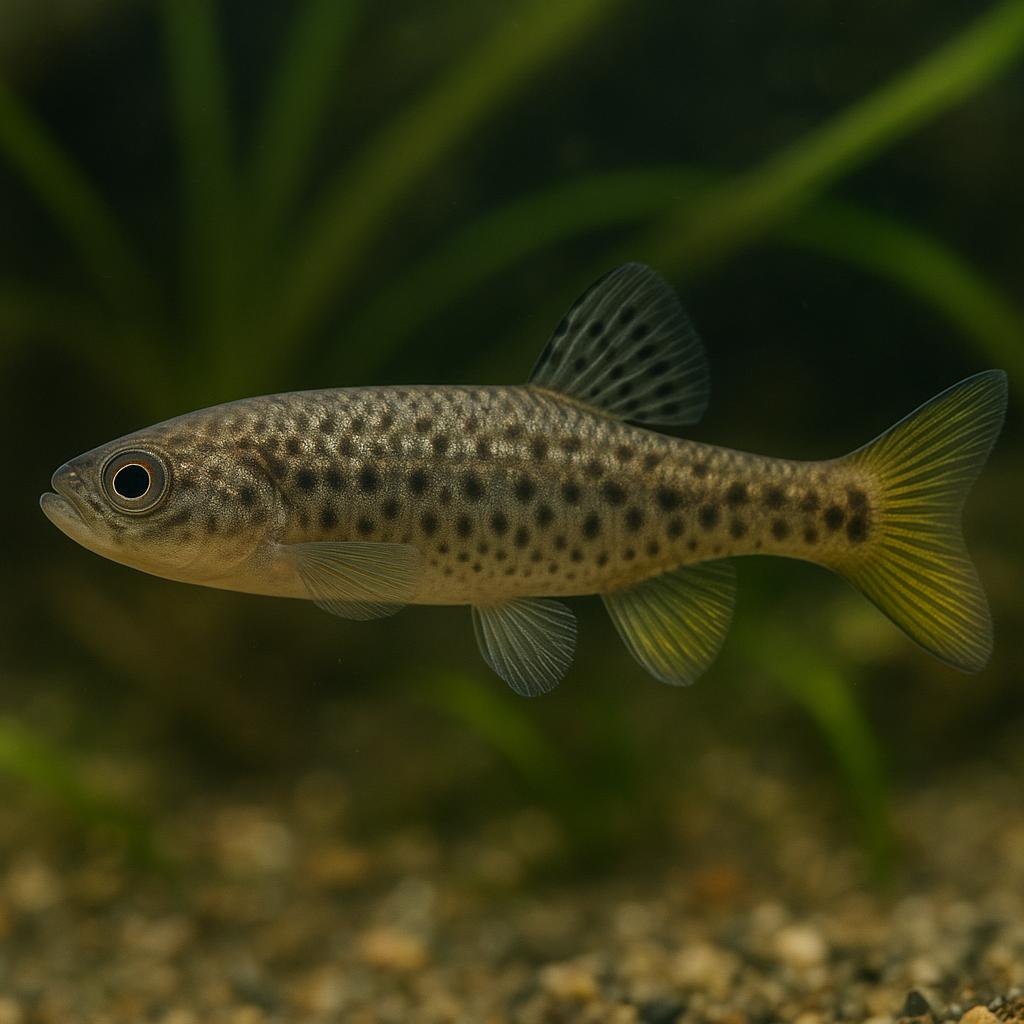
American shadow goby
Quietula y-cauda
This is a little mudflat goby from California down into the Gulf of California that loves hanging tight to the bottom and vanishing into burrows. The neat tell is that sideways Y-shaped blotch right at the base of the tail, plus the row of dark spots along the side. Its whole vibe is brackish estuary life - calm water, soft substrate, lots of hiding holes.
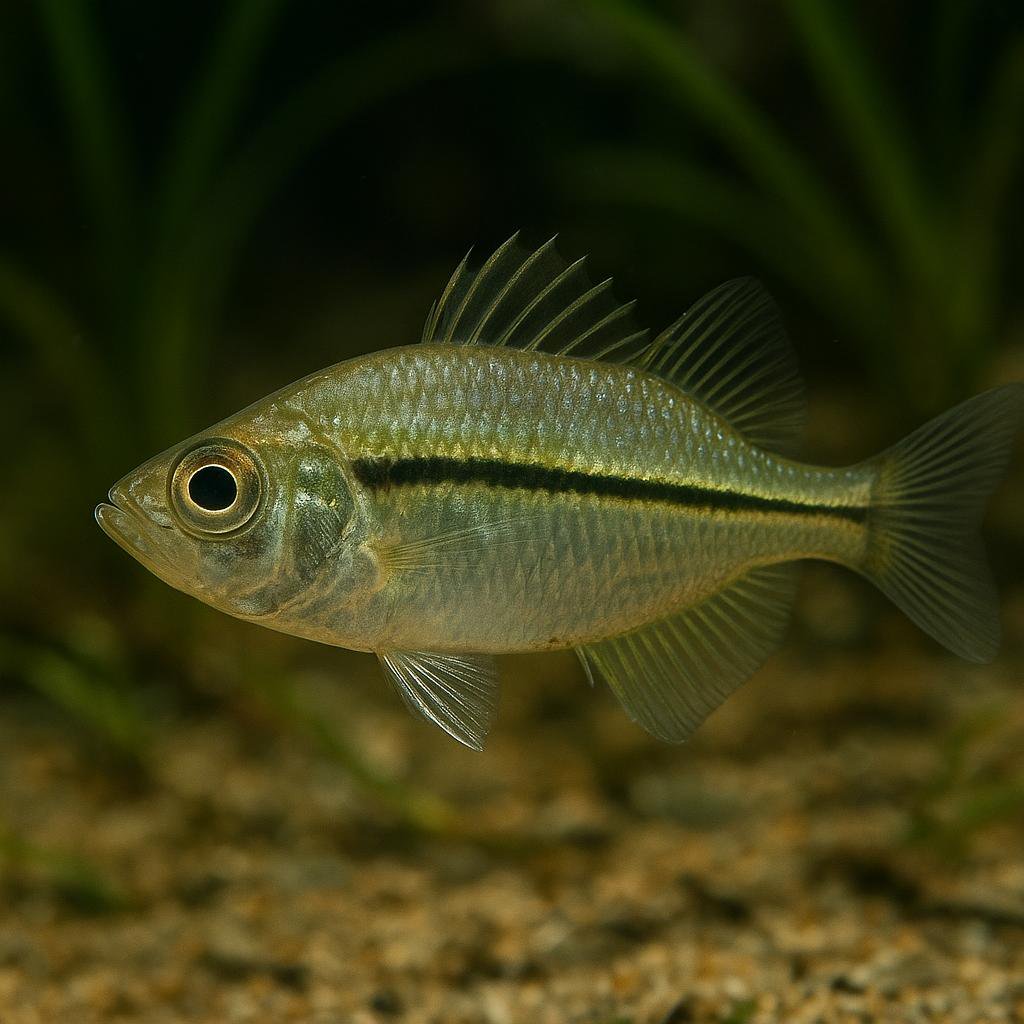
Banded-tail glassy perchlet
Ambassis urotaenia
This is one of those see-through glassy perchlets where you can literally watch the organs shimmer when it turns-super cool in the right lighting. In the wild it hangs around river mouths and mangroves and cruises in groups, so it does best when you keep a little gang of them and give them some open swimming room.
Beach silverside
Atherinella blackburni
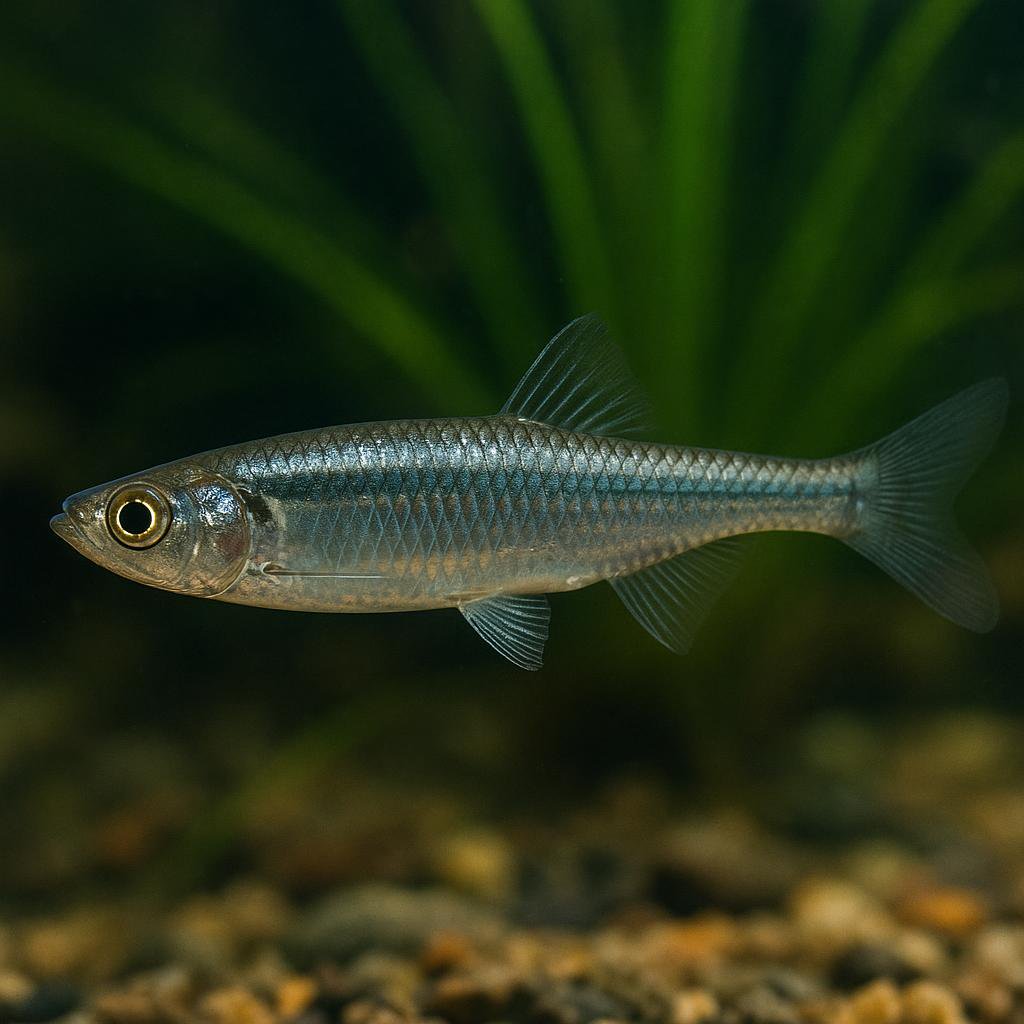
This is a little coastal silverside that cruises the shallows in loose groups and flashes like a tiny chrome dart when the light hits it right. In the wild it hangs around beaches, estuaries, and lagoons, picking at small drifting foods in the surf zone. It is cool, but its real "gotcha" is that it is an open-water, salt-tolerant schooling fish that does best in bigger, well-oxygenated setups rather than a typical planted community tank.
Buffon's river-garfish
Zenarchopterus buffonis
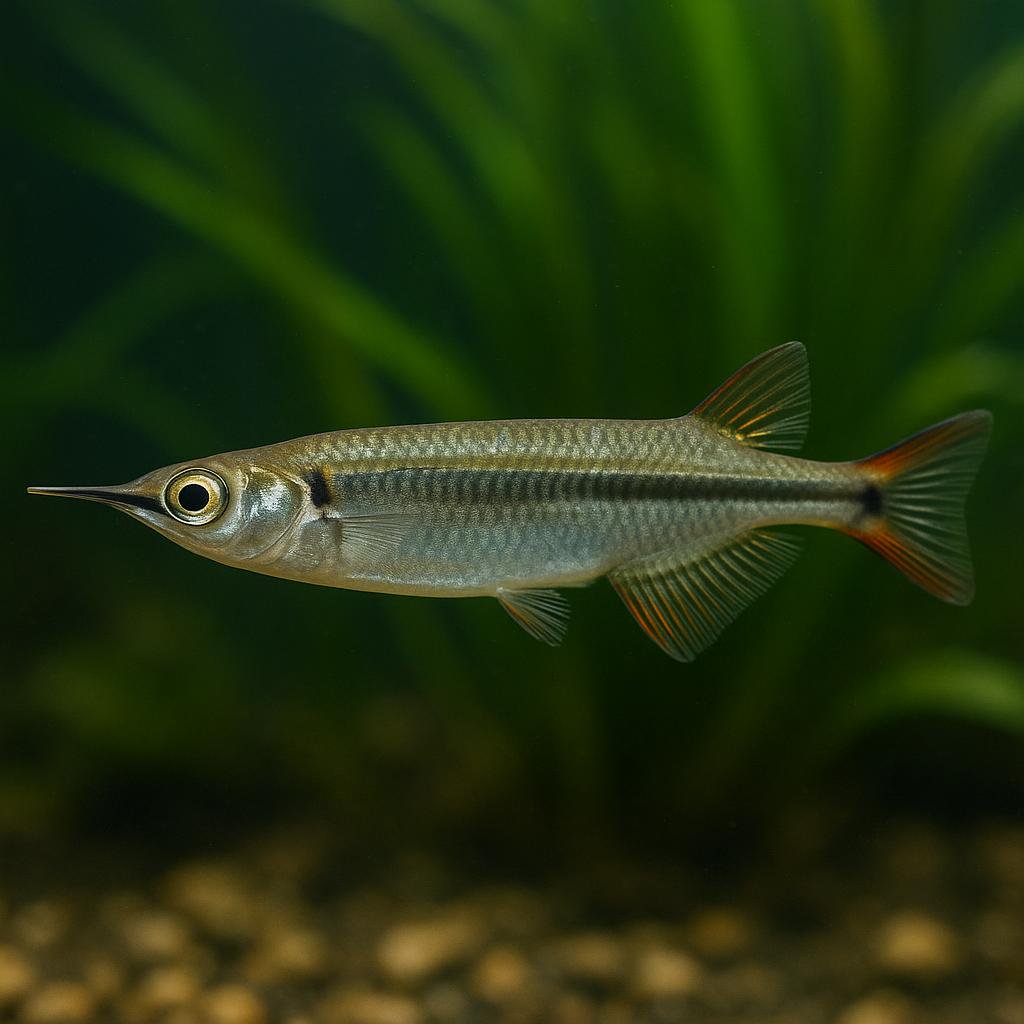
This sleek, surface-dwelling halfbeak has a distinct dark stripe along the snout and is typically found at the surface in coastal waters, estuaries, and rivers where it feeds on terrestrial insects. In aquaria it does best with floating/surface foods and a secure cover, and it requires brackish (or marine) conditions long-term. Reproduction is internally fertilized; FishBase lists the species as ovoviviparous.
Cuban cusk-eel
Lucifuga subterranea
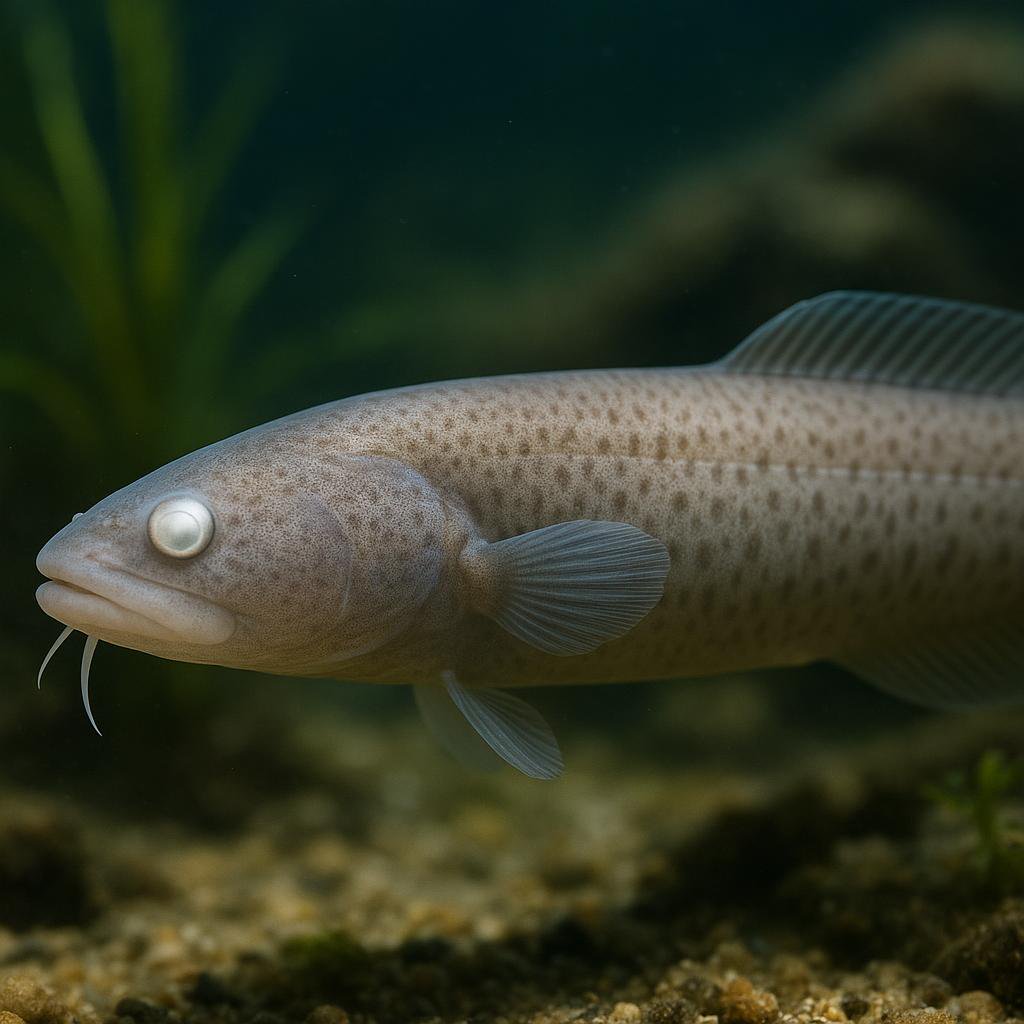
A blind, cave- and sinkhole-dwelling livebearing brotula (Bythitidae) endemic to Cuba that feeds on small crustaceans (e.g., isopods) in subterranean waters.
More to Explore
Discover more brackish species.
Atlantic Mudskipper
Periophthalmus barbarus
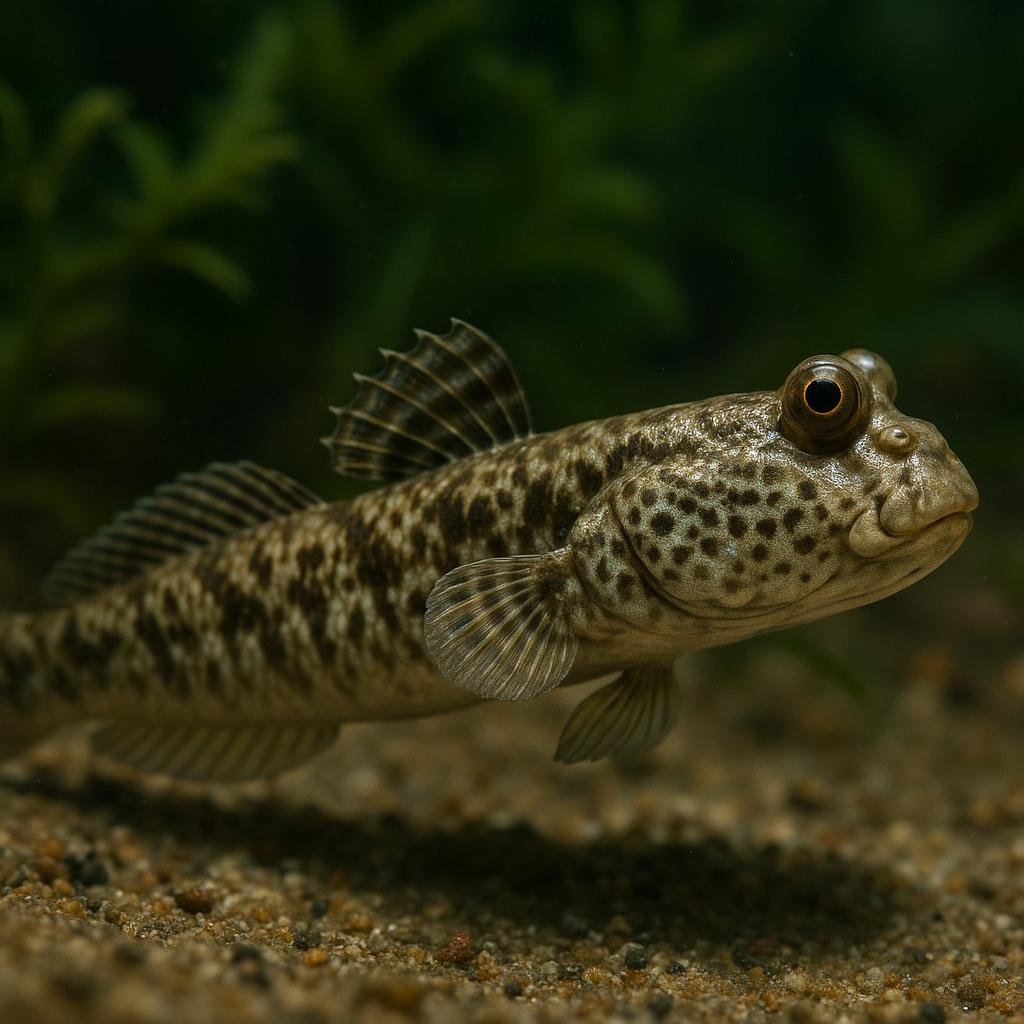
This is that wild little amphibious goby that straight-up climbs around on land like it forgot it was a fish. They've got big googly eyes, tons of personality, and they'll perch, hop, and patrol their territory-honestly more like a tiny crabby lizard than a "regular" aquarium fish.
Banded Archerfish
Toxotes jaculatrix
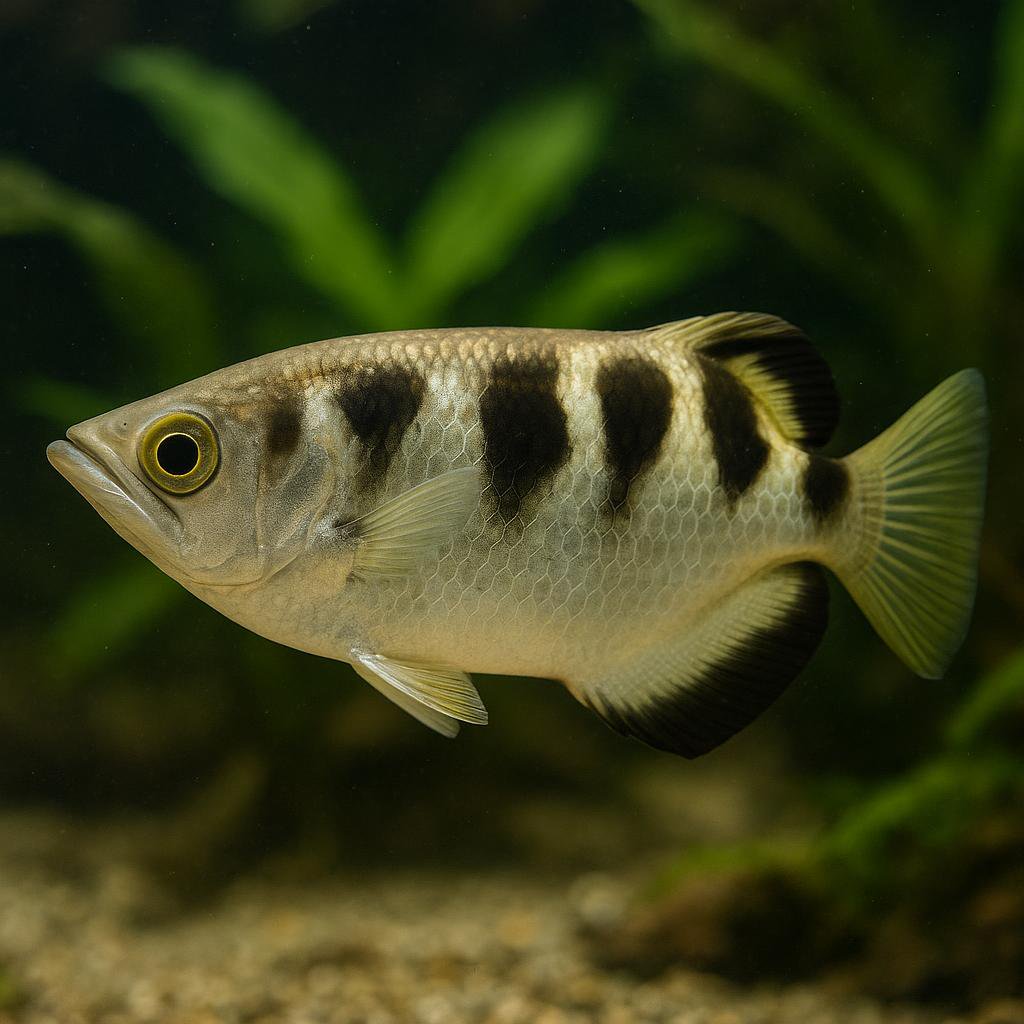
This is the fish that literally spits jets of water to knock insects off branches-watching one "take aim" is unreal. They're super aware of what's going on outside the tank and will even learn to beg and snipe food from the surface once they settle in. Give them height and some open swimming room and they act like little aquatic sharpshooters.
Banded mulletgoby
Hemigobius hoevenii
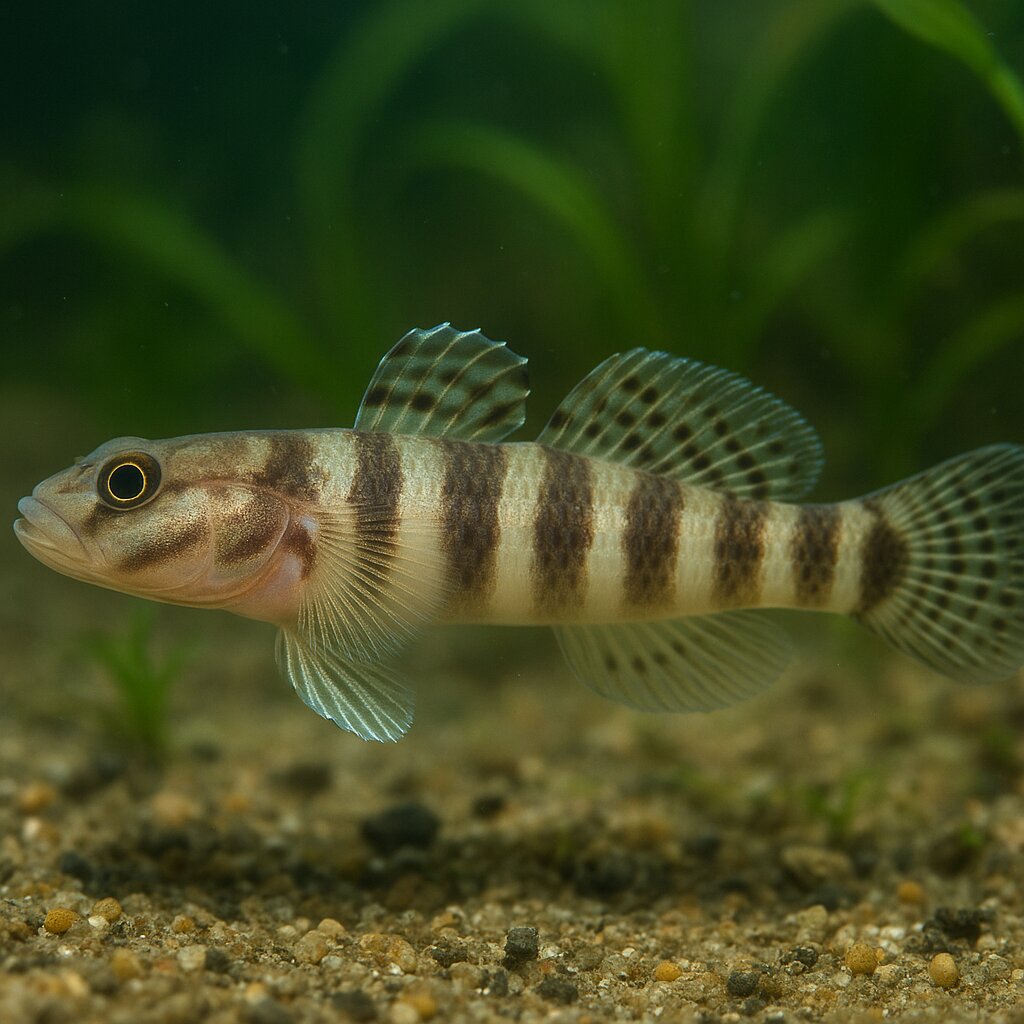
Neat little mangrove goby that hugs the bottom and hangs around leaf litter. The bold diagonal bars and tail spot look great, and it hunts like a tiny ambush predator, darting out for bites. Keep it gently brackish and it settles in nicely, cruising among roots and wood.
Barred mudskipper
Periophthalmus argentilineatus
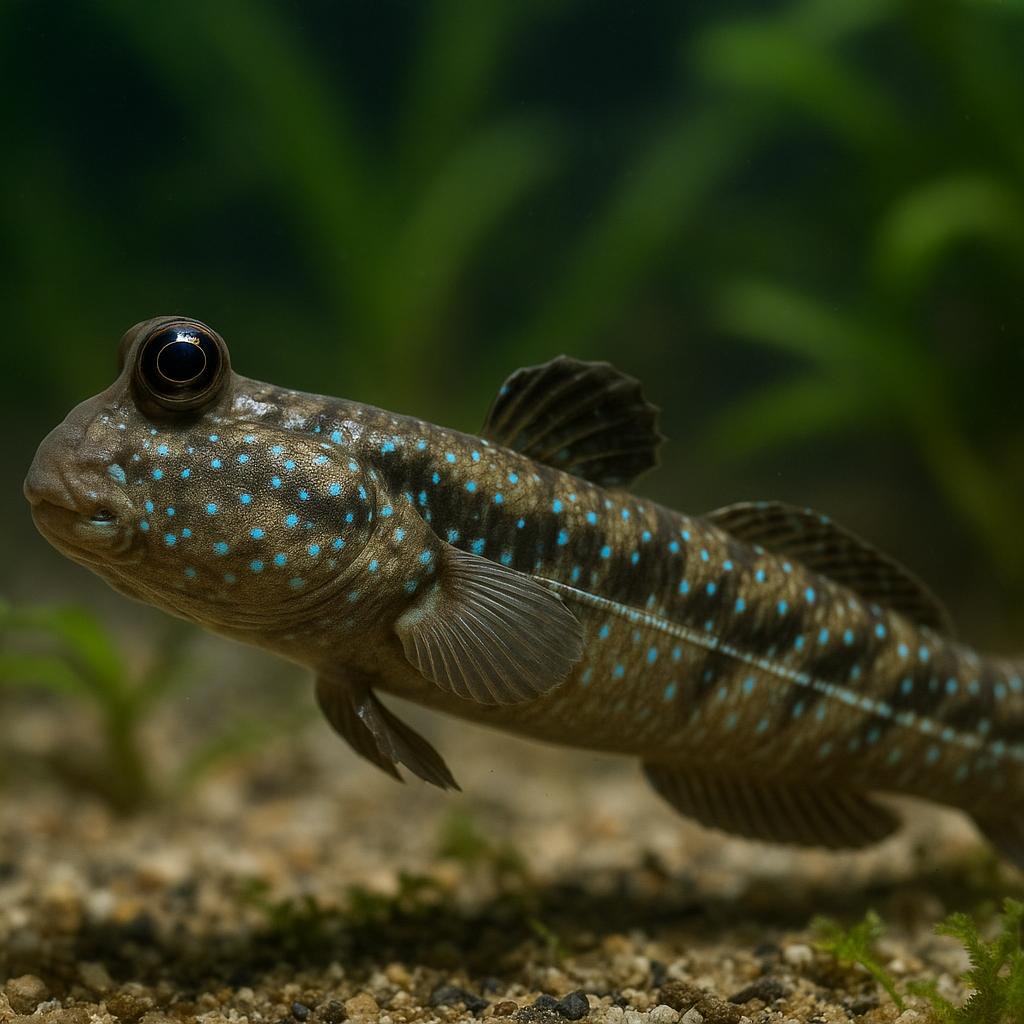
This is one of those classic "walks around like it owns the place" mudskippers-big goofy eyes, climbs, hops, and spends a ton of time out on the mud when it's humid. In the wild it lives on intertidal mangrove/nipa mudflats and even shuttles between little pools and open air, hunting worms, insects, and small crustaceans. It's super fun to watch, but it really wants a brackish paludarium setup (not a normal aquarium).
Bellfish
Johnius fuscolineatus
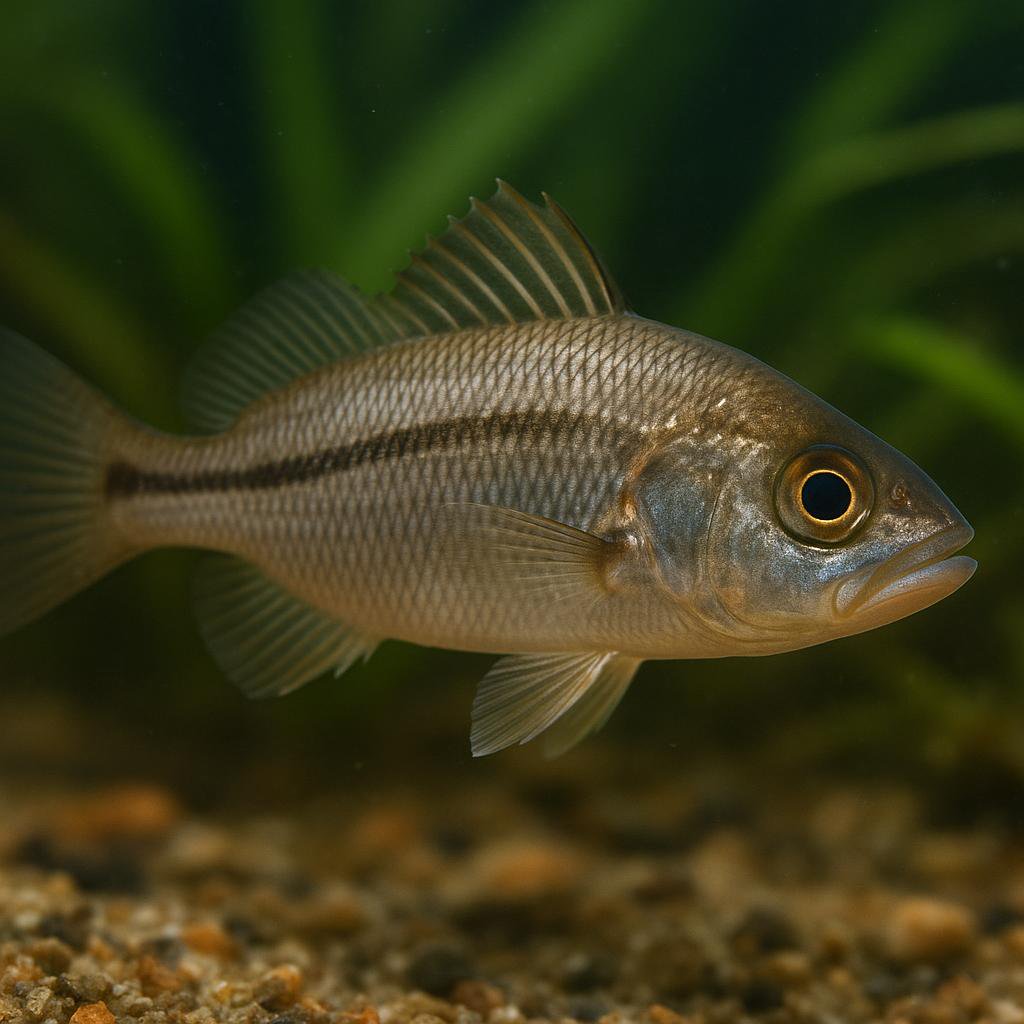
Johnius fuscolineatus (Bellfish/African bearded croaker) is a small coastal sciaenid from the southwestern/western Indian Ocean (Mozambique, South Africa, Madagascar), occurring in shallow marine waters (reported 0–50 m) and also associated with coastal/estuarine habitats.
Blotched eelpout
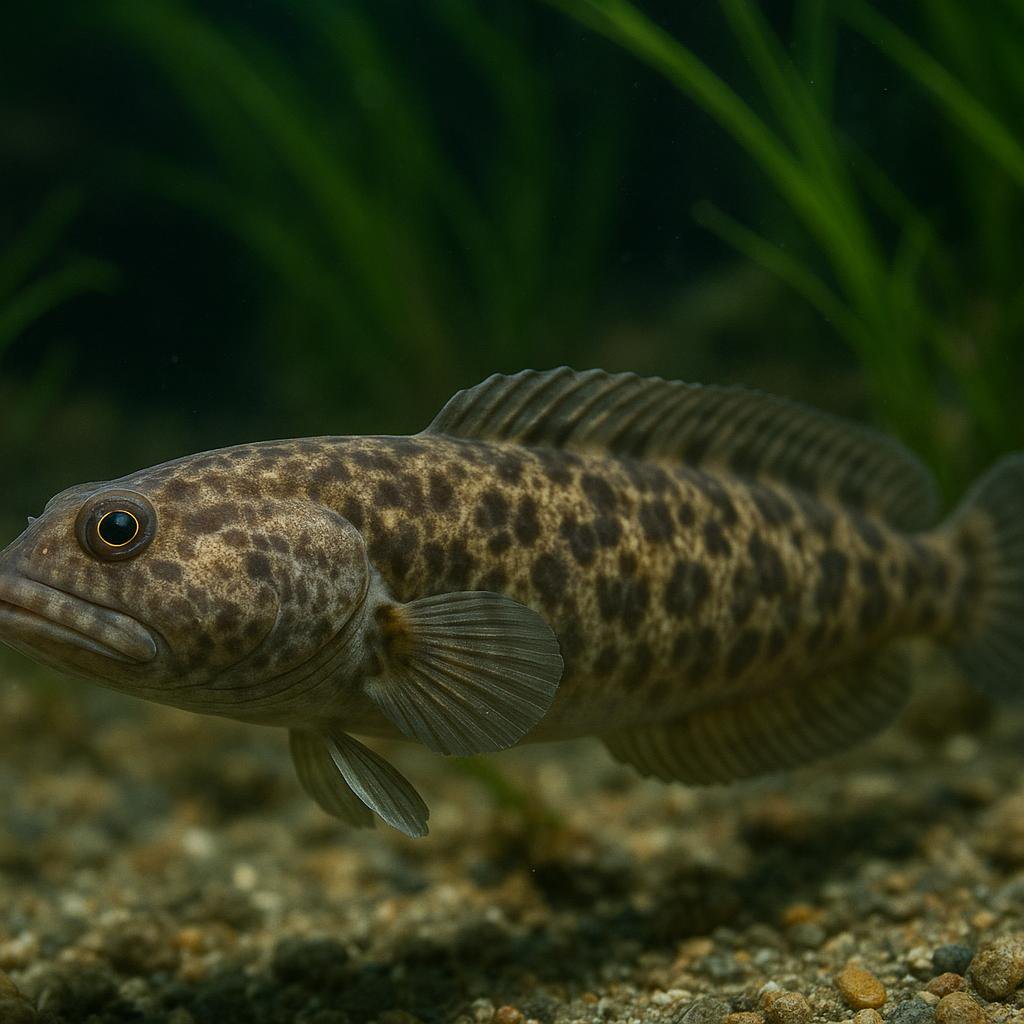
Zoarces gillii
Zoarces gillii is a cold-temperate eelpout from the Northwest Pacific that hugs the bottom over sandy-mud inshore areas and even pushes into estuaries. It's got that long, eel-like body and a sneaky, sit-on-the-bottom predator vibe - very much a cool-water, brackish-to-marine oddball rather than a typical tropical aquarium fish.
Looking for other species?