

Four-eyed sleeper
Bostrychus sinensis
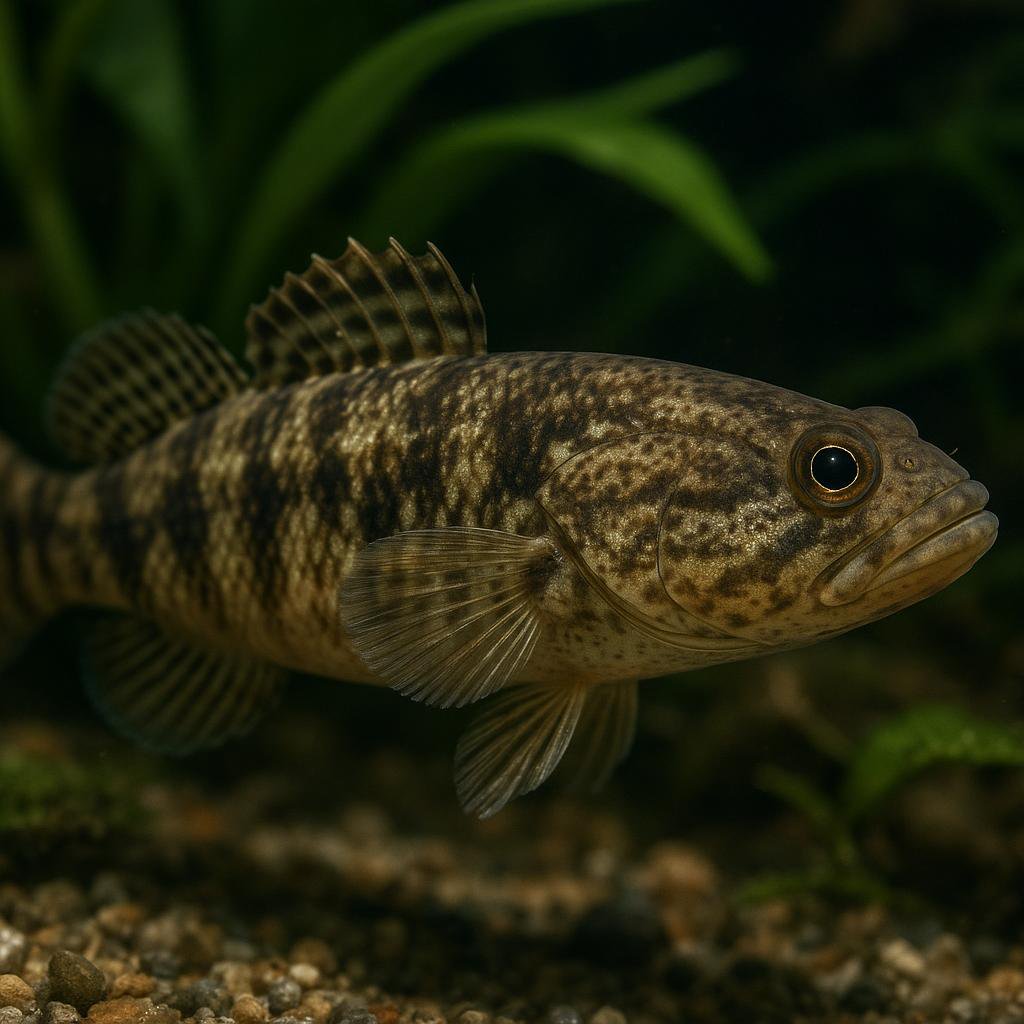
The Four-eyed sleeper has a slender, elongated body with distinctive large eyes and a pale, silvery coloration, often exhibiting dark vertical bars.
This page includes AI-generated images. Why am I seeing AI images?
About the Four-eyed sleeper
This is one of those chunky "sit-and-watch" gobies that looks like it's always plotting something-big head, tough little body, and a real ambush-predator vibe. It'll perch on the bottom like a log and then suddenly lunge when food comes by, which is honestly super fun to watch. Just don't expect it to play nice with tiny tankmates-anything that fits in its mouth is basically on the menu.
Quick Facts
Size
22 cm
Temperament
Semi-aggressive
Difficulty
Advanced
Min Tank Size
55 gallons
Lifespan
8-12 years
Origin
Indo-Pacific (India to Australia and Taiwan); also Japan and China
Diet
Carnivore - meaty frozen foods (shrimp, krill, fish flesh), live foods, sinking carnivore pellets
Water Parameters
18-28°C
7-8.5
8-25 dGH
Need a heater for this species?
This species needs 18-28°C in a 55 gallon tank. Use our heater calculator to find the right wattage.
Calculate heater sizeCare Notes
- Give it a big, footprint-heavy tank (think 40B/55g+ for an adult) with sand/mud and lots of chunky hides (PVC pipes, rock caves, driftwood) - they're ambush fish and hate feeling exposed.
- Run it brackish and keep salinity stable. Research shows that B. sinensis fry grow better in salinities between 5-15 ppt, and 15 ppt is often the best choice. Adults can live in different estuarine and coastal areas, so it's best to maintain a stable brackish salinity that suits your tankmates.
- Warm and clean works best: ~24-28°C, high oxygen, and strong filtration; they're messy predators so expect big water changes and a prefilter sponge to save tiny tankmates from becoming snacks.
- Feeding is easy if you go meaty: shrimp, silversides/white fish chunks, earthworms, mussel, and sinking carnivore pellets; target-feed with tongs because they'll let faster fish steal everything.
- Tankmates need to be tough and not bitey: bigger brackish fish like monos/scats/archerfish can work if they're not small enough to fit in its mouth; avoid fin-nippers and anything bottom-dwelling that wants the same cave.
- Don't mix two unless you've got serious space and multiple hidey holes - they can get territorial, and the loser ends up shredded or pinned in a corner.
- Watch for "mystery deaths" from old brackish syndrome: nitrate creeps up fast in predator tanks, so test NO3 and keep the substrate from turning into a rotting food trap.
- Breeding is possible but not casual: they're cave spawners, the male guards the eggs, and you'll need a separate setup because the adults and most tankmates will happily eat the fry.
Compatibility
Good Tankmates
- Hardy brackish livebearers like mollies (especially bigger ones) - they're quick, don't freak out in slightly salty water, and usually won't get pushed around
- Scats (Scatophagus) - they're tough, fast, and not easily bullied; just make sure the tank is roomy because scats get big and messy
- Monos (Monodactylus) - schooling, zippy, and basically impossible for a sleeper goby to intimidate, plus they like the same kind of brackish setup
- Archerfish - solid match in bigger brackish tanks; they hang up top, stay alert, and don't hang around the goby's "front yard" on the bottom
- Use caution with other bottom-dwelling gobioids; B. sinensis is a predatory, territorial sleeper and may prey on or fight smaller cave/bottom fish depending on size and space.
- Bigger brackish bumblebee gobies (the sturdier species) *only if* the sleeper is not huge and there's tons of cover - otherwise they're bite-sized and will vanish
Avoid
- Tiny fish like guppies, endlers, small tetras, or anything that looks snack-sized - Chinese sleeper gobies are ambush predators and will absolutely eat what fits
- Long-finned slowpokes (fancy guppies, bettas, slow gouramis) - even if they aren't eaten, they get stressed and ragged from chasing/fin damage
- Other big territorial bottom predators (large gobies, snakeheads, aggressive cichlids in brackish) - turns into a cave-war and someone ends up shredded
- Nippy bullies like larger/meaner puffers in brackish - they'll harass the goby's face and fins, and the goby will try to retaliate, so it's just constant drama
1) Where they come from
Chinese Sleeper Gobies (Bostrychus sinensis) come from coastal East Asia—think estuaries, mangrove edges, tidal creeks, and muddy river mouths. That “in-between” habitat is why they’re so touchy about water quality and why they make way more sense in brackish than in straight freshwater.
They’re called “sleepers” for a reason: they’ll sit like a lump for ages… then explode into action when food shows up.
2) Setting up their tank
Give them footprint, not height. These fish live on the bottom, and a lot of their stress comes from feeling exposed. If you try to keep one in a bright, bare tank, you’ll just end up with a hiding fish that only comes out at 2 a.m.
I’d start around 40 gallons for a single adult, bigger if you want tankmates. Heavy filtration helps, but don’t make it a whitewater river—moderate flow with calm zones works best.
- Substrate: sand or fine smooth gravel (they sit and lunge; sharp stuff is a bad combo)
- Hardscape: caves, PVC elbows, rock piles, driftwood—give at least 2–3 solid hideouts
- Lighting: subdued; floating plants (if they tolerate your salinity) or hardscape shade helps
- Lid: tight. They can launch themselves when spooked
- Filtration: strong bio + mechanical; they’re messy predators and will test your cycle
Brackish isn’t “a pinch of salt.” Use marine salt mix and a refractometer or hydrometer. Aim for stable salinity more than chasing a magic number.
For salinity, I’ve had the best long-term results keeping them in low-to-mid brackish rather than bouncing around. Think estuary, not seawater. Stability beats tinkering.
If you’re converting an established freshwater tank to brackish, raise salinity gradually over days, not all at once. Your filter bacteria (and the fish) handle the transition way better.
3) What to feed them
They’re ambush predators. Mine ignored flakes like they were insults, but they never missed a sinking meaty food hitting the bottom. Expect a big appetite and a lot of waste.
- Staples: sinking carnivore pellets/wafers (get them used to these early)
- Frozen: shrimp, krill, bloodworms, mussel, chopped clam, squid (rotate)
- Live (sparingly): ghost shrimp or earthworms to kickstart a picky new fish
- Treats: small pieces of fish flesh (not fatty or oily stuff)
Skip feeder goldfish/rosies. They’re a parasite/disease delivery system and the nutrition is trash compared to good frozen foods.
Feed after lights-out if your fish is shy. Once they learn the routine, they’ll come out for tongs. Target feeding with long tweezers saves you from the “everything gets inhaled by the goby” problem if you keep other bottom fish.
4) Behavior and tankmates
They’re not fast swimmers, but they’re serious predators. The rule is simple: if it fits in their mouth, it’s food. And their mouths are bigger than you think.
They can be territorial around a favorite cave, especially with other bottom-dwellers. A tank with multiple hides breaks up sightlines and cuts the drama a lot.
- Good ideas: sturdy brackish fish that stay mid/upper water and are too big to swallow
- Risky: other gobies, mudskippers, small monos/scats when young, small puffers, tiny anything
- Never: shrimp you like, small fish, slow “cute” bottom fish (they’ll get pinned eventually)
Mixing with smaller fish often looks fine for weeks… until one night it isn’t. Sleeper gobies don’t “get nicer,” they just get bigger.
5) Breeding tips (if you want to try)
Breeding them in home tanks is possible, but it’s not a casual weekend project. Sexing is tricky, and raising the young usually means you’re juggling live foods and separate rearing space.
If you want to give it a real shot, set up a species tank with multiple caves and let a pair form naturally. Courtship tends to revolve around a chosen cave, and the male typically guards the site.
- Give several tight caves: clay pots on their side, PVC couplers, rock caves with one entrance
- Condition heavily on meaty foods for a few weeks
- Keep water stable and clean; big water changes with matched salinity help
- Plan live foods for fry (often rotifers/very small foods early on, depending on development)
If you can’t reliably culture or buy appropriate live fry food, breeding will probably stall at the “eggs hatched… now what?” stage.
6) Common problems to watch for
Most issues I see with sleeper gobies come from three things: unstable brackish setup, under-filtered tanks (they’re messy), and impulse tankmates that end up as snacks.
- Refusing food: usually stress or too-bright/bare tank; add cover and offer frozen shrimp/krill with tongs
- Bloating/constipation: happens with too much dry food; rotate frozen, don’t overfeed, and keep temps steady
- Fin damage: often from cramped hiding spots or bottom-dweller squabbles; add more caves and break sightlines
- Ich/velvet-like spots: common after shipping; treat promptly and check that salinity/temperature aren’t swinging
- Nitrate creep: you’ll see lethargy and poor appetite; step up water changes and mechanical filtration
Don’t “guess” salinity during top-offs. Evaporation leaves salt behind, so you top off with fresh water—not saltwater—or your salinity will slowly climb.
If you set them up with a big footprint, lots of cover, and a steady brackish routine, they’re awesome fish—quiet, sneaky, and full of personality. Just go in knowing they’re an advanced, predator-style project, not a community tank centerpiece.
Similar Species
Other brackish semi-aggressive species you might be interested in.
Banded Archerfish
Toxotes jaculatrix
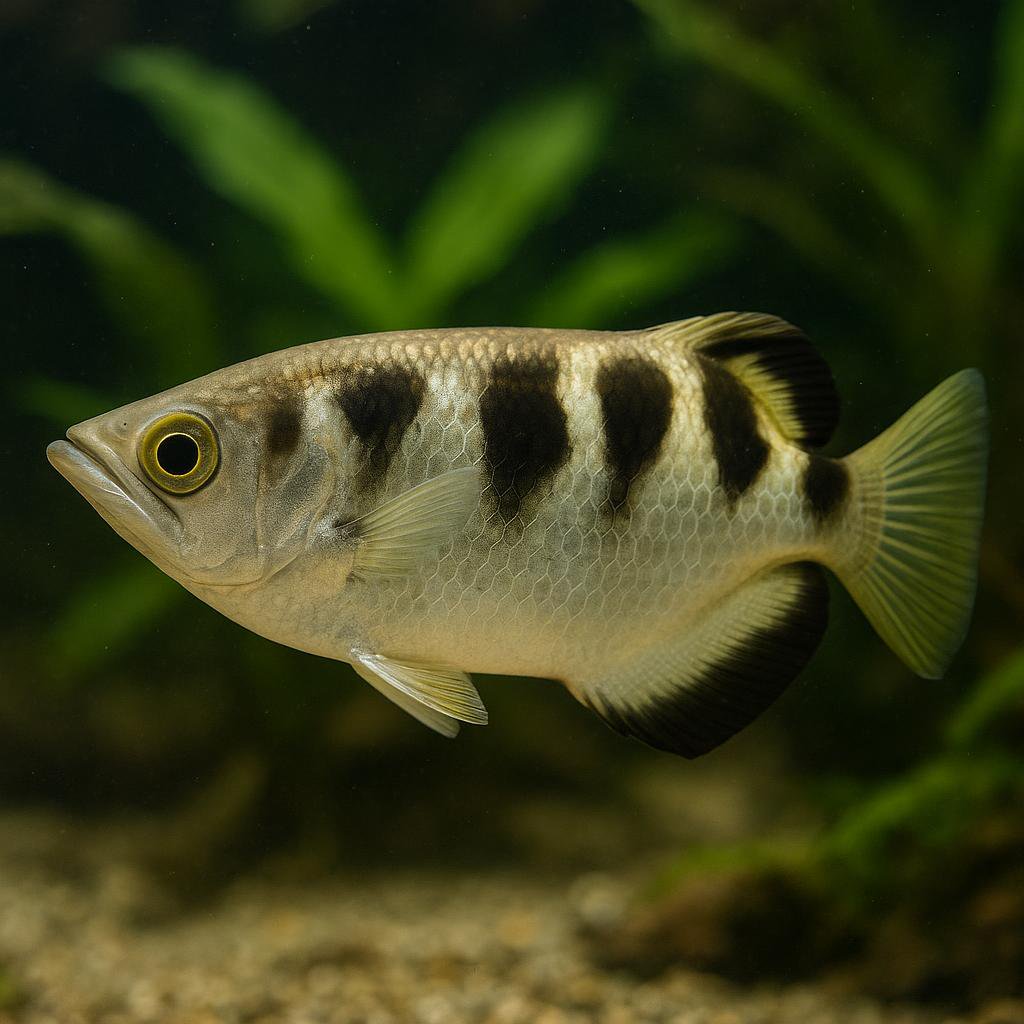
This is the fish that literally spits jets of water to knock insects off branches-watching one "take aim" is unreal. They're super aware of what's going on outside the tank and will even learn to beg and snipe food from the surface once they settle in. Give them height and some open swimming room and they act like little aquatic sharpshooters.
Barred mudskipper
Periophthalmus argentilineatus
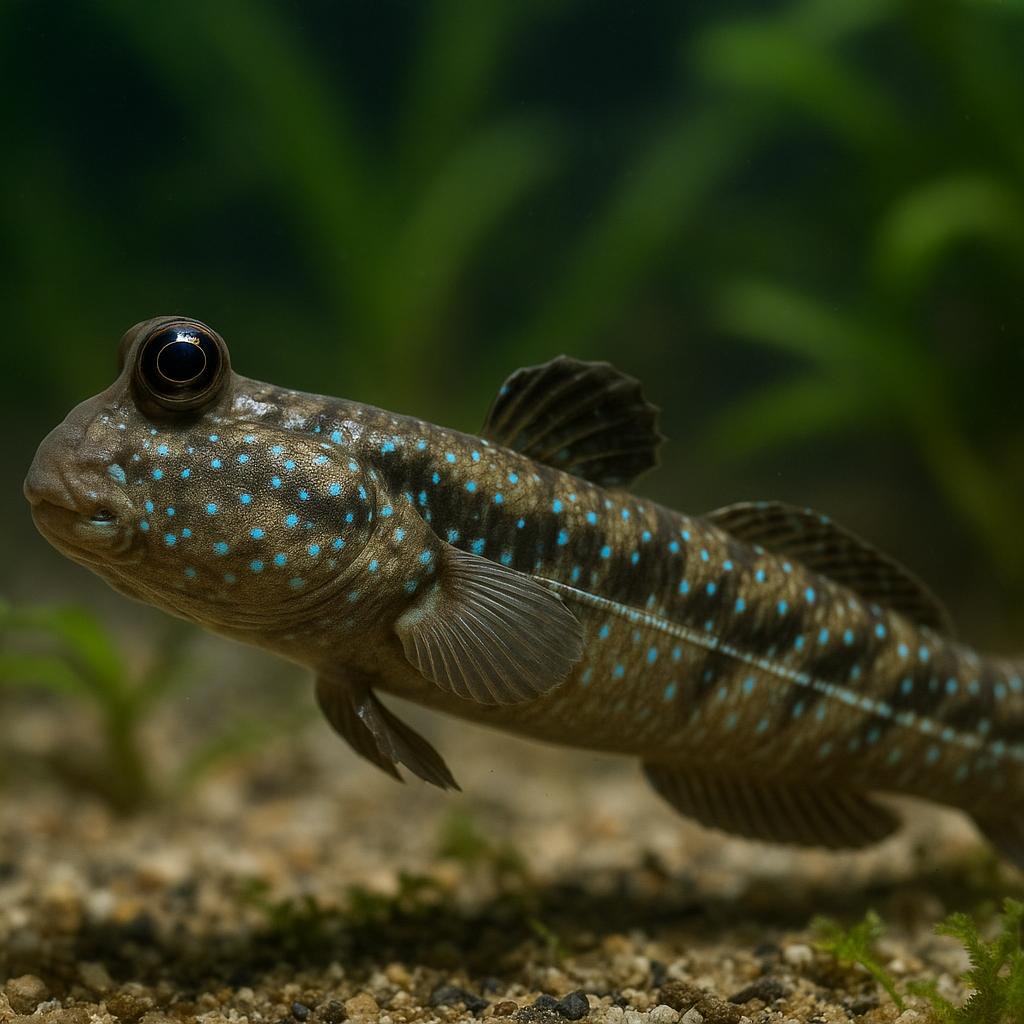
This is one of those classic "walks around like it owns the place" mudskippers-big goofy eyes, climbs, hops, and spends a ton of time out on the mud when it's humid. In the wild it lives on intertidal mangrove/nipa mudflats and even shuttles between little pools and open air, hunting worms, insects, and small crustaceans. It's super fun to watch, but it really wants a brackish paludarium setup (not a normal aquarium).
Bumblebee goby
Brachygobius doriae
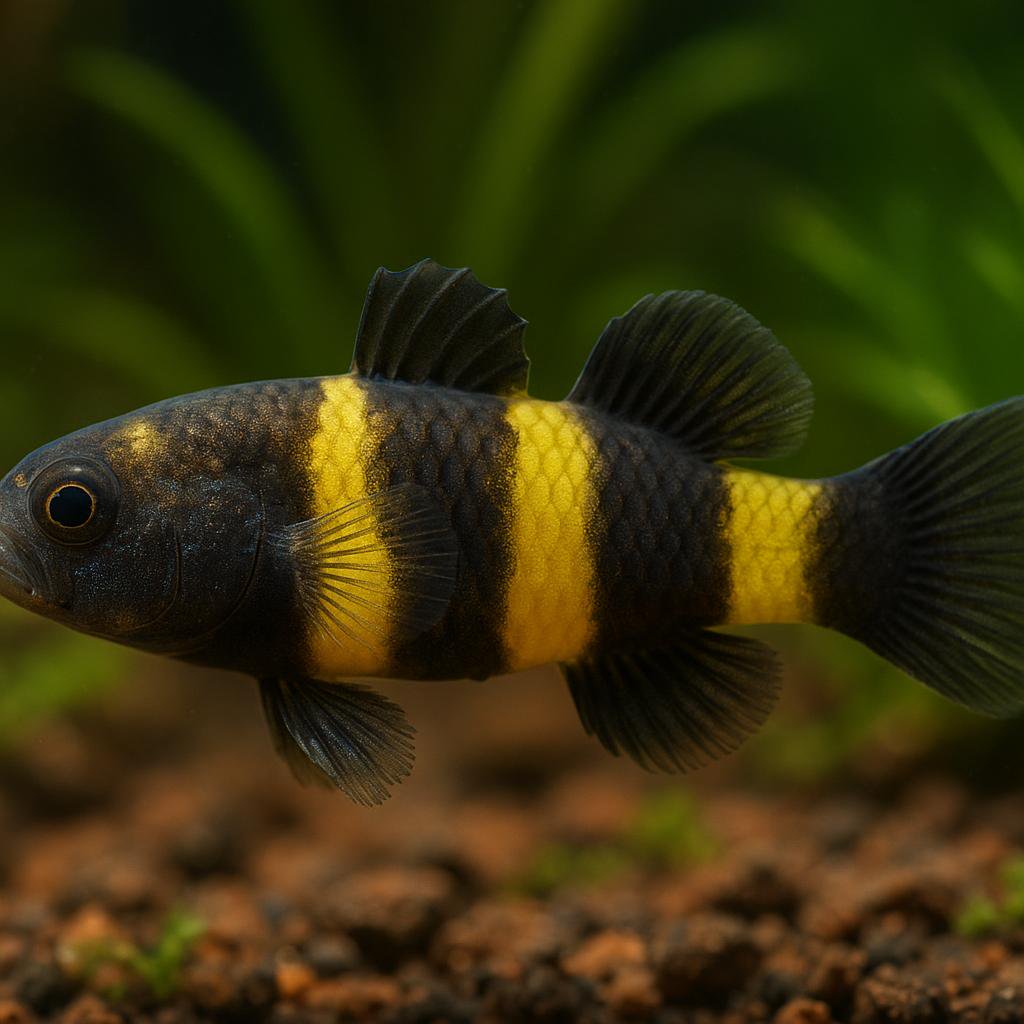
Brachygobius doriae is one of the classic "bumblebee gobies" - tiny, bottom-hugging little characters that perch on rocks and sand and stare at you like they own the place. They're at their best in a calm setup with lots of caves and leaf litter, and they really shine once you get them eating frozen/live foods reliably (they're slow, picky eaters). Also: they're one of the species that gets mislabeled a lot in shops, so it's super common to see them sold under the wrong bumblebee-goby name.
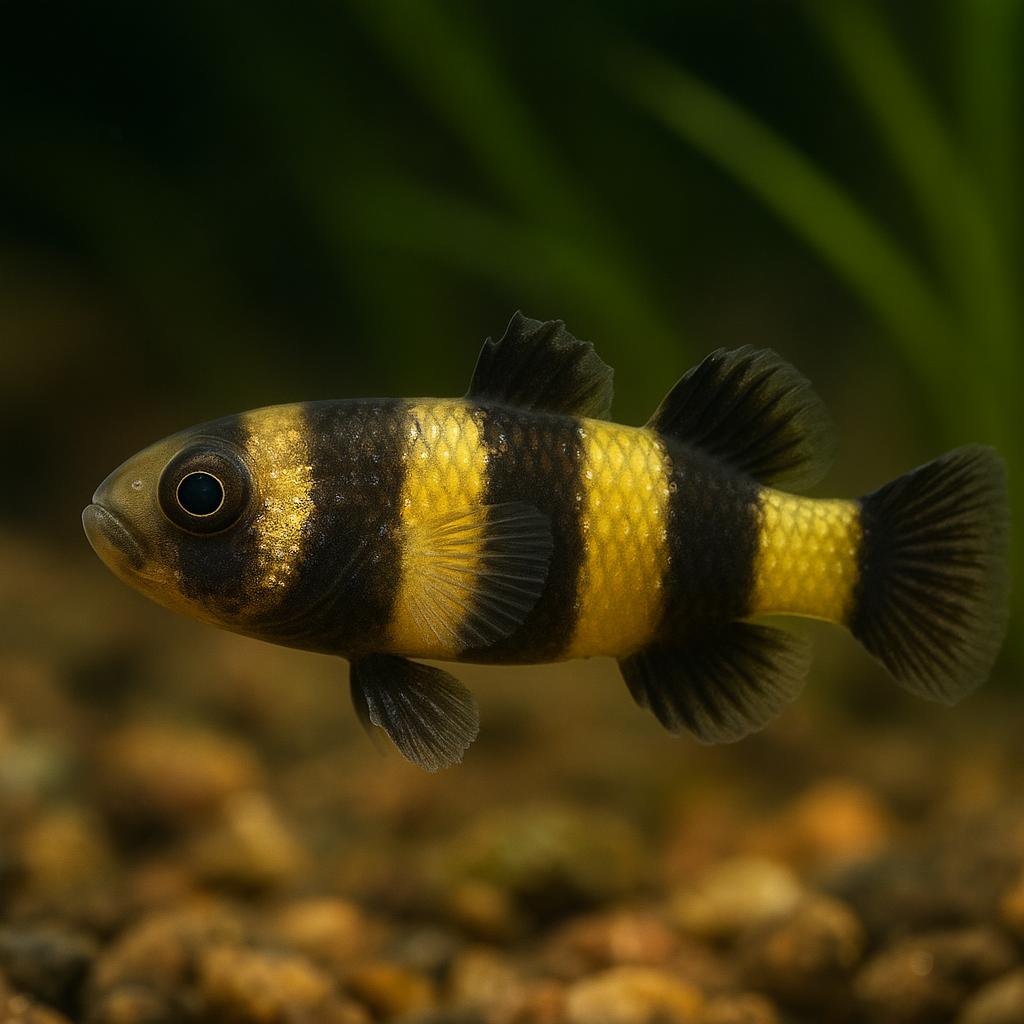
Bumblebee goby (Bumblebee fish)
Brachygobius xanthozonus
This is that tiny little goby with the bold black-and-yellow bands that likes to perch on the bottom and stare back at you like it owns the place. It's happiest in lightly brackish water with lots of little caves and sight-breaks, and it's one of those fish that often refuses flakes-frozen/live meaty foods usually flip the "yes, I will eat" switch.
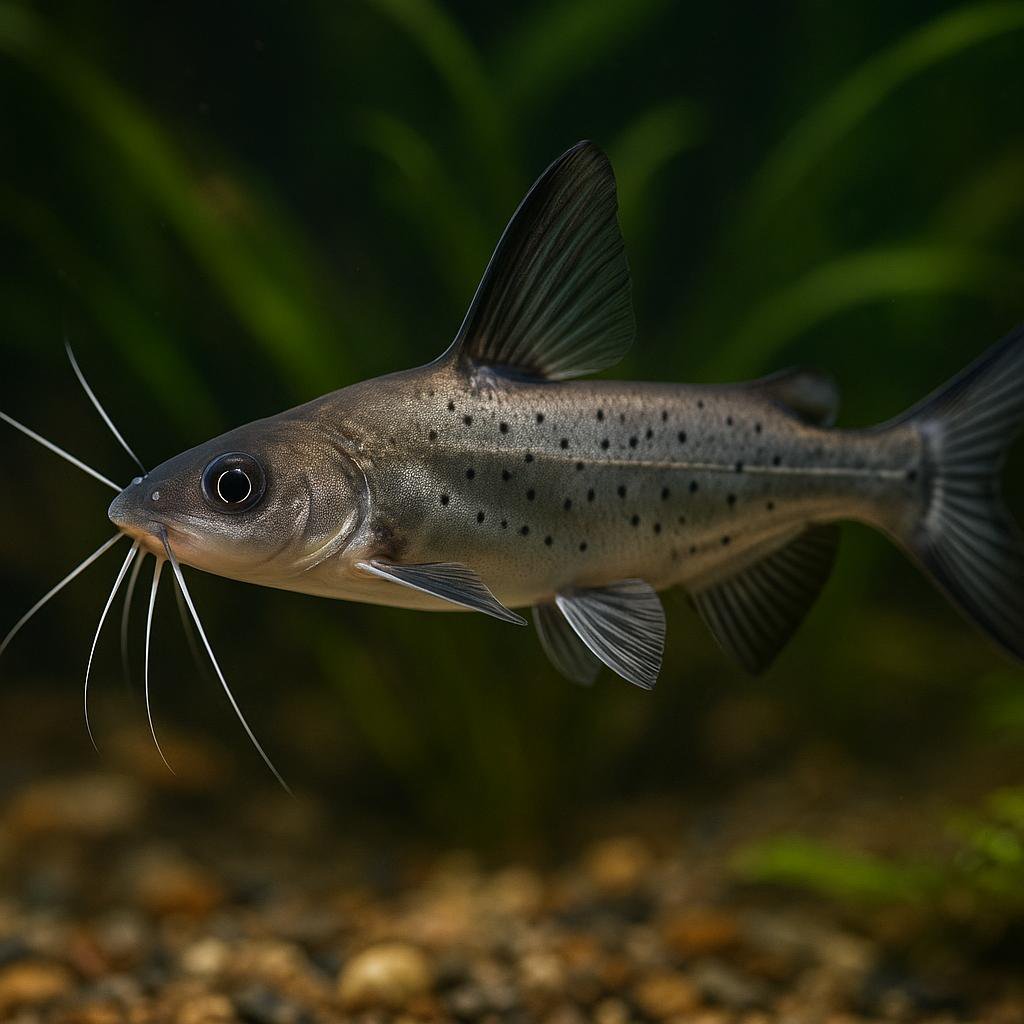
Colombian shark catfish
Ariopsis seemanni
This is that slick silver "shark-looking" catfish with the black fins and white tips that cruises around like it owns the place. The big gotcha is it's not a true freshwater community fish long-term-juveniles show up in shops as "freshwater," but as it grows it really wants brackish and eventually full marine conditions, plus a lot of swimming room.
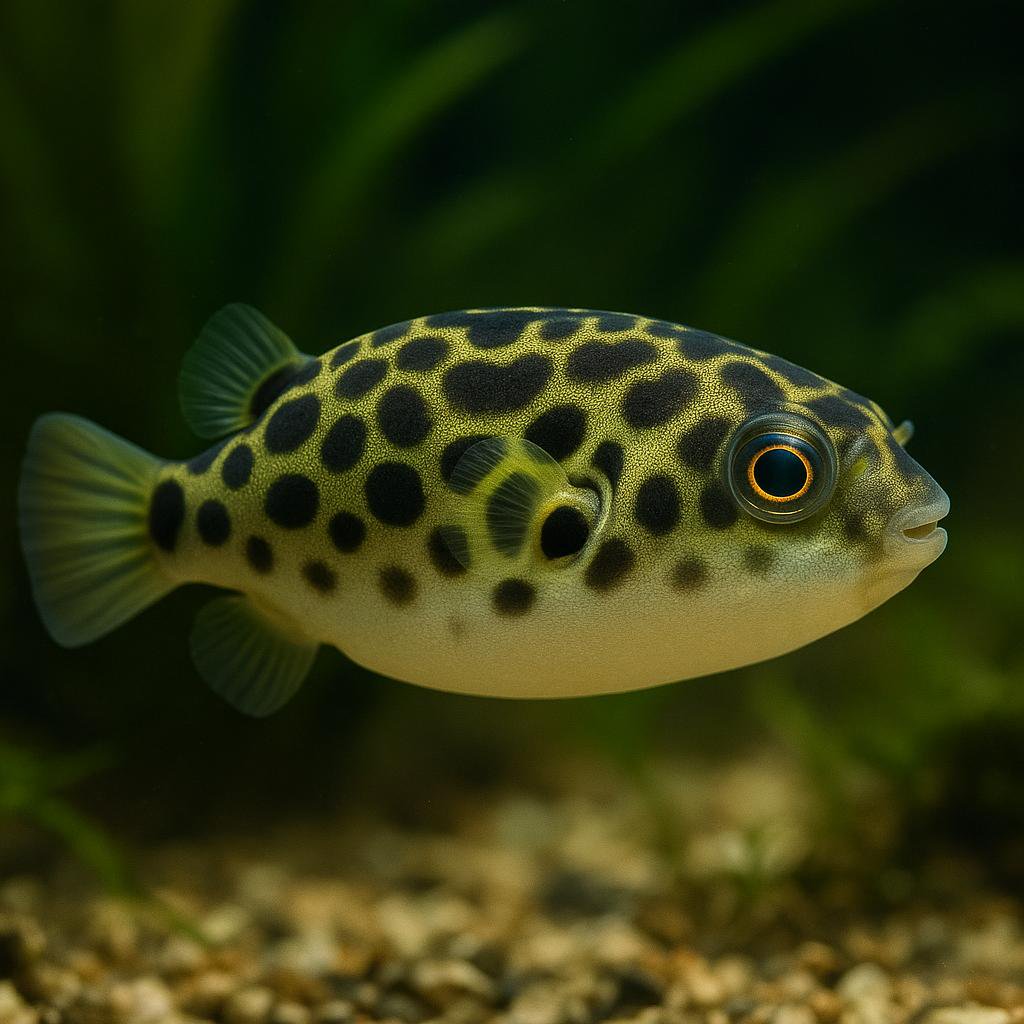
Eyespot pufferfish (Figure-8 puffer)
Dichotomyctere ocellatus
This is the little "figure-8" puffer with the yellow-green squiggles and the two bold eyespots near the tail-tons of personality in a small body. They're basically snail-hunting machines with a curious, interactive vibe, but they can be spicy with their own kind, so you plan the tank around that.
More to Explore
Discover more brackish species.
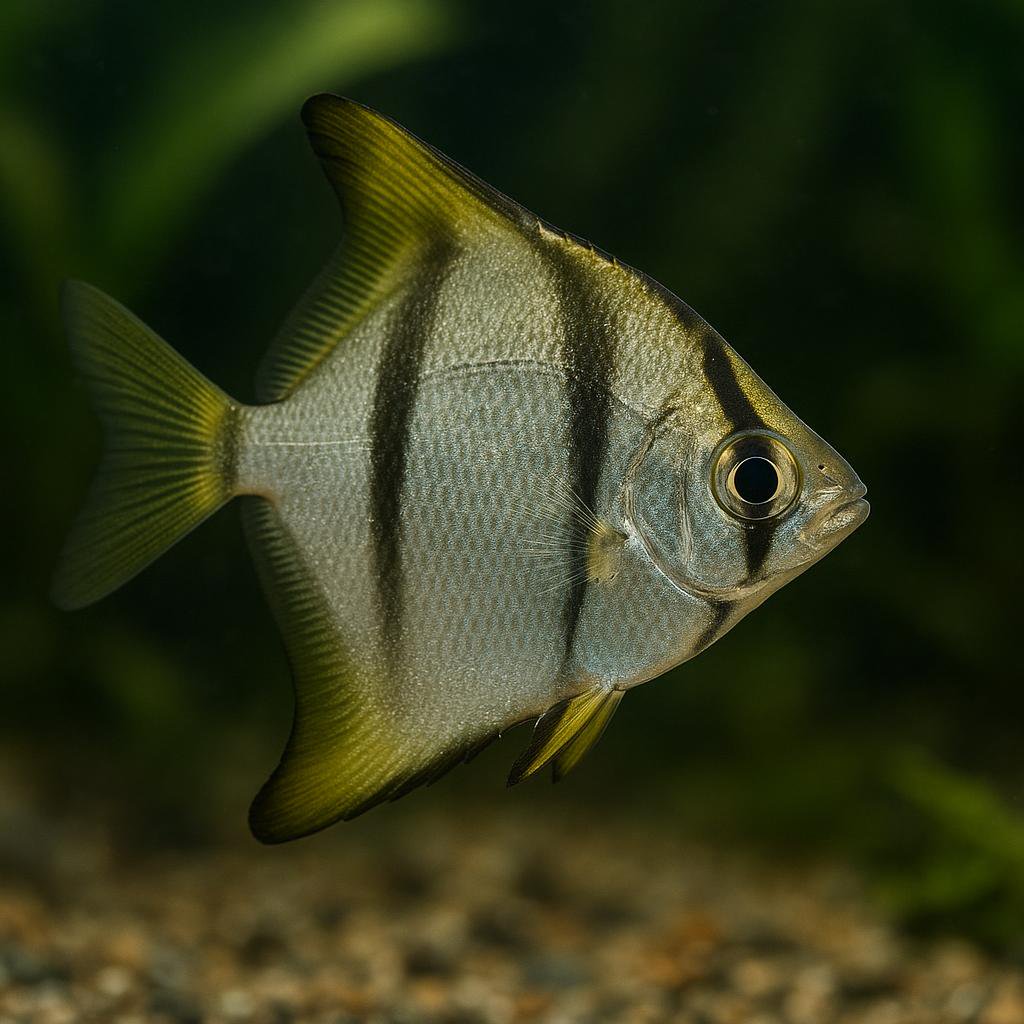
African moony
Monodactylus sebae
This is that shiny, diamond-shaped "mono" that cruises around in a tight pack and looks like a little silver dinner plate with black bars when it's young. The big thing with African moonies is they're euryhaline-so they'll tolerate freshwater as juveniles, but they really shine long-term in brackish (and can be transitioned toward marine as they mature). Give them a big, open tank and a group, and they turn into nonstop, super fun midwater swimmers.
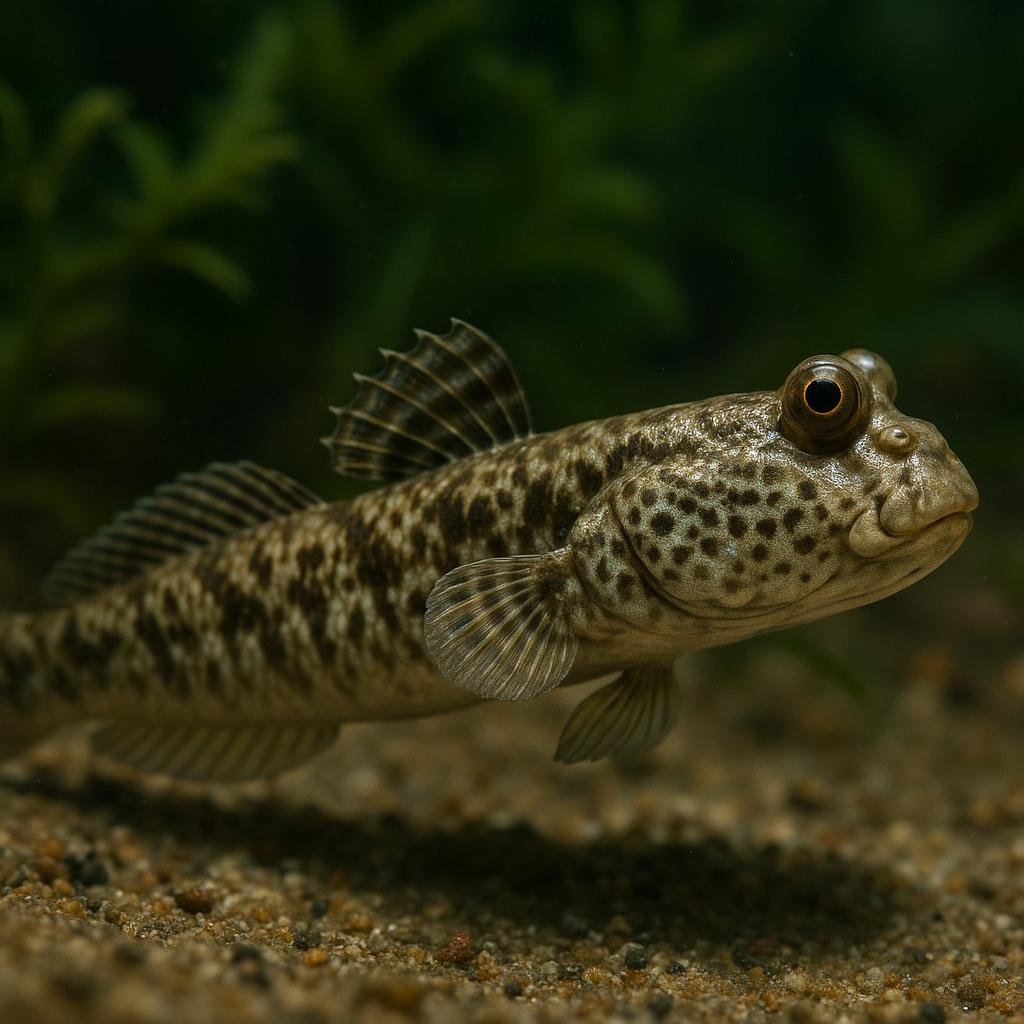
Atlantic Mudskipper
Periophthalmus barbarus
This is that wild little amphibious goby that straight-up climbs around on land like it forgot it was a fish. They've got big googly eyes, tons of personality, and they'll perch, hop, and patrol their territory-honestly more like a tiny crabby lizard than a "regular" aquarium fish.
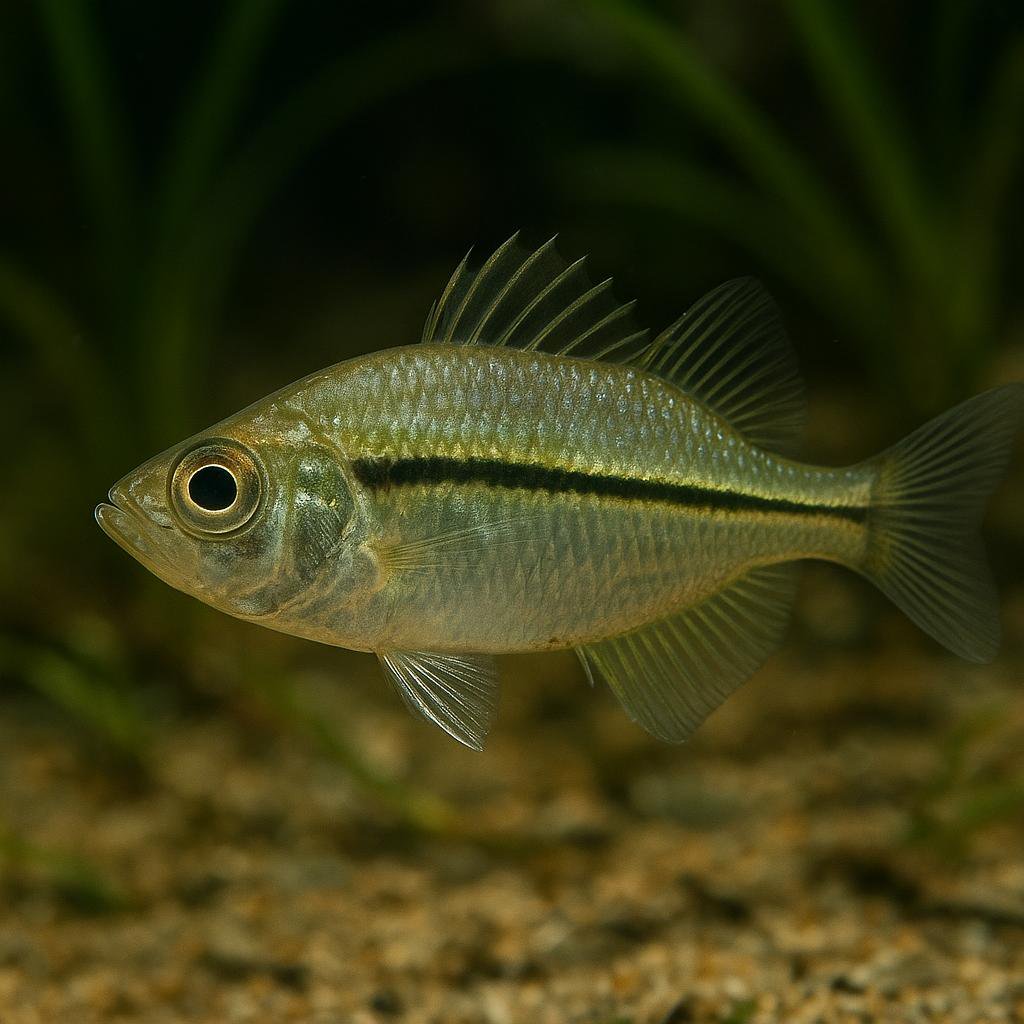
Banded-tail glassy perchlet
Ambassis urotaenia
This is one of those see-through glassy perchlets where you can literally watch the organs shimmer when it turns-super cool in the right lighting. In the wild it hangs around river mouths and mangroves and cruises in groups, so it does best when you keep a little gang of them and give them some open swimming room.
-1771643191.jpg)
Elongate mudskipper (pointed-tailed goby)
Pseudapocryptes elongatus (syn. Pseudapocryptes lanceolatus)
This is that super-cool "mudskipper-ish" goby that mostly stays in the water, but will park itself in the shallows and periscope its eyes above the surface like it's keeping watch. It's an obligate air-breather from tidal rivers/estuaries, so it really appreciates shallow, brackish setups with soft mud/sand and gentle flow-more of a mangrove vibe than a typical community tank.
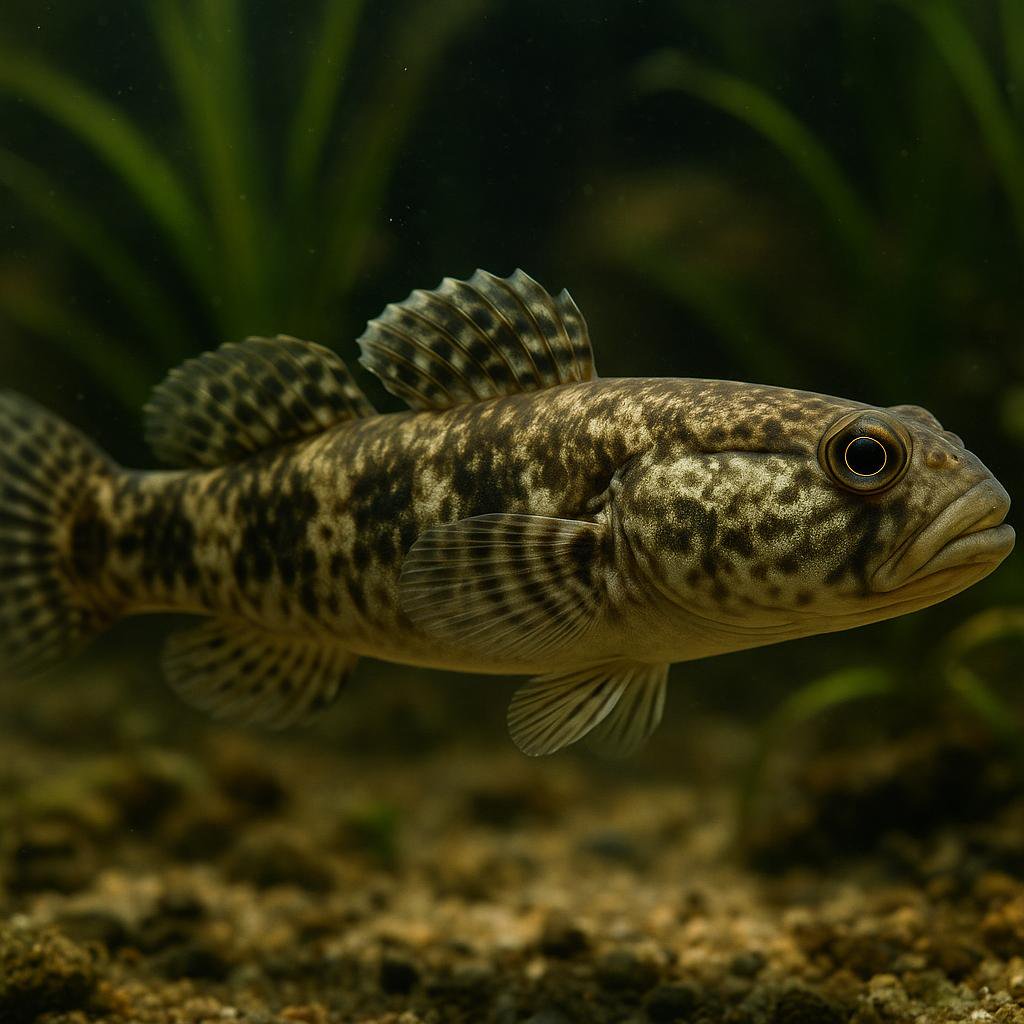
Fat sleeper
Dormitator maculatus
Dormitator maculatus is that chunky "sleeper goby" type fish with the bulldog head and the attitude of a little vacuum cleaner-always sifting and nosing around the bottom. It'll do freshwater or brackish and it can get way bigger than most people expect, so it's one of those fish that's awesome... as long as you plan the tank around the adult size, not the baby you bought.
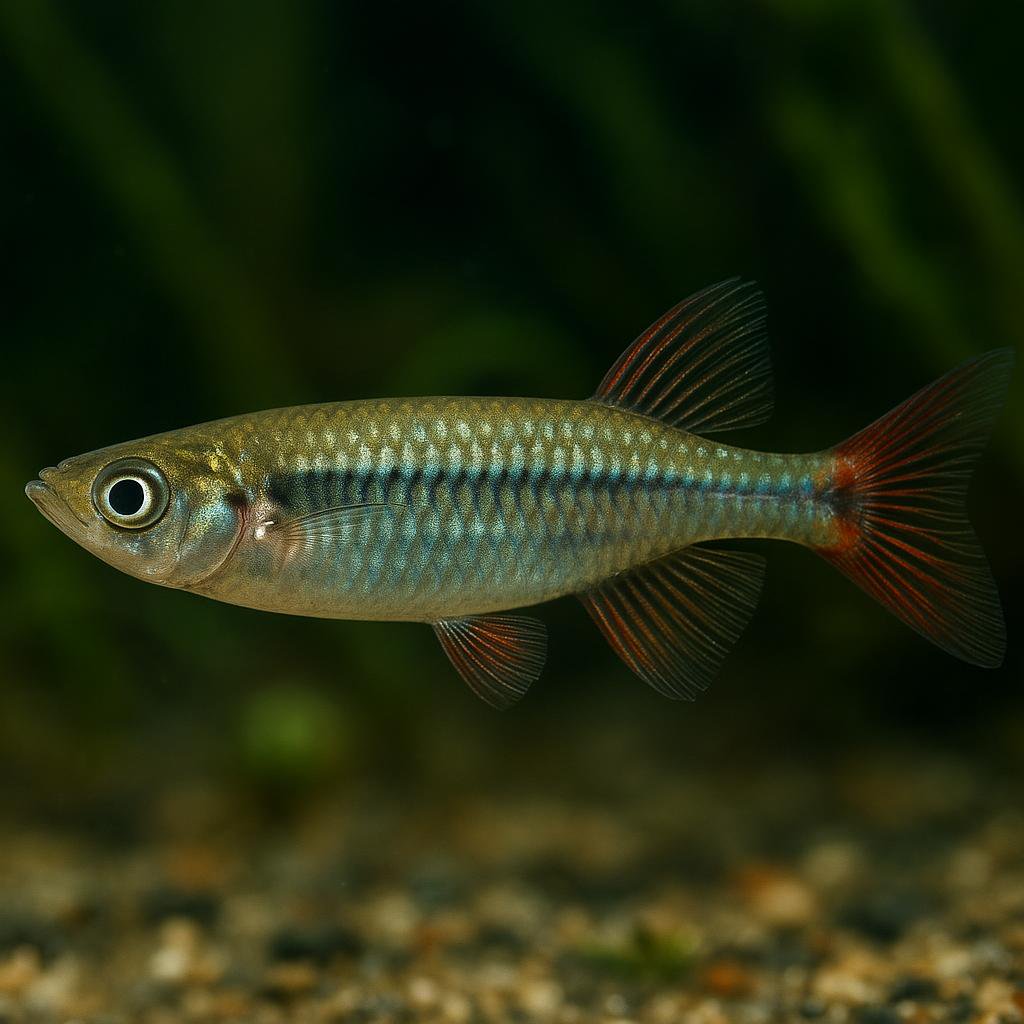
Feathered river-garfish
Zenarchopterus dispar
Zenarchopterus dispar is a surface-hanging halfbeak from mangroves and sheltered bays, with that classic long lower jaw for snapping up insects and other floaty foods. Males get those funky elongated fin rays (the "feathered" look), and they are livebearers, so once they settle in you can occasionally get surprise babies. Biggest thing with this fish is giving it calm water up top, room to cruise, and a tight lid because halfbeaks can rocket-jump.
Looking for other species?