

Greek lamprey
Caspiomyzon hellenicus
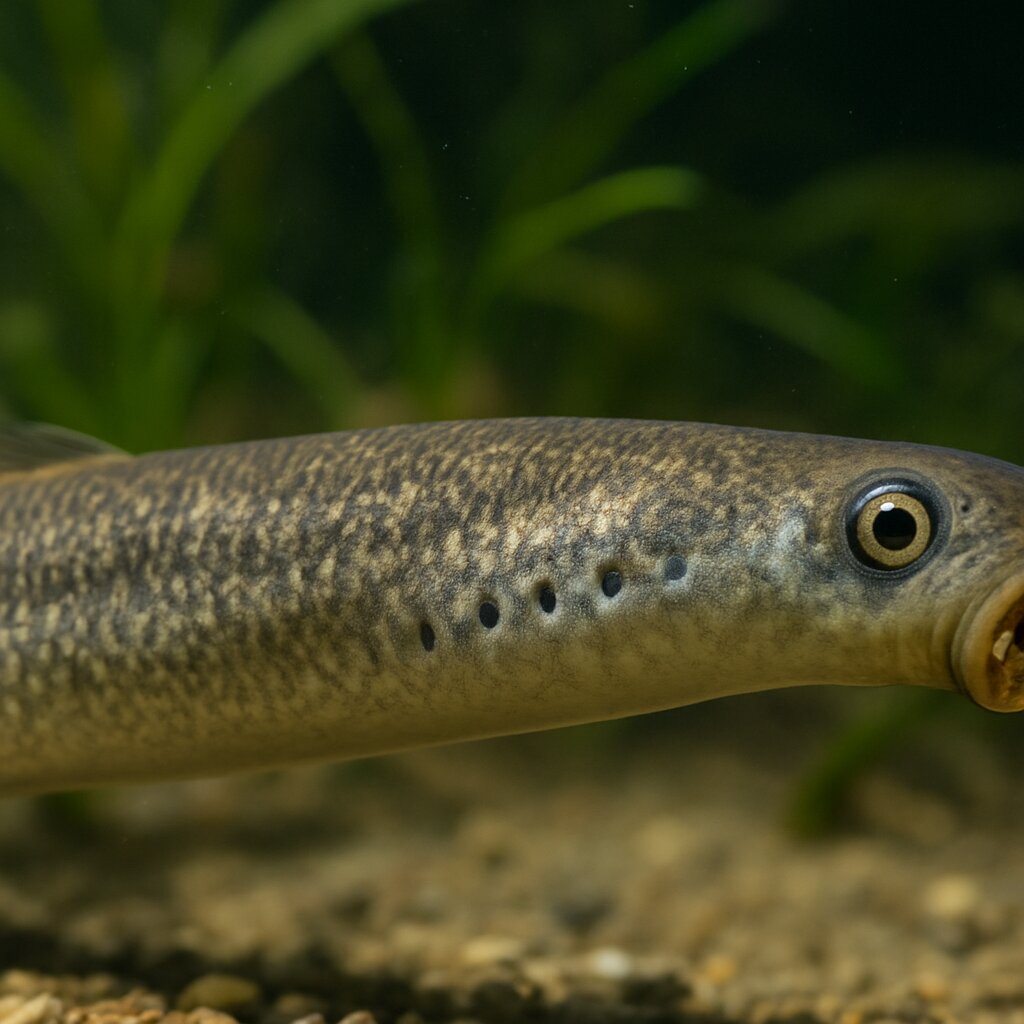
The Greek lamprey has a slender, eel-like body, mottled brown and beige coloration, and a distinctive, sucker-like mouth.
This page includes AI-generated images. Why am I seeing AI images?
About the Greek lamprey
Wild little jawless oddball from cool Greek spring-fed streams. Larvae live buried in sand filtering microscopic food for years, then transform into short-lived, non-feeding adults that spawn and fade out. Super neat biology, but not a practical aquarium fish at all.
Also known as
Quick Facts
Size
18.9 cm
Temperament
Peaceful
Difficulty
Expert
Min Tank Size
55 gallons
Lifespan
4-7 years
Origin
Europe - Greece
Diet
Larval stage is a microphagous filter-feeder (algae, microorganisms, detritus); adult stage is non-feeding
Water Parameters
12-18°C
7.1-7.8
9-31 dGH
Need a heater for this species?
This species needs 12-18°C in a 55 gallon tank. Use our heater calculator to find the right wattage.
Calculate heater sizeCare Notes
- Run a cold, high-oxygen stream setup: 10-16 C with a chiller, 10-20x turnover in a river-manifold, and never let temps creep past 18-20 C.
- Give them a 10-15 cm bed of fine sand-silt for larvae to burrow, plus a palm-sized patch of rounded gravel for adult staging and spawning.
- Larvae eat microscopic stuff - drip-feed greenwater or a very fine spirulina-yeast slurry 1-2x daily, or add rotifers; go light and back it up with small, frequent water changes to avoid crashes.
- Greek lamprey adults do not feed; they spawn and die, so your real job is raising the larvae and growing them on.
- No tankmates - anything curious or sand-sifting will harass or eat larvae; sleeve every intake with coarse sponge backed by fine mesh so burrowers are not sucked in.
- Keep chemistry steady and clean: pH 6.8-7.5, soft to moderate hardness (2-10 dGH), nitrate under 10 ppm; big weekly changes with pre-chilled, well-aerated water.
- They are skin-sensitive, so skip copper and harsh meds; handle with a specimen cup or wet hands only, and add extra aeration at the first hint of fungus or stress.
- This species is protected in parts of its range - work only with legally obtained stock and permits, and do not buy wild-caught.
Compatibility
Good Tankmates
- White cloud mountain minnows - calm, coolwater schoolers that stick to the top and pretty much ignore lampreys
- Medaka ricefish - gentle top dwellers that handle flow and do not nose into the sand
- True hillstream loaches (Sewellia, Gastromyzon) - peaceful rock grazers; give them current and hides and they will not bug the lamprey
- Non-fishy neighbors like Neocaridina shrimp and small snails - zero interest in lampreys and they will not dig up burrows
- Small, peaceful, cold-tolerant minnows picked for non-nippy behavior and kept in a tight group so they focus on each other
- Super gentle midwater fish that can handle fast, cool water and are not curious diggers
Avoid
- Anything predatory or big-mouthed from cool rivers (trout, sculpins, perch, big dace) - they will treat a lamprey like spaghetti
- Nippy or hyper schooling fish (barbs, pushy danios, sticklebacks) - they pick at the lamprey's smooth skin and stress it out
- Bottom rooters or slime-raspers (Chinese algae eaters, big plecos, weather loaches) - they dig up burrows or rasp the body
- Goldfish and cichlids - wrong temps and flow, and they constantly mouth slow, odd-shaped tankmates
Where they come from
Greek lampreys are a rare, non-parasitic brook lamprey from a handful of cold, clear streams in Greece. They spend most of their life as burrowed larvae in fine sediments, then metamorphose into short-lived adults that spawn and die. Think shaded, spring-fed creeks with clean sand, leaf debris, and steady current.
They are protected and extremely uncommon in the hobby. Always verify local laws and source responsibly. Many regions prohibit collection or possession.
Setting up their tank
You are basically building a chilled, high-oxygen stream with places for larvae to burrow. Temperature control is non-negotiable. Warm water wipes them out fast.
- Tank size: 75-120 cm long footprint helps create a flow lane and a quiet burrow zone. Depth matters less than floor space.
- Temperature: 8-16 C most of the year, briefly up to 18 C in summer. Use a chiller; fans are not enough.
- Flow and oxygen: Strong, even current with a river-manifold or gyre-style setup. Aim for surface agitation and no dead spots.
- Substrate: 6-10 cm of clean, rounded sand (0.5-2 mm). Add a corner of very fine sand/silt mix for larvae. Skip sharp gravel.
- Hardscape: Smooth cobbles, driftwood, and leaf litter to trap micro-foods. Leave open patches for burrowing.
- Filtration: Oversized canister or sump with heavy biological media. Put a coarse prefilter and a big sponge on intakes so larvae are not sucked in.
- Lighting: Dim to moderate. They prefer shade; bright light encourages algae and can stress newly metamorphosed adults.
- Water chemistry: Soft to moderate hardness, pH 6.8-7.6. Keep nitrates low (<10 mg/L) and avoid any ammonia spikes. Frequent small water changes.
I run two intakes: one in the fast lane, one near the burrow zone, both guarded with 20-30 ppi sponge. Rinse sponges often so the burrowing area stays oxygenated.
What to feed them
Feeding depends on life stage. Larvae (ammocoetes) are filter feeders living in the sand. Adults of this species do not eat at all.
- Larvae diet: Fine particulate foods suspended in the water column. I rotate spirulina powder, chlorella, decapsulated brine shrimp powder, very fine fry foods, and a pinch of baker's yeast once a week.
- Delivery: Mix a tiny amount in tank water and dose upstream of the burrow zones. You want a gentle snow of particles drifting past, not piles on the bottom.
- Biofilm: A seasoned tank with leaf litter and mulm helps. They graze on the microscopic life that builds up there.
- Adults: After metamorphosis, they stop feeding. Focus on water quality and a stress-free environment until they spawn.
Overfeeding fine powders will crash your water. Feed small amounts, watch ORP/oxygen, and do steady water changes.
How they behave and who they get along with
Larvae spend almost all day buried with just the head exposed, usually in slower patches bordering the current. Adults hide under stones, especially at dawn and dusk. They are peaceful and ignore other fish, but most fish will not ignore them.
- Best setup: Dedicated species tank. You will actually see their natural behavior this way.
- If you must add tankmates: Small, calm, cool-water species that do not dig or peck. Avoid loaches, barbs, cichlids, and anything curious about burrowed tails.
- Intraspecific: Keep a group (6-10+) to spread any spawning energy and reduce stress. They naturally occur in clusters where conditions suit them.
Watch the sand for subtle siphon holes and tiny puffs. That is how you know where larvae are feeding.
Breeding tips
Hard, but not impossible with a chilled stream tank and patience. Adults need seasonal cues to ripen.
- Seasonal cycle: Give them a cool winter (8-10 C) for 8-10 weeks with short photoperiod, then a gradual spring warm-up to 12-14 C and longer days.
- Spawning site: Shallow riffle with smooth gravel and cobbles in brisk flow. They will clear a small pit using their oral discs.
- Behavior: Pairs or small groups gather in daylight in the riffle, attach to stones, and release eggs and milt into the cleaned pocket.
- After spawning: Adults are semelparous (spawn once and die). Remove bodies quickly to protect water quality.
- Raising larvae: Eggs hatch in about 2-3 weeks at cool temps. Larvae drift and then burrow in fine sand. Offer micro-particulates once you see them filter-feeding. Keep prefilters spotless.
I mark out a 20-30 cm wide riffle zone with pea gravel over a mesh layer, so I can lift it to clean without collapsing the whole substrate.
Common problems to watch for
- Overheating: Anything over ~18 C for long stretches is risky. Sudden heat spikes kill fast. Use a chiller and a temp alarm.
- Low oxygen: Fine foods and clogged sand can strip O2. Keep strong surface agitation, clean sponges often, and avoid deep, compacted substrate.
- Silt smothering: Powder can cake over the burrow openings. Lightly turkey-baste the surface to fluff it, and reduce feeding.
- Intake injuries: Unprotected intakes will grab larvae. Every inlet needs a coarse guard plus sponge.
- Fungus on stressed adults: Any abrasions can fuzz up in cold water. Improve flow and cleanliness; salt is not a good option for lampreys.
- Legality and sourcing: Many are protected. If you cannot clearly document legal origin, do not keep them.
Do not try to convert adults to feeding. This species does not feed post-metamorphosis. Attempts to force-feed only stress and injure them.
Similar Species
Other freshwater peaceful species you might be interested in.
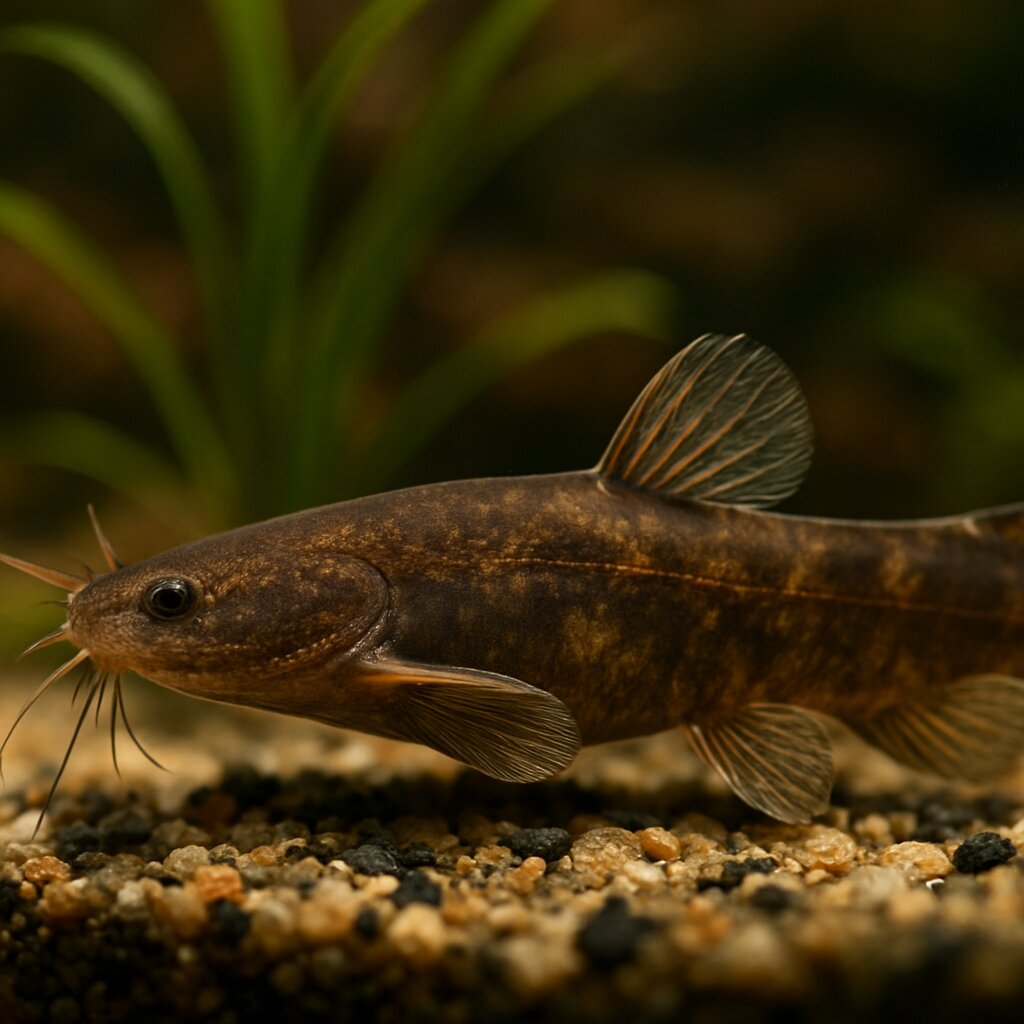
Amphilius dimonikensis
A small loach catfish endemic to the Mpoulou River in the Mayombe (Dimonika Biosphere Reserve), Republic of the Congo. Amphilius dimonikensis has a subtle banded pattern and inhabits fast, clear streams over rock and sand. In aquaria, prioritize strong, well-oxygenated flow with rounded stones and sand to mimic hillstream conditions.
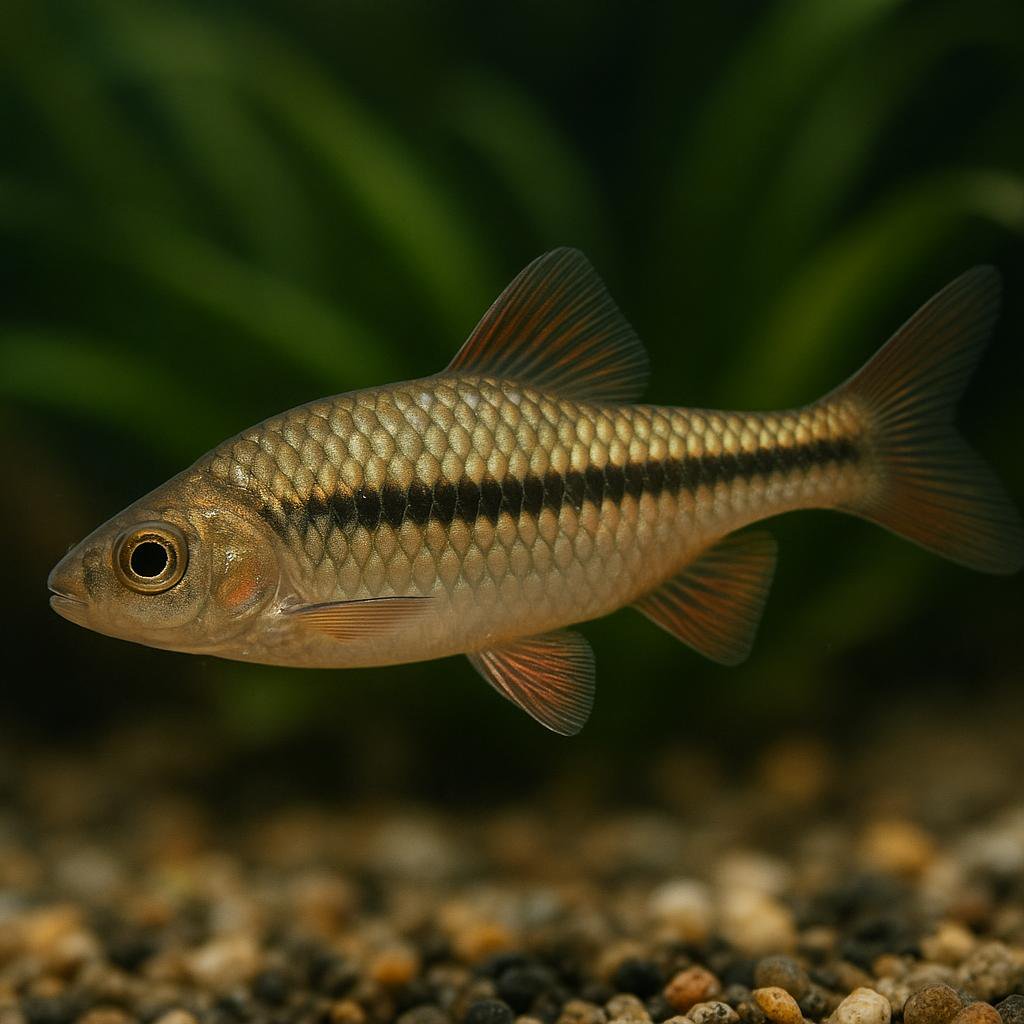
Aboina barb
Enteromius aboinensis
Enteromius aboinensis (the Aboina barb) is a small West African barb with a clean black midline stripe and a little spot right at the base of the tail. It does best when you treat it like a proper schooling fish - keep a decent group and give it plants around the edges with open swimming room in the middle.
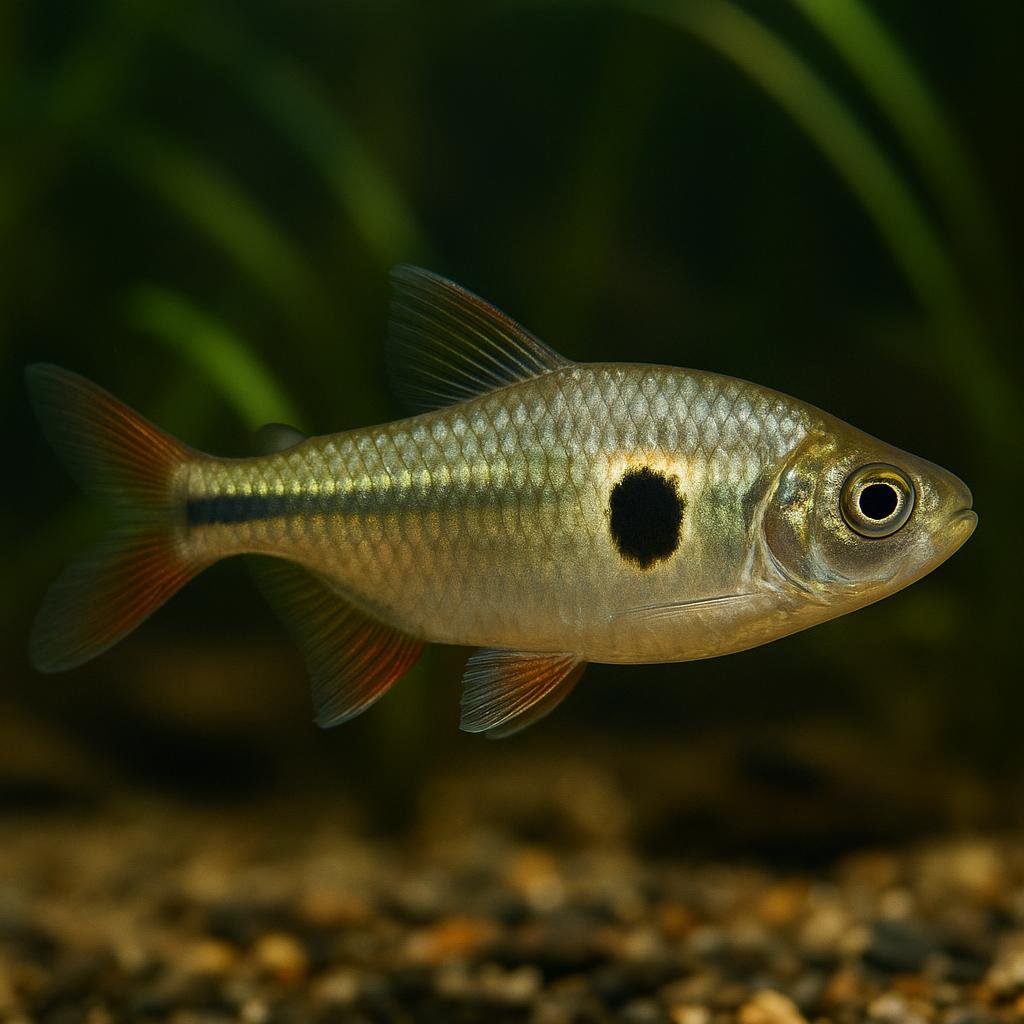
Ajuricaba tetra
Jupiaba ajuricaba
Jupiaba ajuricaba is a South American freshwater characin from the Amazon basin in Brazil (rio Negro, rio Solimões, and rio Tapajós basins). It reaches about 9.5 cm SL and is diagnosed by a narrow dark midlateral stripe, an elongated humeral spot, and an ocellated spot on the upper caudal-fin lobe. Wild specimens have been collected from blackwater forest streams and also oxbow-lake habitats.
Allen's river garfish
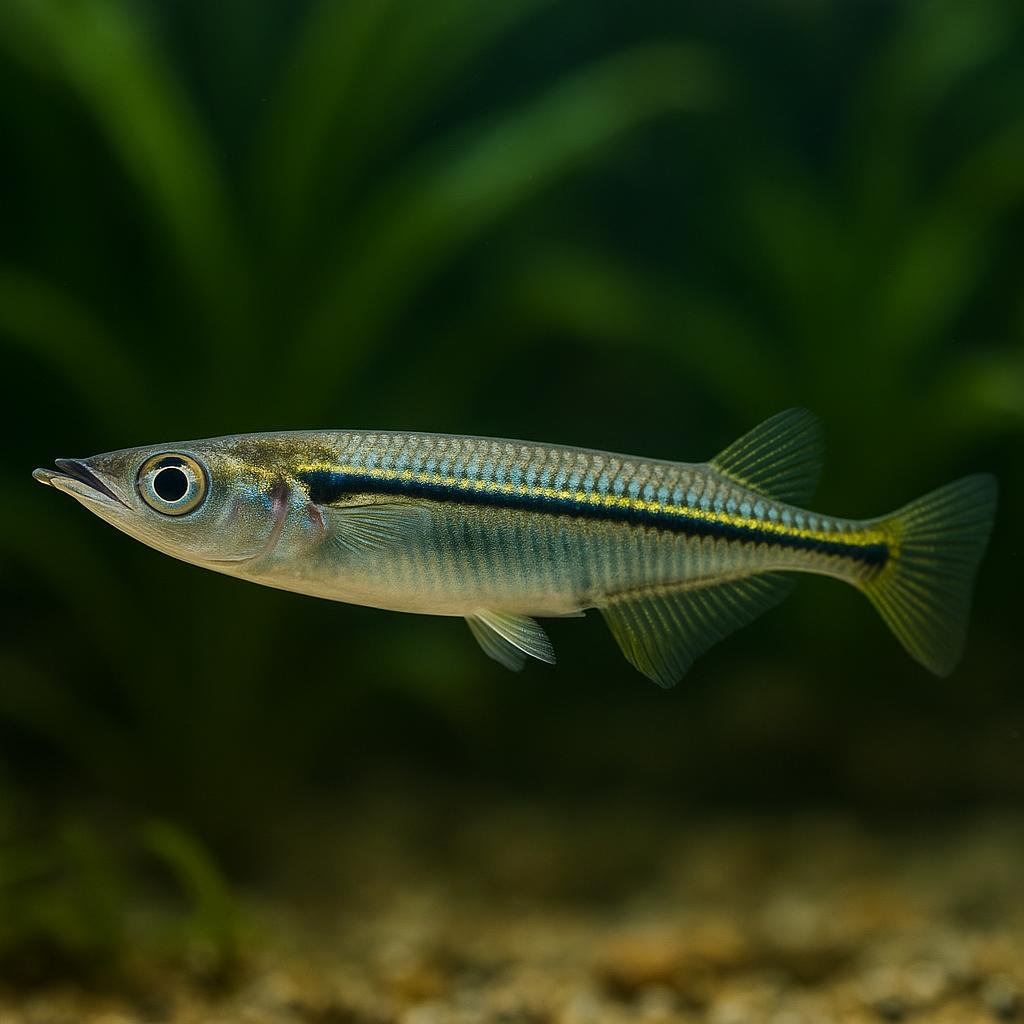
Zenarchopterus alleni
A poorly known freshwater halfbeak endemic to West Papua (Mamberamo River), described from a single specimen (~13 cm SL). Beyond basic habitat/occurrence, little is published about its ecology or aquarium suitability; assume it is a surface-oriented, jump-prone halfbeak only by analogy with related taxa.
Amapa tetra
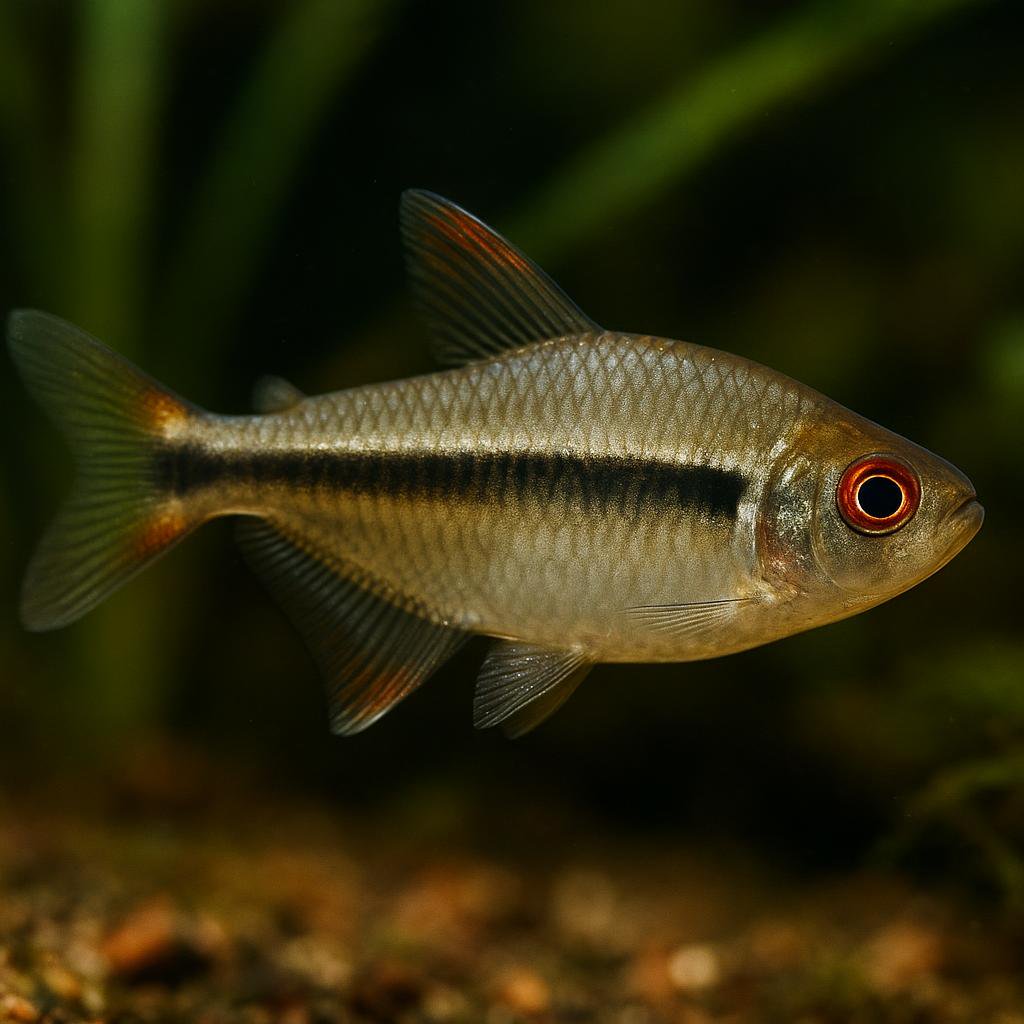
Hyphessobrycon amapaensis
This is a tiny, super sleek little tetra with a clean red stripe down the side that really pops once its settled in. It does best in a planted, slightly tinted "creek-style" setup and looks way cooler when you keep a proper group so they school and flash that line together. If you can give it soft, slightly acidic water and a calm community, its an easy fish to fall for.
Amatlan chub
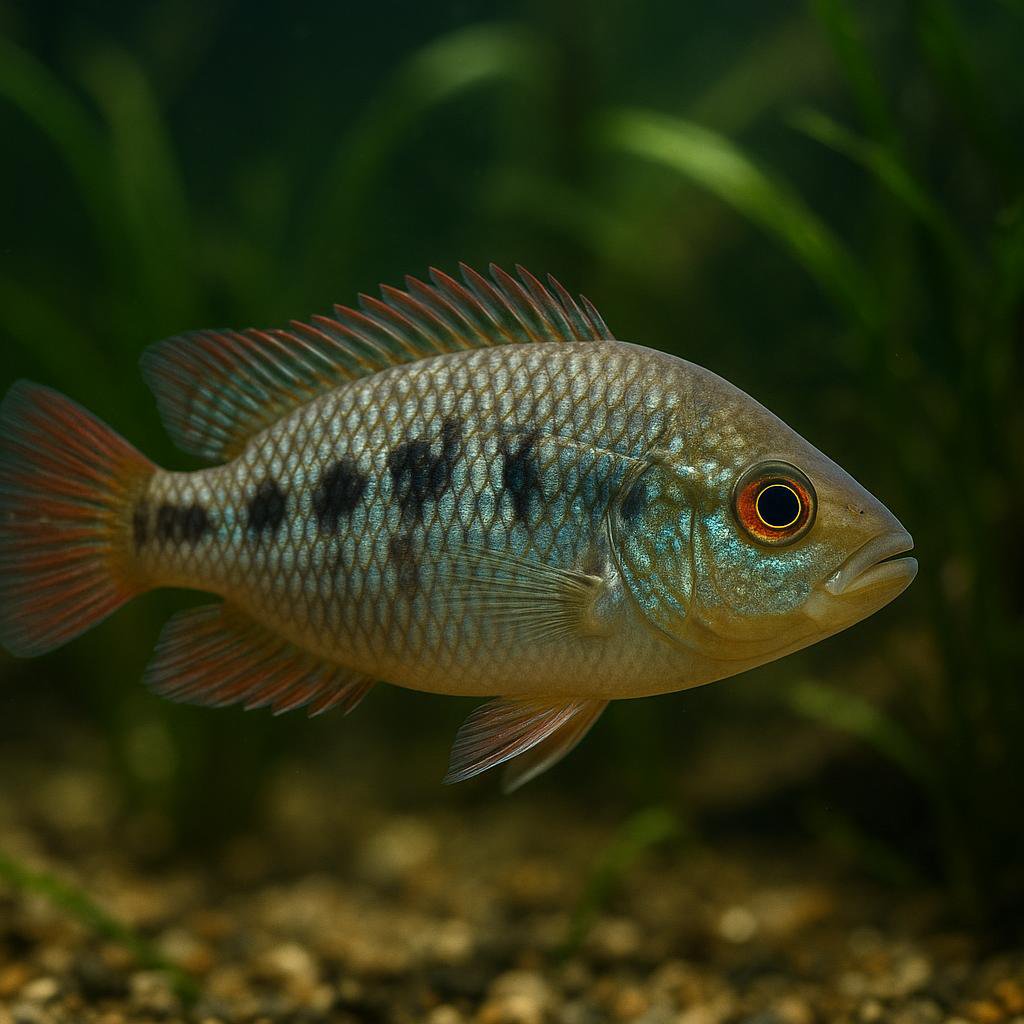
Yuriria amatlana
Yuriria amatlana (the Amatlan chub) is a little Mexican native minnow from the Ameca River basin. Its wild range is pretty limited and it is listed as Endangered, so its care info in the aquarium hobby is basically nonexistent and its availability is usually low. In the original species description, preserved fish show a dark lateral stripe with a darker patch on the caudal peduncle, and they can have tiny barbels at the mouth corners.
More to Explore
Discover more freshwater species.
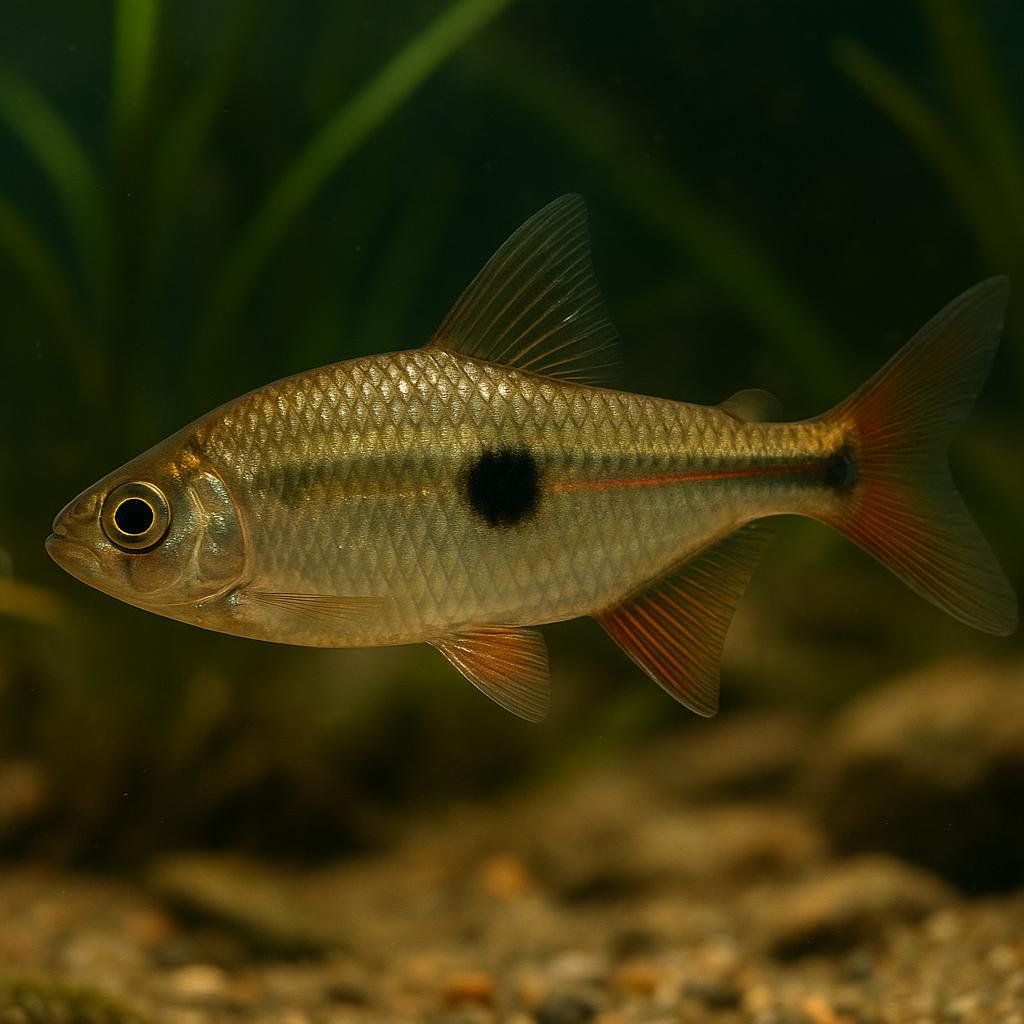
Jupiaba kurua
Small South American characin endemic to the upper rio Curuá (rio Xingu basin, Brazil). Reaches about 8.7 cm SL and inhabits clearwater rivers. Distinguished by dark dots on the bases of many lateral scales and a distinct dark caudal‑peduncle spot. Reported diet indicates omnivory, including aquatic insects, small fishes, and fragments of Podostemaceae and filamentous algae.
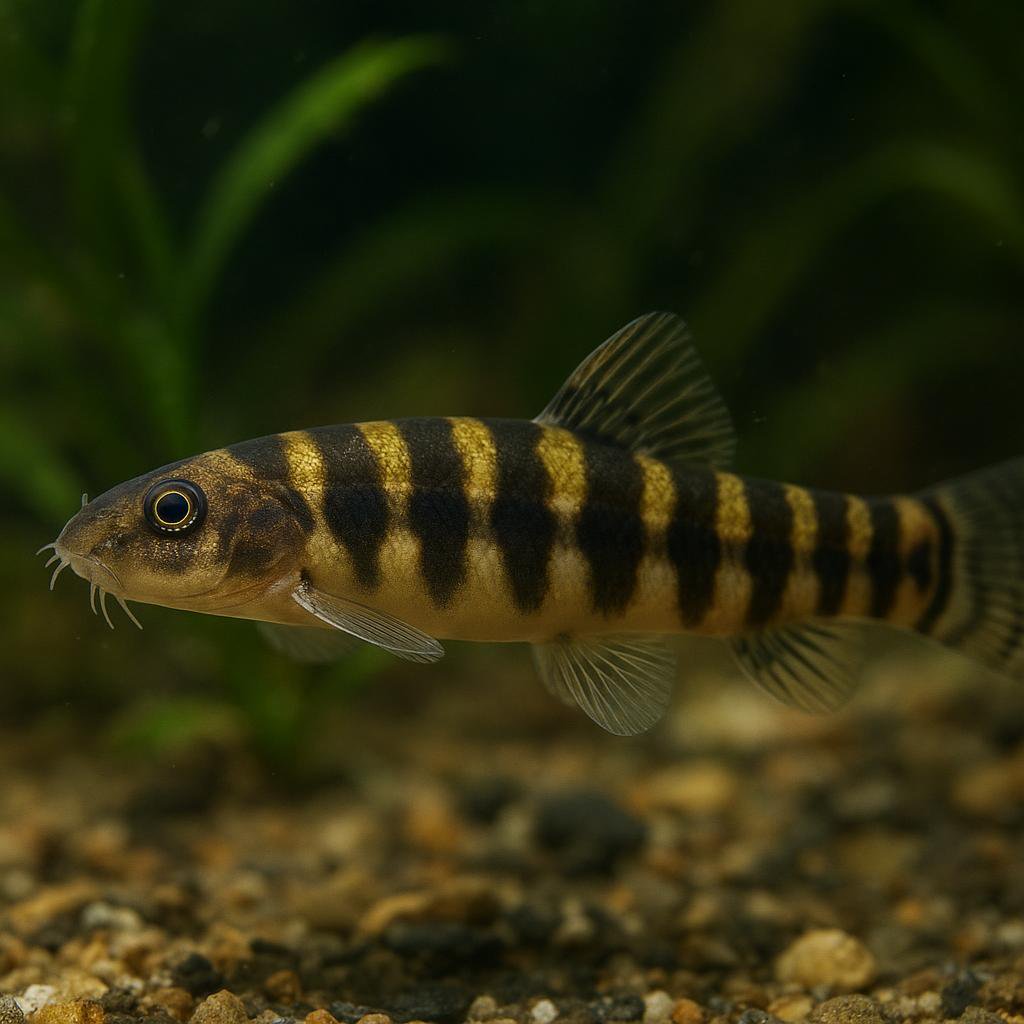
Altipedunculata stone loach
Schistura altipedunculata
Schistura altipedunculata is one of those little stream loaches that wants clean, well-oxygenated water and a bunch of rock nooks to claim as home. It is a bottom-hugger that will spend its day scooting from crevice to crevice, and it tends to get a bit spicy with its own kind if you do not give it enough hiding spots.
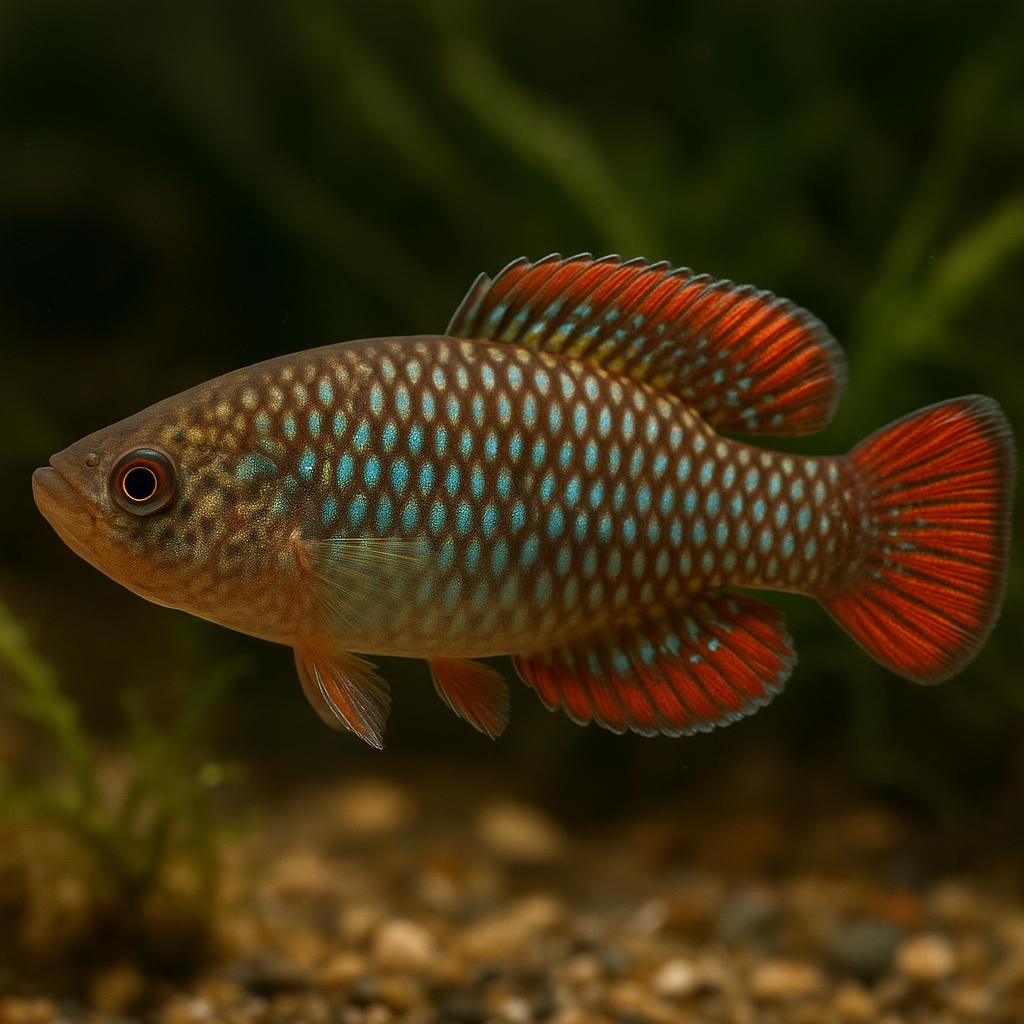
American flagfish
Jordanella floridae
Jordanella floridae is that little Florida native with the red-and-cream striping that really does look like a tiny flag once a male colors up. They graze algae like champs (especially stringy/hair algae), but they have a bit of attitude - give them plants and space so the bossy behavior stays manageable. Bonus: the male guards the eggs and will actively fan them, which is pretty fun to watch.
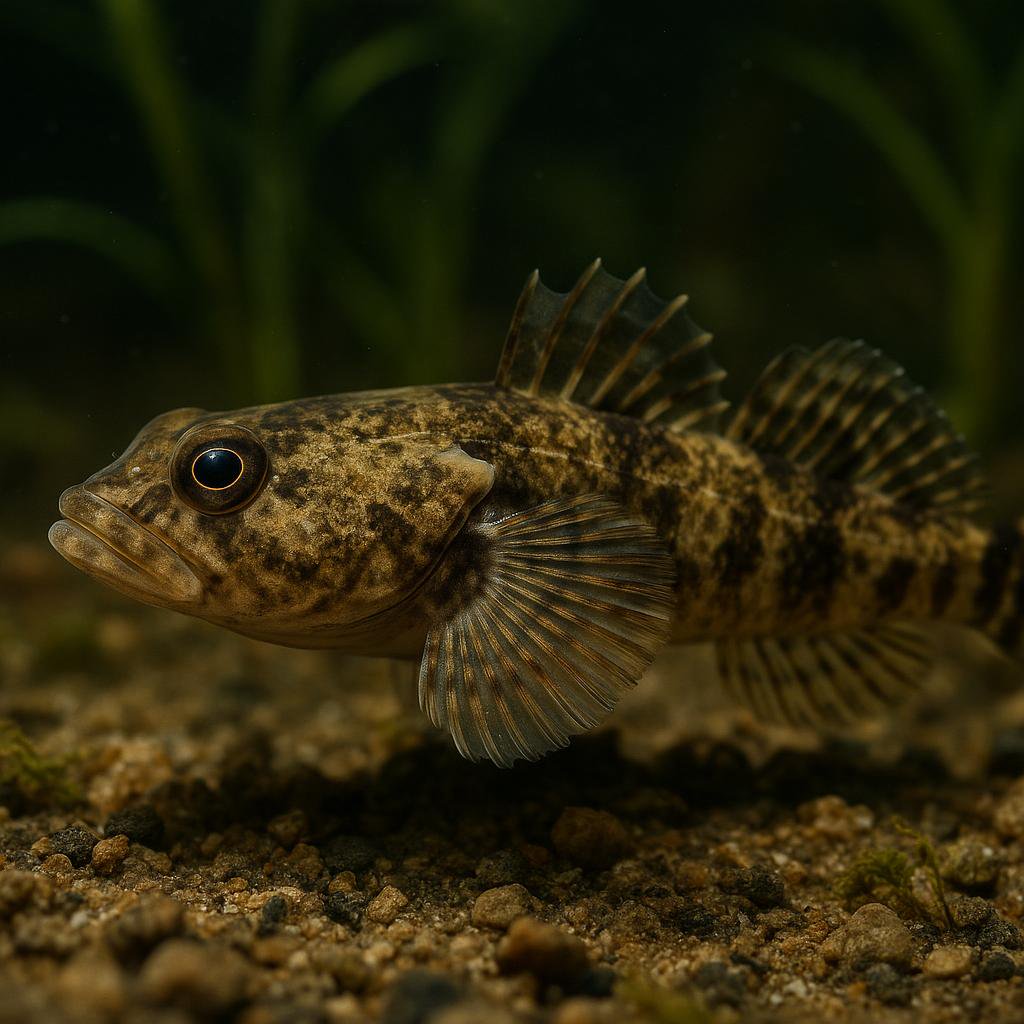
Amur sculpin
Alpinocottus szanaga
This is a little coldwater sculpin from the Amur drainage - a bottom-hugging, rock-and-gravel fish that spends its day wedged under stones and darting out to grab food. Super cool behavior and attitude, but it is absolutely not a warm tropical community fish - it wants chilly, fast, oxygen-rich water and will bicker with other bottom fish.
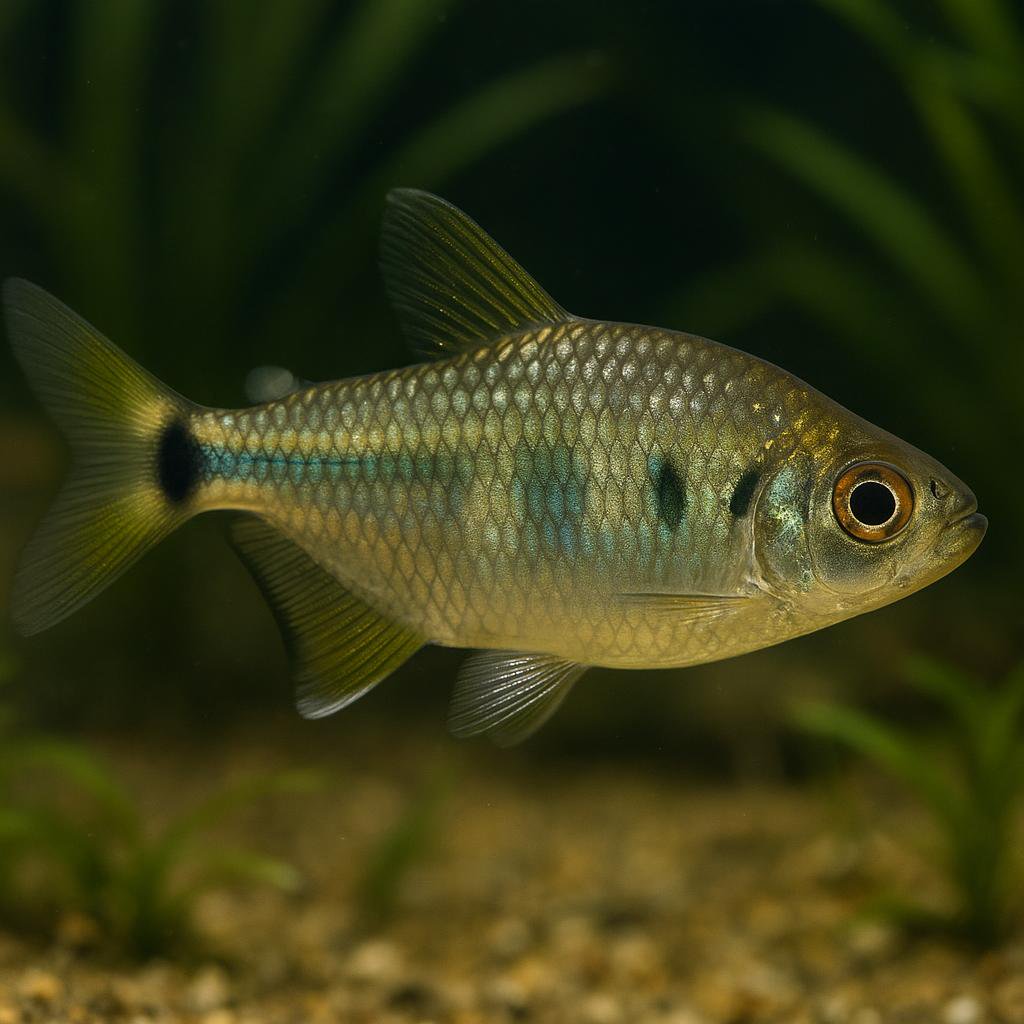
Andrica moenkhausia
Moenkhausia andrica
Moenkhausia andrica is a little Brazilian characin from the Tapajos system that tops out around 7 cm (about 2.8 inches) standard length. It has a neat netted (reticulated) scale pattern plus a dark spot on the caudal peduncle, and the really wild part is that mature females can have tiny fin hooklets too, which is usually a male-only thing in a lot of characins.
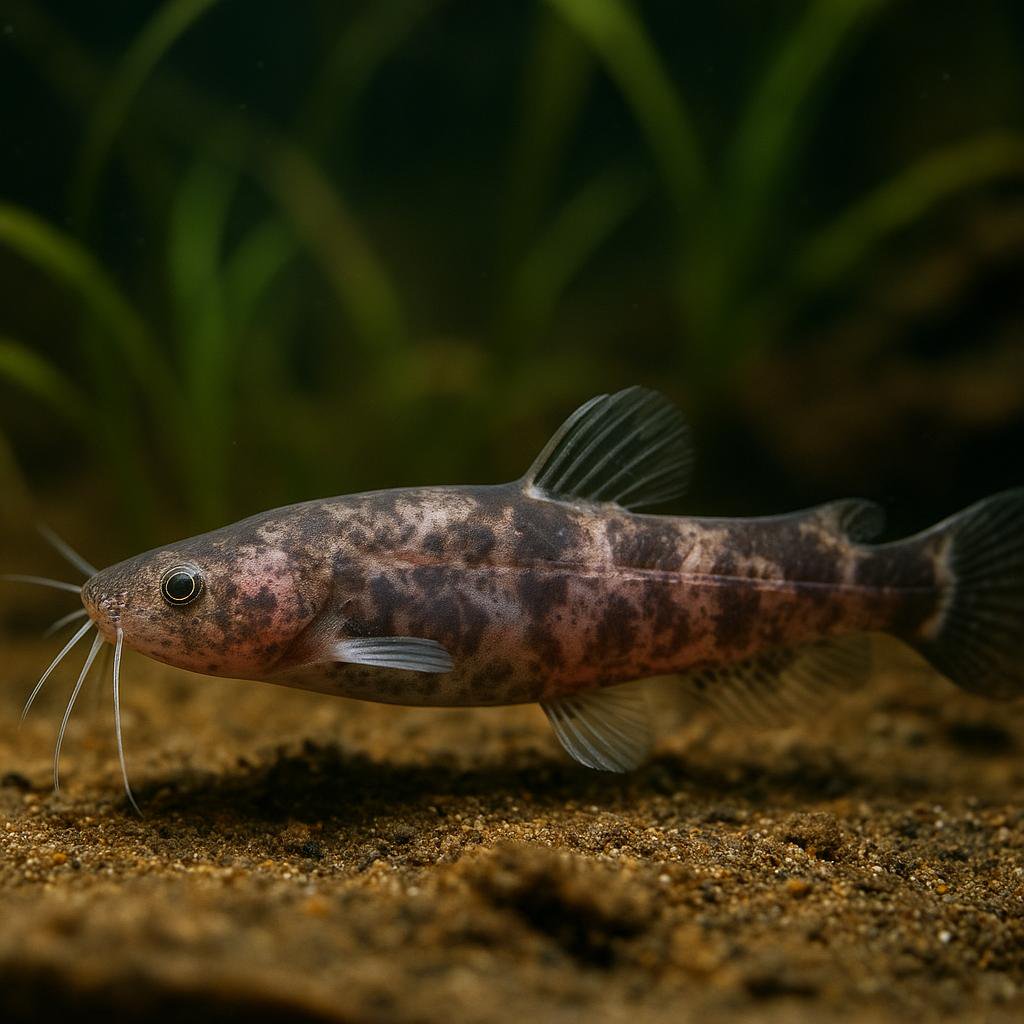
Anhanga pygmy pencil catfish
Potamoglanis anhanga
This is a truly tiny Amazonian trichomycterid catfish - like 1.3 cm max - so it is more of a micro-predator oddball than a typical community catfish. It is the kind of fish that disappears into sand, leaf litter, and plant roots, and you will spend way more time setting up the right micro-habitat than you will actually seeing it.
Looking for other species?