

Milkspotted puffer
Chelonodontops patoca
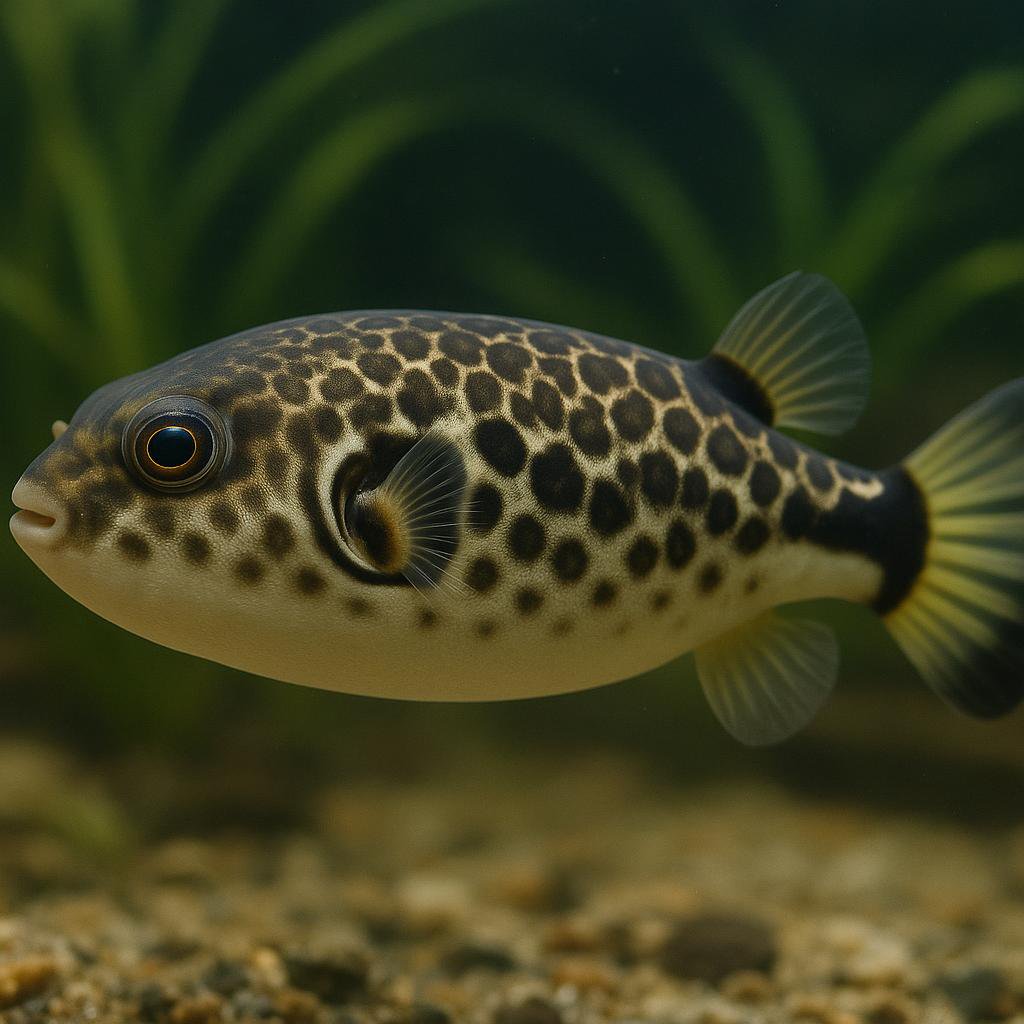
The Milkspotted Puffer features a rounded body with a mottled pattern of yellow and brown spots, highlighting its unique, textured skin.
This page includes AI-generated images. Why am I seeing AI images?
About the Milkspotted puffer
This is that chunky, curious puffer with the milky white spots and big "what are you doing?" eyes that follows you around the glass like a little water puppy. It's a super fun fish to watch-always cruising, inspecting everything, and begging for food-but it's also one of those puffers that really needs the right setup as it grows (and it grows a lot).
Quick Facts
Size
15 inches (38 cm)
Temperament
Semi-aggressive
Difficulty
Advanced
Min Tank Size
100 gallons
Lifespan
8-15 years
Origin
Indo-West Pacific (South & Southeast Asia to northern Australia)
Diet
Carnivore - meaty foods plus hard-shelled stuff (snails, clams, shrimp, crab) to wear down teeth; occasional frozen fish/squid
Water Parameters
24-28°C
7.5-8.5
10-25 dGH
Need a heater for this species?
This species needs 24-28°C in a 100 gallon tank. Use our heater calculator to find the right wattage.
Calculate heater sizeCare Notes
- Give it a big tank with lots of open swimming room—this species can reach ~15 inches (~38 cm) max, so plan for a very large aquarium (commonly ~100+ gallons) and be ready to upgrade as it grows.
- Run it brackish on purpose: aim around SG 1.005-1.015 (and keep it steady), with strong filtration and heavy water changes because these guys are messy eaters.
- Decorate with smooth rocks/driftwood and sand, but skip sharp gravel-puffers rub and wedge themselves into stuff and can get banged up.
- Feed hard, crunchy foods several times a week (snails, clams on the half shell, mussels, crab legs) so the teeth wear down; if you only do soft foods, you'll eventually be dealing with overgrown teeth.
- They're basically a one-fish "pet" tank-expect fin nipping and bullying; don't keep with slow fish, long fins, or anything small enough to be tested as food.
- Quarantine anything you add: puffers don't do well with copper meds, and they're magnets for parasites-treat in a separate tank and lean on praziquantel/formalin-style approaches instead of copper.
- Watch the belly and behavior after meals: they'll gorge, then sulk; if it's floating, pineconing, or refusing crunchy foods, you've got a problem brewing (water quality, parasites, or teeth).
- Breeding in home tanks is basically a unicorn-most are wild-caught, and you're better off focusing on long-term adult care and stable brackish salinity than trying to spawn them.
Compatibility
Good Tankmates
- Bumblebee gobies (Brachygobius spp.) - they do great in the same low-end brackish setup, stick to their own little territories, and usually don't tempt the puffer into nonstop chasing (still give lots of hides).
- Knight gobies (Stigmatogobius sadanundio) - sturdy, brackish-leaning goby that can handle itself and tends to hang around the bottom, away from the puffer's cruising zone.
- Monos (Mono argentus / Mono sebae) - fast, schooling 'silver dinner plates' that are hard for a puffer to bully; they're usually too quick to get fin-nipped all day.
- Scats (Scatophagus argus) - tough, active brackish fish; they're not delicate and don't act like easy targets. Best with plenty of space so everyone can keep moving.
- Archerfish (Toxotes spp.) - good match in bigger brackish tanks; they're confident, quick, and occupy the upper water so they don't constantly get in the puffer's face.
- Hardy livebearers in brackish (mollies especially) - not 'best friends' or anything, but in roomy tanks they can work since they're quick and handle some attitude. Expect some losses if the puffer decides they look snack-sized.
Avoid
- Slow, fancy-finned fish (guppies, bettas, fancy mollies, etc.) - the Milkspotted is a fin-testing machine and will turn those trailing fins into confetti sooner or later.
- Small peaceful community fish (tetras/rasboras, tiny gobies, baby anything) - they either get stressed to death or eventually get hunted once the puffer 'figures them out.'
- Other puffers (including figure-8/green spotted) - mixing puffers is usually a bitey mess unless you've got a huge tank and a backup plan; they tend to escalate into territory wars.
- Crustaceans and most snails - shrimp/crabs are basically expensive snacks, and snails usually become "tooth maintenance." Don't count on them as clean-up crew.
1) Where they come from
Milkspotted Puffers (Chelonodontops patoca) are an Indo-Pacific brackish wanderer. You’ll find them around mangroves, river mouths, muddy flats, and coastal lagoons—places where the salinity swings with the tides. That “in-between” lifestyle is the whole story with this fish.
A lot of the ones in the hobby are wild-caught. They can show up skinny or wormy, so plan on quarantine and deworming rather than hoping for the best.
2) Setting up their tank
This is an advanced puffer because it’s big, messy, curious, and it will test every weak point in your setup. If you don’t like doing water changes, pick a different fish.
Tank size: bigger than you think. A juvenile can start in a 40 breeder, but an adult needs something in the 4-foot range at minimum, and more is better. They’re active and they turn food into waste like it’s a full-time job.
- Salinity: brackish, and stable. I like to keep them in the mid-brackish range once they’re settled (use a refractometer, not a swing-arm).
- Filter: over-filter. Think big canister/sump with lots of bio media and strong mechanical filtration you can rinse often.
- Flow/oxygen: they appreciate good circulation; aim for clean, well-oxygenated water.
- Substrate/decor: sand is great; add rocks/wood arranged so there are sight breaks and caves, but leave open swimming room.
- Lid: tight-fitting. Puffers explore and can launch themselves in surprising ways.
Don’t “wing it” with salt. Mix marine salt in a bucket, match temperature, and measure. Rapid salinity swings stress them out fast.
If you’re upgrading salinity as the fish grows, do it gradually over weeks. Small increases during water changes are the easy way.
3) What to feed them
These are crunchy-food puffers. They’re built to smash shells and they need that wear on their teeth. If you feed soft foods all the time, you’ll eventually be dealing with overgrown beaks and a fish that can’t eat.
- Staples I’ve had the best luck with: ramshorn/bladder snails, small clams/mussels (in shell), crab legs, shrimp with shell on, chunks of prawn, and hard-shelled crustaceans when you can get them.
- Good variety foods: earthworms, squid, silversides pieces, high-quality frozen mixes (but don’t let this replace crunch).
- Foods I avoid as a main diet: plain bloodworms and other soft-only diets—fine as a treat, not a plan.
Start a snail culture. Seriously. A cheap tub, an air stone, some lettuce/algae wafers, and you’ve got a steady supply of tooth-wear food.
Go easy on feeders from unknown sources. Puffers pick up parasites easily, and live feeder fish can bring more trouble than they’re worth.
4) Behavior and tankmates
Milkspotted Puffers are smart and bold. They watch you. They learn feeding routines. They also bite first and ask questions later. Some are “manageable,” some are absolute chaos—plan for the chaos version and you’ll be happier.
Most of the time, the safest call is species-only. If you’re determined to do tankmates, choose fast, tough brackish fish that won’t be bullied and won’t tempt the puffer with long fins.
- Generally bad tankmates: anything slow, long-finned, tiny, or expensive. Also: all snails and most crustaceans (they’re food).
- Possible (not guaranteed) tankmates in a large tank: larger monos, scat, some robust brackish gobies, tough archerfish—still a gamble.
- Best “tankmate”: lots of space, hiding breaks, and a feeding schedule that doesn’t turn the puffer into a starving missile.
Never try to “train” them out of nipping by letting it happen. Once they learn fins are fun to bite, it can become their favorite hobby.
5) Breeding tips
Breeding this species in home aquariums is rare. Sexing isn’t straightforward, and they’re not exactly the kind of fish that politely pair off in a community tank.
If you want to take a swing at it, you’re looking at a big, dedicated brackish system, seasonal changes (temperature and salinity tweaks), heavy conditioning on shellfish, and a lot of patience. Most hobbyists focus on keeping one healthy long-term rather than trying to breed them.
If you ever do see courtship or nesting behavior, document it. Even basic notes (salinity, temp, diet, tank size) help the hobby because there isn’t a ton of solid home-breeding info out there.
6) Common problems to watch for
Most issues with Milkspotted Puffers come from three things: water quality, teeth, and parasites. Nail those and you’re already ahead of the curve.
- Overgrown teeth: caused by too many soft foods. If the puffer struggles to eat or keeps “spitting” food, look at the beak.
- Parasites/wasting: skinny fish that eats but doesn’t fill out, stringy poop, lethargy—common with wild-caught puffers. Quarantine helps a ton.
- Salt mix mistakes: unstable salinity leads to stress, poor appetite, and random health spirals.
- Ammonia/nitrite spikes: they’re messy and brackish tanks sometimes get under-filtered. Test more than you think you need to.
- Bloat/swallowing air: they can gulp air at the surface, especially if stressed. Don’t net them if you can avoid it; use a container.
Try hard to prevent inflation. Moving them in a cup/container instead of a net makes a huge difference. If they inflate with air, it can be a real problem.
My routine that kept mine looking great: big weekly water changes, lots of mechanical filter rinsing, and a rotation of snails/clams/shrimp-in-shell. Simple, not fancy—just consistent.
Similar Species
Other brackish semi-aggressive species you might be interested in.
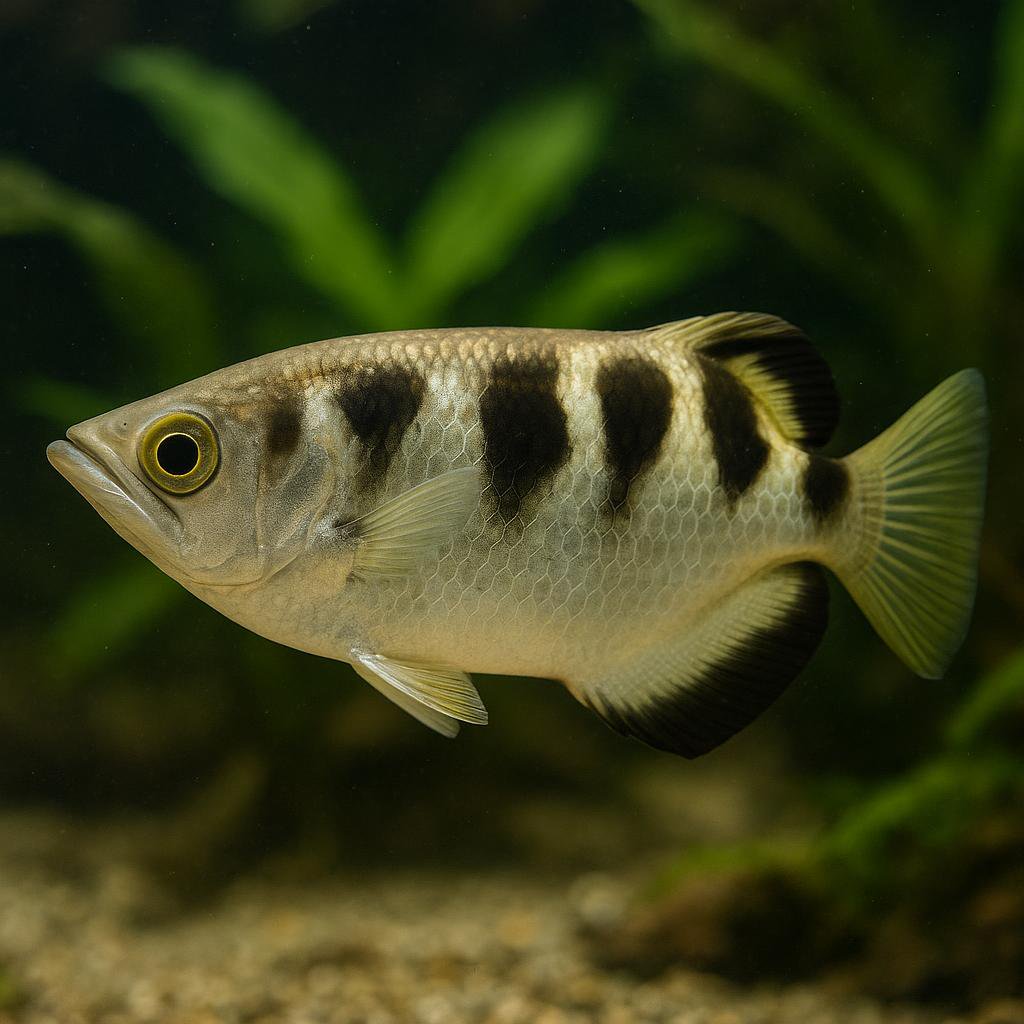
Banded Archerfish
Toxotes jaculatrix
This is the fish that literally spits jets of water to knock insects off branches-watching one "take aim" is unreal. They're super aware of what's going on outside the tank and will even learn to beg and snipe food from the surface once they settle in. Give them height and some open swimming room and they act like little aquatic sharpshooters.
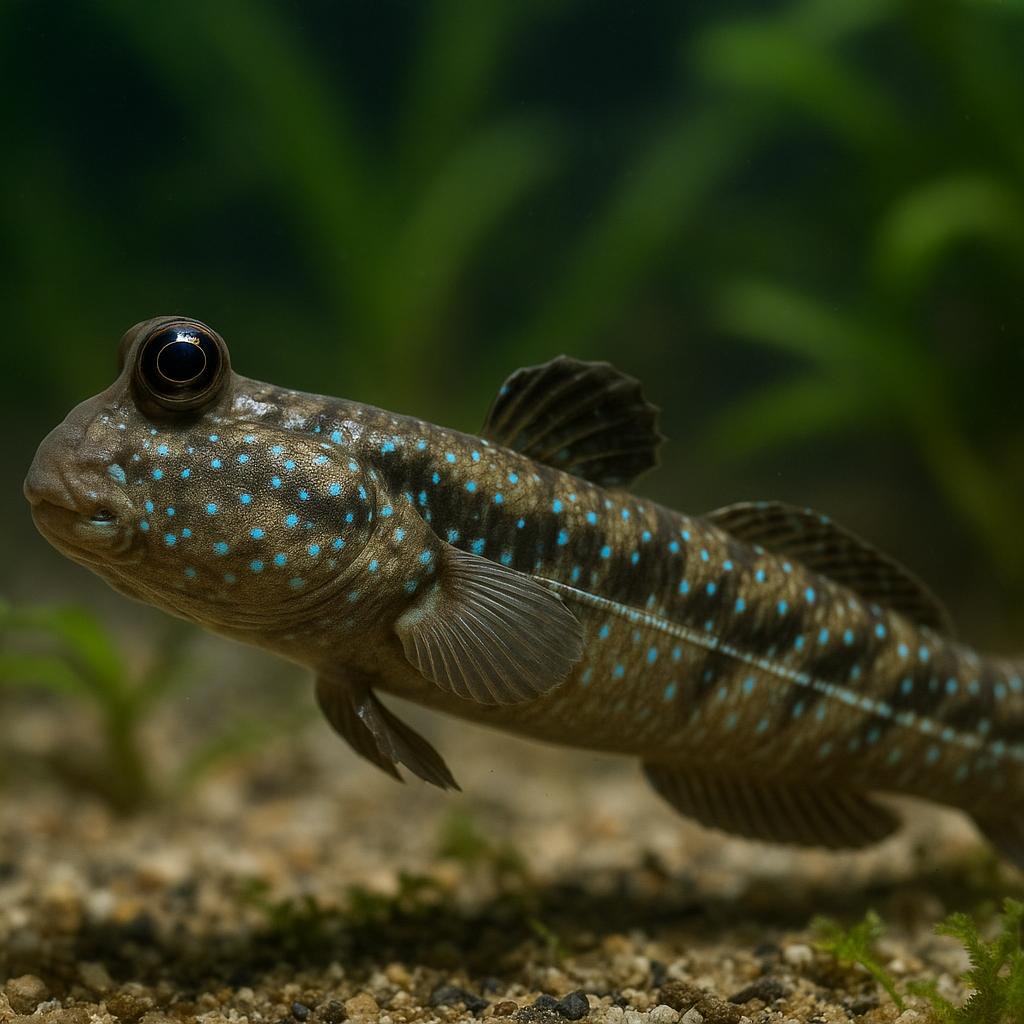
Barred mudskipper
Periophthalmus argentilineatus
This is one of those classic "walks around like it owns the place" mudskippers-big goofy eyes, climbs, hops, and spends a ton of time out on the mud when it's humid. In the wild it lives on intertidal mangrove/nipa mudflats and even shuttles between little pools and open air, hunting worms, insects, and small crustaceans. It's super fun to watch, but it really wants a brackish paludarium setup (not a normal aquarium).
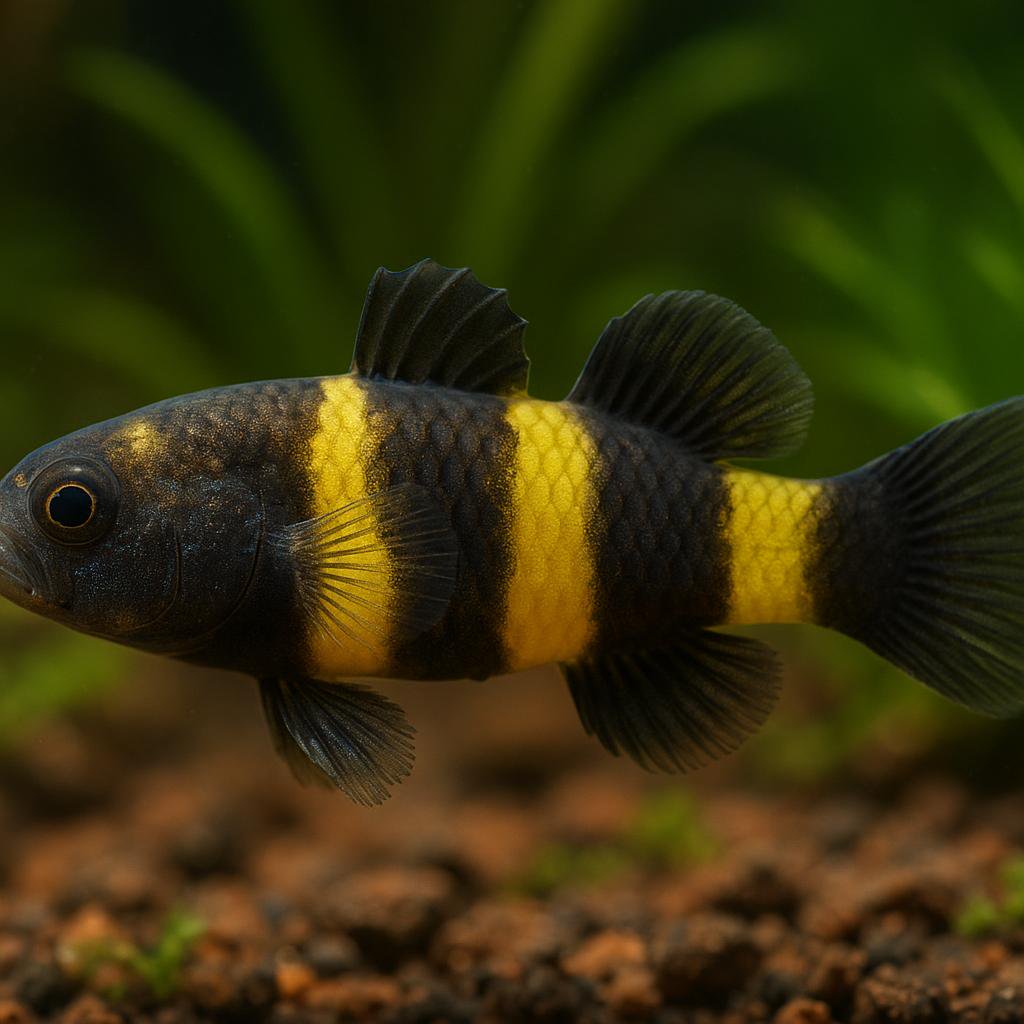
Bumblebee goby
Brachygobius doriae
Brachygobius doriae is one of the classic "bumblebee gobies" - tiny, bottom-hugging little characters that perch on rocks and sand and stare at you like they own the place. They're at their best in a calm setup with lots of caves and leaf litter, and they really shine once you get them eating frozen/live foods reliably (they're slow, picky eaters). Also: they're one of the species that gets mislabeled a lot in shops, so it's super common to see them sold under the wrong bumblebee-goby name.
Bumblebee goby (Bumblebee fish)
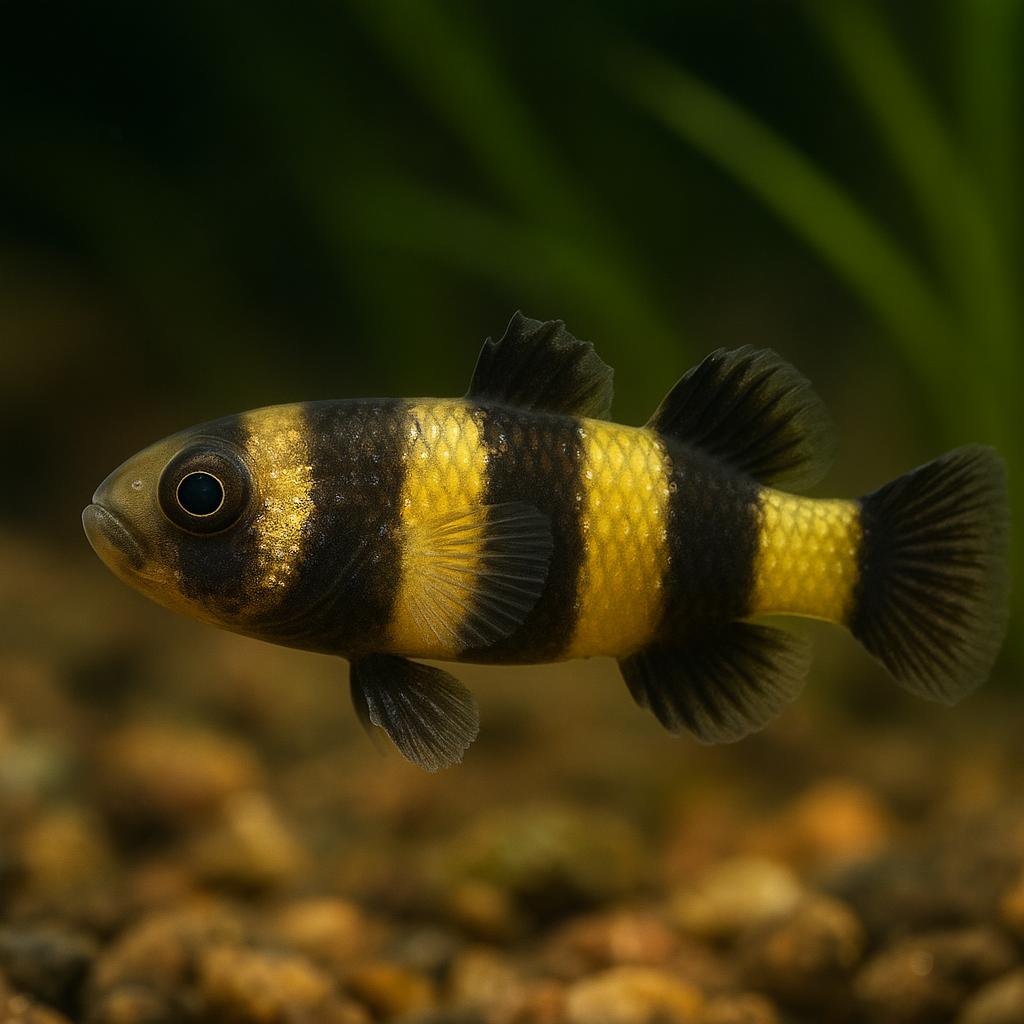
Brachygobius xanthozonus
This is that tiny little goby with the bold black-and-yellow bands that likes to perch on the bottom and stare back at you like it owns the place. It's happiest in lightly brackish water with lots of little caves and sight-breaks, and it's one of those fish that often refuses flakes-frozen/live meaty foods usually flip the "yes, I will eat" switch.
Colombian shark catfish
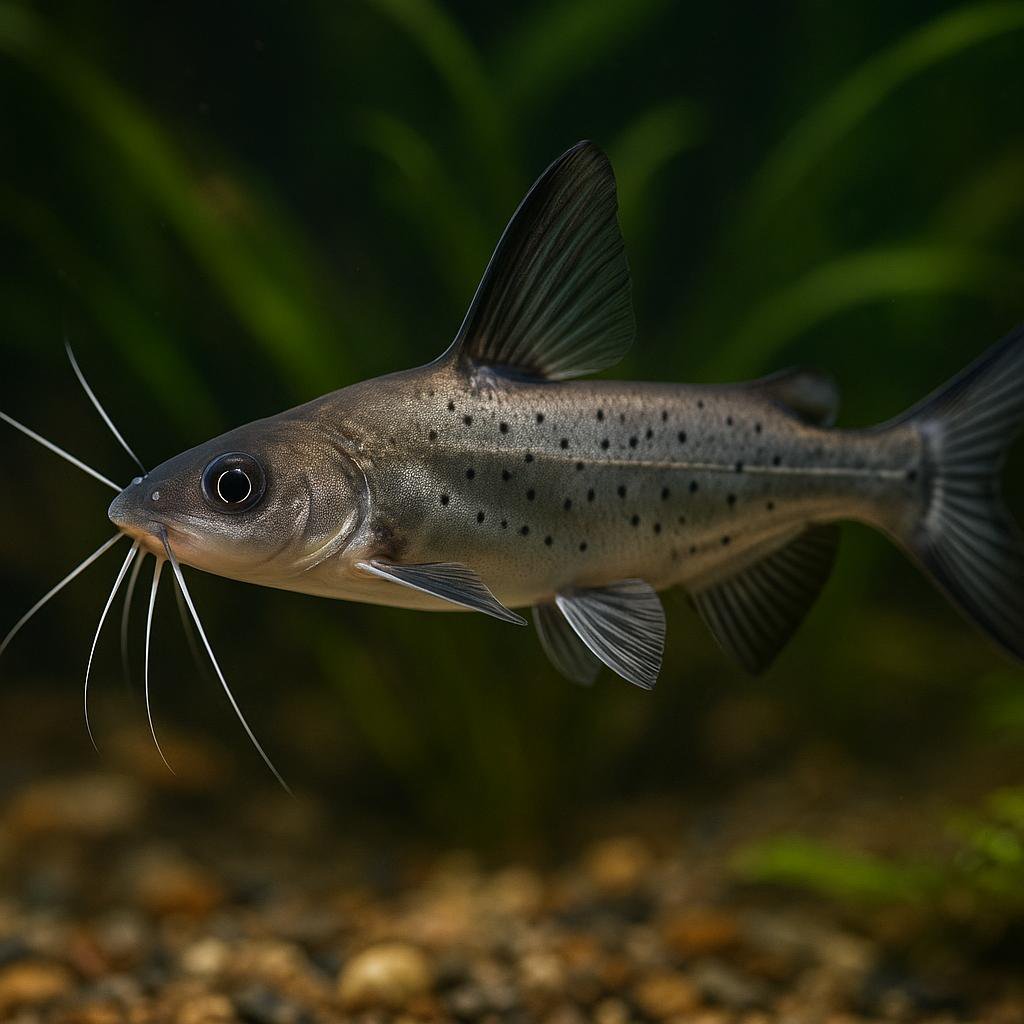
Ariopsis seemanni
This is that slick silver "shark-looking" catfish with the black fins and white tips that cruises around like it owns the place. The big gotcha is it's not a true freshwater community fish long-term-juveniles show up in shops as "freshwater," but as it grows it really wants brackish and eventually full marine conditions, plus a lot of swimming room.
Eyespot pufferfish (Figure-8 puffer)
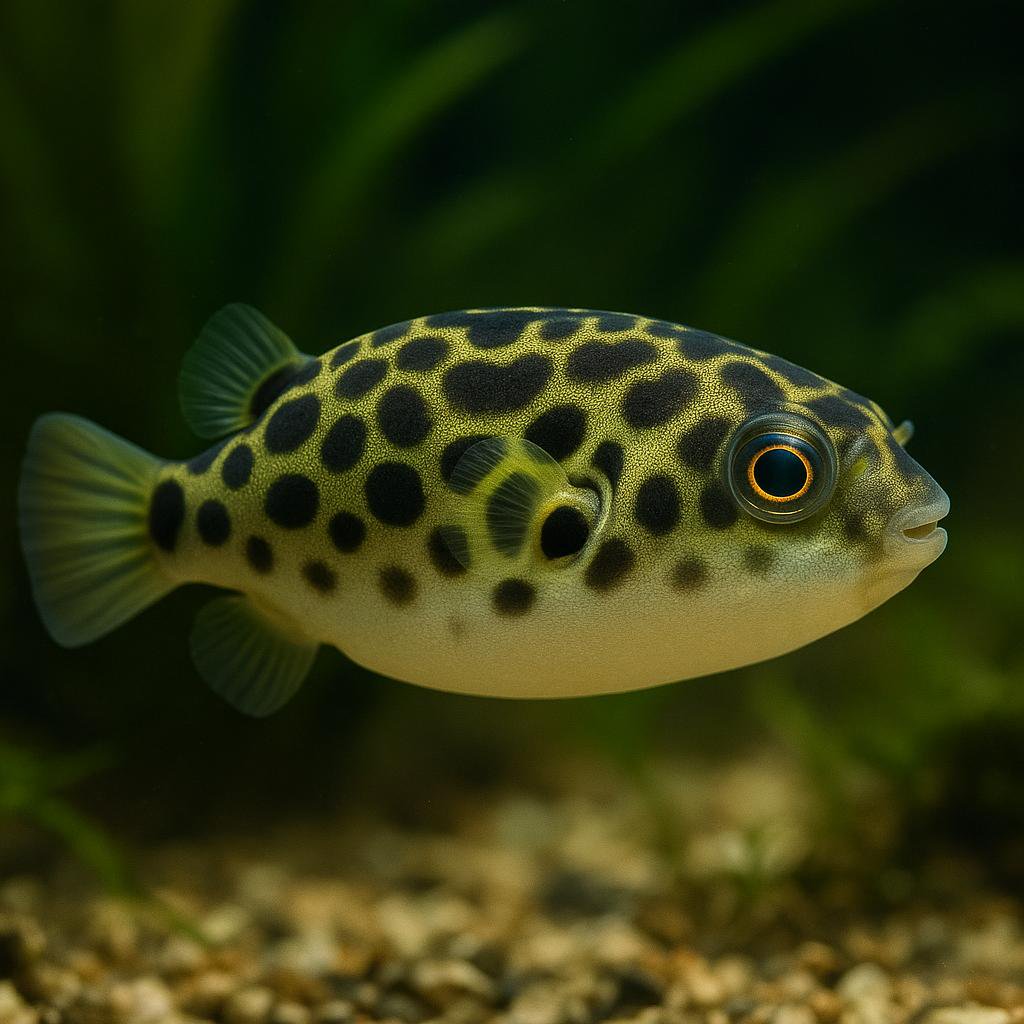
Dichotomyctere ocellatus
This is the little "figure-8" puffer with the yellow-green squiggles and the two bold eyespots near the tail-tons of personality in a small body. They're basically snail-hunting machines with a curious, interactive vibe, but they can be spicy with their own kind, so you plan the tank around that.
More to Explore
Discover more brackish species.
African moony
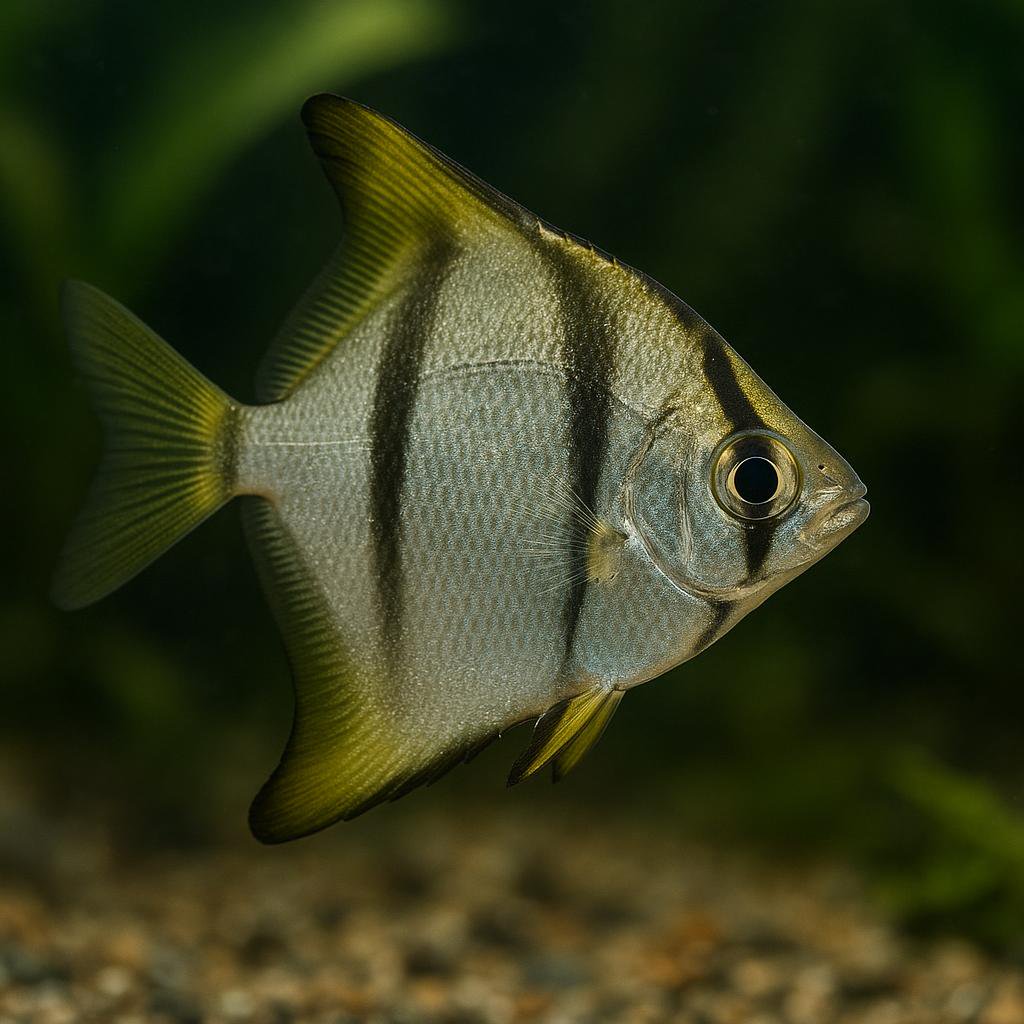
Monodactylus sebae
This is that shiny, diamond-shaped "mono" that cruises around in a tight pack and looks like a little silver dinner plate with black bars when it's young. The big thing with African moonies is they're euryhaline-so they'll tolerate freshwater as juveniles, but they really shine long-term in brackish (and can be transitioned toward marine as they mature). Give them a big, open tank and a group, and they turn into nonstop, super fun midwater swimmers.
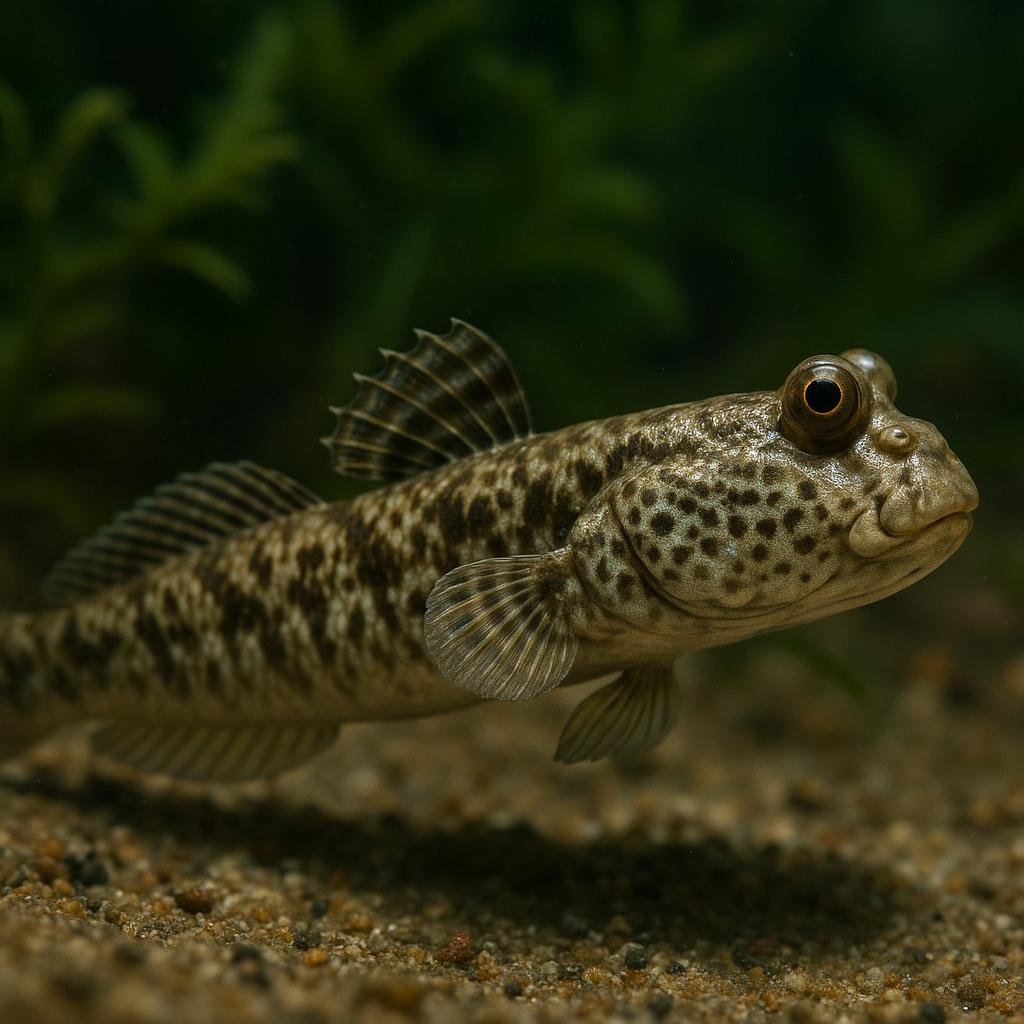
Atlantic Mudskipper
Periophthalmus barbarus
This is that wild little amphibious goby that straight-up climbs around on land like it forgot it was a fish. They've got big googly eyes, tons of personality, and they'll perch, hop, and patrol their territory-honestly more like a tiny crabby lizard than a "regular" aquarium fish.
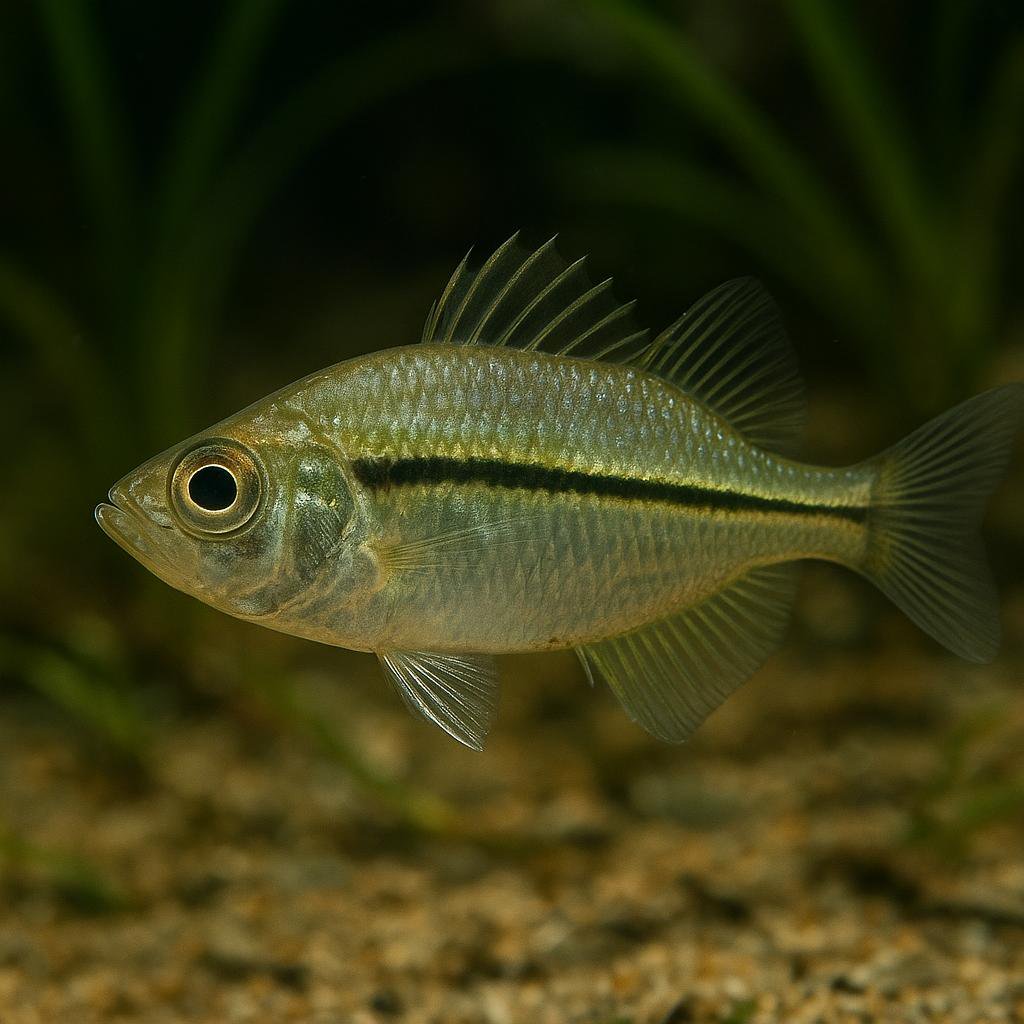
Banded-tail glassy perchlet
Ambassis urotaenia
This is one of those see-through glassy perchlets where you can literally watch the organs shimmer when it turns-super cool in the right lighting. In the wild it hangs around river mouths and mangroves and cruises in groups, so it does best when you keep a little gang of them and give them some open swimming room.
-1771643191.jpg)
Elongate mudskipper (pointed-tailed goby)
Pseudapocryptes elongatus (syn. Pseudapocryptes lanceolatus)
This is that super-cool "mudskipper-ish" goby that mostly stays in the water, but will park itself in the shallows and periscope its eyes above the surface like it's keeping watch. It's an obligate air-breather from tidal rivers/estuaries, so it really appreciates shallow, brackish setups with soft mud/sand and gentle flow-more of a mangrove vibe than a typical community tank.
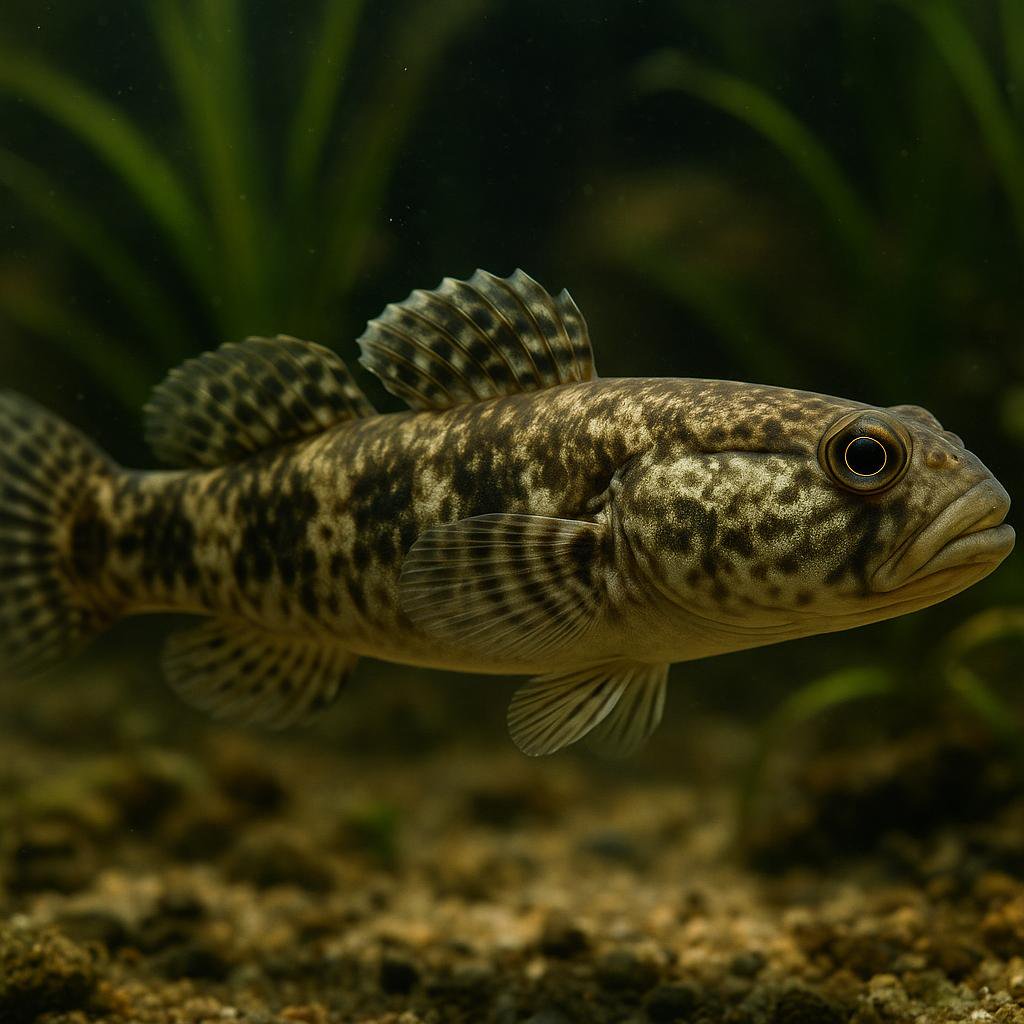
Fat sleeper
Dormitator maculatus
Dormitator maculatus is that chunky "sleeper goby" type fish with the bulldog head and the attitude of a little vacuum cleaner-always sifting and nosing around the bottom. It'll do freshwater or brackish and it can get way bigger than most people expect, so it's one of those fish that's awesome... as long as you plan the tank around the adult size, not the baby you bought.
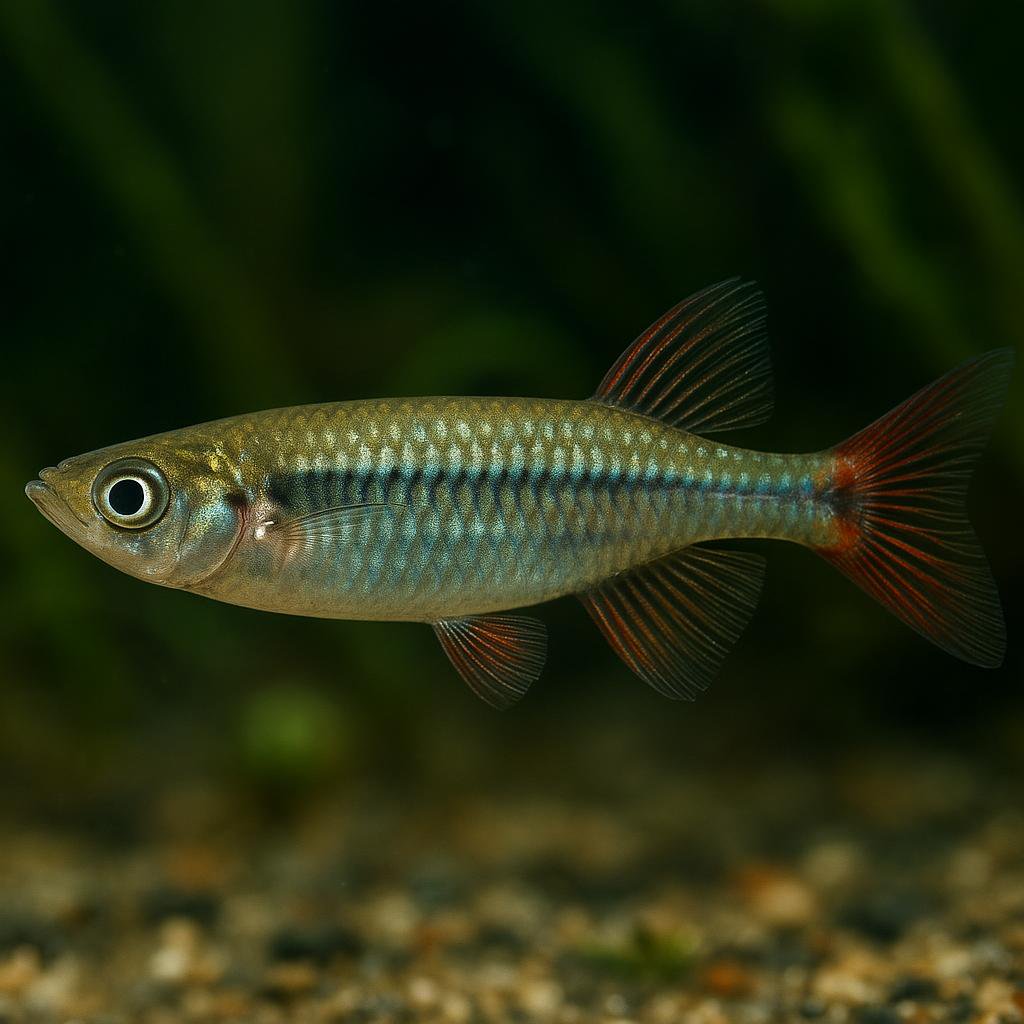
Feathered river-garfish
Zenarchopterus dispar
Zenarchopterus dispar is a surface-hanging halfbeak from mangroves and sheltered bays, with that classic long lower jaw for snapping up insects and other floaty foods. Males get those funky elongated fin rays (the "feathered" look), and they are livebearers, so once they settle in you can occasionally get surprise babies. Biggest thing with this fish is giving it calm water up top, room to cruise, and a tight lid because halfbeaks can rocket-jump.
Looking for other species?