

Wrestling halfbeak
Dermogenys pusilla
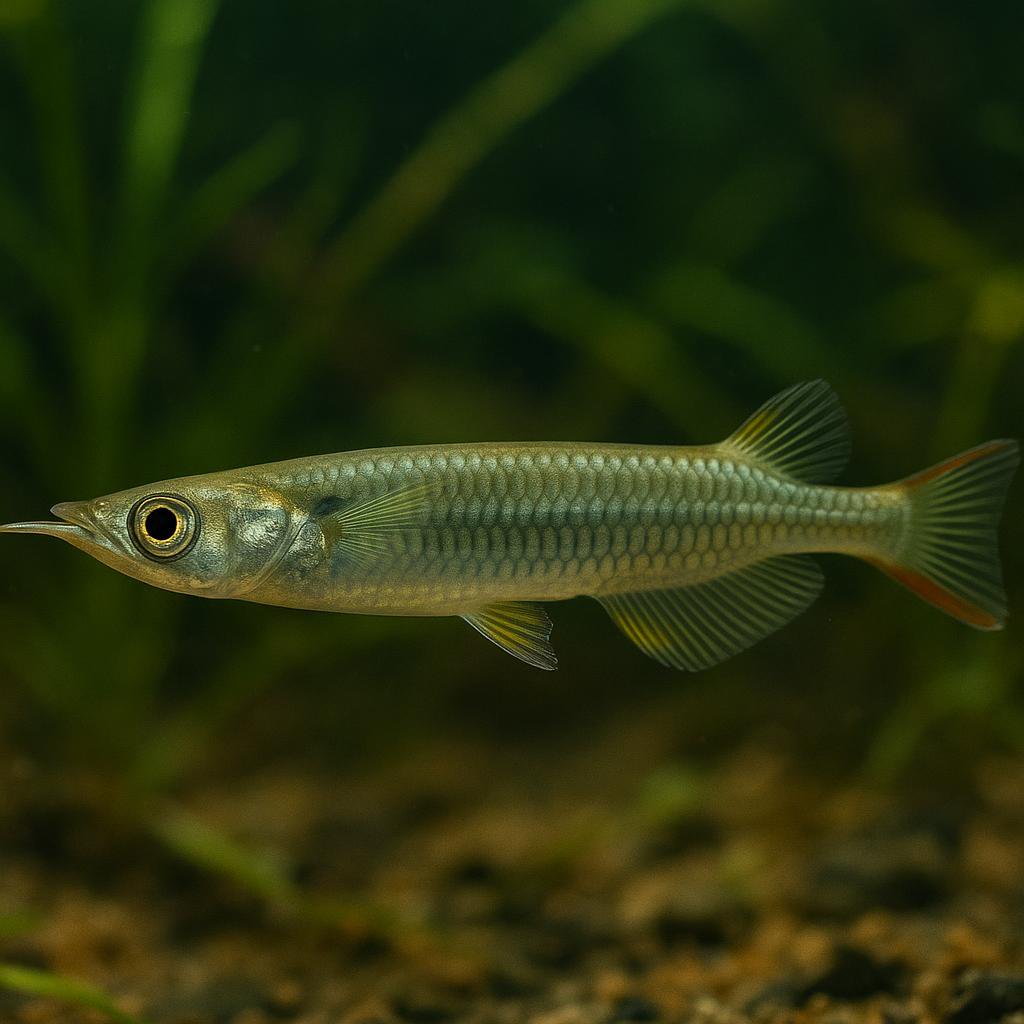
Wrestling halfbeaks exhibit elongated bodies with a slender shape, featuring bright, silvery scales and elongated, upward-facing jaws.
This page includes AI-generated images. Why am I seeing AI images?
About the Wrestling halfbeak
This is that quirky little surface-dweller with the long lower "beak" that's always cruising the top and snapping at food. The males do these goofy jaw-locking sparring matches (that's where the "wrestling" name comes from), so you'll want space and lots of floaters to keep everyone chill. They're also famous jumpers-tight lid is non‑negotiable.
Also known as
Quick Facts
Size
16.1 cm
Temperament
Semi-aggressive
Difficulty
Intermediate
Min Tank Size
20 gallons
Lifespan
3-5 years
Origin
Southeast Asia
Diet
Omnivore leaning carnivore – small insects/live or frozen foods (mosquito larvae, brine shrimp, daphnia) plus quality flakes/micropellets
Water Parameters
24-28°C
7-8
9-19 dGH
Need a heater for this species?
This species needs 24-28°C in a 20 gallon tank. Use our heater calculator to find the right wattage.
Calculate heater sizeCare Notes
- They tolerate freshwater to low-end brackish; many keep them long-term in low brackish around ~1.005-1.010 SG (use marine salt mix), and maintain stable temps around 24-28°C.
- They're surface fish 24/7, so give them a long tank with lots of surface cover (floating plants, overhangs) and gentle flow; keep the waterline calm or they get stressed and skittish.
- Use a tight lid - halfbeaks are jumpers, especially when spooked or chasing food at the surface.
- Feed small foods that float or drift: baby brine shrimp, daphnia, mosquito larvae, chopped bloodworms, and good micro-pellets; multiple small feedings beat one big dump because they're built for constant picking.
- Tankmates: calm brackish fish that won't bully the surface (figure-8 puffers are a no, most fin-nippers are a no); bumblebee gobies and mollies in similar salinity usually work if everyone's well-fed and there's space.
- Keep more females than males (like 1 male to 2-3 females) - males can harass nonstop, and the "wrestling" behavior turns into stress if the ratio is off.
- Breeding is livebearing and sneaky: females drop tiny fry near the surface plants; if you want any to survive in a community tank, pack in floaters or move the pregnant female to a separate brackish tank and pull her after she drops.
Compatibility
Good Tankmates
- Bumblebee gobies (Brachygobius) - they hang out on the bottom and don't compete for the same surface space. Just make sure the tank is actually brackish and you've got plenty of little caves so everyone can keep their distance.
- Knight gobies (Stigmatogobius) - solid brackish pick if the tank is big enough. They're tough, stay mostly low, and won't be bothered by halfbeak posturing up top.
- Mollies (esp. short-finned types) - classic brackish buddy. They're quick, not easily bullied, and they don't freak out when the halfbeaks do their little dominance routine at the surface.
- Mono scats (Monodactylus) - great if you've got a bigger brackish tank. They're fast schooling fish, so the halfbeaks usually can't single one out to hassle much.
- Archerfish (in a proper big brackish setup) - they use the upper levels too, but they're confident and not the 'get pushed around' type. Works best when both are kept in groups and the tank has lots of open swimming room.
Avoid
- Figure-8 puffer - high fin-nip/predation risk against surface-dwelling halfbeaks; only attempt with extreme caution in a large, well-managed setup.
- Slow fish with fancy fins (guppies, bettas, fancy mollies) - halfbeaks are mouthy and snappy around the surface, and long fins look like an invitation to nip. Stress city.
- Anything nippy/fin-biters (tiger barbs, some 'mean' tetras, etc.) - halfbeaks already do a lot of surface sparring, so adding extra nippers turns it into a constant brawl.
- Big aggressive brackish predators (green spotted puffers, larger scats when grown, big brackish cichlids) - eventually the halfbeaks either get bullied off food or become food.
- Tiny bite-sized fish or baby livebearers - wrestling halfbeaks are surface hunters and they will pick off small tank mates, especially fry cruising near the top.
1) Where they come from
Wrestling halfbeaks (Dermogenys pusilla) come from Southeast Asia—think Thailand, Malaysia, Indonesia—mostly around slow-moving coastal waters, mangroves, and river mouths where fresh and salt mix. They’re surface fish through and through, built to cruise the top film looking for tiny bugs.
2) Setting up their tank
If you treat them like “just another community fish,” they’ll make you pay for it. Set them up for surface living: calm water up top, lots of cover, and a lid that actually fits.
- Tank size: 20 gallons is a nice starting point for a small group; bigger is easier because it spreads out the bickering
- Lid: non-negotiable—halfbeaks can launch themselves out during spats or feeding
- Flow: gentle; aim your filter output so the surface isn’t getting blasted
- Hardscape/plants: floating plants (real or fake), tall stems to the surface, and some open swimming lane at the top
- Lighting: moderate; too bright with no cover makes them skittish and snappy
I’ve had the best results giving them a “ceiling” of floaters (salvinia, frogbit, even a strip of hornwort). It breaks sight lines, calms them down, and you’ll see less wrestling.
Brackish is the sweet spot. You don’t need to go full marine—just mix marine salt (not aquarium “tonic” salt) to a low brackish range. Stability matters more than chasing a magic number, so mix new water in a bucket, match temperature and salinity, then add it.
Use marine salt mix and a hydrometer/refractometer. Don’t eyeball brackish—halfbeaks get touchy when things swing around.
- Target range most hobbyists do well with: low brackish (around SG 1.002–1.008)
- Temp: mid-70s to low-80s °F (24–28 °C)
- Water: on the harder/alkaline side tends to suit them better than soft/acidic
- Maintenance: steady weekly water changes beat big “resets”
3) What to feed them
They’re picky in a very specific way: they want food at the surface, and their little beak makes some foods awkward. Mine ignored sinking foods like they didn’t exist, then went wild for anything that wiggled up top.
- Best staples: live/frozen mosquito larvae, daphnia, baby brine shrimp, cyclops, finely chopped brine/mysis
- Dry foods: small floating pellets/micro sticks can work once they recognize them (go slow and be patient)
- Occasional treats: fruit flies/flightless drosophila, tiny crickets (small specimens only), insect-based floating foods
Feed small portions more often instead of one big dump. It keeps the pecking order drama lower and helps shy fish get a chance at the surface.
Avoid relying on flakes that waterlog and sink fast—you’ll end up with hungry halfbeaks and a dirty substrate.
4) Behavior and tankmates
The “wrestling” name is real. Males posture, spar, and chase—mostly at the surface—especially in tight tanks or skewed ratios. They’re not piranhas, but they are spicy.
- Keep them in a group, not as a single show fish (a small group spreads out attention)
- Ratio that usually works: more females than males
- Give them surface cover so the bullied fish can break line-of-sight
- Expect some sparring; constant cornering and torn fins means you need changes (space, cover, ratio)
Tankmates should be brackish-friendly and not competing hard for the surface. Bottom and mid-water fish often work better than other top-dwellers. Also: anything with long, tempting fins is asking for trouble.
- Good directions: peaceful brackish gobies, bumblebee gobies (if your salinity matches), hardy mollies, some small scats/monos only in much larger setups
- Be careful with: other surface feeders, fancy guppies, slow long-finned fish
- Avoid: aggressive brackish predators and anything big enough to view halfbeaks as snacks
They can and will jump during fights or when startled. If there’s a 1 cm gap by a filter or airline, they’ll find it.
5) Breeding tips
They’re livebearers, which is the fun part. If they’re settled, well-fed, and not being harassed nonstop, you’ll often end up with surprise babies.
- Give the females breaks: heavier female ratio helps a lot
- Add dense floating cover so fry can hide at the surface (they hang up top early on)
- Feed tiny foods ready-to-go: baby brine shrimp and microworms get fry growing fast
- If adults are picking off fry, move the pregnant female to a calm birthing tank, then move her back out after
I’ve had better fry survival with floaters than with those plastic breeder traps. The traps stress the females, and stressed halfbeaks act weird.
6) Common problems to watch for
Most halfbeak issues I’ve seen come down to three things: unstable brackish mixing, surface stress (too bright/no cover/too much flow), and social pressure from the wrong group setup.
- Jumping: almost always from spooking or sparring—tight lid and calmer surface fixes most of it
- Ragged fins/nipped beaks: usually male-on-male or overcrowding; adjust ratio, add cover, upgrade tank size
- Not eating: often they don’t recognize dry food or food sinks too fast; offer live/frozen at the surface and transition slowly
- Skin/fungal issues after changes: commonly from salinity swings; pre-mix brackish water and match it closely
- Shimmying/lethargy: check salinity, temp, and ammonia/nitrite first—halfbeaks hate sloppy water
Don’t “salt the tank” with random doses. Brackish works because it’s consistent. Big salinity swings can knock halfbeaks sideways fast.
If you give them a calm, covered surface, steady low brackish water, and the right group balance, they’re seriously rewarding. Watching them patrol the top like little mini-needlefish never gets old.
Similar Species
Other brackish semi-aggressive species you might be interested in.
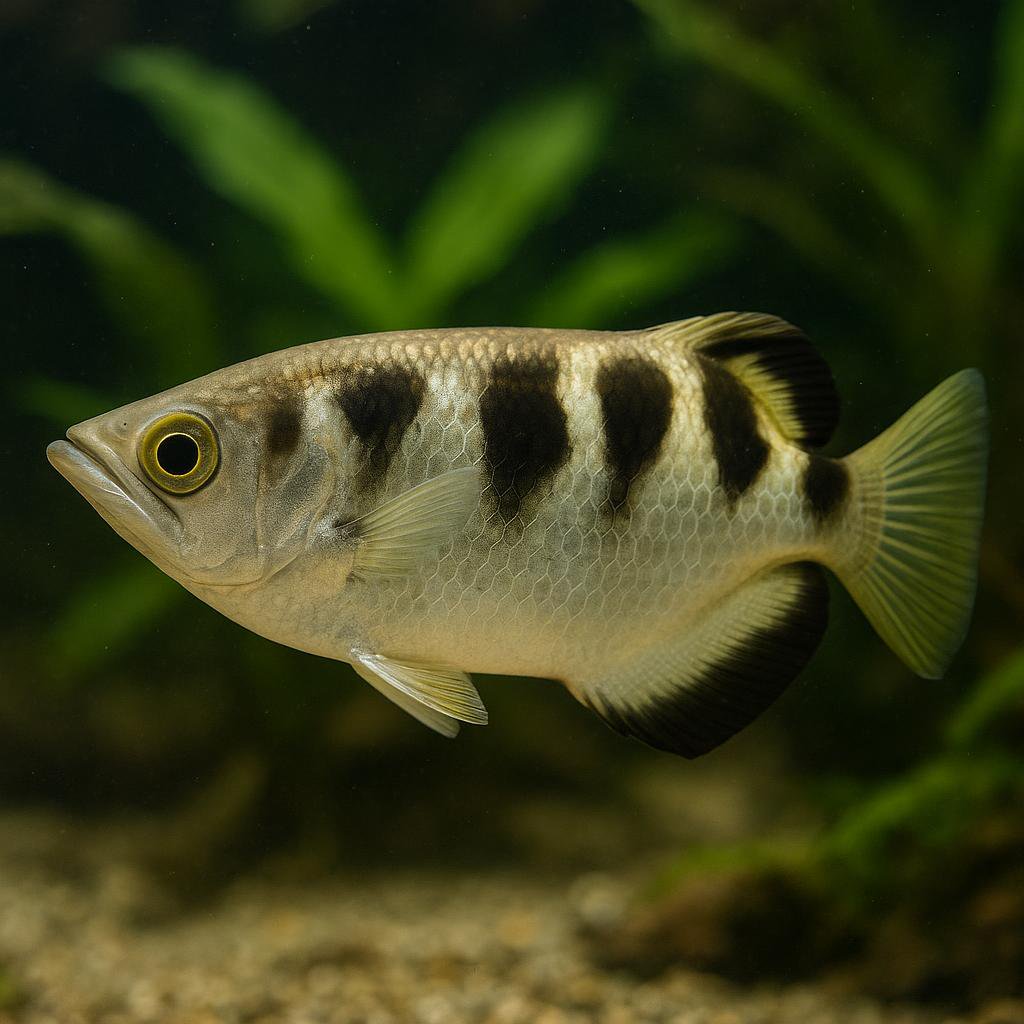
Banded Archerfish
Toxotes jaculatrix
This is the fish that literally spits jets of water to knock insects off branches-watching one "take aim" is unreal. They're super aware of what's going on outside the tank and will even learn to beg and snipe food from the surface once they settle in. Give them height and some open swimming room and they act like little aquatic sharpshooters.
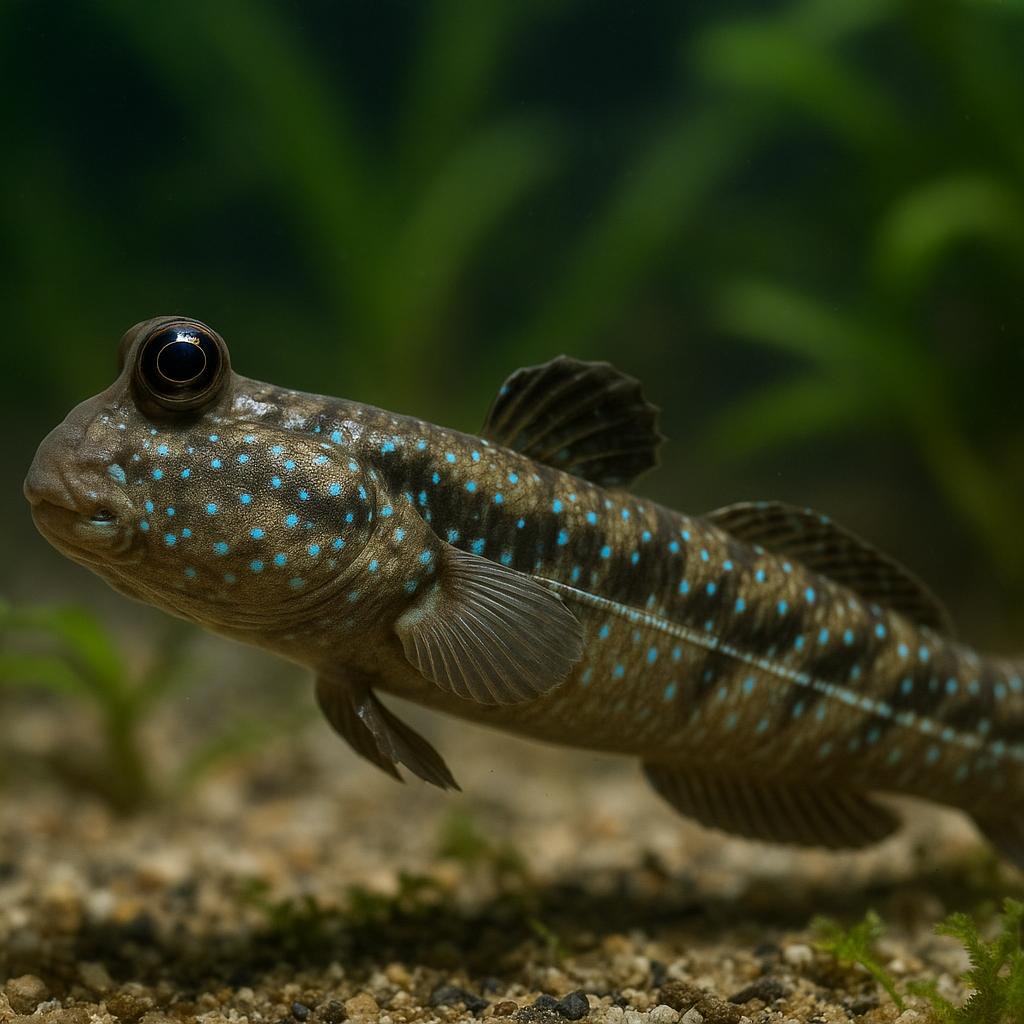
Barred mudskipper
Periophthalmus argentilineatus
This is one of those classic "walks around like it owns the place" mudskippers-big goofy eyes, climbs, hops, and spends a ton of time out on the mud when it's humid. In the wild it lives on intertidal mangrove/nipa mudflats and even shuttles between little pools and open air, hunting worms, insects, and small crustaceans. It's super fun to watch, but it really wants a brackish paludarium setup (not a normal aquarium).
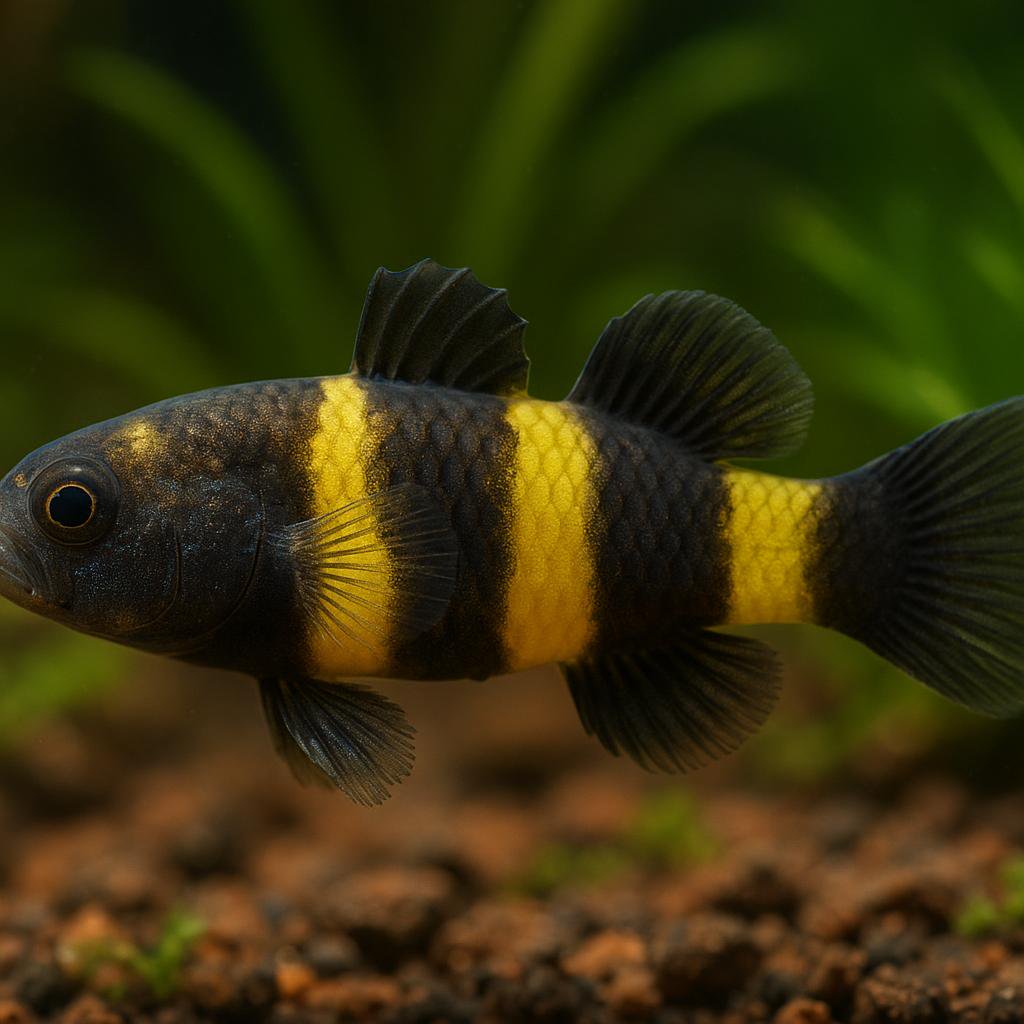
Bumblebee goby
Brachygobius doriae
Brachygobius doriae is one of the classic "bumblebee gobies" - tiny, bottom-hugging little characters that perch on rocks and sand and stare at you like they own the place. They're at their best in a calm setup with lots of caves and leaf litter, and they really shine once you get them eating frozen/live foods reliably (they're slow, picky eaters). Also: they're one of the species that gets mislabeled a lot in shops, so it's super common to see them sold under the wrong bumblebee-goby name.
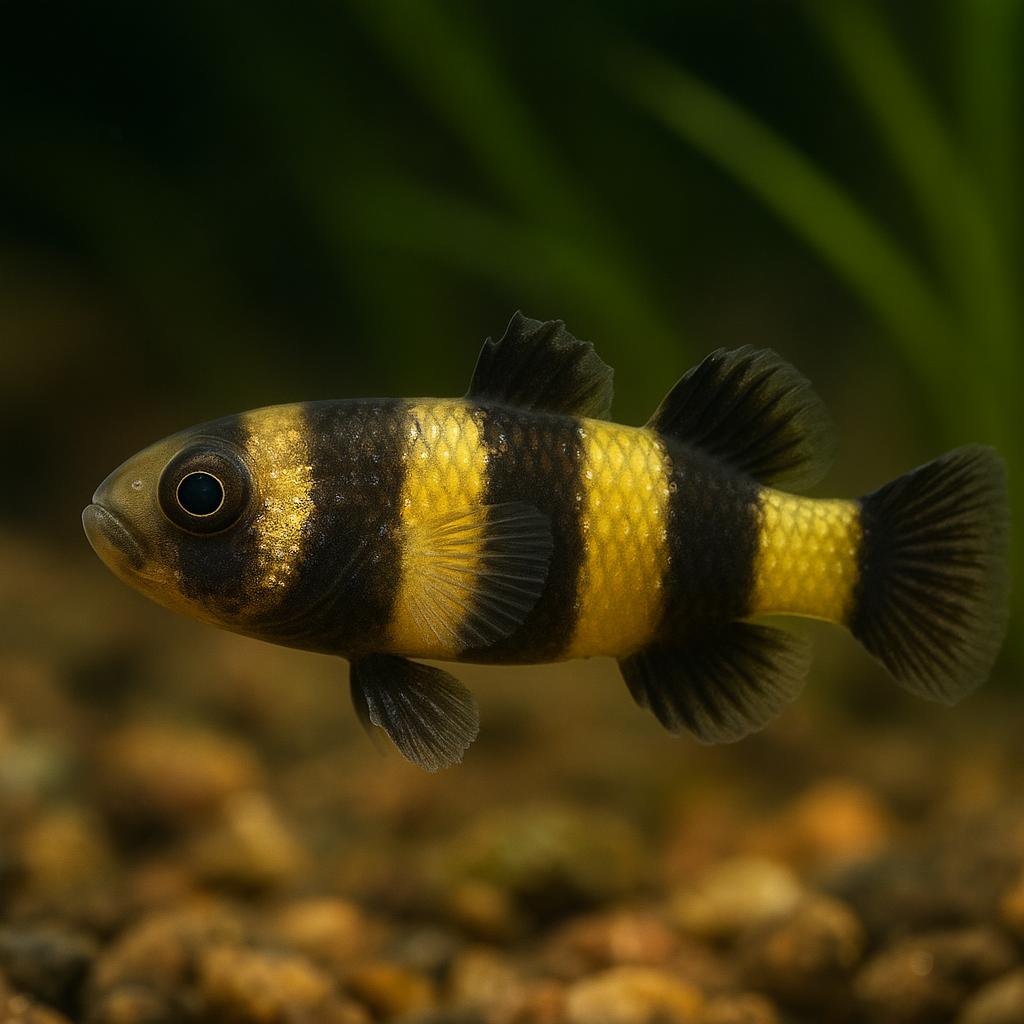
Bumblebee goby (Bumblebee fish)
Brachygobius xanthozonus
This is that tiny little goby with the bold black-and-yellow bands that likes to perch on the bottom and stare back at you like it owns the place. It's happiest in lightly brackish water with lots of little caves and sight-breaks, and it's one of those fish that often refuses flakes-frozen/live meaty foods usually flip the "yes, I will eat" switch.
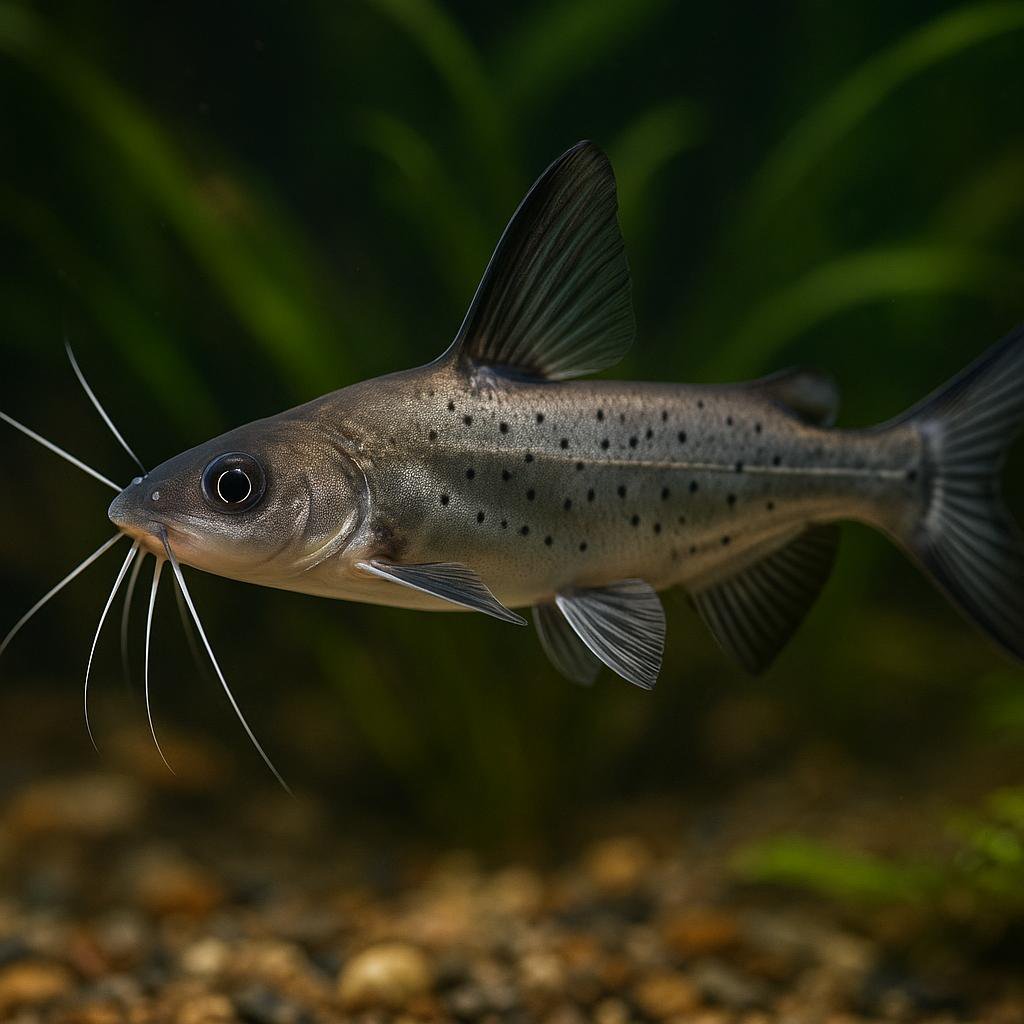
Colombian shark catfish
Ariopsis seemanni
This is that slick silver "shark-looking" catfish with the black fins and white tips that cruises around like it owns the place. The big gotcha is it's not a true freshwater community fish long-term-juveniles show up in shops as "freshwater," but as it grows it really wants brackish and eventually full marine conditions, plus a lot of swimming room.
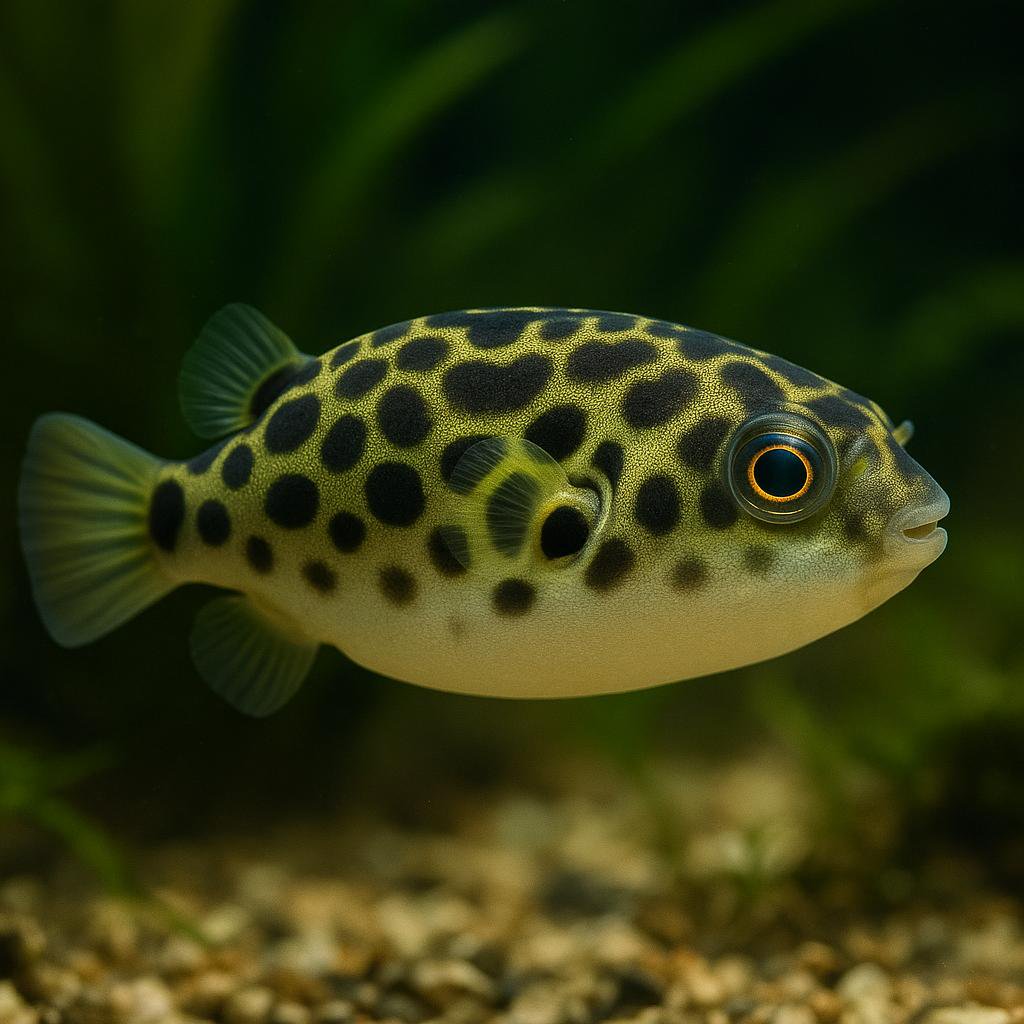
Eyespot pufferfish (Figure-8 puffer)
Dichotomyctere ocellatus
This is the little "figure-8" puffer with the yellow-green squiggles and the two bold eyespots near the tail-tons of personality in a small body. They're basically snail-hunting machines with a curious, interactive vibe, but they can be spicy with their own kind, so you plan the tank around that.
More to Explore
Discover more brackish species.
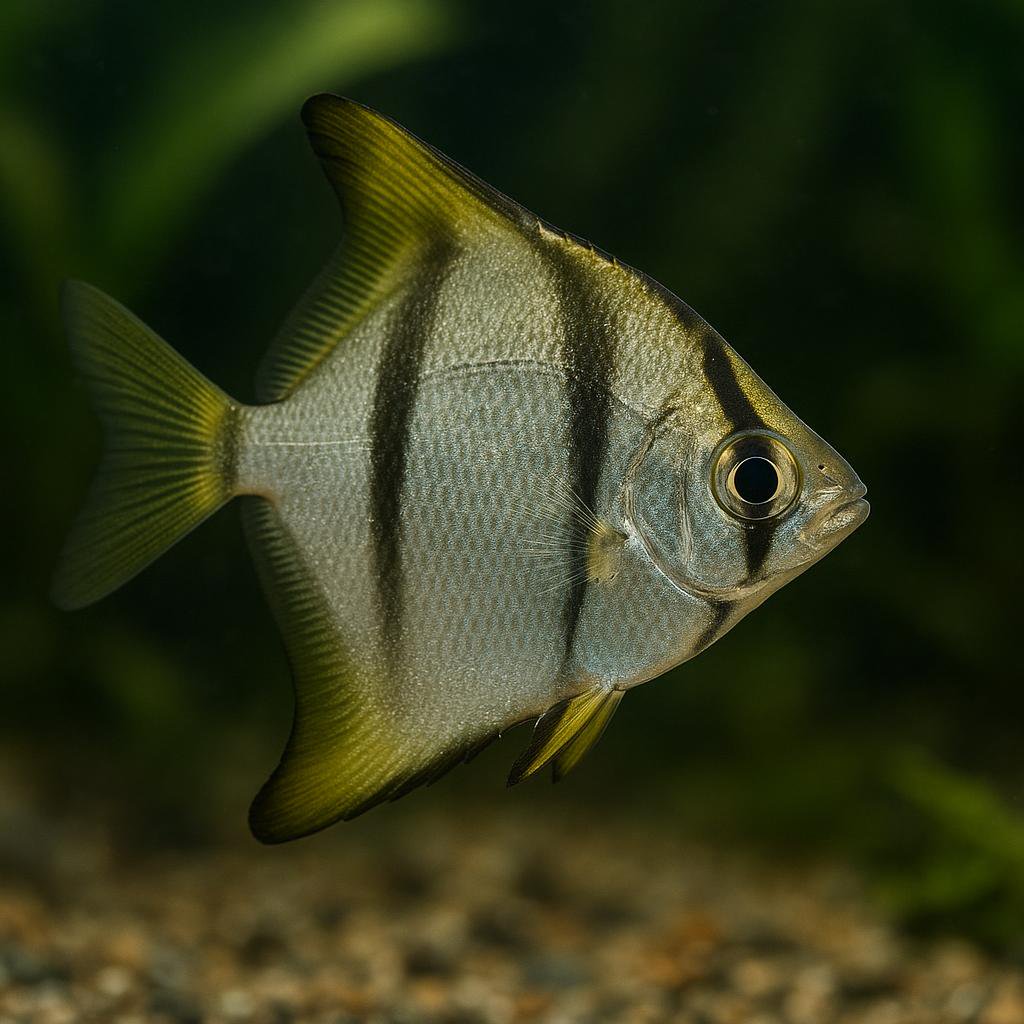
African moony
Monodactylus sebae
This is that shiny, diamond-shaped "mono" that cruises around in a tight pack and looks like a little silver dinner plate with black bars when it's young. The big thing with African moonies is they're euryhaline-so they'll tolerate freshwater as juveniles, but they really shine long-term in brackish (and can be transitioned toward marine as they mature). Give them a big, open tank and a group, and they turn into nonstop, super fun midwater swimmers.
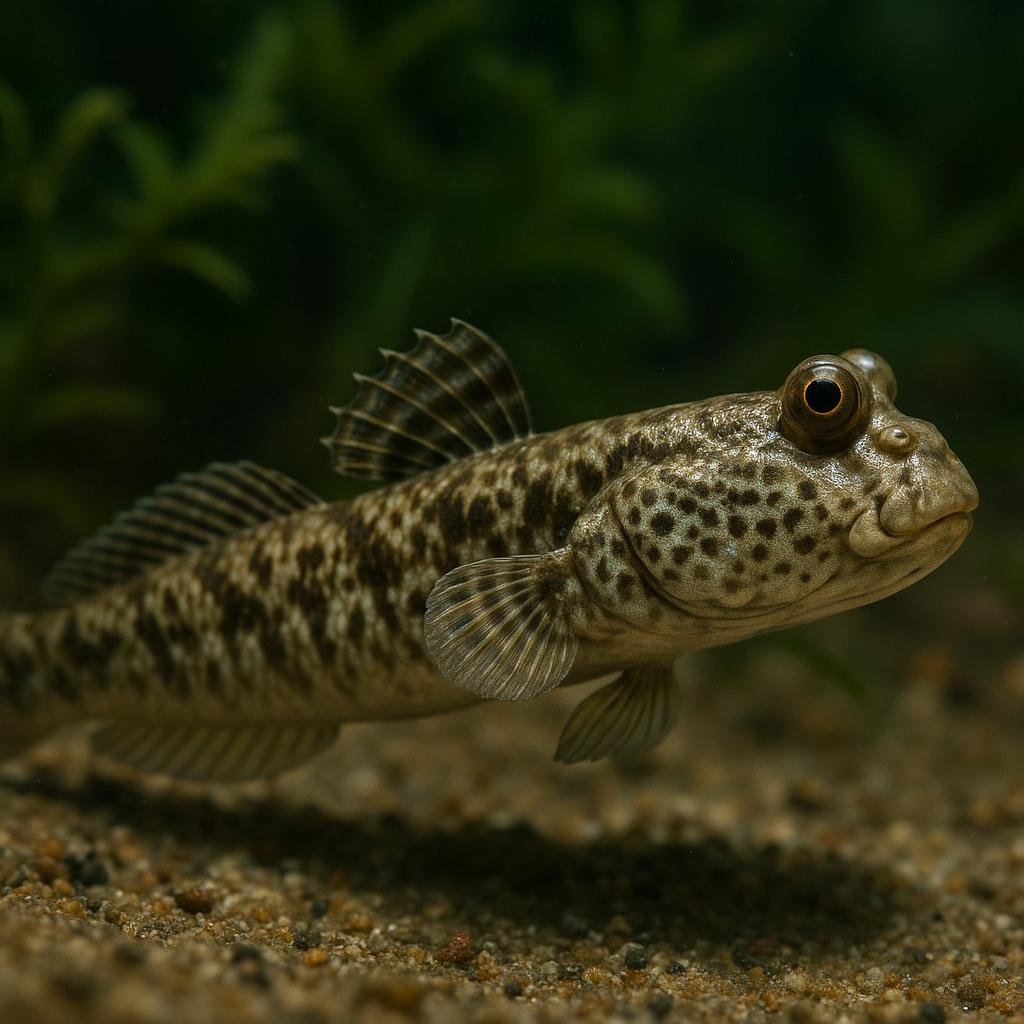
Atlantic Mudskipper
Periophthalmus barbarus
This is that wild little amphibious goby that straight-up climbs around on land like it forgot it was a fish. They've got big googly eyes, tons of personality, and they'll perch, hop, and patrol their territory-honestly more like a tiny crabby lizard than a "regular" aquarium fish.
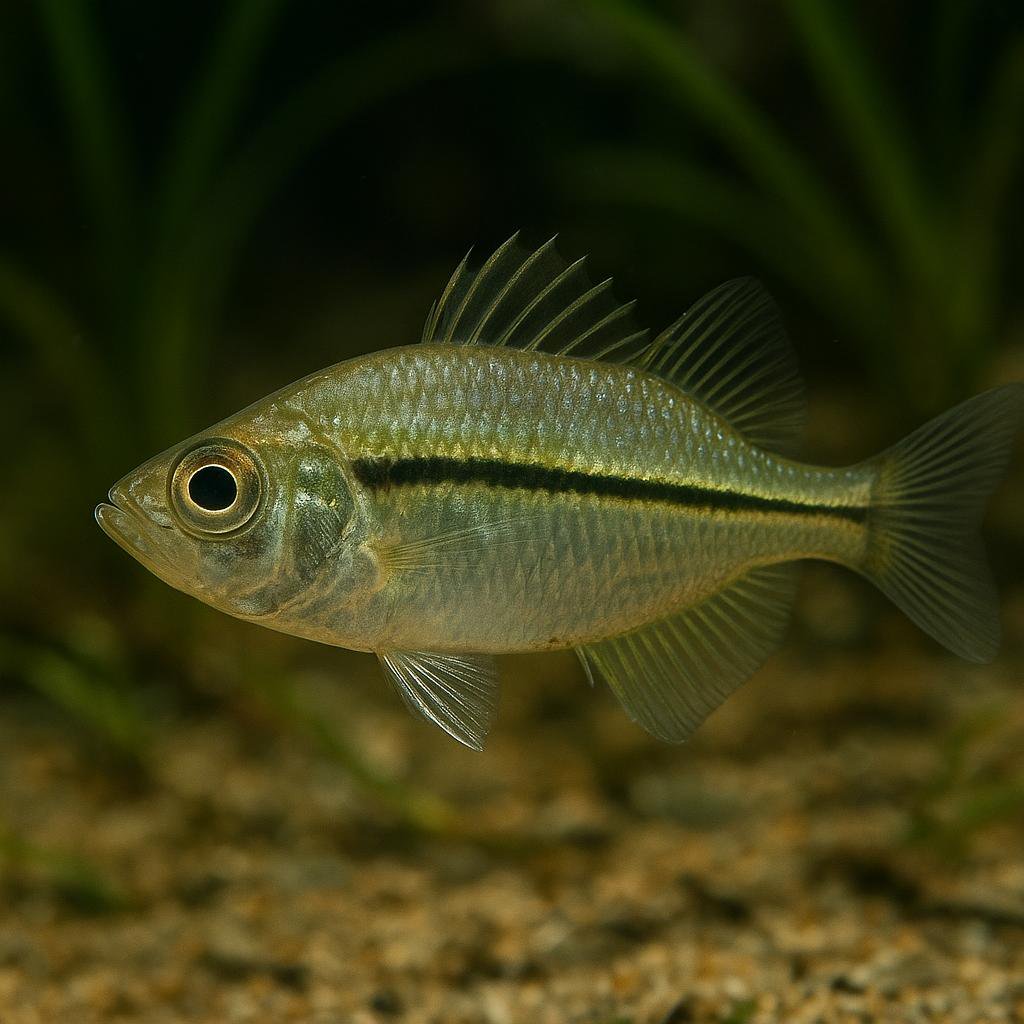
Banded-tail glassy perchlet
Ambassis urotaenia
This is one of those see-through glassy perchlets where you can literally watch the organs shimmer when it turns-super cool in the right lighting. In the wild it hangs around river mouths and mangroves and cruises in groups, so it does best when you keep a little gang of them and give them some open swimming room.
-1771643191.jpg)
Elongate mudskipper (pointed-tailed goby)
Pseudapocryptes elongatus (syn. Pseudapocryptes lanceolatus)
This is that super-cool "mudskipper-ish" goby that mostly stays in the water, but will park itself in the shallows and periscope its eyes above the surface like it's keeping watch. It's an obligate air-breather from tidal rivers/estuaries, so it really appreciates shallow, brackish setups with soft mud/sand and gentle flow-more of a mangrove vibe than a typical community tank.
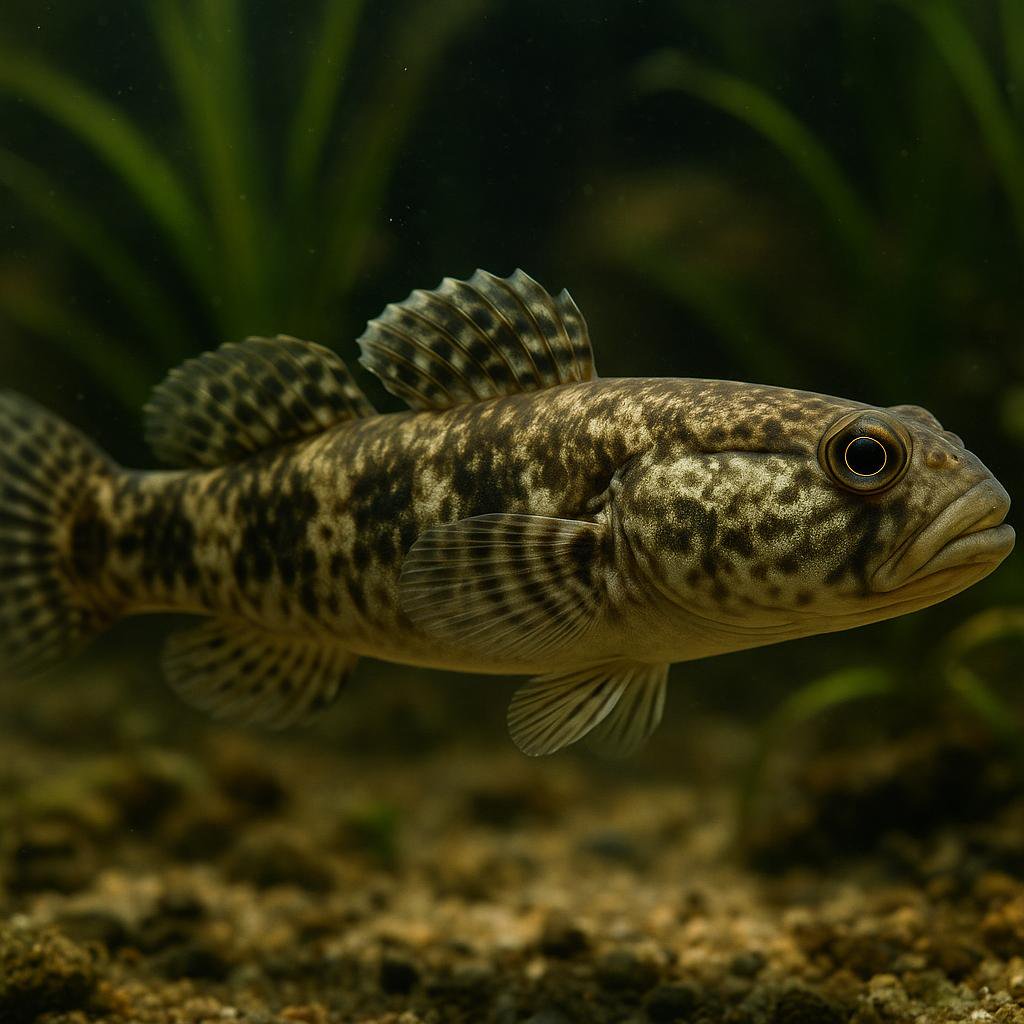
Fat sleeper
Dormitator maculatus
Dormitator maculatus is that chunky "sleeper goby" type fish with the bulldog head and the attitude of a little vacuum cleaner-always sifting and nosing around the bottom. It'll do freshwater or brackish and it can get way bigger than most people expect, so it's one of those fish that's awesome... as long as you plan the tank around the adult size, not the baby you bought.
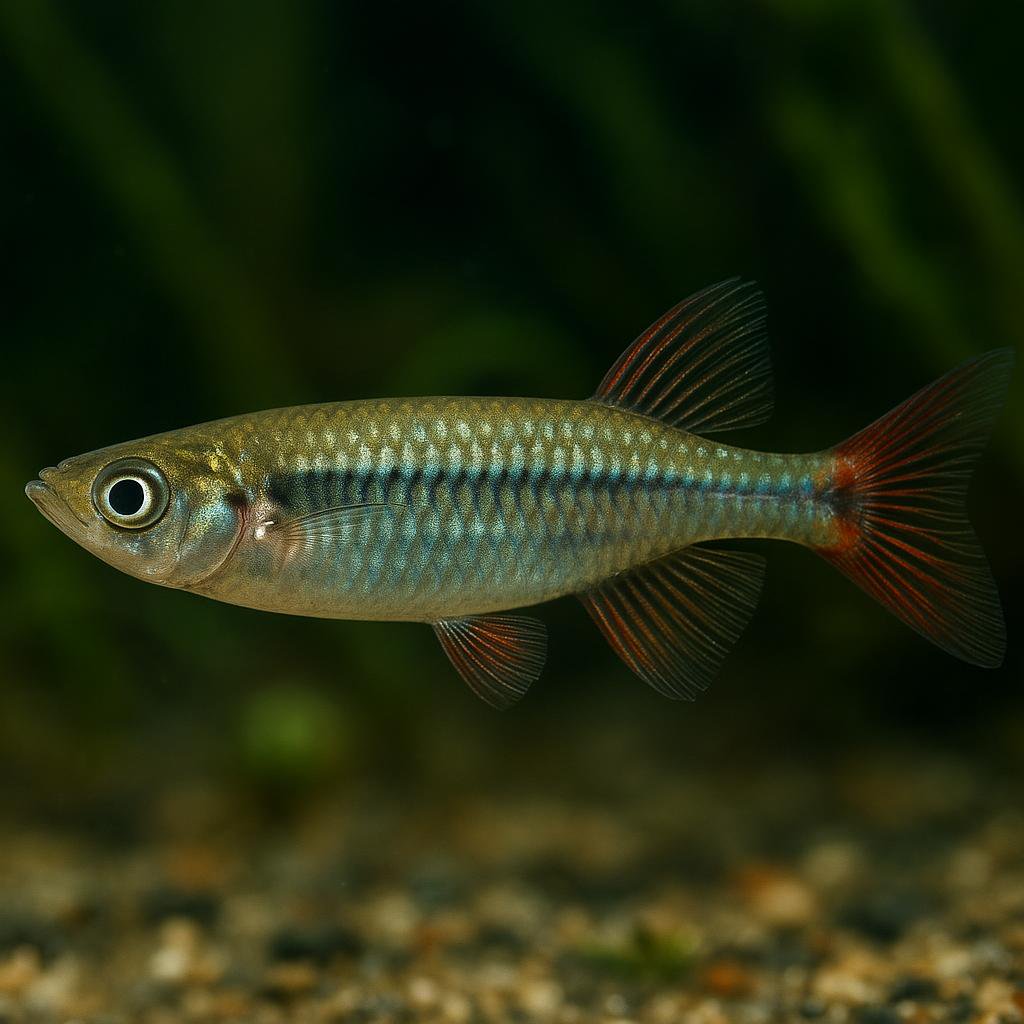
Feathered river-garfish
Zenarchopterus dispar
Zenarchopterus dispar is a surface-hanging halfbeak from mangroves and sheltered bays, with that classic long lower jaw for snapping up insects and other floaty foods. Males get those funky elongated fin rays (the "feathered" look), and they are livebearers, so once they settle in you can occasionally get surprise babies. Biggest thing with this fish is giving it calm water up top, room to cruise, and a tight lid because halfbeaks can rocket-jump.
Looking for other species?