

Spotted green pufferfish
Dichotomyctere nigroviridis
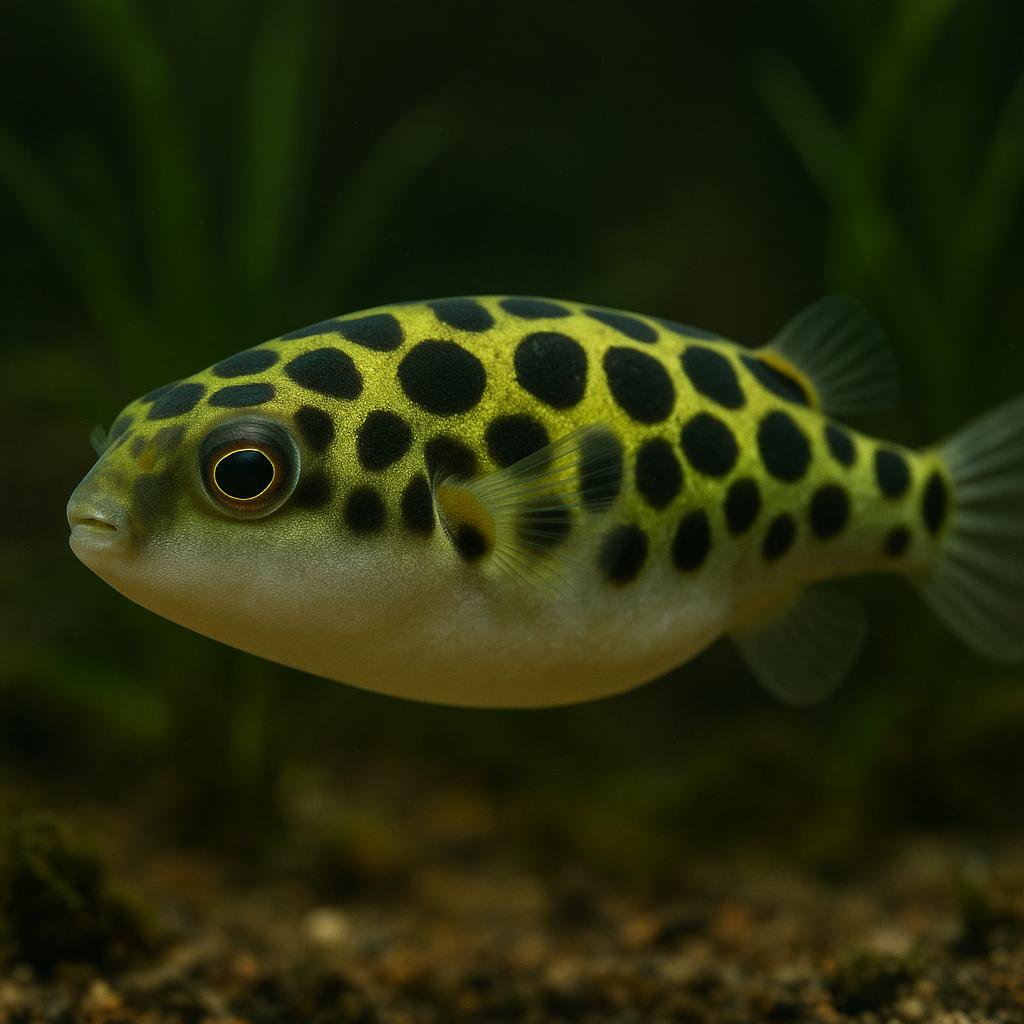
The Spotted green pufferfish exhibits prominent yellow-green skin adorned with distinctive dark spots and a heavily equipped beak-like mouth.
This page includes AI-generated images. Why am I seeing AI images?
About the Spotted green pufferfish
This is the classic green spotted puffer: bright lime-green with bold black spots and a ton of attitude packed into a football-shaped body. They're crazy interactive and will beg like a puppy, but they're also little beaked predators that need crunchy foods to keep their teeth worn down. The big "gotcha" is water: they're not a lifelong freshwater fish-brackish (and often more marine-leaning as they mature) is where they thrive.
Also known as
Quick Facts
Size
17 cm
Temperament
Aggressive
Difficulty
Intermediate
Min Tank Size
50 gallons
Lifespan
10-15 years
Origin
South & Southeast Asia
Diet
Carnivore/invertivore - snails, crustaceans, shellfish, frozen meaty foods; needs hard-shelled foods to wear down teeth
Water Parameters
24-28°C
8-8
9-19 dGH
Need a heater for this species?
This species needs 24-28°C in a 50 gallon tank. Use our heater calculator to find the right wattage.
Calculate heater sizeCare Notes
- Don't put a spotted green puffer in a tiny "puffer cube" long-term-plan on ~30 gallons for one (bigger is better) with lots of open swim room and a few sturdy hiding spots they can't knock over.
- Keep it brackish: think marine salt mix (not "aquarium salt") and aim around SG 1.005-1.015; they often do better as they grow if you slowly nudge salinity higher over time.
- They're messy predators, so run oversized filtration and do big weekly water changes; if ammonia/nitrite show up or nitrates climb, they'll sulk fast and get diseasey.
- Feed crunchy stuff constantly: snails, clams on the half shell, mussels, cockle, crab legs, and shrimp-this wears down the beak so you don't end up needing scary tooth trims.
- Skip flake/pellet-only diets; rotate frozen meaty foods (bloodworms/krill/squid) but always include hard-shelled foods, and don't overfeed because they beg like dogs.
- Tankmates are a gamble-best kept solo; if you try companions, go for fast brackish fish that won't nip fins and won't fit in its mouth (avoid slow fish, long fins, and anything small).
- Watch for "puffer bite marks" on other fish and for the puffer's beak overgrowing; also keep an eye out for ich/velvet-puffers hate sudden swings and can't tolerate a lot of meds like scaled fish do.
- Breeding at home is rare; if you ever see a pair, they'll want a bigger, more marine-leaning setup and fine-leaf plants/structure-most people don't bother because sexing and pairing is a headache.
Compatibility
Good Tankmates
- Fast, tough midwater fish like monos (Mono argentus / Mono sebae) - they're quick enough to avoid getting sampled and they actually like the same brackish setup as the puffer.
- Scats (Scatophagus argus) - solid brackish bruisers. In my experience they don't panic easily, and the puffer usually can't boss them around the way it does smaller fish.
- Knight gobies (Stigmatogobius sadanundio) - only in a roomy tank with lots of hiding spots. They're hardy in brackish and tend to hold their ground, but don't cram them in tight quarters with a grumpy puffer.
- Bumblebee gobies (Brachygobius spp.) - can work if the puffer isn't a total psychopath and you're not expecting a 'community vibe.' Best when the puffer is well-fed on snails/shelled foods and there's plenty of cover.
- Mollies (especially larger, tougher adults) - basically 'feeder-looking' fish that can actually live in brackish long term. Expect losses with some puffers, but they're one of the more realistic options if you want active tankmates.
- Other spotted green puffers - sometimes works as a group ONLY in a big tank with broken sight lines. In smaller setups they turn it into a bitey dominance contest fast.
Avoid
- Slow fish with fancy fins (bettas, guppies, fancy mollies, angels) - the puffer will treat those fins like a snack bar, even if it's 'behaving' at first.
- Small, peaceful community stuff (tetras, rasboras, danios, small barbs) - they don't belong in brackish anyway, and the puffer will usually harass them nonstop.
- Bottom dwellers with tempting whiskers/fins (cory cats, small loaches) - the puffer goes for eyes, fins, and feelers. Plus most of these aren't brackish fish long term.
- Most shrimp/snails/crabs - green spotted puffers are basically built to crush crunchy things. Snails are great as food; as 'cleanup crew' they're usually just expensive snacks.
Where they come from (and why it matters)
Spotted green puffers (Dichotomyctere nigroviridis) show up around Southeast Asia—estuaries, mangrove areas, and lower river stretches where fresh and salt water mix. That “in-between” habitat is the whole story with this fish. They aren’t a freshwater puffer you can just keep in a standard community tank and call it good.
Most juveniles are sold in freshwater because they survive it for a while. Long term, they do better as brackish fish, and many keepers gradually move them toward higher salinity as they grow.
Setting up their tank
Plan for a single puffer first, then decide if you really want to gamble on tankmates. An adult spotted green puffer is chunky, active, and messy. I’d rather give one fish a great setup than cram two into a tank that’s always on the edge.
- Tank size: 30 gallons minimum for one adult; 40+ feels way nicer for swimming room and keeping the water stable
- Filtration: strong and oversized (they’re little poop factories). Think canister or a big HOB with lots of bio media
- Flow: moderate—enough to keep junk moving to the intake, not a washing machine
- Substrate/decor: sand or smooth gravel, rounded rocks, driftwood, and tough plants (or plastic/silk). They explore with their mouths
- Hiding spots: caves and breaks in line-of-sight help reduce ‘puffer patrol’ behavior
For brackish, use marine salt mix (not aquarium “tonic” salt). Mix it in a bucket with a powerhead or airstone, then add it to the tank. A refractometer is the best tool here; a swing-arm hydrometer works but can be off.
If you’re new to brackish: mix your saltwater separately and match temperature before water changes. Your puffer will act way less stressed when the routine is consistent.
Salinity is a moving target with these guys depending on size and your goals. Many hobbyists keep juveniles lightly brackish and slowly bump it up as they mature. Pick a target range and stick to it rather than bouncing around.
Skip freshwater “cycling shortcuts.” Green puffers hate ammonia/nitrite and they’re messy eaters. Fully cycle the tank before the fish comes home.
What to feed them
These puffers are basically tiny predators with a beak. The trick is feeding a mix that keeps them interested and also wears down their teeth. If you only feed soft foods, the beak can overgrow and you’ll be dealing with a puffer that can’t eat.
- Staples I’ve had the best luck with: snails (pond/bladder/ramshorn), mussel, clam, cockle, shrimp with shell, krill
- Good rotation foods: earthworms, bloodworms (as a treat), squid pieces, chopped prawn
- Pellets? Some will take them, many won’t. Don’t count on pellets as the main diet
Start a small snail culture. It saves money and it’s the easiest way to give them crunchy foods regularly.
Feeding schedule: smaller puffers usually do well with small meals daily; adults can go every other day. Don’t overdo it—green puffers beg like dogs and they’ll happily eat themselves into a bad situation.
Behavior and tankmates
Spotted green puffers are smart, curious, and… kind of smug about it. They watch you, learn routines, and will investigate anything new. The flip side is they’re nippy, territorial, and quick to test other fish with a bite.
If you want a peaceful community tank, this isn’t the fish. Fin nipping is not a “maybe” with many individuals—it’s a “when.”
I’ve had the best results treating them as a species tank fish—one puffer, lots of enrichment, and no drama. Some people do keep them with fast, robust brackish fish, but it depends heavily on the individual puffer and the tank size.
- Best ‘tankmate’: none (solo puffer is underrated)
- Risky: other puffers (territory fights), slow fish, long-finned fish, bottom sitters
- Inverts: most will be eaten sooner or later (snails definitely, shrimp usually)
Give them things to do: rearrange decor occasionally, provide caves, and vary food types. A bored green puffer can become a little menace.
Breeding tips (realistic expectations)
Breeding spotted green puffers in home aquariums is possible, but it’s not a casual weekend project. Sexing is tricky, conditioning takes time, and many attempts fizzle out without the right setup and a well-matched pair.
- You’ll usually need a dedicated breeding setup and a compatible pair (or group raised together)
- They’re often triggered by seasonal-style changes: heavier feeding, big water changes, and shifts that mimic rainy season patterns
- Eggs and fry need separate planning—adults may snack on eggs, and fry need tiny live foods early on
If your goal is just to keep a happy, interactive puffer, you’re not missing out by skipping breeding. Most hobbyists keep them as single display pets.
Common problems to watch for
Most issues I see with green puffers come down to three things: wrong salinity plan, not enough filtration/water changes, and diet that’s too soft.
- Beak overgrowth: happens if they don’t get crunchy foods (snails/shellfish). Watch for trouble grabbing food or a visibly long beak
- Ich/white spot and other parasites: puffers don’t love harsh meds, so quarantine new fish/food sources and keep water quality tight
- Bloat: often from overeating or gulping air while excited—feed smaller portions and avoid fatty, repetitive meals
- Ammonia/nitrite spikes: they’re messy and sensitive; test water and don’t let the filter fall behind
- Aggression/nipping: usually worsens in small tanks or sparse layouts—add cover and reduce sight lines
Never try to ‘make them puff’ for fun or photos. Puffing is a stress response and can injure them, especially if they gulp air.
If you keep the water clean, keep the salinity stable, and feed a crunchy rotation, these guys are ridiculously rewarding. They’re one of the most “pet-like” fish you can keep—just go in knowing they play by puffer rules, not community tank rules.
Similar Species
Other brackish aggressive species you might be interested in.
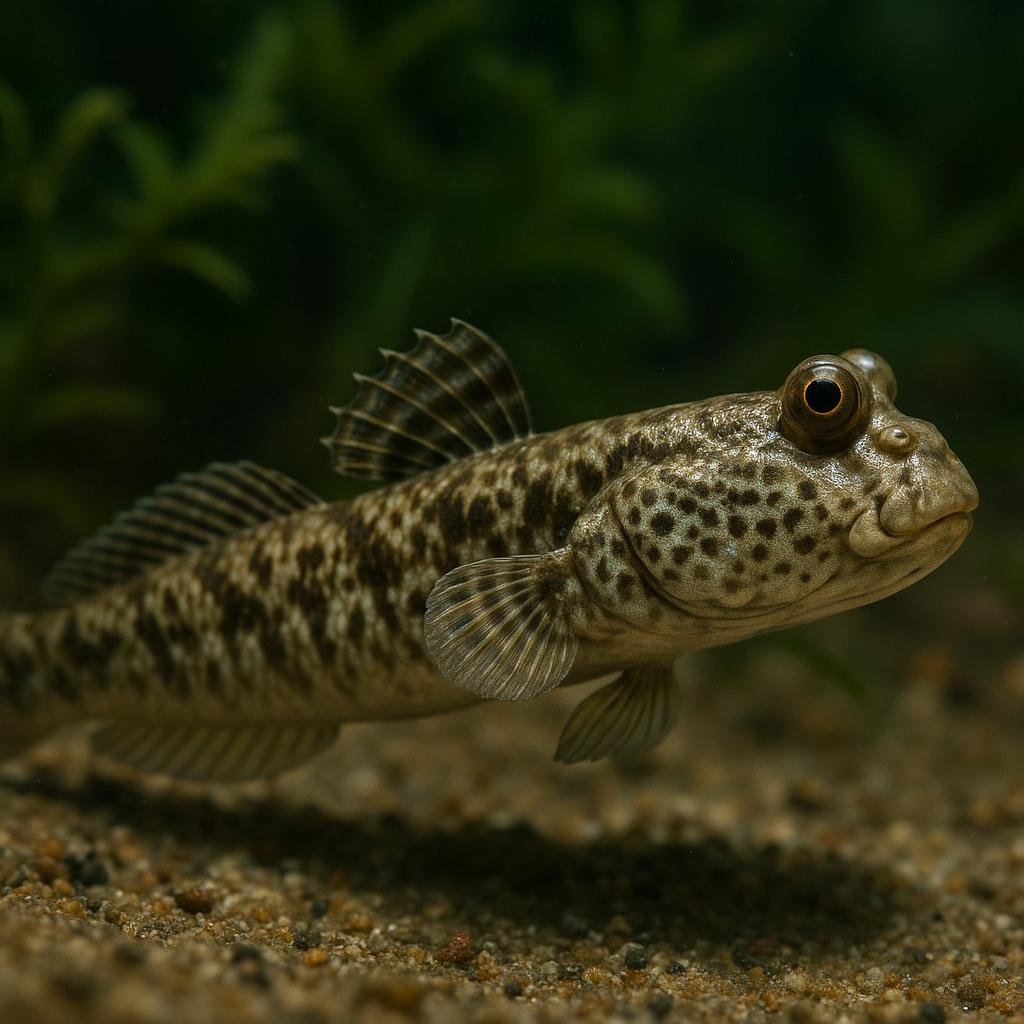
Atlantic Mudskipper
Periophthalmus barbarus
This is that wild little amphibious goby that straight-up climbs around on land like it forgot it was a fish. They've got big googly eyes, tons of personality, and they'll perch, hop, and patrol their territory-honestly more like a tiny crabby lizard than a "regular" aquarium fish.
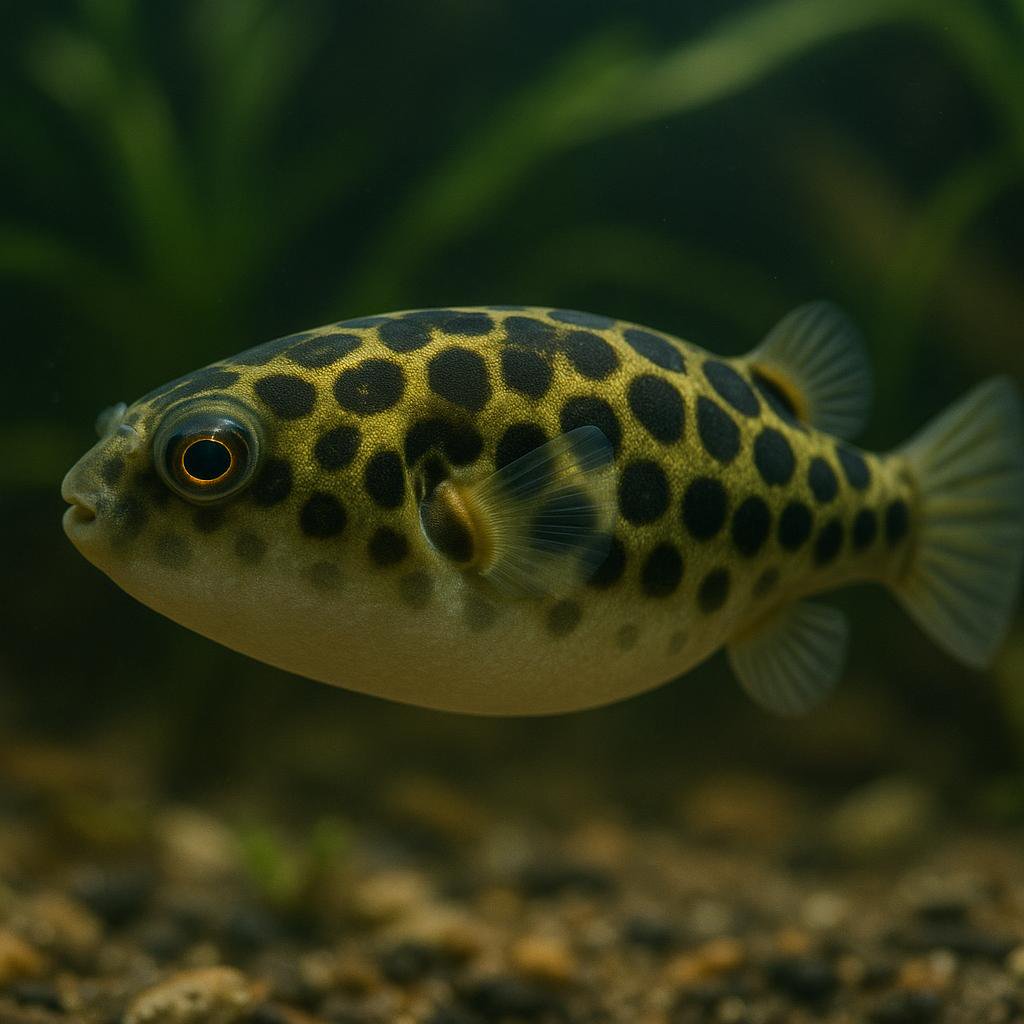
Green Spotted Puffer
Tetraodon nigroviridis
Green spotted puffers are little water puppies with fins-super curious, always watching you, and they'll beg like they've never been fed in their life. The bright green-and-black spotting stays eye-catching, and they've got that classic puffer "I'm plotting something" face. Just know they're not a true freshwater fish long-term, and they really do need crunchy foods to keep their teeth worn down.
More to Explore
Discover more brackish species.
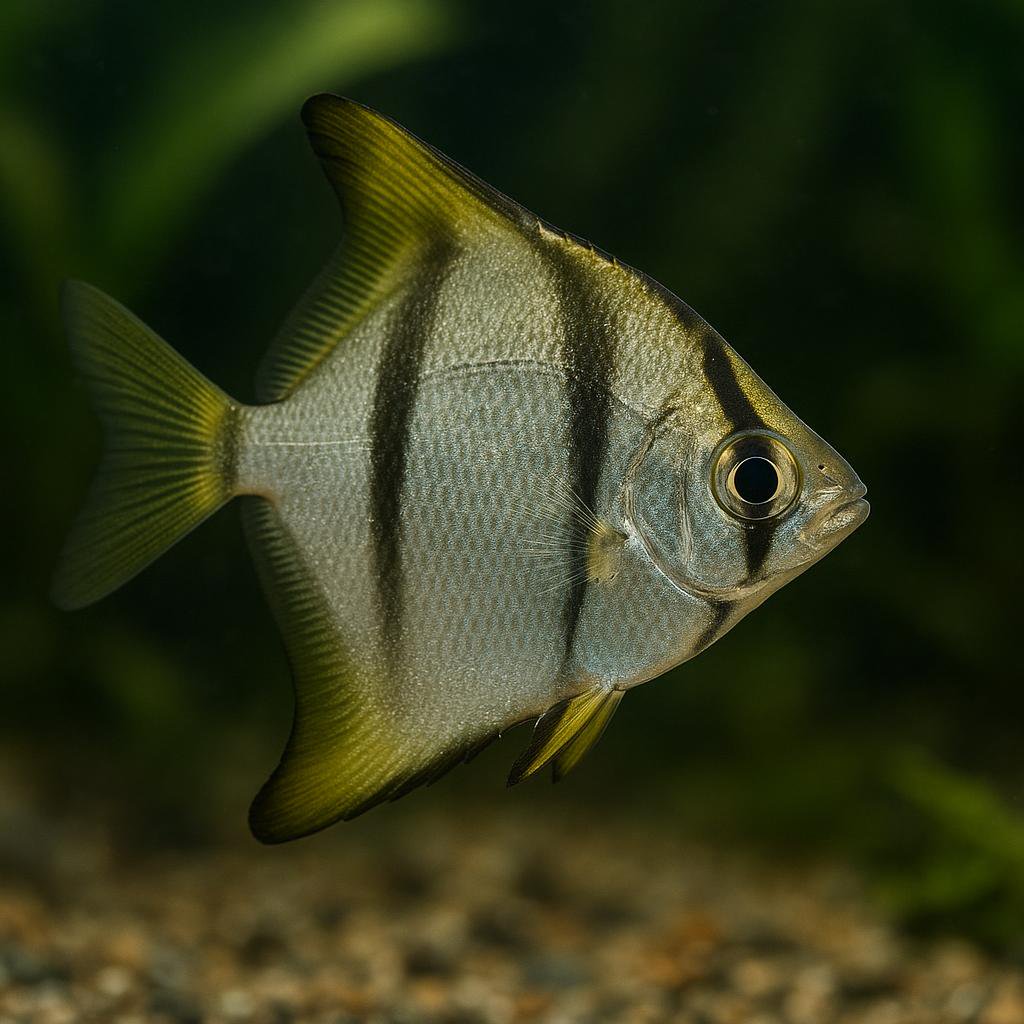
African moony
Monodactylus sebae
This is that shiny, diamond-shaped "mono" that cruises around in a tight pack and looks like a little silver dinner plate with black bars when it's young. The big thing with African moonies is they're euryhaline-so they'll tolerate freshwater as juveniles, but they really shine long-term in brackish (and can be transitioned toward marine as they mature). Give them a big, open tank and a group, and they turn into nonstop, super fun midwater swimmers.
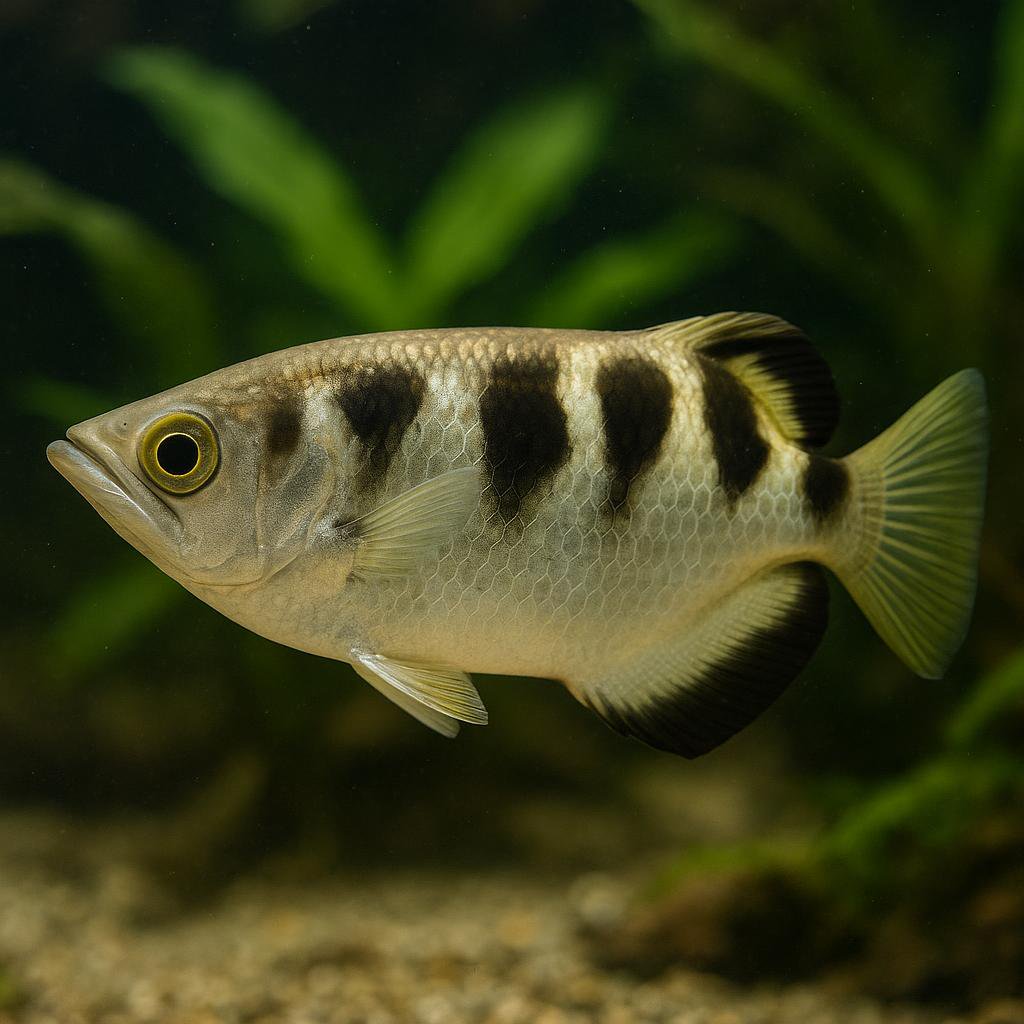
Banded Archerfish
Toxotes jaculatrix
This is the fish that literally spits jets of water to knock insects off branches-watching one "take aim" is unreal. They're super aware of what's going on outside the tank and will even learn to beg and snipe food from the surface once they settle in. Give them height and some open swimming room and they act like little aquatic sharpshooters.
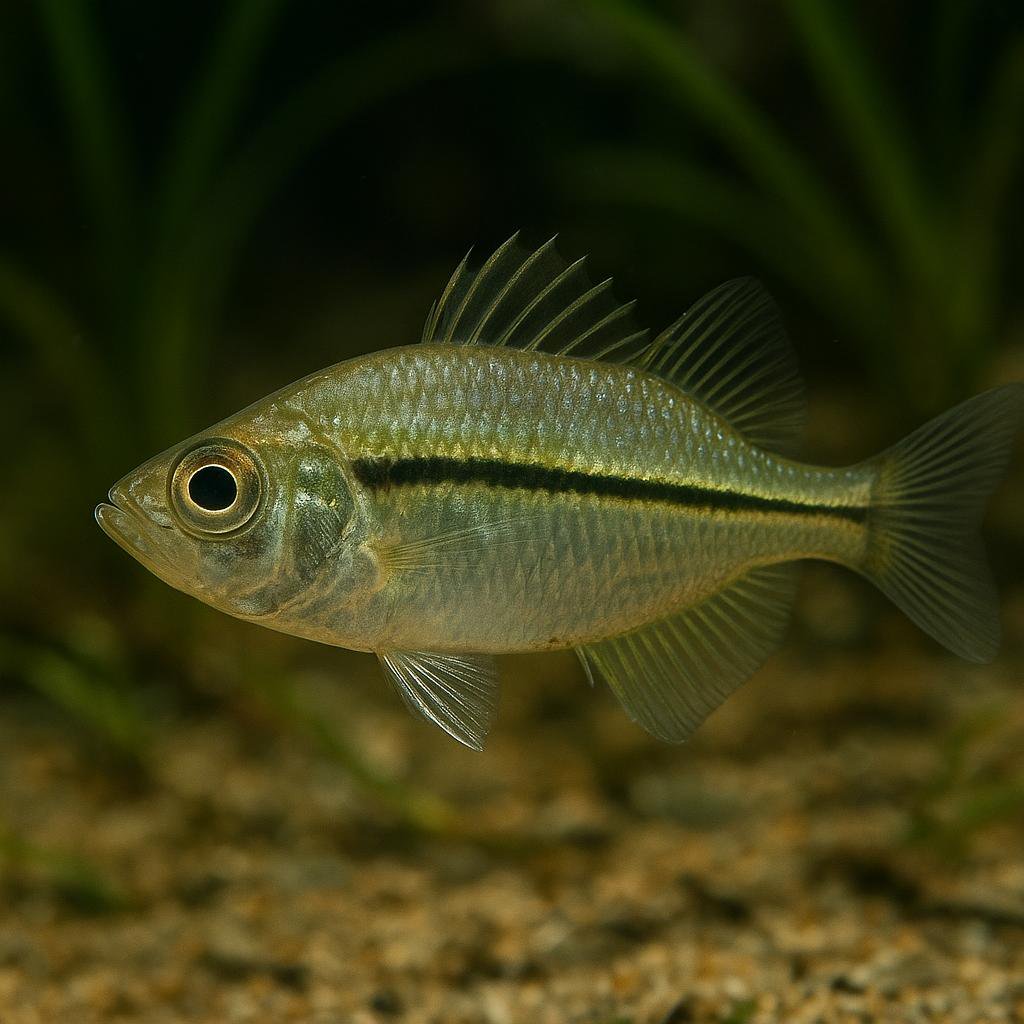
Banded-tail glassy perchlet
Ambassis urotaenia
This is one of those see-through glassy perchlets where you can literally watch the organs shimmer when it turns-super cool in the right lighting. In the wild it hangs around river mouths and mangroves and cruises in groups, so it does best when you keep a little gang of them and give them some open swimming room.
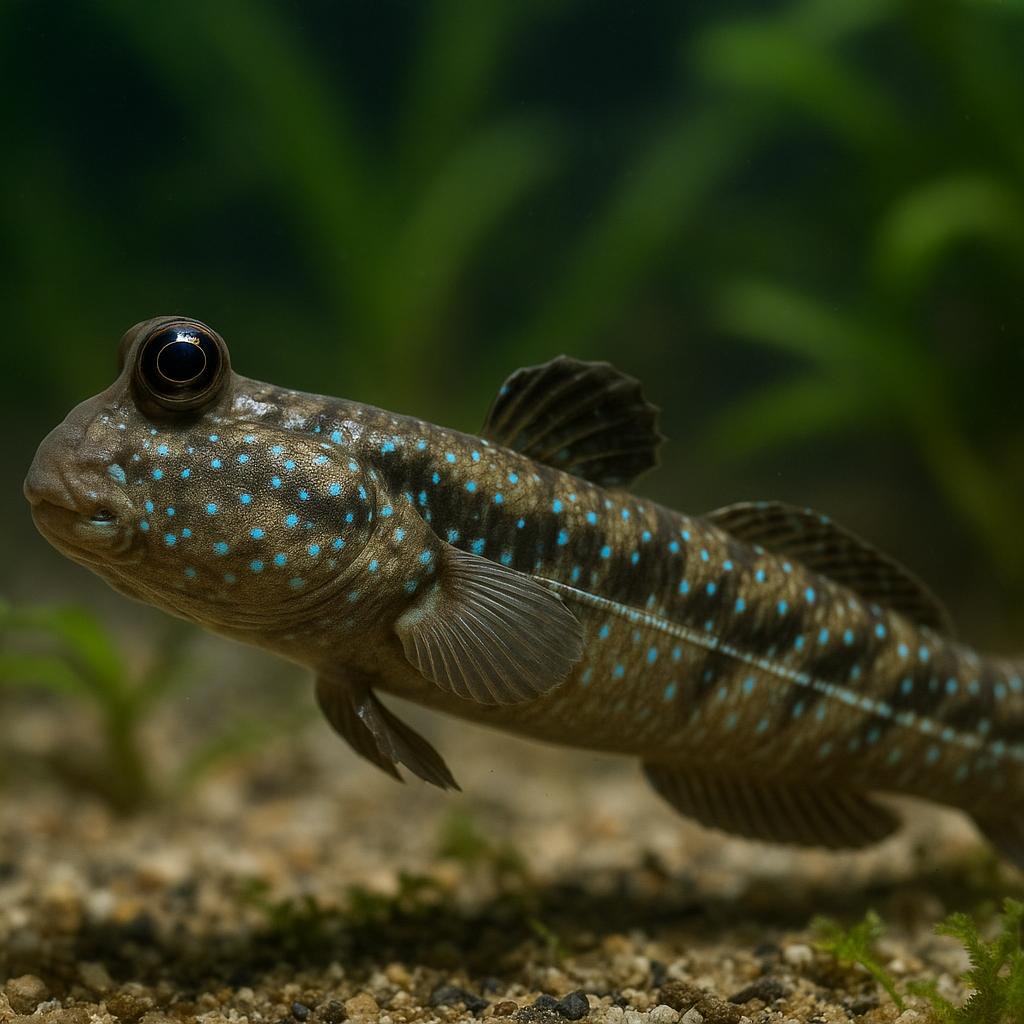
Barred mudskipper
Periophthalmus argentilineatus
This is one of those classic "walks around like it owns the place" mudskippers-big goofy eyes, climbs, hops, and spends a ton of time out on the mud when it's humid. In the wild it lives on intertidal mangrove/nipa mudflats and even shuttles between little pools and open air, hunting worms, insects, and small crustaceans. It's super fun to watch, but it really wants a brackish paludarium setup (not a normal aquarium).
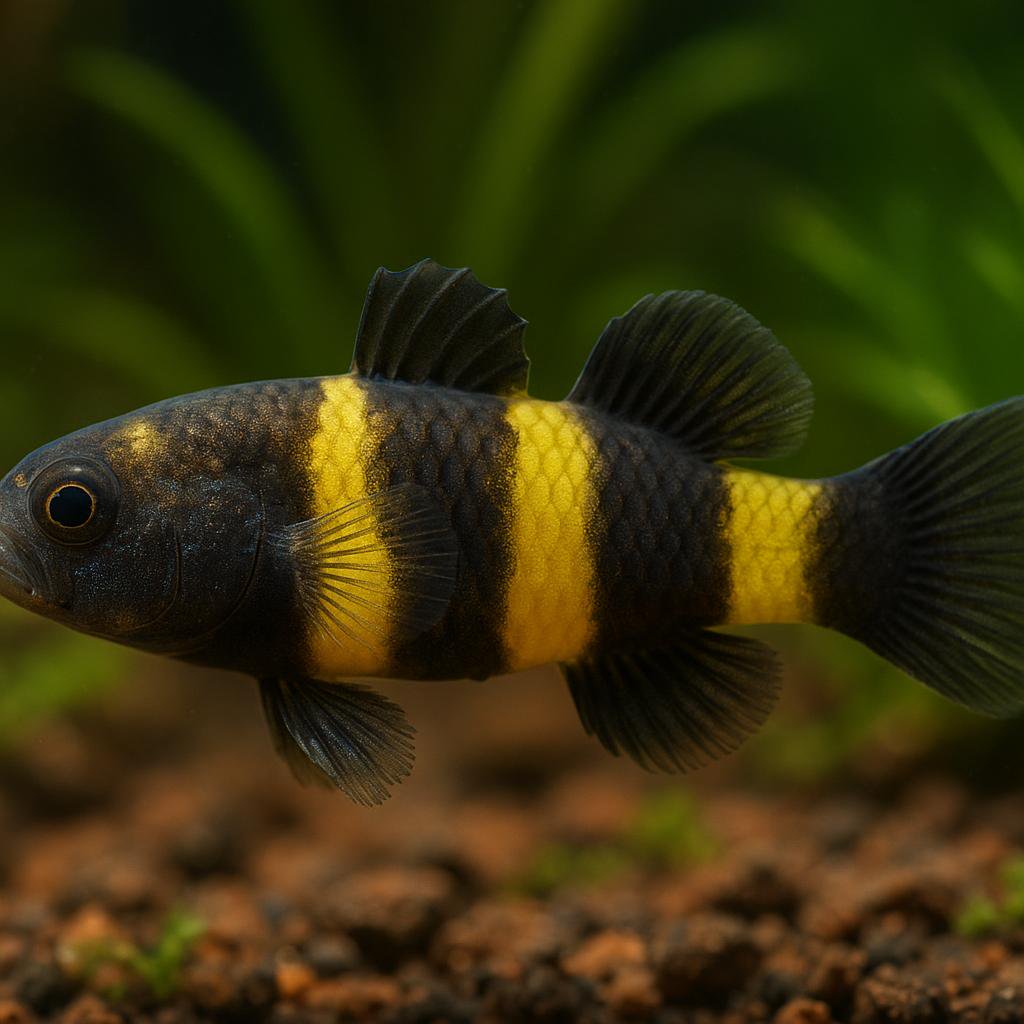
Bumblebee goby
Brachygobius doriae
Brachygobius doriae is one of the classic "bumblebee gobies" - tiny, bottom-hugging little characters that perch on rocks and sand and stare at you like they own the place. They're at their best in a calm setup with lots of caves and leaf litter, and they really shine once you get them eating frozen/live foods reliably (they're slow, picky eaters). Also: they're one of the species that gets mislabeled a lot in shops, so it's super common to see them sold under the wrong bumblebee-goby name.
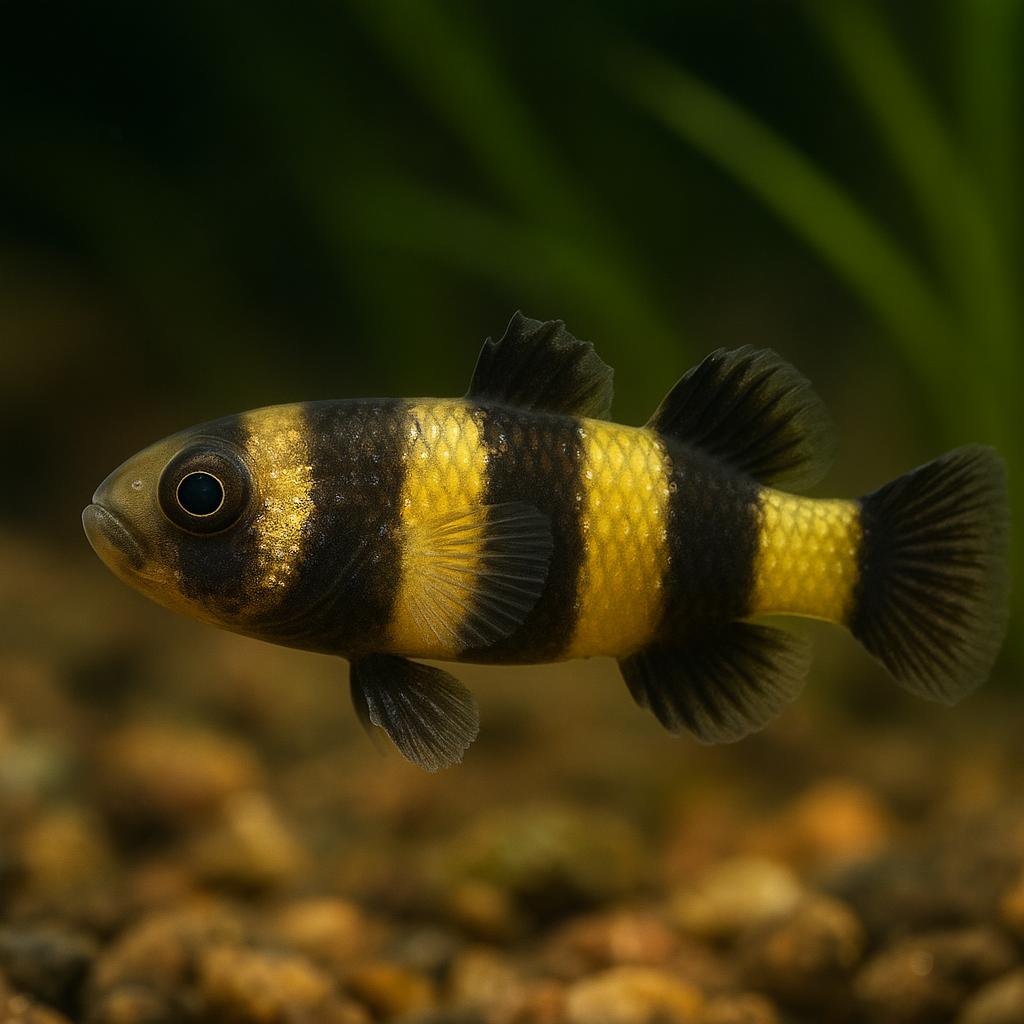
Bumblebee goby (Bumblebee fish)
Brachygobius xanthozonus
This is that tiny little goby with the bold black-and-yellow bands that likes to perch on the bottom and stare back at you like it owns the place. It's happiest in lightly brackish water with lots of little caves and sight-breaks, and it's one of those fish that often refuses flakes-frozen/live meaty foods usually flip the "yes, I will eat" switch.
Looking for other species?