

Green Spotted Puffer
Tetraodon nigroviridis
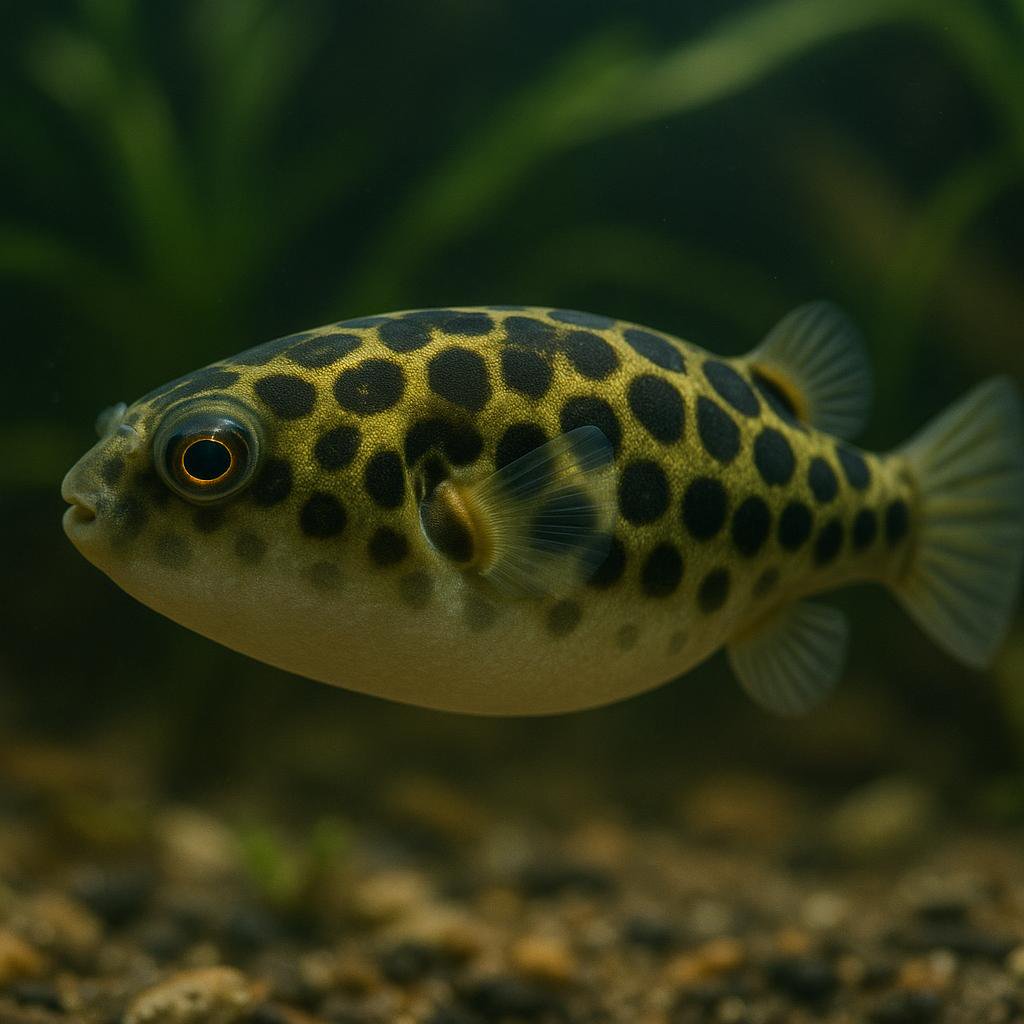
The Green Spotted Puffer features a rounded body covered in bright green spots against a yellowish background, with prominent, bulbous eyes.
This page includes AI-generated images. Why am I seeing AI images?
About the Green Spotted Puffer
Green spotted puffers are little water puppies with fins-super curious, always watching you, and they'll beg like they've never been fed in their life. The bright green-and-black spotting stays eye-catching, and they've got that classic puffer "I'm plotting something" face. Just know they're not a true freshwater fish long-term, and they really do need crunchy foods to keep their teeth worn down.
Also known as
Quick Facts
Size
6 inches
Temperament
Aggressive
Difficulty
Intermediate
Min Tank Size
30 gallons
Lifespan
10-15 years
Origin
South Asia
Diet
Carnivore - snails, clams/mussels, shrimp, krill, frozen meaty foods (crunchy shell-on foods to wear teeth)
Water Parameters
24-28°C
7.5-8.5
10-25 dGH
Need a heater for this species?
This species needs 24-28°C in a 30 gallon tank. Use our heater calculator to find the right wattage.
Calculate heater sizeCare Notes
- Don't keep them in fresh water long-term-plan to increase salinity with age using marine salt. Many guides place juveniles around SG ~1.005-1.010 and recommend high-end brackish to marine conditions for adults (often ~1.018-1.022+).
- Give one puffer at least ~30 gallons, and if you try more than one, go big (55g+) with lots of sight breaks (rocks/wood/plants that can handle brackish) because they get bitey.
- Run strong filtration and do regular water changes-these guys are messy eaters and ammonia/nitrite spikes show up fast in brackish tanks.
- Feed hard-shelled stuff several times a week (snails, clams, mussels, cockle, crab legs) so their teeth don't overgrow; rotate in shrimp/krill/worms, and go easy on fatty foods like beef heart (skip it).
- They're little beggars and will act starving-don't fall for it; smaller meals are better, and remove leftovers because they'll shred food and foul the water.
- Tankmates are a gamble: avoid slow fish, long fins, and anything small enough to be 'tested'; if you want company, think tough, fast brackish fish (bigger mollies, some scats/monos in larger tanks), but be ready to separate.
- Watch for tooth overgrowth (can't close mouth, stops eating) and treat it by increasing crunchy foods early-once it's bad, it can turn into a trimming situation.
- Breeding in home tanks is rare; they're not the cute 'pair off and spawn' type, and adults usually do better as solo pets unless you've got a big brackish setup and a backup plan for aggression.
Compatibility
Good Tankmates
- Figure-8 puffers *only if* you've got tons of space and everyone's well-fed - even then it's a gamble. I've seen it work short-term, but puffers are puffer-y and grudges happen.
- Knight gobies (Stigmatogobius sadanundio) - can work if the tank has lots of hides and the puffer isn't a full-time fin inspector. Keep the goby well sheltered and watch for bullying.
- Bumblebee gobies (brackish species) - sometimes okay in bigger, well-structured tanks, but only if the GSP is not a snack-hunter. Think 'possible' not 'guaranteed'.
- Big, sturdy brackish livebearers (like mollies acclimated to brackish) - they're quick and breed enough to handle losses, but expect some fin nips if your puffer gets bored or hungry.
Avoid
- Most tank mates - many guides recommend solitary keeping; if attempted, consider them to be high-risk rather than compatible.
- Most tank mates (including many brackish fish) - many care guides recommend keeping Green Spotted Puffers alone because of aggression and fin-nipping; any attempts at tankmates need to consider size and space and have a backup plan.
- Slow fish with long/fancy fins (bettas, guppies, fancy mollies, angelfish) - the GSP will almost always test-bite them, and once it learns fins are chew toys it's game over.
- Shrimp, snails, crabs, and most 'cleanup crew' critters - basically expensive puffer food. Great for dental wear, terrible as tank mates.
- Chill community fish (tetras, rasboras, corys, otos) - wrong water for brackish long-term and they get stressed to death from the puffer's constant investigating.
- Other Green Spotted Puffers (especially in smaller tanks) - they can be okay only in huge setups with sight breaks, but most of the time it turns into fin damage, lip-locking, and nonstop beef.
1) Where they come from
Green Spotted Puffers show up all over South and Southeast Asia—river mouths, mangroves, and coastal areas where fresh and salt water mix. That “in-between” habitat is the whole story with this fish: they’re not really a freshwater puffer long-term, even if the store tank says otherwise.
Most Green Spotted Puffers sold as "freshwater" are juveniles. As they grow, they usually do better with more salinity—think brackish trending toward marine for adults.
2) Setting up their tank
Give them space and clean water first, decorations second. A cramped GSP gets spicy fast, and dirty water shows up as fin issues, cloudy eyes, and general grumpiness.
- Tank size: I wouldn’t bother with less than 30 gallons for one. 40B/55g makes life easier if you like scaping and want stable parameters.
- Filtration: over-filter it. They’re messy eaters and produce a lot of waste. A big HOB or canister + prefilter sponge is your friend.
- Substrate/decor: sand or fine gravel, driftwood/rock work, and lots of sight breaks. They like to patrol and “own” areas.
- Plants: brackish limits you, but you’ve got options—Java fern, Anubias, and some Crypts can handle light brackish. Mangrove props look cool too (slow growers).
- Salinity: use marine salt mix (not aquarium/table salt). A refractometer is the nice-to-have tool; a hydrometer can work if you’re careful.
- Temperature/pH: mid-to-upper 70s°F is a comfortable zone. They’re generally happier with harder, more alkaline water than soft/acidic setups.
Mix your saltwater in a bucket, match temp, then add it. Don’t dump salt straight into the tank—puffers are tough, but their gills still hate that.
Avoid sharp rocks and tight caves they can wedge into. Puffers are curious and surprisingly clumsy when they lunge for food.
3) What to feed them
They’re basically little beaks with fins, and that beak never stops growing. Your job is to feed foods that wear the teeth down, not just soft stuff that turns them into a dental emergency.
- Staples that help with teeth: ramshorn/pond snails, Malaysian trumpet snails, small clams/mussels (in shell), cockle, and chunks of shrimp with shell on.
- Frozen foods they usually go nuts for: bloodworms (treat), mysis, krill, chopped prawn, squid pieces.
- Live foods: snails are the big one. I’ve also used ghost shrimp as an occasional hunt/enrichment.
- Foods to go easy on: lots of soft, shell-less foods only (leads to overgrown teeth), and fatty feeders like goldfish (also disease risk).
Start a snail jar/tub. It’s the easiest way to keep your puffer’s teeth in check without turning every feeding into a surgery fund.
They beg like puppies and will happily overeat. Keep portions modest and skip a day now and then—less waste, better water, fewer problems.
4) Behavior and tankmates
Green Spotted Puffers are smart, interactive, and absolutely willing to bite the wrong roommate “just to see what happens.” Some individuals are manageable, some are tiny sharks in a green suit.
- Temperament: curious, territorial, and nippy—especially as they mature.
- Best kept: solo, honestly. One puffer in a nice setup is a stress-free win.
- If you try tankmates: think fast, robust, and brackish-tolerant. Even then, have a backup plan and extra tank ready.
- Never with: long-finned fish, slow fish, or anything you’d be upset about losing. Also skip snails/crabs you want to keep—they’re food, not decor.
Mixing two GSPs is a coin toss, and the coin is weighted. People pull it off in big tanks with lots of sight breaks, but I’ve seen it go from “fine” to shredded fins overnight.
5) Breeding tips (realistic expectations)
Breeding Green Spotted Puffers in home tanks isn’t common. Sexing them is tricky, and they tend to want room, seasonal cues, and a setup that’s basically dedicated to the project.
- If you want to try: plan a species-only tank and grow a group of juveniles (6+) to hopefully end up with a pair.
- Conditioning: heavy feeding with meaty foods plus excellent water changes.
- Spawning behavior: males can get more territorial; eggs are typically placed on a surface and guarded (reports vary).
- Be ready: adults may bully hard during pairing attempts—separation/dividers save fish.
If your goal is a pet with personality, GSPs deliver. If your goal is breeding projects, they’re more of a long-term “maybe” than a quick win.
6) Common problems to watch for
Most GSP issues I’ve seen come back to three things: wrong salinity for the fish’s age, not enough filtration/water changes, and teeth getting out of hand.
- Overgrown teeth (beak): the puffer stops eating or can’t crush food. Prevent with shelled foods/snails; once it’s bad, you’re looking at trimming (vet/experienced keeper territory).
- Ich/parasites: puffers can be sensitive to some meds (especially copper). Quarantine new fish/food sources, and read medication notes carefully.
- Fin damage: usually from nipping (tankmates) or the puffer scraping itself on sharp decor during feeding lunges.
- Ammonia/nitrite spikes: messy feeding + under-filtered tank. Puffers show stress fast—clamped fins, hiding, heavy breathing.
- Wrong salt: using “aquarium salt” instead of marine mix doesn’t give the right minerals and stability for brackish/marine conditions.
Watch their eyes and appetite. A GSP that stops hunting/looking for food is telling you something—water quality and teeth are the first two things I check.
Netting can freak them out and, in worst cases, trigger puffing. Use a container/cup to move them if you can. Puffing with air can be dangerous if they can’t burp it back out.
Similar Species
Other brackish aggressive species you might be interested in.
Atlantic Mudskipper
Periophthalmus barbarus
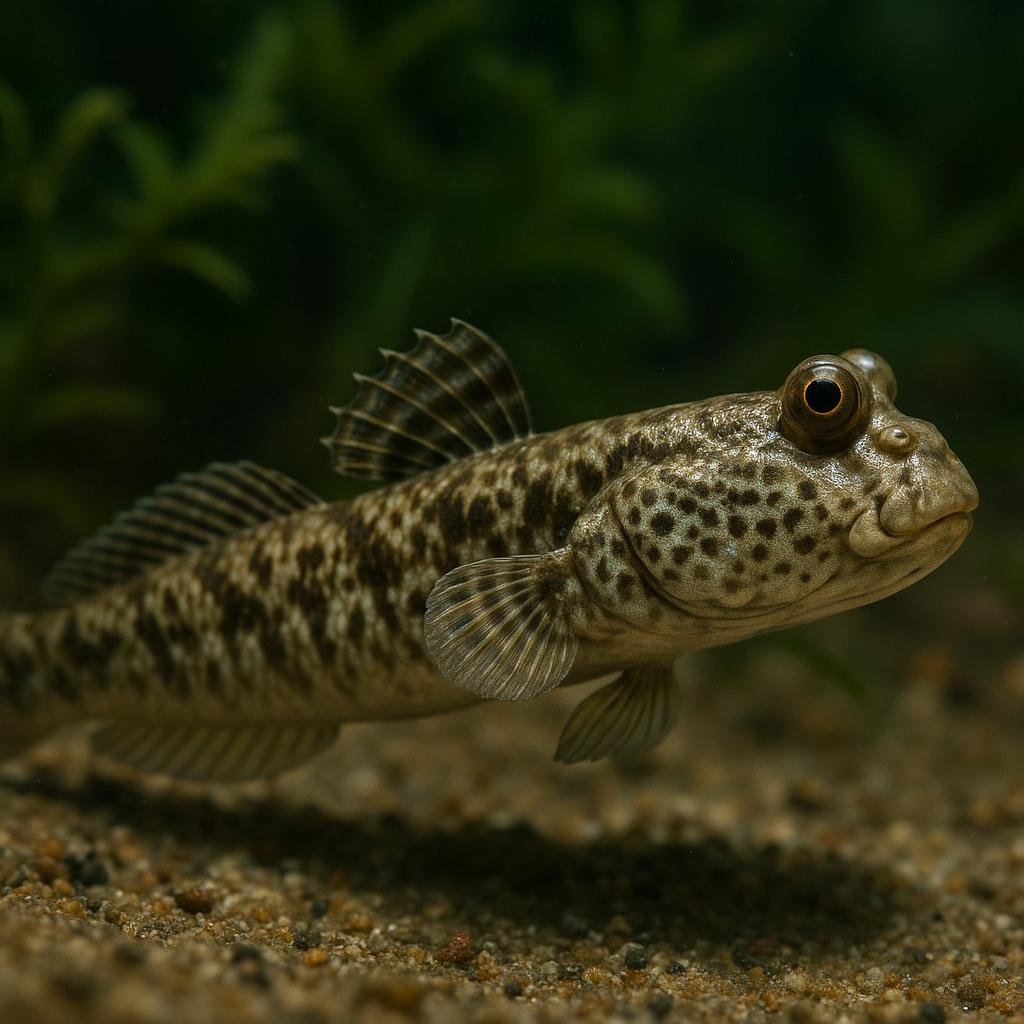
This is that wild little amphibious goby that straight-up climbs around on land like it forgot it was a fish. They've got big googly eyes, tons of personality, and they'll perch, hop, and patrol their territory-honestly more like a tiny crabby lizard than a "regular" aquarium fish.
Spotted green pufferfish
Dichotomyctere nigroviridis
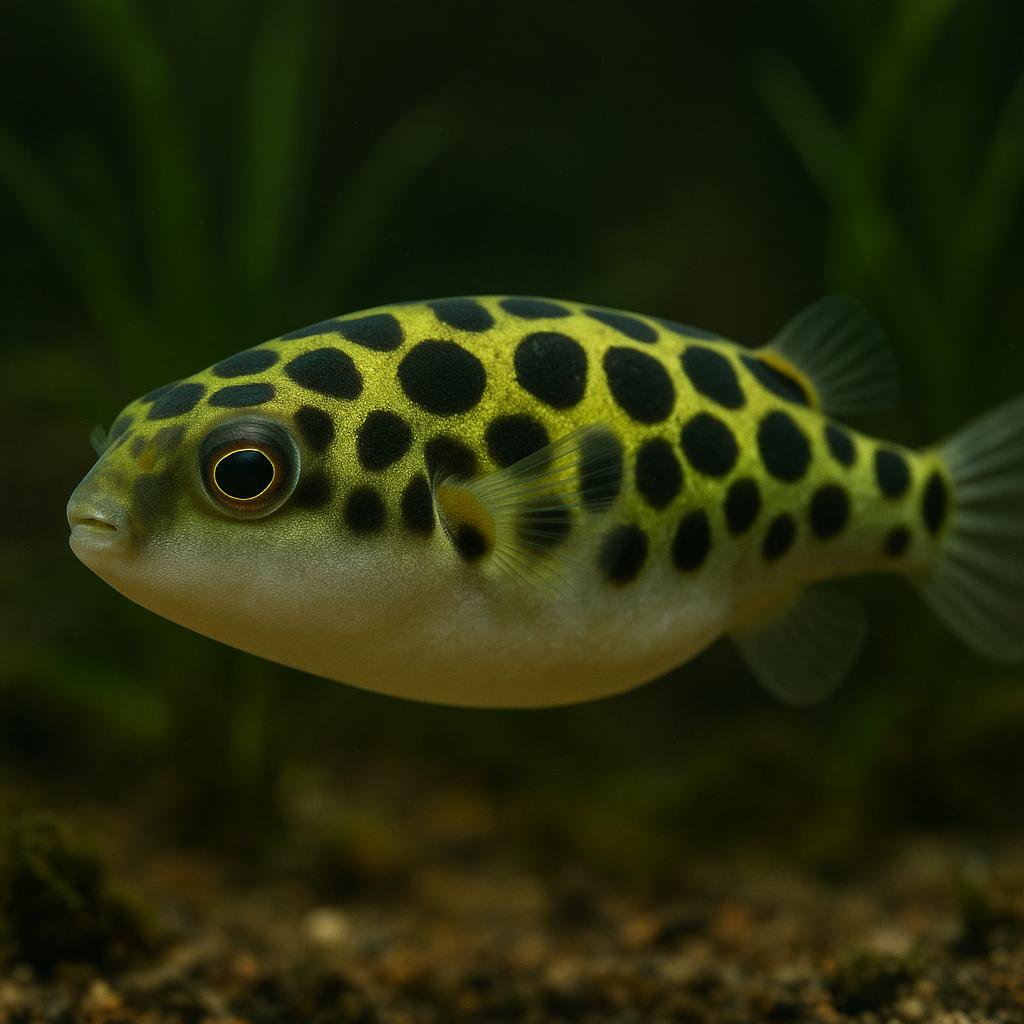
This is the classic green spotted puffer: bright lime-green with bold black spots and a ton of attitude packed into a football-shaped body. They're crazy interactive and will beg like a puppy, but they're also little beaked predators that need crunchy foods to keep their teeth worn down. The big "gotcha" is water: they're not a lifelong freshwater fish-brackish (and often more marine-leaning as they mature) is where they thrive.
More to Explore
Discover more brackish species.
African moony
Monodactylus sebae
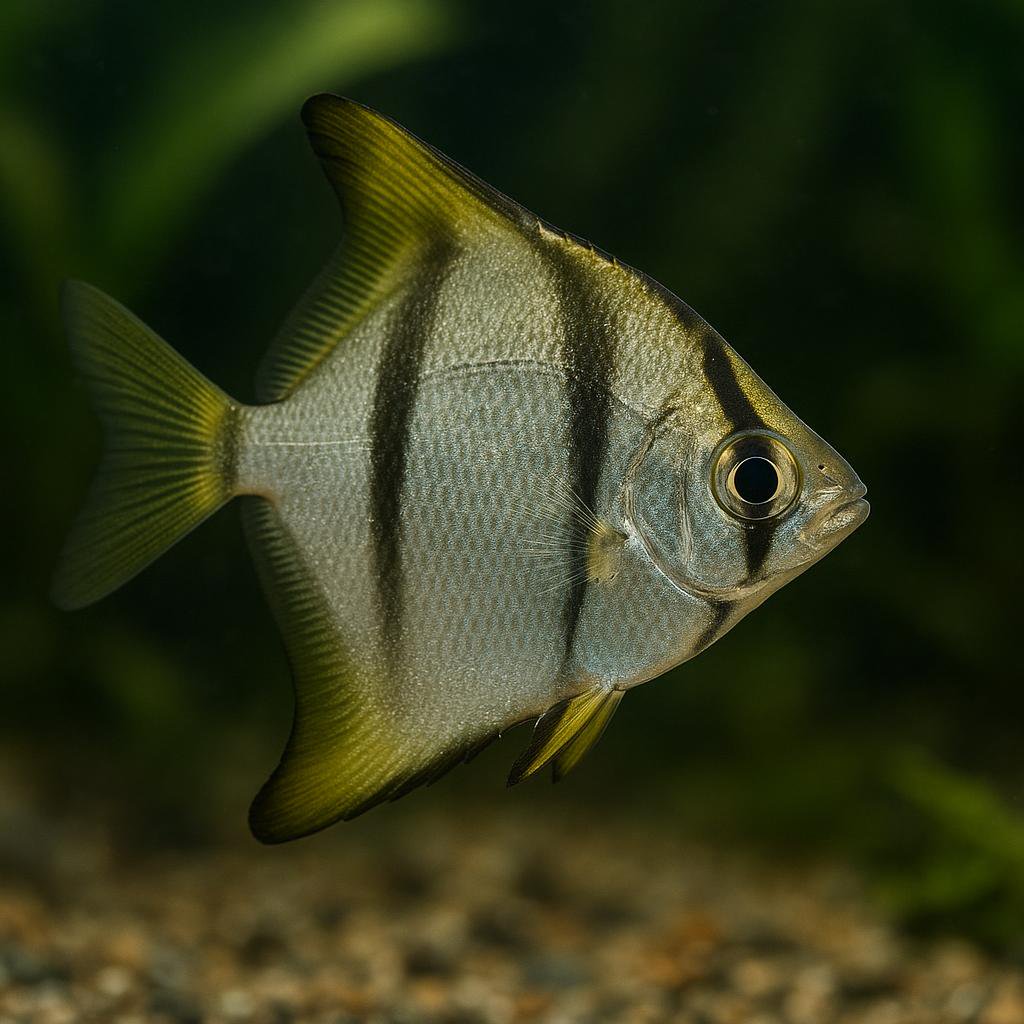
This is that shiny, diamond-shaped "mono" that cruises around in a tight pack and looks like a little silver dinner plate with black bars when it's young. The big thing with African moonies is they're euryhaline-so they'll tolerate freshwater as juveniles, but they really shine long-term in brackish (and can be transitioned toward marine as they mature). Give them a big, open tank and a group, and they turn into nonstop, super fun midwater swimmers.
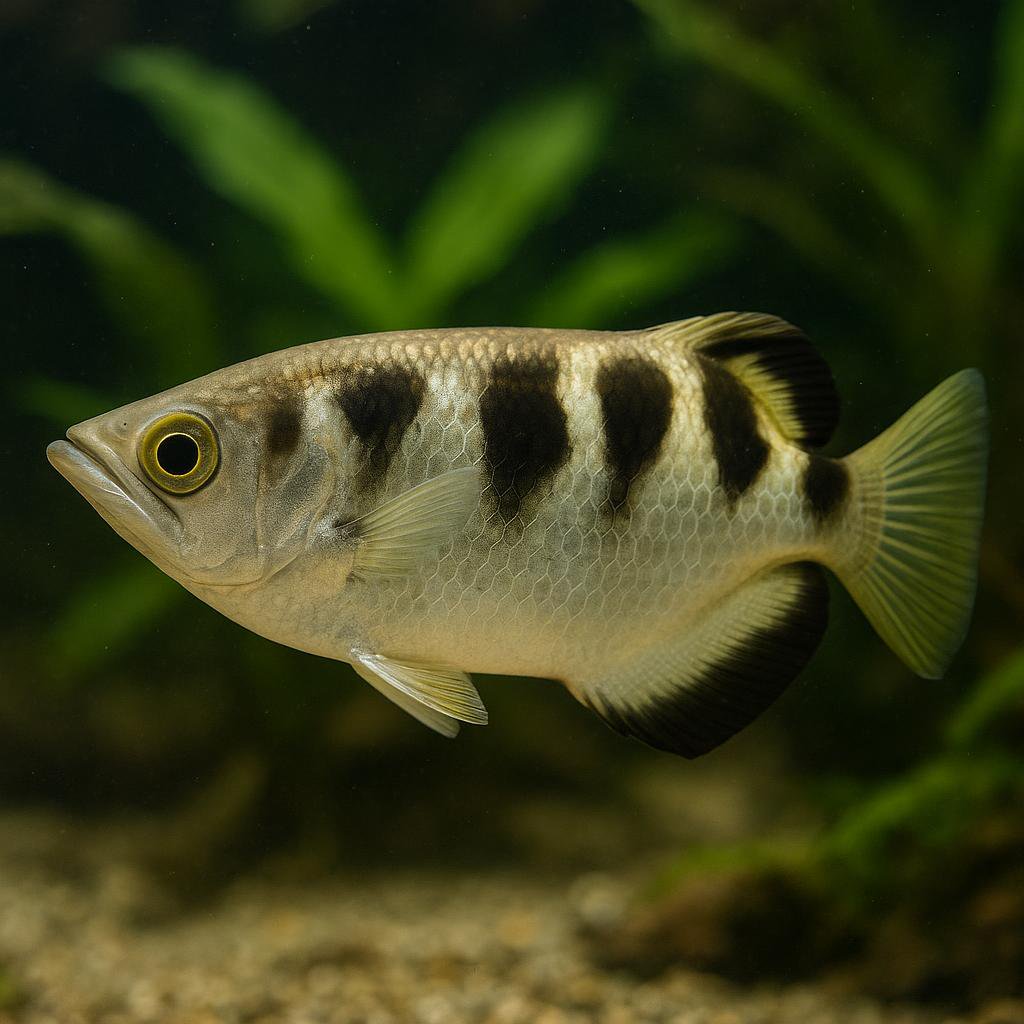
Banded Archerfish
Toxotes jaculatrix
This is the fish that literally spits jets of water to knock insects off branches-watching one "take aim" is unreal. They're super aware of what's going on outside the tank and will even learn to beg and snipe food from the surface once they settle in. Give them height and some open swimming room and they act like little aquatic sharpshooters.
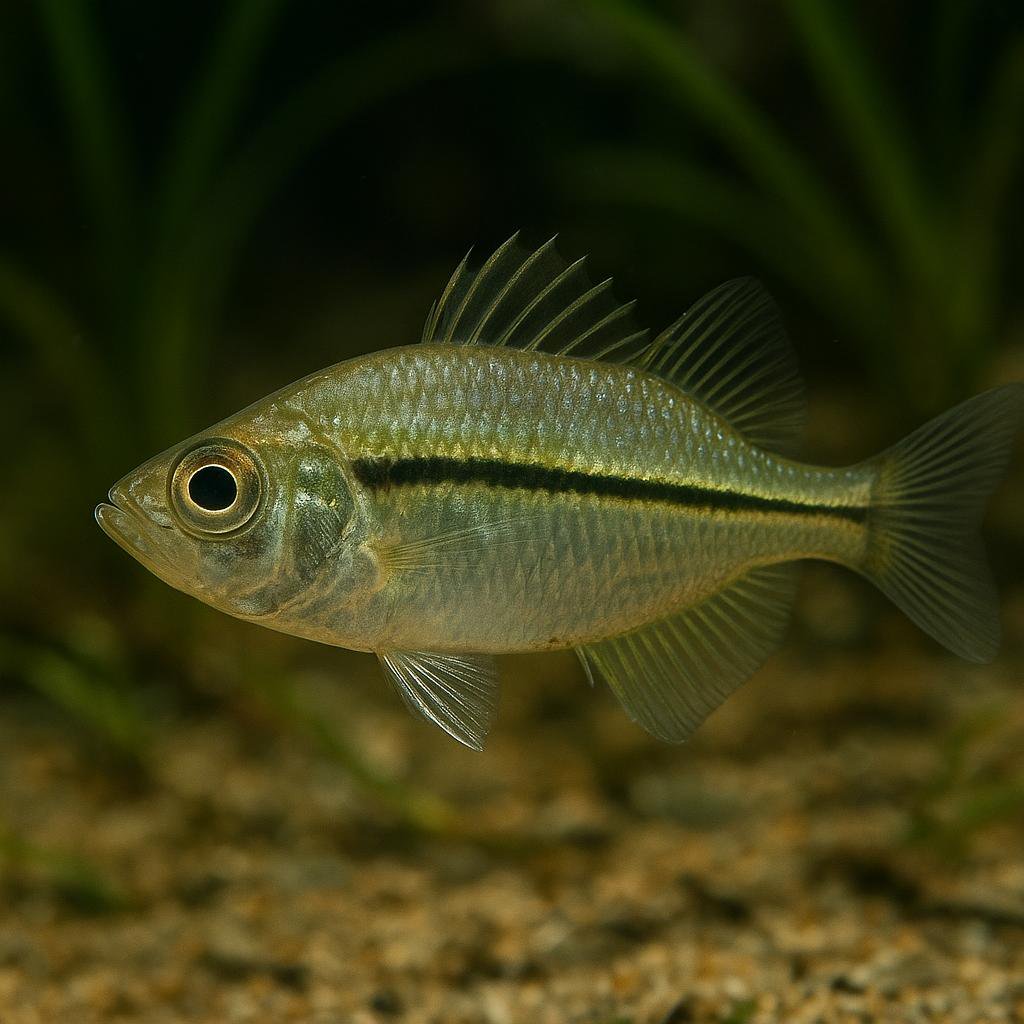
Banded-tail glassy perchlet
Ambassis urotaenia
This is one of those see-through glassy perchlets where you can literally watch the organs shimmer when it turns-super cool in the right lighting. In the wild it hangs around river mouths and mangroves and cruises in groups, so it does best when you keep a little gang of them and give them some open swimming room.
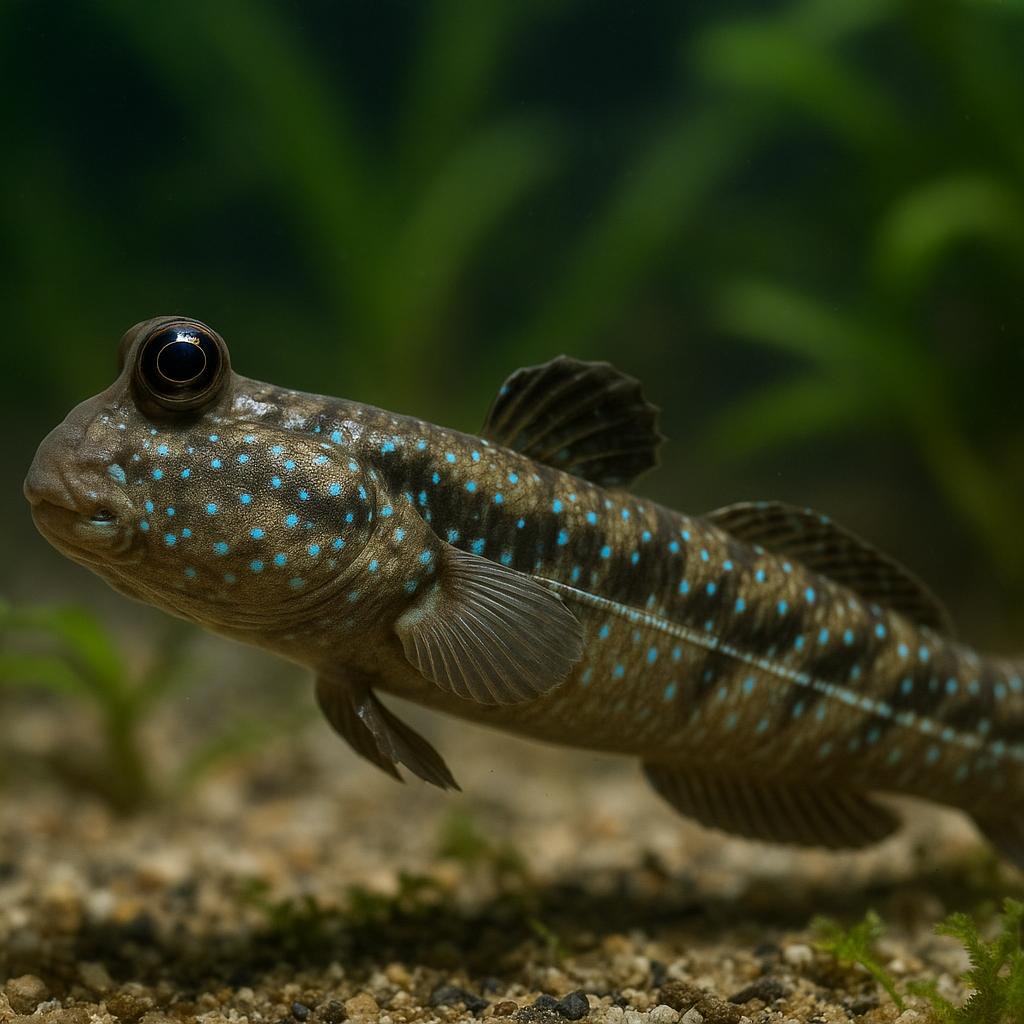
Barred mudskipper
Periophthalmus argentilineatus
This is one of those classic "walks around like it owns the place" mudskippers-big goofy eyes, climbs, hops, and spends a ton of time out on the mud when it's humid. In the wild it lives on intertidal mangrove/nipa mudflats and even shuttles between little pools and open air, hunting worms, insects, and small crustaceans. It's super fun to watch, but it really wants a brackish paludarium setup (not a normal aquarium).
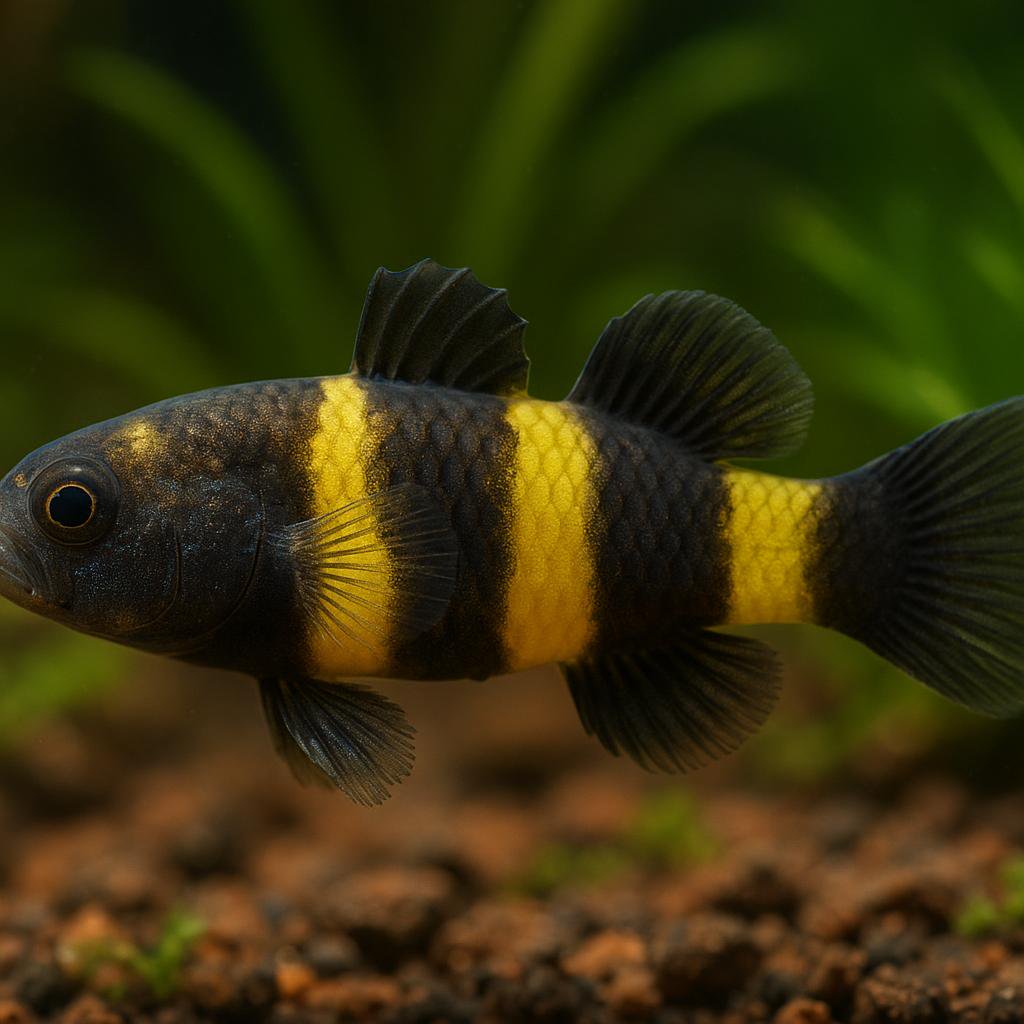
Bumblebee goby
Brachygobius doriae
Brachygobius doriae is one of the classic "bumblebee gobies" - tiny, bottom-hugging little characters that perch on rocks and sand and stare at you like they own the place. They're at their best in a calm setup with lots of caves and leaf litter, and they really shine once you get them eating frozen/live foods reliably (they're slow, picky eaters). Also: they're one of the species that gets mislabeled a lot in shops, so it's super common to see them sold under the wrong bumblebee-goby name.
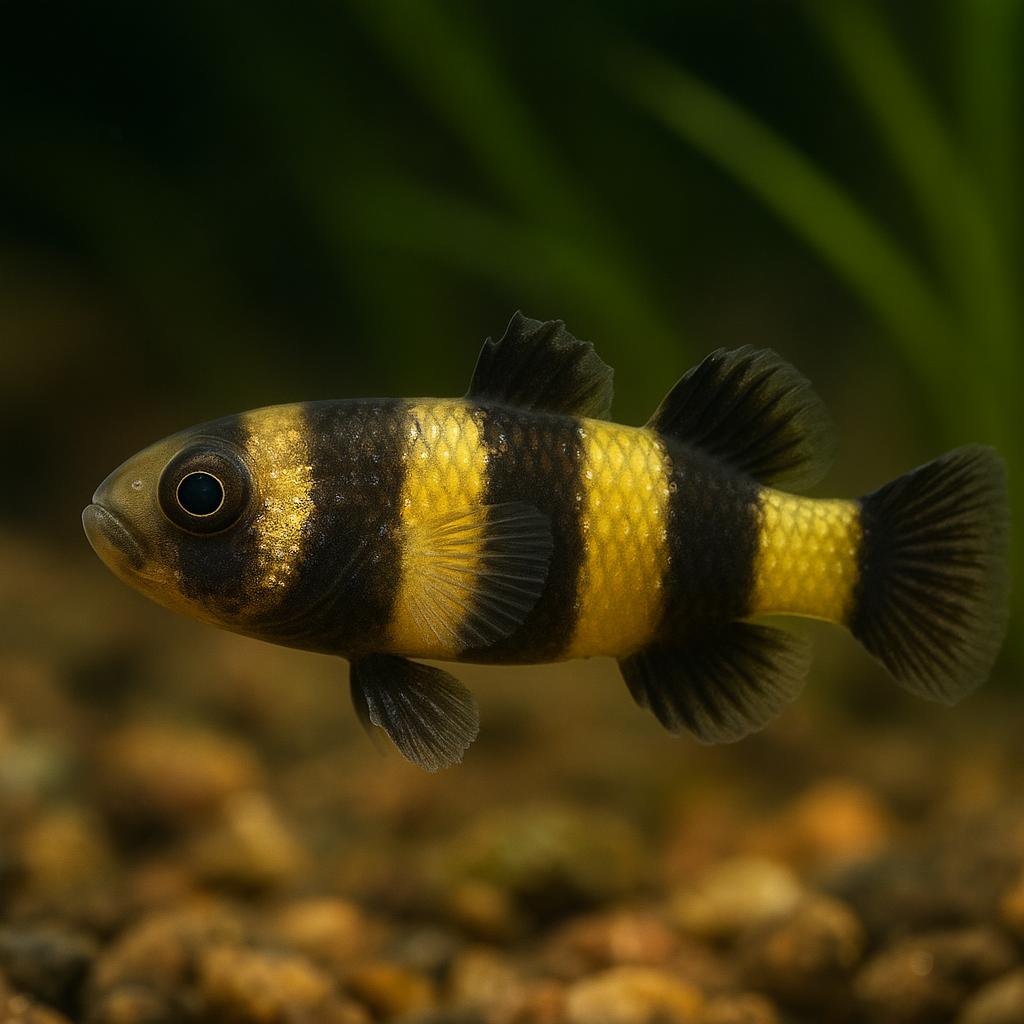
Bumblebee goby (Bumblebee fish)
Brachygobius xanthozonus
This is that tiny little goby with the bold black-and-yellow bands that likes to perch on the bottom and stare back at you like it owns the place. It's happiest in lightly brackish water with lots of little caves and sight-breaks, and it's one of those fish that often refuses flakes-frozen/live meaty foods usually flip the "yes, I will eat" switch.
Looking for other species?