

glass knifefish
Distocyclus guchereauae
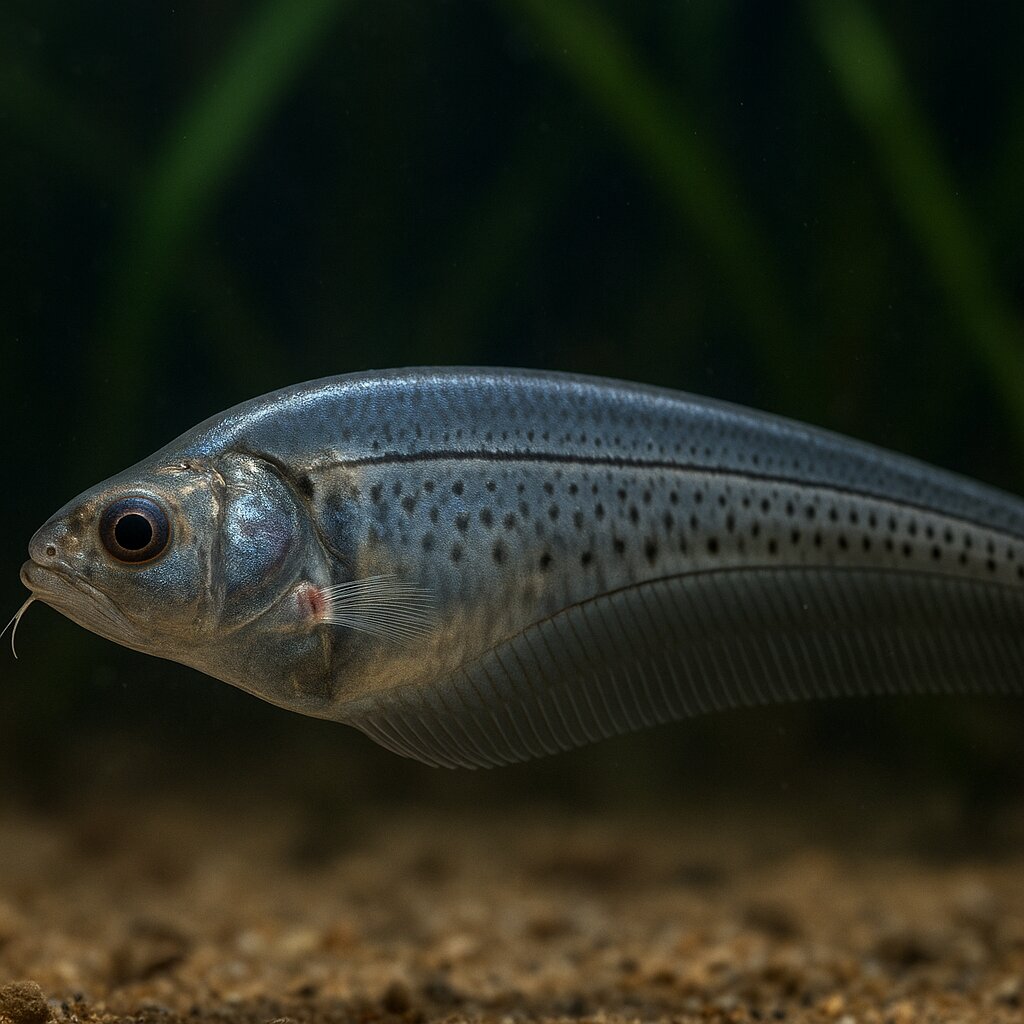
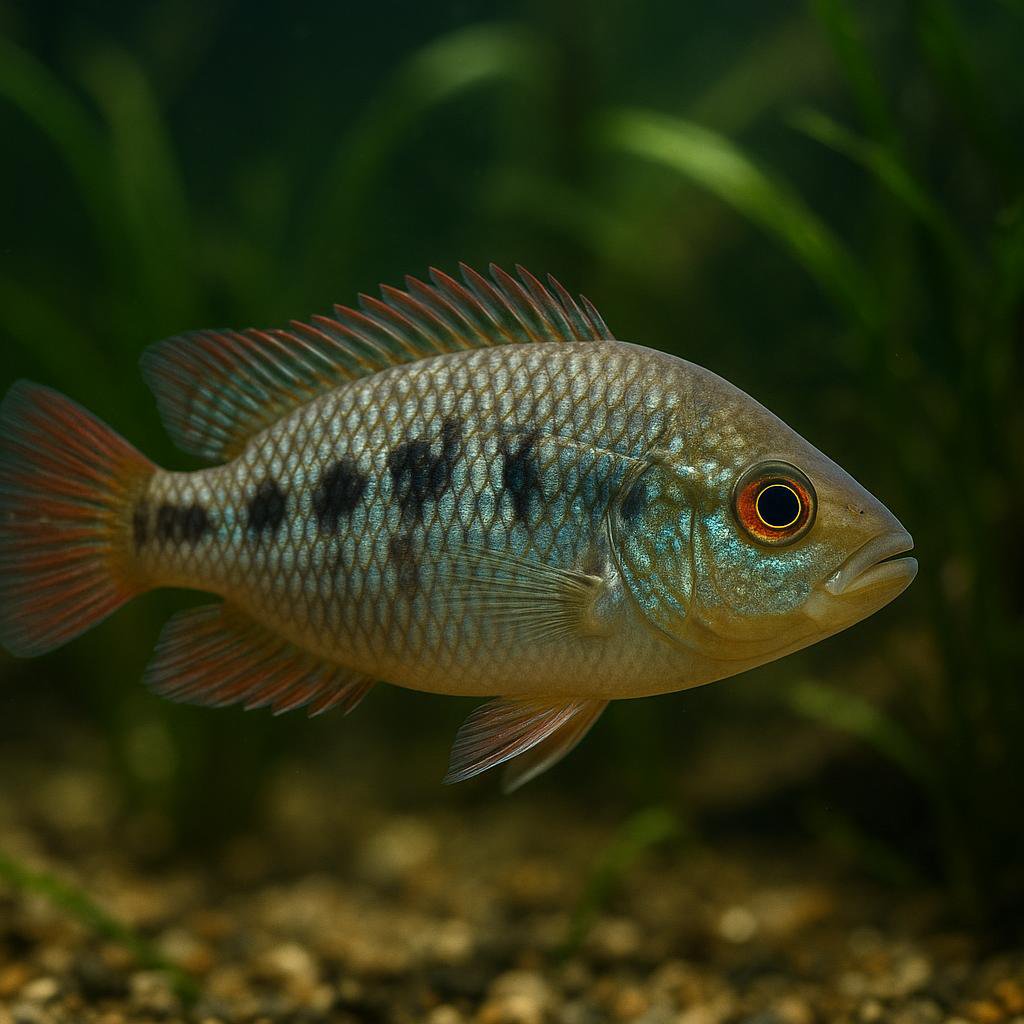
The glass knifefish exhibits a slender, translucent body with a prominent dorsal fin extending along its back.
This page includes AI-generated images. Why am I seeing AI images?
About the glass knifefish
This is a shy, weakly electric glass knife from the Maroni basin in French Guiana that tops out around a foot long. It cruises with that long undulating anal fin and uses a built-in electric sense to navigate and chat with tankmates. Not something you see in shops often, but super cool if you can give it a big, dim tank and meaty foods after lights out.
Quick Facts
Size
13 inches
Temperament
Semi-aggressive
Difficulty
Advanced
Min Tank Size
75 gallons
Lifespan
6-10 years
Origin
South America
Diet
Carnivore - worms, insect larvae, small crustaceans; accepts frozen foods and sinking carnivore pellets once settled
Water Parameters
24-28°C
5.5-7.2
1-8 dGH
Need a heater for this species?
This species needs 24-28°C in a 75 gallon tank. Use our heater calculator to find the right wattage.
Calculate heater sizeCare Notes
- Give a single adult a long 55-75 gal tank with a tight lid, dim light with floaters, fine sand, and plenty of smooth tubes and wood for hides.
- Run soft, acidic water at pH 5.5-6.8, 76-82 F, GH 1-5, TDS 30-120 ppm; keep nitrate under 15 ppm with good oxygen and gentle to moderate flow.
- Feed after lights out and target their cave with tongs; blackworms, bloodworms, chopped earthworms, mosquito larvae, and frozen mysis all work, then try soft-sinking carnivore pellets.
- Keep them solo or with calm mid-sized softwater fish like hatchetfish, pencilfish, or larger tetras; they will snack on nano fish and shrimp.
- Do not mix them with other knifefish or weakly electric species, since signal jamming stresses them and can shut down feeding.
- They spook and jump, so use a snug lid, a dark background, and sponge over filter intakes so they do not wedge in or scrape their skin.
- Most are wild-caught, so quarantine and deworm carefully with praziquantel or levamisole, and avoid copper or formalin on this scaleless fish.
- Breeding in home aquaria is basically unreported, so do not buy a group hoping to spawn them.
Compatibility
Good Tankmates
- Calm mid-size characins too big to swallow, like emperor or bleeding heart tetras, and even adult congo tetras
- Peaceful bottom dwellers like Corydoras or hoplo catfish that ignore the knife and keep to the sand
- Small to mid plecos that mind their business, like bristlenose or rubberlip plecos - avoid the giant commons
- Top-dwellers that stay out of the knife's lane, like adult hatchetfish, with a tight lid
- Mild cichlids that are not pushy, like keyholes or Geophagus earth eaters, sized so they are not bite-size
- Non-nippy rainbowfish like boesemani or turquoise rainbows, as dithers if you keep lighting soft and provide plenty of hides
Avoid
- Fin-nippers and busybodies like tiger barbs and serpae or black skirt tetras
- Big or pushy cichlids like Oscars, Jack Dempseys, and green terrors that will muscle the knife at feeding time
- Other weakly electric or knife-shaped fish - black ghost knives, Eigenmannia glass knives, elephantnose, baby whales - they interfere and fight
- Bite-size fish and shrimp like neons, embers, guppy fry, and cherry shrimp that become midnight snacks
Where they come from
Glass knifefish in the genus Distocyclus are from the Guiana Shield region of northern South America. Think shaded forest creeks and slow side channels in French Guiana and nearby drainages. The water there is usually soft and slightly acidic, with a tea tint from leaf litter. They cruise through tangles of roots using a weak electric field to feel their way around.
They are weakly electric fish. That electric sense is how they hunt and navigate, and it shapes how you set up the tank and choose tankmates.
Setting up their tank
Plan for an adult around the foot-long mark. A single fish does well in a 55-75 gallon tank with a tight lid. Keep light low, use fine sand, and give them a maze of hides. Mine spent daylight hours parked in a tube and came out like a ghost at dusk.
- Tank size - 55-75 gallons for one, larger if you try more than one
- Substrate - fine sand or very smooth gravel to protect the skin
- Hides - multiple PVC tubes (1.5-2 inch), driftwood tunnels, stacked slate, leaf litter
- Plants - hardy low-light plants (Anubias, Java fern) and floaters to dim things
- Filtration - strong biofiltration with gentle return; cover intakes with foam
- Flow - gentle to moderate; they do not like to be blasted
- Lid - tight-fitting with blocked gaps; they can and will jump
- Lighting - dim; use floaters or shaded areas
- Temperature - 76-82 F (24-28 C)
- pH and hardness - roughly 5.5-7.0 pH, soft to moderately soft
A bundle of different-length PVC tubes works great. Rotate which tube you feed near so the fish learns to come out on a schedule.
Watch stray voltage and magnetically noisy equipment. Use well-grounded gear, a heater guard, and avoid super-strong powerheads aimed at their resting spots.
Keep water steady. These fish sulk and stop eating if ammonia or nitrite creep up or if you swing pH. I had best results with weekly 25-40% water changes, matched for temp and TDS.
What to feed them
They are micropredators. New arrivals usually ignore flakes and hard pellets. Start with soft, meaty foods and switch them over slowly. Feed at dusk or use a dim room and they will come out more confidently.
- Live or frozen blackworms (their favorite starter)
- Frozen bloodworms and mosquito larvae
- Mysis and enriched brine shrimp
- Chopped earthworms or small prawn pieces
- Soft sinking carnivore pellets or gel foods once they are eating well
Target-feed with a pipette or feeding tongs near their hide. Turn off the filter for 5-10 minutes so the food does not blow away. A red flashlight helps you watch without spooking them.
Skip feeder fish. You risk parasites and it makes them picky. Also go easy on bloodworms long term; too many can lead to bloat.
How they behave and who they get along with
Shy at first, mostly active at night, but they settle into a routine and will start cruising for food at lights-out. They are not aggressive in the usual sense, but they do spar electrically and with short chases around favorite hides.
- Good tankmates: peaceful, medium-sized characins that are too big to swallow, hatchetfish, calm cichlids like keyholes, geophagine types that are not pushy, larger Corydoras.
- Borderline: dwarf cichlids during breeding, boisterous barbs.
- Avoid: fin-nippers, large aggressive cichlids, predatory catfish, shrimp, tiny tetras that can be eaten.
They can stress each other out via EOD interference. Keeping more than one works only in big tanks with many hides and sight breaks. Do not mix them with other weakly electric fish like elephantnoses or other knifefish.
Expect them to claim specific tubes. Give each potential claimant two or three options and you get fewer squabbles.
Breeding tips
This species has not been reliably bred in home aquaria as far as I know. Gymnotiforms often use seasonal cues to spawn. If you want to experiment, you would need a very large, quiet setup, a group raised together, very soft acidic water, tons of cover, and heavy feeding with live foods while simulating a rainy season pulse.
- Condition a group separately on rich live and frozen foods.
- Lower TDS and pH gradually with clean RO-mixed water, then do a series of slightly cooler water changes to mimic rains.
- Provide long tubes and vertical surfaces; some related fish attach eggs in shelters.
- Keep lighting very dim and avoid disturbances.
If you witness courtship or eggs, take careful notes on water parameters and timing. Sharing those details helps the whole hobby.
Common problems to watch for
- Not eating: new fish often refuse food under bright lights or in bare tanks. Dim things and offer live blackworms to get them started.
- Skin scrapes and fungus: they abrade easily on rough decor and filter intakes. Use smooth wood/rocks and foam over intakes.
- Ich and meds: sensitive to harsh treatments. Use gentle heat and carefully chosen meds at reduced dose, lots of aeration.
- Bloat from rich foods: vary the diet and keep portions small but frequent.
- Jumping: they launch during spooks or at lights-on. Secure the lid and avoid sudden light changes.
- Water quality swings: they react badly to ammonia, nitrite, and big TDS jumps. Test regularly.
- Electrical stress: mixing with other electric species or housing multiple knives in tight quarters can lead to constant EOD jamming and hiding.
Avoid copper-based medications with knifefish. They are very sensitive to copper and similar metals.
Quarantine new arrivals for 3-4 weeks. During that time, get them eating frozen foods, deworm if needed, and observe their EOD behavior and appetite before moving them into the display.
Similar Species
Other freshwater semi-aggressive species you might be interested in.
Jupiaba kurua
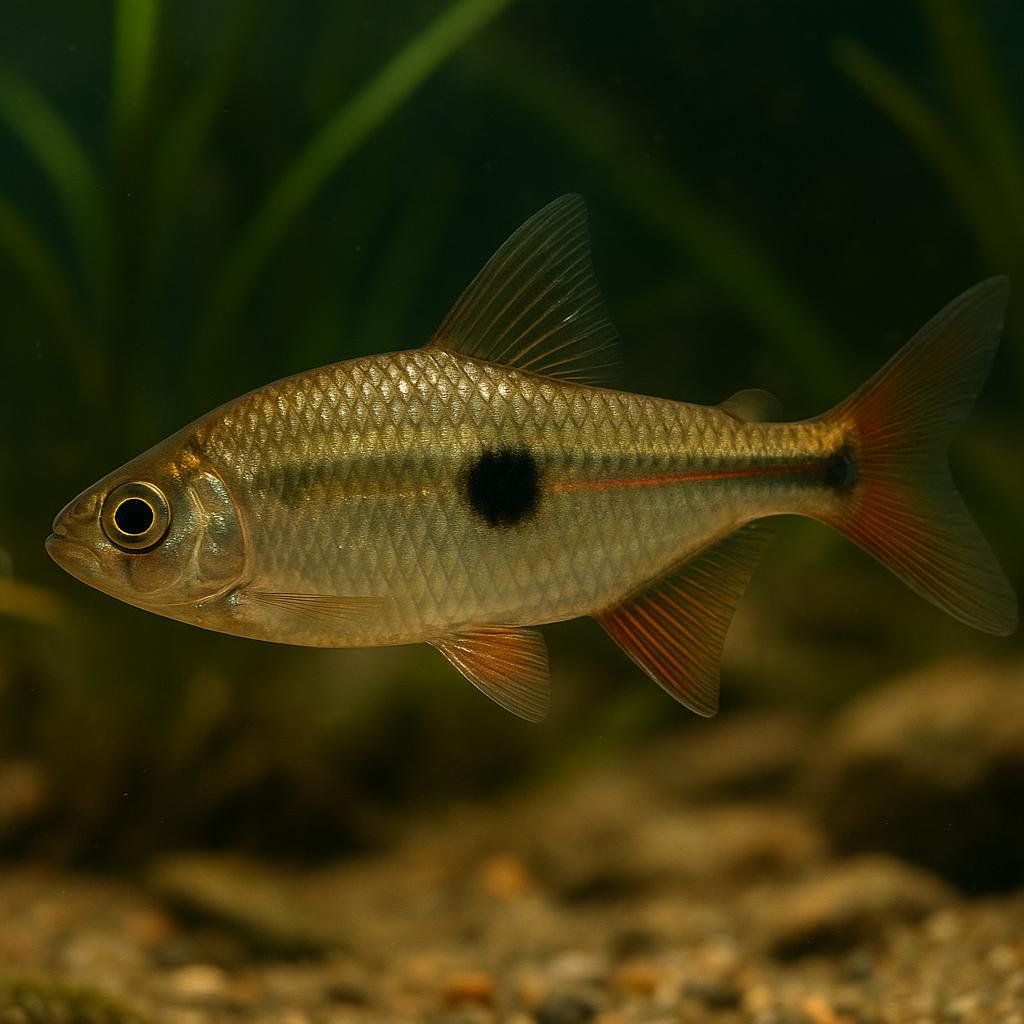
Small South American characin endemic to the upper rio Curuá (rio Xingu basin, Brazil). Reaches about 8.7 cm SL and inhabits clearwater rivers. Distinguished by dark dots on the bases of many lateral scales and a distinct dark caudal‑peduncle spot. Reported diet indicates omnivory, including aquatic insects, small fishes, and fragments of Podostemaceae and filamentous algae.
Altipedunculata stone loach
Schistura altipedunculata
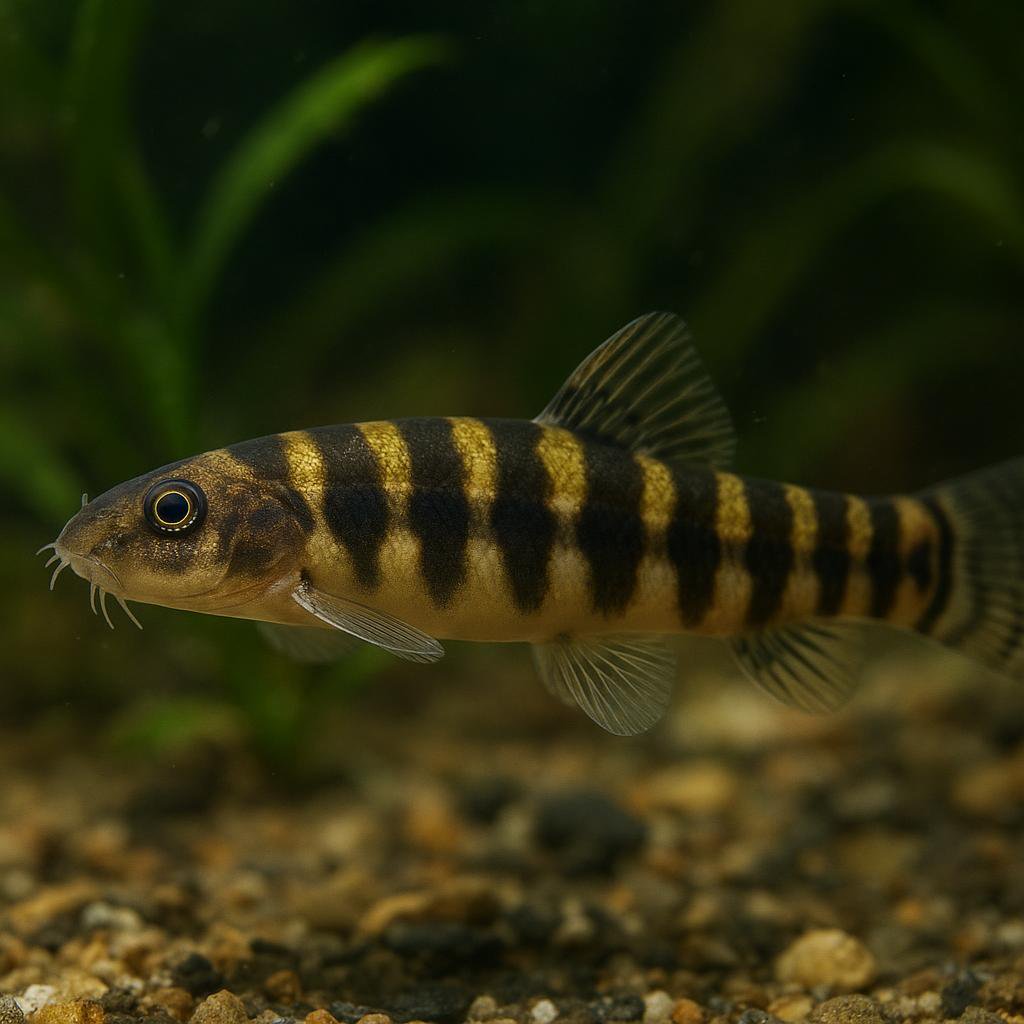
Schistura altipedunculata is one of those little stream loaches that wants clean, well-oxygenated water and a bunch of rock nooks to claim as home. It is a bottom-hugger that will spend its day scooting from crevice to crevice, and it tends to get a bit spicy with its own kind if you do not give it enough hiding spots.
American flagfish
Jordanella floridae
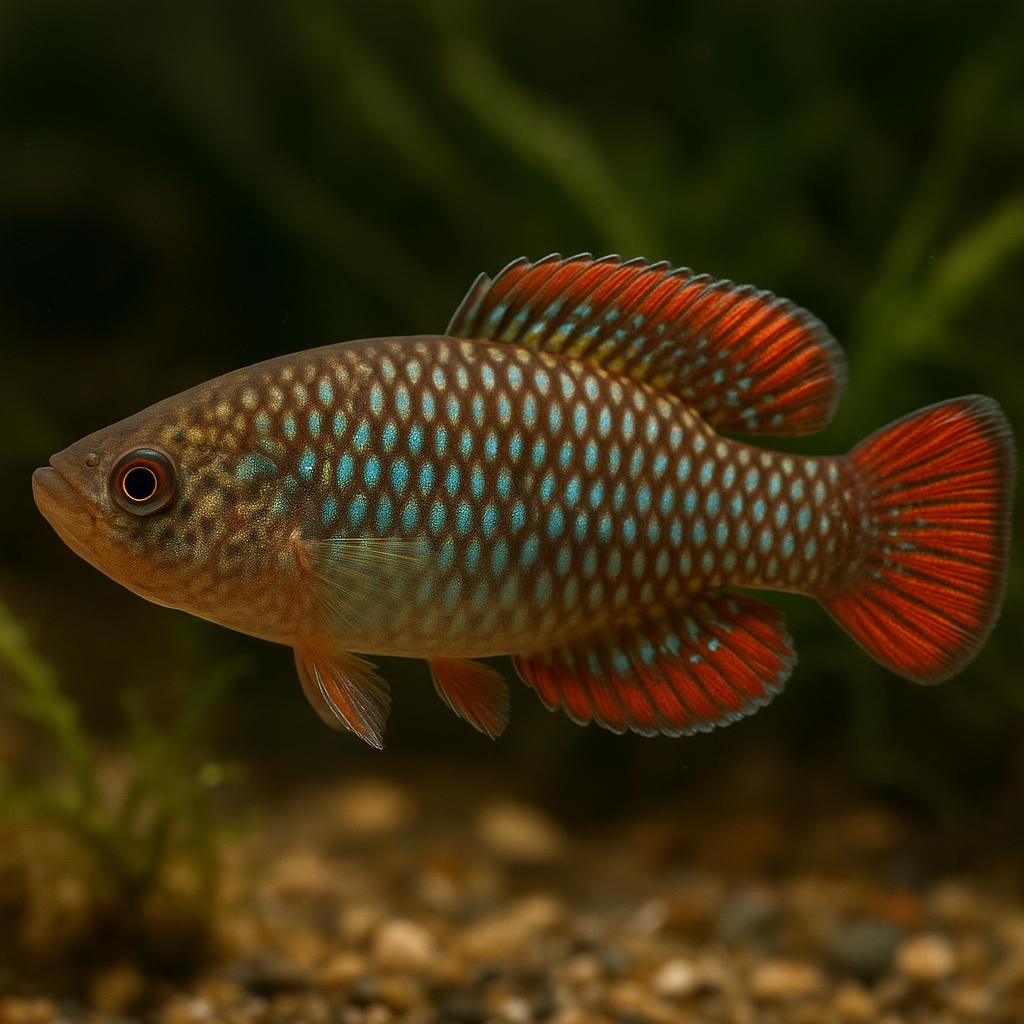
Jordanella floridae is that little Florida native with the red-and-cream striping that really does look like a tiny flag once a male colors up. They graze algae like champs (especially stringy/hair algae), but they have a bit of attitude - give them plants and space so the bossy behavior stays manageable. Bonus: the male guards the eggs and will actively fan them, which is pretty fun to watch.
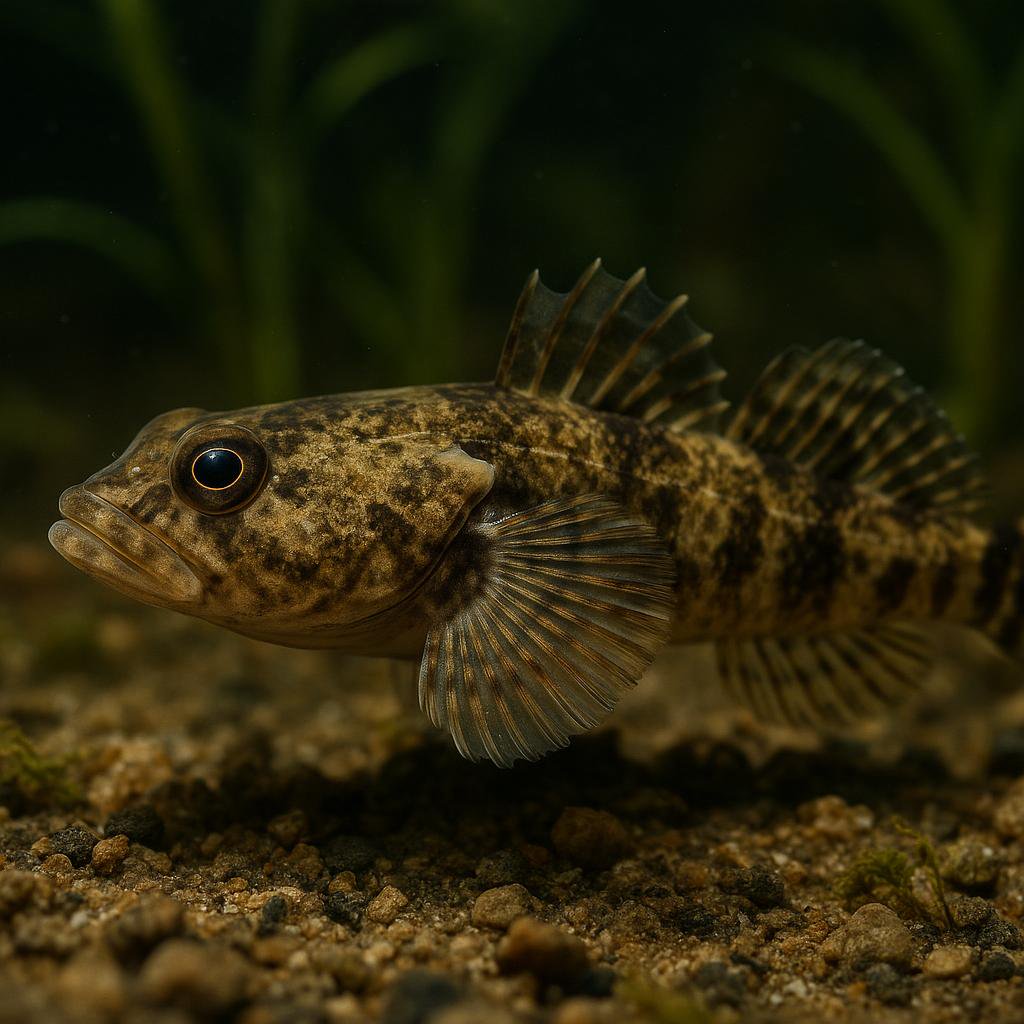
Amur sculpin
Alpinocottus szanaga
This is a little coldwater sculpin from the Amur drainage - a bottom-hugging, rock-and-gravel fish that spends its day wedged under stones and darting out to grab food. Super cool behavior and attitude, but it is absolutely not a warm tropical community fish - it wants chilly, fast, oxygen-rich water and will bicker with other bottom fish.
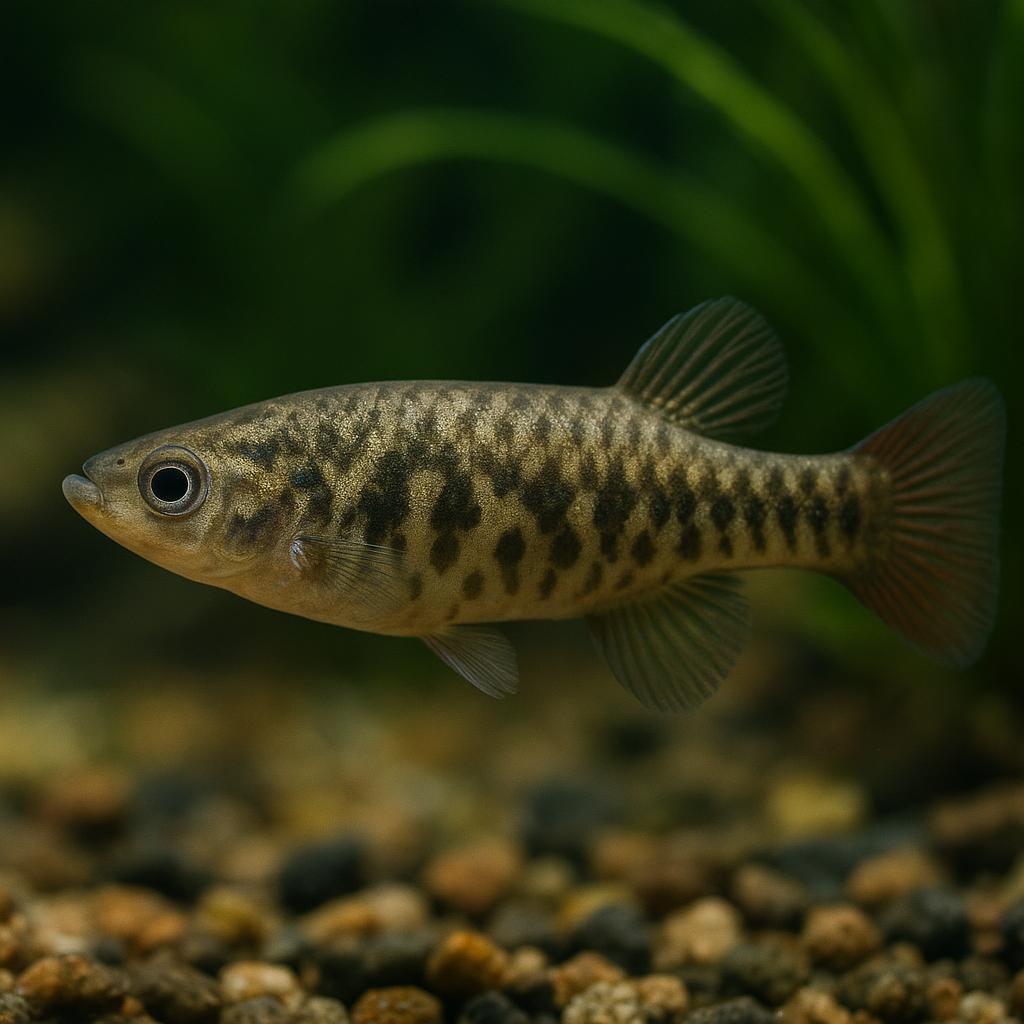
Anitápolis livebearer
Jenynsia weitzmani
Jenynsia weitzmani is a freshwater anablepid livebearer endemic to southern Brazil (currently known only from the type locality near Anitápolis, Santa Catarina). Like other Jenynsia (onesided livebearers), reproduction involves lateralized mating morphology/behavior; aquarium care guidance is not well-documented for this species specifically.
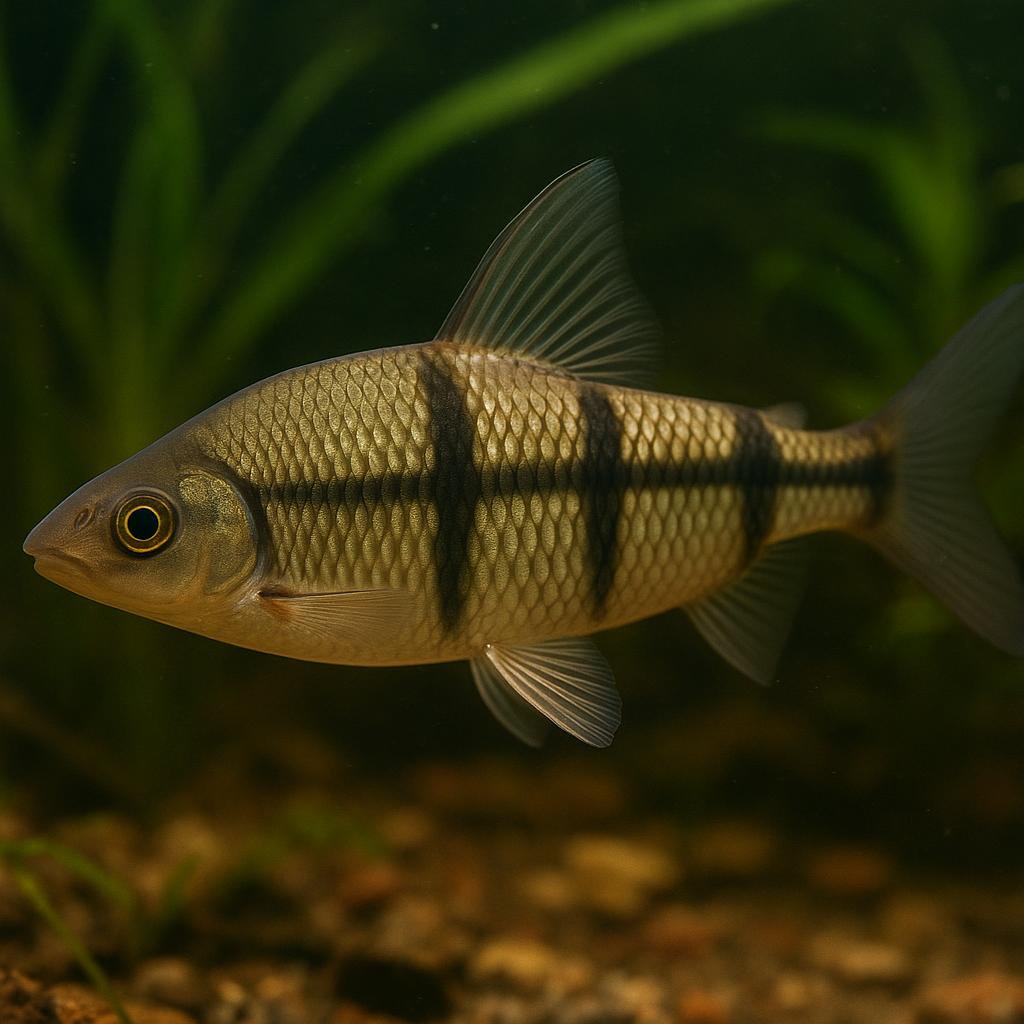
Aracu-comum
Schizodon vittatus
Schizodon vittatus is a large South American anostomid (family Anostomidae). Reported maximum size is about 35 cm standard length; it is harvested/consumed in parts of Brazil and is not commonly covered by mainstream aquarium husbandry references.
More to Explore
Discover more freshwater species.
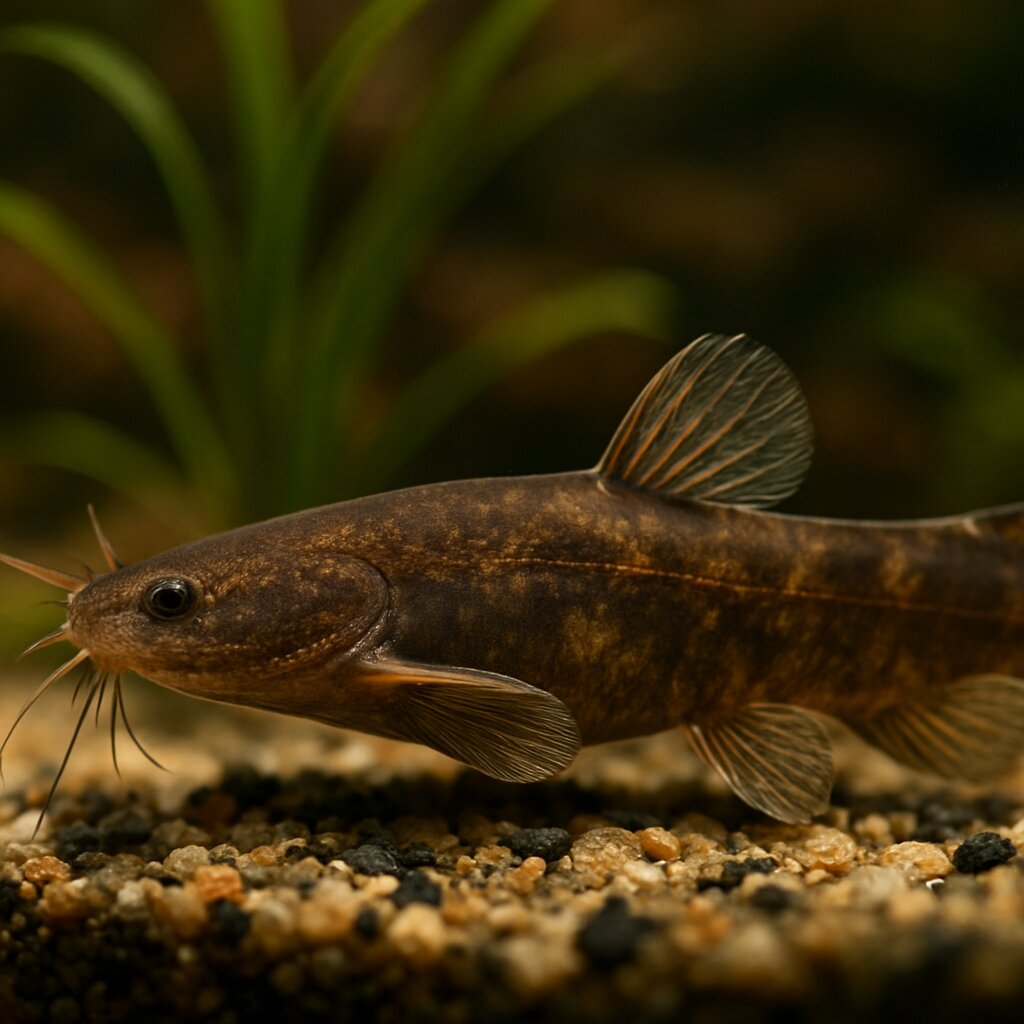
Amphilius dimonikensis
A small loach catfish endemic to the Mpoulou River in the Mayombe (Dimonika Biosphere Reserve), Republic of the Congo. Amphilius dimonikensis has a subtle banded pattern and inhabits fast, clear streams over rock and sand. In aquaria, prioritize strong, well-oxygenated flow with rounded stones and sand to mimic hillstream conditions.
Aboina barb
Enteromius aboinensis
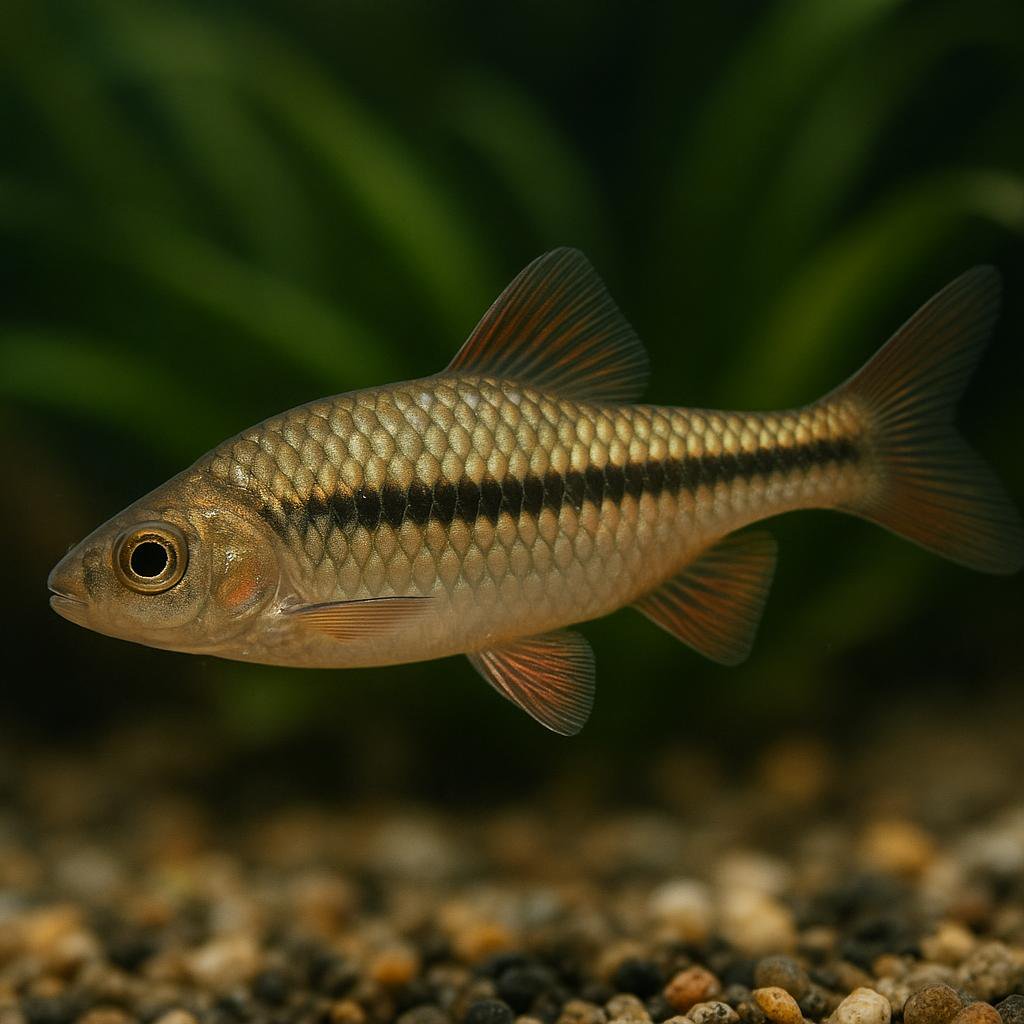
Enteromius aboinensis (the Aboina barb) is a small West African barb with a clean black midline stripe and a little spot right at the base of the tail. It does best when you treat it like a proper schooling fish - keep a decent group and give it plants around the edges with open swimming room in the middle.
Ajuricaba tetra
Jupiaba ajuricaba
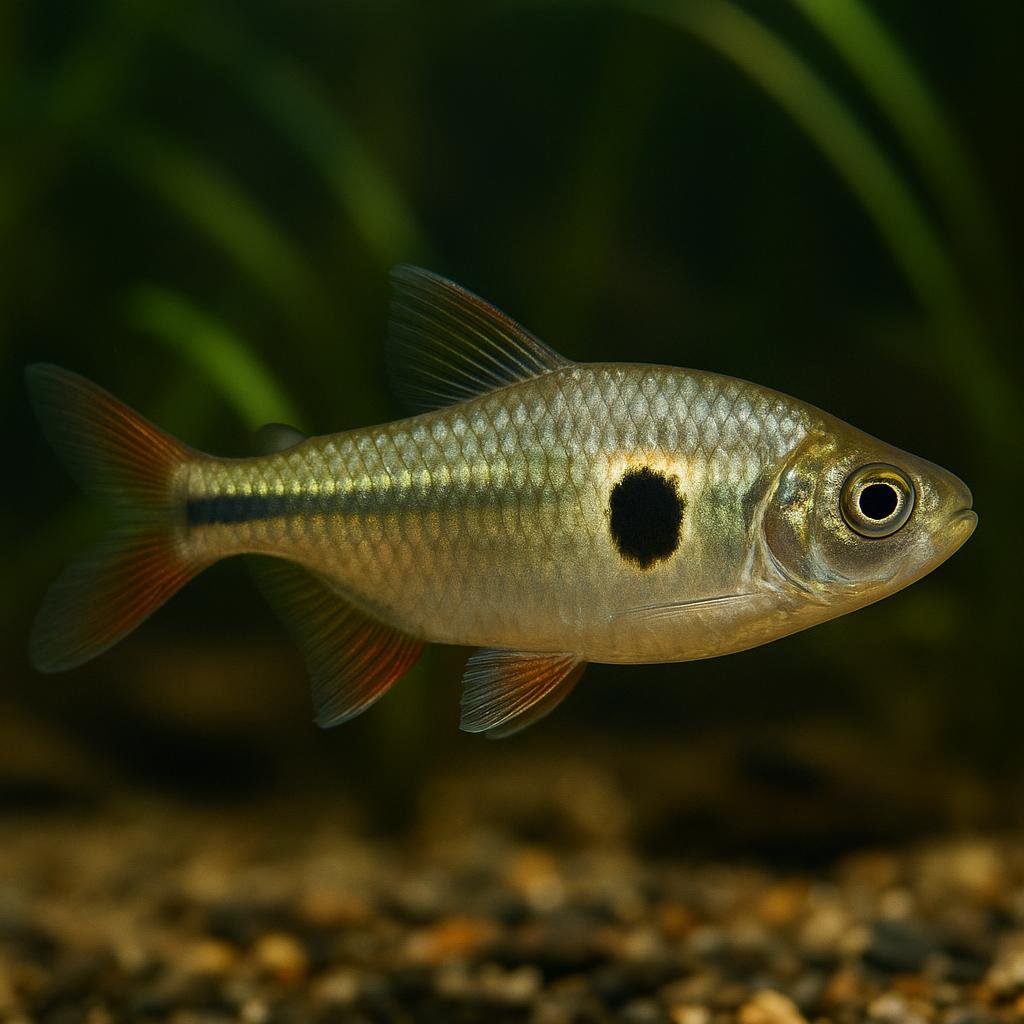
Jupiaba ajuricaba is a South American freshwater characin from the Amazon basin in Brazil (rio Negro, rio Solimões, and rio Tapajós basins). It reaches about 9.5 cm SL and is diagnosed by a narrow dark midlateral stripe, an elongated humeral spot, and an ocellated spot on the upper caudal-fin lobe. Wild specimens have been collected from blackwater forest streams and also oxbow-lake habitats.
Allen's river garfish
Zenarchopterus alleni
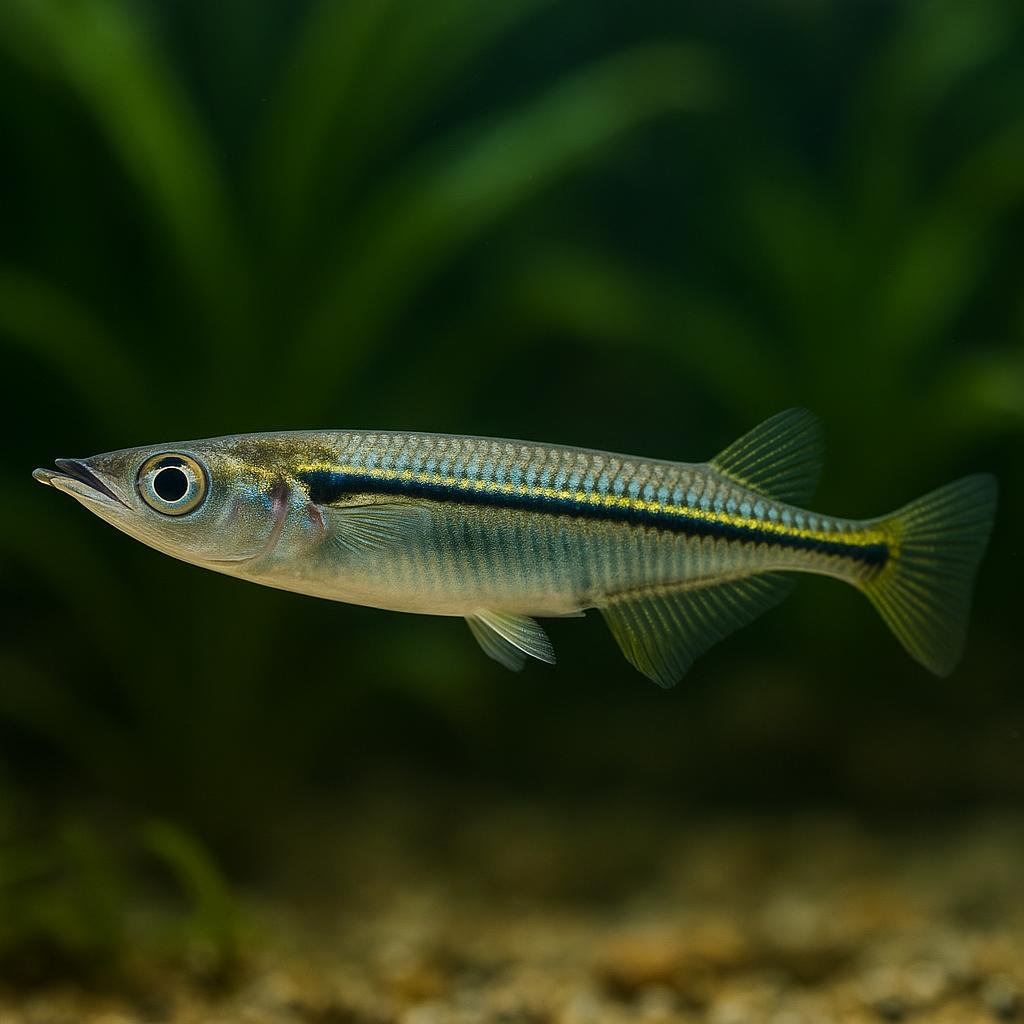
A poorly known freshwater halfbeak endemic to West Papua (Mamberamo River), described from a single specimen (~13 cm SL). Beyond basic habitat/occurrence, little is published about its ecology or aquarium suitability; assume it is a surface-oriented, jump-prone halfbeak only by analogy with related taxa.
Amapa tetra
Hyphessobrycon amapaensis
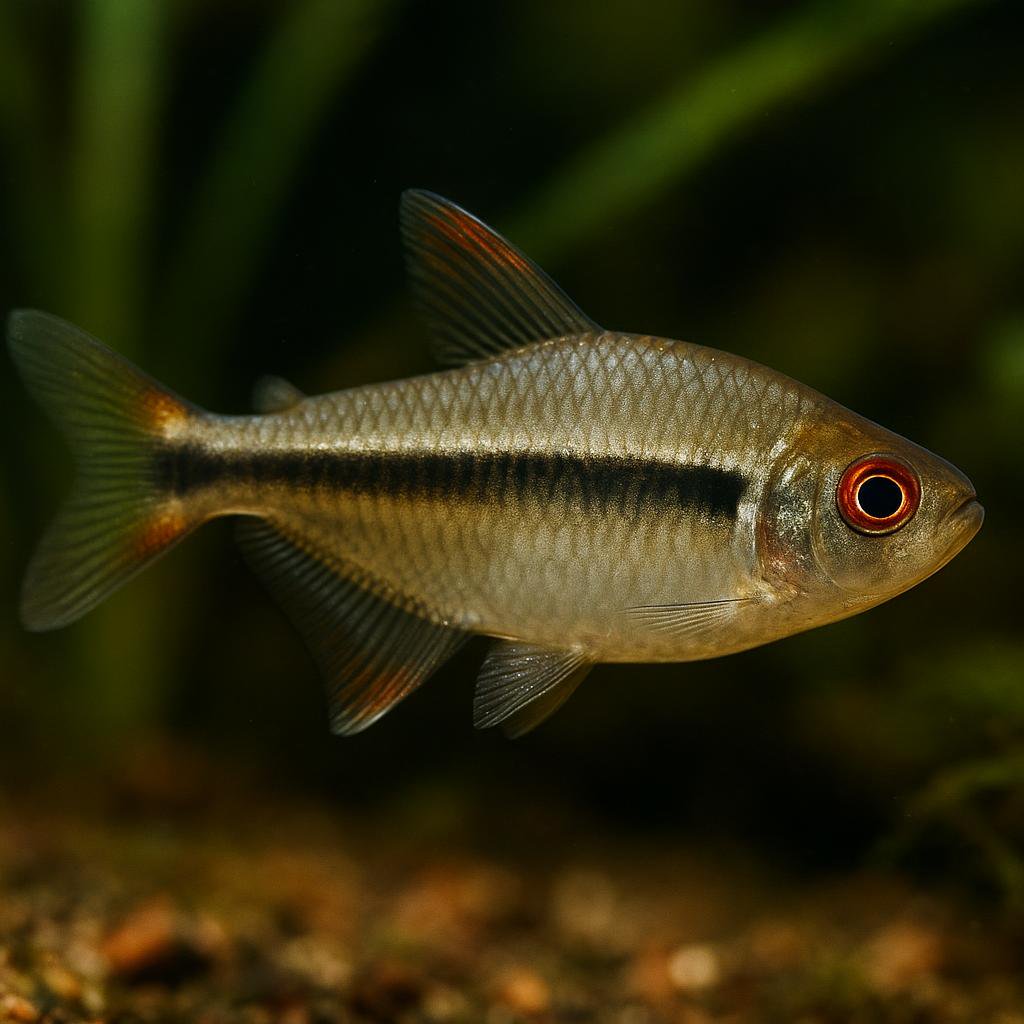
This is a tiny, super sleek little tetra with a clean red stripe down the side that really pops once its settled in. It does best in a planted, slightly tinted "creek-style" setup and looks way cooler when you keep a proper group so they school and flash that line together. If you can give it soft, slightly acidic water and a calm community, its an easy fish to fall for.
Amatlan chub
Yuriria amatlana
Yuriria amatlana (the Amatlan chub) is a little Mexican native minnow from the Ameca River basin. Its wild range is pretty limited and it is listed as Endangered, so its care info in the aquarium hobby is basically nonexistent and its availability is usually low. In the original species description, preserved fish show a dark lateral stripe with a darker patch on the caudal peduncle, and they can have tiny barbels at the mouth corners.
Looking for other species?