

spinycheek sleeper
Eleotris valadei
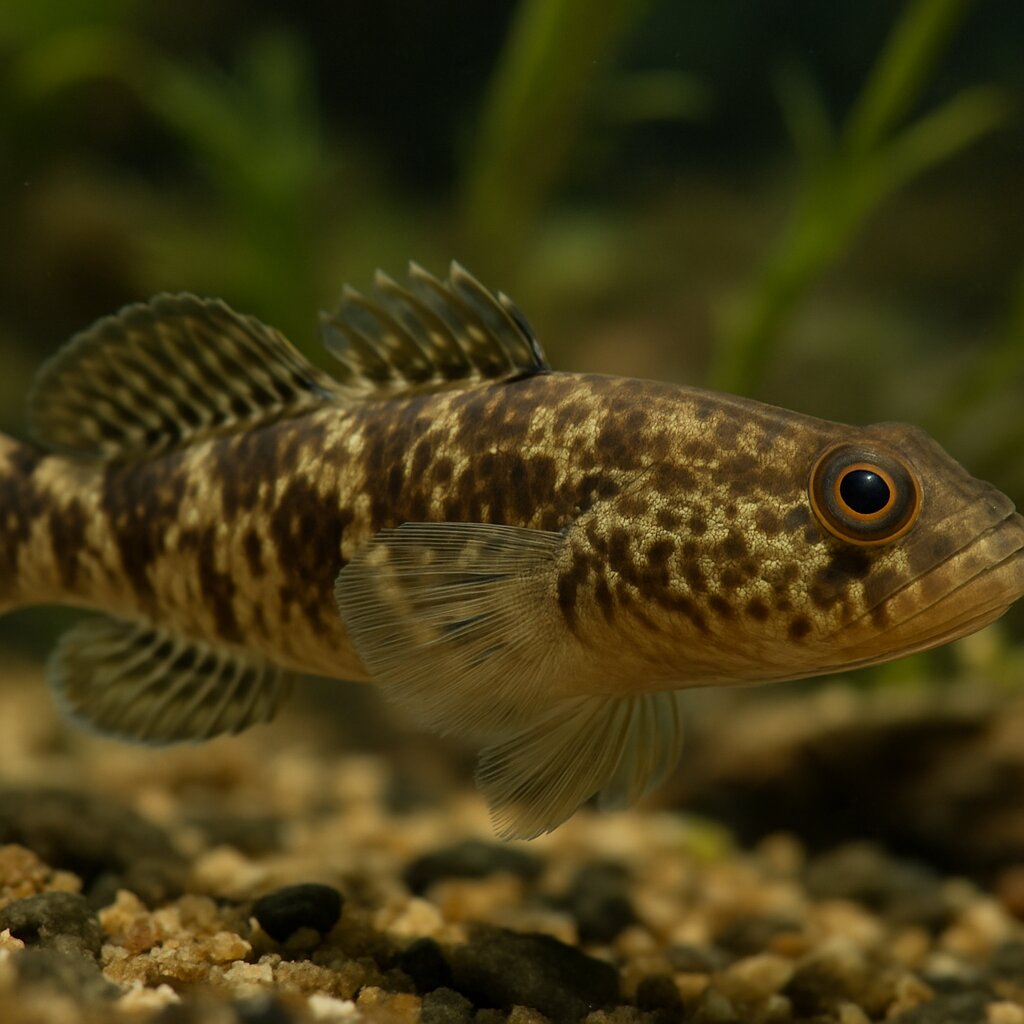
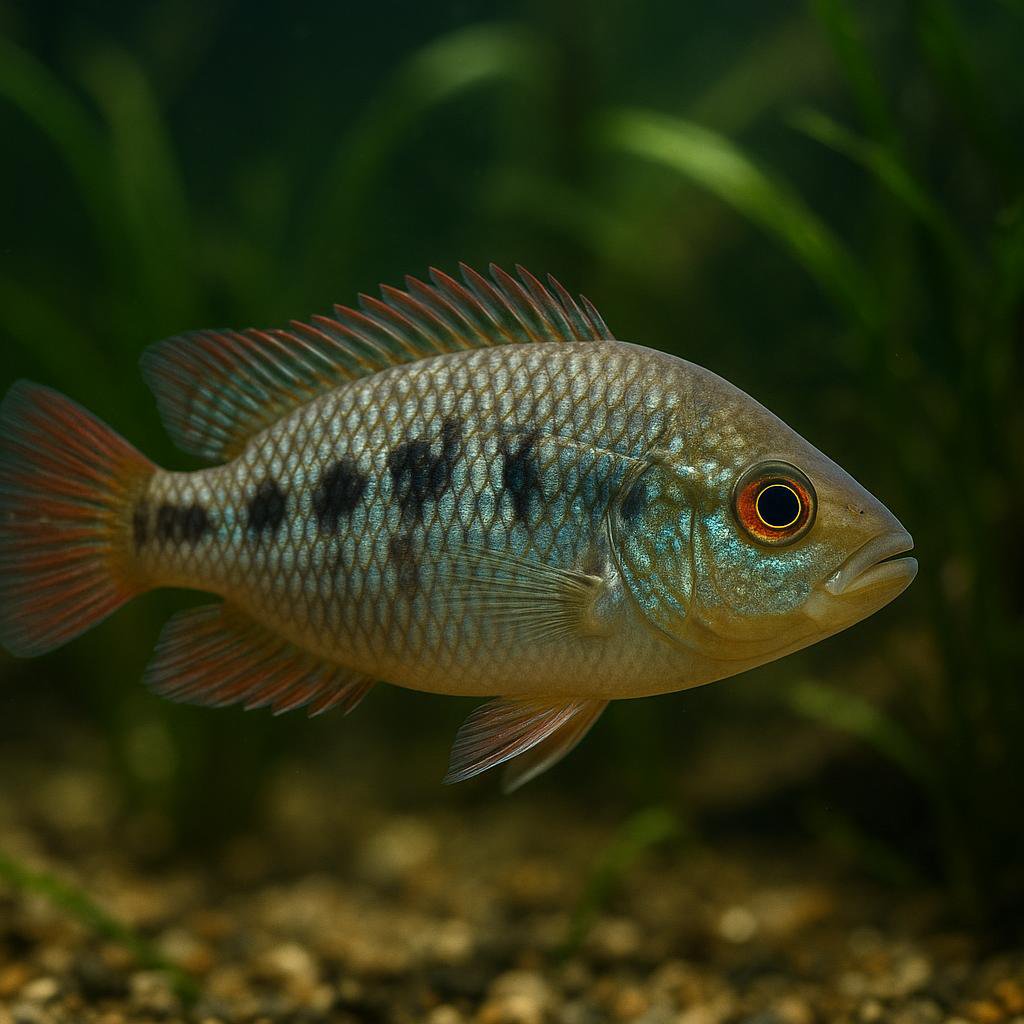
The spinycheek sleeper has a slender body with prominent spines on its cheeks and distinctive mottled brown and yellow coloration.
This page includes AI-generated images. Why am I seeing AI images?
About the spinycheek sleeper
A neat little sleeper goby from Madagascar and nearby islands, this guy hangs out on the bottom like a bulldog and waits to pounce on bite‑sized prey. It is amphidromous in nature, so adults live in fresh water but the species uses estuaries in its life cycle, and it will absolutely snack on tiny fish or shrimp.
Quick Facts
Size
9.9 cm SL
Temperament
Semi-aggressive
Difficulty
Intermediate
Min Tank Size
30 gallons
Lifespan
3-6 years
Origin
Western Indian Ocean - Madagascar, Reunion, Mayotte, Seychelles
Diet
Carnivore - meaty frozen foods (shrimp, krill, worms) and small live foods
Water Parameters
24-28°C
6.8-8
5-20 dGH
Need a heater for this species?
This species needs 24-28°C in a 30 gallon tank. Use our heater calculator to find the right wattage.
Calculate heater sizeCare Notes
- Give it a 40 gallon breeder or larger with a big footprint; sand or fine gravel, lots of caves (PVC, rock piles, driftwood), dimmer light, and secure decor since they nudge and dig.
- They jump hard when startled, so run a tight lid with all gaps covered.
- Keep water warm and clean: 24-27 C, pH 7.0-7.8, moderate hardness, nitrate under 20 ppm, and decent oxygen with gentle to moderate flow.
- Feed meaty sinking foods; start with live blackworms, earthworms, or small prawns to kick-start eating, then train to frozen (krill, shrimp, bloodworms) and quality carnivore pellets.
- Feed at dusk and give it a minute to ambush; every other day is plenty for adults to avoid bloat and laziness.
- Tankmates need to be too big to fit in its mouth and prefer mid-top levels; skip shrimp, small tetras/rasboras, guppies, and pushy bottom cichlids or other sleepers.
- Do not expect tank breeding; adults live in freshwater but larvae need a marine phase, so it is a no-go in a home setup.
- Many are wild-caught, so quarantine first and deworm (prazi/levamisole); watch for white stringy poop, sudden fasting, or sunken belly.
Compatibility
Good Tankmates
- Fast midwater schoolers too big to be a snack, like giant danios and 4-5 inch rainbowfish
- Calm to moderately assertive mid-sized cichlids that work the middle, like rainbow cichlids, severums, or blue acaras
- Armored or spiny bottom buddies that mind their business, like medium plecos, synodontis, or striped raphael catfish
- Larger, quick characins with deep bodies, like silver dollars or full-grown bleeding heart tetras
- Adult livebearers on the bigger side (sailfin mollies, big swordtails) as long as they are not bite-sized
- Denison barbs and other torpedo barbs once grown, since they are fast and not fin-nippy
Avoid
- Tiny community fish that fit in the mouth, like neon/ember tetras, small rasboras, or guppies
- Slow fish with fancy fins that invite trouble, like bettas, longfin gouramis, or fancy guppies
- Nippy or territorial bullies that hassle bottom fish, like tiger barbs, red tail sharks, or skunk loaches
- Big bruiser cichlids and other heavy predators, like oscars, green terrors, jaguar cichlids, or bichirs
Where they come from
Spinycheek sleepers are island-stream gobies. Think warm, clear creeks that slide through forest, hit sandy pools, and eventually meet mangroves. They hang around the lower reaches over sand and leaf litter, slipping between fresh water and a hint of salt in the estuary. Juveniles drift out as larvae and return upstream as mini gobies, which is why you sometimes see them near brackish edges.
The name spinycheek sleeper also gets used for other Eleotris species in the trade. Care below fits the freshwater Eleotris sleepers sold under that common name, including E. valadei.
Tank setup
Give them footprint over height. A single adult is comfy in a 40 breeder (36 x 18 in / 90 x 45 cm). If you want a pair or mixed community, 55+ gallons with lots of sight breaks is safer.
- Substrate: Fine sand, 5-7 cm deep. They like to settle in and will push sand around their cave.
- Hardscape: Stack rock on the tank bottom (not on sand) so they cannot topple it while digging. Add wood and a few snug caves (PVC elbows, coconut shells, rock piles).
- Plants: Low light, tough stuff tied to wood/rock (Anubias, Java fern, Bolbitis). Rooted plants get uprooted unless they are potted.
- Flow and oxygen: Moderate current with strong aeration. A canister plus a large sponge filter works well.
- Cover: Tight lid. They jump. Block cable cutouts and the gap around HOB filters.
- Light: They relax under dimmer light. Floating plants help.
- Water: Freshwater is fine for adults. Mine perk up with a pinch of salt (SG 1.002-1.004), but not required.
Put a smooth flat rock just outside their cave. It becomes a perfect target to drop food on and they learn that is the dinner plate.
Targets: 74-80 F (23-27 C), pH 6.8-7.6, GH 5-15 dGH, KH 3-8. Keep ammonia and nitrite at 0 and nitrate under ~30 ppm with steady water changes.
Feeding
They are ambush carnivores. New arrivals often want moving food first, then you can wean them onto prepared stuff.
- Staples that work: thawed mysis, chopped prawn, chopped fish fillet, earthworms/nightcrawlers (cut), live or frozen bloodworms/blackworms, krill, small snails.
- Dry foods: Sinking carnivore pellets and prawn sticks. Wiggle them with tongs at first.
- Schedule: Juveniles daily, adults 4-5 small feeds per week. I do smaller portions at dusk; they wake up at that time.
- Training trick: Use feeding tongs at the cave mouth for a week, then drop food on the smooth rock. After a bit they will cruise out for pellets too.
Skip feeder fish. Too many parasites and they add bad habits. If you must use live, go with quarantined ghost shrimp or home-raised worms.
Behavior and tankmates
Expect a chill, sit-and-wait fish that claims a base camp. Mine would watch the room from his cave, then dart 2 feet for a worm and disappear again. Once settled, they patrol more, especially at dusk.
- Temperament: Peaceful to anything they cannot swallow, but territorial with similar bottom fish in tight quarters.
- Numbers: One per tank unless the tank is big and broken up. A well-matched pair can work if introduced carefully with multiple caves.
- Tankmates: Medium, fast midwater fish that are too big to be a snack. Good fits: larger rainbowfish, Congo tetras, giant danios, peaceful larger barbs. Avoid tiny tetras/rasboras and ornamental shrimp.
- Bottom neighbors: Keep it light. A single bristlenose or a few medium Corydoras can work if there are multiple hides, but skip other goby-like fish and territorial loaches.
If it fits in their mouth, it is food. I lost a careless guppy that way. Plan tankmates accordingly.
Use dither fish. A small group of active midwater fish makes sleepers feel safer and more visible.
Breeding tips
They court and lay eggs in a cave, and the male fans the clutch. The hard part is the larvae. Like many sleepers, they are amphidromous: the larvae drift to sea and grow up in plankton before returning to fresh water. In a home tank, eggs hatch into tiny pelagic larvae that do not take normal fry foods.
- If you want to try: Provide multiple snug caves, warm stable water, and a high-protein diet. You might see spawning and hatching.
- Raising larvae: You will need a separate marine or very brackish rearing setup with greenwater and live microfoods (rotifers/copepods) and a plan for gradual salinity shifts. This is advanced and rarely pulled off at home.
Even without raising fry, that cave-guarding behavior is fascinating to watch. Do not disturb the male during fanning; feed lightly nearby.
Common problems to watch for
- Jumping: They are powerful jumpers. Tight lids save lives.
- Refusing prepared foods: Start with live or wiggled frozen, then step down to pellets. Feeding at dusk helps.
- Internal parasites: Wild-caught sleepers are often skinny with stringy white poop. Quarantine and treat (praziquantel + levamisole have worked well for me).
- Scrapes and infections: They wedge into tight spots. Keep rocks stable, edges smooth, and substrate clean to avoid bacterial fuzz.
- Low oxygen: Gasping at the surface or hugging filter outflow is a hint. Increase aeration and flow.
- Parameter swings: They sulk and stop eating after big changes. Do smaller, regular water changes and keep your hands out of the tank as they settle.
- Brackish temptation: Some individuals perk up with a little salt, but sudden salinity jumps stress them. If you try it, creep up slowly over several days.
A red flashlight is perfect for night checks. They do not spook, and you can confirm they are eating and looking healthy.
Similar Species
Other freshwater semi-aggressive species you might be interested in.
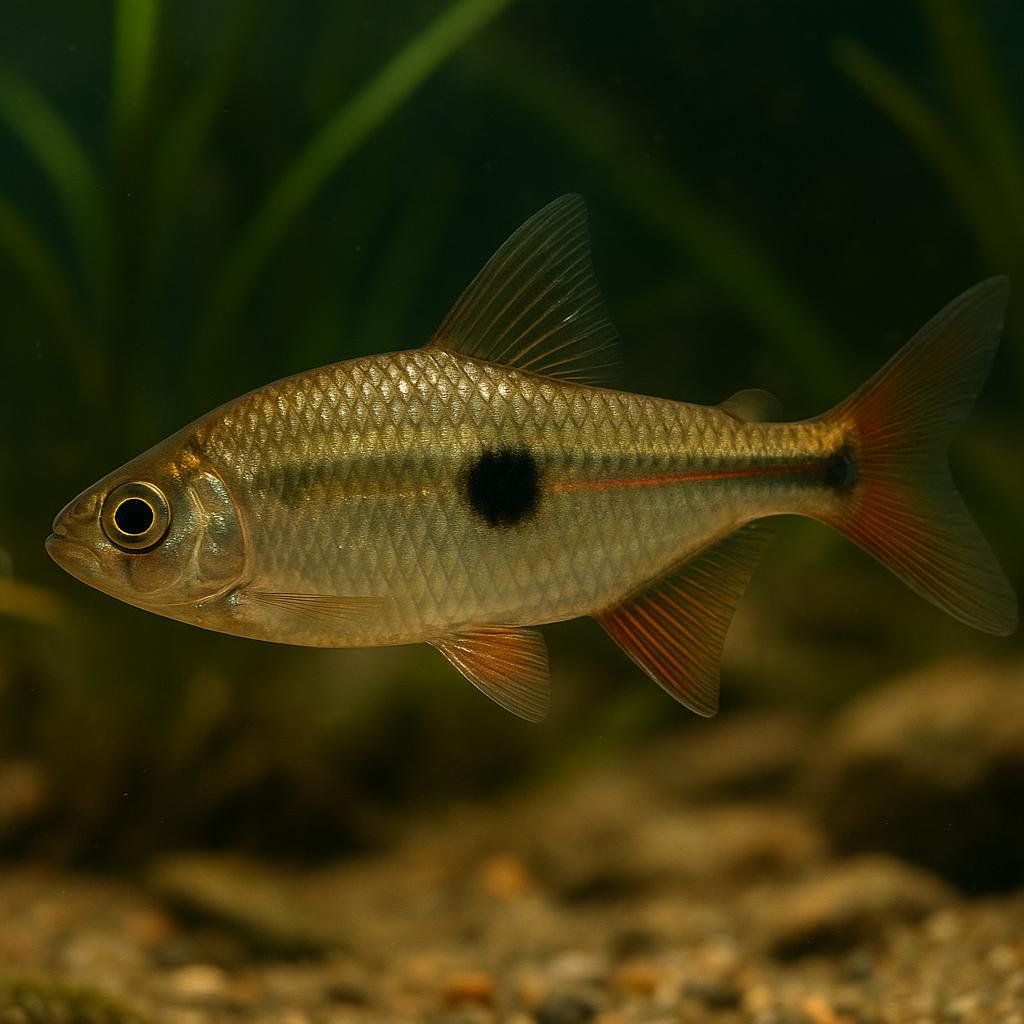
Jupiaba kurua
Small South American characin endemic to the upper rio Curuá (rio Xingu basin, Brazil). Reaches about 8.7 cm SL and inhabits clearwater rivers. Distinguished by dark dots on the bases of many lateral scales and a distinct dark caudal‑peduncle spot. Reported diet indicates omnivory, including aquatic insects, small fishes, and fragments of Podostemaceae and filamentous algae.
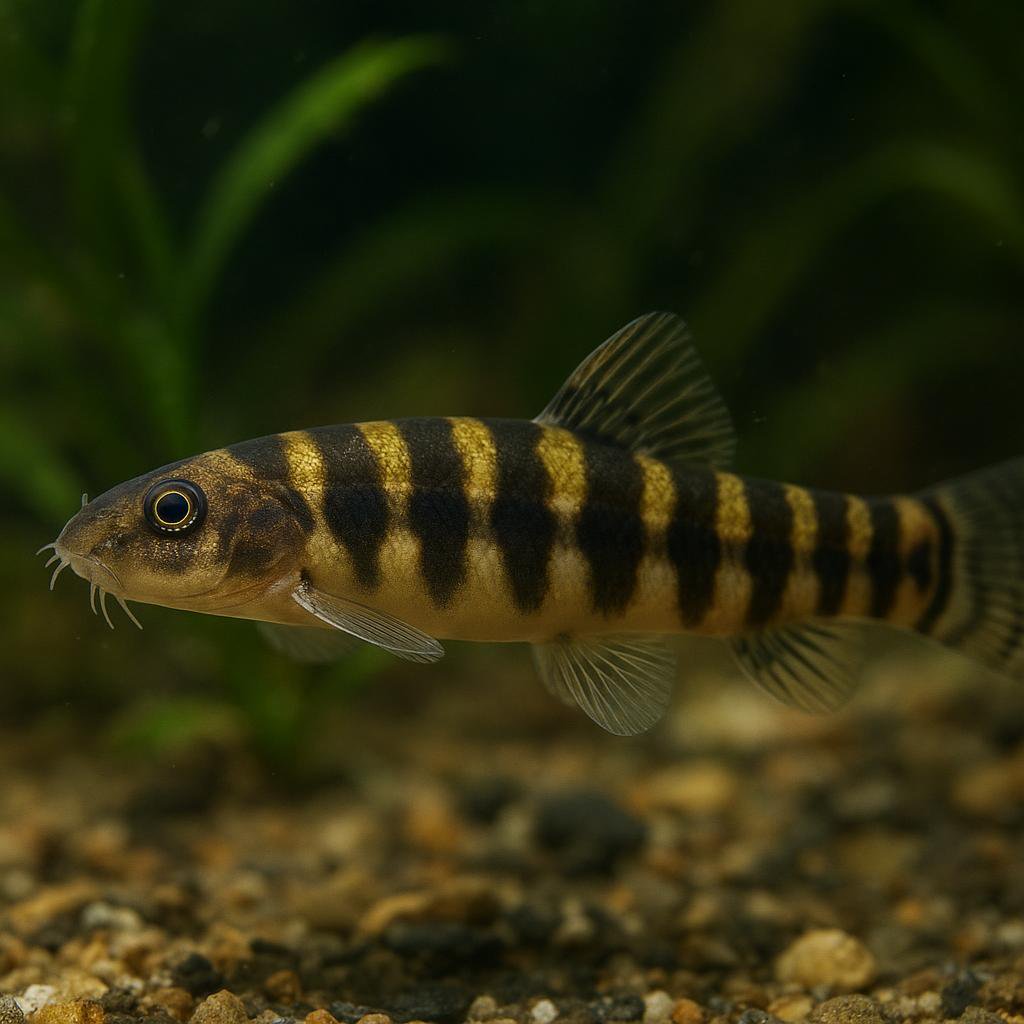
Altipedunculata stone loach
Schistura altipedunculata
Schistura altipedunculata is one of those little stream loaches that wants clean, well-oxygenated water and a bunch of rock nooks to claim as home. It is a bottom-hugger that will spend its day scooting from crevice to crevice, and it tends to get a bit spicy with its own kind if you do not give it enough hiding spots.
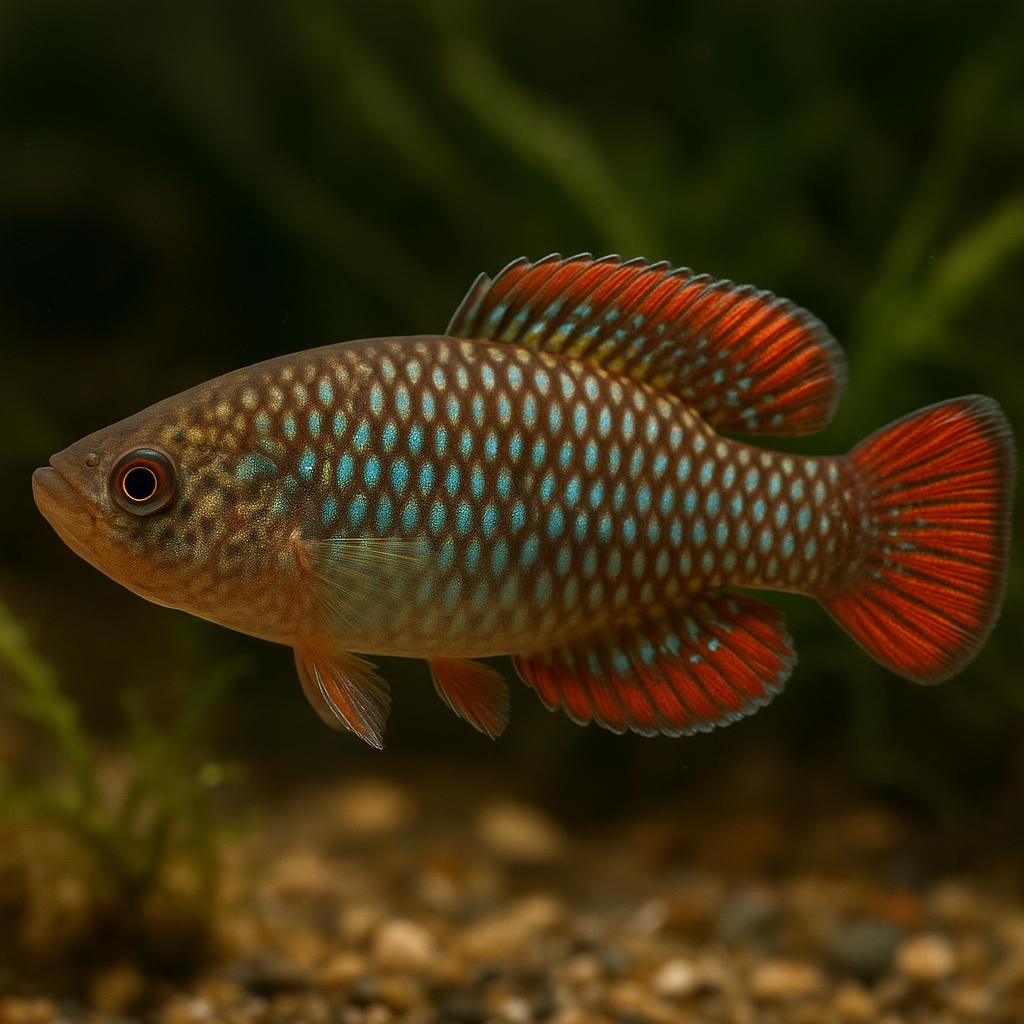
American flagfish
Jordanella floridae
Jordanella floridae is that little Florida native with the red-and-cream striping that really does look like a tiny flag once a male colors up. They graze algae like champs (especially stringy/hair algae), but they have a bit of attitude - give them plants and space so the bossy behavior stays manageable. Bonus: the male guards the eggs and will actively fan them, which is pretty fun to watch.
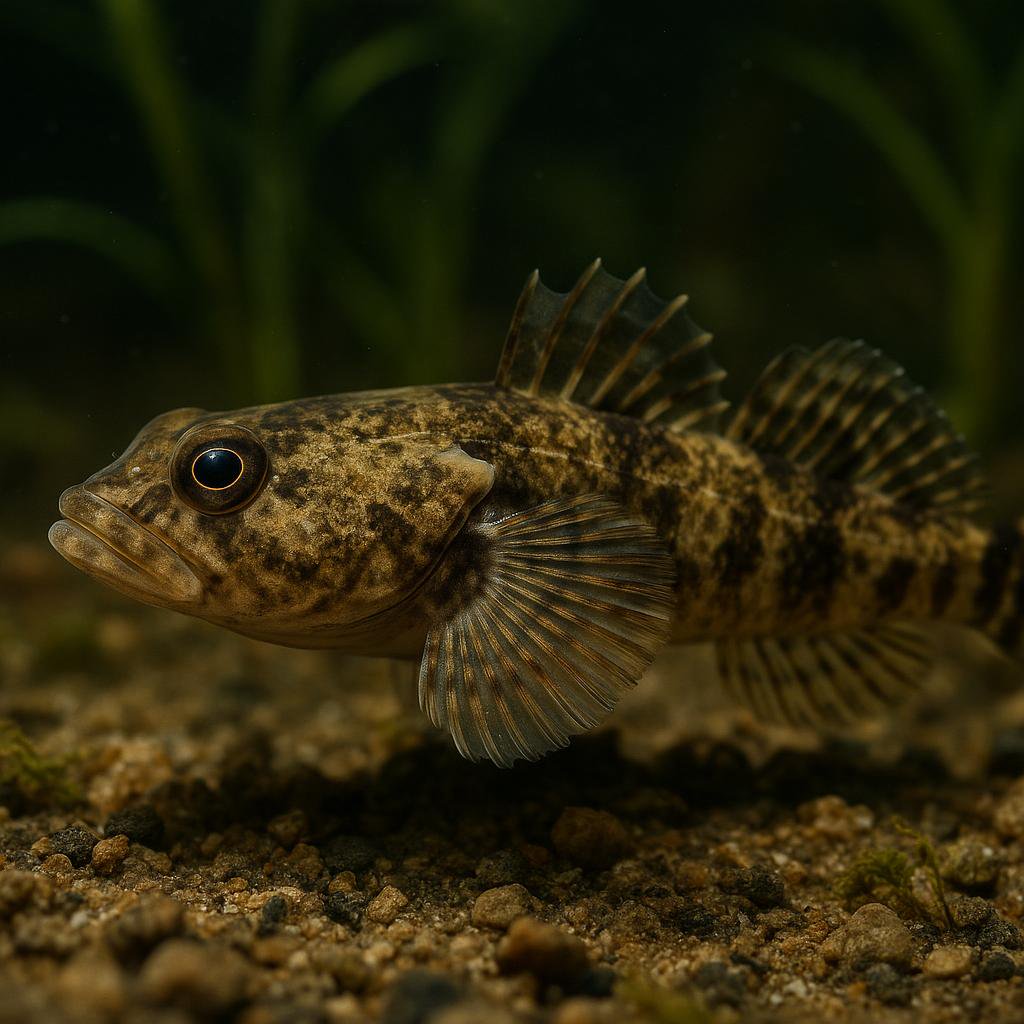
Amur sculpin
Alpinocottus szanaga
This is a little coldwater sculpin from the Amur drainage - a bottom-hugging, rock-and-gravel fish that spends its day wedged under stones and darting out to grab food. Super cool behavior and attitude, but it is absolutely not a warm tropical community fish - it wants chilly, fast, oxygen-rich water and will bicker with other bottom fish.
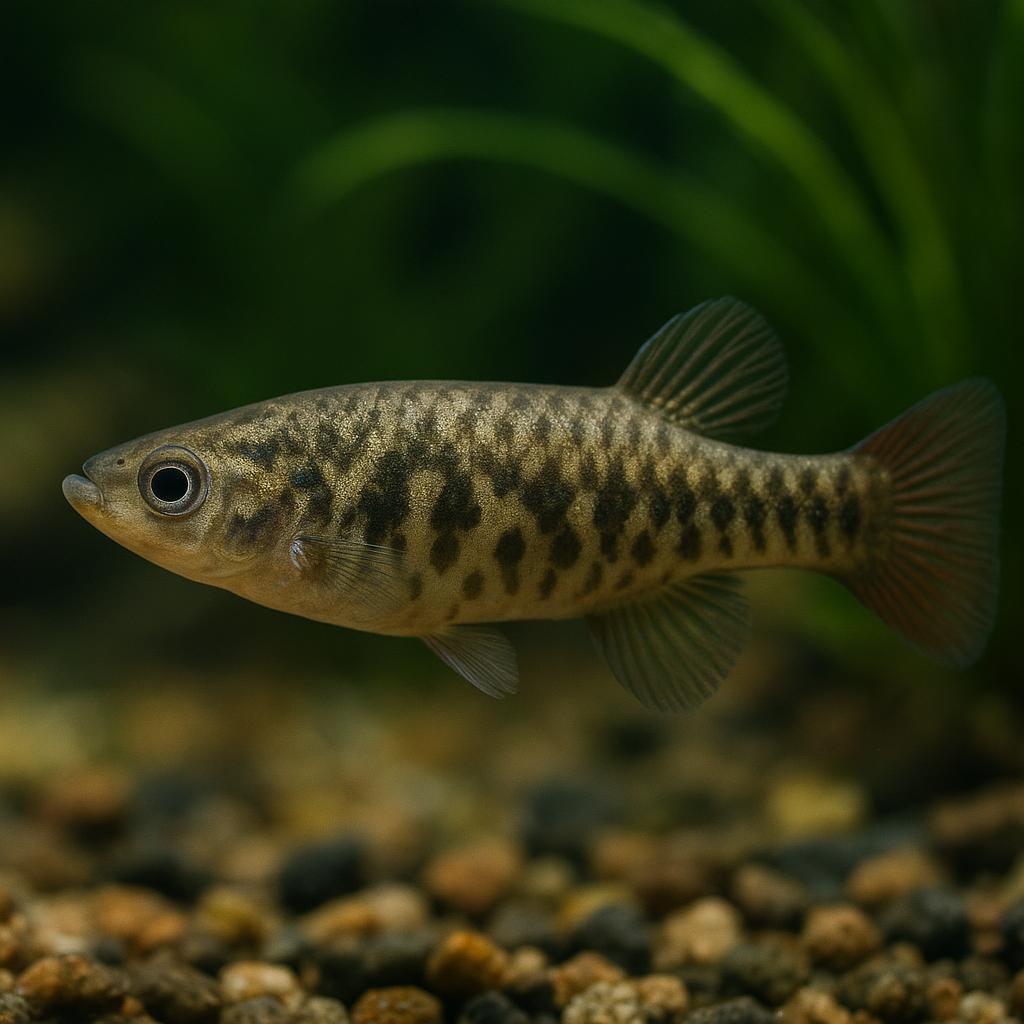
Anitápolis livebearer
Jenynsia weitzmani
Jenynsia weitzmani is a freshwater anablepid livebearer endemic to southern Brazil (currently known only from the type locality near Anitápolis, Santa Catarina). Like other Jenynsia (onesided livebearers), reproduction involves lateralized mating morphology/behavior; aquarium care guidance is not well-documented for this species specifically.
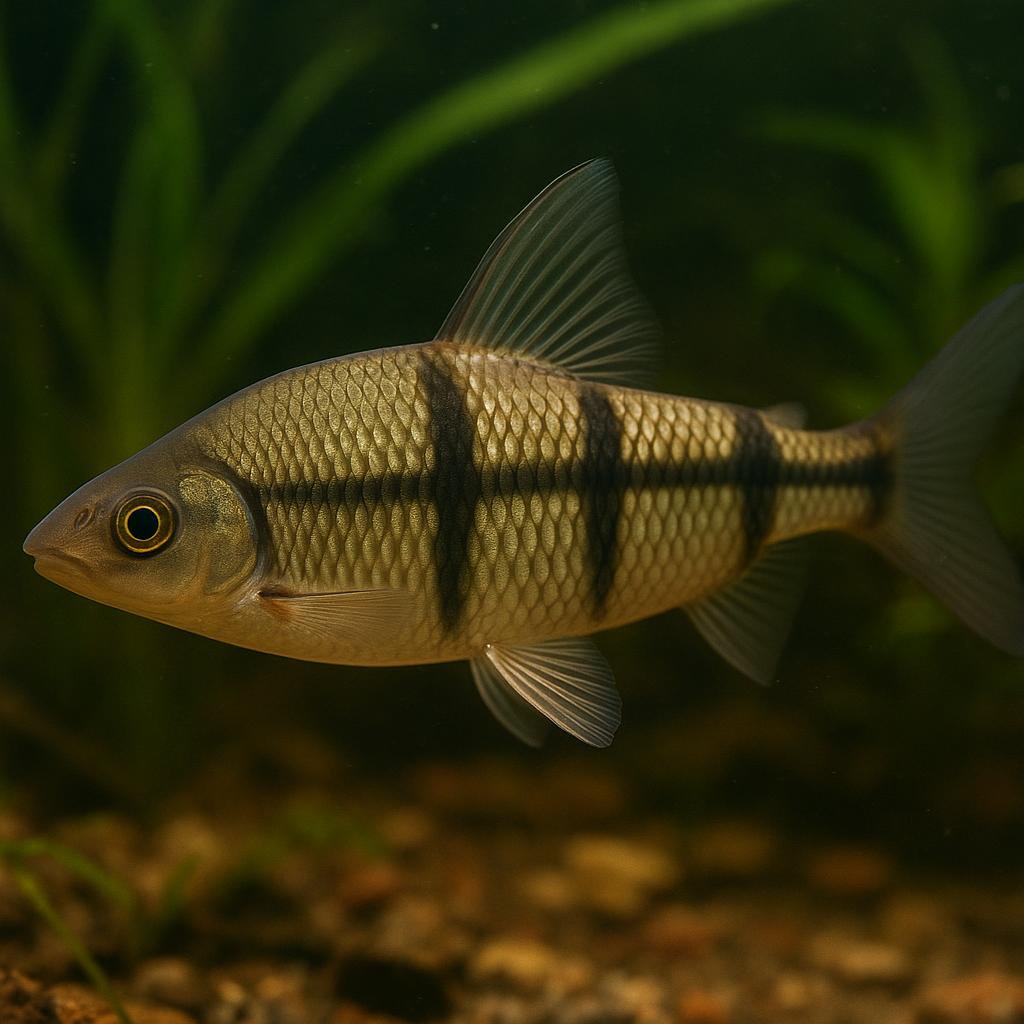
Aracu-comum
Schizodon vittatus
Schizodon vittatus is a large South American anostomid (family Anostomidae). Reported maximum size is about 35 cm standard length; it is harvested/consumed in parts of Brazil and is not commonly covered by mainstream aquarium husbandry references.
More to Explore
Discover more freshwater species.
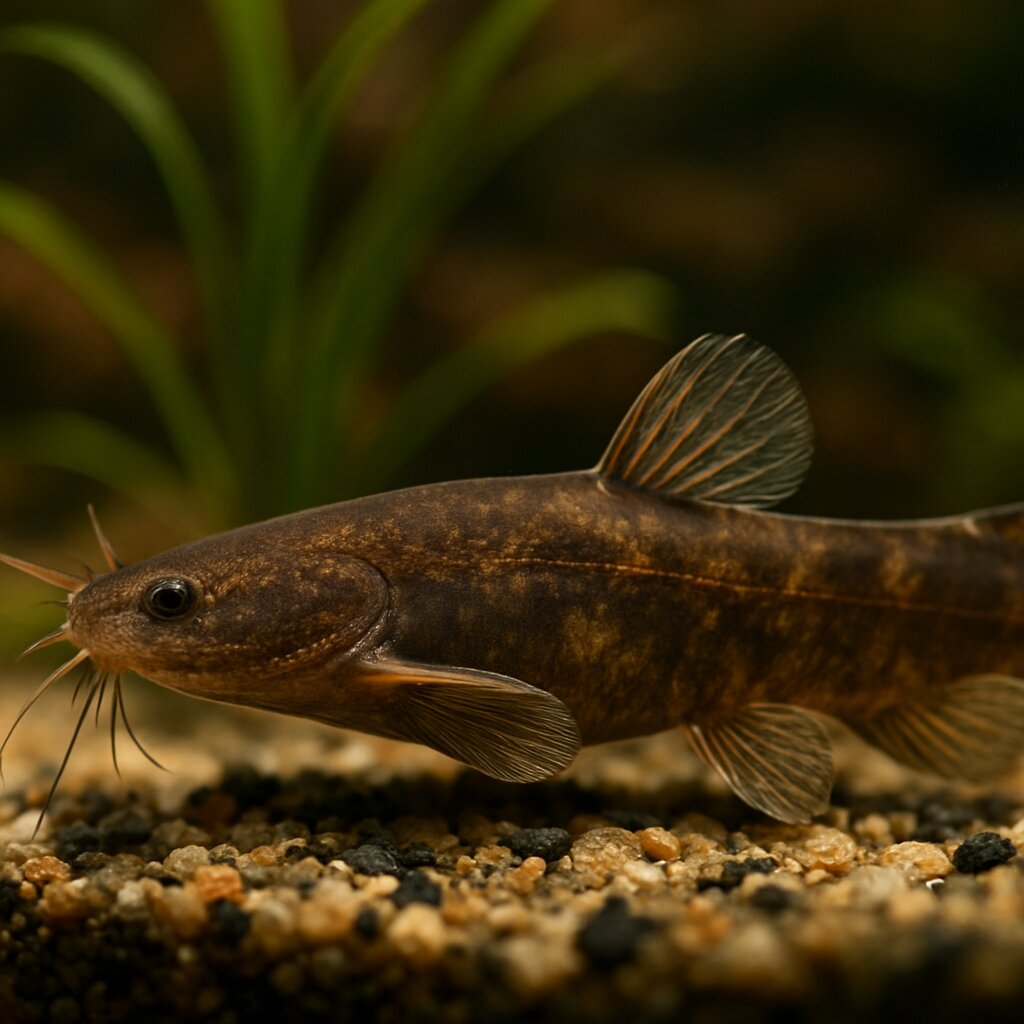
Amphilius dimonikensis
A small loach catfish endemic to the Mpoulou River in the Mayombe (Dimonika Biosphere Reserve), Republic of the Congo. Amphilius dimonikensis has a subtle banded pattern and inhabits fast, clear streams over rock and sand. In aquaria, prioritize strong, well-oxygenated flow with rounded stones and sand to mimic hillstream conditions.
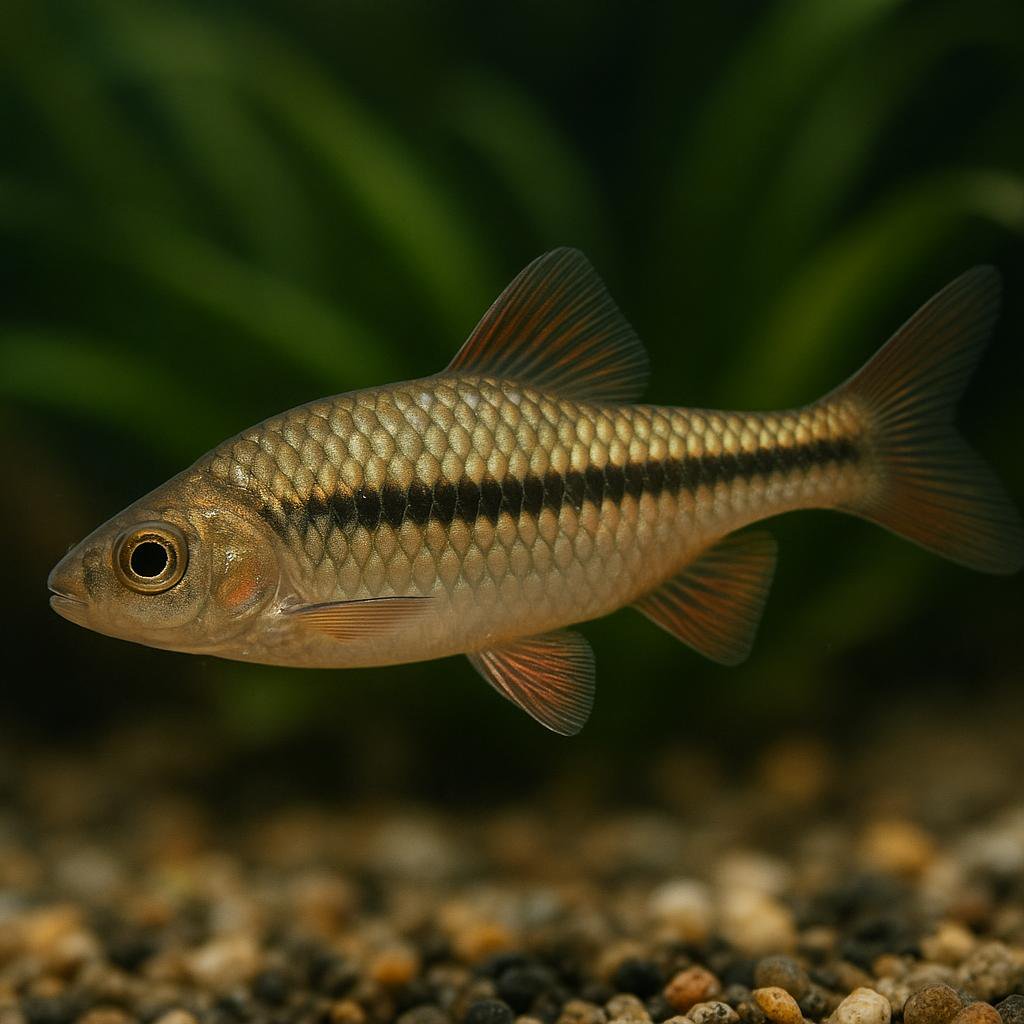
Aboina barb
Enteromius aboinensis
Enteromius aboinensis (the Aboina barb) is a small West African barb with a clean black midline stripe and a little spot right at the base of the tail. It does best when you treat it like a proper schooling fish - keep a decent group and give it plants around the edges with open swimming room in the middle.
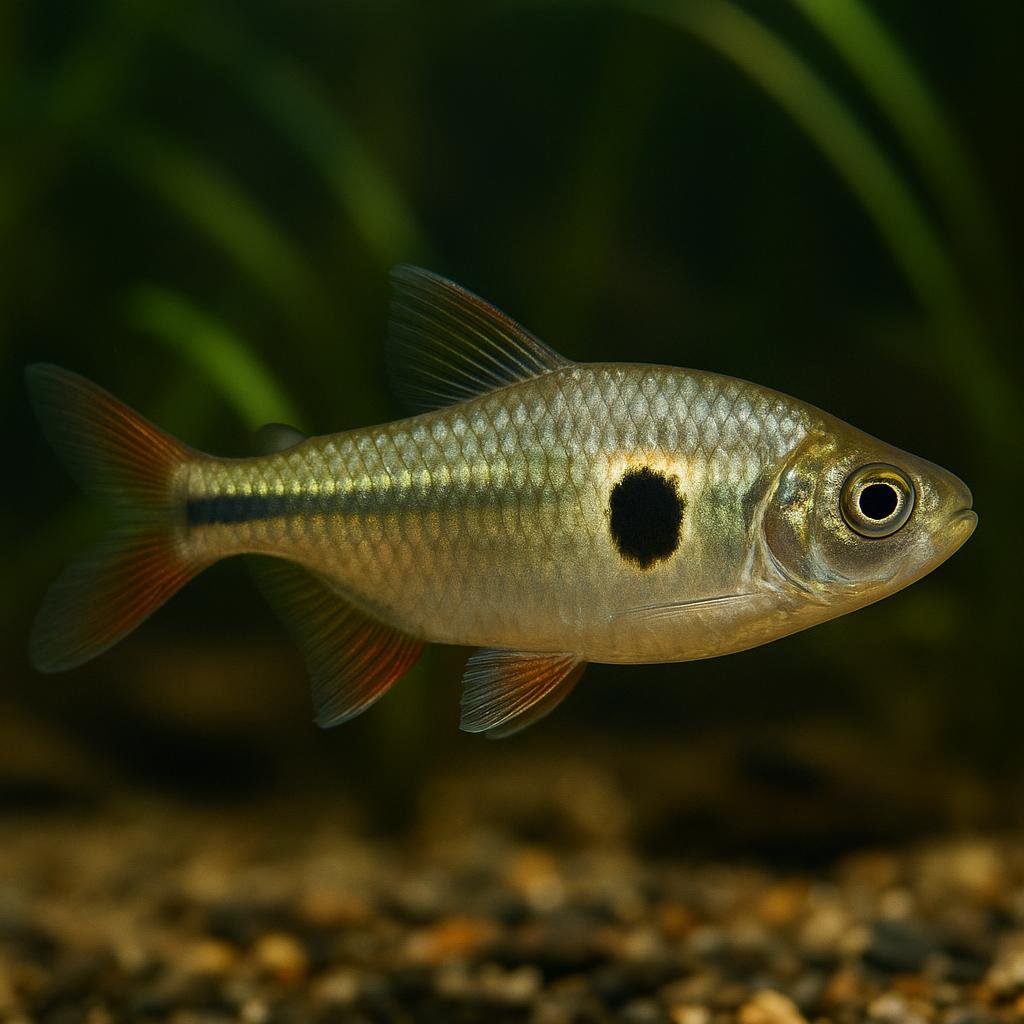
Ajuricaba tetra
Jupiaba ajuricaba
Jupiaba ajuricaba is a South American freshwater characin from the Amazon basin in Brazil (rio Negro, rio Solimões, and rio Tapajós basins). It reaches about 9.5 cm SL and is diagnosed by a narrow dark midlateral stripe, an elongated humeral spot, and an ocellated spot on the upper caudal-fin lobe. Wild specimens have been collected from blackwater forest streams and also oxbow-lake habitats.
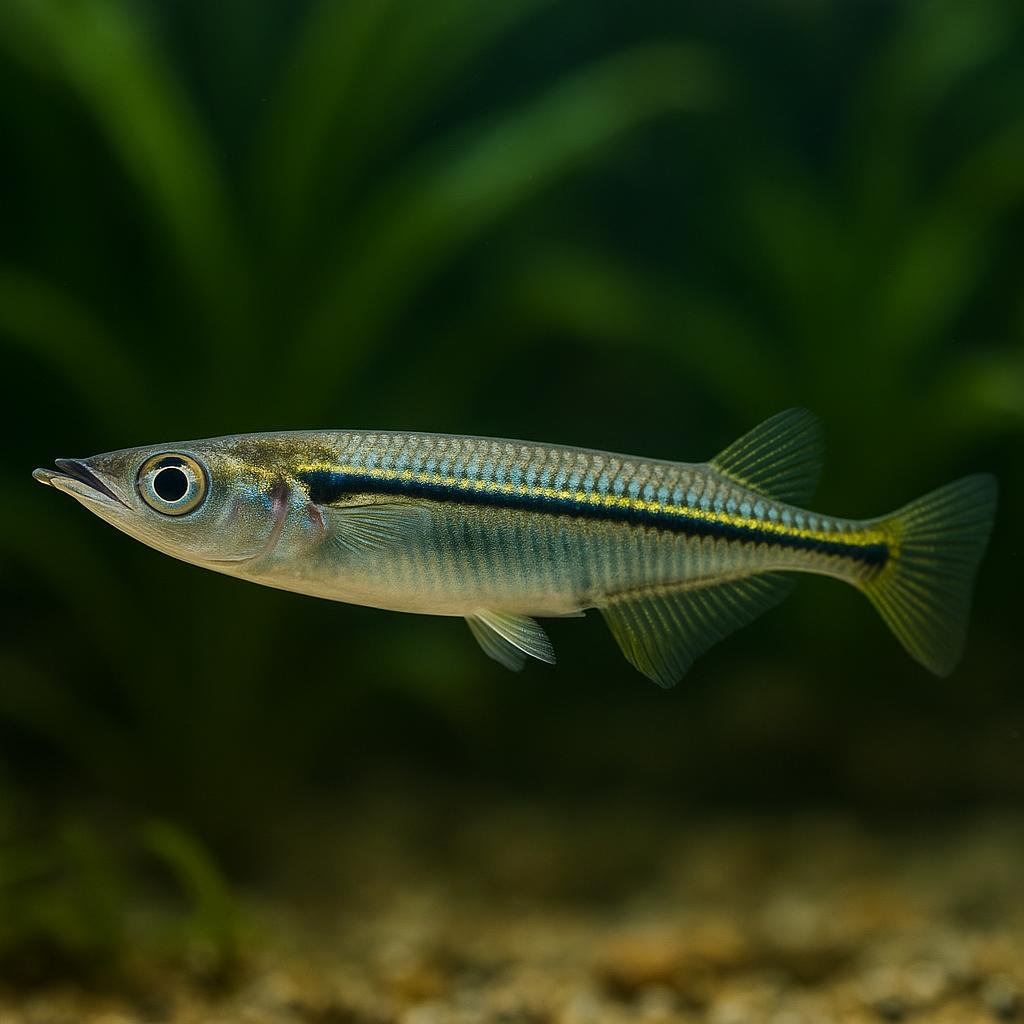
Allen's river garfish
Zenarchopterus alleni
A poorly known freshwater halfbeak endemic to West Papua (Mamberamo River), described from a single specimen (~13 cm SL). Beyond basic habitat/occurrence, little is published about its ecology or aquarium suitability; assume it is a surface-oriented, jump-prone halfbeak only by analogy with related taxa.
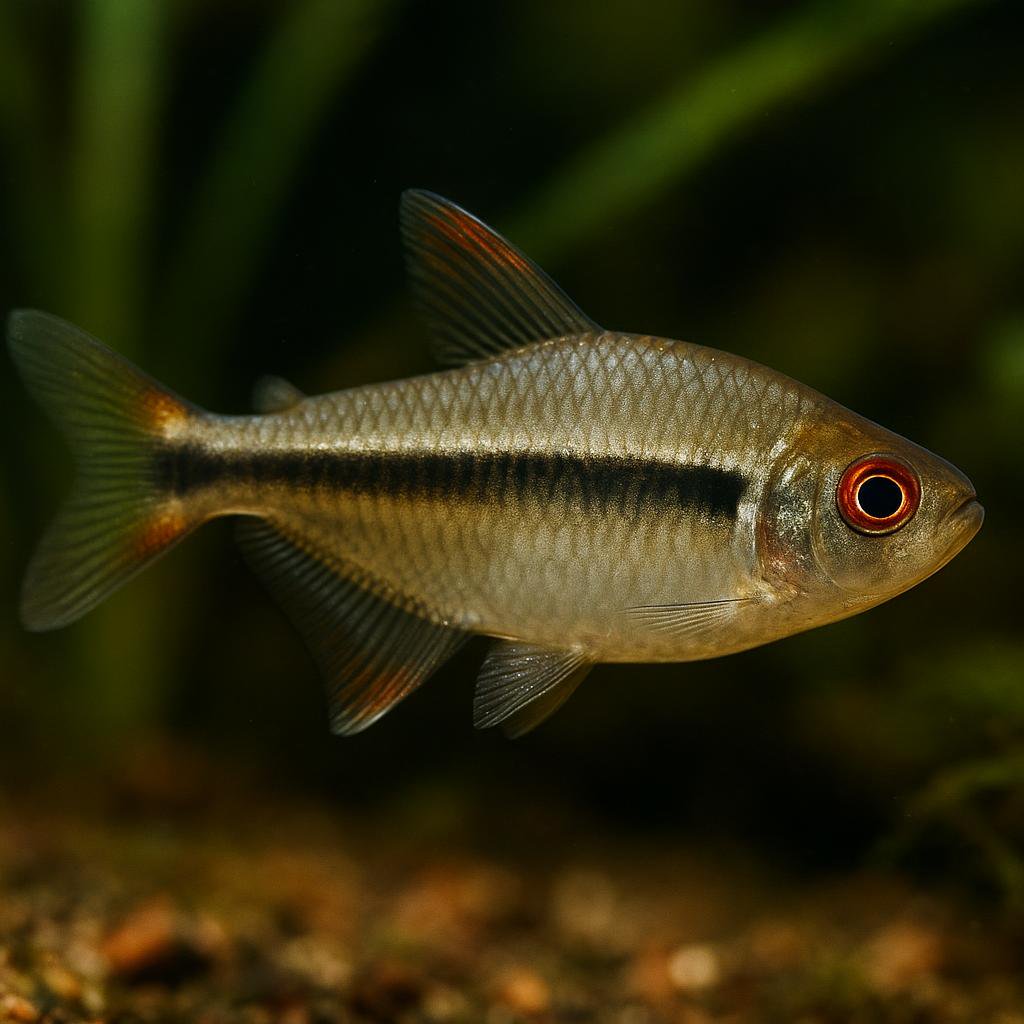
Amapa tetra
Hyphessobrycon amapaensis
This is a tiny, super sleek little tetra with a clean red stripe down the side that really pops once its settled in. It does best in a planted, slightly tinted "creek-style" setup and looks way cooler when you keep a proper group so they school and flash that line together. If you can give it soft, slightly acidic water and a calm community, its an easy fish to fall for.
Amatlan chub
Yuriria amatlana
Yuriria amatlana (the Amatlan chub) is a little Mexican native minnow from the Ameca River basin. Its wild range is pretty limited and it is listed as Endangered, so its care info in the aquarium hobby is basically nonexistent and its availability is usually low. In the original species description, preserved fish show a dark lateral stripe with a darker patch on the caudal peduncle, and they can have tiny barbels at the mouth corners.
Looking for other species?