

Kaup's pipefish
Enneacampus kaupi
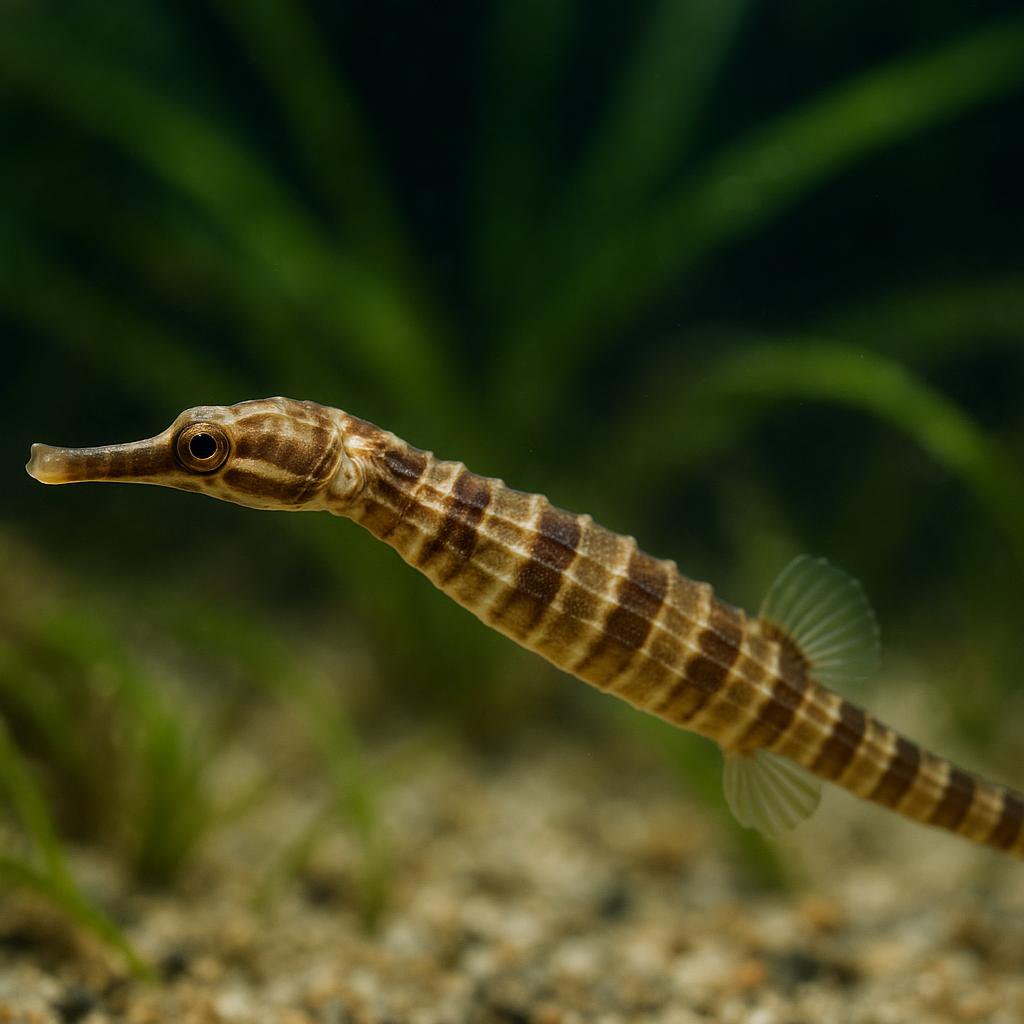
Kaup's pipefish features an elongated body, distinctive elongated snout, and a predominantly greenish-brown coloration with pale blotches.
This page includes AI-generated images. Why am I seeing AI images?
About the Kaup's pipefish
Enneacampus kaupi is a skinny little West African pipefish that likes to lurk through algae and basically cosplay as a piece of vegetation. Its whole vibe is slow, sneaky, and ultra-picky at feeding time - super cool if you enjoy target-feeding and watching hunting behavior up close. It shows up from brackish estuaries and coastal rivers, so a slightly brackish setup is often the safest long-term direction.
Also known as
Quick Facts
Size
20 cm
Temperament
Peaceful
Difficulty
Expert
Min Tank Size
20 gallons
Lifespan
5-8 years
Origin
West Africa
Diet
Carnivore/micro-predator - live or frozen micro-crustaceans (copepods, cyclops, daphnia, baby brine, mysis), needs frequent small meals
Water Parameters
26-29°C
7-8
8-20 dGH
Need a heater for this species?
This species needs 26-29°C in a 20 gallon tank. Use our heater calculator to find the right wattage.
Calculate heater sizeCare Notes
- Run them in a mature brackish tank with lots of fine branching cover (mangrove roots, macroalgae like Chaetomorpha, or plastic seagrass) so they can anchor and hunt without getting blasted by flow.
- Keep salinity stable in the low brackish range (around SG 1.005-1.012) and stop the daily swing game - top off with fresh water and mix new water to match, because pipefish crash fast when salinity bounces.
- They are slow, picky micro-predators: plan on live foods (copepods, baby brine, enriched adult brine, small mysis) and feed small amounts 2-4 times a day, not one big dump.
- Train them onto frozen by mixing in enriched frozen mysis/copepods with live and using a feeding dish or target baster; if you just broadcast food, the faster fish will steal it all.
- Skip boisterous tankmates (most gobies that bulldoze food, monos, scats, archerfish, bigger mollies) and stick to calm, non-competitive stuff like small peaceful gobies that eat elsewhere, nerites, and low-drama shrimp.
- Use a sponge prefilter on every intake - pipefish get pinned to strainers and it ends badly, especially juveniles.
- Watch for skinny 'knife back' bodies and weak snicking at food; that usually means they're losing the feeding battle or loaded with internal parasites, and you need to ramp up live foods and consider deworming in a separate tank.
- Breeding is cool: the male carries eggs, so keep a bonded pair in a quiet tank, crank up live pods, and give them calm mornings - a stressed male will dump the brood.
Compatibility
Good Tankmates
- Small, peaceful livebearers that handle brackish like mollies (especially sailfin mollies) - they are usually chill, stay busy in the open water, and wont hassle a pipefish
- Bumblebee gobies - they like similar brackish setups, tend to stick to the bottom, and dont bother pipefish as long as you feed enough small meaty foods
- Knight gobies (only smaller, mellow individuals and in a roomy tank) - they can work if the pipefish arent tiny and you keep the goby well fed, but watch attitude and mouth size
- Figure 8 puffers - only if the puffer is unusually well behaved and you are ready to separate at the first sign of fin-nipping, because the risk is real
- Brackish-tolerant, calm schooling fish like monos or scats (juveniles) - they dont usually pick on pipefish, but only do this in big tanks since they get large and boisterous
- Small, peaceful brackish gobies and gudgeons that are not predatory - stuff that minds its own business and wont compete hard at feeding time
Avoid
- Anything nippy like tiger barbs or serpae tetras (even if they survive the salt, they will harass that slow pipefish nonstop)
- Fin-biters and curious pickers like most puffers (especially green spotted puffers) - pipefish get their snouts and tails chewed and they cant defend themselves
- Big-mouthed predators like larger archerfish, big knight gobies, or any cichlid type that can fit a pipefish in its mouth - they will eventually try
- Food hogs and hyper feeders like adult monos/scats in smaller tanks - the pipefish just get outcompeted and slowly waste away even if nobody is 'attacking' them
Where they come from
Kaup's pipefish (Enneacampus kaupi) shows up around mangroves, tidal creeks, and sheltered estuaries in Southeast Asia. Think slow-ish water, lots of stems and roots to cling to, and salinity that swings with the tide and rainy season. That background explains 90% of why they can be so touchy in captivity.
Setting up their tank
If you've kept seahorses, the vibe is similar: calm water, lots of hitching posts, and no chaos. They are skinny, deliberate hunters and they do not appreciate being blasted around or outcompeted at meal time.
- Tank size: I would not do them in less than 20 gallons long. Bigger is easier because stability matters more than floor space, but they do like length for cruising.
- Flow: gentle overall with a few low-flow zones. Aim for a slow turnover and use spray bars or baffled returns so they are not pinned to one side.
- Scape: dense fine structure - mangrove root-style branches, fake seagrass, macroalgae that tolerates brackish, and lots of slender hitch points.
- Substrate: anything is fine, but keep it clean. I like sand so food and waste are easy to spot and siphon.
- Salinity: pick a brackish target and keep it steady. I have had the best luck around low-to-mid brackish (roughly 1.005-1.012 SG) rather than bouncing around.
- Filtration: mature biofilter, oversized sponge prefilters on intakes, and zero exposed intake suction. They can and will get stuck.
- Lighting: moderate. Too bright and they stay edgy; too dim and you cannot watch feeding behavior well.
Do not put them in a brand-new brackish setup. They are the kind of fish that looks fine for 2 weeks and then collapses if the tank is still settling in.
A tight lid is worth doing. They are not famous jumpers like some gobies, but startled pipefish can launch themselves surprisingly well, especially during acclimation or after a big water change.
What to feed them
This is the make-or-break part. Most Kaup's pipefish come in thin, and a lot never really accept dead foods. Plan like you are keeping a picky micro-predator: small live foods, frequent offerings, and you watch bellies more than you watch test kits.
- Best staples: live enriched baby brine shrimp (for smaller individuals), live adult brine (as a treat, not a main diet), copepods, and small live mysids if you can get them.
- Frozen options (sometimes accepted): small frozen mysis, chopped mysis, Cyclops, and other tiny crustacean blends. Offer with flow off and a feeding station so food stays in one place.
- Feeding frequency: 2-4 small feedings a day beats one big dump. They are slow hunters and they miss a lot.
- Enrichment: if you are using brine, enrich it. Plain brine is like feeding popcorn.
Train them onto a routine: same corner, flow off, same feeding dish. Pipefish learn patterns, and it cuts down on wasted food and stress.
Avoid any tankmate that will vacuum up food fast. Even a 'peaceful' fish can starve a pipefish just by being quicker.
How they behave and who they get along with
They are calm, nosy, and kind of mesmerizing once they settle in. A lot of the time they hang vertically in plants or roots, then go on little hunting patrols. Stress shows up as constant pacing in open water, rapid breathing, or hiding and refusing food.
- Best kept: species-only or with very gentle, slow brackish fish that do not compete for tiny foods.
- Good ideas (carefully): small bumblebee gobies, quiet nerite snails, maybe some small Amano-type shrimp if salinity allows (but shrimp can also steal food).
- Avoid: puffers, scats, monos, archerfish, most livebearers (they are too pushy at feeding time), aggressive gobies, and anything nippy or fast.
Pipefish do better in small groups if you can feed heavily and keep the tank clean. A lone individual can do fine, but groups often act more natural and settle faster.
Breeding tips
Like other pipefish, the male carries the eggs. If you keep a well-fed group and the tank is stable, you may see courtship: they line up, mirror each other, and the male ends up brooding. The hard part is not getting eggs - it is raising the babies.
- Conditioning: heavy live foods and lots of micro-prey in the tank (pods) helps get them in the mood.
- Brooding: keep things calm. Sudden swings in salinity or temperature are a good way to end a pregnancy early.
- Fry food: you will need tiny live foods ready ahead of time (rotifers, copepod nauplii, very small bbs depending on fry size).
- Nursery: gentle air-driven sponge filter, no sharp decor, and pristine water with small frequent water changes.
If you are not already culturing live foods, do not count on raising fry by improvising after you spot a pregnant male. By then you are late.
Common problems to watch for
Most losses come from three things: starvation, stress, and infections that take hold after shipping. Pipefish can look 'fine' right up until they are not, so you want to spot the early signs.
- Starvation: sunken belly, weak hunting response, hanging in the open and missing strikes. Fix by increasing feeding frequency and offering smaller live prey.
- Snout damage: they ram glass during panic or get scraped on rough decor. Keep the tank calm, cover sides during acclimation, and avoid sharp rockwork.
- Intake accidents: they get pinned to filter intakes. Use sponge guards on everything.
- Bacterial issues: cloudy patches, red sores, rapid decline after arrival. Quarantine helps, but meds in brackish can be tricky - research what is safe at your salinity and with your biofilter.
- Gas bubble problems: can show as buoyancy issues or bubbles under the skin in some syngnathids. Often linked to stress, supersaturation, or dirty conditions.
Watch them eat every day. If you cannot confidently say, 'Yes, that one took food,' you are already behind. These fish do not have a lot of body mass to coast on.
Similar Species
Other brackish peaceful species you might be interested in.
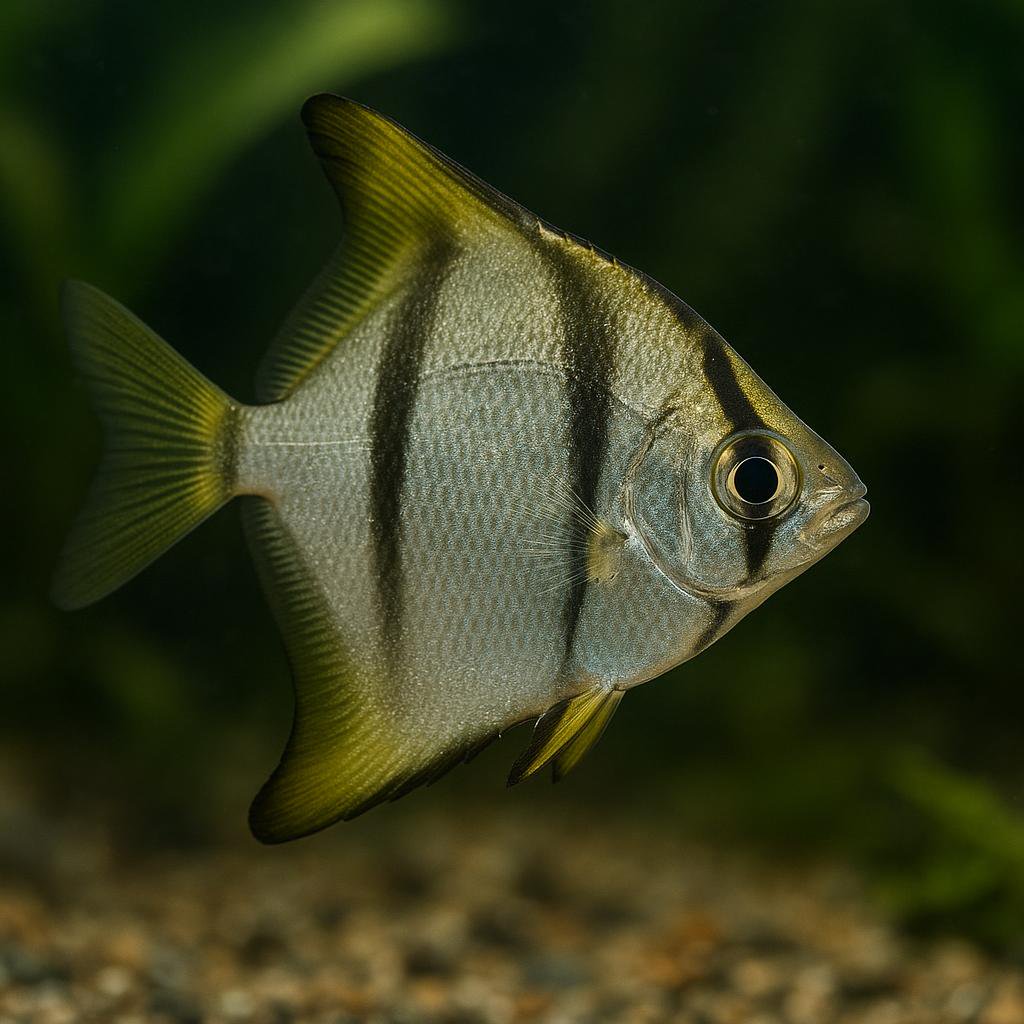
African moony
Monodactylus sebae
This is that shiny, diamond-shaped "mono" that cruises around in a tight pack and looks like a little silver dinner plate with black bars when it's young. The big thing with African moonies is they're euryhaline-so they'll tolerate freshwater as juveniles, but they really shine long-term in brackish (and can be transitioned toward marine as they mature). Give them a big, open tank and a group, and they turn into nonstop, super fun midwater swimmers.
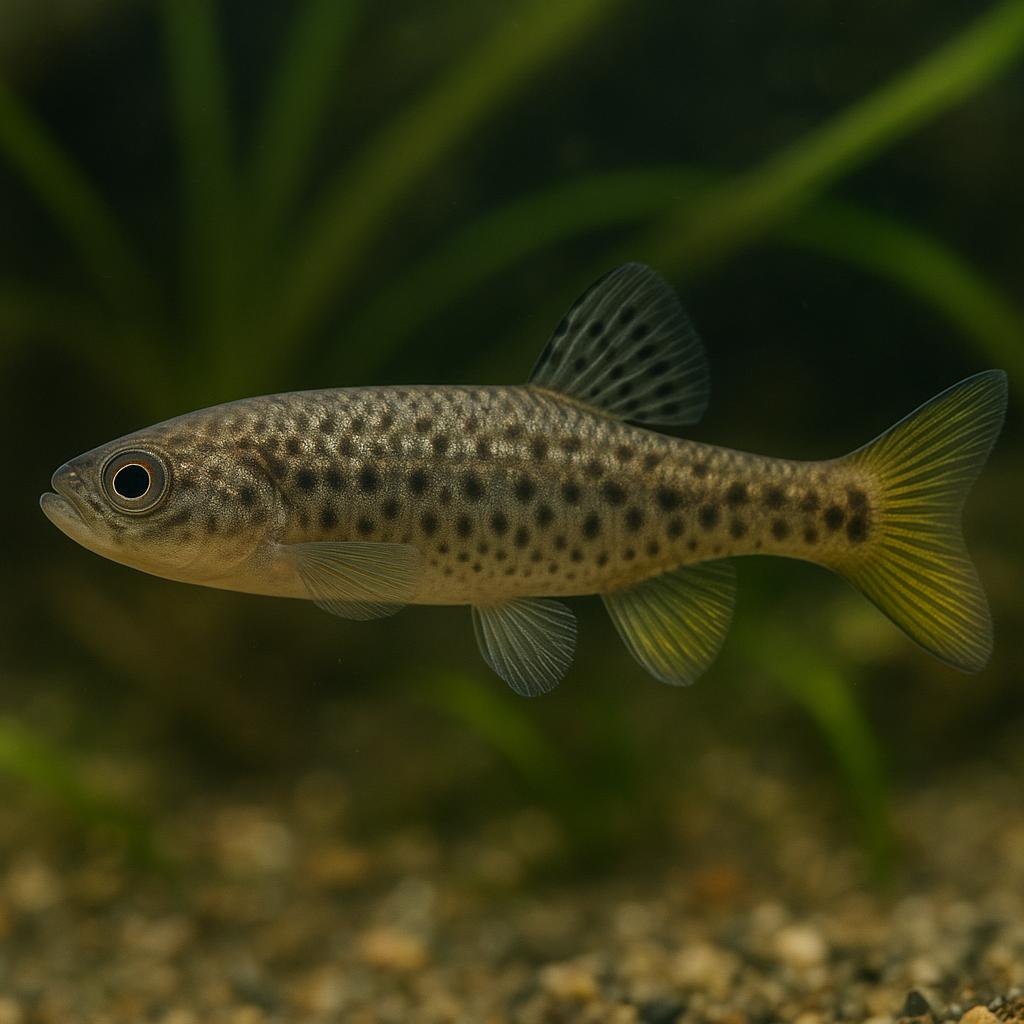
American shadow goby
Quietula y-cauda
This is a little mudflat goby from California down into the Gulf of California that loves hanging tight to the bottom and vanishing into burrows. The neat tell is that sideways Y-shaped blotch right at the base of the tail, plus the row of dark spots along the side. Its whole vibe is brackish estuary life - calm water, soft substrate, lots of hiding holes.
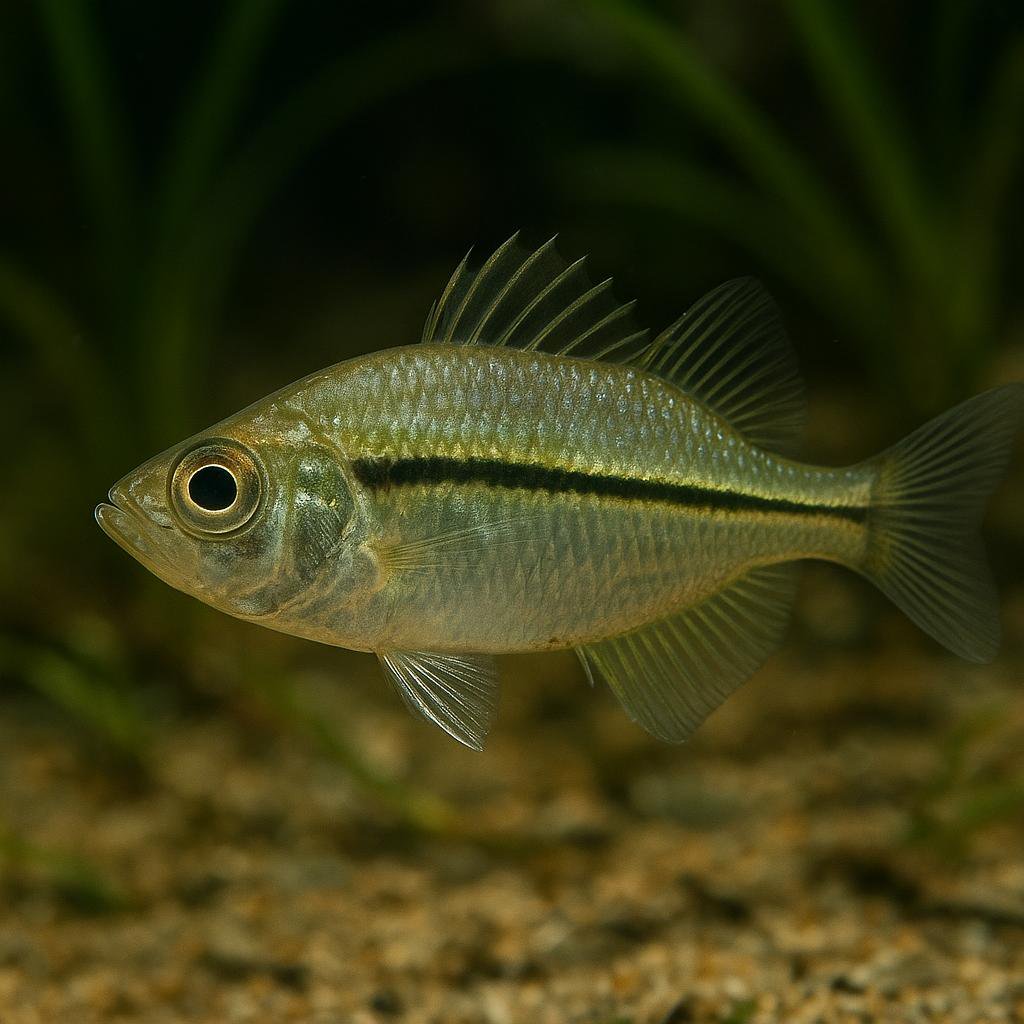
Banded-tail glassy perchlet
Ambassis urotaenia
This is one of those see-through glassy perchlets where you can literally watch the organs shimmer when it turns-super cool in the right lighting. In the wild it hangs around river mouths and mangroves and cruises in groups, so it does best when you keep a little gang of them and give them some open swimming room.
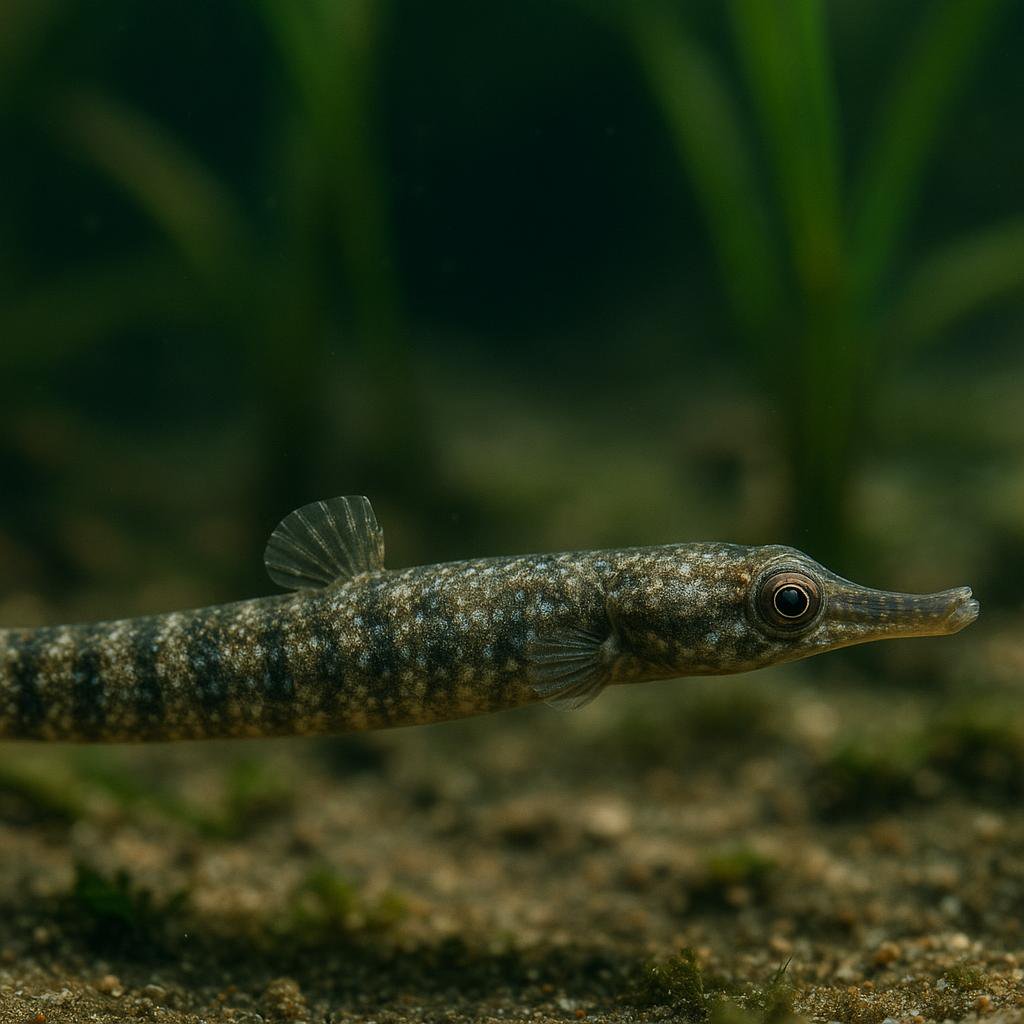
Barbed pipefish
Urocampus nanus
Urocampus nanus (barbed pipefish) occurs in protected inshore and estuarine habitats among seagrass (Zostera) in the Northwest Pacific (southern Japan and adjacent coasts). Like other syngnathids, males brood eggs in a pouch under the tail and produce fully formed young.
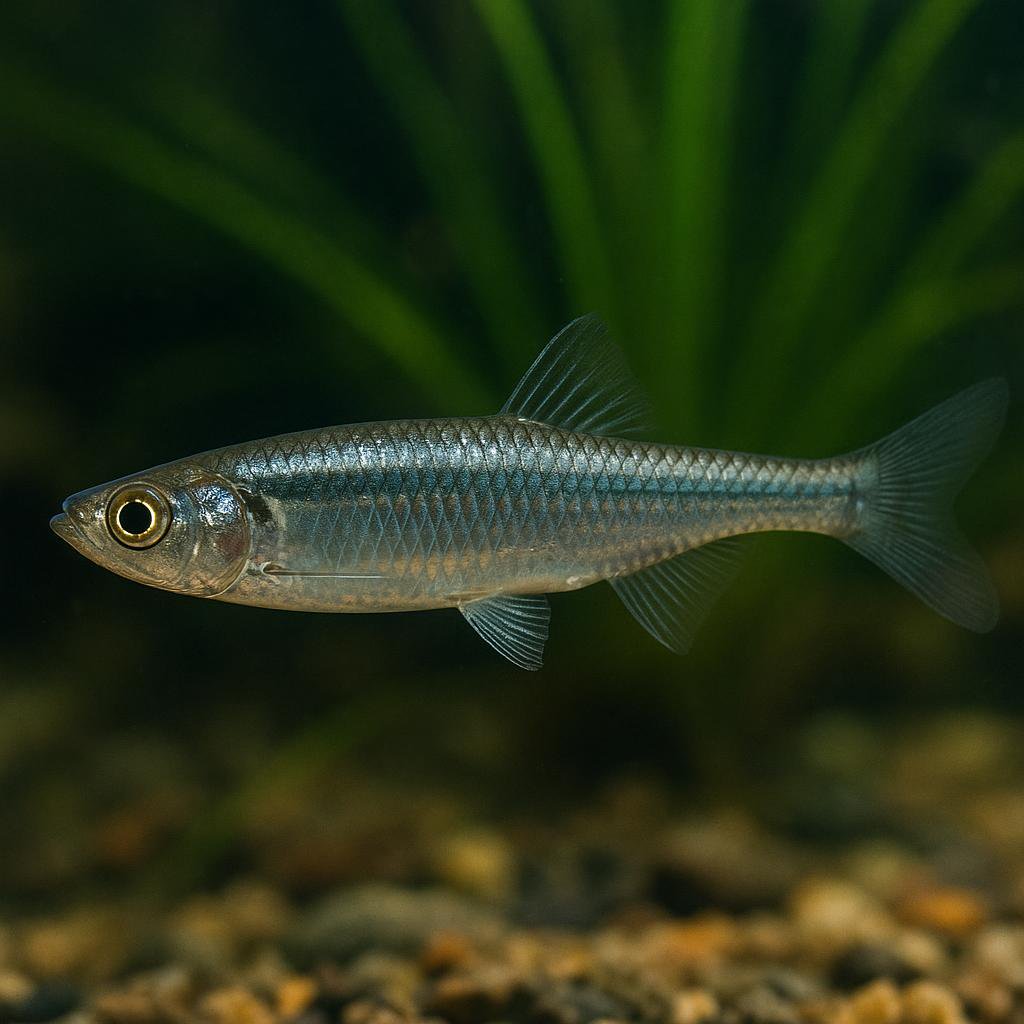
Beach silverside
Atherinella blackburni
This is a little coastal silverside that cruises the shallows in loose groups and flashes like a tiny chrome dart when the light hits it right. In the wild it hangs around beaches, estuaries, and lagoons, picking at small drifting foods in the surf zone. It is cool, but its real "gotcha" is that it is an open-water, salt-tolerant schooling fish that does best in bigger, well-oxygenated setups rather than a typical planted community tank.
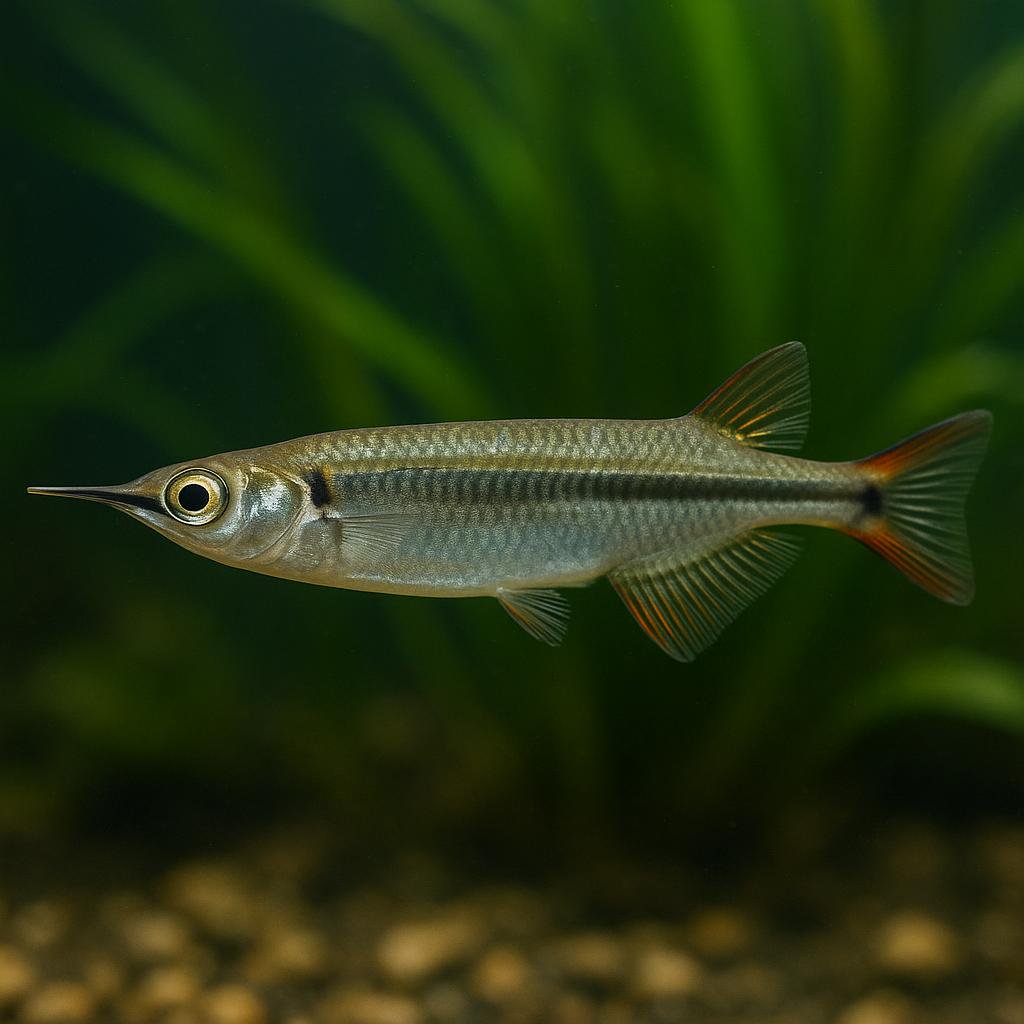
Buffon's river-garfish
Zenarchopterus buffonis
This sleek, surface-dwelling halfbeak has a distinct dark stripe along the snout and is typically found at the surface in coastal waters, estuaries, and rivers where it feeds on terrestrial insects. In aquaria it does best with floating/surface foods and a secure cover, and it requires brackish (or marine) conditions long-term. Reproduction is internally fertilized; FishBase lists the species as ovoviviparous.
More to Explore
Discover more brackish species.
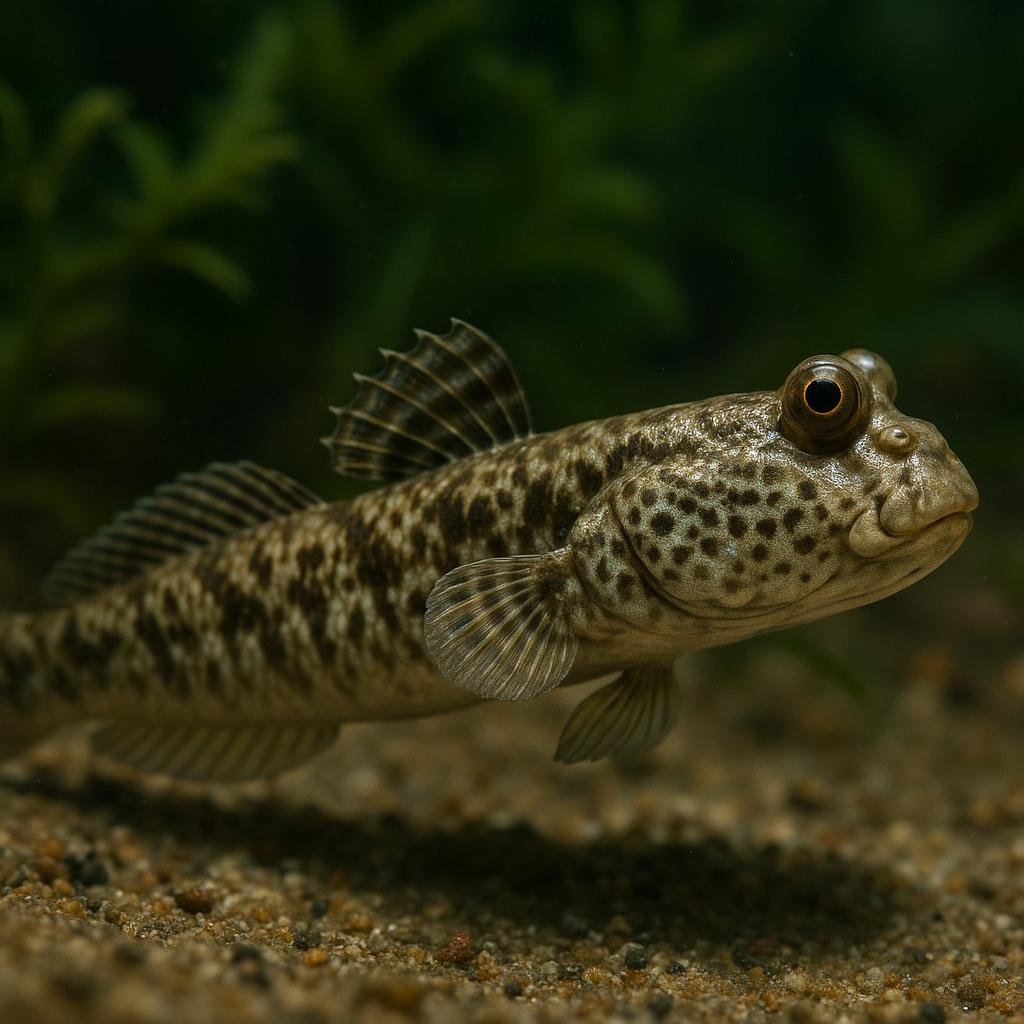
Atlantic Mudskipper
Periophthalmus barbarus
This is that wild little amphibious goby that straight-up climbs around on land like it forgot it was a fish. They've got big googly eyes, tons of personality, and they'll perch, hop, and patrol their territory-honestly more like a tiny crabby lizard than a "regular" aquarium fish.
Banded Archerfish
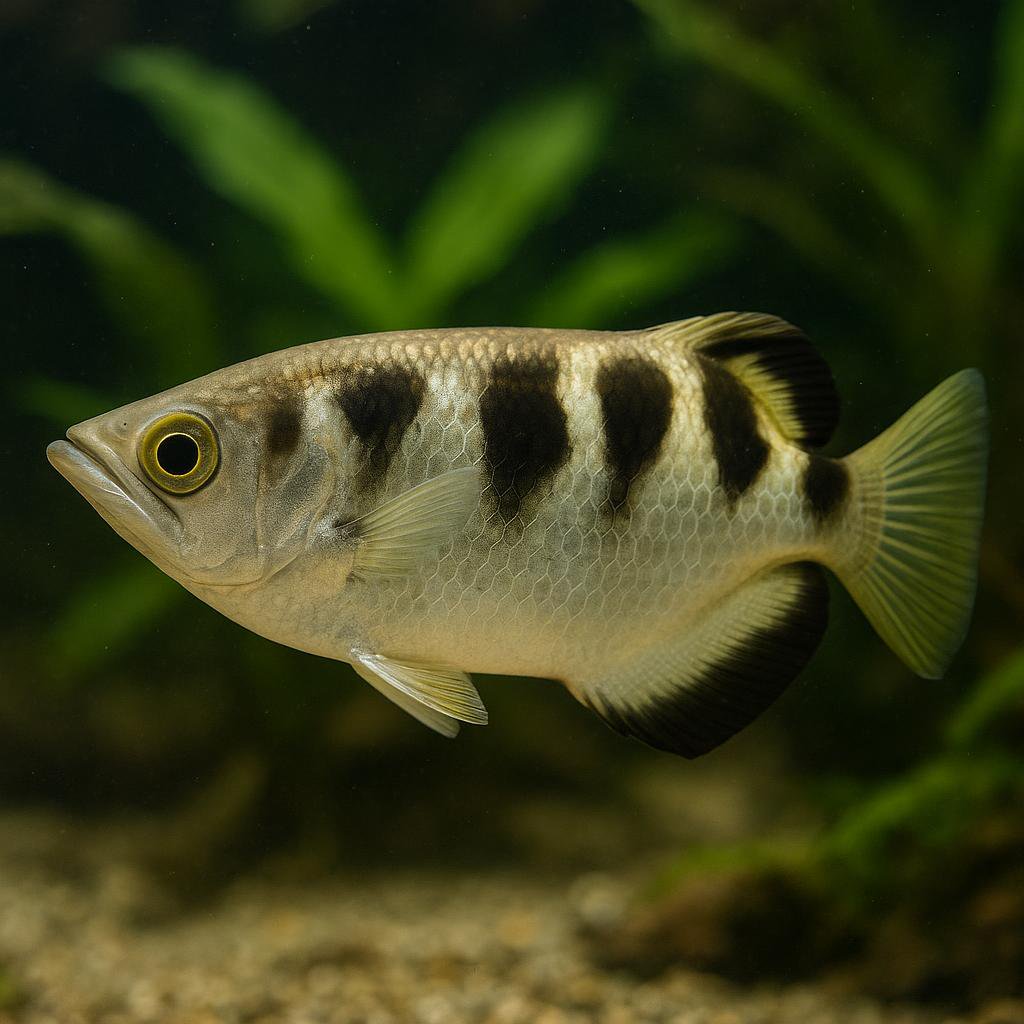
Toxotes jaculatrix
This is the fish that literally spits jets of water to knock insects off branches-watching one "take aim" is unreal. They're super aware of what's going on outside the tank and will even learn to beg and snipe food from the surface once they settle in. Give them height and some open swimming room and they act like little aquatic sharpshooters.
Banded mulletgoby
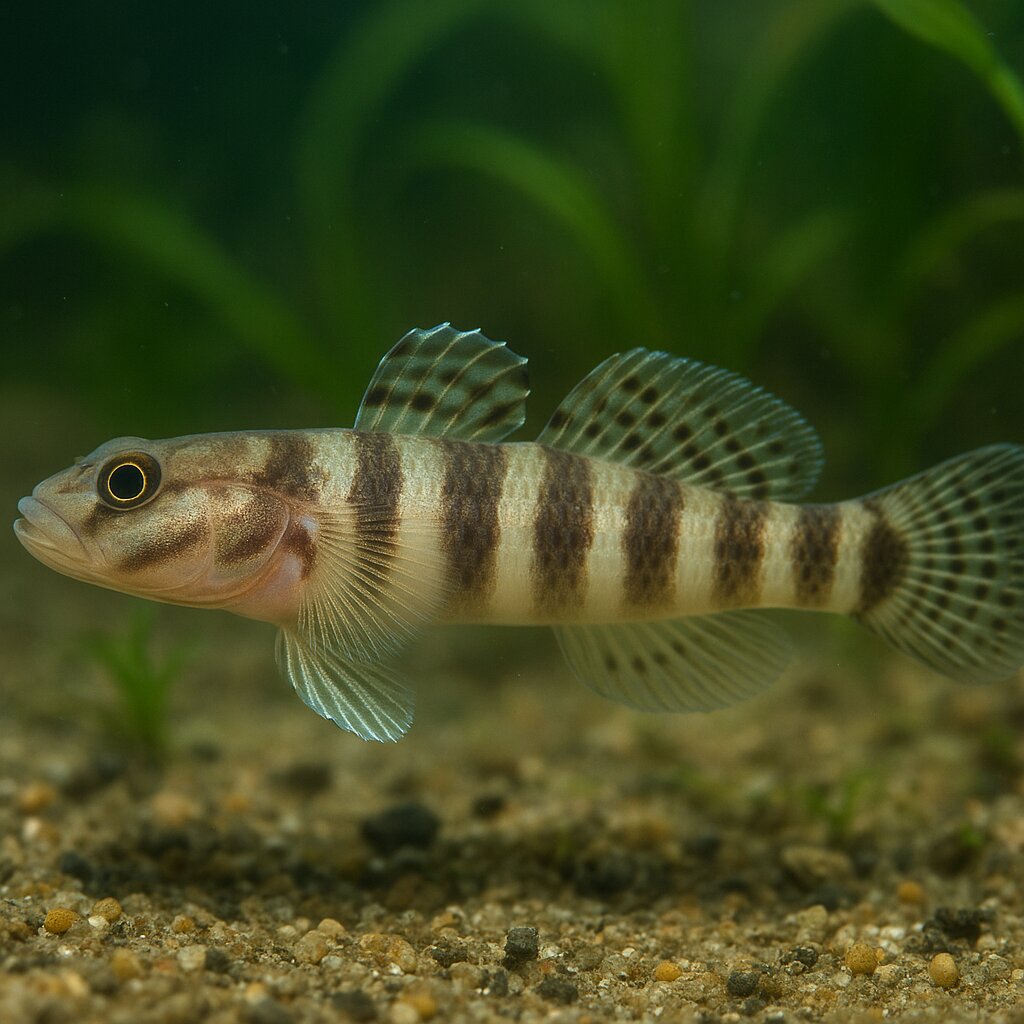
Hemigobius hoevenii
Neat little mangrove goby that hugs the bottom and hangs around leaf litter. The bold diagonal bars and tail spot look great, and it hunts like a tiny ambush predator, darting out for bites. Keep it gently brackish and it settles in nicely, cruising among roots and wood.
Barred mudskipper
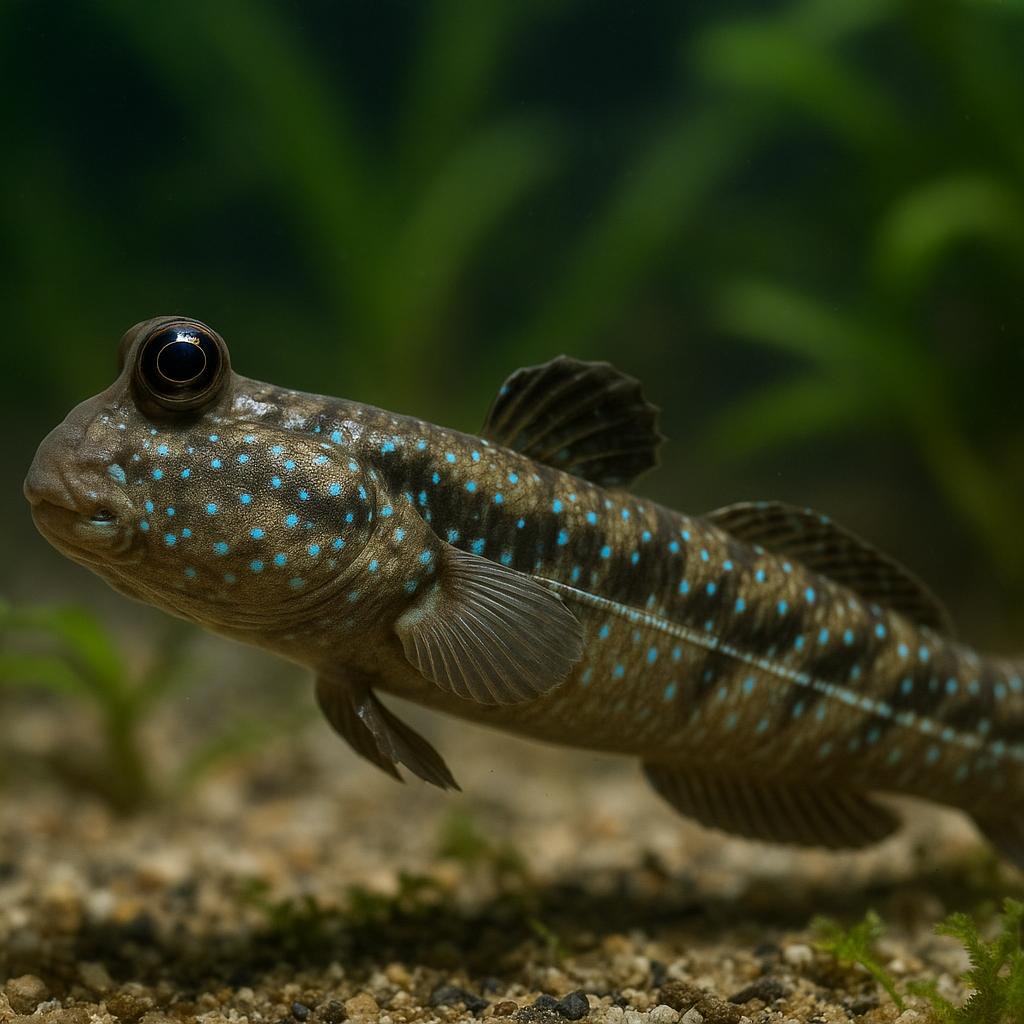
Periophthalmus argentilineatus
This is one of those classic "walks around like it owns the place" mudskippers-big goofy eyes, climbs, hops, and spends a ton of time out on the mud when it's humid. In the wild it lives on intertidal mangrove/nipa mudflats and even shuttles between little pools and open air, hunting worms, insects, and small crustaceans. It's super fun to watch, but it really wants a brackish paludarium setup (not a normal aquarium).
Bellfish
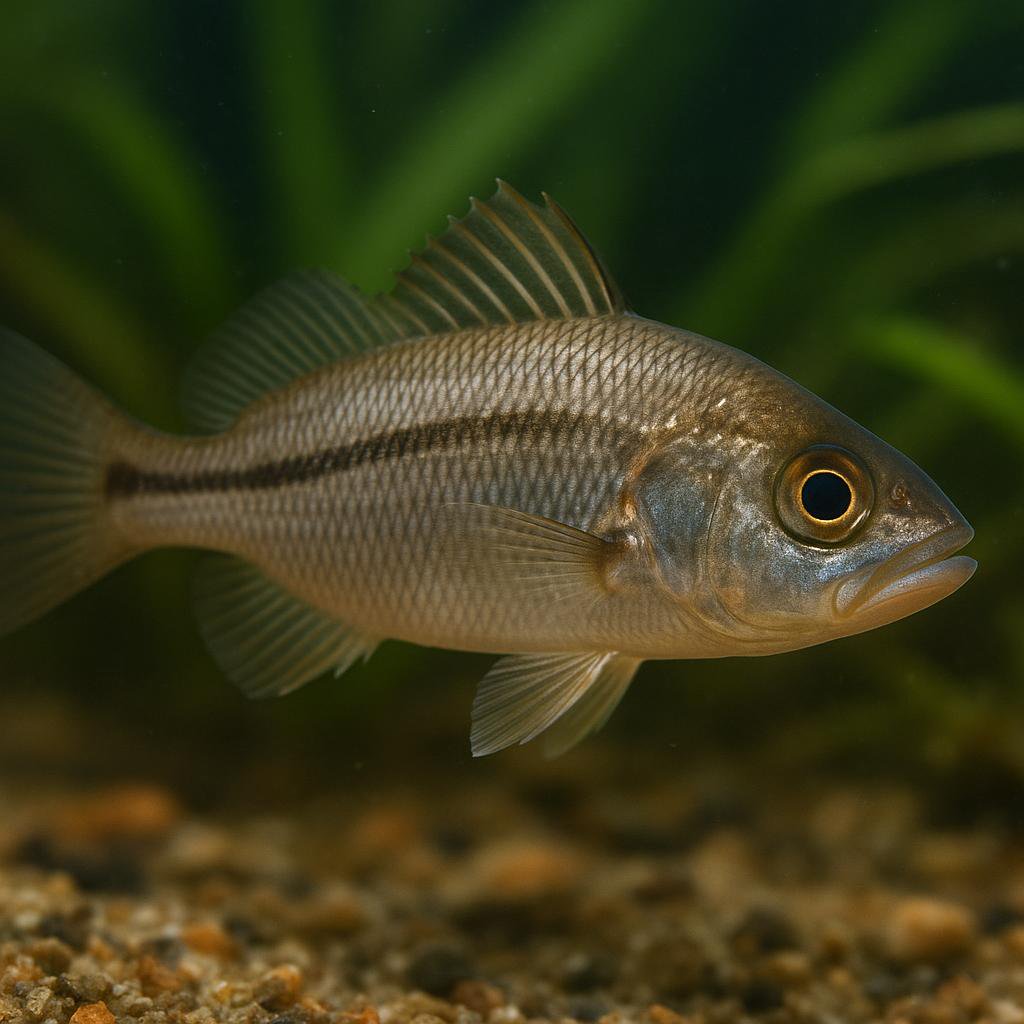
Johnius fuscolineatus
Johnius fuscolineatus (Bellfish/African bearded croaker) is a small coastal sciaenid from the southwestern/western Indian Ocean (Mozambique, South Africa, Madagascar), occurring in shallow marine waters (reported 0–50 m) and also associated with coastal/estuarine habitats.
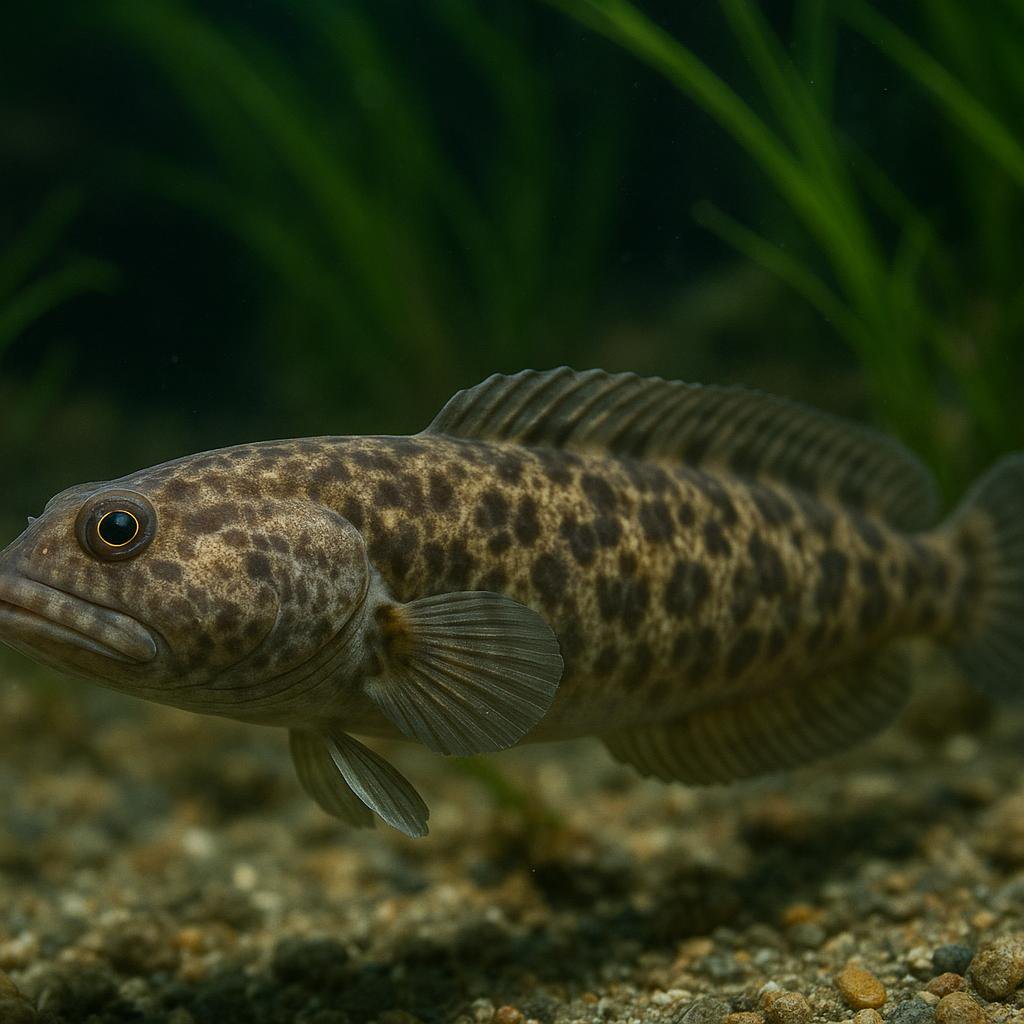
Blotched eelpout
Zoarces gillii
Zoarces gillii is a cold-temperate eelpout from the Northwest Pacific that hugs the bottom over sandy-mud inshore areas and even pushes into estuaries. It's got that long, eel-like body and a sneaky, sit-on-the-bottom predator vibe - very much a cool-water, brackish-to-marine oddball rather than a typical tropical aquarium fish.
Looking for other species?