

Green chromide
Etroplus suratensis
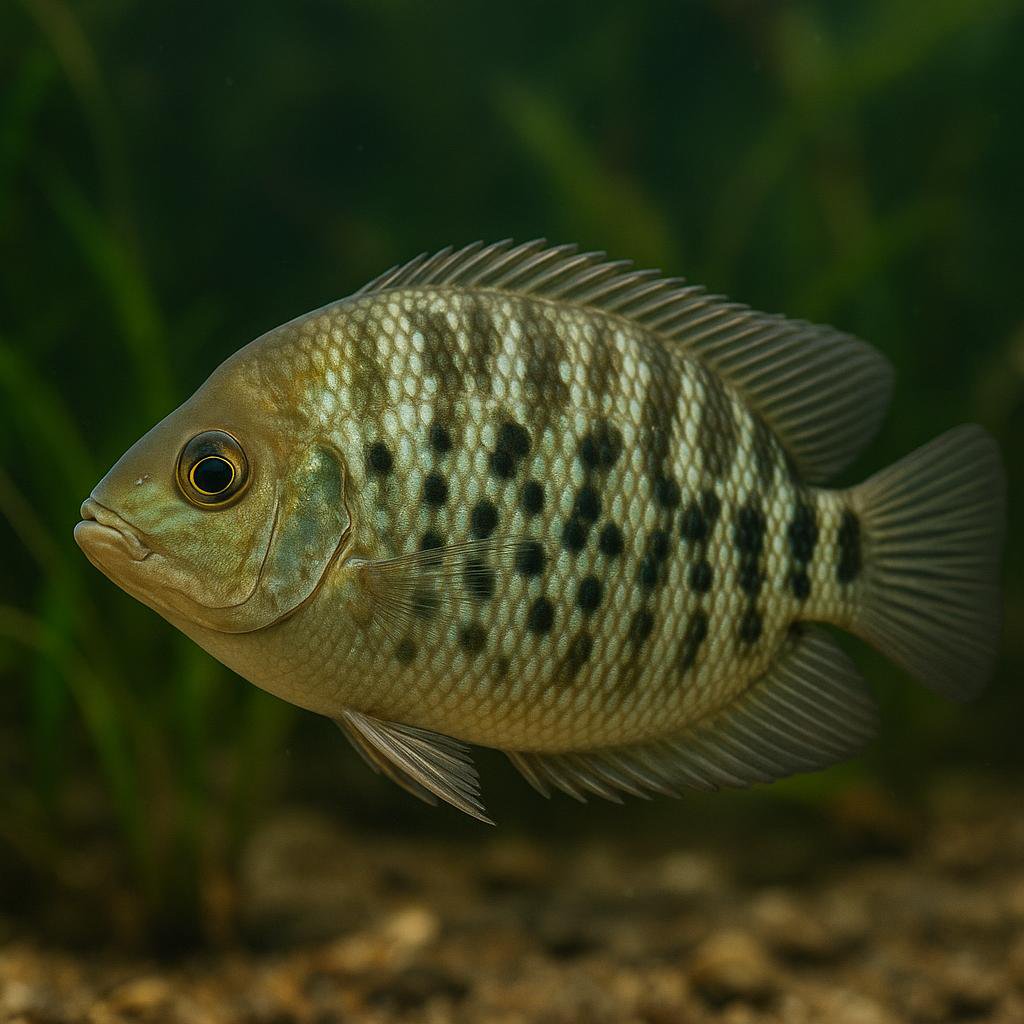
The Green chromide features a deep, laterally compressed body with a vibrant green coloration and distinct vertical black stripes.
This page includes AI-generated images. Why am I seeing AI images?
About the Green chromide
This is that big, chunky Indian/Sri Lankan cichlid that looks like it's sprinkled with little "pearl" flecks on each scale once it colors up. It's a brackish-leaning grazer that loves to pick at algae/plant matter and it gets way more interesting in a group-plus the parents do classic cichlid guard-the-eggs-and-fry behavior.
Also known as
Quick Facts
Size
40 cm
Temperament
Semi-aggressive
Difficulty
Intermediate
Min Tank Size
75 gallons
Lifespan
5-8 years
Origin
South Asia (India and Sri Lanka)
Diet
Omnivore with strong herbivore lean — algae/spirulina-based pellets, lots of veg matter, plus insects/frozen foods as supplements
Water Parameters
23-27°C
7.5-8.5
12-30 dGH
Need a heater for this species?
This species needs 23-27°C in a 75 gallon tank. Use our heater calculator to find the right wattage.
Calculate heater sizeCare Notes
- Go bigger than you think: a single adult really wants a 55g+, and a pair/group is happier in 75-90g because they get chunky and can get bossy.
- They're brackish fish-aim around SG 1.005-1.010 (roughly 7-15 ppt), and mix marine salt in a bucket first; don't use "aquarium salt" and don't dump dry salt straight in the tank.
- Keep it warm and steady: ~24-28°C (75-82°F) with decent filtration and flow; they're messy eaters and will punish you for lazy water changes.
- Decor: sand or fine gravel, sturdy rocks/driftwood, and tough plants (or skip plants); they love grazing and will uproot anything delicate.
- Feeding is easy if you go mixed-good pellets as the base, plus blanched spinach/peas/algae wafers and some frozen foods (krill, mysis); don't overdo meaty stuff or they get fat and stringy-poop prone.
- Tankmates: think other brackish, semi-tough fish (some monos, scats when sizes match, larger gobies, maybe hardy rainbowfish in low-end brackish); avoid tiny fish, long-finned slowpokes, and super-aggressive cichlids that'll turn it into a boxing match.
- They can be surprisingly nippy in a group-if one starts getting hammered, add more line-of-sight breaks or be ready to rehome the bully/victim.
- Breeding: they're substrate spawners and will clean a flat rock and guard eggs like maniacs; if you want fry, give the pair their own tank because they'll terrorize the whole community while parenting.
Compatibility
Good Tankmates
- Other brackish cichlids that can take some attitude, like orange chromides (Etroplus maculatus) or another green chromide-best kept as a pair or a small group if the tank's big, because they'll scrap when they're feeling territorial
- Scats (Scatophagus argus) - they're tough, fast, and don't get pushed around easily, plus they like the same brackish setup. Keep them in a small group so they're not stressed
- Monos (Monodactylus spp.) - active schooling brackish fish that stay out in the water column. They're quick enough to avoid the chromide 'mood swings'
- Archerfish (Toxotes spp.) - they're confident, mid-to-top swimmers, and brackish is home turf. In a spacious tank, they typically ignore the chromides and vice versa.
- Bigger brackish gobies like knight gobies (Stigmatogobius sadanundio) - they hang around the bottom and can hold their ground, just give them caves so the chromides don't hassle them nonstop
- Bigger, sturdy livebearers that tolerate brackish like mollies (especially larger varieties) - works best when the chromides aren't breeding and the mollies aren't small enough to be snacks.
Avoid
- Slow, fancy-finned fish (bettas, guppies with big tails, fancy goldfish) - green chromides get pushy and can shred fins, and the water type and temperatures don't really match up anyway.
- Tiny peaceful community fish (neons, rasboras, small danios) - they'll get stressed, chased, or flat-out eaten once the chromide sizes up what fits in its mouth
- Hyper-territorial bruiser fish (a lot of mbuna, big mean Central American cichlids, etc.) - turns into constant fighting, and the brackish setup usually isn't what those fish want long-term
- Small timid bottom dwellers (corydoras, small loaches) - the water is wrong for most of them, and they get badly bullied when chromides claim the bottom during breeding.
1) Where they come from
Green chromides (Etroplus suratensis) are from southern India and Sri Lanka, hanging out in estuaries, backwaters, and coastal lagoons where fresh and saltwater mix. They’re basically "brackish cichlids" that have been dealing with changing salinity forever, which is why they’re so much happier in lightly salty water than in plain freshwater long-term.
2) Setting up their tank
Think bigger than you first want to. These fish aren’t tiny once they settle in, and they’ve got that cichlid confidence. If you’re keeping a small group, a 75g/280L is a comfortable starting point, and bigger is always easier on everyone’s nerves.
I’ve had the best luck keeping them in brackish water with marine salt mix (not aquarium “tonic” salt). Aim for a low-to-mid brackish feel rather than full marine. Stability beats chasing numbers.
- Tank size: 55g/200L minimum for a pair; 75g+ for a group
- Salinity: low–medium brackish (around SG 1.005–1.012 is a nice range)
- Temp: mid/upper 20s °C (about 24–28°C / 75–82°F)
- pH/hardness: they like it alkaline and harder rather than soft/acidic
- Filtration: strong bio + good flow; they eat well and make real waste
Mix your saltwater in a bucket, fully dissolved, then add it. Don’t sprinkle salt into the tank and call it done—fish and filters both hate that.
Decor-wise, you’re balancing two things: giving them places to get away from each other, and leaving open swimming space. I like using rounded rocks, driftwood, and tough plants (or just commit to a mostly hardscape setup). They will graze and pick, and delicate plants usually get shredded or uprooted.
- Use rock piles/wood to break line-of-sight (cuts down chasing)
- Leave a wide open area in the middle for cruising
- Substrate: sand or fine gravel; they’ll sift and mouth it
- If you want plants: try Java fern/Anubias attached to wood/rock; expect some nibbling
3) What to feed them
They’re enthusiastic eaters and they’ll act like they’re starving 24/7. The trick is keeping the diet varied and not going too heavy on fatty, meaty foods. In my tanks, they do best with a “mostly quality pellets + veggie” routine, then treats on top.
- Staple: good cichlid pellets or spirulina-based pellets
- Veggie rotation: blanched spinach, zucchini, shelled peas (great for clearing them out)
- Protein treats: mysis, brine shrimp, chopped prawn—small amounts
- Grazing bonus: algae wafers or spirulina flakes now and then
Go easy on bloodworms and super-rich foods. I’ve seen Green chromides get bloated and sluggish fast if you feed like they’re Oscars.
Feed smaller portions 1–2 times a day, and watch their bellies. If they start looking thick behind the head or stringy poop shows up, back off and do a veggie day.
4) Behavior and tankmates
They’re cichlids, but not the “murder everything” type… until breeding mood hits. Day to day, a group can be pretty social, with a pecking order and some jawing. During spawning they flip the switch and suddenly that calm fish is patrolling half the tank like it owns the deed.
I’ve found they’re easier in groups (5–7) if your tank is big enough, because the aggression gets spread out. A lone pair in a smaller tank can hyper-focus on each other or on tankmates.
- Best vibe: a roomy tank with a small group and lots of sight breaks
- They will dig, redecorate, and “taste test” anything that sits still
- Expect occasional lip-locking and fin posturing—normal cichlid politics
If you want a community feel, plan around their brackish needs first. Plenty of popular freshwater tankmates just don’t like the salt long-term.
Tankmates that can work are other sturdy brackish fish that aren’t tiny or timid. Avoid very small fish (they’ll get bullied) and slow, fancy-finned fish (they’ll get nipped). Also skip delicate bottom dwellers unless you’re 100% sure they tolerate your salinity.
- Often works: archerfish (in big setups), monos/scats (again, big setups), some brackish gobies, larger mollies in lower brackish
- Use caution: puffers (temperament roulette), small schooling fish (stress magnets)
- Usually a bad time: fancy goldfish, delicate tetras/rasboras, long-finned fish
5) Breeding tips
They’ll breed in aquariums if they’re happy, and it’s honestly pretty fun to watch. They’re substrate spawners and both parents get involved—cleaning a site, laying eggs, fanning, then herding the fry like tiny sheepdogs.
If you want babies, give them flat rocks or slate tiles and keep the tank stable. Sudden big changes (especially salinity swings) can make them eat the spawn or abandon it.
- Provide: flat stone/slate + some privacy
- Keep: steady brackish salinity and consistent temps
- Expect: aggression spike—move tankmates or use dividers if needed
- Fry food: newly hatched brine shrimp and crushed pellets once they’re big enough
If you’re trying to raise fry in a mixed tank, you’ll save yourself a lot of heartbreak by moving the spawn/parents to their own setup. In a community, something will eventually sneak a snack.
6) Common problems to watch for
Most “mystery” issues I’ve seen with Green chromides come down to two things: messy water from heavy feeding, and salt done inconsistently. They’re hardy, but they don’t love rollercoaster conditions.
- Bloat/constipation: usually from rich foods or overeating—add veggie days and reduce feeding
- Fin nipping and stress: not enough space/sight breaks, or a breeding pair policing the tank
- Ich/white spot: can happen, especially after new fish—quarantine helps a ton
- Poor long-term health in freshwater: they often look “fine”… until they don’t. Low brackish suits them much better
Treating disease in brackish tanks can get tricky because some meds don’t play nicely with salt. Always check if the medication is safe at your salinity, and remove chemical filtration (carbon) while dosing.
If your fish are hiding, darkening, or clamping fins, look at the basics first: ammonia/nitrite, nitrate, and whether your salinity has drifted. I keep a refractometer around—hydrometers can be “close enough” until they’re not.
Similar Species
Other brackish semi-aggressive species you might be interested in.
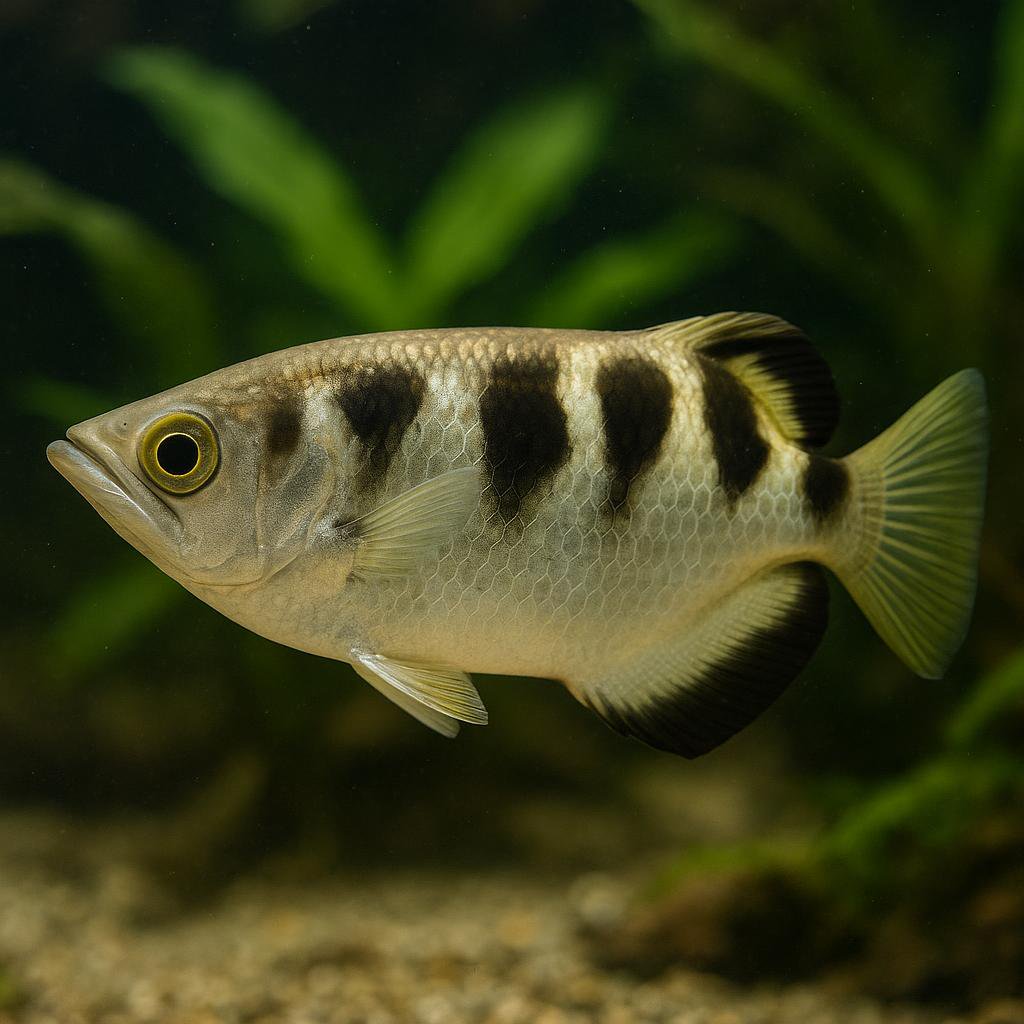
Banded Archerfish
Toxotes jaculatrix
This is the fish that literally spits jets of water to knock insects off branches-watching one "take aim" is unreal. They're super aware of what's going on outside the tank and will even learn to beg and snipe food from the surface once they settle in. Give them height and some open swimming room and they act like little aquatic sharpshooters.
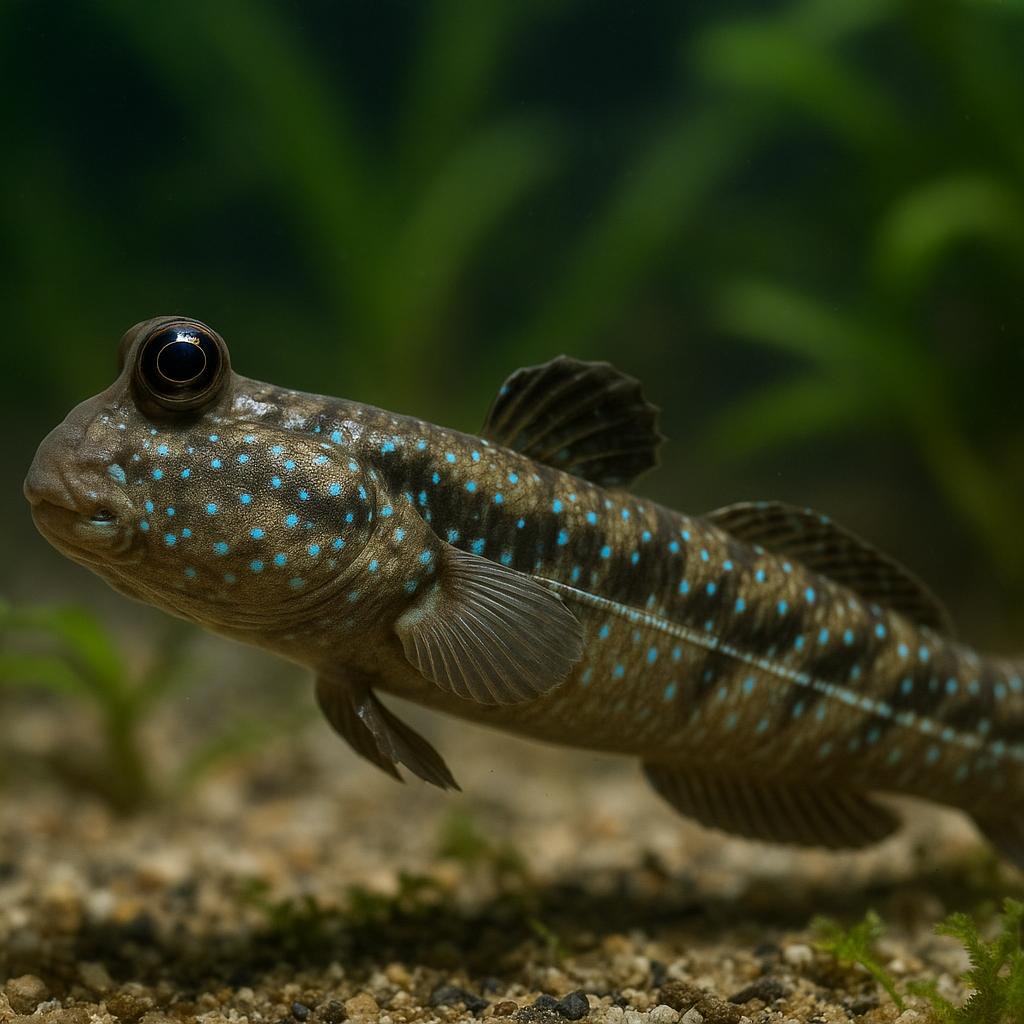
Barred mudskipper
Periophthalmus argentilineatus
This is one of those classic "walks around like it owns the place" mudskippers-big goofy eyes, climbs, hops, and spends a ton of time out on the mud when it's humid. In the wild it lives on intertidal mangrove/nipa mudflats and even shuttles between little pools and open air, hunting worms, insects, and small crustaceans. It's super fun to watch, but it really wants a brackish paludarium setup (not a normal aquarium).
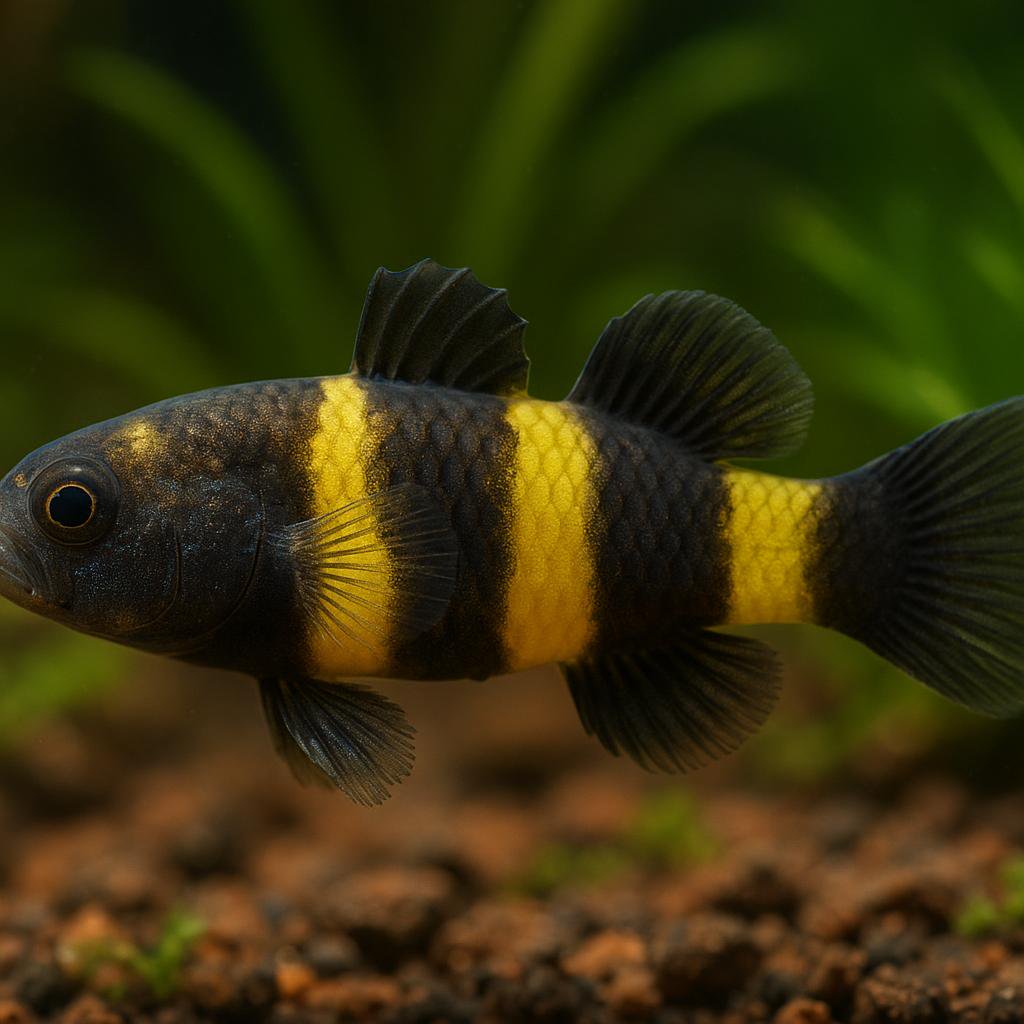
Bumblebee goby
Brachygobius doriae
Brachygobius doriae is one of the classic "bumblebee gobies" - tiny, bottom-hugging little characters that perch on rocks and sand and stare at you like they own the place. They're at their best in a calm setup with lots of caves and leaf litter, and they really shine once you get them eating frozen/live foods reliably (they're slow, picky eaters). Also: they're one of the species that gets mislabeled a lot in shops, so it's super common to see them sold under the wrong bumblebee-goby name.
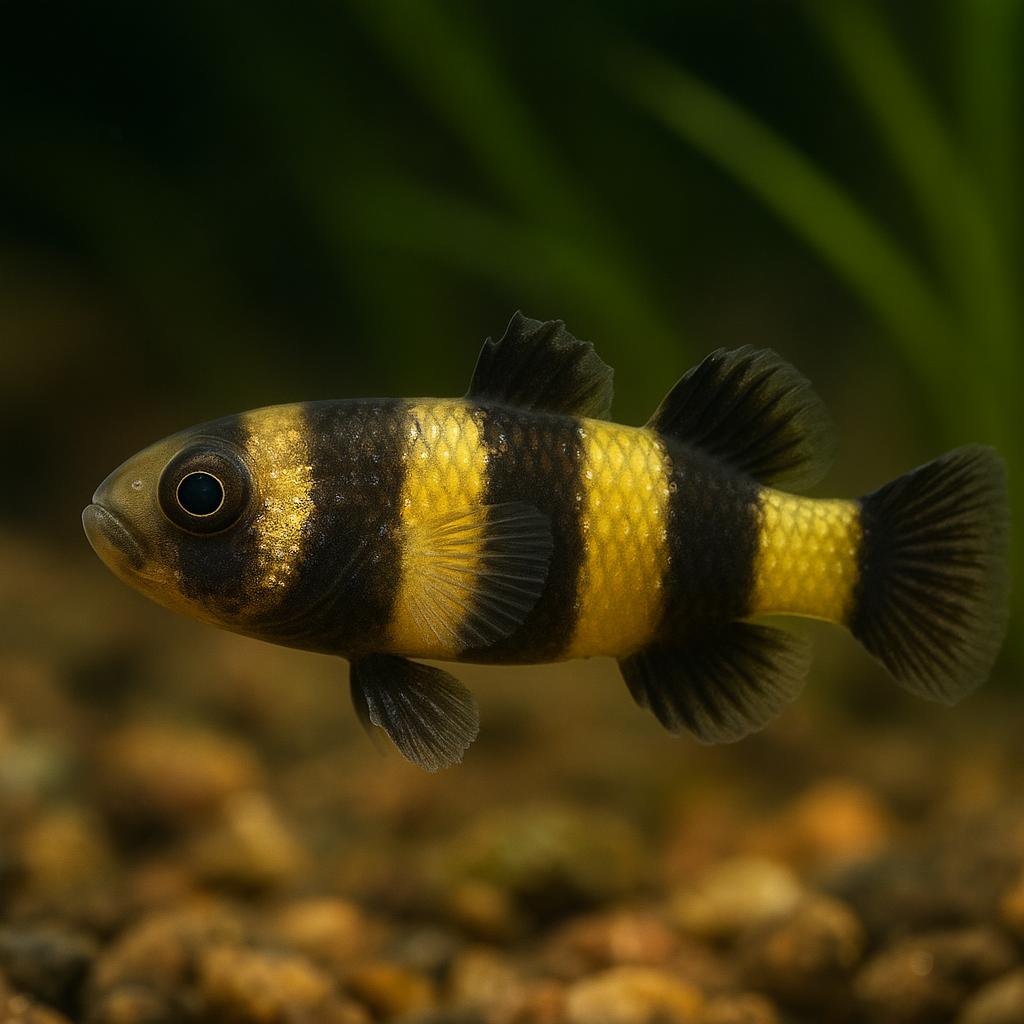
Bumblebee goby (Bumblebee fish)
Brachygobius xanthozonus
This is that tiny little goby with the bold black-and-yellow bands that likes to perch on the bottom and stare back at you like it owns the place. It's happiest in lightly brackish water with lots of little caves and sight-breaks, and it's one of those fish that often refuses flakes-frozen/live meaty foods usually flip the "yes, I will eat" switch.
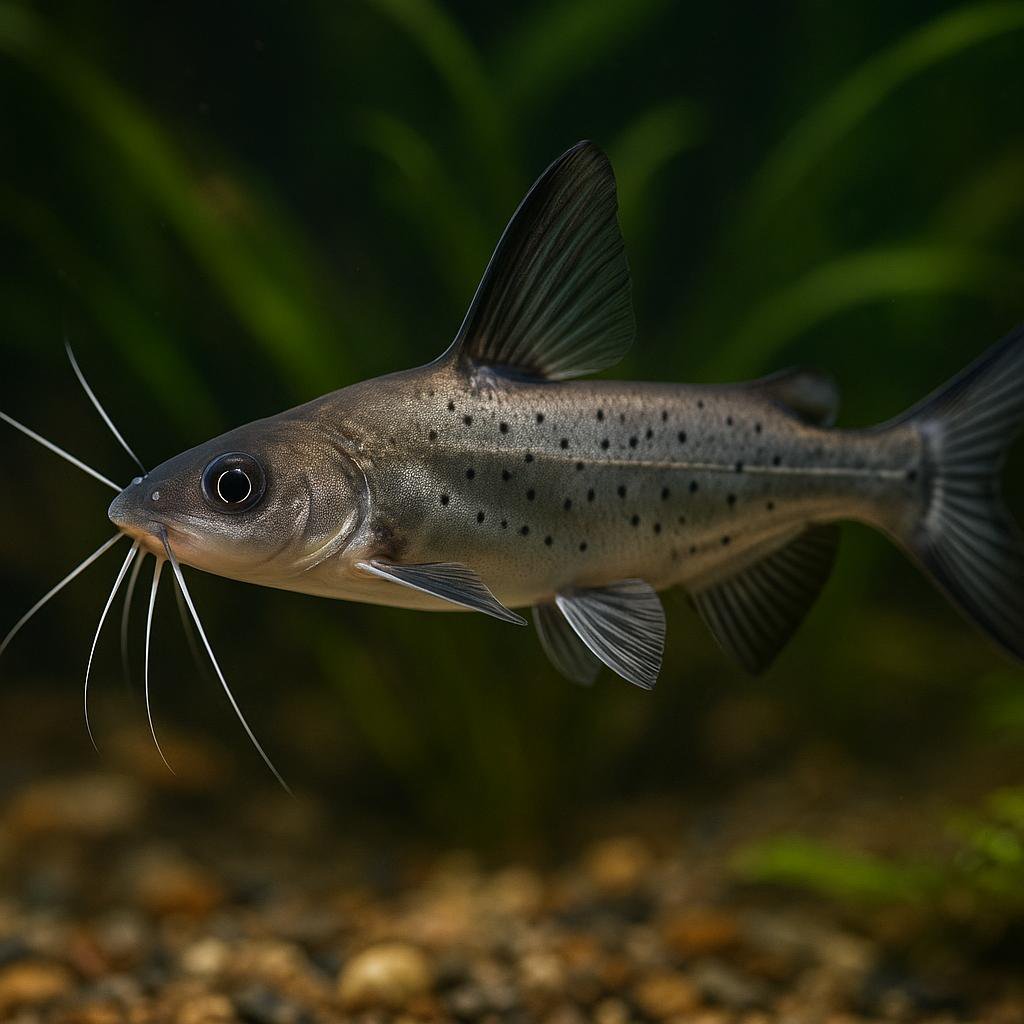
Colombian shark catfish
Ariopsis seemanni
This is that slick silver "shark-looking" catfish with the black fins and white tips that cruises around like it owns the place. The big gotcha is it's not a true freshwater community fish long-term-juveniles show up in shops as "freshwater," but as it grows it really wants brackish and eventually full marine conditions, plus a lot of swimming room.
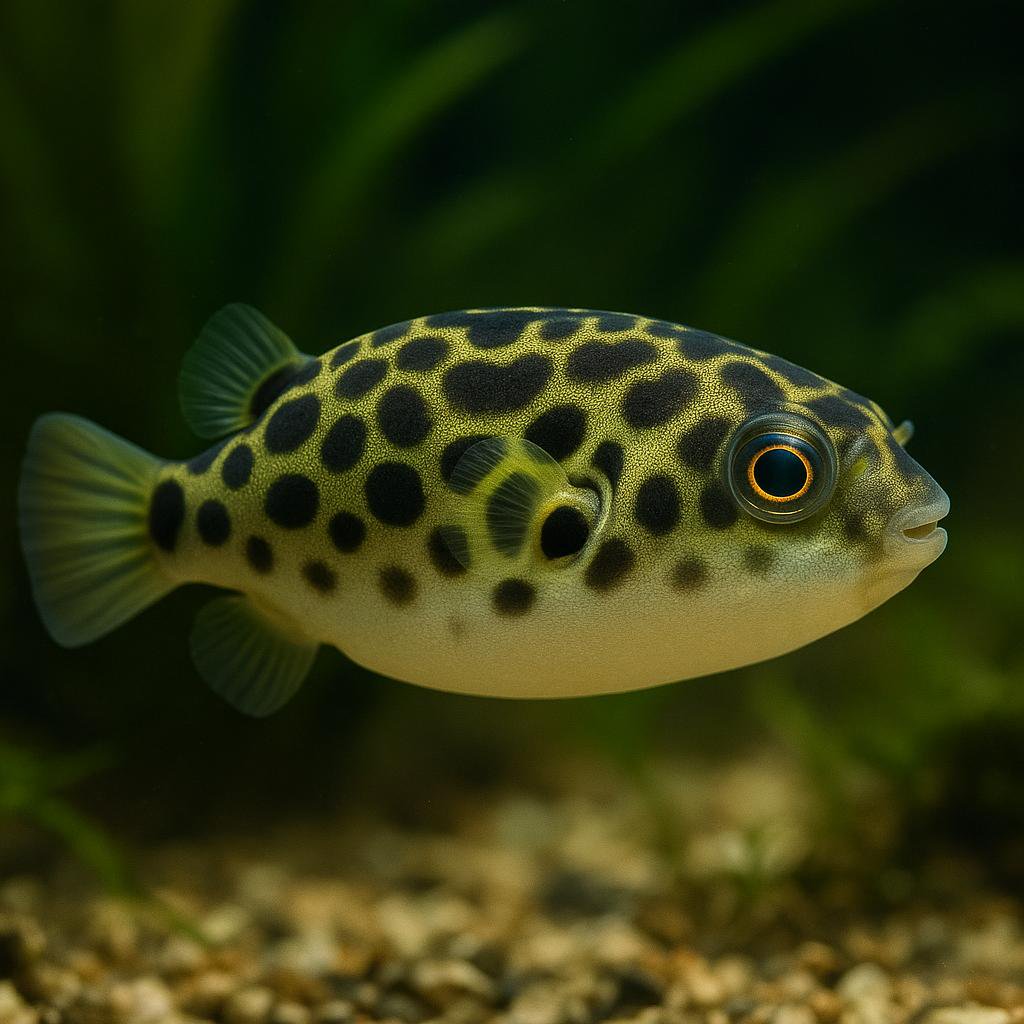
Eyespot pufferfish (Figure-8 puffer)
Dichotomyctere ocellatus
This is the little "figure-8" puffer with the yellow-green squiggles and the two bold eyespots near the tail-tons of personality in a small body. They're basically snail-hunting machines with a curious, interactive vibe, but they can be spicy with their own kind, so you plan the tank around that.
More to Explore
Discover more brackish species.
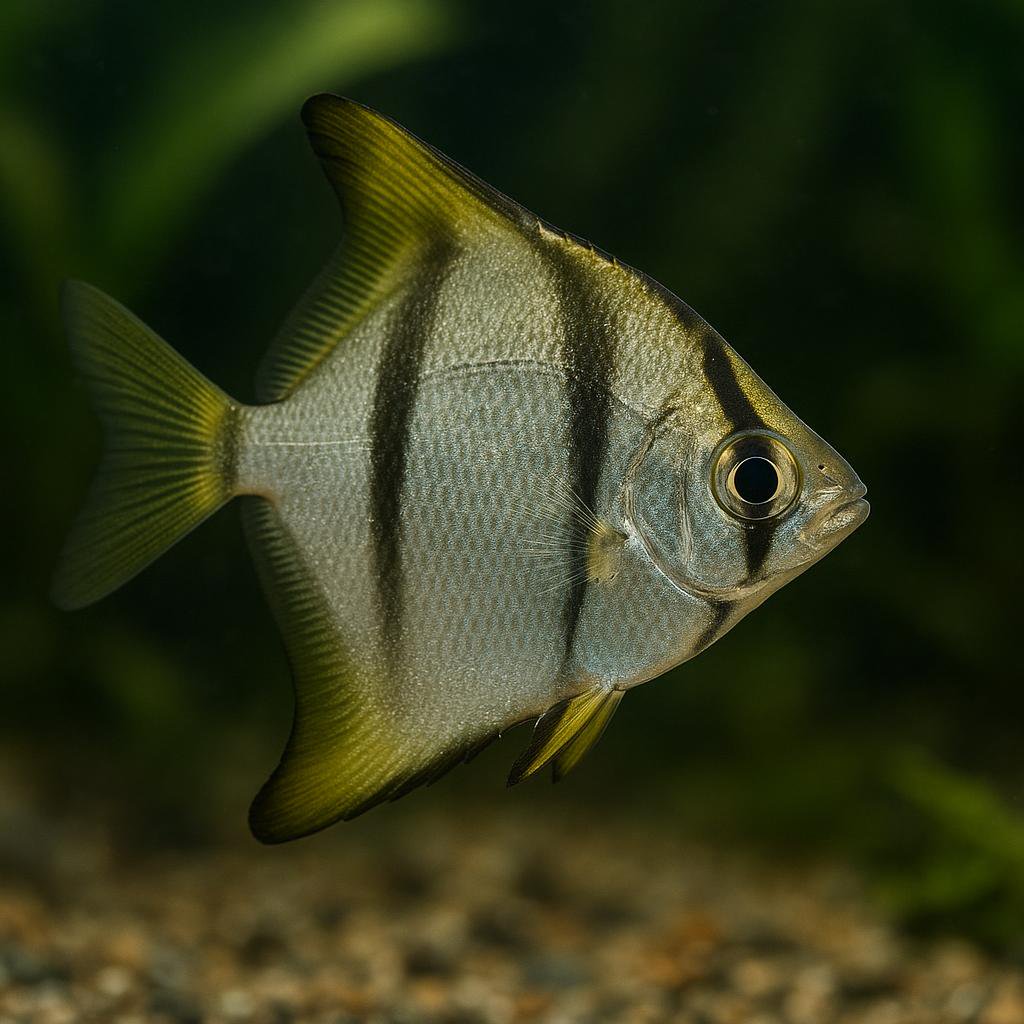
African moony
Monodactylus sebae
This is that shiny, diamond-shaped "mono" that cruises around in a tight pack and looks like a little silver dinner plate with black bars when it's young. The big thing with African moonies is they're euryhaline-so they'll tolerate freshwater as juveniles, but they really shine long-term in brackish (and can be transitioned toward marine as they mature). Give them a big, open tank and a group, and they turn into nonstop, super fun midwater swimmers.
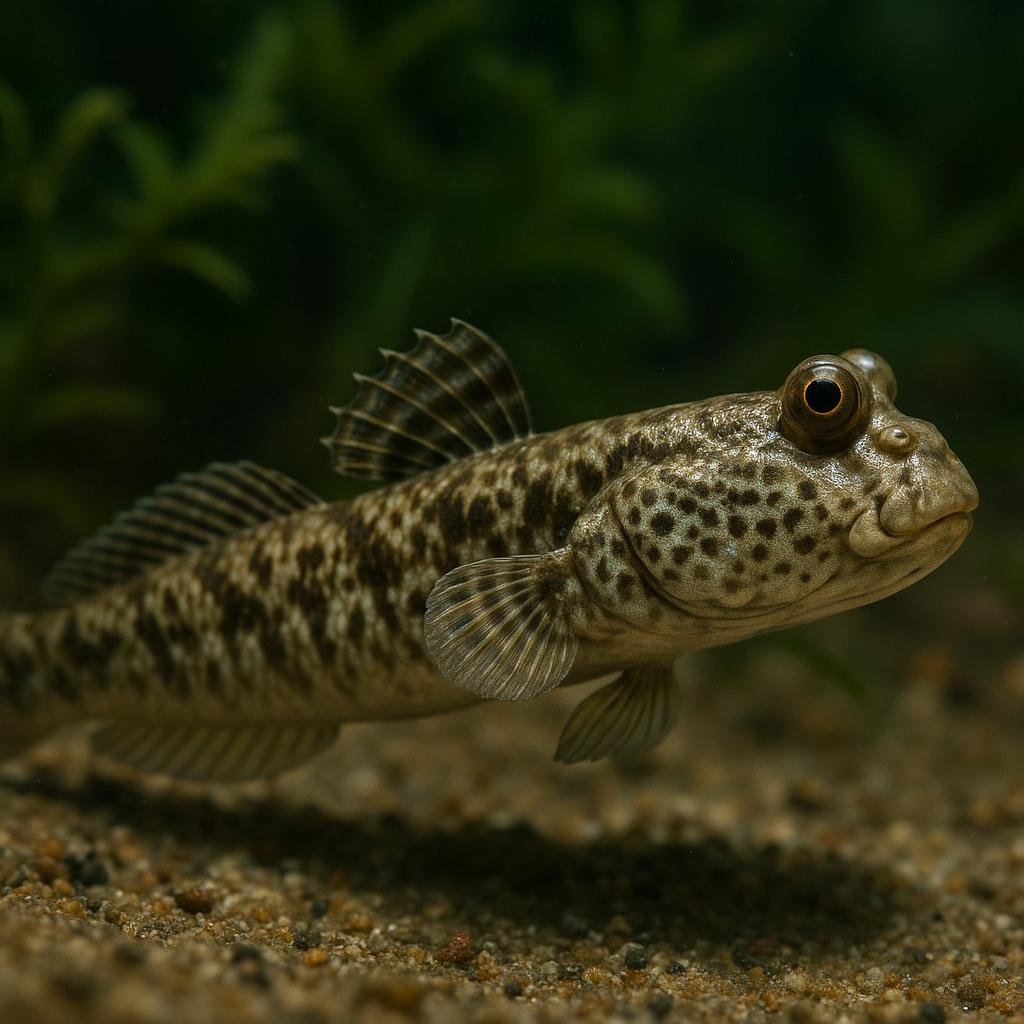
Atlantic Mudskipper
Periophthalmus barbarus
This is that wild little amphibious goby that straight-up climbs around on land like it forgot it was a fish. They've got big googly eyes, tons of personality, and they'll perch, hop, and patrol their territory-honestly more like a tiny crabby lizard than a "regular" aquarium fish.
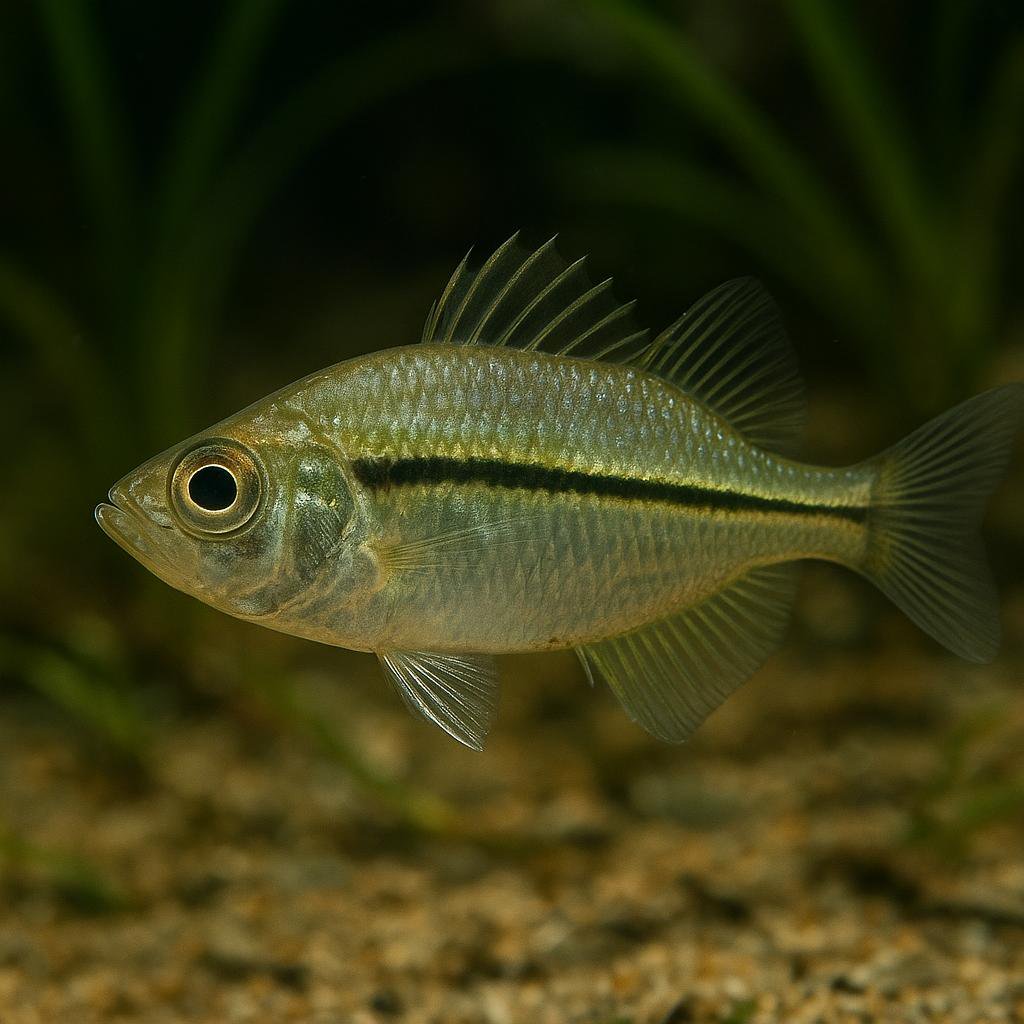
Banded-tail glassy perchlet
Ambassis urotaenia
This is one of those see-through glassy perchlets where you can literally watch the organs shimmer when it turns-super cool in the right lighting. In the wild it hangs around river mouths and mangroves and cruises in groups, so it does best when you keep a little gang of them and give them some open swimming room.
-1771643191.jpg)
Elongate mudskipper (pointed-tailed goby)
Pseudapocryptes elongatus (syn. Pseudapocryptes lanceolatus)
This is that super-cool "mudskipper-ish" goby that mostly stays in the water, but will park itself in the shallows and periscope its eyes above the surface like it's keeping watch. It's an obligate air-breather from tidal rivers/estuaries, so it really appreciates shallow, brackish setups with soft mud/sand and gentle flow-more of a mangrove vibe than a typical community tank.
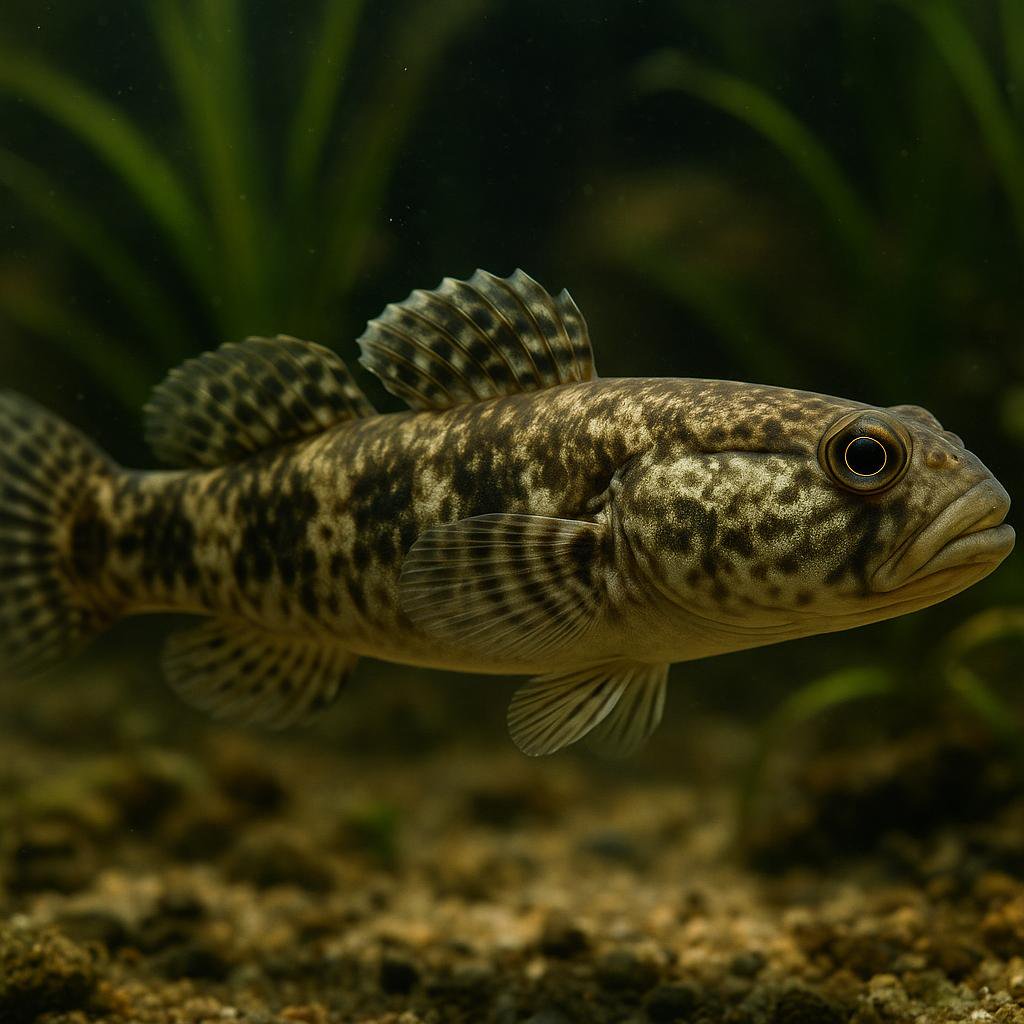
Fat sleeper
Dormitator maculatus
Dormitator maculatus is that chunky "sleeper goby" type fish with the bulldog head and the attitude of a little vacuum cleaner-always sifting and nosing around the bottom. It'll do freshwater or brackish and it can get way bigger than most people expect, so it's one of those fish that's awesome... as long as you plan the tank around the adult size, not the baby you bought.
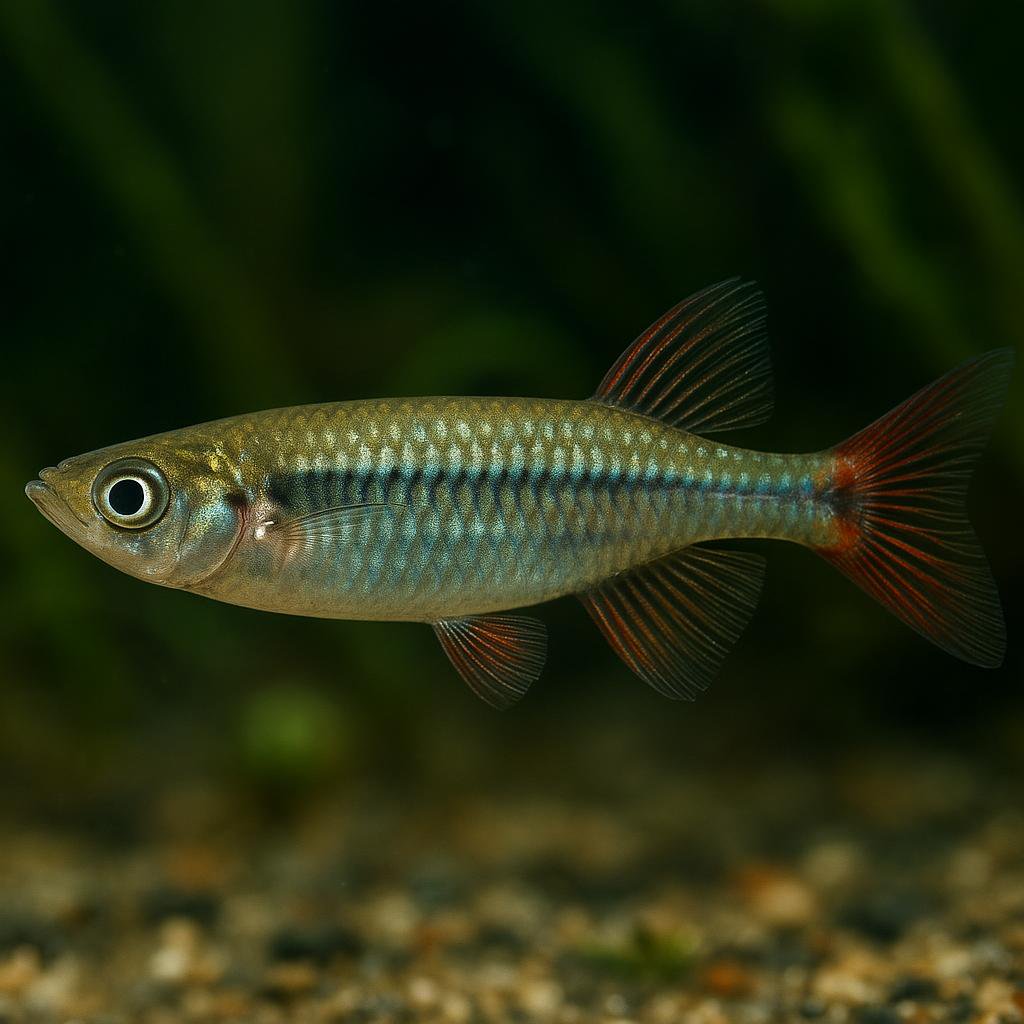
Feathered river-garfish
Zenarchopterus dispar
Zenarchopterus dispar is a surface-hanging halfbeak from mangroves and sheltered bays, with that classic long lower jaw for snapping up insects and other floaty foods. Males get those funky elongated fin rays (the "feathered" look), and they are livebearers, so once they settle in you can occasionally get surprise babies. Biggest thing with this fish is giving it calm water up top, room to cruise, and a tight lid because halfbeaks can rocket-jump.
Looking for other species?