

Twig catfish
Farlowella knerii
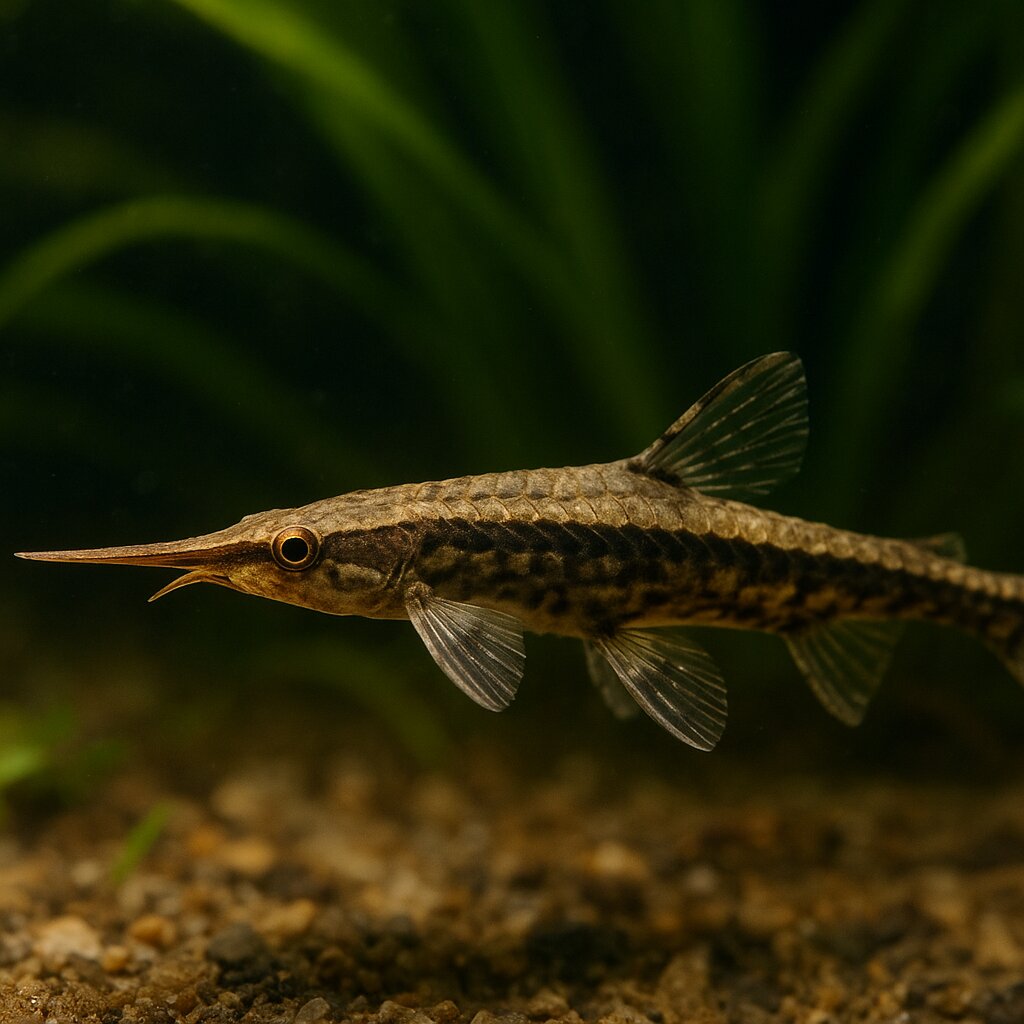
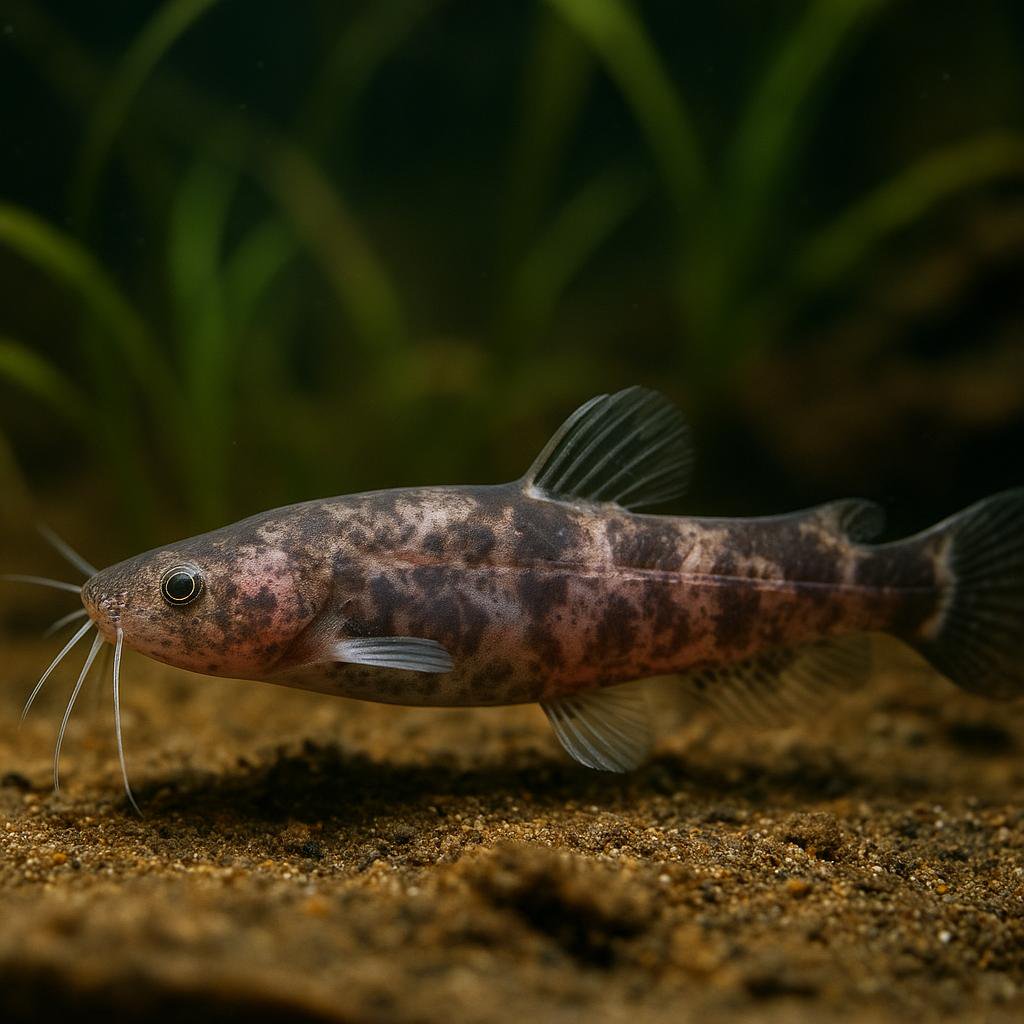
The Twig catfish features a slender, elongated body with intricate patterns of brown and green, aiding in its camouflage among aquatic vegetation.
This page includes AI-generated images. Why am I seeing AI images?
About the Twig catfish
A true twig impersonator from the Ecuador-Peru headwaters, Farlowella knerii spends its days clinging to wood and plant stems while grazing on biofilm. Peaceful and shy, it looks like a stick with fins, and males will even guard neat rows of eggs on glass or driftwood if conditions are right.
Also known as
Quick Facts
Size
16.2 cm
Temperament
Peaceful
Difficulty
Intermediate
Min Tank Size
30 gallons
Lifespan
5-10 years
Origin
South America
Diet
Omnivore - mostly algae/biofilm and veggies; accepts spirulina wafers and small frozen foods
Water Parameters
24-27°C
6-7
3-10 dGH
Need a heater for this species?
This species needs 24-27°C in a 30 gallon tank. Use our heater calculator to find the right wattage.
Calculate heater sizeCare Notes
- Give a 20-30 gallon long with lots of driftwood, twigs, and plants to cling to; use sand or fine gravel, nothing sharp.
- Do not add them to a new, squeaky-clean tank - they need mature surfaces with algae and biofilm to graze all day.
- Keep 72-76 F, pH 6.2-7.2, soft to moderate hardness (2-10 dGH), nitrates under 15 ppm, and steady; they do poorly above 80 F and with salt or copper-based meds.
- Give gentle flow and high oxygen - sponge filter plus a spray bar works great, and cover intakes so they do not get pinned.
- Feed veggies and algae-heavy foods nightly: blanched zucchini or green beans, spirulina wafers, and Repashy Soilent Green smeared on wood; leave some in overnight.
- Pre-soak pellets so they sink, and use tiny amounts of meaty foods only as an occasional treat; they are mostly browsers, not hunters.
- Pair with calm fish that will not outcompete them: small tetras, rasboras, pencilfish, otos, and shrimp; skip nippy barbs, cichlids, large plecos, and boisterous loaches.
- Male guards eggs laid on glass or wood; a few cool, soft-water changes can trigger spawning, eggs hatch in about a week, and fry need constant biofilm plus powdered spirulina or gel foods with only a sponge filter.
Compatibility
Good Tankmates
- Chill community fish like ember tetras, rummynose, and harlequin rasboras - calm midwater and wont bother a twig cat thats glued to wood.
- Pencilfish and hatchetfish - top dwellers that keep the surface busy while leaving the glass and wood to the twig.
- Peaceful bottom dwellers like pygmy corydoras and small corys - similar vibe; give some leaf piles and wood so the twig can park without constant traffic.
- Otocinclus or small whiptails (Rineloricaria) - same gentle manners; works best in a mature, algae-rich tank if you add blanched veggies and wafers so nobody goes hungry.
- Endlers or small guppies that arent nippy - colorful but not pushy if you spread food around at feeding time.
- Another Farlowella or a small group - theyre fine in pairs or trios when theres plenty of wood and line-of-sight breaks.
Avoid
- Fin nippers like tiger barbs, serpae tetras, and some danios - they target the twig cats long fins and rostrum.
- Cichlids, even medium ones like angels, rams when breeding, or kribs - too territorial and curious for a shy stick fish.
- Big or pushy plecos and boisterous loaches (common pleco, clown or yoyo loach) - they outcompete for food and can rasp on the twig.
- Fast, boisterous open-water fish like giant danios or big rainbowfish - nonstop motion stresses them and they lose every meal.
Where they come from
Twig catfish (Farlowella knerii) are South American oddballs from the Parana-Paraguay river basin. They hug sticks and stems in slow to moderate-flow creeks and flooded margins, blending in with wood, leaves, and grasses. Clear, well-oxygenated water with tons of surfaces to graze is their happy place.
They look exactly like a bit of plant stem. Double-check before you toss trimmings or vacuum. I have almost gravel-vacced one more than once.
Setting up their tank
These guys do best in mature, stable tanks with biofilm already growing. Think driftwood and twigs, not bare glass.
- Tank size: 20 long minimum for a pair; 30-40 gallons if you want a small group.
- Water: 72-79 F (22-26 C), pH 6.0-7.5, soft to moderate hardness (2-12 dGH).
- Filtration: Strong but gentle. A canister or HOB with a spray bar plus a big sponge filter works well. Good surface agitation for oxygen.
- Flow: Moderate. They like current to bring food to them, but give calm perches too.
- Substrate: Sand or smooth fine gravel. They rest on it and rub against things, so keep it smooth.
- Hardscape: Branchy driftwood, smooth stones, and leaf litter for grazing surfaces. They absolutely use all of it.
- Plants: Easy, broad-leaf plants (Anubias, Java fern), floaters for shade. Leave at least one pane for algae growth.
- Lighting: Moderate. Enough to grow a little algae and biofilm, with shaded retreats.
Seed biofilm before buying the fish: move in seasoned wood/rocks from another tank, run a pre-gunked sponge filter, and even sun-bake a few rocks in a jar of tank water to grow algae you can rotate in.
Their long snout is delicate. Avoid sharp rocks, rough nets, and hard catch attempts. Herd them into a container instead of netting if you can.
What to feed them
They are biofilm and algae grazers first, not big on meaty foods. If you count on glass algae to feed them, they will slowly starve. Offer plant-based foods daily.
- Staples: Spirulina/algae wafers, veggie-heavy sinking pellets, Repashy-style gel foods (green varieties).
- Fresh veg: Blanched zucchini, cucumber, green beans, snow peas, and slices of squash or sweet potato. Weight them down and swap daily.
- Extras: Nori (seaweed) clipped to a rock, leaves (Indian almond, guava) for biofilm grazing.
- Occasional protein: Tiny amounts of frozen daphnia or cyclops. Skip bloodworms; they do not need them.
Feed after lights out and place food right by their favorite perch. They are slow, polite eaters and will lose out to energetic fish.
How they behave and who they get along with
Peaceful, shy, and methodical. They cling to wood and glass and scoot like little underwater stick-bugs. They will ignore everyone unless it is breeding time.
- Good tankmates: Small tetras, pencilfish, rasboras, hatchetfish, Corydoras, peaceful dwarf cichlids (mild Apistos), and calm killifish.
- Use caution: Shrimp are fine for community setups, but they will pick at eggs if you try to breed the cats.
- Avoid: Fin-nippers (tiger barbs), hyper fish (zebra danios in big numbers), large cichlids, and pushy plecos that outcompete them for food.
You can keep one, a pair, or a small group if the tank is big and there are many perches. Males may posture during spawning but it is usually minor.
Breeding tips
If they feel safe and well-fed, spawning is very doable. The male cleans a vertical surface, the female lays a neat patch, and the male guards and fans the eggs.
- Sexing: Mature males develop bristles/odontodes around the snout and along the sides of the head. Females look smoother.
- Setup: Offer vertical sites like a piece of slate, bamboo section, broad plastic plant leaf, or a short PVC tube placed near flow.
- Water: Soft, slightly acidic to neutral and very clean. A couple of cooler water changes can nudge them to spawn.
- Timing: At 75-77 F, eggs typically hatch in 7-10 days. The male will fan constantly.
- Raising fry: They graze immediately. Smear gel food on rocks, add pre-grown biofilm wood, powdered spirulina, and tender veggies. Keep flow gentle and oxygen high.
If you need to move eggs, shift the entire spawning surface to a rearing box with identical water and an airstone. Do not peel eggs off.
Fry starve fast in sterile tanks. Cover filter intakes with sponge, and make sure there is always something to rasp.
Common problems to watch for
- New-tank syndrome: They do poorly in fresh setups with no biofilm. Add them to mature tanks only.
- Starvation in busy communities: If they are always skinny or have a pinched belly line, they are not getting enough food. Target-feed after lights out.
- Low oxygen and heat: Hot water holds less O2. Keep good surface ripples, especially in summer.
- Rostrum injuries: Sharp decor, rushed netting, or banging into glass can damage the nose. Keep decor smooth and handle gently.
- Parasitic hitchhikers: Wild-caught fish sometimes bring internal worms (stringy white feces, wasting). Quarantine and treat as needed.
- Medication sensitivity: Be cautious with copper, formalin, and salt. If you must medicate, use a hospital tank and go light.
- Fungus on eggs: Low flow or dirty surfaces encourage it. The male usually handles it, but you can add gentle aeration near the clutch.
Ammonia and nitrite should be zero at all times. Keep nitrates low (ideally under ~20 ppm). These fish go downhill fast in dirty water.
Similar Species
Other freshwater peaceful species you might be interested in.
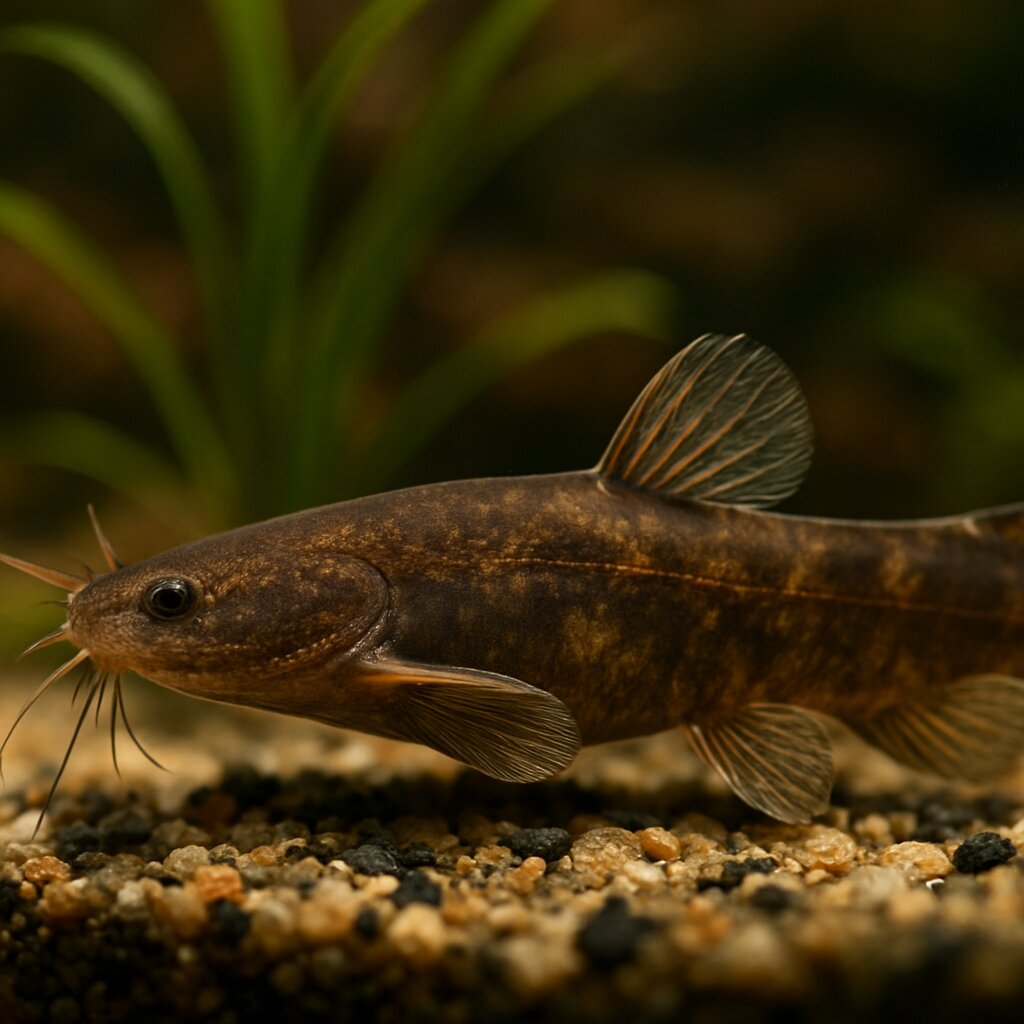
Amphilius dimonikensis
A small loach catfish endemic to the Mpoulou River in the Mayombe (Dimonika Biosphere Reserve), Republic of the Congo. Amphilius dimonikensis has a subtle banded pattern and inhabits fast, clear streams over rock and sand. In aquaria, prioritize strong, well-oxygenated flow with rounded stones and sand to mimic hillstream conditions.
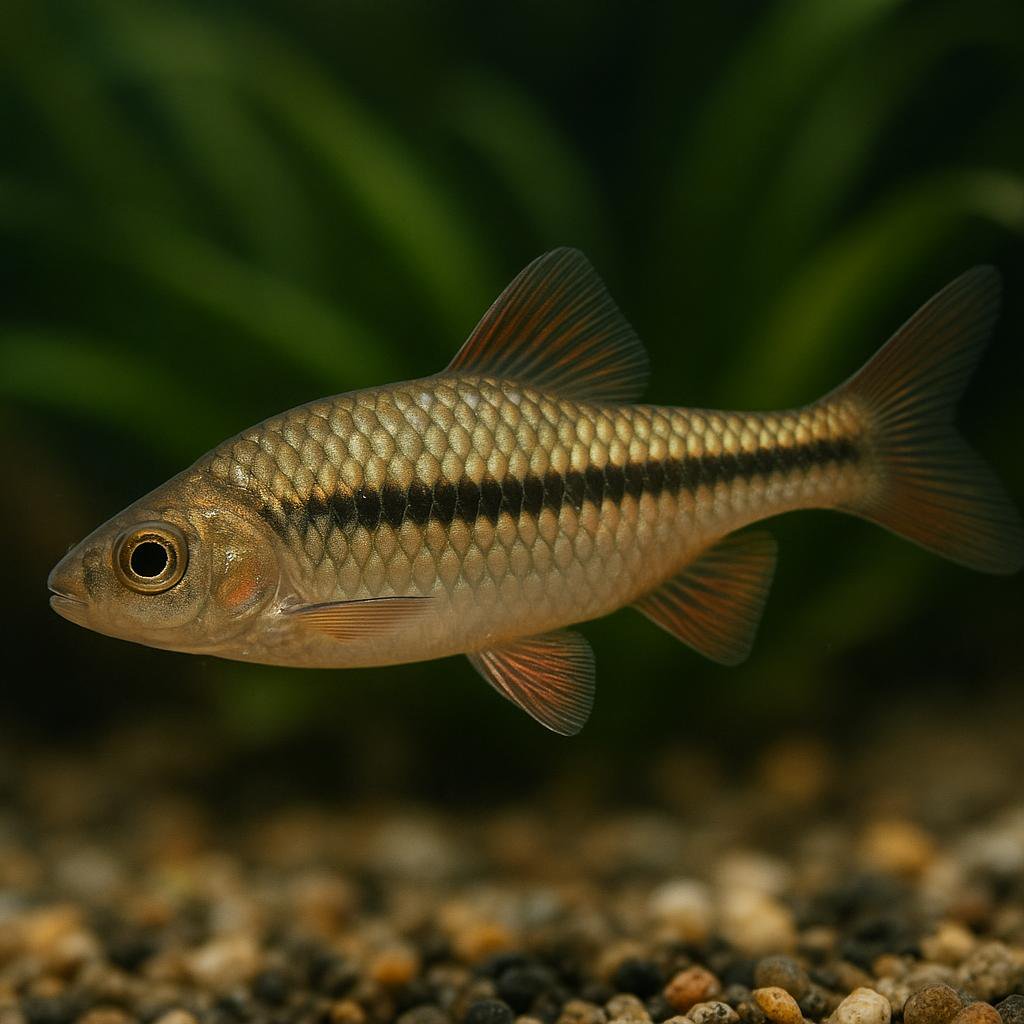
Aboina barb
Enteromius aboinensis
Enteromius aboinensis (the Aboina barb) is a small West African barb with a clean black midline stripe and a little spot right at the base of the tail. It does best when you treat it like a proper schooling fish - keep a decent group and give it plants around the edges with open swimming room in the middle.
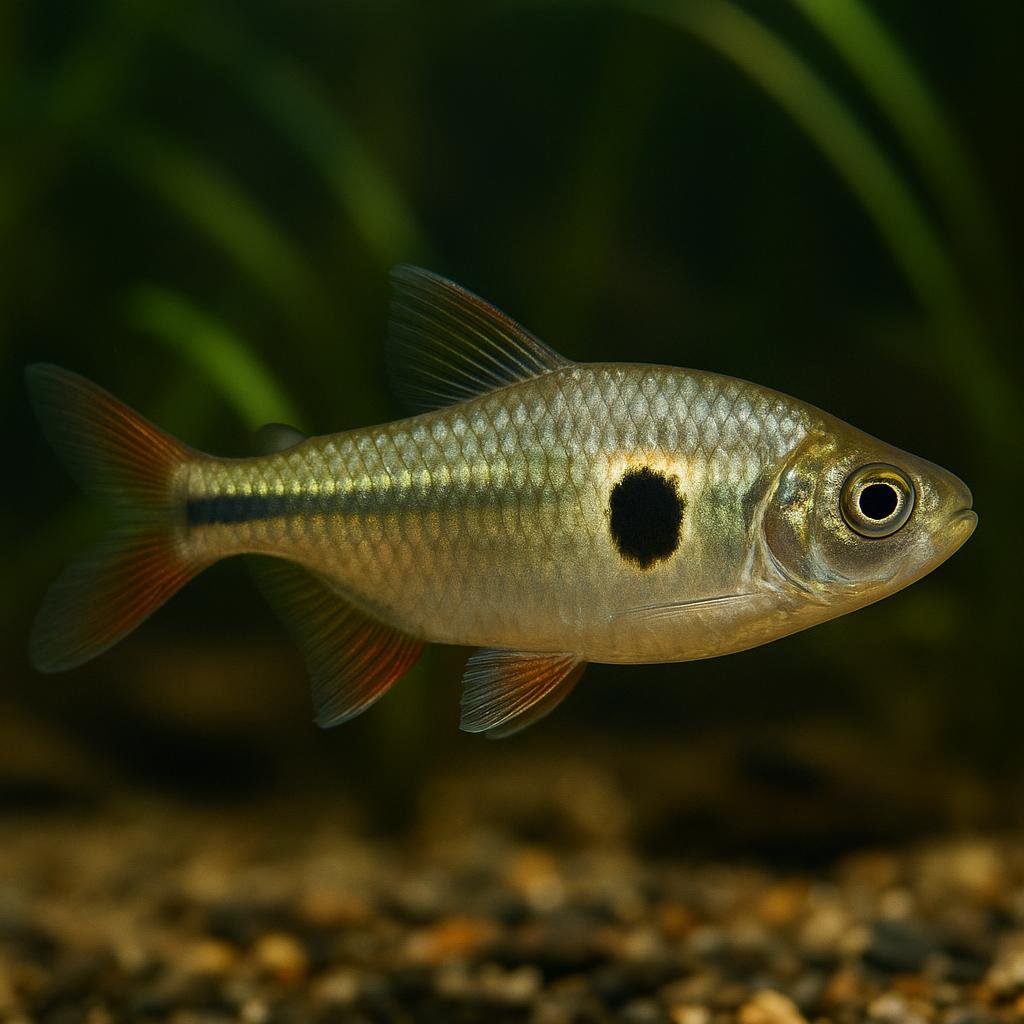
Ajuricaba tetra
Jupiaba ajuricaba
Jupiaba ajuricaba is a South American freshwater characin from the Amazon basin in Brazil (rio Negro, rio Solimões, and rio Tapajós basins). It reaches about 9.5 cm SL and is diagnosed by a narrow dark midlateral stripe, an elongated humeral spot, and an ocellated spot on the upper caudal-fin lobe. Wild specimens have been collected from blackwater forest streams and also oxbow-lake habitats.
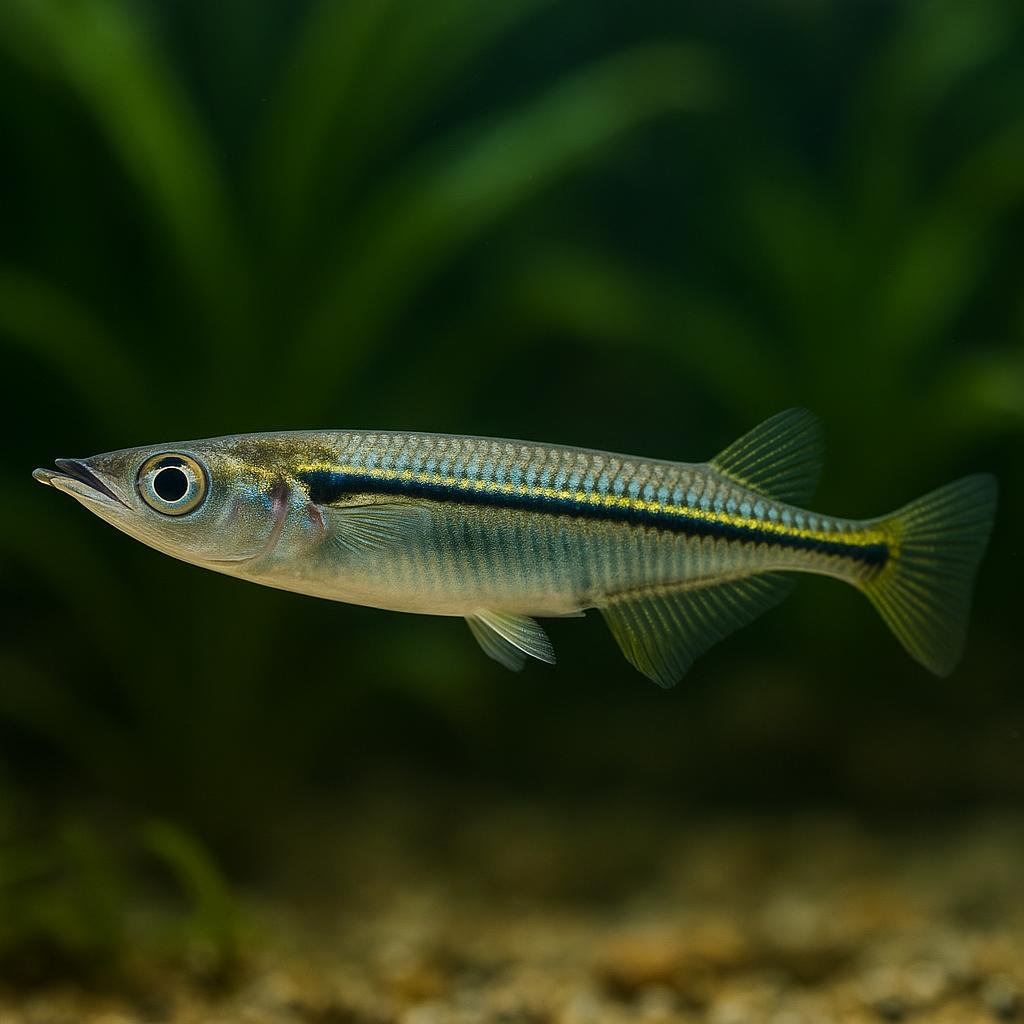
Allen's river garfish
Zenarchopterus alleni
A poorly known freshwater halfbeak endemic to West Papua (Mamberamo River), described from a single specimen (~13 cm SL). Beyond basic habitat/occurrence, little is published about its ecology or aquarium suitability; assume it is a surface-oriented, jump-prone halfbeak only by analogy with related taxa.
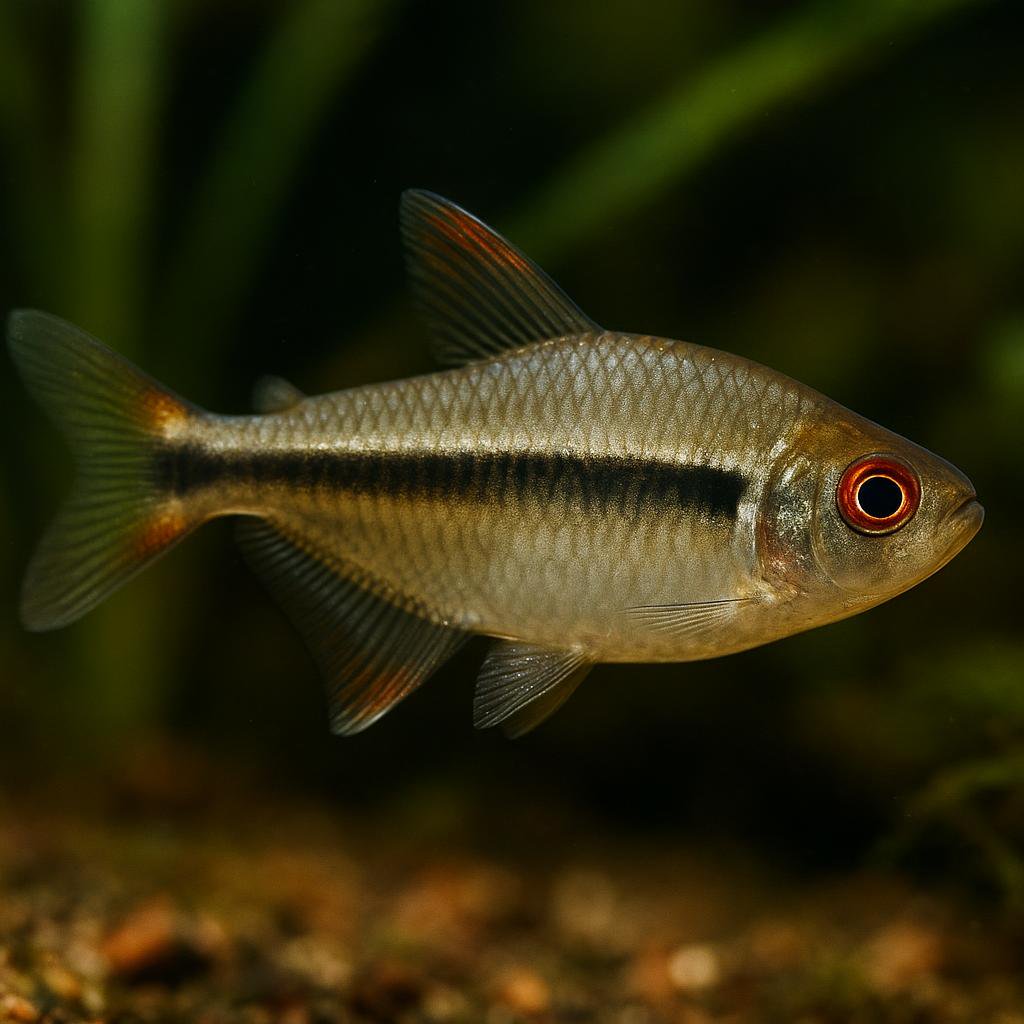
Amapa tetra
Hyphessobrycon amapaensis
This is a tiny, super sleek little tetra with a clean red stripe down the side that really pops once its settled in. It does best in a planted, slightly tinted "creek-style" setup and looks way cooler when you keep a proper group so they school and flash that line together. If you can give it soft, slightly acidic water and a calm community, its an easy fish to fall for.
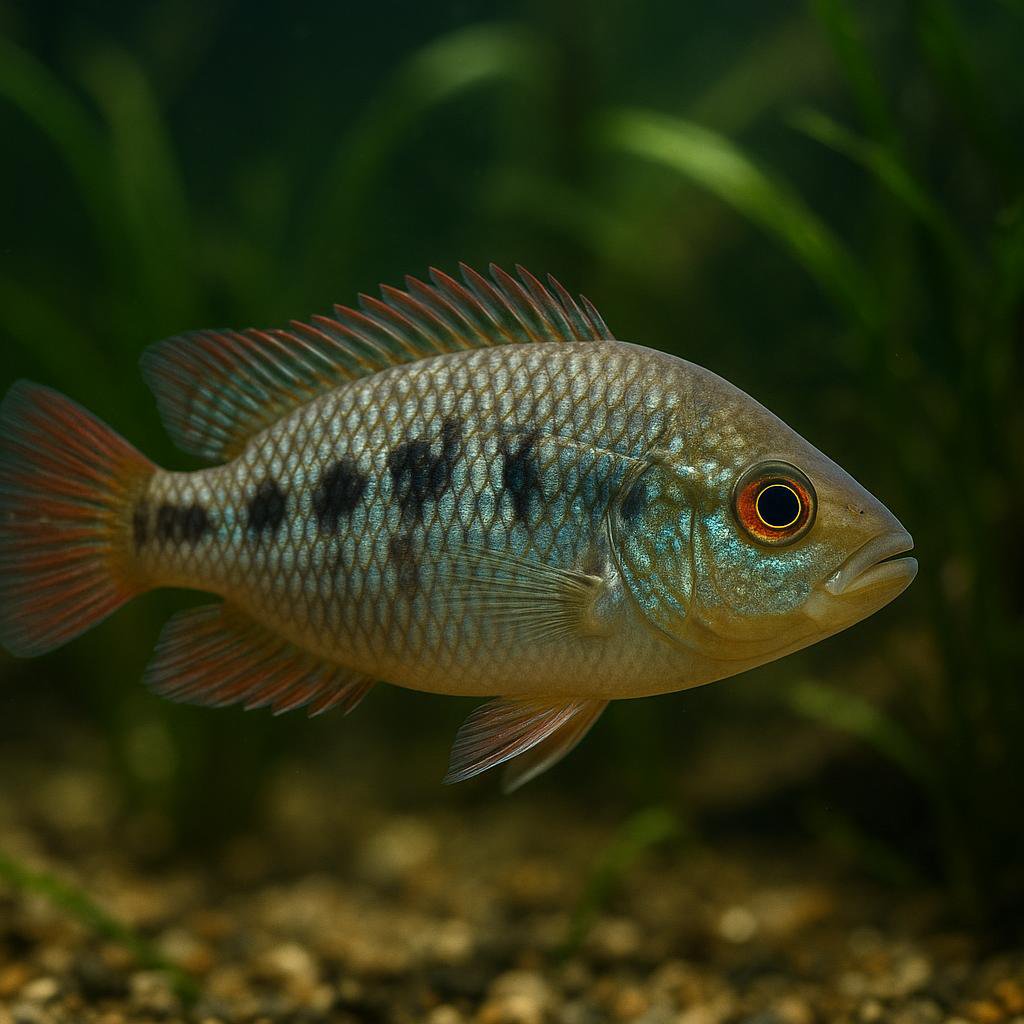
Amatlan chub
Yuriria amatlana
Yuriria amatlana (the Amatlan chub) is a little Mexican native minnow from the Ameca River basin. Its wild range is pretty limited and it is listed as Endangered, so its care info in the aquarium hobby is basically nonexistent and its availability is usually low. In the original species description, preserved fish show a dark lateral stripe with a darker patch on the caudal peduncle, and they can have tiny barbels at the mouth corners.
More to Explore
Discover more freshwater species.
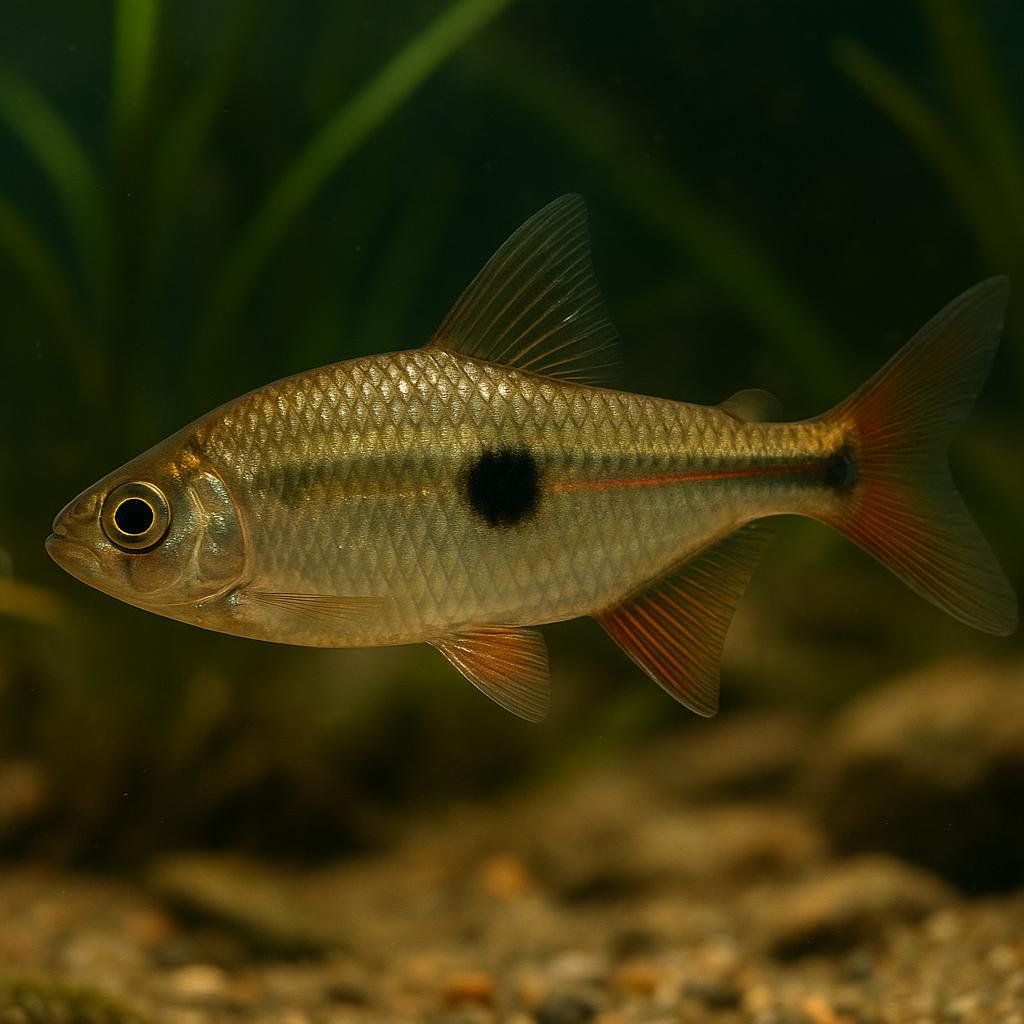
Jupiaba kurua
Small South American characin endemic to the upper rio Curuá (rio Xingu basin, Brazil). Reaches about 8.7 cm SL and inhabits clearwater rivers. Distinguished by dark dots on the bases of many lateral scales and a distinct dark caudal‑peduncle spot. Reported diet indicates omnivory, including aquatic insects, small fishes, and fragments of Podostemaceae and filamentous algae.
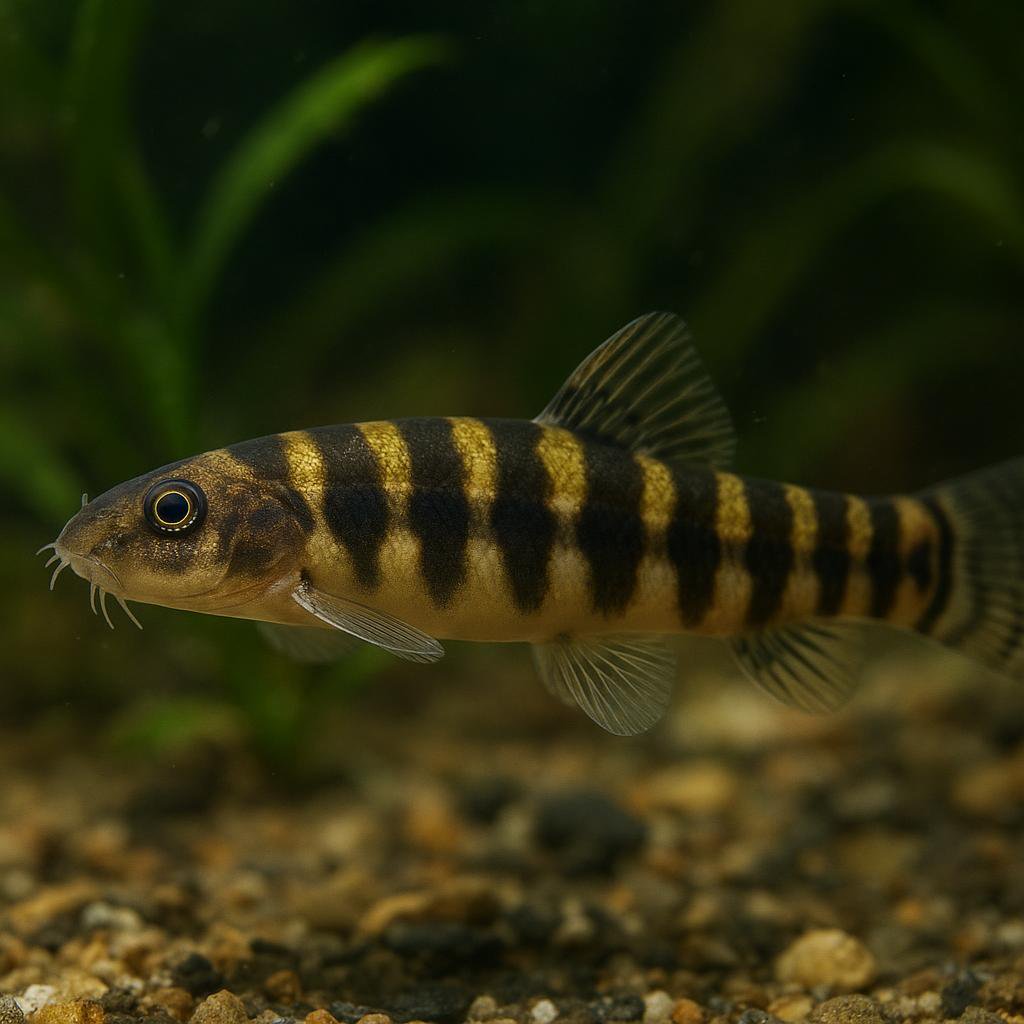
Altipedunculata stone loach
Schistura altipedunculata
Schistura altipedunculata is one of those little stream loaches that wants clean, well-oxygenated water and a bunch of rock nooks to claim as home. It is a bottom-hugger that will spend its day scooting from crevice to crevice, and it tends to get a bit spicy with its own kind if you do not give it enough hiding spots.
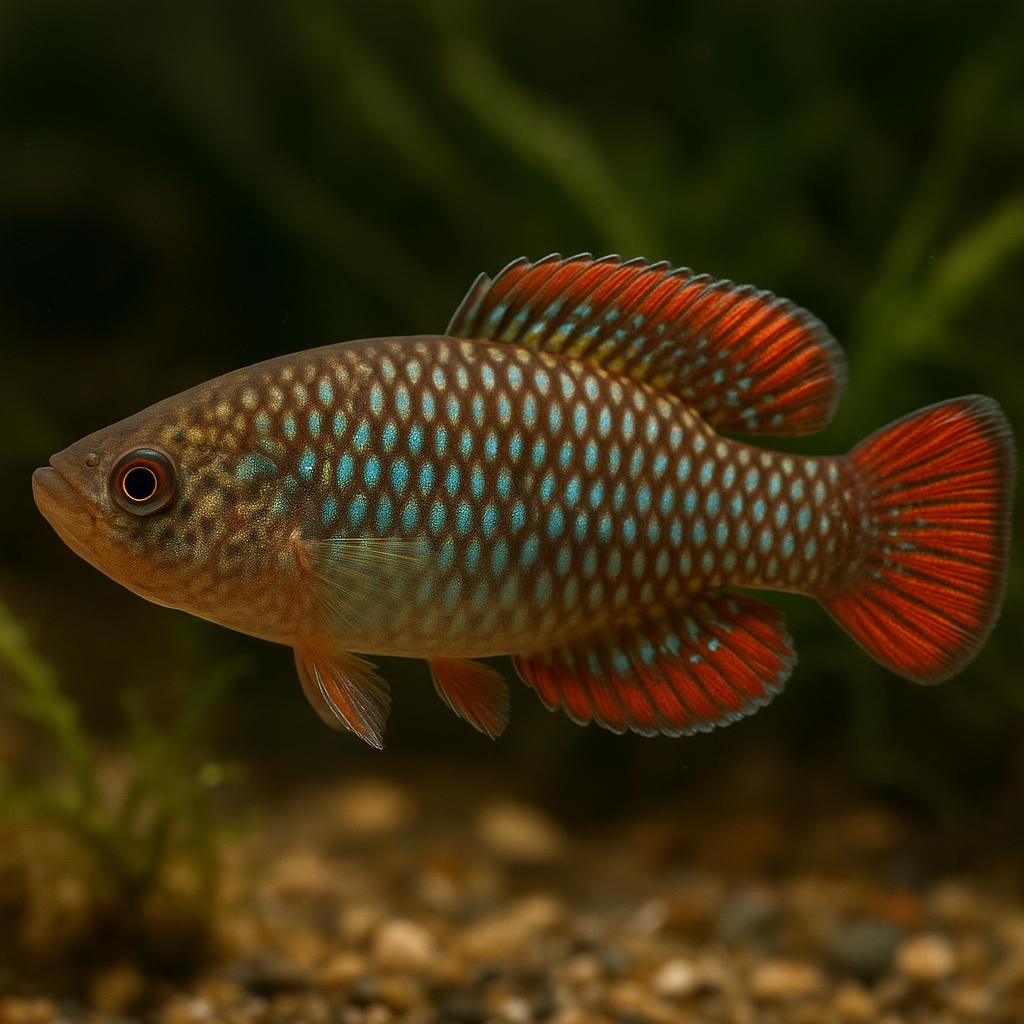
American flagfish
Jordanella floridae
Jordanella floridae is that little Florida native with the red-and-cream striping that really does look like a tiny flag once a male colors up. They graze algae like champs (especially stringy/hair algae), but they have a bit of attitude - give them plants and space so the bossy behavior stays manageable. Bonus: the male guards the eggs and will actively fan them, which is pretty fun to watch.
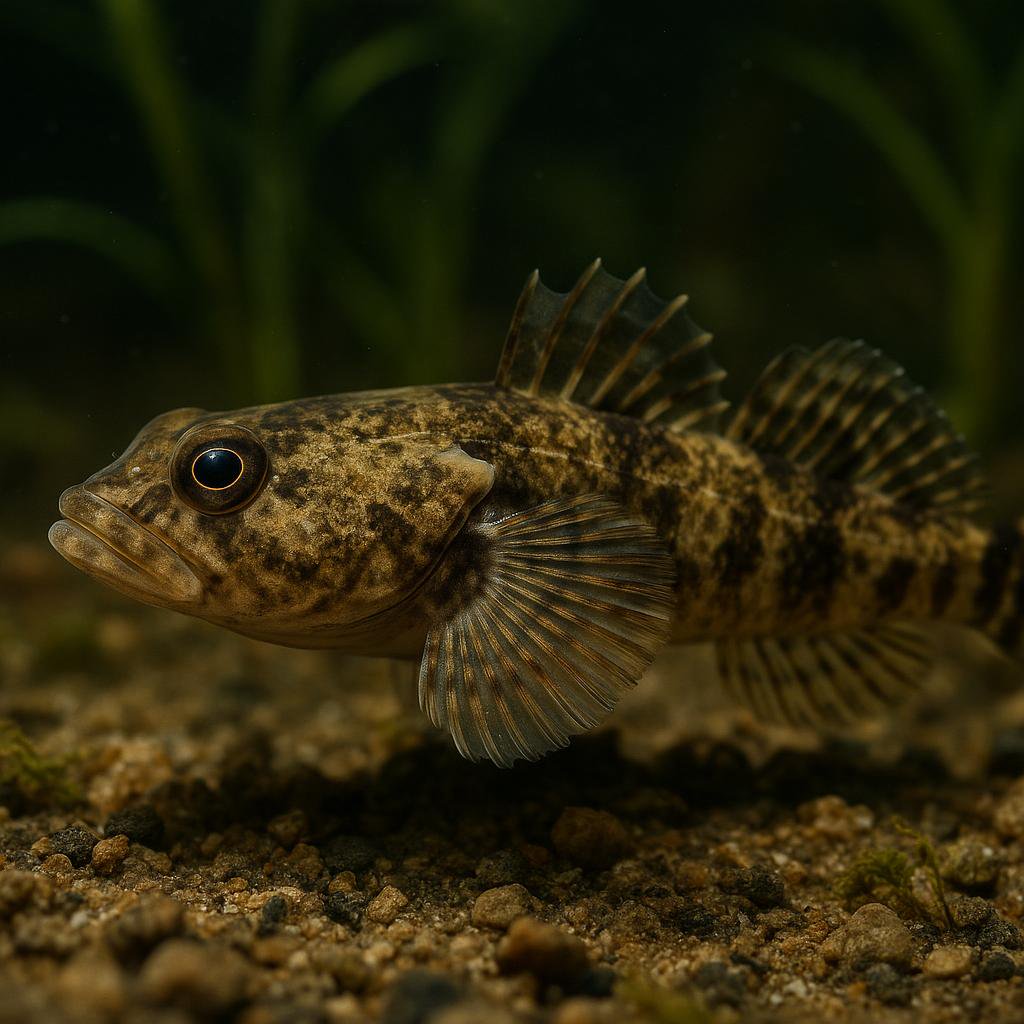
Amur sculpin
Alpinocottus szanaga
This is a little coldwater sculpin from the Amur drainage - a bottom-hugging, rock-and-gravel fish that spends its day wedged under stones and darting out to grab food. Super cool behavior and attitude, but it is absolutely not a warm tropical community fish - it wants chilly, fast, oxygen-rich water and will bicker with other bottom fish.
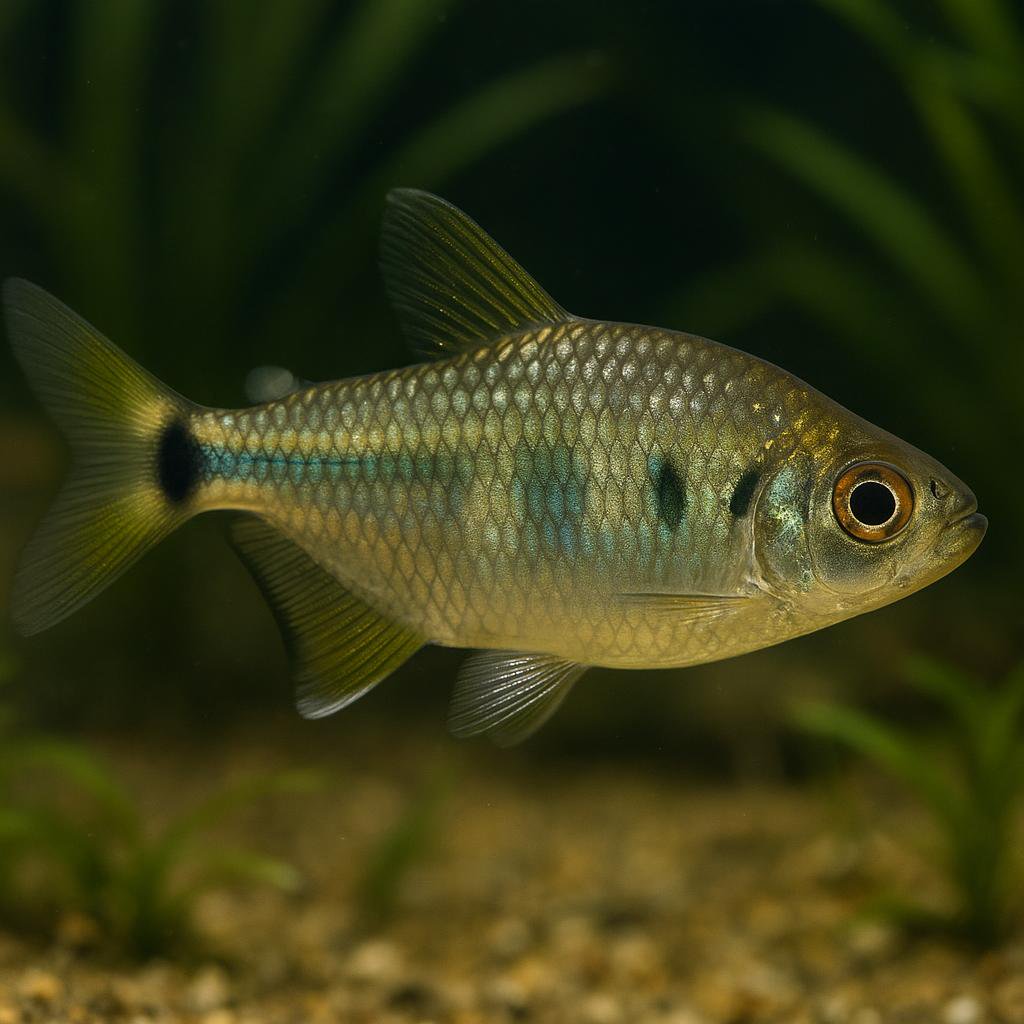
Andrica moenkhausia
Moenkhausia andrica
Moenkhausia andrica is a little Brazilian characin from the Tapajos system that tops out around 7 cm (about 2.8 inches) standard length. It has a neat netted (reticulated) scale pattern plus a dark spot on the caudal peduncle, and the really wild part is that mature females can have tiny fin hooklets too, which is usually a male-only thing in a lot of characins.
Anhanga pygmy pencil catfish
Potamoglanis anhanga
This is a truly tiny Amazonian trichomycterid catfish - like 1.3 cm max - so it is more of a micro-predator oddball than a typical community catfish. It is the kind of fish that disappears into sand, leaf litter, and plant roots, and you will spend way more time setting up the right micro-habitat than you will actually seeing it.
Looking for other species?