

Common river galaxias
Galaxias vulgaris
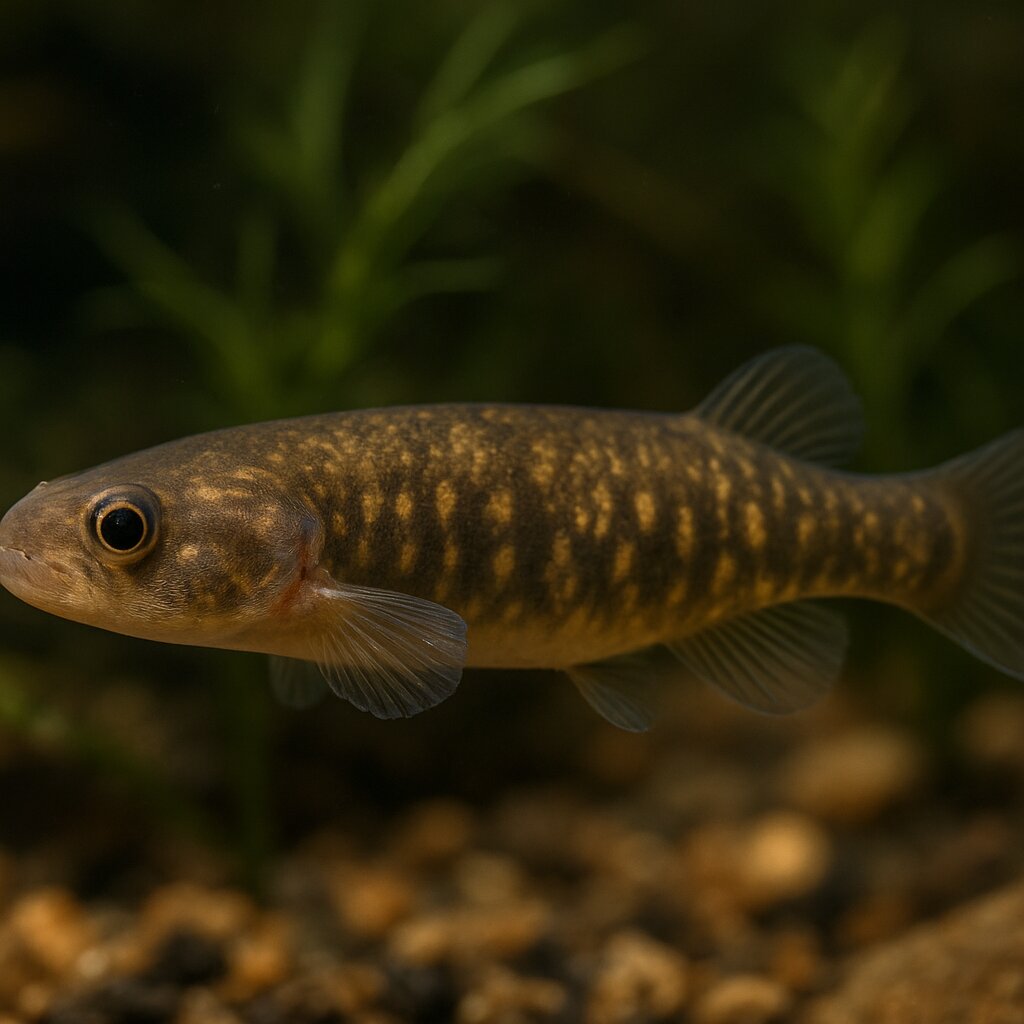
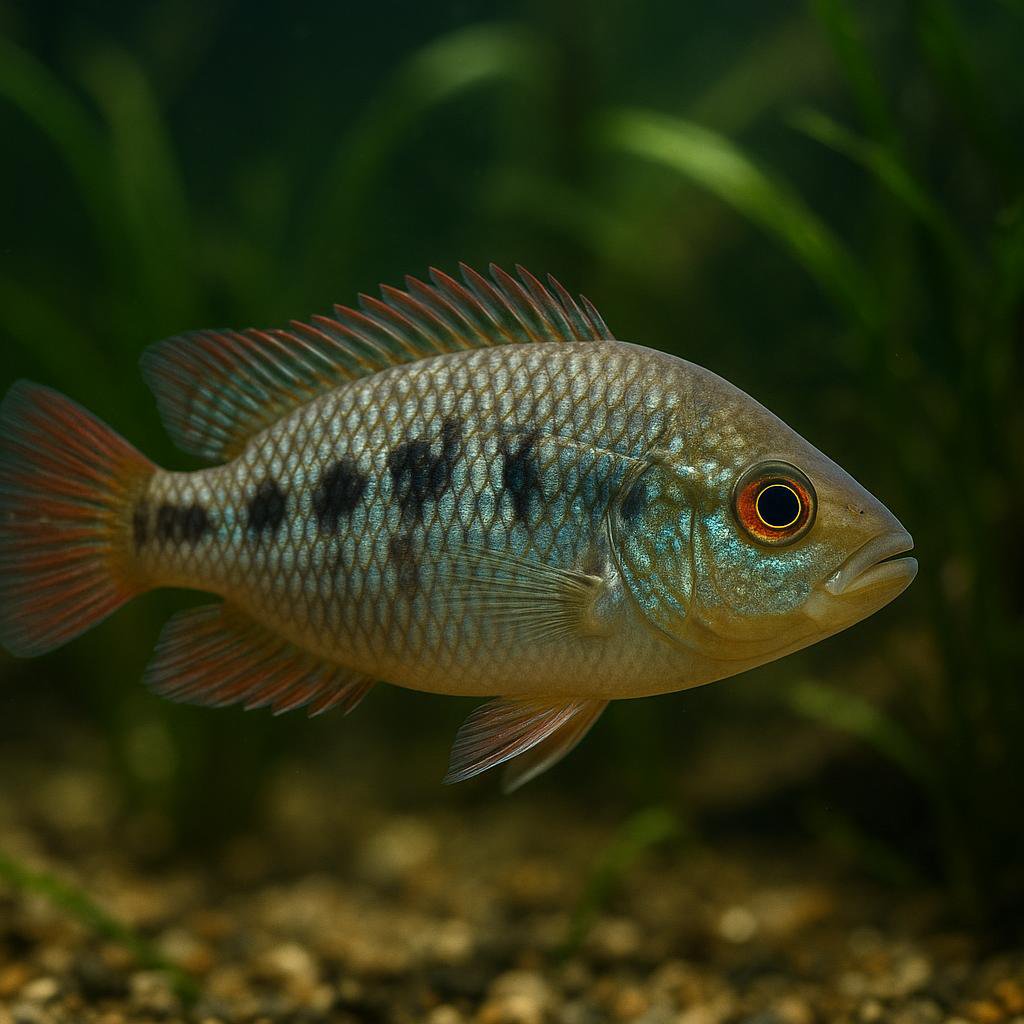
The Common river galaxias exhibits a streamlined body, bluish-grey coloration, and distinctive dark spots along its flanks.
This page includes AI-generated images. Why am I seeing AI images?
About the Common river galaxias
Think of the common river galaxias as a little New Zealand stream ninja. It spends the day tucked under cobbles and comes out at dusk to pick drifting insects, so a cool, fast-flowing, high-oxygen setup suits it way better than a tropical tank.
Also known as
Quick Facts
Size
17 cm
Temperament
Semi-aggressive
Difficulty
Advanced
Min Tank Size
30 gallons
Lifespan
3-6 years
Origin
New Zealand
Diet
Carnivore - aquatic insect larvae; will take frozen foods like bloodworms and daphnia
Water Parameters
8-16°C
6.5-7.5
2-12 dGH
Need a heater for this species?
This species needs 8-16°C in a 30 gallon tank. Use our heater calculator to find the right wattage.
Calculate heater sizeCare Notes
- Run a river-tank setup: long tank (30-40 gal+), strong directional flow, lots of rounded cobbles, undercut-style hides, and a tight lid they cannot squeeze through.
- Keep it cold and oxygen-rich: 10-16 C with a chiller, pH 6.5-7.5, soft to moderate hardness (2-8 dGH), high turnover (8-12x/hr), and 30-50% weekly water changes with cool, dechlorinated water.
- They are carnivores that hunt inverts; feed small portions of live or frozen bloodworms, blackworms, daphnia, mosquito larvae, and chopped earthworms 1-2x/day; train onto small sinking carnivore pellets by mixing with the good stuff.
- Skip community fish; go species-only or with similar-sized, calm, coolwater natives at most—shrimp and tiny fish become snacks, and bigger or pushy fish stress them out.
- Low light and dense cover matter; give shaded overhangs and cobble piles with sight breaks, plus some open runs so they can sprint between hides.
- They jump hard when spooked; seal every lid gap and pre-filter pump intakes so they do not wedge themselves.
- Breeding: chill to ~8-10 C over winter, then increase flow and daylight in spring; provide pebble trays or cobble gaps for eggs, pull adults after spawning, and raise eggs at 10-12 C with gentle flow; start fry on newly hatched brine shrimp and microworms.
- Big red flags are heat spikes, low oxygen, and harsh meds—these fish are scaleless, so avoid copper and heavy dosing, and do not add salt except for very short, controlled dips in a separate container.
Compatibility
Good Tankmates
- Dojo/weather loach - big, chilled bottom diggers that ignore galaxias drama and like the same cool, fast water
- Hillstream loaches (Sewellia, Gastromyzon) - rock huggers that stick to glass and stones, need high oxygen like the galaxias, and rarely get hassled
- Adult-size temperate shiners or dace (rainbow shiners, larger Notropis/Chrosomus) in a tight, fast shoal - choose fish too deep-bodied or long to fit in a galaxias mouth
- Native stream gobies like common bully (Gobiomorphus) - same temps and current; give stone piles and caves so everyone holds a little territory
- Same-size common river galaxias in a big, rock-packed tank - 3-6 works if you break sightlines and avoid size mismatches
Avoid
- Small schooling fish like white clouds, neons, danios, or guppies - bite-size snacks once the lights dim
- Slow fish with fancy fins (fancy goldfish, long-fin barbs/danios, gouramis, bettas) - fins get shredded and they hate the current
- Big bruisers or predators (cichlids, perch, trout) - wrong temps or way too aggressive, and the galaxias ends up hiding or worse
Where they come from
Common river galaxias (Galaxias vulgaris) are a small New Zealand native, mostly from cool, fast streams with clean water and stony bottoms. Think shallow riffles, cobbles, and pockets of shade. They spend a lot of time wedged under stones and venture out more at dusk and dawn.
Check your local laws. Wild galaxiids are protected or permit-controlled in many places. Never release aquarium fish into local waterways.
Setting up their tank
Set them up like a small, cold, stony stream. They are sensitive and do best in a dedicated system. A 90-120 cm (3-4 ft) long tank lets you build a flow from one end to the other. Use a tight lid - they jump.
I run a river manifold with powerheads pointing down the length of the tank, plus heavy aeration. Substrate is sand mixed with fine gravel, topped with rounded cobbles and stacked slate for crevices. Keep lighting on the dim side. Plants are optional; hardy cool-water mosses tied to rocks handle the current better than rooted plants.
- Temperature: 8-18 C. Aim for 10-15 C long term. Avoid spikes over 20 C.
- Flow: strong, laminar flow with plenty of dissolved oxygen. Think stream, not pond.
- pH: 6.6-7.6 (stable).
- Hardness: soft to moderate (2-12 dGH).
- Nitrogen waste: ammonia and nitrite at 0, keep nitrate as low as you can (ideally under 20 mg/L).
- Water changes: 30-50% weekly, pre-chilled and well-aerated.
Cooling: A chiller is the stress-free option. Fans over an open top work in a pinch but increase evaporation. Keep a thermometer you actually look at every day. Summer is the season that catches people out.
Oxygen safety net: Have a spare air pump on a battery backup or airstone you can drop in during power cuts. Galaxiids crash fast in low O2.
What to feed them
They are insect pickers by nature. Mine took to live foods first, then learned to accept frozen. Dry foods are hit-or-miss and usually not worth the wait.
- Live or frozen: bloodworms, blackworms, daphnia, mosquito larvae, chopped earthworms, small crickets, flightless fruit flies.
- Occasional: small pieces of prawn, finely chopped mussel.
- Training tool: wiggle thawed foods in the current so they look alive.
Feeding cadence: juveniles - small portions daily. Adults - 4-6 small feeds per week. Vary it. Remove leftovers so nothing rots in the rocks.
Skip feeder fish and mammal meats. Also avoid stuffing them with only bloodworms long term - mix it up to prevent nutritional gaps.
How they behave and who they get along with
They are quick, curious, and a bit shy with bright lights. Expect them to hold positions in the current, then dart to grab food. In groups they settle better, but you will see some pecking order stuff, especially around the best hideouts.
- Best plan: species-only group of 4-8 in a roomy stream tank with many hiding spots.
- Possible but tricky: cold-water natives of similar size that like current (e.g., small sculpins or bullies). Only in large tanks with visual barriers.
- Avoid: goldfish, tropicals, cichlids, trout, crayfish, and shrimp. Shrimp become snacks. Bigger fish will hassle or eat them.
They jump. Any gap in the lid is an exit. Cover cable cutouts and keep the water line a few cm below the rim.
Breeding tips
People do breed non-migratory galaxiids in captivity, but it takes patience and seasonal cues. Sexing is subtle, so keep a group and let them pair off. Spawning tends to happen in cooler months rolling into spring as temperatures and day length rise a bit.
- Seasonal cycle: give them a few months at 8-10 C with short days, then slowly lift to 12-14 C and lengthen the photoperiod.
- Spawning sites: flat stones with narrow gaps, cobble piles, and fine gravel in brisk flow. Eggs are adhesive and often laid on the underside of stones.
- After eggs appear: move the stone to a hatching box with strong aeration and gentle current, or fence off the area. Adults will snack on eggs or fry.
- Incubation: expect a couple of weeks depending on temperature. Keep fungus off with clean water and flow, rather than heavy meds.
- Feeding fry: start with paramecia/rotifers or vinegar eels, then newly hatched brine shrimp once they can take it. Use a mature sponge filter.
A cheap USB microscope or macro lens helps you confirm that fry bellies are full. Orange bellies from brine shrimp = you are on track.
Common problems to watch for
- Heat stress: rapid breathing, hanging at the surface, loss of color. Fix the temperature first, boost aeration immediately.
- Low oxygen: same symptoms as heat stress. Keep the flow high and clean gunk from pre-filters often.
- Scrapes and fungus: they wedge under rocks and can scuff themselves. White cottony patches are common after a scrape.
- Refusing food: new fish often only take live foods. Start there and transition. Check temperature and current if appetite dips.
- Parasites from wild-caught stock: flukes or internal worms. Quarantine and use gentle treatments.
- Water quality swings: they are sensitive to ammonia and nitrite. Do not overstock and keep the filter pristine.
They are scaleless and react badly to harsh meds. Be cautious with copper, formalin, and strong salt dosing. If you must medicate, start at reduced doses and keep oxygen very high.
Similar Species
Other freshwater semi-aggressive species you might be interested in.
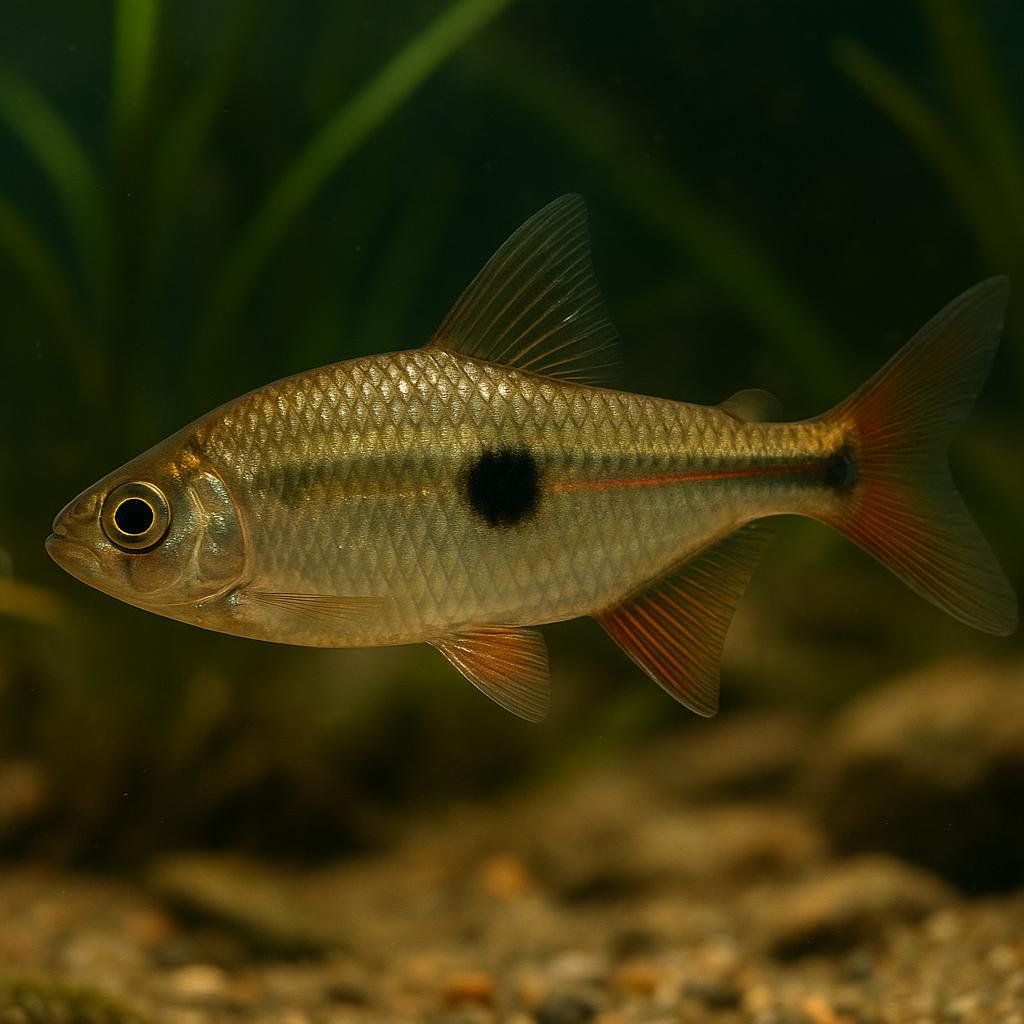
Jupiaba kurua
Small South American characin endemic to the upper rio Curuá (rio Xingu basin, Brazil). Reaches about 8.7 cm SL and inhabits clearwater rivers. Distinguished by dark dots on the bases of many lateral scales and a distinct dark caudal‑peduncle spot. Reported diet indicates omnivory, including aquatic insects, small fishes, and fragments of Podostemaceae and filamentous algae.
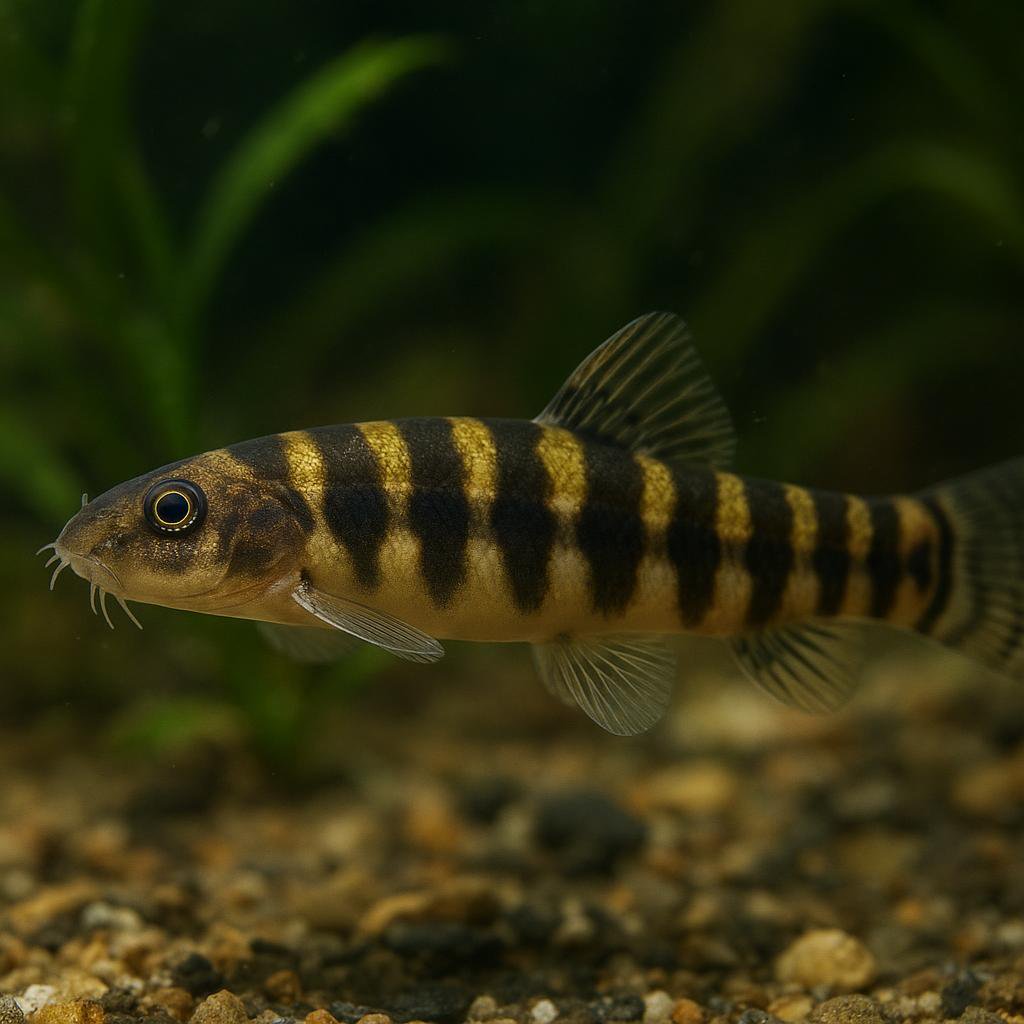
Altipedunculata stone loach
Schistura altipedunculata
Schistura altipedunculata is one of those little stream loaches that wants clean, well-oxygenated water and a bunch of rock nooks to claim as home. It is a bottom-hugger that will spend its day scooting from crevice to crevice, and it tends to get a bit spicy with its own kind if you do not give it enough hiding spots.
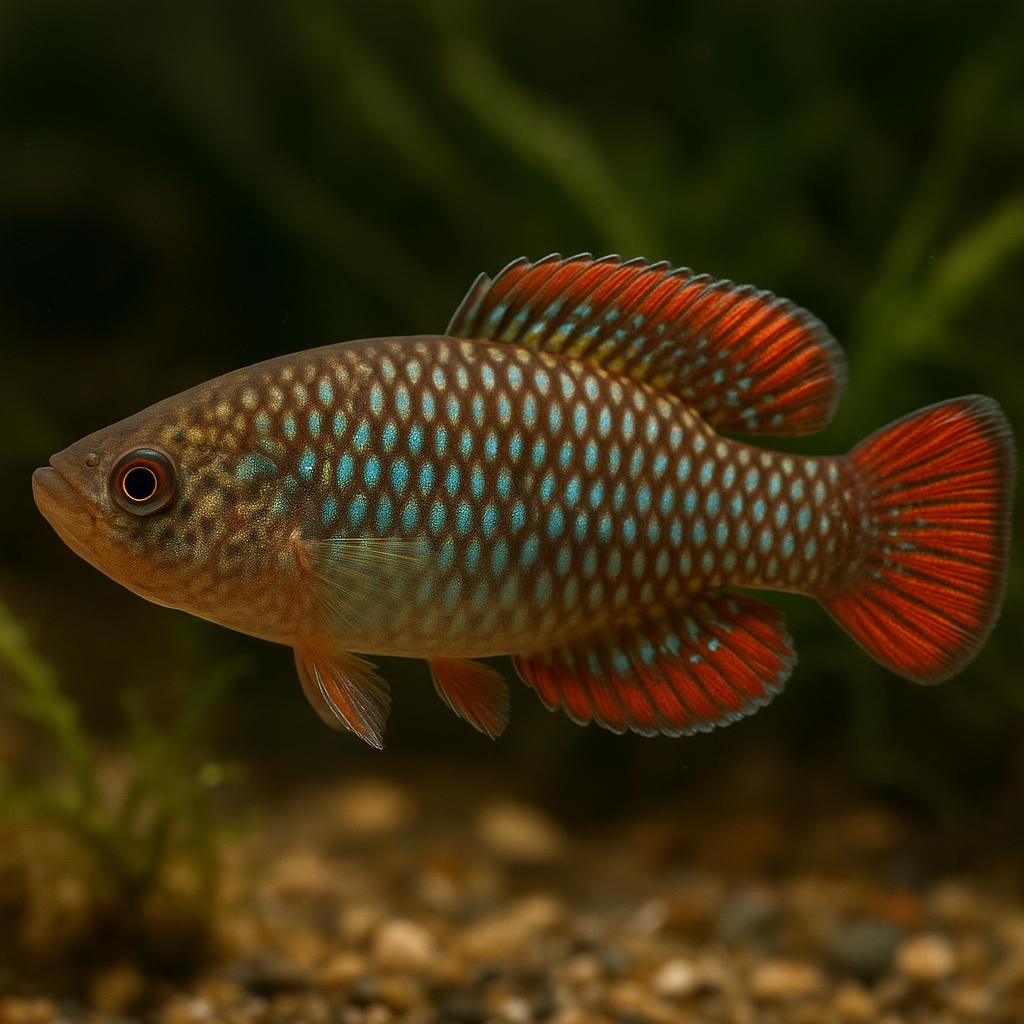
American flagfish
Jordanella floridae
Jordanella floridae is that little Florida native with the red-and-cream striping that really does look like a tiny flag once a male colors up. They graze algae like champs (especially stringy/hair algae), but they have a bit of attitude - give them plants and space so the bossy behavior stays manageable. Bonus: the male guards the eggs and will actively fan them, which is pretty fun to watch.
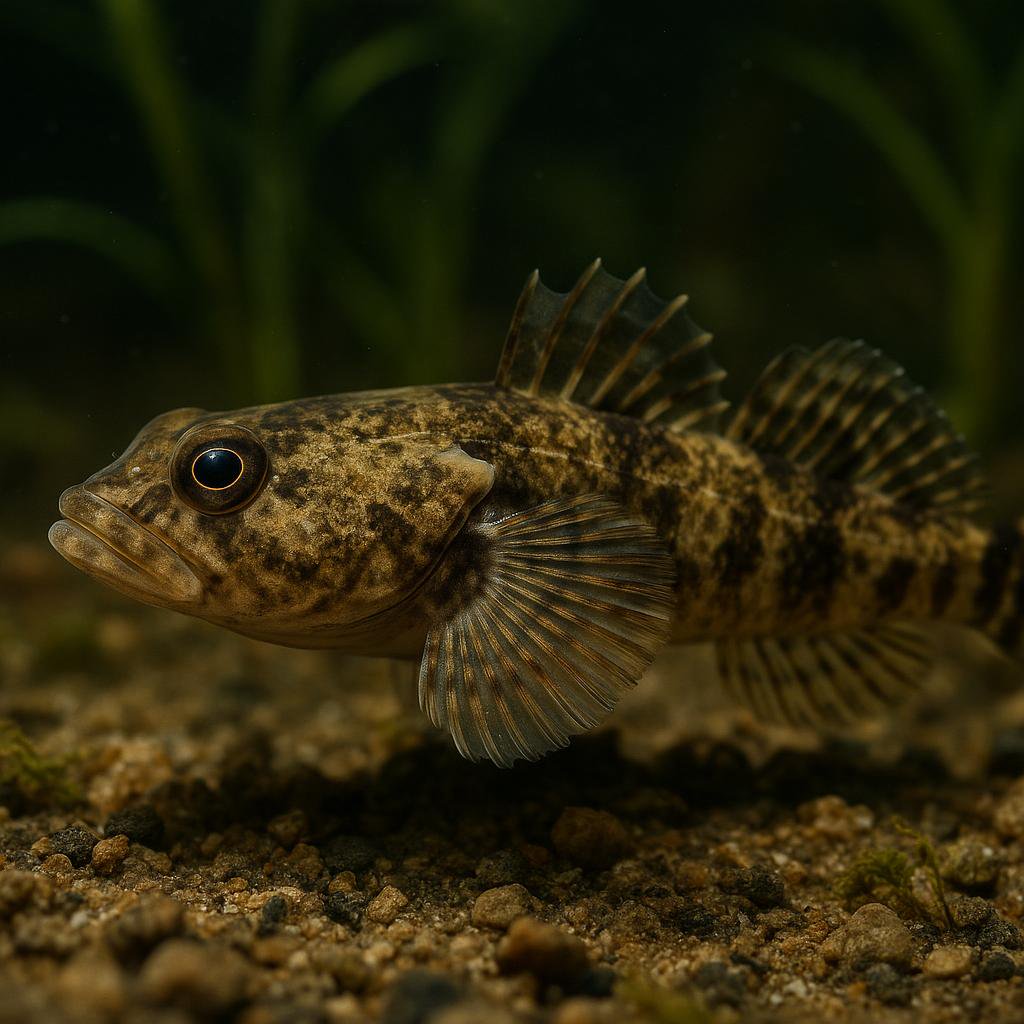
Amur sculpin
Alpinocottus szanaga
This is a little coldwater sculpin from the Amur drainage - a bottom-hugging, rock-and-gravel fish that spends its day wedged under stones and darting out to grab food. Super cool behavior and attitude, but it is absolutely not a warm tropical community fish - it wants chilly, fast, oxygen-rich water and will bicker with other bottom fish.
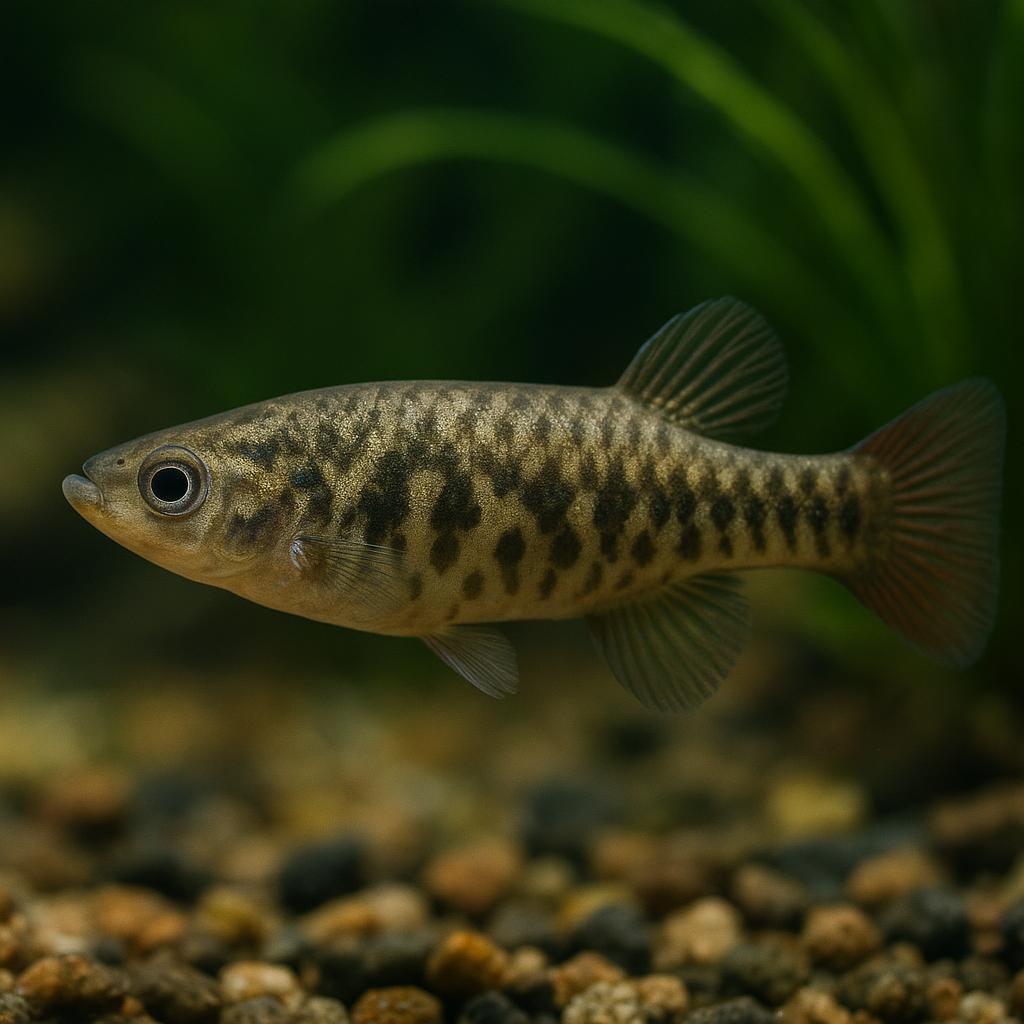
Anitápolis livebearer
Jenynsia weitzmani
Jenynsia weitzmani is a freshwater anablepid livebearer endemic to southern Brazil (currently known only from the type locality near Anitápolis, Santa Catarina). Like other Jenynsia (onesided livebearers), reproduction involves lateralized mating morphology/behavior; aquarium care guidance is not well-documented for this species specifically.
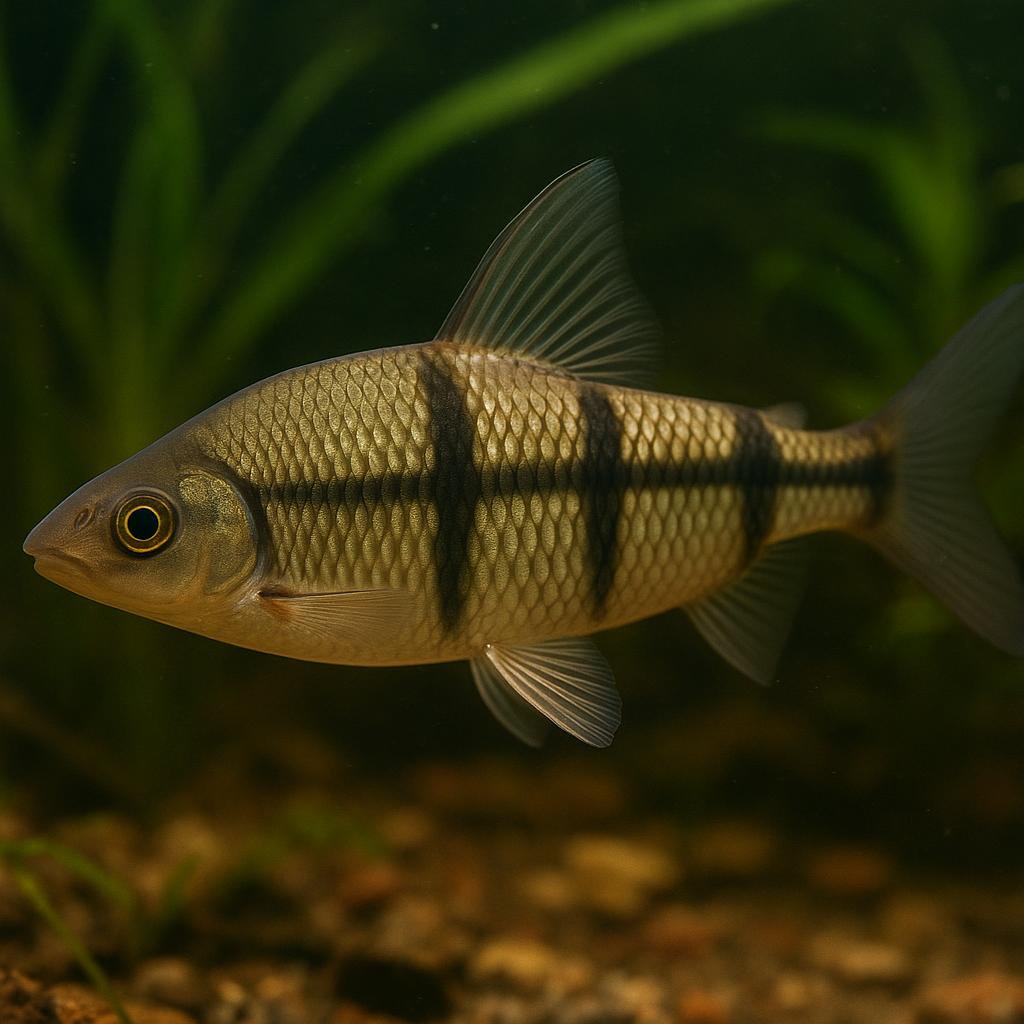
Aracu-comum
Schizodon vittatus
Schizodon vittatus is a large South American anostomid (family Anostomidae). Reported maximum size is about 35 cm standard length; it is harvested/consumed in parts of Brazil and is not commonly covered by mainstream aquarium husbandry references.
More to Explore
Discover more freshwater species.
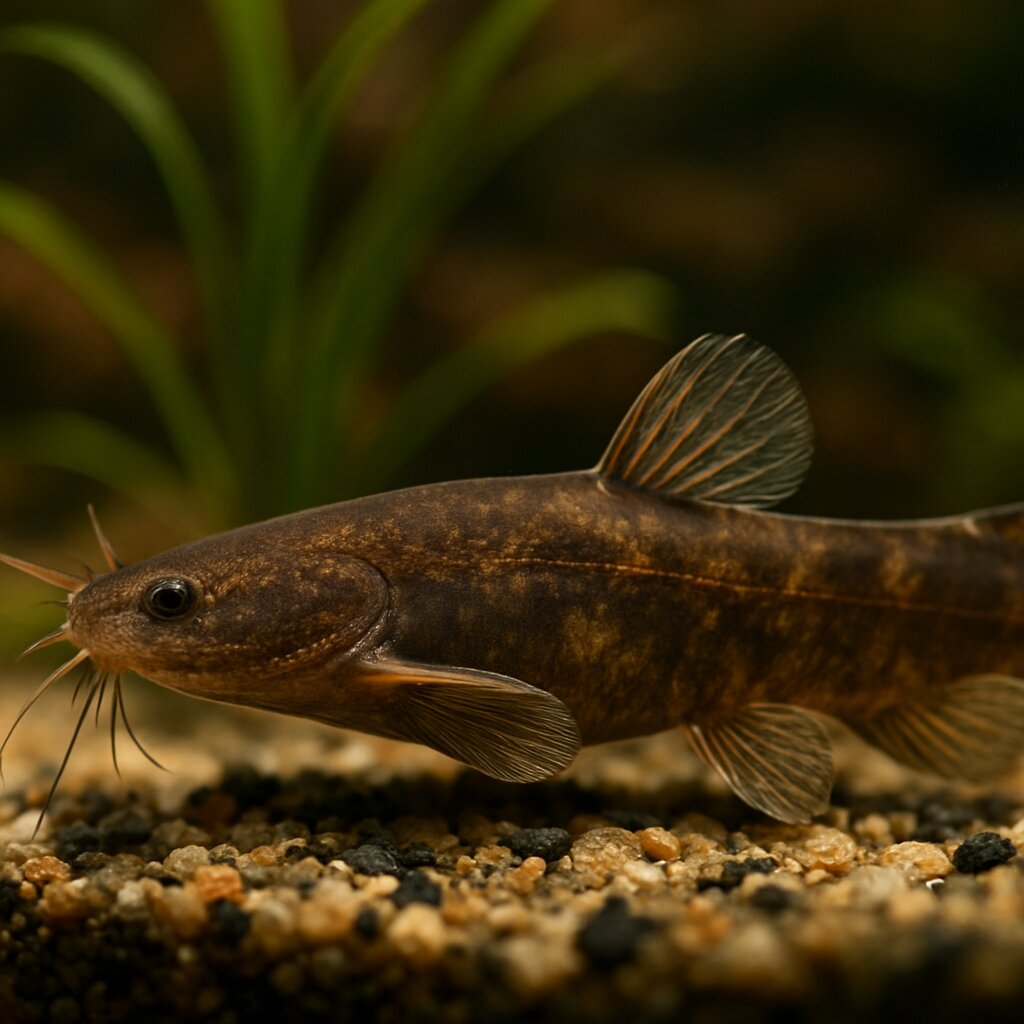
Amphilius dimonikensis
A small loach catfish endemic to the Mpoulou River in the Mayombe (Dimonika Biosphere Reserve), Republic of the Congo. Amphilius dimonikensis has a subtle banded pattern and inhabits fast, clear streams over rock and sand. In aquaria, prioritize strong, well-oxygenated flow with rounded stones and sand to mimic hillstream conditions.
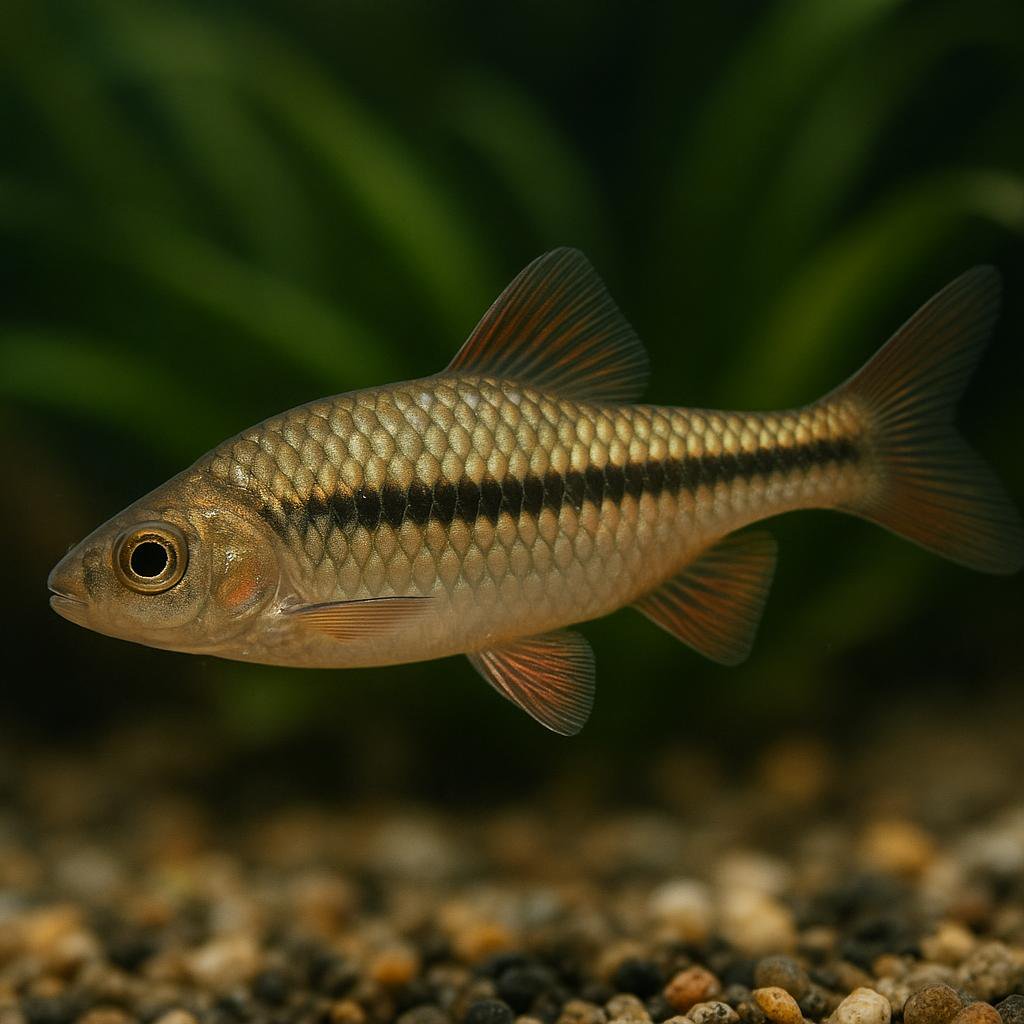
Aboina barb
Enteromius aboinensis
Enteromius aboinensis (the Aboina barb) is a small West African barb with a clean black midline stripe and a little spot right at the base of the tail. It does best when you treat it like a proper schooling fish - keep a decent group and give it plants around the edges with open swimming room in the middle.
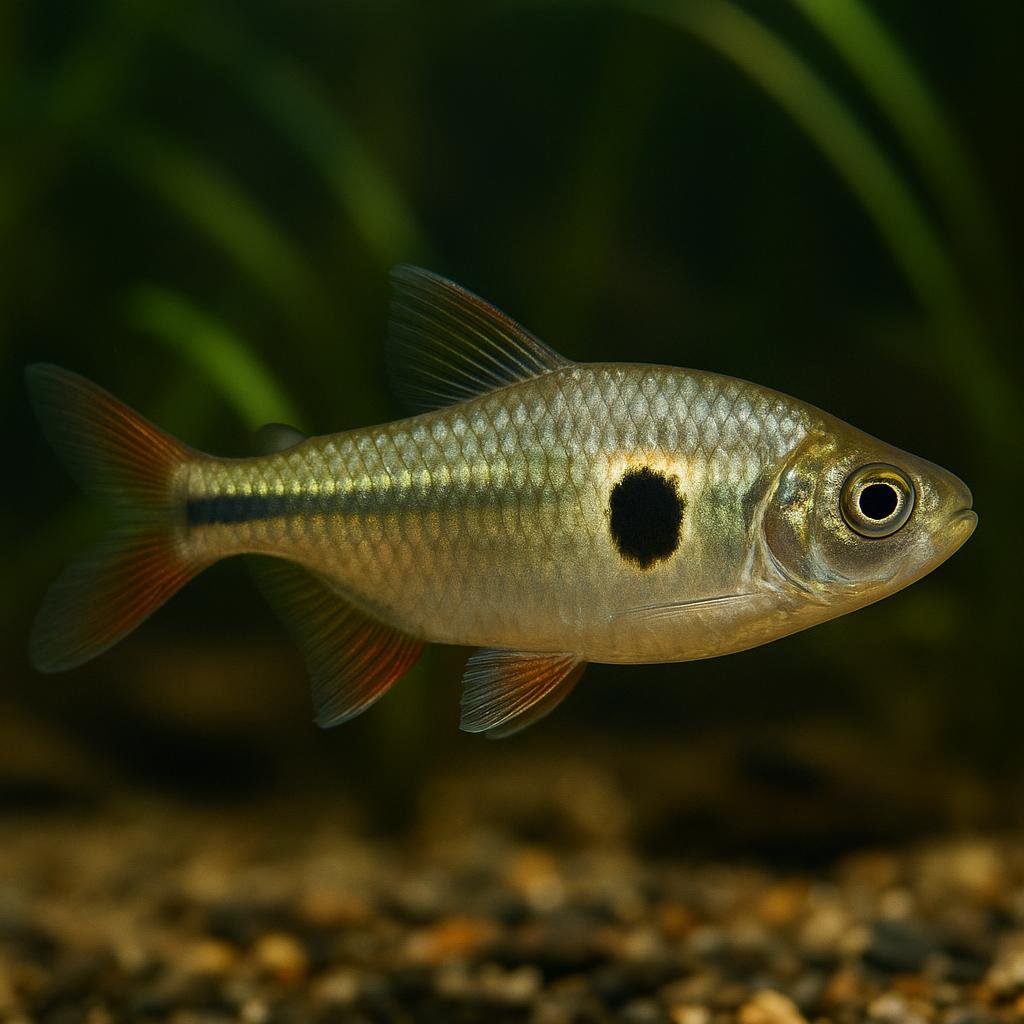
Ajuricaba tetra
Jupiaba ajuricaba
Jupiaba ajuricaba is a South American freshwater characin from the Amazon basin in Brazil (rio Negro, rio Solimões, and rio Tapajós basins). It reaches about 9.5 cm SL and is diagnosed by a narrow dark midlateral stripe, an elongated humeral spot, and an ocellated spot on the upper caudal-fin lobe. Wild specimens have been collected from blackwater forest streams and also oxbow-lake habitats.
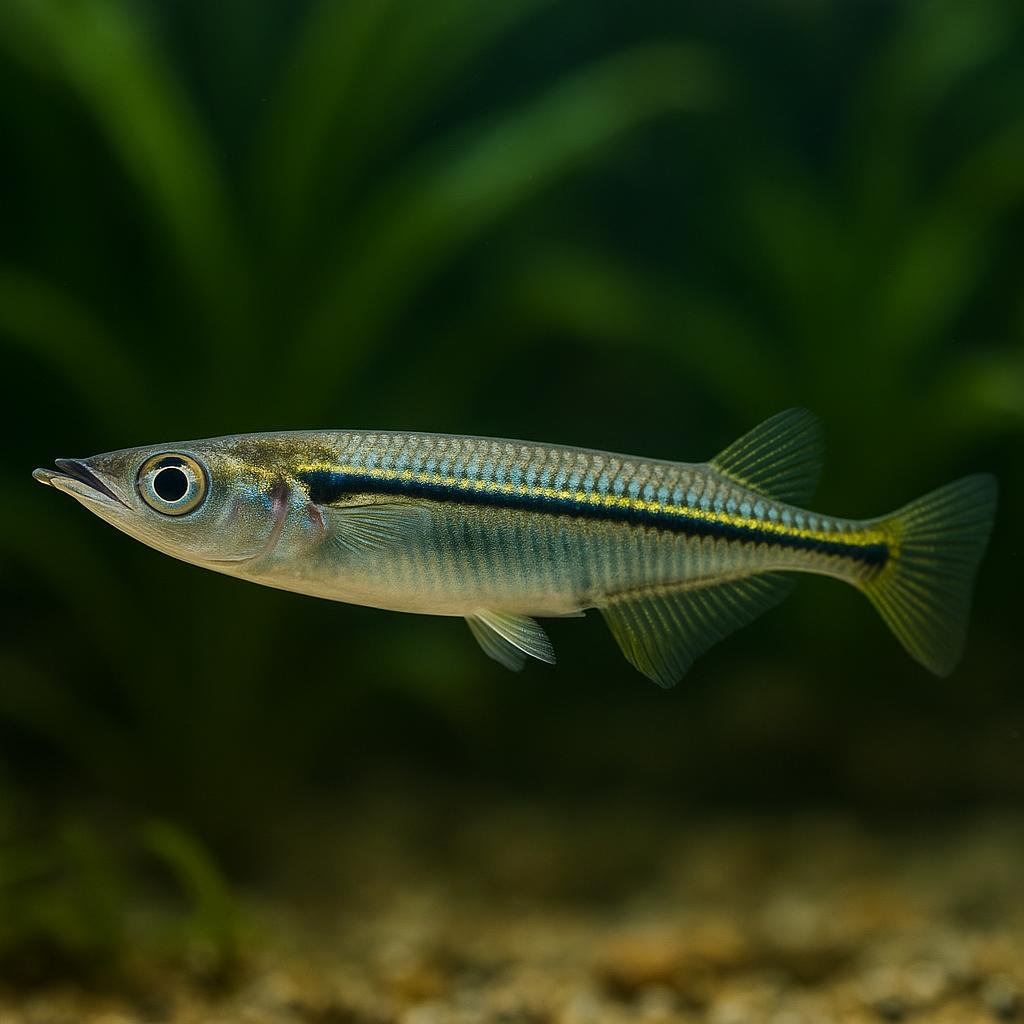
Allen's river garfish
Zenarchopterus alleni
A poorly known freshwater halfbeak endemic to West Papua (Mamberamo River), described from a single specimen (~13 cm SL). Beyond basic habitat/occurrence, little is published about its ecology or aquarium suitability; assume it is a surface-oriented, jump-prone halfbeak only by analogy with related taxa.
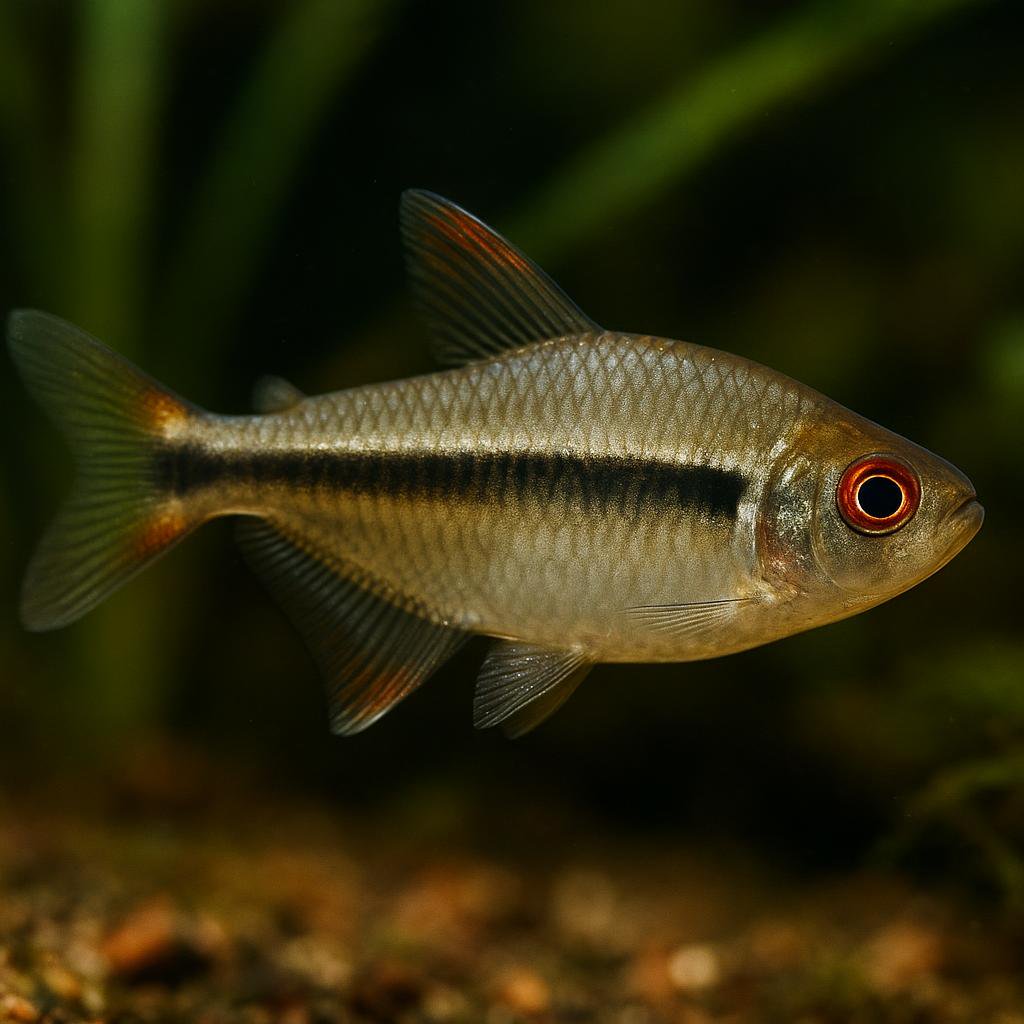
Amapa tetra
Hyphessobrycon amapaensis
This is a tiny, super sleek little tetra with a clean red stripe down the side that really pops once its settled in. It does best in a planted, slightly tinted "creek-style" setup and looks way cooler when you keep a proper group so they school and flash that line together. If you can give it soft, slightly acidic water and a calm community, its an easy fish to fall for.
Amatlan chub
Yuriria amatlana
Yuriria amatlana (the Amatlan chub) is a little Mexican native minnow from the Ameca River basin. Its wild range is pretty limited and it is listed as Endangered, so its care info in the aquarium hobby is basically nonexistent and its availability is usually low. In the original species description, preserved fish show a dark lateral stripe with a darker patch on the caudal peduncle, and they can have tiny barbels at the mouth corners.
Looking for other species?