

Peracuca
Kalyptodoras bahiensis
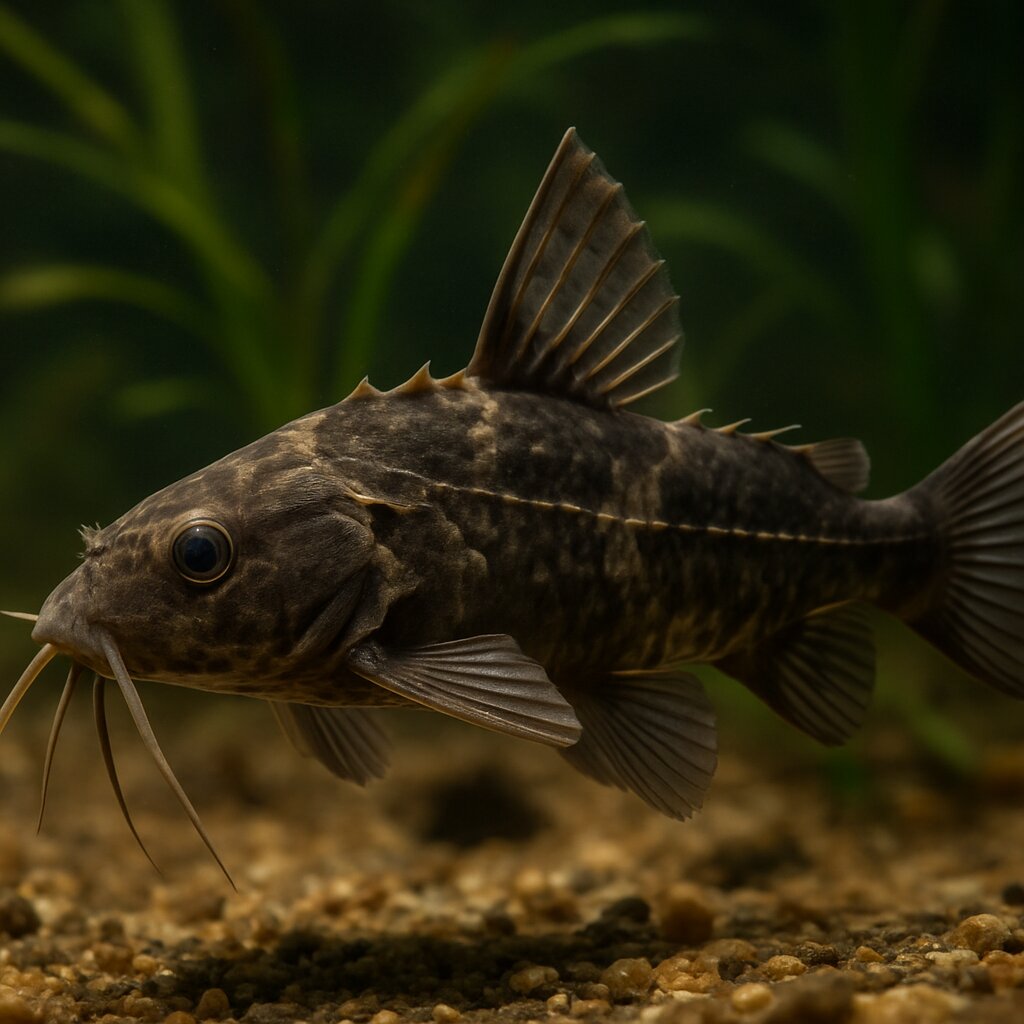
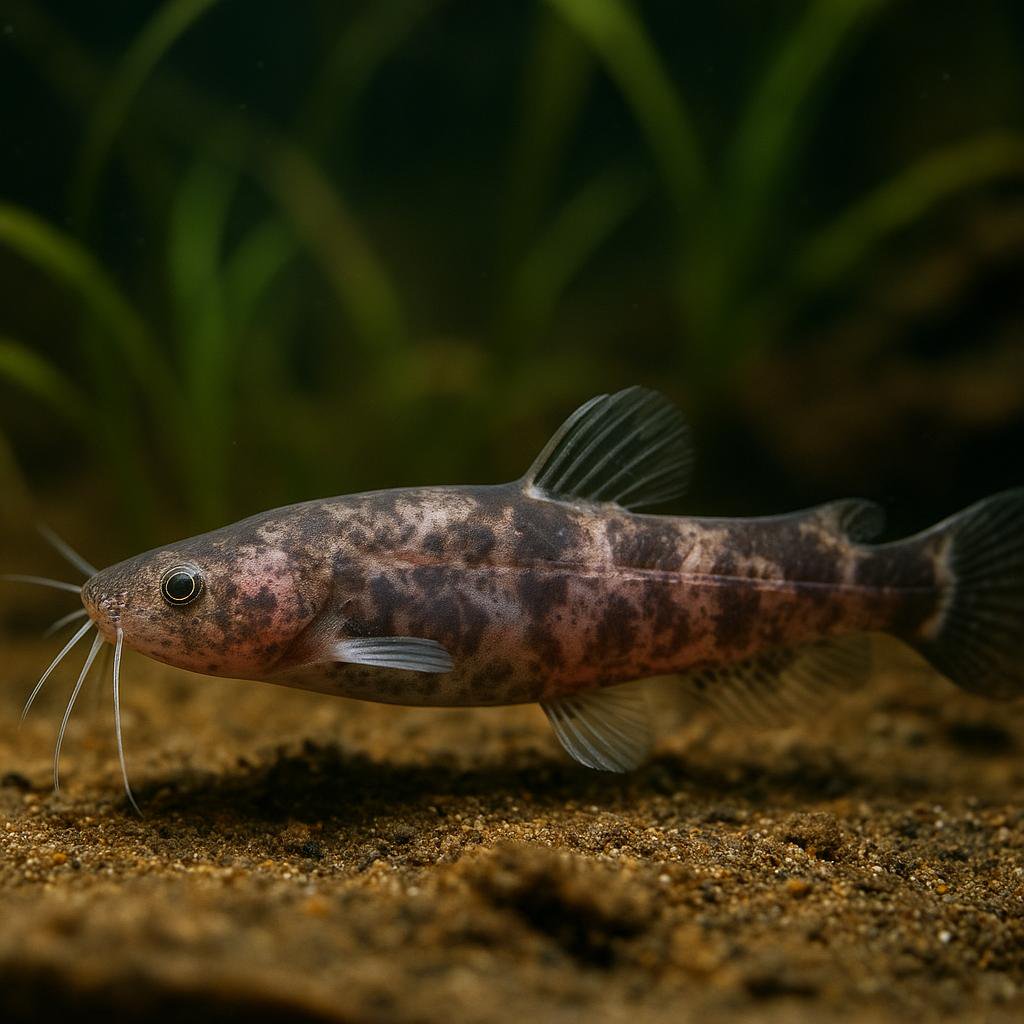
The Peracuca (Kalyptodoras bahiensis) features a robust body, a long dorsal fin, and a mottled brown to gray coloration, often with distinctive dark markings.
This page includes AI-generated images. Why am I seeing AI images?
About the Peracuca
A chunky, armored doradid from Bahia, Brazil, this catfish cruises the bottom at night and uses those bony scutes like built‑in plating. It grows to about 10 inches and loves rooting around for crunchy inverts, so think sturdy decor and meaty sinking foods. Super cool if you are into rare, locality fish with a bit of mystery to their behavior.
Quick Facts
Size
24.5 cm SL (about 9.6 inches)
Temperament
Peaceful
Difficulty
Advanced
Min Tank Size
75 gallons
Lifespan
10-15 years
Origin
South America - Northeastern Brazil
Diet
Carnivore - crustaceans and snails; accepts sinking carnivore pellets, shrimp, mussel, worms
Water Parameters
23-28°C
6.5-7.8
2-15 dGH
Need a heater for this species?
This species needs 23-28°C in a 75 gallon tank. Use our heater calculator to find the right wattage.
Calculate heater sizeCare Notes
- Go with a big-footprint tank (48x18 in or larger, 75+ gal) using soft sand, big driftwood, and tight caves; keep the lighting dim or shaded.
- Aim for 75-82 F, pH 6.2-7.4, soft to medium hardness, and push strong filtration with big weekly water changes to keep nitrate under 20 ppm.
- Use a tight-fitting lid and steady but not blasting flow; they spook-jump during lights-out or water changes, so an airstone or spraybar is handy.
- Feed after lights out with heavy sinking foods like prawn, mussel, chopped earthworms, and quality carnivore pellets; rotate items and keep portions modest.
- They are peaceful but will vacuum up bite-size fish, so pair with medium-large calm tankmates and skip fin nippers or hyper cichlids.
- Those locking pectoral spines snag nets and skin; move them in a specimen container and double-bag with rigid corners if you must bag them.
- Most are wild-caught, so quarantine and consider deworming (levamisole or praziquantel), and avoid rough gravel that trashes their barbels.
- No reliable home breeding records; do not buy a pair hoping to spawn, just set it up as a long-lived display catfish.
Compatibility
Good Tankmates
- Steady midwater fish that are too big to be a snack - bleeding heart or black phantom tetras, larger rasboras
- Peaceful cichlids with good manners - keyholes, festivums, severums that wont bully a shy night cat
- Calm rainbowfish that mind their own business - boesemani, turquoise, similar sizes
- Corydoras and Brochis on sand - they graze by day and rarely bug the catfish
- Mellow plecos and whiptails - bristlenose, small to medium loricariids that do not guard every cave
- Another doradid or two if the tank is roomy and you spread hides around so no one argues over a single log
Avoid
- Anything tiny that fits in the mouth - neons, ember tetras, guppy fry will vanish after lights out
- Fin nippers and rowdy schoolers - tiger barbs, serpae tetras, overly feisty danios
- Big aggressive cichlids or predators - oscars, green terrors, jaguar cichlids will pound on a shy catfish
- Bottom bullies and cave hogs - red tail sharks, large Botia loaches that harass at feeding time
Where they come from
Peracuca (Kalyptodoras bahiensis) is a thorny catfish from Bahia state in northeastern Brazil, mostly in the Paragucu and nearby drainages. Think warm, slow-to-moderate flow rivers with sand, leaf litter, and wood everywhere. They spend daylight jammed under roots or inside cavities and go shopping for food after dark.
Locals call them peracuca. It is a monotypic genus, so you are keeping something pretty unique.
Setting up their tank
They get chunky. Plan for an adult around 10-12 in (25-30 cm). A 6x2 ft footprint is where they settle in long term. Juveniles are fine in less, but they outgrow it quickly.
- Tank size: 125-180 gal for an adult. Footprint matters more than height.
- Substrate: sand or very fine smooth gravel. They bulldoze and like to root around.
- Hardscape: big wood, tight caves, and shaded nooks. 3-4 hides so they can choose.
- Filtration: beefy canister or sump with strong mechanical. They are messy eaters.
- Flow and oxygen: moderate flow with good surface agitation. They like well-oxygenated water.
- Lighting: dim. Floating plants help them feel secure.
Water is forgiving if you keep it clean and stable: 75-82 F (24-28 C), pH 6.2-7.5, soft to moderate hardness. Keep nitrates low with big, regular water changes.
Use PVC pipes (2.5-3.5 in diameter) and wood tunnels. Angle some so the catfish can wedge in. They relax a lot once they find a snug tube.
They have stout, serrated pectoral and dorsal spines. Never net them. Herd into a jug or plastic box to move. Nets and bags tend to end in a thorny mess.
What to feed them
Wild ones eat inverts, mollusks, and whatever meaty bits they root up. In a tank, they switch over, but some new imports sulk for a week or two.
- Staples: quality sinking carnivore sticks, Hikari Massivore/OSI-style pellets, black soldier fly sticks.
- Meaty foods: mussel or clam (on the half shell is perfect), prawn/shrimp, earthworms, cockle.
- Occasional: chopped tilapia, krill, snails (great for jaw workout).
- Avoid: fatty meats, feeder fish, and daily shrimp binges. Mix it up.
Feed after lights out. I usually feed 3-4 nights a week. They do better on less, but consistent, with big water changes backing it up.
If a new fish wont eat, try a half-shell mussel right by its cave and kill the lights. A small red flashlight lets you check without spooking them.
How they behave and who they get along with
They are calm, nocturnal, and very cave-focused during the day. At feeding time they turn into a slow-moving tank bulldozer. They ignore fish they cannot swallow.
- Good tankmates: mid-to-large characins (silver dollars, larger tetras), peaceful cichlids that are not hyper-territorial (Geophagus, severums), robust barbs, and plecos with their own hides.
- Be careful with: other big armor cats. Space and duplicate hides or they tail-wrestle at night.
- Avoid: tiny tetras, shrimp, and nano fish. They will vanish. Also avoid aggressive bruisers that will pin it in a cave.
Plants are optional. They will uproot delicate stems. Epiphytes tied to wood (Anubias, Java fern, Bolbitis) and floaters survive best.
Breeding tips
I have not seen a confirmed home spawning of Kalyptodoras. Doradids in general are rare spawners in aquaria and often tied to seasonal cues that are hard to replicate. Sexing is not reliable visually outside of subtle body shape differences on mature fish.
If you are determined, you would need a very large group, heavy rainwater-style changes to mimic a wet season, and a sand-wood-leaf setup with very little disturbance. Expect long odds.
Common problems to watch for
- Not eating after import: Give dark caves, very low light, and offer mollusk on the half shell at night. They usually come around in 1-2 weeks.
- Damaged spines or scutes: Happens in shipping. Keep water pristine and add extra oxygen; they heal if not reinjured.
- Bloat from rich foods: Rotate diet and use pellets as a base. Do not feed shrimp every day.
- Low oxygen stress: Gilling hard near the surface, listless during heat. Add surface agitation and lower temp into the mid-70s F.
- Parameter swings: They handle a range but hate sudden changes. Big, matched-temperature water changes work better than small erratic ones.
- Territory scuffles at night: Provide more hides than bottom dwellers. Break line of sight with wood piles.
Those serrated spines can injure you and other fish. Use a container to move the fish, and keep hands away from the pectoral base. If a spine locks in decor, gently back the fish toward the entry point rather than pulling forward.
Quarantine new arrivals. They are slow eaters compared to cichlids. Let them learn pellets in peace before moving to a busy community tank.
Similar Species
Other freshwater peaceful species you might be interested in.
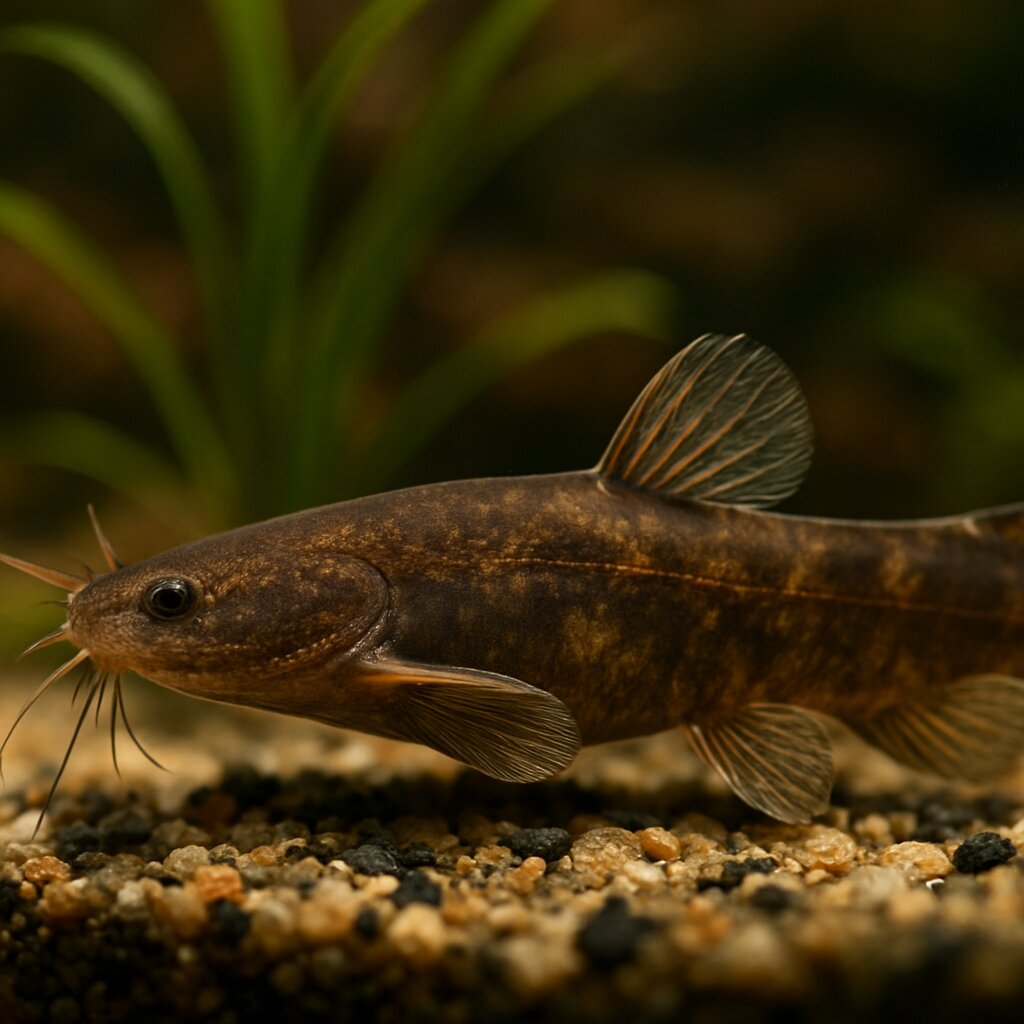
Amphilius dimonikensis
A small loach catfish endemic to the Mpoulou River in the Mayombe (Dimonika Biosphere Reserve), Republic of the Congo. Amphilius dimonikensis has a subtle banded pattern and inhabits fast, clear streams over rock and sand. In aquaria, prioritize strong, well-oxygenated flow with rounded stones and sand to mimic hillstream conditions.
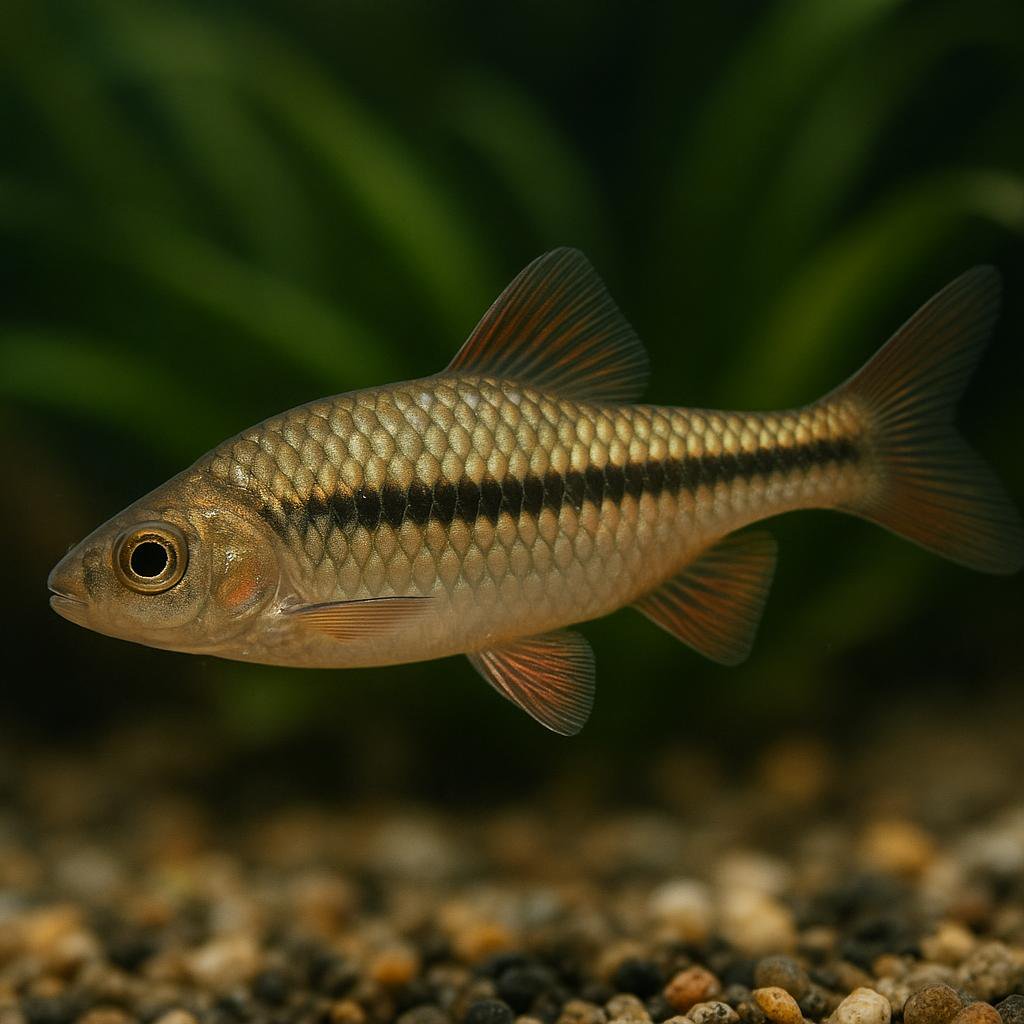
Aboina barb
Enteromius aboinensis
Enteromius aboinensis (the Aboina barb) is a small West African barb with a clean black midline stripe and a little spot right at the base of the tail. It does best when you treat it like a proper schooling fish - keep a decent group and give it plants around the edges with open swimming room in the middle.
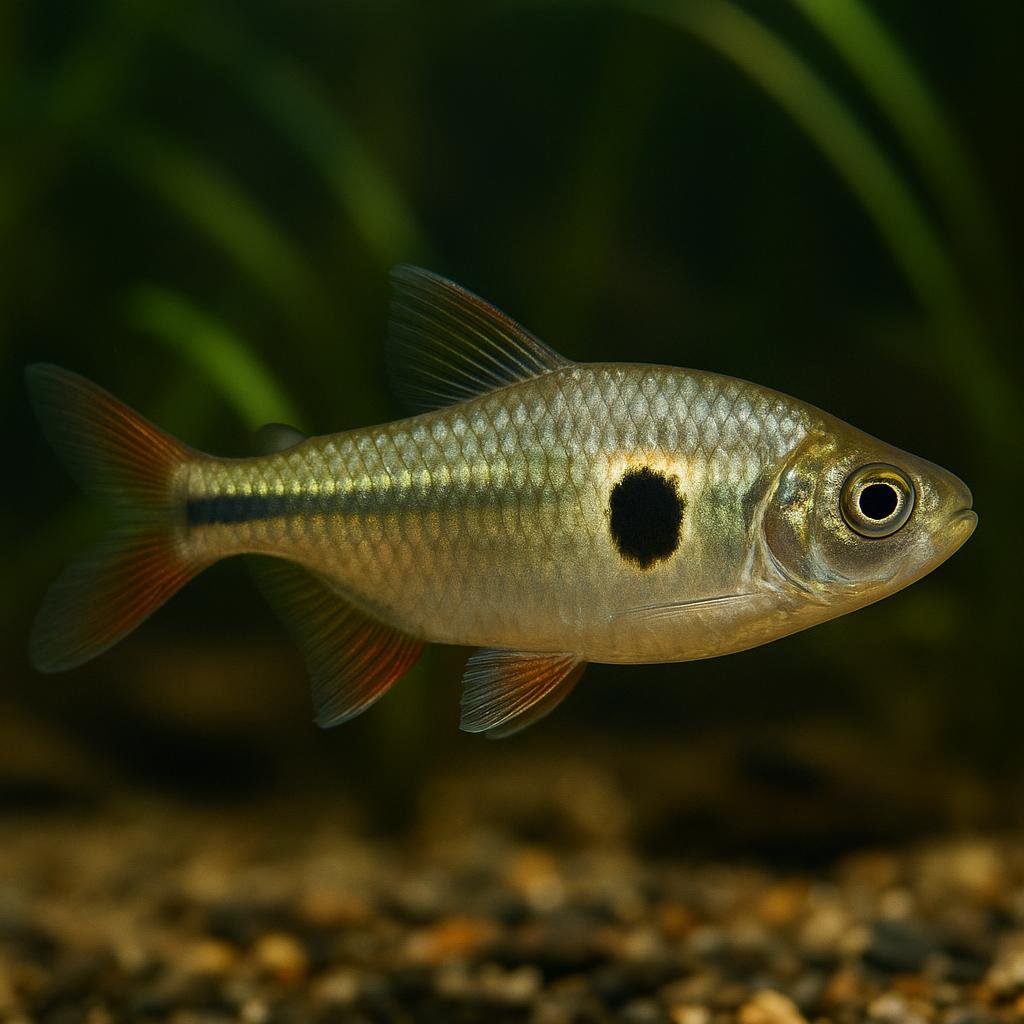
Ajuricaba tetra
Jupiaba ajuricaba
Jupiaba ajuricaba is a South American freshwater characin from the Amazon basin in Brazil (rio Negro, rio Solimões, and rio Tapajós basins). It reaches about 9.5 cm SL and is diagnosed by a narrow dark midlateral stripe, an elongated humeral spot, and an ocellated spot on the upper caudal-fin lobe. Wild specimens have been collected from blackwater forest streams and also oxbow-lake habitats.
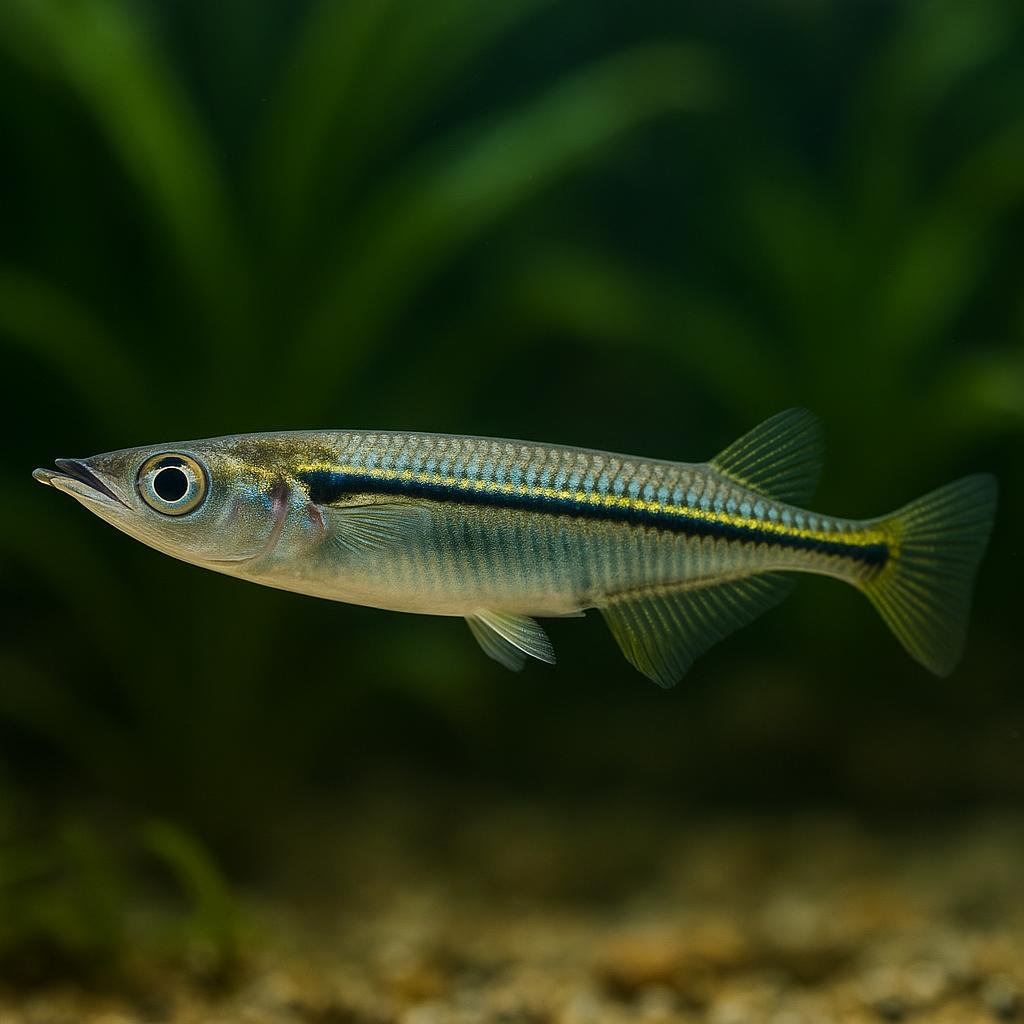
Allen's river garfish
Zenarchopterus alleni
A poorly known freshwater halfbeak endemic to West Papua (Mamberamo River), described from a single specimen (~13 cm SL). Beyond basic habitat/occurrence, little is published about its ecology or aquarium suitability; assume it is a surface-oriented, jump-prone halfbeak only by analogy with related taxa.
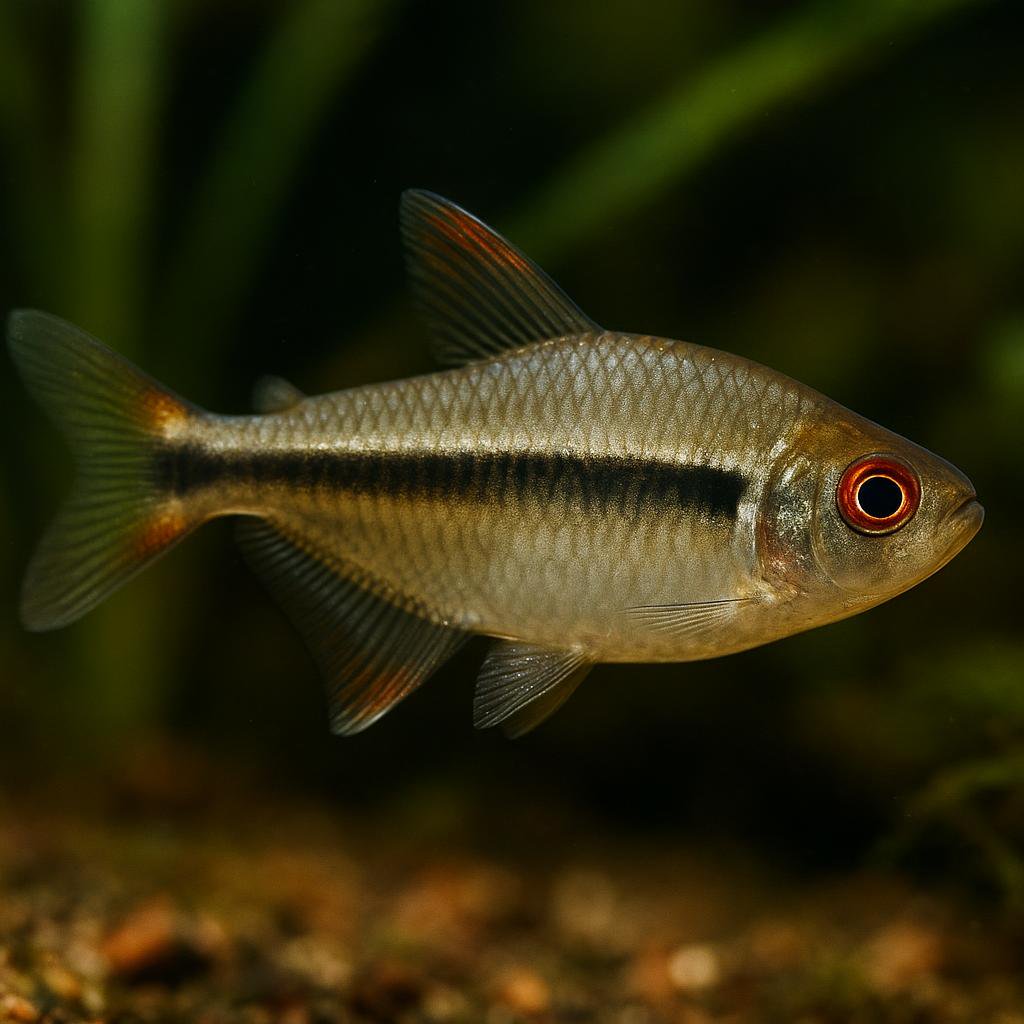
Amapa tetra
Hyphessobrycon amapaensis
This is a tiny, super sleek little tetra with a clean red stripe down the side that really pops once its settled in. It does best in a planted, slightly tinted "creek-style" setup and looks way cooler when you keep a proper group so they school and flash that line together. If you can give it soft, slightly acidic water and a calm community, its an easy fish to fall for.
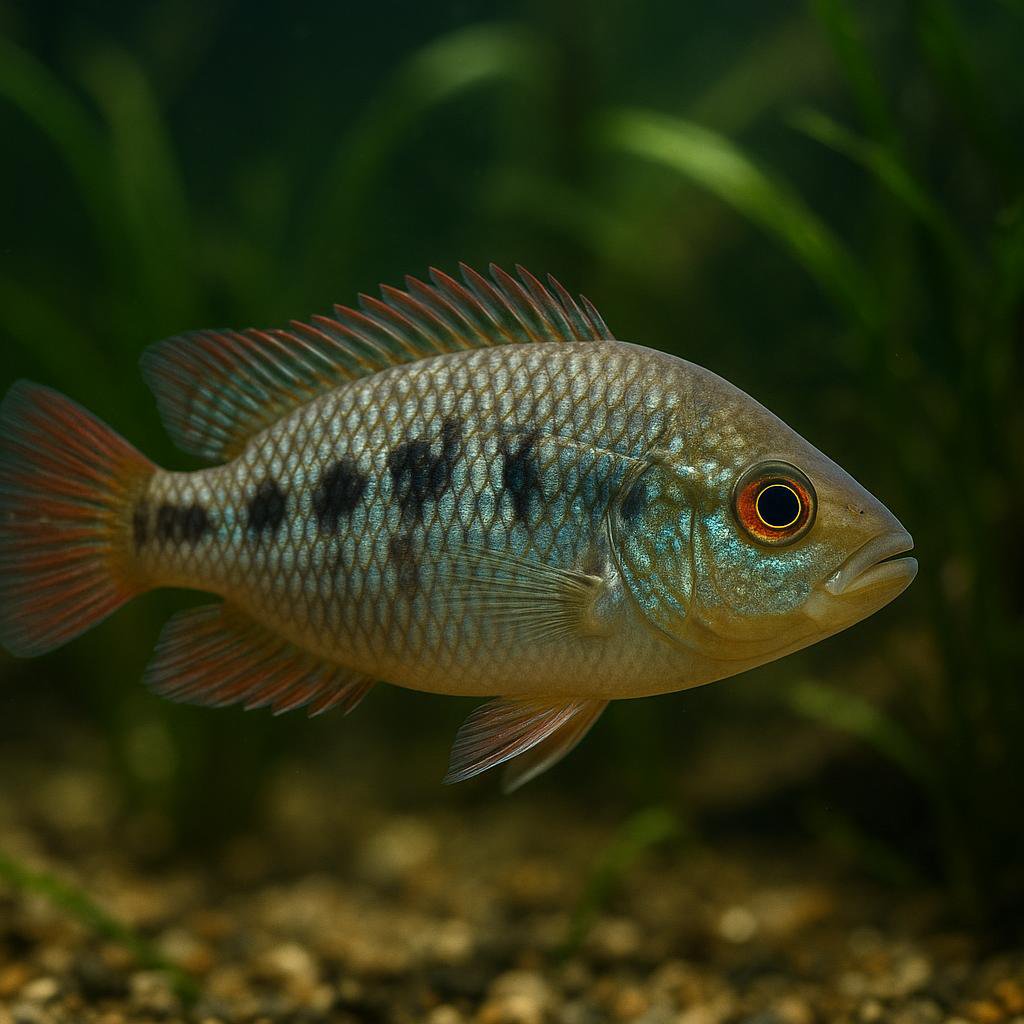
Amatlan chub
Yuriria amatlana
Yuriria amatlana (the Amatlan chub) is a little Mexican native minnow from the Ameca River basin. Its wild range is pretty limited and it is listed as Endangered, so its care info in the aquarium hobby is basically nonexistent and its availability is usually low. In the original species description, preserved fish show a dark lateral stripe with a darker patch on the caudal peduncle, and they can have tiny barbels at the mouth corners.
More to Explore
Discover more freshwater species.
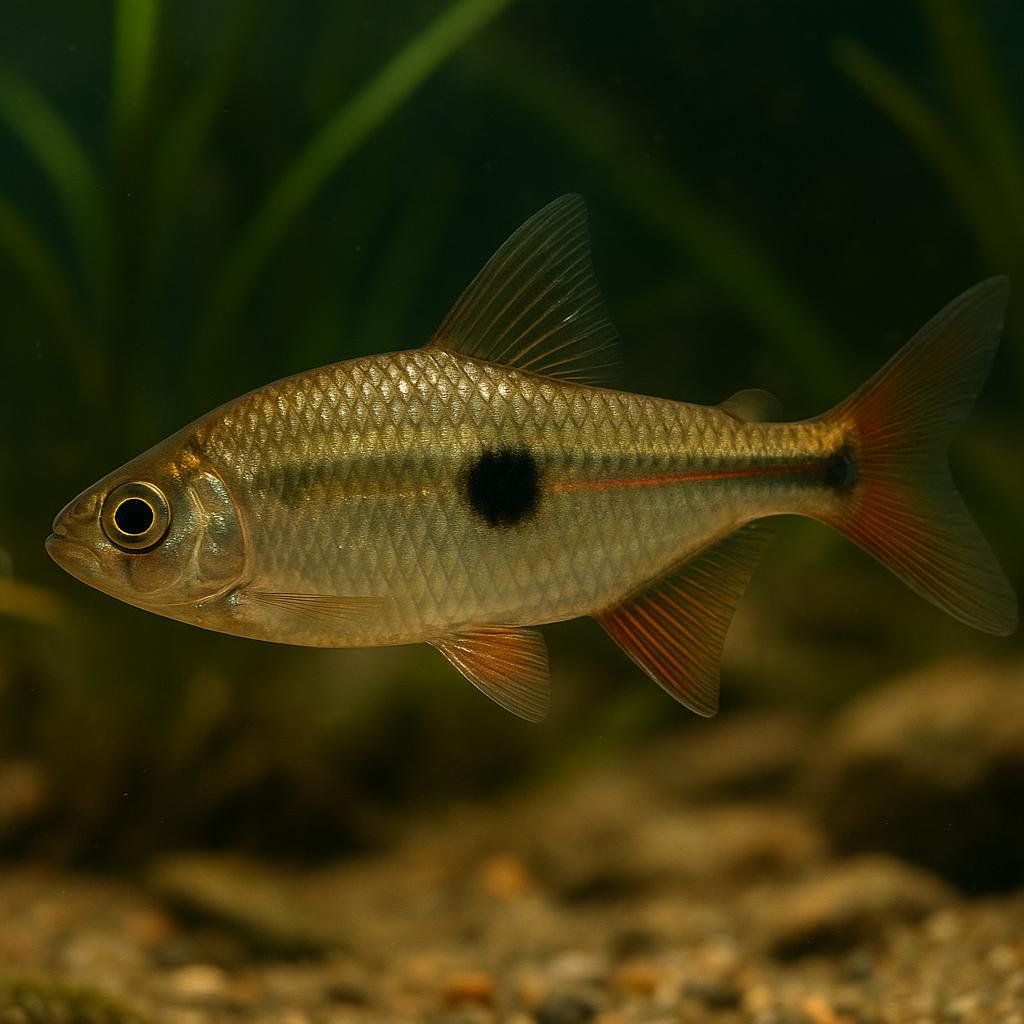
Jupiaba kurua
Small South American characin endemic to the upper rio Curuá (rio Xingu basin, Brazil). Reaches about 8.7 cm SL and inhabits clearwater rivers. Distinguished by dark dots on the bases of many lateral scales and a distinct dark caudal‑peduncle spot. Reported diet indicates omnivory, including aquatic insects, small fishes, and fragments of Podostemaceae and filamentous algae.
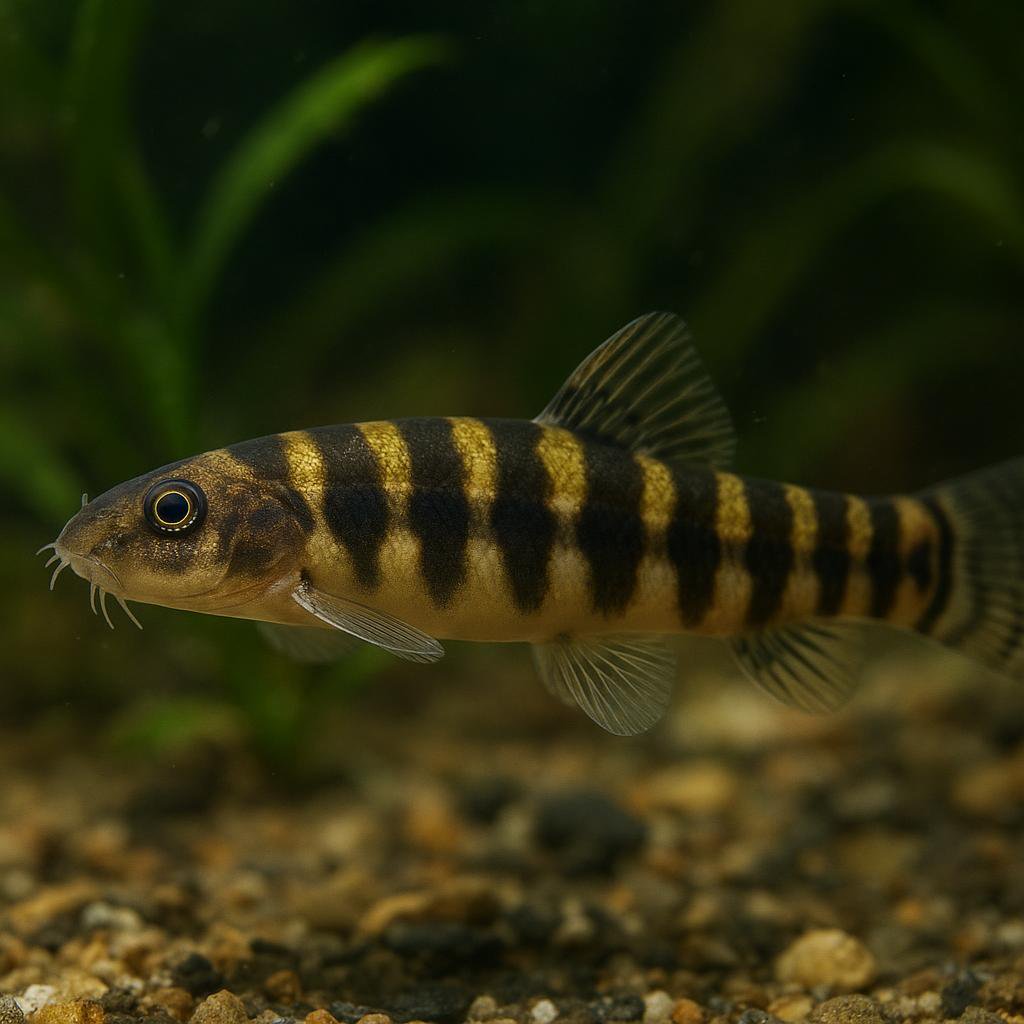
Altipedunculata stone loach
Schistura altipedunculata
Schistura altipedunculata is one of those little stream loaches that wants clean, well-oxygenated water and a bunch of rock nooks to claim as home. It is a bottom-hugger that will spend its day scooting from crevice to crevice, and it tends to get a bit spicy with its own kind if you do not give it enough hiding spots.
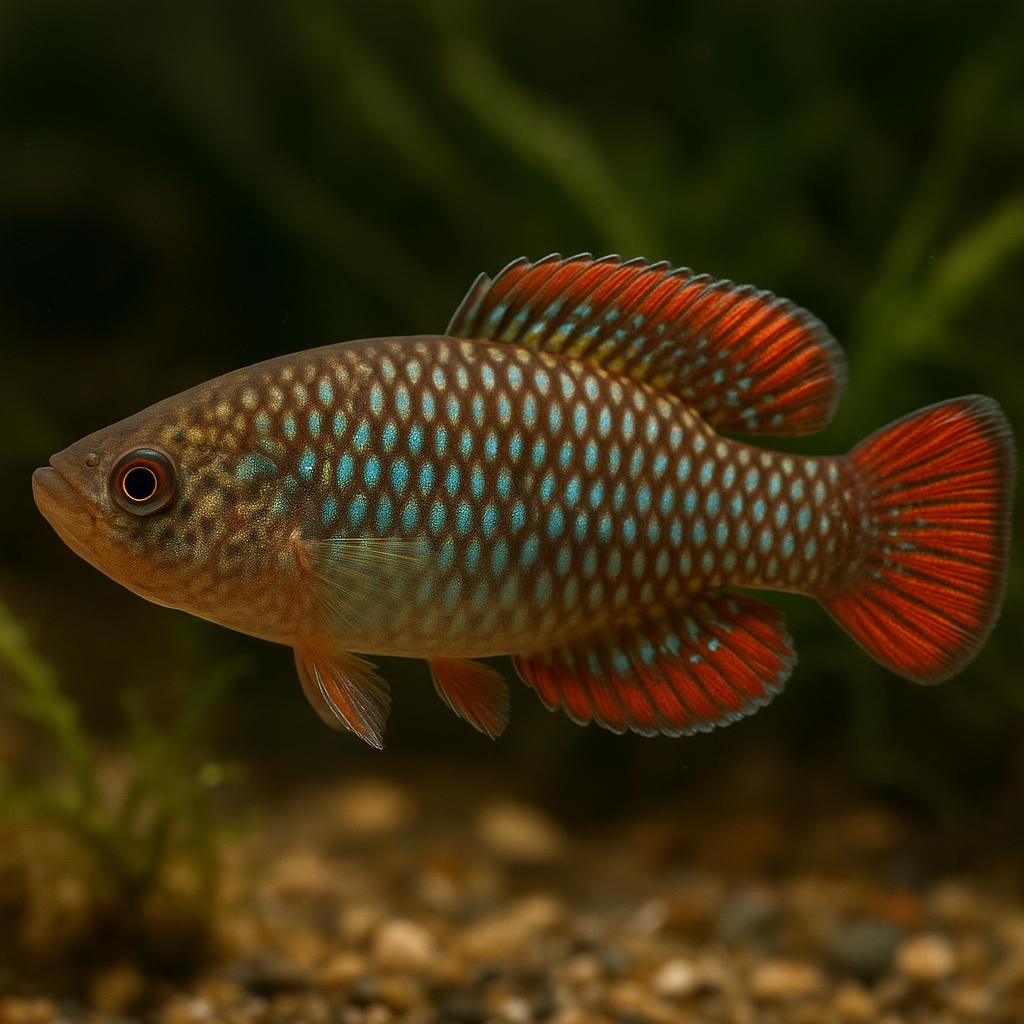
American flagfish
Jordanella floridae
Jordanella floridae is that little Florida native with the red-and-cream striping that really does look like a tiny flag once a male colors up. They graze algae like champs (especially stringy/hair algae), but they have a bit of attitude - give them plants and space so the bossy behavior stays manageable. Bonus: the male guards the eggs and will actively fan them, which is pretty fun to watch.
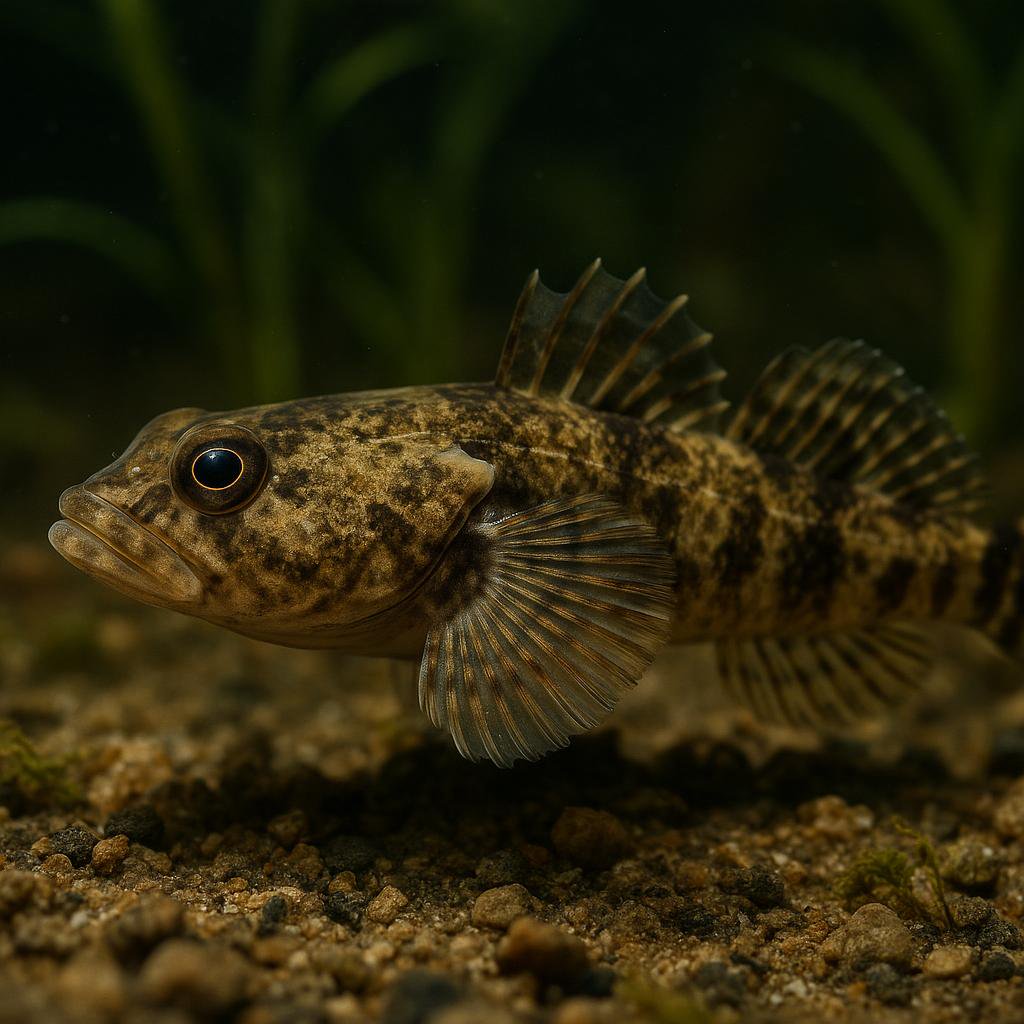
Amur sculpin
Alpinocottus szanaga
This is a little coldwater sculpin from the Amur drainage - a bottom-hugging, rock-and-gravel fish that spends its day wedged under stones and darting out to grab food. Super cool behavior and attitude, but it is absolutely not a warm tropical community fish - it wants chilly, fast, oxygen-rich water and will bicker with other bottom fish.
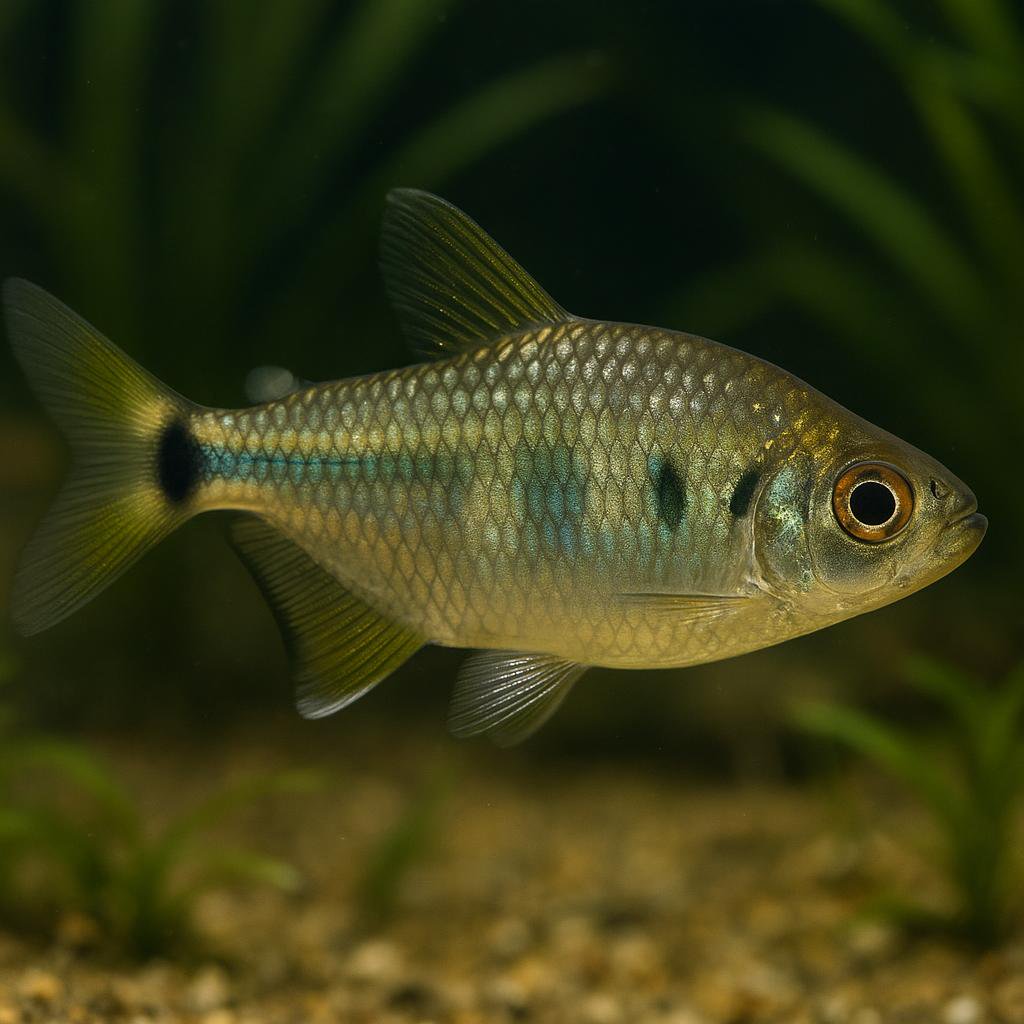
Andrica moenkhausia
Moenkhausia andrica
Moenkhausia andrica is a little Brazilian characin from the Tapajos system that tops out around 7 cm (about 2.8 inches) standard length. It has a neat netted (reticulated) scale pattern plus a dark spot on the caudal peduncle, and the really wild part is that mature females can have tiny fin hooklets too, which is usually a male-only thing in a lot of characins.
Anhanga pygmy pencil catfish
Potamoglanis anhanga
This is a truly tiny Amazonian trichomycterid catfish - like 1.3 cm max - so it is more of a micro-predator oddball than a typical community catfish. It is the kind of fish that disappears into sand, leaf litter, and plant roots, and you will spend way more time setting up the right micro-habitat than you will actually seeing it.
Looking for other species?