

Macra headstander
Laemolyta macra
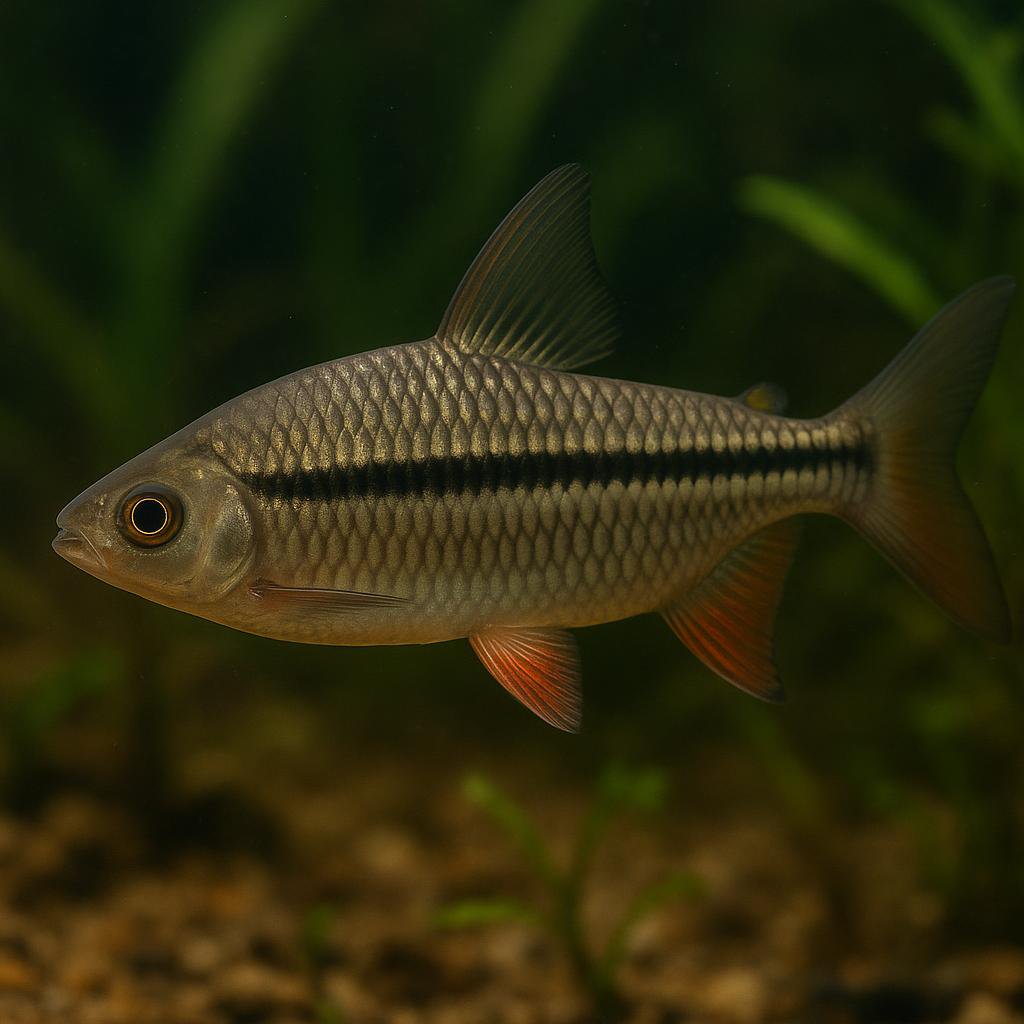
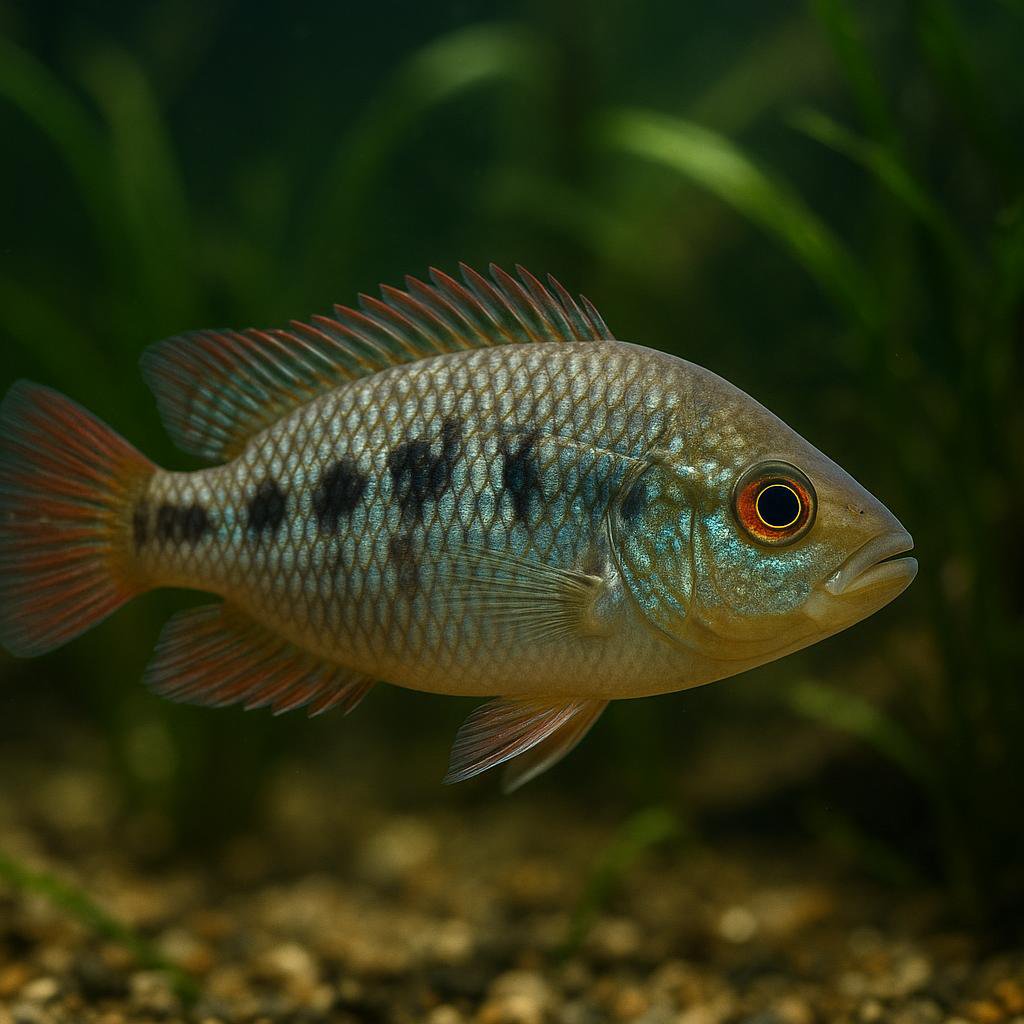
The Macra headstander (Laemolyta macra) exhibits a distinctive elongated body, bright silver coloration, and prominent dorsal and anal fins.
This page includes AI-generated images. Why am I seeing AI images?
About the Macra headstander
Laemolyta macra is a small South American anostomid (headstander family). Some references have treated it historically as Laemolyta garmani macra, but at least some major databases list Laemolyta macra as a valid species rather than a synonym of Laemolyta garmani.
Also known as
Quick Facts
Size
7.1 cm SL (about 2.8 inches SL)
Temperament
Semi-aggressive
Difficulty
Advanced
Min Tank Size
75 gallons
Lifespan
6-10 years
Origin
South America
Diet
Omnivore leaning herbivore/detritivore - veggie-rich pellets/flakes, blanched greens, plus some frozen/live foods
Water Parameters
24-28°C
6-7.5
2-15 dGH
Need a heater for this species?
This species needs 24-28°C in a 75 gallon tank. Use our heater calculator to find the right wattage.
Calculate heater sizeCare Notes
- Provide ample swimming room and cover (wood/structure) as with many anostomids, but extreme adult-tank guidance like 125–180 gallons/6 ft is unlikely to be appropriate for Laemolyta macra given the ~7.1 cm SL maximum length reported by FishBase.
- They do best in soft, acidic-ish water: roughly pH 6.0-7.0, low to moderate hardness, and mid-70s to low-80s F (24-28 C). Dirty water makes them sulky and skinny fast, so plan on heavy filtration and big weekly water changes.
- Feed like a veggie-leaning omnivore: lots of spirulina flakes/pellets, blanched zucchini/green beans, and algae wafers, plus some frozen foods (bloodworms, mysis) as a side dish. If you only feed meaty stuff they get gut issues and stop grazing.
- Expect them to rasp and nibble - they can shred soft plants and will pick at wood and rocks all day. Keep driftwood in there and dont be surprised if your delicate stems turn into salad.
- Tankmates: big, calm South American fish that can handle a pushy neighbor (larger tetras, robust cichlids like severums, peaceful catfish) work well. Avoid slow, long-finned fish and anything small enough to be bullied or stressed out by constant chasing.
- They can be nasty to their own kind in cramped quarters, so either keep a proper group in a big tank or just keep one. If you see lip-locking and persistent ramming, you are already behind - add space and line-of-sight breaks.
- Watch for skinny headstander syndrome: they look fine up top but the belly pinches in because they are getting outcompeted or not getting enough veg. Spread food out, feed after lights out sometimes, and make sure the fish actually gets wafers before the catfish do.
Compatibility
Good Tankmates
- Medium-to-large, sturdy characins like silver dollars (Metynnis) - they are fast, not easily bullied, and they get the whole 'active schooling fish' vibe
- Other robust midwater fish like larger tetras (Congo tetra, buenos aires tetra) in a proper group - they can handle the headstander's pushy moments better than tiny tetras
- Bigger, confident bottom crews like hoplo catfish or sturdy Corydoras species - they mostly mind their own business and don't trigger the headstander's attitude
- Plecos and similar armored algae grazers (bristlenose, common pleco) - generally ignored, just make sure everyone is well-fed so the headstander is not 'testing' slime coats
- Peaceful-to-semi-tough cichlids that are not fin-focused (severum, blue acara) - works best in a big tank with clear territories and lots of wood/rocks to break up lines of sight
- Other larger, fast river-type fish like rainbowfish (boesemani, turquoise) - active enough to not get stressed by the headstander's constant cruising
Avoid
- Slow fish with fancy fins (angelfish, long-fin gouramis, bettas) - the Macra headstander can get nippy and those trailing fins basically look like targets
- Tiny, delicate community fish (neons, ember tetras, small rasboras) - they can get harassed, outcompeted at feeding time, or just stressed out nonstop
- Shrimp and other bite-sized inverts (cherry shrimp, amanos in smaller tanks) - usually becomes expensive live food once the headstander settles in
- Really aggressive brawlers (red devils, jaguars, adult oscars in cramped setups) - either the headstander gets smashed or you end up with a constant war zone
Where they come from
Macra headstanders (Laemolyta macra) are South American river fish, mostly tied to the Amazon and its big tributaries. Think moving water, lots of wood and roots, and a constant buffet of plant bits, algae, and whatever else the current brings along.
They are one of those fish that looks a little goofy at first (that head-down posture), then you realize they are basically built to pick at stuff on logs and rocks all day.
Setting up their tank
Give this fish space and strong filtration. Adults get big, they are active, and they produce a lot of waste for a "mostly plant-eater". I would not keep them in anything under a 5-foot tank, and bigger is honestly easier.
- Tank size: 150+ gallons is a comfortable starting point for a small group (a single adult still wants a big footprint)
- Filtration: oversized canister or sump, plus extra flow (they appreciate moving, oxygen-rich water)
- Layout: driftwood, root tangles, rounded rocks, and open swimming lanes
- Lighting: moderate; enough to grow some algae on hardscape is a bonus
- Substrate: sand or smooth gravel (they are not delicate, but sharp stuff is just unnecessary)
If you want them doing "headstander stuff" all day, stack wood so it creates vertical and angled surfaces. They will park themselves and graze like little underwater goats.
Plants are hit or miss. Tough stuff like Anubias, Java fern, and Bolbitis attached to wood can work. Stems and soft leaves usually get shredded sooner or later. I treat planted decor as "maybe it survives" and plan the scape around wood and rock instead.
Water numbers are less tricky than stability. Slightly acidic to neutral is fine (roughly pH 6.0-7.5), moderate softness is typical, and mid-70s to low-80s F is a good temperature range. Clean water matters a lot because they are constant grazers and swallow a lot of detritus along with food.
They do not forgive a tank that is "almost cycled". Add them only to a mature setup with steady nitrates and no ammonia/nitrite surprises.
What to feed them
Most of their diet should be plant-based, but they are not strict vegetarians. In my tanks they grazed algae and biofilm nonstop, then hit prepared foods hard at feeding time.
- Staples: quality spirulina flakes/pellets, herbivore wafers, veggie-based cichlid sticks
- Fresh foods: blanched zucchini, cucumber, green beans, spinach (sparingly), shelled peas
- Protein treats: mysis, brine shrimp, bloodworms, chopped shrimp (small portions, not daily)
- Grazing help: leave some wood to grow aufwuchs and let a little green algae exist on rocks
Clip veggies to a rock or use a veggie clip near their favorite wood. If you toss slices in the open, tankmates will often steal it before the headstanders get comfortable enough to eat.
Watch the belly shape. A healthy Macra headstander looks solid but not bloated. If they get too much rich food, they can swell up and get sluggish. I keep protein as a side dish and lean on greens and algae-based prepared foods.
How they behave and who they get along with
They are active, bold once settled, and they have that classic headstander attitude: lots of posturing, lots of darting, and a tendency to boss each other around. In a small tank that turns into real fighting. In a big tank with structure, it is usually manageable.
- Best kept: in a group if you have the space (the aggression spreads out), or as a single specimen in a community of larger fish
- Good tankmates: bigger characins, sturdy cichlids that are not finicky, peaceful-to-semi-aggressive catfish (Plecos, large Pimelodids with care), larger loricariids
- Avoid: tiny tetras, slow long-finned fish, delicate bottom sitters that cannot handle being pushed around, and anything you really want to keep planted
They can be plant-munchers and fin-nippers in the wrong setup. If the tank is cramped or they are underfed on greens, you will see the worst version of their personality.
One thing I learned the hard way: these fish are strong and fast. A tight lid matters. They spook at sudden movement and can rocket up like a torpedo.
Breeding tips
Breeding Laemolyta macra in home aquariums is not common. Most fish in the trade are wild-caught, and they do not tend to pair off and spawn like your average community fish.
If you want to take a swing at it, you are basically looking at a big group, heavy feeding with lots of plant matter, big frequent water changes, and seasonal cues (slightly cooler water then a warm-up and a "rainy season" water change routine). Even then, do not be surprised if nothing happens.
If you ever do see courtship or spawning behavior, write it down. Dates, water changes, temp swings, foods. With uncommon spawns, your notes are gold.
Common problems to watch for
- Thin fish that never fill out: usually not getting enough plant-based food, or losing the food war to faster tankmates
- Bloat/constipation: too much protein or dry food without greens; add vegetables and back off rich foods
- Fin damage and scrapes: from chasing and hardscape collisions; more space and broken sight lines help a lot
- Ich and stress issues after import: common with wild fish; quarantine and steady temps save you grief
- Hole-in-the-head type issues (general chronic stress): usually tied to long-term water quality and diet variety
Do not skip quarantine. Wild-caught headstanders can look fine for a week, then crash. A calm QT with strong aeration and excellent water is the difference between "easy" and a string of losses.
The big success combo with this species is simple: a mature, roomy tank; heavy filtration; lots of wood to graze; and a diet that is mostly greens. Do that, and their "advanced" label starts feeling a lot more like "just needs the right setup".
Similar Species
Other freshwater semi-aggressive species you might be interested in.
Jupiaba kurua
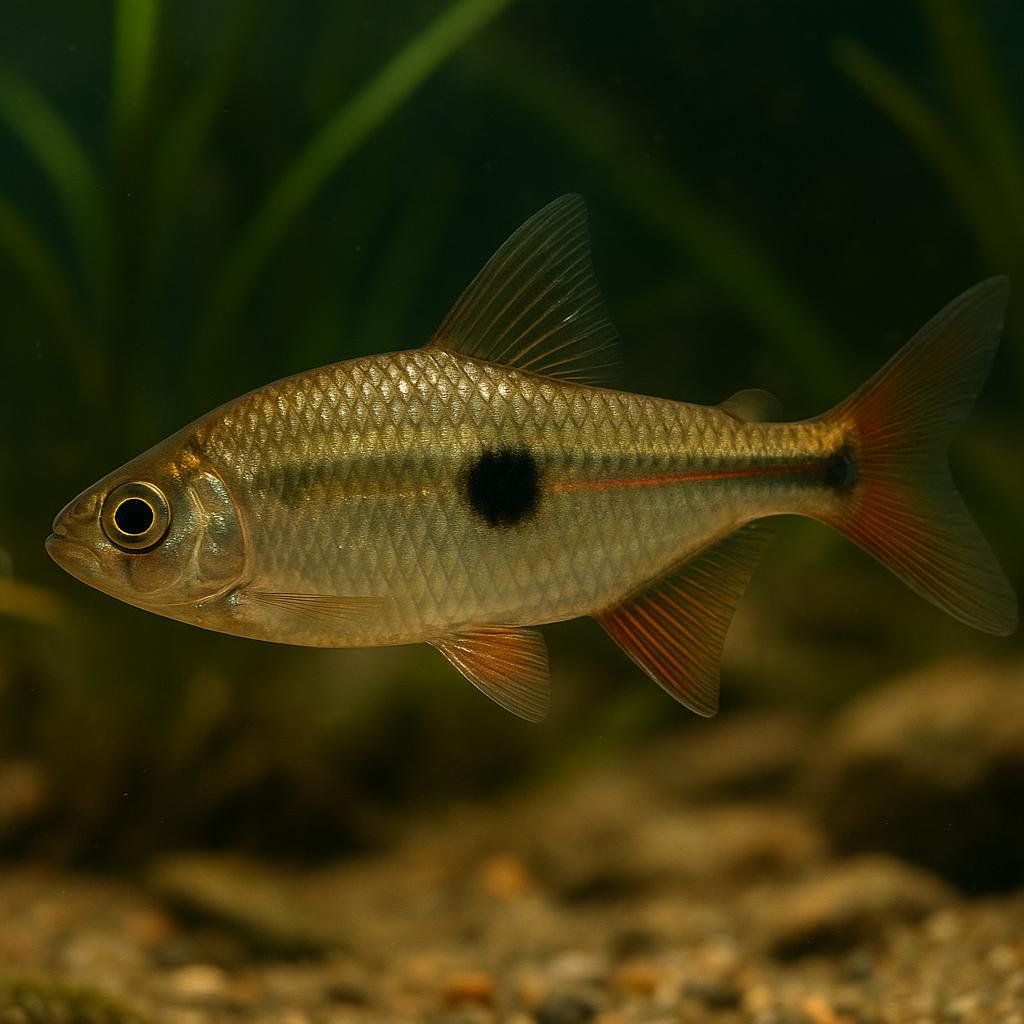
Small South American characin endemic to the upper rio Curuá (rio Xingu basin, Brazil). Reaches about 8.7 cm SL and inhabits clearwater rivers. Distinguished by dark dots on the bases of many lateral scales and a distinct dark caudal‑peduncle spot. Reported diet indicates omnivory, including aquatic insects, small fishes, and fragments of Podostemaceae and filamentous algae.
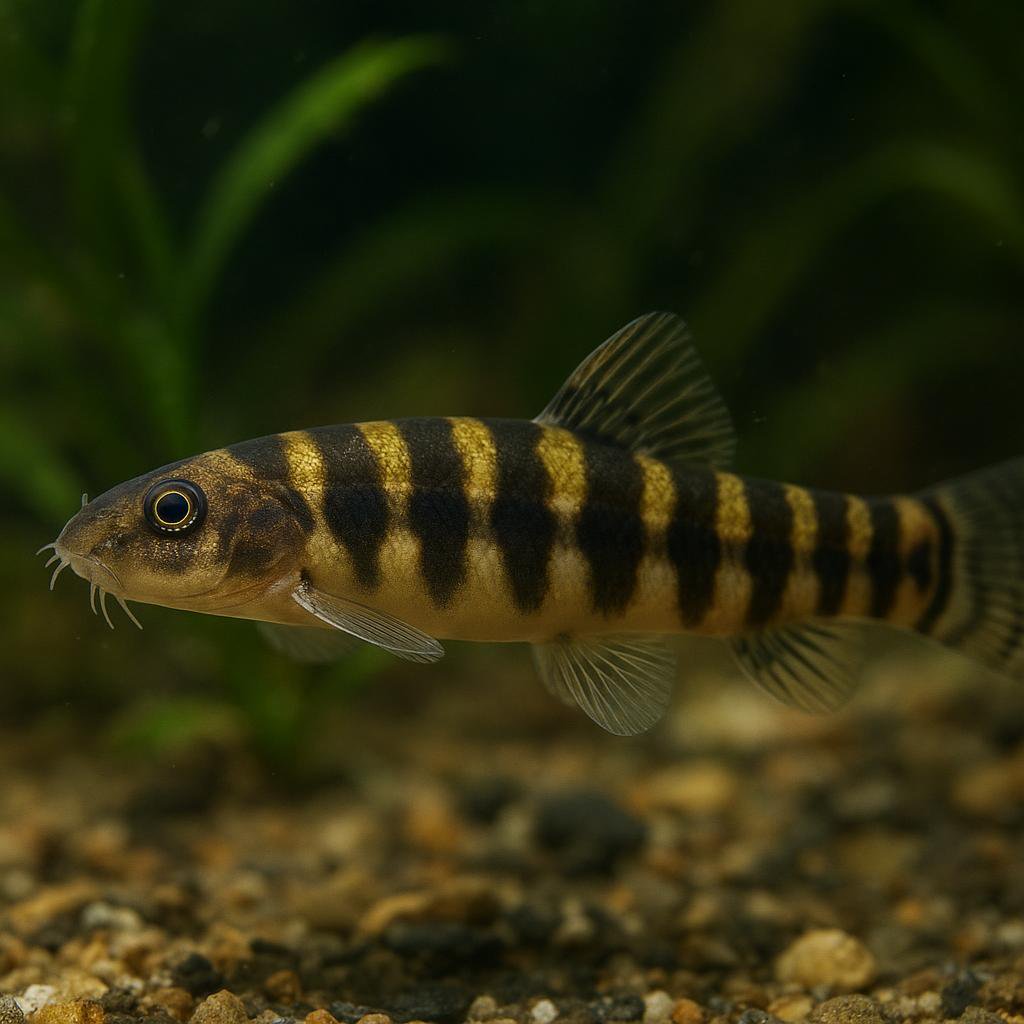
Altipedunculata stone loach
Schistura altipedunculata
Schistura altipedunculata is one of those little stream loaches that wants clean, well-oxygenated water and a bunch of rock nooks to claim as home. It is a bottom-hugger that will spend its day scooting from crevice to crevice, and it tends to get a bit spicy with its own kind if you do not give it enough hiding spots.
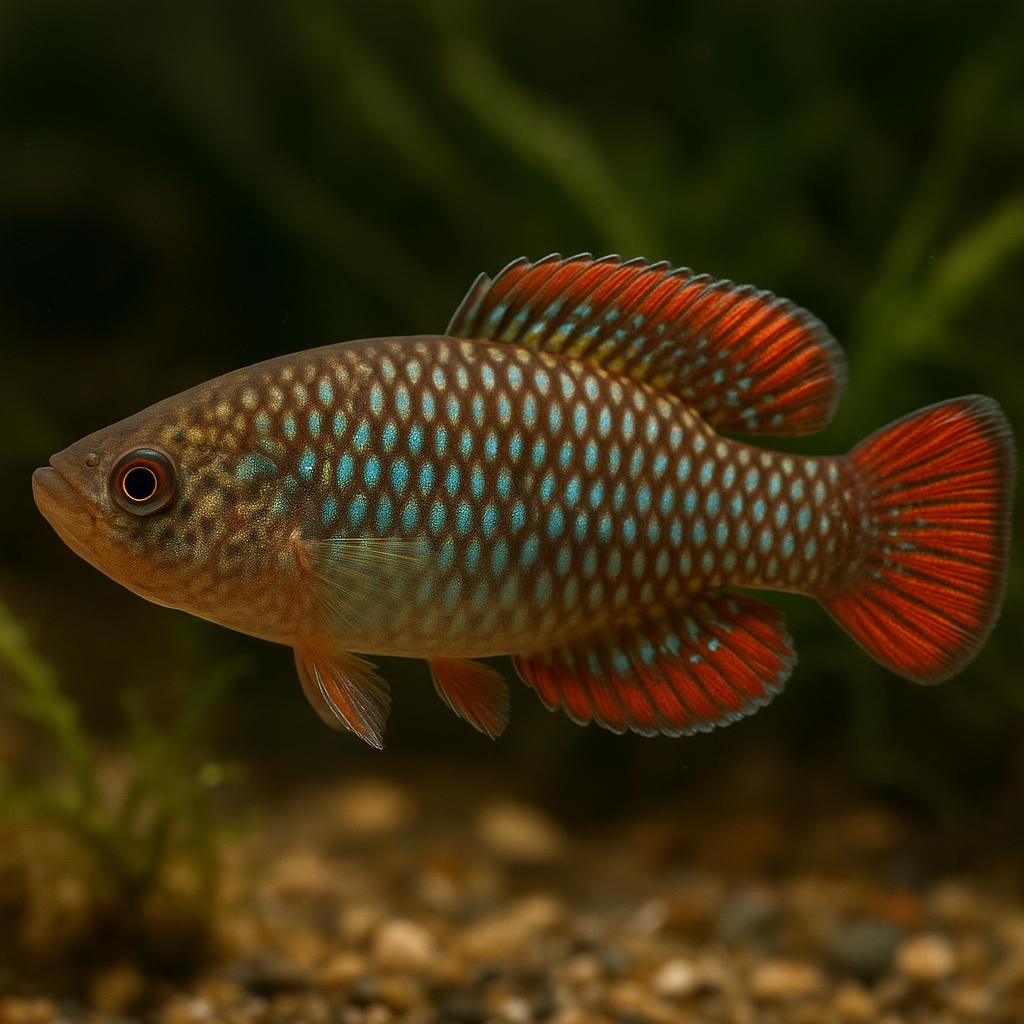
American flagfish
Jordanella floridae
Jordanella floridae is that little Florida native with the red-and-cream striping that really does look like a tiny flag once a male colors up. They graze algae like champs (especially stringy/hair algae), but they have a bit of attitude - give them plants and space so the bossy behavior stays manageable. Bonus: the male guards the eggs and will actively fan them, which is pretty fun to watch.
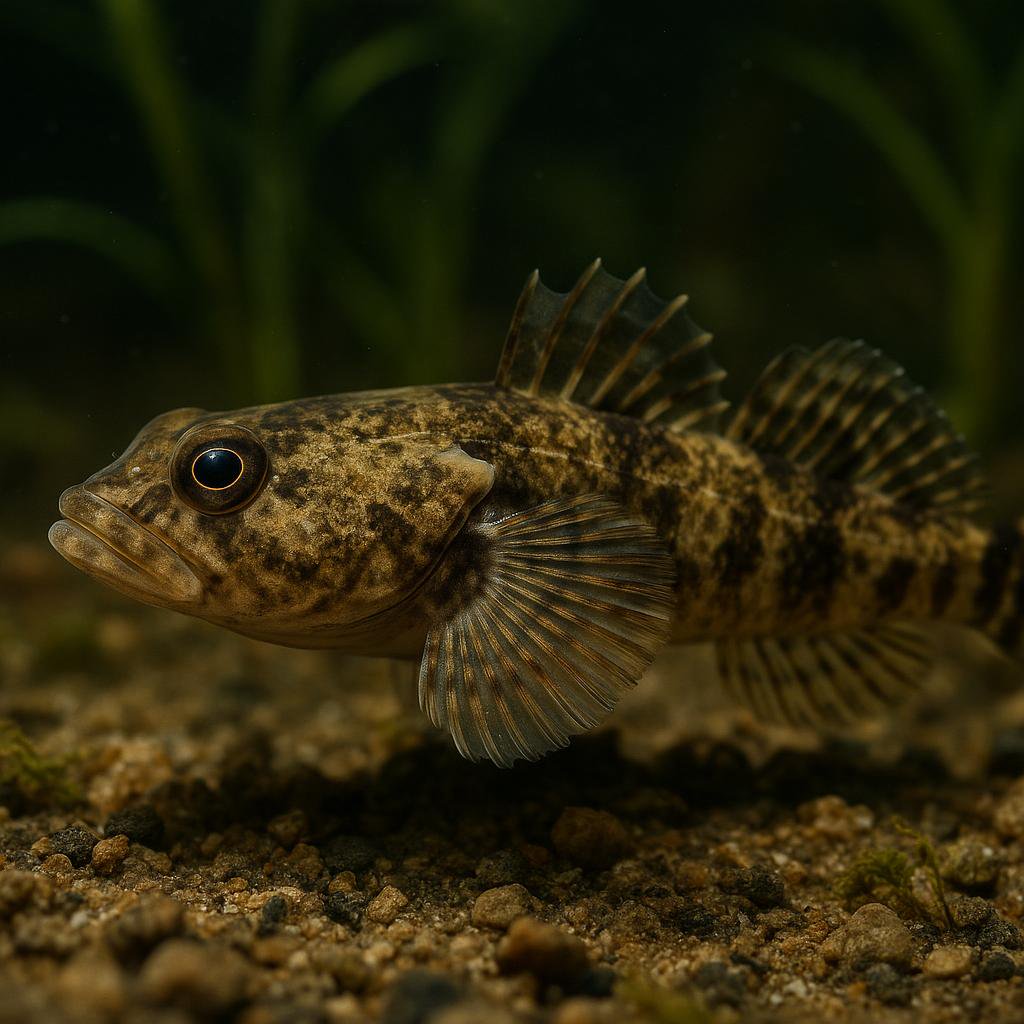
Amur sculpin
Alpinocottus szanaga
This is a little coldwater sculpin from the Amur drainage - a bottom-hugging, rock-and-gravel fish that spends its day wedged under stones and darting out to grab food. Super cool behavior and attitude, but it is absolutely not a warm tropical community fish - it wants chilly, fast, oxygen-rich water and will bicker with other bottom fish.
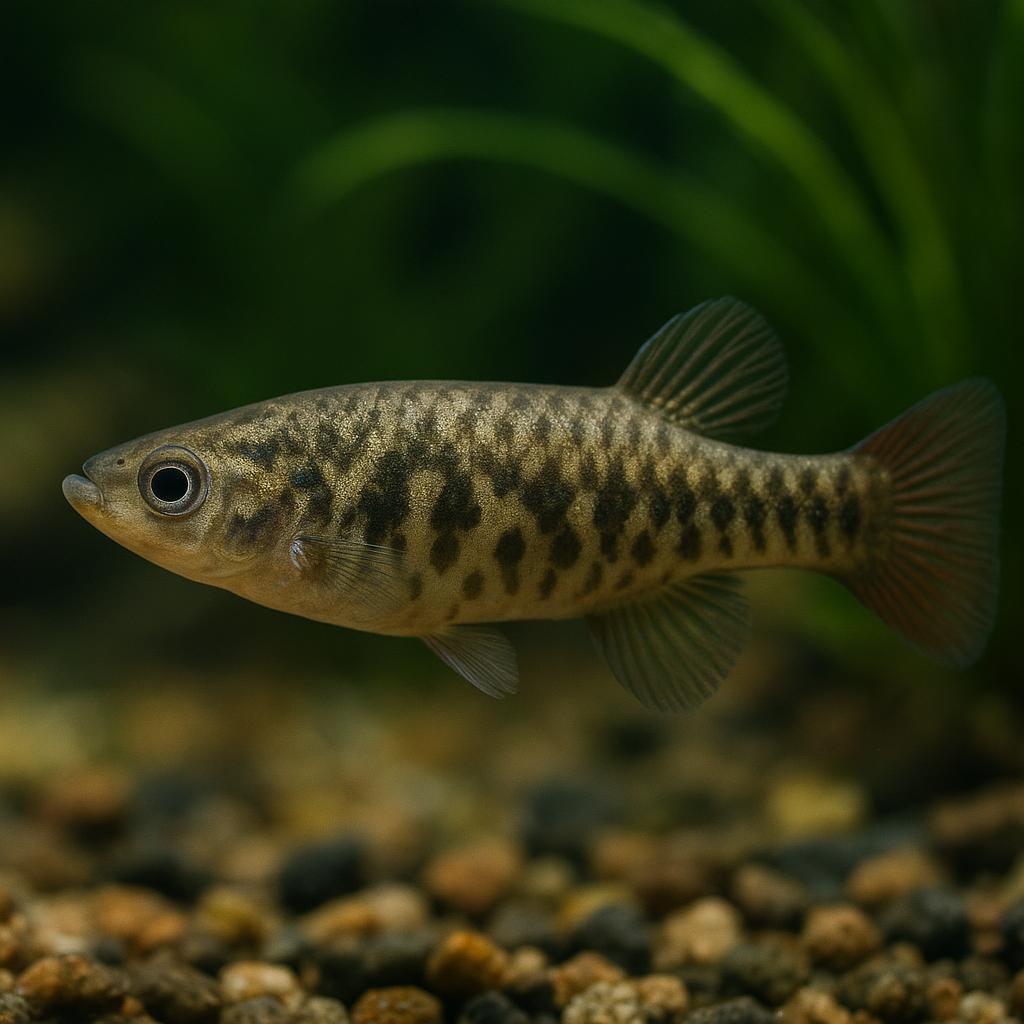
Anitápolis livebearer
Jenynsia weitzmani
Jenynsia weitzmani is a freshwater anablepid livebearer endemic to southern Brazil (currently known only from the type locality near Anitápolis, Santa Catarina). Like other Jenynsia (onesided livebearers), reproduction involves lateralized mating morphology/behavior; aquarium care guidance is not well-documented for this species specifically.
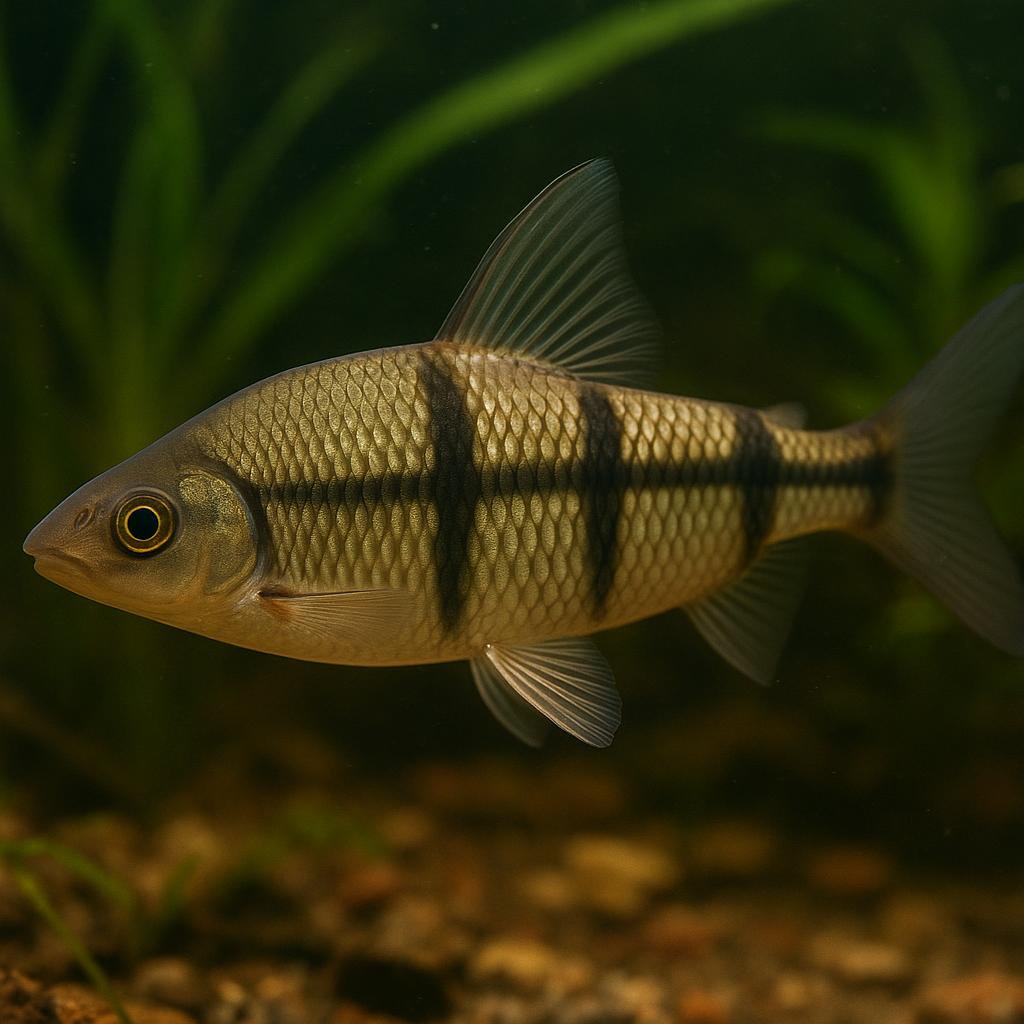
Aracu-comum
Schizodon vittatus
Schizodon vittatus is a large South American anostomid (family Anostomidae). Reported maximum size is about 35 cm standard length; it is harvested/consumed in parts of Brazil and is not commonly covered by mainstream aquarium husbandry references.
More to Explore
Discover more freshwater species.
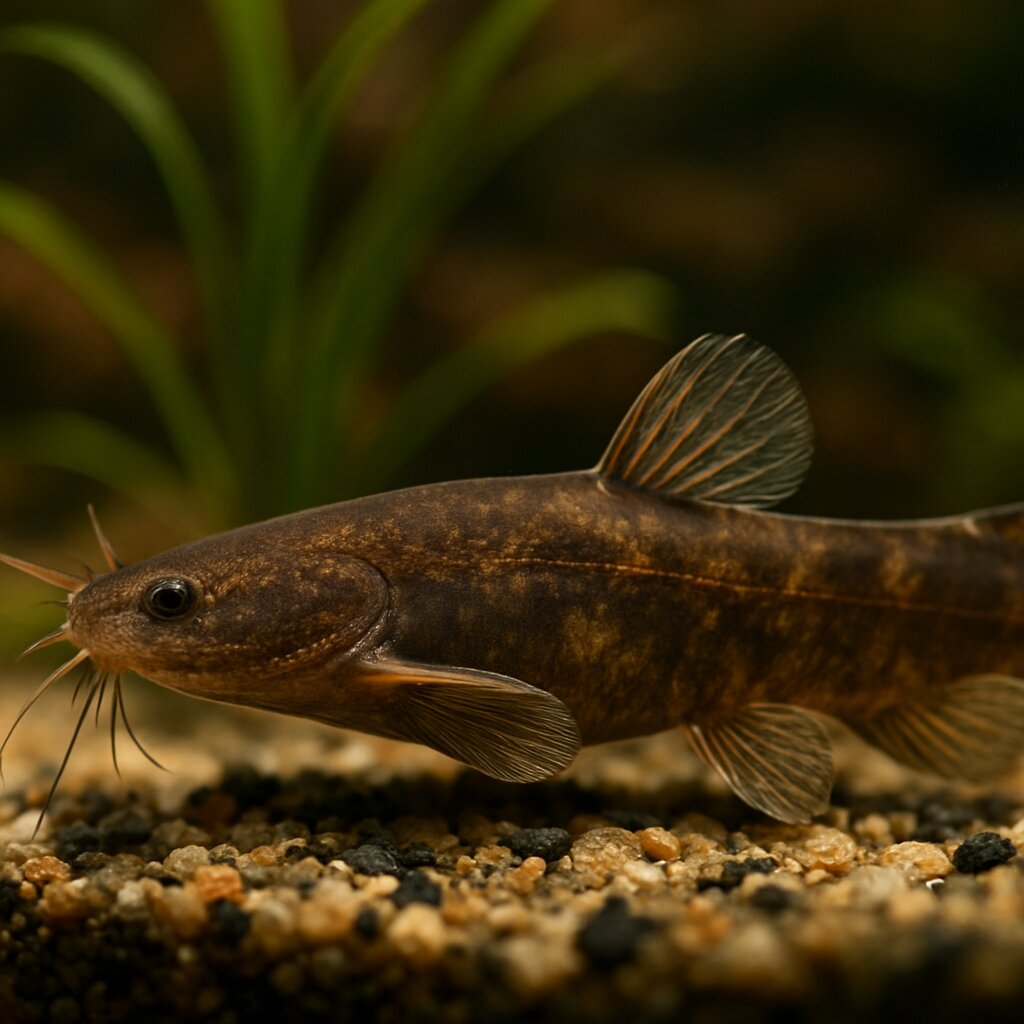
Amphilius dimonikensis
A small loach catfish endemic to the Mpoulou River in the Mayombe (Dimonika Biosphere Reserve), Republic of the Congo. Amphilius dimonikensis has a subtle banded pattern and inhabits fast, clear streams over rock and sand. In aquaria, prioritize strong, well-oxygenated flow with rounded stones and sand to mimic hillstream conditions.
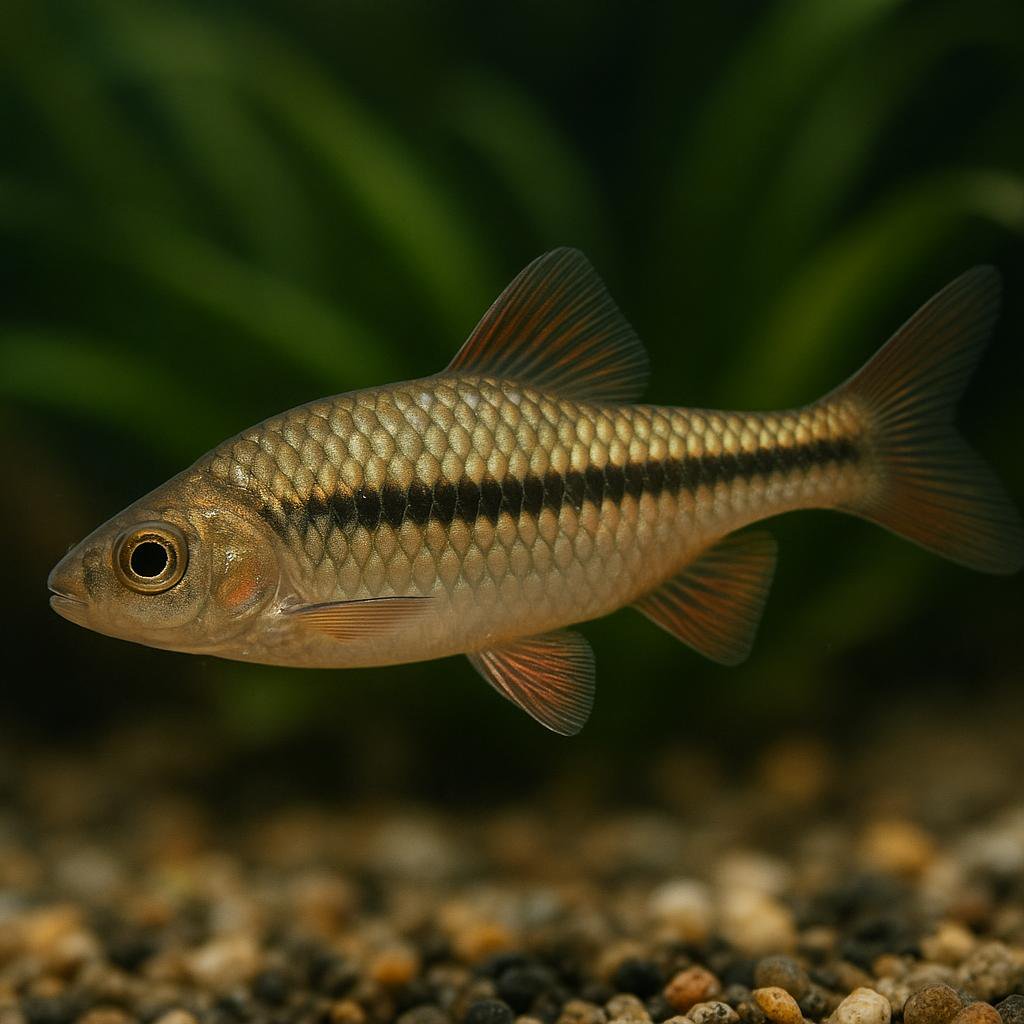
Aboina barb
Enteromius aboinensis
Enteromius aboinensis (the Aboina barb) is a small West African barb with a clean black midline stripe and a little spot right at the base of the tail. It does best when you treat it like a proper schooling fish - keep a decent group and give it plants around the edges with open swimming room in the middle.
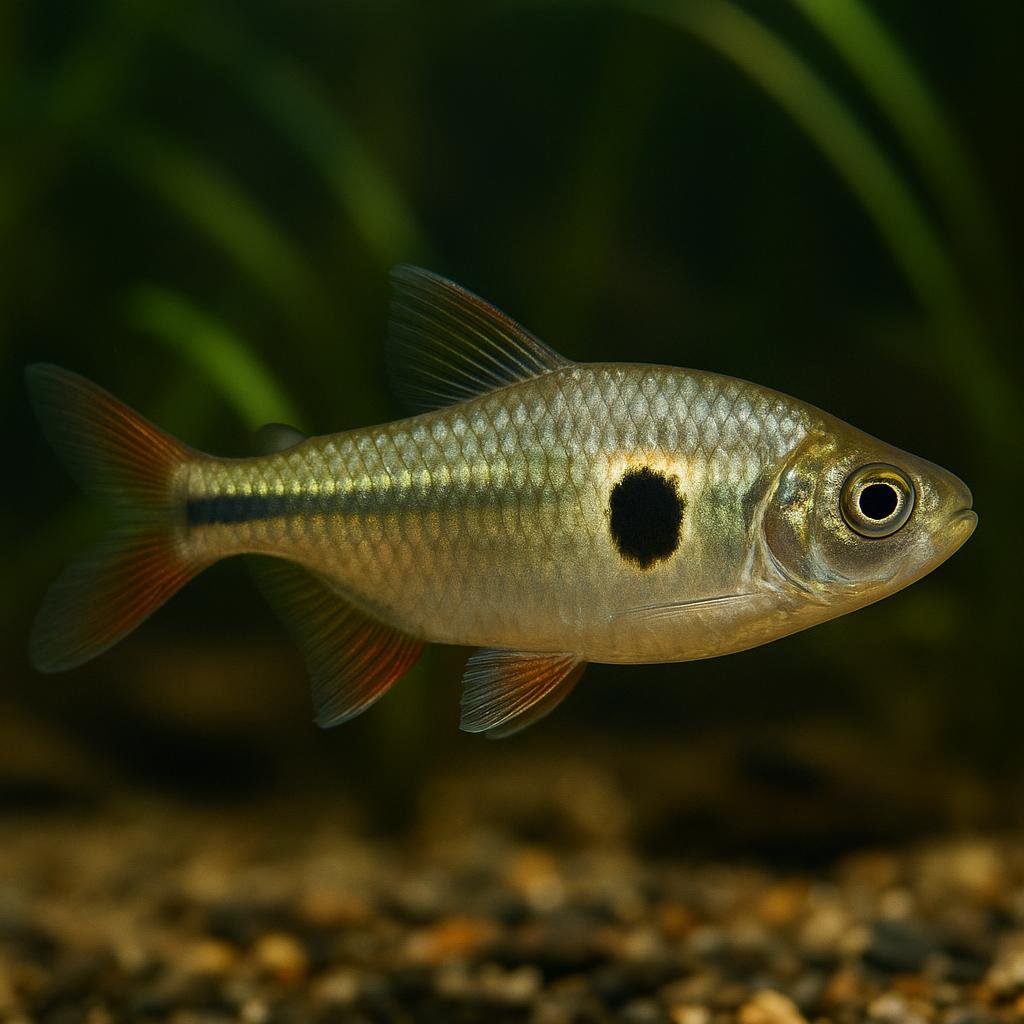
Ajuricaba tetra
Jupiaba ajuricaba
Jupiaba ajuricaba is a South American freshwater characin from the Amazon basin in Brazil (rio Negro, rio Solimões, and rio Tapajós basins). It reaches about 9.5 cm SL and is diagnosed by a narrow dark midlateral stripe, an elongated humeral spot, and an ocellated spot on the upper caudal-fin lobe. Wild specimens have been collected from blackwater forest streams and also oxbow-lake habitats.
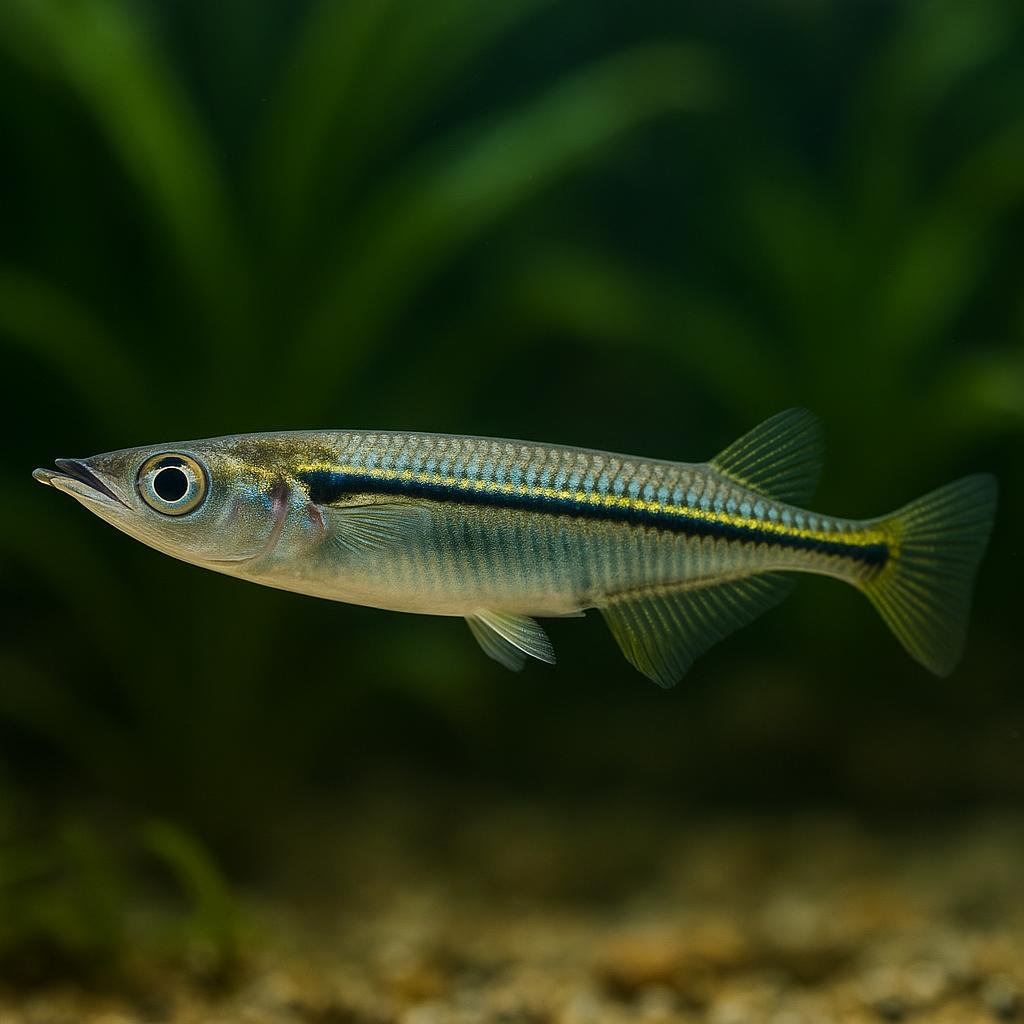
Allen's river garfish
Zenarchopterus alleni
A poorly known freshwater halfbeak endemic to West Papua (Mamberamo River), described from a single specimen (~13 cm SL). Beyond basic habitat/occurrence, little is published about its ecology or aquarium suitability; assume it is a surface-oriented, jump-prone halfbeak only by analogy with related taxa.
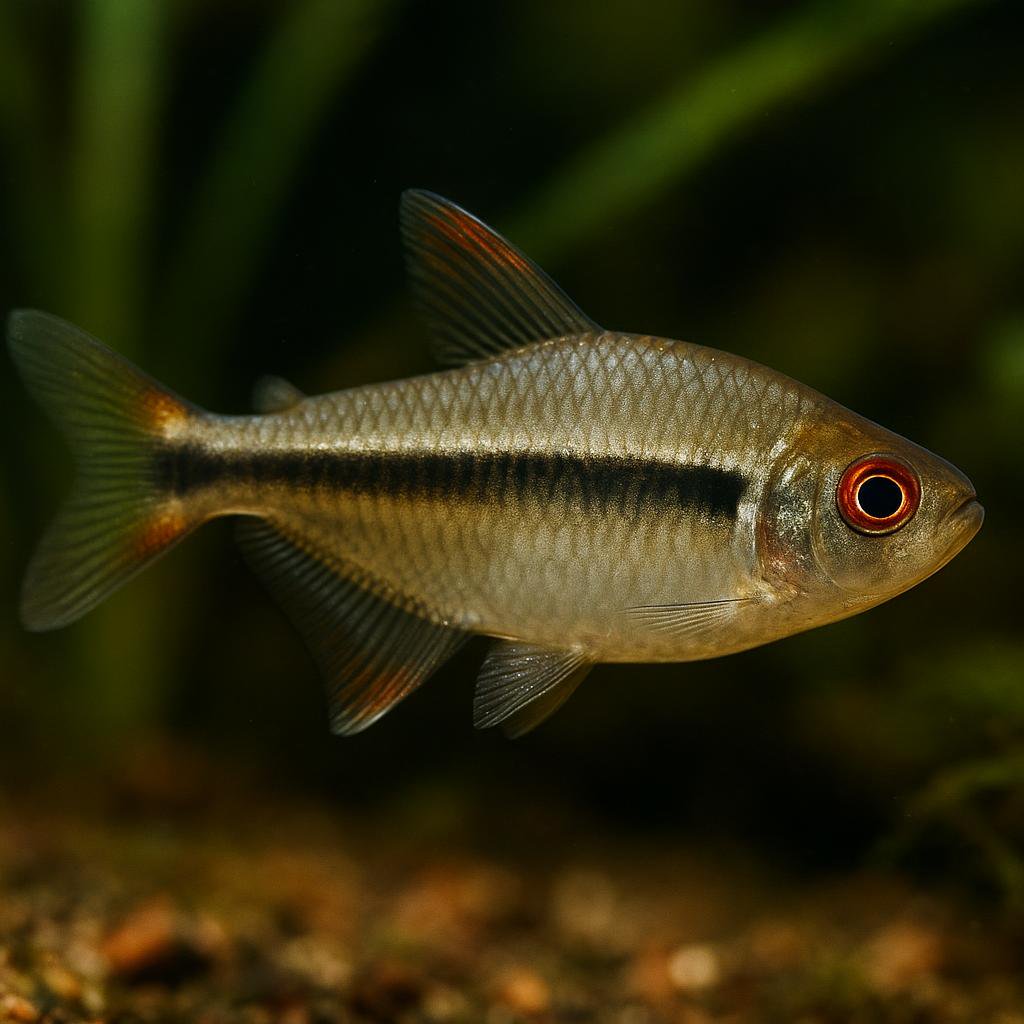
Amapa tetra
Hyphessobrycon amapaensis
This is a tiny, super sleek little tetra with a clean red stripe down the side that really pops once its settled in. It does best in a planted, slightly tinted "creek-style" setup and looks way cooler when you keep a proper group so they school and flash that line together. If you can give it soft, slightly acidic water and a calm community, its an easy fish to fall for.
Amatlan chub
Yuriria amatlana
Yuriria amatlana (the Amatlan chub) is a little Mexican native minnow from the Ameca River basin. Its wild range is pretty limited and it is listed as Endangered, so its care info in the aquarium hobby is basically nonexistent and its availability is usually low. In the original species description, preserved fish show a dark lateral stripe with a darker patch on the caudal peduncle, and they can have tiny barbels at the mouth corners.
Looking for other species?