

Cuban cusk-eel
Lucifuga subterranea
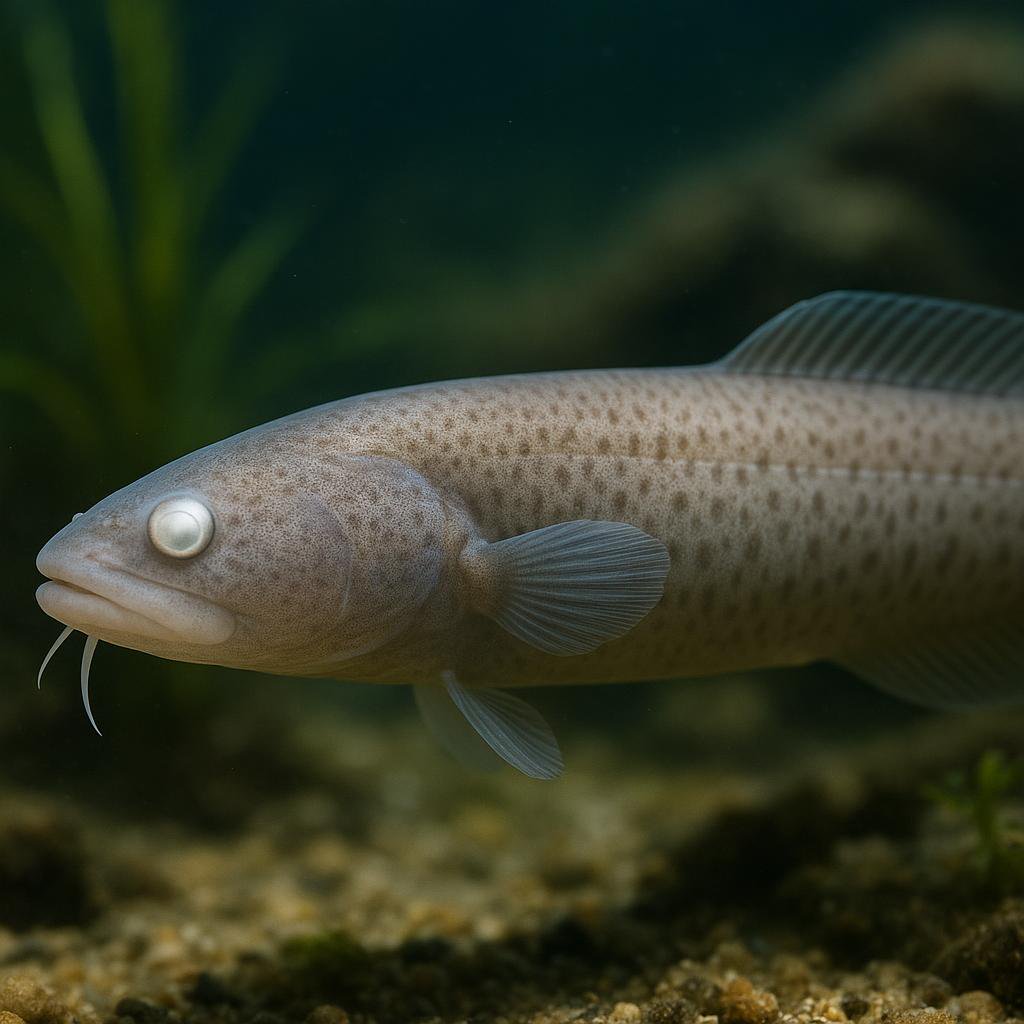
Cuban cusk-eels possess a slender, elongated body with a pale, almost translucent hue, featuring small, reduced eyes.
This page includes AI-generated images. Why am I seeing AI images?
About the Cuban cusk-eel
A blind, cave- and sinkhole-dwelling livebearing brotula (Bythitidae) endemic to Cuba that feeds on small crustaceans (e.g., isopods) in subterranean waters.
Also known as
Quick Facts
Size
9.4 cm SL
Temperament
Peaceful
Difficulty
Expert
Min Tank Size
40 gallons
Lifespan
unknown
Origin
Caribbean (Cuba)
Diet
Carnivore - small crustaceans (shrimp/isopods) and other meaty foods
Water Parameters
22-26°C
7-8
8-20 dGH
Need a heater for this species?
This species needs 22-26°C in a 40 gallon tank. Use our heater calculator to find the right wattage.
Calculate heater sizeCare Notes
- Give it a dark, cave-heavy tank with lots of tight rock/PVC pipe tunnels - they hug cover and will stress out in bright, open setups. Use a tight lid because they can snake into gaps when spooked.
- Habitat salinity varies by locality; sources describe Lucifuga subterranea from freshwater and also from fresh/brackish subterranean systems. If keeping this species, match water chemistry to its collection locality and prioritize long-term stability.
- They hate nasty water and low oxygen, so push filtration and flow without blasting the caves; add airstone or strong surface ripple. Watch ammonia and nitrite like a hawk because they are not forgiving at all.
- Feed after lights-out and target-feed with tongs: live or frozen meaty stuff like ghost shrimp, mysis, small prawns, and earthworms usually gets a response. If it only eats live at first, wean slowly by mixing frozen in with live and using scent (shrimp juice).
- Skip fast, nippy tankmates and anything that competes hard at feeding time - they will starve quietly. Best is species-only or with calm brackish bottom dwellers that will not harass it, and no small fish you would miss.
- They wedge into crevices and can scrape themselves up, so sand or smooth fine gravel beats sharp crushed coral. If you need hardness for brackish, use aragonite in a bag in the filter instead of a razor-blade substrate.
- Quarantine is worth the pain: they are sensitive to meds, especially copper, and scales are basically not a thing here. If you have to treat, go gentle and go slow, and prioritize pristine water and oxygen over dumping chemicals.
- Lucifuga subterranea is viviparous (livebearing).
Compatibility
Good Tankmates
- Small, calm brackish gobies (like bumblebee gobies or similar) - they keep to themselves and like the same kind of rocky, cavey setup. Just make sure everyone is eating well so the eel does not get tempted by tiny tankmates.
- Knight gobies (juveniles or smaller adults, in a big enough tank) - they are generally not fin-nippy, and they cruise the lower areas without constantly harassing the eel. Give lots of hides so nobody has to fight over real estate.
- Brackish-tolerant cichlids that are on the mellow side, like orange chromides, in a roomy tank - they are not usually the 'pick a fight with the cave fish' type if you keep the layout broken up with rocks and tubes.
- Scats - they are active but usually not mean, and they mostly ignore a nocturnal, secretive eel. Best when the eel is not tiny and the scat is not huge, because scats will eat whatever fits.
- Monos (especially smaller ones with plenty of swimming room) - fast, midwater schoolers that do not spend their day poking into caves. They are good 'dither' fish that do not stress the eel out.
Avoid
- Anything aggressive or pushy about caves - big mean cichlids, super territorial fish, or stuff that rams its way into every hide. The cusk-eel is peaceful and will just get bullied off food and shelter.
- Fin-nippers and hyperactive biters - tiger barbs and similar 'mouthy' fish. Even if they do not target the eel constantly, the chaos keeps a shy eel pinned in hiding and not eating well.
- Predators that treat an eel-shaped fish like a snack - big puffers, big archerfish, big anything with a serious mouth. The eel is not looking for trouble and cannot defend itself well if it gets targeted.
- Tiny bite-sized fish or shrimp if the eel is well established and feeding at night - peaceful does not mean it will not slurp down something small that wanders past its cave after lights out.
Where they come from
Lucifuga subterranea is one of those fish that feels like it slipped out of a biology lab and into the hobby. They are Cuban cave fish (a cusk-eel relative) from underground systems where its dark, tight, and the food comes when it comes. That whole background is why they hate bright tanks, hate chaos, and do best in a setup that feels like a cave with water.
You will see this species described in ways that sound contradictory (fresh vs brackish). In captivity, I would not treat them like a generic brackish goby or molly. Think stable, clean water first, and keep salinity changes slow and deliberate.
Setting up their tank
This is an expert fish because the tank has to be set up for the fish, not for you. Low light, lots of cover, and zero drama. If you can make the tank look a little boring at first glance, you are on the right track.
Go bigger than you think. A cramped footprint makes them bumpier, spookier, and harder to feed because a confident cave fish still wants room to glide and retreat. A long tank with a big bottom area beats a tall tank every time.
- Tank size: aim for a long footprint, not height (bigger is easier to keep stable)
- Lighting: dim or heavily shaded, with floating cover if needed
- Hardscape: rock piles, caves, and tight crevices they can wedge into
- Substrate: sand or fine gravel so they do not scrape up their underside
- Flow: gentle to moderate, no blasting current pointed at their hiding spots
- Filtration: strong biological filtration plus mechanical polishing (they like clean water)
Lids matter. If there is a gap, assume they can find it. Cover filter cutouts and cable holes. These fish move like a shadow until the one night they do not.
For brackish, pick a target salinity and hold it steady. A lot of losses with oddball brackish fish come from people chasing numbers and swinging salinity around. Mix saltwater in a bucket, match temperature, and only then top off or do water changes.
Give them at least two or three different caves. They will pick a favorite, but having backup hideouts cuts down on stress when you do maintenance or if a tankmate gets nosy.
What to feed them
These are not pellet pigs. Expect a picky, nocturnal feeder that does best on meaty foods. If you have kept predatory eels or burrowing fish, the vibe is similar: feed with intention, keep the water clean, and do not overdo it.
- Frozen: mysis, chopped shrimp, chopped clam, krill (sparingly), fish flesh from a trusted source
- Live (use carefully): ghost shrimp or small feeder shrimp can kickstart shy eaters
- Avoid as staples: fatty feeder fish, random bait shop stuff, and anything that makes the tank greasy
If yours will not eat in the open, feed after lights out and use a feeding stick or tongs. Once they learn the routine, they get a lot bolder. I have had the best luck offering smaller portions more often at first, then moving to a steady schedule.
Target feeding is your friend. Drop food right at the cave entrance. It keeps food out of the rocks, helps you confirm they actually ate, and keeps cleanup way easier.
How they behave and who they get along with
They are shy, secretive, and mostly active at night or in dim light. Once settled, they will cruise slowly and then vanish again. The biggest thing to understand is that anything small enough to fit in their mouth is on the menu, and anything too pushy will keep them pinned in a cave.
- Good tankmates: calm, midwater fish that ignore caves and do not outcompete at feeding time
- Bad tankmates: hyper fish, fin nippers, aggressive cichlids, and any fish small enough to be eaten
- Best setup: species-only or a very carefully chosen, low-stress community
Do not assume you will see bullying. A stressed cusk-eel often just hides and slowly fades. If you only ever see it at midnight, something in the tank might be pressuring it.
They also do not love being jostled by fast feeders. If you keep tankmates, make sure you can still get food to the cusk-eel consistently. A hungry one will start taking bigger risks, and that is when you get injuries and escapes.
Breeding tips
Breeding this species in home aquariums is not something most hobbyists can count on. Cave fish reproduction can be tied to subtle seasonal cues (temperature shifts, food pulses, and changes in water chemistry) that are hard to replicate without stressing the fish.
If you ever want to try, your best shot is starting with a confirmed pair or group and giving them a mature, stable tank with lots of secluded spawning sites. Keep lighting low, keep feeding heavy but clean, and avoid big parameter swings.
If you see courtship-like behavior (more cruising, following, sharing a cave), resist the urge to tinker. Stability beats clever tricks with fish like this.
Common problems to watch for
Most issues with Cuban cusk-eels are husbandry problems that show up late. They can look fine until they do not, so you want to watch behavior and feeding response more than color or flashiness.
- Refusing food: often stress from bright light, too much activity, or competition at feeding time
- Skin scrapes and infections: usually from sharp rockwork, rough substrate, or panic dashing
- Poor acclimation: quick changes in salinity or temperature can knock them back hard
- Nitrate creep: heavy meaty feeding plus weak maintenance leads to slow decline
- Escapes: loose lids, open cutouts, or gaps around plumbing
Do not rush acclimation, especially with brackish water. Slow drip acclimation and a calm, dark tank on day one saves more of these fish than any medication.
If you are troubleshooting, start with the basics: is it eating, is it getting food without competition, is the tank dim enough, and is the salinity stable week to week. Fix those first before you reach for treatments. Meds in brackish systems can be hit-or-miss, and stressed cave fish do not handle extra chemical stress well.
Similar Species
Other brackish peaceful species you might be interested in.
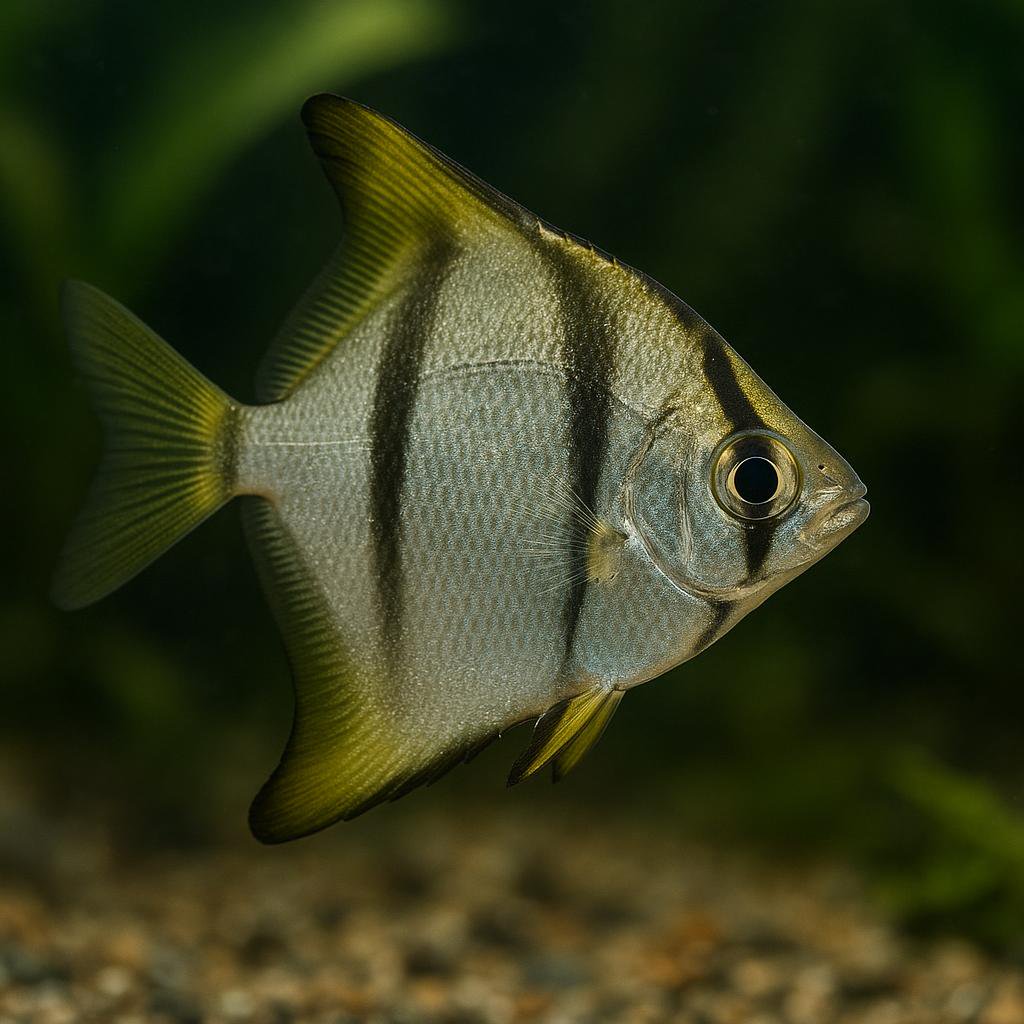
African moony
Monodactylus sebae
This is that shiny, diamond-shaped "mono" that cruises around in a tight pack and looks like a little silver dinner plate with black bars when it's young. The big thing with African moonies is they're euryhaline-so they'll tolerate freshwater as juveniles, but they really shine long-term in brackish (and can be transitioned toward marine as they mature). Give them a big, open tank and a group, and they turn into nonstop, super fun midwater swimmers.
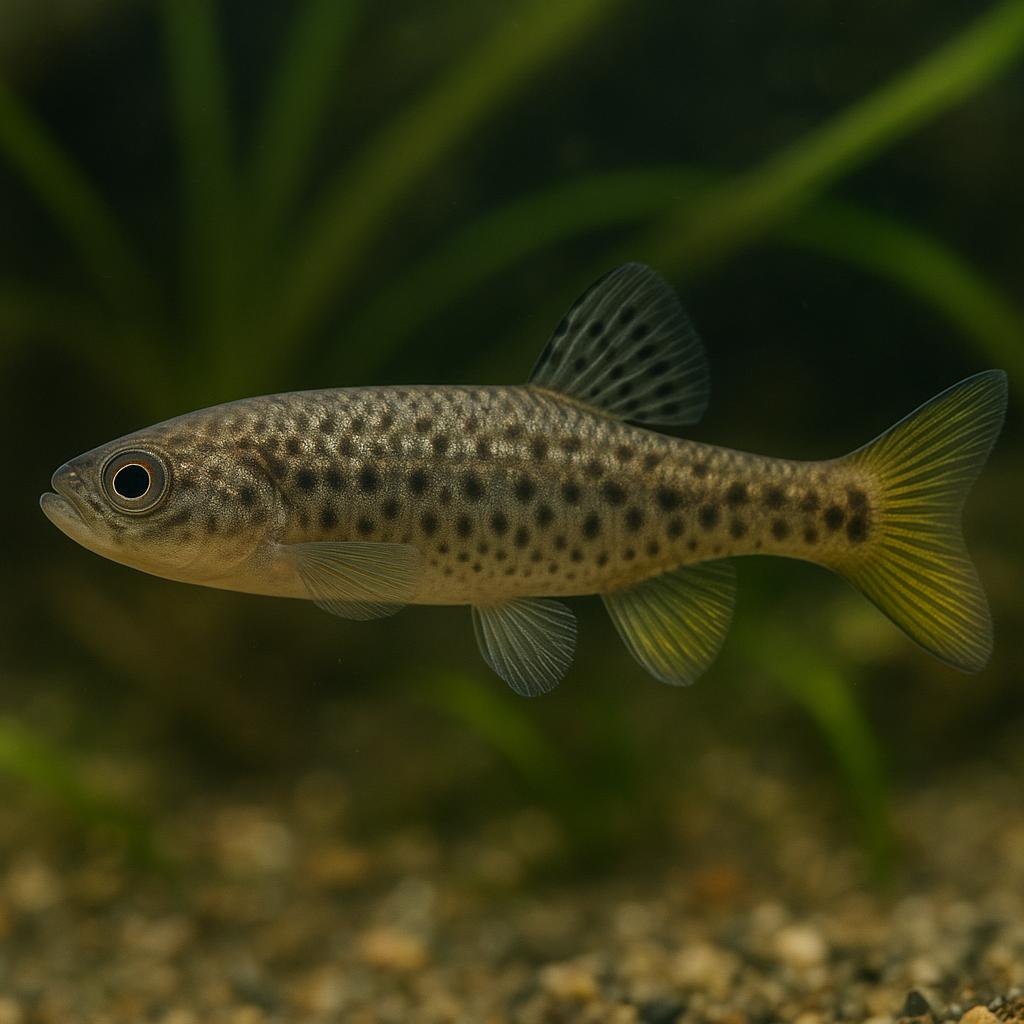
American shadow goby
Quietula y-cauda
This is a little mudflat goby from California down into the Gulf of California that loves hanging tight to the bottom and vanishing into burrows. The neat tell is that sideways Y-shaped blotch right at the base of the tail, plus the row of dark spots along the side. Its whole vibe is brackish estuary life - calm water, soft substrate, lots of hiding holes.
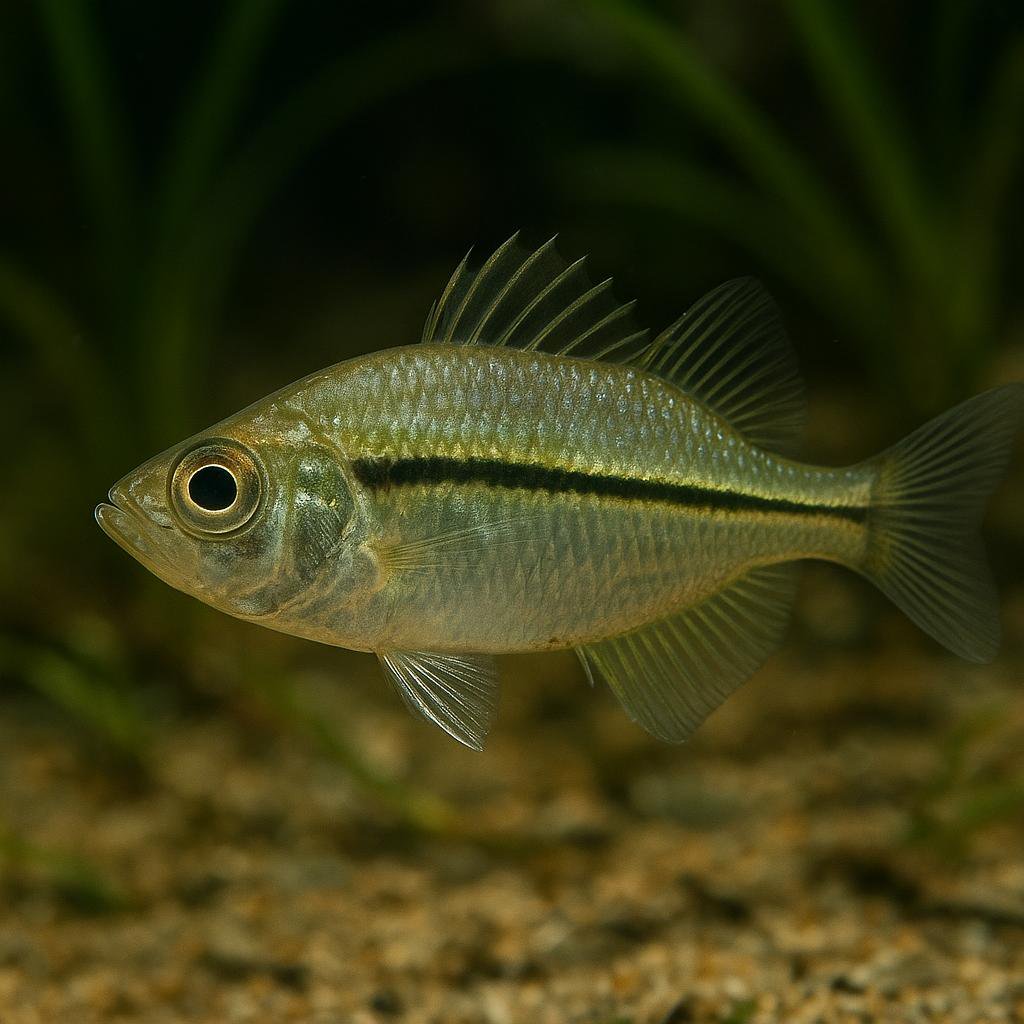
Banded-tail glassy perchlet
Ambassis urotaenia
This is one of those see-through glassy perchlets where you can literally watch the organs shimmer when it turns-super cool in the right lighting. In the wild it hangs around river mouths and mangroves and cruises in groups, so it does best when you keep a little gang of them and give them some open swimming room.
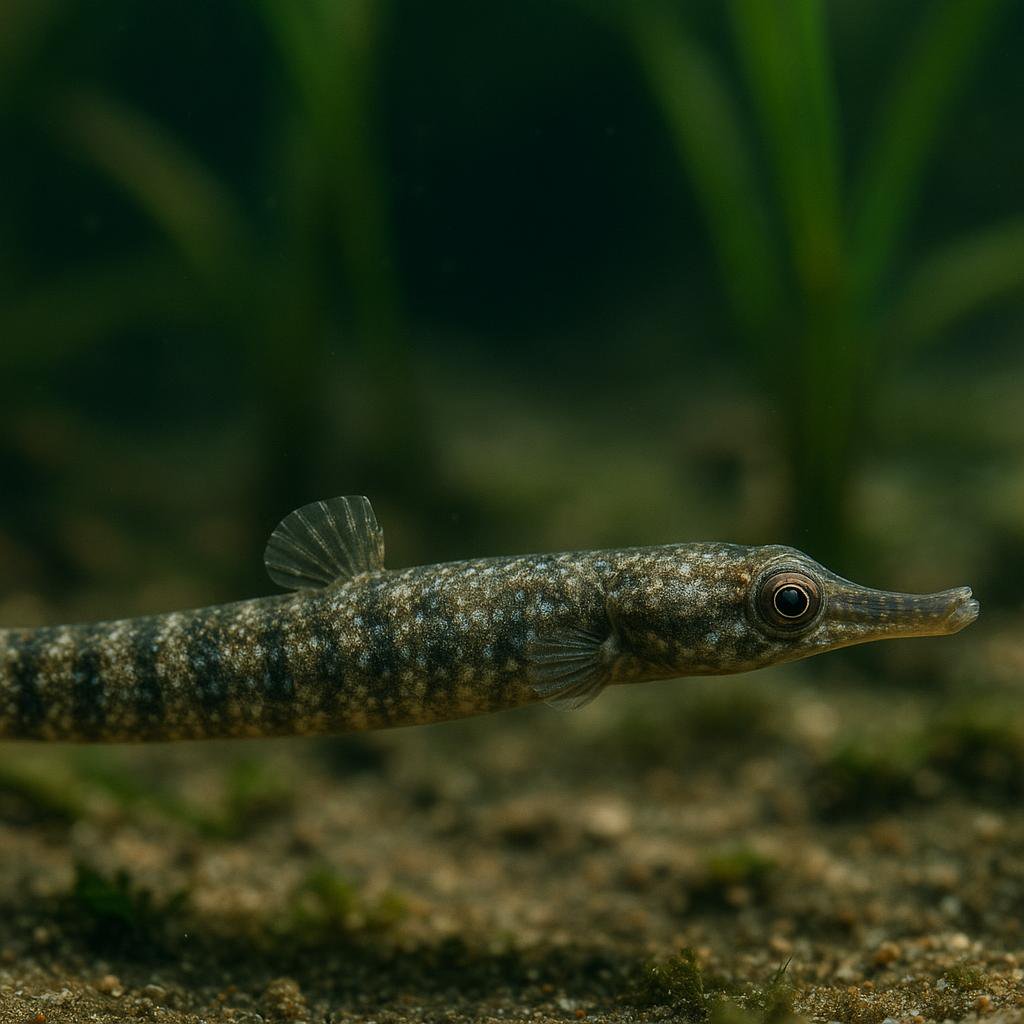
Barbed pipefish
Urocampus nanus
Urocampus nanus (barbed pipefish) occurs in protected inshore and estuarine habitats among seagrass (Zostera) in the Northwest Pacific (southern Japan and adjacent coasts). Like other syngnathids, males brood eggs in a pouch under the tail and produce fully formed young.
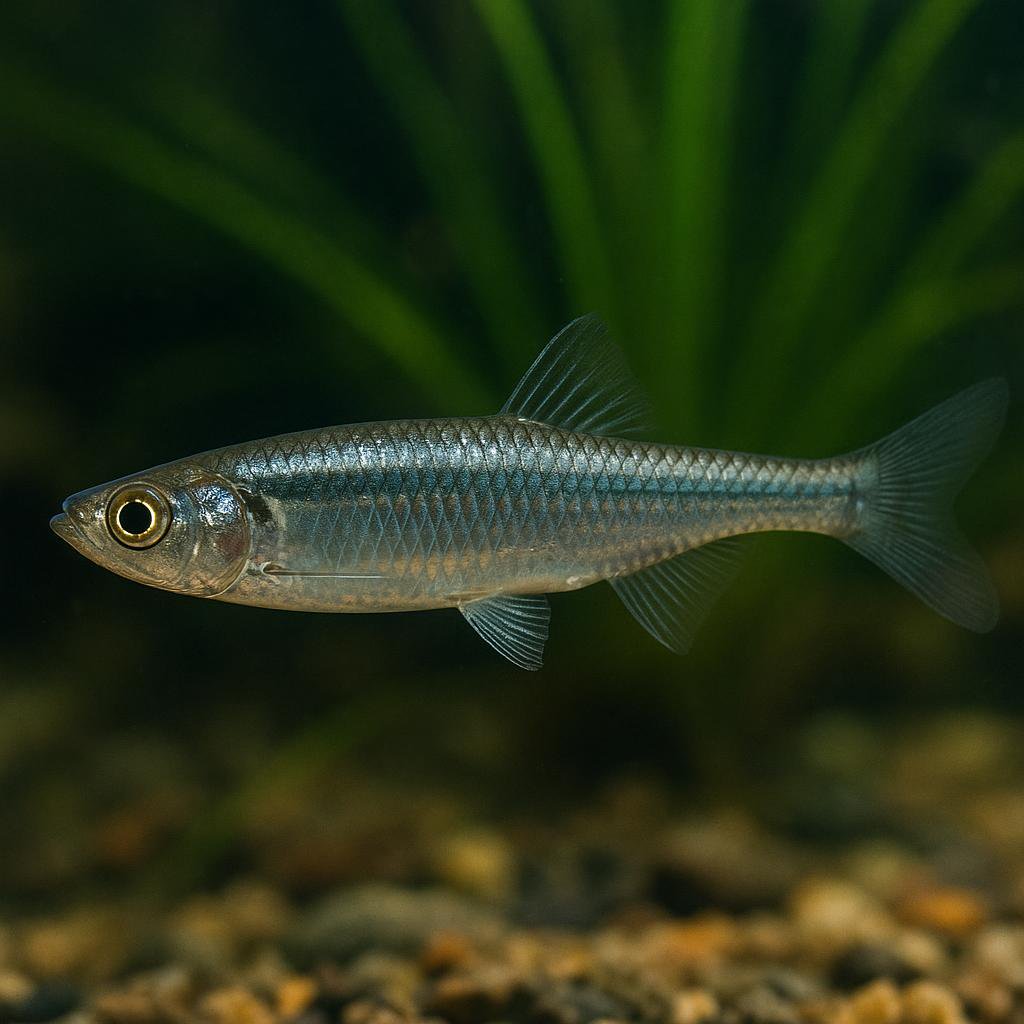
Beach silverside
Atherinella blackburni
This is a little coastal silverside that cruises the shallows in loose groups and flashes like a tiny chrome dart when the light hits it right. In the wild it hangs around beaches, estuaries, and lagoons, picking at small drifting foods in the surf zone. It is cool, but its real "gotcha" is that it is an open-water, salt-tolerant schooling fish that does best in bigger, well-oxygenated setups rather than a typical planted community tank.
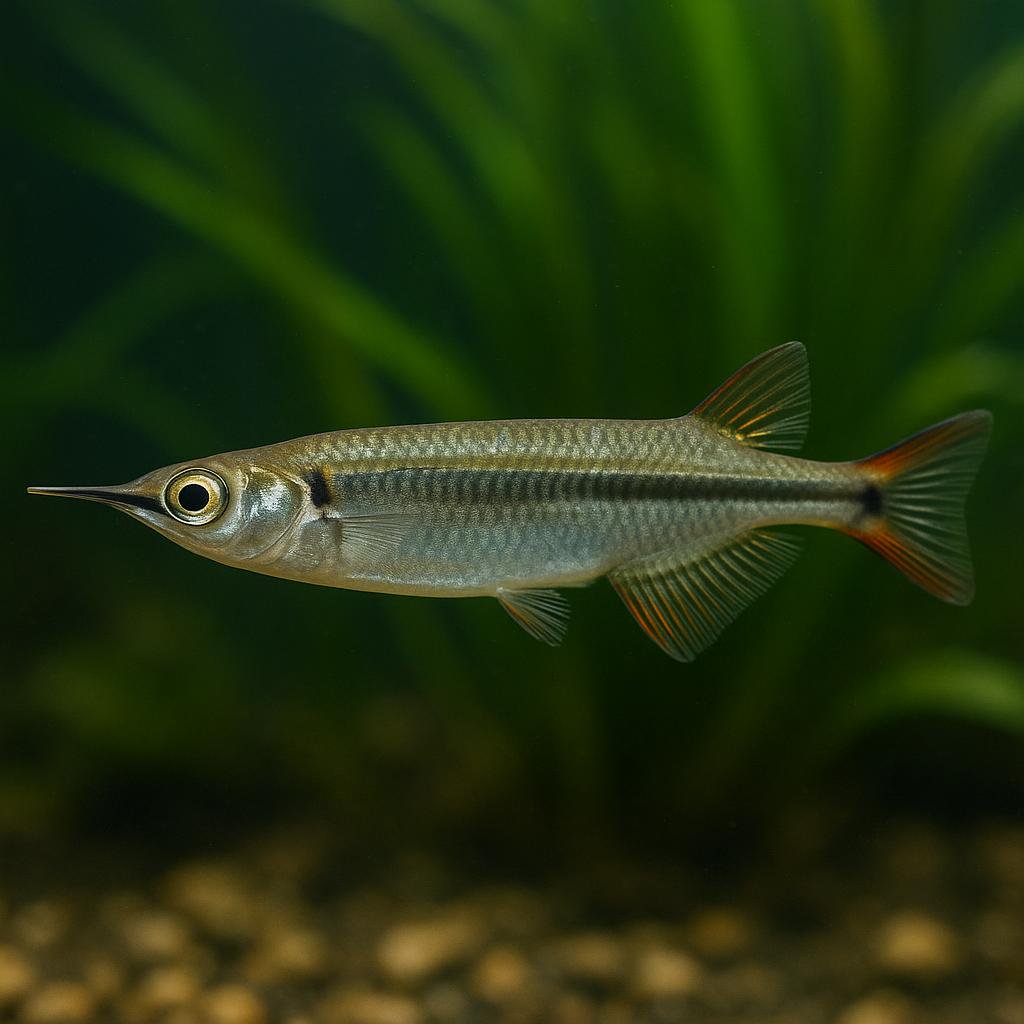
Buffon's river-garfish
Zenarchopterus buffonis
This sleek, surface-dwelling halfbeak has a distinct dark stripe along the snout and is typically found at the surface in coastal waters, estuaries, and rivers where it feeds on terrestrial insects. In aquaria it does best with floating/surface foods and a secure cover, and it requires brackish (or marine) conditions long-term. Reproduction is internally fertilized; FishBase lists the species as ovoviviparous.
More to Explore
Discover more brackish species.
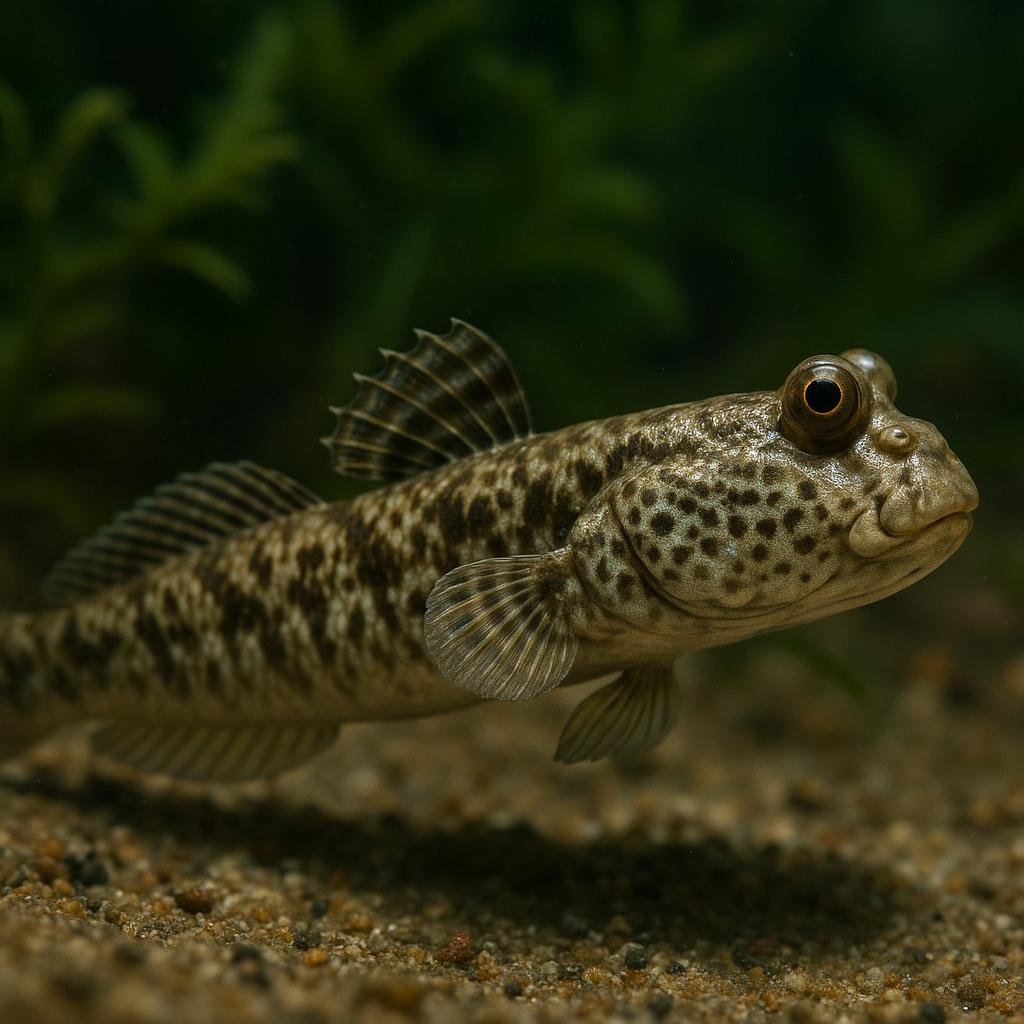
Atlantic Mudskipper
Periophthalmus barbarus
This is that wild little amphibious goby that straight-up climbs around on land like it forgot it was a fish. They've got big googly eyes, tons of personality, and they'll perch, hop, and patrol their territory-honestly more like a tiny crabby lizard than a "regular" aquarium fish.
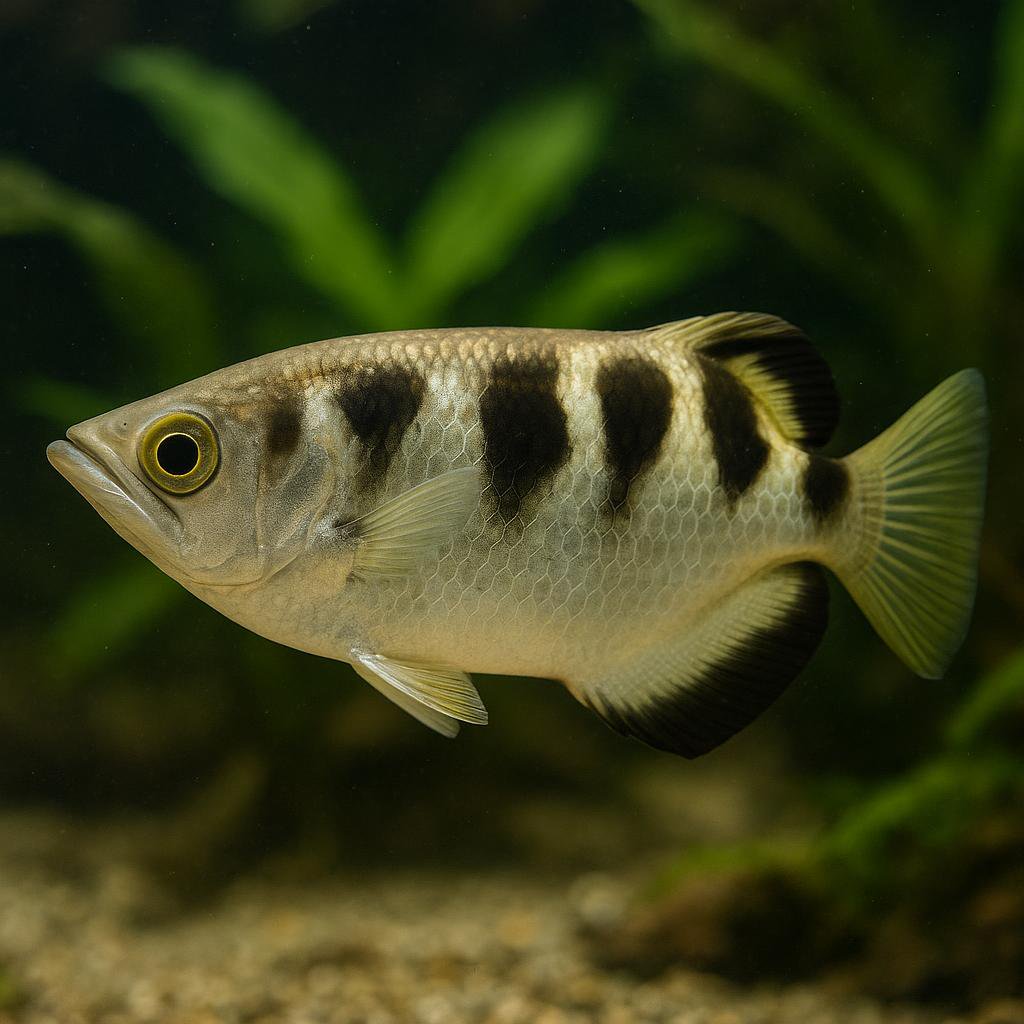
Banded Archerfish
Toxotes jaculatrix
This is the fish that literally spits jets of water to knock insects off branches-watching one "take aim" is unreal. They're super aware of what's going on outside the tank and will even learn to beg and snipe food from the surface once they settle in. Give them height and some open swimming room and they act like little aquatic sharpshooters.
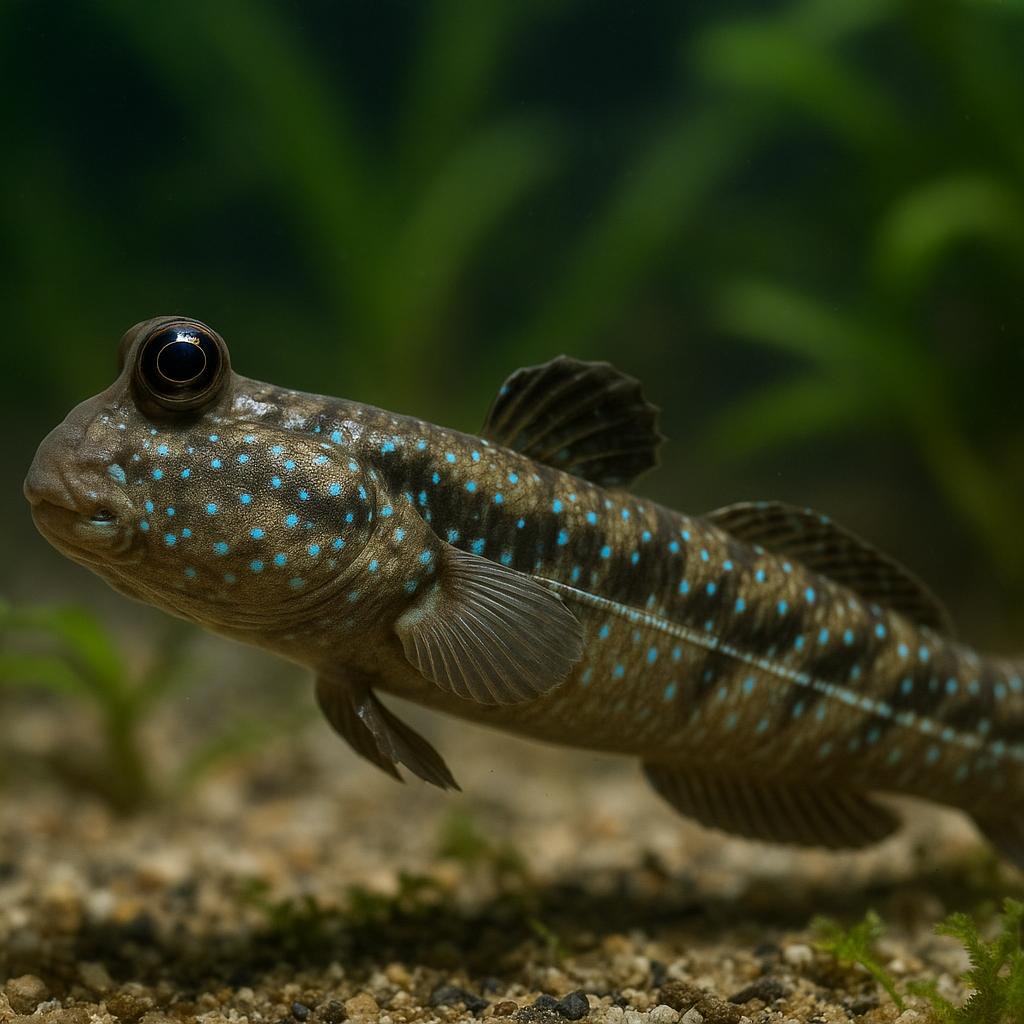
Barred mudskipper
Periophthalmus argentilineatus
This is one of those classic "walks around like it owns the place" mudskippers-big goofy eyes, climbs, hops, and spends a ton of time out on the mud when it's humid. In the wild it lives on intertidal mangrove/nipa mudflats and even shuttles between little pools and open air, hunting worms, insects, and small crustaceans. It's super fun to watch, but it really wants a brackish paludarium setup (not a normal aquarium).
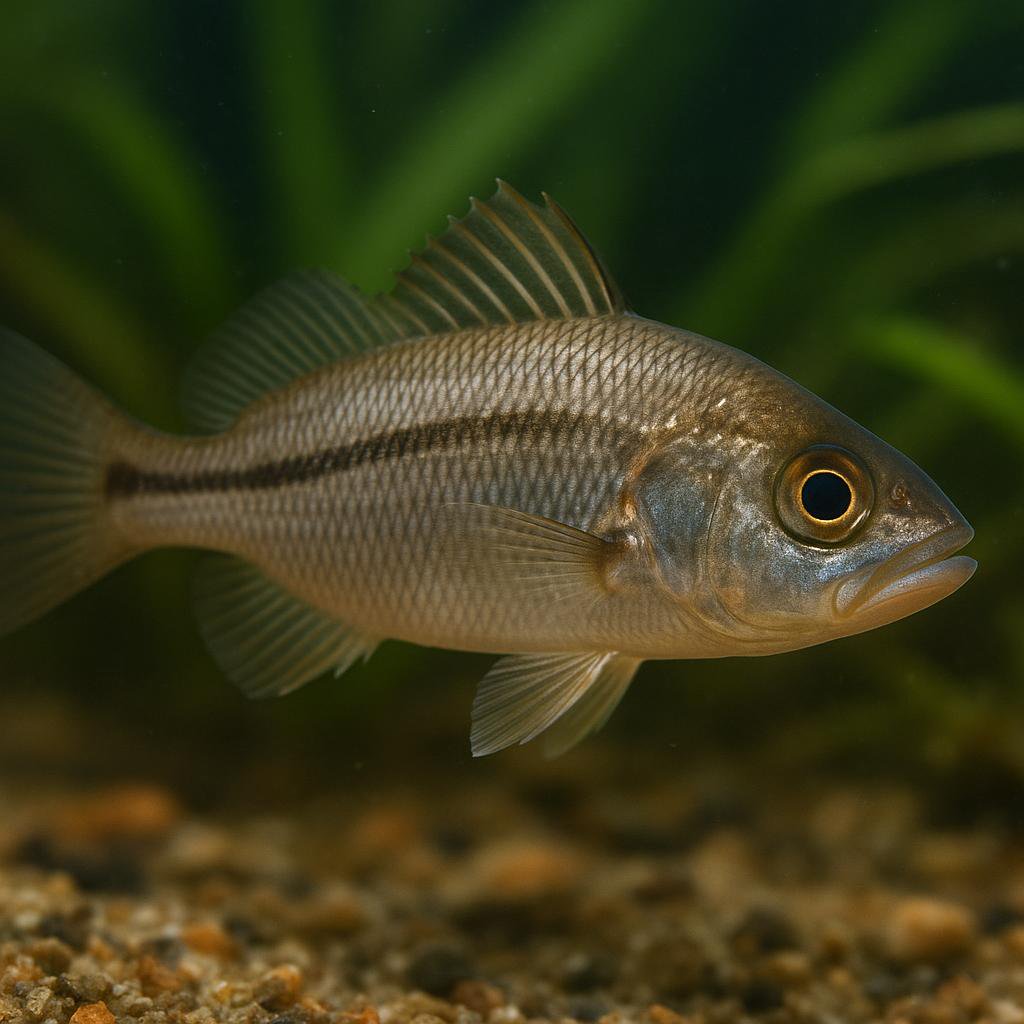
Bellfish
Johnius fuscolineatus
Johnius fuscolineatus (Bellfish/African bearded croaker) is a small coastal sciaenid from the southwestern/western Indian Ocean (Mozambique, South Africa, Madagascar), occurring in shallow marine waters (reported 0–50 m) and also associated with coastal/estuarine habitats.
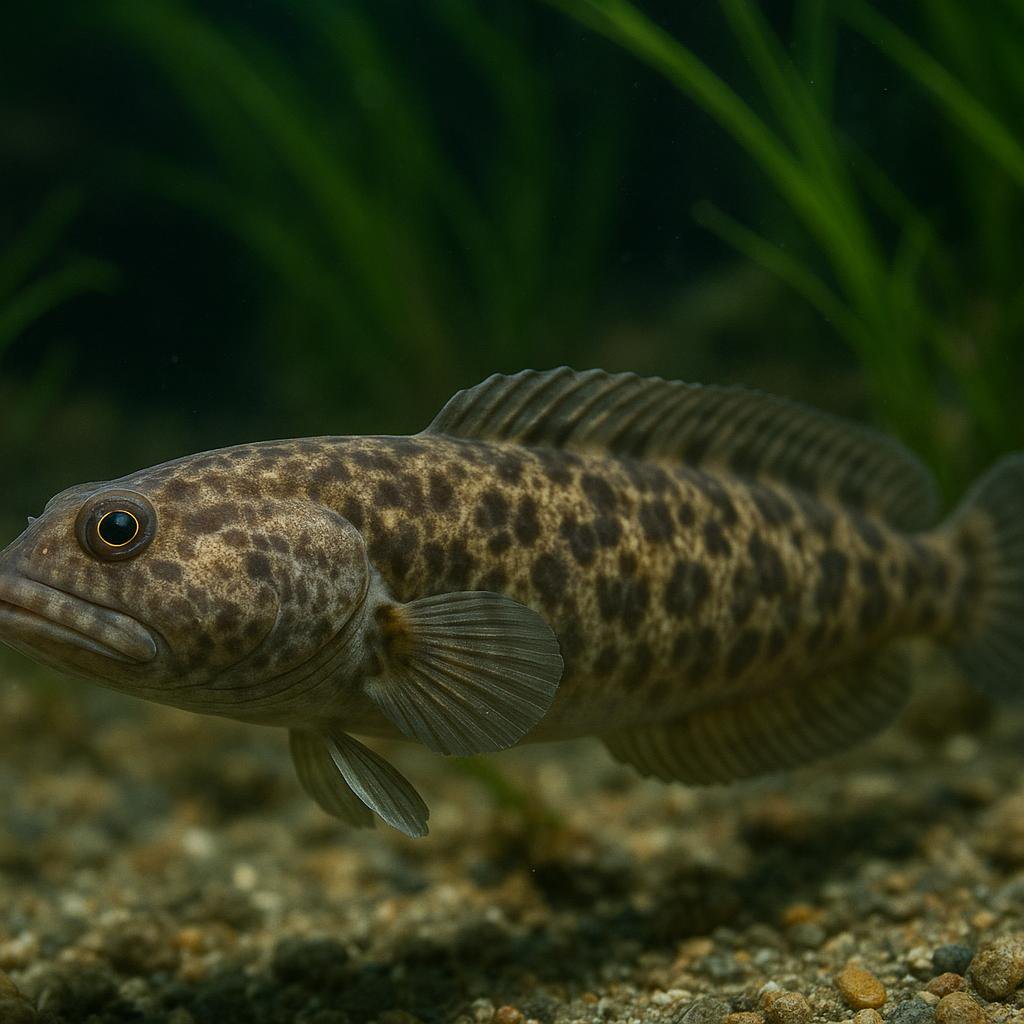
Blotched eelpout
Zoarces gillii
Zoarces gillii is a cold-temperate eelpout from the Northwest Pacific that hugs the bottom over sandy-mud inshore areas and even pushes into estuaries. It's got that long, eel-like body and a sneaky, sit-on-the-bottom predator vibe - very much a cool-water, brackish-to-marine oddball rather than a typical tropical aquarium fish.
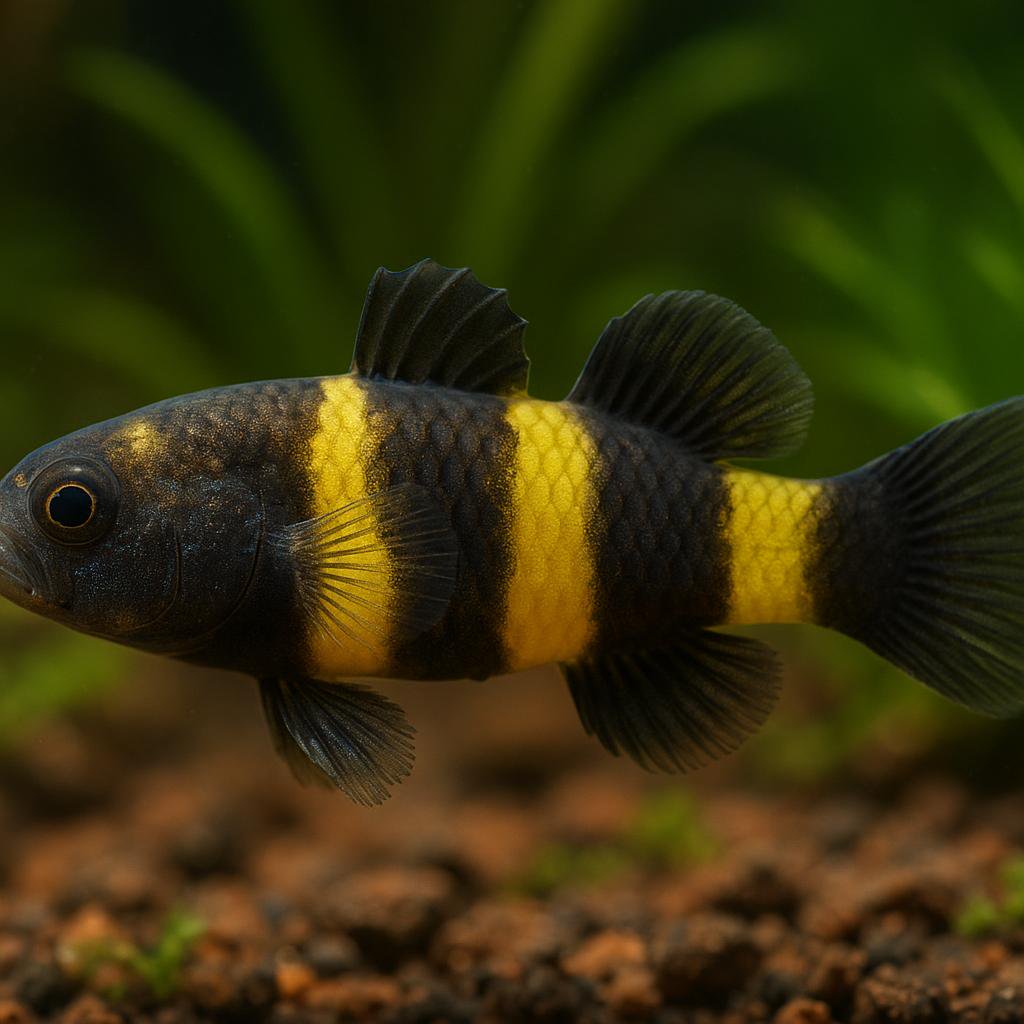
Bumblebee goby
Brachygobius doriae
Brachygobius doriae is one of the classic "bumblebee gobies" - tiny, bottom-hugging little characters that perch on rocks and sand and stare at you like they own the place. They're at their best in a calm setup with lots of caves and leaf litter, and they really shine once you get them eating frozen/live foods reliably (they're slow, picky eaters). Also: they're one of the species that gets mislabeled a lot in shops, so it's super common to see them sold under the wrong bumblebee-goby name.
Looking for other species?