

Fire eel
Mastacembelus erythrotaenia
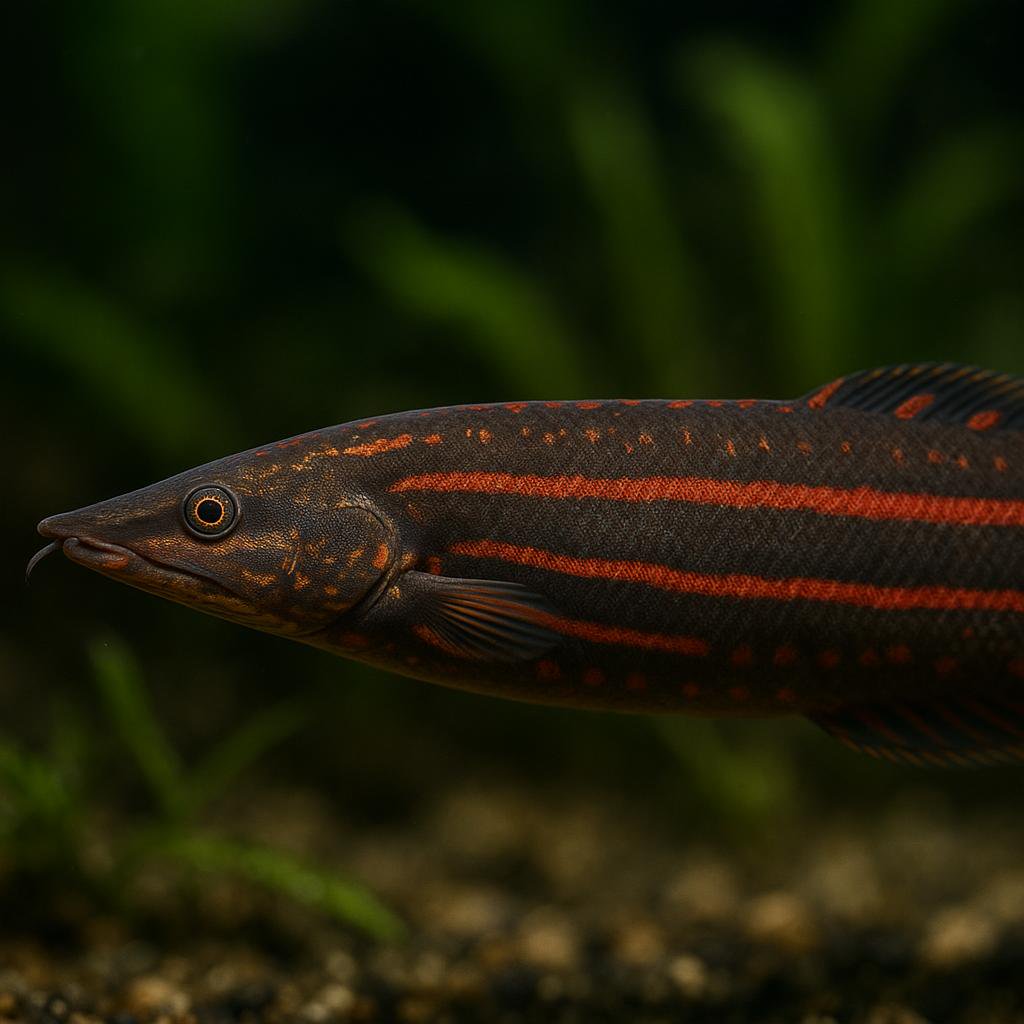
The Fire eel exhibits a slender, elongated body with vibrant orange and black banding, and a distinctive extended dorsal fin.
This page includes AI-generated images. Why am I seeing AI images?
About the Fire eel
Fire eels are those big, snake-y "spiny eels" with the red/orange flame striping that really pops once they settle in and color up. They love to wedge themselves under wood or burrow into sand and then come out at dusk to cruise around and beg for food-super personable once they trust you, but they get huge and can absolutely inhale small tankmates.
Also known as
Quick Facts
Size
100 cm (39.4 inches)
Temperament
Semi-aggressive
Difficulty
Advanced
Min Tank Size
125 gallons
Lifespan
10-20 years
Origin
Southeast Asia
Diet
Omnivore leaning carnivore - earthworms, insect larvae, shrimp/krill, frozen foods, meaty sinking pellets
Water Parameters
24-28°C
6-8
5-19 dGH
Need a heater for this species?
This species needs 24-28°C in a 125 gallon tank. Use our heater calculator to find the right wattage.
Calculate heater sizeCare Notes
- Plan for a big tank from the start-these guys hit 24-36 inches, and a 125g is more like the minimum; 180-240g is where they really stop acting cramped.
- Give them soft sand (not gravel) and lots of tight hides like PVC tubes/driftwood caves; they love to burrow and will scrape themselves up on rough stuff.
- Lock the lid down like you're keeping a snake-Fire eels are escape artists and will shoot out through tiny gaps around hoses and cords.
- Keep the water warm and stable: 78-82°F, pH roughly 6.5-7.5, and low nitrate (try to keep it under ~20 ppm); they sulk and get sick fast in dirty water.
- Feed after lights-out if yours is shy-earthworms/nightcrawlers, shrimp, mussel, and quality carnivore pellets work; start with tongs and don't rely on feeder fish (parasites).
- Tankmates need to be too big to swallow and not hyper-aggressive-think larger peaceful/semi-aggressive fish; avoid small tetras/barbs and fin-nippers, because they'll either disappear or stress the eel nonstop.
- Watch for skin scrapes, fungus, and "white spot" (ich), especially after shipping; they're sensitive to meds, so go gentle on dosing and bumping temp + aeration usually helps more than nuking the tank.
Compatibility
Good Tankmates
- Big, laid-back cichlids like Severums or adult Geophagus - they're not usually out to pick a fight, and they're too chunky to be seen as "food." Keep plenty of hides so the eel can do its thing.
- Silver dollars (Metynnis) - fast, schooling, and not bite-sized. They stay up in the water column and generally ignore the eel, which is exactly what you want.
- Medium-to-large barbs like tinfoil barbs or rosy barbs (in a group) - active enough to not get hassled, and big enough not to disappear overnight. Avoid tiny barbs.
- Big rainbowfish (Boesemani, turquoise, etc.) - quick, midwater fish that don't usually bother a fire eel. Just don't mix in any small, delicate rainbows.
- Larger peaceful catfish like Synodontis (upside-down types) - they're tough, mostly nocturnal like the eel, and can hold their own without being jerks.
- Large plecos (common/sailfin types) - generally fine as 'tank furniture' with a fire eel. Feed the tank well so nobody gets cranky at night.
Avoid
- Small fish that fit in its mouth - neons, guppies, little rasboras, young tetras... if it can swallow it, it eventually will. Fire eels are predators, not 'community safe.'
- Nippy fin-biters like tiger barbs (especially if understocked) - they'll stress the eel and go after its face/feelers when it comes out to cruise around.
- Hyper-aggressive cichlids like Oscars, jaguars, or other mean bruisers - they can bully the eel, outcompete it at feeding time, and turn the tank into a constant stress fest.
1) Where they come from
Fire eels (Mastacembelus erythrotaenia) come out of Southeast Asia, mostly slow rivers and floodplain areas around Thailand/Cambodia/Vietnam. Think warm water, lots of leaf litter, roots, muddy/sandy bottoms, and plenty of places to disappear. That “vanish into the scenery” lifestyle explains about 80% of their tank needs.
2) Setting up their tank
This is an advanced fish mostly because it gets big, it’s strong, and it’s a professional escape artist. A cute 10-inch juvenile turns into a thick, powerful eel that wants floor space more than height.
- Tank size: I’d treat 125 gallons as a starting point for an adult, with a long footprint (6-foot tank is your friend). Bigger is honestly easier.
- Substrate: fine sand is the best. They dig and “bury” themselves; gravel can scratch them up.
- Hardscape: driftwood, root tangles, PVC tubes hidden behind décor, and caves they can fully fit into.
- Plants: optional, but tough plants (Java fern, Anubias) tied to wood work better than delicate rooted stuff—fire eels rearrange the furniture.
- Flow/filtration: moderate flow with beefy filtration. They’re messy eaters and big-bodied fish = big waste.
- Temp/pH: warm tropical range; keep it stable more than chasing a magic number.
Lid security is non-negotiable. Any gap for airline tubing, HOB filters, or cords is a gap they’ll test at 2 a.m. Use a tight lid + block openings with foam or mesh. I’ve found them on the floor once. Never again.
Give them at least two “real” hides: one on each side of the tank. They settle faster when they can choose a safe spot instead of pacing the glass.
Lighting doesn’t need to be bright. If you want to actually see your fish, floating plants or dimmer LEDs help a lot. Mine became way more confident with shaded areas and cover.
3) What to feed them
Fire eels are predators with a great sense of smell. They learn routines fast, and once they trust you, they’ll take food from tongs like a puppy. The challenge is getting a new one eating and not overdoing fatty foods long-term.
- Go-to foods: earthworms/nightcrawlers (cut to size), shrimp, mussel, clam, squid pieces, quality frozen carnivore mixes.
- Good variety: bloodworms for smaller juveniles, blackworms if you can get them clean, silversides/white fish occasionally.
- Pellets: some will learn sinking carnivore pellets, but many need “real” food first.
- Feeding schedule: juveniles more often; adults usually do great with a few solid meals per week.
Try not to make feeder fish your staple. Besides parasite risk, they can end up on a greasy “junk food” diet. If you use live foods, stick to worms/shrimp and keep it clean.
Tongs are a game-changer. It keeps their food from vanishing into the sand, lets you control portions, and helps you confirm they actually ate (not the tankmates).
4) Behavior and tankmates
Most of the time they’re calm, a little shy, and kind of goofy once they settle in. But they’re still predatory. If it fits in their mouth, it’s a menu item. Also: they’re surprisingly strong and can bulldoze décor if it’s not stable.
- Good tankmates: larger, sturdy fish that won’t pick at them—big barbs, larger rainbowfish, sturdy cichlids (not the hyper-aggressive kind), larger peaceful catfish.
- Avoid: small tetras, guppies, small loaches, juvenile anything you’re attached to.
- Also avoid: fin-nippers and bullies (some barbs/cichlids can be a problem), because fire eels don’t handle constant harassment well.
Fire eels can be kept with other large fish, but don’t be shocked if they become “the boss” just by being big and confident. They’re not usually out to fight—more like they don’t back down.
They’re also a hands-off fish. They’ll recognize you, they’ll come out for food, and they can be interactive—but they don’t want to be handled. Netting one is a whole event, and they can get scraped up if you’re rough about it.
5) Breeding tips
Breeding fire eels in home aquariums is rare. Most of what you see in the trade is wild-caught or from large-scale setups. Sexing them isn’t straightforward, and getting a compatible pair plus the right seasonal triggers is the real hurdle.
If you’re determined: you’ll need a big group or a confirmed pair, a massive tank with heavy cover, and you’ll likely be mimicking rainy-season cues (big water changes, slightly cooler water, then warming back up, lots of feeding). Even then, don’t plan your fishroom around it.
6) Common problems to watch for
Most issues I’ve seen come down to three things: scratches/infections from rough substrate or décor, stress from poor hiding spots or aggressive tankmates, and water quality sliding because the fish is big and eats meaty foods.
- Escapes: the #1 “problem.” Seal the lid and every gap.
- Nose/skin abrasions: often from gravel, sharp rocks, or squeezing into tight décor. Sand + smooth hides help a lot.
- Refusing food: common in new arrivals. Dim lights, offer worms, don’t crowd them, and give them time.
- Parasites and skinny-new-eel syndrome: wild-caught individuals can come in rough. Quarantine if you can.
- Ich/skin infections: scaleless-ish fish tend to react strongly to meds. Go slow with dosing and watch them closely.
- Bloat/constipation: too much rich food or big chunks too often. Mix in worms and smaller portions.
Be cautious with medications and salts. Fire eels can be sensitive, especially if they’re already stressed or scraped up. If you medicate, read up on scaleless fish dosing and start conservatively.
If your fire eel is hiding nonstop, don’t assume it’s “just nocturnal.” Usually it’s missing cover, the lights are too bright, or tankmates are making it feel unsafe. Fix the vibe and you’ll see a totally different fish.
Similar Species
Other freshwater semi-aggressive species you might be interested in.
American flagfish
Jordanella floridae
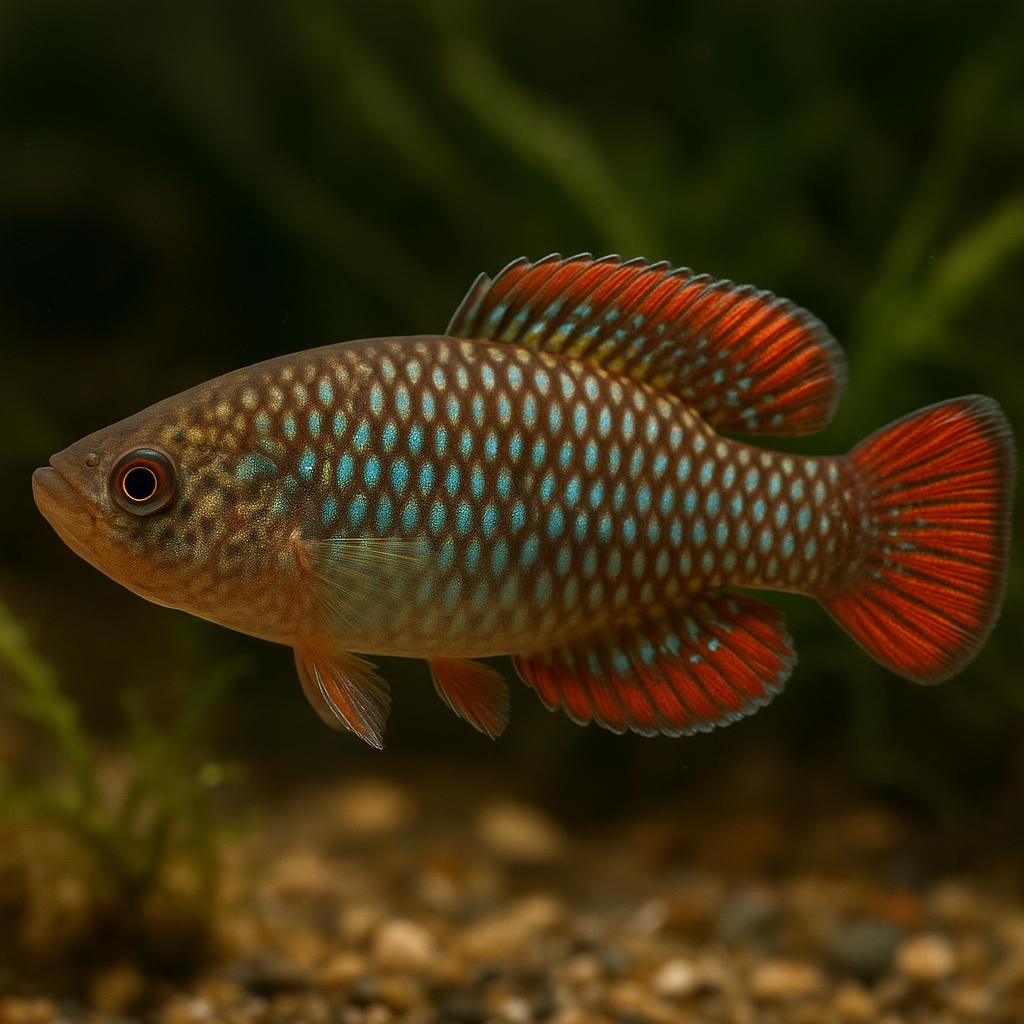
Jordanella floridae is that little Florida native with the red-and-cream striping that really does look like a tiny flag once a male colors up. They graze algae like champs (especially stringy/hair algae), but they have a bit of attitude - give them plants and space so the bossy behavior stays manageable. Bonus: the male guards the eggs and will actively fan them, which is pretty fun to watch.
Banded Leporinus
Leporinus fasciatus
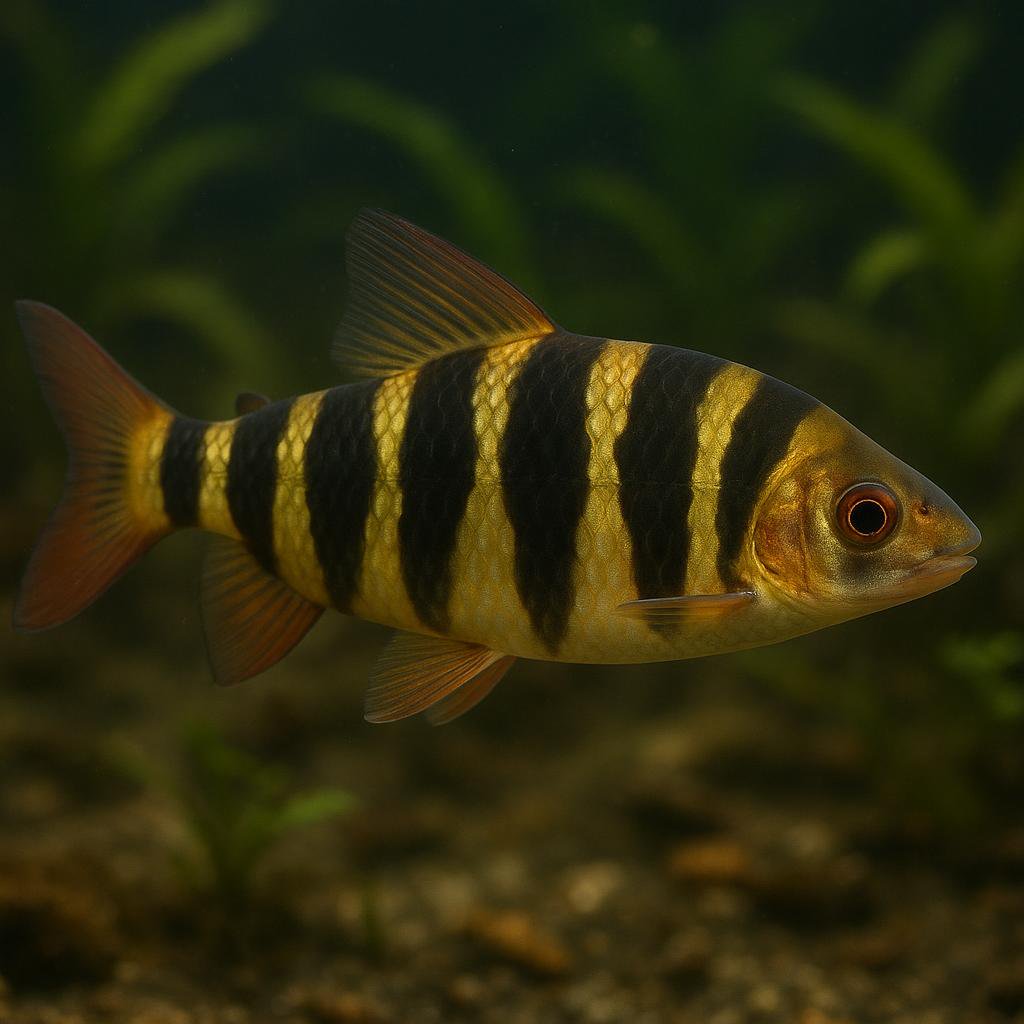
Banded Leporinus are those torpedo-shaped, black-and-yellow striped fish that look like they're wearing a little prison outfit-and they stay on the move. They've got a ton of personality and they're awesome to watch cruising and picking at stuff, but they're also the kind of fish that will redecorate your tank and "taste test" anything soft-looking.
Bandi cichlid
Wallaceochromis signatus
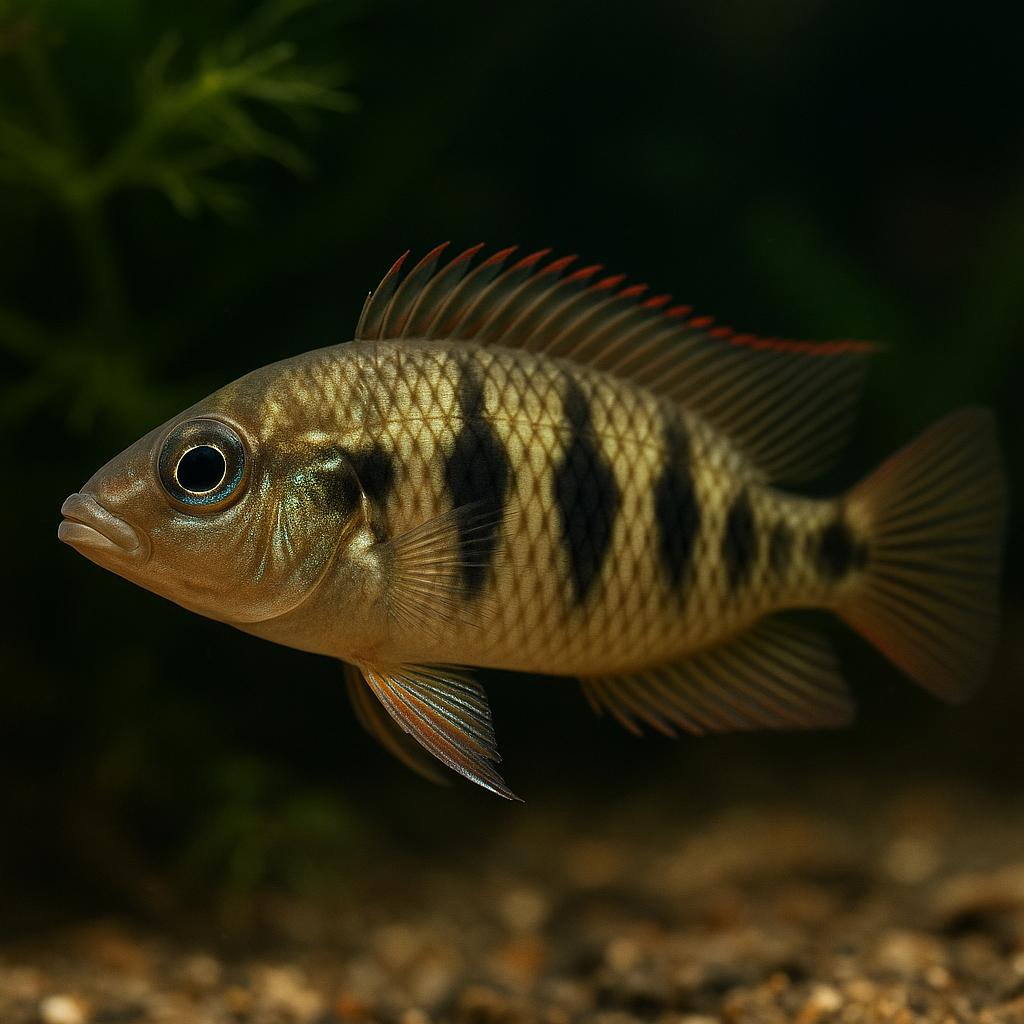
A West African dwarf cichlid from Guinea's Bandi River, this fish shows crisp vertical bars and spotted fins with red highlights. Females have a bold black spot at the base of the tail, and pairs guard eggs and fry in caves, which makes their parental behavior fun to watch.
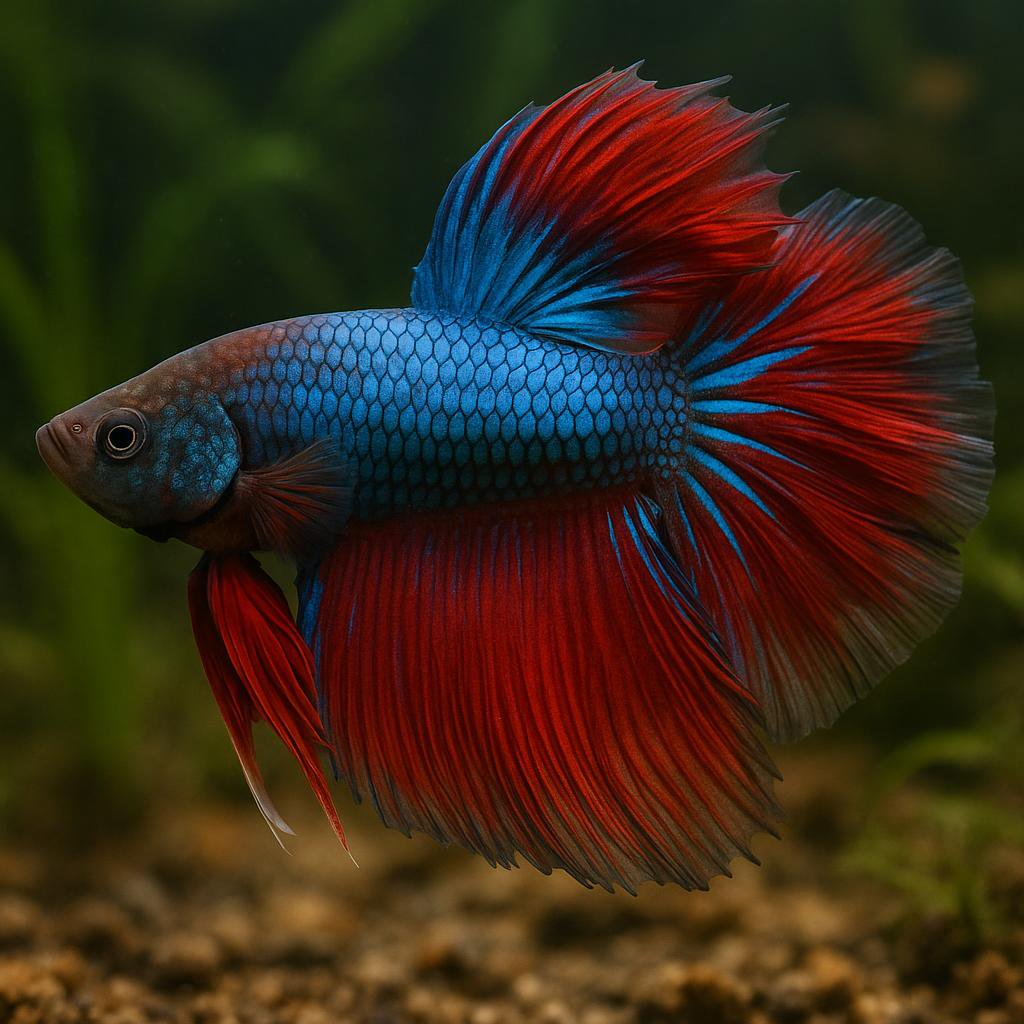
Betta
Betta splendens
Betta fish, also known as Siamese fighting fish, are popular for their striking colors and flowing fins. They are known for their territorial nature, especially males, which can display aggressive behavior towards each other.
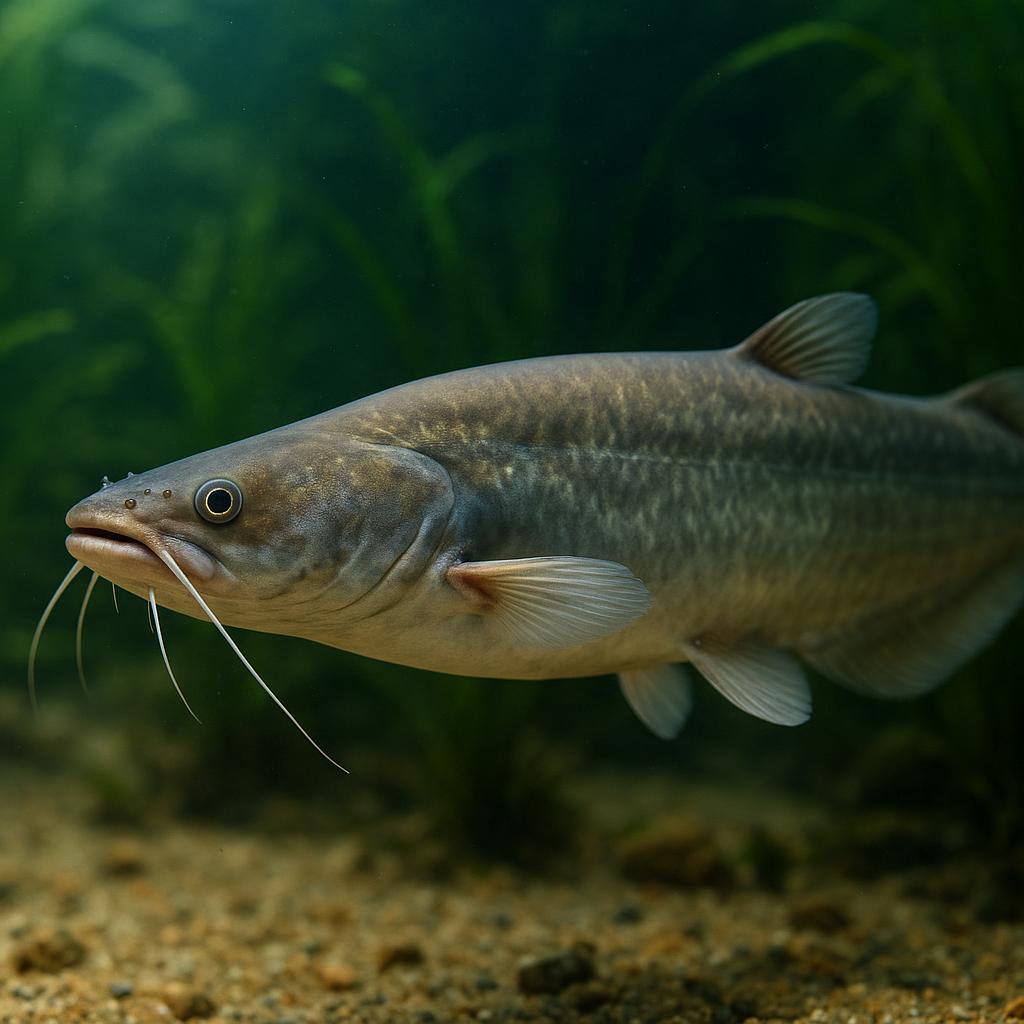
Blackhawk catfish
Wallagonia micropogon
Wallagonia micropogon is a giant Southeast Asian sheatfish with an eel-like body and a huge, scoop-like mouth for hunting other fish. It is native to the Mekong and middle Chao Phraya basins and was long confused with Wallagonia leerii, which makes IDs and care notes tricky. Stunning as a juvenile but it grows to true megafish size, so it is only realistic for expert keepers or public aquariums.
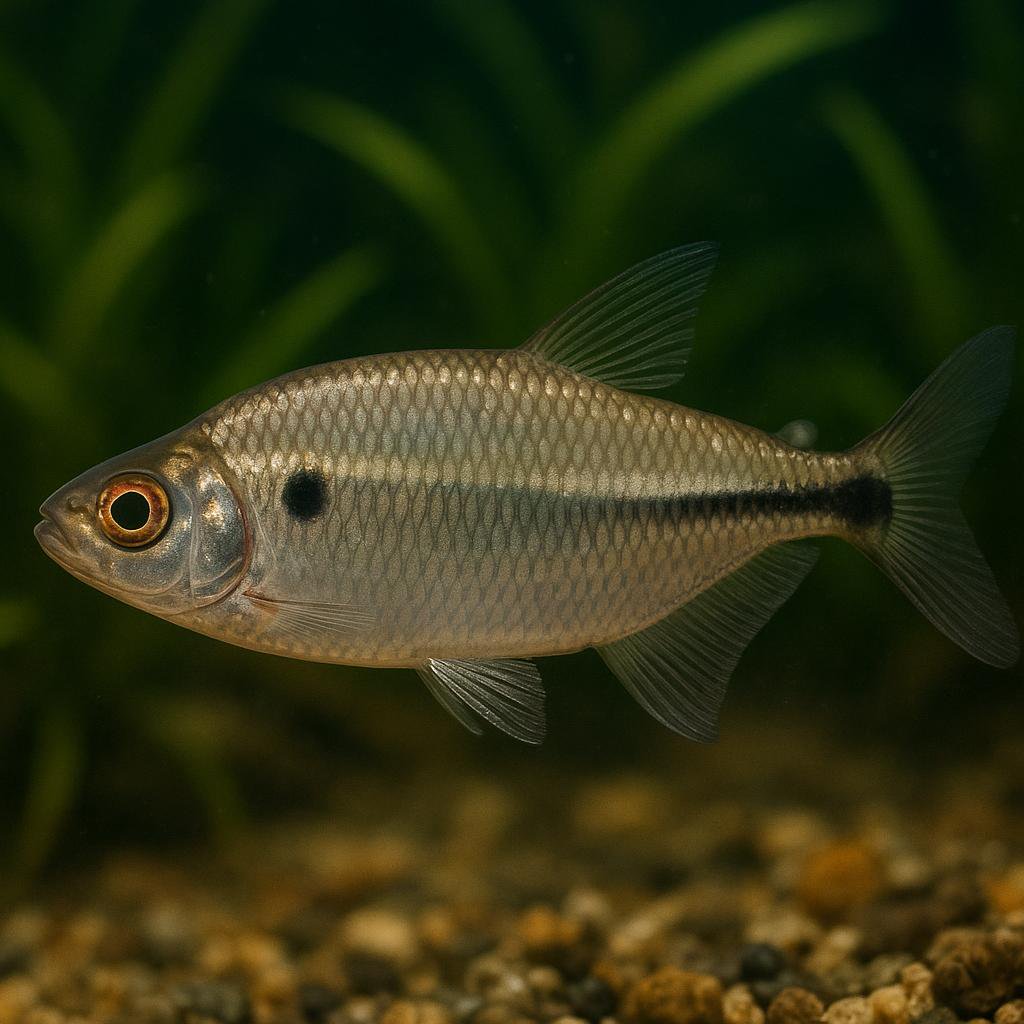
Boulenger's Featherfin Tetra
Bryconaethiops boulengeri
A big, fast African tetra from the Congo River basin, it cruises the mid-to-upper water in active groups and flashes a bold broken stripe along its flanks. In the wild it hunts insects at the surface and can leap, so aquariums need tight lids. Keep it with robust tankmates it cannot swallow.
More to Explore
Discover more freshwater species.
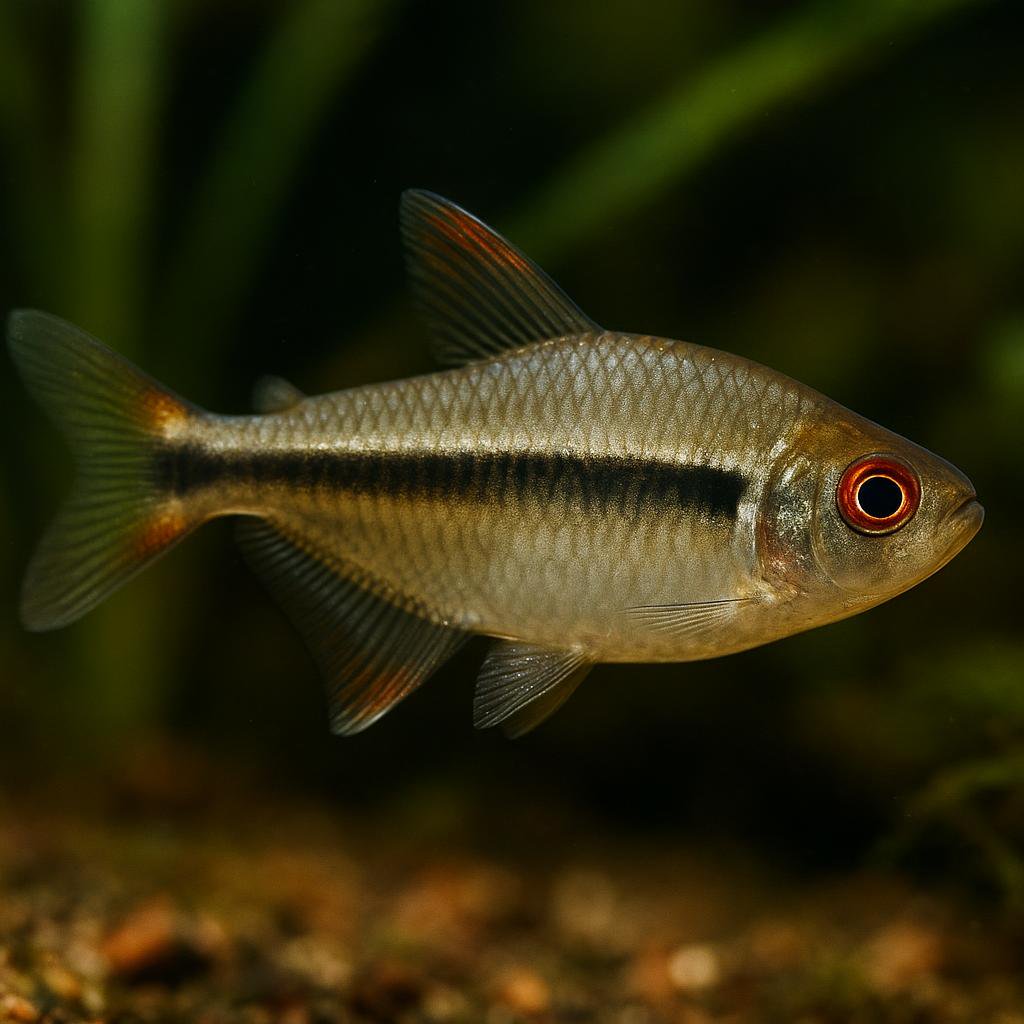
Amapa tetra
Hyphessobrycon amapaensis
This is a tiny, super sleek little tetra with a clean red stripe down the side that really pops once its settled in. It does best in a planted, slightly tinted "creek-style" setup and looks way cooler when you keep a proper group so they school and flash that line together. If you can give it soft, slightly acidic water and a calm community, its an easy fish to fall for.
Armoured stickleback
Indostomus paradoxus
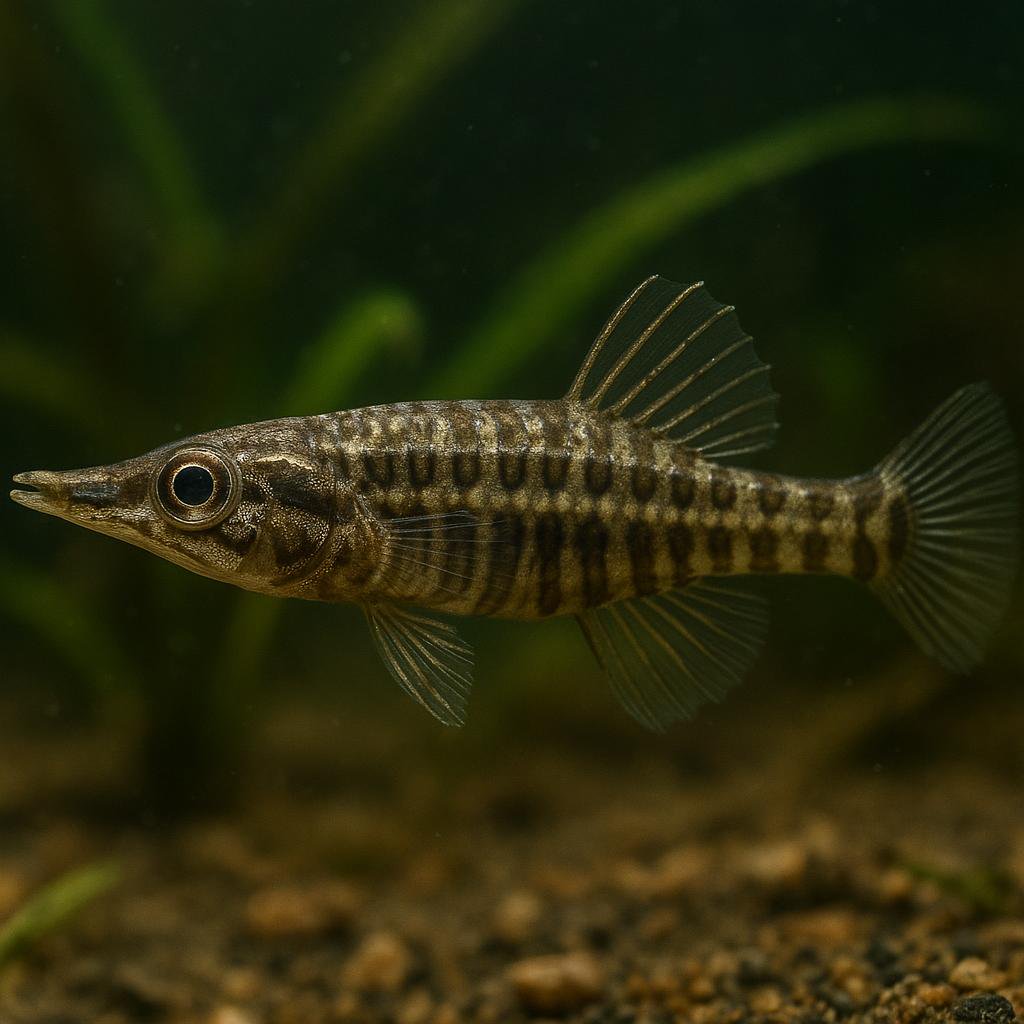
This is that goofy little "freshwater seahorse"-looking fish that just kind of perches and scoots around like a tiny armored twig. Its whole vibe is slow, sneaky micropredator - once its settled in, you will catch it stalking microfoods and doing these subtle little posture displays. The big trick is feeding: they do best when you can provide lots of small live foods in a calm, planted tank.
Arrowhead puffer
Pao suvattii
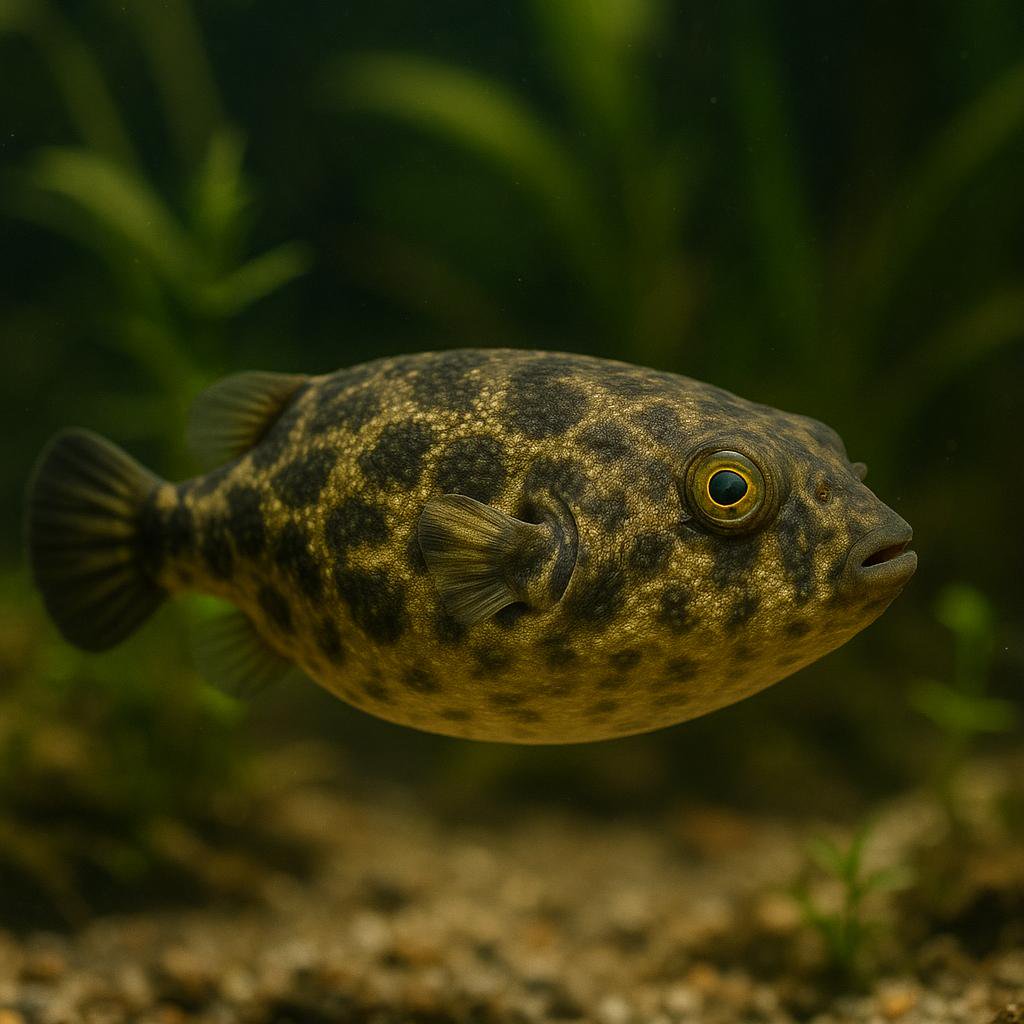
Pao suvattii is that sneaky Mekong puffer that likes to sit low and ambush food, and it has that super recognizable arrow/V pattern on its back. Gorgeous fish with tons of personality, but it is absolutely not a community guy - plan on a solo, species-only setup if you want everybody to stay in one piece.
Bishop toothcarp
Brachyrhaphis episcopi
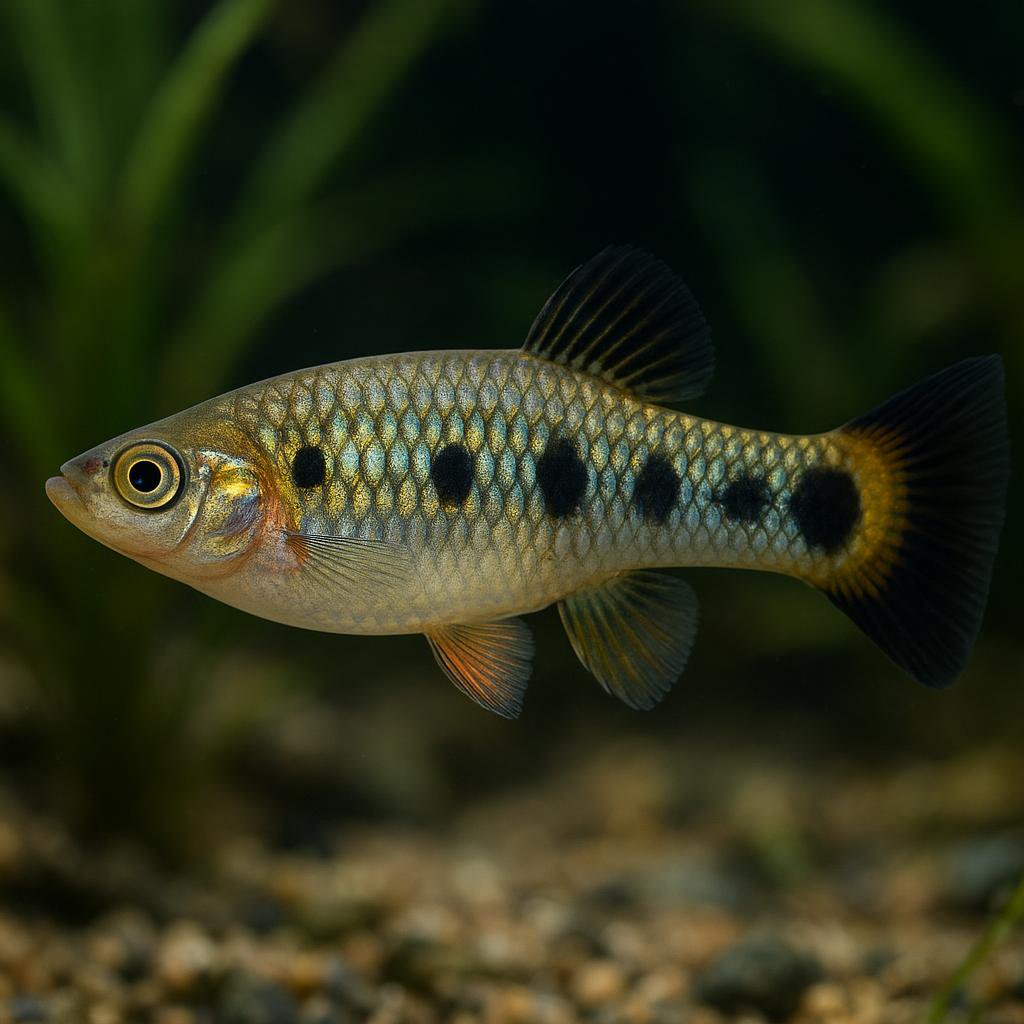
This is a tiny Panamanian livebearer that does best when you treat it more like a shy wild fish than a fancy guppy-lots of cover, calm vibes, and really clean water. The fun part is watching the males posture and spar while the females cruise around dropping fully-formed fry about once a month.
Black Neon Tetra
Hyphessobrycon herbertaxelrodi
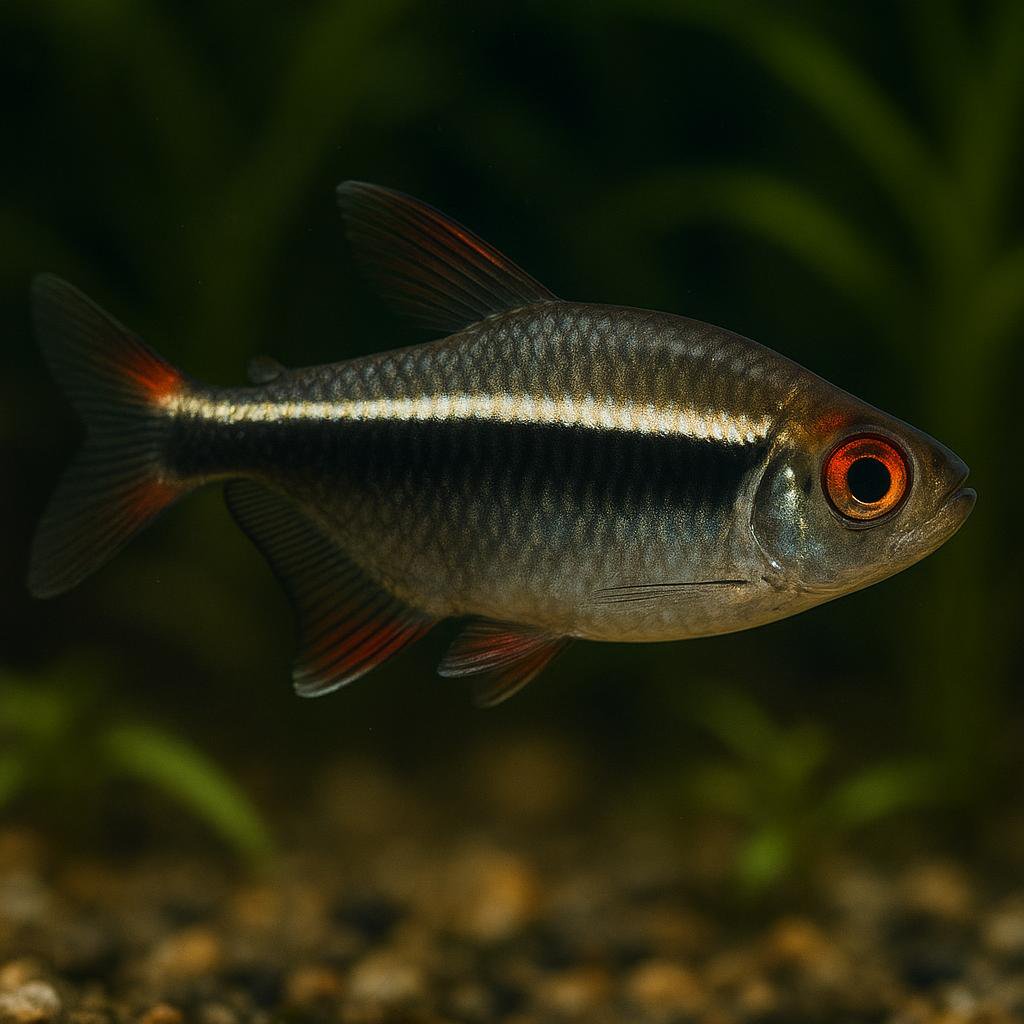
Black neons are one of those little tetras that look kinda understated until the light hits them-then that bright stripe pops and they shimmer when the school turns together. They're super chill, always cruising mid-water, and they make a tank feel "alive" without being hectic. If you keep a nice group, they get bolder and you'll see way more of their personality.
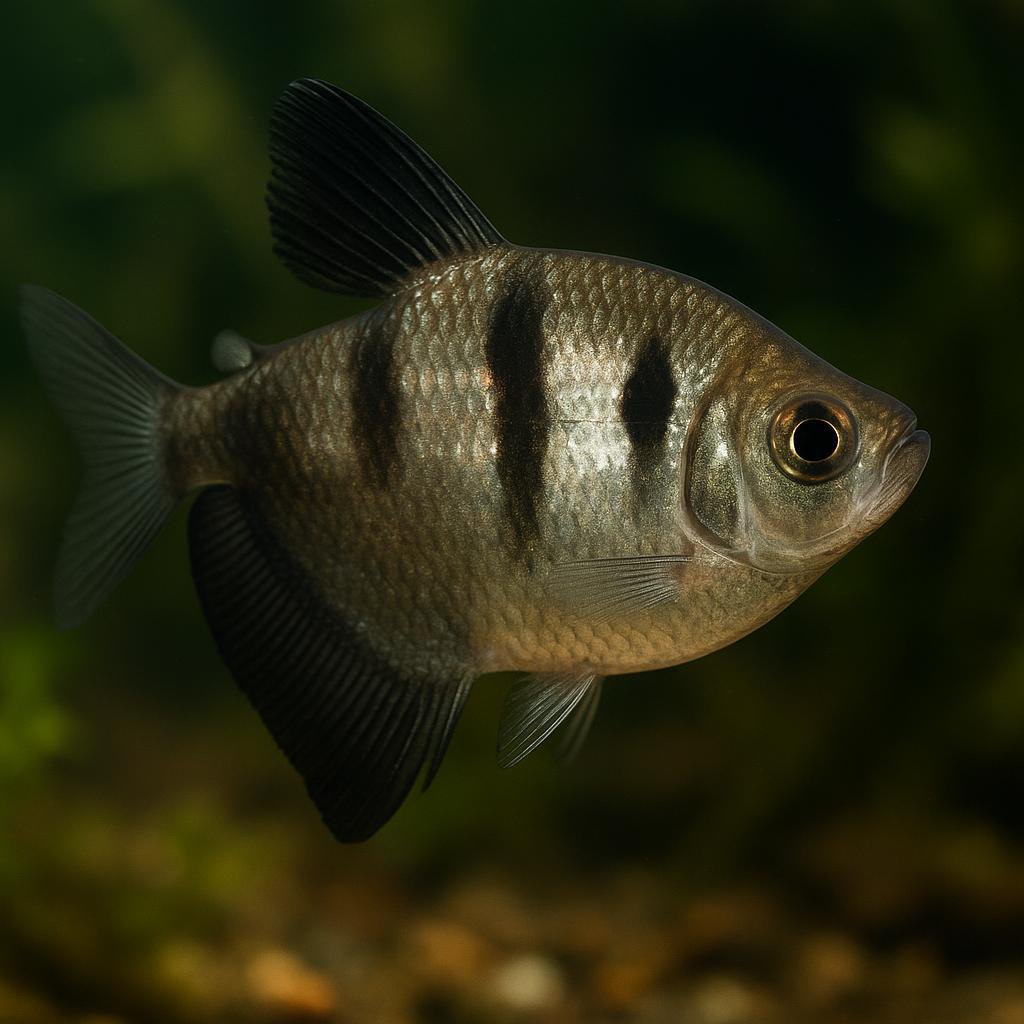
Black Skirt Tetra (Black Widow Tetra)
Gymnocorymbus ternetzi
Black skirts are those little "suit-and-tie" tetras with the dark bands and flowing fins that look way fancier than they should for how tough they are. They're super active midwater fish, and when you keep a proper group they do that tight, zippy schooling thing that makes the whole tank feel alive. Just give them enough buddies and finny tankmates they won't be tempted to nip.
Looking for other species?