

Golden arrow mahseer
Neolissochilus benasi
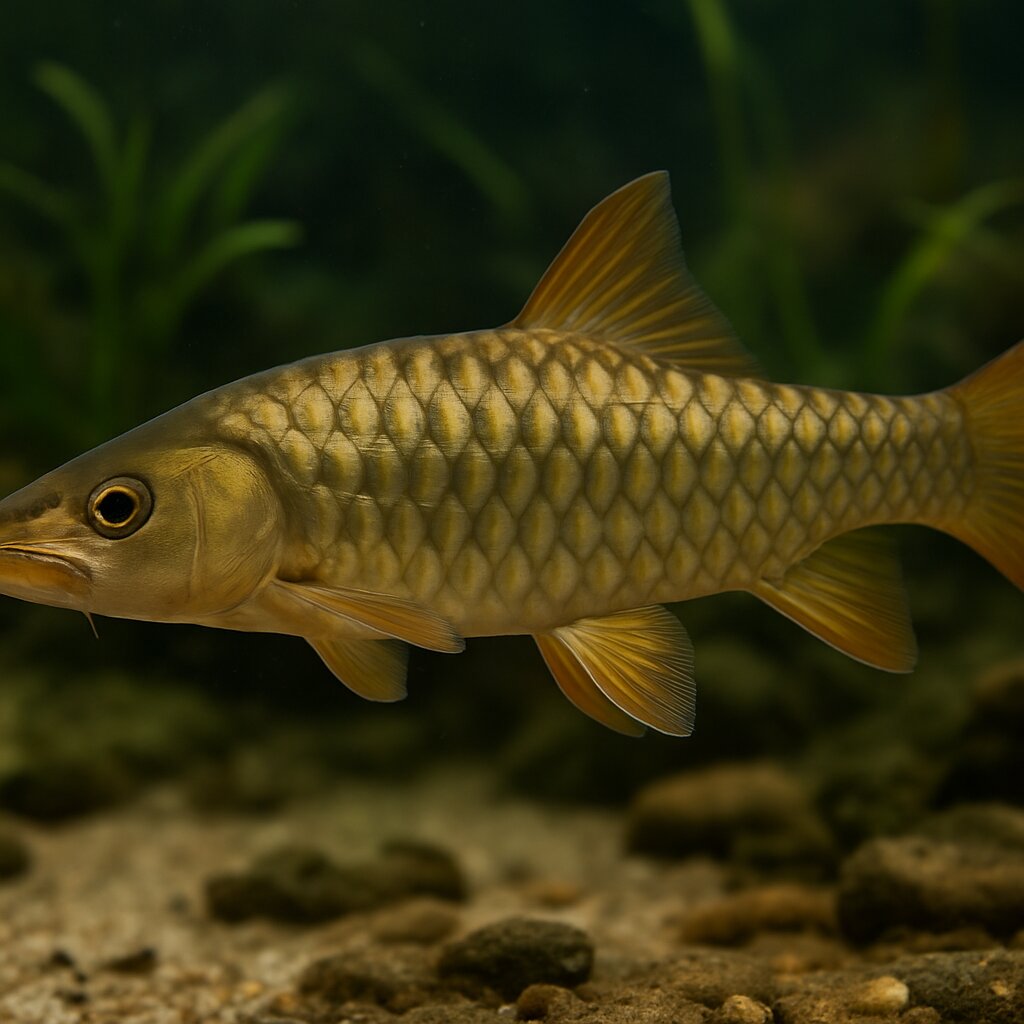
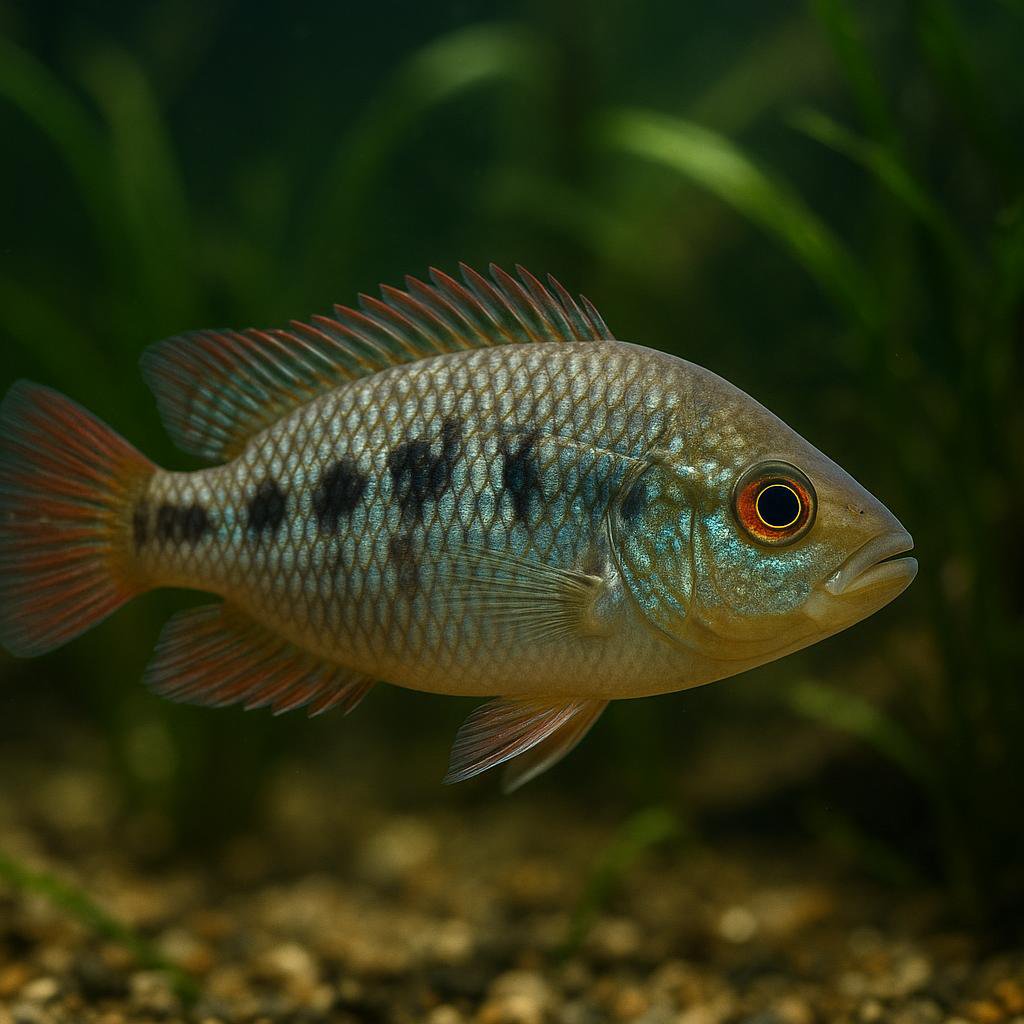
The Golden arrow mahseer features a sleek, golden body with dark horizontal stripes and large, prominent fins, making it a striking freshwater fish.
This page includes AI-generated images. Why am I seeing AI images?
About the Golden arrow mahseer
A smaller mahseer now treated as conspecific with Neolissochilus benasi. Native to northern Viet Nam and adjacent SW China (Yunnan), it reaches about 17–18 cm TL (~7 in) and inhabits clear, fast, well‑oxygenated rivers—so provide strong flow and high dissolved oxygen in a long tank.
Also known as
Quick Facts
Size
7 inches
Temperament
Semi-aggressive
Difficulty
Advanced
Min Tank Size
125 gallons
Lifespan
8-12 years
Origin
Vietnam and southwestern China (Yunnan)
Diet
Omnivore - sinking pellets, algae wafers, vegetable matter, insects, frozen foods
Water Parameters
18-26°C
6.5-7.5
3-12 dGH
Need a heater for this species?
This species needs 18-26°C in a 125 gallon tank. Use our heater calculator to find the right wattage.
Calculate heater sizeCare Notes
- Provide a long, river‑style aquarium with strong directional flow and high dissolved oxygen; use robust external filtration and powerheads to create current and keep water very clean.
- Keep water cool to low‑20s °C with strong aeration/flow; aim around 22–26 °C, pH ~6.5–7.5, and soft to moderately hard water. Warmer water holds less oxygen, so increase aeration and flow accordingly.
- Use sand or fine gravel with rounded boulders and an open lane for swimming; tight lid with clips or weights is a must because they rocket out when spooked.
- Use oversized filtration and supplemental powerheads to handle waste and maintain strong current; keep ammonia/nitrite at 0 and nitrates low via regular large water changes.
- Feed sinking, high-quality river fish or sturgeon pellets with veg (algae wafers, blanched greens) and insects or mussel meat 2-3 small meals daily; add a light fasting day weekly.
- Tankmates need to be fast and sturdy: big Devario, Barilius, Garra, and robust loaches work; avoid tiny fish, shrimp, slow or long-finned species, and bruiser cichlids.
- They are calmer in a group of 5+ but that takes a monster tank; if keeping one or two, add line-of-sight breaks and a dark background to cut spooks and nose-banging.
- Breeding at home is basically a no-go - they are seasonal river spawners; farms use hormones and raceways, so do not plan on raising fry.
Compatibility
Good Tankmates
- Fast, robust midwater cyprinids of similar adult size such as giant danios (Devario aequipinnatus) and larger Devario/Barilius spp. in high-flow tanks
- Silver dollars in a roomy setup - quick midwater shoalers that can handle the bustle
- Large, armored plecos (common, sailfin, royal) - tough bottom workers that ignore the drama
- Clown loaches or other robust Botia in groups - active bottom buddies that hold their own
- Giant danios and big devarios as dither fish - only adults big enough not to fit in a mahseer mouth, with strong flow
- Sturdy Synodontis catfish (decorus, eupterus) or similar riverine cats - night active, thick-skinned, not easy targets
Avoid
- Small community fish and shrimp (neons, rasboras, guppies) - they will get hunted
- Slow or long-finned fish (angelfish, fancy goldfish, bettas) - stressed by current and risk torn fins
- Territorial bruisers like big Central American cichlids (green terror, flowerhorn, red devil) - prone to constant fights
- Chronic fin-nippers (tiger barbs, serpae tetras) - they pester nonstop and often end up as snacks
Where they come from
Golden arrow mahseer (Neolissochilus namlenensis) are river fish from upland, forested streams in Vietnam, with the species described from the Nam Len area. Think clear water, boulder-strewn runs, and strong current that picks up during the monsoon and cools off at night.
They are built for current. Everything about their shape says long swims, clean water, and lots of oxygen.
Setting up their tank
These grow into serious fish. Juveniles are manageable, but adults push into the 40-50 cm range, with a powerful build. If you cannot house a group in a very large system or indoor pond, skip this species.
- Footprint first: minimum 8 ft x 3 ft for a small group of juveniles, and plan for a pond or 1500-2500+ liters as they mature
- Turnover: 8-12x per hour with heavy aeration; they sulk in lazy water
- Temp: 20-24 C most of the year; they handle a bit warmer short term if oxygen is high
- pH: 6.5-7.5, soft to moderate hardness
- Water changes: 30-50% twice a week once they hit dinner-plate size
Set the tank up like a river. Use a long, open swimming lane with rounded rocks and cobbles pushed to the sides to create deflectors and resting eddies. Sand or fine gravel substrate is easier on their barbels.
Filtration that can handle carp-level waste is non-negotiable. Big sump or multiple canisters. Add a river manifold or powerheads aimed the same direction to create a one-way flow. Make sure there is a quiet corner behind rockwork where they can loaf between sprints.
They jump. Tight lids with weighted covers, and block every gap around plumbing and cables. I have found them on the floor after a midnight spook if I got sloppy.
Plants are optional and often get uprooted. If you want greenery, go with tough river plants (Bolbitis, Anubias) tied to wood in sheltered spots.
If your summers run hot, budget for a chiller or keep the tank in a cool room. High temp + low oxygen is a bad combo for this fish.
What to feed them
They are omnivorous grazers that also grab anything drifting by. Variety keeps them in good shape and helps avoid fatty build-up.
- Staple: quality sinking pellets for large cyprinids or sturgeon pellets (mix sizes as they grow)
- Protein rotation: chopped prawn, mussel, earthworm, black soldier fly larvae, gut-loaded crickets
- Plant matter: blanched spinach, peas (skinned), cucumber rounds, zucchini, algae wafers
- Occasional: soaked bee-pollen or fruit bits (small), not every week
Feed smaller portions 2-3 times daily while growing, then move to twice daily. Scatter food into the flow so everyone gets a shot. Soak floating pellets so they do not gulp air at the surface.
Give them one light fasting day per week. Their guts will thank you, and the water stays cleaner.
Skip fatty mammal foods. No beef heart. It packs on liver fat and shortens their lives.
How they behave and who they get along with
They are fast, alert, and social, with a clear pecking order. A single fish gets nippy and nervous. A group of 5-7 spreads the attitude, but that means even more space.
They are not mean for the sake of it, but they are competitive. Anything bite-sized will end up as food once these hit sub-adult size.
- Good companions (in giant setups): big river loaches (Leptobotia, large Syncrossus with care), robust Garra spp., larger Devario/Barilius only if adult size is safe, big hillstream-tolerant catfish (Glyptothorax, Hemibagrus species with caution).
- Use caution: slow fancy barbs, cichlids with long fins, timid fish that cannot handle current.
- Avoid: small tetras, shrimp, snails, and anything you are attached to that fits in a wide mouth.
Dim the lights or use floating cover to cut reflections. They are less skittish if they cannot see their own ghost in the glass.
Breeding tips
This is not a home-aquarium project. In the wild they migrate and spawn over gravel riffles during rising water. Farms use hormone induction and large raceways to get eggs. I have never seen a verified home spawn for this species.
If you ever see chasing and scattering over clean gravel after a storm and cool water change, you might get eggs, but they would likely be eaten fast. A strong flow across pea gravel and a grate to drop eggs out of reach would be the starting point, but do not count on it.
Common problems to watch for
- Oxygen dips: big fish + warm water + power cut = gasping. Keep surface agitation high and have battery air pumps on hand.
- Heat spikes: over 26 C they get edgy and burn oxygen faster. Cool the room, boost flow, and shorten feeding.
- Jumping and head trauma: spook at night, especially with sudden lights. Use lids and keep the room calm after lights out.
- Barbel and mouth wear: sharp gravel or rough rocks will scuff them up. Use smooth substrates and rounded stones.
- Bloat and fatty liver: too much rich food and not enough plant matter or fasting. Vary the diet and keep portions modest.
- Outgrowing the tank: they grow quickly on good food. Have the upgrade or pond ready, not planned someday.
- Parasites on new arrivals: flukes and worms are common on wild or farmed stock. Quarantine 4-6 weeks and treat based on findings, not guesses.
- Water quality drift: heavy feeding drives nitrate. Stay on top of big, regular water changes and clean prefilters often.
Power outage plan: battery air pumps, extra air stones, and a way to keep filters wet and oxygenated. These fish will not forgive a dead-still tank.
Build flow lanes with stones so they can sprint, then rest. Watch them. If they are pinned to the glass or panting in the current, dial it back or add more eddies.
Similar Species
Other freshwater semi-aggressive species you might be interested in.
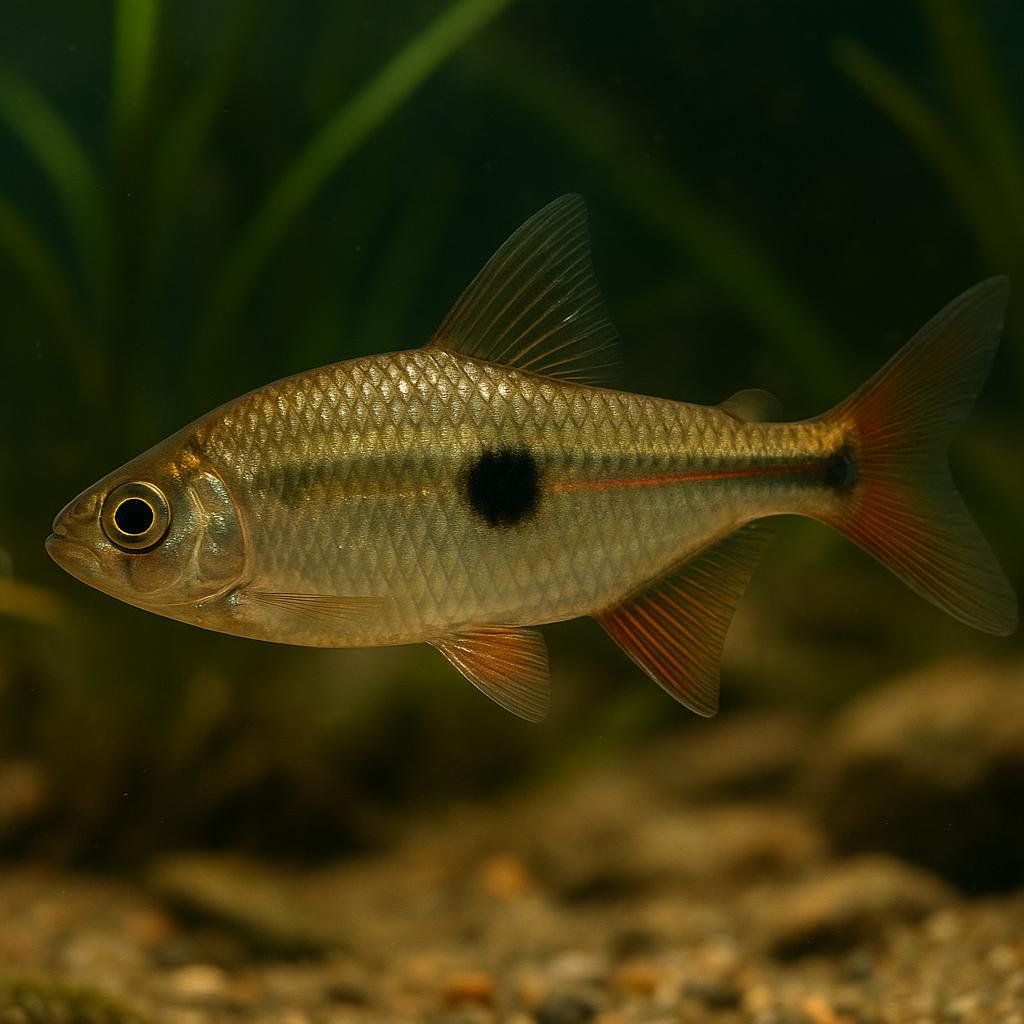
Jupiaba kurua
Small South American characin endemic to the upper rio Curuá (rio Xingu basin, Brazil). Reaches about 8.7 cm SL and inhabits clearwater rivers. Distinguished by dark dots on the bases of many lateral scales and a distinct dark caudal‑peduncle spot. Reported diet indicates omnivory, including aquatic insects, small fishes, and fragments of Podostemaceae and filamentous algae.
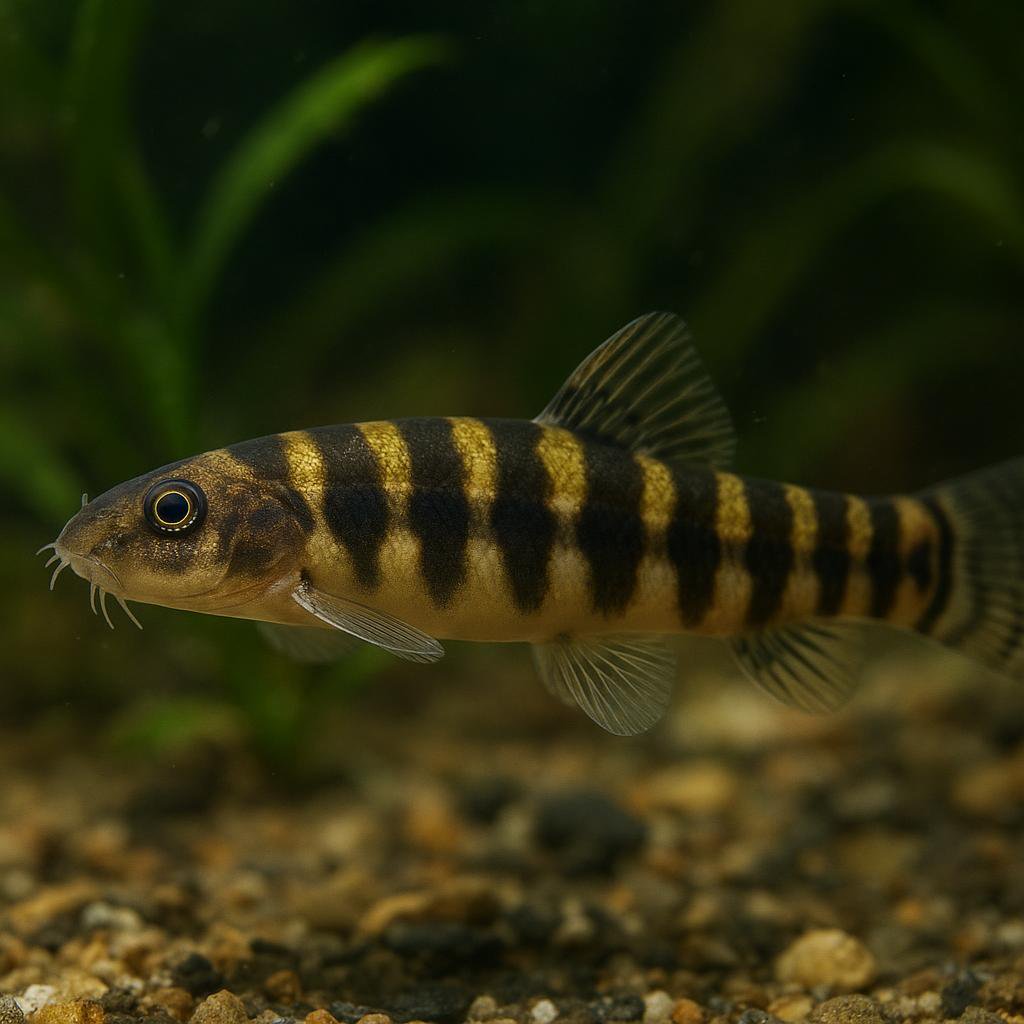
Altipedunculata stone loach
Schistura altipedunculata
Schistura altipedunculata is one of those little stream loaches that wants clean, well-oxygenated water and a bunch of rock nooks to claim as home. It is a bottom-hugger that will spend its day scooting from crevice to crevice, and it tends to get a bit spicy with its own kind if you do not give it enough hiding spots.
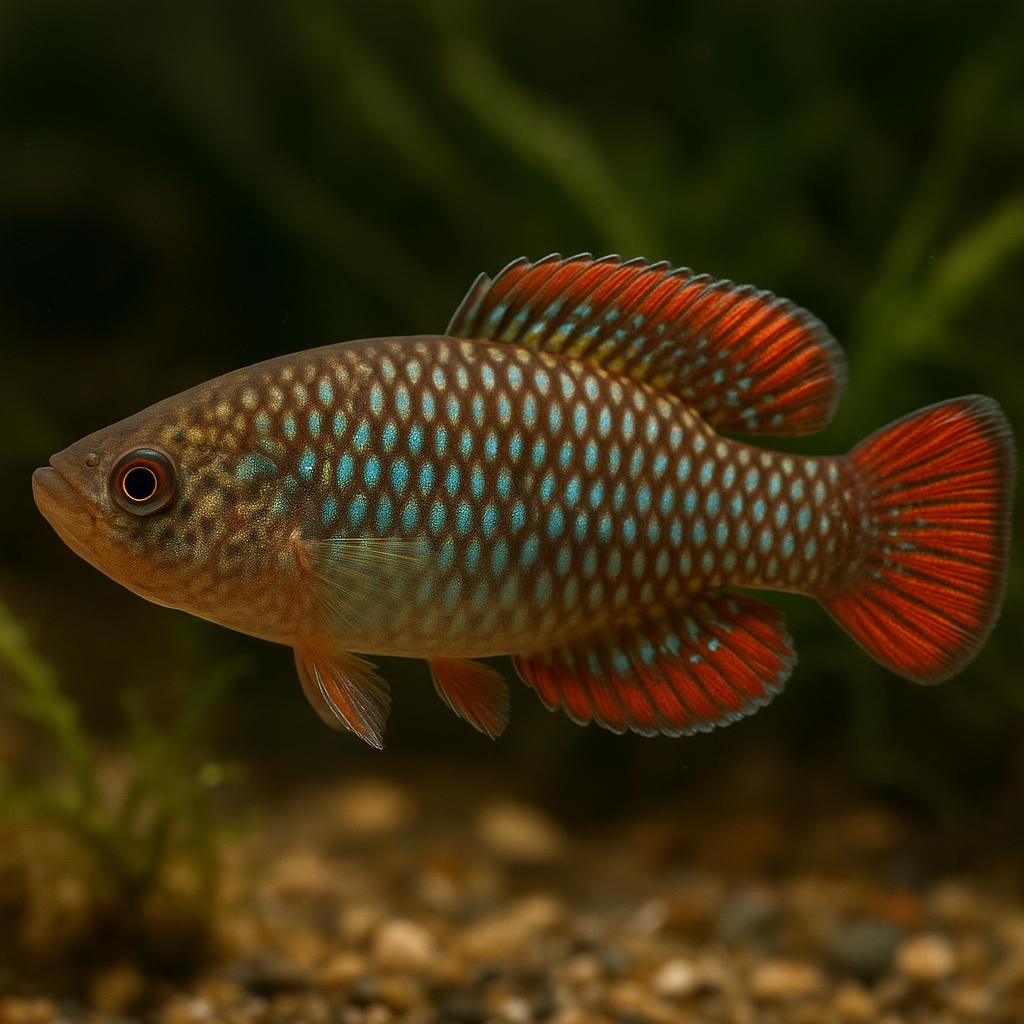
American flagfish
Jordanella floridae
Jordanella floridae is that little Florida native with the red-and-cream striping that really does look like a tiny flag once a male colors up. They graze algae like champs (especially stringy/hair algae), but they have a bit of attitude - give them plants and space so the bossy behavior stays manageable. Bonus: the male guards the eggs and will actively fan them, which is pretty fun to watch.
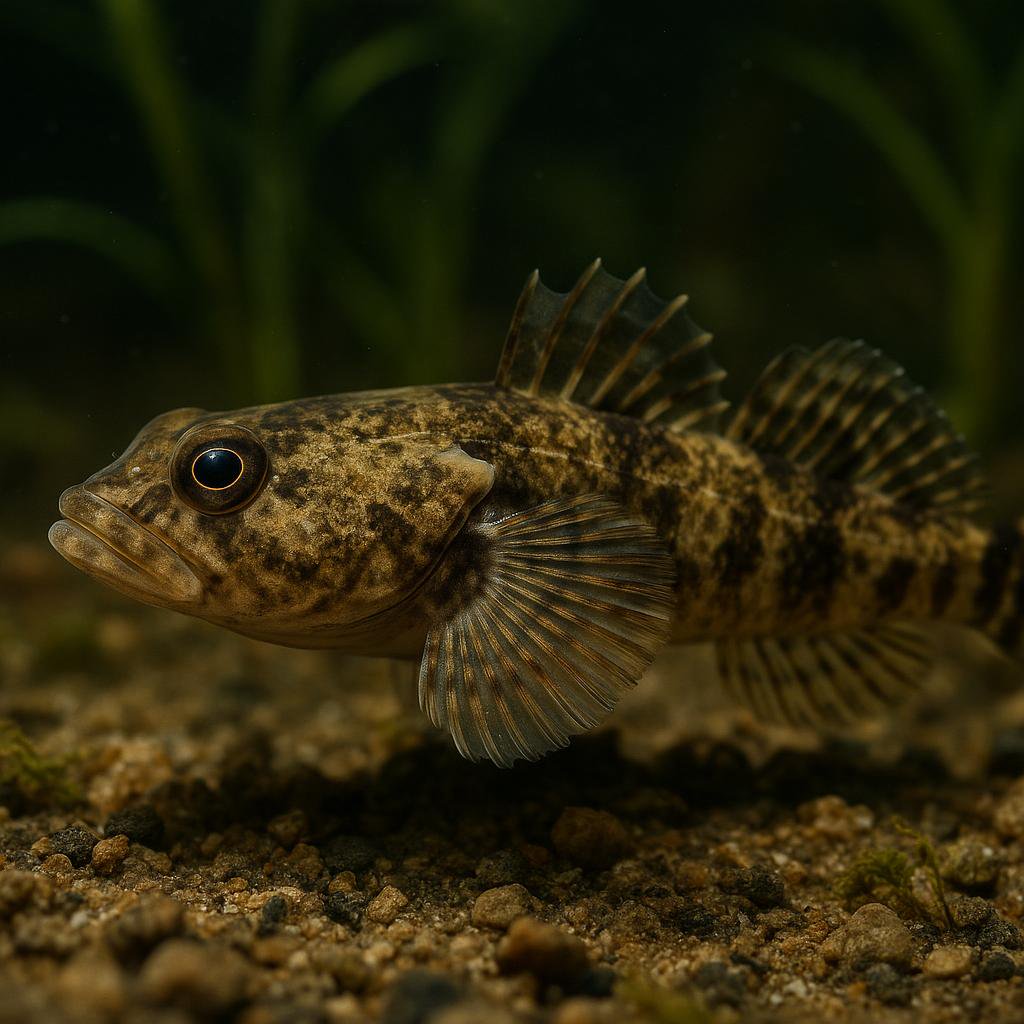
Amur sculpin
Alpinocottus szanaga
This is a little coldwater sculpin from the Amur drainage - a bottom-hugging, rock-and-gravel fish that spends its day wedged under stones and darting out to grab food. Super cool behavior and attitude, but it is absolutely not a warm tropical community fish - it wants chilly, fast, oxygen-rich water and will bicker with other bottom fish.
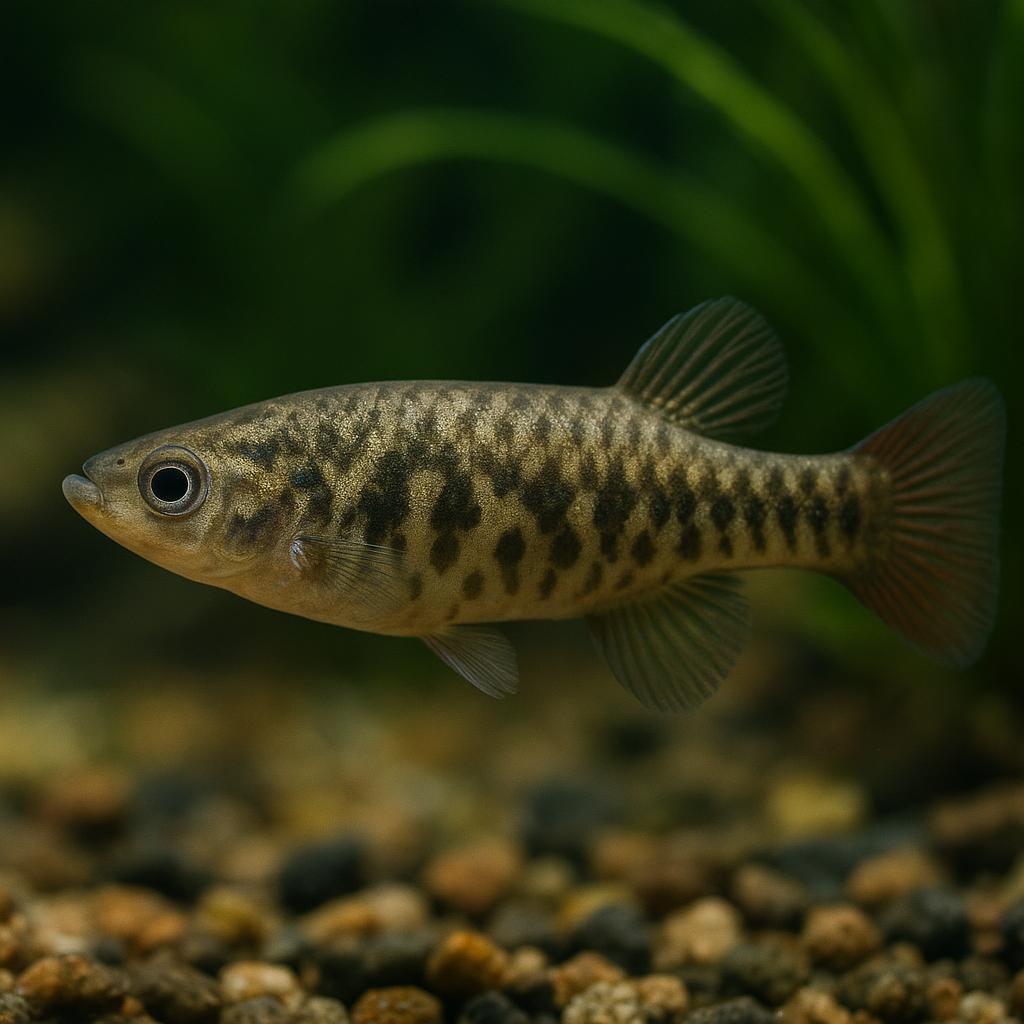
Anitápolis livebearer
Jenynsia weitzmani
Jenynsia weitzmani is a freshwater anablepid livebearer endemic to southern Brazil (currently known only from the type locality near Anitápolis, Santa Catarina). Like other Jenynsia (onesided livebearers), reproduction involves lateralized mating morphology/behavior; aquarium care guidance is not well-documented for this species specifically.
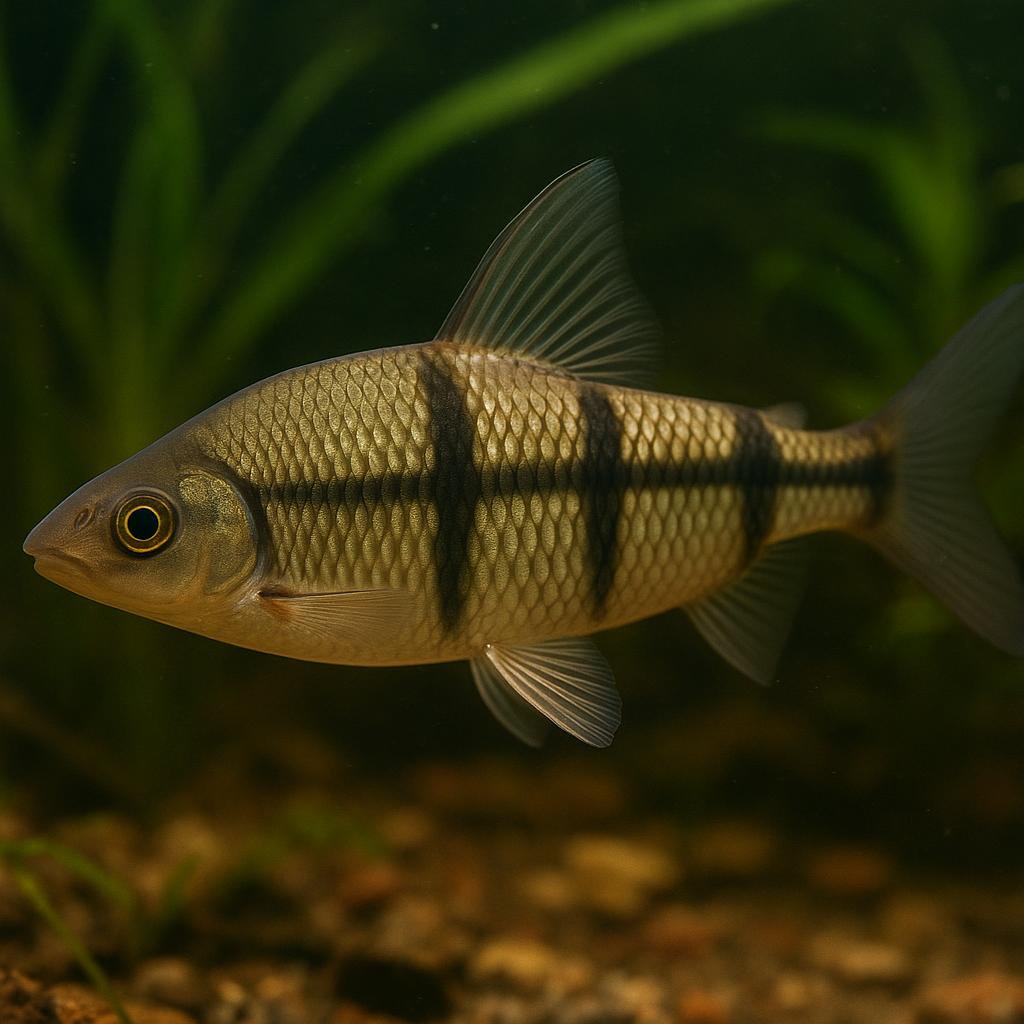
Aracu-comum
Schizodon vittatus
Schizodon vittatus is a large South American anostomid (family Anostomidae). Reported maximum size is about 35 cm standard length; it is harvested/consumed in parts of Brazil and is not commonly covered by mainstream aquarium husbandry references.
More to Explore
Discover more freshwater species.
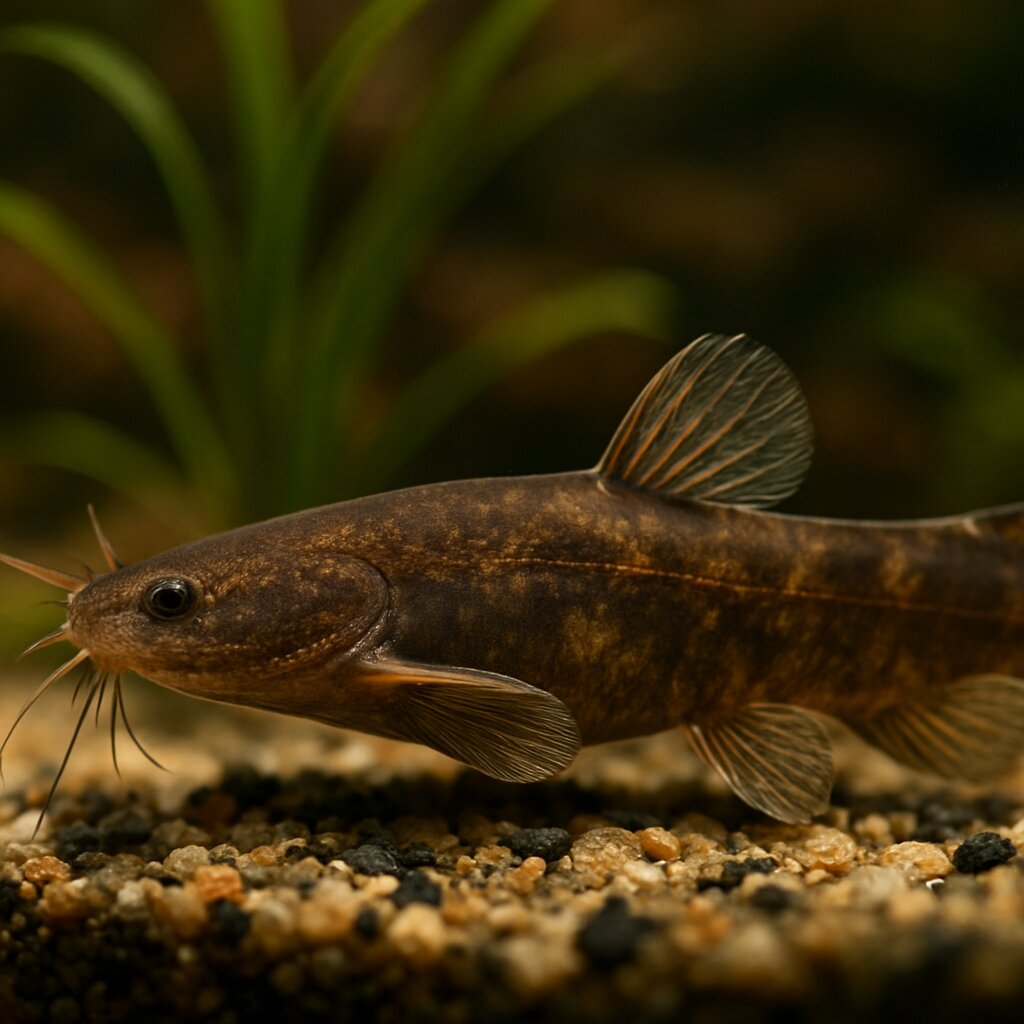
Amphilius dimonikensis
A small loach catfish endemic to the Mpoulou River in the Mayombe (Dimonika Biosphere Reserve), Republic of the Congo. Amphilius dimonikensis has a subtle banded pattern and inhabits fast, clear streams over rock and sand. In aquaria, prioritize strong, well-oxygenated flow with rounded stones and sand to mimic hillstream conditions.
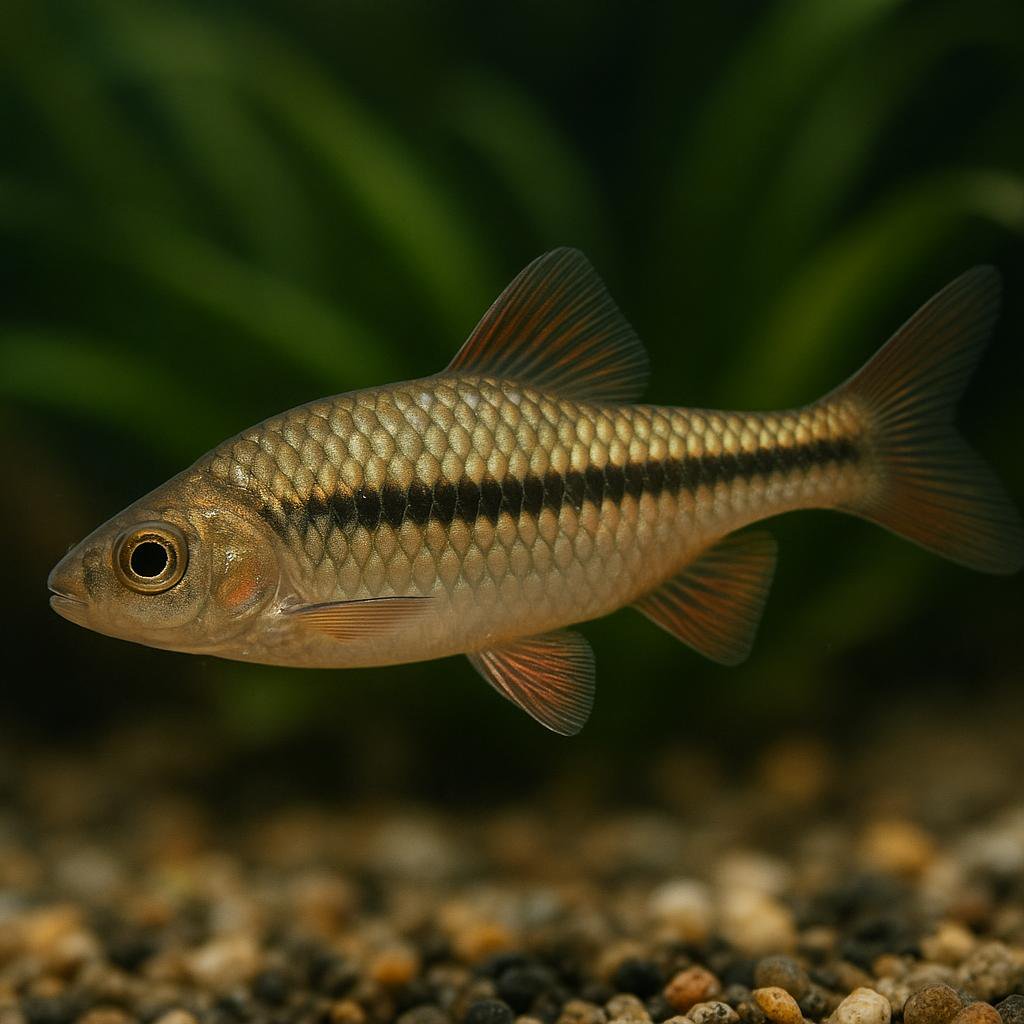
Aboina barb
Enteromius aboinensis
Enteromius aboinensis (the Aboina barb) is a small West African barb with a clean black midline stripe and a little spot right at the base of the tail. It does best when you treat it like a proper schooling fish - keep a decent group and give it plants around the edges with open swimming room in the middle.
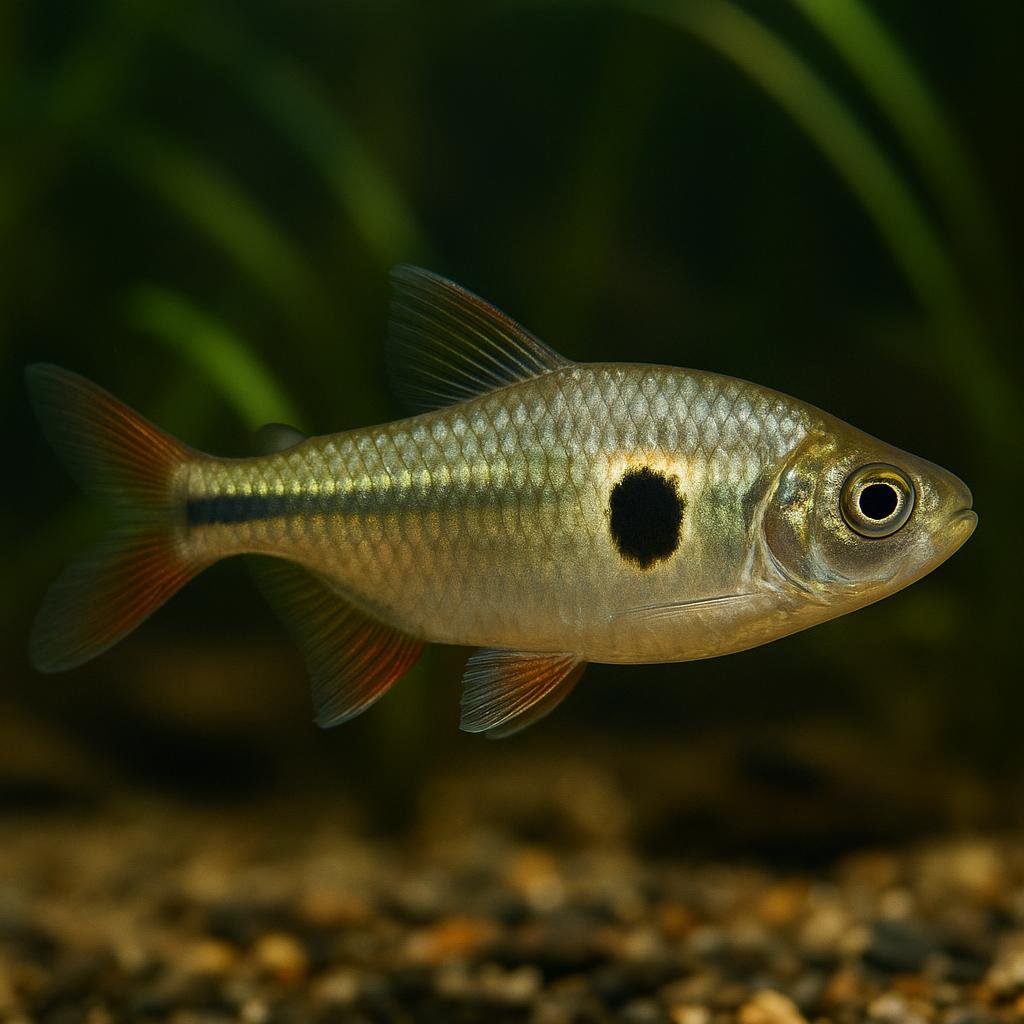
Ajuricaba tetra
Jupiaba ajuricaba
Jupiaba ajuricaba is a South American freshwater characin from the Amazon basin in Brazil (rio Negro, rio Solimões, and rio Tapajós basins). It reaches about 9.5 cm SL and is diagnosed by a narrow dark midlateral stripe, an elongated humeral spot, and an ocellated spot on the upper caudal-fin lobe. Wild specimens have been collected from blackwater forest streams and also oxbow-lake habitats.
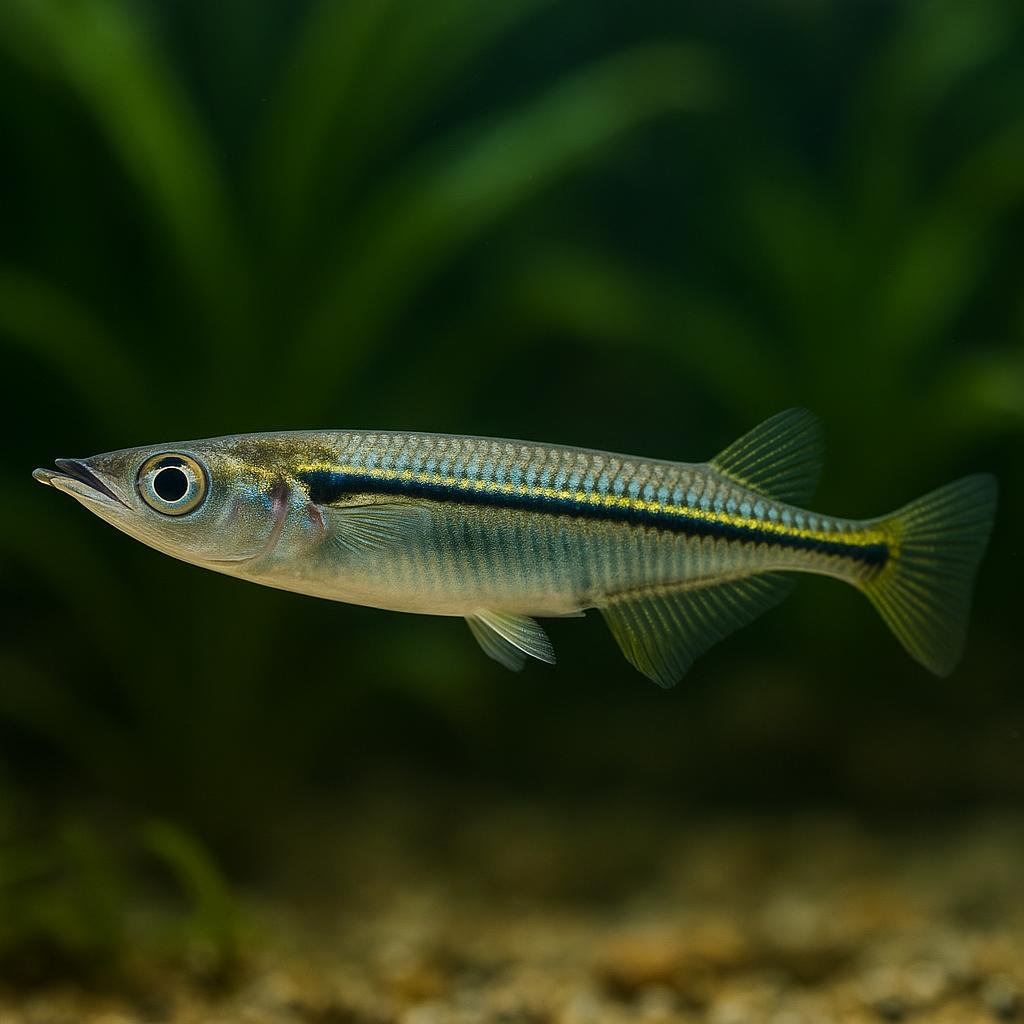
Allen's river garfish
Zenarchopterus alleni
A poorly known freshwater halfbeak endemic to West Papua (Mamberamo River), described from a single specimen (~13 cm SL). Beyond basic habitat/occurrence, little is published about its ecology or aquarium suitability; assume it is a surface-oriented, jump-prone halfbeak only by analogy with related taxa.
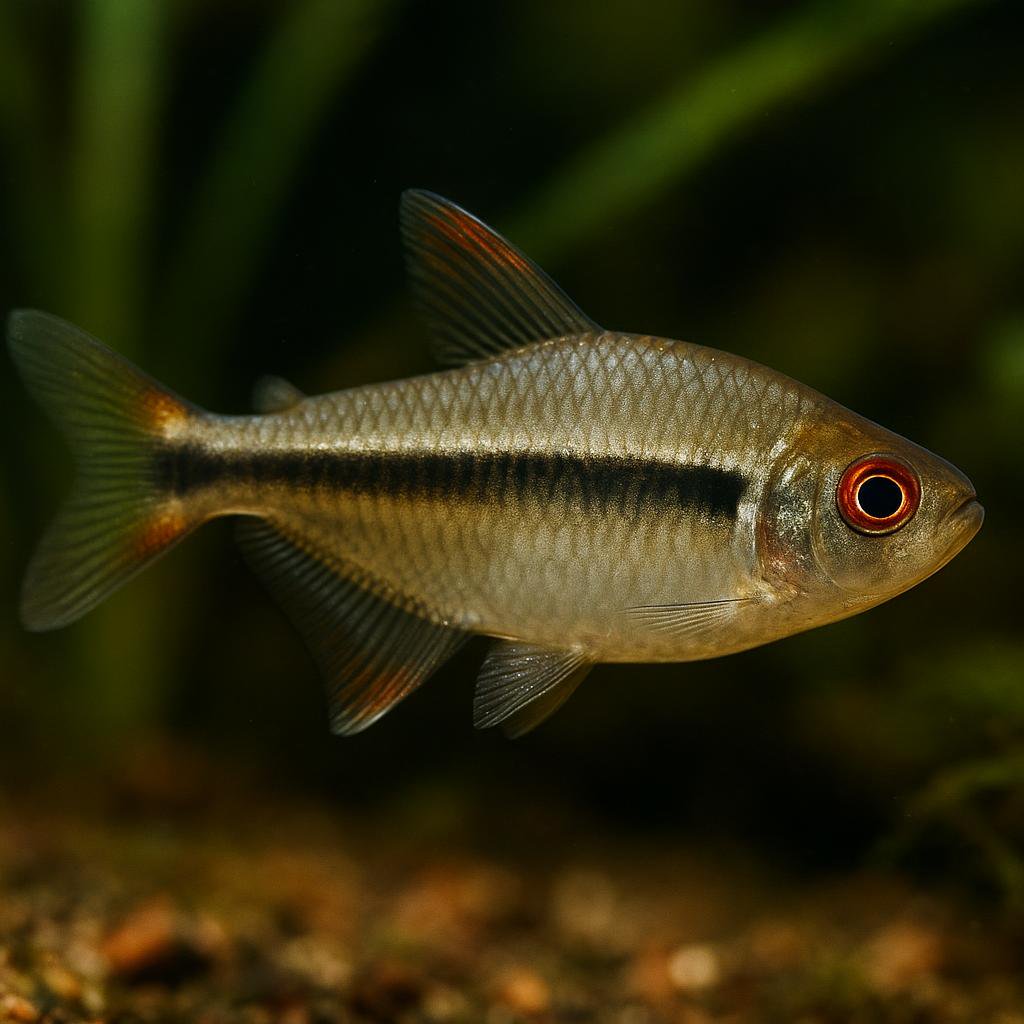
Amapa tetra
Hyphessobrycon amapaensis
This is a tiny, super sleek little tetra with a clean red stripe down the side that really pops once its settled in. It does best in a planted, slightly tinted "creek-style" setup and looks way cooler when you keep a proper group so they school and flash that line together. If you can give it soft, slightly acidic water and a calm community, its an easy fish to fall for.
Amatlan chub
Yuriria amatlana
Yuriria amatlana (the Amatlan chub) is a little Mexican native minnow from the Ameca River basin. Its wild range is pretty limited and it is listed as Endangered, so its care info in the aquarium hobby is basically nonexistent and its availability is usually low. In the original species description, preserved fish show a dark lateral stripe with a darker patch on the caudal peduncle, and they can have tiny barbels at the mouth corners.
Looking for other species?