

Dusky Tongue Sole
Paraplagusia sinerama
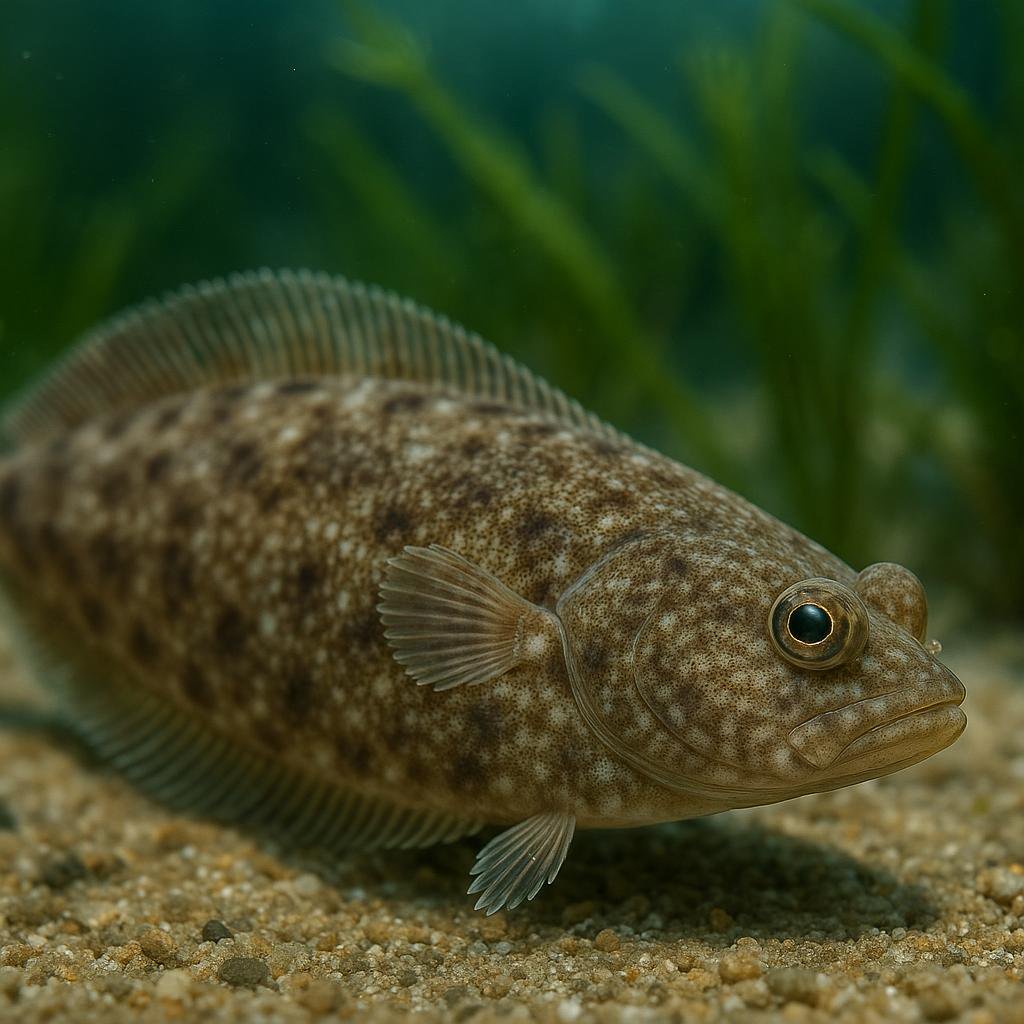
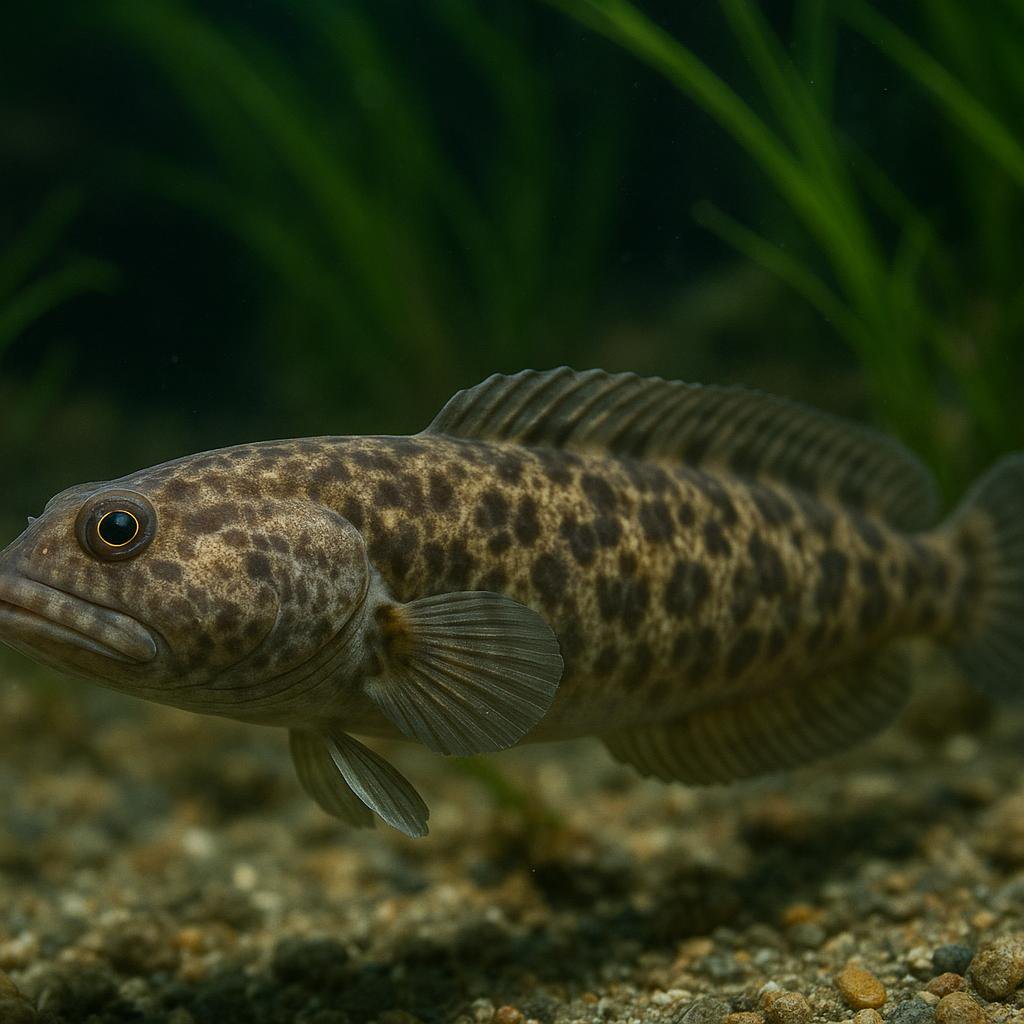
Dusky Tongue Sole has a flattened body with a brownish-grey coloration, featuring patterns of darker spots and a distinctive, elongated tail fin.
This page includes AI-generated images. Why am I seeing AI images?
About the Dusky Tongue Sole
A tongue sole (family Cynoglossidae) from soft-bottom habitats in northern Australia (Exmouth Gulf, WA to Moreton Bay, QLD) and also New Guinea. It is a bottom-dwelling flatfish associated with soft substrates; aquarium care details (salinity/pH/tankmates) are not well documented in major references.
Quick Facts
Size
40 cm
Temperament
Peaceful
Difficulty
Expert
Min Tank Size
125 gallons
Lifespan
3-6 years
Origin
Australia and New Guinea (Indo-Pacific)
Diet
Carnivore - small benthic inverts (worms, shrimp/crustaceans), frozen meaty foods
Water Parameters
22-28°C
7.8-8.4
8-20 dGH
Need a heater for this species?
This species needs 22-28°C in a 125 gallon tank. Use our heater calculator to find the right wattage.
Calculate heater sizeCare Notes
- Give it a big footprint tank with a wide sandy bed (fine aragonite, 1-2 inches) - they want to bury and cruise the bottom, not climb rockwork.
- Keep rock structures stable and off the sand if you can; this fish will undermine things while burrowing and a toppled rock is a real risk.
- Run marine salinity around 1.024-1.026 and keep nitrate low (aim under ~20 ppm); they sulk and stop feeding fast when the bottom gets dirty.
- Feed after lights down: small meaty stuff like PE mysis, chopped shrimp, clam, and enriched brine; use tongs or a feeding tube to put it right in front of them or tankmates will steal it.
- Do not keep with boisterous wrasses, dottybacks, or anything that hogs food; they do best with calm fish that leave the sand alone.
- Avoid shrimp and tiny bottom fish (gobies/blennies) you care about - a hungry sole can absolutely treat them like snacks.
- Watch for sand and detritus issues: if the belly or fins look irritated, swap to finer sand and siphon the top layer regularly so it is not living in crud.
Compatibility
Good Tankmates
- Peaceful sand-sifters like small to medium sand-dwelling gobies (watchman gobies, sleeper gobies) - they mostly mind their own business and share the bottom without drama as long as you have a nice open sandbed
- Calm, non-nippy water-column fish like chromis or smaller fairy flasher wrasses - they stay up in the rockwork and midwater and usually ignore a sole that is half-buried
- Cardinalfish (Banggai, pajama) and other mellow hoverers - good vibe match and they will not pick at it when it is resting
- Smaller peaceful clownfish (like ocellaris or percula) - generally fine if the clowns are not the psycho type and you are not crowding the bottom
- Peaceful blennies that perch more than they dig (tailspot blenny, lawnmower blenny) - they hang on rock and glass and do not compete hard for the same exact food spots on the sand
- Gentle bottom buddies like a small conch or cleaner shrimp (not fish, but worth saying) - the sole does not usually care, and they help keep the sand moving without harassing it
Avoid
- Aggressive or territorial bottom fish like dottybacks and big damsels - they can bully anything that sits on the sand and may peck at the sole when it is trying to settle in
- Triggers and puffers - classic fin and eye pickers, and they love messing with flatfish buried in the sand
- Large wrasses (especially Halichoeres and other sand-divers) - they can outcompete it at feeding time and may flip it or harass it when it is buried
- Big predatory fish like groupers, lionfish, and large hawkfish - if it can fit the sole in its mouth, it will eventually try, and the sole is not built to fight back
Where they come from
Dusky Tongue Soles (Paraplagusia sinerama) are flatfish from coastal Indo-West Pacific areas. Think silty lagoons, estuaries, and nearshore bottoms where the water is moving but the substrate stays soft. In the wild they spend most of their life half-buried, waiting for small prey to wander close.
This is not a "cute oddball" fish that hangs out in the open. If you want a display fish, pick something else. If you want a stealthy sand-dweller with cool behavior, this one is addictive.
Setting up their tank
Build the tank around the bottom. These soles care way more about sand quality and calm open floor space than rock towers. I keep them like a sandbed predator that happens to be a fish.
- Tank size: bigger footprint beats height. I would not bother under a 40 breeder, and 75+ is where it starts feeling easy.
- Substrate: fine sand, deep enough to let them bury (2-3 inches works well). Skip sharp crushed coral.
- Rockwork: keep it stable and leave a wide "runway" of open sand. They will nose around the base of rocks.
- Flow: moderate overall, but give them lower-flow zones on the bottom so they can settle without getting blasted.
- Lighting: they do not need intense light. Bright reefs can work, but give shaded areas and avoid cooking the sandbed.
- Filtration: strong mechanical + biological, and a skimmer helps a lot. They are meaty feeders and the tank will show it.
Cover every gap. They can launch themselves when spooked and they are surprisingly good at finding the one opening you forgot.
Sand cleanliness matters. A dirty, compacted bed is where you start seeing skin issues and random infections. I like a sand-sifting cleanup crew that will not bother the fish: small nassarius-style snails, micro brittle stars, and worms if your system supports them. Avoid big, aggressive sand stirrers that bulldoze the sole.
Place food with long tweezers or a feeding stick right on the sand in the same general spot. They learn the routine, and it takes a lot of stress out of feeding time.
What to feed them
They are carnivores and very "bottom focused". If food stays in the water column, a faster fish will steal it and your sole will slowly fade. The goal is to get meaty food to the sand, right under their nose.
- Best staples: thawed mysis, chopped shrimp, chopped clam, finely chopped squid, quality frozen marine blends
- Great conditioning foods: live blackworms (if you can source safely), live ghost shrimp acclimated to salt, live small mollies as feeders (used sparingly and quarantined)
- What often works for picky new imports: live copepods/amphipods in the tank, then transition to frozen by mixing
New ones can be stubborn. I have had individuals ignore frozen for days and then suddenly figure it out after a few targeted feeds. Once they recognize tongs = dinner, they usually become reliable.
Do not assume they are eating just because "food is going in". Watch the belly and body thickness over a couple weeks. A sole that is getting outcompeted can starve quietly in a tank that looks well-fed.
How they behave and who they get along with
Most of the time they act like a living leaf on the sand. They bury, they peek, they scoot short distances, and at night they can become much more active. The strike is quick and surprisingly accurate.
- Good tankmates: calm fish that do not compete hard for bottom food (some gobies, smaller wrasses that do not pester the sand, peaceful midwater fish)
- Avoid: aggressive feeders (large wrasses, triggers), fin-nippers, boisterous damsels in small tanks, and anything that perches on or harasses the bottom
- Also avoid: small fish and tiny shrimp that can fit in their mouth. If it can be swallowed, it eventually will be tested.
They can be victims as much as predators. A pushy fish that constantly buzzes the sand will keep them buried and they will stop coming out to eat.
I would not keep more than one unless you have a large, mature system with lots of open sand and you can confirm they are not stressing each other. Flatfish squabbles are subtle at first, and you notice it only after one starts losing weight.
Breeding tips
Breeding in home aquariums is not something I would plan around. Like many marine soles, they likely spawn pelagic eggs and the larvae go through a complicated stage before settling and "becoming" a flatfish. That is a whole separate project, closer to raising delicate marine larvae than typical fish breeding.
If you ever see courtship behavior (more activity, following, circling near dusk), take notes and protect your filtration intakes. But realistically, focus on long-term feeding and stability.
Common problems to watch for
- Starvation from competition: the number one issue. They lose mass slowly and people notice too late.
- Shipping damage and abrasions: the underside and edges can get scuffed. Dirty sand and poor water makes these turn ugly fast.
- Parasites: wild-caught soles can come in with flukes or protozoans. Scratching and heavy breathing are red flags.
- Bacterial infections on skin: often starts at a small scrape. Looks like reddening, cloudy patches, or fraying along the fins/edges.
- Jumping: especially the first week and after sudden light changes.
- Sandbed issues: compacted, dirty, or sharp substrate leads to constant irritation and secondary infections.
Quarantine is worth the hassle with this species. A bare-bottom QT stresses a sand-burying fish, so I use a shallow disposable sand tray or a small container of fine sand I can remove and replace. It makes observation and treatment way easier.
If you keep the sand soft, feed on purpose (not just "broadcast and hope"), and keep pushy tankmates out, these soles can be hardy in the long run. Most failures I have seen were not mystery deaths - they were slow, preventable issues that started with the tank not being set up for a bottom ambush feeder.
Similar Species
Other brackish peaceful species you might be interested in.
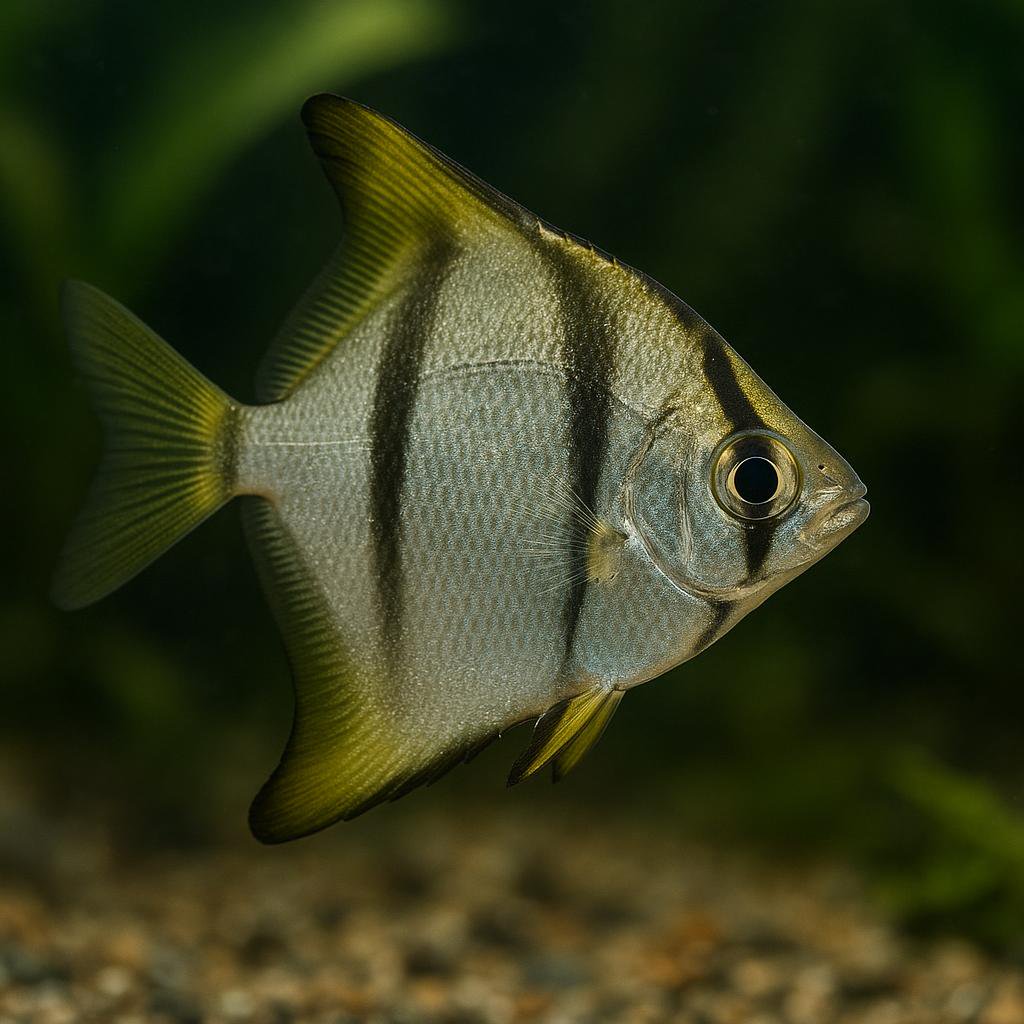
African moony
Monodactylus sebae
This is that shiny, diamond-shaped "mono" that cruises around in a tight pack and looks like a little silver dinner plate with black bars when it's young. The big thing with African moonies is they're euryhaline-so they'll tolerate freshwater as juveniles, but they really shine long-term in brackish (and can be transitioned toward marine as they mature). Give them a big, open tank and a group, and they turn into nonstop, super fun midwater swimmers.
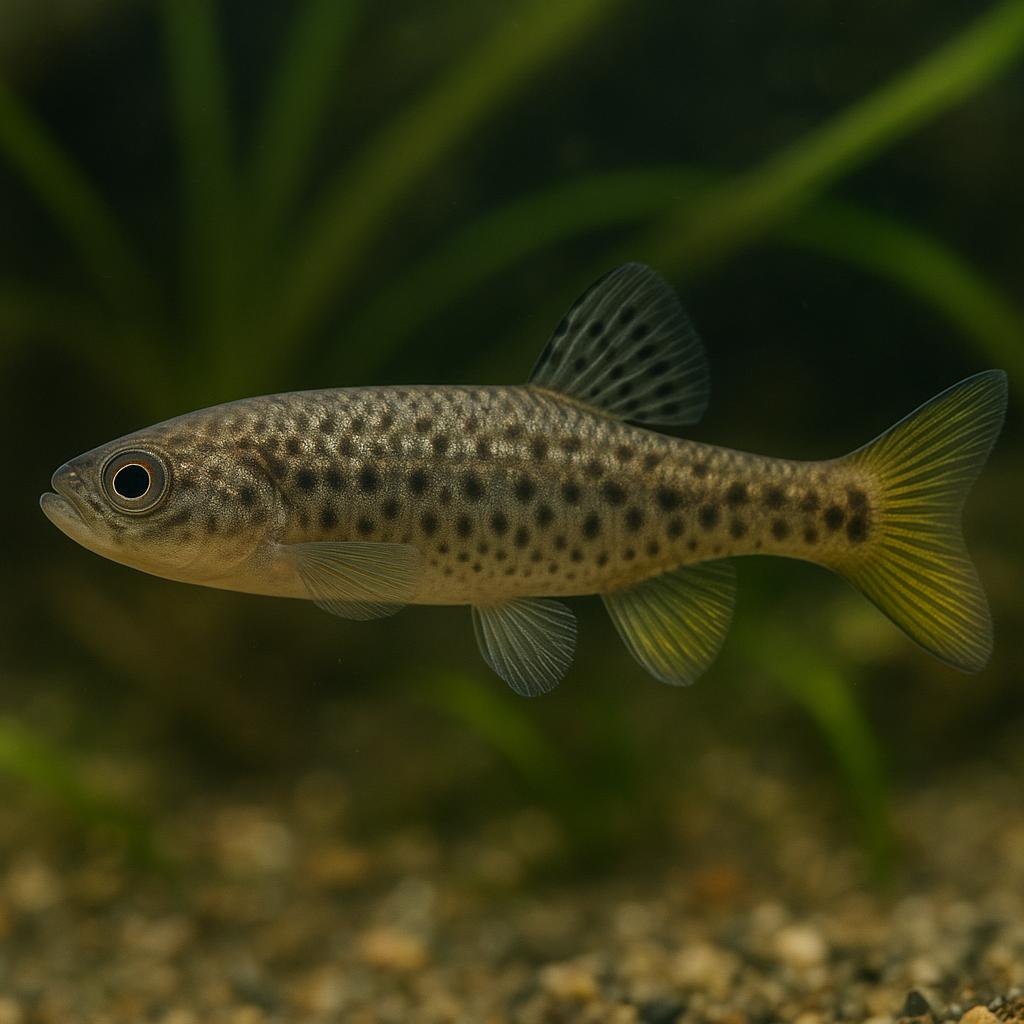
American shadow goby
Quietula y-cauda
This is a little mudflat goby from California down into the Gulf of California that loves hanging tight to the bottom and vanishing into burrows. The neat tell is that sideways Y-shaped blotch right at the base of the tail, plus the row of dark spots along the side. Its whole vibe is brackish estuary life - calm water, soft substrate, lots of hiding holes.
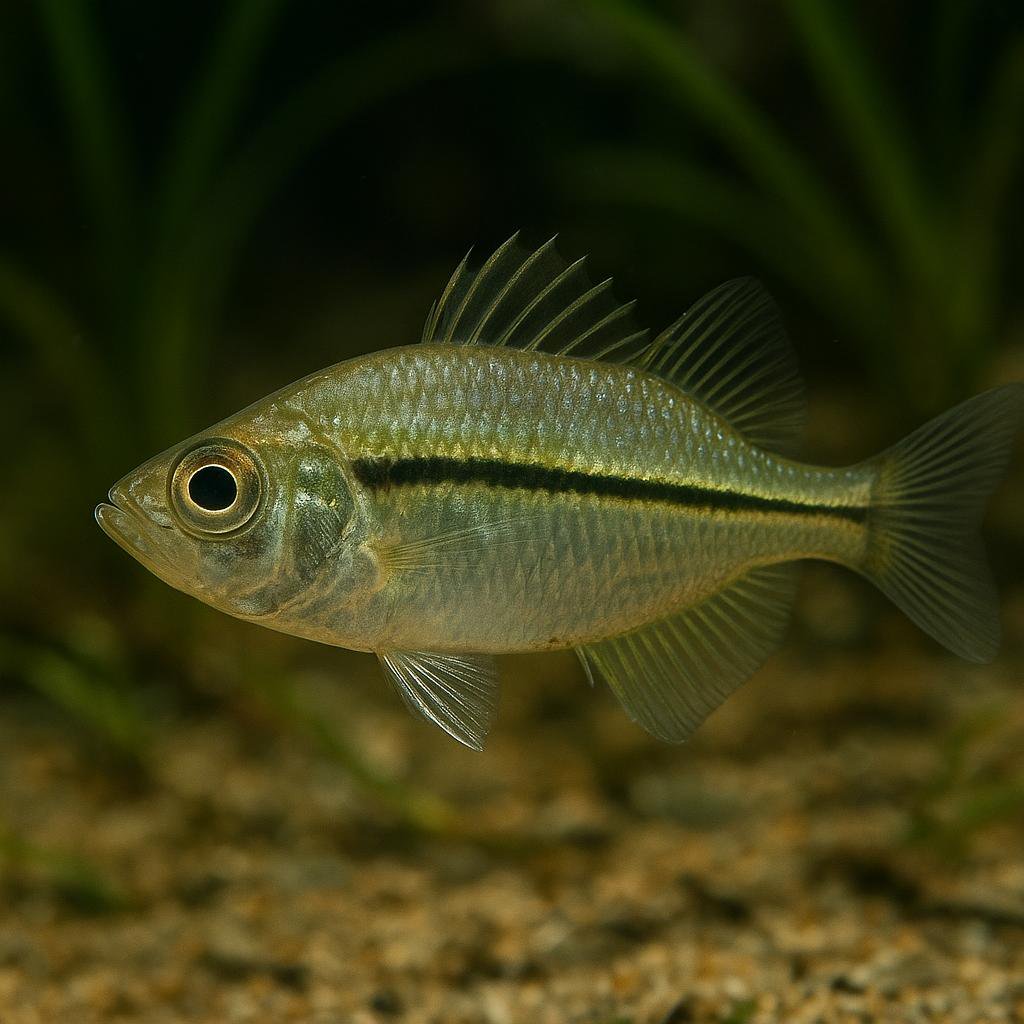
Banded-tail glassy perchlet
Ambassis urotaenia
This is one of those see-through glassy perchlets where you can literally watch the organs shimmer when it turns-super cool in the right lighting. In the wild it hangs around river mouths and mangroves and cruises in groups, so it does best when you keep a little gang of them and give them some open swimming room.
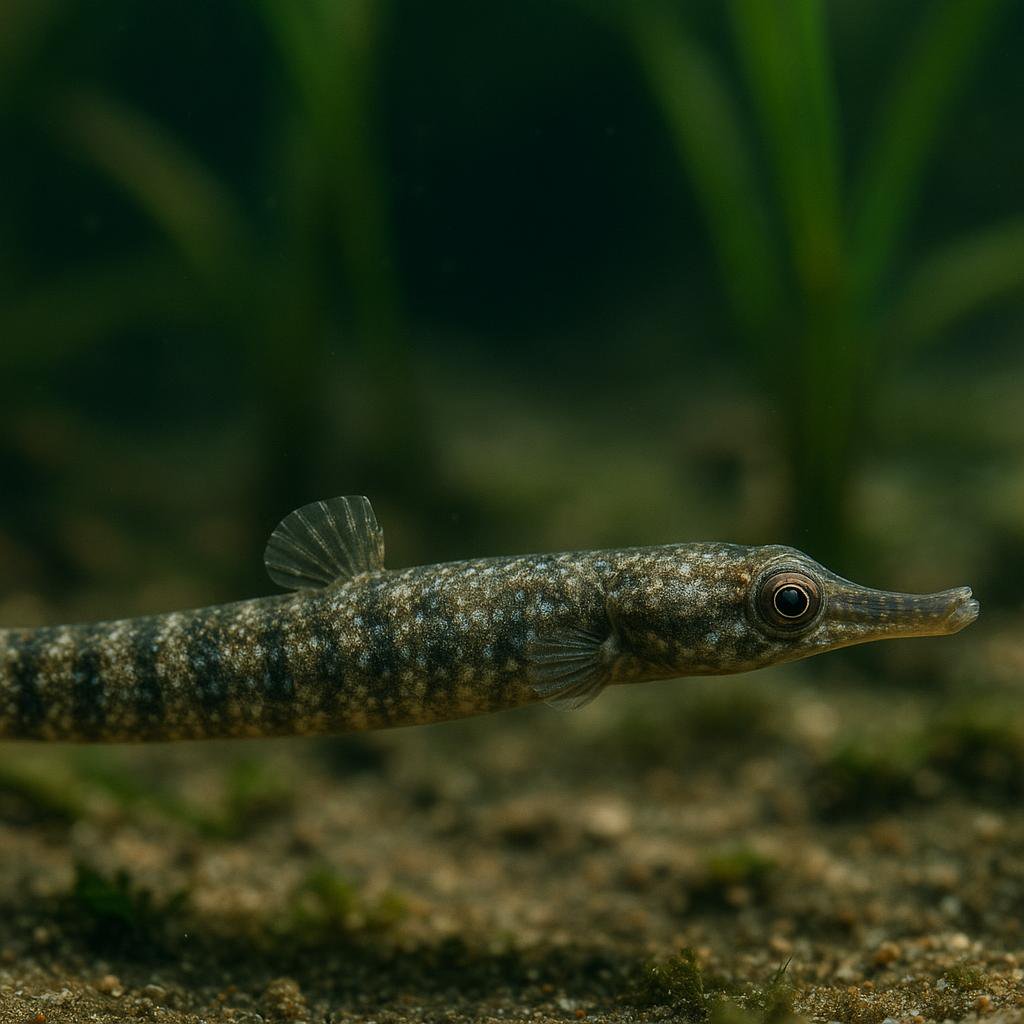
Barbed pipefish
Urocampus nanus
Urocampus nanus (barbed pipefish) occurs in protected inshore and estuarine habitats among seagrass (Zostera) in the Northwest Pacific (southern Japan and adjacent coasts). Like other syngnathids, males brood eggs in a pouch under the tail and produce fully formed young.
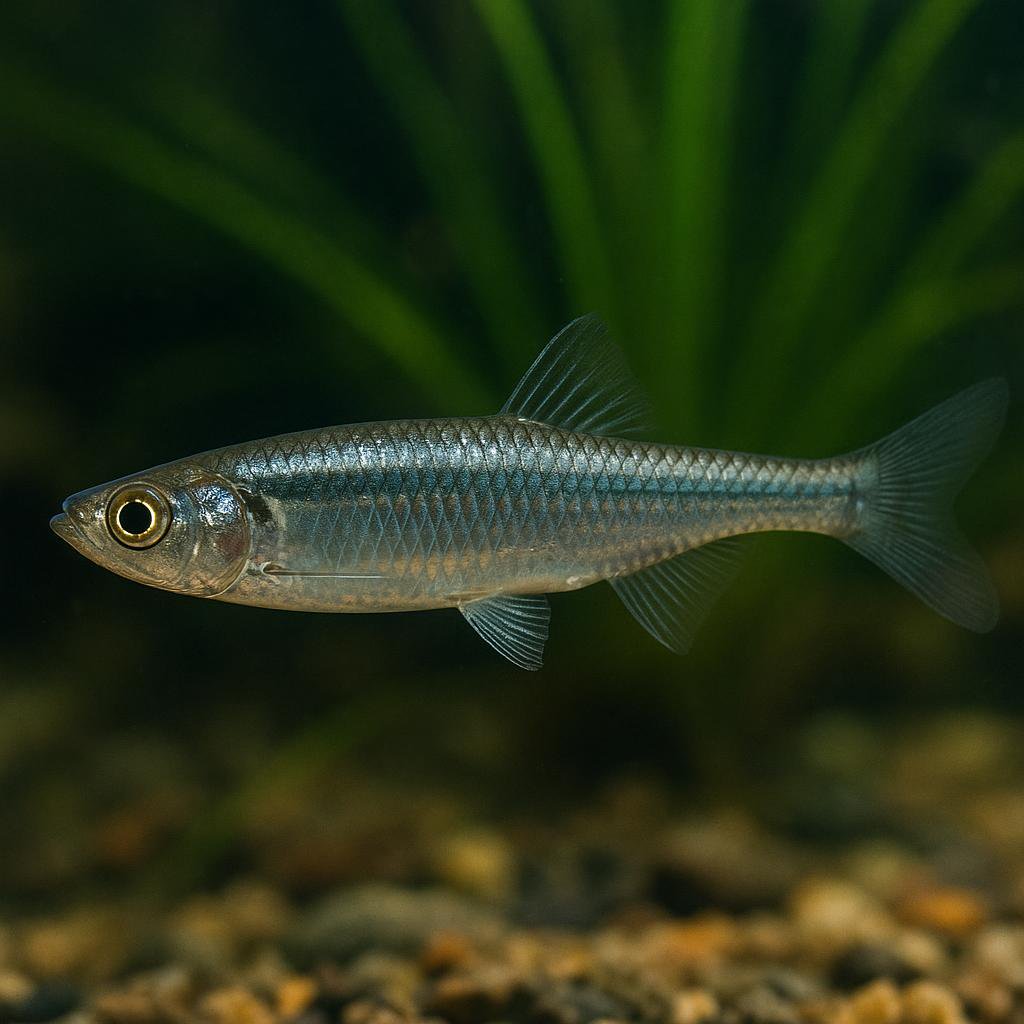
Beach silverside
Atherinella blackburni
This is a little coastal silverside that cruises the shallows in loose groups and flashes like a tiny chrome dart when the light hits it right. In the wild it hangs around beaches, estuaries, and lagoons, picking at small drifting foods in the surf zone. It is cool, but its real "gotcha" is that it is an open-water, salt-tolerant schooling fish that does best in bigger, well-oxygenated setups rather than a typical planted community tank.
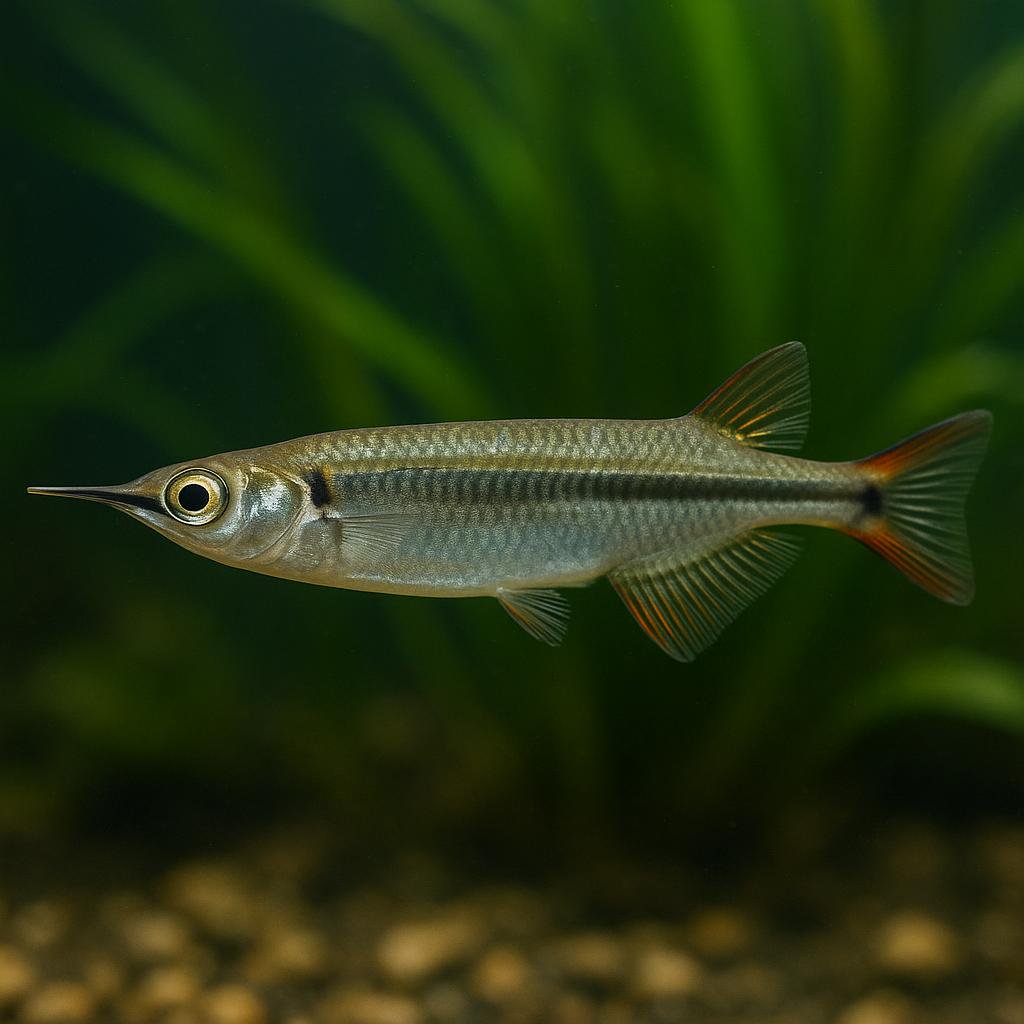
Buffon's river-garfish
Zenarchopterus buffonis
This sleek, surface-dwelling halfbeak has a distinct dark stripe along the snout and is typically found at the surface in coastal waters, estuaries, and rivers where it feeds on terrestrial insects. In aquaria it does best with floating/surface foods and a secure cover, and it requires brackish (or marine) conditions long-term. Reproduction is internally fertilized; FishBase lists the species as ovoviviparous.
More to Explore
Discover more brackish species.
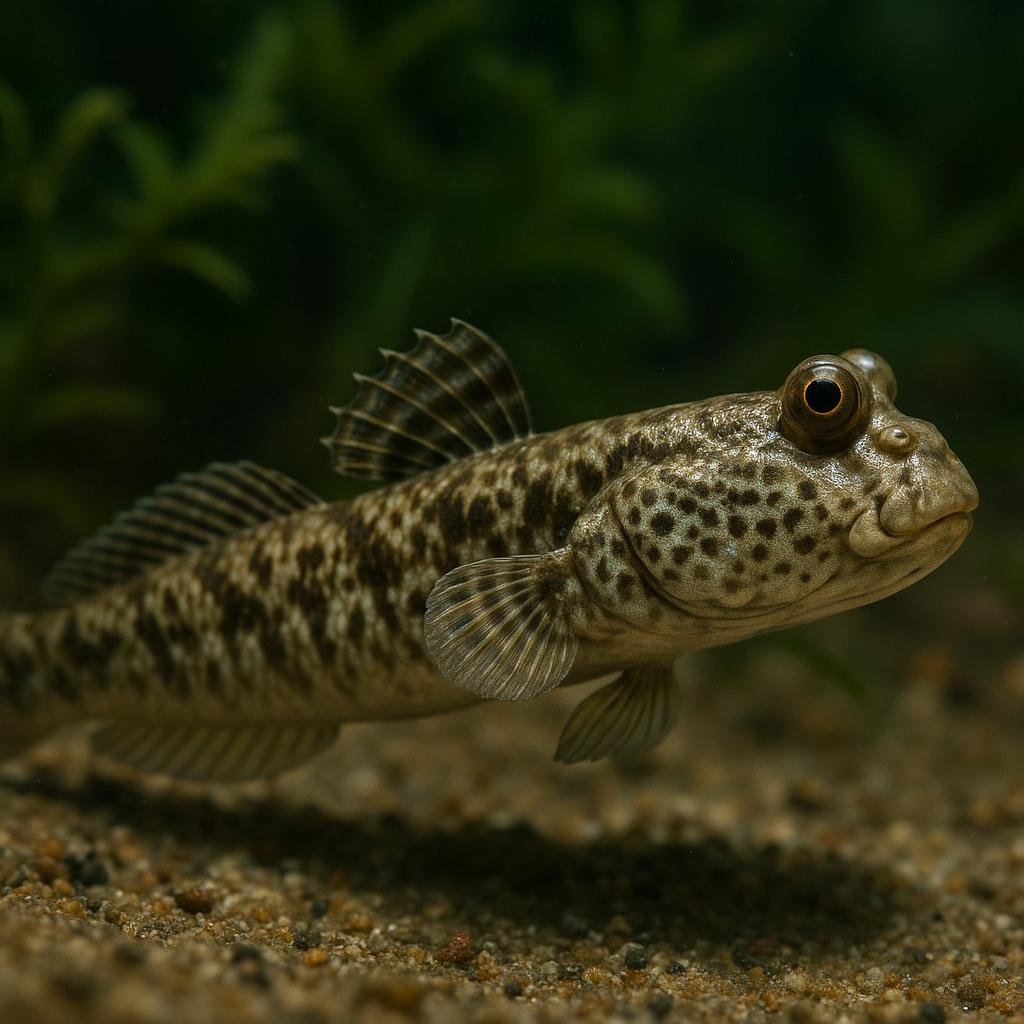
Atlantic Mudskipper
Periophthalmus barbarus
This is that wild little amphibious goby that straight-up climbs around on land like it forgot it was a fish. They've got big googly eyes, tons of personality, and they'll perch, hop, and patrol their territory-honestly more like a tiny crabby lizard than a "regular" aquarium fish.
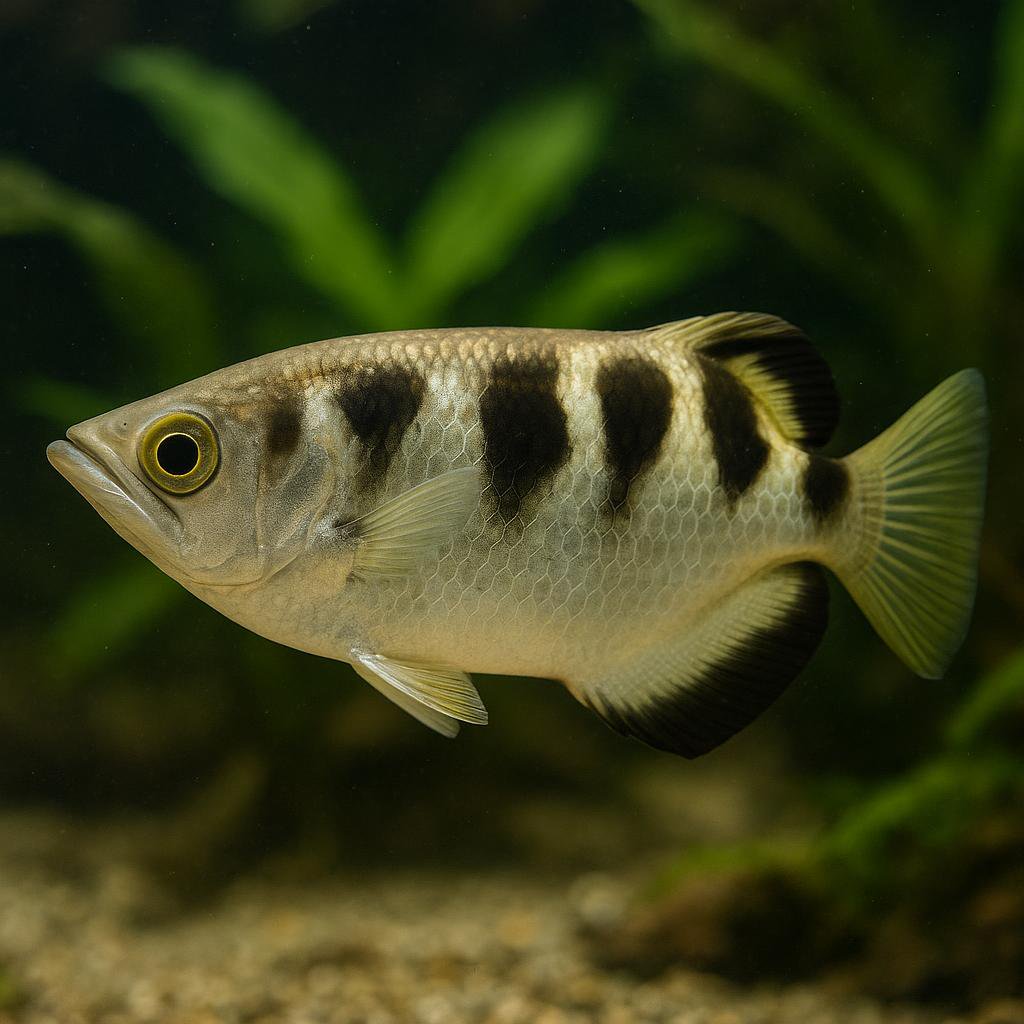
Banded Archerfish
Toxotes jaculatrix
This is the fish that literally spits jets of water to knock insects off branches-watching one "take aim" is unreal. They're super aware of what's going on outside the tank and will even learn to beg and snipe food from the surface once they settle in. Give them height and some open swimming room and they act like little aquatic sharpshooters.
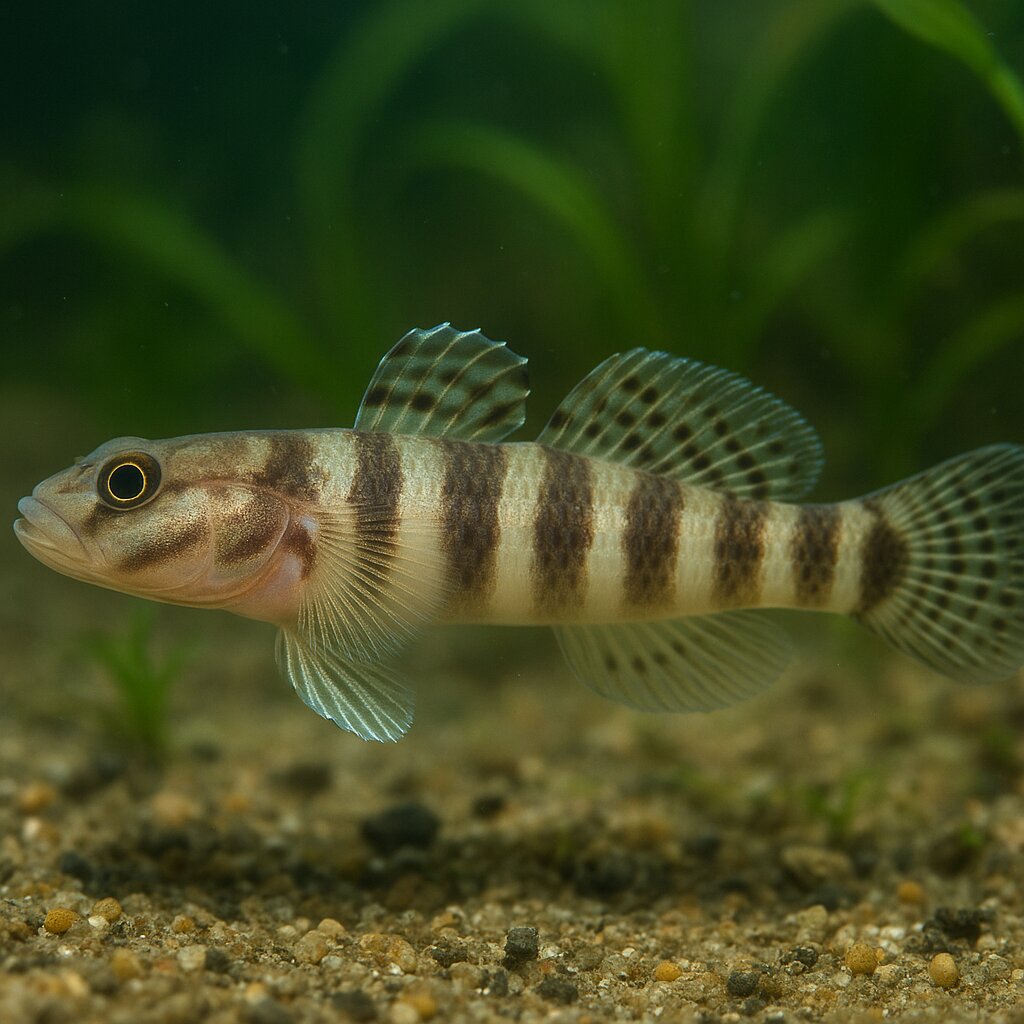
Banded mulletgoby
Hemigobius hoevenii
Neat little mangrove goby that hugs the bottom and hangs around leaf litter. The bold diagonal bars and tail spot look great, and it hunts like a tiny ambush predator, darting out for bites. Keep it gently brackish and it settles in nicely, cruising among roots and wood.
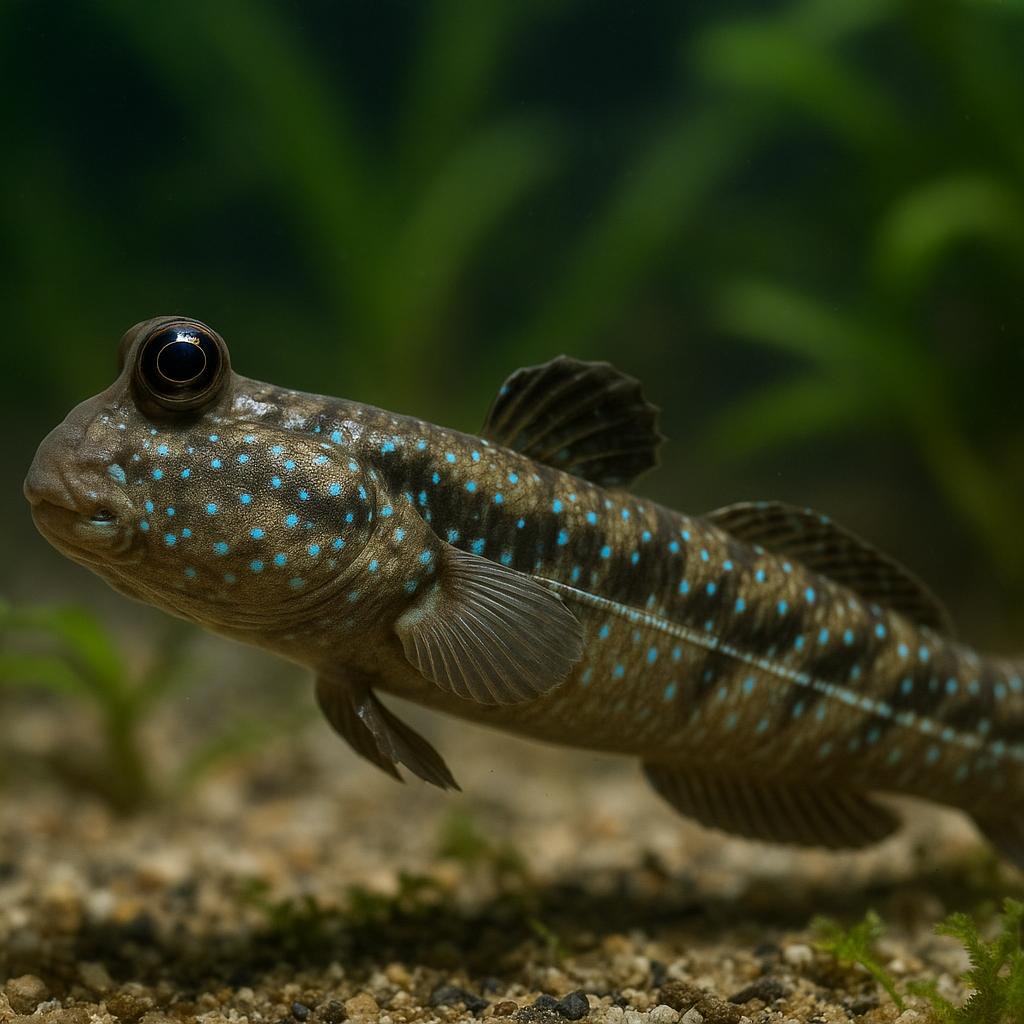
Barred mudskipper
Periophthalmus argentilineatus
This is one of those classic "walks around like it owns the place" mudskippers-big goofy eyes, climbs, hops, and spends a ton of time out on the mud when it's humid. In the wild it lives on intertidal mangrove/nipa mudflats and even shuttles between little pools and open air, hunting worms, insects, and small crustaceans. It's super fun to watch, but it really wants a brackish paludarium setup (not a normal aquarium).
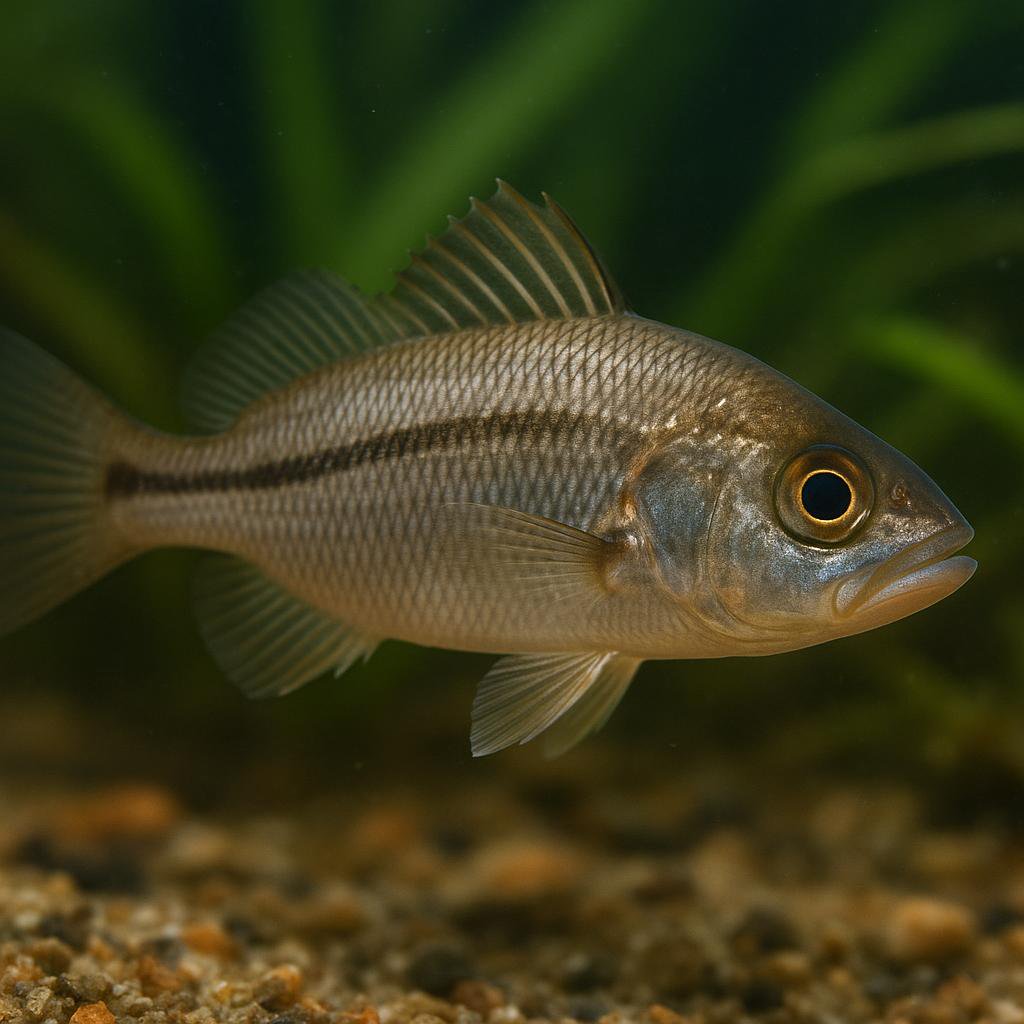
Bellfish
Johnius fuscolineatus
Johnius fuscolineatus (Bellfish/African bearded croaker) is a small coastal sciaenid from the southwestern/western Indian Ocean (Mozambique, South Africa, Madagascar), occurring in shallow marine waters (reported 0–50 m) and also associated with coastal/estuarine habitats.
Blotched eelpout
Zoarces gillii
Zoarces gillii is a cold-temperate eelpout from the Northwest Pacific that hugs the bottom over sandy-mud inshore areas and even pushes into estuaries. It's got that long, eel-like body and a sneaky, sit-on-the-bottom predator vibe - very much a cool-water, brackish-to-marine oddball rather than a typical tropical aquarium fish.
Looking for other species?