

X-ray tetra
Pristella maxillaris
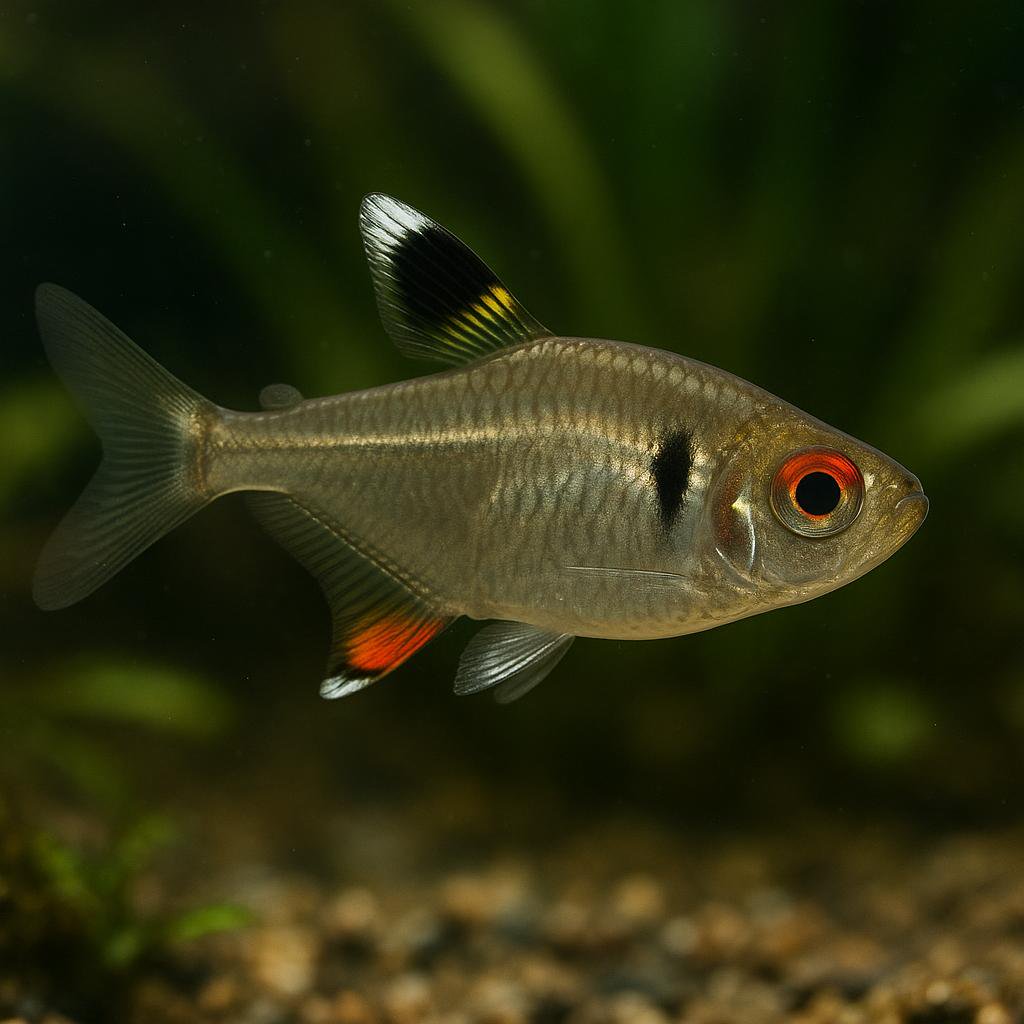
X-ray tetras exhibit transparent bodies with a distinctive silver sheen, showcasing prominent lateral lines and a faintly visible skeletal structure.
This page includes AI-generated images. Why am I seeing AI images?
About the X-ray tetra
This is that little see-through tetra where you can kinda make out the spine inside the body, and then it tops it off with those sharp black/yellow/white fin markings and a reddish tail. Super chill schooling fish, and it's one of those rare tetras that doesn't freak out if your water isn't "perfect Amazon blackwater" 24/7.
Also known as
Quick Facts
Size
4.5 cm (1.8 inches) TL
Temperament
Peaceful
Difficulty
Beginner
Min Tank Size
15 gallons
Lifespan
3-5 years
Origin
South America (Amazon, Orinoco, and coastal drainages of the Guianas)
Diet
Micropredator/omnivore - quality flakes/micro pellets plus frozen/live foods (daphnia, brine shrimp, small worms, insect larvae)
Water Parameters
22-28°C
6-8
2-20 dGH
Need a heater for this species?
This species needs 22-28°C in a 15 gallon tank. Use our heater calculator to find the right wattage.
Calculate heater sizeCare Notes
- Keep X-ray tetras in a group (at least 6; 8+ is better). They can be prone to occasional fin-nipping when kept in too small a group or cramped conditions; provide open swimming space and cover.
- They're pretty forgiving, but they look best and stress less around 74-80°F (23-27°C), pH ~6.5-7.5, and not-crazy hard water; steady water beats chasing numbers.
- Use a dark substrate and toss in plants (real or fake) plus some floating cover-under bright lights and bare tanks they wash out and hide more.
- Feed small stuff they can grab mid-water: flakes, micro pellets, frozen daphnia/brine shrimp; give tiny meals once or twice a day so it doesn't all rot into the gravel.
- They're peaceful with other calm community fish (corys, rasboras, guppies, small gouramis), but skip fin-nippers and big mouthy fish that see them as snacks.
- If you see them chasing and nipping, it's usually a too-small group or too-tight tank; bump the school size and add sight breaks with plants.
- Breeding is doable: they scatter eggs at dawn in plants/mops, and the adults will eat the eggs-move the pair/spawn group out after spawning or use a breeding tank with a mesh/plant barrier.
Compatibility
Good Tankmates
- Other chill schooling fish (neon/ember/glowlight tetras, rasboras) - X-ray tetras are super easygoing and look best when everybody's in a calm midwater crowd.
- Corydoras catfish - perfect vibe match, they mind their own business on the bottom and don't bother the tetras at all.
- Small peaceful plecos like bristlenose (Ancistrus) - solid cleanup crew, not interested in chasing fish, just give them wood/hides.
- Otocinclus - great with them if the tank is mature (they're delicate at first), and they won't spook or harass the school.
- Honey gourami (or other gentle gouramis) - usually fine as long as the gourami isn't a cranky individual and the tank isn't cramped.
- Dwarf cichlids like apistogramma or rams - works in a roomy, planted setup; the tetras stay out of their way and it's a classic community combo.
Avoid
- Fin-nippers like tiger barbs (and sometimes serpae tetras if they're under-schooled) - X-ray tetras aren't built for that drama and you'll end up with shredded fins and stressed fish.
- Big, pushy semi-aggressive stuff (most larger cichlids, green terrors, convicts, etc.) - they'll treat X-rays like chew toys or snacks once they size up.
- Bettas/slow fancy-finned fish - not because X-rays are mean, but the mix can get weird: bettas can be territorial and the tetras' constant movement can bug them.
Where they come from
X-ray tetras (Pristella maxillaris) come from northern South America—think the Amazon/Orinoco region and nearby coastal rivers. A lot of what we buy are tank-bred these days, which is great because they’re usually pretty adaptable and forgiving in typical community-tank water.
They’re called “X-ray” because their body is so transparent you can kind of see what’s going on inside. Under good lighting they look like little glass fish with a neon sign on the fins.
Setting up their tank
These are easygoing schooling fish, but they look and act way better when you give them some room and some cover. I like them in a 20 gallon long or bigger, especially if you want a proper group instead of a sad little trio.
- Group size: 8–12 is the sweet spot. They calm down, color up, and spread any bossiness around.
- Tank size: 15–20 gallons minimum for a decent school; bigger if you’re building a full community.
- Filtration: gentle to moderate flow. A sponge filter works great, or a HOB with a prefilter sponge on the intake.
- Decor: plants (real or fake), driftwood, and some open swimming lane through the middle.
- Lighting: medium is fine. With plants and a darker substrate, they really pop.
Water-wise, they’re not fussy. If your tank is stable, they’ll roll with a pretty wide range. I’ve kept them in slightly soft to moderately hard water without drama. Temperature in the mid-70s°F (around 24–26°C) keeps them active and hungry.
If they seem skittish, add more plants and bump the group size up before you start chasing numbers with test kits. A bigger school fixes a lot of “shy tetra” behavior.
What to feed them
X-ray tetras aren’t picky eaters. They’re classic “tiny vacuum cleaners,” and they’ll take most community foods right away. The only trick is making sure everyone gets a bite, because they can be sneaky fast at mealtime.
- Daily staple: a good quality micro pellet or small flake
- Boosters: frozen brine shrimp, daphnia, cyclops, or bloodworms (small portions)
- Live foods (if you do them): baby brine shrimp or daphnia are like candy
- For color and condition: rotate foods instead of feeding the same thing every day
Feed smaller amounts twice a day rather than one big dump. You’ll see less leftover food on the bottom and fewer random ammonia surprises.
Behavior and tankmates
They’re peaceful, busy little swimmers. In a good-sized group they’ll cruise the mid-water, spar a bit (nothing serious), and show off those yellow/black fin markings. If you keep too few, they can get nippy out of boredom or stress—usually at each other, sometimes at slow-finned neighbors.
- Great tankmates: corydoras, small rasboras, other peaceful tetras, otocinclus, snails, shrimp (adult shrimp usually fine)
- Also works: dwarf gourami/honey gourami (watch for individual temperament), small peaceful plecos
- I’d avoid: long-finned show fish (fancy guppies, bettas) if you notice fin curiosity, and anything big enough to see them as snacks
Fin-nipping is usually a “not enough friends / not enough space / too bright and bare” problem. Fix the setup first; don’t just blame the fish.
Breeding tips (if you want to try it)
They’ll breed in home tanks, but you usually won’t get many surviving fry in a community because the adults will snack on eggs and babies. If you actually want to raise them, a simple little breeding setup makes it way easier.
- Use a small separate tank (5–10 gallons) with a sponge filter
- Add a spawning mop or dense fine plants (java moss works)
- Dim the light and keep the bottom bare so you can clean easily
- Condition the adults for a week with frozen/live foods
- Move a pair or small group in the evening; spawning often happens early next day
- Pull the adults after you see eggs, or use a mesh/marbles so eggs drop out of reach
- First foods for fry: infusoria/liquid fry food, then baby brine shrimp as they grow
If you’re not trying to breed, you can still enjoy their little “chasing and flashing” behavior—just keep them well-fed and planted and you’ll occasionally see courtship without dealing with baby fish.
Common problems to watch for
Most issues I’ve seen with X-ray tetras come down to stress from a small group, a bare tank, or a new setup that’s still swinging around. They’re hardy, but they’re still tetras—dirty water and sudden changes catch up with them.
- Skittish hiding and washed-out color: usually too few in the school, bright/bare tank, or lots of booming footsteps/kids/pets right in front of the glass
- Fin nips or ragged fins: small group, crowding, or pairing them with slow long-finned fish
- Ich after adding new fish: common tetra problem—quarantine new arrivals if you can
- Mouth fungus/columnaris-looking fuzz: often tied to stress + warm water + poor water quality; treat quickly and improve water conditions
- Sudden losses in a new tank: check for ammonia/nitrite spikes and slow down feeding
If you see clamped fins, rapid breathing, or fish hanging at the surface, test for ammonia/nitrite right away. Don’t guess—those two are the “silent killers” in fresh setups.
If you give them a stable, cycled tank and a real school, X-ray tetras are one of those fish that just quietly succeed. They’re cheap, tough, and they add a ton of movement without bullying the rest of your community.
Similar Species
Other brackish peaceful species you might be interested in.
African moony
Monodactylus sebae
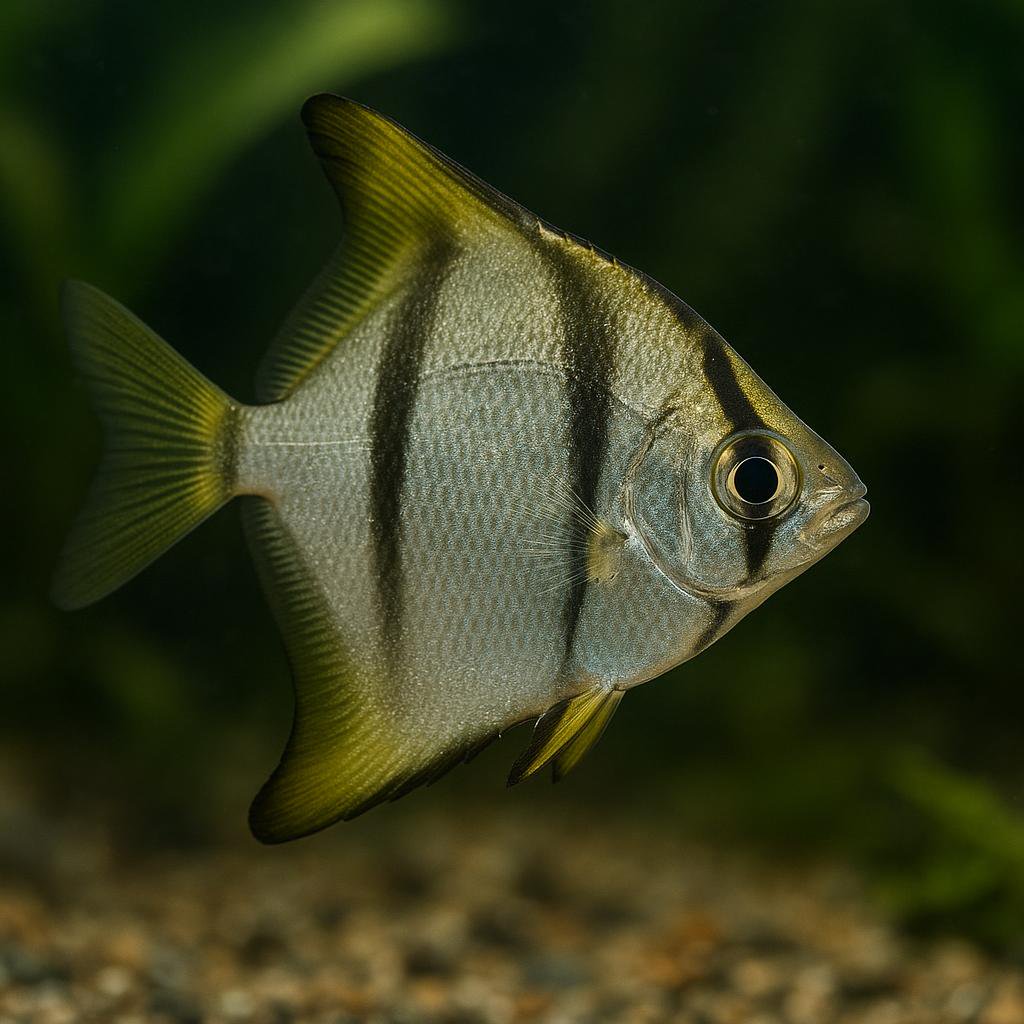
This is that shiny, diamond-shaped "mono" that cruises around in a tight pack and looks like a little silver dinner plate with black bars when it's young. The big thing with African moonies is they're euryhaline-so they'll tolerate freshwater as juveniles, but they really shine long-term in brackish (and can be transitioned toward marine as they mature). Give them a big, open tank and a group, and they turn into nonstop, super fun midwater swimmers.
Banded-tail glassy perchlet
Ambassis urotaenia
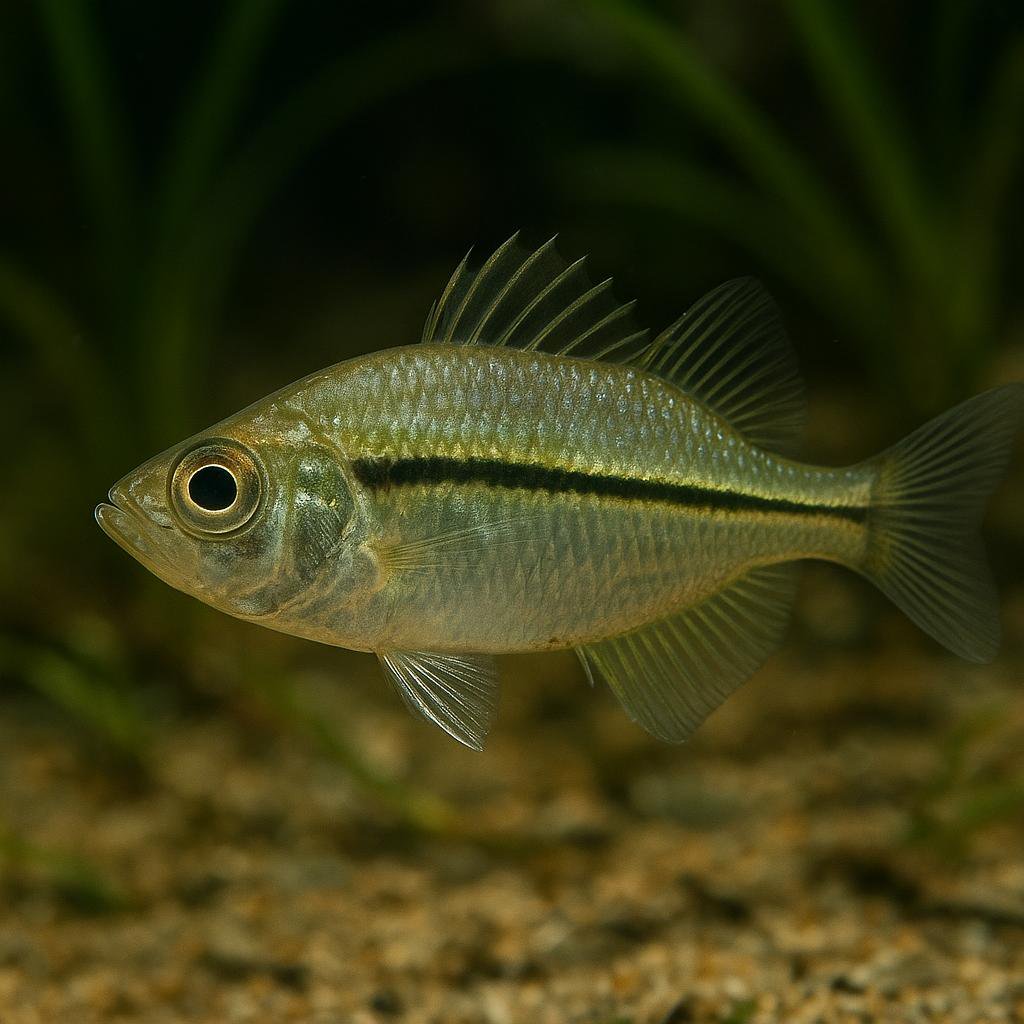
This is one of those see-through glassy perchlets where you can literally watch the organs shimmer when it turns-super cool in the right lighting. In the wild it hangs around river mouths and mangroves and cruises in groups, so it does best when you keep a little gang of them and give them some open swimming room.
-1771643191.jpg)
Elongate mudskipper (pointed-tailed goby)
Pseudapocryptes elongatus (syn. Pseudapocryptes lanceolatus)
This is that super-cool "mudskipper-ish" goby that mostly stays in the water, but will park itself in the shallows and periscope its eyes above the surface like it's keeping watch. It's an obligate air-breather from tidal rivers/estuaries, so it really appreciates shallow, brackish setups with soft mud/sand and gentle flow-more of a mangrove vibe than a typical community tank.
Feathered river-garfish
Zenarchopterus dispar
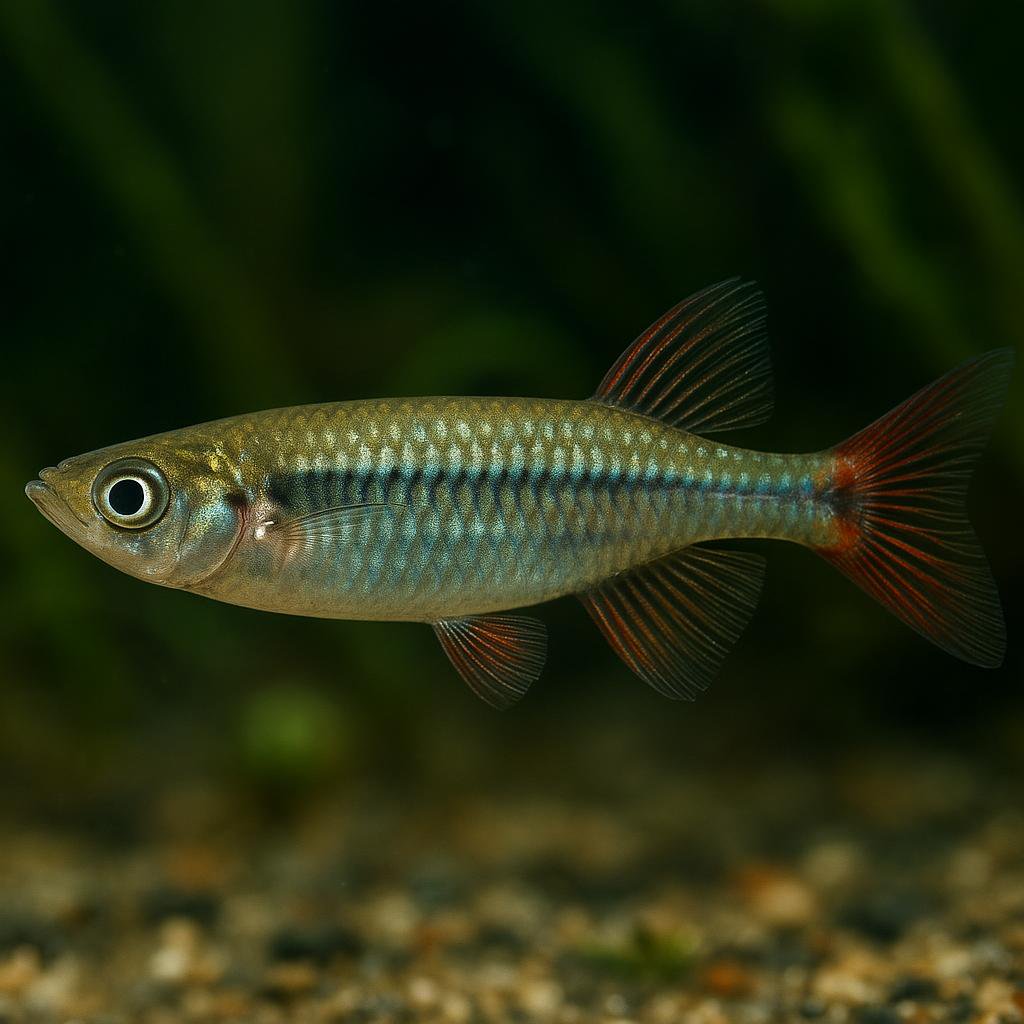
Zenarchopterus dispar is a surface-hanging halfbeak from mangroves and sheltered bays, with that classic long lower jaw for snapping up insects and other floaty foods. Males get those funky elongated fin rays (the "feathered" look), and they are livebearers, so once they settle in you can occasionally get surprise babies. Biggest thing with this fish is giving it calm water up top, room to cruise, and a tight lid because halfbeaks can rocket-jump.
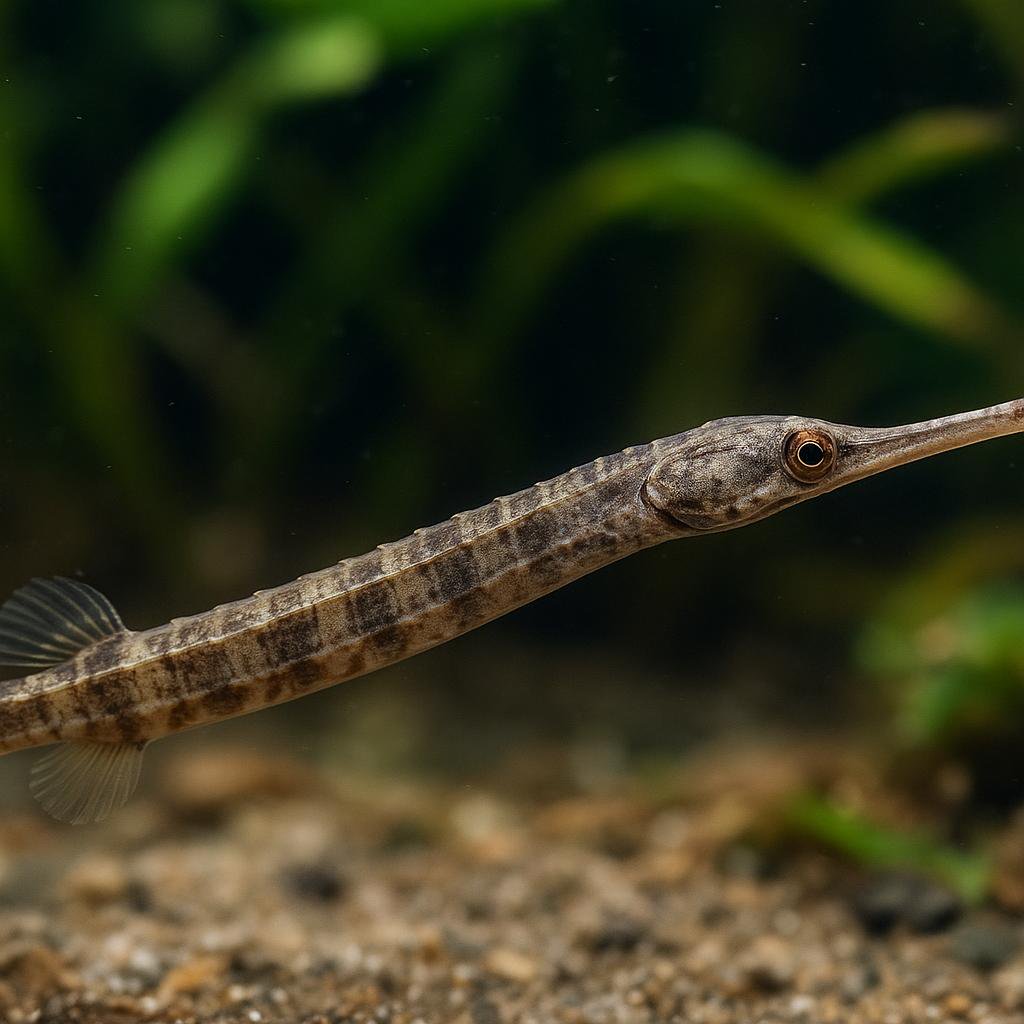
Hairy pipefish
Urocampus carinirostris
This is a tiny, stick-thin pipefish that lives in seagrass and algae beds and uses its prehensile tail to hang on like a little underwater chameleon. The coolest part is the "hairy" fringing (little filaments) all over the body that breaks up its outline, and like other syngnathids the male carries the eggs in a brood pouch under the tail.
-1771297475.jpg)
Orange chromide
Pseudetroplus maculatus (syn. Etroplus maculatus)
This is that cute little Indian/Sri Lankan cichlid with the big black "shoulder" spot and a warm gold/orange glow when it's happy. It'll do the classic cichlid thing where it gets a bit pushy when breeding, but most of the time it's pretty chill-especially if you keep a small group. Super cool bonus: the parents actively tend the eggs and fry, and the babies even graze on the parents' skin mucus for a bit.
More to Explore
Discover more brackish species.
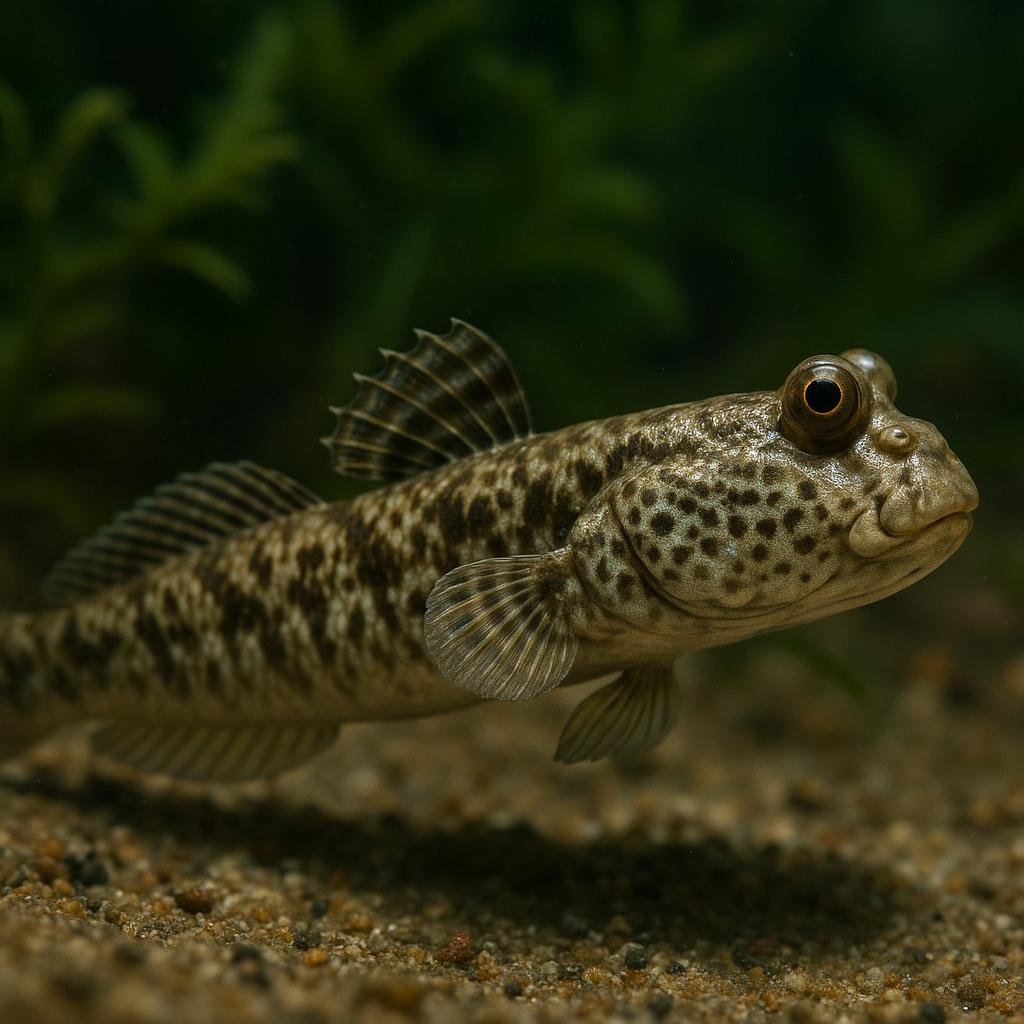
Atlantic Mudskipper
Periophthalmus barbarus
This is that wild little amphibious goby that straight-up climbs around on land like it forgot it was a fish. They've got big googly eyes, tons of personality, and they'll perch, hop, and patrol their territory-honestly more like a tiny crabby lizard than a "regular" aquarium fish.
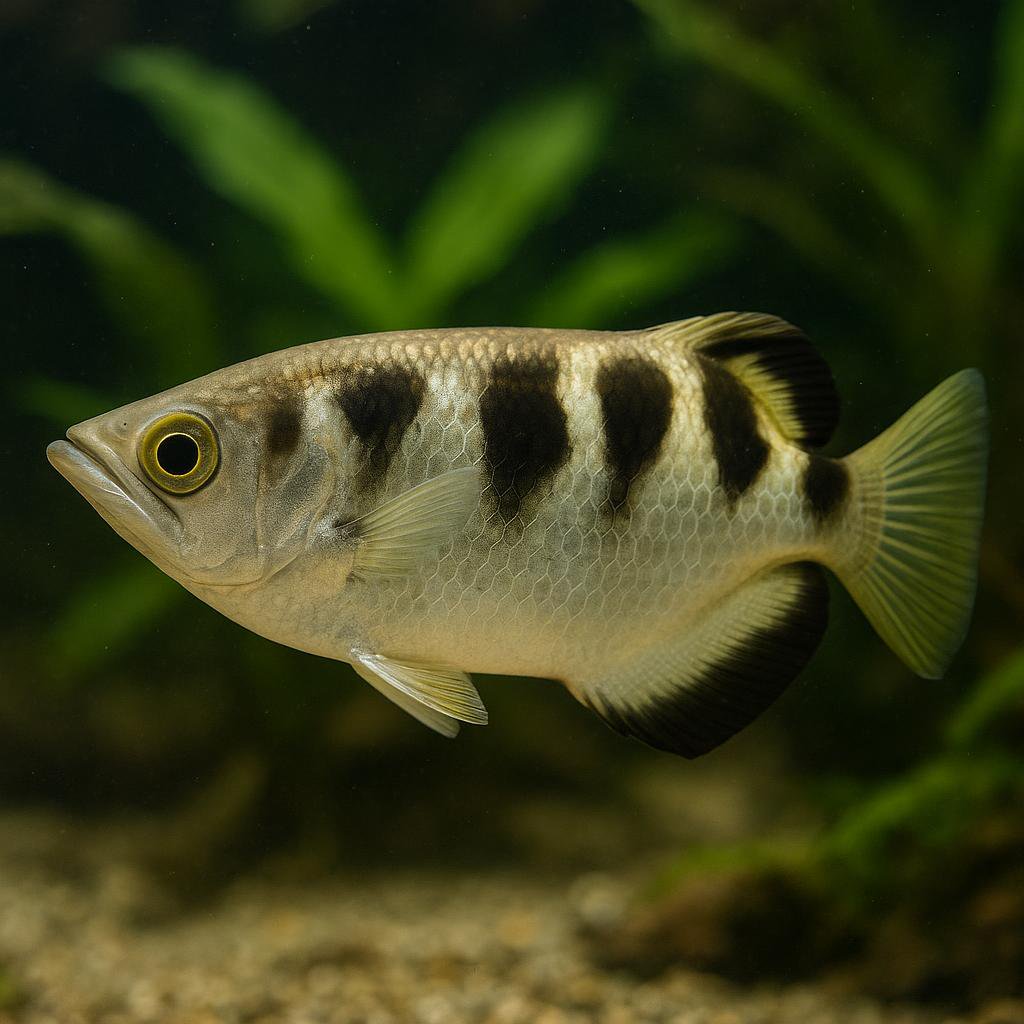
Banded Archerfish
Toxotes jaculatrix
This is the fish that literally spits jets of water to knock insects off branches-watching one "take aim" is unreal. They're super aware of what's going on outside the tank and will even learn to beg and snipe food from the surface once they settle in. Give them height and some open swimming room and they act like little aquatic sharpshooters.
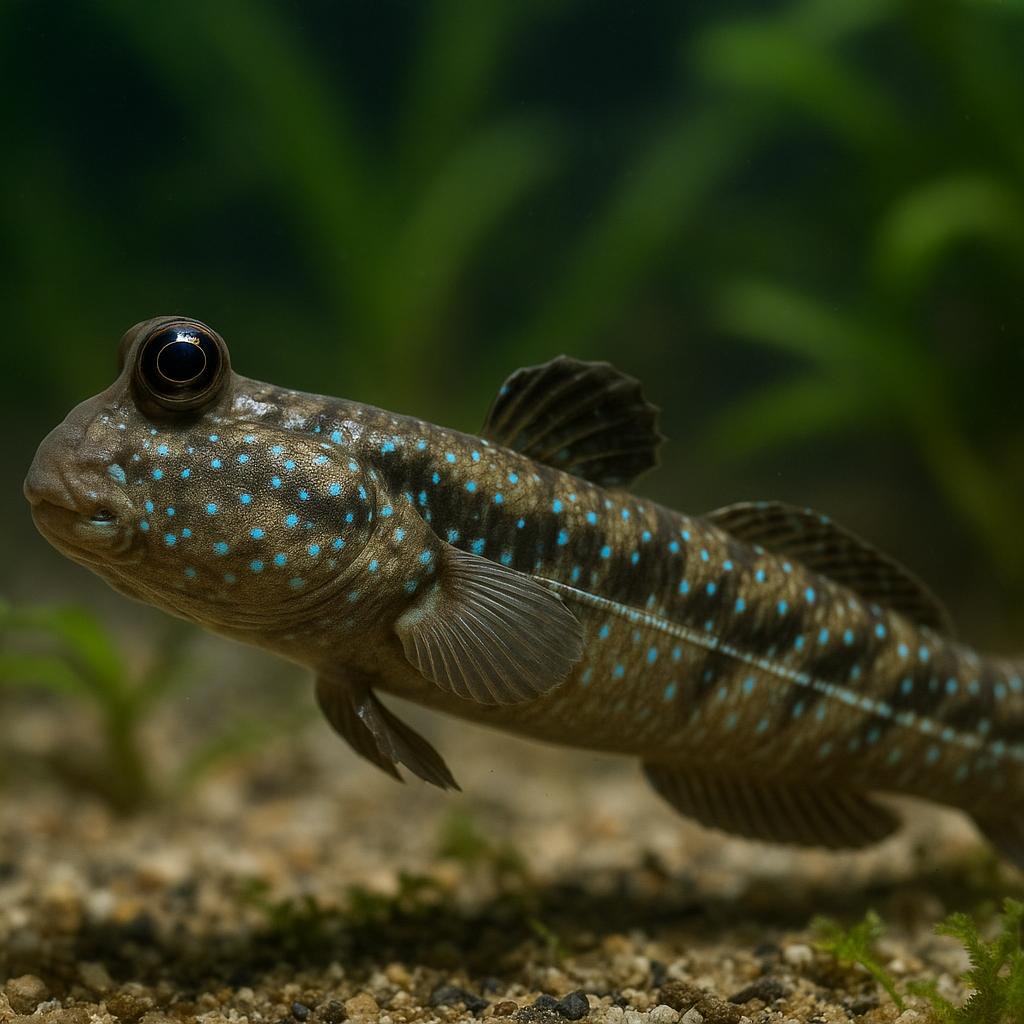
Barred mudskipper
Periophthalmus argentilineatus
This is one of those classic "walks around like it owns the place" mudskippers-big goofy eyes, climbs, hops, and spends a ton of time out on the mud when it's humid. In the wild it lives on intertidal mangrove/nipa mudflats and even shuttles between little pools and open air, hunting worms, insects, and small crustaceans. It's super fun to watch, but it really wants a brackish paludarium setup (not a normal aquarium).
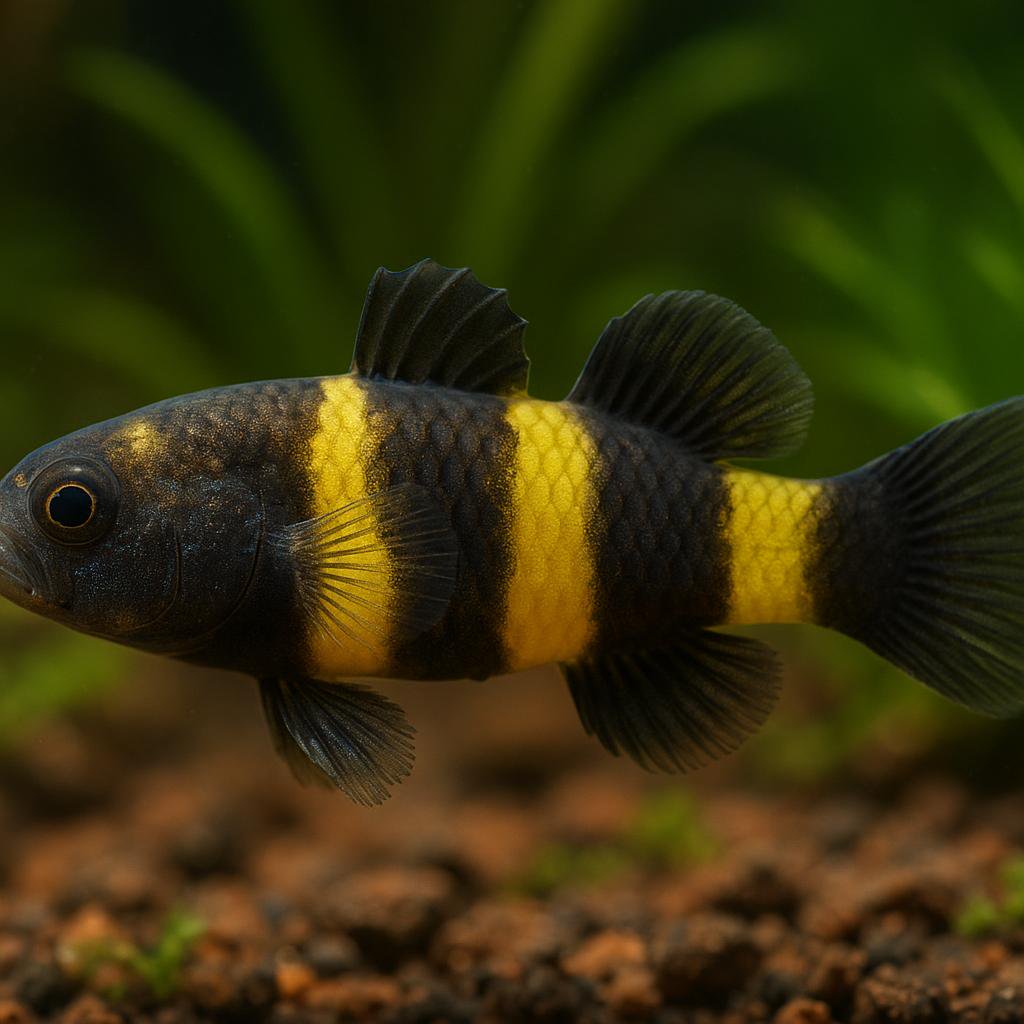
Bumblebee goby
Brachygobius doriae
Brachygobius doriae is one of the classic "bumblebee gobies" - tiny, bottom-hugging little characters that perch on rocks and sand and stare at you like they own the place. They're at their best in a calm setup with lots of caves and leaf litter, and they really shine once you get them eating frozen/live foods reliably (they're slow, picky eaters). Also: they're one of the species that gets mislabeled a lot in shops, so it's super common to see them sold under the wrong bumblebee-goby name.
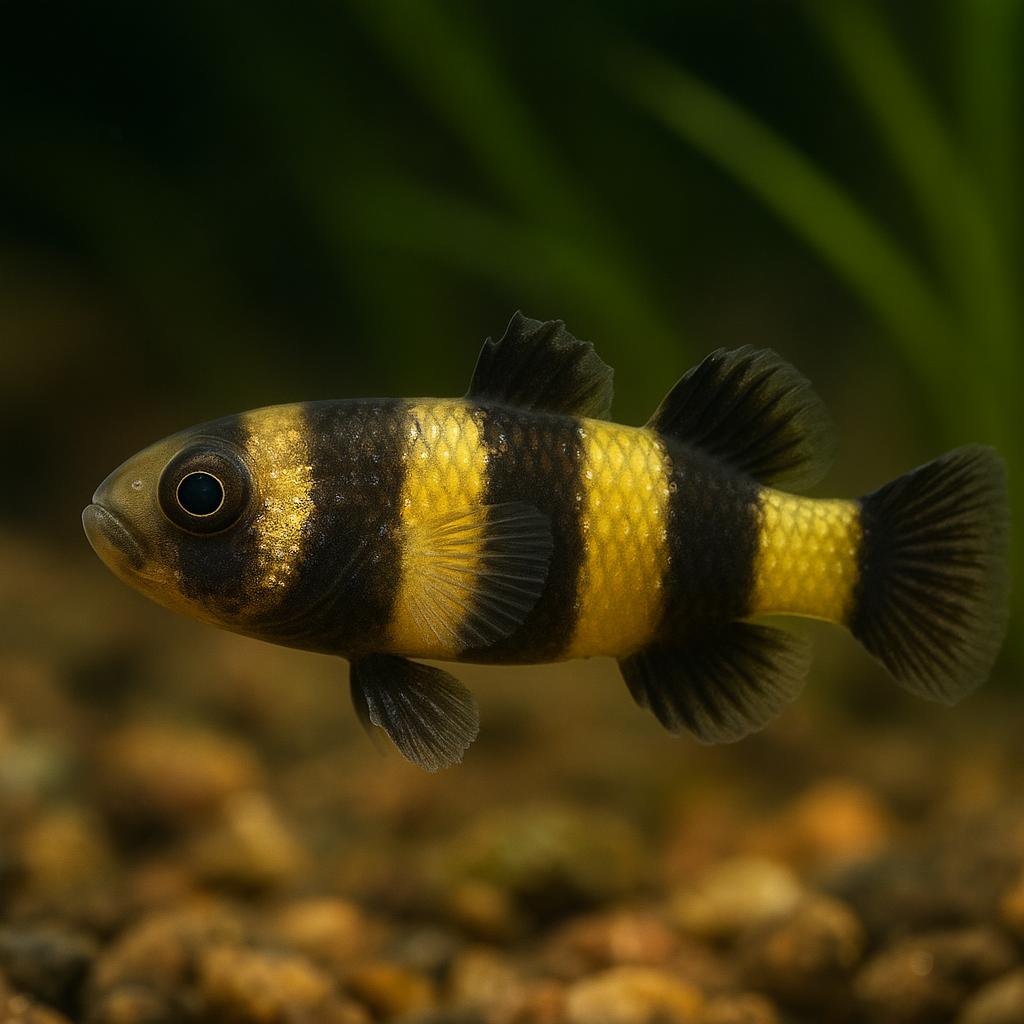
Bumblebee goby (Bumblebee fish)
Brachygobius xanthozonus
This is that tiny little goby with the bold black-and-yellow bands that likes to perch on the bottom and stare back at you like it owns the place. It's happiest in lightly brackish water with lots of little caves and sight-breaks, and it's one of those fish that often refuses flakes-frozen/live meaty foods usually flip the "yes, I will eat" switch.
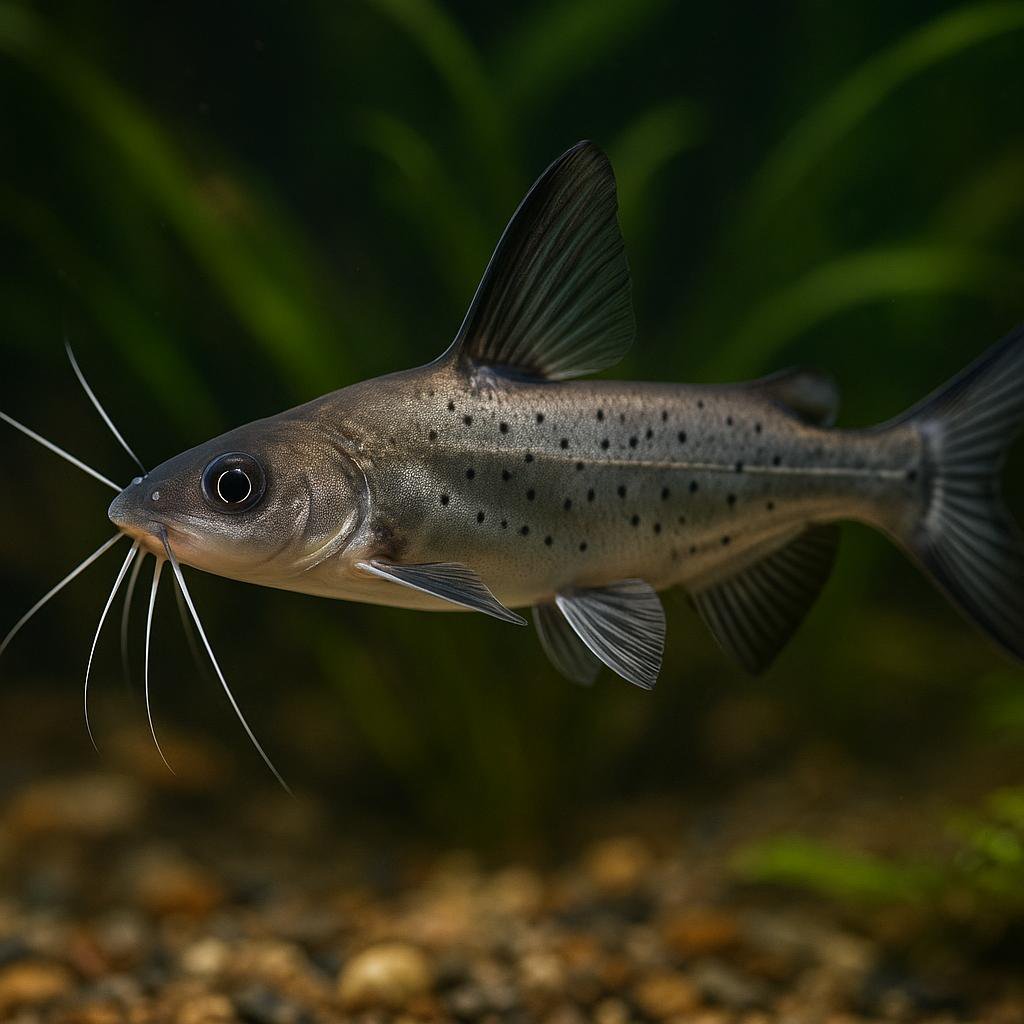
Colombian shark catfish
Ariopsis seemanni
This is that slick silver "shark-looking" catfish with the black fins and white tips that cruises around like it owns the place. The big gotcha is it's not a true freshwater community fish long-term-juveniles show up in shops as "freshwater," but as it grows it really wants brackish and eventually full marine conditions, plus a lot of swimming room.
Looking for other species?