

Spotted scat
Scatophagus argus
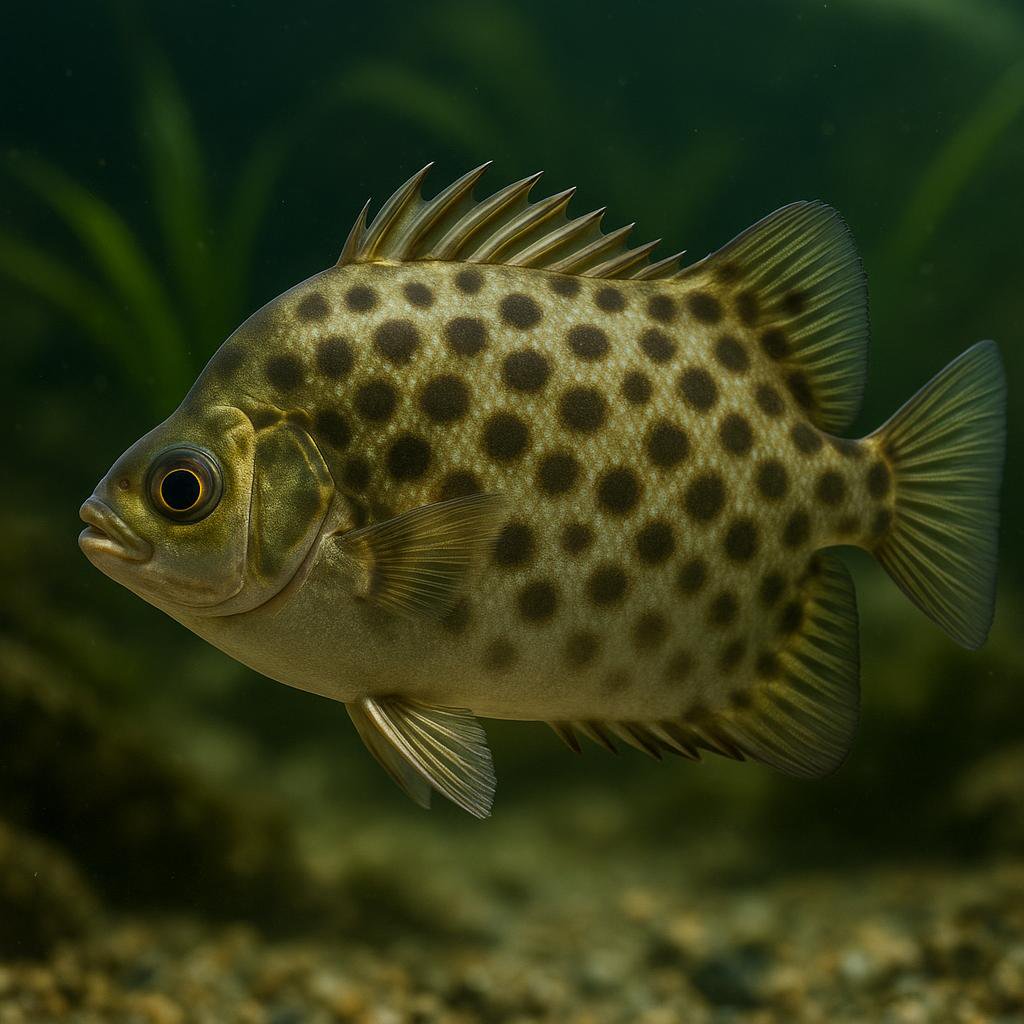
Spotted scat features a deep, laterally compressed body adorned with dark spots on a pale background, highlighting its distinctive coloration.
This page includes AI-generated images. Why am I seeing AI images?
About the Spotted scat
Spotted scats are those chunky, disc-shaped brackish fish with the peppered "polka dot" pattern that changes a lot as they grow. They cruise around in groups, eat basically anything you offer, and they're tough as nails-just don't fall into the super common trap of keeping them in straight freshwater long-term.
Also known as
Quick Facts
Size
45 cm
Temperament
Peaceful
Difficulty
Intermediate
Min Tank Size
125 gallons
Lifespan
10-15 years
Origin
Indo-Pacific
Diet
Omnivore - algae/plant matter plus worms, crustaceans, insects; in tanks use quality pellets/flakes, frozen foods, and plenty of veg
Water Parameters
20-28°C
7.5-8.5
10-30 dGH
Need a heater for this species?
This species needs 20-28°C in a 125 gallon tank. Use our heater calculator to find the right wattage.
Calculate heater sizeCare Notes
- Don't treat spotted scats like "small fish" - they grow fast and chunky; plan on at least 100-125g for adults (especially for a group), with lots of open swimming room and strong filtration.
- They do best in brackish water: aim around SG 1.005-1.015 (they can handle more salty as adults), keep temps ~24-28°C/75-82°F, and don't let nitrate creep up because they're messy eaters.
- Use sand or smooth gravel and decor without sharp edges; scats spook and bulldoze around, so plants usually get shredded unless you use tough stuff like mangrove/Java fern tied to wood (and even then, don't get attached).
- Feed them like little goats: a mix of quality pellets, frozen foods, and lots of greens/algae-based stuff (spirulina, nori, blanched spinach/zucchini) or they'll start picking at tankmates and décor.
- Keep them in a small group if you can (3+); solo scats can get skittish or bossy, and groups spread out the attitude.
- Tankmates: other brackish fish that can handle the same salinity and size - monos, archerfish, some mollies, figure-8 puffers only with caution; avoid slow/fancy-finned fish and tiny fish they can swallow.
- Watch for ich and other parasites after buying - scats often come in stressed from freshwater holding; slowly raise salinity over days and quarantine if you can.
- Breeding is basically a no-go in typical home tanks; they usually spawn in more marine conditions and big setups, so don't buy them expecting babies.
- Use caution when handling: dorsal/anal/pelvic spines may be venomous and can inflict painful stings; use a container/net method and consider puncture-resistant gloves.
Compatibility
Good Tankmates
- Mono argentus/monodactylus (monos) - they're basically the classic brackish schooling buddies for scats. Similar size, similar attitude, and they handle the same salty, messy setup.
- Archerfish (like banded archerfish) - works best in a bigger tank where everyone has space. They're not delicate, they like similar brackish conditions, and they can hold their own with scat "shoving match" behavior.
- Orange chromide / other brackish-tolerant cichlids (medium, sturdy types) - scats can be pushy, so a tougher, not-easily-bullied fish tends to do better than a gentle one.
- Knight gobies - good bottom fish for brackish, and they're not usually scared of scats. Just give them caves and don't keep them tiny next to big adult scats.
- Bigger brackish mollies (especially sailfin types) - they're quick, hardy, and tolerate the salt. Works best when the mollies aren't bite-sized, because scats are enthusiastic eaters.
Avoid
- Bumblebee gobies - too small and may be eaten or harassed as scats grow; only consider temporarily with small juvenile scats in very large setups.
- Slow, fancy-finned fish (angelfish, bettas, long-fin anything) - scats are curious, grabby, and will absolutely turn those fins into a chew toy in brackish conditions.
- Tiny community fish (neon-sized tetras, small rasboras, guppies) - if it fits in a scat's mouth, it's food. Even if it doesn't, it'll get harassed.
- Shrimp/snails/crabs you actually care about - scats are little vacuum cleaners with fins. They pick, crunch, and 'redecorate' your clean-up crew.
- Hyper-territorial bruisers (big mean cichlids, super aggressive puffers, etc.) - you end up with nonstop sparring and torn fins. Scats can be pushy, but they don't enjoy getting pinned in a corner.
Where they come from
Spotted scats are classic “mangrove edge” fish. You find them around estuaries, river mouths, and brackish lagoons across Southeast Asia and northern Australia—places where the water swings between fresh-ish and salty depending on tides and seasons.
That back-and-forth lifestyle explains a lot about them in the aquarium: they’re tough, hungry, messy… and they really appreciate you treating brackish water like a real thing, not an afterthought.
Setting up their tank
The biggest mistake I see is people buying cute little scats and putting them in a “medium community tank.” They grow fast, turn into chunky dinner plates, and they do it while producing a ridiculous amount of waste.
- Tank size: I wouldn’t start with less than 75 gallons for a small group, and 125+ is where it starts feeling comfortable long-term.
- Group size: They’re less skittish in a group (3–6 works well). Solo scats can get weirdly pushy or nervous.
- Filtration: Go bigger than you think. Strong canister or sump-style turnover, plus lots of mechanical media you can rinse often.
- Flow/oxygen: They like well-oxygenated water. A powerhead or strong return helps a lot.
- Decor: Open swimming room with some driftwood/rocks for breaks. Mangrove-style roots look awesome, just leave space.
- Substrate: Sand or smooth gravel. They sift and graze; sharp stuff is asking for trouble.
Use marine salt mix, not “aquarium salt.” I mix new water in a bucket with a small pump/heater and check salinity with a refractometer. It’s way more consistent than guessing with tablespoons.
Salinity depends on how you want to run them, but I’ve had the best luck keeping them solidly brackish and stable. A common sweet spot is around SG 1.005–1.012, with many keepers gradually going higher as they mature (some adults do great close to marine). The real key is: pick a number and stop bouncing it around.
Spotted scats have venomous dorsal spines. It’s not “panic to the ER” for most people, but it hurts and swells. Use a container to move them (not a net you’ll tangle), and watch your hands around the dorsal fin.
What to feed them
Scats are basically hungry garbage disposals with fins—in a good way. They’re omnivores that love plant matter, but they also go nuts for meaty foods. If you only feed protein, they can get chunky and the tank will get gross fast.
- Staples: quality pellets/flakes that include algae/spirulina (they actually eat it).
- Veggies: blanched zucchini, spinach, shelled peas, cucumber slices. Clip them so they don’t float away.
- Meaty treats: mysis, krill, chopped shrimp, clam. Not every meal, but great for variety.
- Grazing foods: nori sheets (seaweed) are a huge hit in brackish setups.
Feed smaller amounts more often and clean up leftovers. If you dump a big meal in, they’ll shred it, spit bits everywhere, and your filter will be crying by morning.
How they behave and who they get along with
They’re active, curious fish that spend the day cruising and picking at stuff. In a group they’re way more confident, and you’ll see a lot of “follow the leader” swimming.
Temperament-wise, they’re not usually pure bullies, but they’re strong, fast, and food-obsessed. Anything small enough to fit in their mouth—or slow enough to get outcompeted—is going to have a bad time.
- Good tankmates: monos (Monodactylus), archerfish (in big tanks), larger brackish gobies, knight gobies (with care), big mollies in brackish, some puffers only if you’re experienced and the tank is large.
- Avoid: tiny community fish, delicate long-finned fish, and anything you can’t feed well in salty water.
- Inverts/plants: most “freshwater” plants and shrimp/snails won’t last as salinity climbs. Expect scats to snack on what they can catch anyway.
They can be surprisingly nippy during feeding. Using feeding tongs for chunky foods and spreading food out across the tank helps reduce the chaos.
Breeding tips (realistic expectations)
Breeding spotted scats at home is pretty rare. In the wild they migrate and spawn under conditions that are hard to copy in a glass box. Most fish in the trade are wild-caught or farm-raised with large-scale setups.
If you ever wanted to take a swing at it, you’d be looking at a big group, a very large system, and gradually shifting salinity/seasonal cues. But for most of us, scats are a “display fish” project, not a breeding project.
Common problems to watch for
Most scat problems trace back to two things: dirty water (because they’re messy) and unstable salinity (because people top off or water-change without checking). Get those under control and they’re pretty forgiving.
- Nitrate creep and cloudy water: they eat a lot and poop a lot. Bigger filter, more water changes, and less overfeeding fixes most of it.
- Ich/white spot after purchase: common with wild-caught fish and shipping stress. Stable temp, good oxygen, and treating in brackish correctly (many meds have limits with salt—read labels).
- Fin damage from nets/spines: use a tub/container to move them and keep décor snag-free.
- “Won’t eat” new fish: usually stress. Dim lights, offer nori/spirulina foods, and give them time. Once they start, they rarely stop.
- Sudden swings in salinity: topping off with salty water is a classic mistake. Evaporation leaves salt behind, so top off with fresh water, and only add salt when you’re doing water changes.
Watch your salinity during water changes. Mix replacement water to match the tank before it goes in. A fast salinity jump is one of the quickest ways to knock scats sideways.
Similar Species
Other brackish peaceful species you might be interested in.
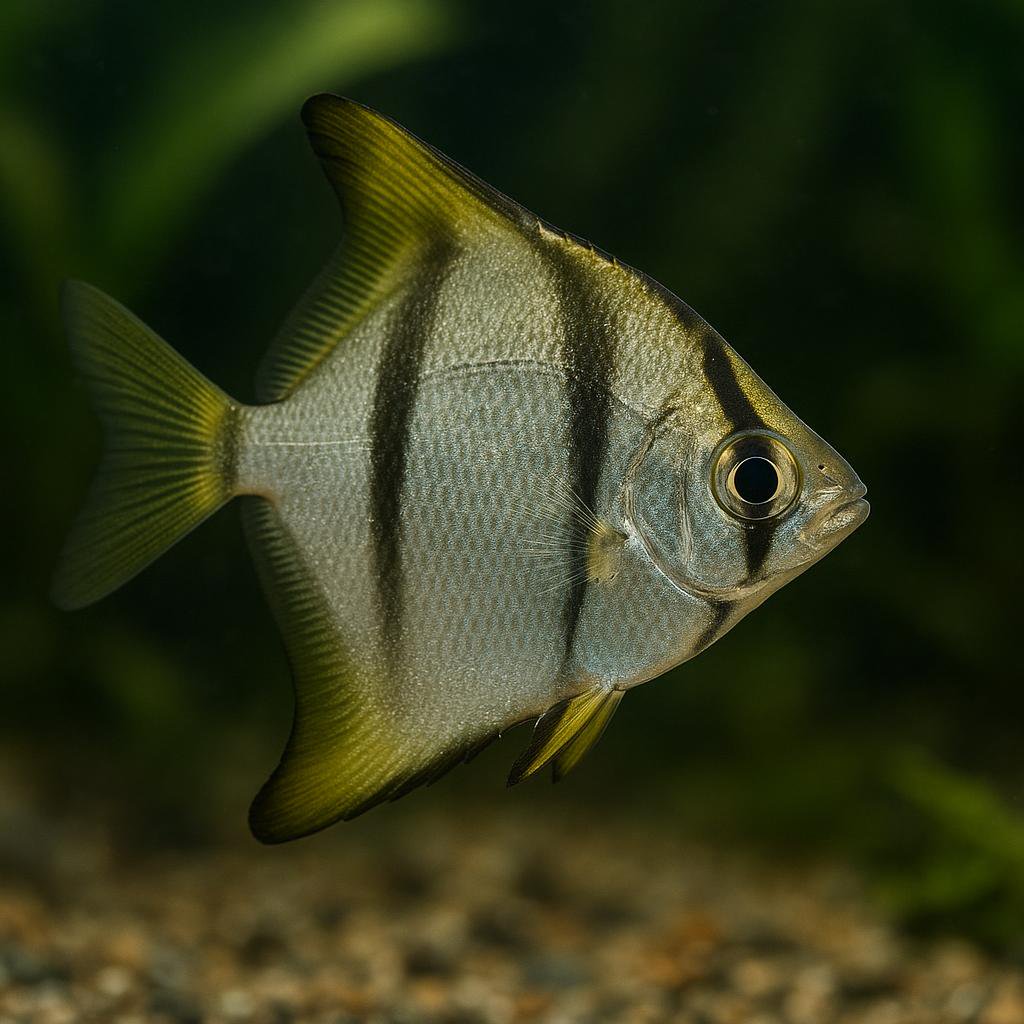
African moony
Monodactylus sebae
This is that shiny, diamond-shaped "mono" that cruises around in a tight pack and looks like a little silver dinner plate with black bars when it's young. The big thing with African moonies is they're euryhaline-so they'll tolerate freshwater as juveniles, but they really shine long-term in brackish (and can be transitioned toward marine as they mature). Give them a big, open tank and a group, and they turn into nonstop, super fun midwater swimmers.
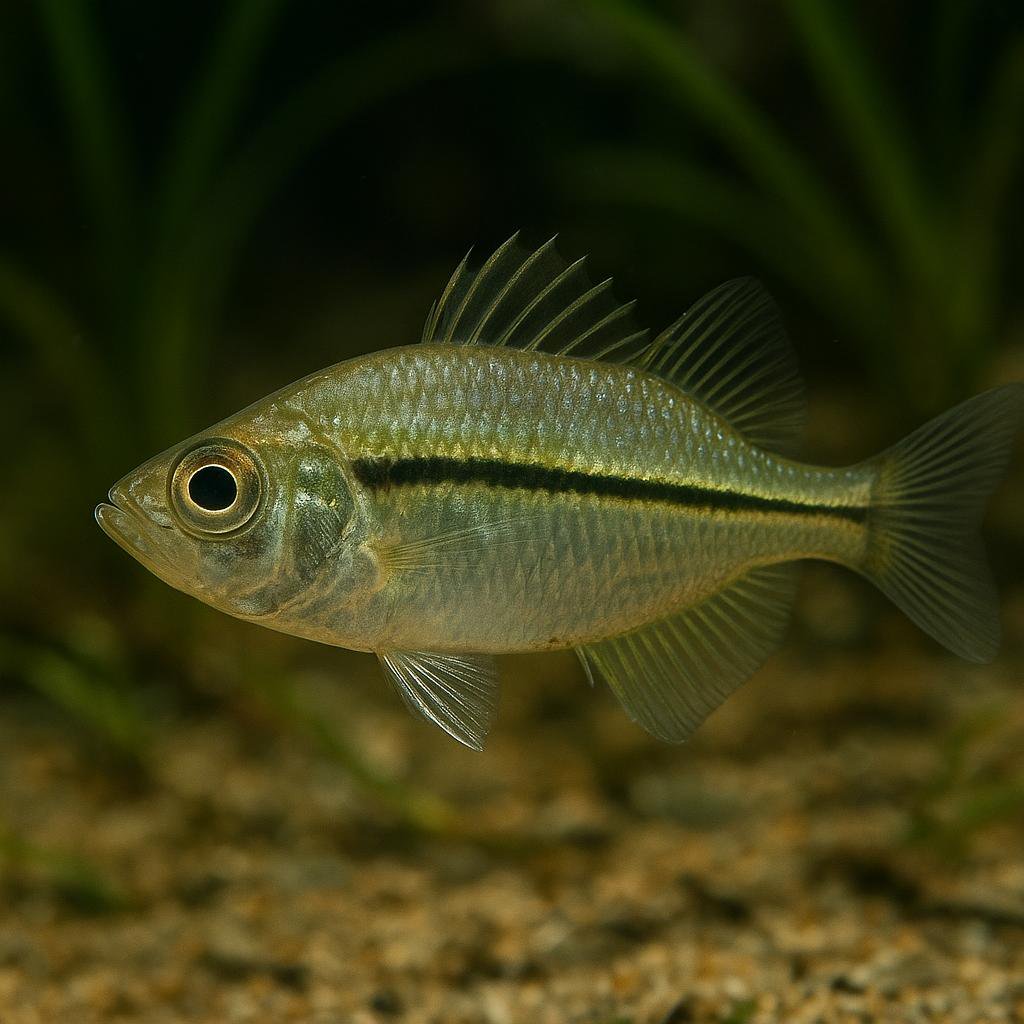
Banded-tail glassy perchlet
Ambassis urotaenia
This is one of those see-through glassy perchlets where you can literally watch the organs shimmer when it turns-super cool in the right lighting. In the wild it hangs around river mouths and mangroves and cruises in groups, so it does best when you keep a little gang of them and give them some open swimming room.
-1771643191.jpg)
Elongate mudskipper (pointed-tailed goby)
Pseudapocryptes elongatus (syn. Pseudapocryptes lanceolatus)
This is that super-cool "mudskipper-ish" goby that mostly stays in the water, but will park itself in the shallows and periscope its eyes above the surface like it's keeping watch. It's an obligate air-breather from tidal rivers/estuaries, so it really appreciates shallow, brackish setups with soft mud/sand and gentle flow-more of a mangrove vibe than a typical community tank.
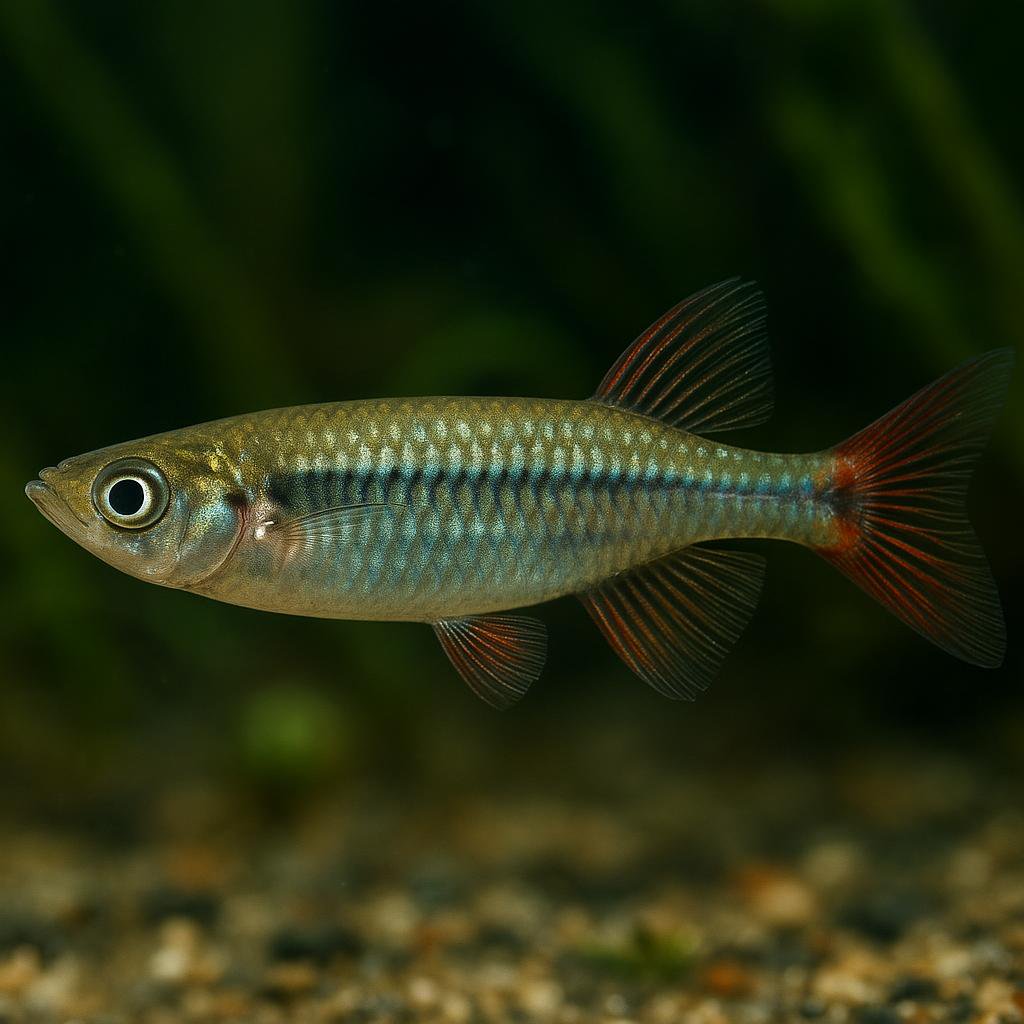
Feathered river-garfish
Zenarchopterus dispar
Zenarchopterus dispar is a surface-hanging halfbeak from mangroves and sheltered bays, with that classic long lower jaw for snapping up insects and other floaty foods. Males get those funky elongated fin rays (the "feathered" look), and they are livebearers, so once they settle in you can occasionally get surprise babies. Biggest thing with this fish is giving it calm water up top, room to cruise, and a tight lid because halfbeaks can rocket-jump.
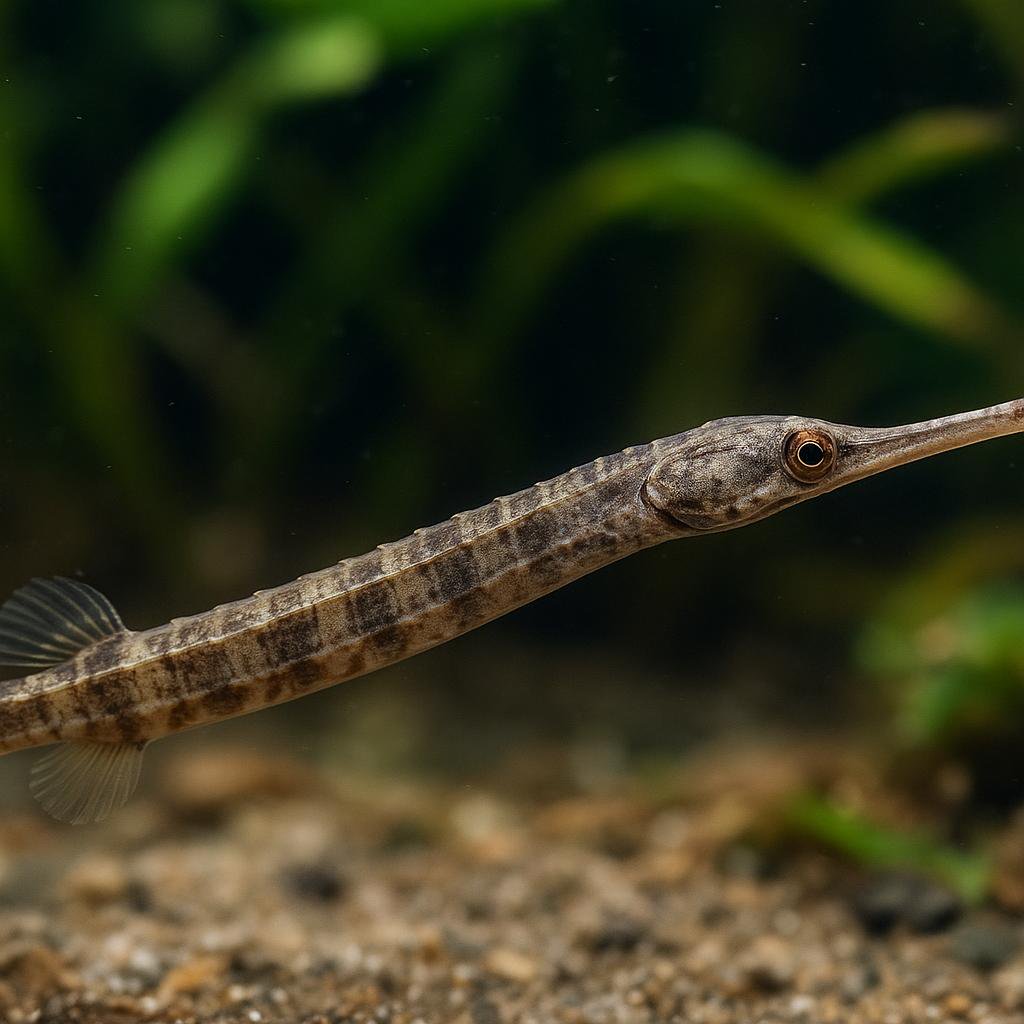
Hairy pipefish
Urocampus carinirostris
This is a tiny, stick-thin pipefish that lives in seagrass and algae beds and uses its prehensile tail to hang on like a little underwater chameleon. The coolest part is the "hairy" fringing (little filaments) all over the body that breaks up its outline, and like other syngnathids the male carries the eggs in a brood pouch under the tail.
-1771297475.jpg)
Orange chromide
Pseudetroplus maculatus (syn. Etroplus maculatus)
This is that cute little Indian/Sri Lankan cichlid with the big black "shoulder" spot and a warm gold/orange glow when it's happy. It'll do the classic cichlid thing where it gets a bit pushy when breeding, but most of the time it's pretty chill-especially if you keep a small group. Super cool bonus: the parents actively tend the eggs and fry, and the babies even graze on the parents' skin mucus for a bit.
More to Explore
Discover more brackish species.
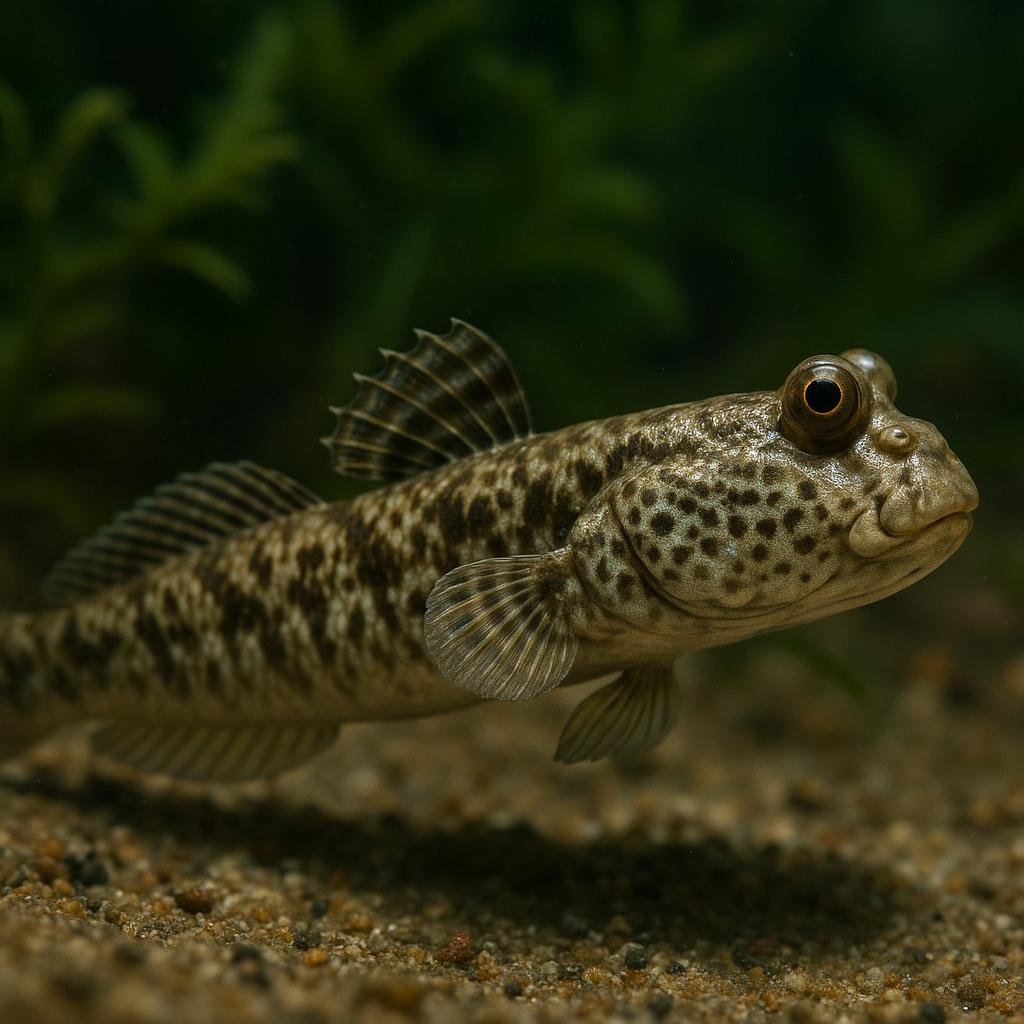
Atlantic Mudskipper
Periophthalmus barbarus
This is that wild little amphibious goby that straight-up climbs around on land like it forgot it was a fish. They've got big googly eyes, tons of personality, and they'll perch, hop, and patrol their territory-honestly more like a tiny crabby lizard than a "regular" aquarium fish.
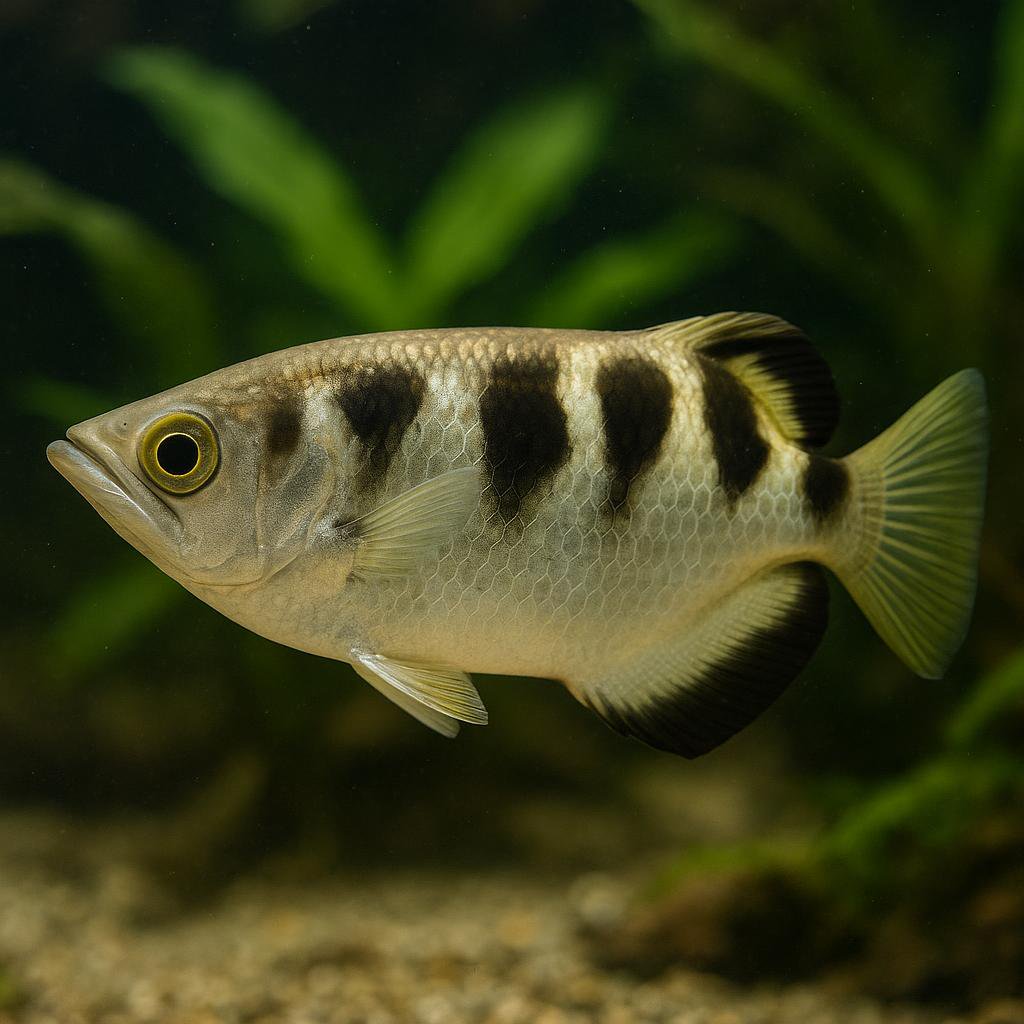
Banded Archerfish
Toxotes jaculatrix
This is the fish that literally spits jets of water to knock insects off branches-watching one "take aim" is unreal. They're super aware of what's going on outside the tank and will even learn to beg and snipe food from the surface once they settle in. Give them height and some open swimming room and they act like little aquatic sharpshooters.
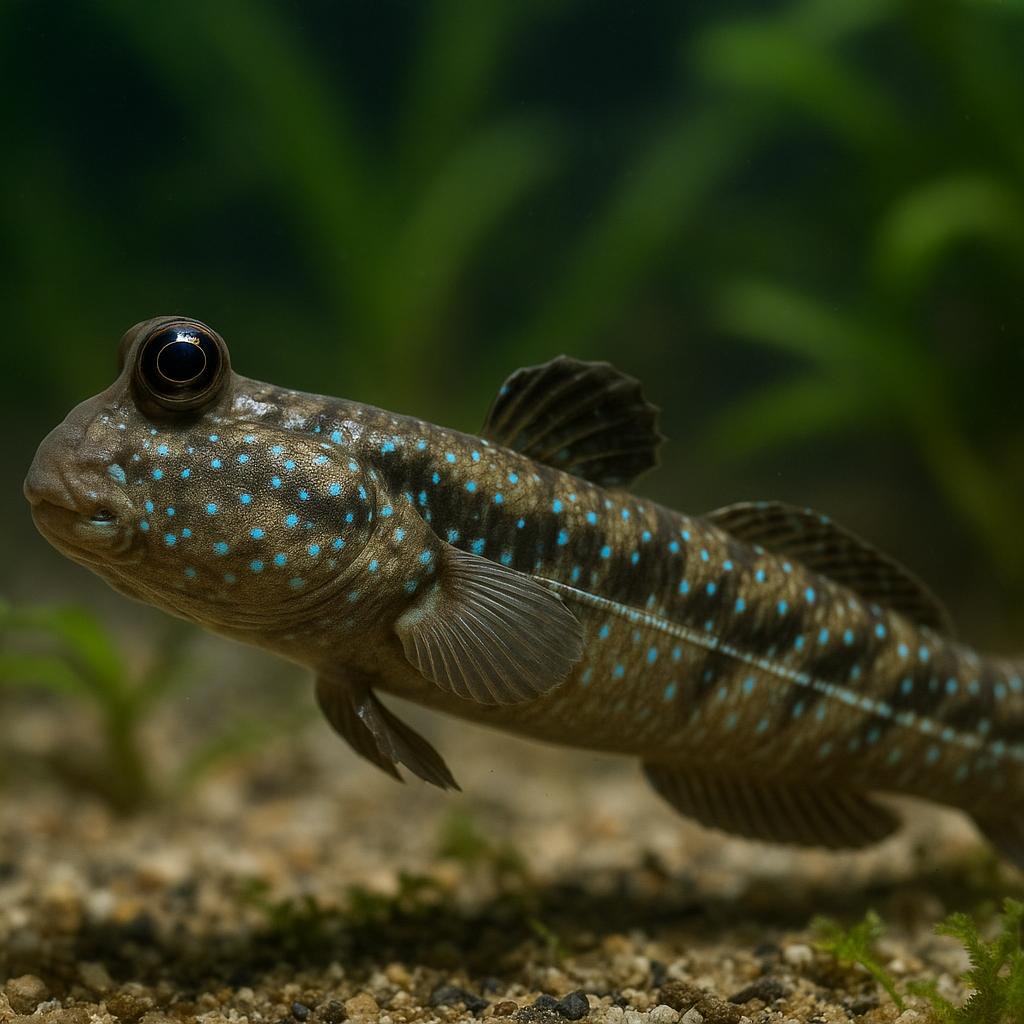
Barred mudskipper
Periophthalmus argentilineatus
This is one of those classic "walks around like it owns the place" mudskippers-big goofy eyes, climbs, hops, and spends a ton of time out on the mud when it's humid. In the wild it lives on intertidal mangrove/nipa mudflats and even shuttles between little pools and open air, hunting worms, insects, and small crustaceans. It's super fun to watch, but it really wants a brackish paludarium setup (not a normal aquarium).
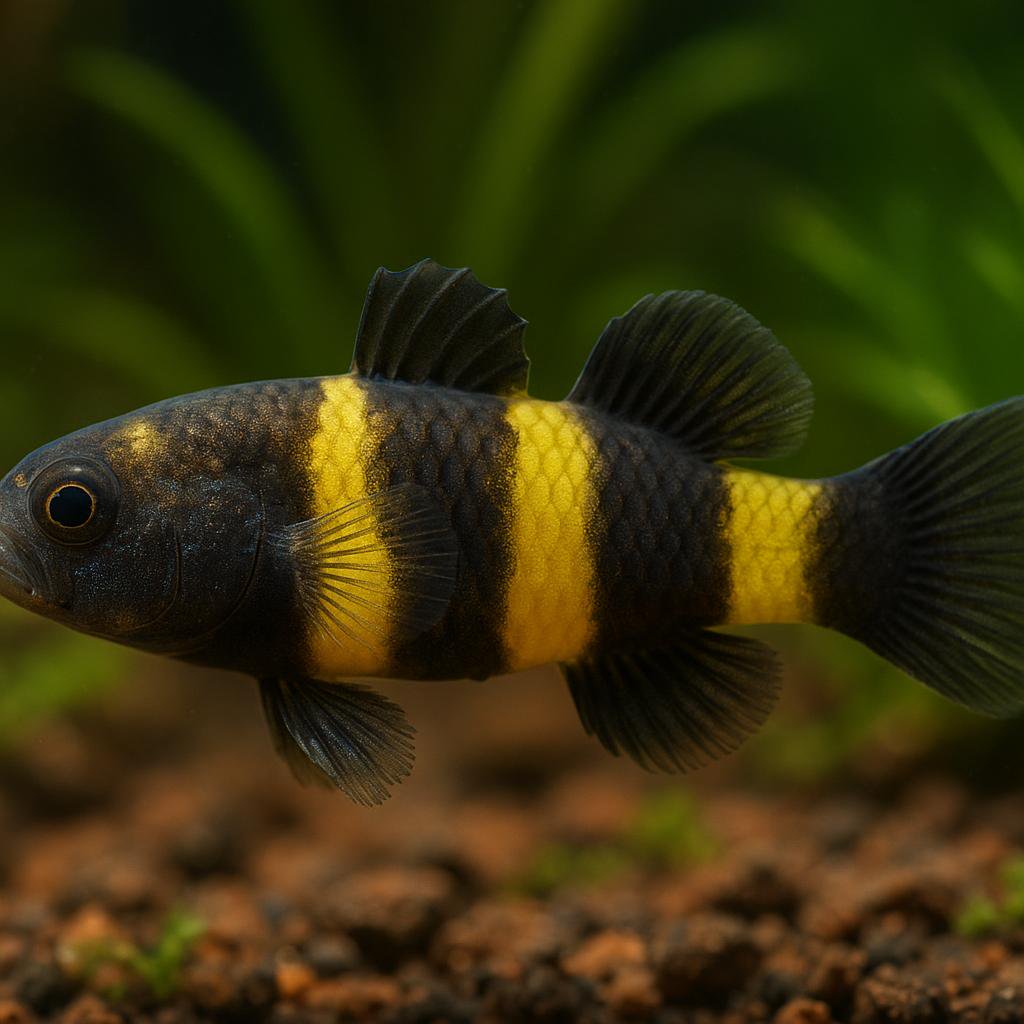
Bumblebee goby
Brachygobius doriae
Brachygobius doriae is one of the classic "bumblebee gobies" - tiny, bottom-hugging little characters that perch on rocks and sand and stare at you like they own the place. They're at their best in a calm setup with lots of caves and leaf litter, and they really shine once you get them eating frozen/live foods reliably (they're slow, picky eaters). Also: they're one of the species that gets mislabeled a lot in shops, so it's super common to see them sold under the wrong bumblebee-goby name.
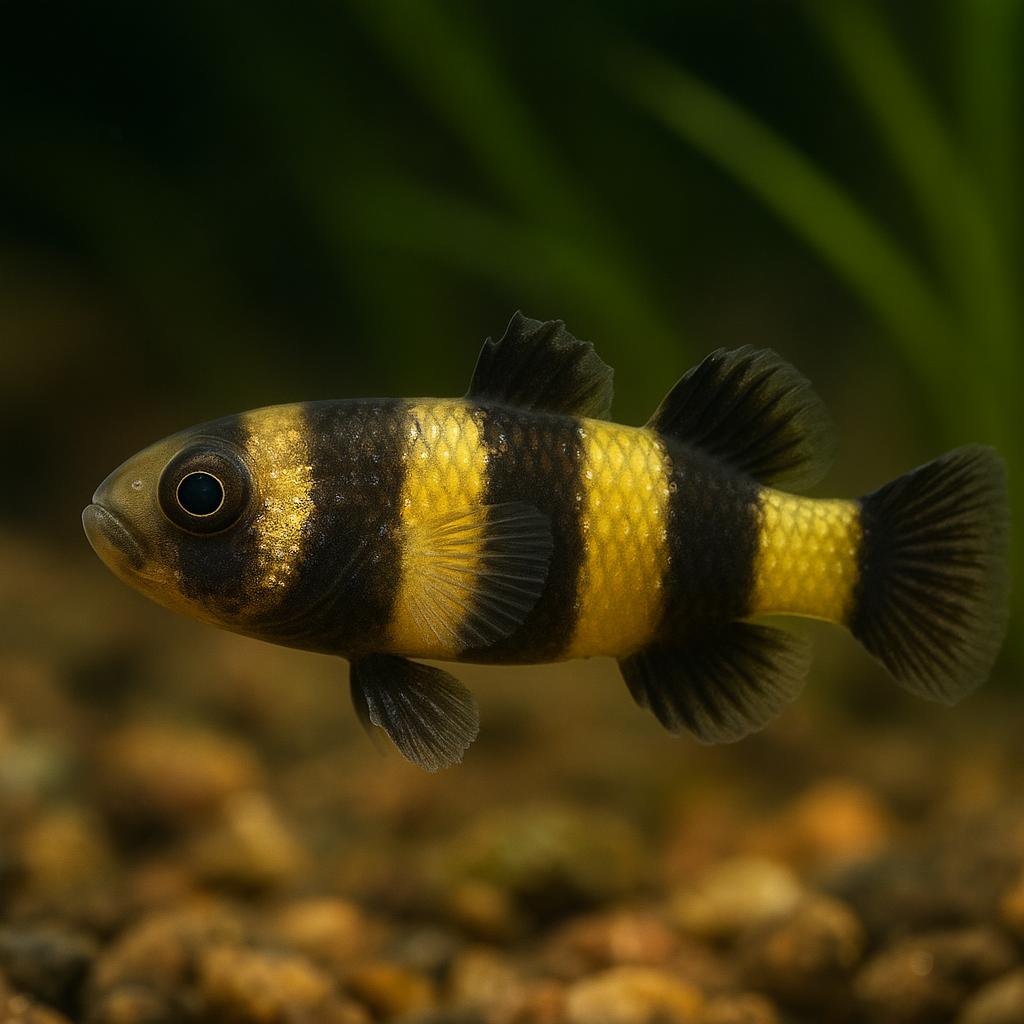
Bumblebee goby (Bumblebee fish)
Brachygobius xanthozonus
This is that tiny little goby with the bold black-and-yellow bands that likes to perch on the bottom and stare back at you like it owns the place. It's happiest in lightly brackish water with lots of little caves and sight-breaks, and it's one of those fish that often refuses flakes-frozen/live meaty foods usually flip the "yes, I will eat" switch.
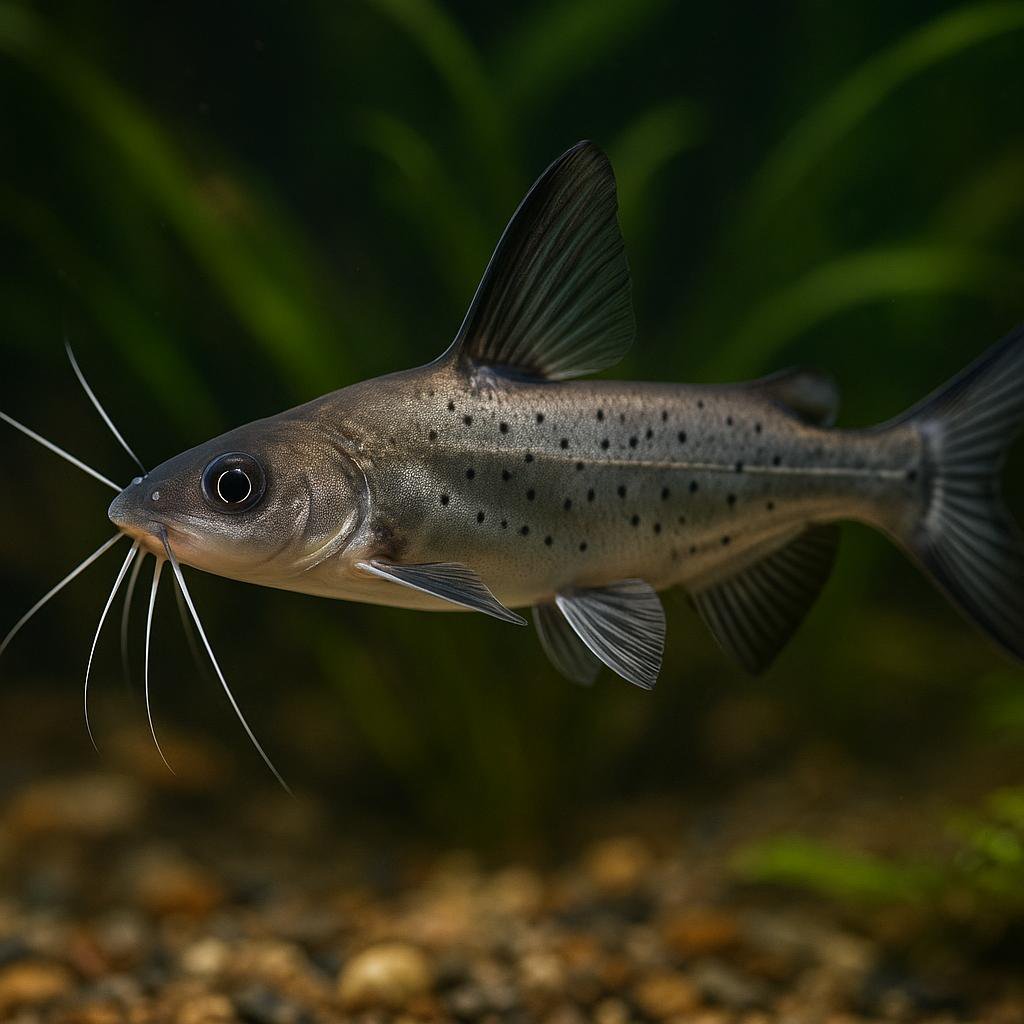
Colombian shark catfish
Ariopsis seemanni
This is that slick silver "shark-looking" catfish with the black fins and white tips that cruises around like it owns the place. The big gotcha is it's not a true freshwater community fish long-term-juveniles show up in shops as "freshwater," but as it grows it really wants brackish and eventually full marine conditions, plus a lot of swimming room.
Looking for other species?