

Chinese large-mouth catfish
Silurus meridionalis
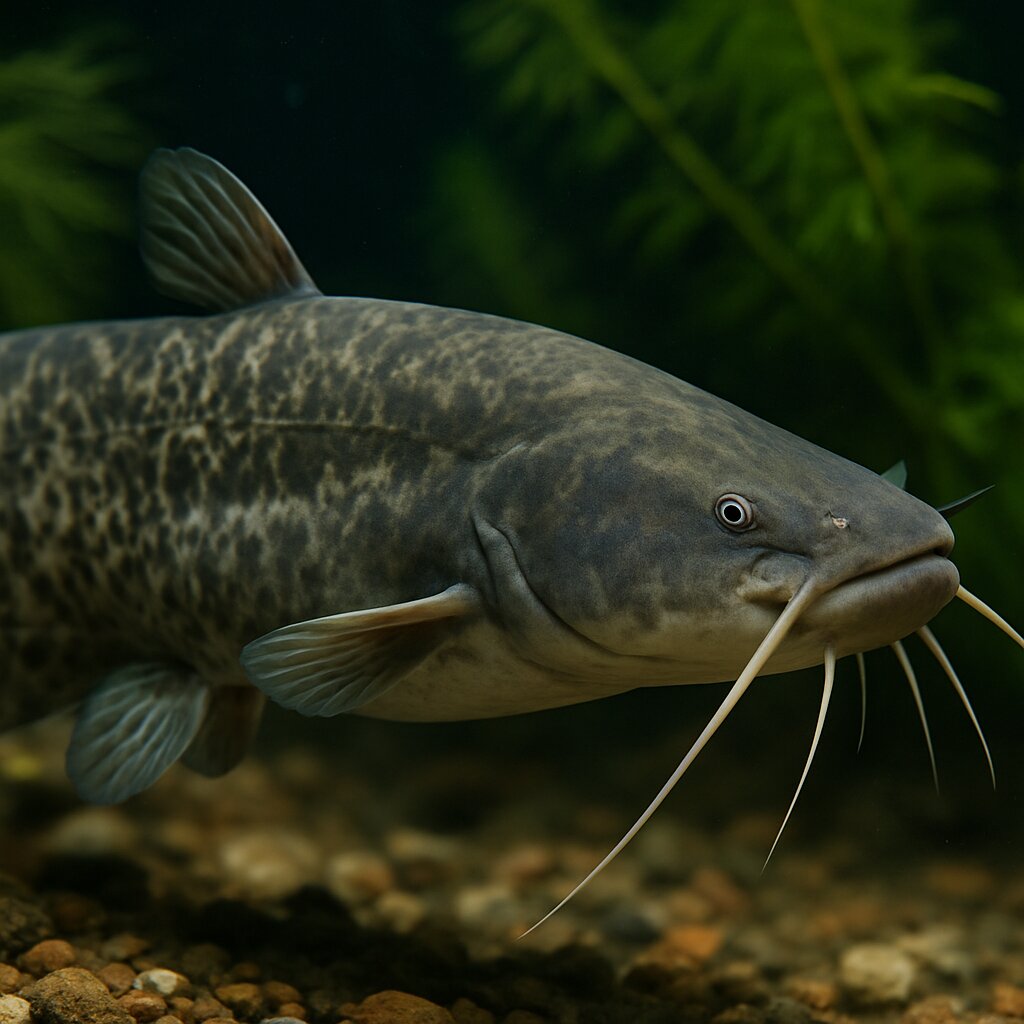
Silurus meridionalis exhibits a robust, elongated body with a distinctively wide mouth and mottled brownish-yellow coloration.
This page includes AI-generated images. Why am I seeing AI images?
About the Chinese large-mouth catfish
This is that giant river catfish from China with the vacuum-cleaner mouth. It snoozes under cover by day and then bolts out at feeding time, so if you ever keep one you are basically running an indoor pond with heavy-duty filtration. Wild-looking marbled pattern and tons of personality, but it will eat anything it can fit.
Also known as
Quick Facts
Size
114 cm (44.9 inches)
Temperament
Semi-aggressive
Difficulty
Expert
Min Tank Size
500 gallons
Lifespan
15-25 years
Origin
China - Yangtze, Pearl, and Min River basins
Diet
Carnivore - whole fish, shrimp, meaty foods, large sinking pellets
Water Parameters
20-25°C
6.5-7.5
2-15 dGH
Need a heater for this species?
This species needs 20-25°C in a 500 gallon tank. Use our heater calculator to find the right wattage.
Calculate heater sizeCare Notes
- This fish gets huge (over 4 ft/1.2 m), so a juvenile will outgrow a 240 gallon fast. Plan for an indoor pond 800-1500+ gallons and use a tight, weighted lid.
- Keep it coolish and oxygen-rich: 20-24 C (68-75 F), pH 6.8-7.8, GH 5-15 dGH. Ammonia and nitrite at 0, nitrate under 30 ppm, with heavy aeration and 8-10x turnover plus 30-50% weekly changes.
- Go bare-bottom or fine sand with big PVC pipes or caves it can fully enter. Keep decor rounded so it does not scrape its skin and barbels, and use dim lighting to stop night panics.
- It is a straight carnivore - use large sinking carnivore pellets, strips of tilapia, shrimp, mussel, and nightcrawlers with tongs. Skip feeder goldfish/rosies and pull leftovers within 5 minutes.
- Juveniles eat daily in small portions; adults 3-4 times per week to avoid fatty liver and foul water. Expect a mess and rinse mechanical prefilters often.
- Not community-safe - it will inhale anything it can fit. Avoid spiny fish like plecos that can lock in its throat; if you must mix, only try equally huge, calm fish in a truly massive system and be ready to separate.
- Watch for scrapes and barbel rot, which take off in dirty water. Catfish hate copper and harsh meds, so treat conservatively and lean on big water changes.
- Breeding at home is basically a no-go without a pond and seasonal cues; farms use hormone induction and big nests. Enjoy it as a solo showcase predator.
Compatibility
Good Tankmates
- Large, fast schooling fish that are too deep-bodied to be swallowed, like adult tinfoil barbs and big silver dollars, in a roomy tank
- Big, easygoing cichlids that are full-grown and not hyper-aggressive (adult oscars, severums, uaru) with plenty of space
- Surface cruisers that keep to their lane and are too large to fit in the catfish's mouth, like adult arowana or giant gourami
- Hefty bichirs of similar size (endlicheri, ornate) with lots of floor space and multiple hides so nobody gets crowded
- Deep-bodied, alert predators like adult datnoids that stay midwater and are quick at mealtimes
- Another large catfish only if size-matched, not hyper-territorial, and given separate caves and heavy, well-timed feedings
Avoid
- Anything bite-size or skinny enough to fit in the mouth - tetras, small barbs, livebearers, juvenile cichlids
- Slow fish with fancy fins that get picked off at night - angelfish, discus, fancy goldfish
- Sucker-mouth plecos that rasp slime coats (common and sailfin plecos) - they can latch onto smooth-skinned catfish
- Hyper-aggressive bruisers that harass barbels or start turf wars - red devil/midas cichlids, snakeheads
Where they come from
Chinese large-mouth catfish (Silurus meridionalis) are big, nocturnal predators from southern China. You find them in broad rivers, connected lakes, and deep, silty backwaters of the Yangtze and nearby drainages. They like slow to moderate flow, dim water, and places to hole up during the day. They are also farmed for food in parts of China, which is why you sometimes see them offered to hobbyists.
This is an expert-only fish. Adults pass 1 m in length and put out a massive bio-load. Think indoor pond, not a living-room show tank.
Tank setup
Plan for the adult from day one. A fast-growing juvenile will blow past 30-40 cm before you know it. My rule: if you cannot house an adult, skip the species.
- Footprint and size: aim for at least 8 x 4 ft (2.4 x 1.2 m) footprint and 600-1,000+ gallons for an adult. Bigger is better. Short, wide tanks or indoor ponds beat tall tanks.
- Cover and security: tight, weighted lids with no gaps. They spook hard and jump. Dim lighting. A red night light lets you watch feeding without stressing them.
- Hides: big-diameter PVC or smooth logs at least 1.5x the fish's body width. Anchor them so the catfish cannot roll them.
- Substrate: bare bottom for easy cleaning, or a thin layer of rounded sand. Skip sharp gravel.
- Filtration: heavy duty. Think large sump with oversized mechanical prefilters (filter socks, sponges) plus a mountain of bio-media. 6-10x hourly turnover and lots of aeration.
- Flow and oxygen: moderate flow with strong surface agitation. Add backup air (battery air pump) if power blips are common.
- Heating and safety: use an external or guarded heater. These fish burn themselves on exposed heaters and smash glass equipment.
- Water parameters: pH 6.5-7.8, soft to medium hardness. Temperature 18-26 C (64-79 F). Keep it toward the cooler end if you want a calmer metabolism and better oxygen.
Water changes matter more than chasing perfect numbers. I run 30-50% weekly on a mature system and vacuum up leftovers the morning after heavy feeds.
Lay a yoga mat or foam underlayment under the tank or pond liner. It dampens the thuds when the fish startles and can prevent cracked bases.
Feeding
They are pure predators with a great sense of smell. They take to prepared foods if you stick with it. I feed after lights out or under red light so they feel bolder.
- Staples: sinking carnivore sticks/pellets, chopped tilapia, catfish fillet, shrimp, mussels, nightcrawlers. Rotate items and add a vitamin soak once or twice a week.
- Training: start with meaty foods for scent, then mix in pellets. Gradually shift the ratio toward pellets.
- What to skip: feeder goldfish/rosies (parasites and thiaminase), very fatty meats, and spiny fish that could lodge in the throat.
- Schedule: juveniles daily in small portions; subadults every other day; big adults 2-3 times per week. Less is usually better than more with these guys.
- Technique: use tongs. They strike hard and you do not want fingers near that mouth. Remove leftovers within 15 minutes.
Live feeders bring disease. If you absolutely must, quarantine and deworm them first, but honestly, it is not worth the risk. Train onto prepared foods.
Behavior and tankmates
Think quiet, ambush hunter. By day they loaf in a hide; at night they cruise and inhale anything that fits. They are not mean for the sake of it, but they are built to eat fish.
- Best plan: species-only in a big, simple layout.
- If you try tankmates: only very large, robust fish that are too deep-bodied to be swallowed. Even then, there is always risk.
- Avoid: spiny plecos and catfish (pectoral spines can lock in the throat), nippy fish that harass barbels, and anything under half the sheatfish's body length.
- Lights: keep it dim and give multiple hides to lower startle responses and reduce collisions.
They can bite hard and thrash. For moves, use a big tub or solid fish-safe bag and support the body with wet hands. Skip lip-grips and small nets.
Breeding
Home breeding is rare. In the wild and in ponds, Silurus species spawn in warm season, laying adhesive eggs in nests or cavities, with the male guarding. In aquaculture, this species is often hormone-induced to spawn.
- What it would take: a very large, quiet indoor pond with seasonal cues (cool winter, warming spring), big caves or brushy nest sites, and a compatible pair.
- Eggs and fry: eggs stick to surfaces; male may guard. Fry start on small live foods and need immaculate, well-oxygenated water.
- Reality check: pairing, aggression, and sheer space needs put this outside the normal hobby. Most specimens are not sexed and may never pair.
Common problems to watch for
- Ammonia and nitrite spikes: heavy feeding overwhelms filtration. Use big prefilters and do not overfeed.
- Low oxygen: warm water and big biomass can outstrip O2. Run strong aeration, especially after feeds and during heat waves.
- Injuries from panic runs: add soft decor edges, secure hides, and keep lighting gentle. Treat scrapes quickly to prevent infections.
- Internal issues from poor diet: too many fatty or thiaminase-rich foods lead to problems. Keep variety and use vitamin soaks.
- Parasites from feeders: avoid or quarantine feeders. Deworm new arrivals proactively if you have the know-how.
- Medication sensitivity: as a scaleless catfish, it can react badly to copper and strong dyes. If you medicate, start at reduced dose, boost aeration, and watch closely.
- Heater burns and equipment strikes: use heater guards or external heaters and shield pump intakes so barbels do not get sucked in.
Quarantine new fish for 4-6 weeks, even if they are the only occupant. It lets you deworm, confirm they eat pellets, and dial in your feeding routine without fouling the main system.
Check local regulations. Large predatory fish are restricted in some areas, and rehoming adults is very hard. Plan for the long haul before you buy.
Similar Species
Other freshwater semi-aggressive species you might be interested in.
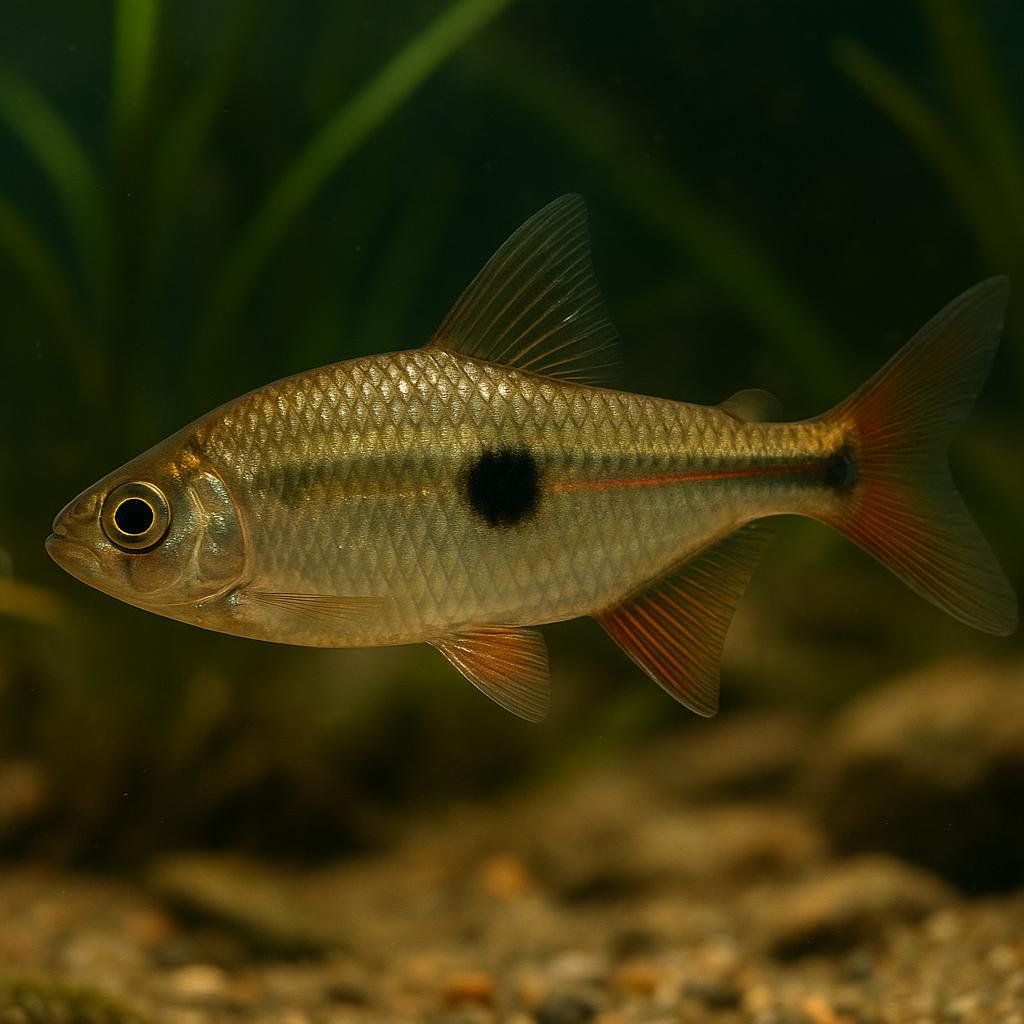
Jupiaba kurua
Small South American characin endemic to the upper rio Curuá (rio Xingu basin, Brazil). Reaches about 8.7 cm SL and inhabits clearwater rivers. Distinguished by dark dots on the bases of many lateral scales and a distinct dark caudal‑peduncle spot. Reported diet indicates omnivory, including aquatic insects, small fishes, and fragments of Podostemaceae and filamentous algae.
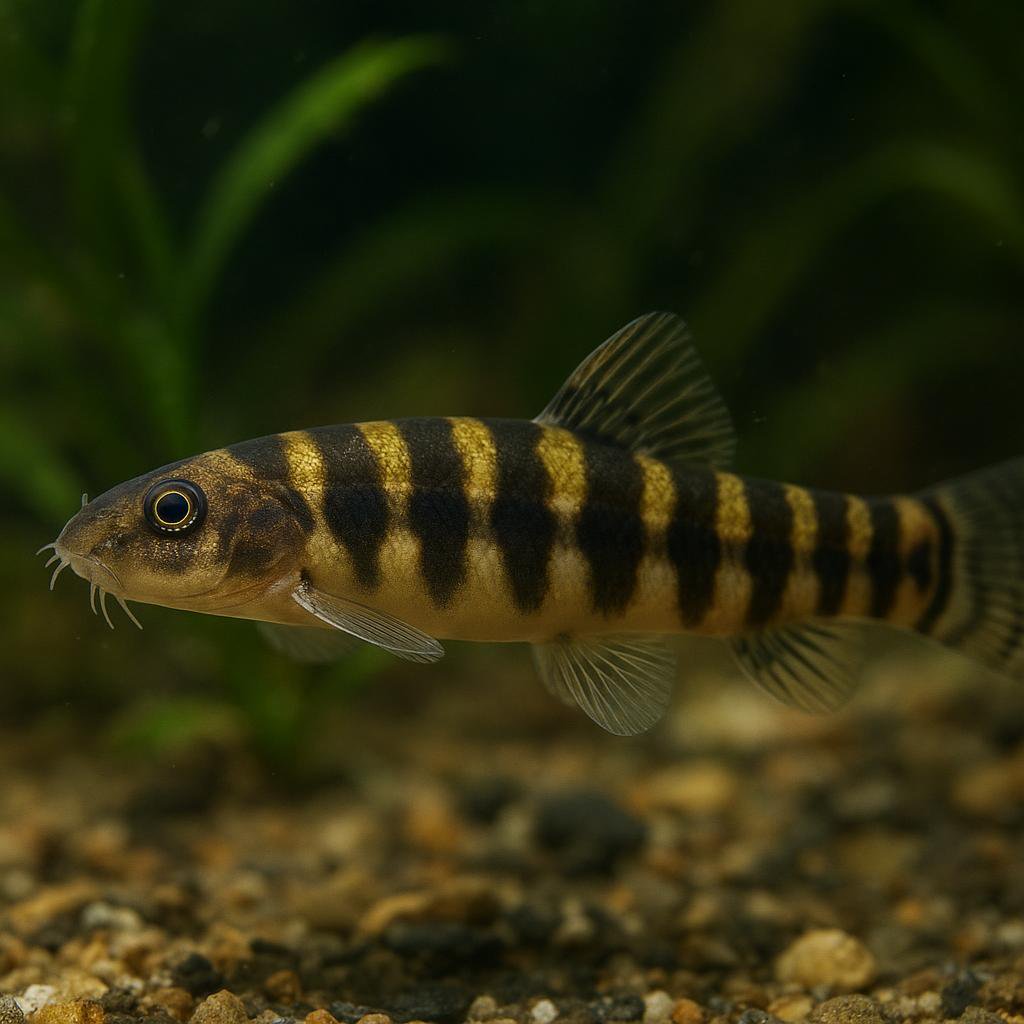
Altipedunculata stone loach
Schistura altipedunculata
Schistura altipedunculata is one of those little stream loaches that wants clean, well-oxygenated water and a bunch of rock nooks to claim as home. It is a bottom-hugger that will spend its day scooting from crevice to crevice, and it tends to get a bit spicy with its own kind if you do not give it enough hiding spots.
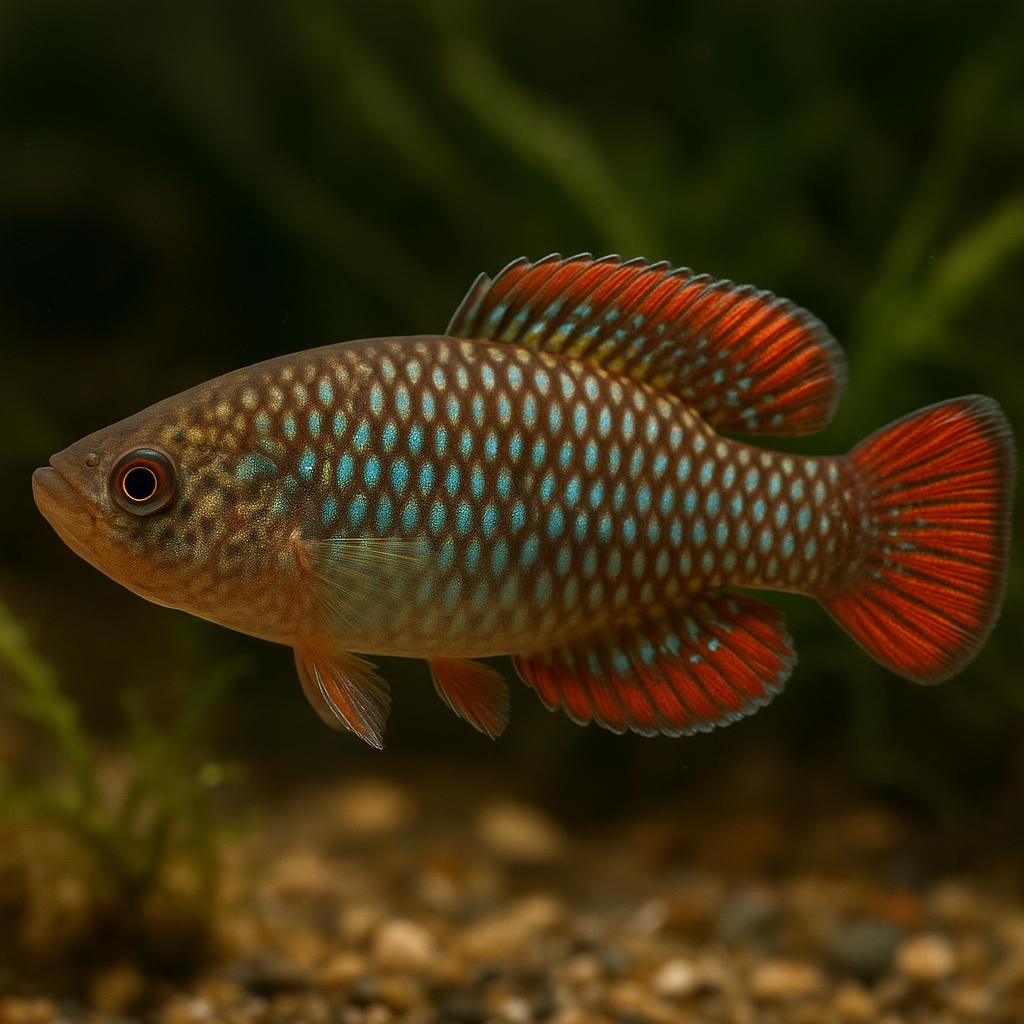
American flagfish
Jordanella floridae
Jordanella floridae is that little Florida native with the red-and-cream striping that really does look like a tiny flag once a male colors up. They graze algae like champs (especially stringy/hair algae), but they have a bit of attitude - give them plants and space so the bossy behavior stays manageable. Bonus: the male guards the eggs and will actively fan them, which is pretty fun to watch.
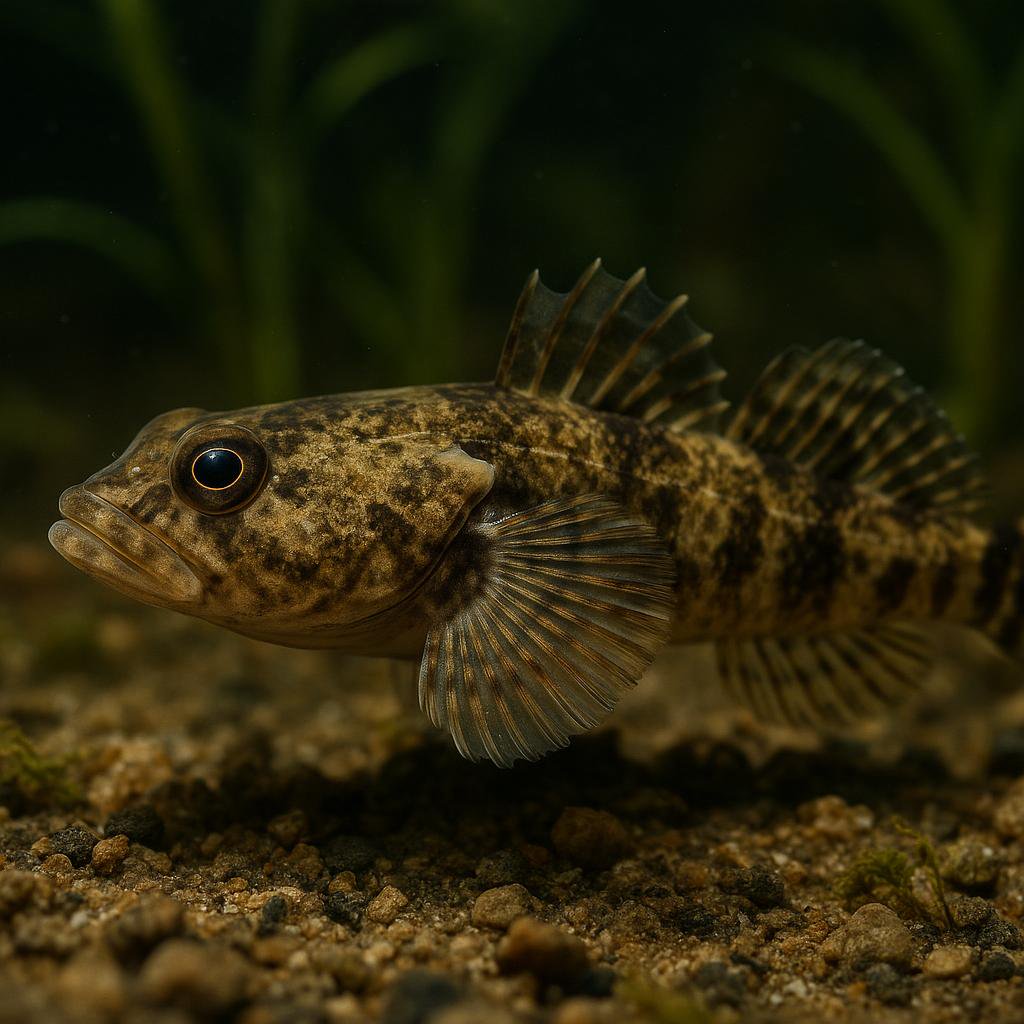
Amur sculpin
Alpinocottus szanaga
This is a little coldwater sculpin from the Amur drainage - a bottom-hugging, rock-and-gravel fish that spends its day wedged under stones and darting out to grab food. Super cool behavior and attitude, but it is absolutely not a warm tropical community fish - it wants chilly, fast, oxygen-rich water and will bicker with other bottom fish.
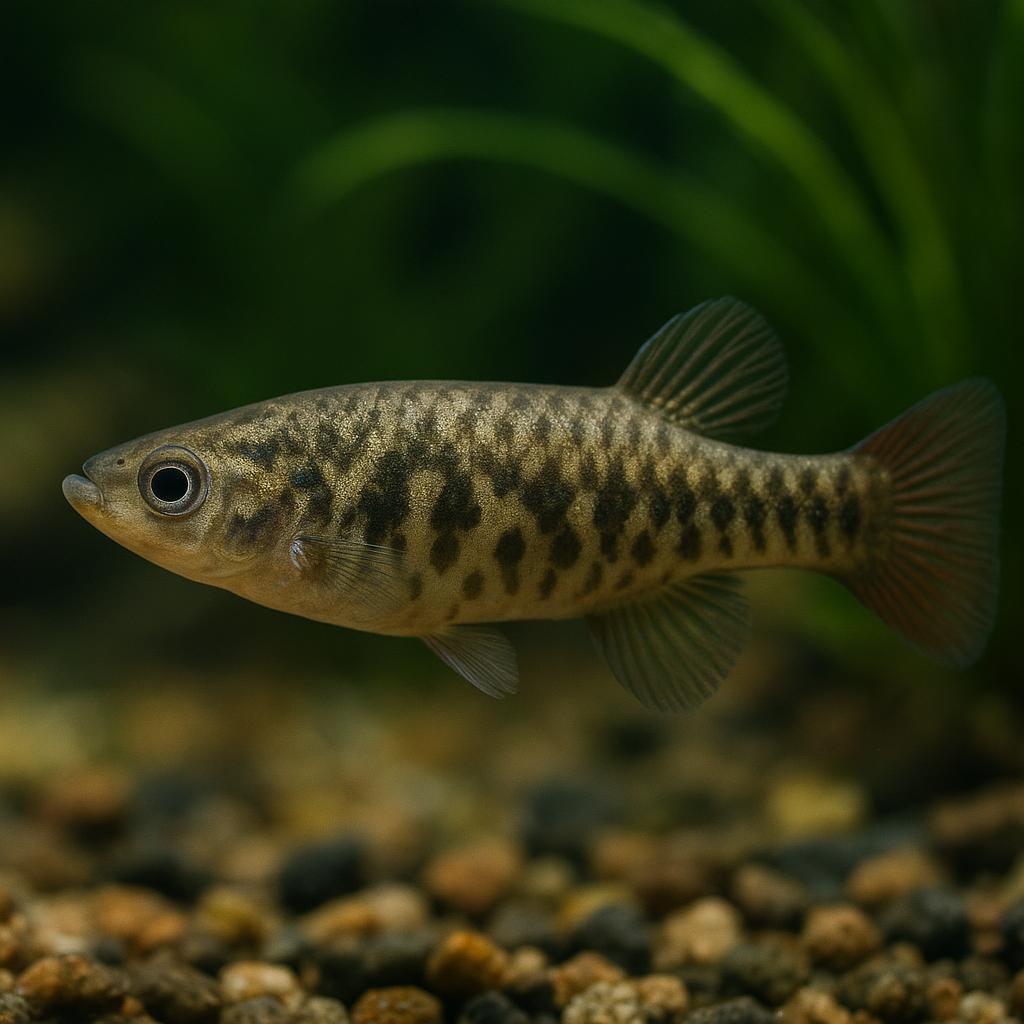
Anitápolis livebearer
Jenynsia weitzmani
Jenynsia weitzmani is a freshwater anablepid livebearer endemic to southern Brazil (currently known only from the type locality near Anitápolis, Santa Catarina). Like other Jenynsia (onesided livebearers), reproduction involves lateralized mating morphology/behavior; aquarium care guidance is not well-documented for this species specifically.
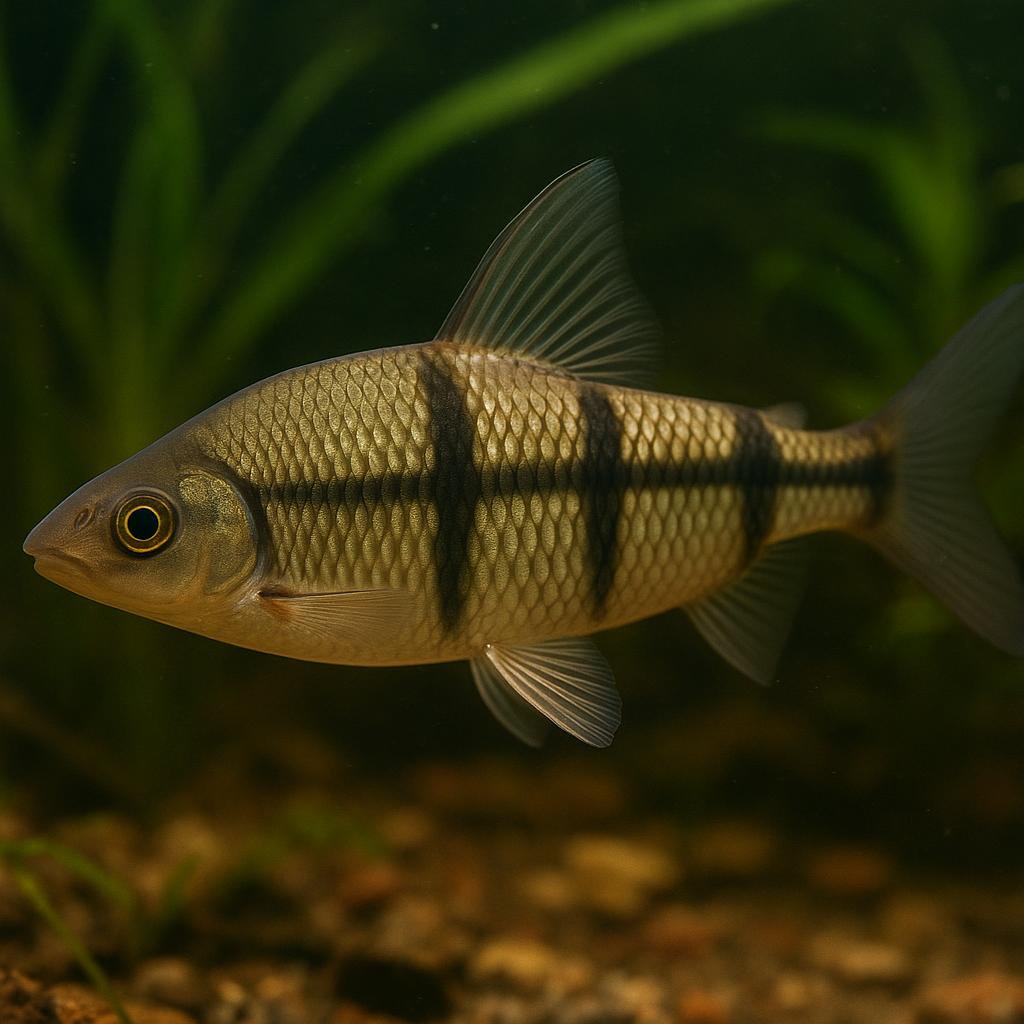
Aracu-comum
Schizodon vittatus
Schizodon vittatus is a large South American anostomid (family Anostomidae). Reported maximum size is about 35 cm standard length; it is harvested/consumed in parts of Brazil and is not commonly covered by mainstream aquarium husbandry references.
More to Explore
Discover more freshwater species.
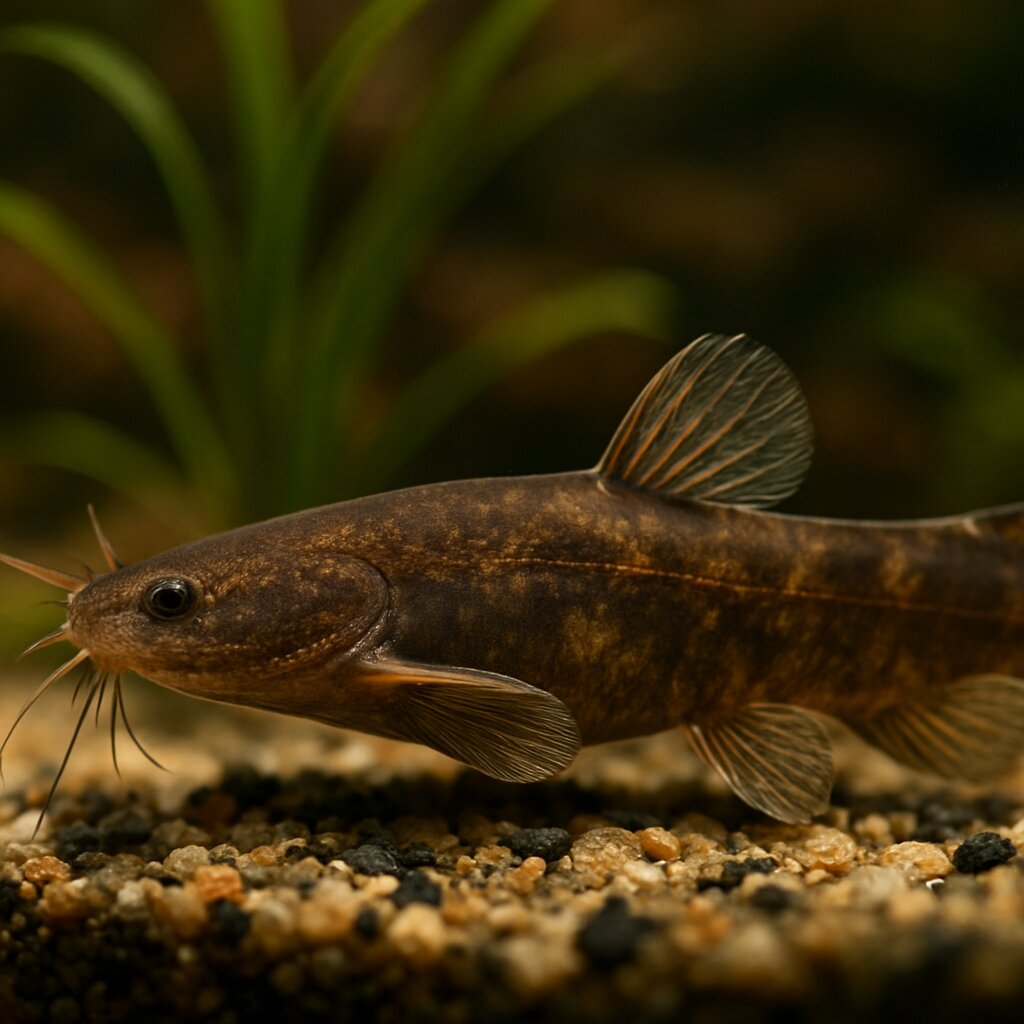
Amphilius dimonikensis
A small loach catfish endemic to the Mpoulou River in the Mayombe (Dimonika Biosphere Reserve), Republic of the Congo. Amphilius dimonikensis has a subtle banded pattern and inhabits fast, clear streams over rock and sand. In aquaria, prioritize strong, well-oxygenated flow with rounded stones and sand to mimic hillstream conditions.
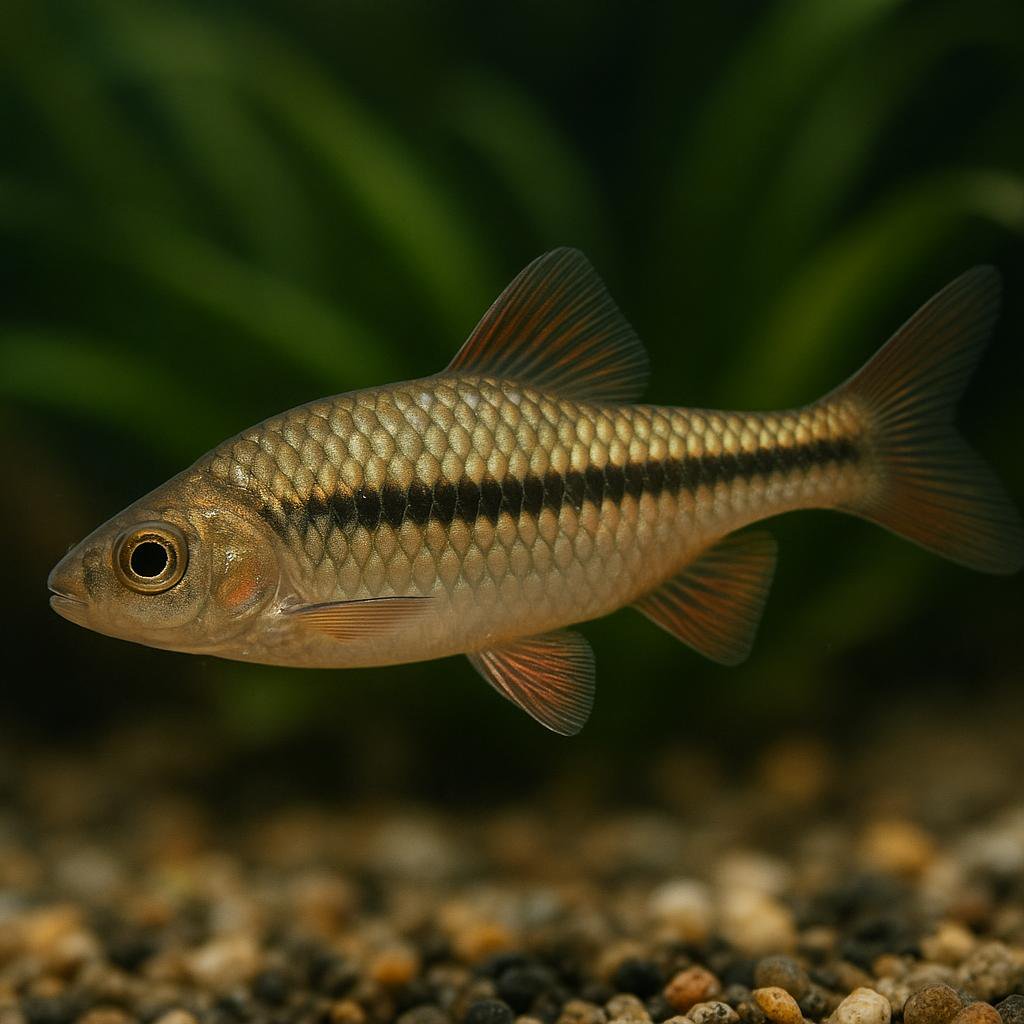
Aboina barb
Enteromius aboinensis
Enteromius aboinensis (the Aboina barb) is a small West African barb with a clean black midline stripe and a little spot right at the base of the tail. It does best when you treat it like a proper schooling fish - keep a decent group and give it plants around the edges with open swimming room in the middle.
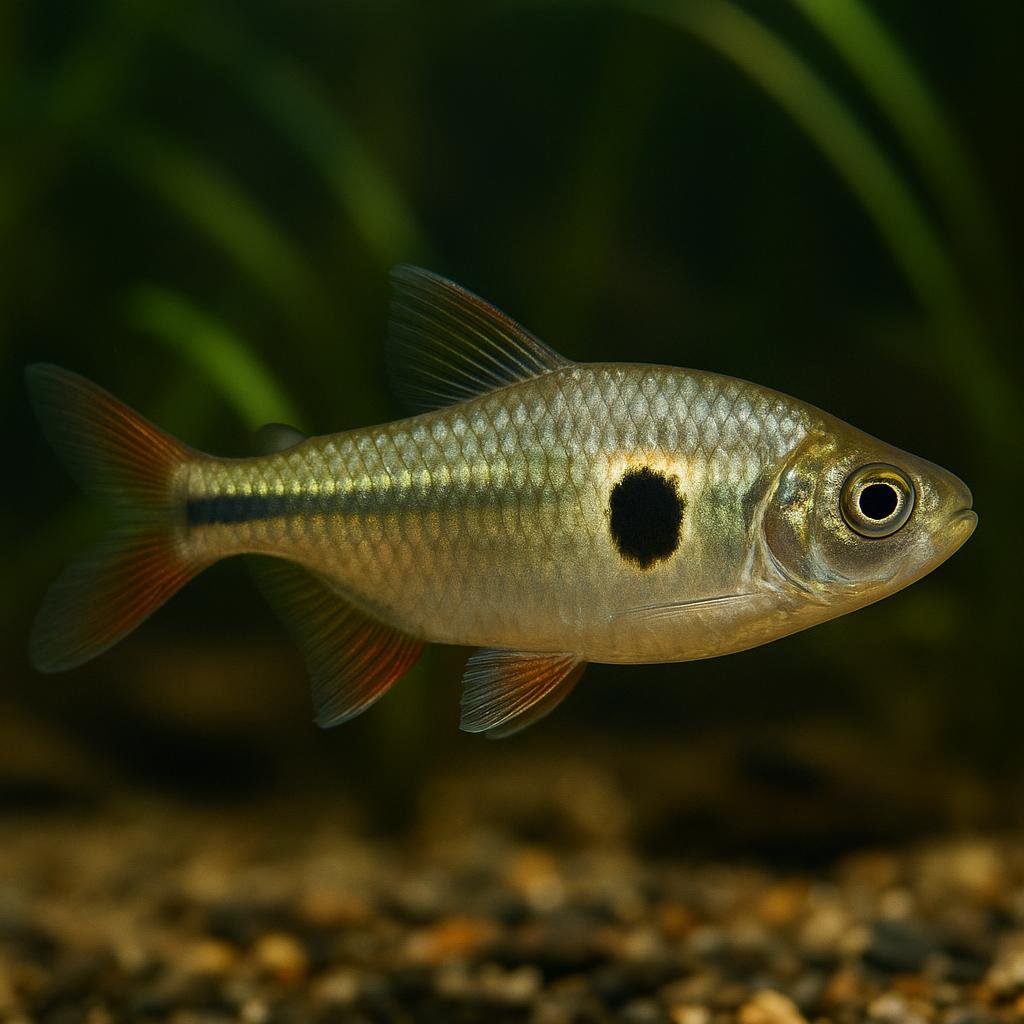
Ajuricaba tetra
Jupiaba ajuricaba
Jupiaba ajuricaba is a South American freshwater characin from the Amazon basin in Brazil (rio Negro, rio Solimões, and rio Tapajós basins). It reaches about 9.5 cm SL and is diagnosed by a narrow dark midlateral stripe, an elongated humeral spot, and an ocellated spot on the upper caudal-fin lobe. Wild specimens have been collected from blackwater forest streams and also oxbow-lake habitats.
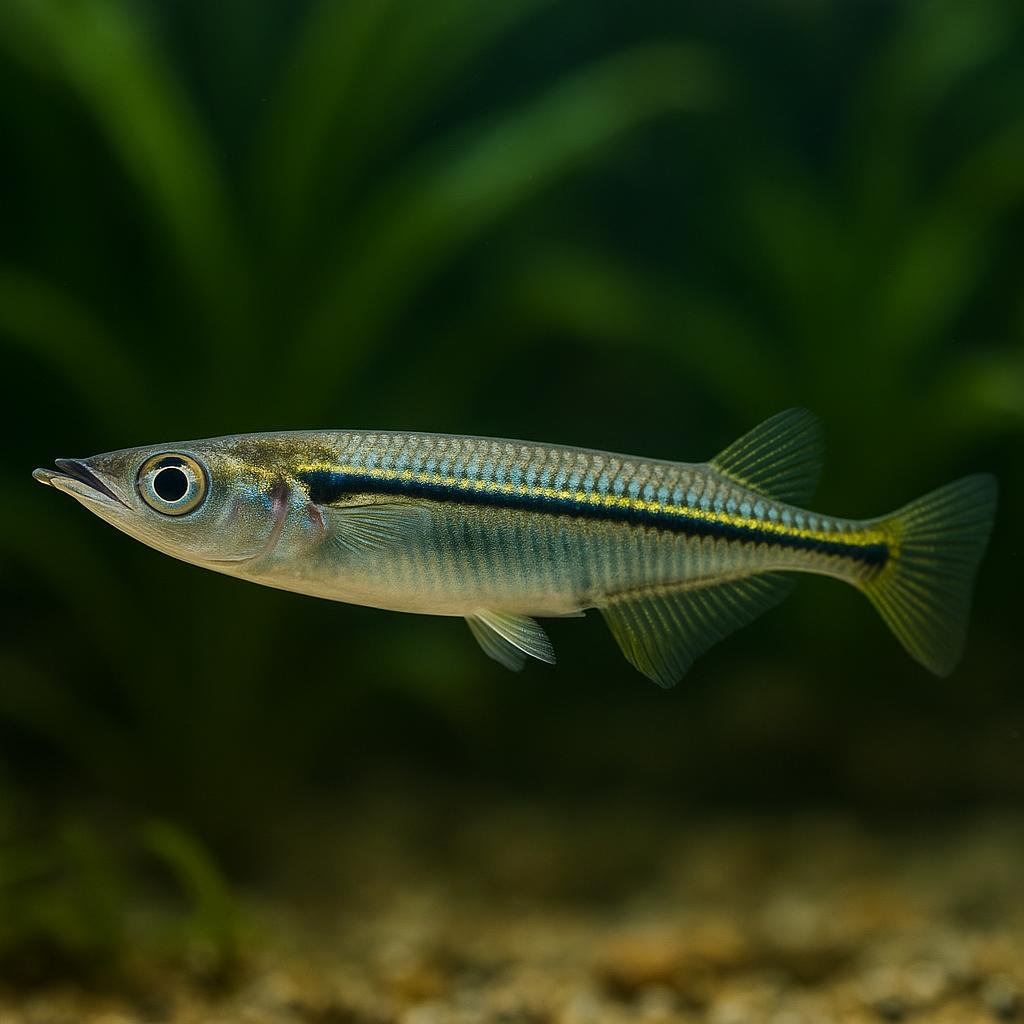
Allen's river garfish
Zenarchopterus alleni
A poorly known freshwater halfbeak endemic to West Papua (Mamberamo River), described from a single specimen (~13 cm SL). Beyond basic habitat/occurrence, little is published about its ecology or aquarium suitability; assume it is a surface-oriented, jump-prone halfbeak only by analogy with related taxa.
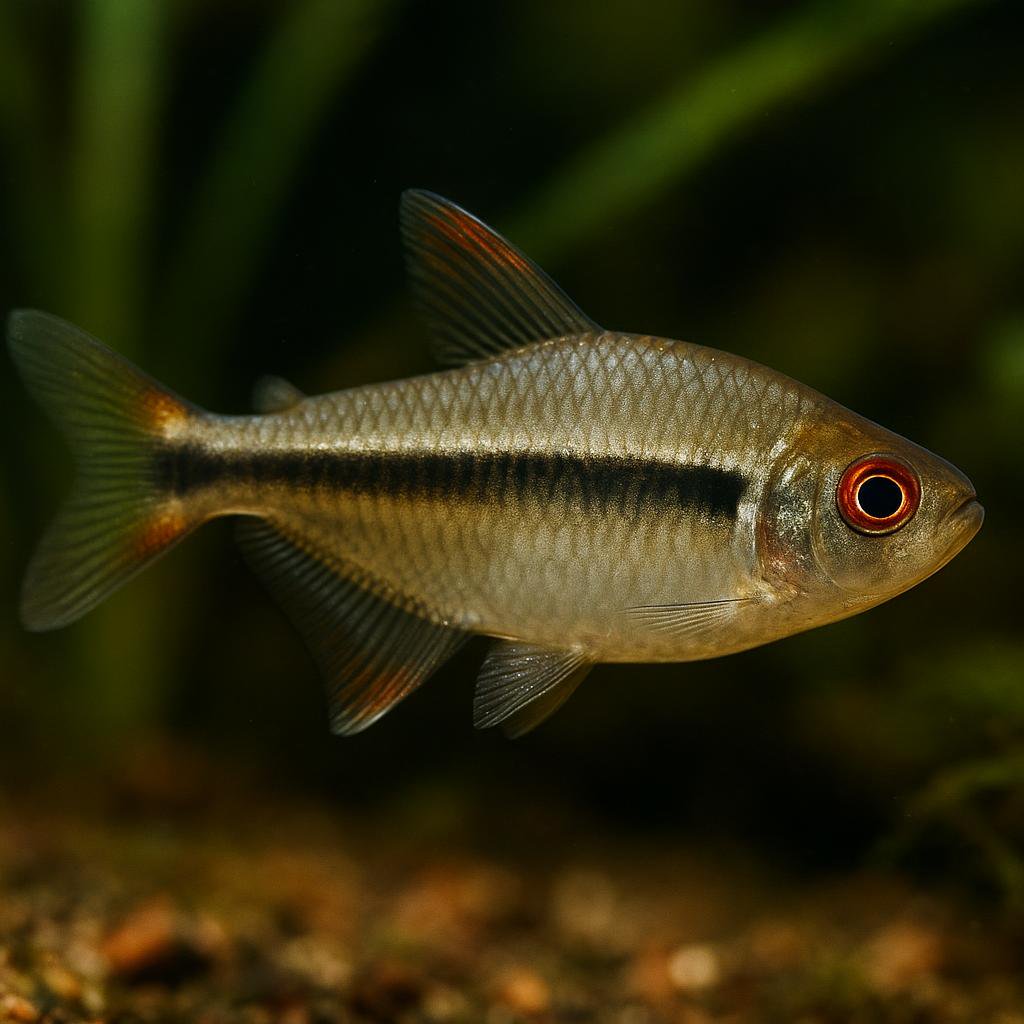
Amapa tetra
Hyphessobrycon amapaensis
This is a tiny, super sleek little tetra with a clean red stripe down the side that really pops once its settled in. It does best in a planted, slightly tinted "creek-style" setup and looks way cooler when you keep a proper group so they school and flash that line together. If you can give it soft, slightly acidic water and a calm community, its an easy fish to fall for.
Amatlan chub
Yuriria amatlana
Yuriria amatlana (the Amatlan chub) is a little Mexican native minnow from the Ameca River basin. Its wild range is pretty limited and it is listed as Endangered, so its care info in the aquarium hobby is basically nonexistent and its availability is usually low. In the original species description, preserved fish show a dark lateral stripe with a darker patch on the caudal peduncle, and they can have tiny barbels at the mouth corners.
Looking for other species?