

Caniscapulus eel goby
Taenioides caniscapulus
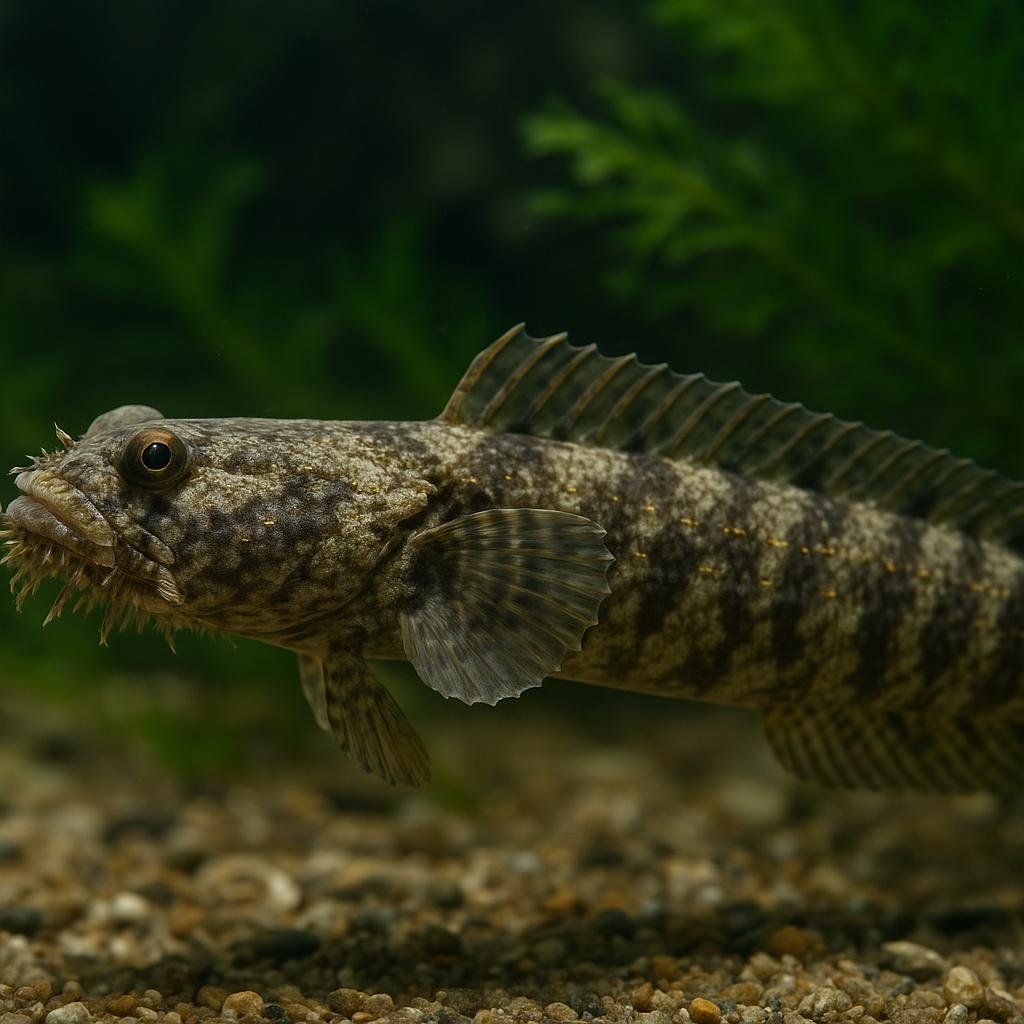
The Caniscapulus eel goby features an elongated body, with a pale coloration accentuated by dark spots and a distinctive long, filamentous dorsal fin.
This page includes AI-generated images. Why am I seeing AI images?
About the Caniscapulus eel goby
This is one of those super-weird mud-burrowing eel gobies (Amblyopinae) with that long, eel-like body and tiny reduced eyes. Its natural world is silty coastal/brackish zones around the Philippines, so it is way more of a "mudflat fish" than a typical community-aquarium goby.
Also known as
Quick Facts
Size
unknown
Temperament
Semi-aggressive
Difficulty
Expert
Min Tank Size
40 gallons
Lifespan
unknown
Origin
Southeast Asia (Philippines)
Diet
Carnivore - sinking meaty foods (worms, small crustaceans), frozen foods
Water Parameters
22-28°C
7.5-8.5
8-20 dGH
Need a heater for this species?
This species needs 22-28°C in a 40 gallon tank. Use our heater calculator to find the right wattage.
Calculate heater sizeCare Notes
- Give it a deep mud-sand bed (at least 4-6 in) with some mixed grain sizes; they want to burrow and sulk, and they crash hard in bare-bottom or thin-sand tanks.
- Run brackish, not 'kinda salty' - I kept mine steady around SG 1.005-1.012, and sudden swings (top-offs, big water changes) are what make them go off food.
- Cover every gap and use a tight lid - they can snake through holes you would swear are too small, especially at night.
- Feed meaty sinking stuff and target feed: thawed mysis, chopped shrimp, blackworms, and small sinking pellets once they recognize them; drop food right at the burrow entrance or they will miss it.
- They are chill with other calm brackish fish that won't steal all the food (small scats are too pushy, monos outcompete them); avoid fast aggressive feeders and anything that picks at eyes or fins.
- Keep the water moving and oxygen high - these guys hate stale, low-flow corners, and burrow tanks can get funky fast if you let detritus build up in the substrate.
- Watch for mouth and skin scrapes from rough decor and sharp shells; use smooth rocks/driftwood and keep the sand free of jagged crushed coral.
- Breeding in home tanks is rare - they are burrow spawners and you would need a settled pair and a big, mature brackish setup; if you ever see them sealing a burrow entrance, back off and stop messing with the tank.
Compatibility
Good Tankmates
- Mudskippers (Periophthalmus spp.) - same brackish vibe and they are tough enough to handle the eel goby's attitude. Just give lots of floor space and keep multiple hides so nobody is forced to share.
- Scats (Scatophagus argus) - active, durable brackish fish that usually ignore the eel goby. They are busy midwater fish, so they do not camp in the goby's face all day.
- Monos (Monodactylus argenteus/sebae) - schooling, fast, and not easily bullied. They tend to stay up in the water column while the eel goby does its burrow-and-ambush thing.
- Archerfish (Toxotes spp.) - generally works if the tank is big and you are not trying to keep tiny snack-sized fish. Archerfish cruise mid-top, eel goby sticks to the bottom and pipes.
- Banded/bumblebee gobies (Brachygobius spp.) - can work if they are not tiny and you have plenty of rock/pipes so they can keep their own little zones. Keep them well fed because the eel goby can be a food hog.
- Knight goby (Stigmatogobius sadanundio) - decent match in brackish if the tank has lots of cover and you are not cramped. They can stand their ground, but still avoid making the bottom area too crowded.
Avoid
- Small, peaceful fish like mollies, guppies, or little livebearers - they look like snacks. The eel goby is an ambush predator and anything that fits in its mouth eventually becomes a menu item.
- Fin-nippers and bullies like tiger barbs or aggressive cichlids - they either shred the goby's fins/face when it is out, or they stress it into hiding all the time. It is not a fun combo.
- Other eel gobies/burrowing gobies in tight quarters - they get territorial fast over prime caves and burrows. In smaller tanks it turns into constant posturing and bite marks.
Where they come from
Caniscapulus eel gobies (Taenioides caniscapulus) are mudflat fish. Think mangrove edges, tidal creeks, and soft silty bottoms where the water swings from almost fresh to fairly salty depending on the tide and season. They are built for that weird in-between world, and they act like it in the tank too.
If you are expecting a "typical goby" that perches out in the open, this one will surprise you. A lot of the time you will just see a face at the burrow entrance.
Setting up their tank
These are expert-level mostly because of the substrate and stability they need. The whole point of the tank is to let them burrow without collapsing tunnels, while keeping the water clean in a setup that naturally wants to trap gunk.
Go bigger than you think. They are not fast swimmers, but they are long, and they appreciate floor space. I would treat 20 gallons as a bare minimum for one, and 30-40 gallons feels way more relaxed. A tight lid is non-negotiable.
- Substrate: deep, soft, and fine. I like 4-6 inches of fine sand or a sand/silt mix. Avoid sharp gravel.
- Hardscape: give them stable "roof" pieces (flat rocks, slate, PVC sections) sitting on the glass, then pile sand around it so burrows do not collapse.
- Filtration: strong biofiltration, gentle flow at the bottom. A canister or HOB plus a prefilter sponge works well.
- Lighting: they do not care much. Keep it moderate and provide shaded zones.
- Salinity: brackish, and stable. Many keepers land around 1.005-1.012 SG depending on where the fish was collected and acclimated. Pick a number and hold it steady.
- Temperature: typical warm brackish range (mid 70s F). Stability beats chasing a perfect number.
Do not "decorate" by mixing in crushed coral or chunky gravel to the digging zone. These fish rub their skin constantly while burrowing. Rough substrate is a fast track to scrapes and infections.
Expect your tank to look calm on top and busy underneath. They will rearrange sand, block entrances, and sometimes bury plants and small decor. If you want plants, stick to tough brackish-tolerant options and anchor them outside the main digging area.
What to feed them
They are predators that like meaty foods, and a lot of them are shy eaters at first. New arrivals often ignore dry food completely. I have the best luck starting with live or frozen foods with a strong smell, then working toward easier staples.
- Best starters: live blackworms (if you can get them), live/brine shrimp, chopped earthworms (rinsed well), frozen bloodworms
- Staples once settled: frozen mysis, chopped shrimp, chopped clam, small pieces of fish, quality sinking carnivore pellets (some never accept pellets)
- Feeding method: target feed with tongs or a turkey baster right at the burrow entrance, especially in a community tank
- Schedule: small meals 3-5 times a week beats one huge dump that rots in the sand
Drop food after lights-out for the first couple weeks. They often feel safer feeding in low light, and you will learn where their burrow entrances are.
Watch their body shape. A healthy eel goby has some thickness behind the head and along the body. If it starts looking like a ribbon with a head, it is not getting enough food or it is being outcompeted.
How they behave and who they get along with
They are mostly peaceful, but they are not social in the "schooling" sense. The typical behavior is: dig a burrow, park in it, poke the head out, and ambush food that drifts close. They can also be surprisingly bold once they learn your routine.
Tankmates are where people get into trouble. You want fish that will not pick at them, will not steal every bite, and will tolerate brackish water. Fast, aggressive feeders can slowly starve an eel goby even if you feed plenty.
- Good matches: calm brackish fish that stay midwater and do not harass the bottom (depending on your salinity, some monos, scats, mollies can work - but watch competition at feeding time)
- Avoid: nippy fish, fin/skin pickers, big crabs, anything that sees a worm-like fish and tries to sample it
- With other eel gobies: possible in a large footprint with multiple burrow zones, but expect territorial spats if space is tight
Small "harmless" crabs are not harmless here. A crab that can fit a claw into a burrow will eventually try. I have seen burrow fish get injured this way.
One more thing: they are escape artists. If there is a gap for airline tubing, they will find it. Cover every opening, and weight the lid if needed.
Breeding tips
Breeding Taenioides species in home aquariums is rare. They likely spawn in burrows, and the larvae for many mudflat gobies are tiny and drift in brackish-to-marine plankton before returning. That makes them a tough project even for people who breed other gobies.
If you want to take a swing at it, the best "realistic" goal is getting them settled and conditioned. Deep substrate, stable salinity, lots of live/frozen foods, and a calm tank. If you ever see a pair sharing a burrow and the entrance gets sealed for days, that is the sort of thing that makes me raise an eyebrow.
If you do get eggs or larvae, plan ahead for live foods (rotifers, copepods, and later baby brine). Most people get stuck because they notice too late.
Common problems to watch for
Most losses come from the same handful of issues: starvation (often from competition), skin damage that turns into infection, and dirty substrate pockets. These fish live in mud, but in an aquarium that "mud" can go bad fast.
- Starvation: shy feeding, food stolen by tankmates, fish never accepts prepared foods
- Skin scrapes and sores: rough substrate, unstable rocks shifting, handling with a net
- Bacterial infections: open wounds plus dirty conditions, often show as redness, fuzz, or ulcers
- Ammonia/nitrite spikes: deep sand and heavy foods can overload an immature filter
- Salinity swings: topping off with saltwater instead of fresh, or inconsistent mixing
Use a container, not a net, if you ever have to move one. Nets snag them and can peel slime coat. A plastic cup or specimen box saves a lot of grief.
For maintenance, I do gentle siphoning of the surface and leave the deep layers alone. If you jab a gravel vac into the burrow zone you can release nasty pockets and also collapse their tunnels. Let the fish do the digging, and you focus on keeping the water clean and the feeding controlled.
Similar Species
Other brackish semi-aggressive species you might be interested in.
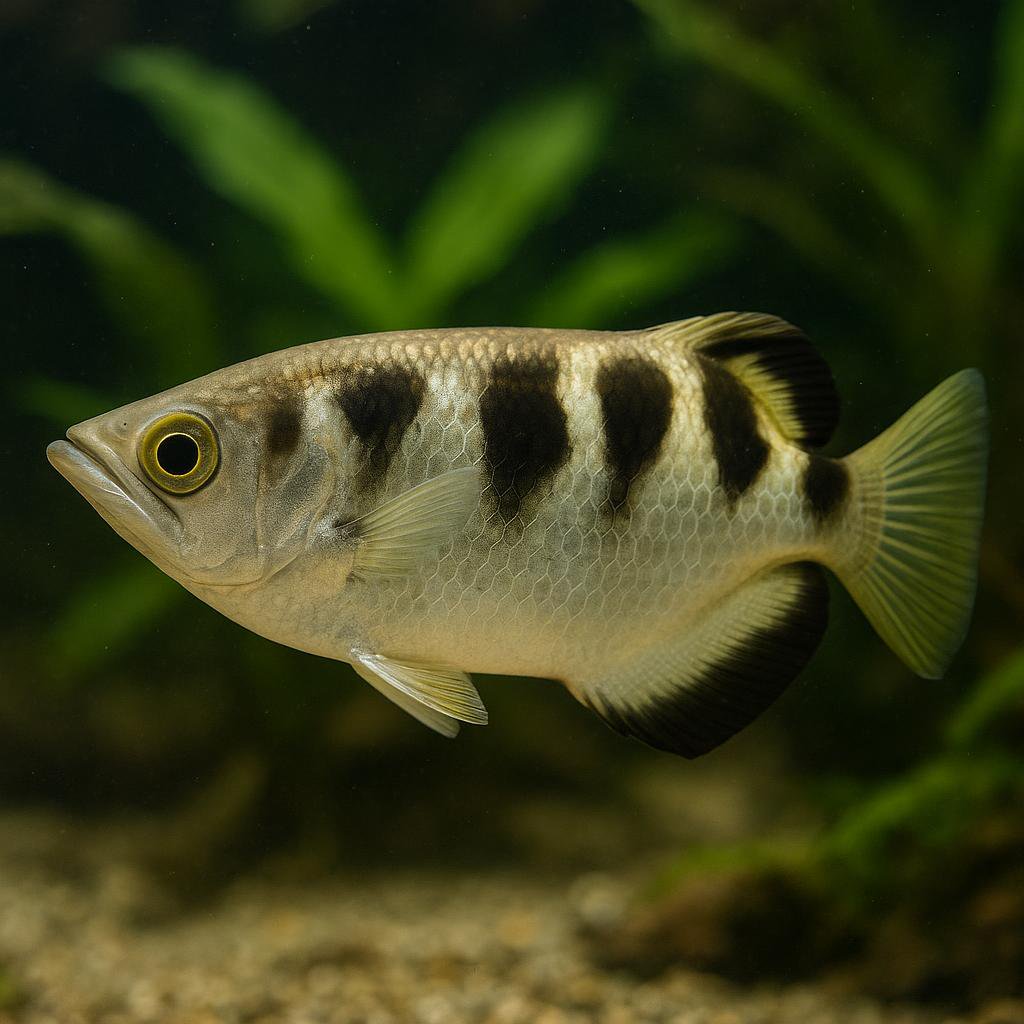
Banded Archerfish
Toxotes jaculatrix
This is the fish that literally spits jets of water to knock insects off branches-watching one "take aim" is unreal. They're super aware of what's going on outside the tank and will even learn to beg and snipe food from the surface once they settle in. Give them height and some open swimming room and they act like little aquatic sharpshooters.
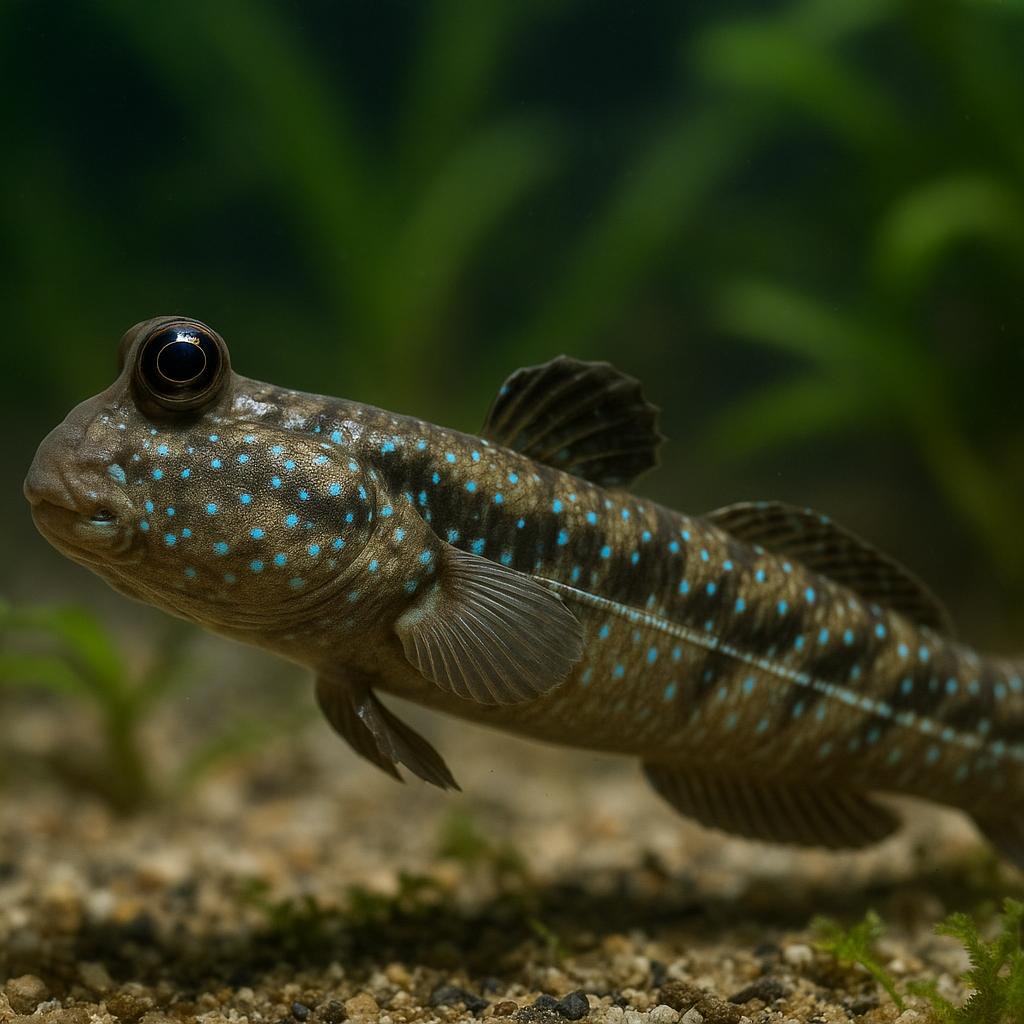
Barred mudskipper
Periophthalmus argentilineatus
This is one of those classic "walks around like it owns the place" mudskippers-big goofy eyes, climbs, hops, and spends a ton of time out on the mud when it's humid. In the wild it lives on intertidal mangrove/nipa mudflats and even shuttles between little pools and open air, hunting worms, insects, and small crustaceans. It's super fun to watch, but it really wants a brackish paludarium setup (not a normal aquarium).
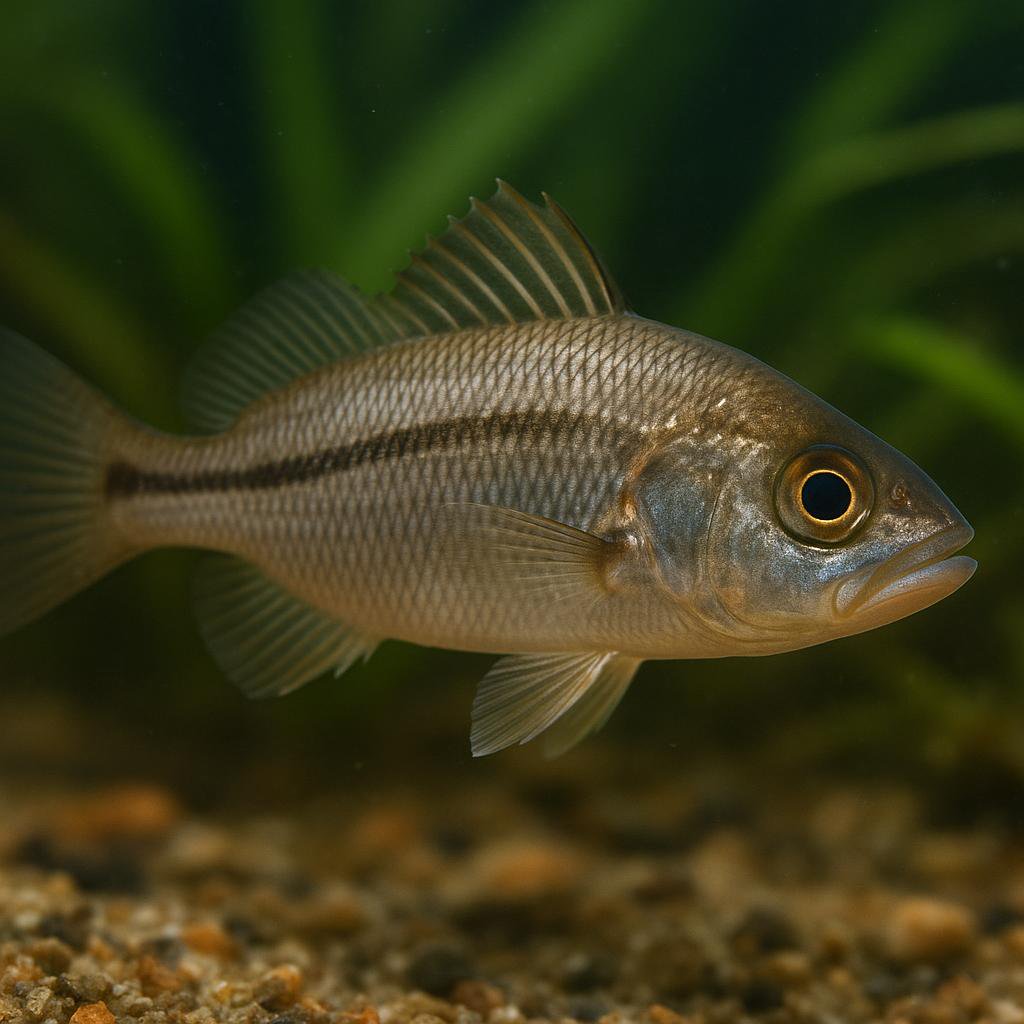
Bellfish
Johnius fuscolineatus
Johnius fuscolineatus (Bellfish/African bearded croaker) is a small coastal sciaenid from the southwestern/western Indian Ocean (Mozambique, South Africa, Madagascar), occurring in shallow marine waters (reported 0–50 m) and also associated with coastal/estuarine habitats.
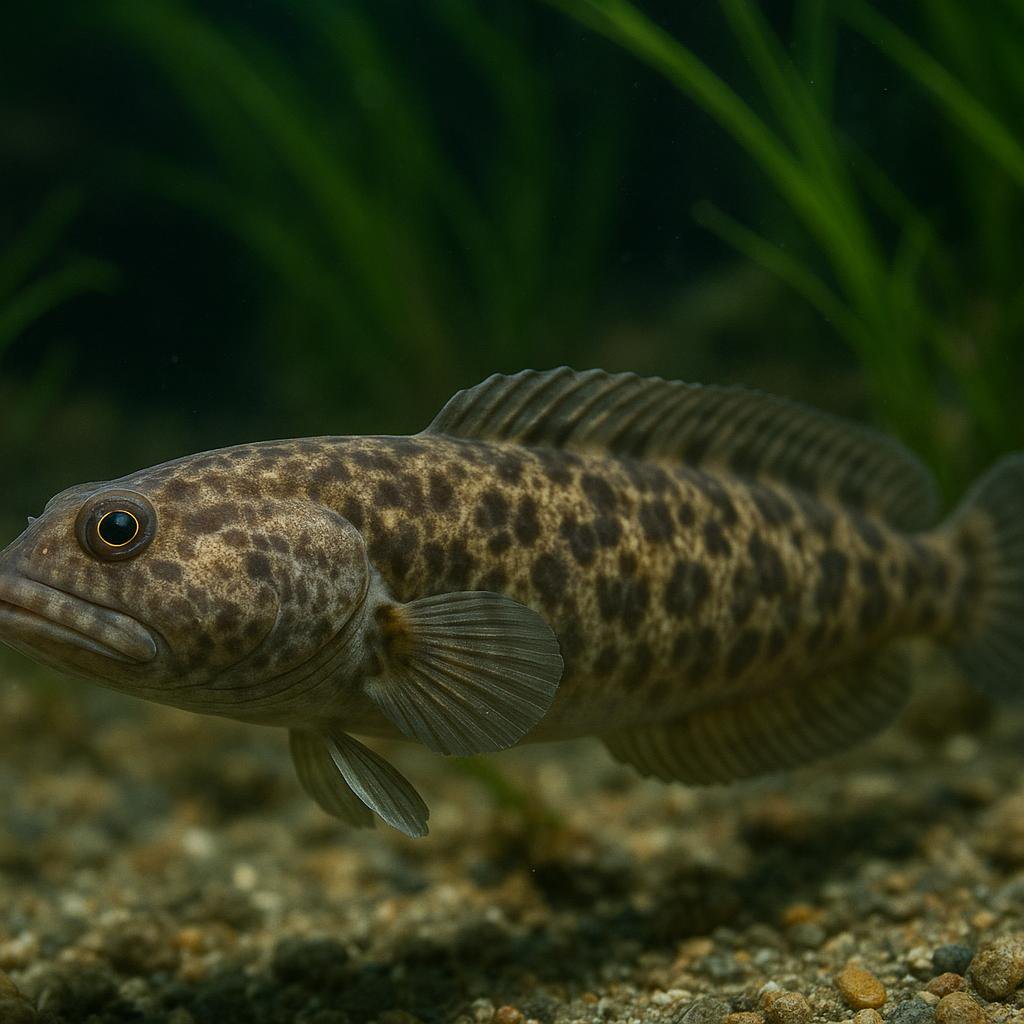
Blotched eelpout
Zoarces gillii
Zoarces gillii is a cold-temperate eelpout from the Northwest Pacific that hugs the bottom over sandy-mud inshore areas and even pushes into estuaries. It's got that long, eel-like body and a sneaky, sit-on-the-bottom predator vibe - very much a cool-water, brackish-to-marine oddball rather than a typical tropical aquarium fish.
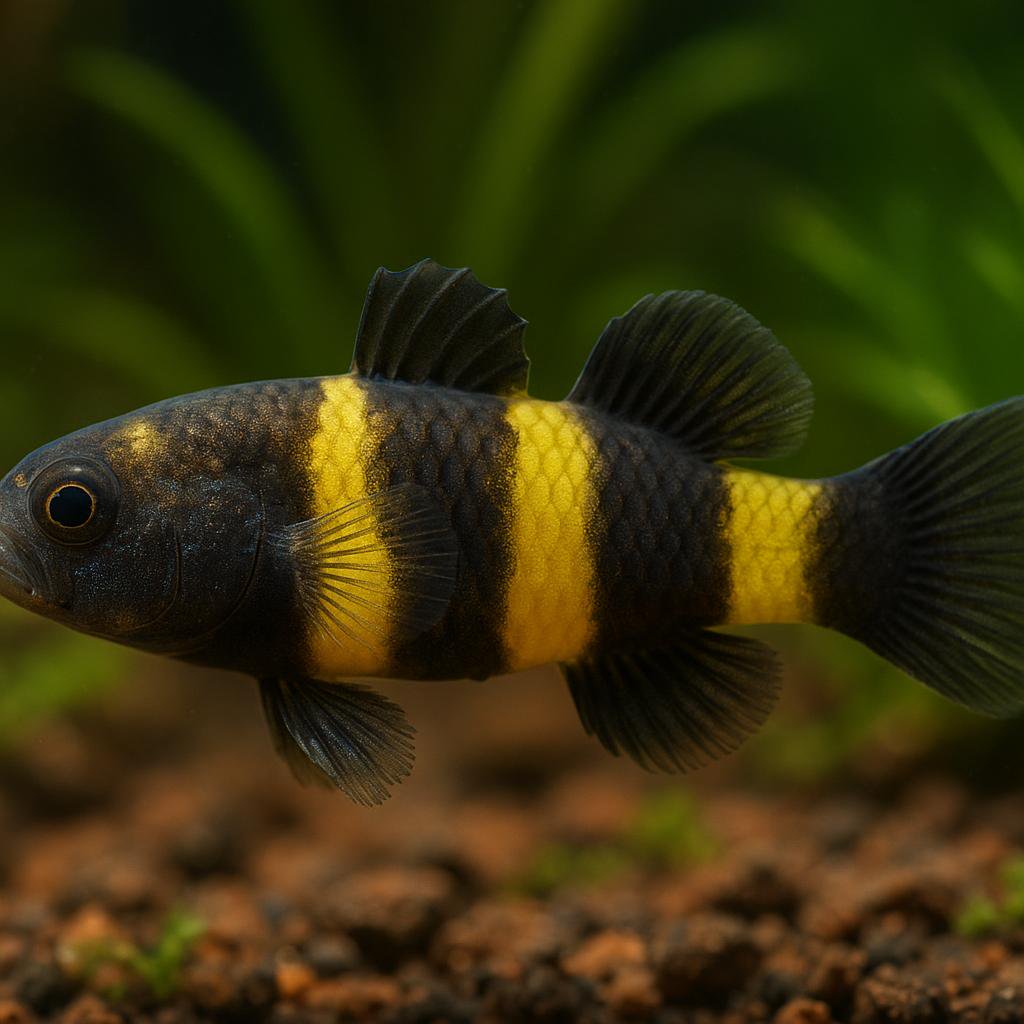
Bumblebee goby
Brachygobius doriae
Brachygobius doriae is one of the classic "bumblebee gobies" - tiny, bottom-hugging little characters that perch on rocks and sand and stare at you like they own the place. They're at their best in a calm setup with lots of caves and leaf litter, and they really shine once you get them eating frozen/live foods reliably (they're slow, picky eaters). Also: they're one of the species that gets mislabeled a lot in shops, so it's super common to see them sold under the wrong bumblebee-goby name.
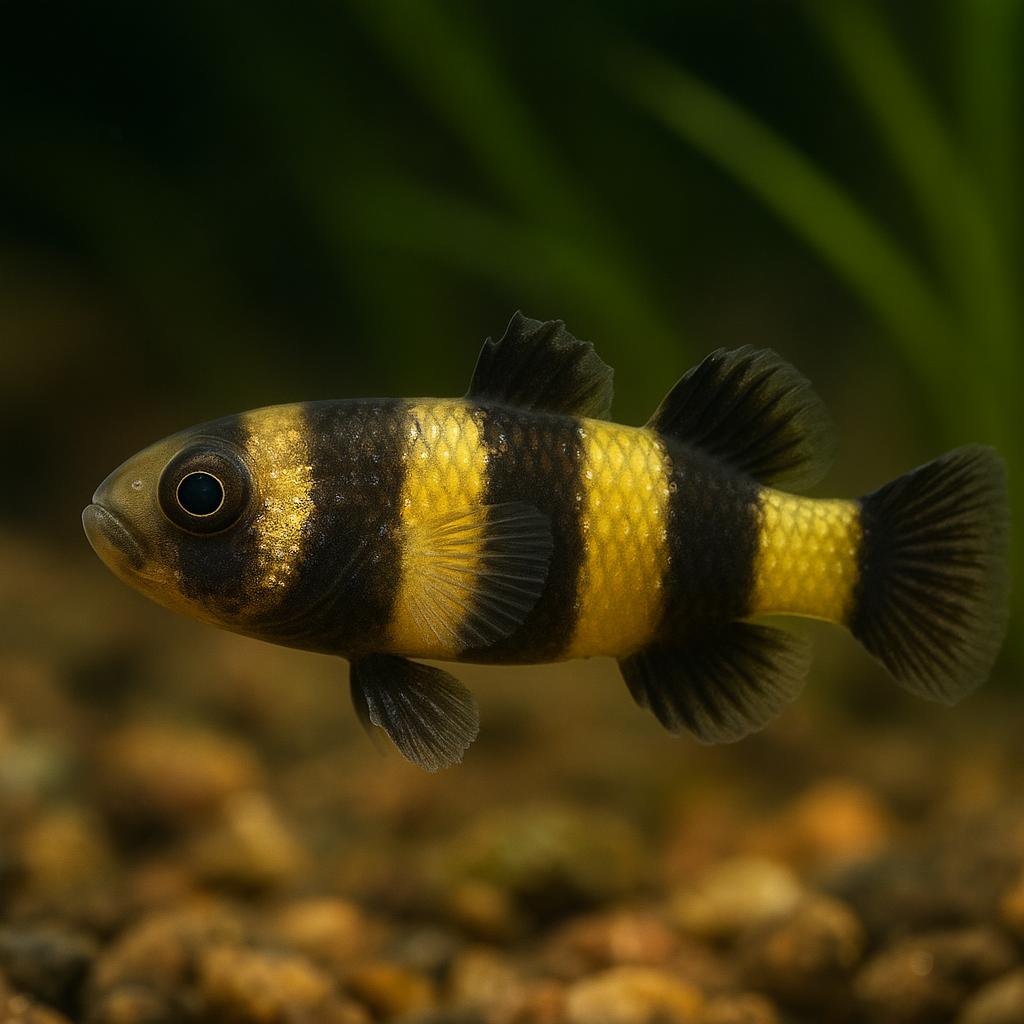
Bumblebee goby (Bumblebee fish)
Brachygobius xanthozonus
This is that tiny little goby with the bold black-and-yellow bands that likes to perch on the bottom and stare back at you like it owns the place. It's happiest in lightly brackish water with lots of little caves and sight-breaks, and it's one of those fish that often refuses flakes-frozen/live meaty foods usually flip the "yes, I will eat" switch.
More to Explore
Discover more brackish species.
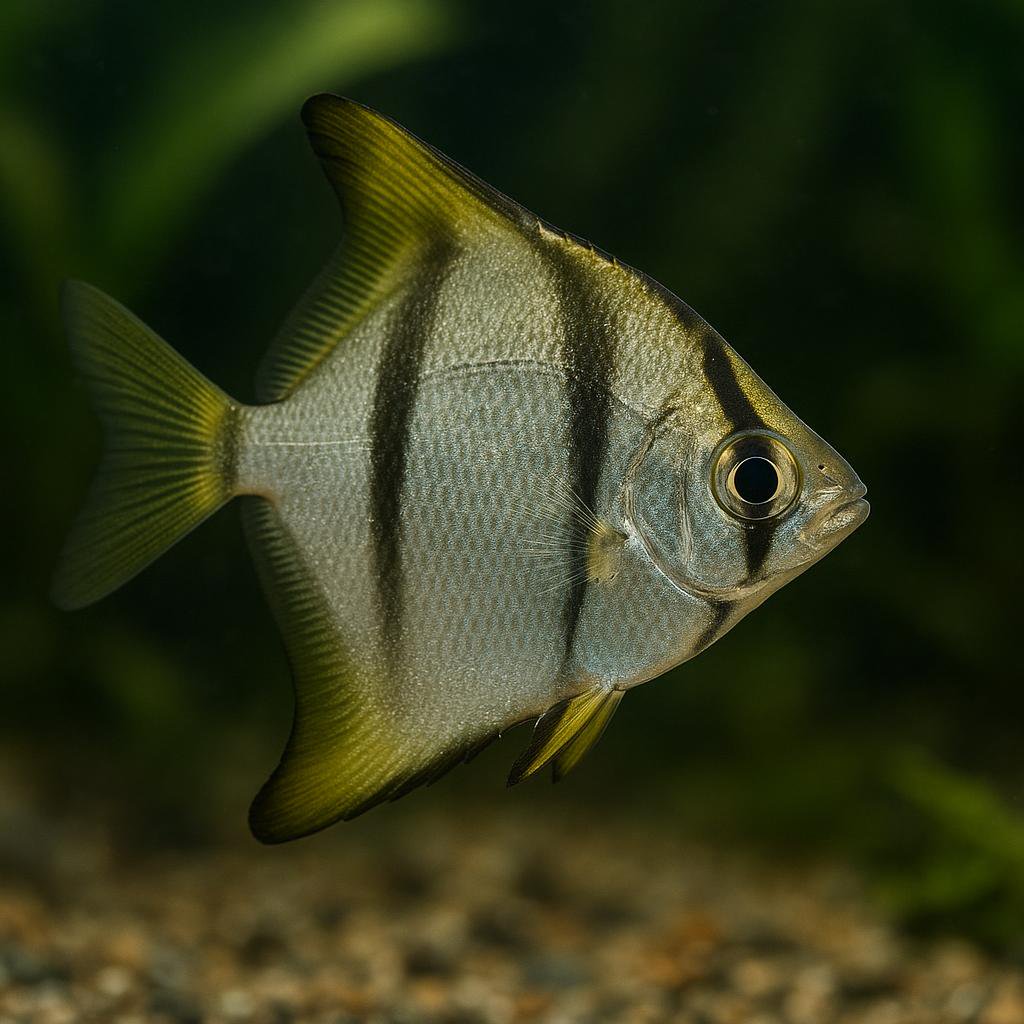
African moony
Monodactylus sebae
This is that shiny, diamond-shaped "mono" that cruises around in a tight pack and looks like a little silver dinner plate with black bars when it's young. The big thing with African moonies is they're euryhaline-so they'll tolerate freshwater as juveniles, but they really shine long-term in brackish (and can be transitioned toward marine as they mature). Give them a big, open tank and a group, and they turn into nonstop, super fun midwater swimmers.
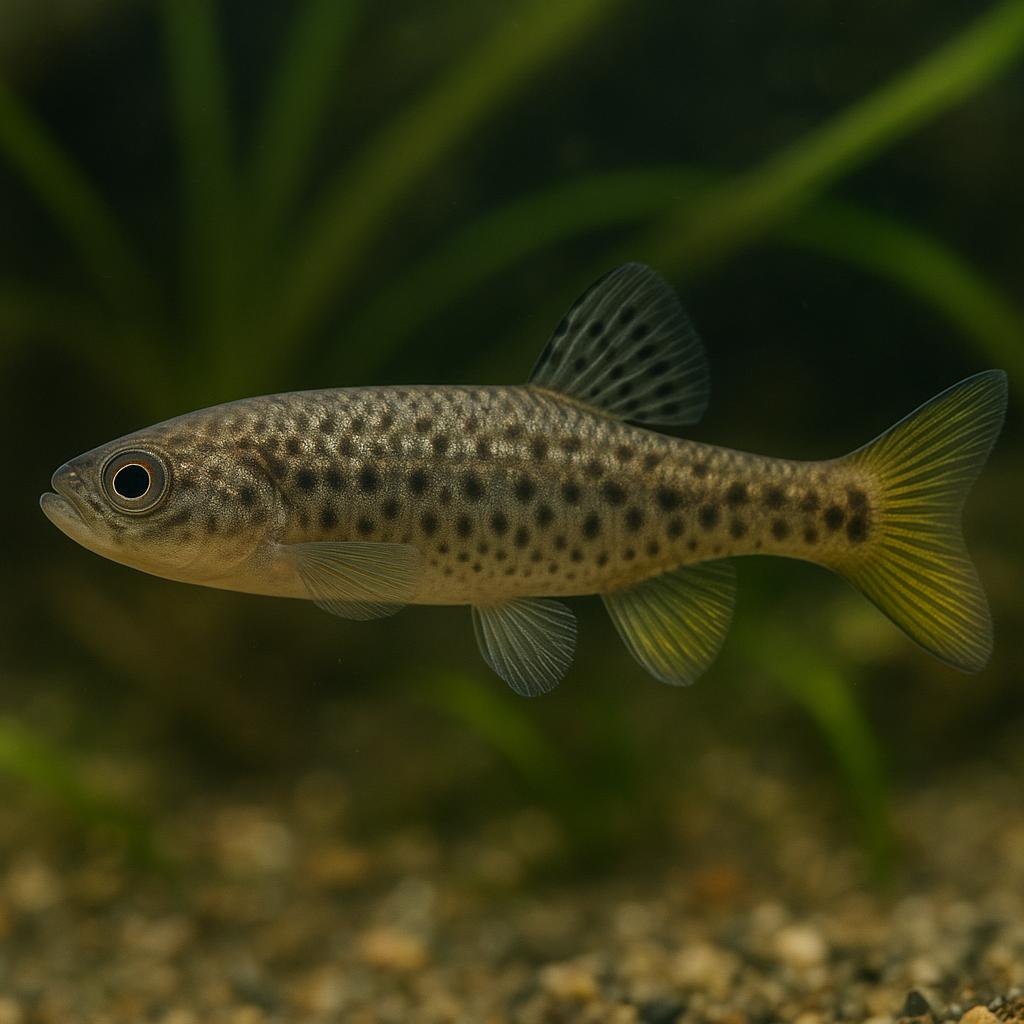
American shadow goby
Quietula y-cauda
This is a little mudflat goby from California down into the Gulf of California that loves hanging tight to the bottom and vanishing into burrows. The neat tell is that sideways Y-shaped blotch right at the base of the tail, plus the row of dark spots along the side. Its whole vibe is brackish estuary life - calm water, soft substrate, lots of hiding holes.
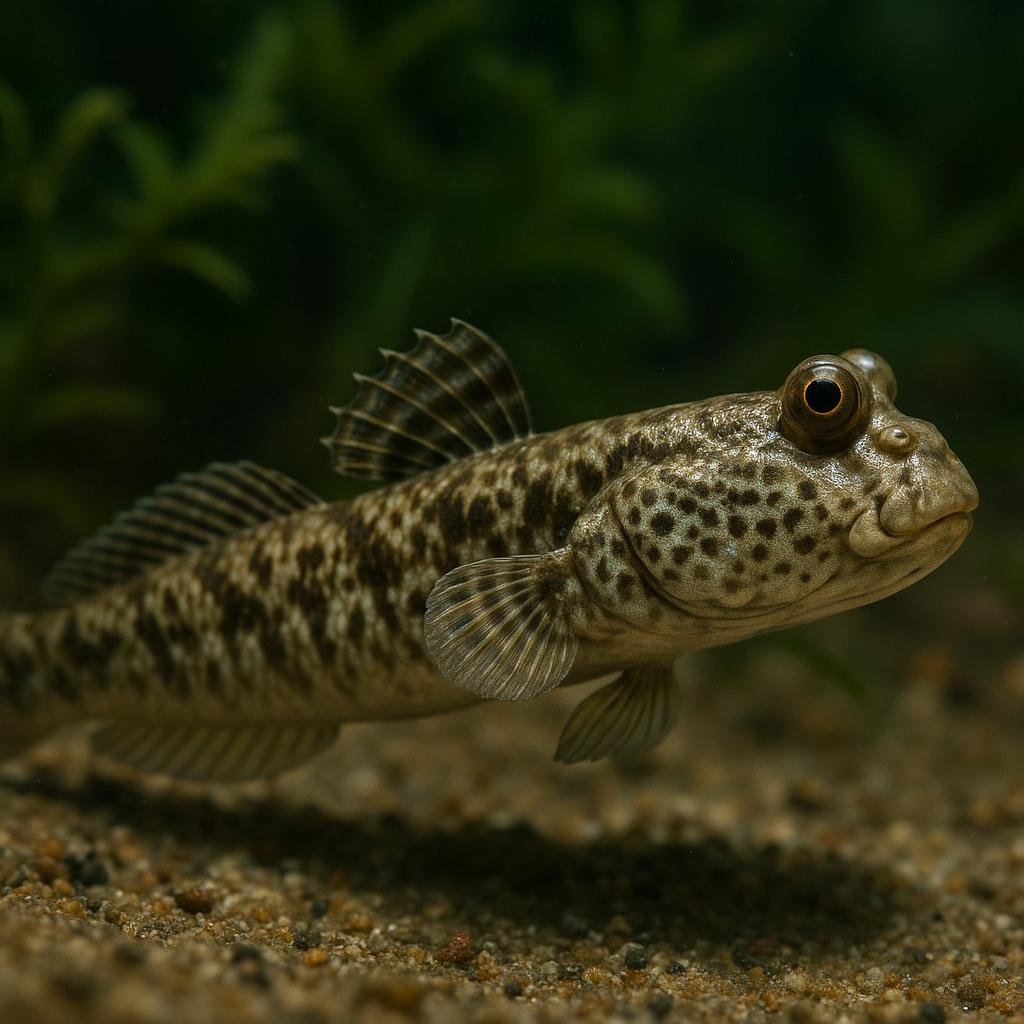
Atlantic Mudskipper
Periophthalmus barbarus
This is that wild little amphibious goby that straight-up climbs around on land like it forgot it was a fish. They've got big googly eyes, tons of personality, and they'll perch, hop, and patrol their territory-honestly more like a tiny crabby lizard than a "regular" aquarium fish.
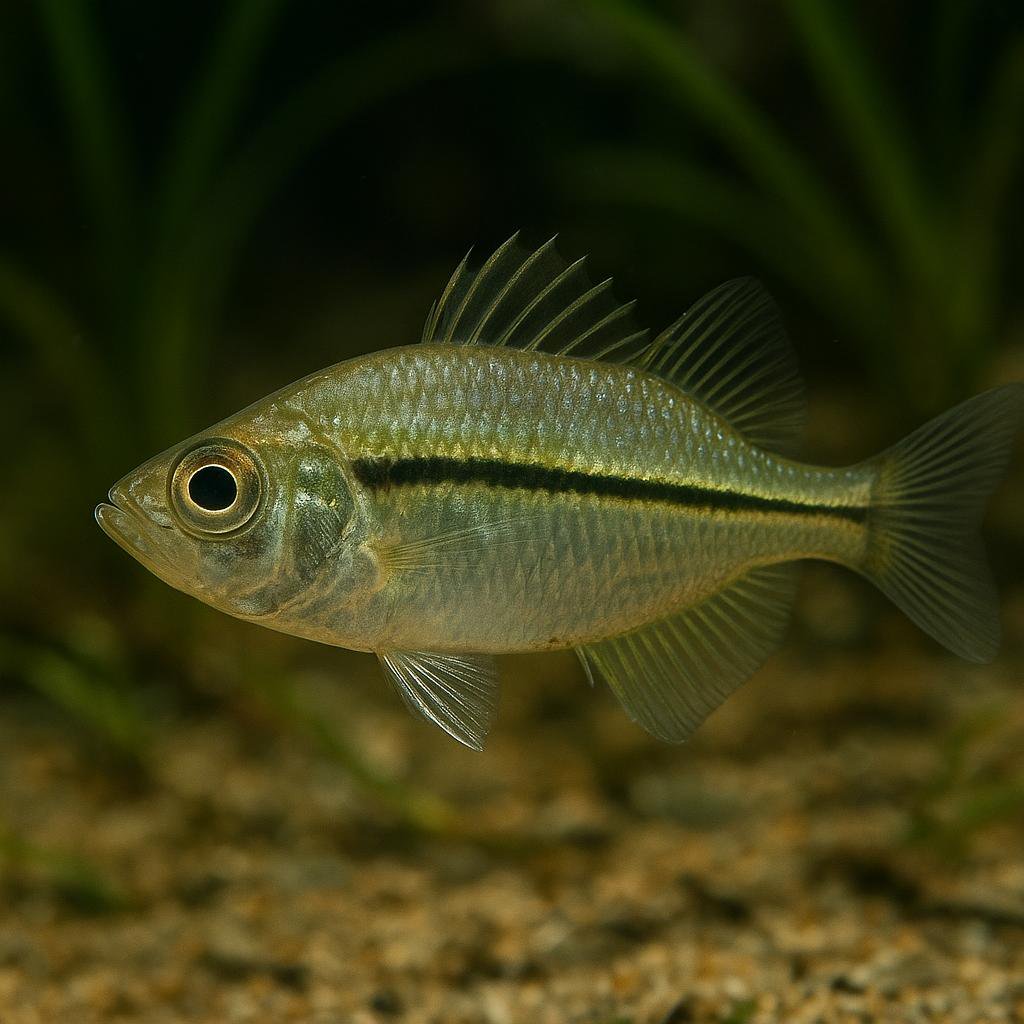
Banded-tail glassy perchlet
Ambassis urotaenia
This is one of those see-through glassy perchlets where you can literally watch the organs shimmer when it turns-super cool in the right lighting. In the wild it hangs around river mouths and mangroves and cruises in groups, so it does best when you keep a little gang of them and give them some open swimming room.
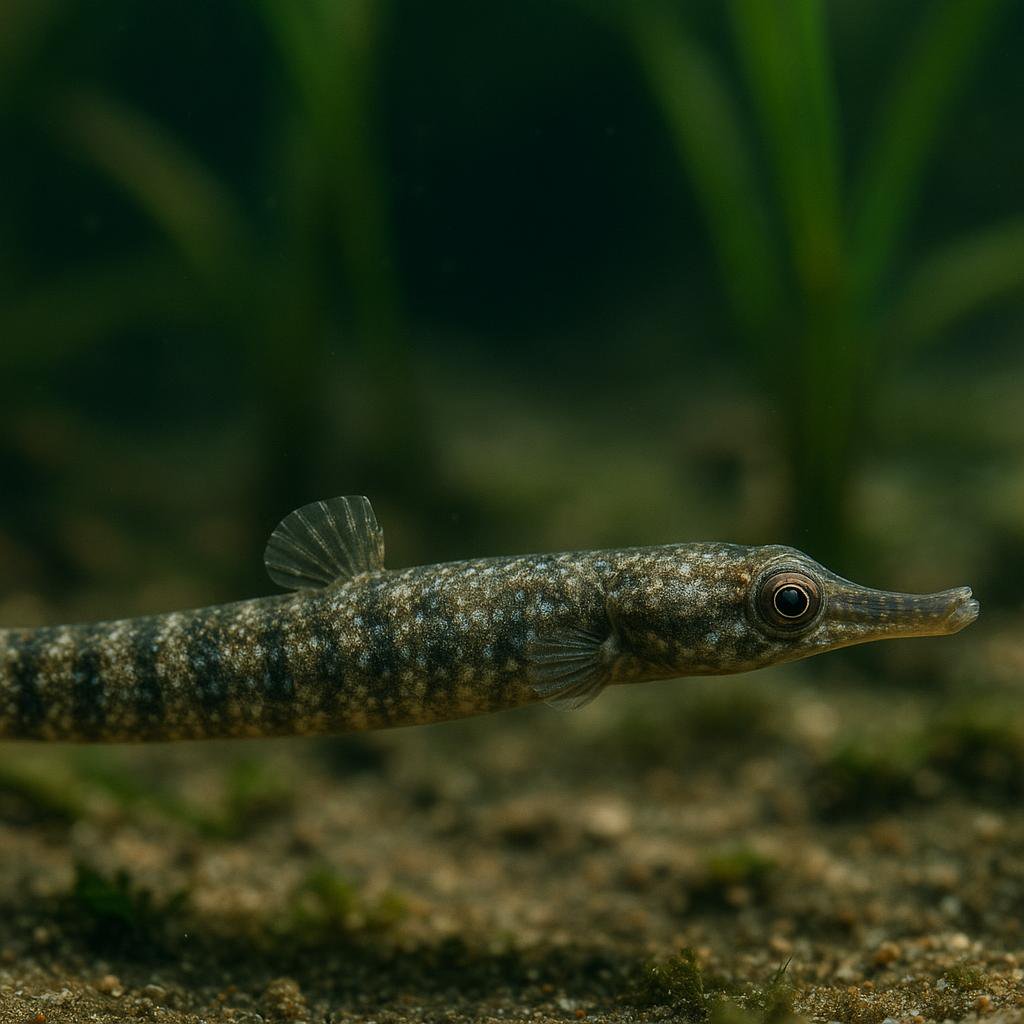
Barbed pipefish
Urocampus nanus
Urocampus nanus (barbed pipefish) occurs in protected inshore and estuarine habitats among seagrass (Zostera) in the Northwest Pacific (southern Japan and adjacent coasts). Like other syngnathids, males brood eggs in a pouch under the tail and produce fully formed young.
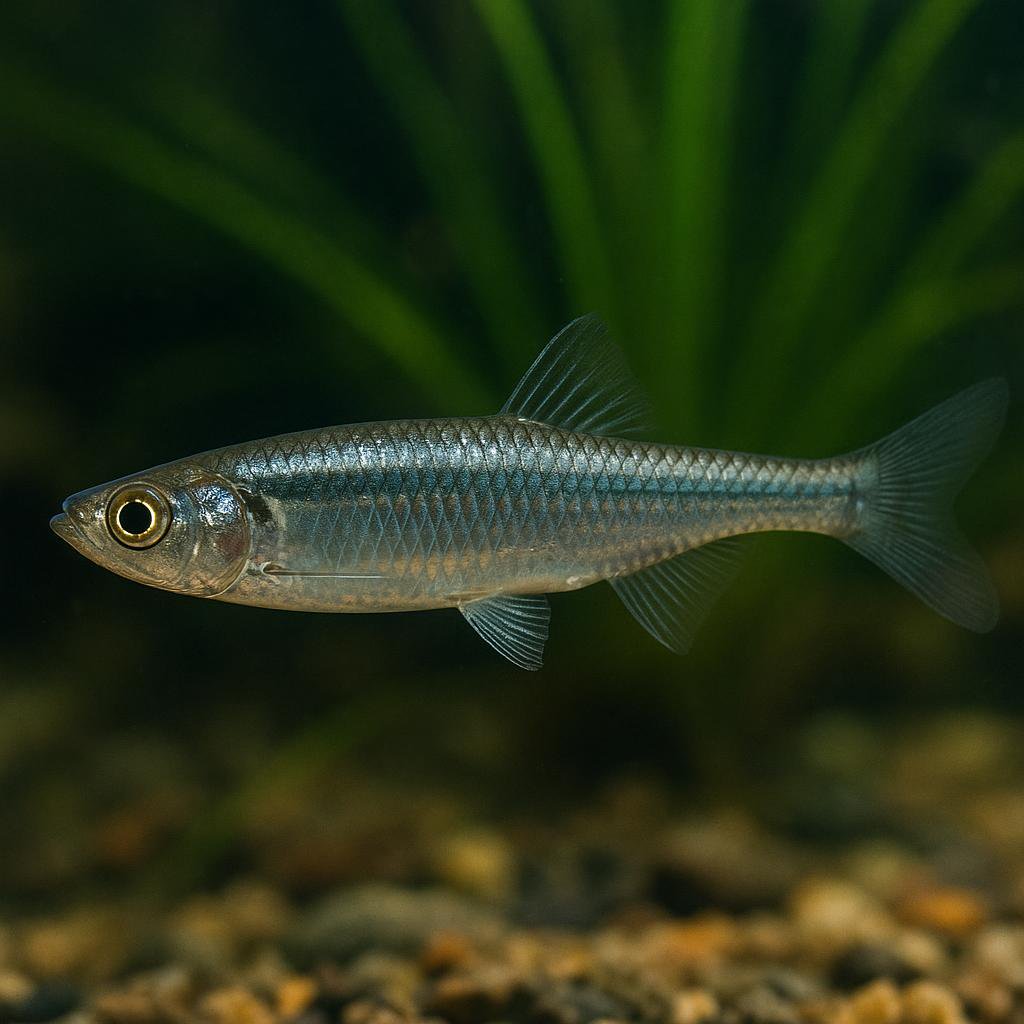
Beach silverside
Atherinella blackburni
This is a little coastal silverside that cruises the shallows in loose groups and flashes like a tiny chrome dart when the light hits it right. In the wild it hangs around beaches, estuaries, and lagoons, picking at small drifting foods in the surf zone. It is cool, but its real "gotcha" is that it is an open-water, salt-tolerant schooling fish that does best in bigger, well-oxygenated setups rather than a typical planted community tank.
Looking for other species?