

Window cichlid
Vieja fenestrata
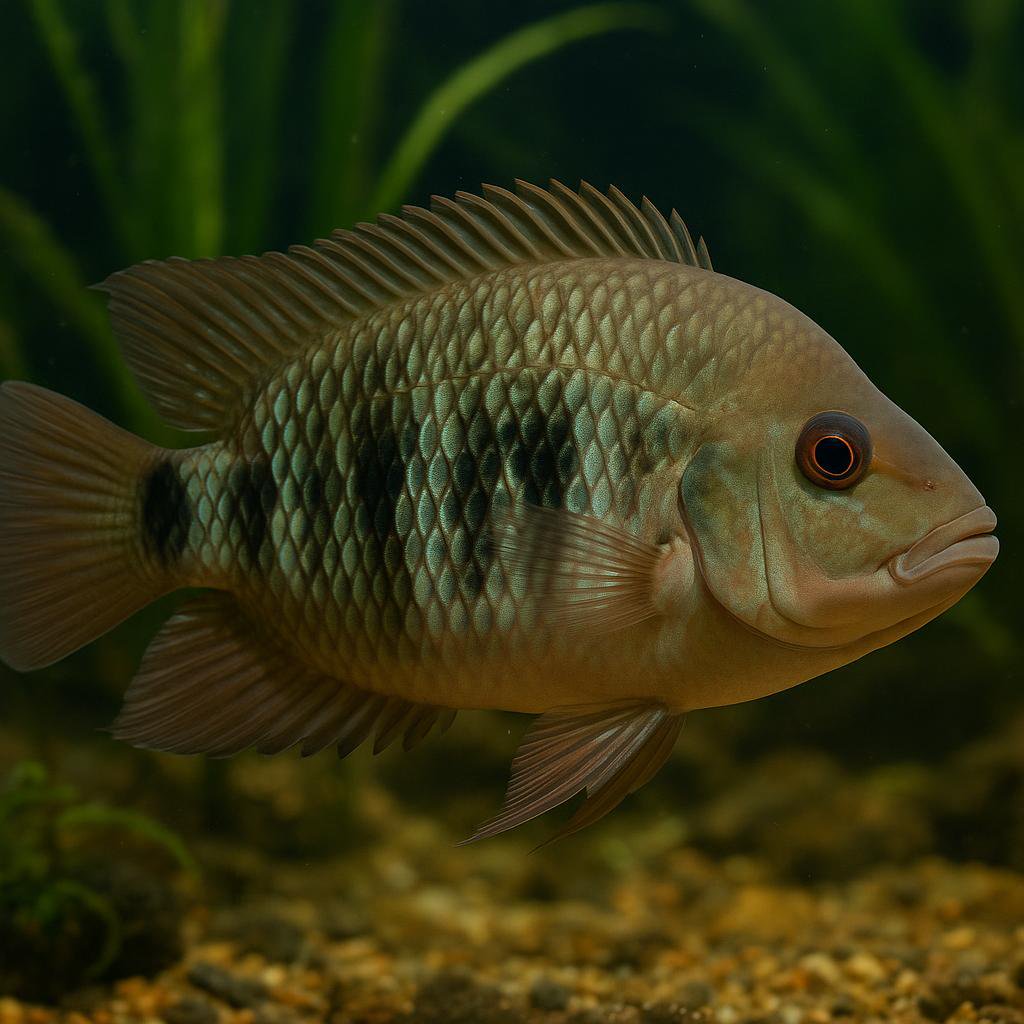
Fenestratus cichlids possess a distinctive pattern of dark vertical bars on a light brown to yellowish body, enhancing their vibrant appeal.
This page includes AI-generated images. Why am I seeing AI images?
About the Window cichlid
A big, polychromatic Mexican cichlid with bold "window" bars that can show red on the head and fins in some populations. It grazes in lakes and slow rivers, then turns dramatic black-and-white while guarding eggs. Powerful and territorial, it needs serious space and filtration.
Also known as
Quick Facts
Size
25 cm SL
Temperament
Aggressive
Difficulty
Advanced
Min Tank Size
160 gallons
Lifespan
10-15 years
Origin
Mexico (Atlantic slope drainages from the Papaloapan River to the Chachalacas basin, Veracruz)
Diet
Omnivore with herbivorous bias - algae/vegetable matter plus invertebrates; accept quality pellets and greens
Water Parameters
23-30°C
7.5-8
10-20 dGH
Need a heater for this species?
This species needs 23-30°C in a 160 gallon tank. Use our heater calculator to find the right wattage.
Calculate heater sizeCare Notes
- This is a big, combative Vieja; start at 160 gallons and go larger for a pair or any tankmates, with open swimming space and stout hardscape to define territories.
- Run warm, hard, alkaline water in range: 23-30 C, pH 7.5-8, hardness 10-20 dGH, and keep those numbers steady.
- They are heavy eaters and messy, so oversize your filtration and plan for a high bioload.
- Feed an omnivore diet with a green bias: quality cichlid pellets, spirulina-based foods, and blanched greens, plus invertebrate items for protein.
- Tankmates, if any, should be equally large and assertive and only in very roomy setups; be ready to separate fish if aggression spikes.
- They graze and may chew or uproot soft plants, so rely on rock and wood or use very hardy, well-secured plants.
- During spawning they flip to stark black-and-white and guard eggs aggressively; expect peak territorial behavior and use sight breaks or a species-only setup.
Compatibility
Good Tankmates
- A single bonded pair of Window cichlids only, in a very large, structured tank (160+ gallons) with heavy filtration and clear territories.
- Other large, equally assertive Central American cichlids of similar adult size, in an 8 ft+/very large hard-alkaline setup with rock/wood to break sightlines; add at similar size and keep numbers low.
- Large, fast midwater characins that tolerate hard, alkaline water and are too big to be swallowed (e.g., adult Astyanax spp.) as dithers.
- Large, armored plecos (e.g., Pterygoplichthys spp.) introduced at size, with secure caves; keep them well fed on greens to reduce slime-coat rasping.
Avoid
- Small fish and invertebrates (tetras, livebearers, shrimp, snails) that will be viewed as food.
- Peaceful or mid-sized cichlids (e.g., Thorichthys/Firemouths, convicts) and community fish that cannot handle a large, territorial CA cichlid.
- Slow or long-finned fish (angelfish, gouramis, fancy goldfish) that will be harassed or have fins shredded; also water mismatch.
- Hyper-aggressive bruisers and apex predators (e.g., Parachromis, big Amphilophus) or multiple similar males; high risk of escalated fights in under-monster tanks.
The Window cichlid (Vieja fenestrata) is a large, polychromatic Mexican cichlid named for its bold "window" bars. Adults can reach 25 cm SL and live 10-15 years. It is powerful, territorial, and best left to advanced keepers with space, filtration, and a plan for aggression. Wild and captive fish often show red on the head and fins, and breeding adults flip to a dramatic black-and-white pattern while guarding eggs.
Origin and natural habitat
Vieja fenestrata is native to Mexico on the Atlantic slope, from the Papaloapan River to the Chachalacas basin in Veracruz. It inhabits lakes and slow rivers where it grazes over hard surfaces. The waters are generally hard and alkaline, matching its need for mineral-rich conditions.
Aquarium setup and water conditions
This species needs at least 160 US gallons. Smaller tanks concentrate aggression and waste and tend to end badly for tankmates.
Aim for a long, wide footprint with heavy, well-secured decor to break lines of sight. Use sand or rounded gravel; they dig and will move anything that is not anchored. Sturdy rocks and driftwood work well. Most plants will be uprooted or eaten, so go with tough species in protected pots or skip plants entirely.
- Temperature: 23-30 C
- pH: 7.5-8
- Hardness: 10-20 dGH
- Water type: freshwater with strong filtration and good oxygenation
They are heavy feeders and produce a lot of waste. Use oversized filtration and keep up with large, regular water changes to maintain stability in hard, alkaline water.
Diet and feeding
An omnivore with a herbivorous bias, the Window cichlid naturally grazes on algae and vegetable matter and supplements this with small invertebrates. In aquaria they accept quality pellets and a variety of greens.
- Staples: high-quality cichlid pellets rich in plant matter (spirulina/algae-based), wafers
- Greens: blanched zucchini, spinach, shelled peas, leafy greens, algae sheets
- Protein treats (sparingly): insect larvae, earthworms, snails, krill, or similar invertebrates
Base the routine on plant-rich foods and use animal protein as an accent. This aligns with their grazing habits and helps avoid digestive issues.
Behaviour and tankmates
Aggressive and territorial, especially as adults. Most keepers succeed by housing a single specimen or a proven pair. If you attempt a community, only consider other large, robust Central American cichlids in very spacious quarters with abundant cover. Small or delicate fish will be harassed or eaten.
Expect digging and constant rearrangement of decor. Provide multiple retreats so subdominant fish can get out of sight, and have a plan to separate individuals if a pairing goes bad.
Breeding
Captive breeding is documented. Pairs form and select a flat rock or cleared patch as a site. They are open substrate/rock spawners, with both parents cleaning, fanning, and fiercely guarding eggs and fry. During this time they often show a striking black-and-white pattern.
Raising fry is straightforward if you maintain very clean water and offer frequent small feedings of finely crushed plant-rich flake/pellet and newly hatched brine shrimp. Expect extreme aggression toward other fish during breeding; many breeders move the pair to a dedicated tank or use dividers.
Common problems and how to avoid them
- Water quality swings: Large cichlids generate heavy bioload. Use robust filtration and schedule big, regular water changes.
- Injury from fights or decor: Keep only compatible tankmates (or none) and use smooth, stable hardscape.
- Diet-related issues: Too much animal protein can lead to digestive problems. Keep a vegetable-forward diet.
- Erosion along the lateral line in poor conditions: Maintain mineral-rich, stable water and varied nutrition.
Color can vary by population. Many show red on the head and fins, and most will darken dramatically during brood care.
Similar Species
Other freshwater aggressive species you might be interested in.
Arrowhead puffer
Pao suvattii
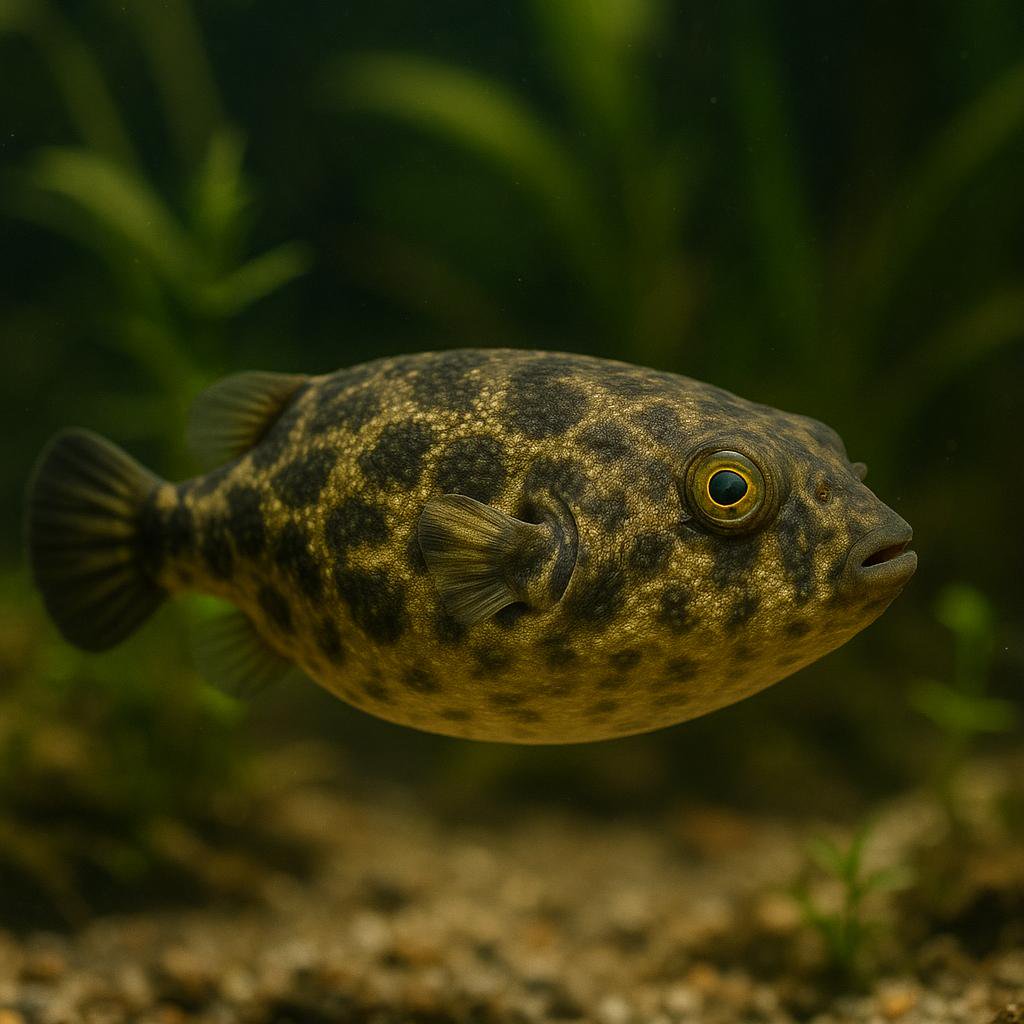
Pao suvattii is that sneaky Mekong puffer that likes to sit low and ambush food, and it has that super recognizable arrow/V pattern on its back. Gorgeous fish with tons of personality, but it is absolutely not a community guy - plan on a solo, species-only setup if you want everybody to stay in one piece.
Blue gularis
Fundulopanchax sjostedti
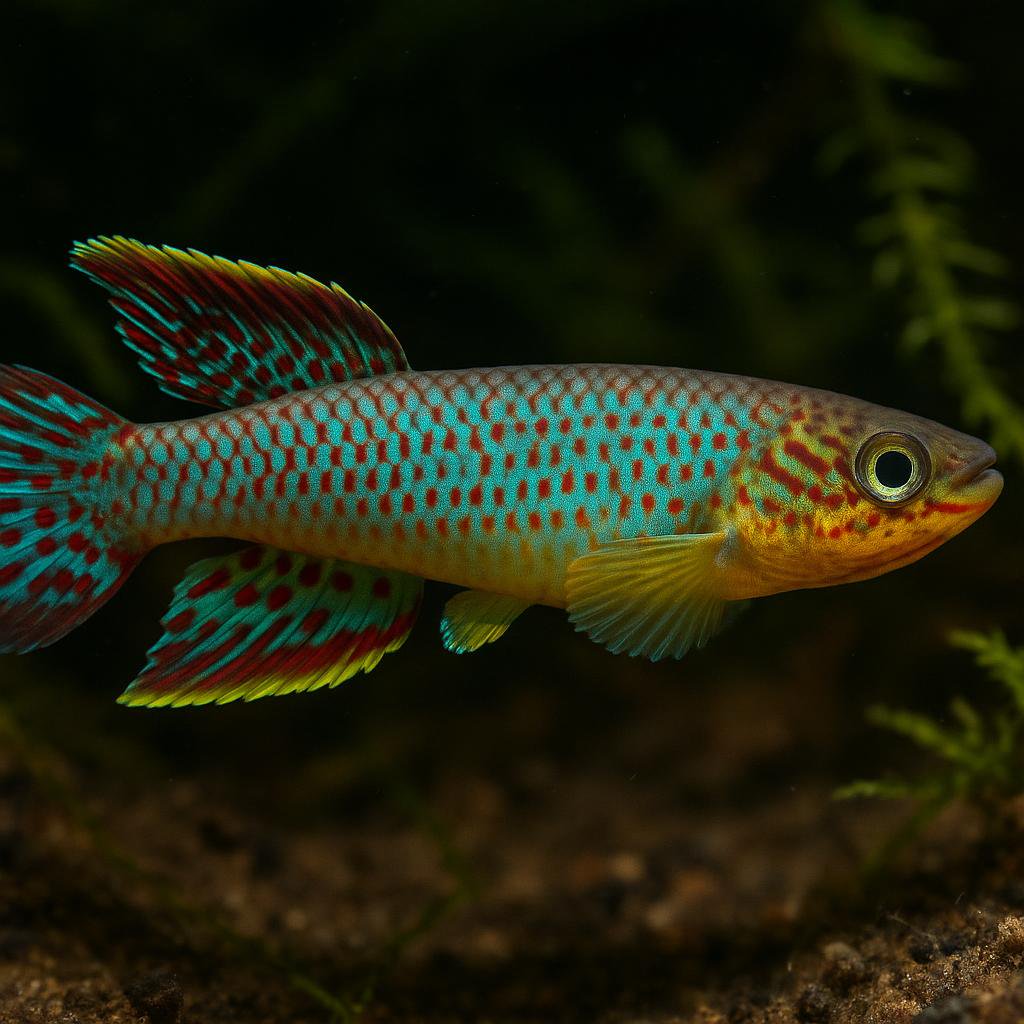
This is the big, flashy West African killifish with the ridiculous triple-point tail and electric blue-green body covered in red spotting. Males can be real attitude machines with each other, but if you give them room, cover, and a tight lid, they make an awesome centerpiece fish that will absolutely demolish live and frozen foods.
Hypsolebias trifasciatus
Hypsolebias trifasciatus
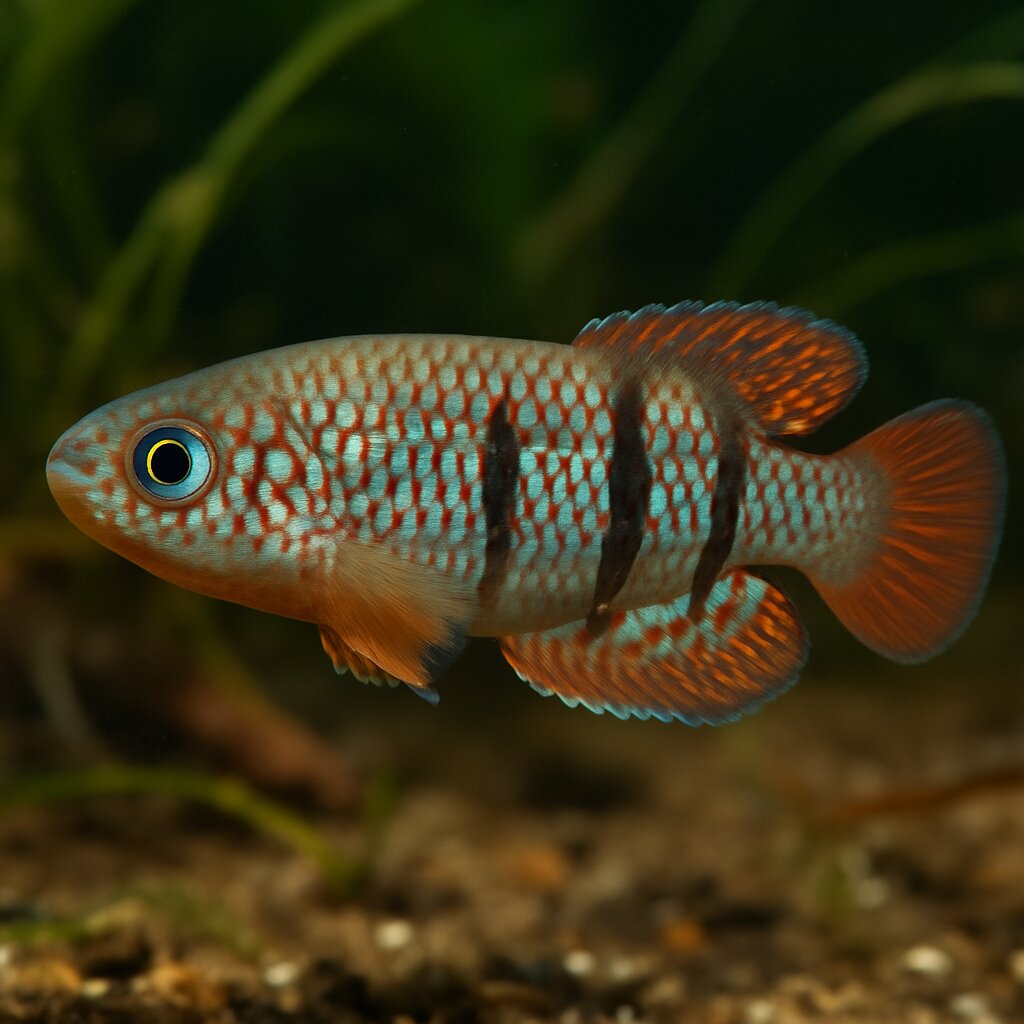
Tiny but flashy, this annual killi lights up with a blue body and bold yellow-and-black striping on the anal fin. It comes from shallow seasonal pools in northeastern Brazil, so it likes soft, warm water and will bury eggs in a peat or mud-like substrate. Males have big attitudes for such small fish, so plan for line-of-sight breaks or keep a single pair.
Northern blue melanochromis
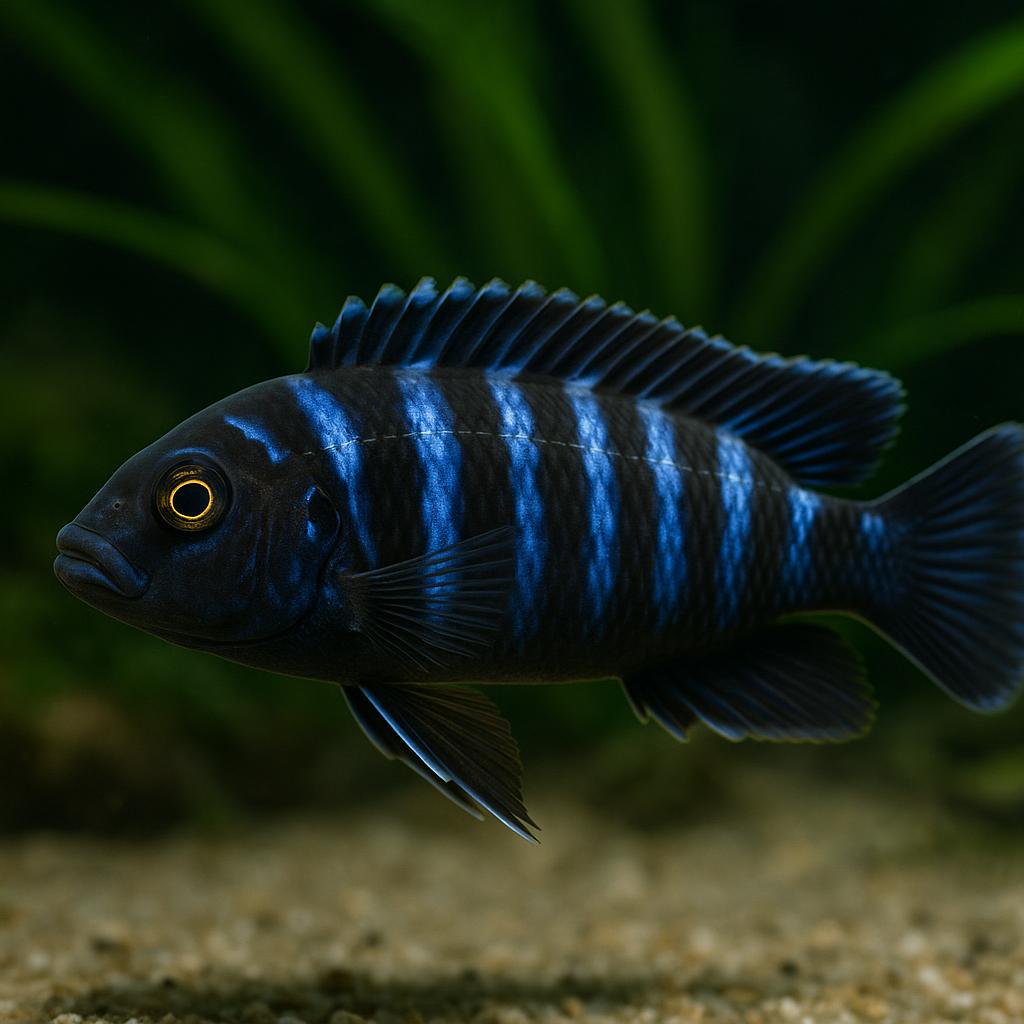
Melanochromis kaskazini
A roaming, cobalt-blue mbuna from the rocky-sandy transition of Lake Malawi, it hunts larger invertebrates and small fish instead of grazing algae. Males are solid deep blue, while females are white with black stripes and a yellow-orange anal fin, which makes pairs striking to watch.
Northern studfish
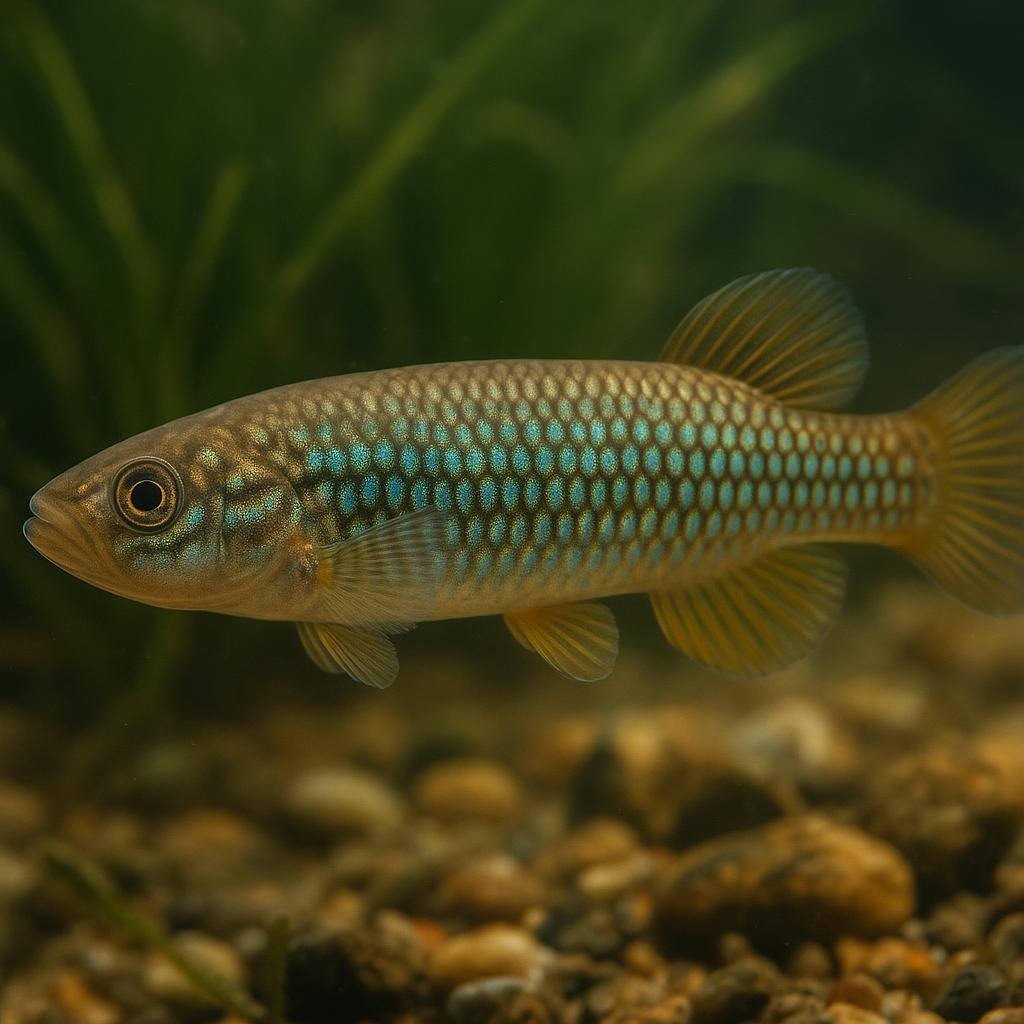
Fundulus catenatus
A big North American killifish, males glow turquoise-blue with orange-edged tails and fine red lines in breeding dress. It rockets along the surface in clear, cool creeks and can be feisty and jumpy, so a tight lid and roomy quarters are a must.
Salvini cichlid
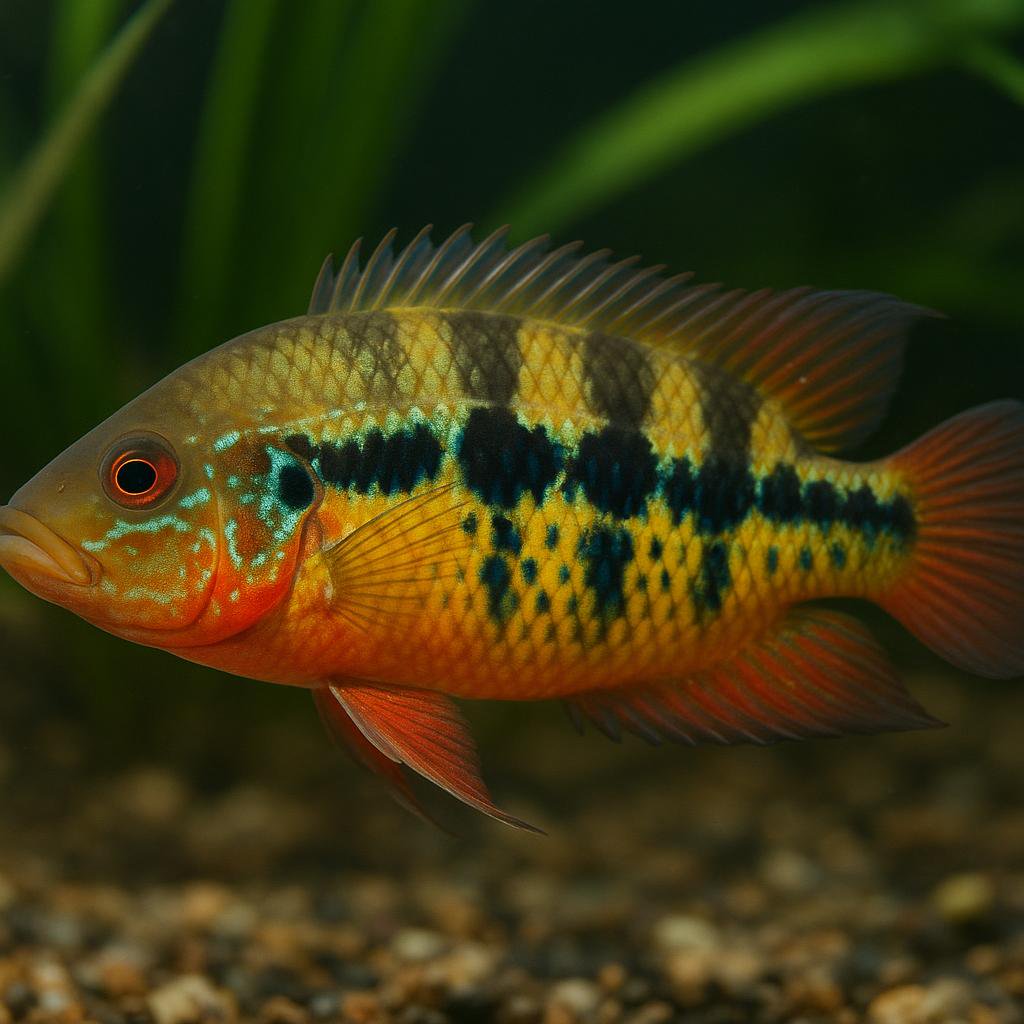
Trichromis salvini
A flashy Central American cichlid with a bright yellow body, bold black bars, and blue spangles, salvini look like little hot rods. They are territorial predators that form pairs and put on intense parental-guarding displays. Best kept solo or with equally tough neighbors in a roomy tank.
More to Explore
Discover more freshwater species.
Amapa tetra
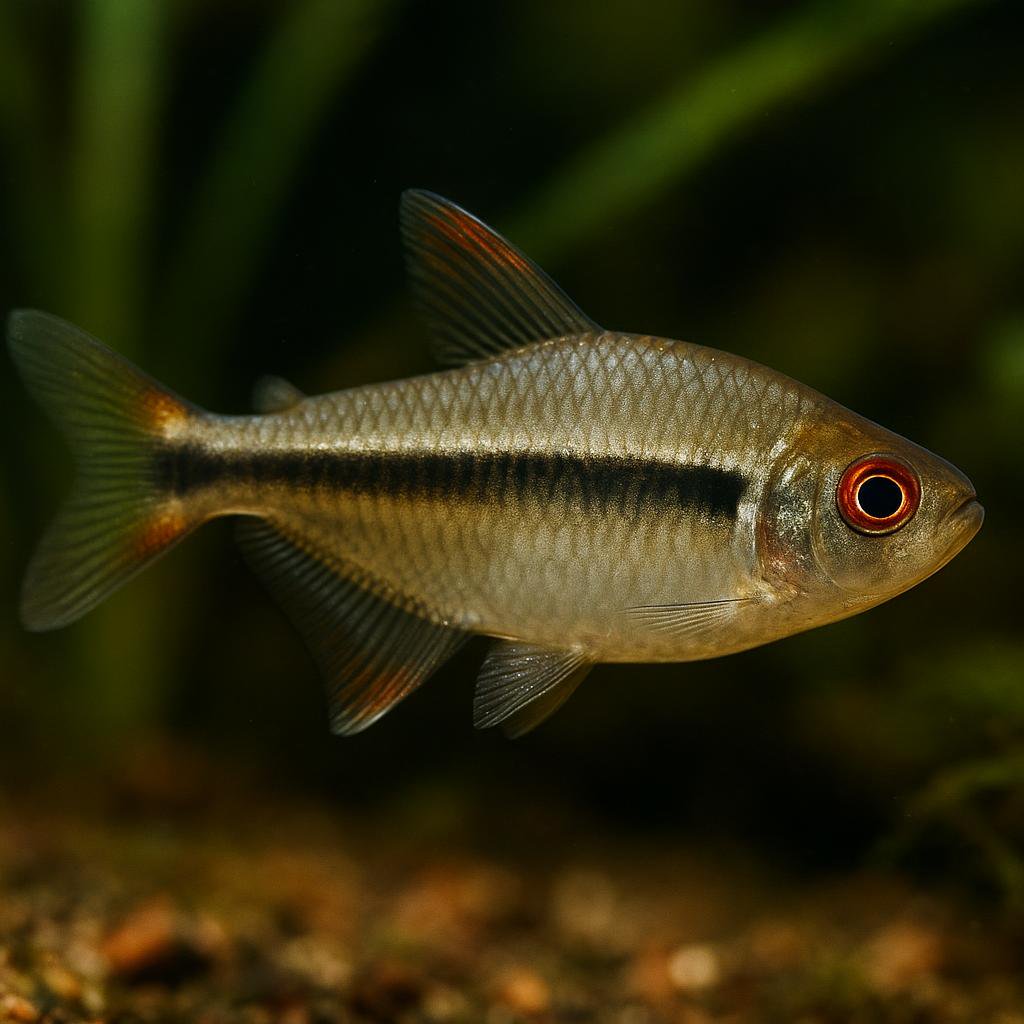
Hyphessobrycon amapaensis
This is a tiny, super sleek little tetra with a clean red stripe down the side that really pops once its settled in. It does best in a planted, slightly tinted "creek-style" setup and looks way cooler when you keep a proper group so they school and flash that line together. If you can give it soft, slightly acidic water and a calm community, its an easy fish to fall for.
American flagfish
Jordanella floridae
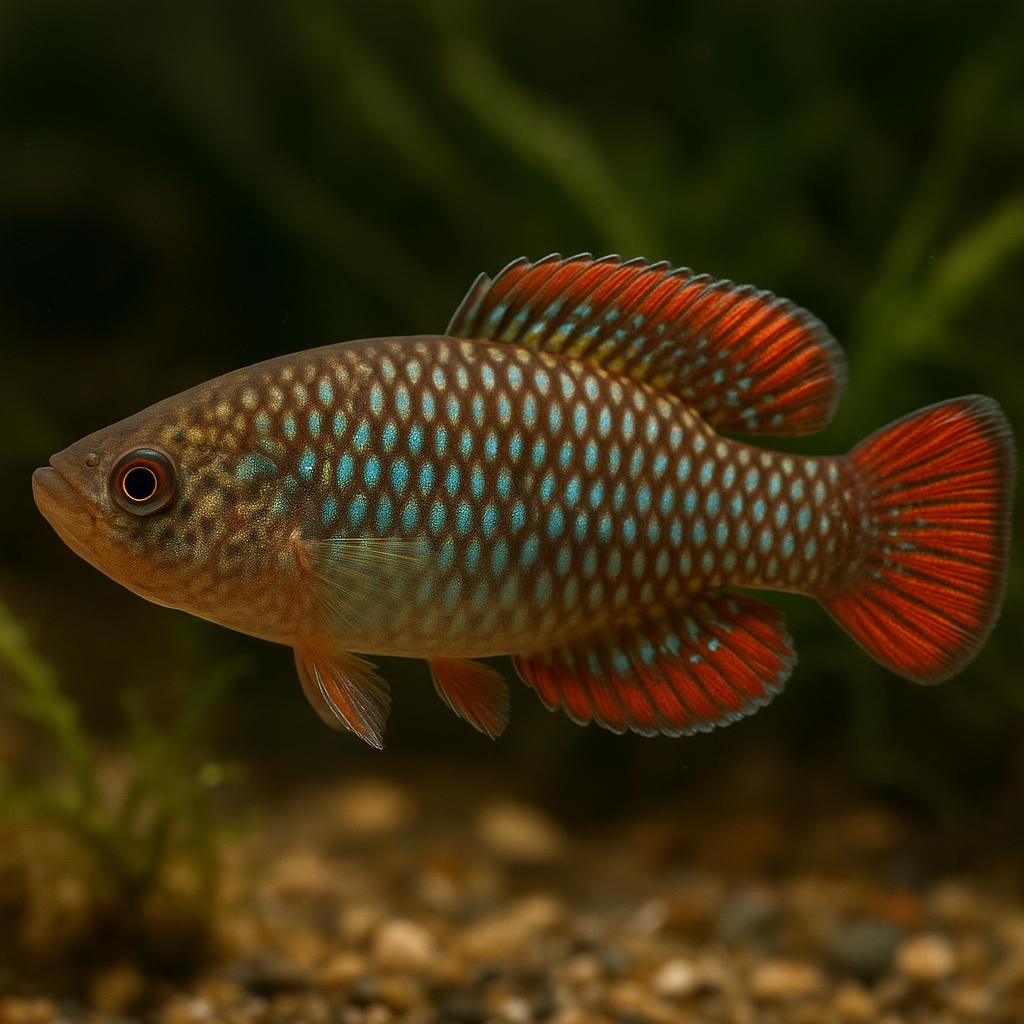
Jordanella floridae is that little Florida native with the red-and-cream striping that really does look like a tiny flag once a male colors up. They graze algae like champs (especially stringy/hair algae), but they have a bit of attitude - give them plants and space so the bossy behavior stays manageable. Bonus: the male guards the eggs and will actively fan them, which is pretty fun to watch.
Armoured stickleback
Indostomus paradoxus
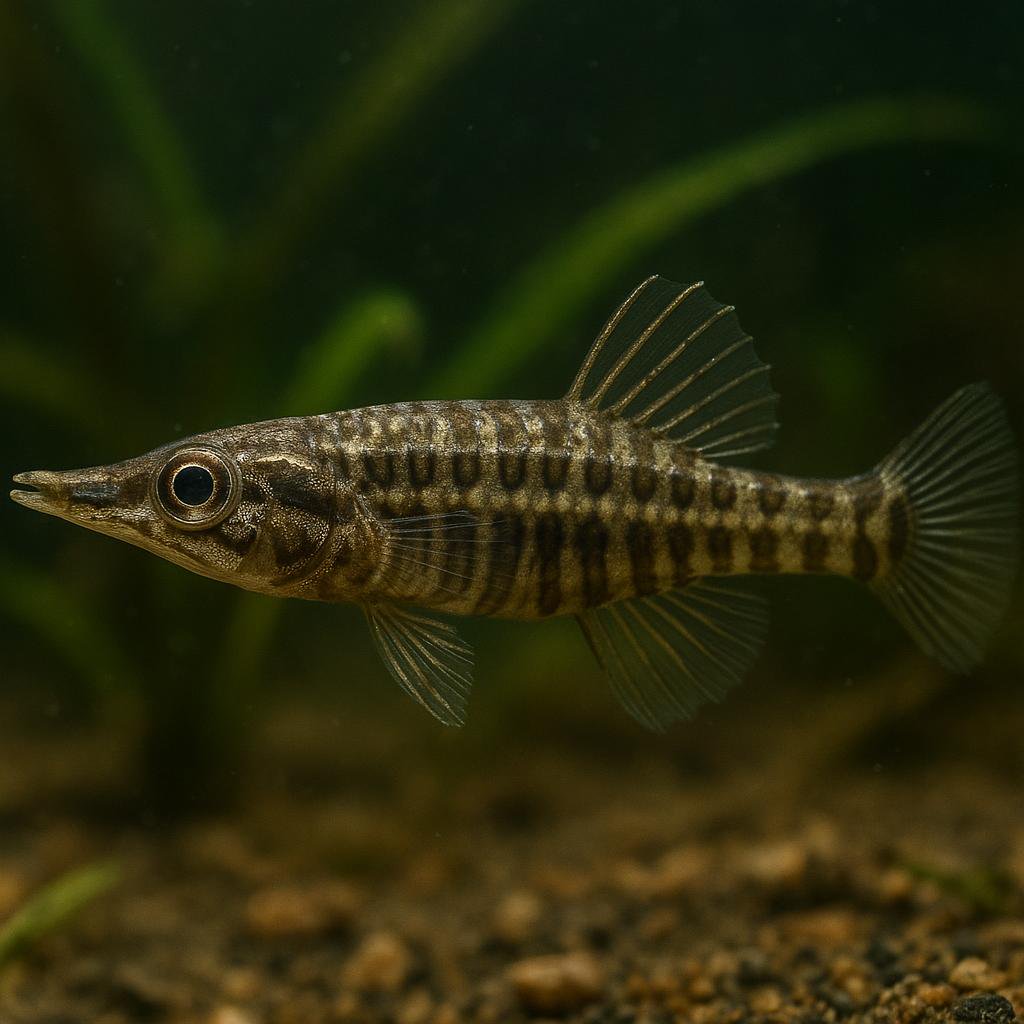
This is that goofy little "freshwater seahorse"-looking fish that just kind of perches and scoots around like a tiny armored twig. Its whole vibe is slow, sneaky micropredator - once its settled in, you will catch it stalking microfoods and doing these subtle little posture displays. The big trick is feeding: they do best when you can provide lots of small live foods in a calm, planted tank.
Banded Leporinus
Leporinus fasciatus
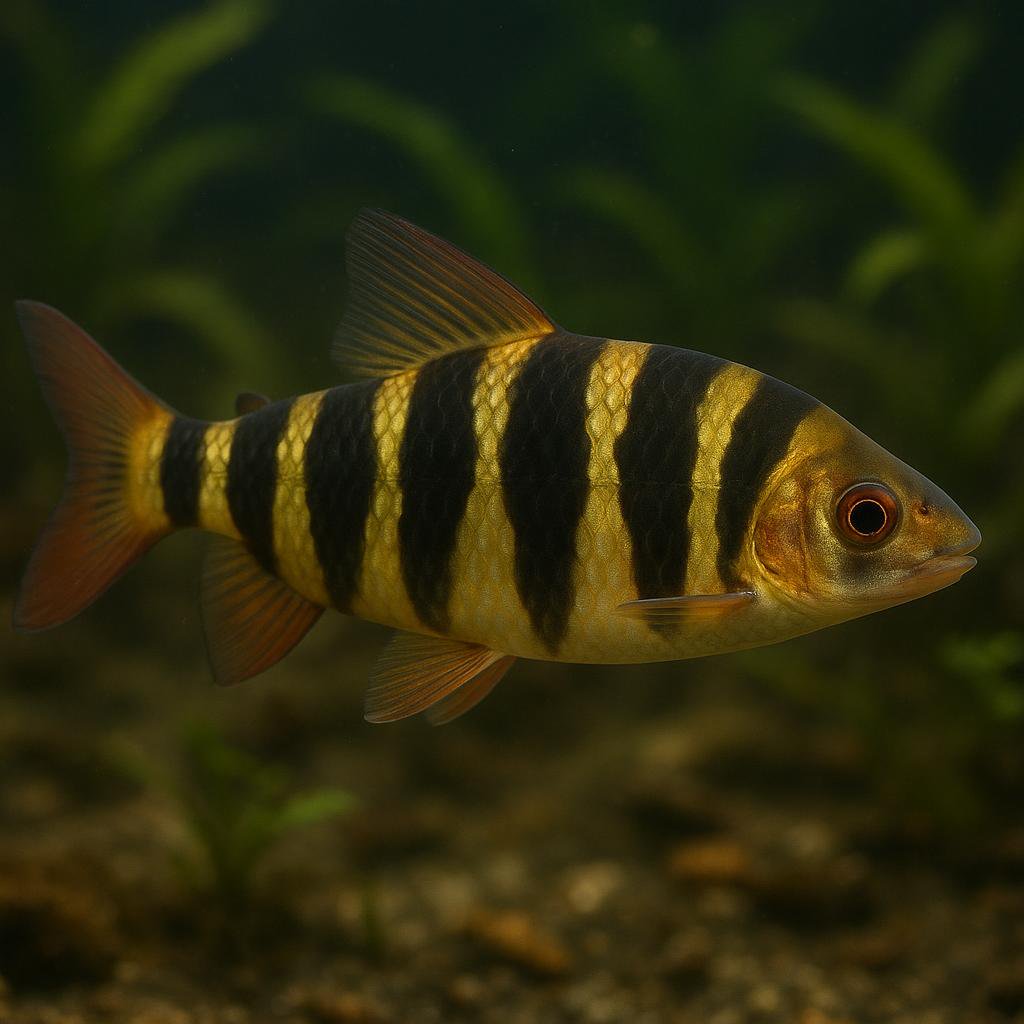
Banded Leporinus are those torpedo-shaped, black-and-yellow striped fish that look like they're wearing a little prison outfit-and they stay on the move. They've got a ton of personality and they're awesome to watch cruising and picking at stuff, but they're also the kind of fish that will redecorate your tank and "taste test" anything soft-looking.
Bandi cichlid
Wallaceochromis signatus
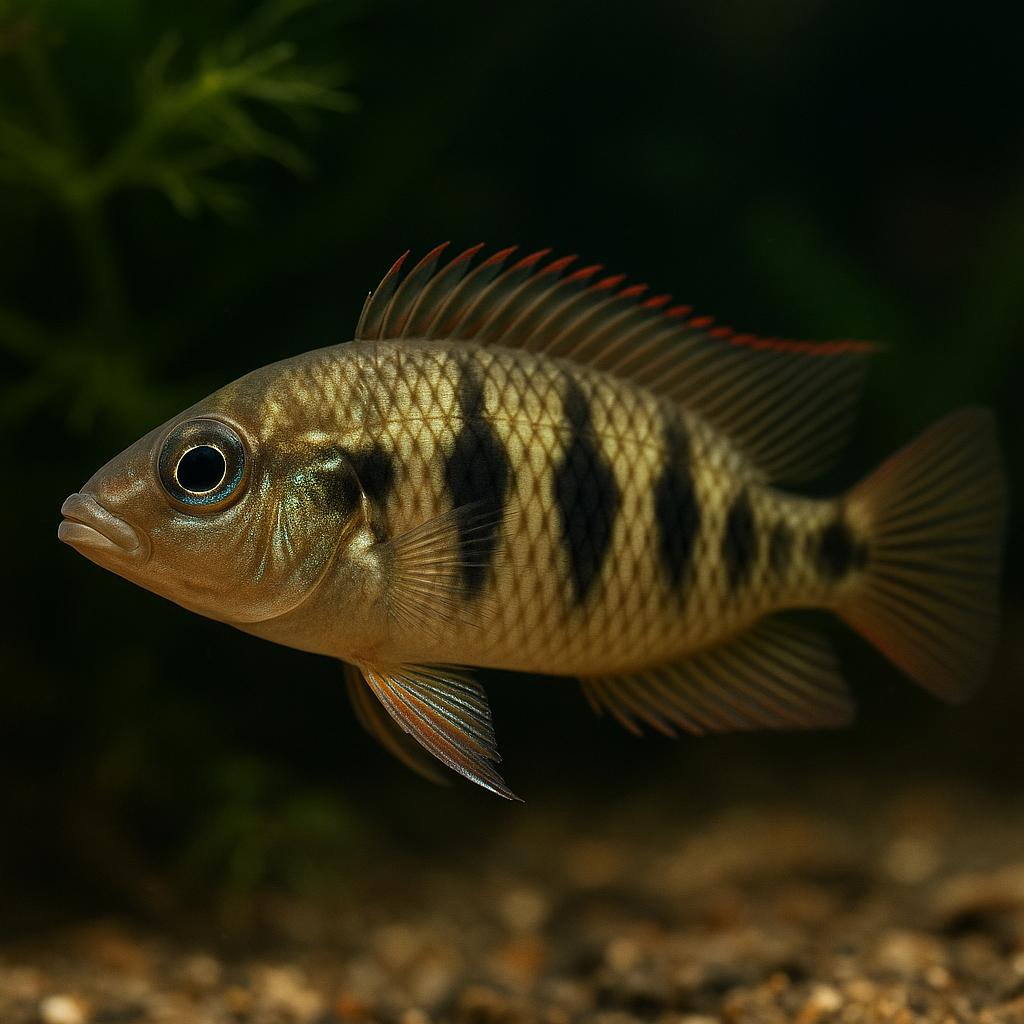
A West African dwarf cichlid from Guinea's Bandi River, this fish shows crisp vertical bars and spotted fins with red highlights. Females have a bold black spot at the base of the tail, and pairs guard eggs and fry in caves, which makes their parental behavior fun to watch.
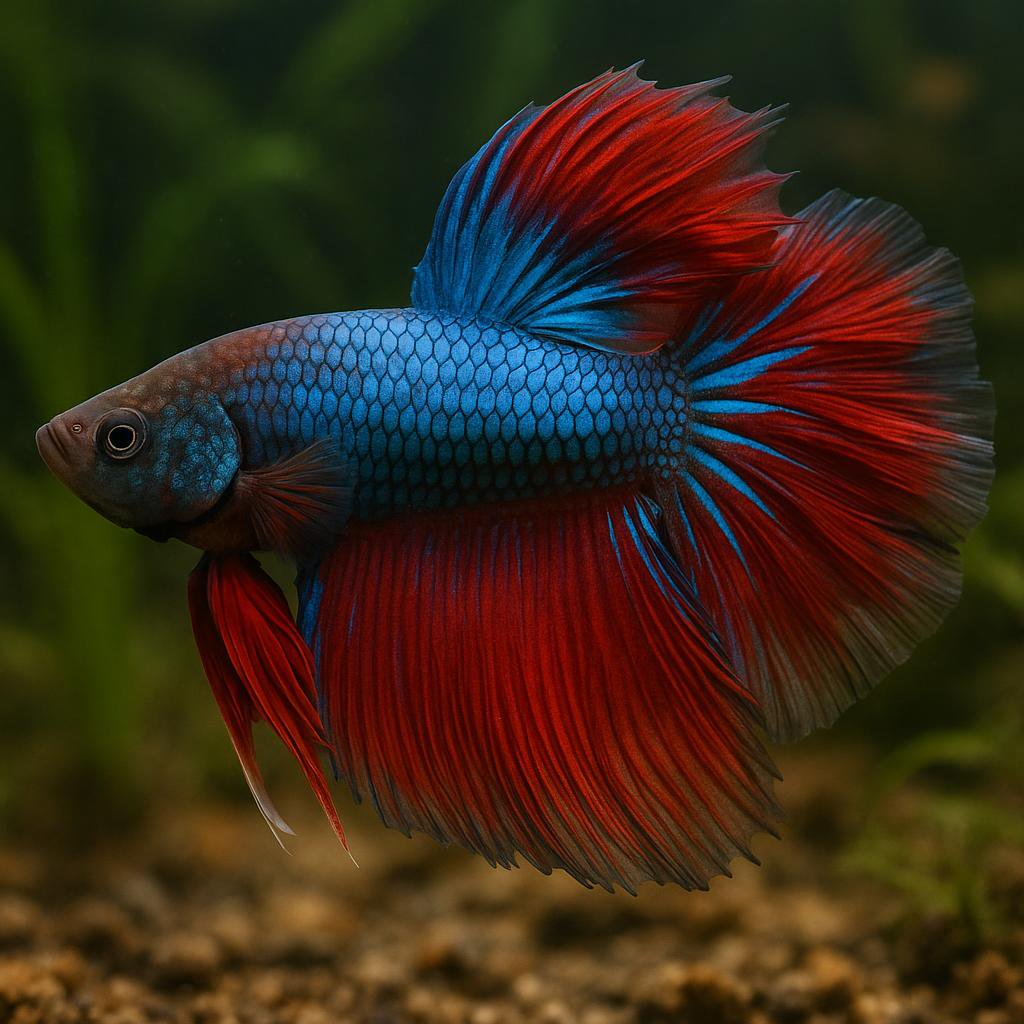
Betta
Betta splendens
Betta fish, also known as Siamese fighting fish, are popular for their striking colors and flowing fins. They are known for their territorial nature, especially males, which can display aggressive behavior towards each other.
Looking for other species?