

Kaup's snake eel
Yirrkala kaupii
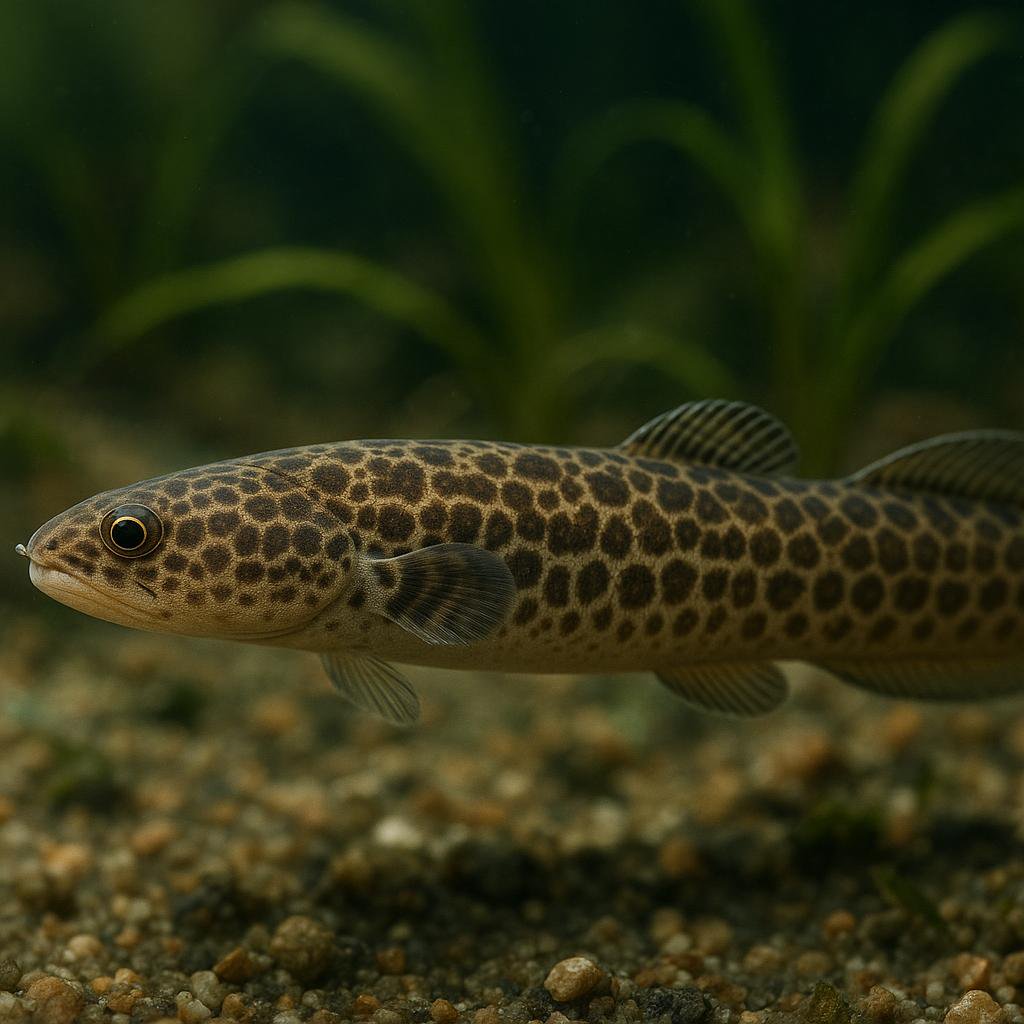
Kaup's snake eel features a slender, elongated body with a dark brown to gray coloration, often adorned with paler mottling.
This page includes AI-generated images. Why am I seeing AI images?
About the Kaup's snake eel
Yirrkala kaupii is a skinny little snake eel that spends a lot of its time down on the bottom, and its whole vibe is more "hide and cruise" than "swim around for show". FishBase lists it as a freshwater-brackish, demersal tropical species from Indonesia and the Philippines, topping out around 35 cm (about 14 inches), so it is not really a standard home-aquarium fish.
Also known as
Quick Facts
Size
35 cm
Temperament
Semi-aggressive
Difficulty
Expert
Min Tank Size
75 gallons
Lifespan
5-10 years
Origin
Southeast Asia
Diet
Carnivore - meaty frozen foods (shrimp, fish, worms) and live foods
Water Parameters
24-28°C
7-8.2
5-20 dGH
Need a heater for this species?
This species needs 24-28°C in a 75 gallon tank. Use our heater calculator to find the right wattage.
Calculate heater sizeCare Notes
- Give it a big footprint tank with a deep sand bed (4-6 inches) and lots of PVC caves/rock tunnels - they want to bury and wedge in, not hover in open water.
- Run brackish on purpose, not 'kinda salty': target specific gravity around 1.005-1.012 and keep it steady; quick salinity swings stress them out fast.
- Lock the lid down like you are keeping a snake - every gap is an exit, and they will launch at night if they get spooked.
- Feed after lights-out with tongs: pieces of shrimp, squid, silversides, and worms work well; start with smaller chunks and don't let them swallow sand with the food.
- They are not community fish - anything small enough will eventually look like dinner, and fin-nippy fish will drive them into hiding and make them stop eating.
- Use strong filtration and flow but keep a few low-flow burrowing zones; they are messy carnivores and nitrate climbs quick in brackish setups.
- Watch for skin scrapes and infections from rough rock and bad substrate - fine sand and smooth hiding spots save you a lot of headaches; also cover pump intakes so they do not wedge in and get stuck.
Compatibility
Good Tankmates
- Archerfish (Toxotes spp.) - quick, mid-top swimmers that can hold their own and do fine in brackish. They do not usually mess with an eel that stays buried most of the day.
- Mono argentus/Mono sebae (monos) - tight-schooling, fast brackish fish. Too big and too zippy to get picked on, and they do not care about a snake eel cruising at night.
- Scats (Scatophagus argus) - solid brackish bruisers. They are deep-bodied and confident, so the eel is not going to bully them, and they are not easy to swallow either.
- Green chromide (Etroplus suratensis) - a tougher brackish cichlid that can handle some attitude. Works if the tank is roomy and you are not mixing tiny juveniles with a big eel.
- Knight gobies (Stigmatogobius sadanundio) - can work if they are decent sized and you give lots of hides. They are not flashy finny targets, just keep in mind anything that fits in the eel's mouth is on the menu.
- Bigger, fast brackish 'tough guy' fish in general - think robust midwater fish that are not bite-sized. The eel mostly minds its own business until lights-out, then it hunts.
Avoid
- Small fish like guppies, mollies, small livebearers, small rainbows - basically anything snack-sized. Kaup's snake eels are ambush hunters and will absolutely pick off little guys at night.
- Tiny gobies and micro bottom fish - bumblebee gobies, small glass gobies, etc. Same issue: if it can be slurped, it will be.
- Fin-nippers and overly aggressive fish - puffer types, mean cichlids, or anything that will harass a buried eel and chew on its face/tail when it is resting.
- Other eel-shaped predators in tight quarters - spiny eels, other snake eels, or similar. In smaller tanks it turns into wrestling over caves and sand spots, plus extra feeding competition.
Where they come from
Kaup's snake eel (Yirrkala kaupii) shows up around coastal areas where salt and fresh mix - think estuaries, muddy mangrove edges, and tidal flats. They are built for a life of hiding in soft bottoms and ambushing food, not cruising around open water like a typical "eel" you see in shops.
Most of the ones you run into in the hobby are wild-caught, which explains why they can be touchy at first and why you have to build the tank around their habits instead of expecting them to adapt.
Setting up their tank
If you take one thing from this: the substrate and the lid matter more than the decorations. These eels want to burrow. If they cannot, they stay stressed, refuse food, and go looking for a way out.
- Tank size: I would not bother under 55 gallons, and bigger is honestly easier on your nerves
- Substrate: fine sand, deep enough that they can disappear (aim for 3-5 inches)
- Hardscape: keep sharp rock off the bottom or they will scrape themselves when they dive into the sand
- Hides: PVC elbows and tubes half-buried work great, plus a few shaded caves
- Flow: moderate, not a river - you want good turnover, but not a sandstorm
- Lighting: dim helps them settle; floating plants (if your salinity allows) or shaded areas are your friend
Lid warning: they can and will escape through ridiculous gaps. Tape or block around hoses and cords, use a tight cover, and do not trust "mostly closed". If there is a way out, they will find it at 2 a.m.
Brackish means you need to pick a target salinity and hold it steady. In my experience, stability beats chasing a perfect number. Use a refractometer, mix saltwater in a bucket (never straight into the tank), and top off with fresh water only since evaporation leaves salt behind.
If your eel is new and spooked, start with lower light, a deep sand bed, and a couple of buried PVC sections. Once it has a "home tunnel" it usually calms down and starts eating way sooner.
What to feed them
These are meaty predators. They do best on a rotation of marine-based foods. If you only offer one thing (like just shrimp), you will eventually run into nutrition problems or a picky eel that decides it is done with that menu.
- Good staples: chunks of shrimp, squid, clam, mussel, marine fish flesh (sparingly)
- Great treats: live ghost shrimp or small crabs if you can source them clean
- What I avoid: freshwater feeder fish, goldfish, and "mystery" bait shop feeders
- Helpful add-on: soak foods in a quality vitamin supplement once or twice a week
Feeding method matters. Mine learned to take food from long tongs right at the burrow entrance. If you just toss food in the water, tankmates will steal it and the eel will sit there starving while looking "fine".
Watch the belly and the behavior, not just whether you saw it eat. A snake eel can miss meals for a bit, but rapid weight loss, constant roaming, or refusing food for weeks usually means stress, parasites, or wrong setup.
How they behave and who they get along with
Kaup's snake eel is mostly a sit-and-wait hunter. A lot of the time you will just see a snout sticking out of the sand like a periscope. At dusk and feeding time they get bolder and will patrol the bottom.
Tankmates are where people get burned. Anything that fits in the eel's mouth is food, and anything that harasses the eel will keep it buried and not eating. You want calm, not nosy.
- Best tankmates: larger, peaceful brackish fish that stay midwater and do not pick at the bottom
- Avoid: small fish, bottom-dwellers, fin-nippers, aggressive feeders that rush the eel
- Inverts: most shrimp and crabs will eventually get eaten (sometimes right away, sometimes after you get attached)
They are stronger than they look. If you stack rocks, put them on the glass bottom and sand around them. An eel burrowing under a rock can shift it, and that is a bad day for everyone.
Breeding tips
Real talk: breeding Kaup's snake eel in home aquariums is not something hobbyists are reliably doing. Like many eels, their reproduction is tied to life stages and conditions we cannot easily replicate, and the larval phase for eel-like fish is a whole separate challenge.
If you keep one long-term, focus on giving it a stable brackish setup, deep sand, and a varied diet. A healthy animal that eats well and is not constantly stressed is already a win with this species.
Common problems to watch for
- Escape attempts: almost always a lid/gap issue, or the eel is stressed and roaming
- Refusing food: usually not enough hiding, too bright, too much commotion, or tankmates stealing the food
- Scrapes and nose damage: sharp substrate, rough rockwork, or trying to burrow under something heavy
- Poor water quality: heavy feeding means waste adds up fast - expect to do bigger water changes than you would for a "normal" community tank
- Parasites from wild-caught fish: flashing, excess slime, rapid breathing, weight loss even though it takes food
Be careful with meds. Many eel-like fish are sensitive, and brackish setups complicate treatment choices. If you have to treat, research the specific medication and dose conservatively, and lean on quarantine whenever you can.
The most common failure I see is people treating it like a "cool oddball" for a mixed brackish tank. Build the tank like an eel tank first - deep sand, tight lid, calm vibe, target feeding - and everything gets easier.
Similar Species
Other brackish semi-aggressive species you might be interested in.
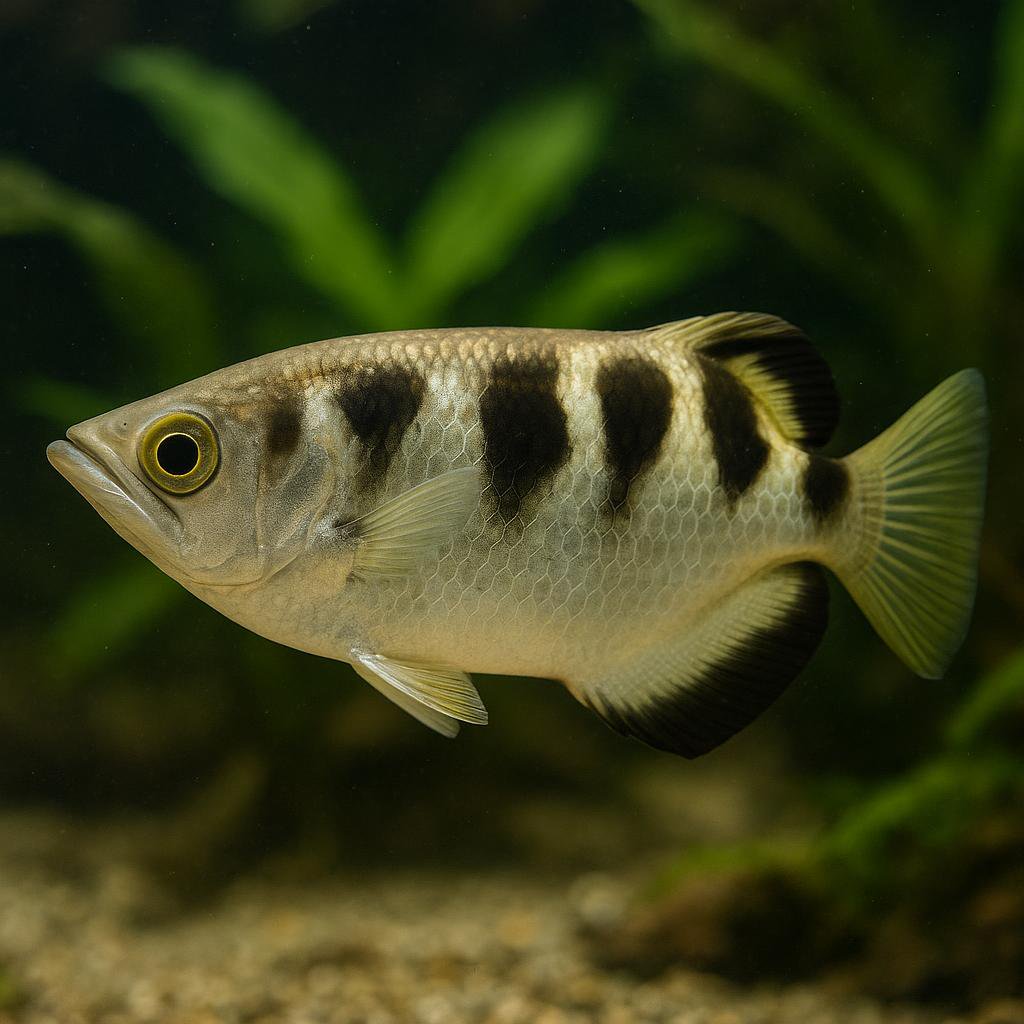
Banded Archerfish
Toxotes jaculatrix
This is the fish that literally spits jets of water to knock insects off branches-watching one "take aim" is unreal. They're super aware of what's going on outside the tank and will even learn to beg and snipe food from the surface once they settle in. Give them height and some open swimming room and they act like little aquatic sharpshooters.
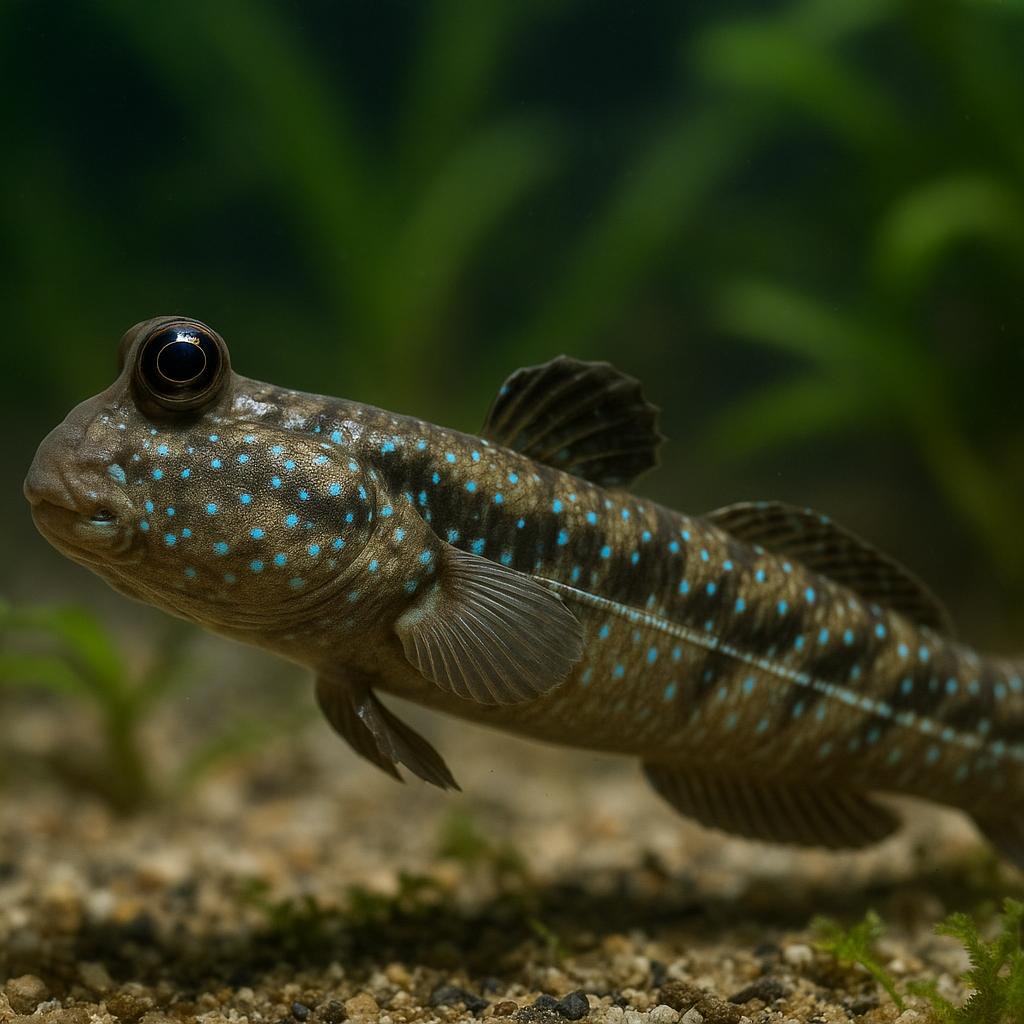
Barred mudskipper
Periophthalmus argentilineatus
This is one of those classic "walks around like it owns the place" mudskippers-big goofy eyes, climbs, hops, and spends a ton of time out on the mud when it's humid. In the wild it lives on intertidal mangrove/nipa mudflats and even shuttles between little pools and open air, hunting worms, insects, and small crustaceans. It's super fun to watch, but it really wants a brackish paludarium setup (not a normal aquarium).
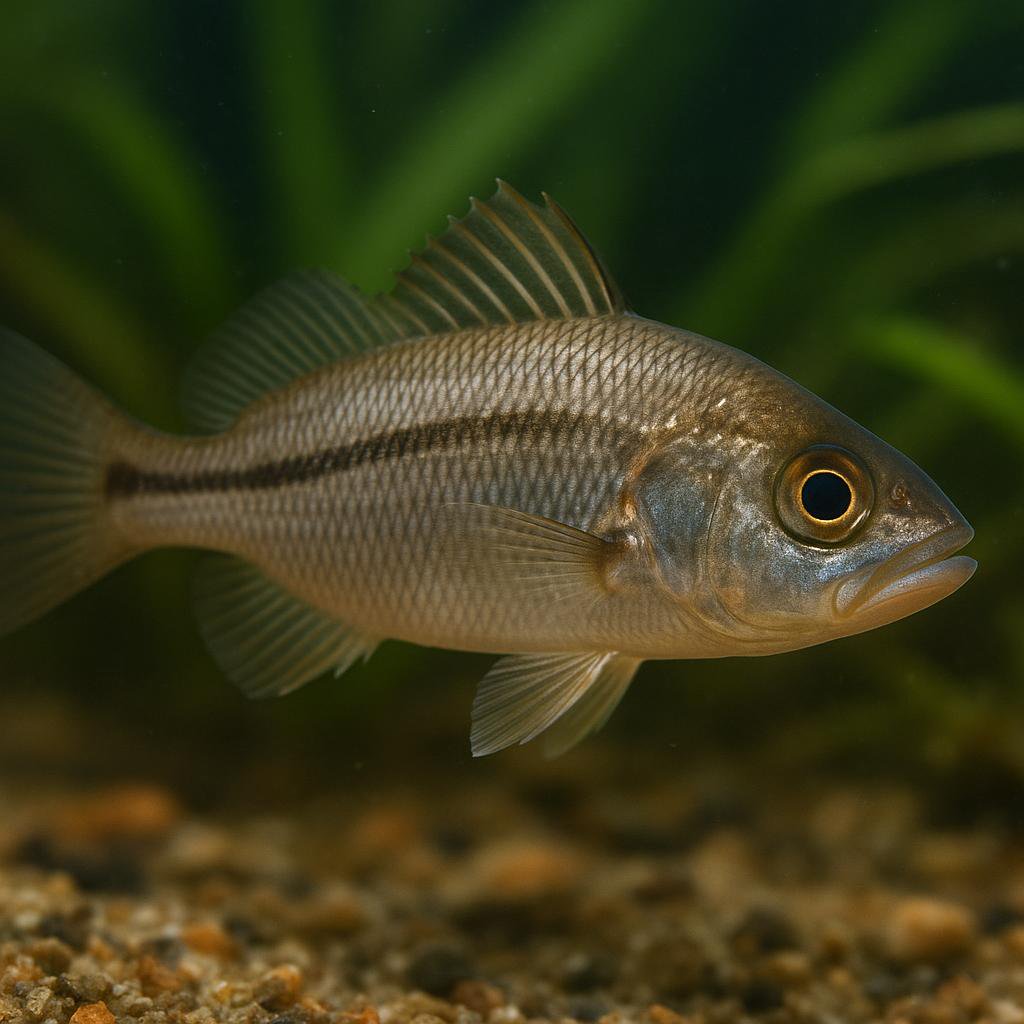
Bellfish
Johnius fuscolineatus
Johnius fuscolineatus (Bellfish/African bearded croaker) is a small coastal sciaenid from the southwestern/western Indian Ocean (Mozambique, South Africa, Madagascar), occurring in shallow marine waters (reported 0–50 m) and also associated with coastal/estuarine habitats.
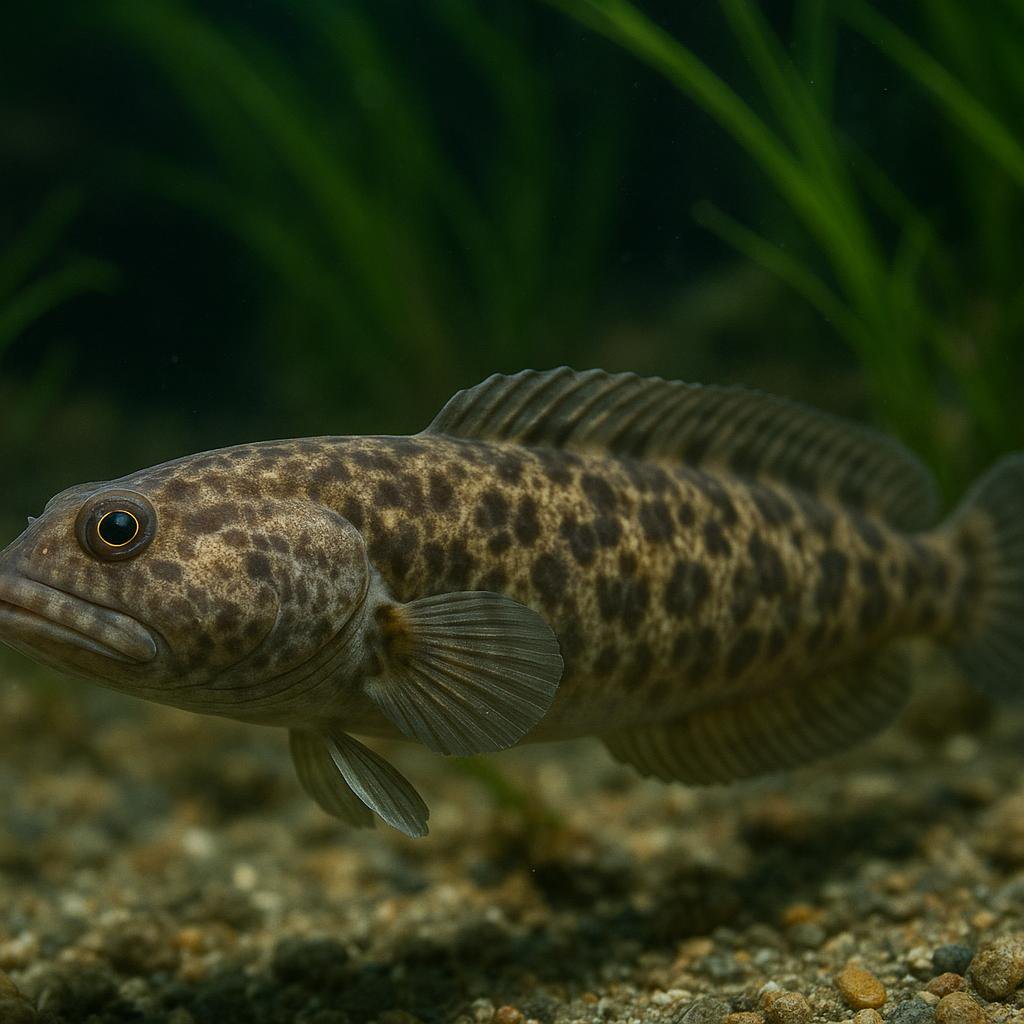
Blotched eelpout
Zoarces gillii
Zoarces gillii is a cold-temperate eelpout from the Northwest Pacific that hugs the bottom over sandy-mud inshore areas and even pushes into estuaries. It's got that long, eel-like body and a sneaky, sit-on-the-bottom predator vibe - very much a cool-water, brackish-to-marine oddball rather than a typical tropical aquarium fish.
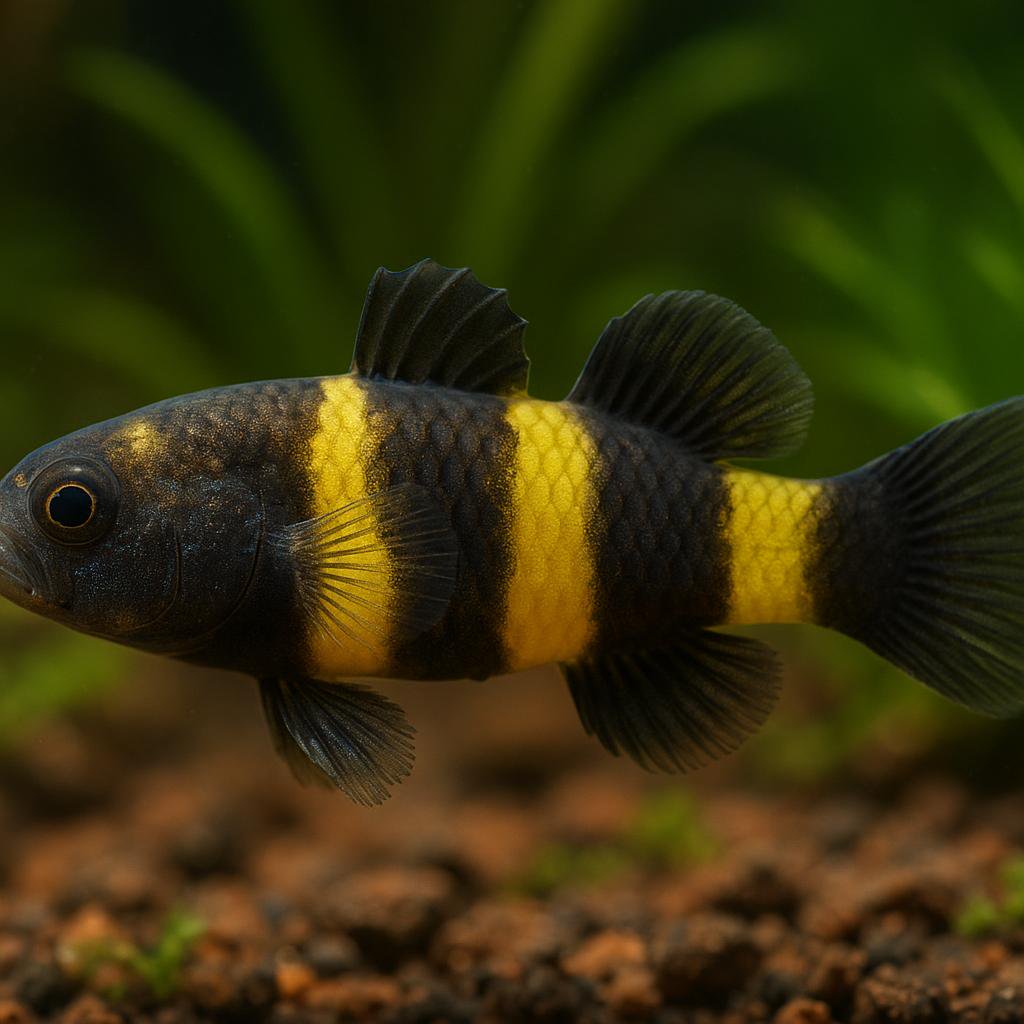
Bumblebee goby
Brachygobius doriae
Brachygobius doriae is one of the classic "bumblebee gobies" - tiny, bottom-hugging little characters that perch on rocks and sand and stare at you like they own the place. They're at their best in a calm setup with lots of caves and leaf litter, and they really shine once you get them eating frozen/live foods reliably (they're slow, picky eaters). Also: they're one of the species that gets mislabeled a lot in shops, so it's super common to see them sold under the wrong bumblebee-goby name.
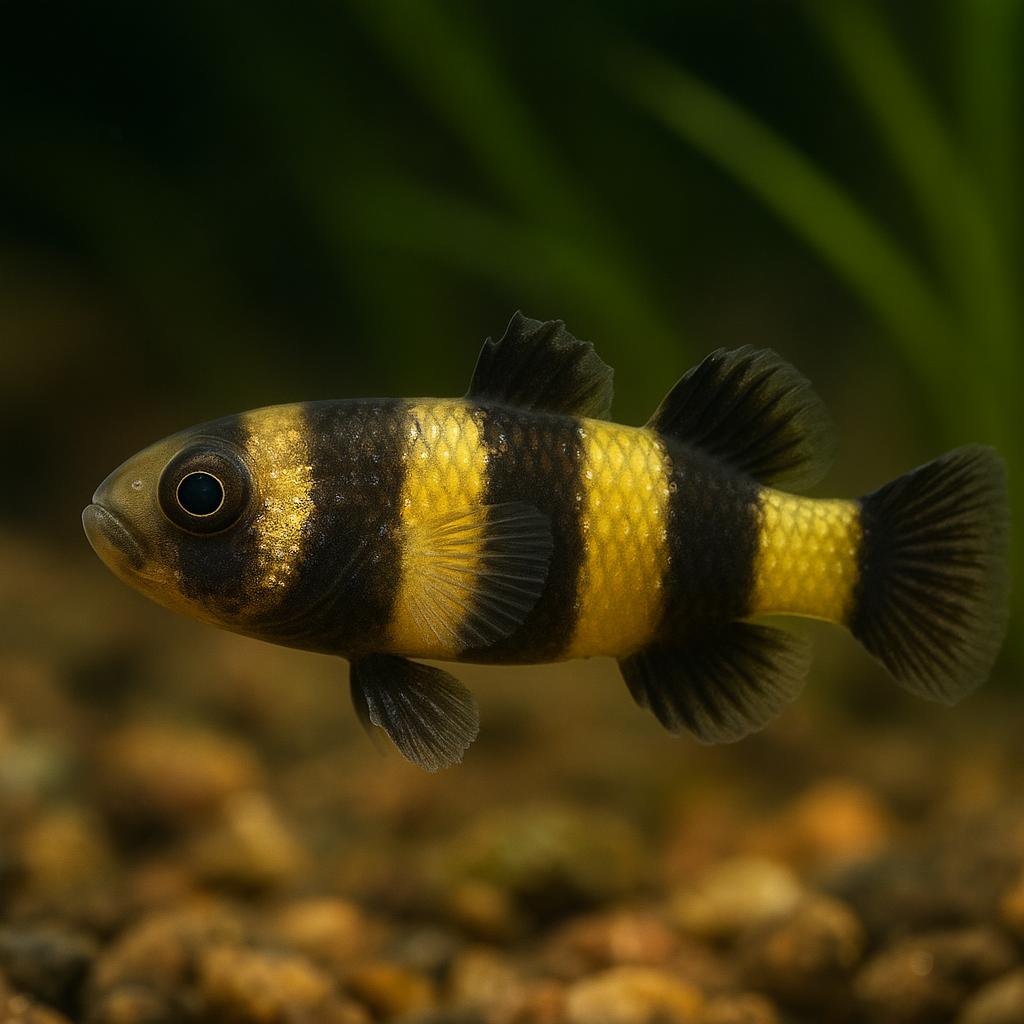
Bumblebee goby (Bumblebee fish)
Brachygobius xanthozonus
This is that tiny little goby with the bold black-and-yellow bands that likes to perch on the bottom and stare back at you like it owns the place. It's happiest in lightly brackish water with lots of little caves and sight-breaks, and it's one of those fish that often refuses flakes-frozen/live meaty foods usually flip the "yes, I will eat" switch.
More to Explore
Discover more brackish species.
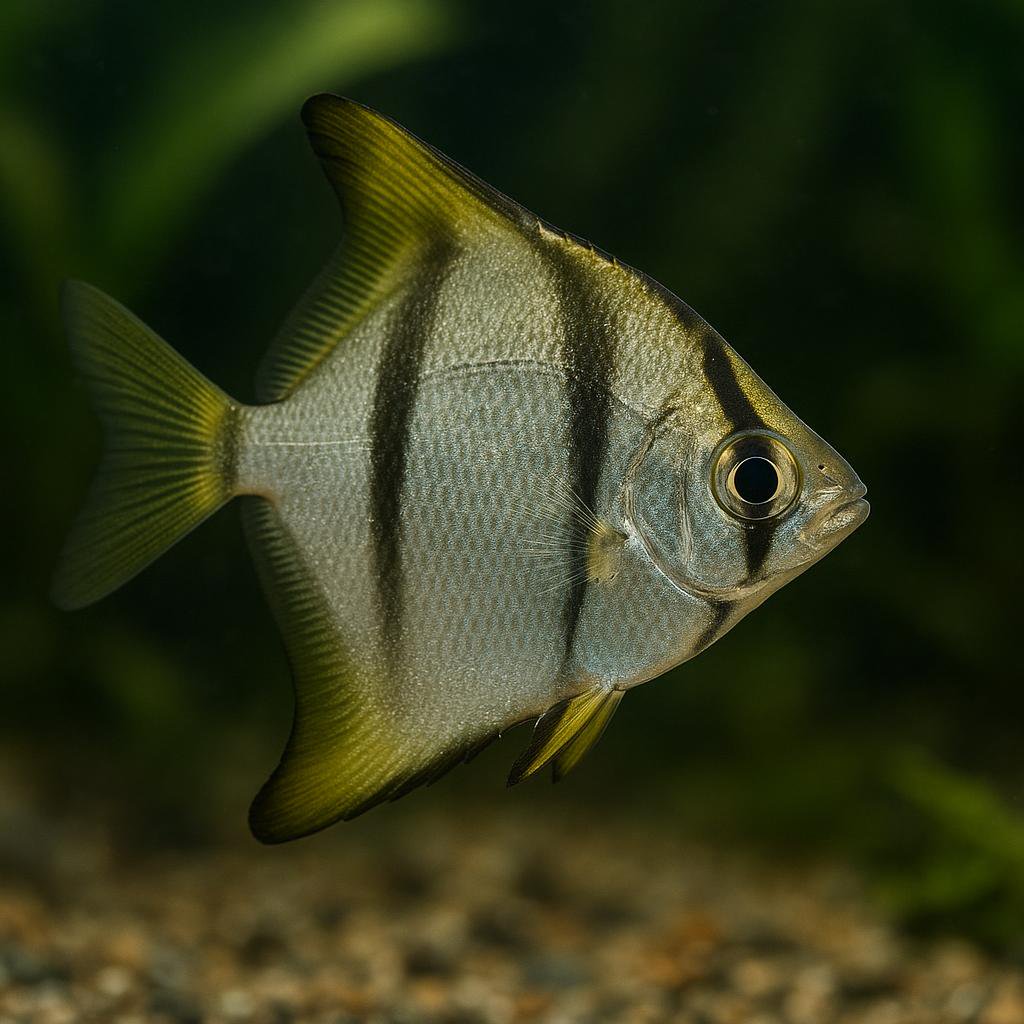
African moony
Monodactylus sebae
This is that shiny, diamond-shaped "mono" that cruises around in a tight pack and looks like a little silver dinner plate with black bars when it's young. The big thing with African moonies is they're euryhaline-so they'll tolerate freshwater as juveniles, but they really shine long-term in brackish (and can be transitioned toward marine as they mature). Give them a big, open tank and a group, and they turn into nonstop, super fun midwater swimmers.
American shadow goby
Quietula y-cauda
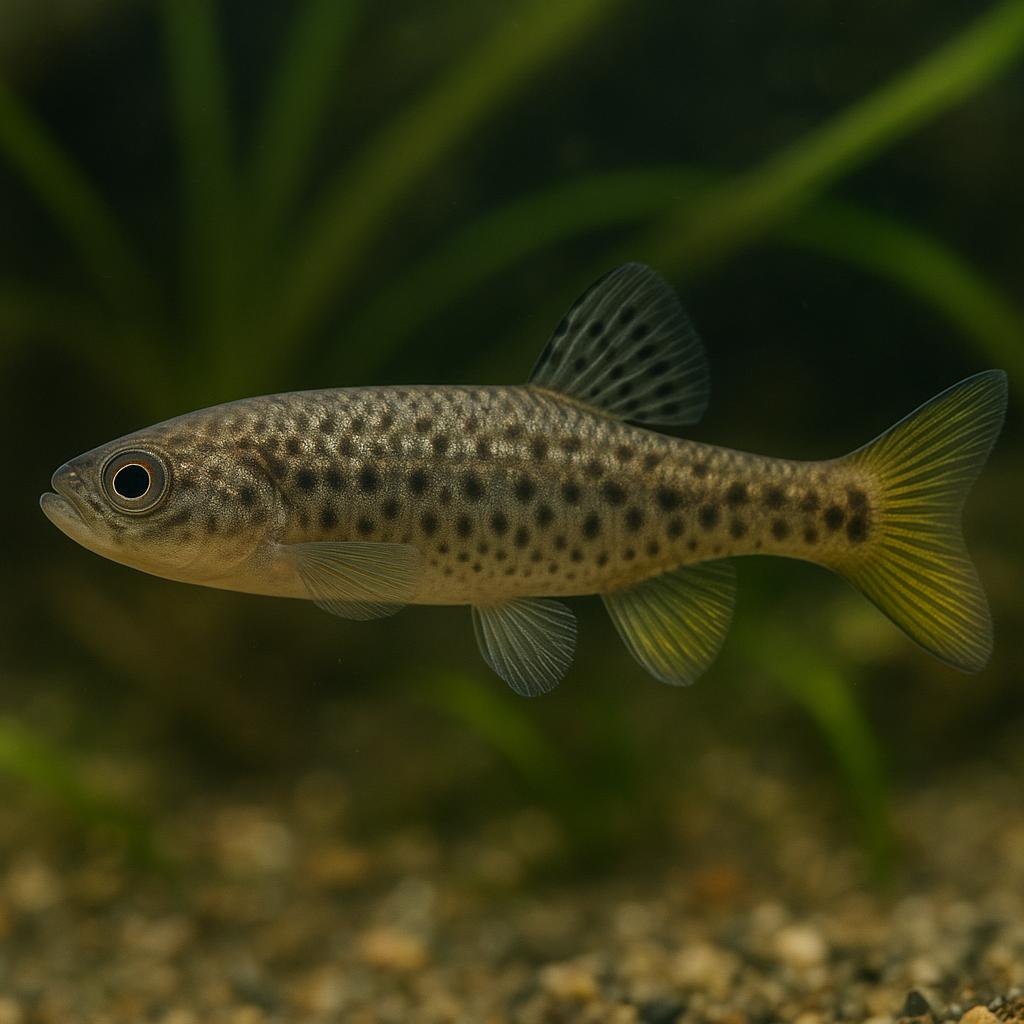
This is a little mudflat goby from California down into the Gulf of California that loves hanging tight to the bottom and vanishing into burrows. The neat tell is that sideways Y-shaped blotch right at the base of the tail, plus the row of dark spots along the side. Its whole vibe is brackish estuary life - calm water, soft substrate, lots of hiding holes.
Atlantic Mudskipper
Periophthalmus barbarus
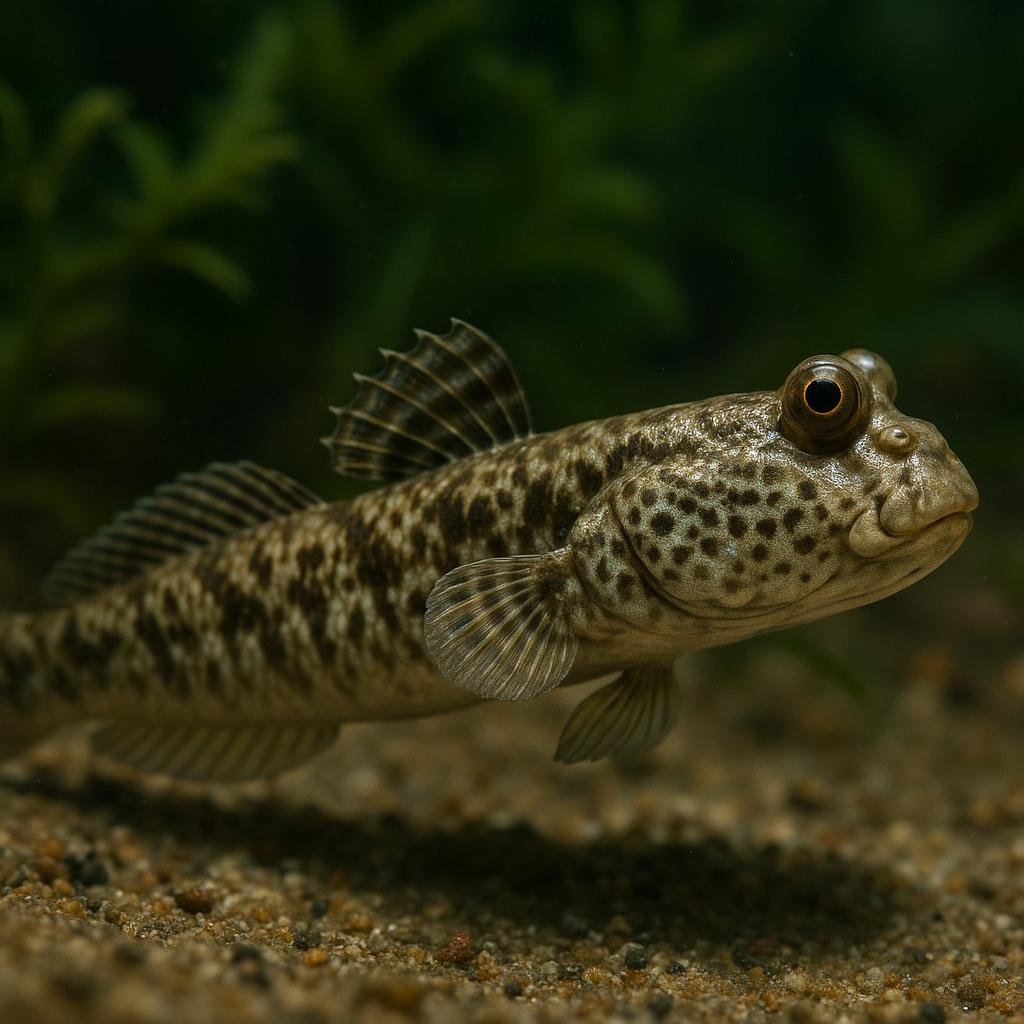
This is that wild little amphibious goby that straight-up climbs around on land like it forgot it was a fish. They've got big googly eyes, tons of personality, and they'll perch, hop, and patrol their territory-honestly more like a tiny crabby lizard than a "regular" aquarium fish.
Banded-tail glassy perchlet
Ambassis urotaenia
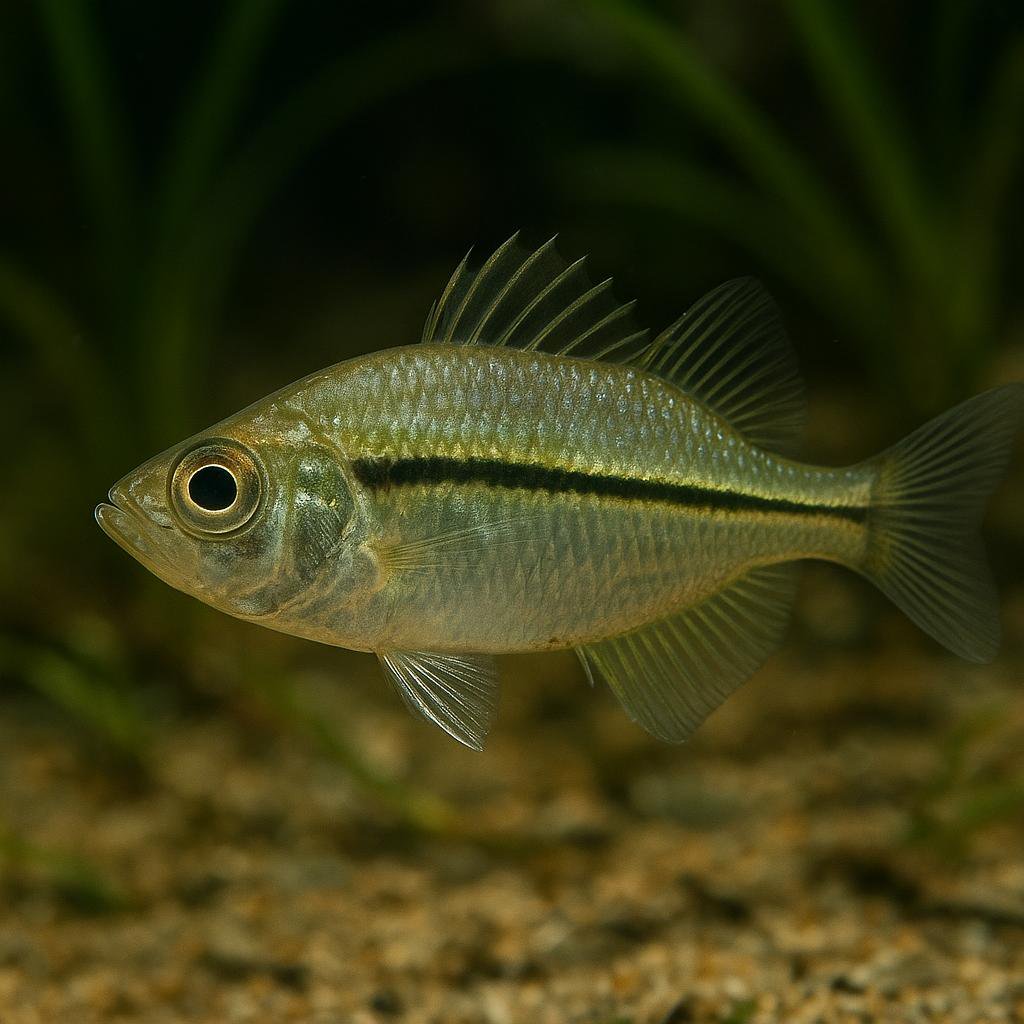
This is one of those see-through glassy perchlets where you can literally watch the organs shimmer when it turns-super cool in the right lighting. In the wild it hangs around river mouths and mangroves and cruises in groups, so it does best when you keep a little gang of them and give them some open swimming room.
Barbed pipefish
Urocampus nanus
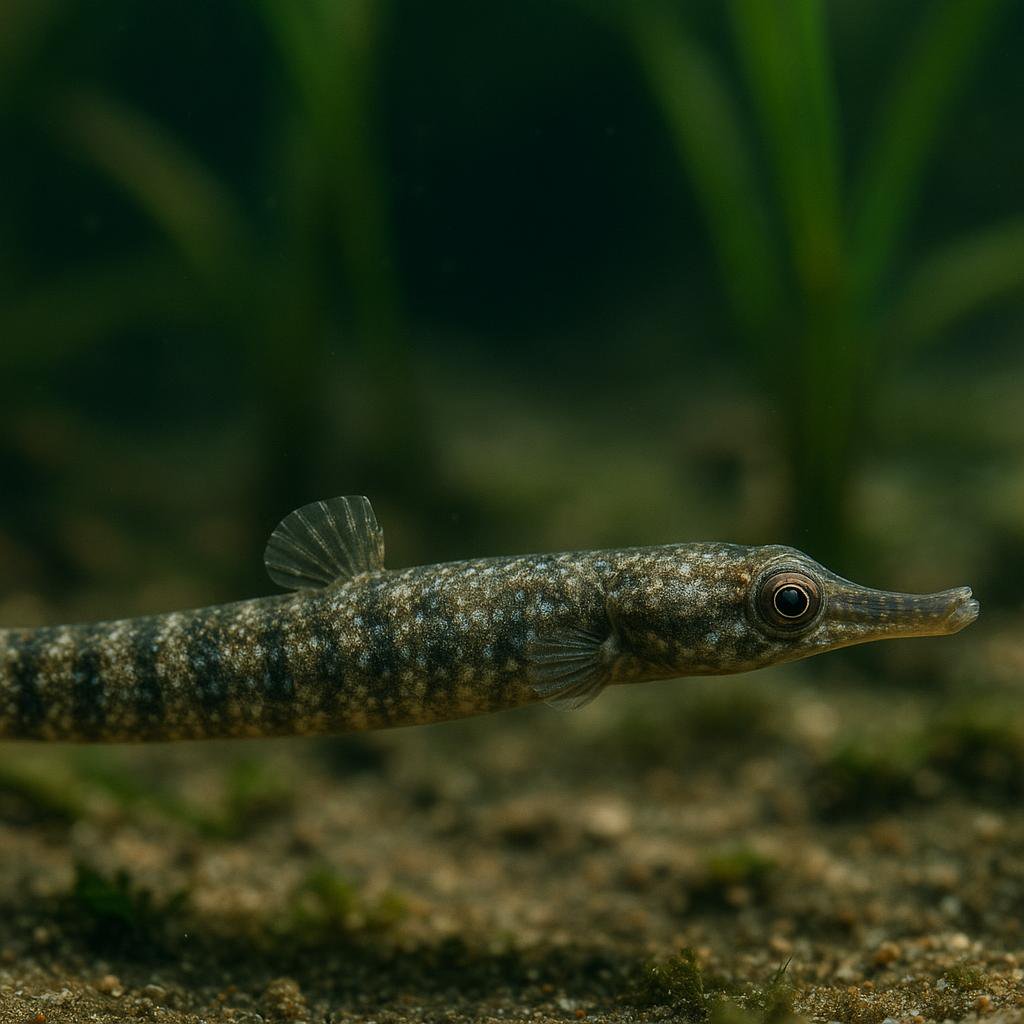
Urocampus nanus (barbed pipefish) occurs in protected inshore and estuarine habitats among seagrass (Zostera) in the Northwest Pacific (southern Japan and adjacent coasts). Like other syngnathids, males brood eggs in a pouch under the tail and produce fully formed young.
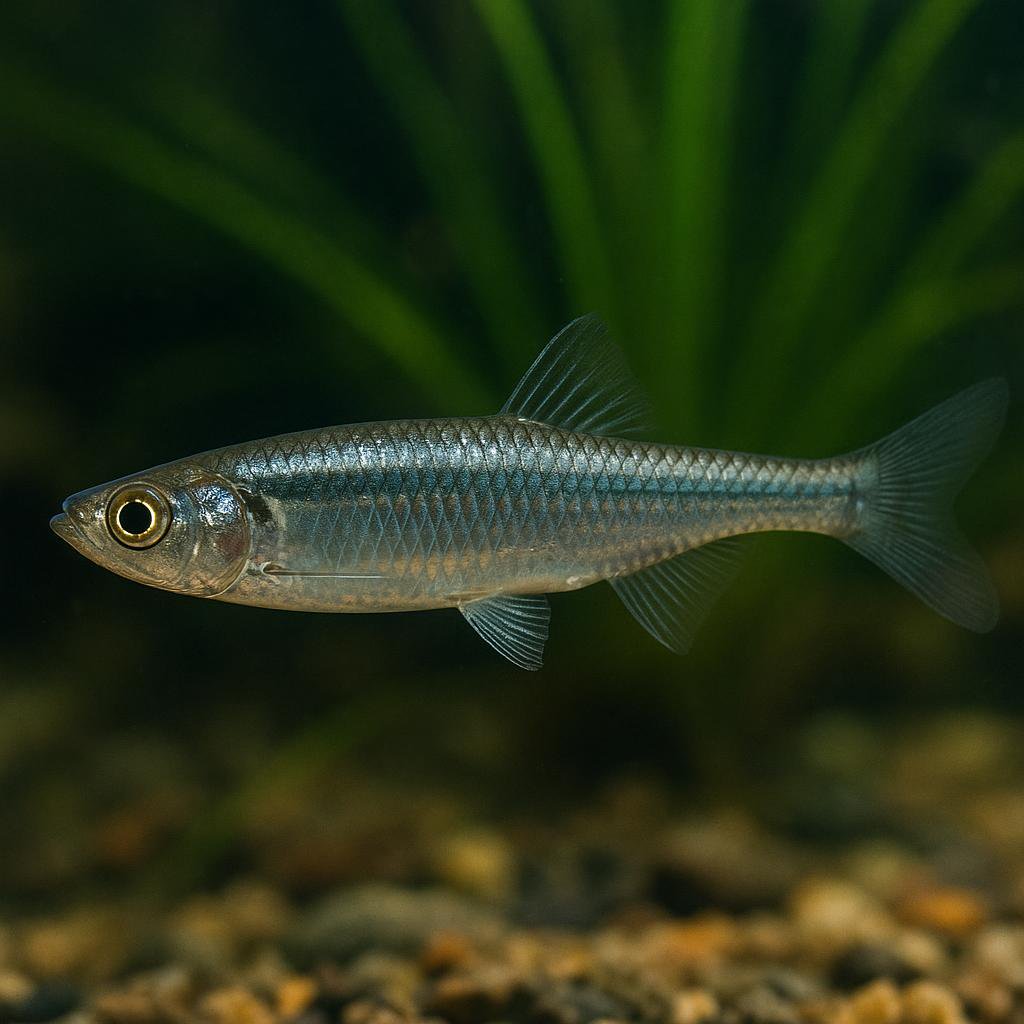
Beach silverside
Atherinella blackburni
This is a little coastal silverside that cruises the shallows in loose groups and flashes like a tiny chrome dart when the light hits it right. In the wild it hangs around beaches, estuaries, and lagoons, picking at small drifting foods in the surf zone. It is cool, but its real "gotcha" is that it is an open-water, salt-tolerant schooling fish that does best in bigger, well-oxygenated setups rather than a typical planted community tank.
Looking for other species?