

Chapala chub
Yuriria chapalae
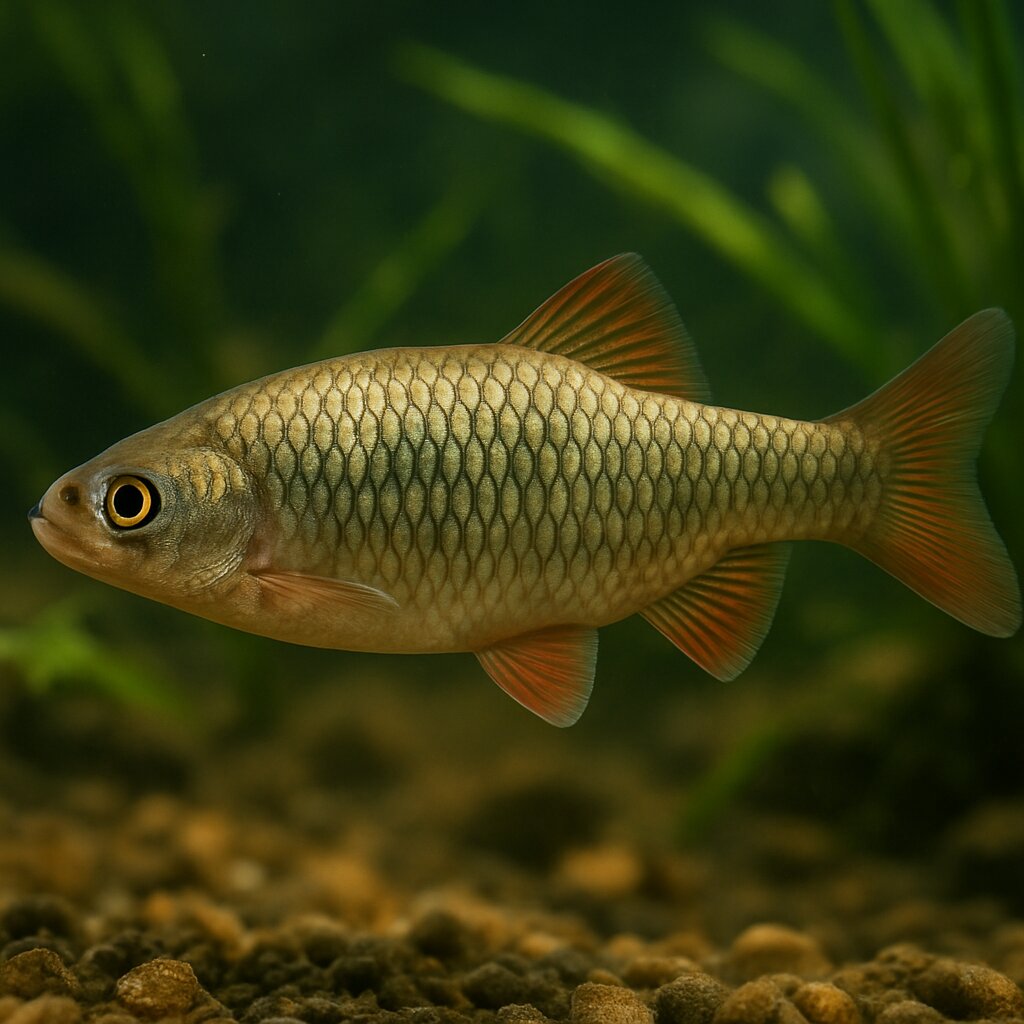
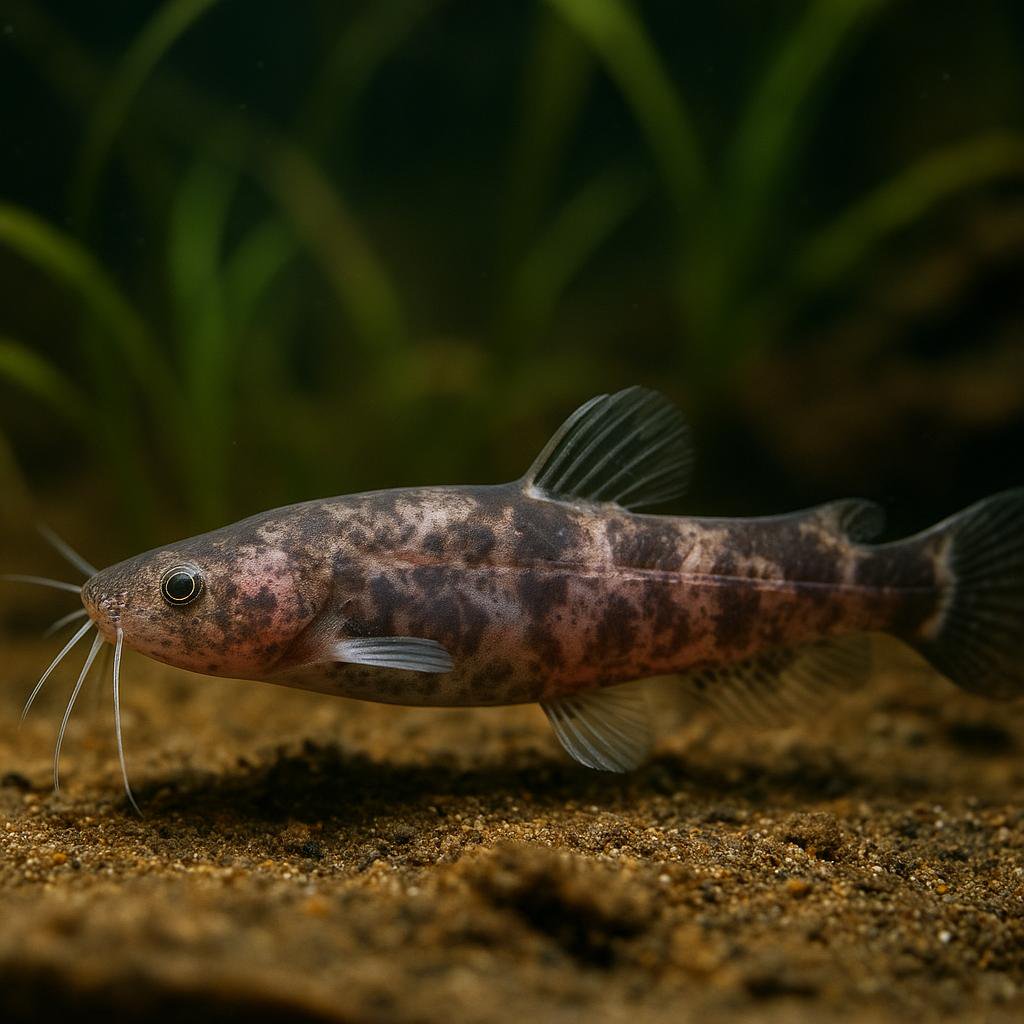
The Chapala chub features a streamlined body, silver scales, and distinct dark spots along its dorsal side.
This page includes AI-generated images. Why am I seeing AI images?
About the Chapala chub
A hardy-looking Mexican minnow from Lake Chapala, the Chapala chub spends its days cruising open water in loose groups and picking at small critters. It grows to about 4 inches and does best in cool to warm, hard, alkaline water like its home lake. It is a conservation-sensitive endemic, so it is more a species to admire and protect than one you will see for sale.
Also known as
Quick Facts
Size
10 cm
Temperament
Peaceful
Difficulty
Expert
Min Tank Size
55 gallons
Lifespan
5-8 years
Origin
North America - Mexico (Lake Chapala and lower Rio Grande de Santiago)
Diet
Omnivore - small invertebrates, algae, detritus; will take quality flakes, pellets, and frozen foods
Water Parameters
18-28°C
7.2-9
8-20 dGH
Need a heater for this species?
This species needs 18-28°C in a 55 gallon tank. Use our heater calculator to find the right wattage.
Calculate heater sizeCare Notes
- Give them room and current: a 6 ft tank (75+ gal) with strong river-style flow, open swimming space, rounded stones, and a tight lid because they launch.
- Run them cool, hard, and alkaline like Lake Chapala water: 60-72 F (15-22 C), pH 7.6-8.3, GH 10-20 dGH, with nonstop surface agitation; heat and low oxygen knock them out fast.
- They are messy, fast metabolisms, so use oversized filtration and extra powerheads, and do big, cool water changes to keep nitrate low.
- Feed like an active omnivore: quality pellets plus frozen/live insects and crustaceans (bloodworm, mysis, chopped earthworms) with some spirulina or blanched greens; smaller meals 2-3x daily beat big dumps.
- Best kept as a species group (6+ spreads the attitude); if you must mix, pick large, fast coolwater fish only, and skip anything small, slow, or long-finned.
- Breeding is classic cyprinid scatter: give them a cool winter, then a spring warm-up and boosted flow; use deep gravel, marbles, or an egg grate and pull adults right after spawning.
- Wild or conservation-line fish often come with hitchhikers, so quarantine hard and watch for ich or columnaris if temps creep up; they get over 7 inches, so plan long term space.
Compatibility
Good Tankmates
- Quick, coolwater schoolers like zebra danios, white clouds, and rainbow shiners - they all like current and keep up with Chapala chub energy
- Sturdy livebearers on the cooler side - variatus platies and swordtails - same pace, no drama
- Peaceful bottom crew that ignore midwater bustle - peppered corys and bristlenose plecos
- River grazers that enjoy flow - hillstream loaches and Garra - oxygen-hungry buddies
- Dojo loaches in a roomy, cool setup with decent flow - they get along fine
Avoid
- Fin-nippers and pushy schoolers like tiger barbs and serpae tetras
- Slow or long-finned fish that hate current - bettas, fancy guppies, gouramis, angelfish
- Tiny nano fish that look like snacks or get run ragged - chili rasboras, ember tetras, celestial pearl danios
- Hot-water specialists that want 26-30 C and low flow - discus, cardinal tetras, rams
Where they come from
Chapala chub are native to Mexico, mostly around Lake Chapala and connected waters in Jalisco and Michoacan. Think shallow, weedy lake margins, canals, and slow rivers with hard, alkaline water and plenty of seasonal swings. It is not a rainforest fish. Winters are cooler, summers warm, and the water can be a bit turbid.
This species is threatened in the wild. If you keep it, source captive-bred stock from reputable hobbyists or conservation-minded breeders. Never release aquarium fish into local waters.
Setting up their tank
Give them space and oxygen. They are active, shoaling fish that appreciate a long tank and a decent current. A tight lid is non-negotiable; they jump when startled.
- Tank size: 55 gallons (200 L) minimum for a group, bigger is better
- Group: 6+ spreads out any pushiness and looks natural
- Temperature: 18-24 C (64-75 F); short warm spells to 25-26 C are fine, avoid hot tanks
- pH: 7.6-8.5; they like it alkaline
- Hardness: medium to hard
- Flow and oxygen: moderate flow, strong aeration, oversized filtration
Aquascape with sand or fine gravel, rounded stones, and hardy plants that tolerate alkaline water, like vallisneria, sagittaria, hornwort, or water sprite. Leave open lanes for swimming. Add a few wood pieces or rock piles for breaks in line of sight.
They do best a bit cooler than classic tropical setups. A small fan on the surface and lots of surface agitation keeps oxygen high. If your tap is soft and acidic, buffer with crushed coral or aragonite in the filter instead of chasing pH with chemicals.
Maintenance matters. They eat well and produce waste, so plan on 30-50% weekly water changes. Use a prefilter sponge on the intake so juveniles and food do not vanish into the canister.
What to feed them
Omnivores with a big appetite. Mine perk up for anything moving and will graze on greens too. Variety keeps them in condition and colors up nicely.
- Staple: quality small pellets (1-2 mm) or a sturdy flake they will chase midwater
- Frozen/live: daphnia, bloodworms, mosquito larvae, mysis, chopped earthworm
- Veg/roughage: spirulina flake, blanched spinach or zucchini slivers, algae wafers
- Occasional treats: fruit flies or small crickets for behavior enrichment
Feed smaller portions 2-3 times a day. They are fast, so spot-feed any slower tankmates. A weekly light fasting day helps keep them trim.
How they behave and who they get along with
They school tight when nervous and spread out once settled. Busy, confident, and a little boisterous at feeding time. Not mean, but they will outcompete timid fish.
- Best kept in a species tank or with robust, fast tankmates
- Good options: larger livebearers (swordtails, platies), sturdy goodeids (Ameca splendens, Xenotoca spp.)
- Also works with similarly sized, cool-alkaline Mexican natives if you can find them
Skip delicate or very warm-water fish, long-finned varieties, and anything that needs soft acidic water. Avoid aggressive cichlids and big predators that will view them as food.
Breeding tips
You can breed Chapala chub, but it is a project. They respond to seasonality. Give them a cool period for a few weeks, then slowly warm, increase water changes, and pour on the live foods. They scatter eggs over fine plants or into nooks; parents do not provide care and will eat eggs if they can get to them.
- Set up a separate 20-30 gallon breeding tank with a sponge filter, moderate flow, and marbles or a mesh grate over the bottom
- Add spawning mops or dense fine-leaved plants
- Condition a group (2-3 males, 3-4 females) on live/frozen foods
- After a big water change and slight warm-up, watch for chasing and quick spawning bursts
- Remove adults after spawning or within 24 hours
- Eggs typically hatch in 2-5 days depending on temperature; gentle aeration helps
- Start fry on infusoria/rotten-wood biofilm or fine powder, then baby brine shrimp as soon as they can take it
- Keep flow mild for fry and stay on top of water quality
Have brine shrimp hatching before you spawn them. Growth is much better, and you will lose fewer fry.
Common problems to watch for
Heat and low oxygen are the two big tank killers. This is a cool-alkaline fish that likes fresh, moving water. In cramped, warm setups, you will see stress and disease.
- Oxygen stress: rapid gill movement, hanging near the surface; add flow and cool the tank
- Temperature creep: anything consistently above 26 C will wear them down
- Columnaris and fin rot: shows up in warm, messy tanks; improve hygiene fast
- Ich after temperature swings: quarantine new fish and raise temp gradually if treating
- pH/Hardness mismatch: in soft acidic water they go off food and fade; buffer the water
- Jumping: startled fish will clear the rim; keep lids tight and reduce sudden light changes
Quarantine every new fish for 3-4 weeks. This species does not handle introduced pathogens well, and you do not want to risk a whole group.
Similar Species
Other freshwater peaceful species you might be interested in.
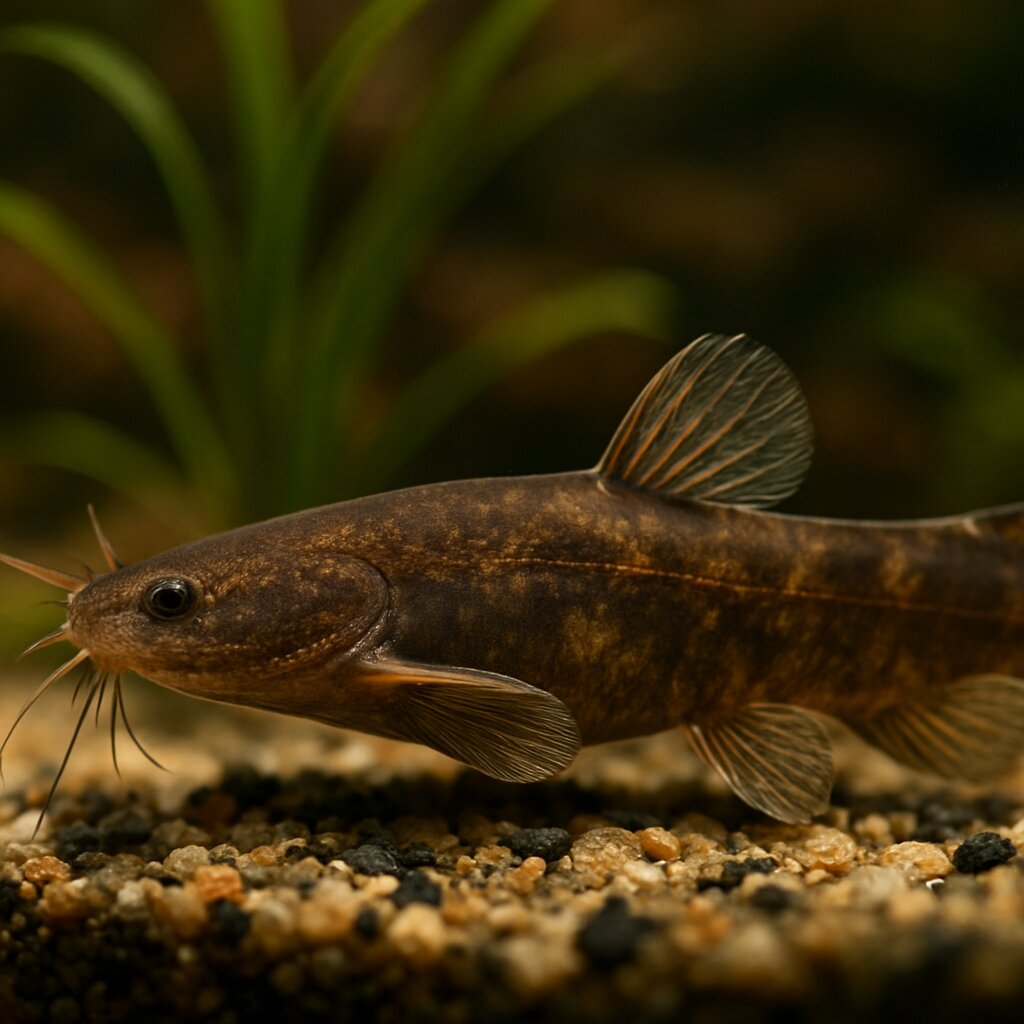
Amphilius dimonikensis
A small loach catfish endemic to the Mpoulou River in the Mayombe (Dimonika Biosphere Reserve), Republic of the Congo. Amphilius dimonikensis has a subtle banded pattern and inhabits fast, clear streams over rock and sand. In aquaria, prioritize strong, well-oxygenated flow with rounded stones and sand to mimic hillstream conditions.
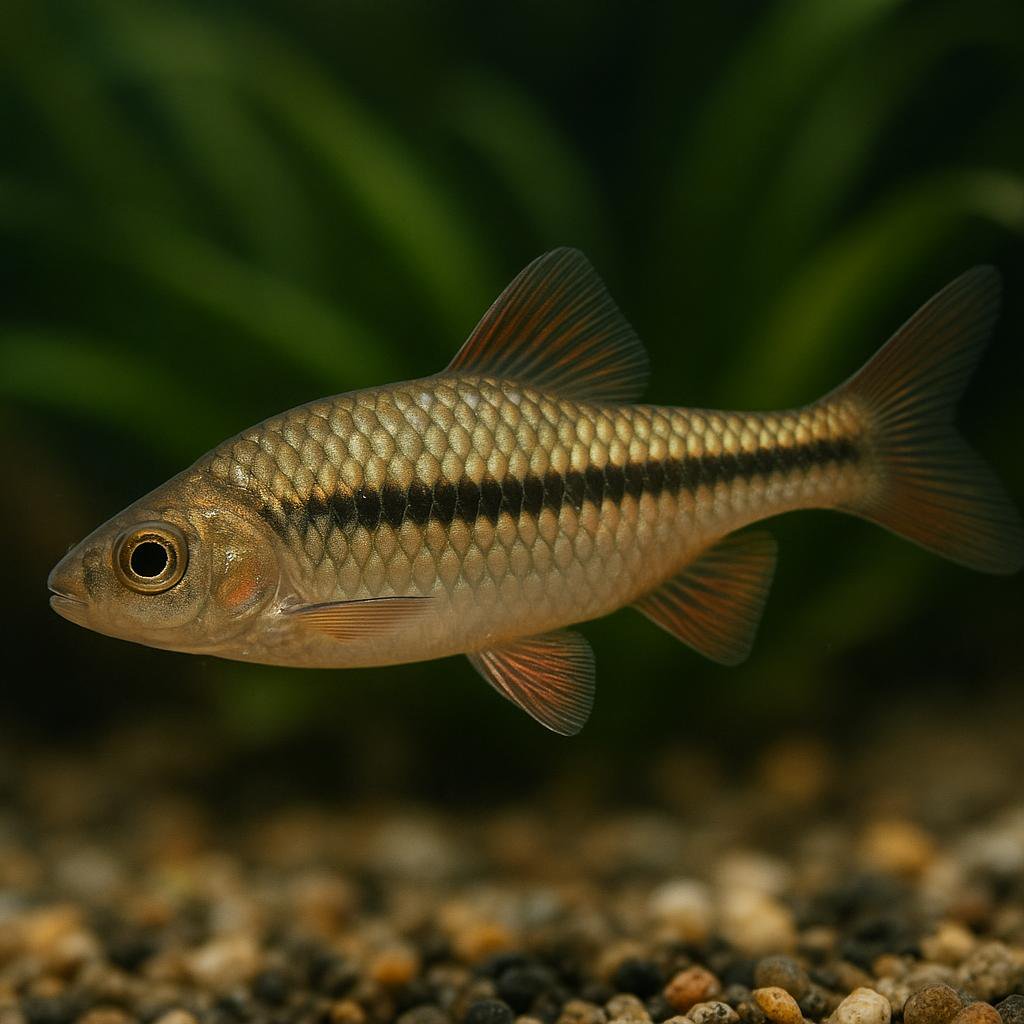
Aboina barb
Enteromius aboinensis
Enteromius aboinensis (the Aboina barb) is a small West African barb with a clean black midline stripe and a little spot right at the base of the tail. It does best when you treat it like a proper schooling fish - keep a decent group and give it plants around the edges with open swimming room in the middle.
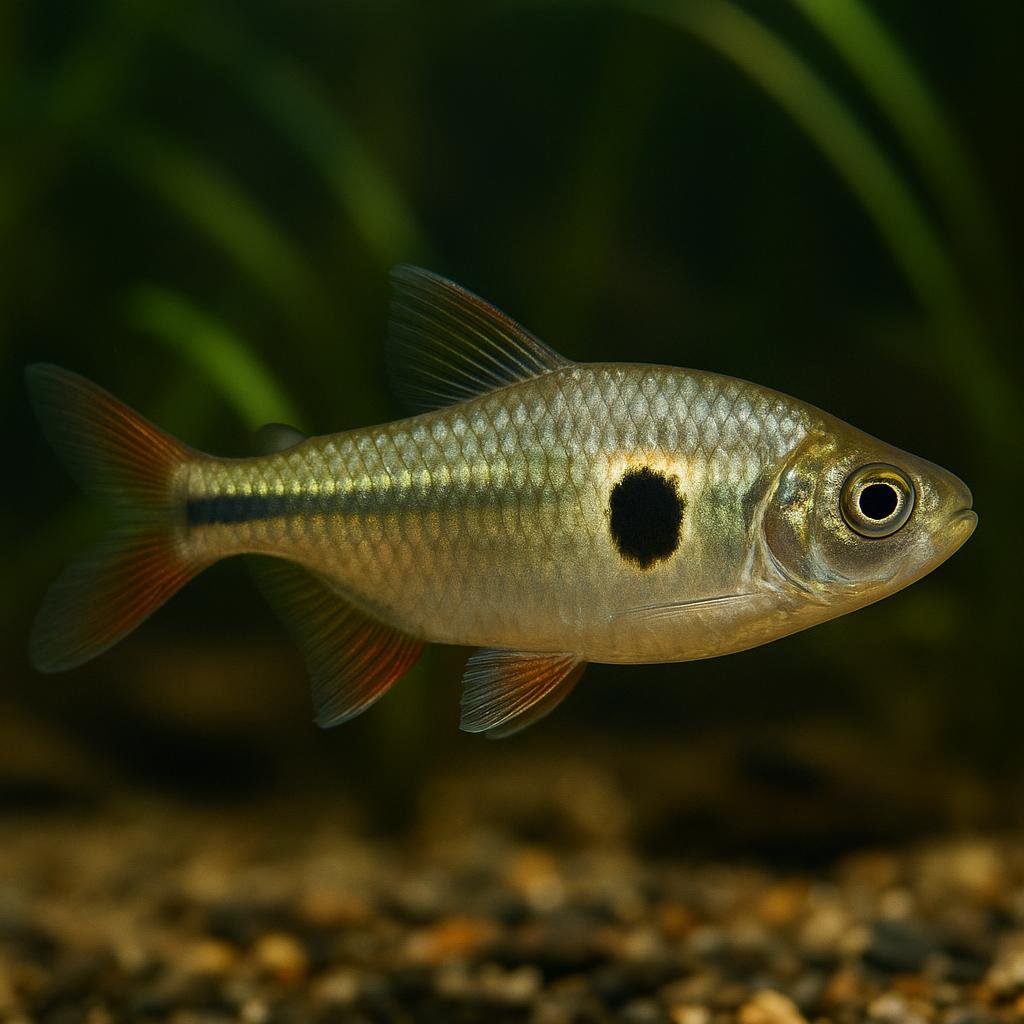
Ajuricaba tetra
Jupiaba ajuricaba
Jupiaba ajuricaba is a South American freshwater characin from the Amazon basin in Brazil (rio Negro, rio Solimões, and rio Tapajós basins). It reaches about 9.5 cm SL and is diagnosed by a narrow dark midlateral stripe, an elongated humeral spot, and an ocellated spot on the upper caudal-fin lobe. Wild specimens have been collected from blackwater forest streams and also oxbow-lake habitats.
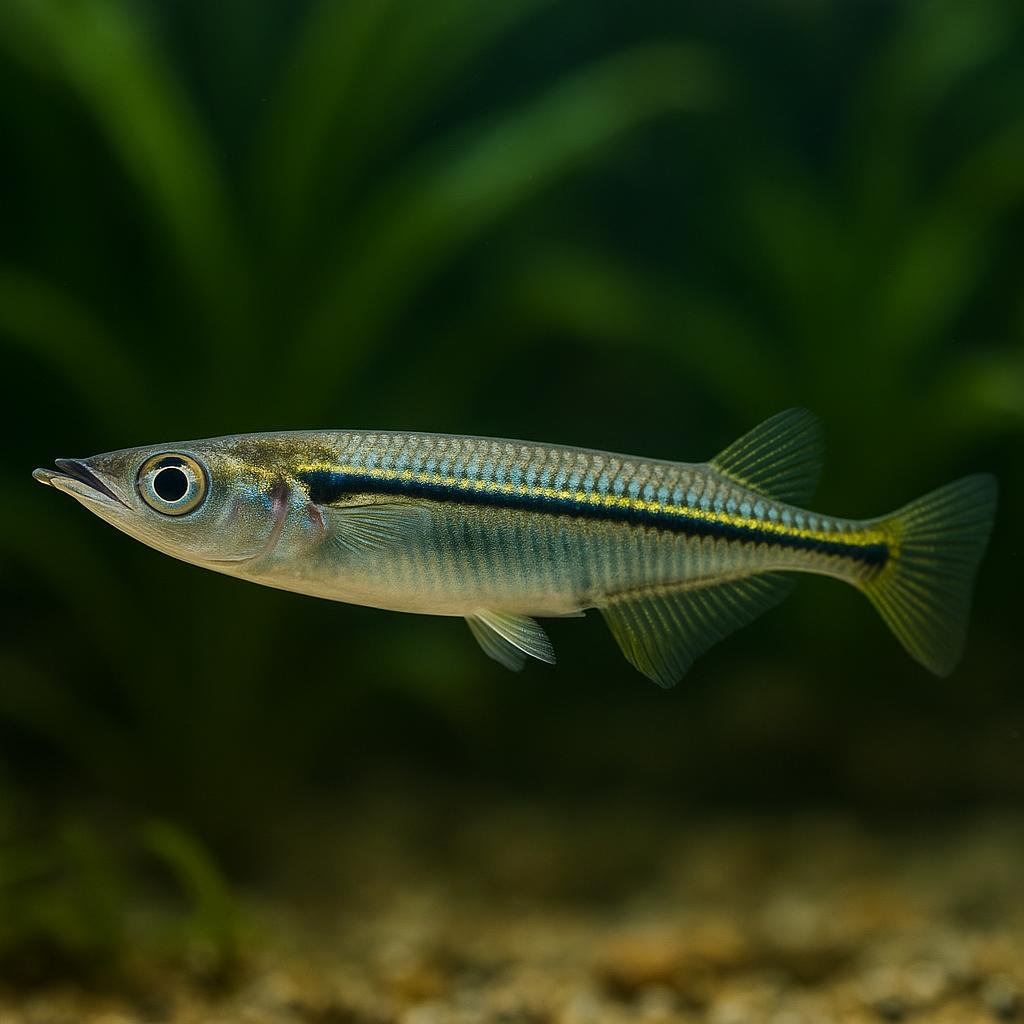
Allen's river garfish
Zenarchopterus alleni
A poorly known freshwater halfbeak endemic to West Papua (Mamberamo River), described from a single specimen (~13 cm SL). Beyond basic habitat/occurrence, little is published about its ecology or aquarium suitability; assume it is a surface-oriented, jump-prone halfbeak only by analogy with related taxa.
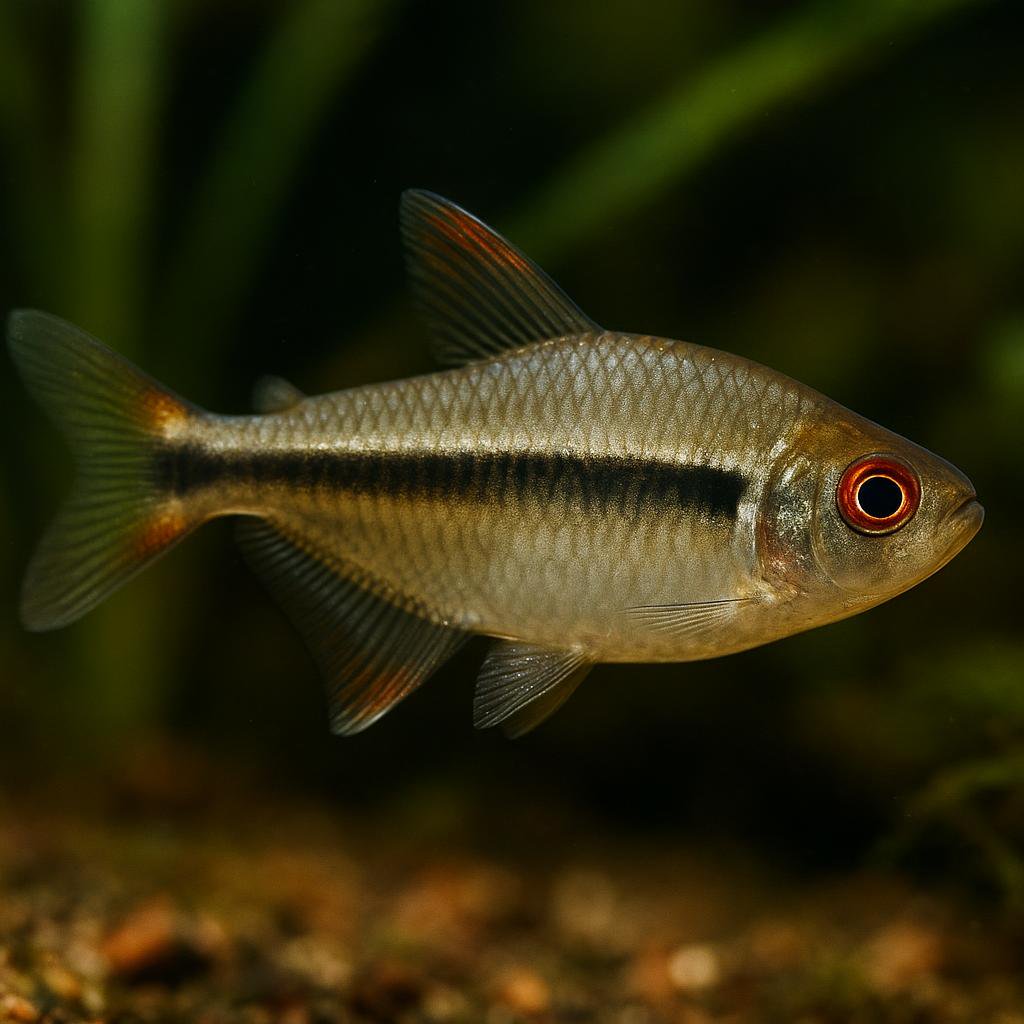
Amapa tetra
Hyphessobrycon amapaensis
This is a tiny, super sleek little tetra with a clean red stripe down the side that really pops once its settled in. It does best in a planted, slightly tinted "creek-style" setup and looks way cooler when you keep a proper group so they school and flash that line together. If you can give it soft, slightly acidic water and a calm community, its an easy fish to fall for.
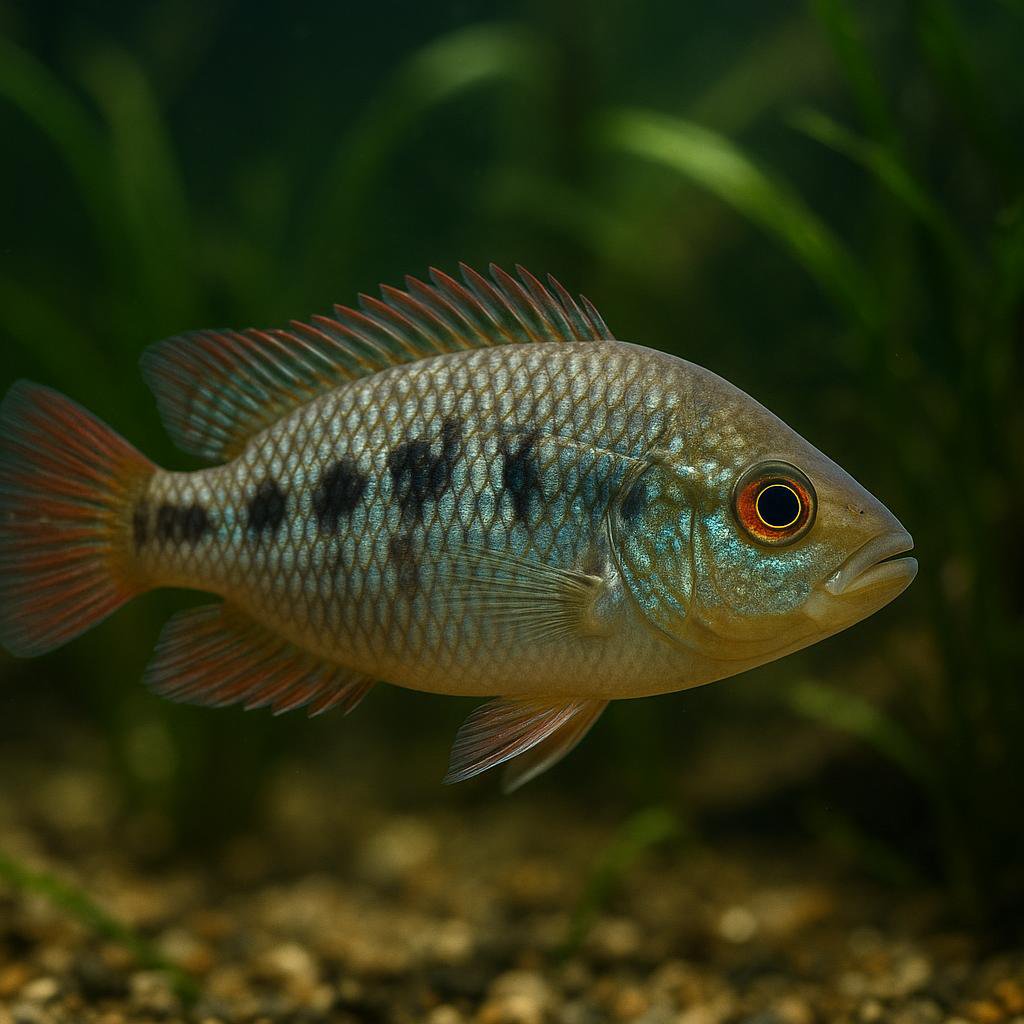
Amatlan chub
Yuriria amatlana
Yuriria amatlana (the Amatlan chub) is a little Mexican native minnow from the Ameca River basin. Its wild range is pretty limited and it is listed as Endangered, so its care info in the aquarium hobby is basically nonexistent and its availability is usually low. In the original species description, preserved fish show a dark lateral stripe with a darker patch on the caudal peduncle, and they can have tiny barbels at the mouth corners.
More to Explore
Discover more freshwater species.
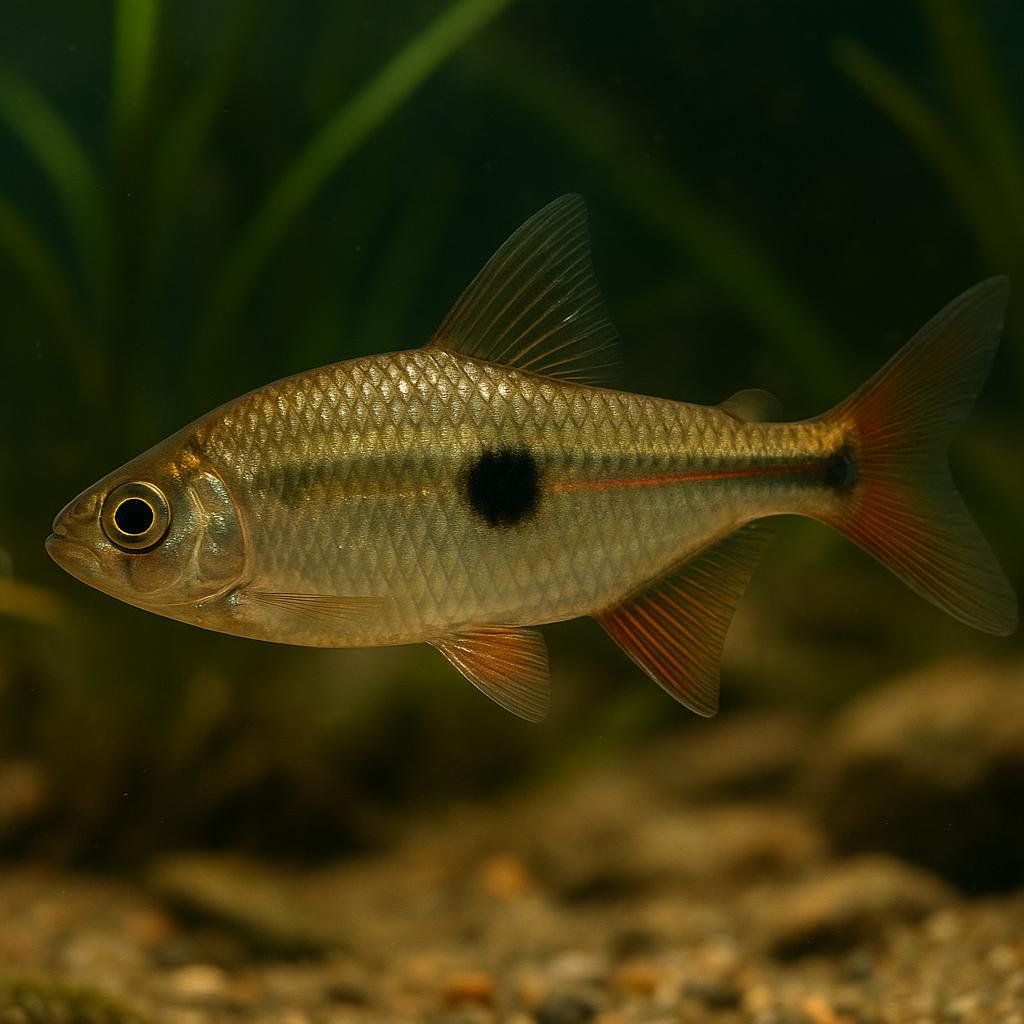
Jupiaba kurua
Small South American characin endemic to the upper rio Curuá (rio Xingu basin, Brazil). Reaches about 8.7 cm SL and inhabits clearwater rivers. Distinguished by dark dots on the bases of many lateral scales and a distinct dark caudal‑peduncle spot. Reported diet indicates omnivory, including aquatic insects, small fishes, and fragments of Podostemaceae and filamentous algae.
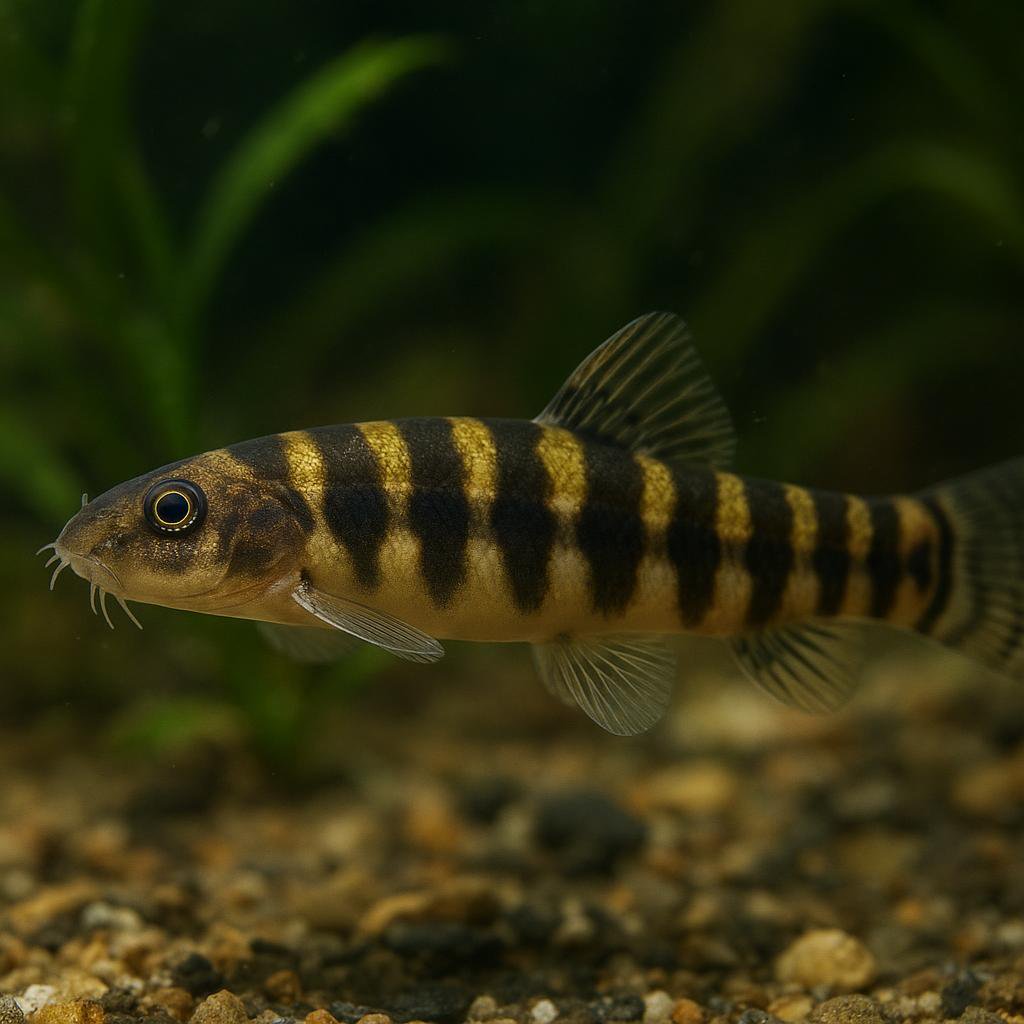
Altipedunculata stone loach
Schistura altipedunculata
Schistura altipedunculata is one of those little stream loaches that wants clean, well-oxygenated water and a bunch of rock nooks to claim as home. It is a bottom-hugger that will spend its day scooting from crevice to crevice, and it tends to get a bit spicy with its own kind if you do not give it enough hiding spots.
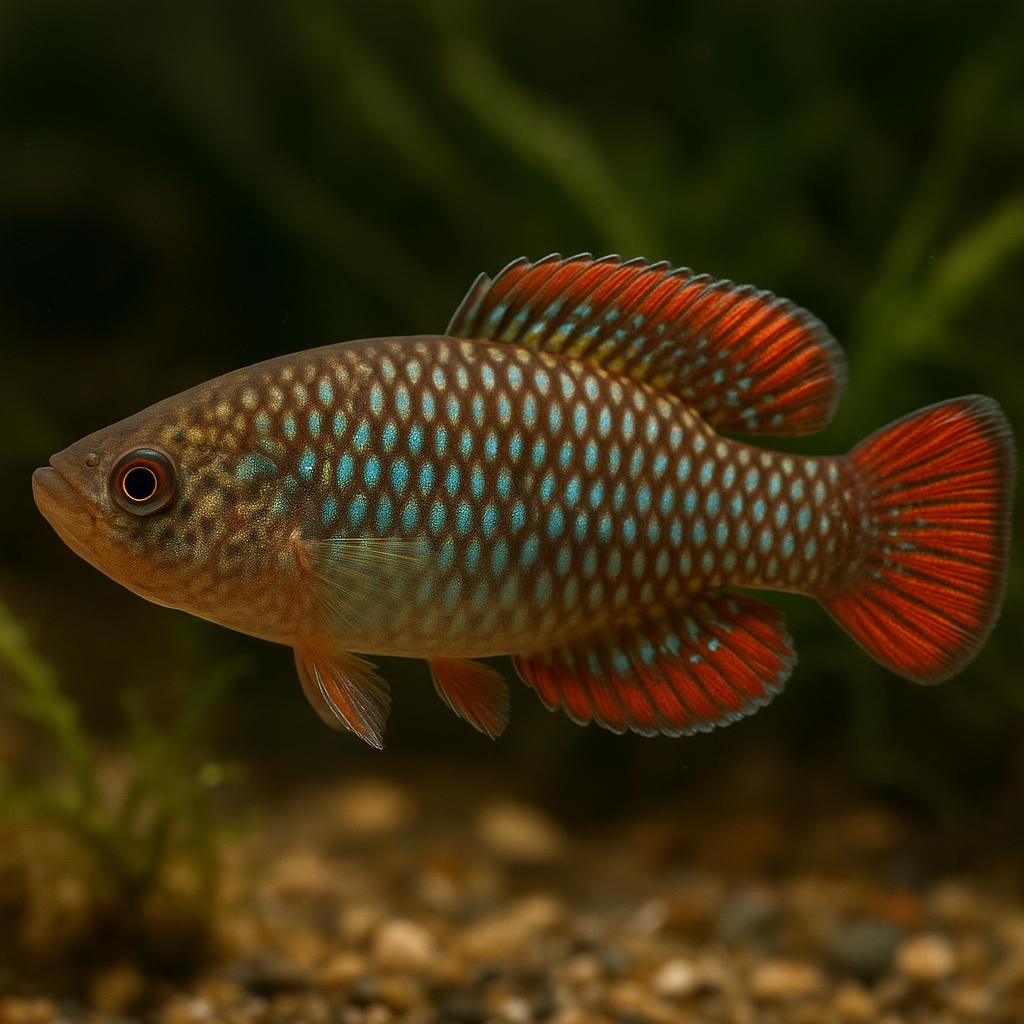
American flagfish
Jordanella floridae
Jordanella floridae is that little Florida native with the red-and-cream striping that really does look like a tiny flag once a male colors up. They graze algae like champs (especially stringy/hair algae), but they have a bit of attitude - give them plants and space so the bossy behavior stays manageable. Bonus: the male guards the eggs and will actively fan them, which is pretty fun to watch.
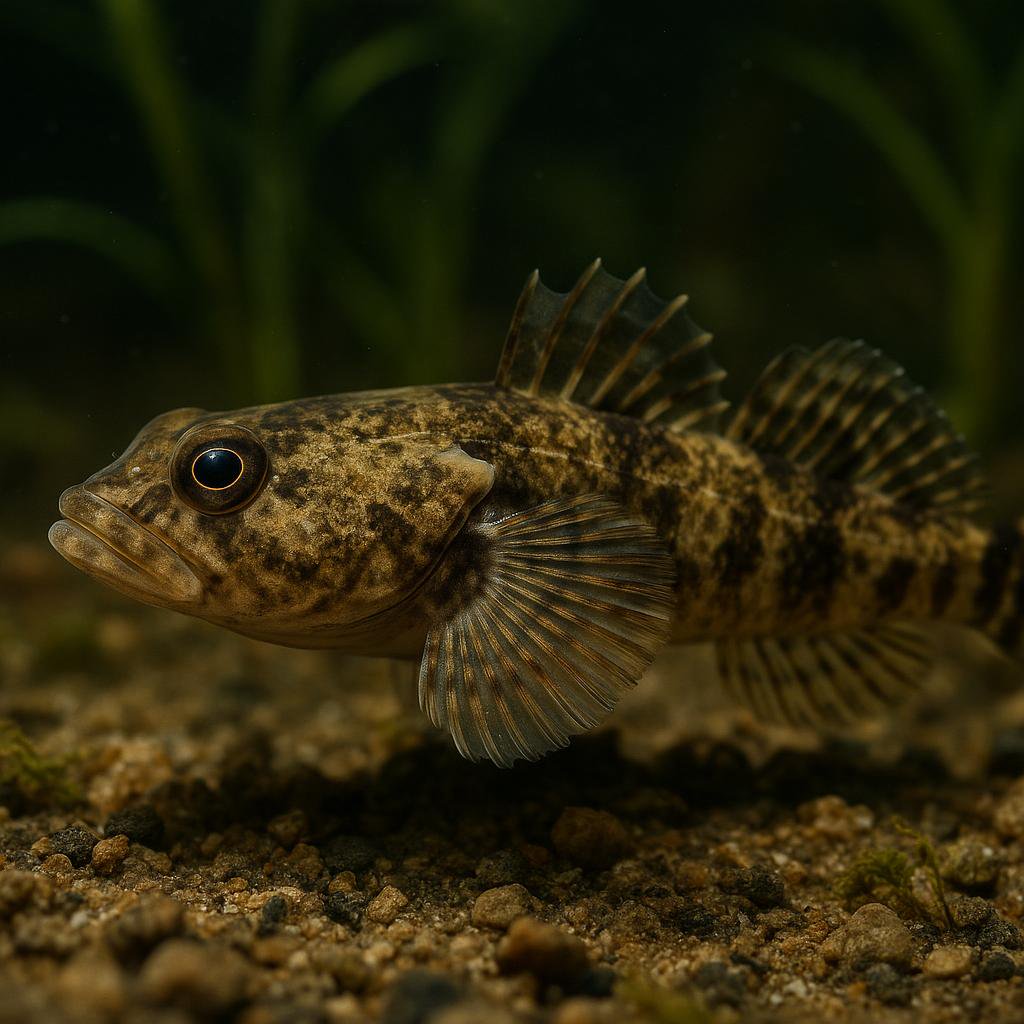
Amur sculpin
Alpinocottus szanaga
This is a little coldwater sculpin from the Amur drainage - a bottom-hugging, rock-and-gravel fish that spends its day wedged under stones and darting out to grab food. Super cool behavior and attitude, but it is absolutely not a warm tropical community fish - it wants chilly, fast, oxygen-rich water and will bicker with other bottom fish.
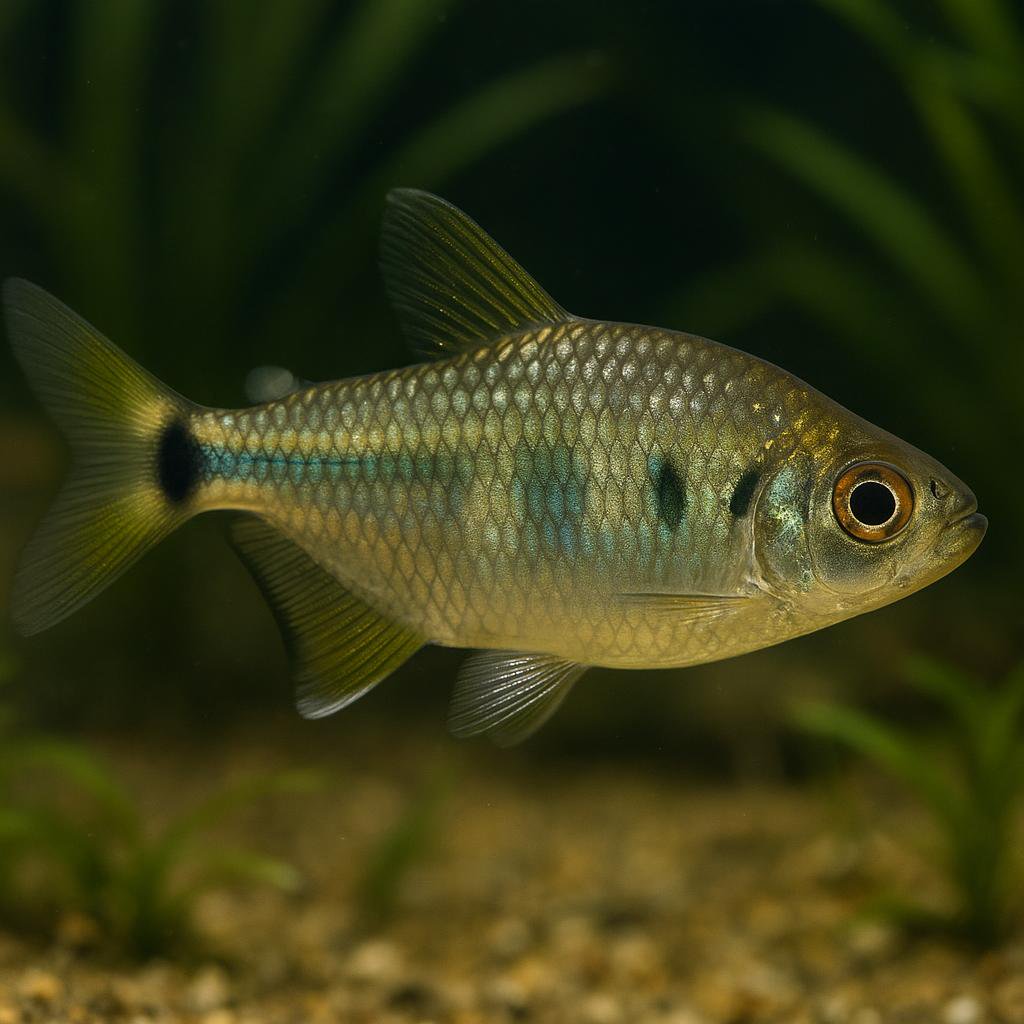
Andrica moenkhausia
Moenkhausia andrica
Moenkhausia andrica is a little Brazilian characin from the Tapajos system that tops out around 7 cm (about 2.8 inches) standard length. It has a neat netted (reticulated) scale pattern plus a dark spot on the caudal peduncle, and the really wild part is that mature females can have tiny fin hooklets too, which is usually a male-only thing in a lot of characins.
Anhanga pygmy pencil catfish
Potamoglanis anhanga
This is a truly tiny Amazonian trichomycterid catfish - like 1.3 cm max - so it is more of a micro-predator oddball than a typical community catfish. It is the kind of fish that disappears into sand, leaf litter, and plant roots, and you will spend way more time setting up the right micro-habitat than you will actually seeing it.
Looking for other species?