

Mandeville's loach catfish
Zaireichthys mandevillei
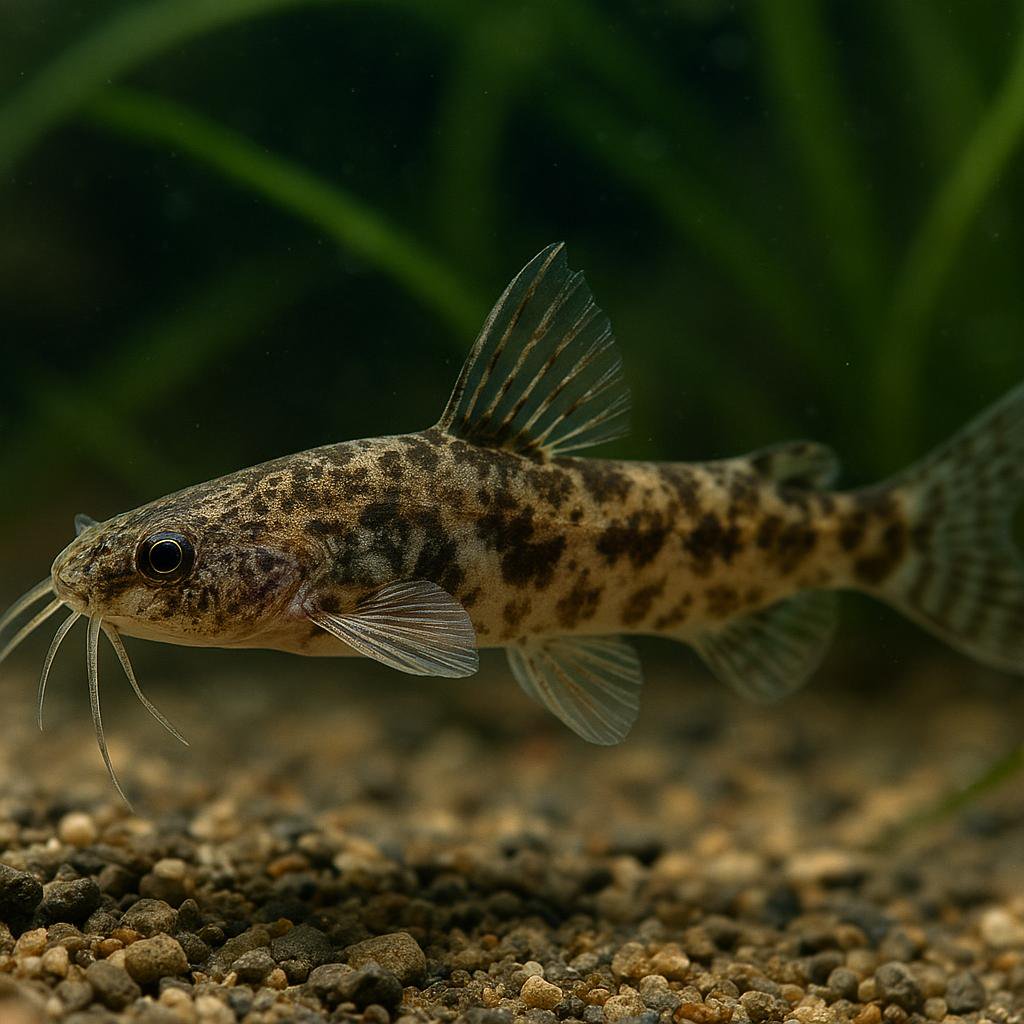
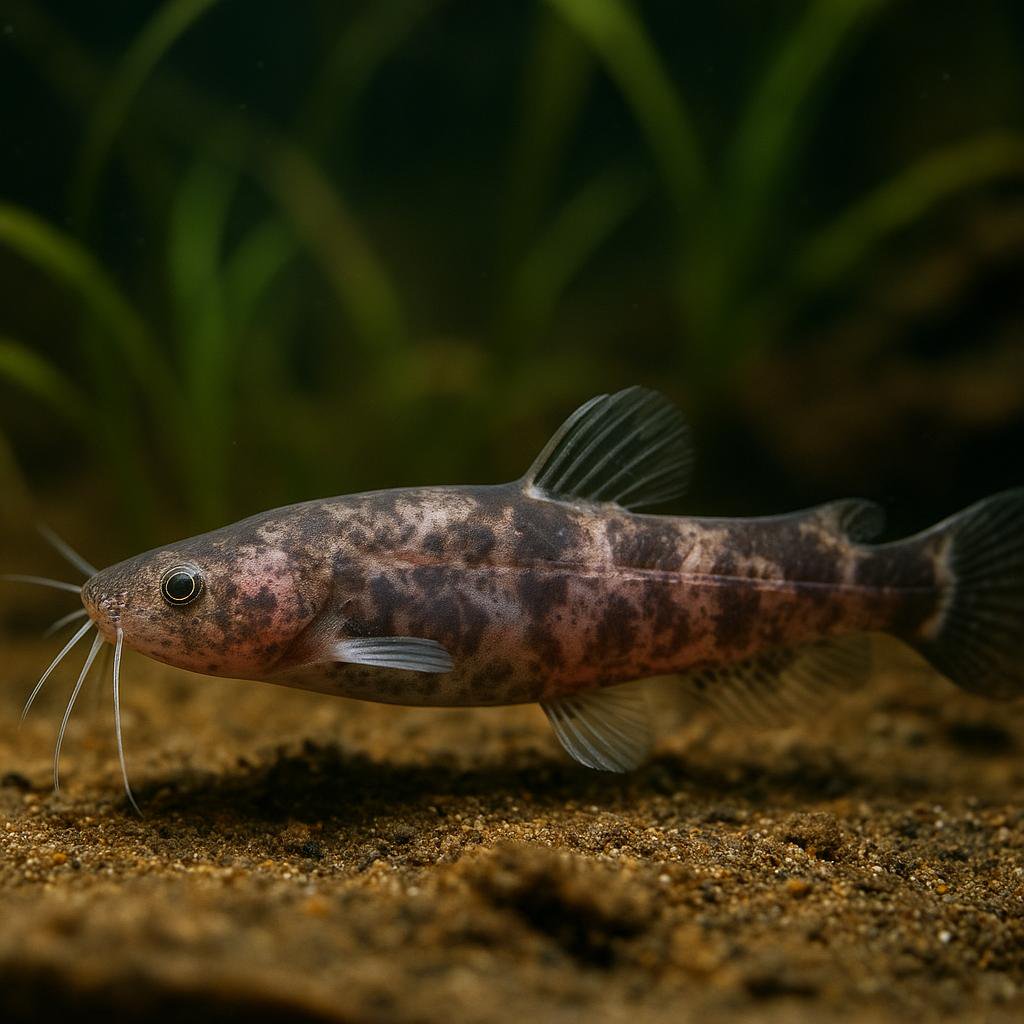
Mandeville's loach catfish features a streamlined body, distinctively patterned with dark spots against a lighter background.
This page includes AI-generated images. Why am I seeing AI images?
About the Mandeville's loach catfish
This is a tiny little Congo River loach catfish that stays about an inch long, with a bold dark collar right behind the head and a speckly pattern. Its basically built for life in moving water - it likes to tuck into sand and squeeze around rocks - so its a super cool "micro-catfish" for a river-style setup if you can actually source one.
Also known as
Quick Facts
Size
2.6 cm
Temperament
Peaceful
Difficulty
Advanced
Min Tank Size
10 gallons
Lifespan
3-6 years
Origin
Central Africa (Congo River Basin)
Diet
Micro-predator/invertivore - tiny frozen foods (cyclops, daphnia), live baby brine, crushed sinking pellets
Water Parameters
22-26°C
6-7.5
1-12 dGH
Need a heater for this species?
This species needs 22-26°C in a 10 gallon tank. Use our heater calculator to find the right wattage.
Calculate heater sizeCare Notes
- Give them a long tank with real flow - think river vibes: powerhead or strong filter return, lots of oxygen, and no dead spots where gunk settles.
- Go sand or very smooth fine gravel and stack rounded rocks to make tight cracks and low caves; they like to wedge themselves in and will shred barbels on sharp stuff.
- Keep the water on the cool side of tropical: about 72-78F, pH roughly 6.5-7.5, and low-ish nitrates; they sulk hard in warm, stale water.
- They are tiny-mouthed micropredators, so skip big pellets - feed sinking micro pellets, crushed foods, blackworms, small bloodworms, and baby shrimp; do most of it after lights-out because they hunt more then.
- Do not trust them with anything shrimp-sized or fry-sized; they are fine with calm midwater fish that will not steal every bite, but avoid hyper food-bullies and nippy tankmates.
- If you keep more than one, build lots of separate rock slots so they can claim spaces; in cramped layouts they get pushy and the weaker one just hides and starves.
- Watch for the classic hillstream issues: rapid breathing and hiding usually means low oxygen or dirty substrate, and barbel erosion means the bottom is too sharp or too filthy.
- Breeding is possible but not common - they like to spawn in tight crevices with strong flow, and you will almost never see eggs unless you give them removable rock piles or small tubes to check.
Compatibility
Good Tankmates
- Small, chill midwater schoolers like ember tetras, glowlight tetras, or rummynose tetras - they ignore the loach cats, and the cats just do their sneaky bottom cruising
- Peaceful rasboras (harlequins, lambchops, chili rasboras) - calm vibe, same general community setup, and they will not hassle a shy bottom fish
- Corydoras and other gentle bottom buddies - in a roomy tank with lots of hiding spots they mostly just coexist and do their own thing
- Small, non-territorial dwarf cichlids like Apistogramma or keyholes - only if the tank has plenty of caves and sight breaks so nobody claims the whole bottom as their turf
- Otocinclus - peaceful algae crew that sticks to glass and leaves the bottom alone, great match in a planted community
- Calm livebearers like endlers or small platies - fine as long as the tank is not overcrowded and you are not trying to breed tiny fry on the bottom
Avoid
- Anything aggressive or very territorial on the bottom like mbuna, most big Central Americans, or mean jewel cichlids - they will stress this fish out and keep it pinned in hiding
- Nippy, high-energy bullies like tiger barbs or serpae tetras - they will harass tankmates and the loach catfish is not built to deal with that constant nonsense
- Big predatory fish (larger cichlids, snakeheads, big catfish) - if it can fit a small loach catfish in its mouth, it will eventually try
Where they come from
Mandeville's loach catfish (Zaireichthys mandevillei) comes from the Congo Basin region (historically called Zaire), living in small rivers and creeks with a lot of flow, smooth rock, and sand. Think shallow, oxygen-rich water where food drifts past and there are cracks and gaps to wedge into.
They are one of those fish that look like they were built for current. If you set them up like a still community tank, they usually hang on for a while... then slowly fade.
Setting up their tank
This is an advanced fish mostly because the tank has to be built around them, not the other way around. Mine did best in a river-style setup: lots of circulation, very clean water, and a bottom they can actually use without shredding themselves.
- Tank size: 20 gallons is workable for a small group, but 30+ makes everything easier (flow, territory, stability).
- Substrate: fine sand or very smooth small gravel. Skip sharp stuff - they scoot and wedge into places a lot.
- Hardscape: rounded river stones, slate, and chunks of driftwood arranged to make tight crevices and shaded lanes.
- Flow: strong. Aim for a steady laminar-ish current across the bottom, not just surface agitation.
- Filtration: oversized and oxygen-forward (good bio, lots of turnover). A sponge prefilter helps if you run strong intakes.
- Lighting: they do not need it bright. If you like plants, stick to tough stuff on rocks/wood (Anubias, Java fern, Bolbitis).
If you want a quick reality check: drop a pinch of food upstream. If it just sinks straight down and sits, the tank probably does not have the kind of flow these fish expect.
Give them lots of hiding spots that are actually "their" size. They love a crack between two stones where only a thin fish can slide in. PVC works too, but rock piles look better and they seem to use them more naturally.
Cover every gap. These fish can vanish. If there is a lid opening around hoses or cables, they will eventually find it.
What to feed them
They are small predators and pickers, built for grabbing tiny meaty things off the bottom and out of the current. In my tanks they ignored a lot of "generic bottom feeder" foods until they settled in, and even then they stayed picky.
- Staples: sinking micro-pellets, small carnivore pellets, and wafer-style foods that soften fast.
- Best frozen foods: bloodworms, blackworms, daphnia, cyclops, chopped brine shrimp, mysis (if pieces are small).
- Live foods (if you can): blackworms and grindal worms are like a cheat code for getting thin new fish eating.
Feed after lights down or at least in low light. They will come out in the open once they trust the tank, but they are still more comfortable grabbing food while the "daytime" fish are calmer.
Spread food along the flow line instead of dumping it in one spot. That matches how they hunt and keeps faster fish from hogging everything.
How they behave and who they get along with
They are shy, bottom-oriented, and kind of "clingy" with structure. You will see bursts of activity, then they melt back into a crack like they were never there. Once established, they get bolder and you will catch them perched on rocks facing into the current.
I have had the best results keeping them in a small group. Singles can work, but they tend to stay hidden and you have no clue if they are doing well until it is too late.
- Good tankmates: small peaceful midwater fish that like flow (small barbs, danios, small African tetras) and calm bottom fish that will not compete too hard.
- Avoid: big boisterous feeders, fin nippers that harass anything hiding, and large cichlids that will treat them like snacks.
- Bottom competition: be careful with other fast bottom carnivores (some loaches, Synodontis, larger catfish). They can outcompete Zaireichthys at feeding time.
They are not aggressive in the usual sense, but they do like claiming a favorite crevice. If you only provide one or two good hides, the weaker fish will get pushed into the worst spots.
Breeding tips
Breeding them in a home aquarium is not common. Most people just do not see obvious spawning behavior, and sexes are not always easy to tell unless you have a mature group and a sharp eye.
If you want to take a swing at it, the best shot is copying what river fish respond to: heavy feeding on live/frozen foods, very clean water, strong oxygenation, then a cool-water water change that mimics rainy-season influx. Give them tight cave-like crevices and let them do their thing without constant disturbance.
If you ever find tiny fry in a river tank, do not assume they are safe. Anything in a high-flow community setup gets eaten fast. Having a spare cycled grow-out box/tank ready is worth it.
Common problems to watch for
Most issues with this species trace back to two things: not enough oxygen/flow, and not enough food getting to them.
- Slow decline in still tanks: they may look fine for weeks, then start hiding nonstop and losing weight.
- Skin and barbels getting damaged: usually from sharp substrate, rough rocks, or getting pulled into a strong intake.
- Starvation in a community: they are small and not pushy. If you only feed one spot, they often miss meals.
- Sensitivity to dirty water: they react poorly to neglected filters and old mulm pockets in low-flow corners.
Watch body shape more than behavior. A healthy fish has a nicely filled-out belly area (not pinched behind the head). If they start looking "knife thin," act fast with targeted feeding and a check on flow and water quality.
Medicating can be tricky because these are scaleless catfish. If you have to treat, go gentle, increase aeration, and avoid blasting them with strong doses right out of the gate. Quarantine new fish if you can, because once something like ich gets into a fast-flow river tank, it is a pain to manage.
Never run an uncovered powerhead or unguarded intake in their tank. They hug surfaces and investigate gaps, and they can get pinned or injured before you notice.
Similar Species
Other freshwater peaceful species you might be interested in.
Amphilius dimonikensis
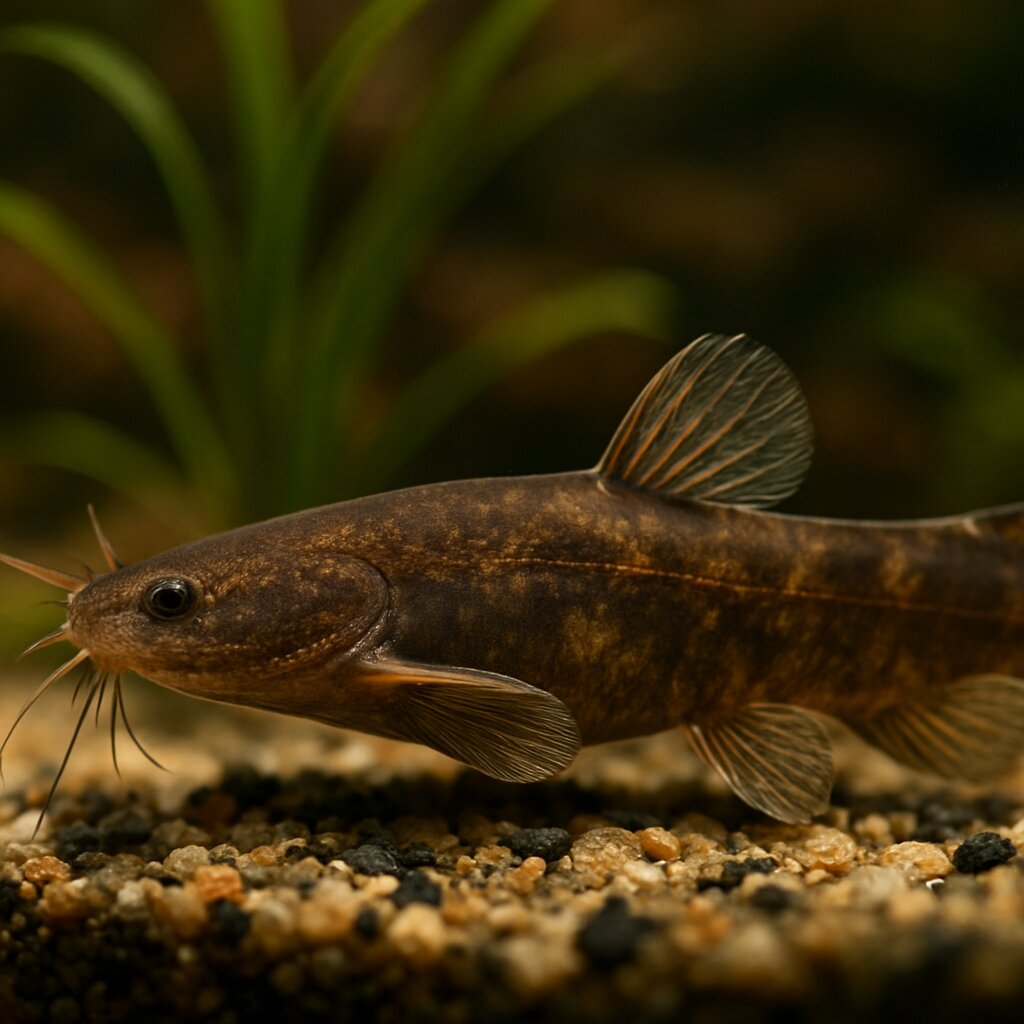
A small loach catfish endemic to the Mpoulou River in the Mayombe (Dimonika Biosphere Reserve), Republic of the Congo. Amphilius dimonikensis has a subtle banded pattern and inhabits fast, clear streams over rock and sand. In aquaria, prioritize strong, well-oxygenated flow with rounded stones and sand to mimic hillstream conditions.
Aboina barb
Enteromius aboinensis
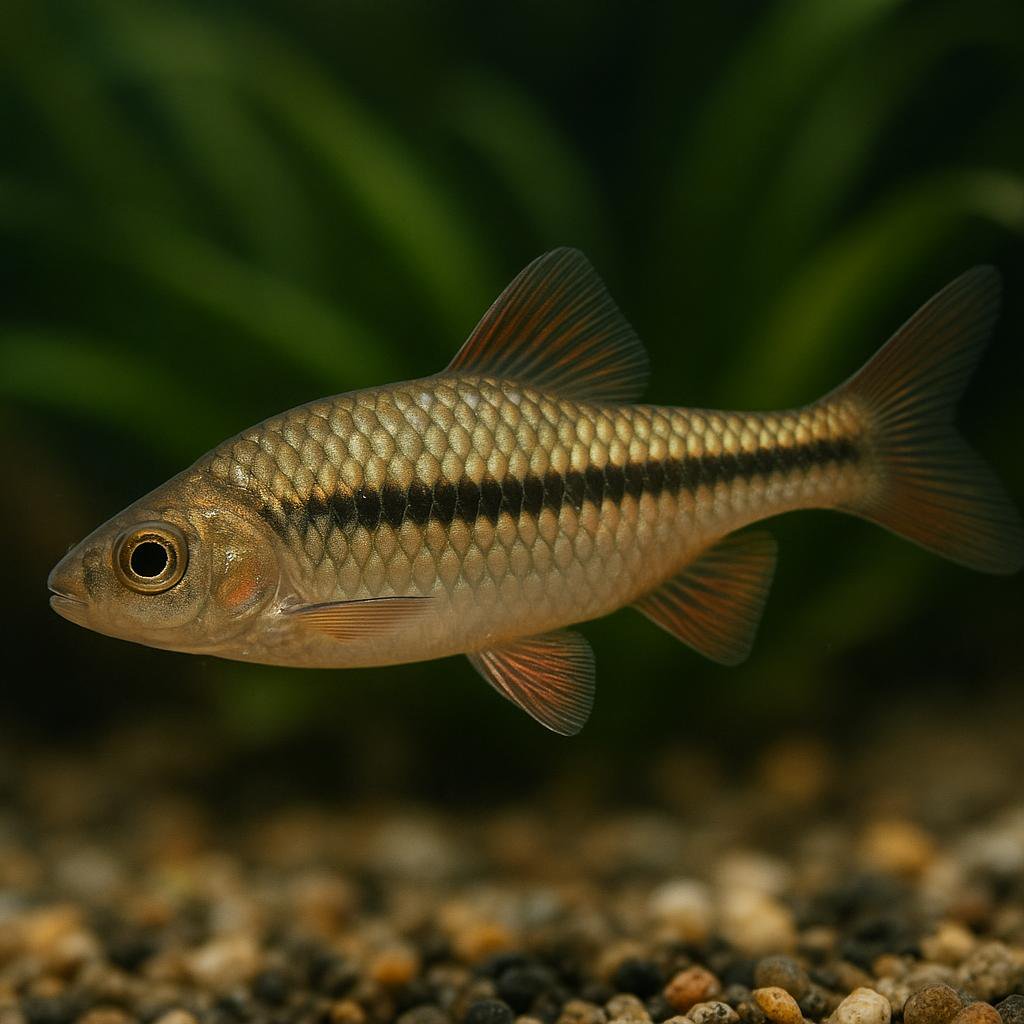
Enteromius aboinensis (the Aboina barb) is a small West African barb with a clean black midline stripe and a little spot right at the base of the tail. It does best when you treat it like a proper schooling fish - keep a decent group and give it plants around the edges with open swimming room in the middle.
Ajuricaba tetra
Jupiaba ajuricaba
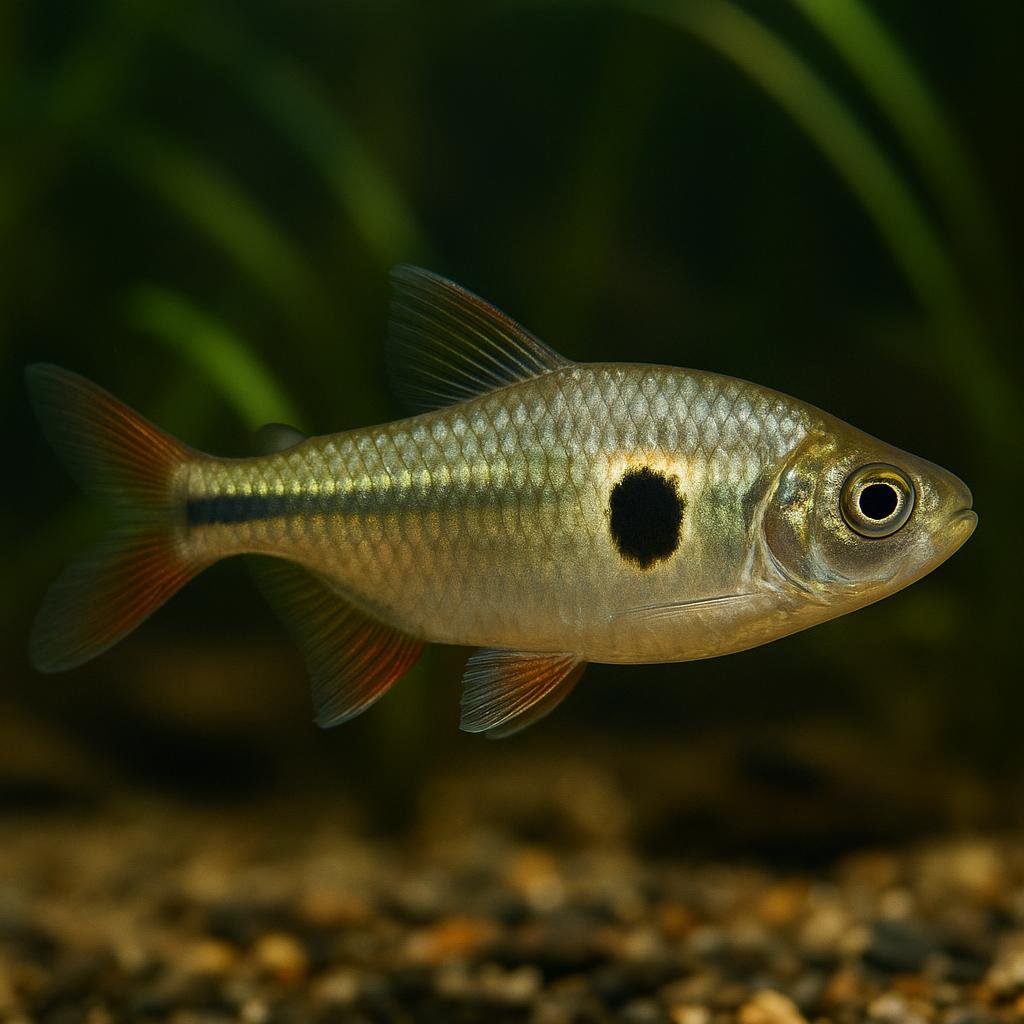
Jupiaba ajuricaba is a South American freshwater characin from the Amazon basin in Brazil (rio Negro, rio Solimões, and rio Tapajós basins). It reaches about 9.5 cm SL and is diagnosed by a narrow dark midlateral stripe, an elongated humeral spot, and an ocellated spot on the upper caudal-fin lobe. Wild specimens have been collected from blackwater forest streams and also oxbow-lake habitats.
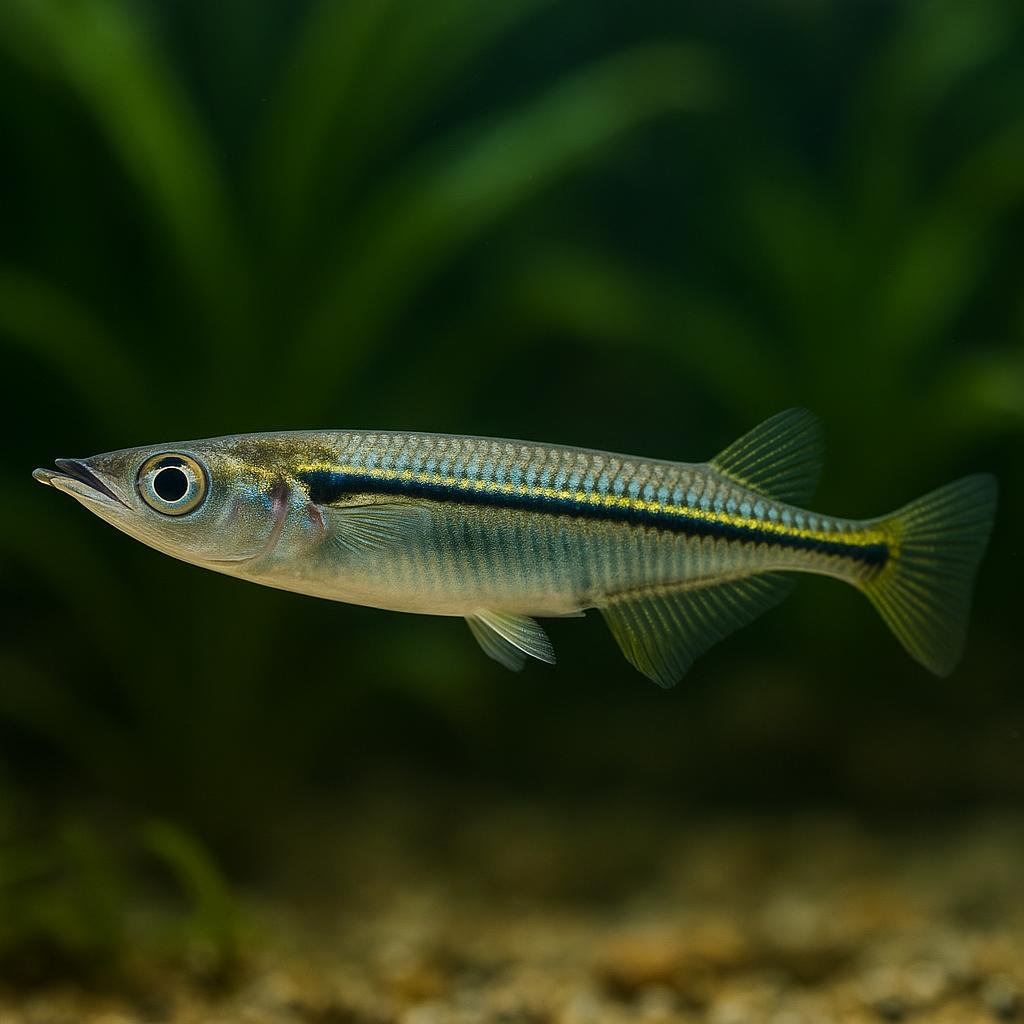
Allen's river garfish
Zenarchopterus alleni
A poorly known freshwater halfbeak endemic to West Papua (Mamberamo River), described from a single specimen (~13 cm SL). Beyond basic habitat/occurrence, little is published about its ecology or aquarium suitability; assume it is a surface-oriented, jump-prone halfbeak only by analogy with related taxa.
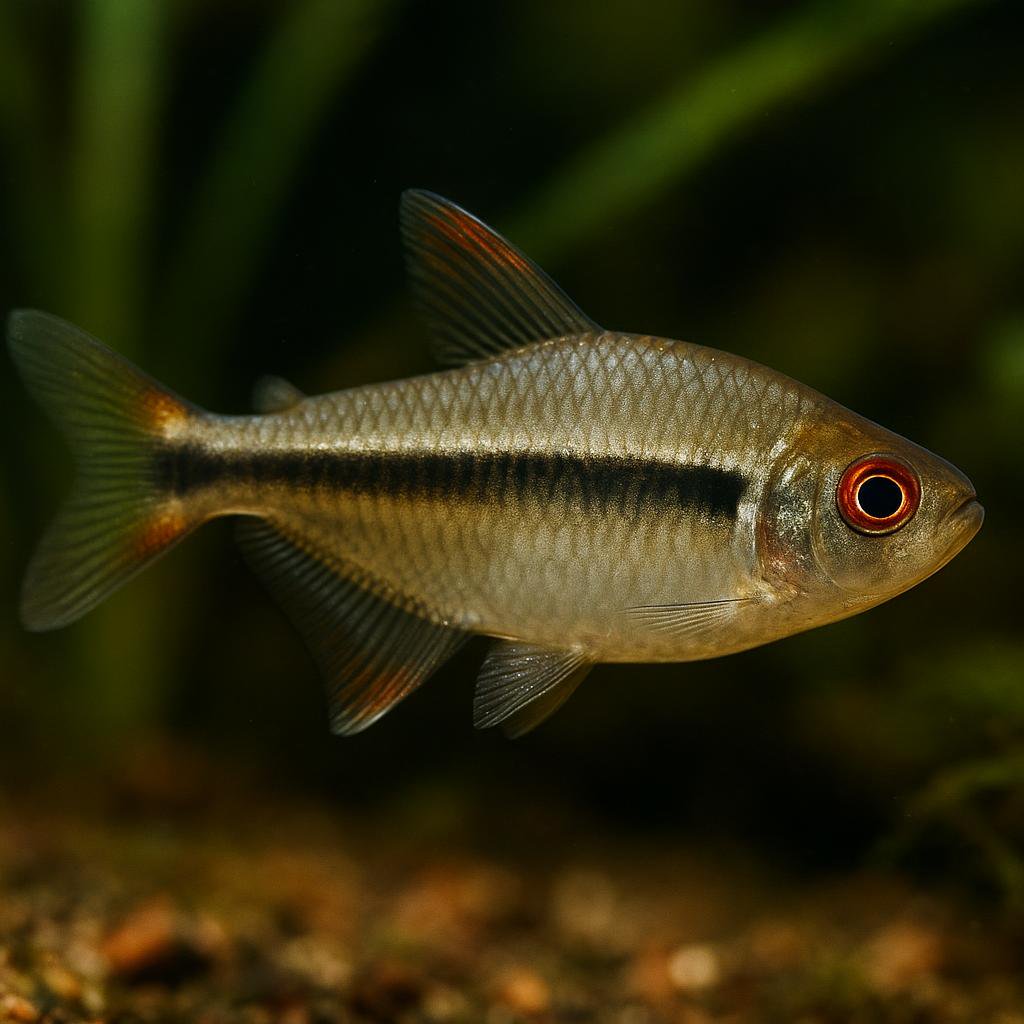
Amapa tetra
Hyphessobrycon amapaensis
This is a tiny, super sleek little tetra with a clean red stripe down the side that really pops once its settled in. It does best in a planted, slightly tinted "creek-style" setup and looks way cooler when you keep a proper group so they school and flash that line together. If you can give it soft, slightly acidic water and a calm community, its an easy fish to fall for.
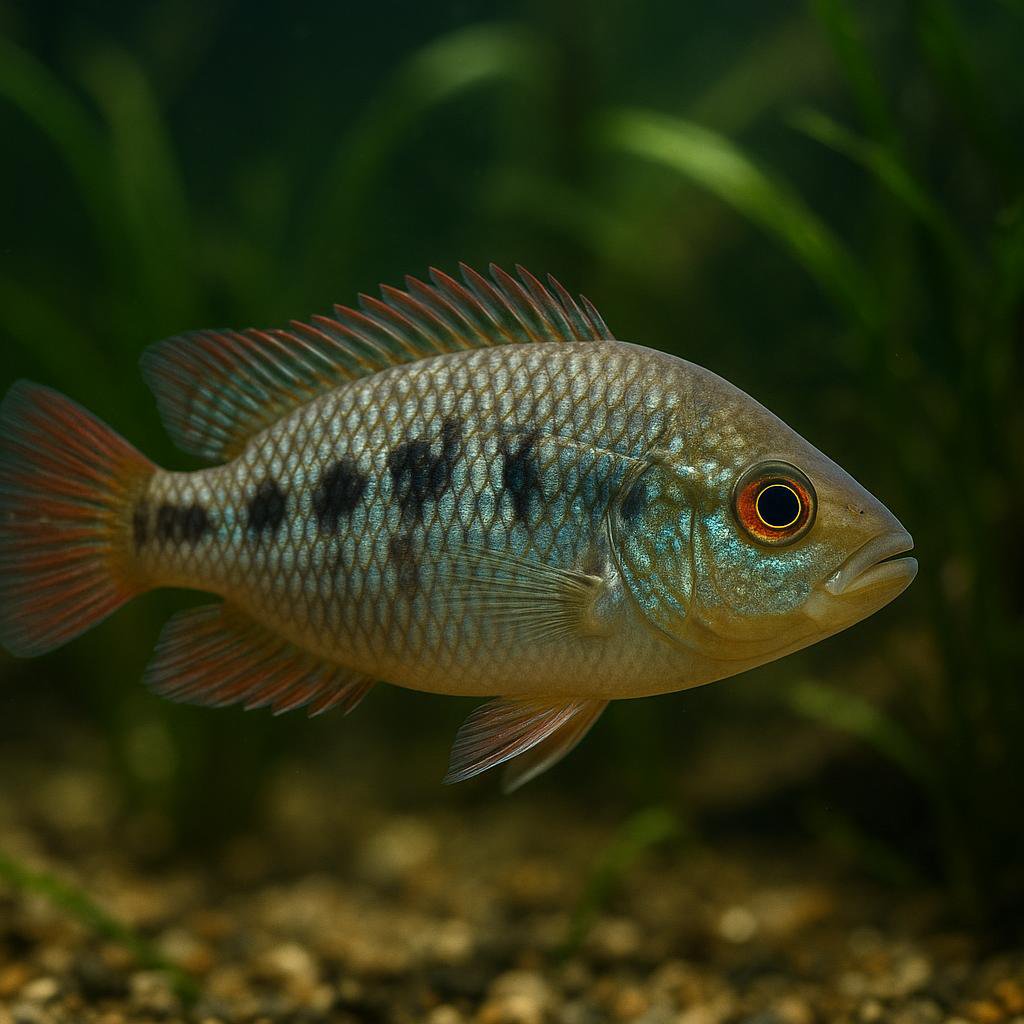
Amatlan chub
Yuriria amatlana
Yuriria amatlana (the Amatlan chub) is a little Mexican native minnow from the Ameca River basin. Its wild range is pretty limited and it is listed as Endangered, so its care info in the aquarium hobby is basically nonexistent and its availability is usually low. In the original species description, preserved fish show a dark lateral stripe with a darker patch on the caudal peduncle, and they can have tiny barbels at the mouth corners.
More to Explore
Discover more freshwater species.
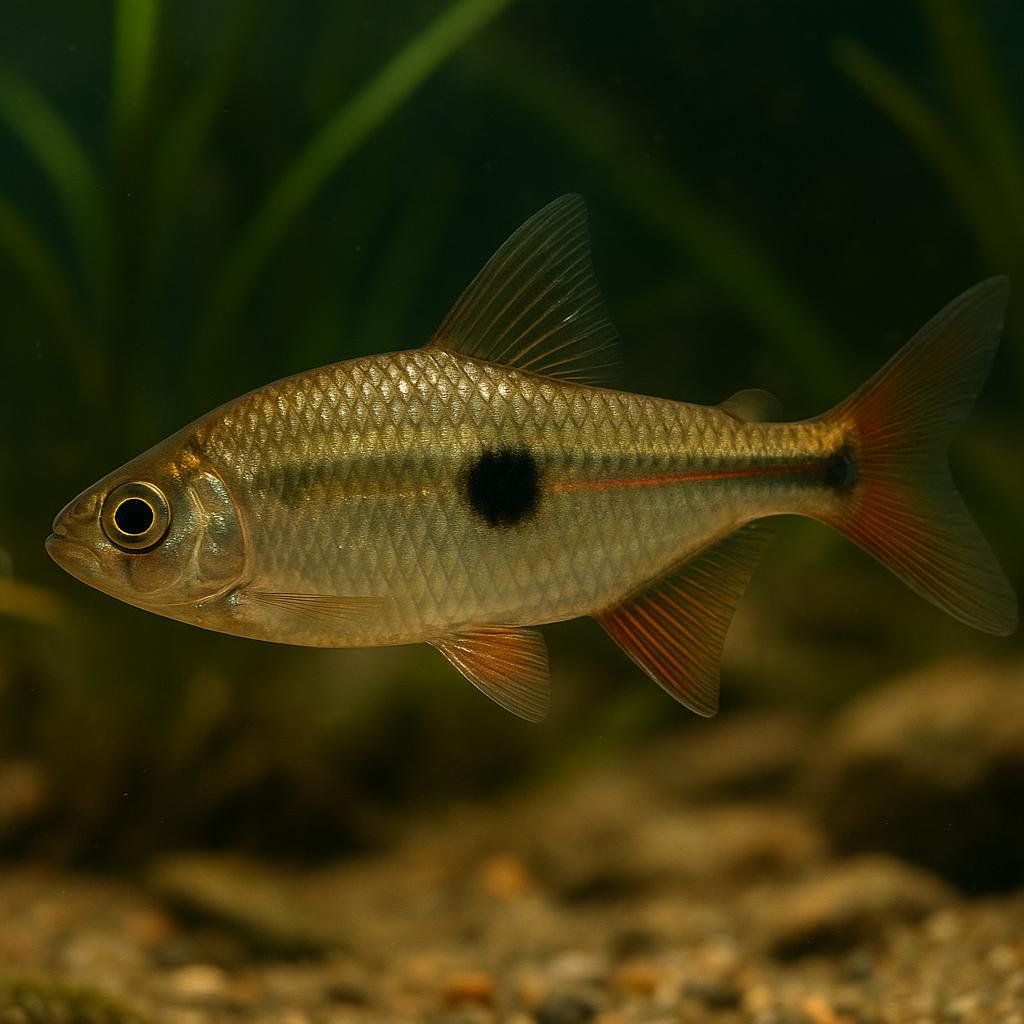
Jupiaba kurua
Small South American characin endemic to the upper rio Curuá (rio Xingu basin, Brazil). Reaches about 8.7 cm SL and inhabits clearwater rivers. Distinguished by dark dots on the bases of many lateral scales and a distinct dark caudal‑peduncle spot. Reported diet indicates omnivory, including aquatic insects, small fishes, and fragments of Podostemaceae and filamentous algae.
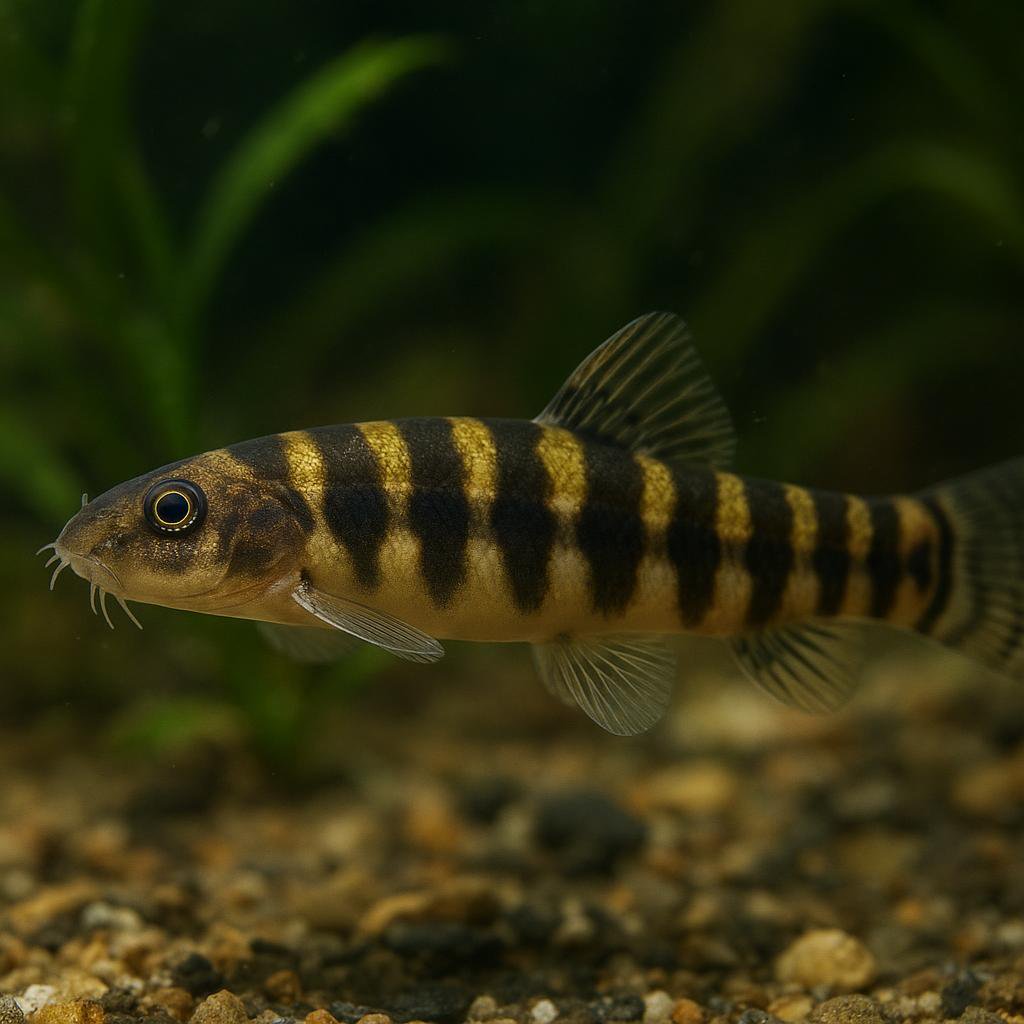
Altipedunculata stone loach
Schistura altipedunculata
Schistura altipedunculata is one of those little stream loaches that wants clean, well-oxygenated water and a bunch of rock nooks to claim as home. It is a bottom-hugger that will spend its day scooting from crevice to crevice, and it tends to get a bit spicy with its own kind if you do not give it enough hiding spots.
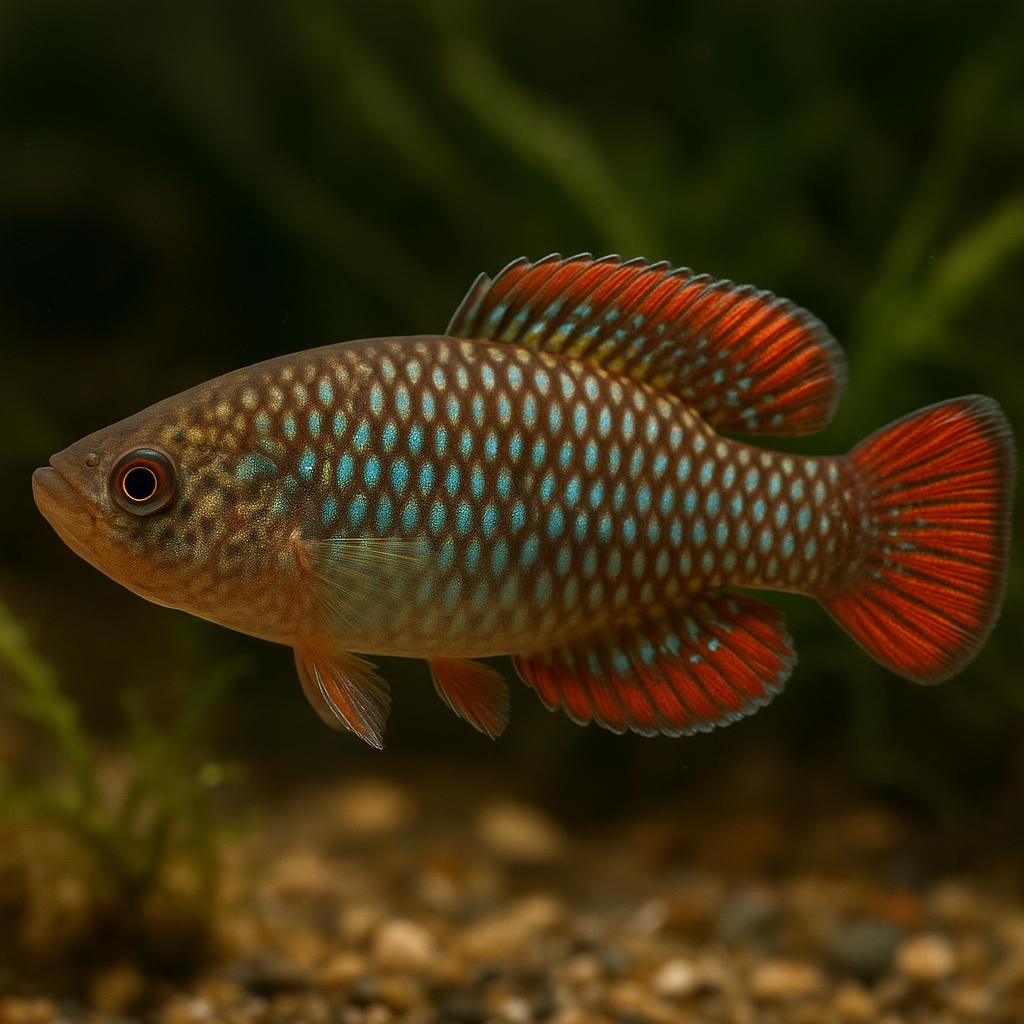
American flagfish
Jordanella floridae
Jordanella floridae is that little Florida native with the red-and-cream striping that really does look like a tiny flag once a male colors up. They graze algae like champs (especially stringy/hair algae), but they have a bit of attitude - give them plants and space so the bossy behavior stays manageable. Bonus: the male guards the eggs and will actively fan them, which is pretty fun to watch.
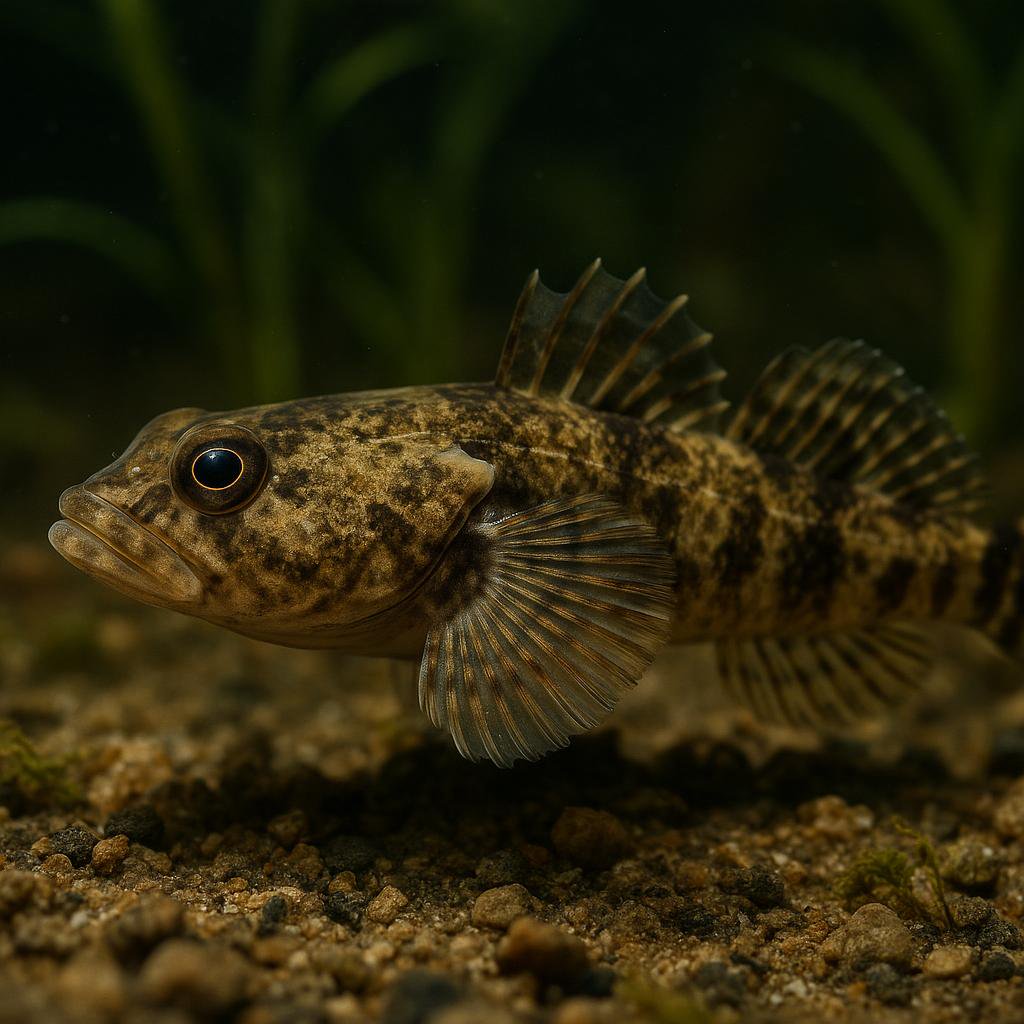
Amur sculpin
Alpinocottus szanaga
This is a little coldwater sculpin from the Amur drainage - a bottom-hugging, rock-and-gravel fish that spends its day wedged under stones and darting out to grab food. Super cool behavior and attitude, but it is absolutely not a warm tropical community fish - it wants chilly, fast, oxygen-rich water and will bicker with other bottom fish.
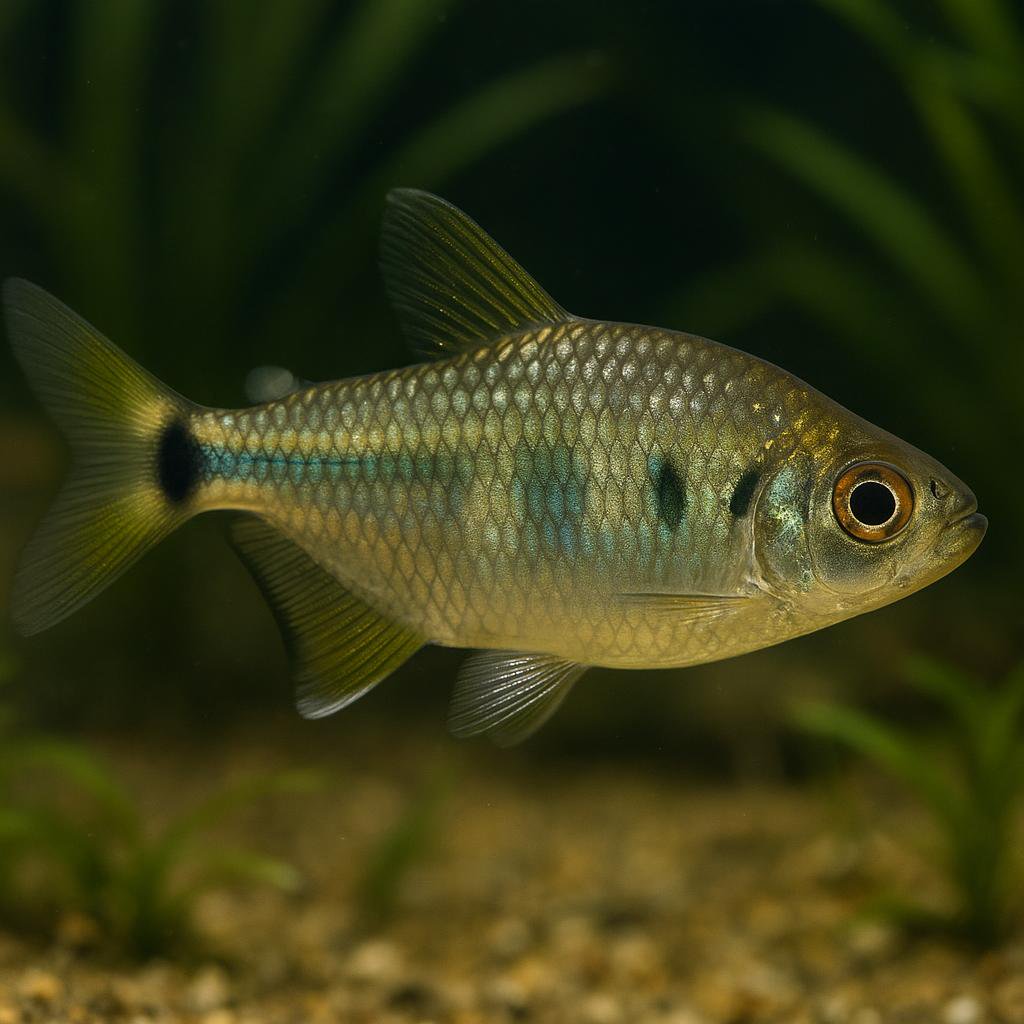
Andrica moenkhausia
Moenkhausia andrica
Moenkhausia andrica is a little Brazilian characin from the Tapajos system that tops out around 7 cm (about 2.8 inches) standard length. It has a neat netted (reticulated) scale pattern plus a dark spot on the caudal peduncle, and the really wild part is that mature females can have tiny fin hooklets too, which is usually a male-only thing in a lot of characins.
Anhanga pygmy pencil catfish
Potamoglanis anhanga
This is a truly tiny Amazonian trichomycterid catfish - like 1.3 cm max - so it is more of a micro-predator oddball than a typical community catfish. It is the kind of fish that disappears into sand, leaf litter, and plant roots, and you will spend way more time setting up the right micro-habitat than you will actually seeing it.
Looking for other species?