

Goonch catfish
Bagarius bagarius
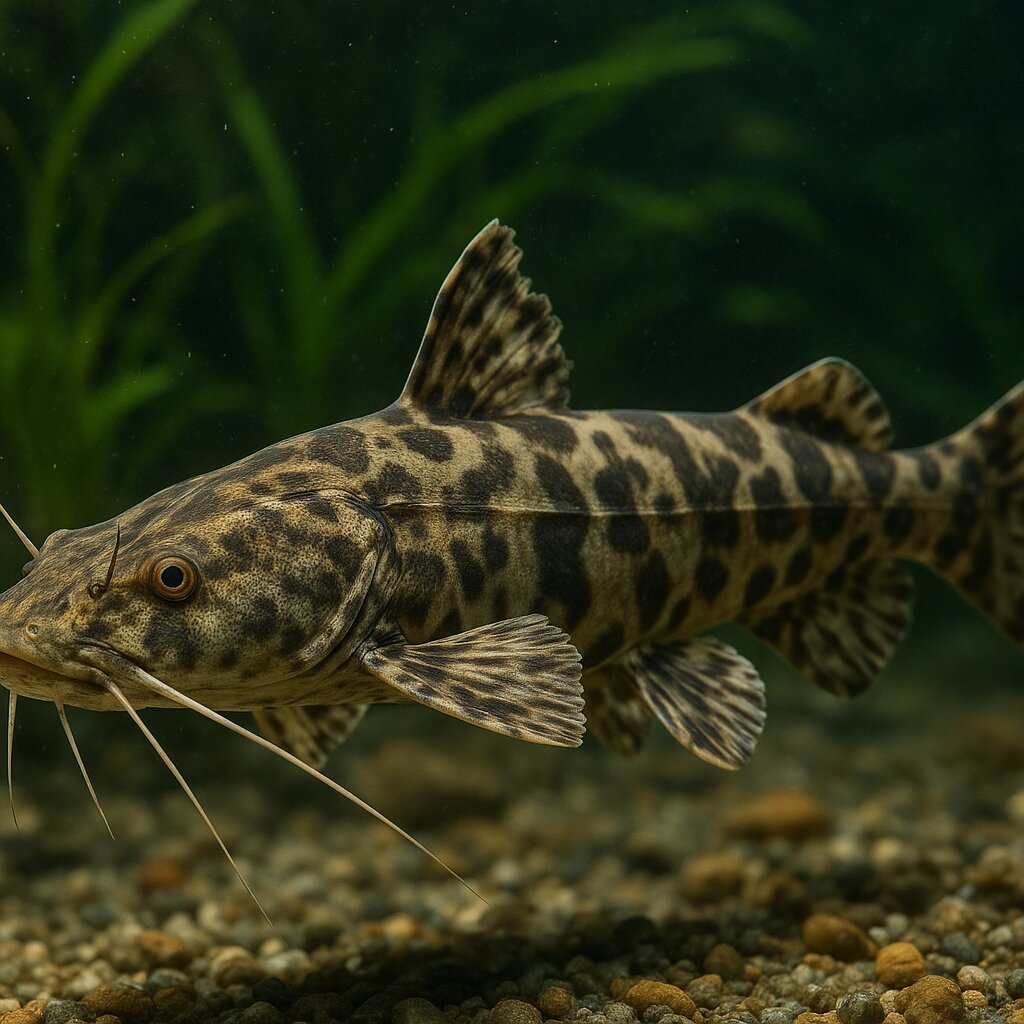
The Goonch catfish features a robust, elongated body, with a mottled brown and yellowish coloration, and distinctive long barbels.
This page includes AI-generated images. Why am I seeing AI images?
About the Goonch catfish
A true river monster with a shovel head and a mouth full of teeth, the goonch is built for blasting around boulder-strewn rapids. It is insanely strong, super predatory, and happiest in cool, fast, highly oxygenated water - think indoor-pond-with-a-river-flow setup, not a regular tank. If you love oddballs with attitude, this one is unforgettable, but it is for experts only.
Also known as
Quick Facts
Size
230 cm
Temperament
Aggressive
Difficulty
Expert
Min Tank Size
1000 gallons
Lifespan
10-15 years
Origin
South Asia
Diet
Carnivore - fish, shrimp, and other meaty frozen foods; will eat tankmates
Water Parameters
18-25°C
6.5-7.8
12-30 dGH
Need a heater for this species?
This species needs 18-25°C in a 1000 gallon tank. Use our heater calculator to find the right wattage.
Calculate heater sizeCare Notes
- Plan for a pond-size setup: 1000+ gallons with at least an 8x3 ft footprint, roaring current, and near-saturated oxygen. Use a tight lid and rock-solid decor because they hit hard and jump.
- Keep it cool and clean: 68-75 F, pH 6.8-7.6, nitrates under 20 ppm, and zero ammonia or nitrite. Do 30-50% weekly changes and run oversized mechanical and bio filtration.
- Aquascape like a boulder-strewn river - smooth sand or bare bottom with rounded rocks and big open lanes of flow. Avoid sharp edges that can shred barbels and bellies.
- Feed large sinking carnivore pellets, prawn, tilapia strips, and mussels; avoid feeder fish and fatty red meats. Use tongs, feed juveniles daily in small amounts and adults 3-4x per week.
- Best kept solo; anything that fits gets inhaled, and even big fish can get mauled at night. If you insist, try only huge, fast, cool-water river fish like mahseer or giant barbs, and skip plecos or rays.
- Heat is the killer - they start crashing above 78 F as oxygen drops. Run heavy surface agitation, venturis or spray bars, and a chiller or fans in summer.
- Handle with respect: they thrash hard and have spines, so move them in tubs, use a heater guard, and keep hands clear. Watch for red sores, gasping in low O2, and bloat from rich diets.
- Breeding at home is a no-go; they are migratory spawners keyed to monsoon floods. Assume wild-caught, quarantine new arrivals, and deworm before mixing with anything.
Compatibility
Good Tankmates
- Huge, fast midwater cyprinids from cool, high-oxygen rivers - adult mahseer (Tor spp.), rohu, or catla. They are torpedoes that stay off the bottom and are too big to swallow. Only in 800-1500+ gallon river setups.
- Big, non-nippy barbs in a group - adult tinfoil or lemon-fin barbs 10-12 inches+. They cruise midwater and handle flow. Keep 6+ so the goonch does not fixate on one.
- Shoals of large Pangasius catfish (iridescent sharks) 12 inches+ - midwater cruisers that match strong current and usually ignore the bottom. Best in public-aquarium footprints.
- Longnose or Florida gar of substantial size - surface predators that prefer open topwater lanes and cooler water. Give tons of room and current so nobody gets sideswiped.
- Massive Asian river carp in pond-scale systems - bighead or silver carp, or big common carp. Fast midwater plankton or algae grazers that do not compete for the bottom.
- Another goonch of similar size only in a truly huge, rock-structured river tank with multiple retreats. Expect dominance shoving and feed heavy to keep the peace.
Avoid
- Anything bite-sized or slow - barbs under 6 inches, danios, small cichlids, loaches. If it fits, it is food.
- Slow fish with fancy fins or calm-water needs - oscars, arowana, knifefish, gourami. The current stresses them and the goonch will maul them.
- Bottom dwellers and flat fish - stingrays, bichirs, plecos, loaches. Goonch patrols the floor and will mouth, pin, or tear them up.
- Other big catfish - redtail, tiger shovelnose, jau, granulosus. Similar niche, territorial clashes, jaw-locking, and lost fins.
Where they come from
Goonch are big river catfish from South Asia. Think fast, cold-to-cool, rocky rivers like the Ganges and Indus drainages, with seasonal floods and roaring currents. They park themselves on the bottom like a shaggy doormat and wait for food to wash past.
Reality check: this fish gets huge. Wild fish push 4+ feet, with records well beyond that. Even in captivity, 3 feet is very reachable. Plan an indoor pond-scale setup from day one, not a stepping-stone tank.
Setting up their tank
Treat a goonch like a small river project, not just a big aquarium. Long footprint, huge filtration, and heavy current matter way more than fancy decor.
- Size: think 800-1500+ gallons with a 10-12 ft length if you want to keep one into adulthood. A temporary 300-400 gal works only for a fast-growing juvenile.
- Footprint: wide and long beats tall. They sprawl on the bottom and like straight runs to cruise.
- Flow: strong, laminar river-style current. Aim for 10-20x turnover per hour with big pumps or river manifold. Lots of surface agitation.
- Oxygen: keep it high. Big venturis, spray bars, or air rings under the flow. They sulk in low O2.
- Temperature: 68-75 F (20-24 C) is the sweet spot. They handle slightly cooler. Avoid long spells above 77 F (25 C).
- Water: pH 6.8-7.8, moderate hardness. Zero ammonia and nitrite. Keep nitrate as low as you reasonably can (under 20 ppm is a good target).
- Substrate: smooth sand with rounded cobbles and big river rocks. Skip sharp edges; they scrape easily.
- Decor: open lanes to sit in the flow, a couple of shaded arches or big PVC sections. They do not need caves like plecos.
- Lid: tight and heavy. A spooked goonch can launch like a torpedo.
Filtration needs to be pond-level. Big sump with lots of mechanical prefilter (brushes, filter socks, or drum filter) before your bio media. Expect messy, oily food and heavy waste. I backwash daily and swap prefilters 2-3 times a week. Water change 30-50% weekly, more if you feed heavy.
Have a plan for heat waves and outages. A hot, still tank can kill a goonch fast. I run a backup air pump on battery, and a fan or chiller to keep temps down.
Acclimation: keep it cool and oxygenated. I float to equalize temp, then short drip while blasting air into the tub. Move with a tub or koi sock, not a net. They thrash, and rough nets tear skin.
What to feed them
They are carnivores and very food-motivated once they settle. Getting them onto clean, non-live foods early makes life easier for you and safer for them.
- Staples that work: thawed silversides, tilapia/salmon chunks (skin off), prawn/shrimp, mussel, nightcrawlers, and quality carnivore sticks (Hikari Massivore/Carnivore, NorthFin, etc.).
- Feeding schedule: juveniles small amounts daily; subadults every other day; big adults 2-3 times per week. Watch the belly line, not the calendar.
- Training tip: offer with long tongs in the current so it looks like drift. They usually switch off live food within a week or two.
- Avoid: feeder fish (parasites, thiaminase, fatty liver), goldfish, rosy reds, and only-anchovy/smelt diets. Mix it up.
- Supplements: a quick vitamin soak once a week is handy if you mostly feed fish and shrimp.
They will inhale huge chunks, then sulk. Overfeeding is the fastest way to foul the water and bloat the fish. If they stop showing interest, skip the next meal.
How they behave and who they get along with
Picture a big, flat ambush cat that naps in the current, then explodes forward for food. Mostly crepuscular, but they learn your schedule. They are not community fish. Anything bite-sized is a snack, and even large tankmates get bullied or slammed into things during feeding.
- Best plan: single-specimen setup.
- If you must try tankmates: only very large, fast, river-adapted fish that like cool water and current. Think big mahseer or similar tor species, big hardbody barbs, or large riverine stingrays if temps match and footprint is huge.
- Skip: slow fish, fish that need warm water, bottom dwellers that compete for the same lane, delicate species, and anything you are attached to.
Even with big tankmates, one bad night can wipe them out. A startled goonch is a battering ram.
Breeding tips
Realistically, you are not breeding goonch at home. They are migratory river spawners keyed to monsoon cycles and long runs of fast water. Sexing is uncertain without mature pairs, and I have never seen a credible home-aquarium spawn report. If you hear about captive production, it is usually from large facilities or ponds in their native range.
Common problems to watch for
- Low oxygen: fast gilling, hanging at the surface, or parking under a return. Add air and flow immediately.
- Heat stress: listless fish and rapid breathing above 77 F. Cool the room or water, increase aeration.
- Scrapes and mouth abrasion: they slam rocks during feeding. Use rounded decor and feed away from sharp edges.
- Parasites and bacteria from live feeders or wild bait: quarantine food sources or skip live feeders altogether.
- Nitrate creep: big carnivores drive nitrate up. Heavy prefilter, big water changes, and consider a denitrifying section or plants in the sump.
- Refusal to eat after a move: keep lights low, flow strong, and offer worms or prawn on tongs in the current. Do not chase or poke.
- Jumping and lid strikes: startled fish hit lids hard. Keep the room calm, lights on a schedule, and lids secured.
Medication in huge volumes is expensive and risky. I focus on water, oxygen, and temperature first. Salt can help with minor scrapes, but go slow and measure. For anything more serious, I move the fish to a large hospital tub with heat and heavy air, treat there, and keep the display pristine.
Legal and ethical note: many goonch are wild-caught and may be protected locally. Check your laws, buy responsibly, and have a lifetime plan. Never release a fish to local waters. If you outgrow it, line up a public aquarium or pond-scale keeper well ahead of time.
Similar Species
Other freshwater aggressive species you might be interested in.
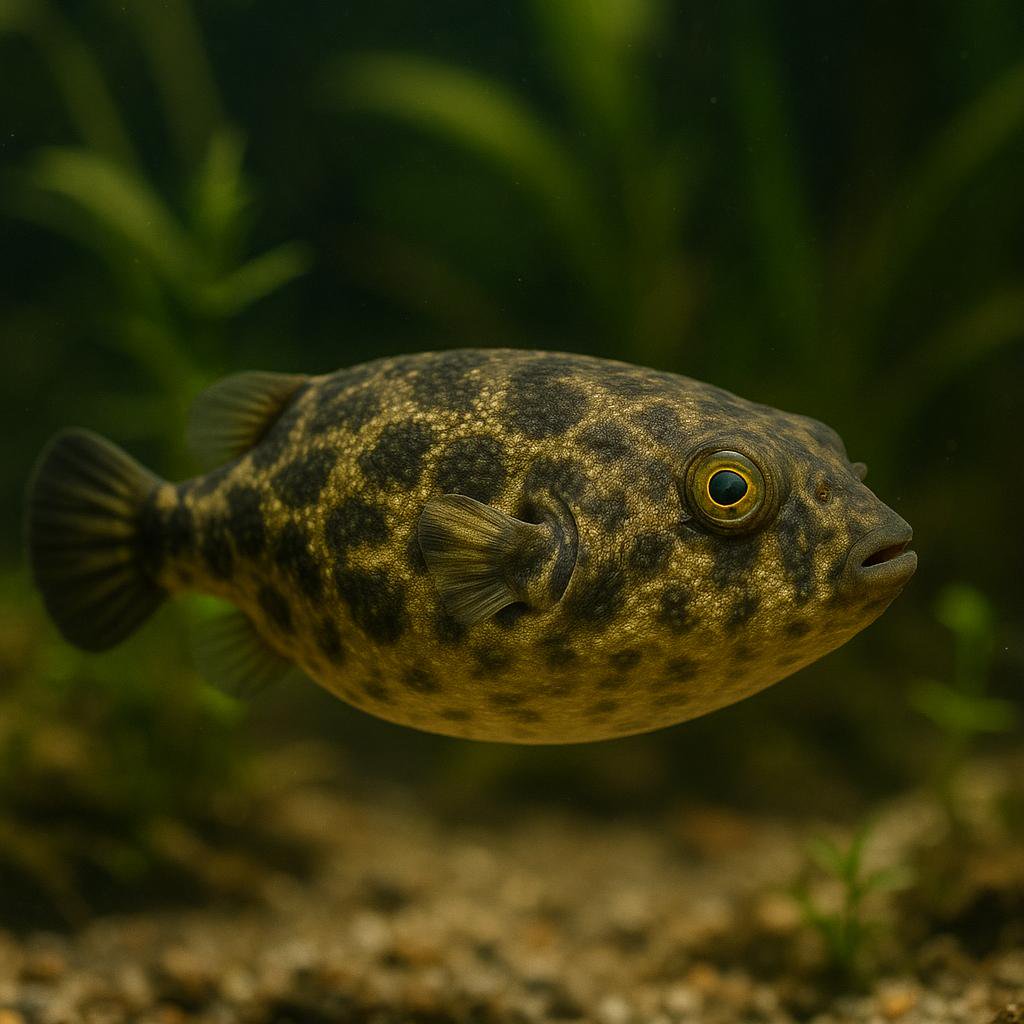
Arrowhead puffer
Pao suvattii
Pao suvattii is that sneaky Mekong puffer that likes to sit low and ambush food, and it has that super recognizable arrow/V pattern on its back. Gorgeous fish with tons of personality, but it is absolutely not a community guy - plan on a solo, species-only setup if you want everybody to stay in one piece.
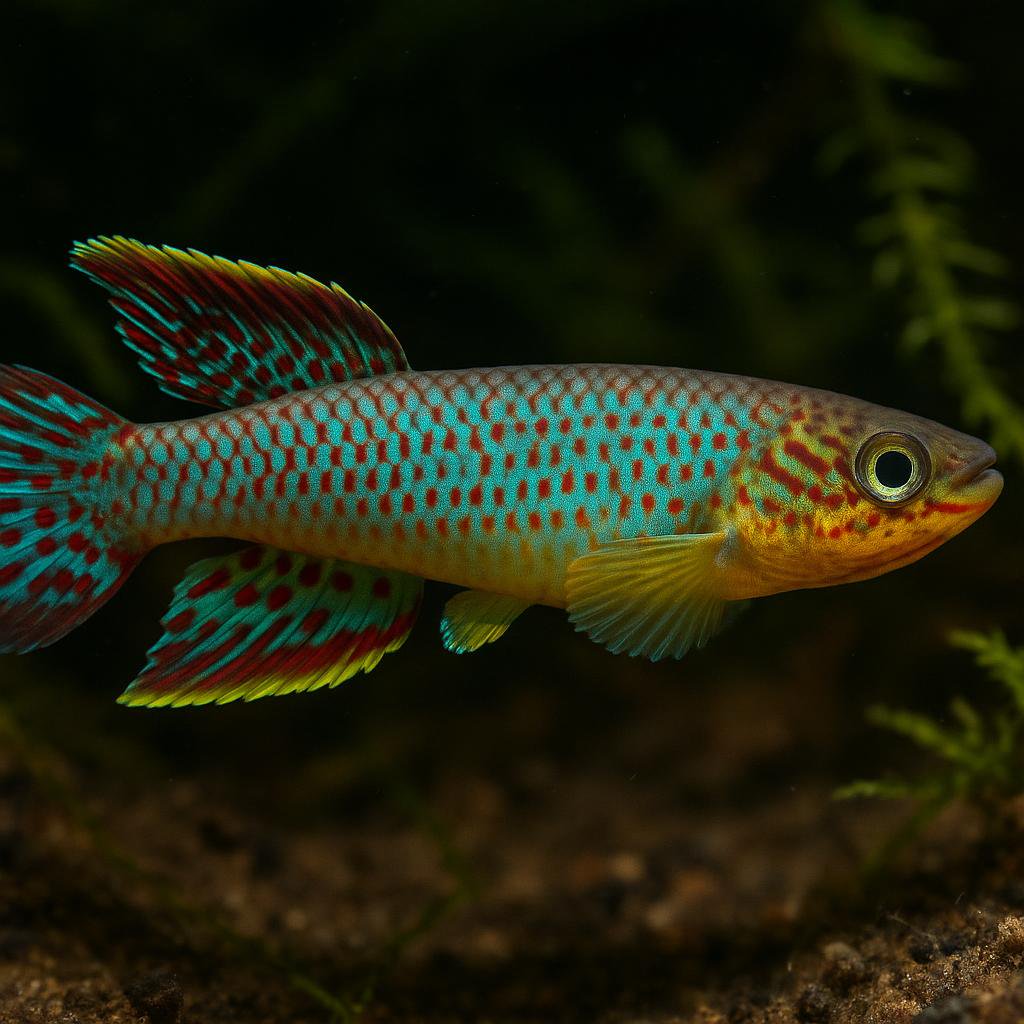
Blue gularis
Fundulopanchax sjostedti
This is the big, flashy West African killifish with the ridiculous triple-point tail and electric blue-green body covered in red spotting. Males can be real attitude machines with each other, but if you give them room, cover, and a tight lid, they make an awesome centerpiece fish that will absolutely demolish live and frozen foods.
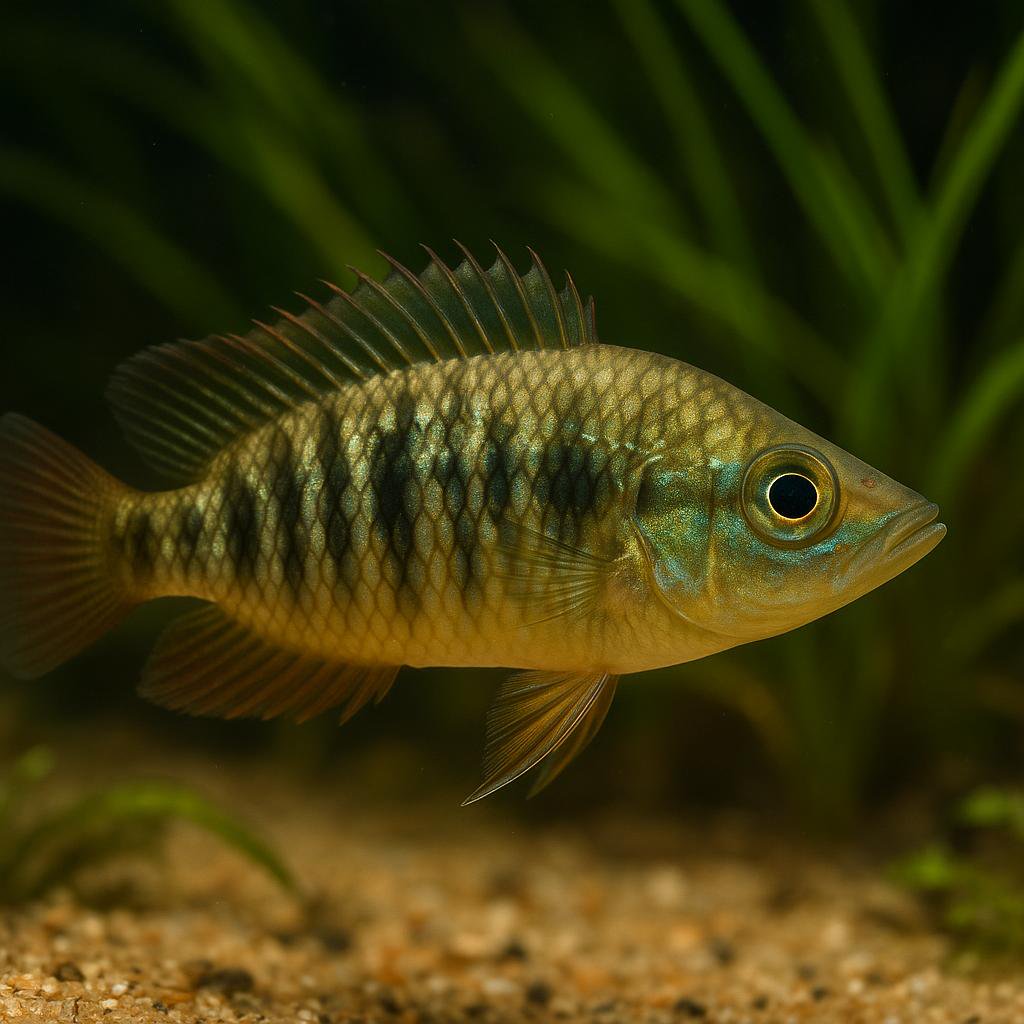
Compressiceps dwarf pike cichlid
Wallaciia compressiceps
This is one of those tiny pike cichlids that looks cute until you watch it start running the tank like a little biting terrier. It stays small, but it is a real predator with a ton of attitude, and it gets especially spicy with its own kind when pairs form.
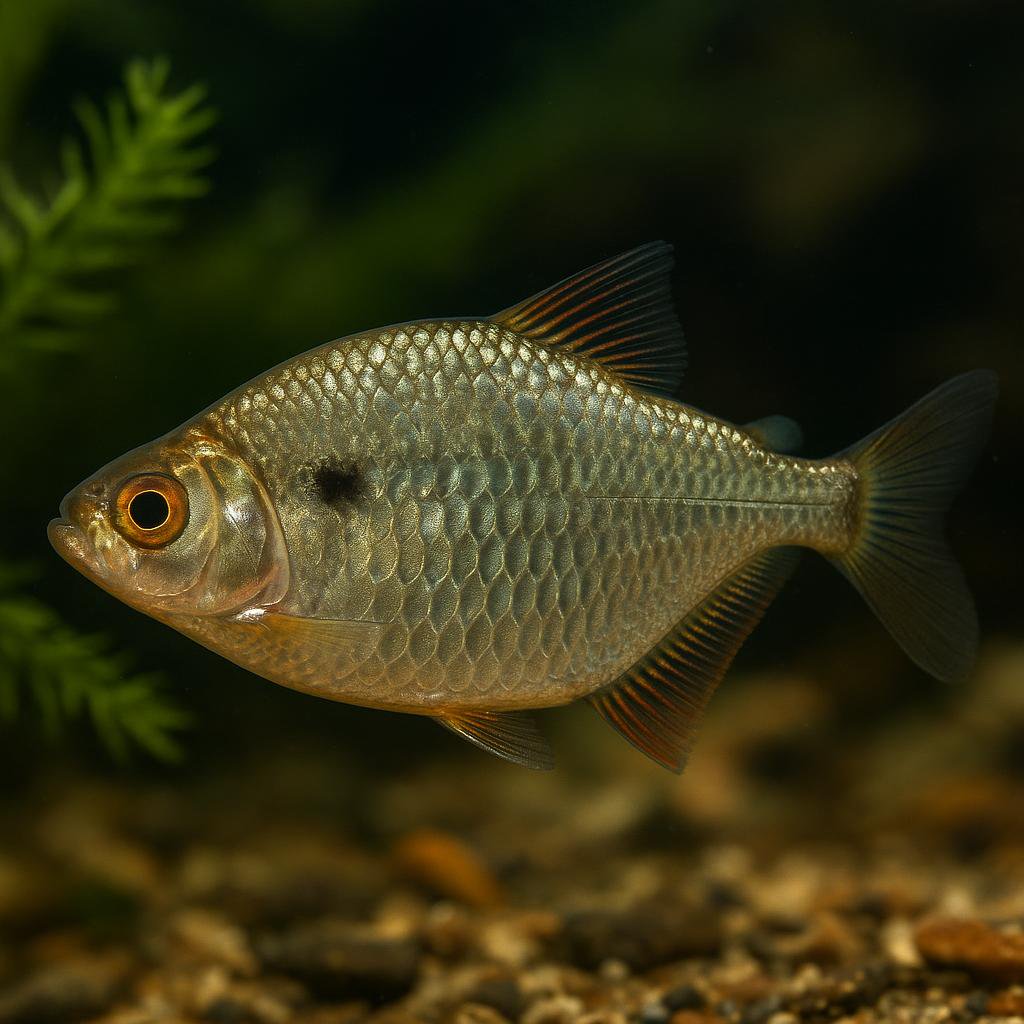
Guatemalan headstander
Roeboides guatemalensis
This is one of those oddball characins that gets lumped in with "predatory tetras" - it is built for nipping scales and mucus off other fish (lepidophagy), which is wild to watch in nature but a headache in a community tank. It is a super active, open-water swimmer, and in aquariums it usually does best treated like a specialty predator/oddity fish rather than a "tetra."
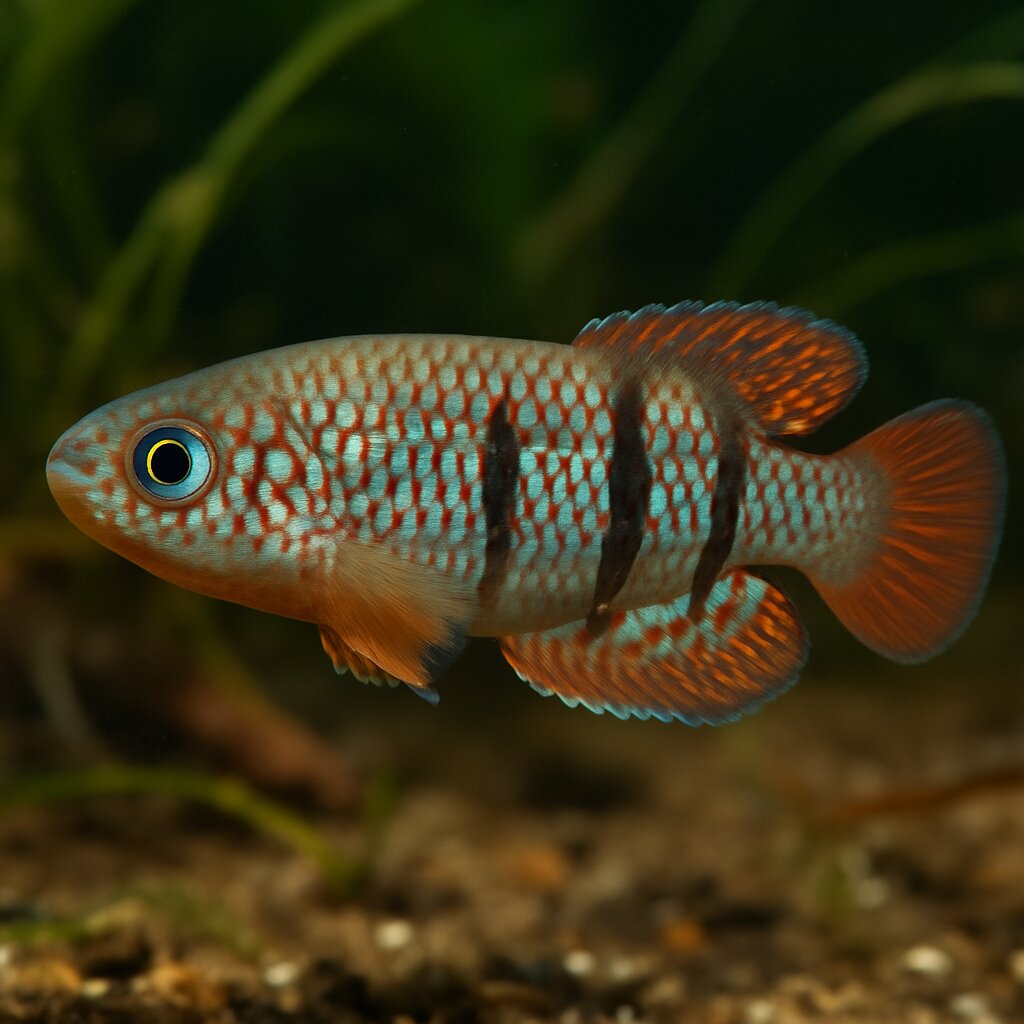
Hypsolebias trifasciatus
Hypsolebias trifasciatus
Tiny but flashy, this annual killi lights up with a blue body and bold yellow-and-black striping on the anal fin. It comes from shallow seasonal pools in northeastern Brazil, so it likes soft, warm water and will bury eggs in a peat or mud-like substrate. Males have big attitudes for such small fish, so plan for line-of-sight breaks or keep a single pair.
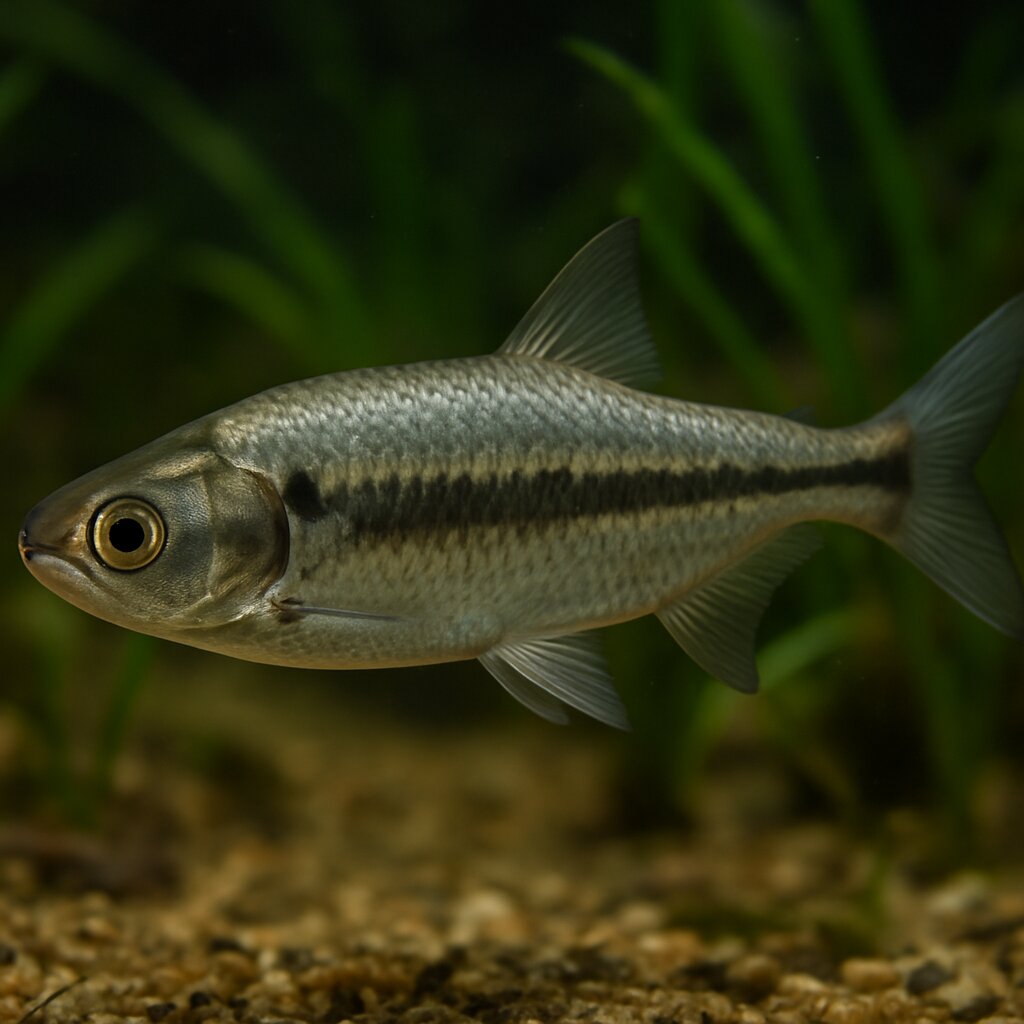
Ichthyborus monodi
Ichthyborus monodi
A long-nosed African characin from lowland rivers in Nigeria, Benin, and Cameroon. It reaches about 8-9 inches and is an active, streamlined predator that will take small fish and even nip fins, so it needs sturdy, fast tankmates and lots of open swimming space. Super cool fish if you like oddball characins, but it is not a community tetra.
More to Explore
Discover more freshwater species.
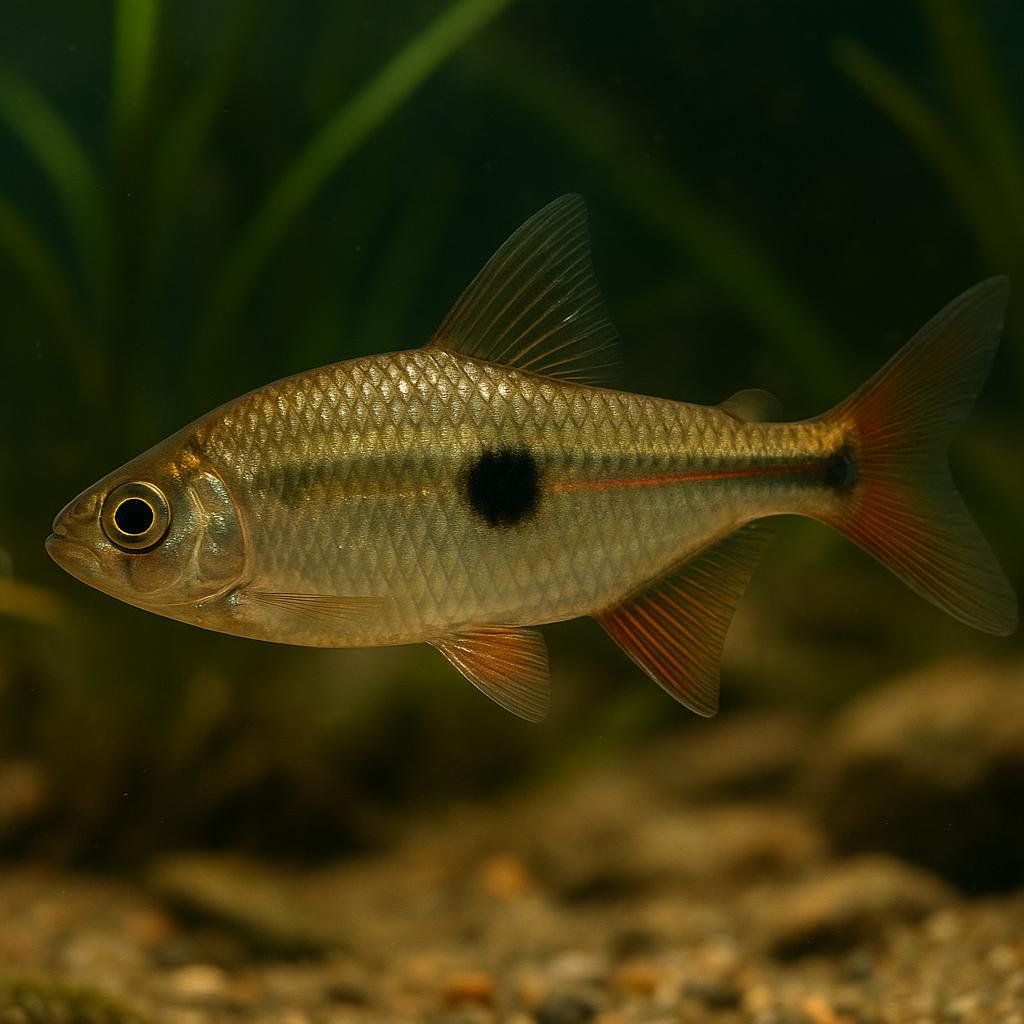
Jupiaba kurua
Small South American characin endemic to the upper rio Curuá (rio Xingu basin, Brazil). Reaches about 8.7 cm SL and inhabits clearwater rivers. Distinguished by dark dots on the bases of many lateral scales and a distinct dark caudal‑peduncle spot. Reported diet indicates omnivory, including aquatic insects, small fishes, and fragments of Podostemaceae and filamentous algae.
Amphilius dimonikensis
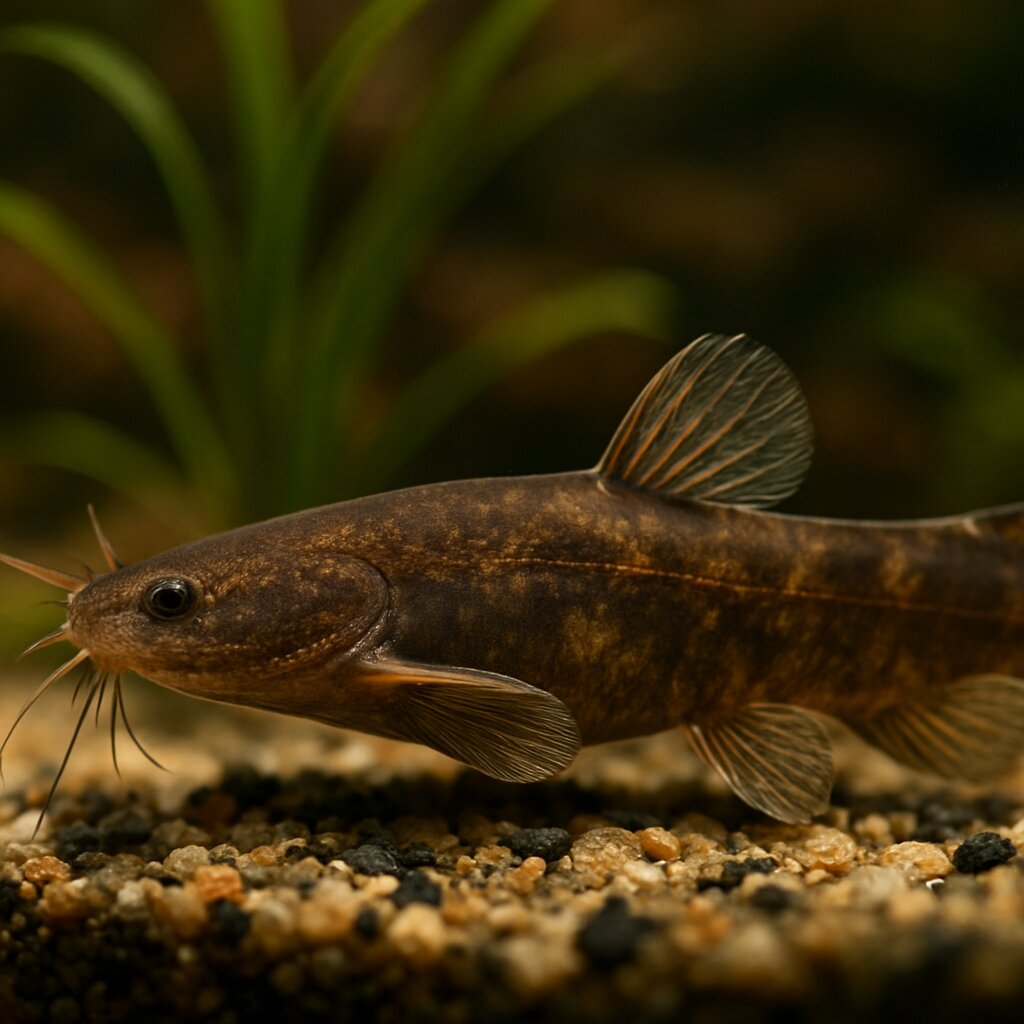
A small loach catfish endemic to the Mpoulou River in the Mayombe (Dimonika Biosphere Reserve), Republic of the Congo. Amphilius dimonikensis has a subtle banded pattern and inhabits fast, clear streams over rock and sand. In aquaria, prioritize strong, well-oxygenated flow with rounded stones and sand to mimic hillstream conditions.
Aboina barb
Enteromius aboinensis
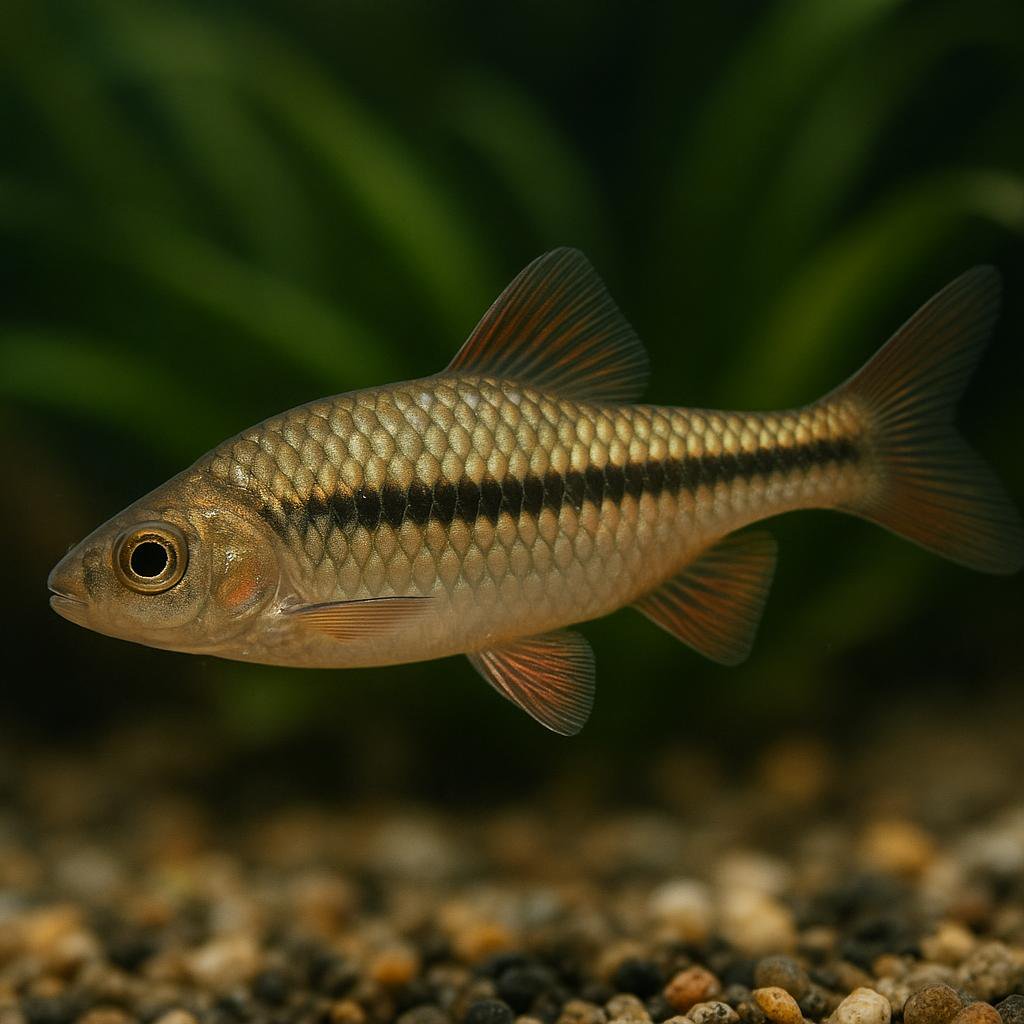
Enteromius aboinensis (the Aboina barb) is a small West African barb with a clean black midline stripe and a little spot right at the base of the tail. It does best when you treat it like a proper schooling fish - keep a decent group and give it plants around the edges with open swimming room in the middle.
Ajuricaba tetra
Jupiaba ajuricaba
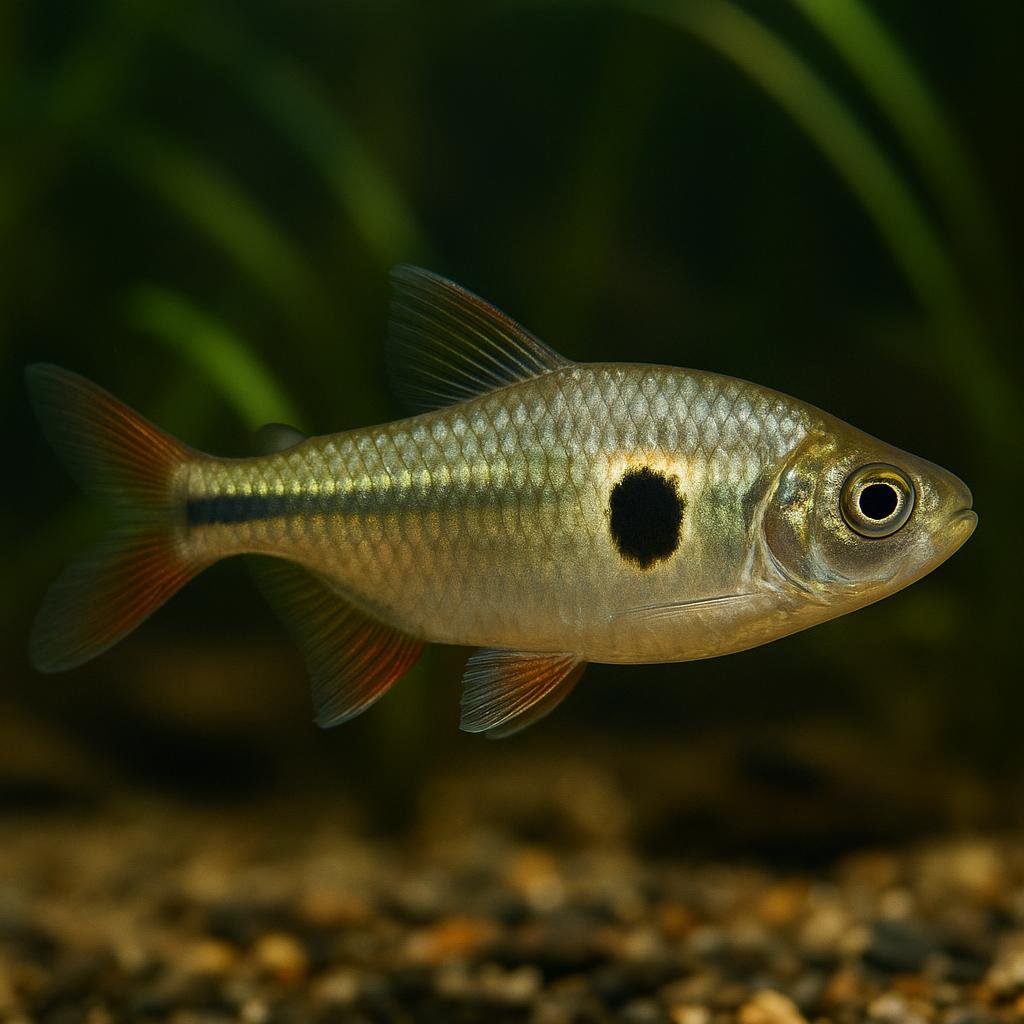
Jupiaba ajuricaba is a South American freshwater characin from the Amazon basin in Brazil (rio Negro, rio Solimões, and rio Tapajós basins). It reaches about 9.5 cm SL and is diagnosed by a narrow dark midlateral stripe, an elongated humeral spot, and an ocellated spot on the upper caudal-fin lobe. Wild specimens have been collected from blackwater forest streams and also oxbow-lake habitats.
Allen's river garfish
Zenarchopterus alleni
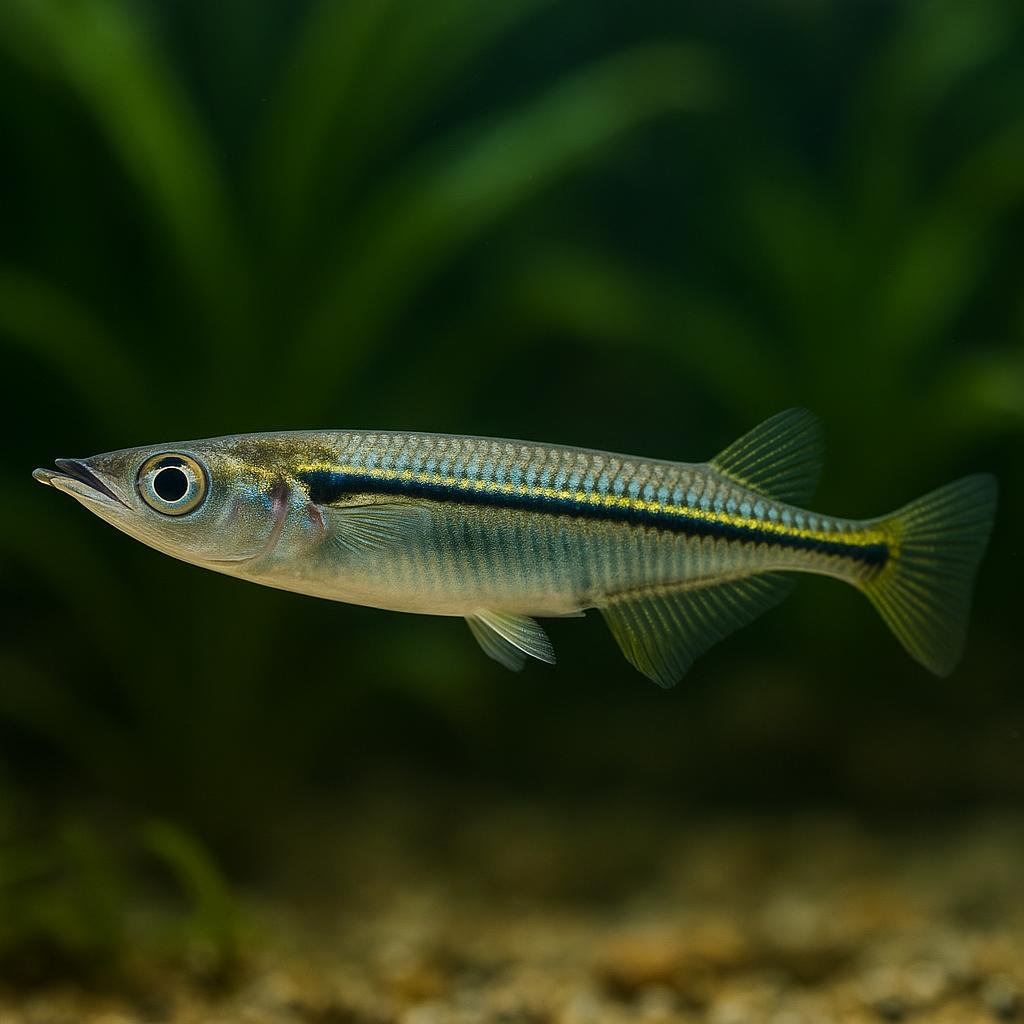
A poorly known freshwater halfbeak endemic to West Papua (Mamberamo River), described from a single specimen (~13 cm SL). Beyond basic habitat/occurrence, little is published about its ecology or aquarium suitability; assume it is a surface-oriented, jump-prone halfbeak only by analogy with related taxa.
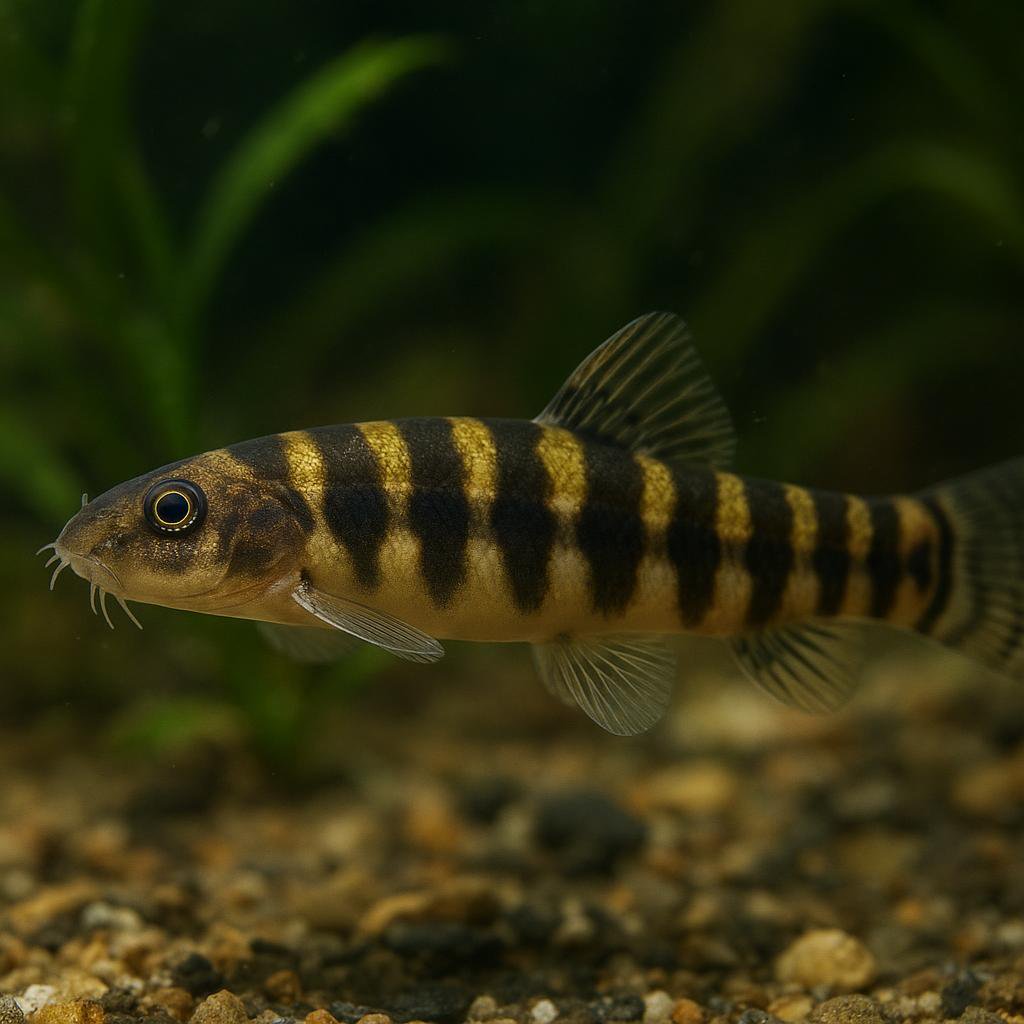
Altipedunculata stone loach
Schistura altipedunculata
Schistura altipedunculata is one of those little stream loaches that wants clean, well-oxygenated water and a bunch of rock nooks to claim as home. It is a bottom-hugger that will spend its day scooting from crevice to crevice, and it tends to get a bit spicy with its own kind if you do not give it enough hiding spots.
Looking for other species?