

Lowfin moray
Gymnothorax porphyreus
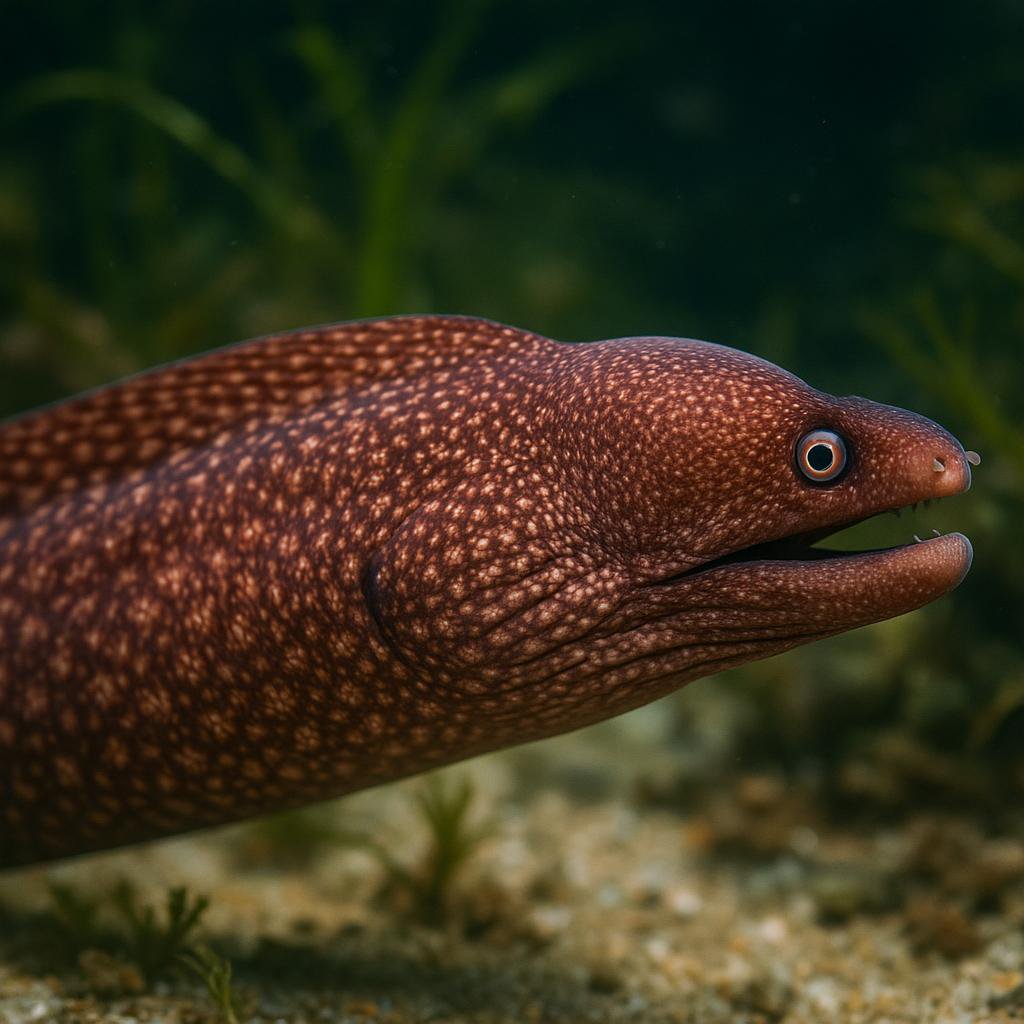
Lowfin morays exhibit a dark brown to purplish body with yellow spots and a long, slender form, typically reaching up to 1.5 meters in length.
This page includes AI-generated images. Why am I seeing AI images?
About the Lowfin moray
Gymnothorax porphyreus is a chunky, cold-to-cool water moray from the South Pacific that hangs out on rocky reefs and wedges itself into caves with just the head out. It tops out around a meter long, so it is absolutely a big, powerful predator even though it is not one of the giant 2-meter morays. If you ever see one offered for home aquariums, the big gotcha is temperature - this is not a tropical reef eel.
Quick Facts
Size
103 cm
Temperament
Aggressive
Difficulty
Expert
Min Tank Size
180 gallons
Lifespan
10-20 years
Origin
South Pacific
Diet
Carnivore - meaty marine foods (fish, shrimp, squid), offered via tongs
Water Parameters
16.7-25.5°C
8-8.4
8-12 dGH
Need a heater for this species?
This species needs 16.7-25.5°C in a 180 gallon tank. Use our heater calculator to find the right wattage.
Calculate heater sizeCare Notes
- Go big and heavy: think 180+ gallons with a tight-fitting lid and no gaps around plumbing - this eel will test every opening and can shove glass tops up if they are loose.
- Build a rock maze with at least 2-3 snug caves so it can wedge in and feel secure; keep rocks on the bottom glass or on PVC supports, not on sand where it can undermine and collapse them.
- Run high flow and oversized filtration because they are messy carnivores; keep ammonia/nitrite at 0, nitrate as low as you can (ideally under ~20 ppm) and keep salinity stable around 1.025-1.026 with temp roughly 75-78F.
- Feed with long tongs, not fingers: chunky marine meaty foods like shrimp, squid, clam, and fish flesh, plus occasional whole items (silversides) for variety; 2-3 solid meals a week beats daily nibbling and cuts down on waste.
- Skip feeder goldfish and other freshwater feeders - they are a nutrition mess and foul the tank fast; thaw frozen food well and rinse if it is packed in a lot of juice.
- Tankmates need to be too big to fit in its mouth and tough enough to handle a bold eel: large tangs, big wrasses, and robust angels usually work; avoid small fish, ornamental shrimp/crabs, and slow bottom sitters.
- Watch for bitey feeding behavior and food stealing - once it learns the routine it will launch out of the cave; I feed after lights dim a bit and distract other fish on the far side first.
- Breeding in home tanks is basically a non-event; focus on keeping it eating and secure, because stress shows up as constant pacing, refusing food, and rubbing that can turn into infections.
Compatibility
Good Tankmates
- Big, tough triggers (Picasso, clown, titan) - they are bold enough not to get bullied, and they usually learn fast to leave the eel's head alone at feeding time
- Large groupers (miniatus, panther, other chunky reef-safe-is-not-the-goal types) - similar attitude and size, and they are not easy for the eel to swallow
- Large tangs and surgeonfish (Naso, Sohal, big Zebrasoma) - fast, stay in the open water, and generally not shaped like 'eel food'
- Big wrasses that can handle themselves (Harlequin tusk, large Thalassoma) - active, aware, and not the kind of fish that just sits near the eel's cave
- Puffers and porcupinefish (dogface, stars and stripes, Diodon) - thick-bodied and confident, plus they do not usually pick at the eel if well fed
- Large angels (emperor, blueface, French) - sturdy and not easily intimidated, just keep them well fed so they are not tempted to investigate the eel's slime coat
Avoid
- Small fish that fit in its mouth (clownfish, chromis, damsels, gobies, cardinals) - they tend to vanish, especially at night when the moray starts cruising
- Crustaceans and 'cleanup crew' you care about (shrimp, crabs, small lobsters) - the eel treats them like snacks, even if it ignores them for a while
- Slow, docile, or long-finned fish (banners, butterflies, lionfish, fancy-finned stuff) - they get stressed by the moray's vibe and can get nailed during feeding chaos
- Fin nippers and pickers that mess with an eel's face (smaller triggers, some puffers, aggressive damsels) - once something starts biting at the moray, it usually turns into a nasty grudge match
Where they come from
Lowfin morays (Gymnothorax porphyreus) are South American bruisers. You see them along the Chile-Peru coast in cooler, temperate rocky reefs and crevices, not the typical warm tropical reef scene. That background matters, because they are built for caves, current, and lower temps than most "marine fish" people start with.
If you're thinking "moray = tropical," pause. This species is a temperate eel, and temperature is one of the biggest reasons they fail in home tanks.
Setting up their tank
Give them space and, honestly, give yourself space to work. These eels get big, strong, and opinionated. I would not keep one in anything under a 180 gallon, and larger is better once they're past the juvenile stage. A long footprint beats a tall show tank.
- Tank size: 180 gallons minimum, 240+ is a lot more comfortable long-term
- Temperature: cool-temperate range (think mid/high 60s F rather than mid/high 70s)
- Salinity: standard marine (around 1.024-1.026)
- Filtration: oversized skimmer + heavy biofiltration; they are messy eaters
- Flow/oxygen: strong surface agitation and good flow; they like well-oxygenated water
Rockwork is the whole game. Build a few solid caves and tunnels with big, stable pieces sitting on the bottom glass (or on egg crate), then stack around that. If you balance rocks on sand, a moray will eventually rearrange your aquascape the hard way.
Escape proof the tank like you mean it. Tight lid, no gaps around plumbing, mesh over overflows. Lowfin morays can and will push through openings you swear are "too small."
I like using several "homes" rather than one perfect cave. They pick a favorite, but having options reduces pacing and makes them less likely to bulldoze your rockwork trying to improve the layout.
Put a length of large-diameter PVC inside a rock pile as a hidden tunnel. It gives them a safe retreat and makes it easier to locate them if you ever need to coax them out.
What to feed them
They are ambush predators. In captivity, you're basically feeding a strong-mouthed vacuum cleaner with a brain. You want a varied, marine-based diet and you want to avoid turning them into a fatty liver case by overdoing oily fish.
- Staples: chunks of shrimp, squid, octopus, mussel, clam
- Good variety: marine fish flesh in moderation (not as the only food)
- Occasional: crab or prawn with shell for jaw workout (watch mess)
- Skip: feeder goldfish/guppies (freshwater feeders are a nutrition trap)
- Skip: mammal meat (no beef heart, no "because it's protein" experiments)
Most will take food from tongs once they learn the routine. Use long feeding tongs and keep your hands out of the strike zone. They don't "bite you because they hate you" - they bite because the food response is fast and the aim is not precise.
Never hand-feed. Even a "tame" moray can latch and twist. Use tongs, feed in a consistent spot, and keep the lid closed during feeding so they don't launch upward.
Feeding schedule depends on size. Juveniles can eat smaller portions 2-3 times a week. Larger adults often do better with larger meals once or twice a week. If the belly looks bloated for a long time, you fed too much. If they're constantly roaming the glass, bump portions slightly before you add more days.
How they behave and who they get along with
Lowfin morays are not community fish. They spend a lot of time wedged in a cave with the head out, watching everything. Then they do a slow patrol at lights-out. They are strong, they have reach, and they make quick decisions about what looks edible.
- Best tankmates: robust, non-nippy, non-edible fish that can handle cooler water
- Avoid: anything small enough to fit in the mouth (it will disappear)
- Avoid: fin-nippers and shrimp/crab "clean-up crews" (they become snacks or stressors)
- Risky: other eels (territory disputes and food competition can get ugly fast)
Temperament varies, but plan for predatory behavior even if yours acts chill at first. The "it hasn't eaten my fish yet" phase can last months. Then one night you wake up and the stocking list got shorter.
They are powerful and can injure themselves if spooked. Give them dim hiding areas, avoid sudden bright light changes, and keep sharp rock edges away from their favorite squeeze points.
Breeding tips
Realistically, breeding Lowfin morays in home aquariums is a long-shot. Morays have a larval stage (leptocephalus) that drifts and develops in ways that are very hard to replicate. On top of that, sexing adults isn't straightforward, and getting a compatible pair in a private system is mostly luck.
If you ever see two adults tolerating each other in the same cave system, don't assume "pair" right away. Morays can cohabitate temporarily, especially around food, and still fight later.
If you're determined to try, the best you can do is give them a huge, stable, cool-water system with lots of shelter and excellent water quality, then keep records. Photos, dates, feeding, temperature swings. The hobby learns from careful notes, even if you never raise larvae.
Common problems to watch for
Most problems with this species trace back to three things: temperature mistakes, escape attempts, and feeding/water quality spiral.
- Heat stress: kept too warm, they breathe harder, hide constantly, and decline over time
- Escapes: pushing lids, climbing overflow teeth, finding cable gaps
- Injuries: abrasions on snout/skin from rockwork, netting, or panic dashes
- Poor feeding habits: refusing food after a rough move, or becoming obese from too-frequent meals
- Water issues: ammonia spikes after big meals, high nitrate from messy feeding, low oxygen in warm/low-flow tanks
- Parasites/infections: skin sores can turn into bacterial issues if water is dirty
After feeding, pull out leftovers within 5-10 minutes and rinse mechanical media the next day. One missed chunk of squid in a warm corner can foul water fast.
If an eel stops eating, don't immediately throw new foods at it every day. Check the basics first: temperature, oxygenation, salinity stability, and whether it has a secure hide. Many morays go off food after a tank change or a big re-scape, and they come back once the world feels safe again.
Use a container, not a net, if you ever have to move one. Nets tangle teeth and stress them badly. A lidded tub or bagged-in-a-bucket approach is safer for you and the eel.
Similar Species
Other marine aggressive species you might be interested in.

African red snapper
Lutjanus agennes
This is a true snapper from West Africa - a big, fast-growing predator that goes from coastal reefs to brackish lagoons and estuaries (especially as a juvenile). Super cool fish in the wild, but it gets absolutely huge and will eat smaller tankmates once it has the mouth for it, so its really more of a public-aquarium scale animal than a home-aquarium fish.
Banded stargazer
Kathetostoma binigrasella
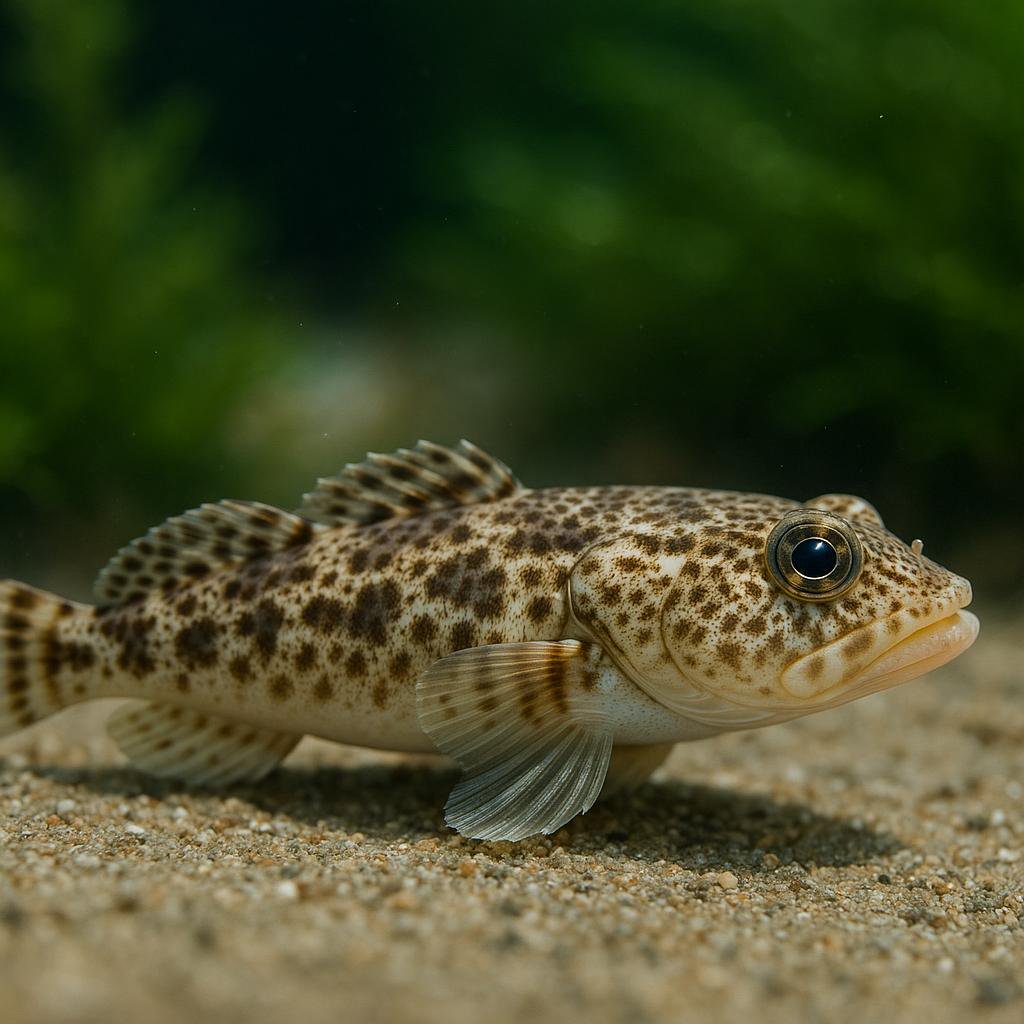
This is a New Zealand stargazer that lives half-buried in sand or mud with its eyes pointed up, waiting to rocket upward and nail passing prey. It has those neat dark saddle-bands across the back (especially as a juvenile), and like other stargazers it is venomous with spines near the gill cover/pectoral area - definitely a look-dont-touch fish.
Bandfin scorpionfish
Scorpaenopsis vittapinna
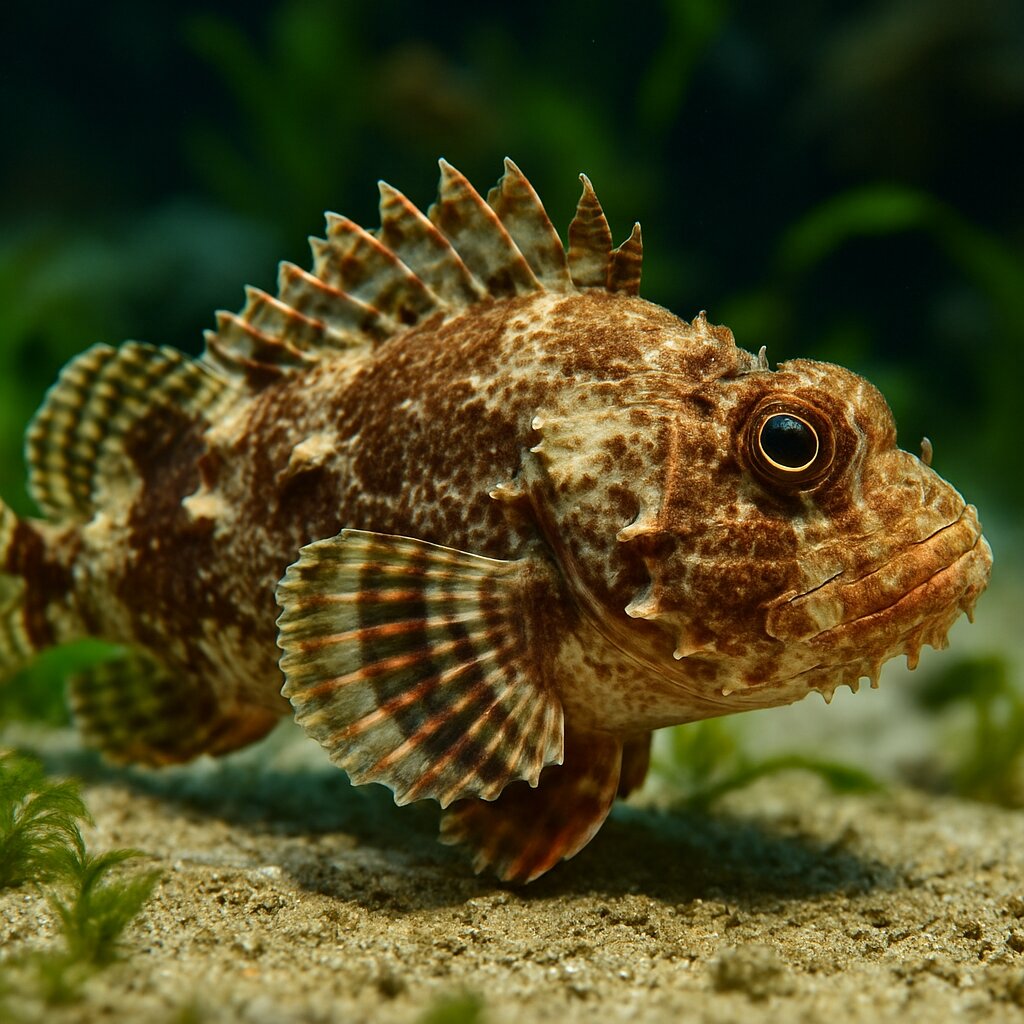
Think tiny ambush predator that vanishes into rubble and coral bits, then flashes a dark band on its pelvic and anal fins when it shifts. It tops out around 3 inches, packs venomous spines, and loves to gulp unsuspecting shrimp and small fish. Super cool to watch once it settles, but it absolutely demands careful handling and smart tankmate choices.
Blackfin stargazer
Ichthyscopus nigripinnis
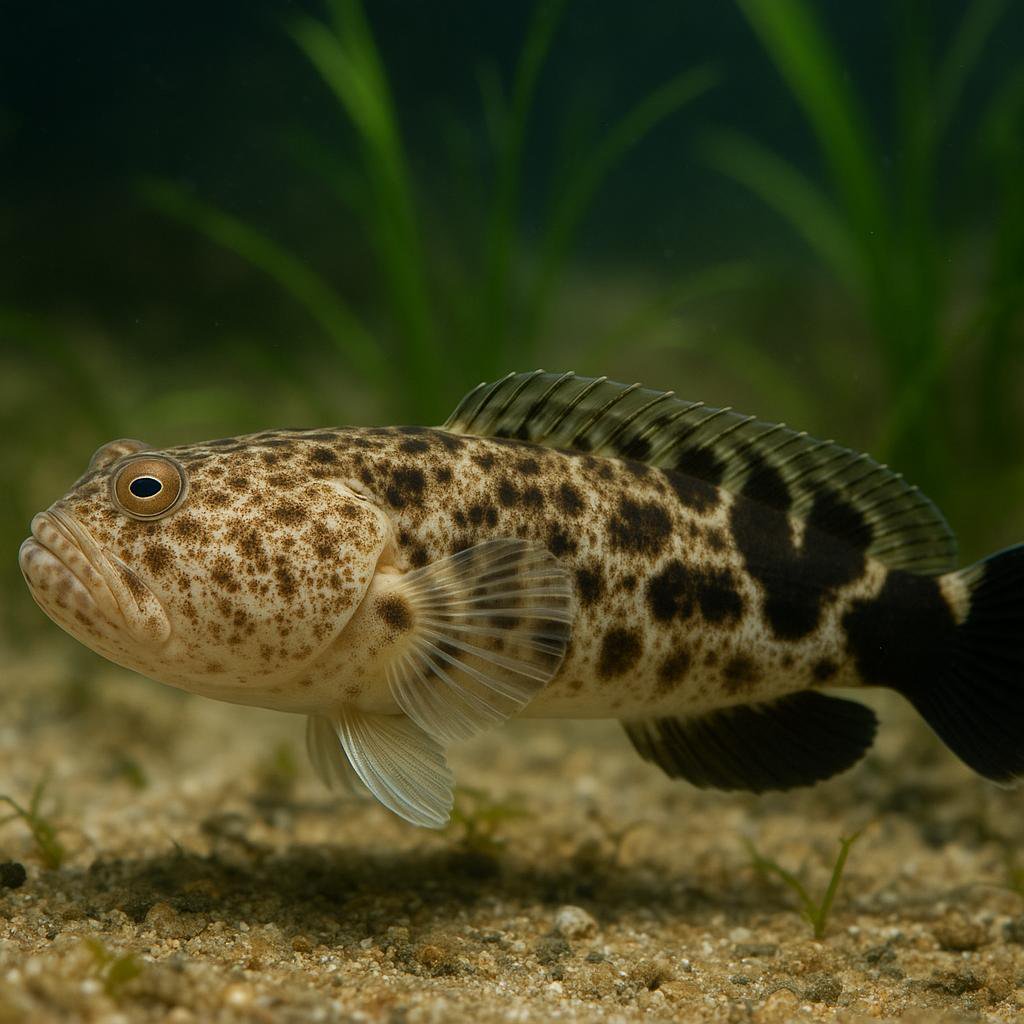
This is a little sand-sitting stargazer from Australia that likes to lie in wait with its eyes up top and nail passing prey. That black mark on the front part of the dorsal fin is basically its signature. Cool fish, but its more of a wild marine predator than something you set up in a typical home aquarium.
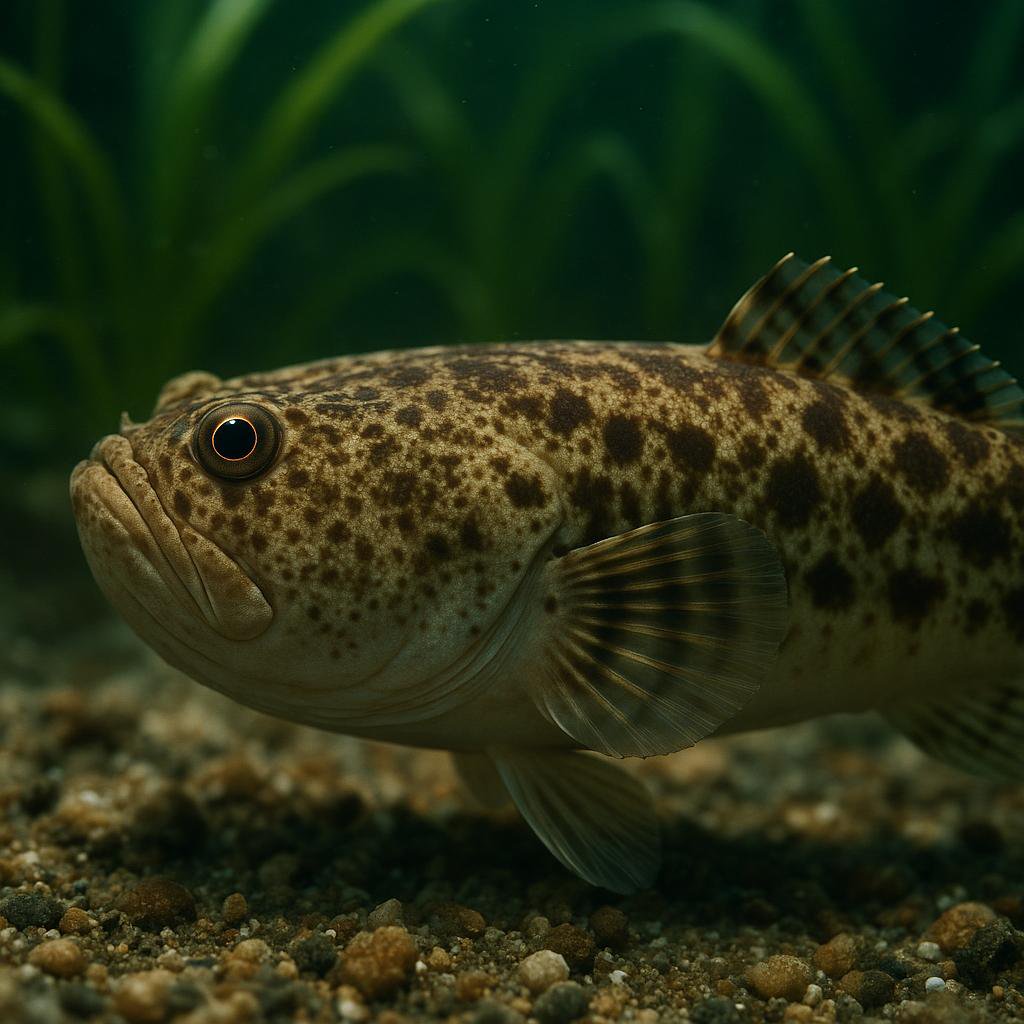
Brownspotted stargazer
Uranoscopus fuscomaculatus
A deep demersal stargazer recorded at 366–389 m that lies buried in sand or mud to ambush prey. Distribution is Southwestern Pacific (Vanuatu and Fiji). Given its deep, cold habitat and specialized requirements, it is not a practical aquarium species.
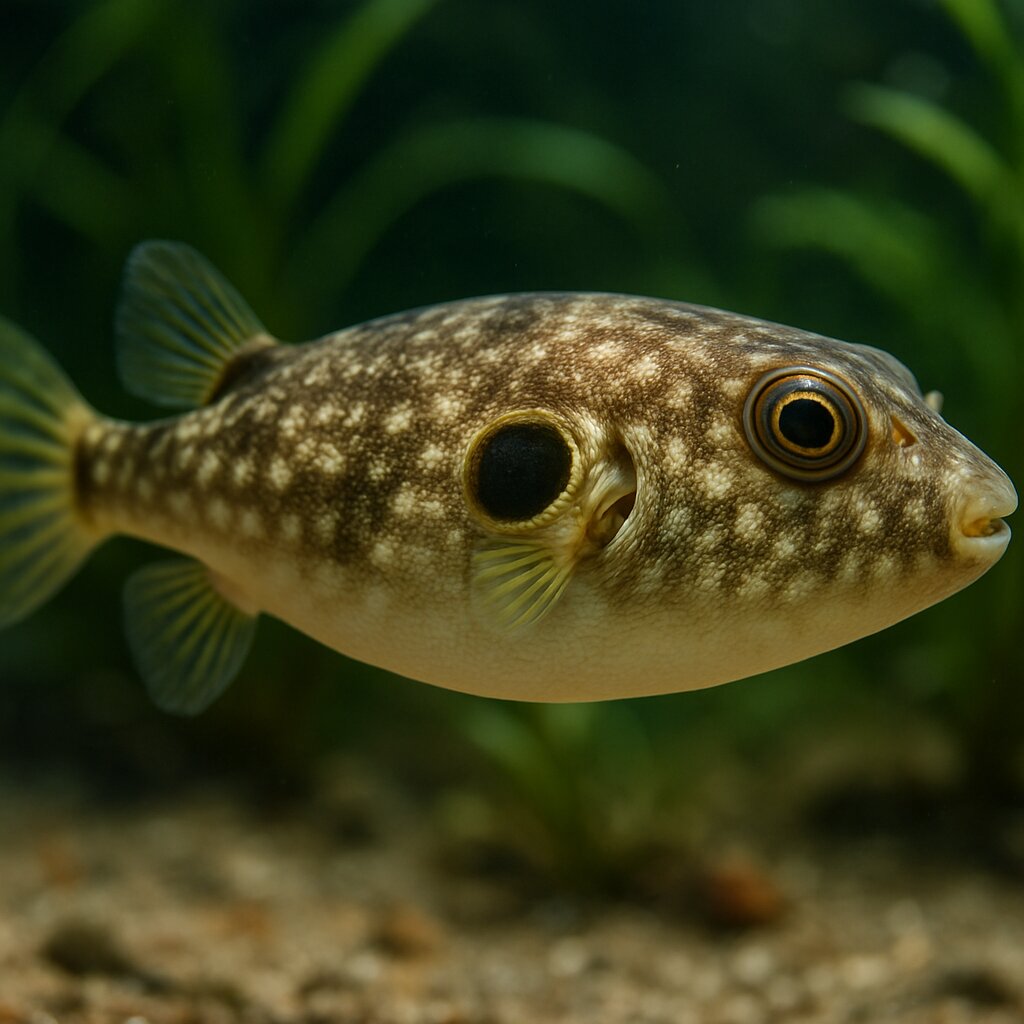
Bullseye puffer
Sphoeroides annulatus
Big personality in a football-shaped body with pale rings along the back that make a bullseye pattern. This is a stout Eastern Pacific puffer that crunches snails and crabs with ease and needs true saltwater and lots of room. Super cool to watch, but it turns nippy with tankmates and grows into a serious, messy eater.
More to Explore
Discover more marine species.

Abe's eelpout
Japonolycodes abei
Japonolycodes abei is a temperate, deepwater demersal eelpout (family Zoarcidae) endemic to Japan (Kumano-nada Sea reported; other sources also report Sagami Bay and Tosa Bay). It is the only species in the genus Japonolycodes and occurs roughly 40-300 m depth, making it an uncommon/atypical aquarium species.

Affinis blind cusk-eel
Barathronus affinis
Barathronus affinis is a tiny, super-weird deep-sea blind cusk-eel from the western-central Indian Ocean. It is one of those gelatinous, loose-skinned brotula-type fishes that live way down in the dark and are basically never seen alive, so almost everything we know comes from preserved specimens and taxonomic work.

Aleutian skate
Bathyraja aleutica
This is a big, cold-water deep-slope skate from the North Pacific that cruises muddy bottoms and eats chunky benthic prey like crabs and shrimp. The really cool bit is its egg-laying skate life - it does distinct pairing (the classic skate "embrace") and drops those tough egg cases on the seafloor. Not an aquarium fish at all unless you're basically running a public-aquarium-style chilled system.

Allis shad
Alosa alosa
Gorgeous silver, fast-swimming shad that spends most of its life in the sea and then surges up big rivers in noisy, surface-spawning schools. It grows huge for a herring-type fish and needs cool, ultra-oxygenated water and tons of open space, so it is a public-aquarium species rather than a home tank fish.

Annandale's zebra sole
Zebrias annandalei
Zebrias annandalei is a small demersal sole from coastal India that inhabits sandy or muddy bottoms and buries for camouflage. It is rarely kept in home aquaria and would require a specialized marine sand-bottom setup and appropriate feeding.

Antarctic dragonfish
Vomeridens infuscipinnis
Deep down around Antarctica, this sleek dragonfish cruises the water column like a little submarine, nearly neutrally buoyant so it can hover above the seafloor. It munches almost exclusively on Antarctic krill and lives in near-freezing water 500-800 m down, so it is a cool species to read about, not one for home tanks.
Looking for other species?