

Affinis blind cusk-eel
Barathronus affinis

The Affinis blind cusk-eel features a slender, elongated body, pale coloration, and reduced eyes adapted for life in deep-sea environments.
This page includes AI-generated images. Why am I seeing AI images?
About the Affinis blind cusk-eel
Barathronus affinis is a tiny, super-weird deep-sea blind cusk-eel from the western-central Indian Ocean. It is one of those gelatinous, loose-skinned brotula-type fishes that live way down in the dark and are basically never seen alive, so almost everything we know comes from preserved specimens and taxonomic work.
Also known as
Quick Facts
Size
4.7 cm SL
Temperament
Peaceful
Difficulty
Expert
Min Tank Size
0 gallons
Lifespan
unknown
Origin
Indian Ocean
Diet
Unknown (deep-sea species; likely small invertebrates)
Care Notes
- This is a deep-sea, blind cusk-eel - if you are not running a chilled marine system, do not buy it. Keep it cold and dark: 39-50F (4-10C) with low light and lots of shaded cover.
- Give it a long, secure tank with a tight lid and no gaps around plumbing - they are slippery and will wedge into tiny openings. Build rockwork into caves and tight crevices, but make sure nothing can collapse when it bulldozes in.
- Run high oxygen and serious flow, and aim for stable ocean salinity (1.024-1.026) and pH around 8.0-8.3. Cold water holds oxygen better, but these fish still crash fast if the tank gets stagnant.
- Feed after lights-out with tongs: chunky meaty stuff like shrimp, squid, clam, silversides, and other marine flesh. Start with smaller pieces more often, then move to bigger meals 2-3x a week once it is settled.
- Do not keep it with flashy, aggressive feeders - it will lose every food race. Best tankmates are other coldwater, low-aggression species that will not harass it or outcompete it at night.
- Avoid anything that can nip, latch on, or treat it like a worm (triggers, big wrasses, puffers) and avoid tiny fish or crustaceans you want to keep. If it fits in the mouth, it will disappear sooner or later.
- Watch for barotrauma and shipping damage - deepwater fish often arrive stressed, floaty, or with internal injury. Keep handling minimal, dim the tank, and do slow acclimation; sudden temp swings are what usually finish them off.
Compatibility
Good Tankmates
- Small, calm sand-sifters like watchman gobies and other mellow gobies - they mind their own business and wont hassle a shy, cave-hugging cusk-eel
- Peaceful blennies (tailspot-type attitude, not the super territorial ones) - good if youve got lots of rockwork and everyone has a perch
- Gentle dartfish and firefish - quiet open-water fish that wont compete hard for caves or pick on a secretive eel-like fish
- Small, non-aggressive reef-safe wrasses like possum wrasses or pink-streaked wrasse - active but usually not bullies, and they dont camp in the same holes
- Cleaner crews plus peaceful fish that ignore the bottom at night (chromis or small anthias-type behavior) - the cusk-eel tends to be more nocturnal and likes low drama
- Very peaceful, non-stinging inverts like cleaner shrimp or peppermint shrimp - usually fine if the cusk-eel is well fed and the shrimp are not tiny snack-sized juveniles
Avoid
- Aggressive dottybacks and nasty pseudochromis types - they love the same rock holes and will turn it into a turf war fast
- Big, boisterous wrasses (most Thalassoma and similar) - constant in-your-face cruising and pecking stresses shy cave fish and can keep them from eating
- Hawkfish (especially bigger ones) - perch-and-pounce hunters that can harass or snack on anything small and slow, and theyre rough on shrimp too
- Predators with a mouth big enough to test it (groupers, larger lionfish, big morays) - even if they seem chill, a slender eel-shaped fish can look like food
Where they come from
Barathronus affinis is a deepwater cusk-eel, one of those weird, secretive fish that lives way down where sunlight never shows up. They're often called "blind" because the eyes are tiny or not really functional, and they lean hard on smell and vibration to find food.
If you are picturing a typical marine aquarium fish, reset your expectations. This is more like keeping a deep-sea predator that happens to fit in a tank, not a reef fish that likes to be seen.
Setting up their tank
I'll be honest: this is an expert-only fish because the hard part is not decor or salt mix, its decompression history and long-term stability. If the specimen wasn't collected and handled perfectly, you can do everything right and still lose it.
Most affinis do poorly in standard hobby conditions due to deepwater pressure and temperature needs. Only consider one if you truly know its collection depth and can match temps, oxygen, and handling to that reality.
Assuming you have a specimen that has a real shot, think "cold, dark, calm, and secure." They want a cave they can fully disappear into, low light, and water that does not swing around day to day.
- Tank size: bigger is better for stability, but footprint matters more than height. Give it room to cruise and turn without scraping its face on rock.
- Lighting: very dim. Ambient room light or a low blue viewing light is plenty.
- Flow: moderate, not blasting. You want good oxygenation without forcing it out of its hide.
- Filtration: oversized skimming and strong biological filtration. These fish are messy eaters and meaty foods add up fast.
- Aquascape: rockwork that forms deep, smooth caves. Avoid sharp rubble - they wedge themselves into crevices.
- Substrate: fine sand or bare bottom. If you use sand, keep it clean and not too deep.
Use PVC elbows and short sections of pipe hidden behind rock. It looks less "natural" to us, but the fish will pick the safest, tightest hide every time, and PVC is smooth and easy to clean.
Temperature is the make-or-break detail for most deepwater fish. Many hobbyists try to run them at typical reef temps and it ends badly. If you cannot run a chiller and keep it steady, skip this species.
What to feed them
They are scent hunters. Mine responded way more to smell than to seeing food. If you drop food in and walk away, it might sit there until it rots. Target feeding is your friend.
- Start foods: small pieces of raw shrimp, squid, scallop, marine fish flesh (not oily freshwater stuff).
- Best "training" foods: live or very fresh items that stink in the water a bit (in a good way), like live ghost shrimp acclimated to marine, or freshly thawed shrimp.
- Avoid: feeder goldfish, freshwater worms, and anything that will spike thiaminase risk long-term.
- Schedule: small meals 2-3 times per week once established. New arrivals may need smaller, more frequent attempts until they learn your routine.
Use long feeding tongs or a feeding stick and present the food right at the cave mouth. Hold still. A lot of the time they will "sniff" for 10-30 seconds, then lunge.
Watch the leftovers like a hawk. These fish often grab a bite and back into the cave, and whatever they miss will foul your water quickly. I siphon uneaten bits after 10-15 minutes.
How they behave and who they get along with
Most of the time you will not see it. That is normal. They are ambush predators that like contact with something overhead (cave ceiling, pipe, tight rock gap). If its out in the open all the time, something is off.
- Temperament: predatory, not "mean" in the territorial sense. It will eat what fits.
- Activity: mostly dusk/night, but in low light they may poke their head out during the day.
- Tankmates: only consider other coldwater/deepwater species that are too big to swallow and not aggressive.
- What not to mix: small fish, shrimp, crabs, and anything that will pick at it or steal food constantly.
A calm tank is huge for feeding response. Fast, bold fish that rush food can keep a shy cusk-eel from ever settling in, even if they are not attacking it.
Also, cover your tank. Cusk-eels can surprise you. They are more "snake-like" than you expect, and a stressed fish can find gaps around plumbing.
Breeding tips
Realistically, breeding Barathronus affinis in home aquaria is not something the hobby has cracked. Deepwater spawning cues, sexing, and larval rearing are big unknowns, and you are already fighting the temperature/pressure history problem before you even get to reproduction.
If you ever see courtship behavior (two individuals sharing a hide, repeated nudging, or pairing), document it. Photos, temps, feeding schedule, and any seasonal changes are actually valuable data for the community.
Common problems to watch for
Most losses I have seen come down to three things: temperature stress, starvation (quietly), and infection after shipping damage. Because they hide, you have to judge health by behavior and feeding, not by constant visual checks.
- Refusing food: often stress, too much light, too much traffic, or tankmates stealing. Try dimming the tank, feeding later, and offering smellier foods.
- Rapid breathing or hanging in the flow: oxygen/temperature problem. Check dissolved oxygen, surface agitation, and that the chiller is actually holding steady.
- Scrapes around the snout: rough rock or tight crevices with sharp edges. Smooth out the caves and swap in PVC hides.
- Bloating or regurgitation: meals too large or food too tough. Offer smaller, softer pieces and slow down feed frequency.
- Sudden decline after "looking fine": shipping/decompression damage showing late. Keep stress low and water pristine, but sometimes it is not recoverable.
Do not shotgun-medicate. Many deepwater fish react badly to casual dosing, and you may not even have a correct diagnosis. If you have to treat, do it in a controlled hospital setup with known volume and strong aeration.
If you are determined to keep this species, the best thing you can do is plan like a public aquarium: cold, stable, low light, tight hides, clean water, and a feeding routine that you can repeat the same way every time. That consistency is what gets them eating and keeps them from slowly fading out.
Similar Species
Other marine peaceful species you might be interested in.

Abe's eelpout
Japonolycodes abei
Japonolycodes abei is a temperate, deepwater demersal eelpout (family Zoarcidae) endemic to Japan (Kumano-nada Sea reported; other sources also report Sagami Bay and Tosa Bay). It is the only species in the genus Japonolycodes and occurs roughly 40-300 m depth, making it an uncommon/atypical aquarium species.

Allis shad
Alosa alosa
Gorgeous silver, fast-swimming shad that spends most of its life in the sea and then surges up big rivers in noisy, surface-spawning schools. It grows huge for a herring-type fish and needs cool, ultra-oxygenated water and tons of open space, so it is a public-aquarium species rather than a home tank fish.

Annandale's zebra sole
Zebrias annandalei
Zebrias annandalei is a small demersal sole from coastal India that inhabits sandy or muddy bottoms and buries for camouflage. It is rarely kept in home aquaria and would require a specialized marine sand-bottom setup and appropriate feeding.
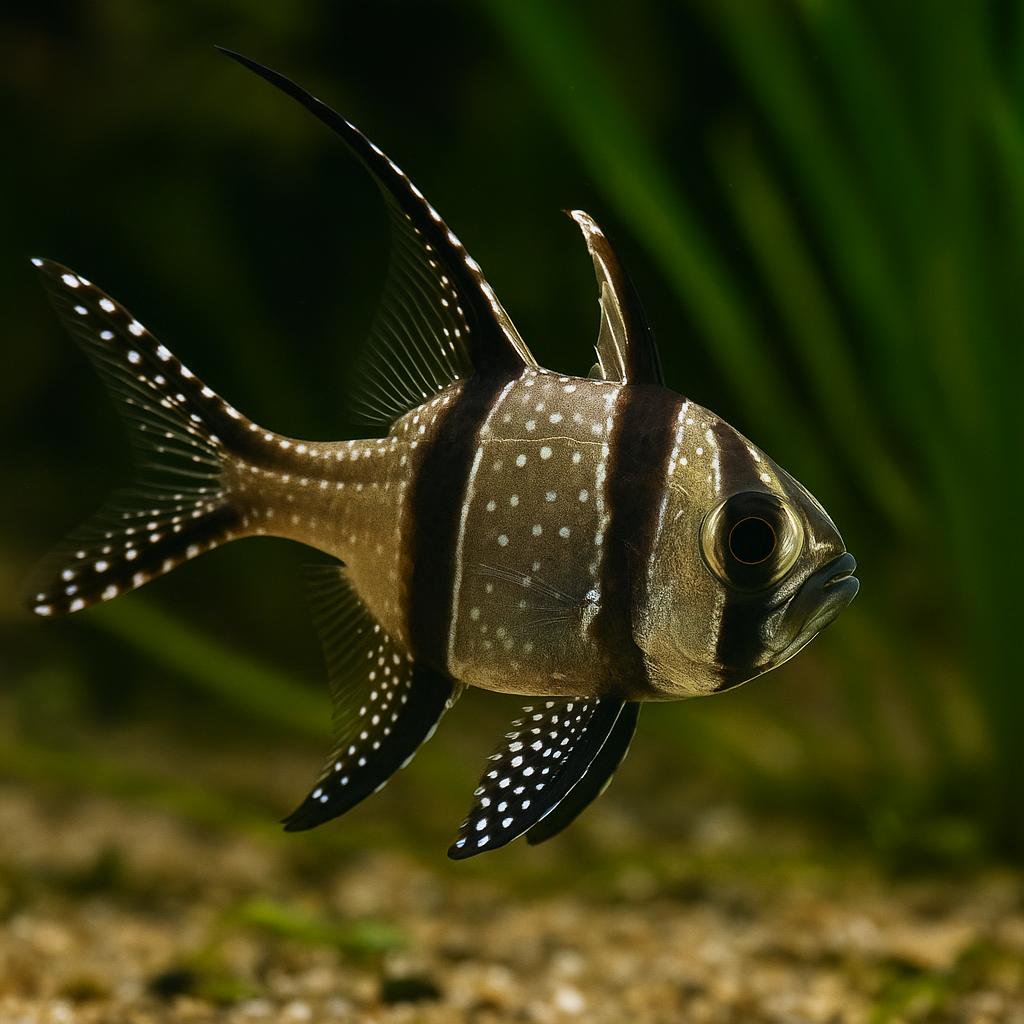
Banggai Cardinalfish
Pterapogon kauderni
Banggai cardinals just sort of hover like little underwater satellites, and the bold black bars with those long, polka-dotted fins look unreal under reef lighting. They're super chill most of the time, but once a pair forms you'll see real "fish drama," and the male will even mouthbrood the babies like a champ.
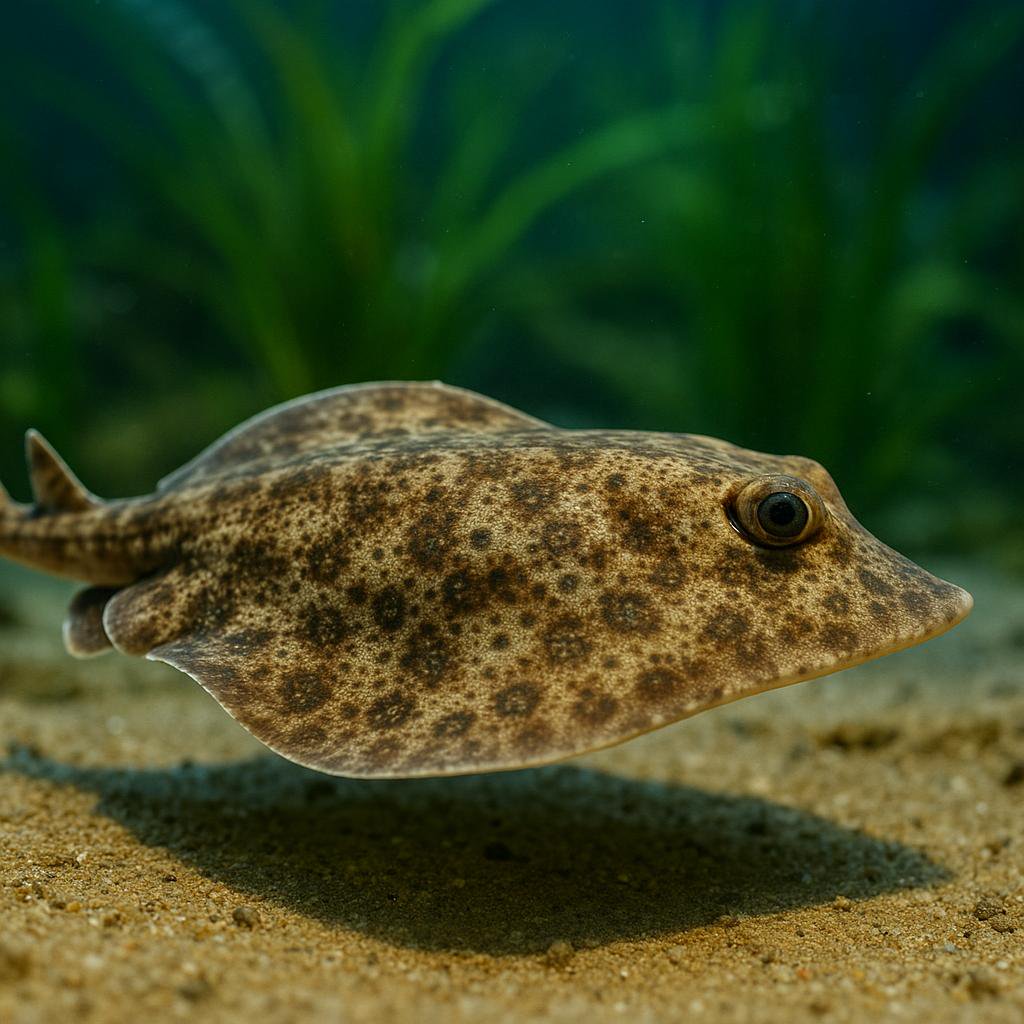
Barbedwire-tailed skate
Notoraja martinezi
Notoraja martinezi is a deepwater skate from the eastern Pacific (Costa Rica down to Ecuador) that lives way down on soft bottoms. The tail is the giveaway - it is lined with strong, hooked thorns that really do look like barbed wire. This is absolutely not an aquarium fish; it is a cold, high-pressure deep-sea animal with basically no practical home care info because it is not kept in the hobby.
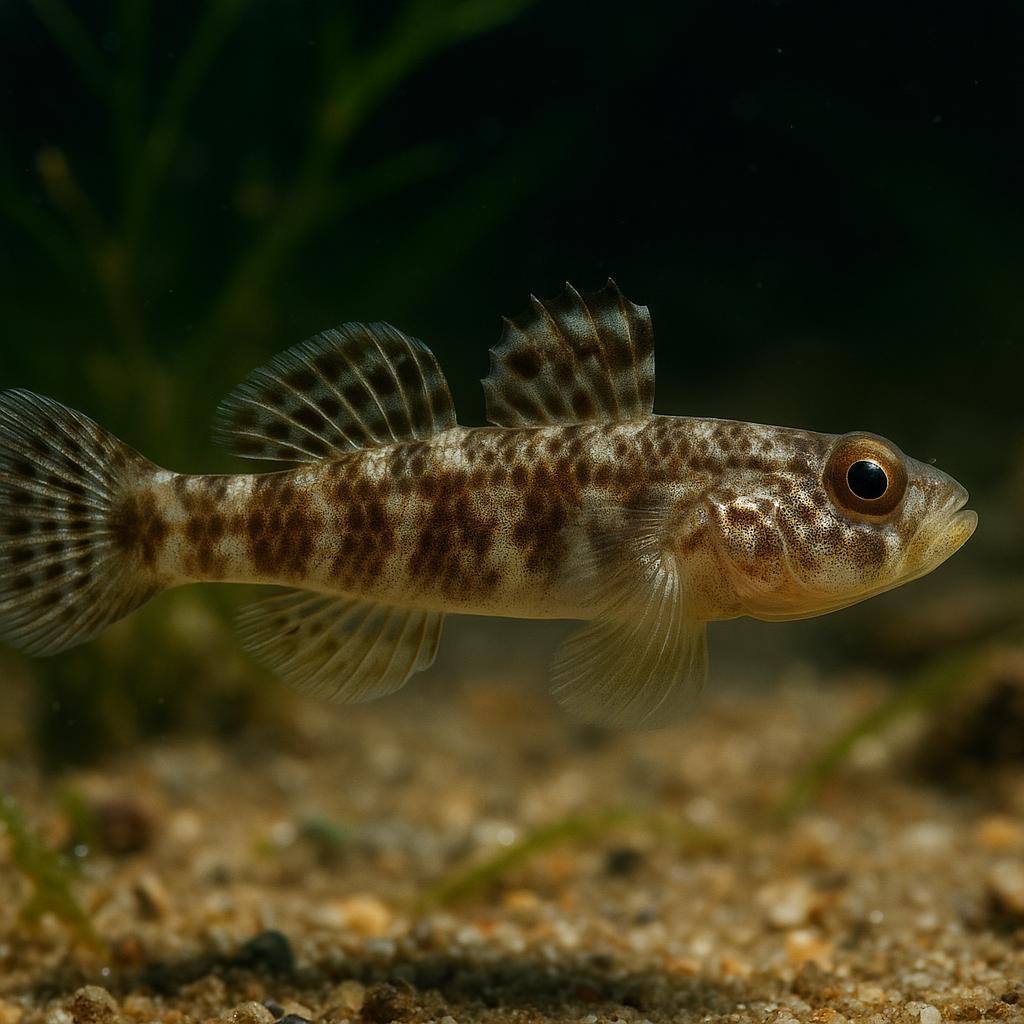
Ben-Tuvia's goby
Didogobius bentuvii
This is a tiny little Mediterranean goby from the Israeli coast that lives down on the bottom over muddy-sand, and it is likely a burrower. In other words, it is a blink-and-you-miss-it kind of fish - super small, demersal, and more about sneaky bottom-dweller vibes than flashy swimming.
More to Explore
Discover more marine species.

African red snapper
Lutjanus agennes
This is a true snapper from West Africa - a big, fast-growing predator that goes from coastal reefs to brackish lagoons and estuaries (especially as a juvenile). Super cool fish in the wild, but it gets absolutely huge and will eat smaller tankmates once it has the mouth for it, so its really more of a public-aquarium scale animal than a home-aquarium fish.

Aleutian skate
Bathyraja aleutica
This is a big, cold-water deep-slope skate from the North Pacific that cruises muddy bottoms and eats chunky benthic prey like crabs and shrimp. The really cool bit is its egg-laying skate life - it does distinct pairing (the classic skate "embrace") and drops those tough egg cases on the seafloor. Not an aquarium fish at all unless you're basically running a public-aquarium-style chilled system.

Antarctic dragonfish
Vomeridens infuscipinnis
Deep down around Antarctica, this sleek dragonfish cruises the water column like a little submarine, nearly neutrally buoyant so it can hover above the seafloor. It munches almost exclusively on Antarctic krill and lives in near-freezing water 500-800 m down, so it is a cool species to read about, not one for home tanks.
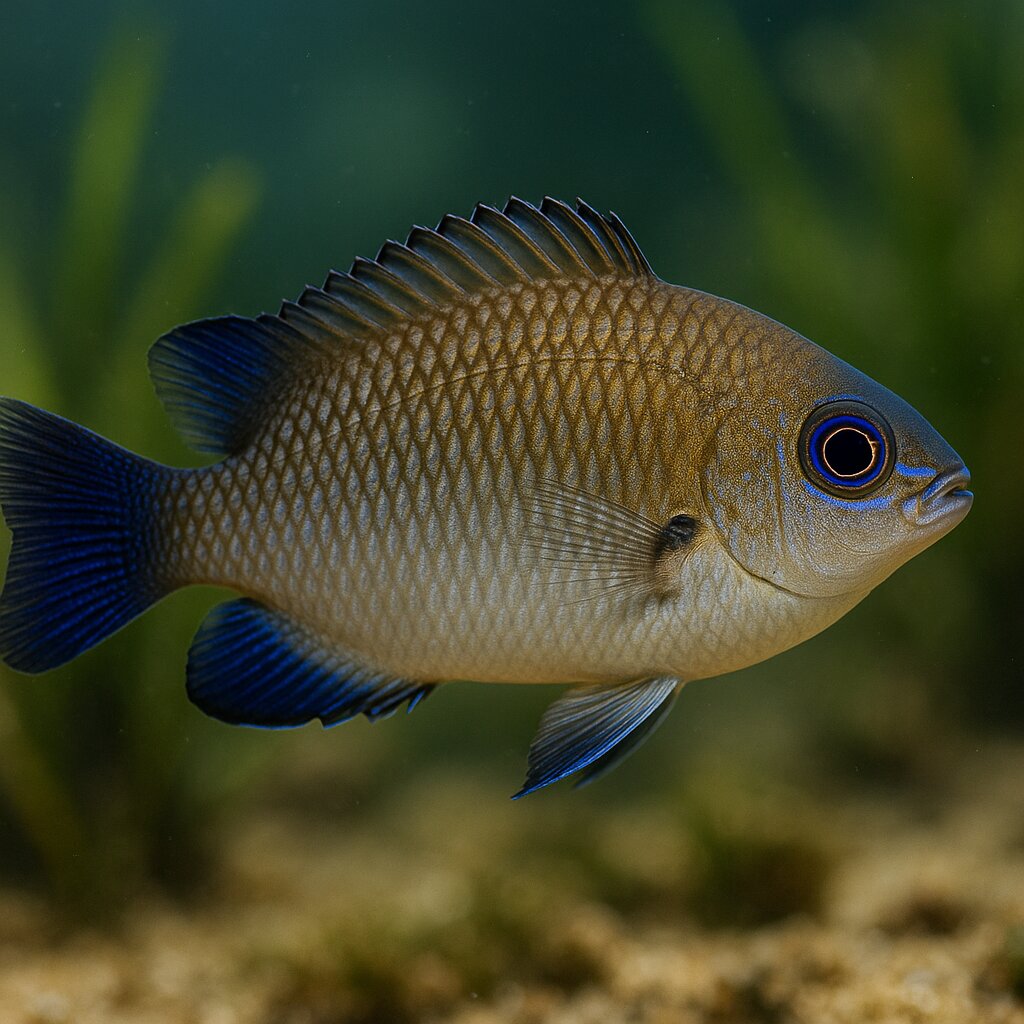
Arabian demoiselle
Neopomacentrus sindensis
A small lyretail damsel from the Persian Gulf and Arabian Sea, it hangs in loose groups around coral heads, rocks, and even pier pilings picking zooplankton from the flow. Think classic damsel toughness with a slightly milder attitude than the real bruisers, plus subtle yellow tail accents. Males clean a patch, get a mate to lay eggs there, and then stand guard fanning the clutch.

Arabian spiny eel
Notacanthus indicus
Notacanthus indicus is a deep-sea spiny eel (family Notacanthidae; not a true eel) known from the Arabian Sea on the continental slope at roughly ~960–1,046 m depth, with reported maximum length around 20 cm TL; it is a deep-water bycatch species and not established in the aquarium trade.

Arctic rockling
Gaidropsarus argentatus
This is a deepwater North Atlantic rockling (a cod relative) that hangs out on soft bottoms way down the slope. It is a cold-water, bottom-hugging predator that snoots around for crustaceans and will also take small fish when it gets the chance.
Looking for other species?