

Scale-eyed flounder
Lepidoblepharon ophthalmolepis
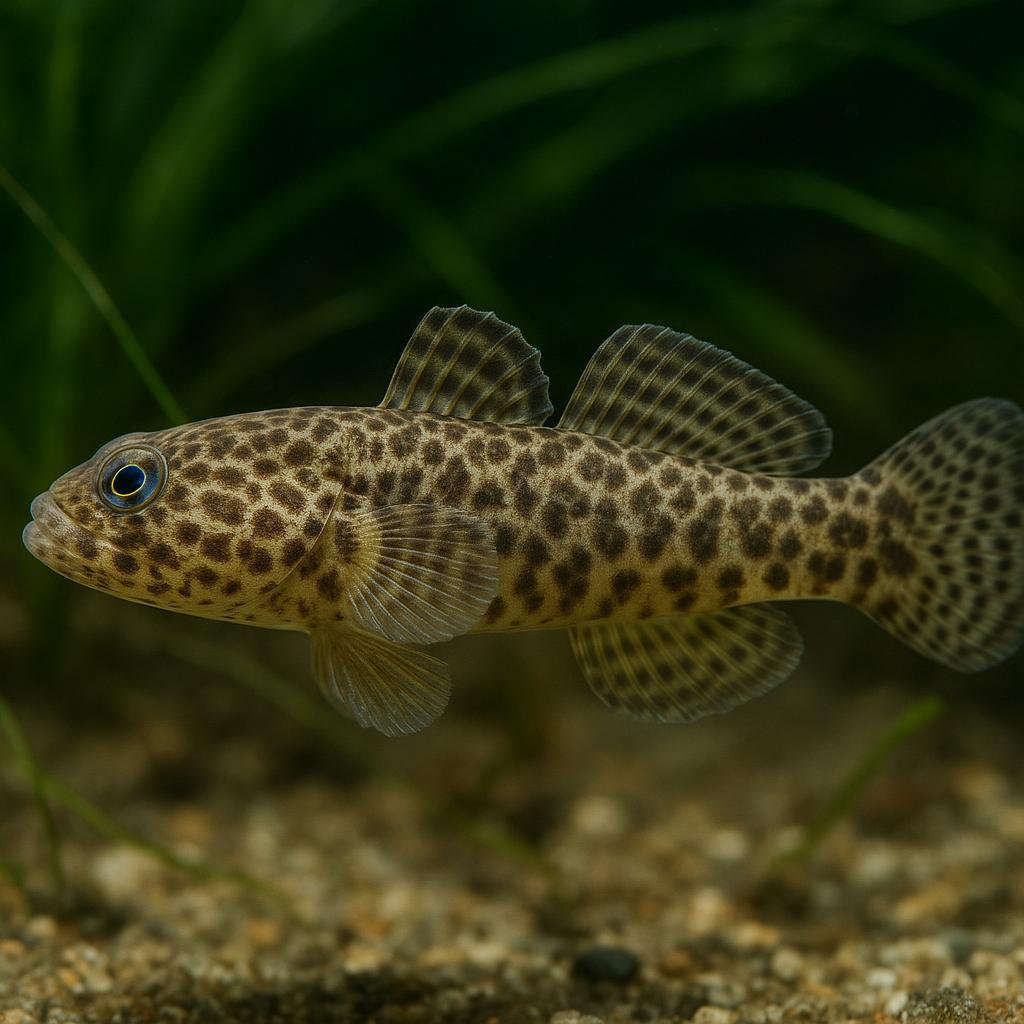
The Scale-eyed flounder exhibits distinct, large eyes and a flattened body covered in small, scale-like structures, often with a spotted pattern.
This page includes AI-generated images. Why am I seeing AI images?
About the Scale-eyed flounder
Deepwater bathydemersal citharid flounder from the western Pacific, reported from ~310–428 m on mud bottoms. Notable for very large eyes on the right side that are covered with scales. Rare and apparently not marketed; aquarium husbandry is essentially undocumented and this species is not a practical home-aquarium fish.
Also known as
Quick Facts
Size
36 cm
Temperament
Peaceful
Difficulty
Expert
Min Tank Size
180 gallons
Lifespan
unknown
Origin
Western Pacific
Diet
Carnivore - benthic animals (small bottom-dwelling invertebrates)
Care Notes
- This is a deepwater bathydemersal flounder (reported ~310–428 m / to ~435 m on mud bottoms) and is rare/apparently not marketed; long-term home-aquarium care is essentially undocumented and not recommended.
Compatibility
Avoid
- Home reef/community aquarium stocking advice is not established for this deepwater, rare species; compatibility in captivity is essentially undocumented.
Where they come from
Scale-eyed flounders (Lepidoblepharon ophthalmolepis) are little sand-huggers from the eastern Pacific. Think shallow coastal bottoms where the substrate is a mix of fine sand, shell bits, and rubble. They spend their lives trying to look like a patch of nothing.
That origin story matters because this fish does not want to be "displayed" on rockwork. It wants a bottom it can disappear into, and a tank where food reliably comes to it.
Setting up their tank
If you try to keep this species like a normal reef fish, you will lose it. Build the tank around the bottom. Give it sand, give it space, and keep the chaos (and competition) low.
- Tank size: bigger is easier. I would not bother under 30 gallons, and 40-75 gallons gives you a lot more stability.
- Substrate: fine sand is the whole game. Aim for at least 2-3 inches so it can settle in and feel secure.
- Rockwork: keep rocks stable and off the sand where possible (on the glass or on supports) so burrowing does not undermine anything.
- Flow: moderate overall, but avoid blasting the sandbed. A sandstorm stresses them and makes feeding harder.
- Lighting: they do not care about bright lights, but bright tanks tend to encourage pushy fish. Dimmer or shaded areas help.
Avoid coarse crushed coral. These fish spend all day rubbing against the bottom, and rough substrate can beat up the belly, fins, and eyes.
Cover your intakes. Flounders can wedge themselves into weird spots, and a stressed, skinny fish can get pinned to a powerhead intake. I use foam guards or a screen and clean them often.
A "feeding station" helps a lot: a small shallow dish or a flat rock on the sand where you always deliver food. They learn fast, and you can track how much is actually being eaten.
What to feed them
Most scale-eyed flounder losses come down to food, not water. They are ambush predators, and many arrive only recognizing live prey. Your job is getting consistent calories into them without letting tankmates steal everything.
- Best starter foods: live blackworms (if you have a safe source), live ghost shrimp, small live mollies acclimated to salt (as a temporary bridge), live amphipods.
- Once eating: PE mysis, chopped shrimp, chopped clam, finely cut squid, small silversides (sparingly), enriched brine shrimp (as a tool, not the main diet).
- Soaks: I like using a vitamin/HUFA soak a couple times a week, especially during weaning.
Target feeding makes life easier. I use long tweezers or a feeding stick and put the food right in front of the fish on the sand. If you drop food into the water column, faster fish will intercept it and the flounder will sit there like nothing happened.
Expect a weaning period. Some individuals take frozen on day one, others need a week or two of "moving" food before they connect the dots. Be patient, but watch the belly and overall thickness.
How they behave and who they get along with
They are calm, sneaky, and almost invisible. Most of the time they are partially buried with just the eyes up, waiting for something edible to wander by. That said, they are still predators.
- Good tankmates: peaceful fish that do not compete hard for bottom food (some gobies and blennies can work if they are not too pushy at feeding time).
- Risky tankmates: wrasses, dottybacks, hawkfish, aggressive clowns, and anything that hoovers food like a vacuum.
- Never: anything small enough to be swallowed. If it can fit in the flounder's mouth, it will eventually be tested.
Invertebrates are a mixed bag. Tiny shrimp and small crabs are on the menu. Snails are usually ignored, but I would not count on decorative micro-critters surviving long term if the flounder is hungry.
Watch for sand-sleeping wrasses and other bottom sleepers. They can stress a flounder by constantly dropping onto the same patch of sand, and feeding time becomes a race the flounder does not win.
Breeding tips
Breeding this species in a home aquarium is basically in the "nice if it happens" category. Many marine flounders have pelagic eggs and larvae that need planktonic foods and a dedicated larval setup. I have not seen consistent hobby success stories with Lepidoblepharon.
If you ever end up with a pair and see courtship (more activity at dusk, circling, short bursts off the bottom), take notes on temperature, photoperiod, and feeding. But I would not buy this fish with breeding as the goal.
Common problems to watch for
- Starvation: the classic issue. The fish "looks fine" until it suddenly does not. Check body thickness weekly and keep a feeding log.
- Food theft: tankmates eating everything before the flounder reacts. This is fixable with target feeding and calmer tankmates.
- Burying injuries: rough substrate, sharp rubble, or unstable rock can scrape them up.
- Parasites on arrival: flounders can come in with flukes or other hitchhikers. Heavy breathing, flashing, and not settling are red flags.
- Nitrate creep from heavy feeding: these fish often need meaty foods. If you overfeed to compensate for competition, your nutrients climb fast.
Do not run this fish in a tank that "sometimes" has ammonia or nitrite. They sit on the bottom where waste collects, and they do not handle a sloppy cycle or neglected maintenance.
One more thing people miss: they can vanish. You will think it jumped or died, but it is just buried deep in a quiet corner. Before you tear the tank apart, stop feeding for a day, then target feed the same spot and watch for the eyes to pop up.
Similar Species
Other marine peaceful species you might be interested in.
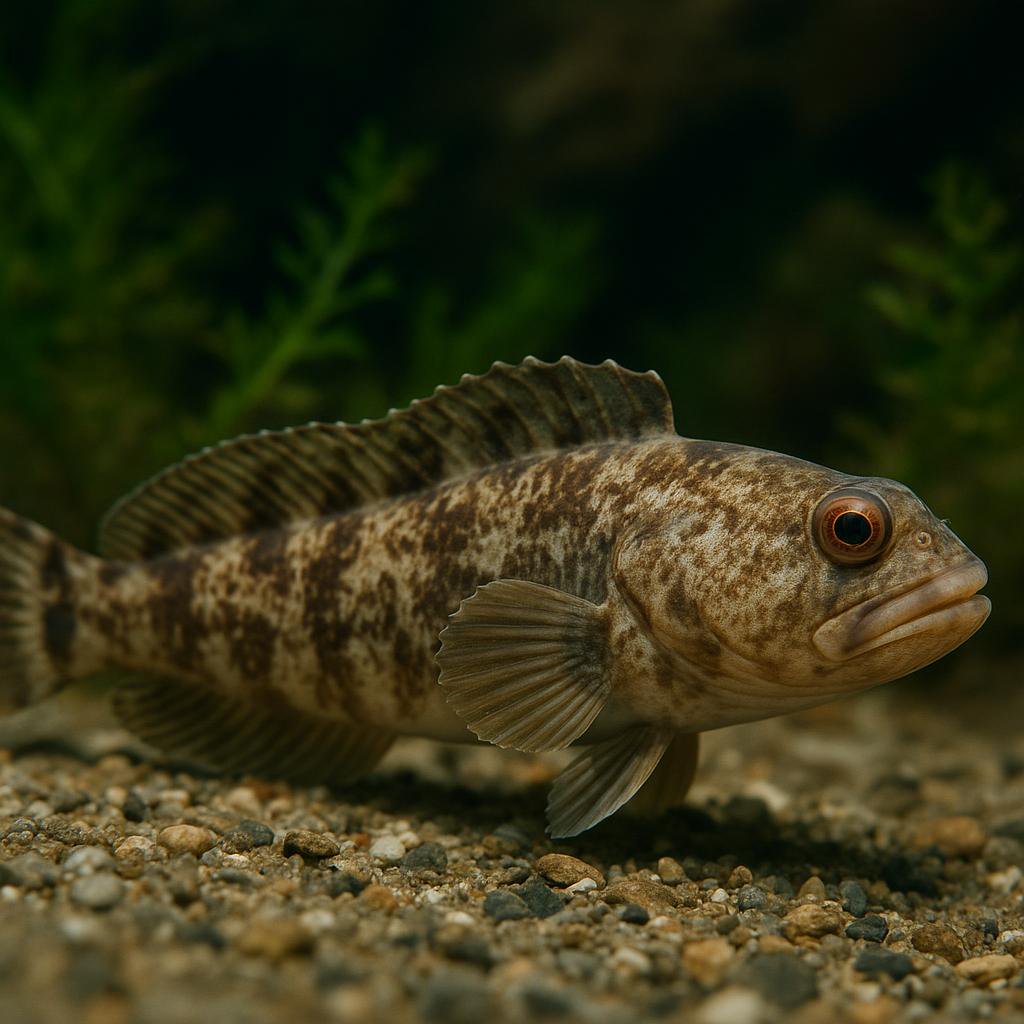
Abe's eelpout
Japonolycodes abei
Japonolycodes abei is a temperate, deepwater demersal eelpout (family Zoarcidae) endemic to Japan (Kumano-nada Sea reported; other sources also report Sagami Bay and Tosa Bay). It is the only species in the genus Japonolycodes and occurs roughly 40-300 m depth, making it an uncommon/atypical aquarium species.
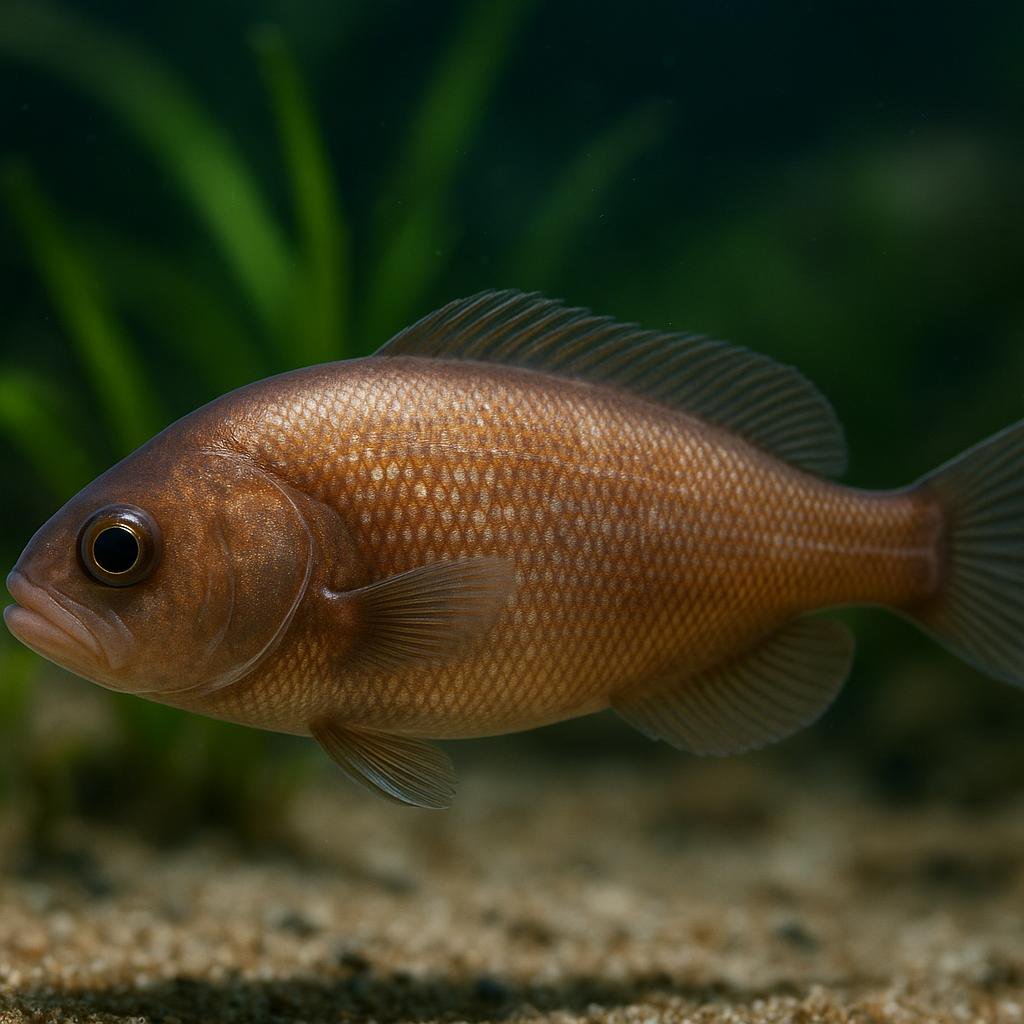
Affinis blind cusk-eel
Barathronus affinis
Barathronus affinis is a tiny, super-weird deep-sea blind cusk-eel from the western-central Indian Ocean. It is one of those gelatinous, loose-skinned brotula-type fishes that live way down in the dark and are basically never seen alive, so almost everything we know comes from preserved specimens and taxonomic work.
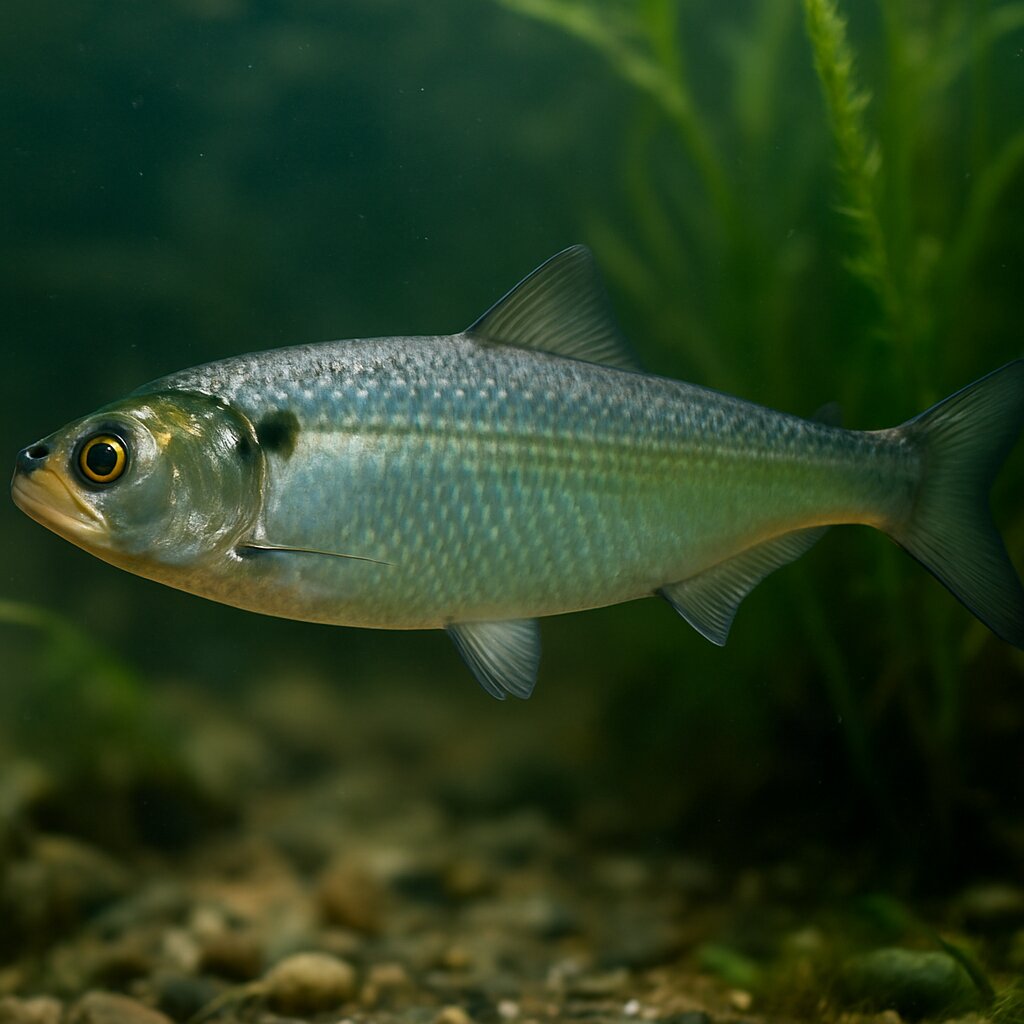
Allis shad
Alosa alosa
Gorgeous silver, fast-swimming shad that spends most of its life in the sea and then surges up big rivers in noisy, surface-spawning schools. It grows huge for a herring-type fish and needs cool, ultra-oxygenated water and tons of open space, so it is a public-aquarium species rather than a home tank fish.
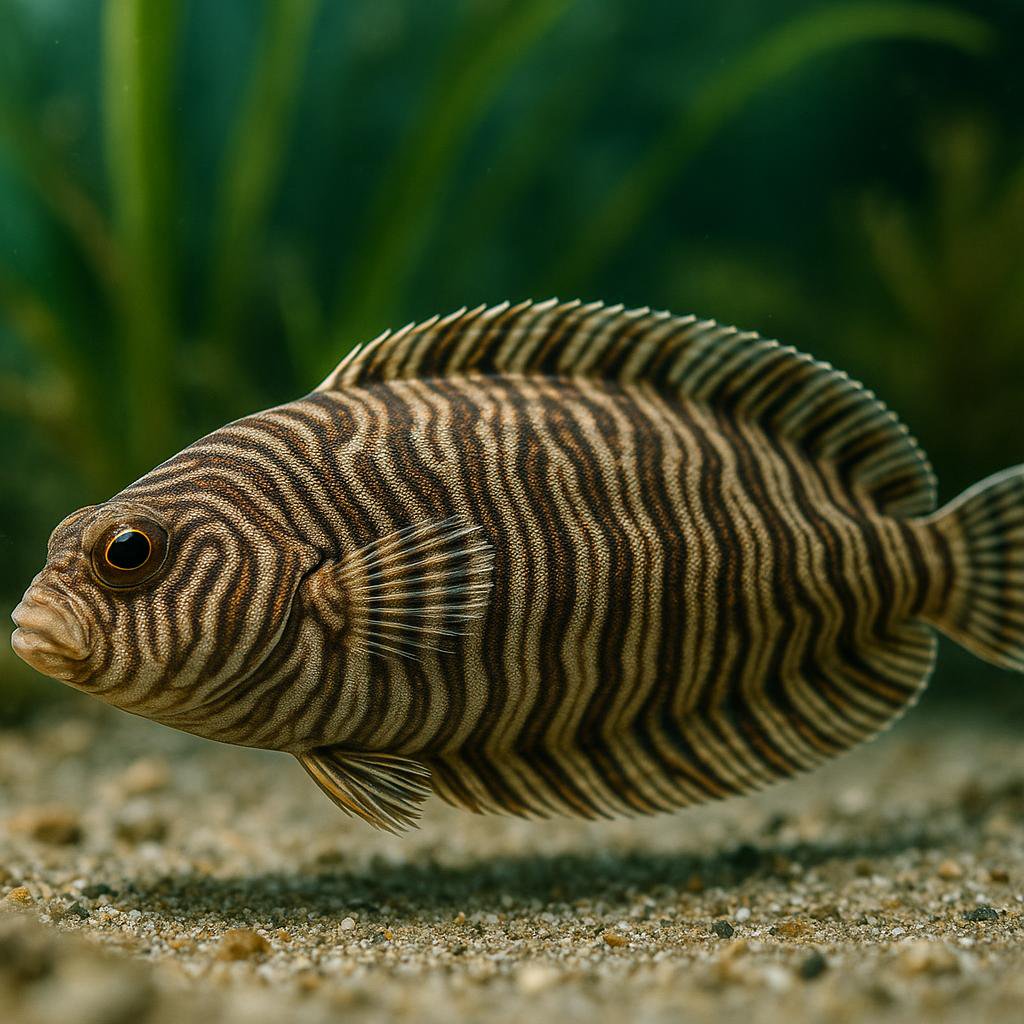
Annandale's zebra sole
Zebrias annandalei
Zebrias annandalei is a small demersal sole from coastal India that inhabits sandy or muddy bottoms and buries for camouflage. It is rarely kept in home aquaria and would require a specialized marine sand-bottom setup and appropriate feeding.
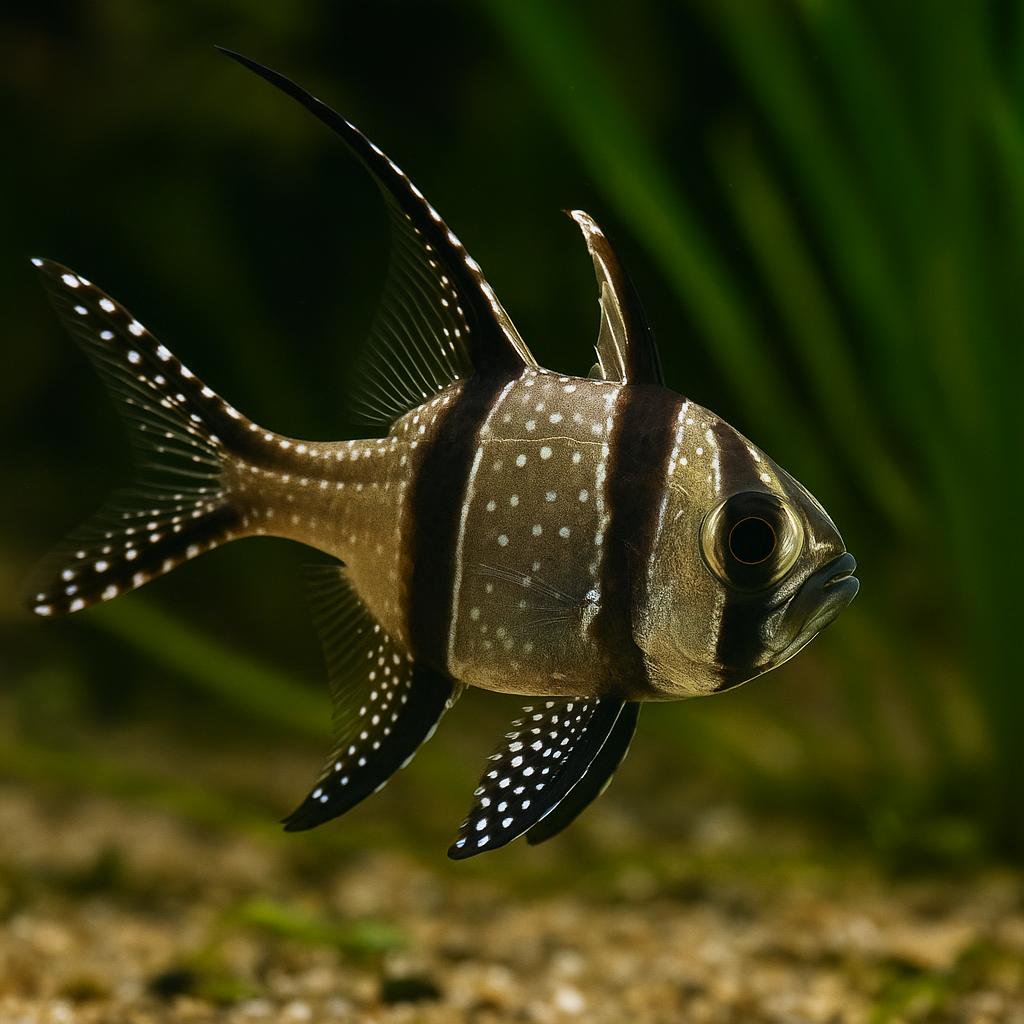
Banggai Cardinalfish
Pterapogon kauderni
Banggai cardinals just sort of hover like little underwater satellites, and the bold black bars with those long, polka-dotted fins look unreal under reef lighting. They're super chill most of the time, but once a pair forms you'll see real "fish drama," and the male will even mouthbrood the babies like a champ.
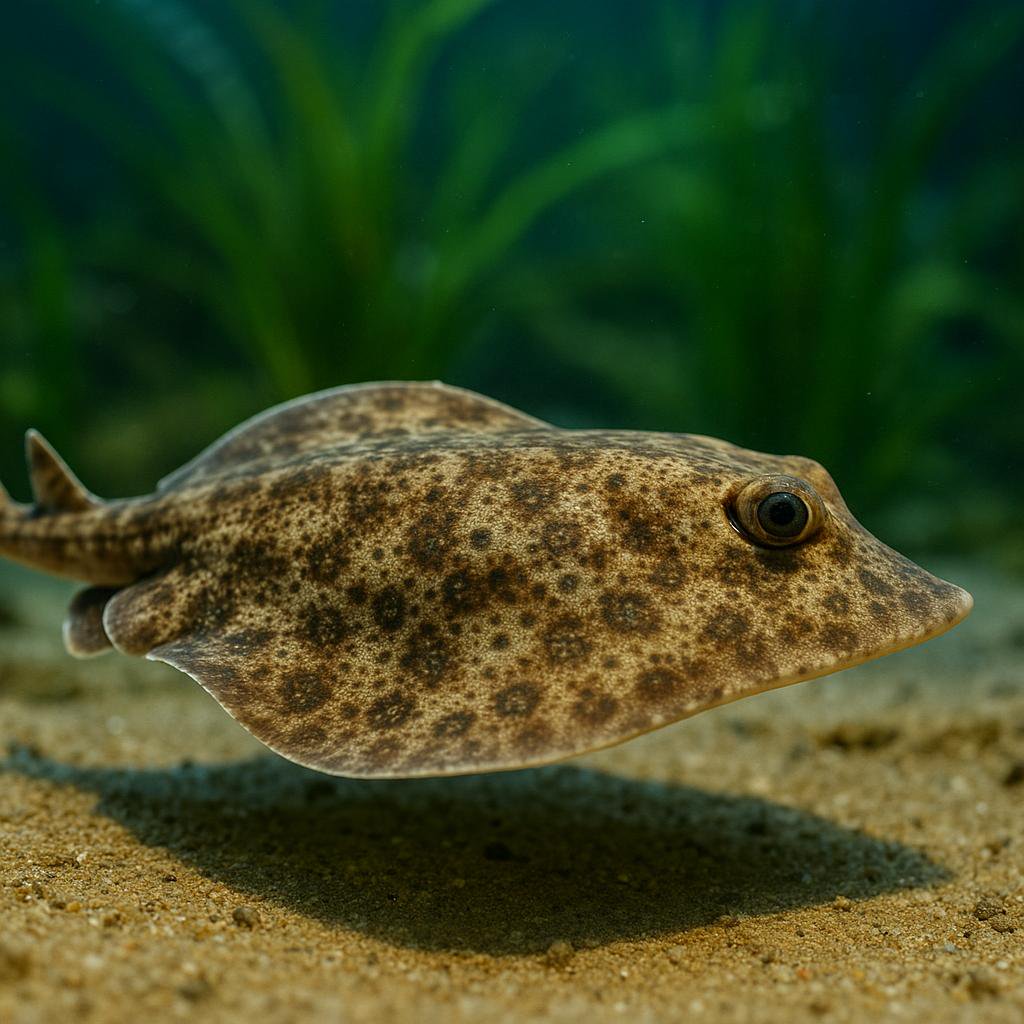
Barbedwire-tailed skate
Notoraja martinezi
Notoraja martinezi is a deepwater skate from the eastern Pacific (Costa Rica down to Ecuador) that lives way down on soft bottoms. The tail is the giveaway - it is lined with strong, hooked thorns that really do look like barbed wire. This is absolutely not an aquarium fish; it is a cold, high-pressure deep-sea animal with basically no practical home care info because it is not kept in the hobby.
More to Explore
Discover more marine species.
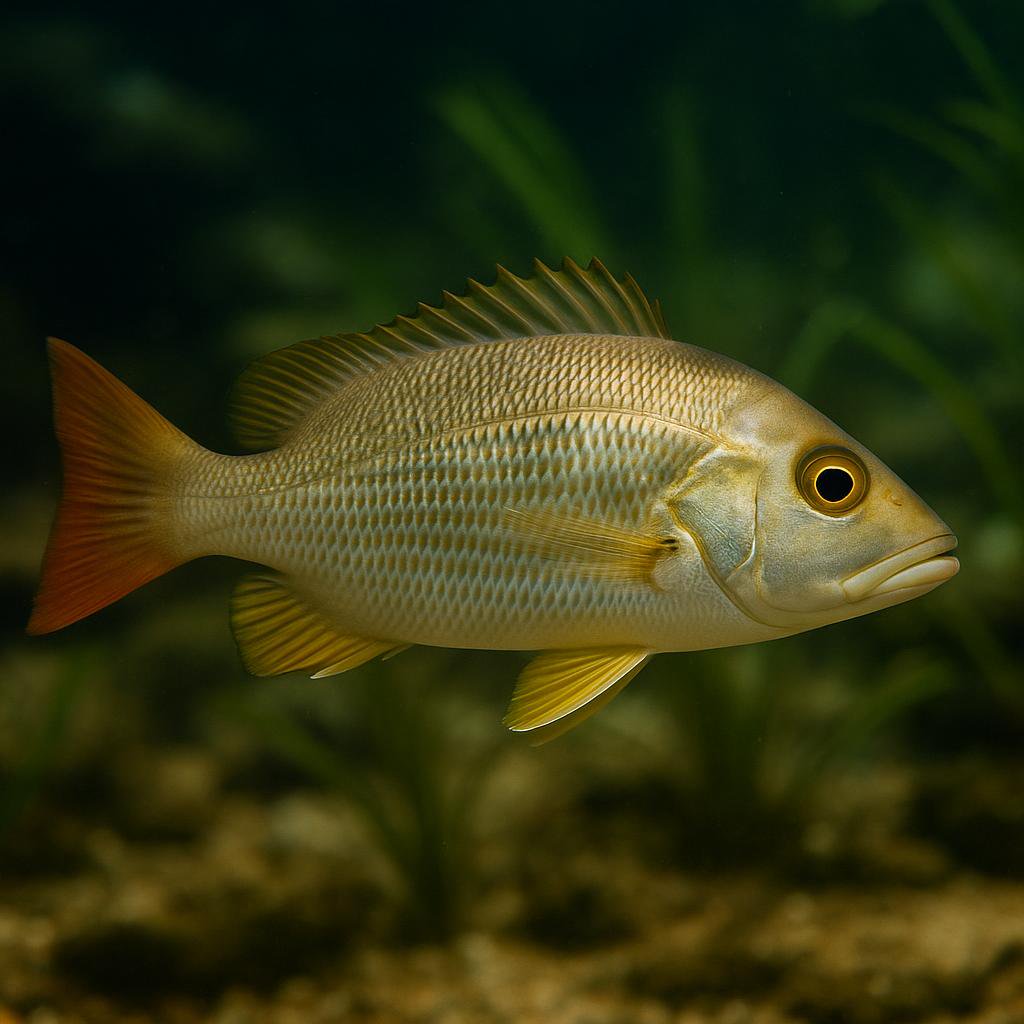
African red snapper
Lutjanus agennes
This is a true snapper from West Africa - a big, fast-growing predator that goes from coastal reefs to brackish lagoons and estuaries (especially as a juvenile). Super cool fish in the wild, but it gets absolutely huge and will eat smaller tankmates once it has the mouth for it, so its really more of a public-aquarium scale animal than a home-aquarium fish.
Aleutian skate
Bathyraja aleutica
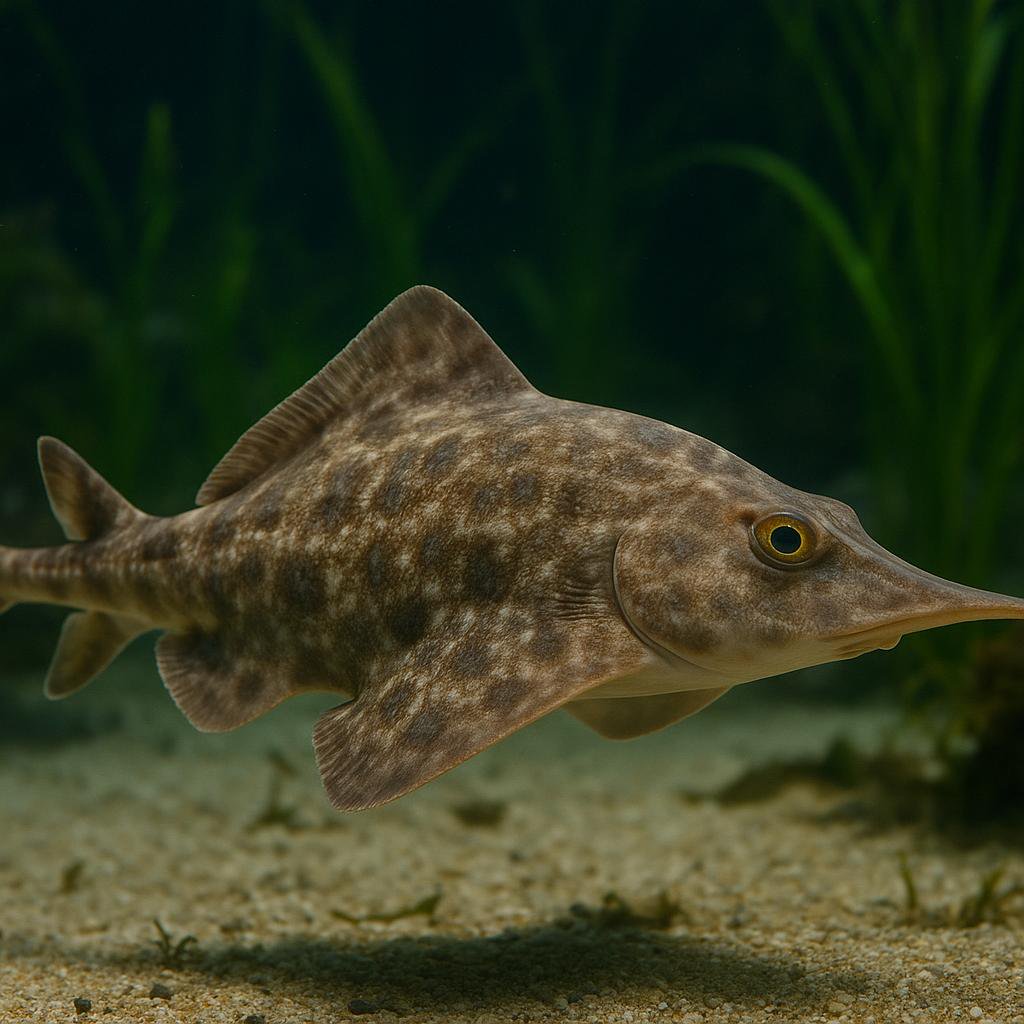
This is a big, cold-water deep-slope skate from the North Pacific that cruises muddy bottoms and eats chunky benthic prey like crabs and shrimp. The really cool bit is its egg-laying skate life - it does distinct pairing (the classic skate "embrace") and drops those tough egg cases on the seafloor. Not an aquarium fish at all unless you're basically running a public-aquarium-style chilled system.
Antarctic dragonfish
Vomeridens infuscipinnis
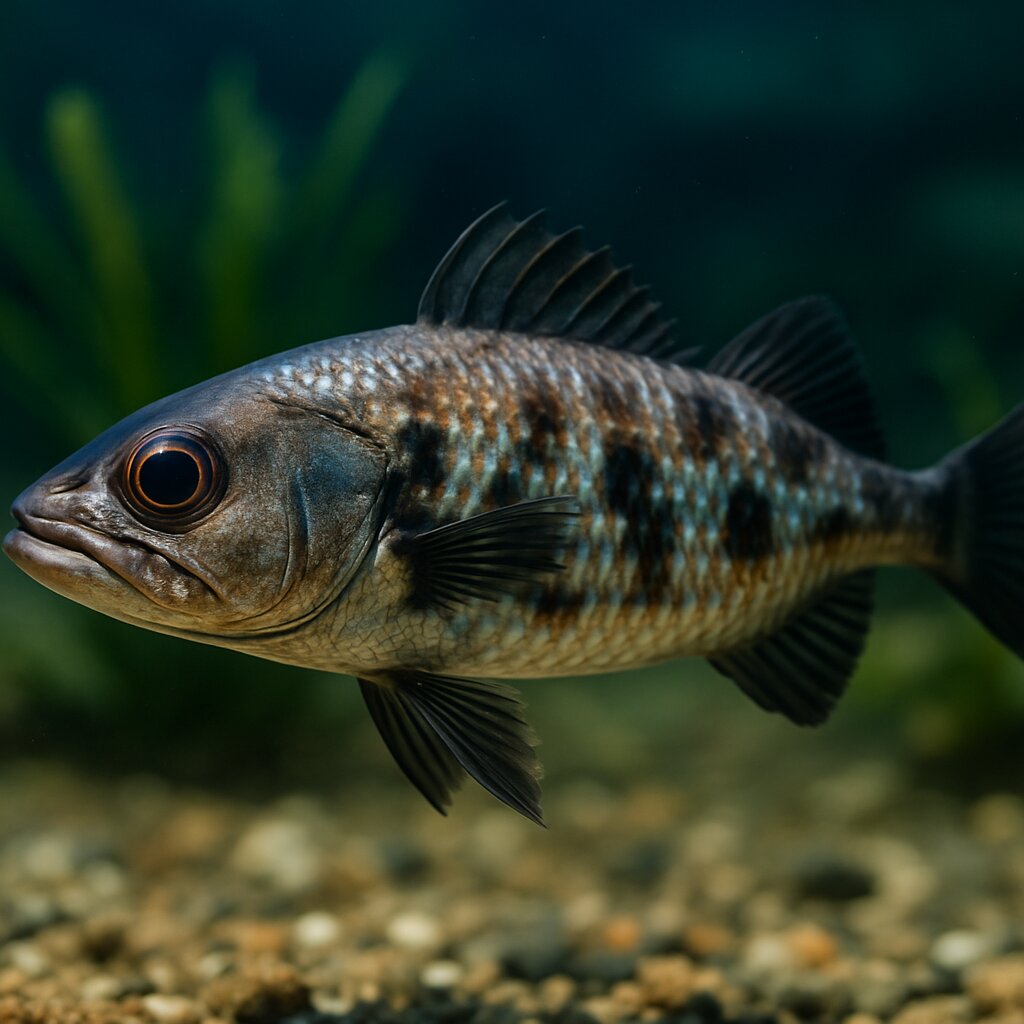
Deep down around Antarctica, this sleek dragonfish cruises the water column like a little submarine, nearly neutrally buoyant so it can hover above the seafloor. It munches almost exclusively on Antarctic krill and lives in near-freezing water 500-800 m down, so it is a cool species to read about, not one for home tanks.
Arabian spiny eel
Notacanthus indicus
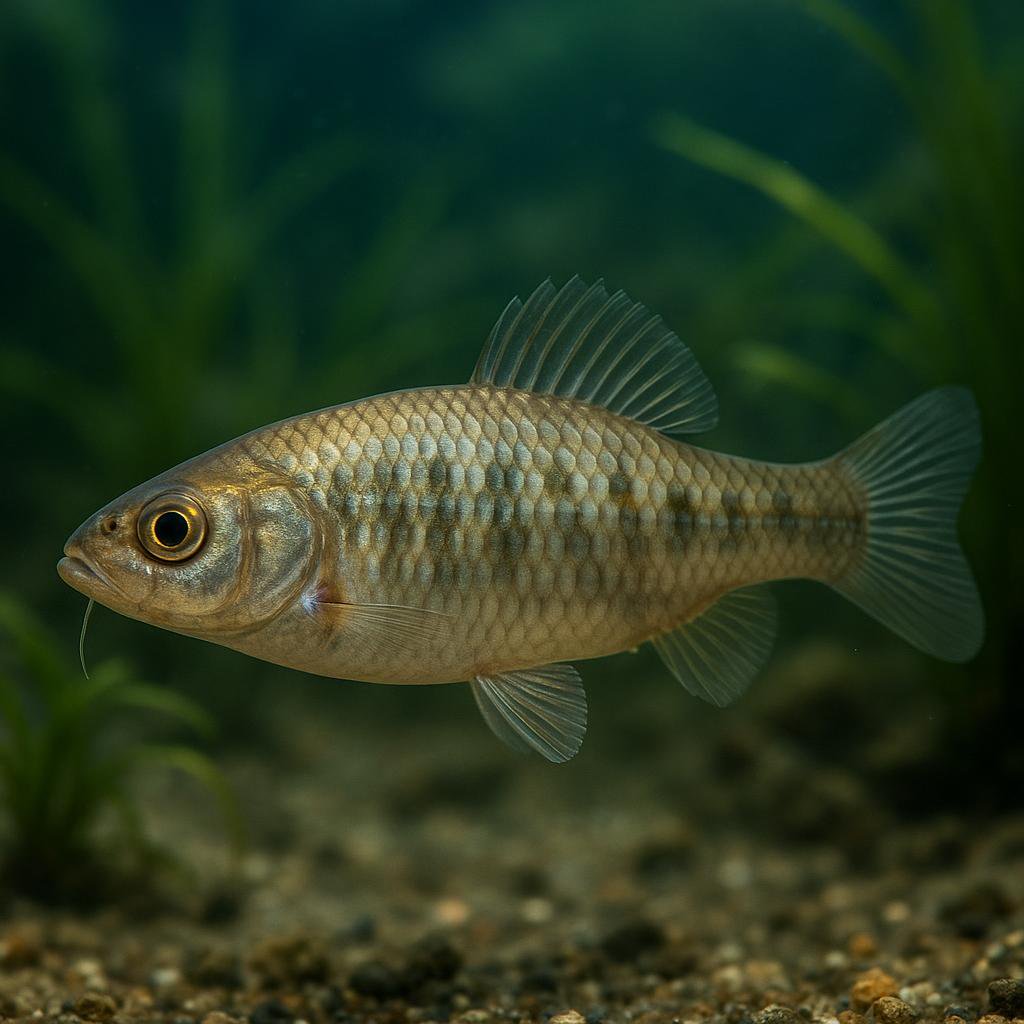
Notacanthus indicus is a deep-sea spiny eel (family Notacanthidae; not a true eel) known from the Arabian Sea on the continental slope at roughly ~960–1,046 m depth, with reported maximum length around 20 cm TL; it is a deep-water bycatch species and not established in the aquarium trade.
Arctic rockling
Gaidropsarus argentatus
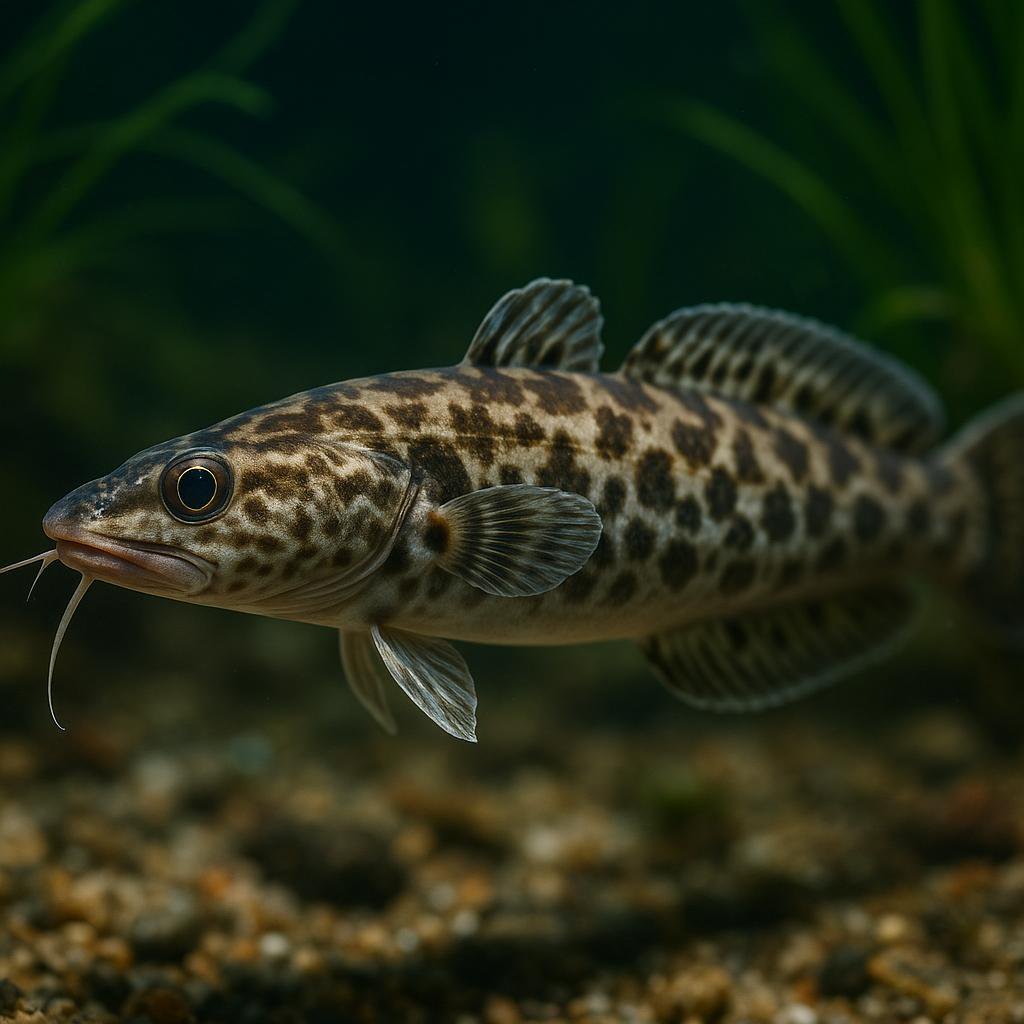
This is a deepwater North Atlantic rockling (a cod relative) that hangs out on soft bottoms way down the slope. It is a cold-water, bottom-hugging predator that snoots around for crustaceans and will also take small fish when it gets the chance.
Atlantic pomfret
Brama brama
Brama brama is the Atlantic pomfret (aka Ray's bream) - a deep-bodied, open-ocean pelagic fish that cruises around in small schools and follows water temps. It is a legit big, wild marine species (not an aquarium fish) that eats other small sea critters like fish and squid, and it ranges across a huge chunk of the Atlantic plus parts of the Indian and South Pacific.
Looking for other species?