

Serrated flathead
Rogadius serratus
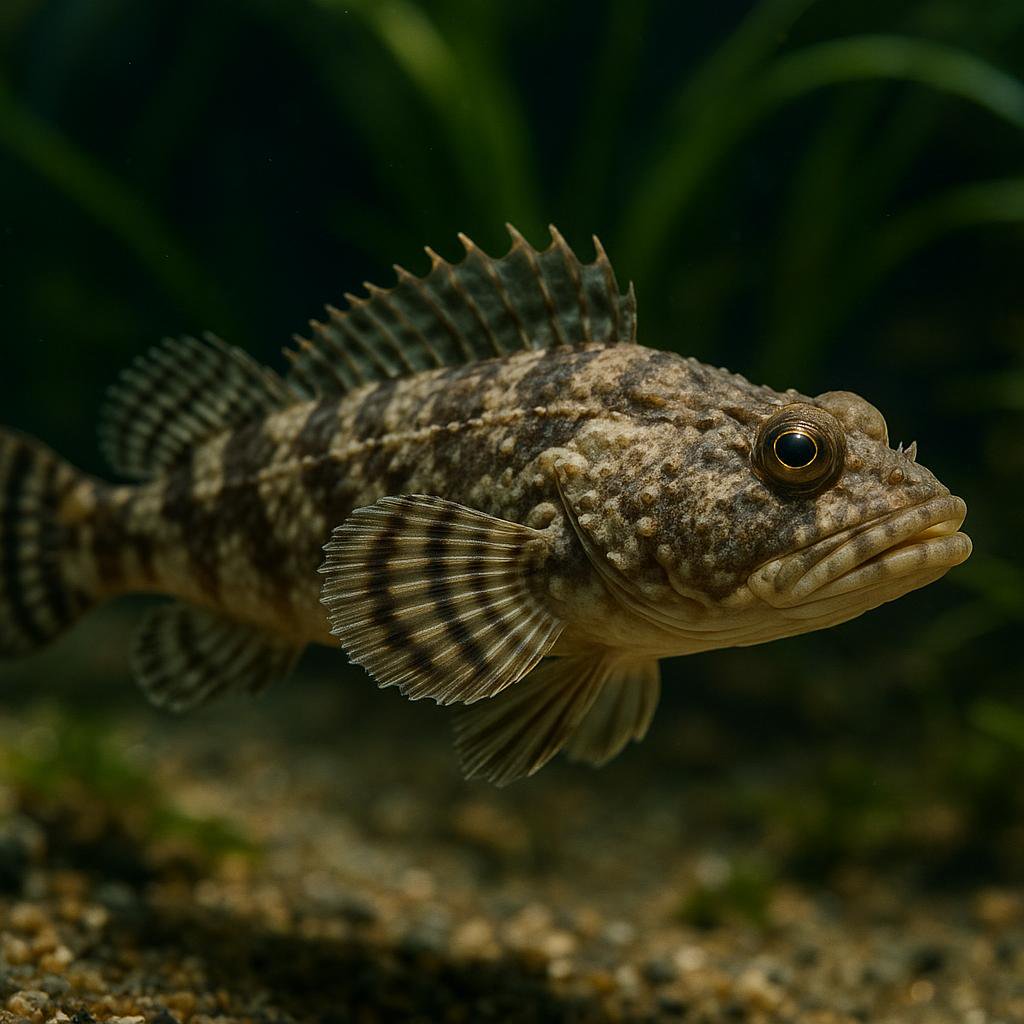
The Serrated flathead features a flattened body, serrated lateral lines, and a mottled brown coloration that aids in camouflage on the seabed.
This page includes AI-generated images. Why am I seeing AI images?
About the Serrated flathead
Rogadius serratus is a sneaky little flathead that basically lives glued to the bottom, blending into sand and rubble like a living leaf-litter camouflage job. It is the kind of fish that does almost nothing until food shows up, then it strikes fast. Super cool look up close, but it is absolutely not a community tank fish.
Also known as
Quick Facts
Size
24 cm TL
Temperament
Aggressive
Difficulty
Expert
Min Tank Size
55 gallons
Lifespan
5-10 years
Origin
Indo-West Pacific
Diet
Carnivore - meaty marine foods (shrimp, fish flesh) and will eat small fish/crustaceans
Care Notes
- Give it a big, open sand flat (think 75g+ for an adult) with a few low rocks and overhangs - it wants room to sprawl and ambush, not a packed reef maze.
- Use fine sand, not coarse gravel or sharp crushed coral; these guys sit and wiggle into the bottom and you will see fin and belly scrapes fast on rough substrate.
- Keep it stable at 1.025-1.026 SG, 24-26 C (75-79 F), pH 8.0-8.3; they're tough-looking but they sulk hard when salinity swings or oxygen drops.
- Feed like a predator: meaty marine foods (silversides, shrimp, squid, marine fish flesh) and get it onto frozen with tongs; avoid freshwater feeder fish and don't rely on dry pellets.
- Plan for messy meals - run an oversized skimmer, strong mechanical filtration, and siphon the sand where it hunts because chunks get buried and rot.
- Tankmates need to be too big to swallow and not fin-nippy: groupers, larger wrasses, and sturdy angels can work; avoid gobies, blennies, small clowns, and anything that sleeps on the sand.
- Watch for mouth and fin injuries from live rock and powerheads; they like to park in dumb spots, so guard intakes and leave a clear "rest zone" on the bottom.
Compatibility
Good Tankmates
- Other ambushy bruisers that can handle themselves, like scorpionfish or lionfish (roughly similar size) - they mostly ignore each other if everybody is well fed and has their own perch
- Tough, non-nippy semi-aggressive fish like larger hawkfish (flame or longnose) - they tend to keep to their zones and do not spook the flathead into strike mode as much
- Big, sturdy wrasses (think tuskfish-type or larger Halichoeres) - active enough to stay out of the way and not shaped like an easy snack
- Medium to larger groupers (not the giant tank-wreckers) - as long as the flathead is not small enough to be lunch, this is one of those 'mutual respect' pairings
- Rabbitfish and larger tangs - fast, thick-bodied, and usually too big and too aware to get pinned, plus they are not constantly picking on the flathead
- Eels like a snowflake or zebra moray - different lifestyle, both predatory, and they usually coexist fine if you keep feeding consistent and provide caves
Avoid
- Small fish that fit in its mouth (clownfish, chromis, anthias, small gobies) - the flathead is an ambush predator, so sooner or later somebody becomes a midnight snack
- Tiny bottom sitters (watchman gobies, blennies, small dartfish that rest low) - bad combo because the flathead hunts off the sand and will inhale them when the lights dim
- Nippy bullies like large damsels, dottybacks, or mean triggers - they stress it out and you end up with fin damage and constant territory fights
- Slow, long-finned show fish (bannerfish, some butterflies, fancy angels that cruise slowly) - they get harassed or bitten, and they also do not dodge an ambush well
Where they come from
Serrated flatheads (Rogadius serratus) are Indo-Pacific bottom ambush predators. In the wild they sit on sandy or rubble patches near reefs and seagrass edges, half-buried and basically invisible until something edible wanders past.
That whole lifestyle drives everything about keeping them: big footprint, soft substrate, lower drama lighting, and food that moves (at least at first).
Setting up their tank
Think of this fish as a predator that wants personal space and a lot of floor. Height is nice, but footprint is what makes them comfortable and keeps you from dealing with constant stress and nose damage.
- Tank size: I would not bother under 75 gallons, and 125+ is a much nicer experience because of the footprint.
- Substrate: fine sand, 2-4 inches. They like to settle into it. Avoid coarse crushed coral - it can scrape their belly and fins.
- Rockwork: keep it stable and leave open sand lanes. They are bulldozer-adjacent when they decide to reposition.
- Flow: moderate overall. You want oxygen and clean water, but not a sandstorm. Aim powerheads so the sand bed has calm zones.
- Filtration: oversized skimmer and strong mechanical filtration. Predators are messy and the uneaten bits get gross fast.
- Cover: a lid. They do not leap like wrasses, but spooking during acclimation can end badly.
Do not keep them on bare bottom if you can avoid it. They spend a lot of time resting, and sand is part of how they feel secure. Bare glass also seems to lead to more pacing and fin wear.
Lighting does not need to be intense unless you are running a reef for other reasons. A flathead that feels exposed will stay tucked away and ignore food. Give it some shadowed areas and it will come out more.
New fish often plant themselves and refuse to move. That is normal. Give them quiet time, keep hands out of the tank, and feed lightly at first. They settle in once they learn the room is not out to get them.
What to feed them
They are classic gulp-and-go hunters. Small fish and crustaceans are the menu, and they are built to inhale prey fast. The trick in captivity is getting them off live foods (or at least not relying on them).
- Best staple once trained: thawed silversides, smelt, chunks of marine fish, shrimp, squid, scallop, and quality frozen predator mixes.
- Great training foods: live ghost shrimp, live mollies acclimated to saltwater, or live shore shrimp if you can source safely.
- How I wean: start with live, then offer dead items on feeding tongs right after they strike live prey. Wiggle it like it is alive.
- Feeding schedule: juveniles every 2-3 days, adults 2 times a week is often plenty. Overfeeding makes water quality ugly fast.
Never feed freshwater feeder goldfish or rosy reds. Besides the disease risk, the fatty acid profile is wrong for marine predators long term.
Use long feeding tongs. They can miss and still vacuum up half the sand with the food. Tongs let you place the food right in front of them without turning the tank into a snow globe.
If they keep spitting food out, it is usually one of three things: the piece is too big, the food is stale or freezer-burned, or the fish is still stressed. Smaller, fresher pieces and a dimmer, quieter tank usually fix it.
How they behave and who they get along with
Most of the time they look like a leaf with eyes. They are not active swimmers, and they are not interested in starting fights. The problem is not aggression, it is predation.
- Anything that fits in their mouth is food. This includes small gobies, blennies, damsels, and a lot of cleanup crew.
- They do fine with larger, calm fish: bigger angels, tangs, rabbitfish, larger wrasses, and other fish that will not pick at them.
- Avoid fin-nippers and pickers: some triggers, some puffers, and nasty damsels can harass them and chew fins.
- Inverts are a gamble. Shrimp and small crabs usually disappear. Larger hermits sometimes last, until they do not.
They can startle easily, especially early on. If you have hyper fish that explode around the tank at feeding time, your flathead may stay buried and skip meals. Calm tankmates make training and feeding way easier.
Be careful during maintenance. A camouflaged flathead is easy to mistake for a rock. Also, those spines are not there for decoration. Use a container to move them, not a net.
Breeding tips
Breeding serrated flatheads in home aquariums is not something you see often. Sexing is not straightforward, and even if you get a compatible pair, pelagic eggs and larvae are a whole different project.
If you want to try anyway, your best shot is a large, species-focused system with seasonal cues: stable, high-quality water, heavy feeding leading into a slight temperature swing, and lots of calm space. Even then, raising the larvae would mean live plankton cultures and serious larval rearing gear.
Most hobbyists treat this species as a display predator rather than a breeding project. No shame in that - they are challenging enough to keep well.
Common problems to watch for
- Starvation after purchase: many arrive stressed and will not recognize dead food. Plan a weaning strategy and do not wait until they are skinny.
- Sand ingestion and constipation: happens if they strike hard at food on the substrate. Use tongs and offer food slightly off the bottom.
- Ammonia and nitrate creep: predator feeding plus uneaten chunks will spike nutrients fast. Remove leftovers and stay on top of mechanical filtration.
- External parasites (marine ich/velvet): scaleless-looking fish can get hit hard. Quarantine is worth the hassle with an expert-level species.
- Physical damage: scraped belly/fins from rough substrate, or abrasions from frantic darting in a small tank.
If your flathead is breathing fast, staying pale, and refusing food, check oxygen and ammonia first, then think parasites. These fish do not handle "wait and see" very well.
The biggest key with Rogadius serratus is patience. Give it a roomy sand bed, keep the tank calm, feed clean marine foods, and do not gamble with tiny tankmates. Do that and they turn into a really cool, weird centerpiece fish that just does its own stealthy thing.
Similar Species
Other marine aggressive species you might be interested in.
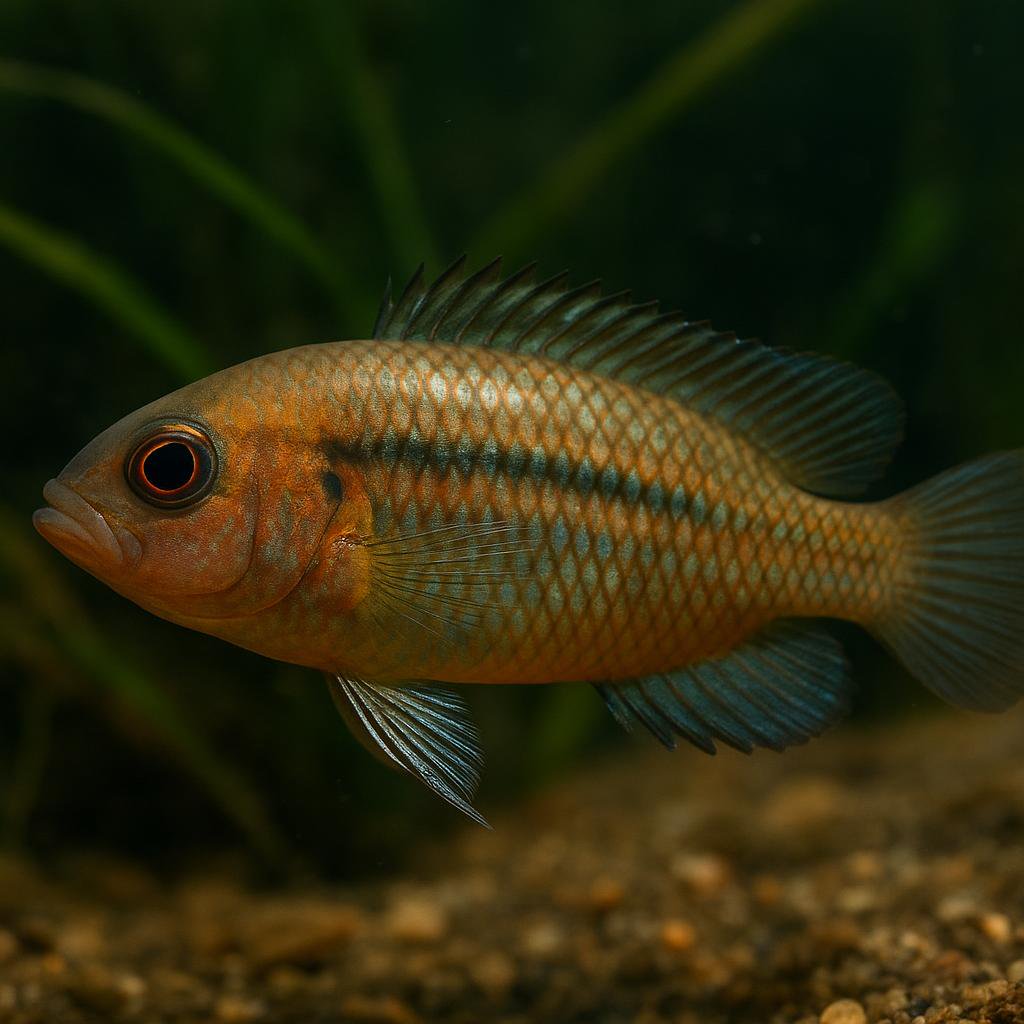
Bluespotted dottyback
Pseudochromis persicus
A striking dark-bodied dottyback covered in tiny blue spots from the Persian Gulf and nearby western Indian Ocean reefs. It grows larger than most dottybacks and throws a lot of attitude for its size, staking out caves and defending them hard. Best for roomy marine setups with robust tankmates and plenty of rockwork to break lines of sight.
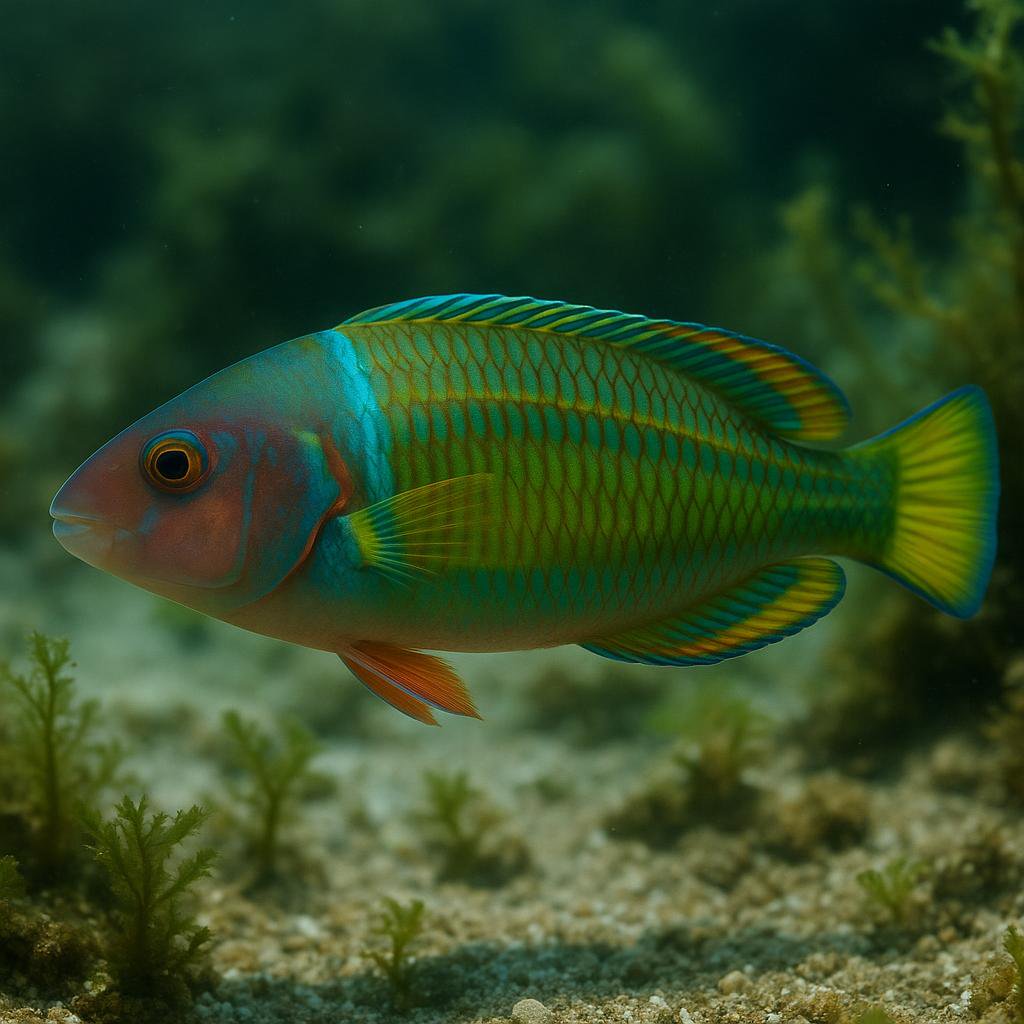
Saddle wrasse
Thalassoma duperrey
A fast, bold Hawaiian reef wrasse with a bright red saddle behind the pectoral fins and shifting colors as it matures. Juveniles sometimes play cleaner while adults cruise rock and coral picking off small invertebrates; they also change from female to male with age. It reaches about 11 inches and throws its weight around, so it needs space and suitably robust tankmates.
More to Explore
Discover more marine species.
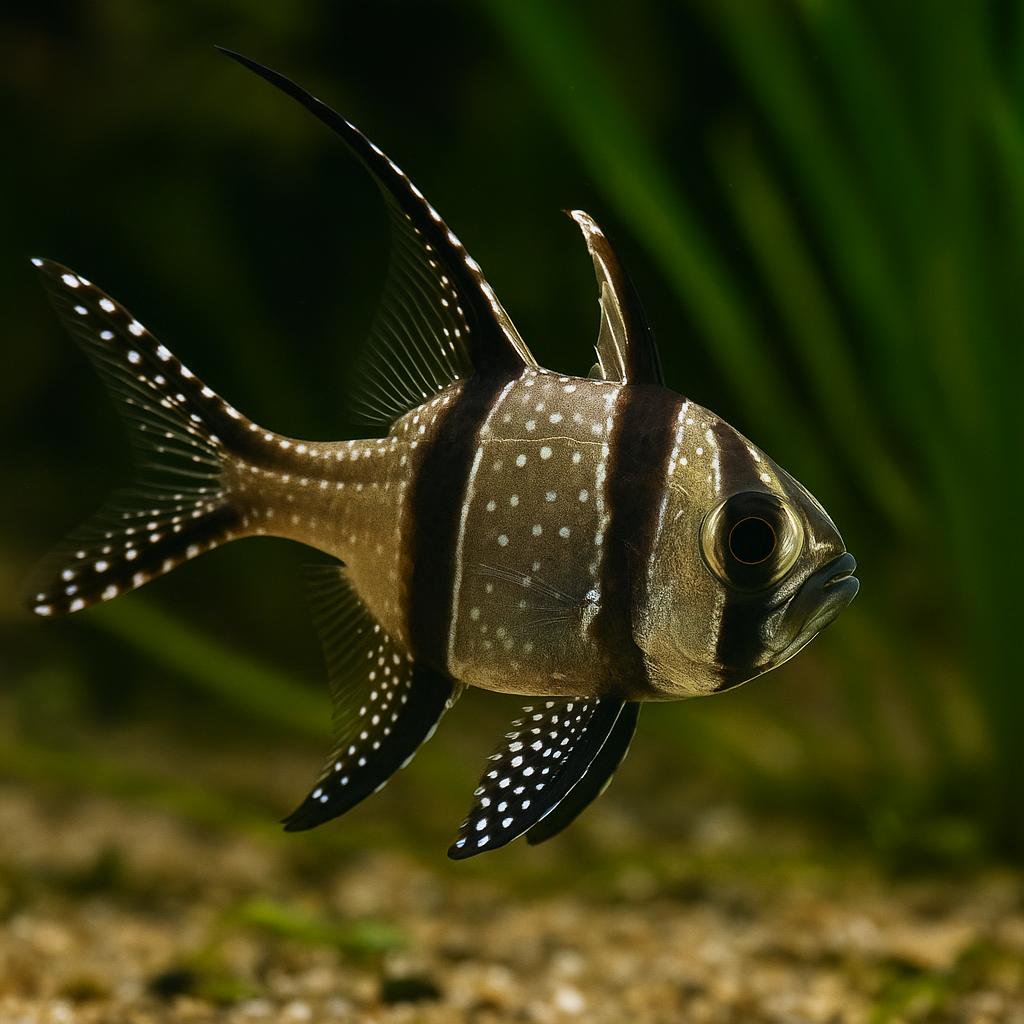
Banggai Cardinalfish
Pterapogon kauderni
Banggai cardinals just sort of hover like little underwater satellites, and the bold black bars with those long, polka-dotted fins look unreal under reef lighting. They're super chill most of the time, but once a pair forms you'll see real "fish drama," and the male will even mouthbrood the babies like a champ.
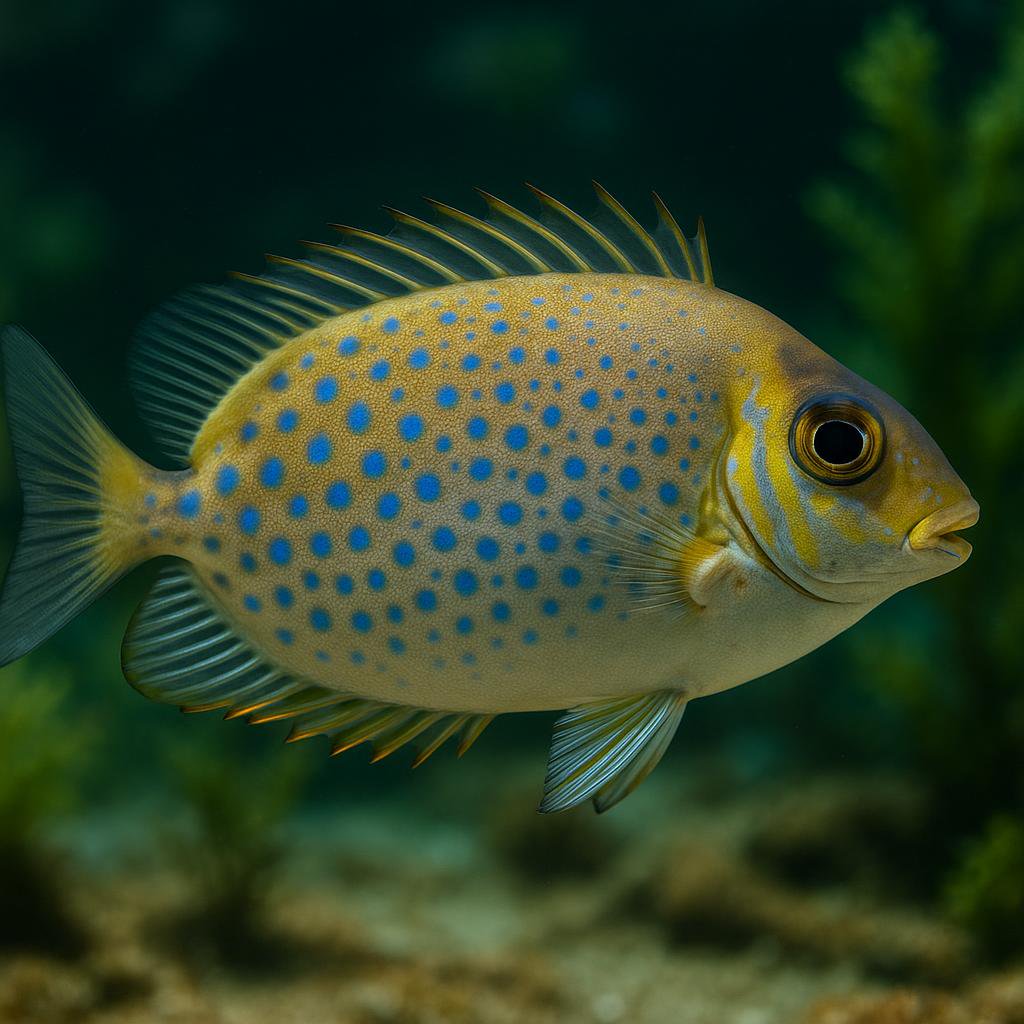
Bicolored foxface
Siganus uspi
A Fiji native with a sharp two-tone look, the bicolored foxface is half deep brown and half yellow with a crisp line between. It spends the day grazing algae and can snap into a mottled camouflage when spooked; those tall dorsal spines are venomous, so other fish usually keep their distance.
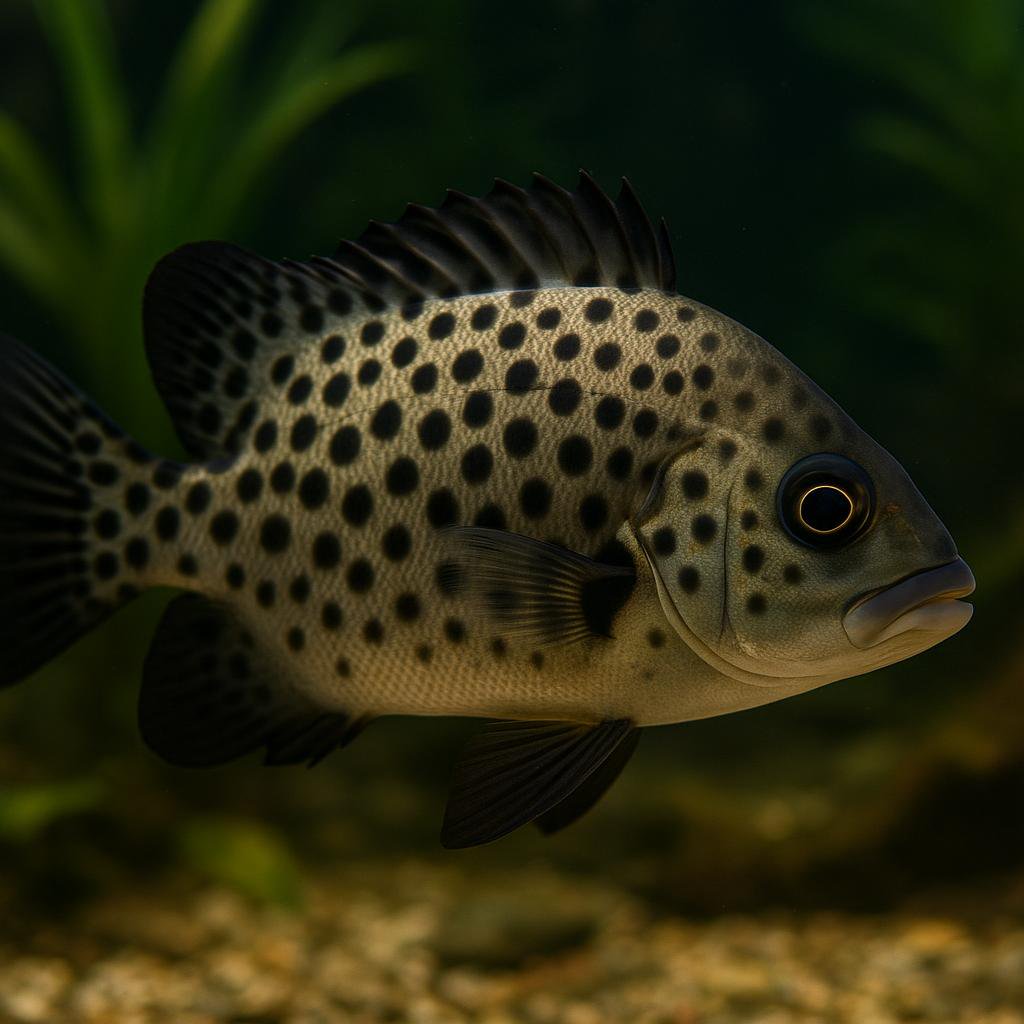
Blackfin slatey
Diagramma melanacrum
A large sweetlips from Southeast Asian reefs with a pale silvery-yellow body sprinkled in dark spots and distinct black pelvic and anal fins. Juveniles linger in silty shallows, while adults rest in small groups on deeper reef walls by day and roam at night to pick off crabs, shrimp, and other invertebrates.
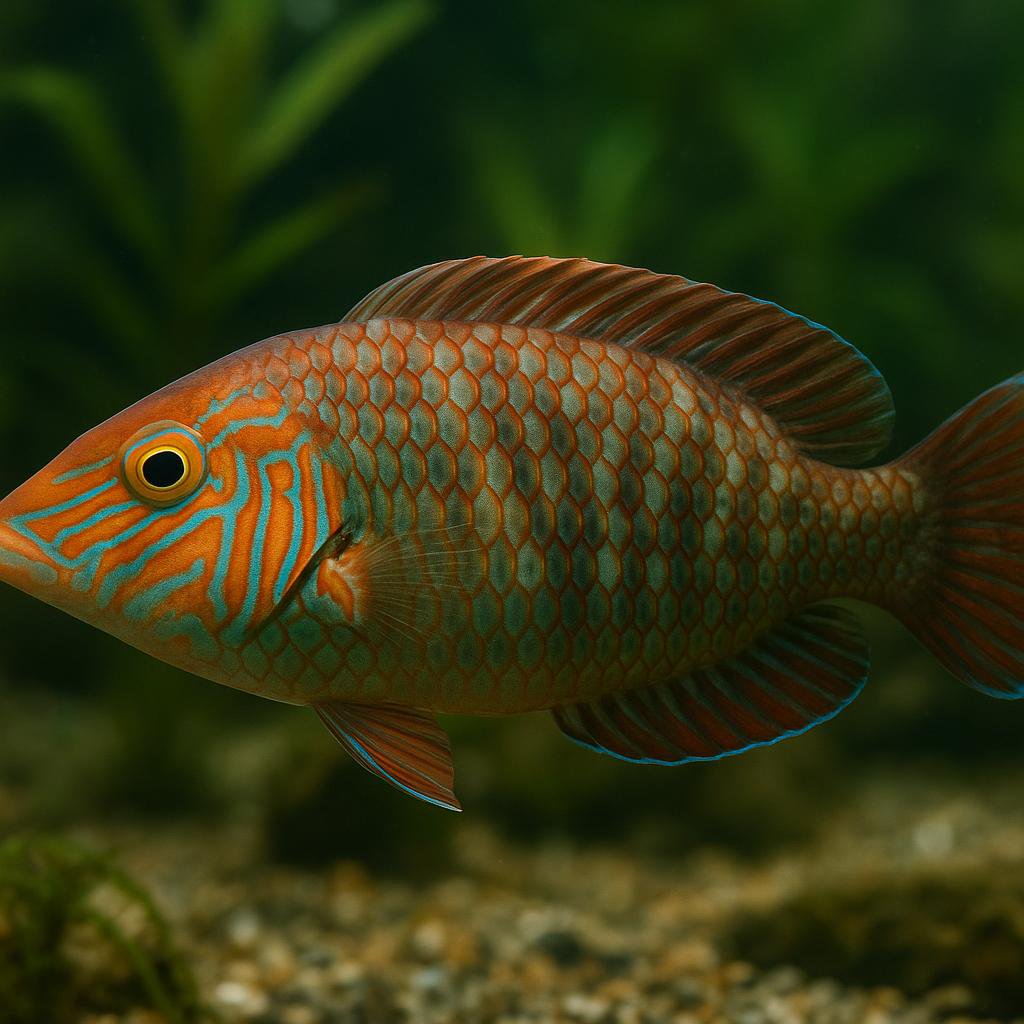
Blackspot razorfish
Iniistius dea
This is one of the coolest "knife-bodied" wrasses - it hangs over open sand and, when it gets spooked or wants to sleep, it literally torpedoes straight into the sand. Give it a deep, fine sand bed and it will act totally different (and way more natural) than a typical rock-hugging reef wrasse. Adults are usually shy and cruisy with tankmates, but they are not forgiving about rough handling or sketchy setups.
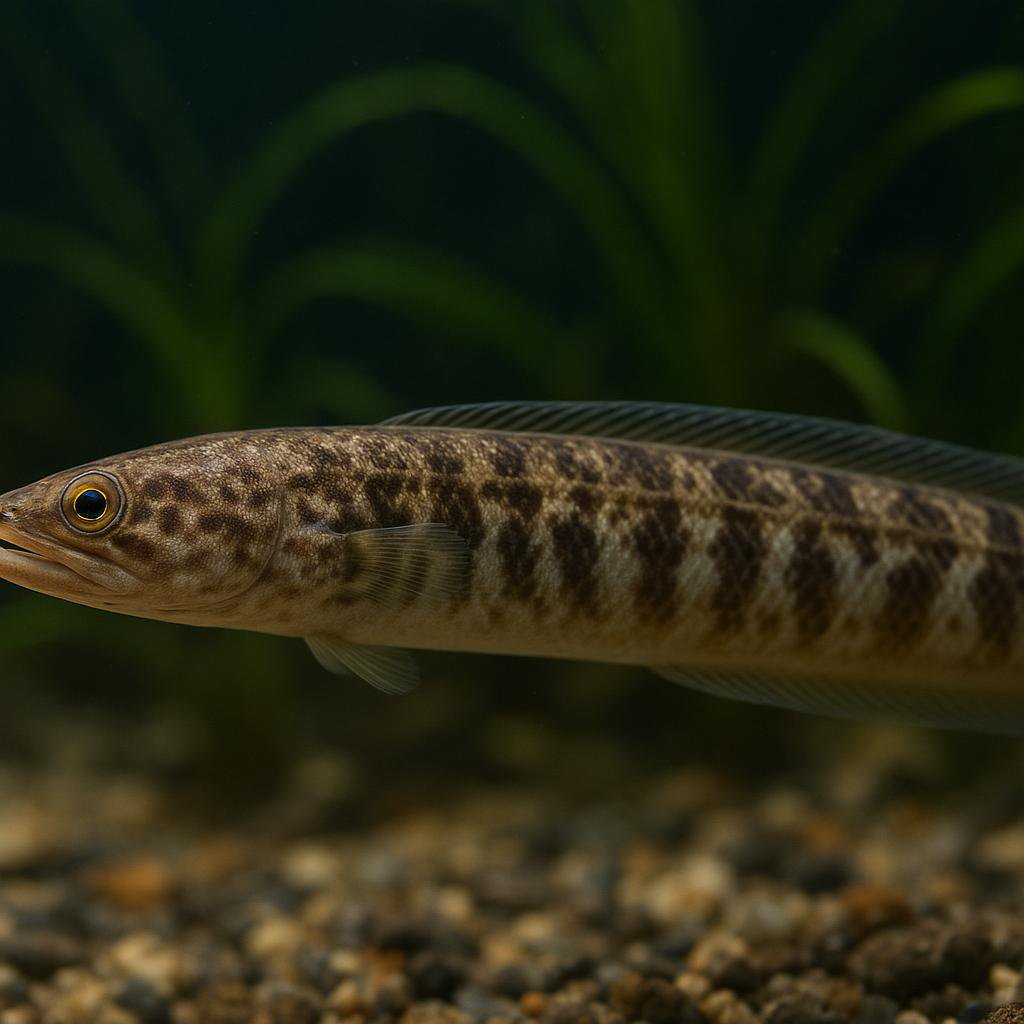
Blackspotted snake eel
Quassiremus ascensionis
A tropical marine snake eel that buries in soft substrates (sand/mud/gravel) with only the head exposed to ambush prey. Recorded to 71 cm TL and occurs mainly in the western Atlantic (also Brazil) and at Ascension Island; typically found in shallow inshore habitats to ~12 m, including sand and seagrass (turtle grass) areas.
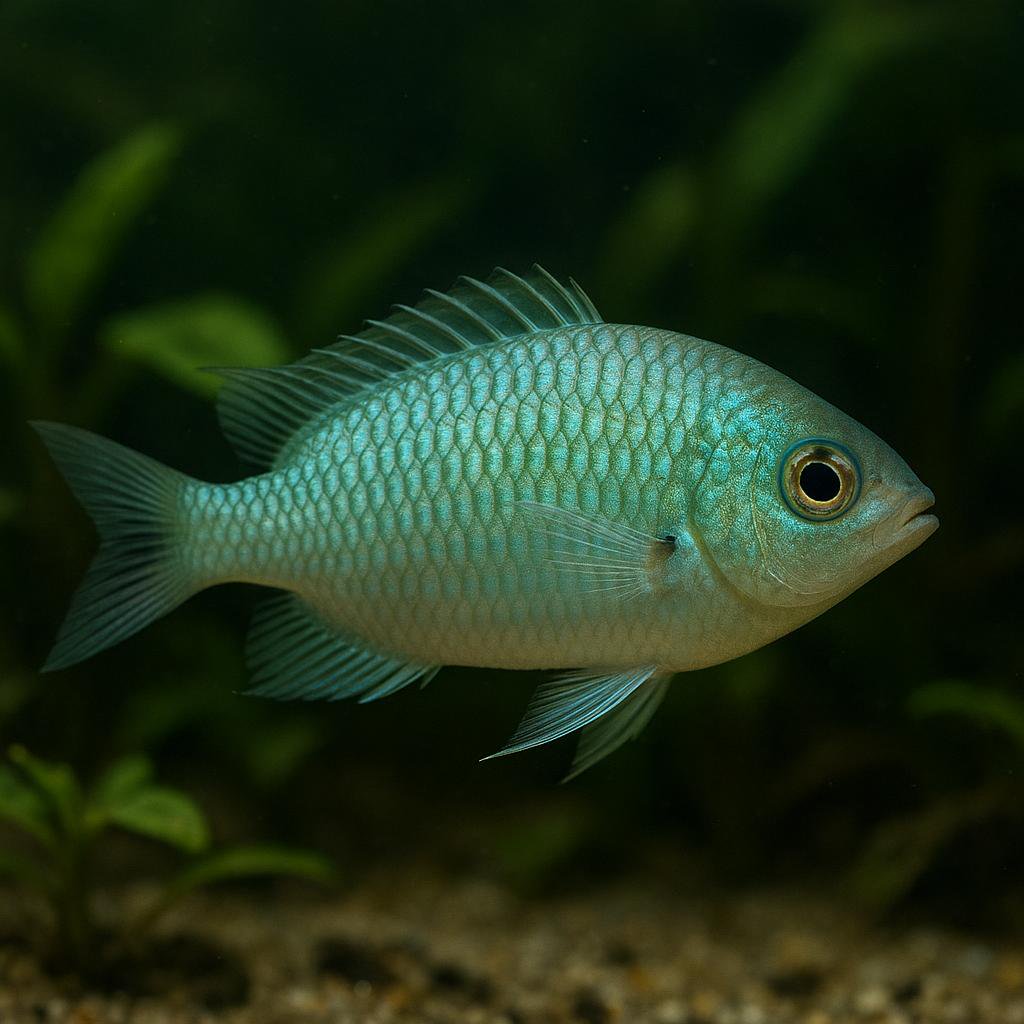
Blue Green Chromis (Green Chromis)
Chromis viridis
Blue Green Chromis are those shimmery little green-blue darts you'll see zipping around the top of a reef tank, always looking like they're catching the light just right. They're super fun in a group because they hover and cruise together, but they've got a bit of a "pecking order" thing going on if the tank's tight or the group's too small.
Looking for other species?