

Sunda viviparous brotula
Ungusurculus sundaensis
About the Sunda viviparous brotula
This is a tiny little reef-dwelling brotula that lives tucked into cracks and crevices in very shallow water. The wild thing about these guys is they are livebearers (viviparous), which is pretty unusual among marine fishes, and they tend to be super cryptic and solitary.
Quick Facts
Size
5.4 cm SL
Temperament
Peaceful
Difficulty
Expert
Min Tank Size
20 gallons
Lifespan
3-6 years
Origin
Western Pacific (Indonesia - Sunda Archipelago)
Diet
Carnivore/invertivore - tiny crustaceans and other small benthic invertebrates
Water Parameters
28.8-29.2°C
8.1-8.4
8-12 dGH
Need a heater for this species?
This species needs 28.8-29.2°C in a 20 gallon tank. Use our heater calculator to find the right wattage.
Calculate heater sizeCare Notes
- Give it a dim, rocky setup with tight caves and rubble it can wedge into - they hate open, bright tanks and will stay hidden and stress out.
- Lock down the tank like its holding an eel: cover every gap in the lid and overflow, and seal around pipes - this fish can snake through stupid-small openings.
- Keep it reef-stable: 1.025-1.026 salinity, 24-26 C (75-79 F), pH 8.1-8.4, and nitrate low (under ~10-20 ppm) or you will see heavy breathing and refusal to eat.
- Feed after lights-out with tongs: small meaty stuff like mysis, chopped shrimp, krill bits, and marine fish flesh; train it onto frozen, but start with live ghost shrimp if it comes in picky.
- Skip fast, nippy tankmates and anything that will bully a cave fish; also avoid tiny fish/shrimp you care about because it will inhale bite-sized neighbors at night.
- Best roommates are calm, similarly sized fish that do not compete for the same cave - think chill gobies/blennies and non-aggressive wrasses, and give everyone their own hiding spots.
- Watch for shipping damage and skin infections: they come in roughed up, and abrasions get nasty in dirty water - pristine water and low flow near its cave helps it heal.
- Breeding is wild but not casual: its livebearing, so if you ever get a gravid female, have a separate, rock-filled nursery ready because adults will eat the newborns the same night.
Compatibility
Good Tankmates
- Small, calm reef-safe gobies (neon goby, clown goby, small shrimp gobies) - they hang in their own lane and do not hassle a shy brotula that likes to wedge into rockwork
- Blennies with a mellow attitude (tailspot blenny, bicolor blenny) - lots of perching and picking, not much chasing, and they are not trying to evict everyone from the caves
- Peaceful cardinalfish (Banggai, pajama) - slow, non-competitive feeders and they will not turn the tank into a constant stress-fest
- Small, chill wrasses that mostly mind their business (possum wrasse, pink-streaked wrasse) - active but not usually nasty, and they leave bottom hidey-holes alone
- Gentle dartfish/firefish (firefish, purple firefish) - similar vibe: timid, hover-and-hide behavior, and they are not looking to pick fights
- Non-aggressive inverts like cleaner shrimp and small hermits/snails - the brotula is more of a "sit in the rocks and eat meaty bits" fish than a dedicated invert hunter
Avoid
- Dottybacks and other cave-claiming terrors (orchid dottyback, pseudochromis types) - they love the same holes and will bully a peaceful brotula off its spot
- Aggressive damsels and similar scrappy fish (many Chrysiptera, domino damsel) - nonstop chasing and fin-nipping keeps this fish pinned in hiding and not eating well
- Big predators or anything that sees a small eel-ish fish as a snack (lionfish, large groupers, big hawkfish) - if it fits in the mouth, it is on the menu
- Territorial basslets/hawkfish that camp the rocks and throw elbows (large hawkfish, super pushy grammas) - not always a guaranteed disaster, but the brotula usually loses the "who owns this crevice" argument
Where they come from
Sunda viviparous brotulas (Ungusurculus sundaensis) are little secretive marine cusk-eels from the Sunda region in Southeast Asia. Think murky rubble, crevices, and tight hiding spots where you mostly see a head poking out at dusk. They are not a "display fish" in the usual sense - they are more like a cool predator you get to know over time.
If you are expecting an active swimmer in open water, this fish will disappoint you. If you like cryptic, night-shift fish with personality once they settle in, they are awesome.
Setting up their tank
Give them a tank that looks like a rock pile fell into it on purpose. They want caves, slots, and narrow gaps they can wedge into. The more secure they feel, the more you will see them.
- Tank size: I would not do less than 30 gallons for a single adult, and 50+ if you want options for tankmates or more than one brotula.
- Rockwork: lots of small caves and tight cracks. I like stacking rock on PVC "feet" so it is stable and leaves undercuts.
- Substrate: sand is fine, but the real key is structure. Rubble zones and shell/rock bits help them feel at home.
- Flow: moderate. You do not need a high-energy SPS-style blast, but do not let detritus build up in their lairs.
- Lighting: keep it on the dim side or provide shaded areas. They get bolder with lower light and a consistent day/night schedule.
They are escape artists. Use a tight lid, cover overflow teeth, and block any cable gaps. If a brotula can fit its head through it, the rest will follow.
Filtration and stability matter a lot because these are messy, meaty-food fish. A solid skimmer, good mechanical filtration you actually clean, and regular water changes will save you headaches. They do not forgive "old tank funk" the way some hardy fish do.
- Temperature: aim for typical reef temps (around mid-70s F) and keep swings small.
- Salinity: keep it steady at reef strength (around 1.025). They react badly to sloppy top-off habits.
- Nitrate/phosphate: they can live with some nutrients, but high and rising numbers usually show up as poor appetite and skin issues later.
What to feed them
These are predators. Mine ignored flakes and pellets completely. Once they recognize you as the food source, they get surprisingly bold at feeding time.
- Best staples: frozen/thawed shrimp, mysis, chopped clam, chopped squid, chunks of marine fish (sparingly).
- Live foods: sometimes helpful for new imports (small ghost shrimp or live mysis), but I try to convert to frozen fast.
- How to feed: use feeding tongs or a turkey baster and place food near their cave entrance at lights-out.
- Schedule: small meals 3-4 times a week works well. Daily heavy feeding just trashes water and makes them lazy.
Train them with a routine: same spot, same tool, same time (right as the lights dim). After a couple weeks, they will be waiting with their head out.
Avoid freshwater feeder fish and "junk" feeders. They can introduce parasites and the fatty acid profile is bad long-term. Stick to marine-based foods.
How they behave and who they get along with
Brotulas are mostly nocturnal and very hole-oriented. They claim a home and defend that immediate area. You will see short bursts of speed, then back into the crack like nothing happened.
- Temperament: not a community fish. Not constantly aggressive, but anything that fits in their mouth is on the menu.
- Tankmates that usually work: larger, calm fish that do not harass caves (some tangs, larger wrasses that sleep in the sand, rabbitfish).
- Tankmates to avoid: small gobies/blennies, tiny wrasses, ornamental shrimp, small crabs, and anything that likes the same caves (dottybacks can be a disaster).
- Inverts: snails are usually fine. Shrimp are a gamble at best - I would assume they will eventually get eaten.
Do not pair them with fish that pick at hidden, resting fish (some hawkfish, triggerfish, big dottybacks). The brotula will either get stressed into hiding forever or you will wake up to a missing tankmate.
If you try more than one, expect drama unless the tank is big and the rockwork has multiple separated cave systems. Even then, you may end up with one dominant fish and one that never comes out.
Breeding tips
They are livebearers (that is the "viviparous" part), which is wild for a marine fish. In home tanks, breeding is possible but not something I would plan a setup around unless you already keep oddballs and you like a challenge.
- Pairing: you need a compatible male/female, and sexing is not straightforward without experience and close observation.
- Conditioning: heavy, varied meaty feeding and stable water for months is what seems to get them in the mood.
- Birthing: if it happens, you may never see it. The young are small and disappear into rockwork fast.
- Raising fry: expect to need a separate rearing setup and tiny live foods. Most people lose them in the display to filtration or tankmates.
If you ever see one noticeably swollen and still eating, it can be pregnancy, but it can also be a blockage or internal issue. Watch behavior and appetite closely before you celebrate.
Common problems to watch for
Most problems with this species come from three things: shipping stress, starvation (they hide and never learn to eat), and water quality getting away from you because of heavy foods.
- Not eating: very common in new arrivals. They may only feed after lights-out for a while.
- Skin damage: scrapes from rough rock or getting pinned in a too-tight hole. Usually looks worse than it is, but can get infected in dirty water.
- Marine ich/velvet: possible like any marine fish, and these guys do not handle harsh treatment well if they are already stressed.
- Jumping/escaping: often happens the first week or two, or after a night-time scare.
For new brotulas, I like a quiet tank, dim lighting, and a "starter cave" (a short length of PVC tucked under rock). Once they adopt it, feeding and observation get way easier.
Be careful with medications and copper. If you need to treat, do it in a separate hospital tank where you can control dosage and watch them eat. A stressed brotula that is not eating can go downhill fast.
If your brotula is always out in the open, breathing hard, or wandering like it cannot find a home, something is off (usually oxygen, water quality, or harassment). These fish should look calm and "anchored" to a chosen spot most of the time.
Similar Species
Other marine peaceful species you might be interested in.
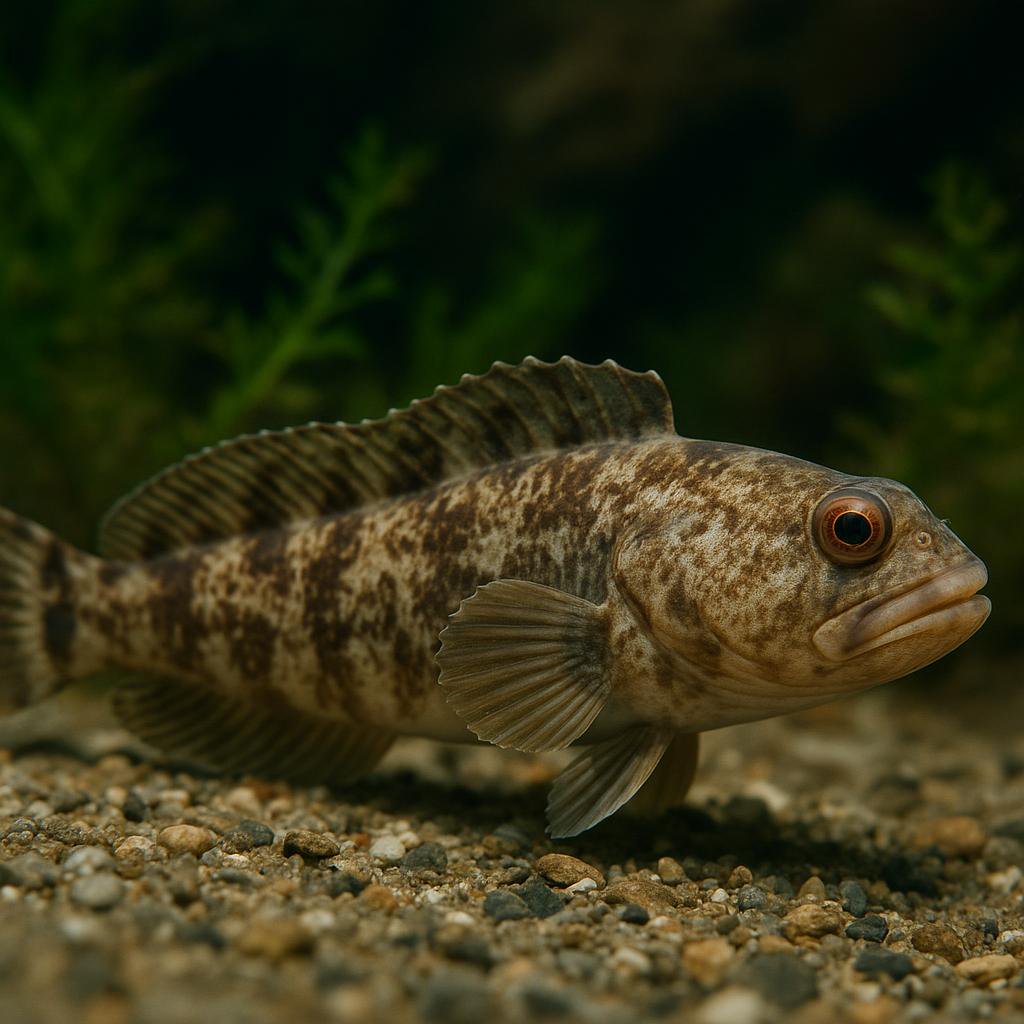
Abe's eelpout
Japonolycodes abei
Japonolycodes abei is a temperate, deepwater demersal eelpout (family Zoarcidae) endemic to Japan (Kumano-nada Sea reported; other sources also report Sagami Bay and Tosa Bay). It is the only species in the genus Japonolycodes and occurs roughly 40-300 m depth, making it an uncommon/atypical aquarium species.
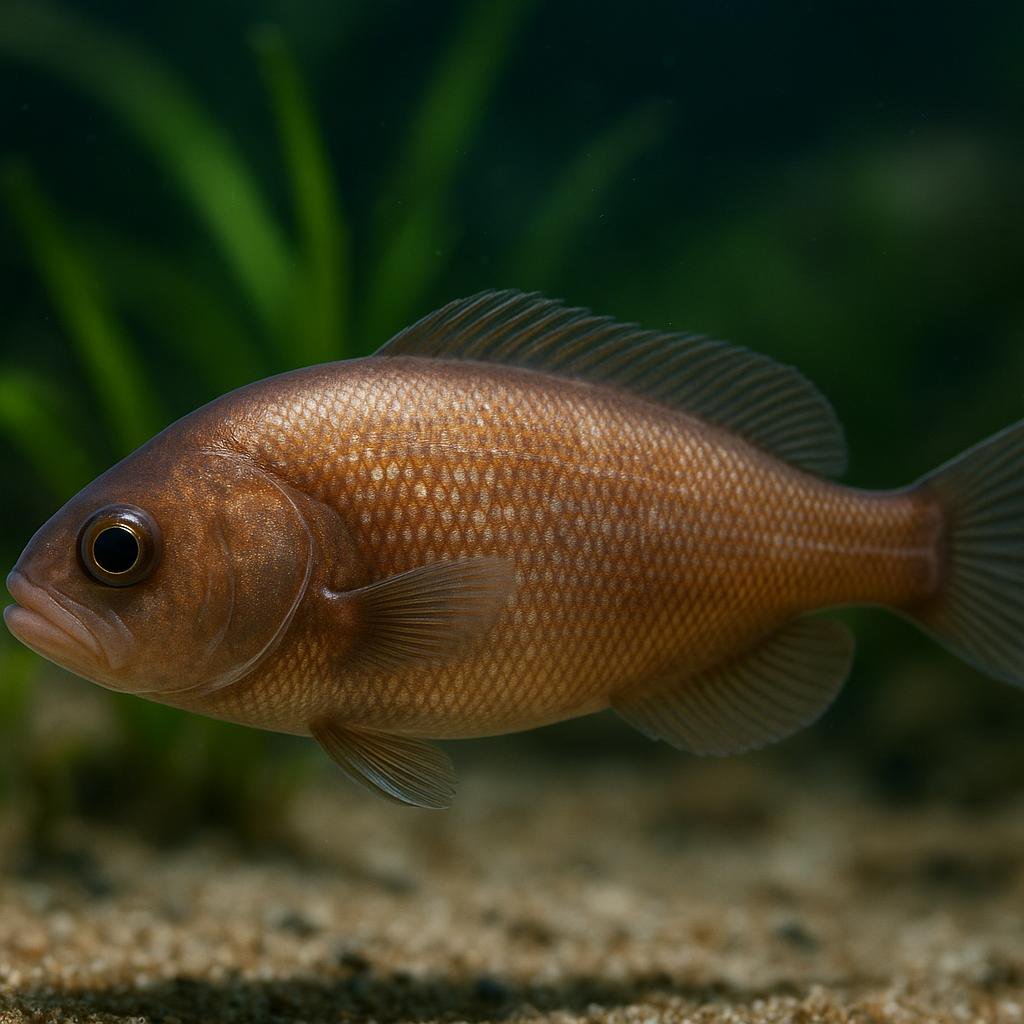
Affinis blind cusk-eel
Barathronus affinis
Barathronus affinis is a tiny, super-weird deep-sea blind cusk-eel from the western-central Indian Ocean. It is one of those gelatinous, loose-skinned brotula-type fishes that live way down in the dark and are basically never seen alive, so almost everything we know comes from preserved specimens and taxonomic work.
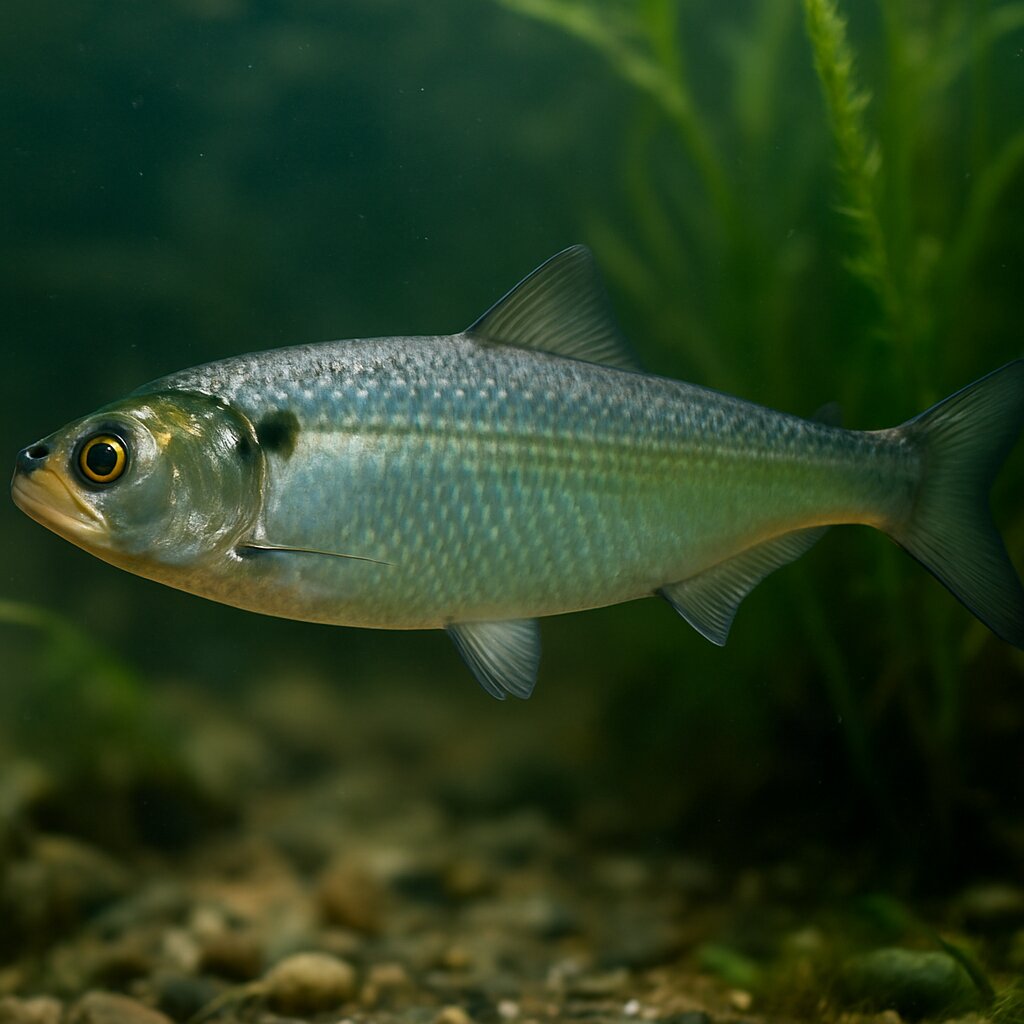
Allis shad
Alosa alosa
Gorgeous silver, fast-swimming shad that spends most of its life in the sea and then surges up big rivers in noisy, surface-spawning schools. It grows huge for a herring-type fish and needs cool, ultra-oxygenated water and tons of open space, so it is a public-aquarium species rather than a home tank fish.
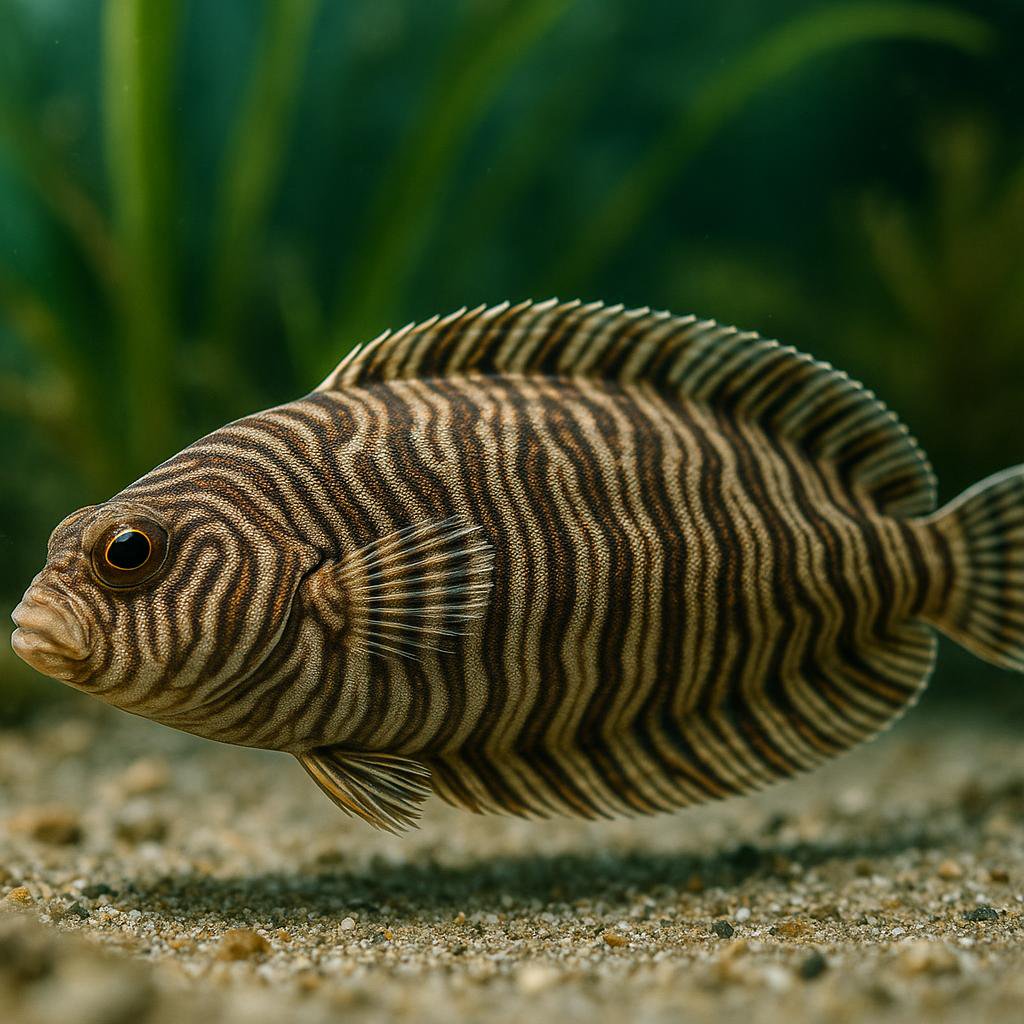
Annandale's zebra sole
Zebrias annandalei
Zebrias annandalei is a small demersal sole from coastal India that inhabits sandy or muddy bottoms and buries for camouflage. It is rarely kept in home aquaria and would require a specialized marine sand-bottom setup and appropriate feeding.
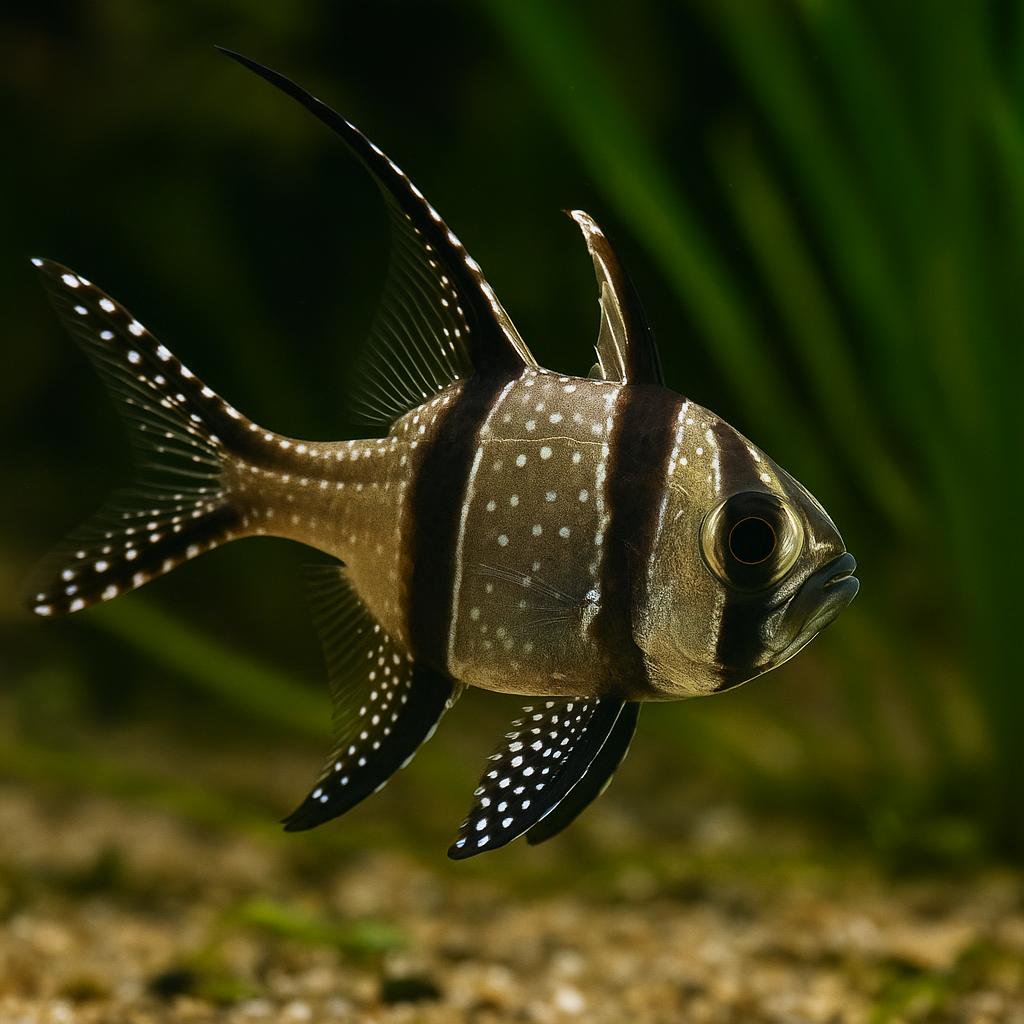
Banggai Cardinalfish
Pterapogon kauderni
Banggai cardinals just sort of hover like little underwater satellites, and the bold black bars with those long, polka-dotted fins look unreal under reef lighting. They're super chill most of the time, but once a pair forms you'll see real "fish drama," and the male will even mouthbrood the babies like a champ.
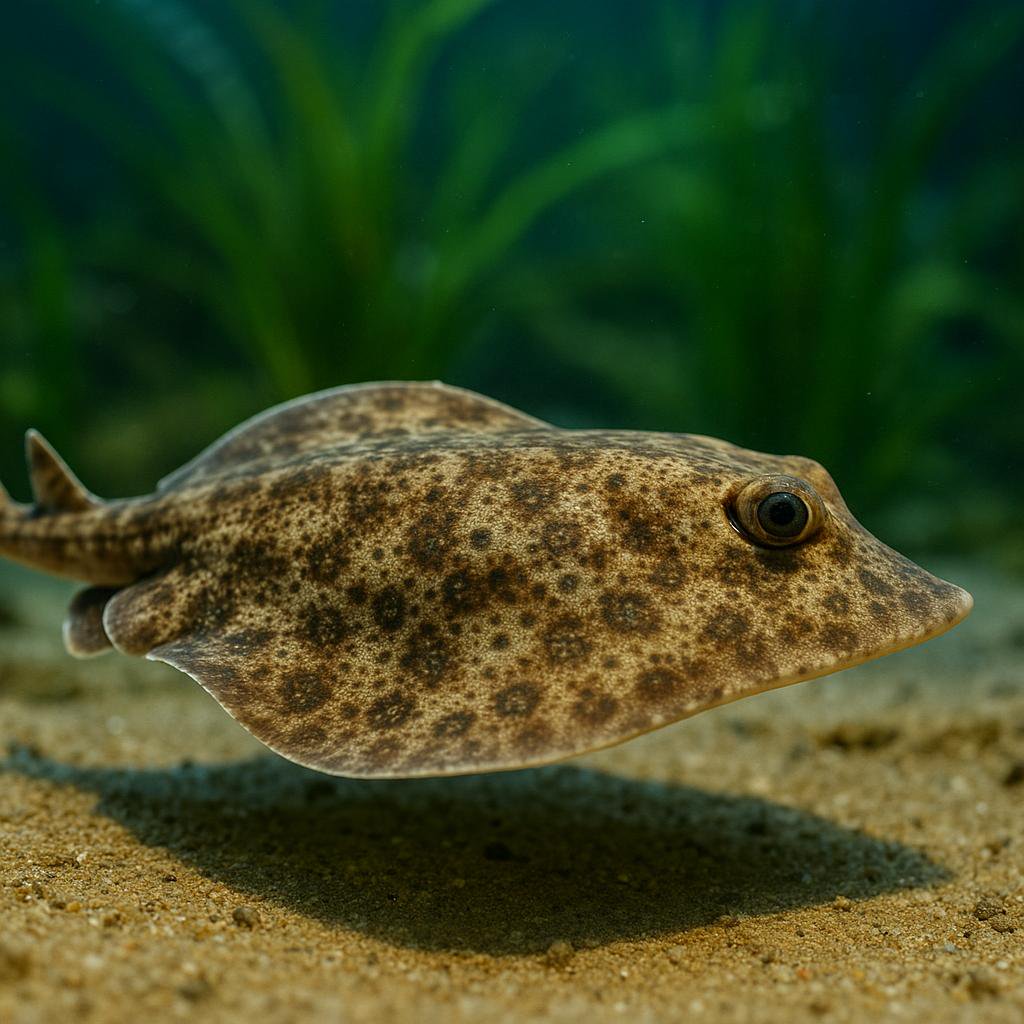
Barbedwire-tailed skate
Notoraja martinezi
Notoraja martinezi is a deepwater skate from the eastern Pacific (Costa Rica down to Ecuador) that lives way down on soft bottoms. The tail is the giveaway - it is lined with strong, hooked thorns that really do look like barbed wire. This is absolutely not an aquarium fish; it is a cold, high-pressure deep-sea animal with basically no practical home care info because it is not kept in the hobby.
More to Explore
Discover more marine species.
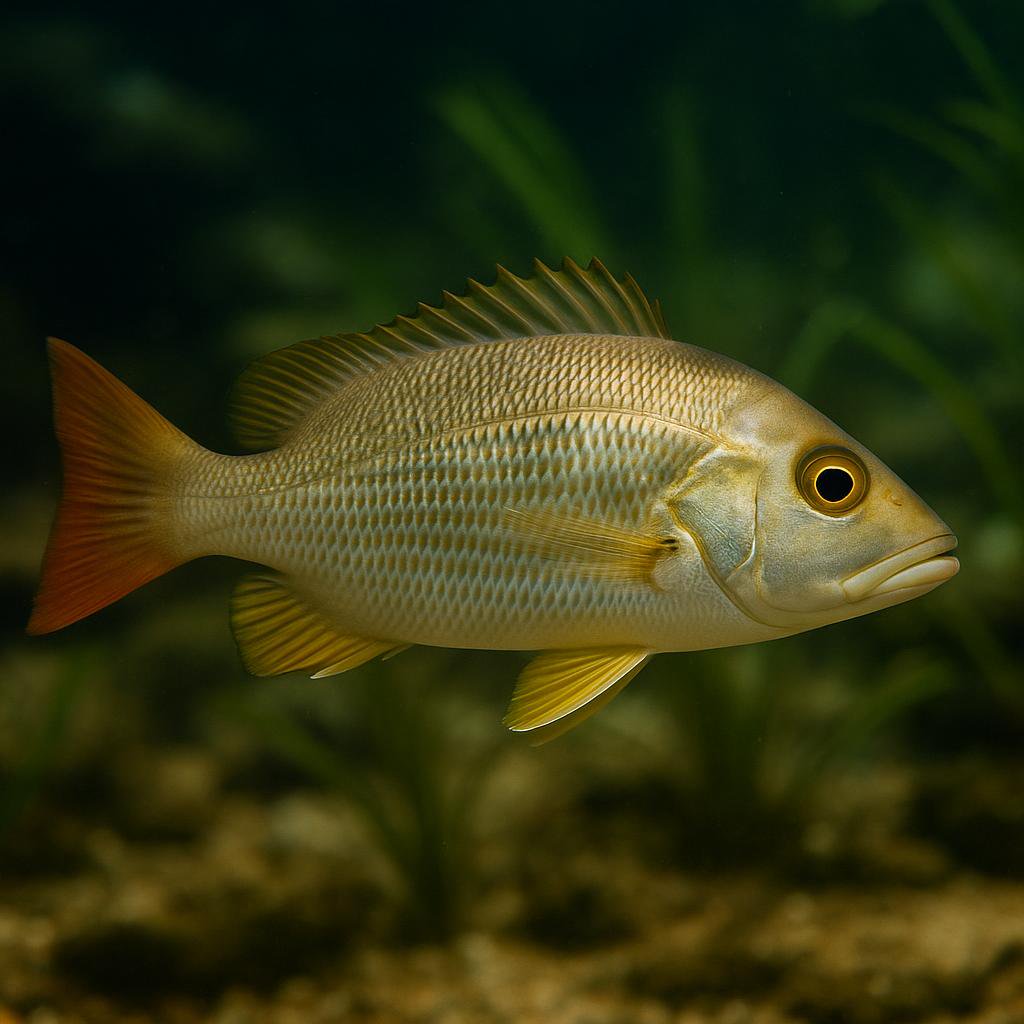
African red snapper
Lutjanus agennes
This is a true snapper from West Africa - a big, fast-growing predator that goes from coastal reefs to brackish lagoons and estuaries (especially as a juvenile). Super cool fish in the wild, but it gets absolutely huge and will eat smaller tankmates once it has the mouth for it, so its really more of a public-aquarium scale animal than a home-aquarium fish.
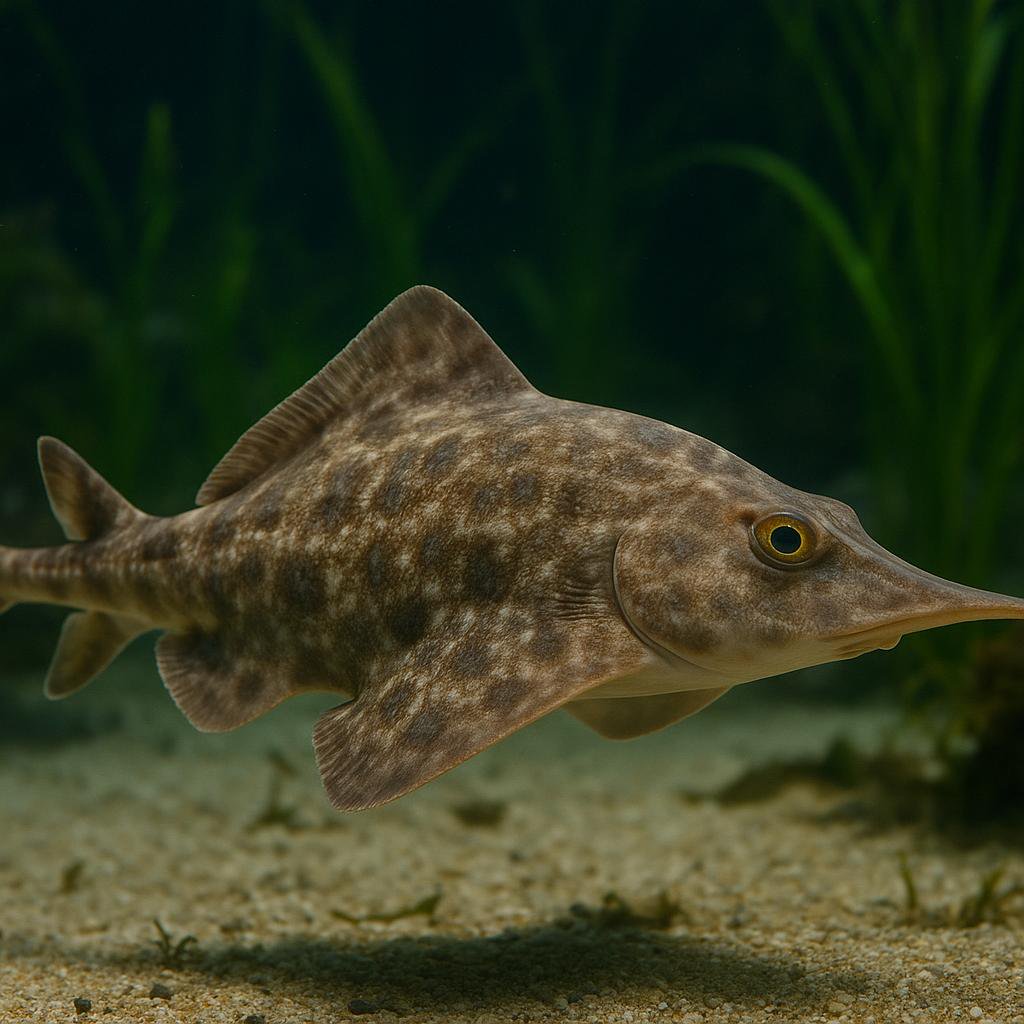
Aleutian skate
Bathyraja aleutica
This is a big, cold-water deep-slope skate from the North Pacific that cruises muddy bottoms and eats chunky benthic prey like crabs and shrimp. The really cool bit is its egg-laying skate life - it does distinct pairing (the classic skate "embrace") and drops those tough egg cases on the seafloor. Not an aquarium fish at all unless you're basically running a public-aquarium-style chilled system.
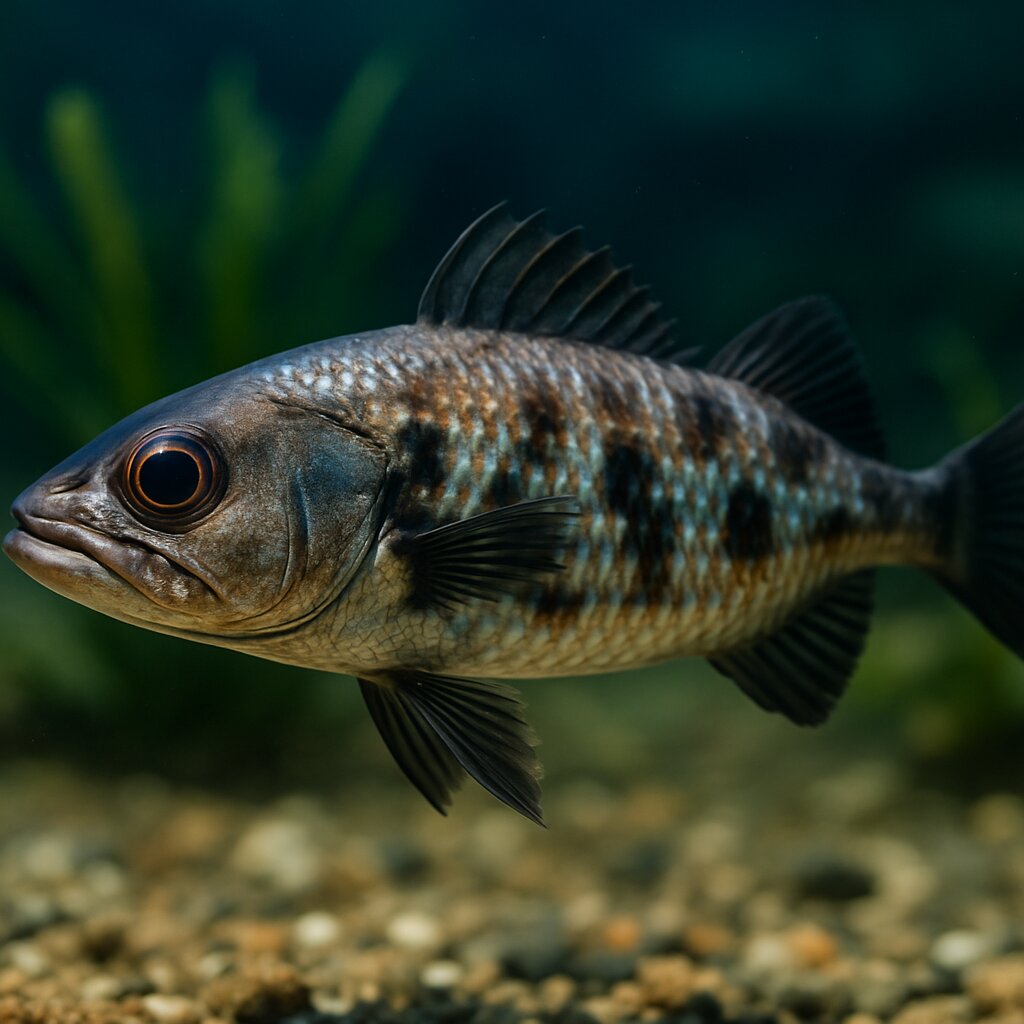
Antarctic dragonfish
Vomeridens infuscipinnis
Deep down around Antarctica, this sleek dragonfish cruises the water column like a little submarine, nearly neutrally buoyant so it can hover above the seafloor. It munches almost exclusively on Antarctic krill and lives in near-freezing water 500-800 m down, so it is a cool species to read about, not one for home tanks.
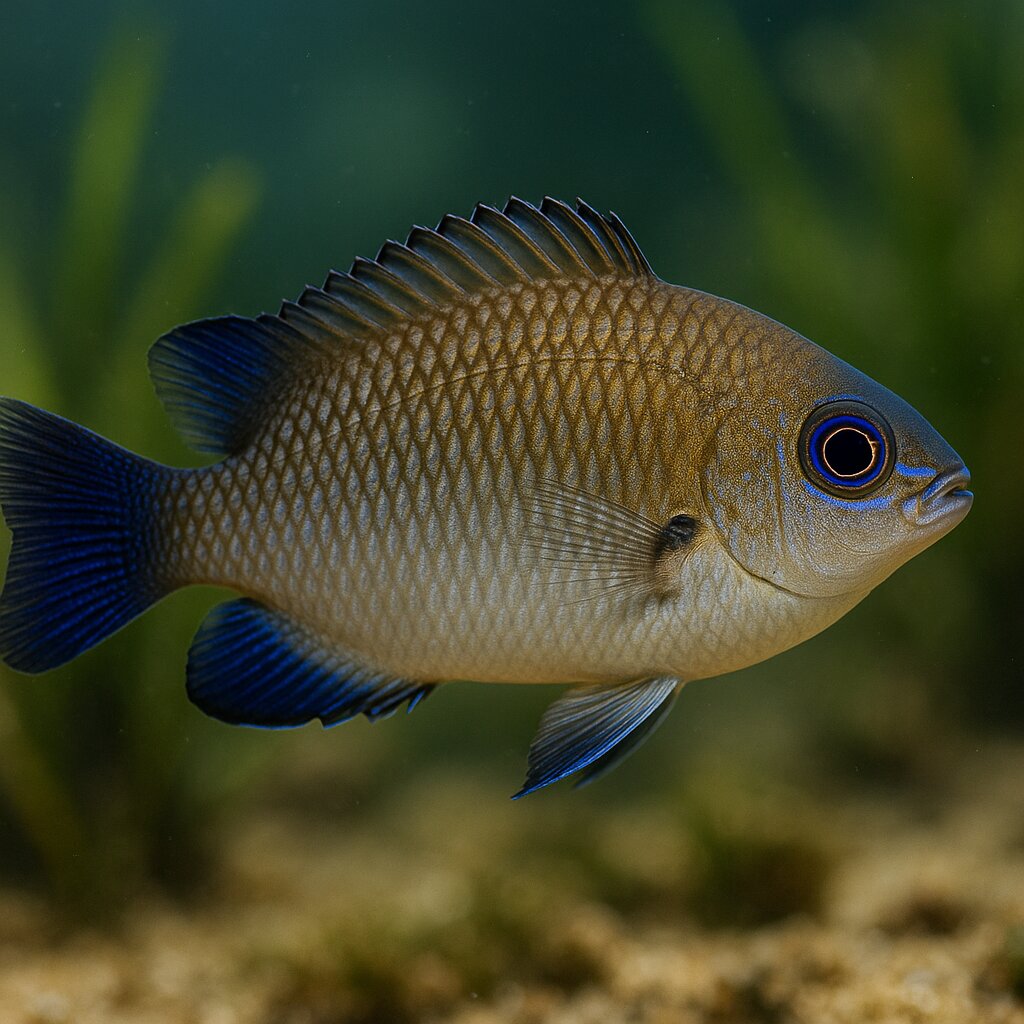
Arabian demoiselle
Neopomacentrus sindensis
A small lyretail damsel from the Persian Gulf and Arabian Sea, it hangs in loose groups around coral heads, rocks, and even pier pilings picking zooplankton from the flow. Think classic damsel toughness with a slightly milder attitude than the real bruisers, plus subtle yellow tail accents. Males clean a patch, get a mate to lay eggs there, and then stand guard fanning the clutch.
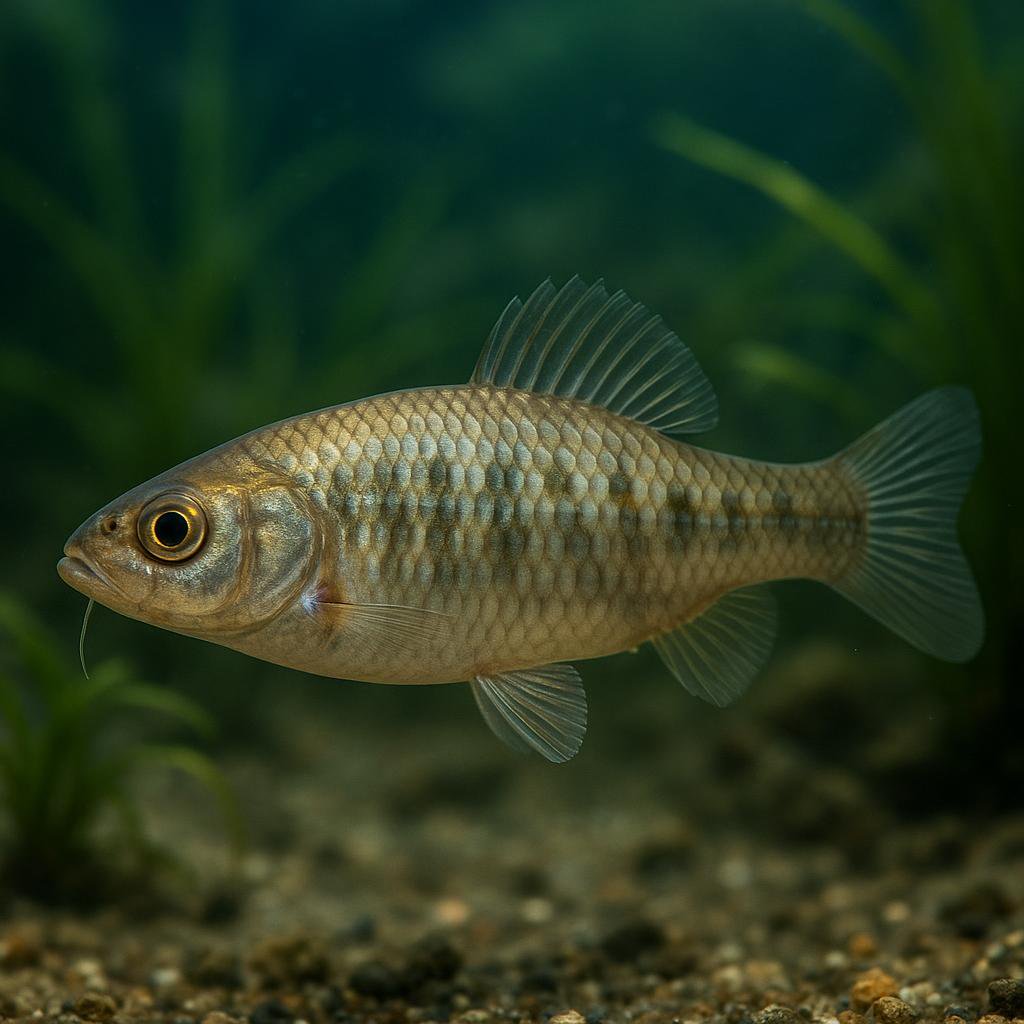
Arabian spiny eel
Notacanthus indicus
Notacanthus indicus is a deep-sea spiny eel (family Notacanthidae; not a true eel) known from the Arabian Sea on the continental slope at roughly ~960–1,046 m depth, with reported maximum length around 20 cm TL; it is a deep-water bycatch species and not established in the aquarium trade.
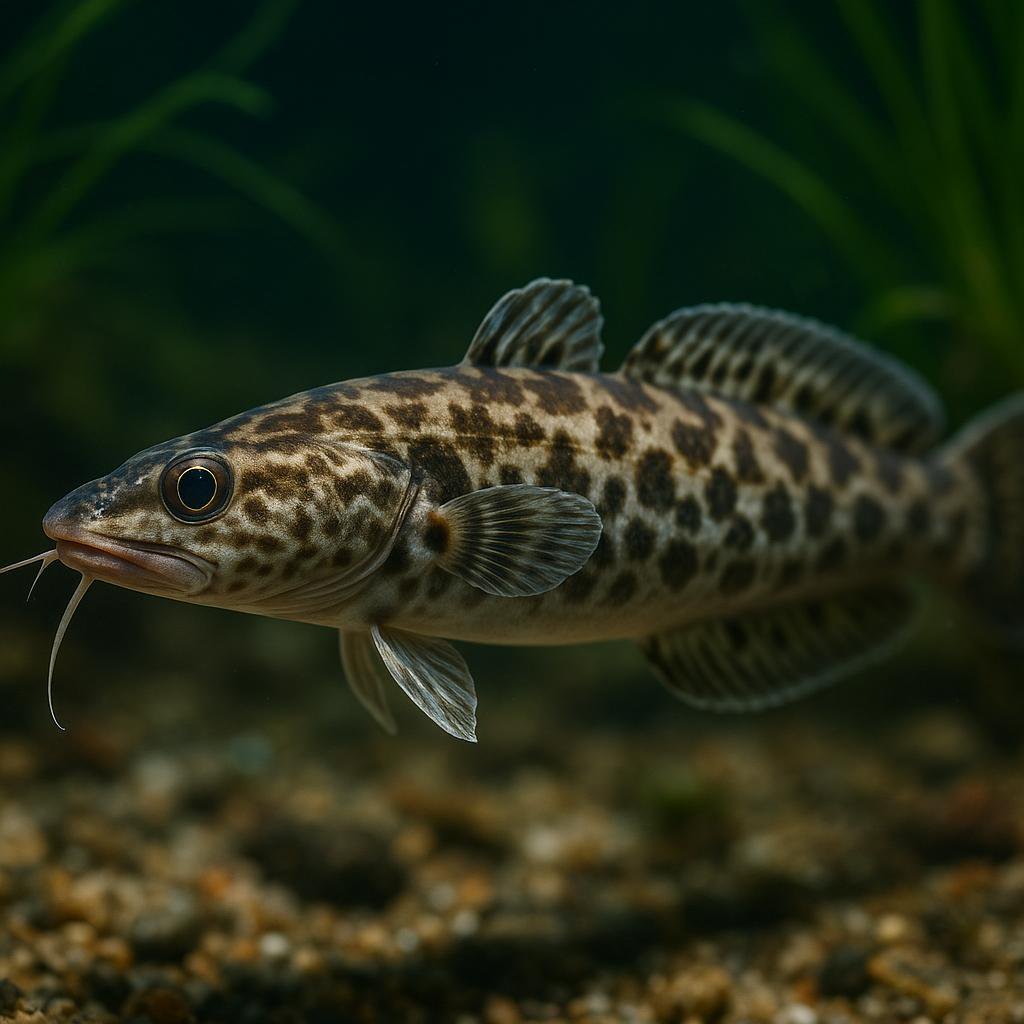
Arctic rockling
Gaidropsarus argentatus
This is a deepwater North Atlantic rockling (a cod relative) that hangs out on soft bottoms way down the slope. It is a cold-water, bottom-hugging predator that snoots around for crustaceans and will also take small fish when it gets the chance.
Looking for other species?