Search Species
Search for fish species by common or scientific name, or use filters to browse by water type, size, temperament, and difficulty.
Found 541 species

European gudgeon
Gobio gobio
The European gudgeon is a small bottom-dwelling cyprinid with a slender body, sandy-brown mottling, and distinct barbels at the corners of the mouth used to locate food in the substrate. It is an active schooling fish that prefers well-oxygenated water and a sand or fine-gravel bottom, often resting on the substrate between foraging bouts. Best kept in cool, river-style aquariums with moderate flow rather than warm tropical setups.

European mudminnow
Umbra krameri
Umbra krameri is a little swamp-and-ditch specialist from the Danube area that does the classic mudminnow thing: it can handle low-oxygen, weedy water and will happily pick at tiny critters all day. Its coolest party trick is that it is facultative air-breathing, and it has that subtle mottled, shadowy pattern that makes it vanish in plants until it suddenly darts out for food.

European Perch
Perca fluviatilis
The European Perch is a predatory freshwater fish recognized by its olive-green body, dark vertical bars, and bright red/orange pelvic and anal fins. It is an active hunter that can grow quite large and is best suited to coolwater, spacious aquariums with strong filtration and plenty of cover.

Evezard's loach
Indoreonectes evezardi
This small Indian brook/stone loach occurs in stream habitats in India (Western Ghats and Satpura range). The species includes cave-adapted forms (e.g., reported from Kotumsar Cave) that may show reduced pigmentation and regressed eyes.

Felix's elephantfish
Mormyrus felixi
Mormyrus felixi is a freshwater mormyrid (elephantfish) endemic to Cameroon, reaching about 14.3 cm standard length. Species-specific aquarium care information is limited; husbandry recommendations are typically inferred from general mormyrid requirements (dim lighting, soft substrate, high water quality, and appropriate foods).

Fenestratum cichlid
Vieja fenestrata
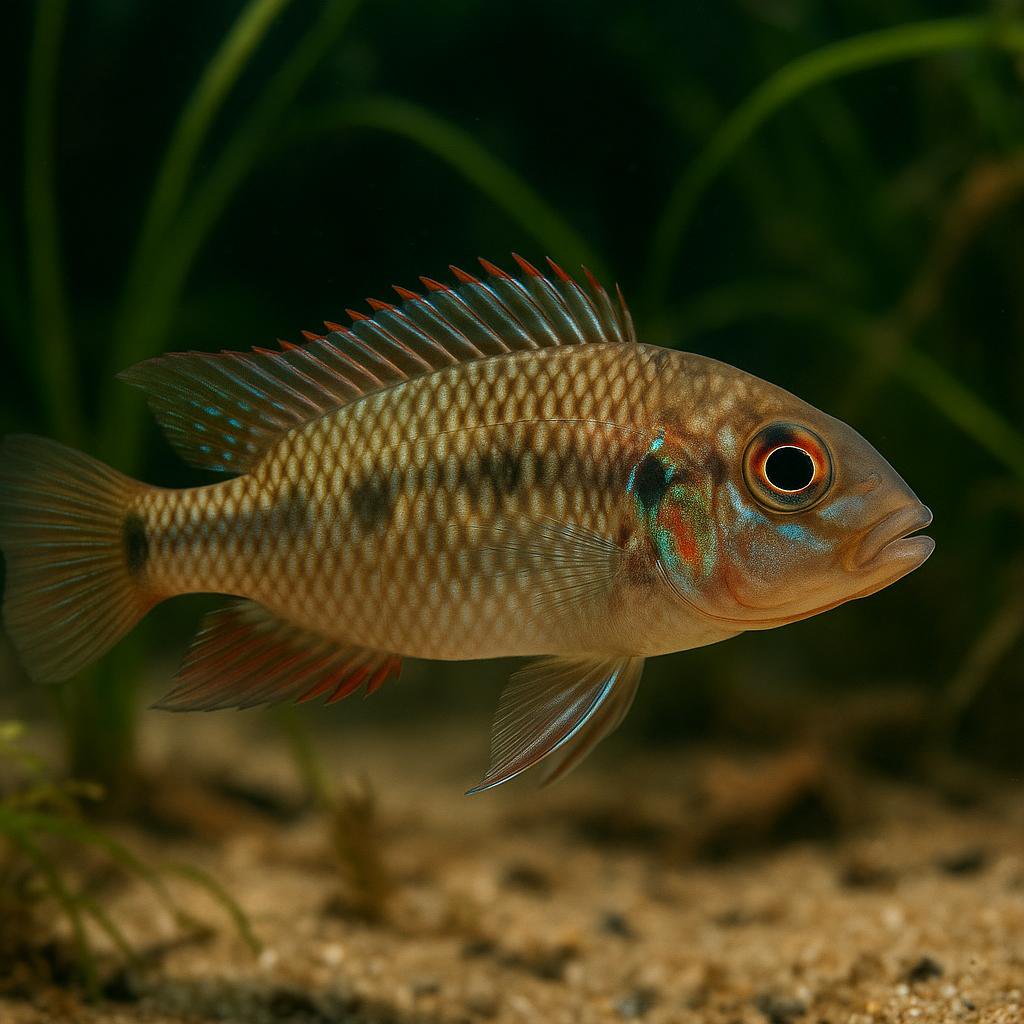
Vieja fenestrata is a big, chunky Central American cichlid that spends a lot of its time cruising the lower half of the tank and redecorating by digging. Give it room, strong filtration, and some tough hardscape, and you get a really interactive fish with that classic Vieja attitude.

Fewpored gudgeon
Oxyeleotris paucipora
A tiny sleeper goby from New Guinea, this little gudgeon hangs out in weedy backwaters and leaf-littered creeks and does short dash-and-grab hunts for bite-size critters. Think of it as a shy, bottom-perching micro-predator that appreciates calm water, cover, and gentle tankmates.

Fire eel
Mastacembelus erythrotaenia
Fire eels are those big, snake-y "spiny eels" with the red/orange flame striping that really pops once they settle in and color up. They love to wedge themselves under wood or burrow into sand and then come out at dusk to cruise around and beg for food-super personable once they trust you, but they get huge and can absolutely inhale small tankmates.

Fire-eyed loach
Barbucca diabolica
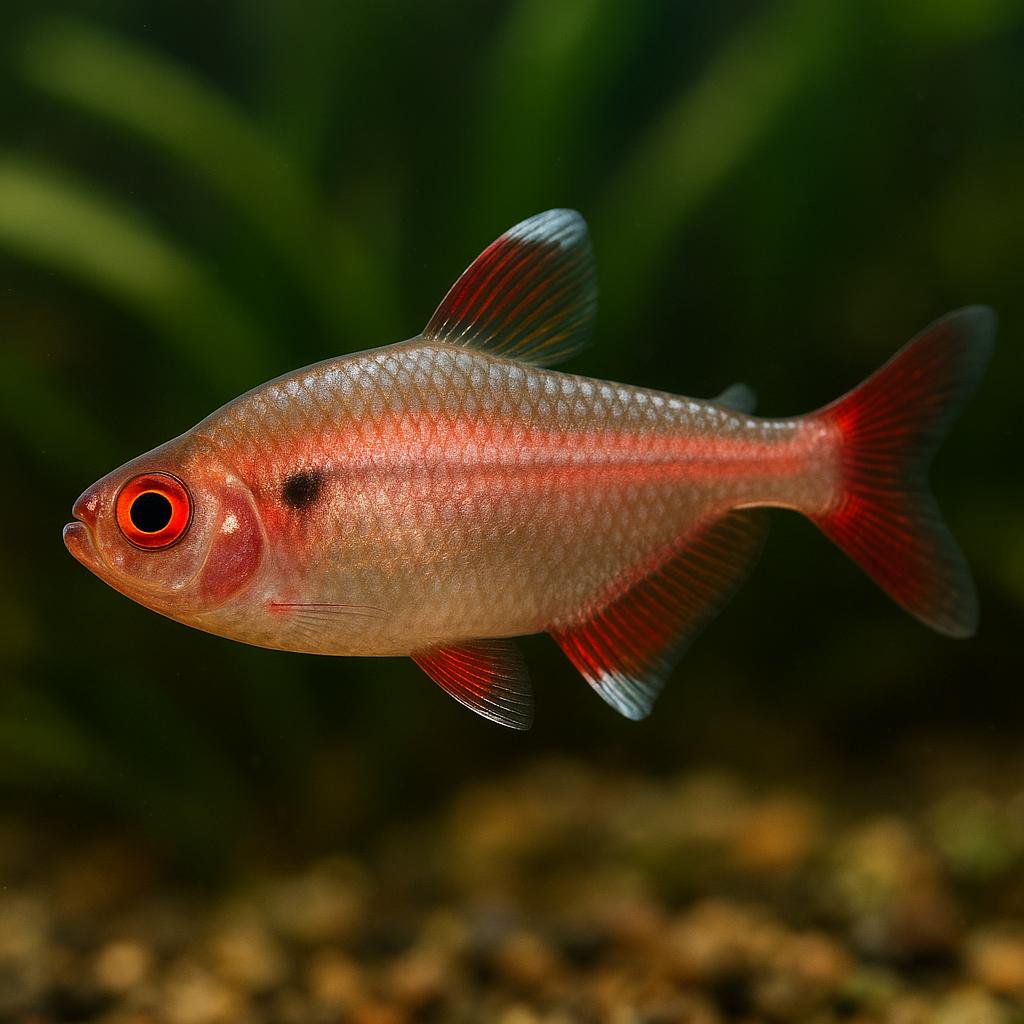
This is one of those tiny, oddball loaches that spends its whole day scooting along wood and rocks like a little vacuum cleaner, and those glowing red eyes are the whole vibe. It is peaceful and shy, but it gets way more confident in a dim, cover-filled tank with leaf litter and lots of little hideouts. Biggest thing people miss is feeding - it is a bottom grazer and pretty much will not chase food up in the water column.

Flathead galaxias
Galaxias rostratus
A small, slender Murray–Darling Basin galaxiid with a distinctly flattened head and large mouth. Occurs mid-water in still or gently flowing habitats such as billabongs, lagoons and backwaters, and schools in midwater. It is a threatened species in NSW and it is illegal to catch/keep/buy/sell/possess without a specific permit or approval.

Flathead long-whiskered catfish
Megalonema platycephalum
This is a real-deal South American pimelodid catfish that stays in that "big but not monster" range - around a foot long - with that wide, bulldog-ish head and long whiskers. Its natural diet includes insect larvae and even fish scales, so it has that sneaky bottom-predator vibe and will absolutely inhale meaty foods once it settles in. The big "gotcha" is that it sometimes shows up mislabeled in shops (even as other catfish species), so you want to buy it assuming you'll be housing a 12-inch predator.

Fly River garfish
Zenarchopterus novaeguineae
This is a surface-cruising freshwater halfbeak from New Guinea and far north Australia that likes warm, weedy shallows and will hang near the top in little shoals. In the wild it grazes a lot of plant material but will also snap up insects, so it acts like a picky topwater grazer with a "snatch anything that lands" vibe. If you ever try one in a tank, think "tight lid, calm flow, lots of surface cover" first.