

Arabian demoiselle
Neopomacentrus sindensis
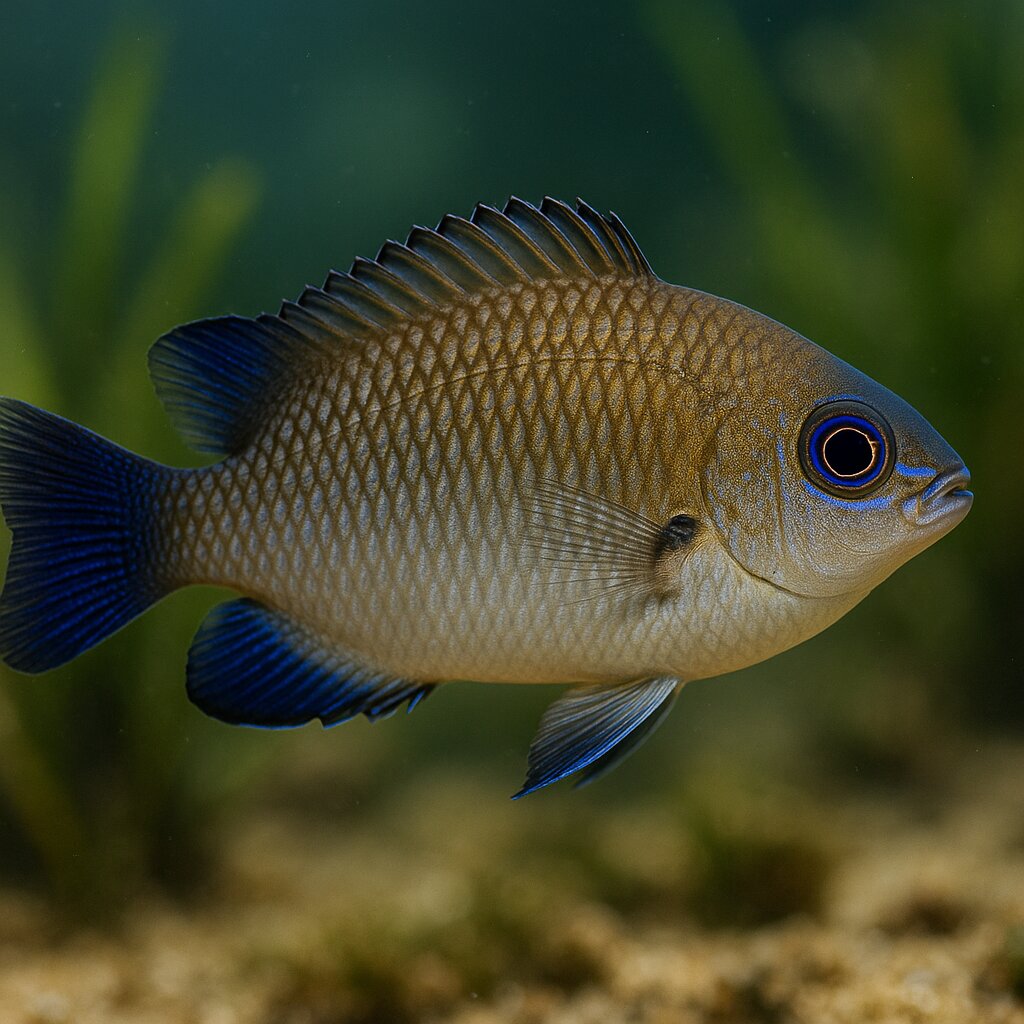
The Arabian demoiselle has a vibrant blue body with a striking black margin along the elongated dorsal fin and bright yellow pectoral fins.
This page includes AI-generated images. Why am I seeing AI images?
About the Arabian demoiselle
A small lyretail damsel from the Persian Gulf and Arabian Sea, it hangs in loose groups around coral heads, rocks, and even pier pilings picking zooplankton from the flow. Think classic damsel toughness with a slightly milder attitude than the real bruisers, plus subtle yellow tail accents. Males clean a patch, get a mate to lay eggs there, and then stand guard fanning the clutch.
Also known as
Quick Facts
Size
10 cm (4 inches)
Temperament
Semi-aggressive
Difficulty
Beginner
Min Tank Size
30 gallons
Lifespan
8-12 years
Origin
Western Indian Ocean
Diet
Planktivore-omnivore - zooplankton; readily takes marine flakes, pellets, and frozen mysis/brine
Water Parameters
25-28°C
8-8.4
0-0 dGH
Need a heater for this species?
This species needs 25-28°C in a 30 gallon tank. Use our heater calculator to find the right wattage.
Calculate heater sizeCare Notes
- Give a single fish at least a 20-30 gal tank; for a group of 3-6, think 40-55 gal with rock piles to break sight lines and open midwater to hover.
- Run salinity 1.024-1.026, temp 75-81 F (24-27 C), pH 8.1-8.4, and alk 8-10 dKH; keep nitrate under 20 ppm and avoid fast salinity swings.
- They are midwater planktivores: feed small amounts 2-3 times daily (mysis, enriched brine, copepods, small pellets, and a bit of Spirulina).
- Use a tight lid; they will jump when spooked.
- Fairly chill for a damsel, but still territorial: add groups all at once and skip bullies like domino/yellowtail damsels, dottybacks, and sixlines; reef safe and fine with inverts, and they mix well with gobies, firefish, chromis, and clowns in larger tanks.
- Moderate flow keeps them out in the open; if they hide, bump up flow a notch and give more cover so subordinates can duck out.
- Breeding happens on a cleaned rock or tile with the male guarding eggs; raising fry needs a separate setup with rotifers and greenwater, so only attempt it if you are ready.
- Quarantine new arrivals 2-4 weeks; they handle copper better than many reef fish, but do a slow drip acclimation to match salinity.
Compatibility
Good Tankmates
- Sturdy clowns like ocellaris or percula - similar attitude, not pushovers
- Active Halichoeres wrasses like melanurus or yellow coris - fast and street-smart
- Dwarf angels such as coral beauty or flame - semi-bold grazers that ignore damsel drama
- Kole or yellow tangs in a roomy tank - bigger cruisers a damsel wont bully
- Rugged bottom types like lawnmower or starry blennies, and larger watchman/diamond gobies with real hidey holes
- Hawkfish like falco or longnose if you are not keeping tiny shrimp - they shrug off damsel attitude
Avoid
- Other small damsels or chromis - same niche, turns into turf wars and chase-fests
- Shy midwater fish like firefish and anthias - they get run ragged by a feisty demoiselle
- Slow or delicate species like seahorses and pipefish - constant stress from nips
- Predators that can swallow them, like lionfish or larger groupers
Where they come from
Arabian demoiselles hang out in the western Indian Ocean, especially the Arabian/Persian Gulf, Gulf of Oman, and down toward Pakistan and western India. You often see them schooling over reefs, jetties, and rubble in fairly warm, sometimes slightly murky water. They like structure and a bit of current to sit in while they pick food from the flow.
Setting up their tank
They are small but active. One does fine in a 20 gallon, but if you want a group, go 40 gallons or larger with lots of rockwork. Think open swimming lanes with rocky pillars and caves to break line of sight. They are good jumpers when startled, so use a tight lid or mesh screen.
- Tank size: single 20+ gal, group 40+ gal
- Temp: 75-81 F (24-27 C)
- Salinity: 1.024-1.026
- pH: 8.0-8.4
- Flow: moderate with some higher-flow areas
- Lighting: not picky; standard reef lighting is fine
- Nitrate: try to keep under ~25 ppm
They are reef safe and do well in mixed-reef setups. Use a few scattered flat rocks or tiles they can use later as nest sites if breeding happens. Keep some open water; they spend time midwater, not buried in the rock.
Cycle the tank before adding them. Old-school damsel cycling is rough on the fish and the biofilter. Quarantine new arrivals 2-4 weeks and match salinity before you move them over. If you plan a group, add them at the same time to reduce squabbles.
What to feed them
They are planktivores at heart, so think small meaty foods with a bit of variety. They learn pellets quickly and are not picky once settled.
- Daily staples: 0.5-1 mm marine pellets, quality marine flakes
- Frozen: mysis, enriched brine, copepods/calanus, finely chopped shrimp or clam
- Veggie boost 1-2x/week: spirulina pellets or a tiny pinch of nori
- Vitamins: soak food in a vitamin/omega supplement a few times a week for color and immunity
Feed small amounts 2-3 times a day if you can. They are quick, so spread the food in different spots so slower fish get some too.
How they behave and who they get along with
Compared to many damsels, Arabian demoiselles are pretty mellow, but they are still damselfish. Expect some chasing, especially at feeding time or near a favorite rock. In a small tank, keep a single fish. In bigger tanks, a small group works if you give them space and cover.
- Good tankmates: clownfish, cardinalfish, small wrasses (fairy/flashers), gobies, blennies, firefish, tangs in larger tanks, reef-safe inverts
- Use caution: dottybacks, aggressive clowns, other damsels, large hawkfish
- Skip: triggers, large predatory wrasses, groupers, anything that likes to swallow bite-size fish
They do not bother corals. During nesting, a male may guard a patch of rock and shoo away nearby fish. Give them multiple hiding spots so one fish does not get cornered.
Breeding tips
They are substrate spawners. A male will clean a spot on rock or a shell, the female lays eggs, and the male guards and fans them. If you keep a small group, a pair may form naturally once they mature.
- Encourage pairing: keep 4-6 juveniles in a larger tank and let them sort it out
- Nest sites: smooth rock, ceramic tile, or a scallop shell near moderate flow
- Conditions: steady warmth around 78-80 F, lots of small, high-quality meals
- Spawning sign: male intensifies color slightly, cleans and fans a patch of rock
Raising the young is the tricky part. Eggs hatch at night and the larvae are tiny and pelagic. You will need a separate larval tank, rotifers with greenwater, gentle aeration, and then newly hatched brine shrimp after a few days. If you have raised clownfish before, it is a similar routine.
Common problems to watch for
- Territorial spats: in small tanks a dominant fish may bully the rest. Add hiding spots or rehome extras.
- Parasites after import: ich or velvet show up as scratching, spots, or rapid breathing. Quarantine and treat early.
- Nutritional gaps: a flake-only diet leads to washed-out color and fin nips that heal slowly. Mix in frozen and vitamin-soaked foods.
- Jumping: startled fish can clear a gap. Use a lid.
- Nitrates creeping up: they eat often, so export nutrients with water changes, a skimmer, or macroalgae.
Do not use these or any fish to cycle a tank. It stresses the fish and you risk long-term aggression issues from a rough start. Let the biofilter build up first.
If aggression flares, try a brief rescape or an acclimation box for the bully. Breaking up sight lines usually calms things down fast.
Similar Species
Other marine semi-aggressive species you might be interested in.

Aleutian skate
Bathyraja aleutica
This is a big, cold-water deep-slope skate from the North Pacific that cruises muddy bottoms and eats chunky benthic prey like crabs and shrimp. The really cool bit is its egg-laying skate life - it does distinct pairing (the classic skate "embrace") and drops those tough egg cases on the seafloor. Not an aquarium fish at all unless you're basically running a public-aquarium-style chilled system.

Antarctic dragonfish
Vomeridens infuscipinnis
Deep down around Antarctica, this sleek dragonfish cruises the water column like a little submarine, nearly neutrally buoyant so it can hover above the seafloor. It munches almost exclusively on Antarctic krill and lives in near-freezing water 500-800 m down, so it is a cool species to read about, not one for home tanks.

Arabian spiny eel
Notacanthus indicus
Notacanthus indicus is a deep-sea spiny eel (family Notacanthidae; not a true eel) known from the Arabian Sea on the continental slope at roughly ~960–1,046 m depth, with reported maximum length around 20 cm TL; it is a deep-water bycatch species and not established in the aquarium trade.

Arctic rockling
Gaidropsarus argentatus
This is a deepwater North Atlantic rockling (a cod relative) that hangs out on soft bottoms way down the slope. It is a cold-water, bottom-hugging predator that snoots around for crustaceans and will also take small fish when it gets the chance.
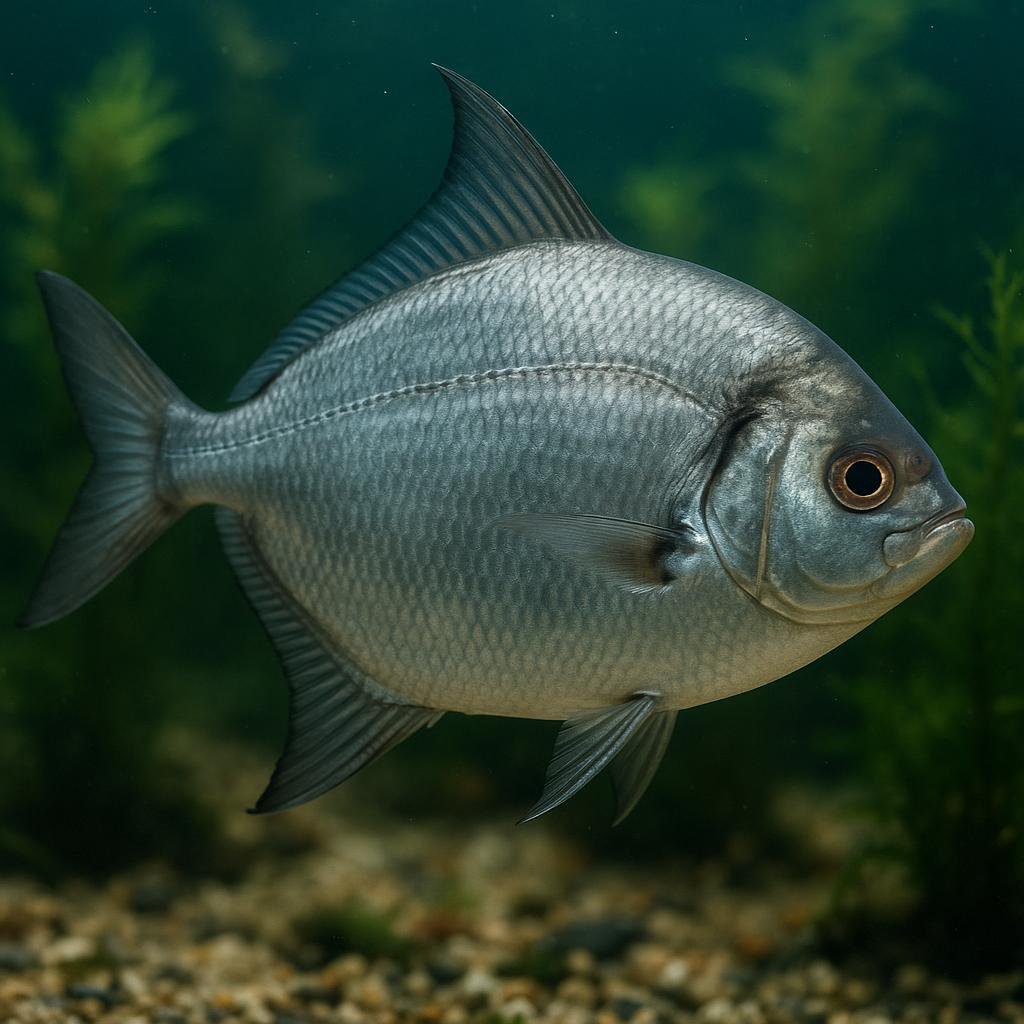
Atlantic pomfret
Brama brama
Brama brama is the Atlantic pomfret (aka Ray's bream) - a deep-bodied, open-ocean pelagic fish that cruises around in small schools and follows water temps. It is a legit big, wild marine species (not an aquarium fish) that eats other small sea critters like fish and squid, and it ranges across a huge chunk of the Atlantic plus parts of the Indian and South Pacific.
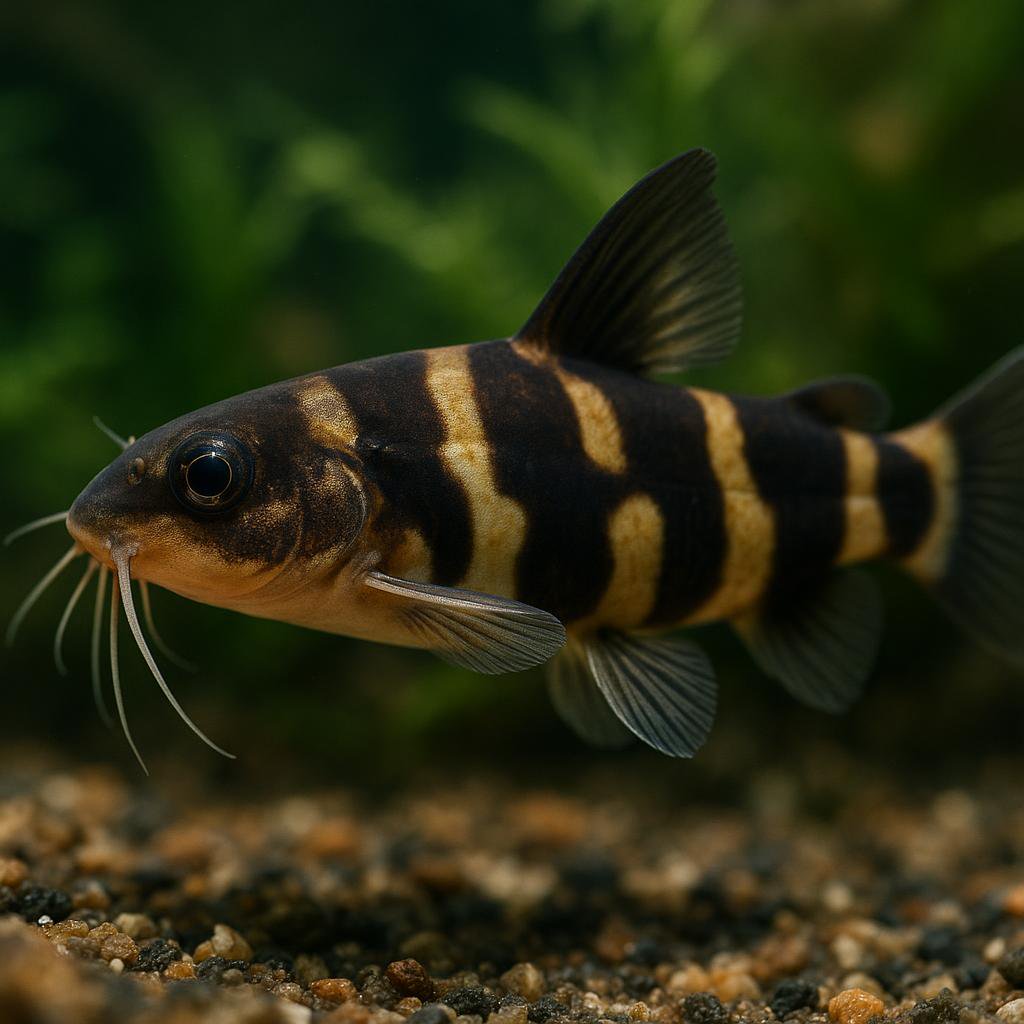
Australian sawtail catshark
Figaro boardmani
Figaro boardmani is a small, deepwater Australian catshark with these cool saw-like ridges of spiny denticles along the tail and a neat pattern of dark saddle bands. It lives way down on the outer continental shelf and slope, so its natural water is cold, dim, and stable - totally not a typical home-aquarium fish. Diet-wise its a predator that goes after fish, crustaceans, and cephalopods.
More to Explore
Discover more marine species.

Abe's eelpout
Japonolycodes abei
Japonolycodes abei is a temperate, deepwater demersal eelpout (family Zoarcidae) endemic to Japan (Kumano-nada Sea reported; other sources also report Sagami Bay and Tosa Bay). It is the only species in the genus Japonolycodes and occurs roughly 40-300 m depth, making it an uncommon/atypical aquarium species.

Affinis blind cusk-eel
Barathronus affinis
Barathronus affinis is a tiny, super-weird deep-sea blind cusk-eel from the western-central Indian Ocean. It is one of those gelatinous, loose-skinned brotula-type fishes that live way down in the dark and are basically never seen alive, so almost everything we know comes from preserved specimens and taxonomic work.

African red snapper
Lutjanus agennes
This is a true snapper from West Africa - a big, fast-growing predator that goes from coastal reefs to brackish lagoons and estuaries (especially as a juvenile). Super cool fish in the wild, but it gets absolutely huge and will eat smaller tankmates once it has the mouth for it, so its really more of a public-aquarium scale animal than a home-aquarium fish.

Allis shad
Alosa alosa
Gorgeous silver, fast-swimming shad that spends most of its life in the sea and then surges up big rivers in noisy, surface-spawning schools. It grows huge for a herring-type fish and needs cool, ultra-oxygenated water and tons of open space, so it is a public-aquarium species rather than a home tank fish.

Annandale's zebra sole
Zebrias annandalei
Zebrias annandalei is a small demersal sole from coastal India that inhabits sandy or muddy bottoms and buries for camouflage. It is rarely kept in home aquaria and would require a specialized marine sand-bottom setup and appropriate feeding.
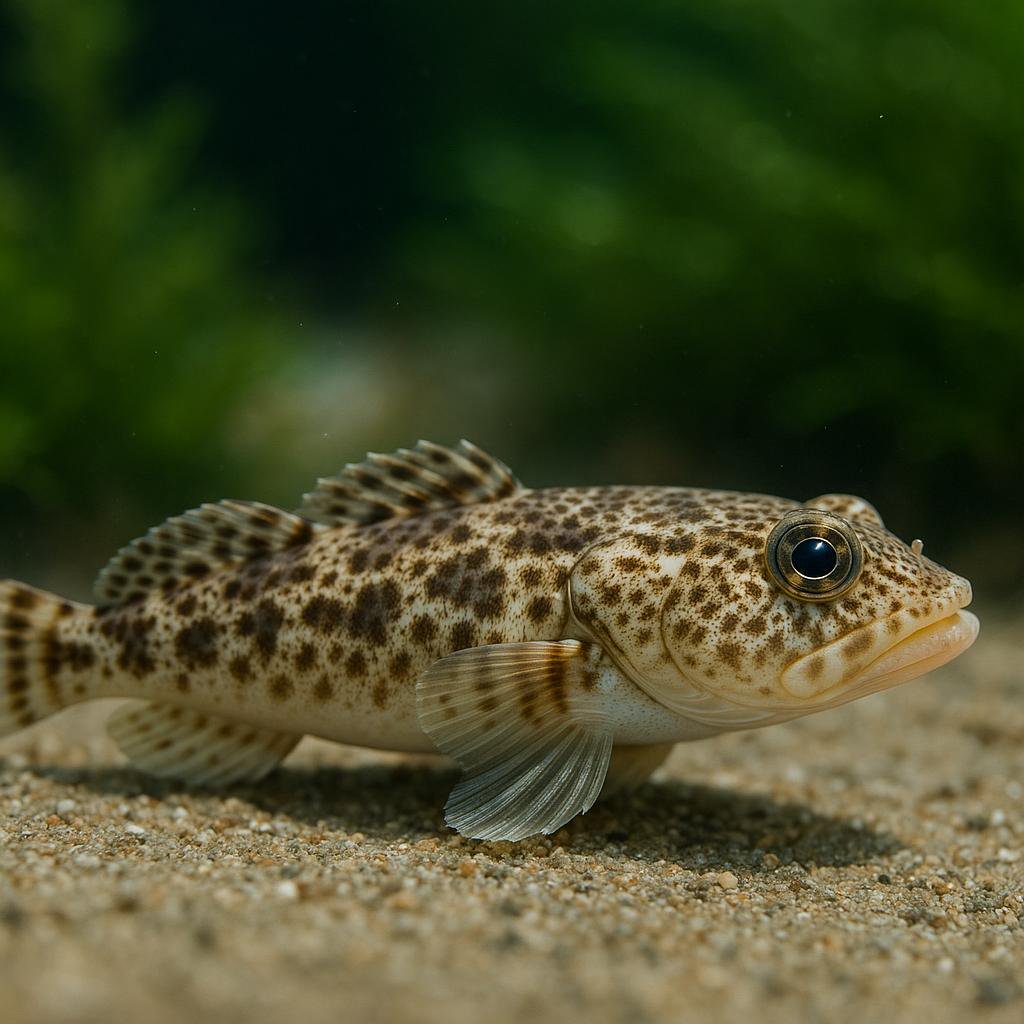
Banded stargazer
Kathetostoma binigrasella
This is a New Zealand stargazer that lives half-buried in sand or mud with its eyes pointed up, waiting to rocket upward and nail passing prey. It has those neat dark saddle-bands across the back (especially as a juvenile), and like other stargazers it is venomous with spines near the gill cover/pectoral area - definitely a look-dont-touch fish.
Looking for other species?