

Footballfish
Himantolophus danae
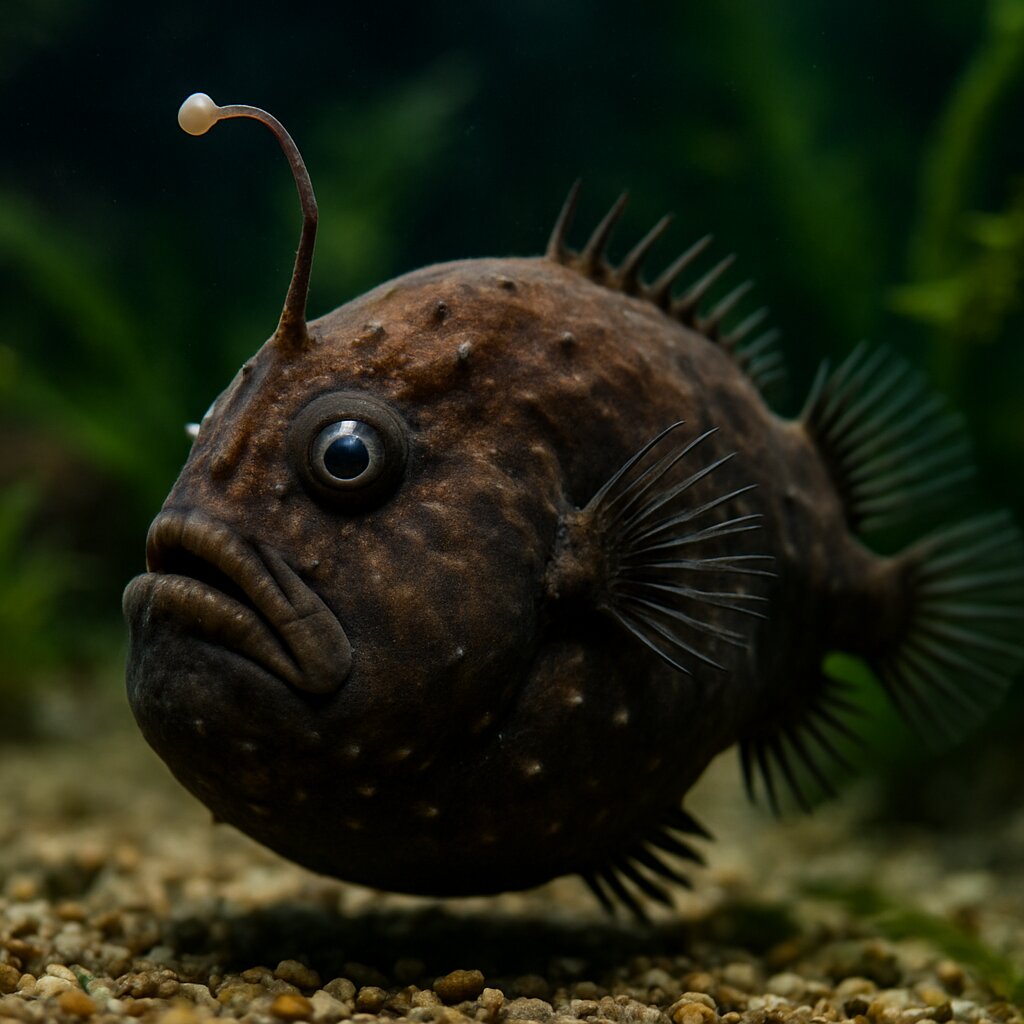
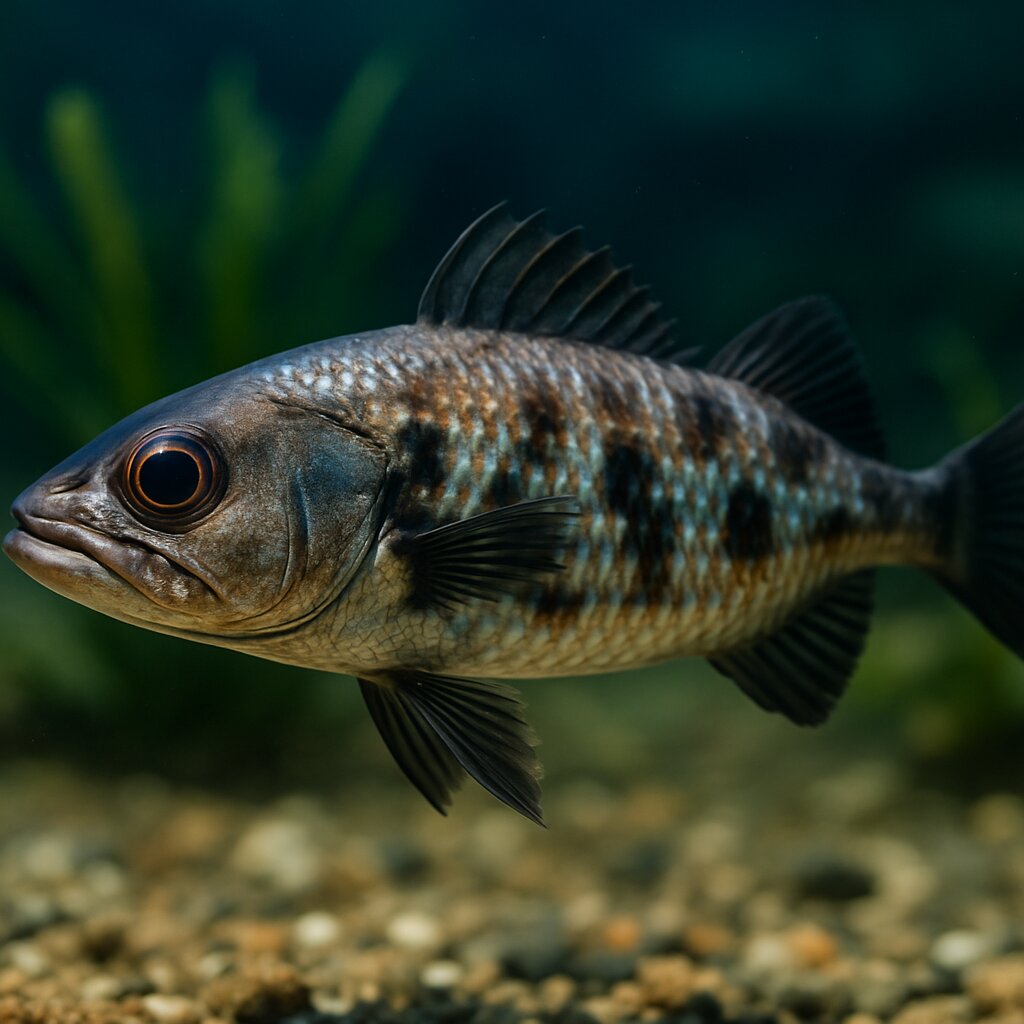
The Footballfish exhibits a dark brown to black body with a bioluminescent lure on its dorsal fin, used to attract prey in deep-sea environments.
This page includes AI-generated images. Why am I seeing AI images?
About the Footballfish
Picture a tiny round anglerfish with a built-in glow stick on her head, shaped like a spiky football. This one lives way out in the Indo-West Pacific at hundreds of meters deep in near-freezing water, so it is a look-dont-keep fish for home tanks. The family is fun to read about too - females fish with the light while the teensy males stay free-living and just focus on finding a mate.
Also known as
Quick Facts
Size
3.9 cm SL (female)
Temperament
Aggressive
Difficulty
Expert
Min Tank Size
0 gallons
Lifespan
unknown
Origin
Indo-West Pacific
Diet
Carnivore - deep-sea fishes, crustaceans, and squid
Water Parameters
5-12°C
7.8-8.2
324-419 dGH
Care Notes
- Hard truth: footballfish are deep-sea anglerfish. Without a pressure-capable, near-freezing, blackout system (public aquarium grade), they usually die fast.
- Run 2-4 C seawater at 35 ppt (1.025-1.026 sg), pH 7.9-8.1, with zero ammonia/nitrite and nitrate under 5 ppm; keep dissolved oxygen at saturation. Flow should be very gentle and laminar so the fish can hover without tumbling.
- Keep the tank pitch black; if you need to look, use a dim red light for seconds, not minutes. Bright light stresses and can damage the lure.
- Use a large, smooth-sided cylinder or kreisel-style tank with a tight lid; no rockwork, no rough decor, and nothing the skin can scrape on. Bare bottom is fine.
- No tankmates, period; they will gulp anything they can fit and get shredded by anything they cant. Solitary housing only.
- Feeding is the nightmare: offer soft marine prey (silversides, sand lance, squid strips) on a clear feeding stick and wiggle near the mouth to trigger a strike. Small meal every 1-2 weeks is plenty at 2-4 C; overfeeding bloats the fish and fouls the water.
- Breeding is not on the table; tiny males fuse to females (sexual parasitism), and it has not been done in captivity. Just keep one female if you somehow have the setup.
- Watch for skin abrasions, refusal to feed, and uncontrolled rolling; at surface pressure these usually spiral downhill and meds will not save it. If this starts, call a public aquarium with deep-sea capability.
Compatibility
Good Tankmates
- No tank mates - solo-only deep-sea angler. Anything alive in reach becomes food or gets torn up.
- An empty display besides inert rock and sand - no clean-up crew, no ornamental inverts, nothing mobile.
- Water-sharing neighbor only behind a tight mesh divider or separate compartment so nothing can ever make contact.
- Public aquarium pressurized deep-sea setup with this species alone; even other deep-sea fishes end up as snacks.
Avoid
- Anything fish-shaped, period - damsels, wrasses, gobies, groupers, whatever. It will inhale them if they get close.
- Other ambush predators like anglers/frogfish, scorpionfish, or lionfish - one will swallow the other.
- Big bruisers like sharks, rays, or large eels - they will harass or outright eat a footballfish.
- Fast pelagics like jacks and mackerels - nonstop motion and ramming stress it out, and they outcompete it for food.
Where they come from
Footballfish (Himantolophus danae) are deep-sea anglerfish from the open ocean, usually 400-2000 m down. Think near-freezing water, high pressure, and total darkness. Females are the big, round ones with the glowing lure. Males are tiny and mostly live attached to females in the wild.
Hard truth: this species is not a home-aquarium fish. I helped care for a short-lived rescued specimen in a public aquarium setting. Even with a chilled, dark system and a team of people, survival is measured in days to weeks. If you want an angler experience at home, look into warmwater frogfish (Antennarius) instead.
Setting up their tank
You are basically building a tiny deep sea. Cold, dark, quiet, and very stable. Pressure replication is out of reach for hobby gear, so you work with the narrow window of animals that arrive able to tolerate surface pressure (rare) and then reduce every other stressor to near-zero.
- Temperature: 2-6 C. Use an oversized chiller and insulate the tank and lines. Alarms and backup power are a must.
- Salinity: 34-35 ppt. pH 7.9-8.2. Keep parameters rock-steady on a mature system.
- Lighting: darkness. Observe with dim red light only. No camera flashes.
- Shape and flow: round or rounded-corner tank with gentle circular flow so the fish can hover midwater without rubbing. Cover intakes with soft mesh.
- Filtration: large skimmer, big biofilter, and UV to keep bacterial loads low at cold temps. Put the skimmer/UV in the sump to keep the display calm.
- Oxygen: high O2, but avoid visible bubbles in the display to prevent abrasion. Gas exchange and oxygenation in the sump is safer.
- Interior: bare tank. No rocks, no sharp fittings. Blacked-out sides help them settle.
- Handling: always move the fish submerged. Use soft, knotless cradles. Avoid touching the lure (esca) and skin.
Set the display in a dark cabinet or cold room. Route plumbing to a separate service area so you can maintain equipment without blasting the fish with light.
What to feed them
They are ambush predators. The trick is to present food so it looks like prey approaching the lure. You are better off with small, high-quality marine foods and patience than giant items they might regurgitate later.
- Offer: silversides, capelin, small herring pieces, squid strips, krill, and shrimp. Rinse well after thawing.
- Use a feeding wand or long tweezers. Wiggle the piece near the lure and then past the mouth. Give them time to strike.
- Feed sparingly: 1 modest item every 3-7 days. Overfeeding leads to regurgitation and infections.
- Rotate foods and add a marine vitamin soak now and then to dodge thiaminase issues from smelt/silversides-heavy diets.
- If the fish refuses food for several days, do not chase it with food. Reduce disturbance, try again at night with red light.
The lure may or may not glow in captivity. The light comes from symbiotic bacteria that often do not survive capture and tank life.
How they behave and who they get along with
They mostly hover motionless, then snap open that huge mouth for a quick strike. Sudden light or vibration makes them flinch and bump the walls, so keep the room calm.
- Tankmates: none. Anything that moves may get eaten or will panic them.
- One per system: females are solitary. Males are vanishingly rare in collections and not suitable as tankmates anyway.
- Activity: nocturnal. Do feeding and maintenance at night under red light if possible.
Breeding tips
Realistically, no. In nature, tiny males fuse to females and become permanent mates. Capturing a compatible pair alive and getting them to that point in a tank has not been done in the hobby, and public aquaria have not reported success either. Focus on short-term stabilization rather than long-term pairing.
Common problems to watch for
- Feeding refusal: very common. Cut disturbance, switch to smaller prey, try at night with a subtle wiggle near the lure.
- Regurgitation hours after eating: feed smaller portions and extend the interval. Check temperature stability.
- Skin abrasions and lure damage: usually from bumping walls or rough handling. Round the tank, slow the flow, and keep it dark.
- Bacterial blooms and slime: cold water slows biofiltration. Use robust UV and a mature filter. Discuss antibiotics with a vet if lesions appear.
- Light shock: any bright light can cause frantic swimming. Black out the tank and use dim red only.
- Sudden decline after capture: many arrive with internal injuries or decompression stress you cannot fix. Humane euthanasia may be the kindest outcome in some cases.
Ethics and legality matter here. Most footballfish enter captivity as bycatch and do poorly. If you ever get a call about one, coordinate with a public aquarium or research group that has a cold, dark system ready. Do not attempt this in a home display.
If you want the behavior and look without the deep-sea heartbreak, try a warmwater frogfish species. They eat from a stick, live at room-temp reef conditions, and you can actually keep them long-term.
Similar Species
Other marine aggressive species you might be interested in.
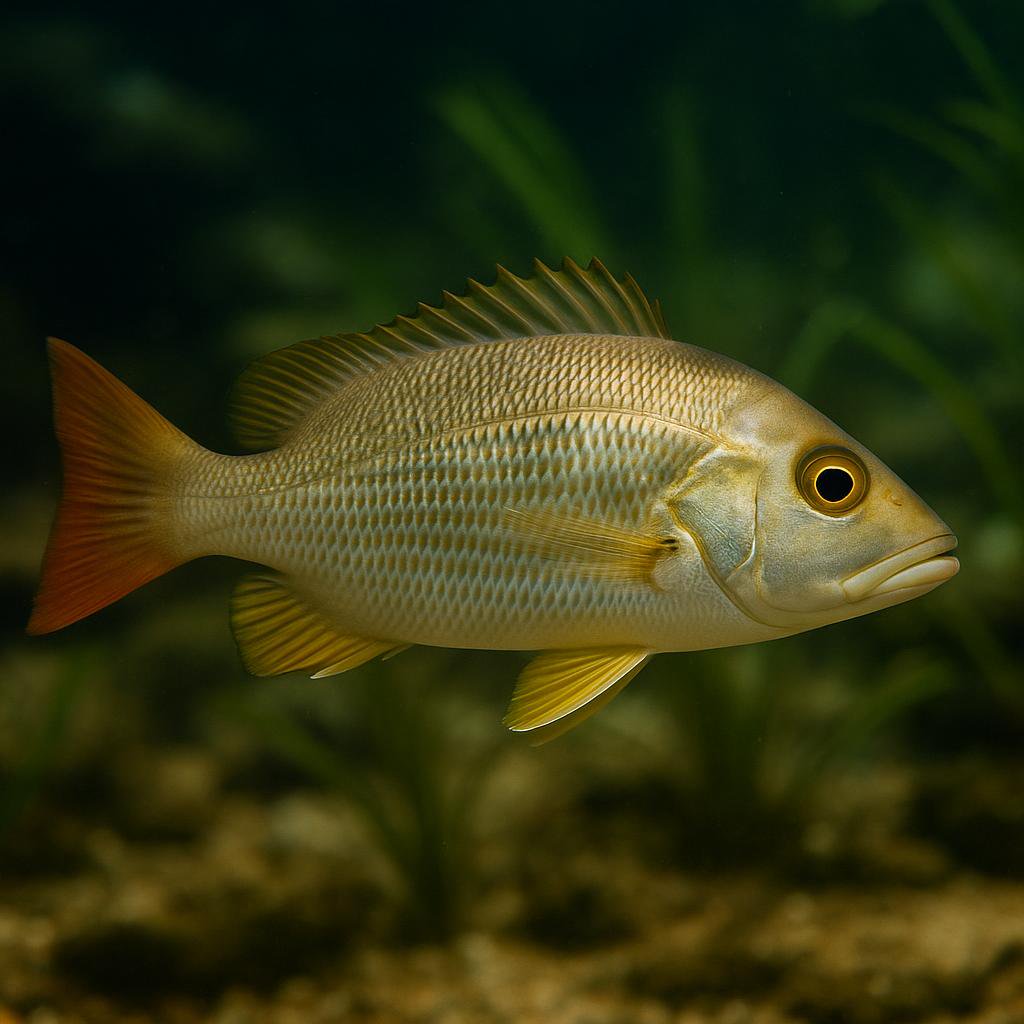
African red snapper
Lutjanus agennes
This is a true snapper from West Africa - a big, fast-growing predator that goes from coastal reefs to brackish lagoons and estuaries (especially as a juvenile). Super cool fish in the wild, but it gets absolutely huge and will eat smaller tankmates once it has the mouth for it, so its really more of a public-aquarium scale animal than a home-aquarium fish.
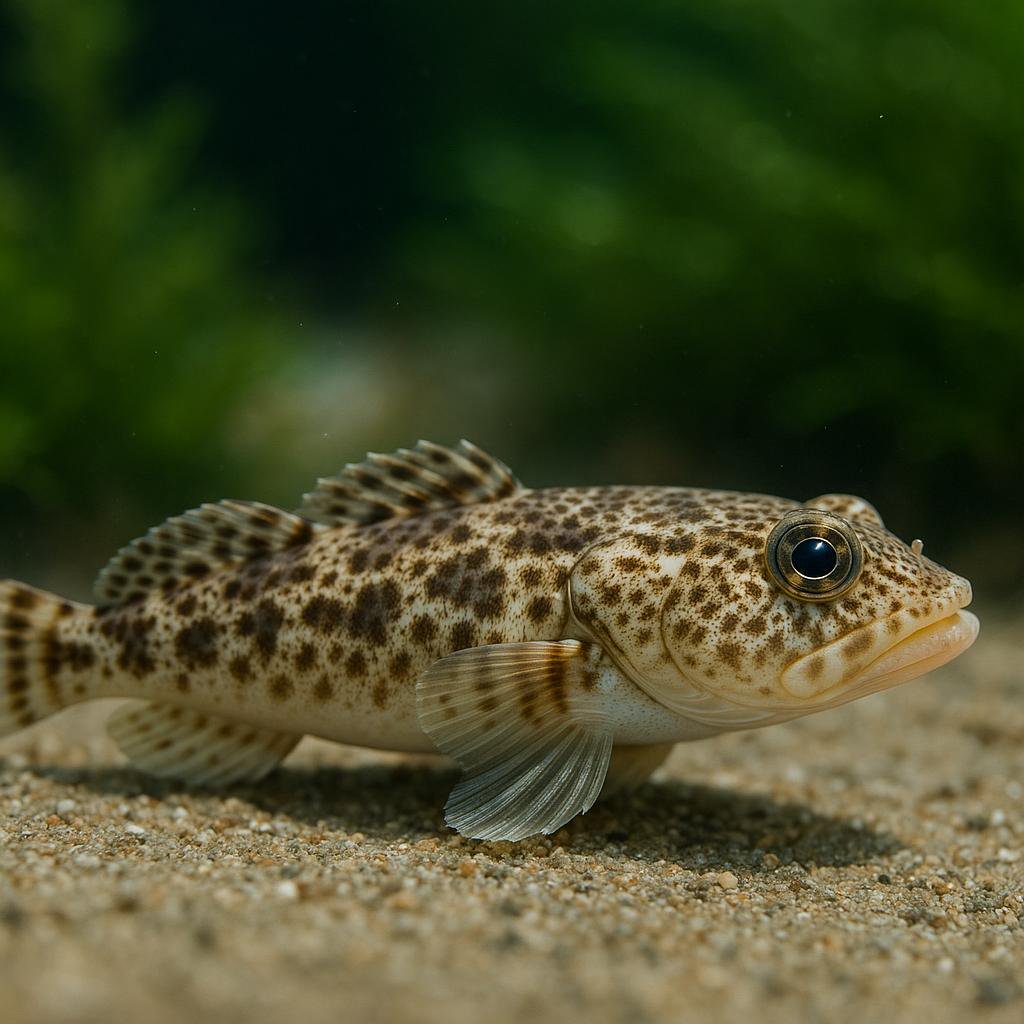
Banded stargazer
Kathetostoma binigrasella
This is a New Zealand stargazer that lives half-buried in sand or mud with its eyes pointed up, waiting to rocket upward and nail passing prey. It has those neat dark saddle-bands across the back (especially as a juvenile), and like other stargazers it is venomous with spines near the gill cover/pectoral area - definitely a look-dont-touch fish.
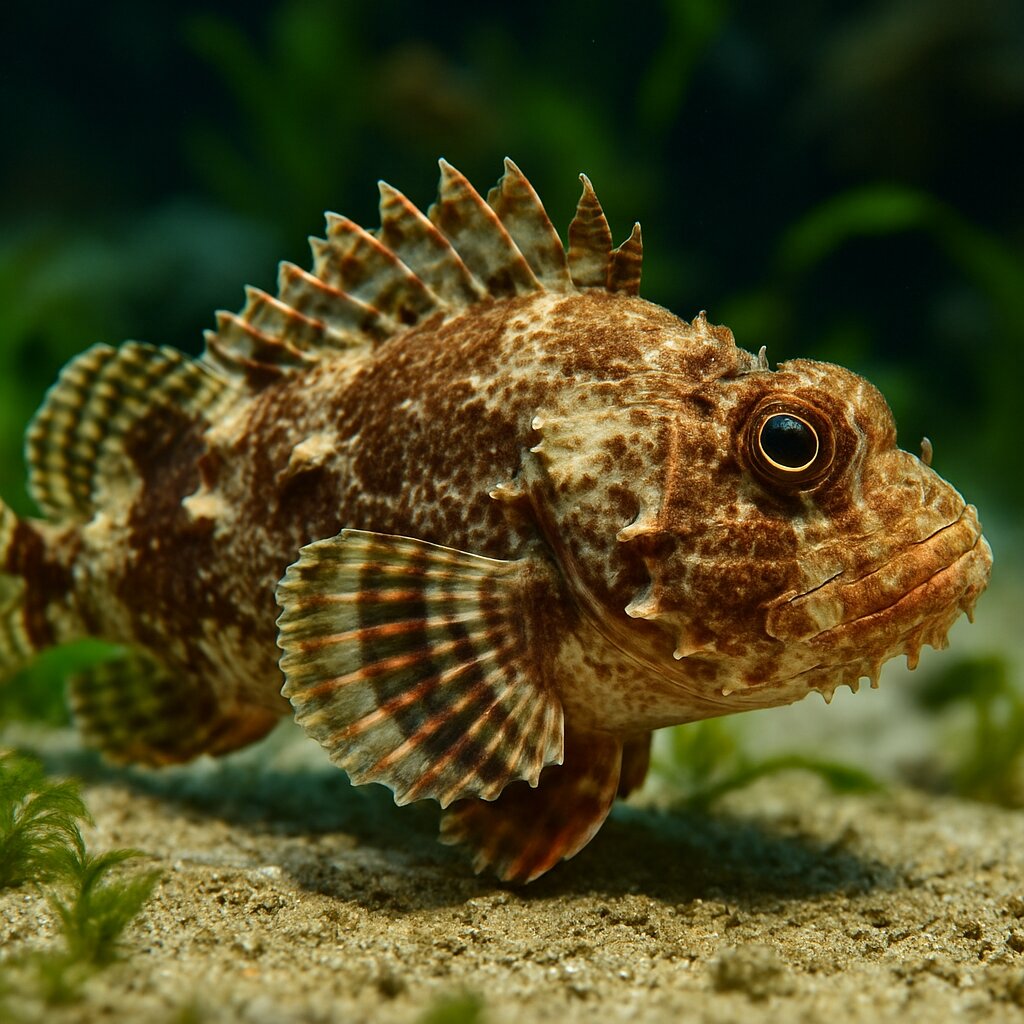
Bandfin scorpionfish
Scorpaenopsis vittapinna
Think tiny ambush predator that vanishes into rubble and coral bits, then flashes a dark band on its pelvic and anal fins when it shifts. It tops out around 3 inches, packs venomous spines, and loves to gulp unsuspecting shrimp and small fish. Super cool to watch once it settles, but it absolutely demands careful handling and smart tankmate choices.
Blackfin stargazer
Ichthyscopus nigripinnis
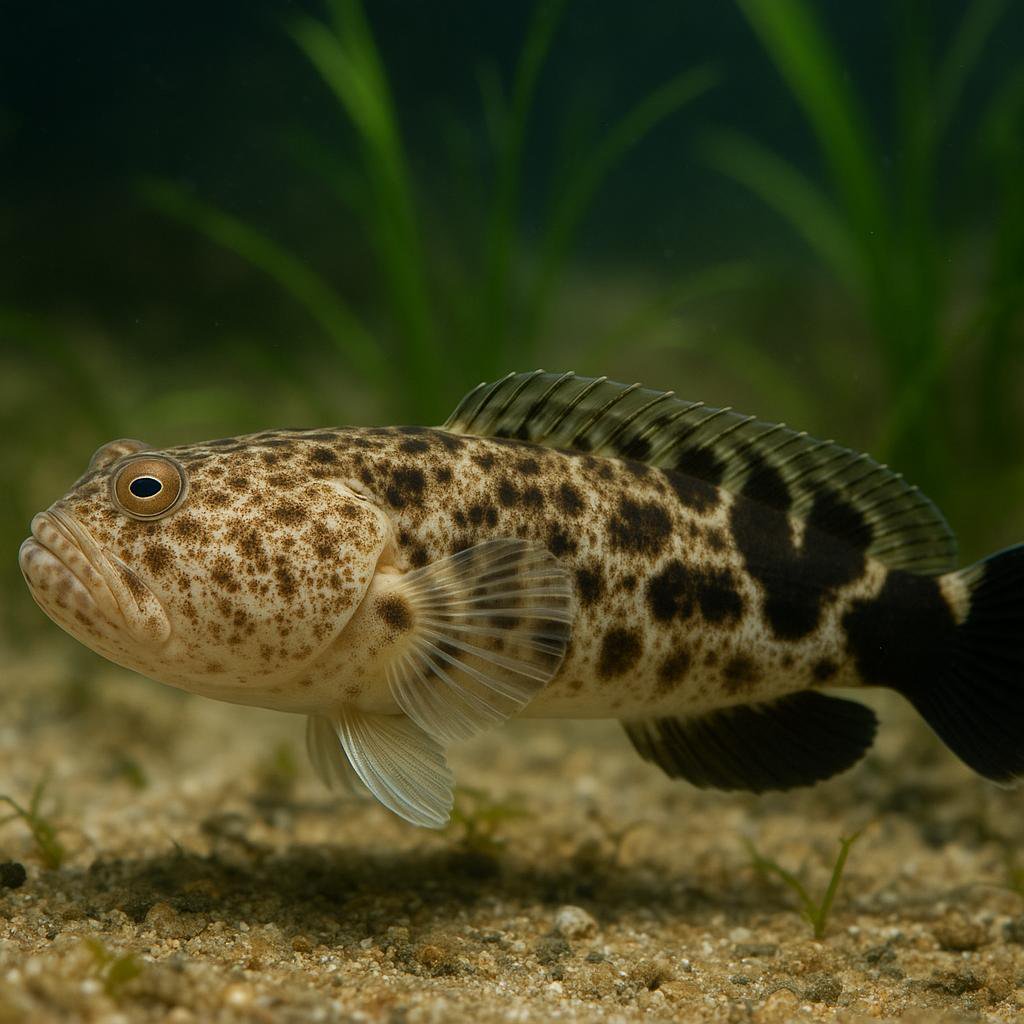
This is a little sand-sitting stargazer from Australia that likes to lie in wait with its eyes up top and nail passing prey. That black mark on the front part of the dorsal fin is basically its signature. Cool fish, but its more of a wild marine predator than something you set up in a typical home aquarium.
Brownspotted stargazer
Uranoscopus fuscomaculatus
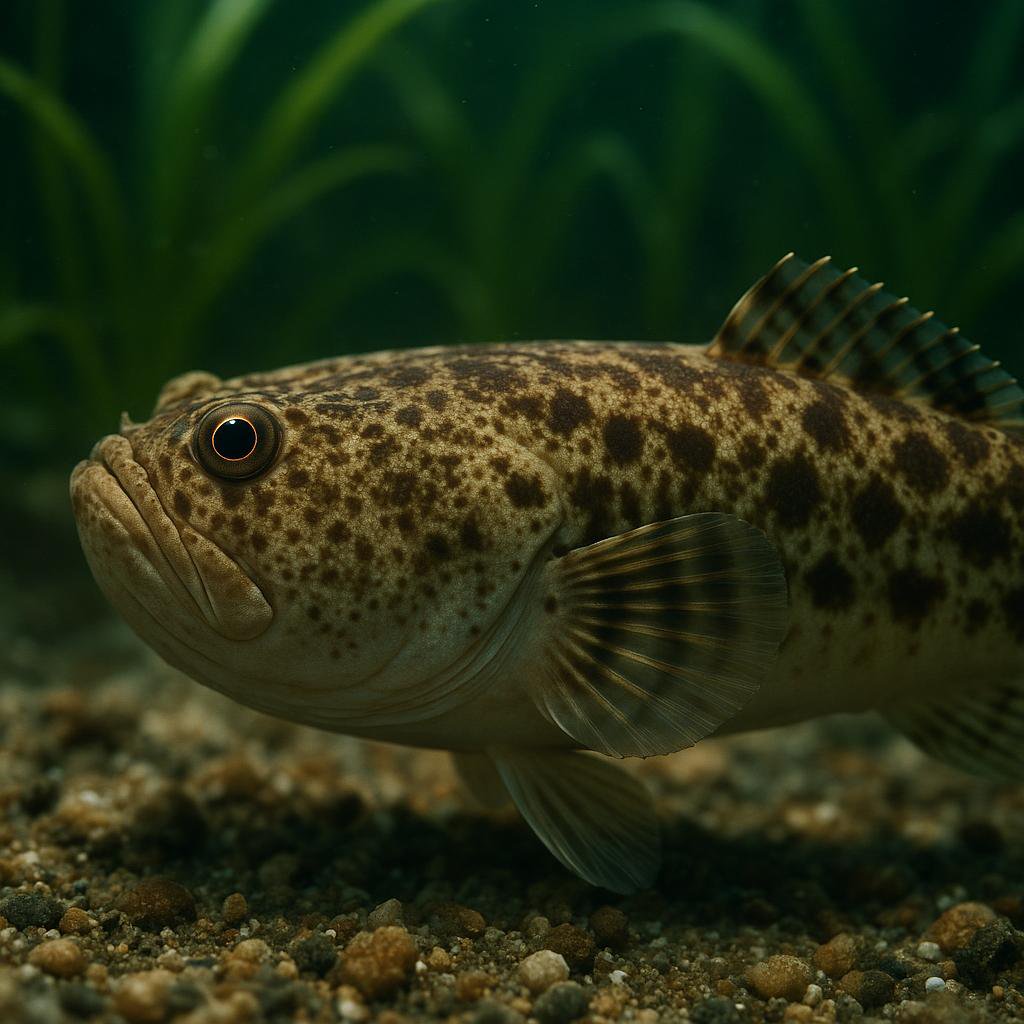
A deep demersal stargazer recorded at 366–389 m that lies buried in sand or mud to ambush prey. Distribution is Southwestern Pacific (Vanuatu and Fiji). Given its deep, cold habitat and specialized requirements, it is not a practical aquarium species.
Bullseye puffer
Sphoeroides annulatus
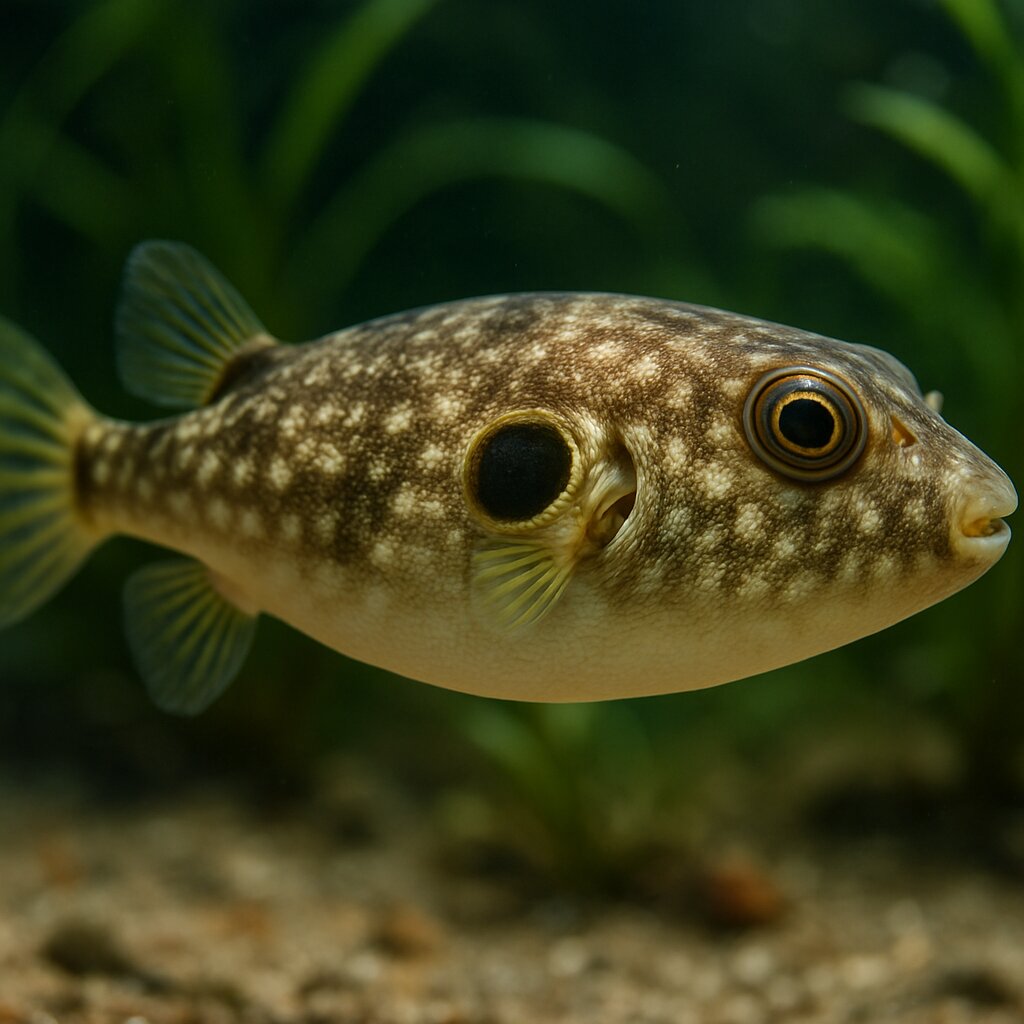
Big personality in a football-shaped body with pale rings along the back that make a bullseye pattern. This is a stout Eastern Pacific puffer that crunches snails and crabs with ease and needs true saltwater and lots of room. Super cool to watch, but it turns nippy with tankmates and grows into a serious, messy eater.
More to Explore
Discover more marine species.
Abe's eelpout
Japonolycodes abei
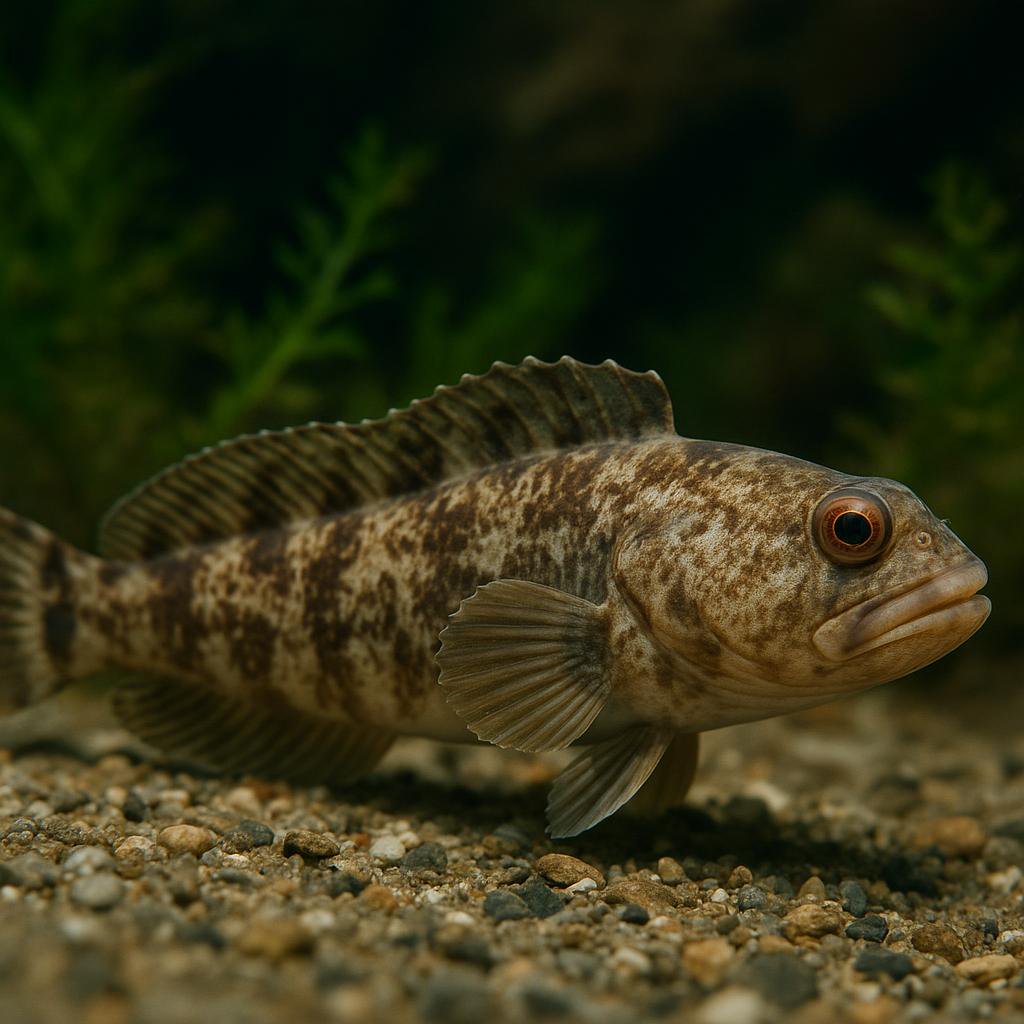
Japonolycodes abei is a temperate, deepwater demersal eelpout (family Zoarcidae) endemic to Japan (Kumano-nada Sea reported; other sources also report Sagami Bay and Tosa Bay). It is the only species in the genus Japonolycodes and occurs roughly 40-300 m depth, making it an uncommon/atypical aquarium species.
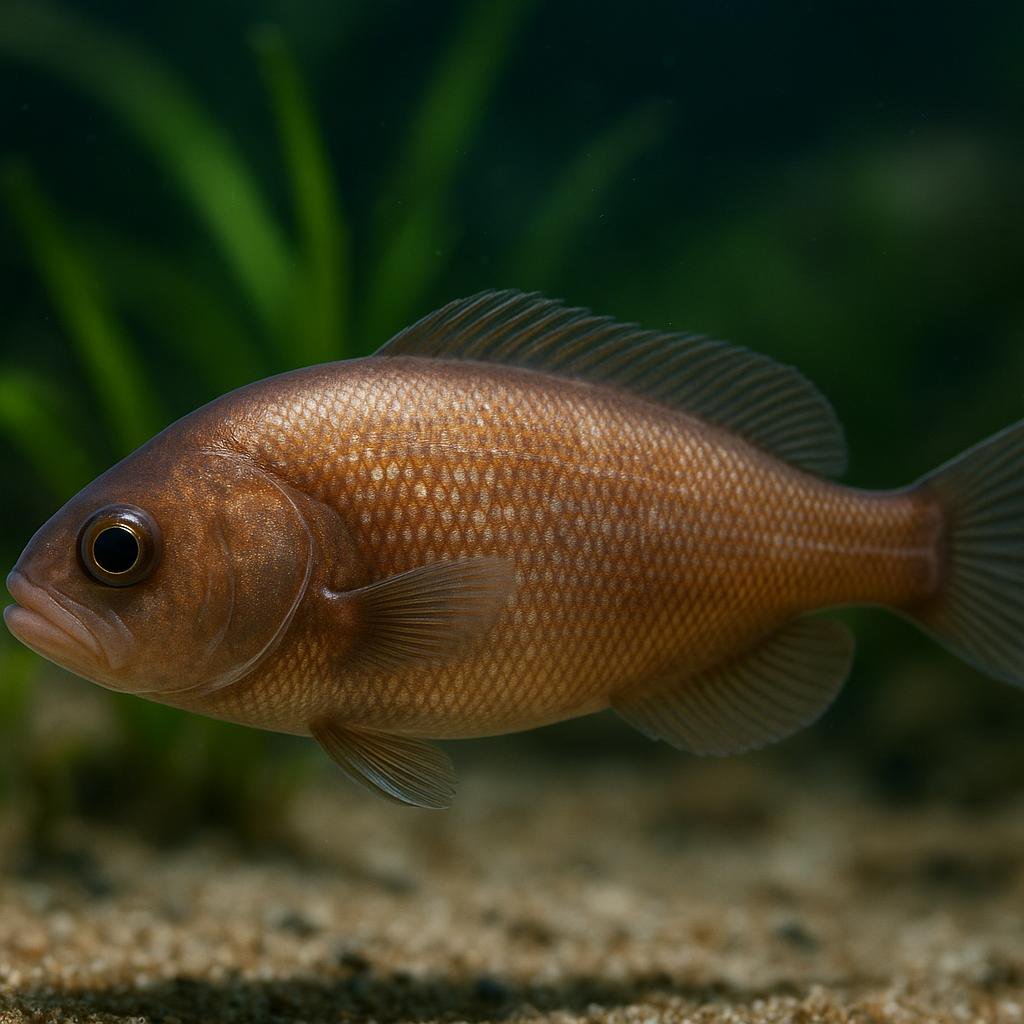
Affinis blind cusk-eel
Barathronus affinis
Barathronus affinis is a tiny, super-weird deep-sea blind cusk-eel from the western-central Indian Ocean. It is one of those gelatinous, loose-skinned brotula-type fishes that live way down in the dark and are basically never seen alive, so almost everything we know comes from preserved specimens and taxonomic work.
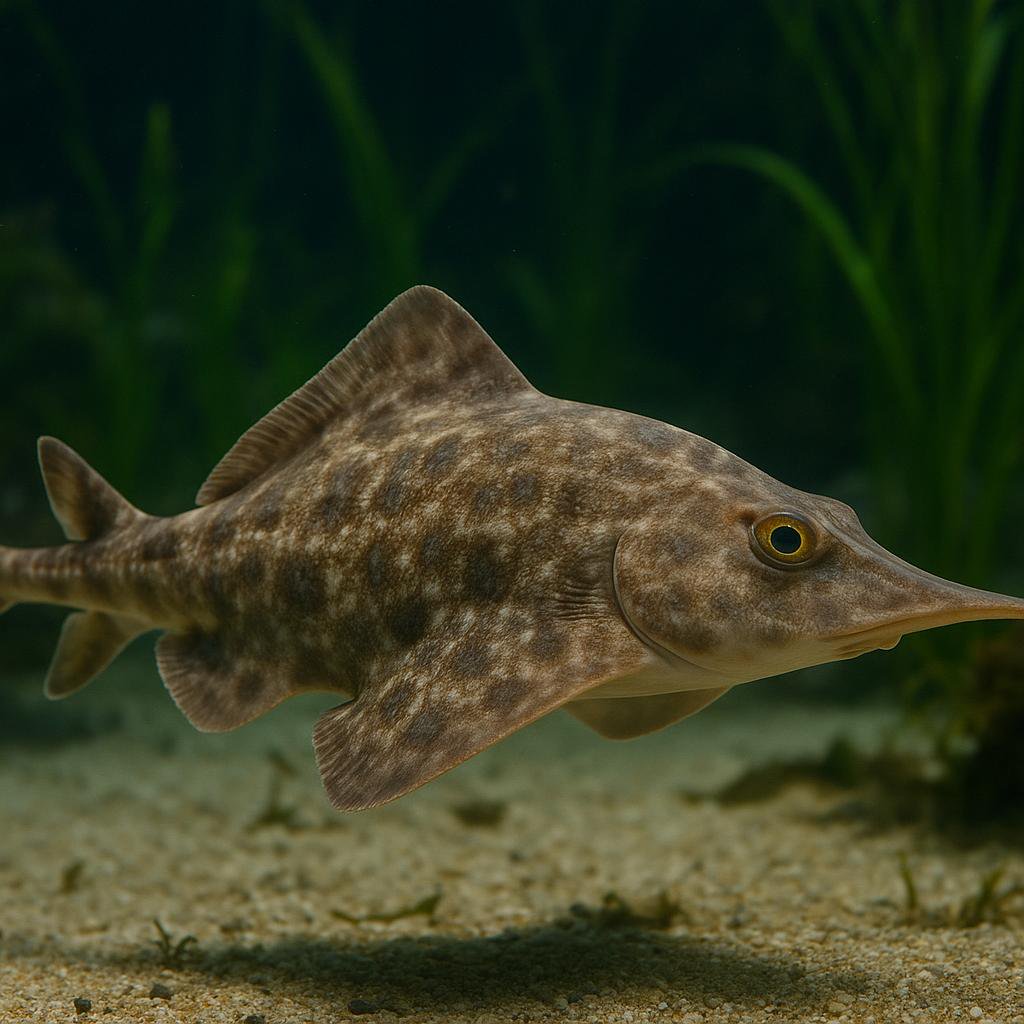
Aleutian skate
Bathyraja aleutica
This is a big, cold-water deep-slope skate from the North Pacific that cruises muddy bottoms and eats chunky benthic prey like crabs and shrimp. The really cool bit is its egg-laying skate life - it does distinct pairing (the classic skate "embrace") and drops those tough egg cases on the seafloor. Not an aquarium fish at all unless you're basically running a public-aquarium-style chilled system.
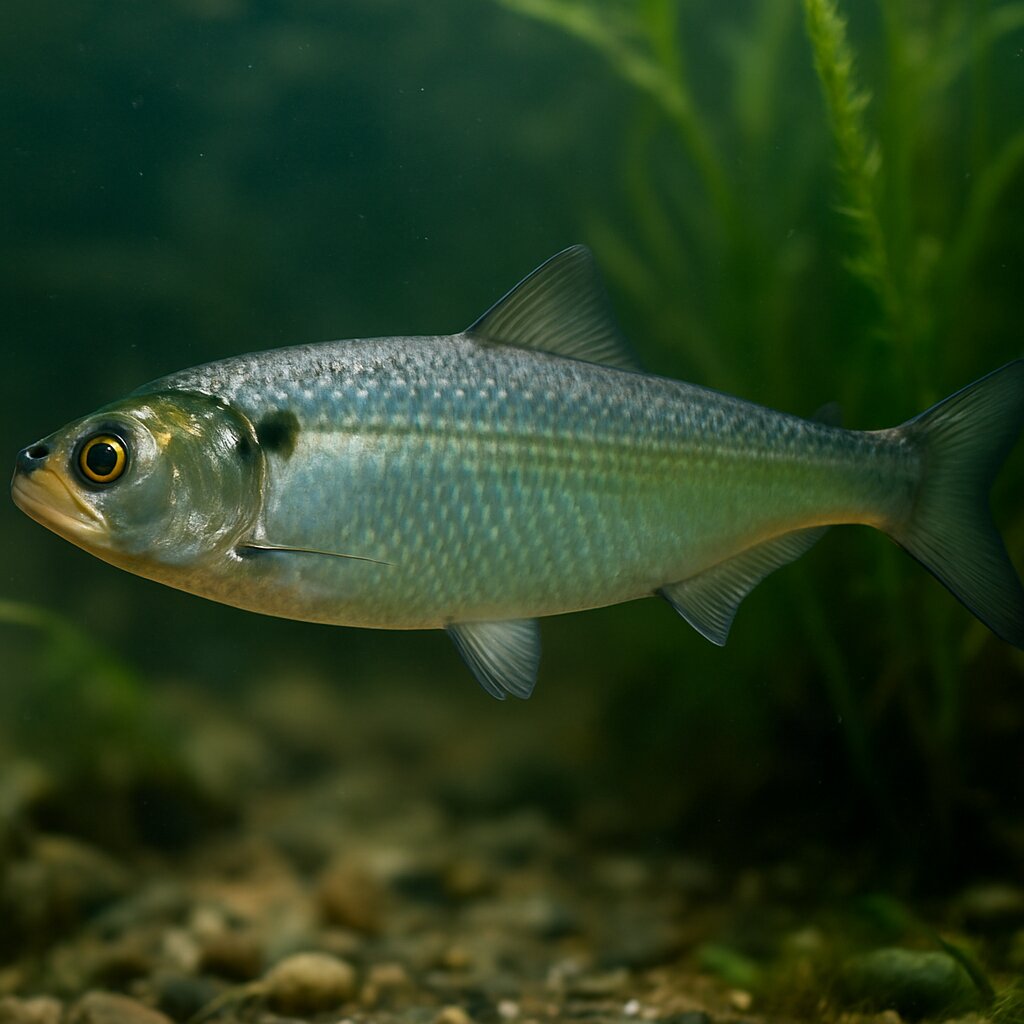
Allis shad
Alosa alosa
Gorgeous silver, fast-swimming shad that spends most of its life in the sea and then surges up big rivers in noisy, surface-spawning schools. It grows huge for a herring-type fish and needs cool, ultra-oxygenated water and tons of open space, so it is a public-aquarium species rather than a home tank fish.
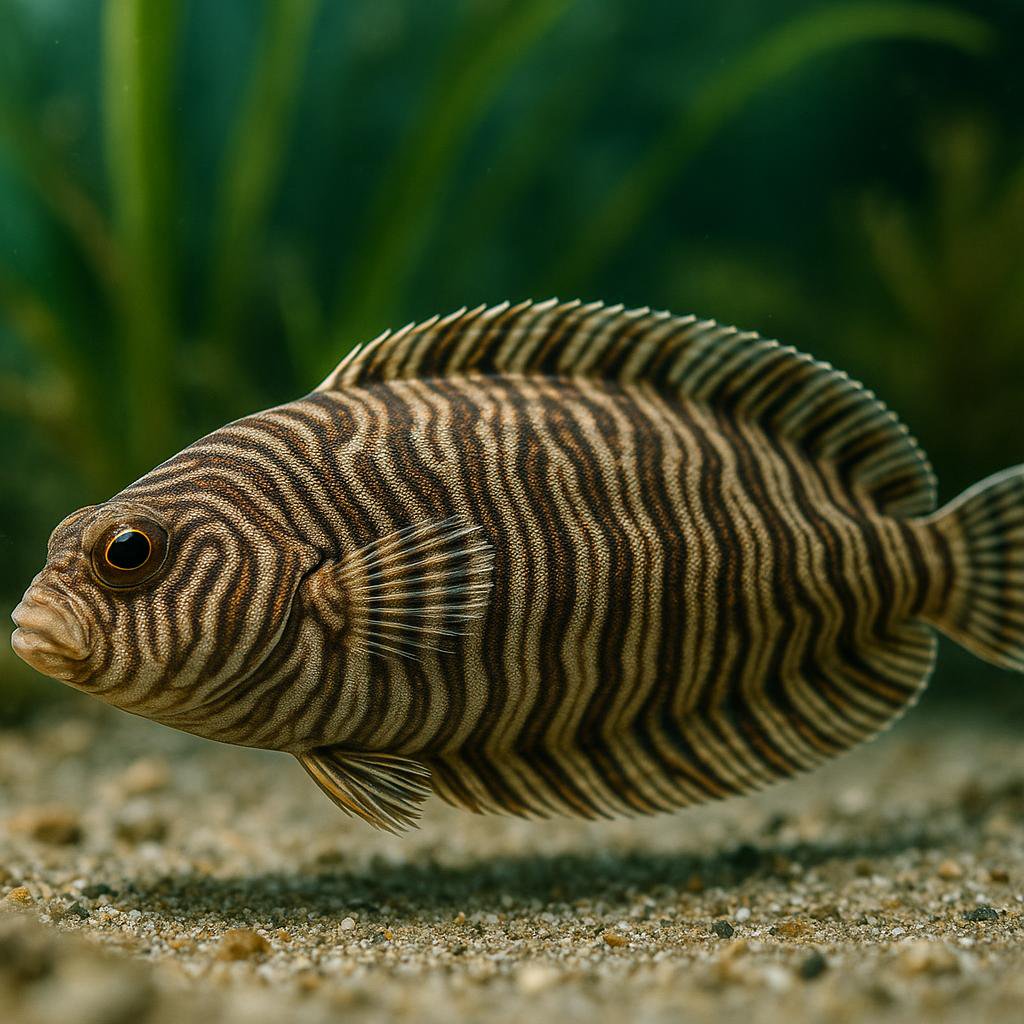
Annandale's zebra sole
Zebrias annandalei
Zebrias annandalei is a small demersal sole from coastal India that inhabits sandy or muddy bottoms and buries for camouflage. It is rarely kept in home aquaria and would require a specialized marine sand-bottom setup and appropriate feeding.
Antarctic dragonfish
Vomeridens infuscipinnis
Deep down around Antarctica, this sleek dragonfish cruises the water column like a little submarine, nearly neutrally buoyant so it can hover above the seafloor. It munches almost exclusively on Antarctic krill and lives in near-freezing water 500-800 m down, so it is a cool species to read about, not one for home tanks.
Looking for other species?