

Canarytop wrasse
Halichoeres leucoxanthus
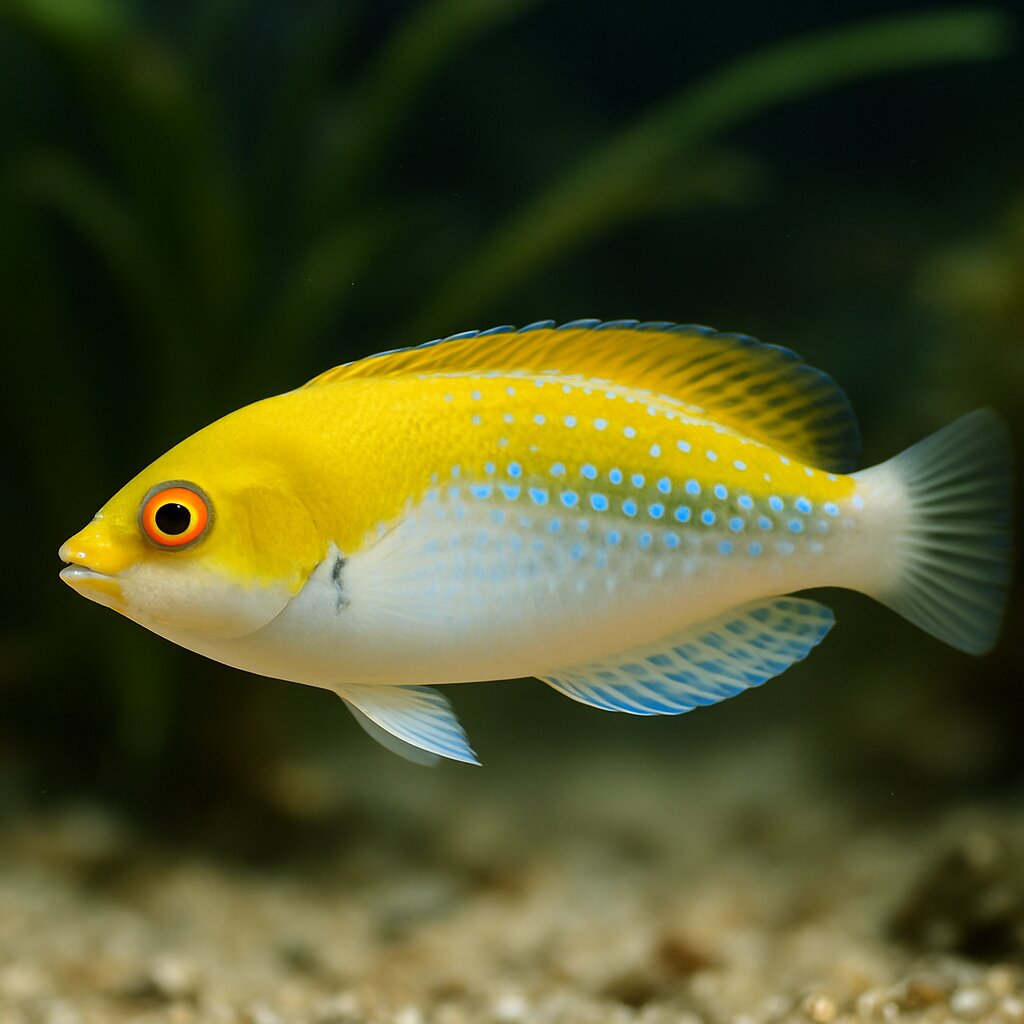
The Canarytop wrasse features a striking yellow body with bold, blue-green patterns and a distinctive elongated dorsal fin.
This page includes AI-generated images. Why am I seeing AI images?
About the Canarytop wrasse
Bright yellow up top with a clean white belly, this wrasse has that lemon-meringue vibe, and mature males show slick violet lines on the face. It sleeps buried in the sand and spends the day cruising the rockwork picking off tiny pests - super active but easygoing. Give it a secure lid because they can launch when startled.
Also known as
Quick Facts
Size
12 cm
Temperament
Peaceful
Difficulty
Beginner
Min Tank Size
50 gallons
Lifespan
5-8 years
Origin
Indian Ocean
Diet
Carnivore - frozen mysis/brine, quality pellets, chopped seafood; hunts small invertebrates on live rock
Water Parameters
23.3-26.7°C
8.1-8.4
10-18 dGH
Need a heater for this species?
This species needs 23.3-26.7°C in a 50 gallon tank. Use our heater calculator to find the right wattage.
Calculate heater sizeCare Notes
- Use a tight lid with zero gaps and give them 2-3 inches of fine sand; they dive into it at night and will jump if spooked.
- Plan on a 55+ gallon tank so they can cruise; keep rockwork stable since they peck around and can knock loose piles.
- Shoot for 1.024-1.026 SG, 75-79 F, pH 8.0-8.4, and nitrate under ~20 ppm; wrasses sulk or get sick when the numbers swing.
- Feed small meaty foods 2-3 times a day (mysis, chopped clam, calanus, quality marine pellets); new fish often take live or enriched brine first, then switch to frozen.
- Reef safe with caution: they ignore corals but will eat tiny ornamental shrimp and feather dusters; snails and hermits are usually fine, and they help with flatworms.
- Good with most peaceful to semi-assertive fish; skip bullies like sixlines, Thalassoma wrasses, and large triggers, and keep only one Halichoeres unless the tank is big.
- Quarantine if you can: they often bring flukes/ich; praziquantel works well and they handle copper if ramped slowly, but give them a sand box in QT to sleep.
- They are protogynous, so the biggest can turn male; no real home breeding reports, so just enjoy the behavior and colors.
Compatibility
Good Tankmates
- Chill reef community fish like ocellaris clowns, green chromis, and lyretail anthias - same pace, no drama
- Small gobies and blennies (watchman gobies, tailspot blennies) - they perch while the wrasse patrols
- Fairy and flasher wrasses (Cirrhilabrus, Paracheilinus) - similar vibe; add together and keep a tight lid
- Cardinals and basslets (banggai, pajama, royal gramma) - peaceful and not nippy
- Bristletooth tangs like kole or tomini - constant grazers that ignore the wrasse
- Rabbitfish/foxface or mellow dwarf angels (coral beauty, flame) - generally fine in roomy reefs
Avoid
- Pushy or territorial wrasses like sixline or fourline, or big Thalassoma types - they will dogpile a canarytop
- Mean nippers and bullies: big damsels, dottybacks, or triggers - too scrappy
- Predators that can swallow them: lions, groupers, large hawkfish - wrasse becomes lunch
- Ultra timid slow feeders like mandarins or pipefish in small tanks - the wrasse outcompetes and stresses them
Where they come from
Canarytop wrasses are an Indian Ocean fish, most often seen around the Maldives, Sri Lanka, and nearby reefs. They spend their days combing shallow reef flats and rubble zones for tiny crustaceans, then bury themselves in sand to sleep. That burying habit drives a lot of how you set up the tank.
Setting up their tank
Give them room to roam. A single adult is happy in a 55 gallon, and 75+ gallons feels better if you want more wrasses or busier fish. They are jumpers, so a tight lid is non-negotiable.
- Sand bed: 2-3 inches of fine aragonite (sugar to 1 mm grain). They dive in fast, so skip sharp or chunky sand.
- Rockwork: lots of nooks and overhangs to hunt through. Put heavier rocks on the glass, not on the sand, so burying does not shift your scape.
- Flow: moderate with some brisk areas to push food around. They like to surf the current while hunting.
- Lighting: whatever your reef needs. The wrasse does not care much.
- Cover: tight-fitting mesh or lid over every gap. Check around plumbing and light mounts.
Intro trick: dim the lights and use an acclimation box for a day if you have territorial fish. Release near the sand so it can dive if spooked.
- Temp: 75-79 F (24-26 C)
- Salinity: 1.025-1.026
- pH: 8.0-8.4
- Zero ammonia and nitrite, nitrate under 20 ppm
- Stable parameters beat perfect numbers
Leave the sand out and this fish will stay stressed and jumpy. They need it to sleep and feel safe.
What to feed them
They are busy carnivores. Mine spend all day picking pods and tiny worms from the rocks, but that is not enough in a glass box. Think small, meaty foods and frequent meals.
- Frozen mysis, enriched brine, chopped clam or shrimp
- Finely chopped seafood mix or quality reef blends
- Small sinking pellets the fish will actually take (mix with frozen to train them)
- Live blackworms or live baby brine can kick-start eating in new arrivals
Feed 2-3 small meals daily. They have fast metabolisms and do better with multiple feedings than one big dump. If it spits pellets, keep mixing a few with frozen for a week and it usually clicks.
They will reduce populations of tiny snails, flatworms, and pods. Helpful for pests, but do not count on them as the only solution.
How they behave and who they get along with
Active, curious, and generally easygoing. They work well in mixed reefs and fish-only tanks. They will not bother corals.
- Great with: tangs, clowns, dwarf angels, larger gobies and blennies, fairy and flasher wrasses, chromis, anthias
- Usually fine with: other Halichoeres wrasses in larger tanks with staggered sizes and careful introductions
- Use caution with: very small ornamental shrimp, tiny gobies, feather dusters, and small snails. They are hunters by nature.
They jump. Close every gap. I lost my first one to a half-inch slot around cables. Learned the hard way.
If a new fish is very small or timid, add the wrasse later or use an acclimation box. They are not bullies, but they are confident and can pester new, tiny tankmates during the first day or two.
Breeding tips
Halichoeres wrasses are protogynous. They start female, and the dominant one can turn male. In the wild they spawn at dusk in the water column. In home aquariums the eggs and larvae drift and need specialized rearing, so you almost never see success.
- If you keep a small group in a large tank, expect one to become male over time.
- Dusk lighting ramp-down helps you watch courtship, but actual rearing is not practical at home.
- You cannot reliably buy a male on request. Males can fade back if they lose dominance.
Common problems to watch for
- Going missing: new arrivals may stay buried for a day or two. Leave the lights lower and keep feeding the tank. They pop back out once settled.
- Refusing food: try live blackworms, live baby brine, or fish roe, then transition to frozen and pellets.
- Internal parasites and flukes: skinny despite eating or flashing on sand is a clue. Praziquantel works well. I treat in quarantine.
- Copper sensitivity varies by wrasse. If you use copper in QT, raise the level slowly and give them a sand box to sleep in.
- Scraped mouth: happens with coarse sand. Fine sand prevents this.
- Cleanup crew losses: tiny shrimp, micro hermits, and small snails can be snacks. Larger cleaners and trochus usually do fine.
- Jumping during lights-out or spooks: tight lid and a calm dusk ramp prevent launch attempts.
Quarantine setup that works for wrasses: a bare tank with a plastic food container filled with fine sand as a sleep box, tight lid, some PVC for cover, and praziquantel during observation. Feed small amounts often so they do not fade.
Similar Species
Other marine peaceful species you might be interested in.

Abe's eelpout
Japonolycodes abei
Japonolycodes abei is a temperate, deepwater demersal eelpout (family Zoarcidae) endemic to Japan (Kumano-nada Sea reported; other sources also report Sagami Bay and Tosa Bay). It is the only species in the genus Japonolycodes and occurs roughly 40-300 m depth, making it an uncommon/atypical aquarium species.

Affinis blind cusk-eel
Barathronus affinis
Barathronus affinis is a tiny, super-weird deep-sea blind cusk-eel from the western-central Indian Ocean. It is one of those gelatinous, loose-skinned brotula-type fishes that live way down in the dark and are basically never seen alive, so almost everything we know comes from preserved specimens and taxonomic work.

Allis shad
Alosa alosa
Gorgeous silver, fast-swimming shad that spends most of its life in the sea and then surges up big rivers in noisy, surface-spawning schools. It grows huge for a herring-type fish and needs cool, ultra-oxygenated water and tons of open space, so it is a public-aquarium species rather than a home tank fish.

Annandale's zebra sole
Zebrias annandalei
Zebrias annandalei is a small demersal sole from coastal India that inhabits sandy or muddy bottoms and buries for camouflage. It is rarely kept in home aquaria and would require a specialized marine sand-bottom setup and appropriate feeding.
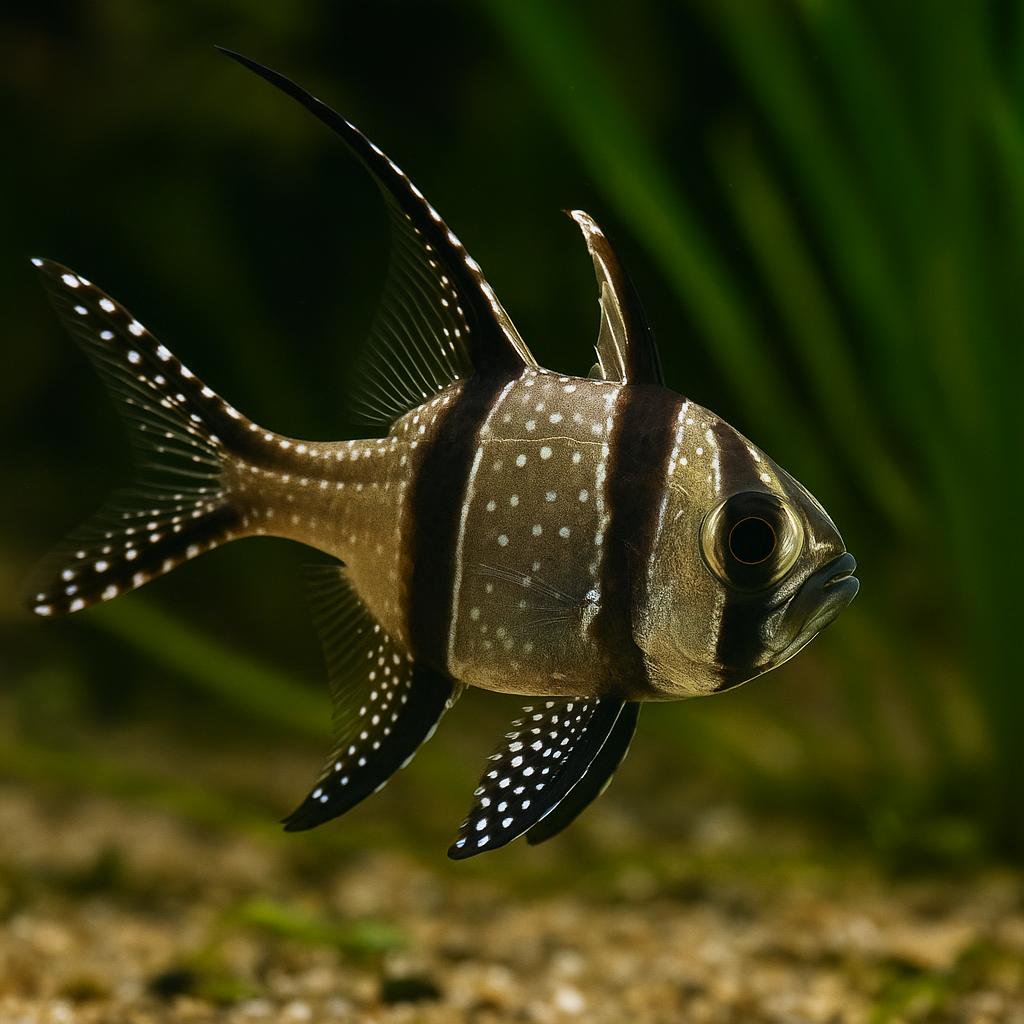
Banggai Cardinalfish
Pterapogon kauderni
Banggai cardinals just sort of hover like little underwater satellites, and the bold black bars with those long, polka-dotted fins look unreal under reef lighting. They're super chill most of the time, but once a pair forms you'll see real "fish drama," and the male will even mouthbrood the babies like a champ.
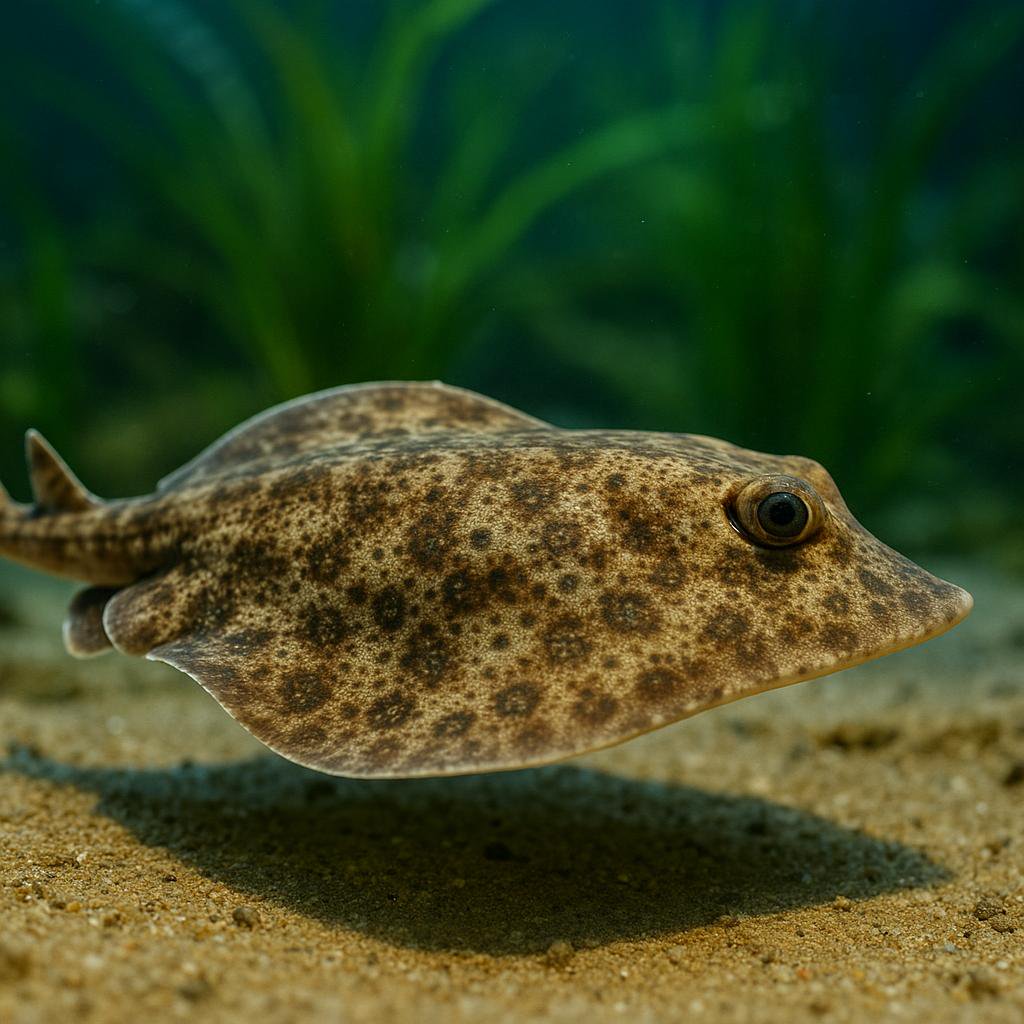
Barbedwire-tailed skate
Notoraja martinezi
Notoraja martinezi is a deepwater skate from the eastern Pacific (Costa Rica down to Ecuador) that lives way down on soft bottoms. The tail is the giveaway - it is lined with strong, hooked thorns that really do look like barbed wire. This is absolutely not an aquarium fish; it is a cold, high-pressure deep-sea animal with basically no practical home care info because it is not kept in the hobby.
More to Explore
Discover more marine species.

African red snapper
Lutjanus agennes
This is a true snapper from West Africa - a big, fast-growing predator that goes from coastal reefs to brackish lagoons and estuaries (especially as a juvenile). Super cool fish in the wild, but it gets absolutely huge and will eat smaller tankmates once it has the mouth for it, so its really more of a public-aquarium scale animal than a home-aquarium fish.

Aleutian skate
Bathyraja aleutica
This is a big, cold-water deep-slope skate from the North Pacific that cruises muddy bottoms and eats chunky benthic prey like crabs and shrimp. The really cool bit is its egg-laying skate life - it does distinct pairing (the classic skate "embrace") and drops those tough egg cases on the seafloor. Not an aquarium fish at all unless you're basically running a public-aquarium-style chilled system.

Antarctic dragonfish
Vomeridens infuscipinnis
Deep down around Antarctica, this sleek dragonfish cruises the water column like a little submarine, nearly neutrally buoyant so it can hover above the seafloor. It munches almost exclusively on Antarctic krill and lives in near-freezing water 500-800 m down, so it is a cool species to read about, not one for home tanks.
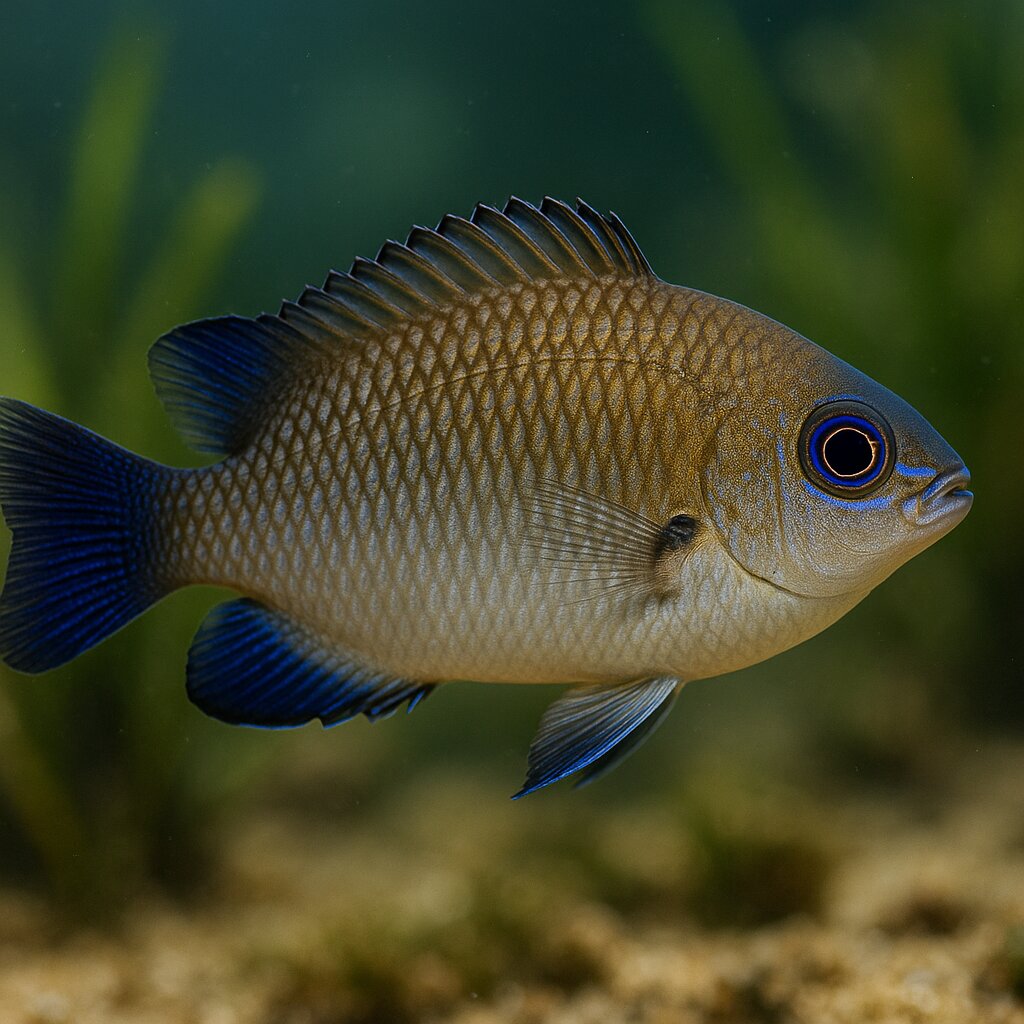
Arabian demoiselle
Neopomacentrus sindensis
A small lyretail damsel from the Persian Gulf and Arabian Sea, it hangs in loose groups around coral heads, rocks, and even pier pilings picking zooplankton from the flow. Think classic damsel toughness with a slightly milder attitude than the real bruisers, plus subtle yellow tail accents. Males clean a patch, get a mate to lay eggs there, and then stand guard fanning the clutch.

Arabian spiny eel
Notacanthus indicus
Notacanthus indicus is a deep-sea spiny eel (family Notacanthidae; not a true eel) known from the Arabian Sea on the continental slope at roughly ~960–1,046 m depth, with reported maximum length around 20 cm TL; it is a deep-water bycatch species and not established in the aquarium trade.

Arctic rockling
Gaidropsarus argentatus
This is a deepwater North Atlantic rockling (a cod relative) that hangs out on soft bottoms way down the slope. It is a cold-water, bottom-hugging predator that snoots around for crustaceans and will also take small fish when it gets the chance.
Looking for other species?