

Silver-cheeked toadfish
Lagocephalus sceleratus
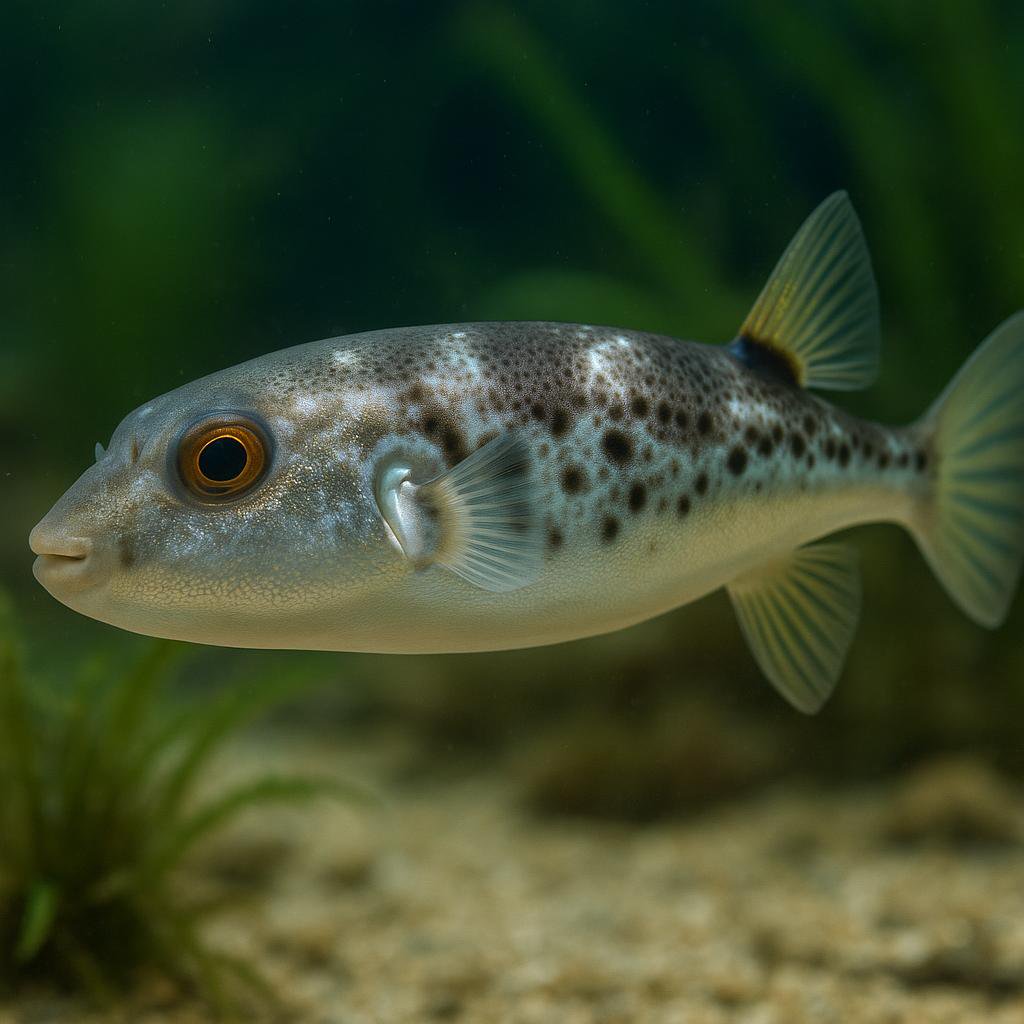
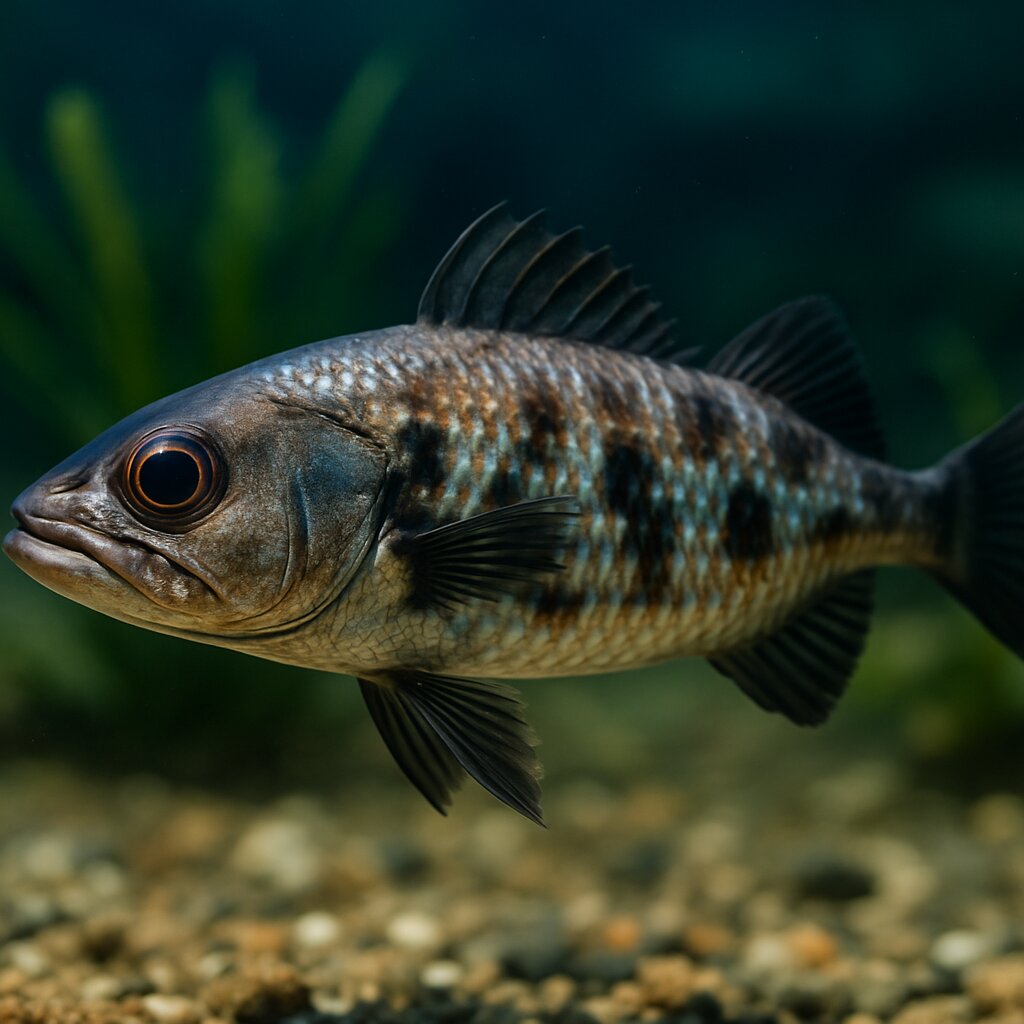
The Silver-cheeked toadfish features a distinctive metallic blue-grey body and prominent, spiny pectoral fins, showcasing bright yellow-orange on its underside.
This page includes AI-generated images. Why am I seeing AI images?
About the Silver-cheeked toadfish
This is a big, open-water puffer from the Indo-West Pacific that has also invaded parts of the Mediterranean. It gets huge for a puffer and is seriously toxic (tetrodotoxin), so it is not something you want in a home aquarium unless you are set up like a full-on public-aquarium predator system.
Also known as
Quick Facts
Size
110 cm
Temperament
Aggressive
Difficulty
Expert
Min Tank Size
300 gallons
Lifespan
3-7 years
Origin
Indo-West Pacific (including Red Sea); introduced in the Mediterranean
Diet
Carnivore - benthic invertebrates; meaty marine foods
Water Parameters
22-29°C
8-8.4
8-12 dGH
Need a heater for this species?
This species needs 22-29°C in a 300 gallon tank. Use our heater calculator to find the right wattage.
Calculate heater sizeCare Notes
- Plan for a monster: adults get huge and messy, so think public-aquarium scale (very large tank, wide footprint) with a tight lid - they can rocket upward when spooked.
- They are puffers and they bite like bolt cutters, so use thick acrylic or sturdy glass, protect heaters/cords in PVC, and skip delicate gear they can shred.
- Keep marine salinity stable around 1.023-1.026 and hold temp roughly 24-27 C (75-81 F); they sulk fast if salinity swings, so top off with fresh water daily or run an ATO.
- Feed meaty marine foods (shrimp, squid, clam, fish fillet) and mix in hard-shelled stuff (clam-on-half-shell, crab legs) a couple times a week to wear down the beak.
- Do not keep with small fish, slow fish, or anything you like - they are nippy, predatory, and will sample tankmates; if you try companions, only consider very large, tough, fast species and expect losses.
- Run oversized filtration and aggressive export (big skimmer, lots of biological media, strong flow); they produce loads of waste and ammonia spikes hit hard.
- Watch for beak overgrowth (they stop eating or can not bite) and for skin/fin damage from smashing into decor when startled; keep aquascape open with rounded rockwork.
- Breeding is basically a non-starter in home tanks - they are pelagic spawners in the wild and you will not get a stable pair setup without ridiculous space.
Compatibility
Good Tankmates
- Big, tough morays (snowflake, tessellated, etc.) - they hold their own, eat the same meaty foods, and are not the type to get bullied or nipped to death
- Large groupers (Nassau, miniatus, etc.) - similar attitude and size, and they can take the toadfish's pushy feeding behavior
- Lionfish and other chunky scorpionfish - spiny, not easy to harass, and they are usually too heavy-bodied for the toadfish to casually mouth
- Big triggerfish (queen, titan, etc.) - not a guarantee, but in a big system they are often the kind of in-your-face fish that keeps a puffer/toadfish from running the whole tank
- Large puffers/porcupinefish - if you want a "predator tank" vibe, these can work when everyone is similar size and you feed heavy so nobody gets snacky
- Hardy, larger tangs (adult sailfin, Naso, big yellow tangs) - can work if they are already established and not tiny; they are fast, thick, and usually not worth the trouble to bite
Avoid
- Small fish that fit in its mouth (clownfish, chromis, damsels, gobies, wrasses on the small side) - they turn into "live food" sooner or later
- Slow floaty fish with long fins (banners, butterflies with streamers, some angels) - they get fin-nipped and stressed, especially at feeding time
- Crustaceans and most "clean-up crew" (shrimp, crabs, small snails) - expect them to be hunted or crushed, not "helpers"
- Other sharp-tempered bitey fish in tight quarters (small triggers, aggressive damsels, dottybacks) - they start fights and the toadfish finishes them, or everyone ends up shredded
Where they come from
Silver-cheeked toadfish (Lagocephalus sceleratus) are Indo-Pacific puffers that have spread hard into the Mediterranean via the Suez Canal. They're open-water rovers that cruise reefs, sand flats, and drop-offs looking for crunchy food. In the wild they get big, bold, and opportunistic, which pretty much sums up what they'll do in your fish room too.
This species is highly toxic (tetrodotoxin) and not a casual "cool puffer". Never handle it with bare hands, never attempt to eat it, and be extra careful with kids/pets around buckets, nets, and any waste water.
Setting up their tank
I'll be blunt: most home aquariums are the wrong tool for this fish long-term. They grow large, they move a lot, and they have the jaw power to rearrange your plans in one bite. If you're still set on keeping one, think more like "public-aquarium-style predator system" than a reef tank.
- Tank size: think several hundred gallons minimum for an adult. Bigger is not a luxury here - it is the difference between a manageable fish and a stressed missile.
- Filtration: heavy skimmer, oversized mechanical filtration, and room for frequent water changes. They are messy eaters and put out serious waste.
- Flow and oxygen: strong circulation and lots of surface agitation. They handle current fine and it helps keep water quality stable.
- Aquascape: keep it simple. Open swimming space with a few big, stable structures. Avoid delicate rock stacks - they will bump and bite.
- Substrate: optional. Bare bottom is your friend for cleaning. If you do sand, go coarse and be ready to vacuum it often.
- Lid: tight-fitting and heavy. Puffers can jump, and this one has the muscle to push lids around.
Use bite-proof gear. Thick gloves, sturdy nets, and ideally a hard container for transfers. I would not trust a standard net alone with a fish that can chew through things.
I like to run a big prefilter sponge on the intake and clean it constantly. It catches the chunks they spit out. If you let that stuff rot in the system, the tank will smell like regret fast.
What to feed them
They are built to crush. The goal is meaty foods with enough hard stuff to wear the teeth down, without turning the tank into a nitrate factory. Expect them to beg like a dog and act starving even when they're not.
- Staples: shrimp (shell-on when possible), clams, mussels, crab pieces, squid, marine fish flesh in rotation.
- For teeth: whole shellfish (clam/mussel on the half shell), small crabs, shrimp with shell. This helps slow down beak overgrowth.
- Occasional: quality carnivore pellets for big marine predators (some individuals take them, some never do).
- Avoid: freshwater feeder fish, fatty oily scraps, and anything questionable from the bait shop unless you trust the source.
Feed smaller portions more often rather than huge dumps. They shred food and spit bits everywhere. Two controlled feedings beats one "food explosion" every time.
Vitamin-soak isn't a bad habit if your diet leans heavy on frozen. Also, keep an eye on tooth growth. If you stop offering hard foods, the beak can overgrow and then you're looking at sedation and trimming, which is not a fun DIY project with this species.
How they behave and who they get along with
They're bold, smart, and they test everything with their mouth. Some individuals act almost "curious" and calm, right up until they decide a heater cord or a tankmate looks chewable. I treat them as a single-specimen fish.
- Temperament: opportunistic predator, high bite risk.
- Reef safe: no. They will eat crustaceans, snails, urchins, and sample corals while hunting.
- Tankmates: generally a bad idea. Anything smaller will be eaten, anything similar size can be harassed or bitten, and slow fish get their fins clipped.
- Best "tankmate": none. If you must, only consider very large, fast, tough fish in an enormous system, and accept that it can still go sideways.
Assume it will bite during maintenance. Plan your hands-out workflow: use feeding tongs, use tools, and move slowly. One bad bite can mean stitches.
They also get bored. In big systems I've had luck giving them sturdy objects to investigate (large smooth PVC pieces, big shells). It doesn't tame them, but it can cut down on them obsessing over plumbing and cords.
Breeding tips
Realistically, breeding in home aquariums is not a common or practical goal. They are pelagic spawners in the wild, with eggs and larvae that need specialized rearing setups and live foods. On top of that, sexing adults is not straightforward, and keeping a compatible pair without injuries is its own challenge.
If you're thinking breeding project, pick a puffer species with established captive breeding history. This one is better treated as a display predator, and even then only in a very large, dedicated setup.
Common problems to watch for
- Tooth overgrowth: happens if you feed only soft foods. Provide shell-on foods and watch their mouth shape over time.
- Water quality crashes: they are messy and big. Rising nitrate, oily surface film, and detritus buildup show up fast if maintenance slips.
- Ich and marine parasites: they can get the usual saltwater stuff. Quarantine is worth the effort because treating a giant puffer in a display can be a nightmare.
- Bite damage and self-injury: they can smash into decor when startled and can injure tankmates (or themselves) in tight spaces.
- Equipment chewing: cords, airline tubing, and even silicone edges can get tested. Protect or route anything soft out of reach.
- Puffing events: stress can trigger inflation. Avoid chasing with nets. Use containers for transfers and keep handling to a minimum.
Never force air exposure if the fish puffs, and never try to "make it deflate" by pressing or handling. If it inflates with air and can't right itself, keep the lights low, keep the water oxygenated, and give it time in calm conditions. Prevention is the real fix: reduce stress and avoid net-chasing.
If you take anything from this: give it huge water volume, feed like a predator keeper (controlled, not sloppy), and treat it like a fish that can hurt you and anything else in the tank. They're impressive, but they demand respect every single time you open the lid.
Similar Species
Other marine aggressive species you might be interested in.
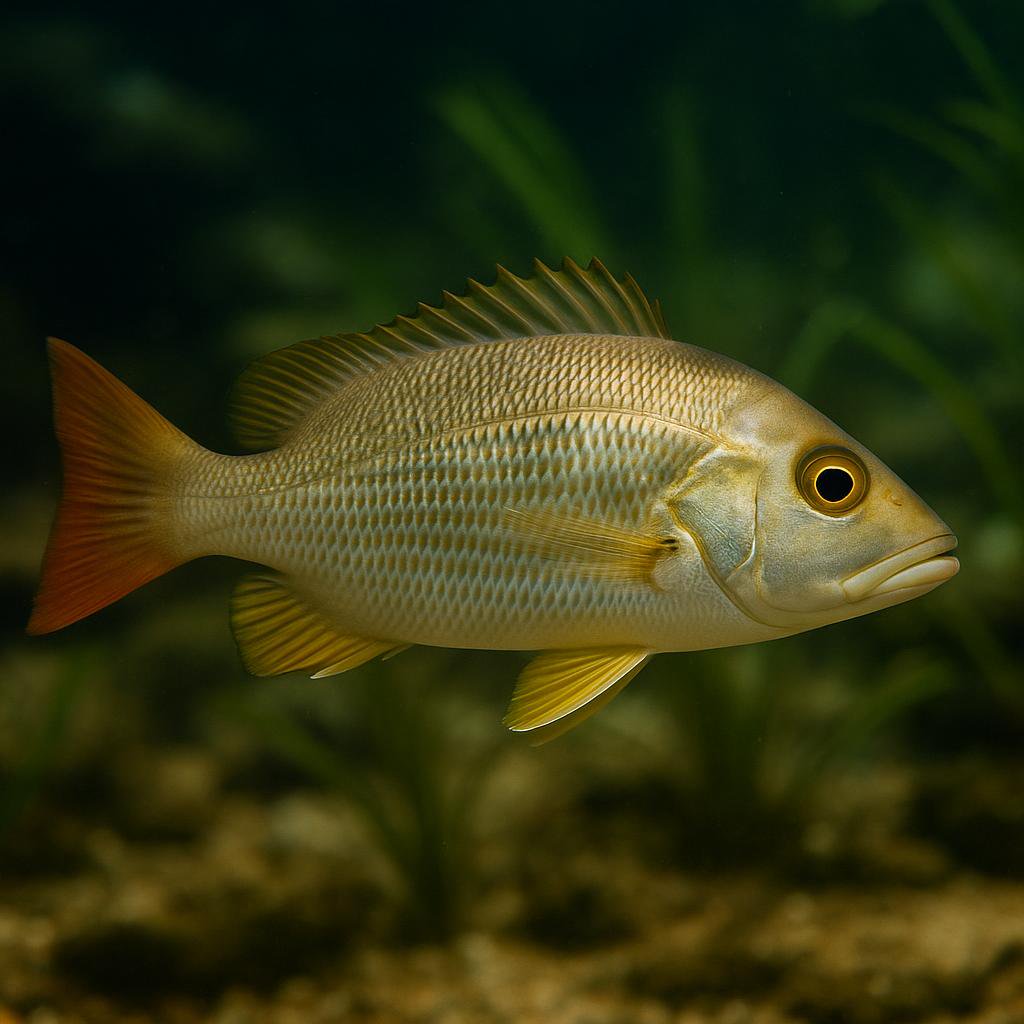
African red snapper
Lutjanus agennes
This is a true snapper from West Africa - a big, fast-growing predator that goes from coastal reefs to brackish lagoons and estuaries (especially as a juvenile). Super cool fish in the wild, but it gets absolutely huge and will eat smaller tankmates once it has the mouth for it, so its really more of a public-aquarium scale animal than a home-aquarium fish.
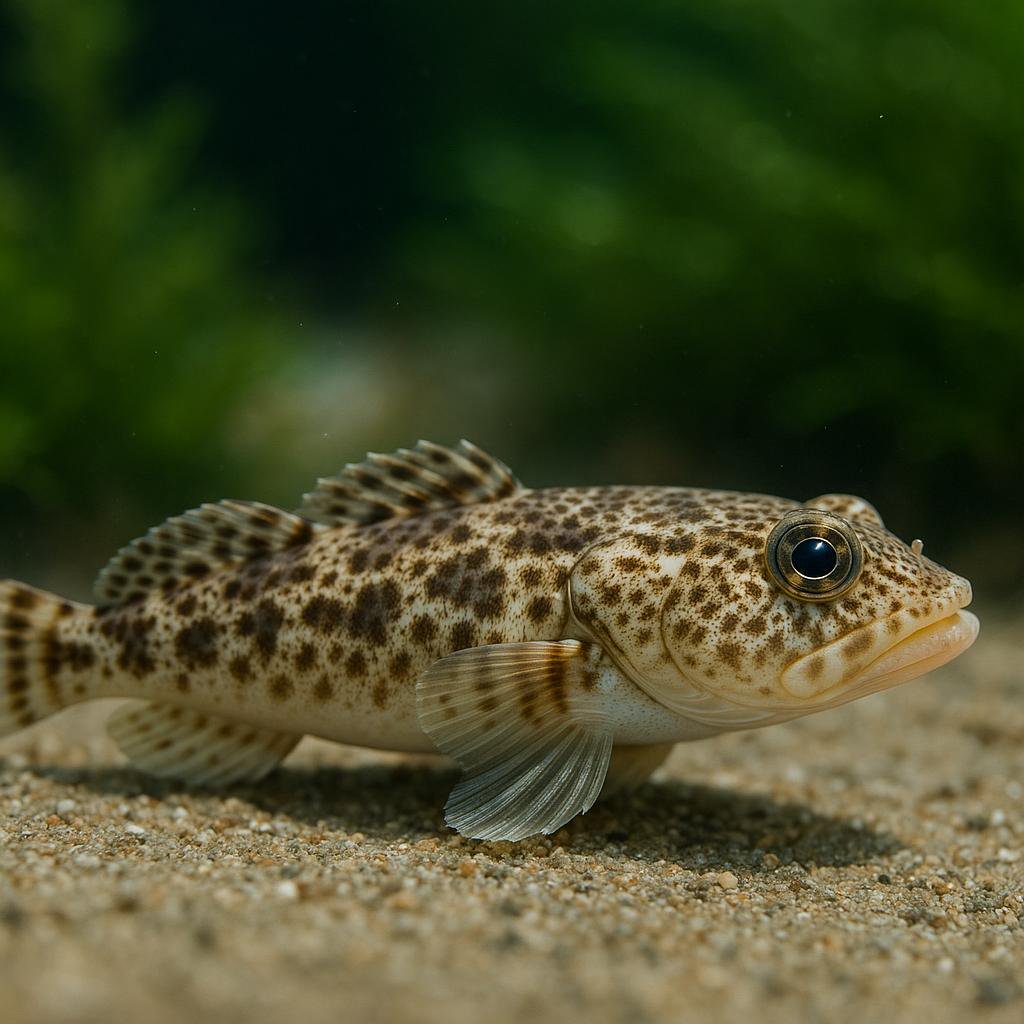
Banded stargazer
Kathetostoma binigrasella
This is a New Zealand stargazer that lives half-buried in sand or mud with its eyes pointed up, waiting to rocket upward and nail passing prey. It has those neat dark saddle-bands across the back (especially as a juvenile), and like other stargazers it is venomous with spines near the gill cover/pectoral area - definitely a look-dont-touch fish.
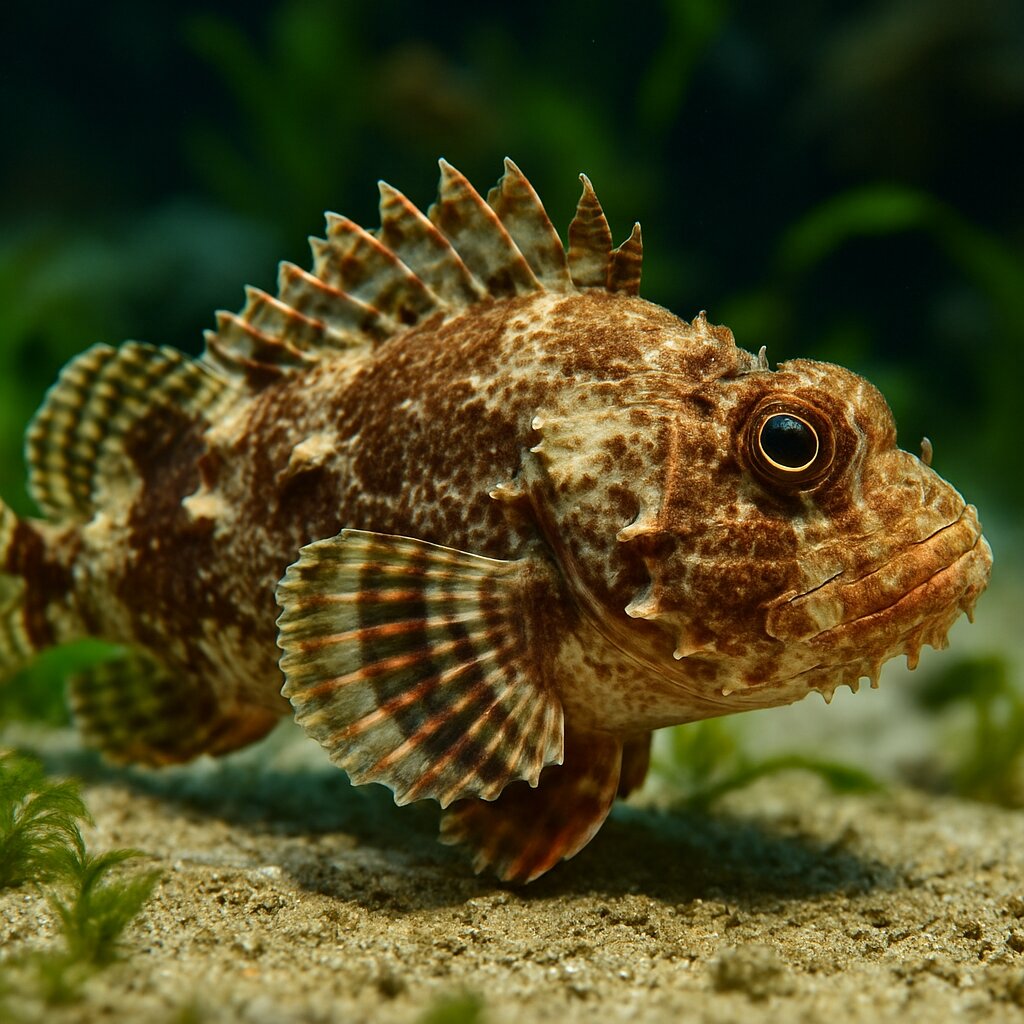
Bandfin scorpionfish
Scorpaenopsis vittapinna
Think tiny ambush predator that vanishes into rubble and coral bits, then flashes a dark band on its pelvic and anal fins when it shifts. It tops out around 3 inches, packs venomous spines, and loves to gulp unsuspecting shrimp and small fish. Super cool to watch once it settles, but it absolutely demands careful handling and smart tankmate choices.
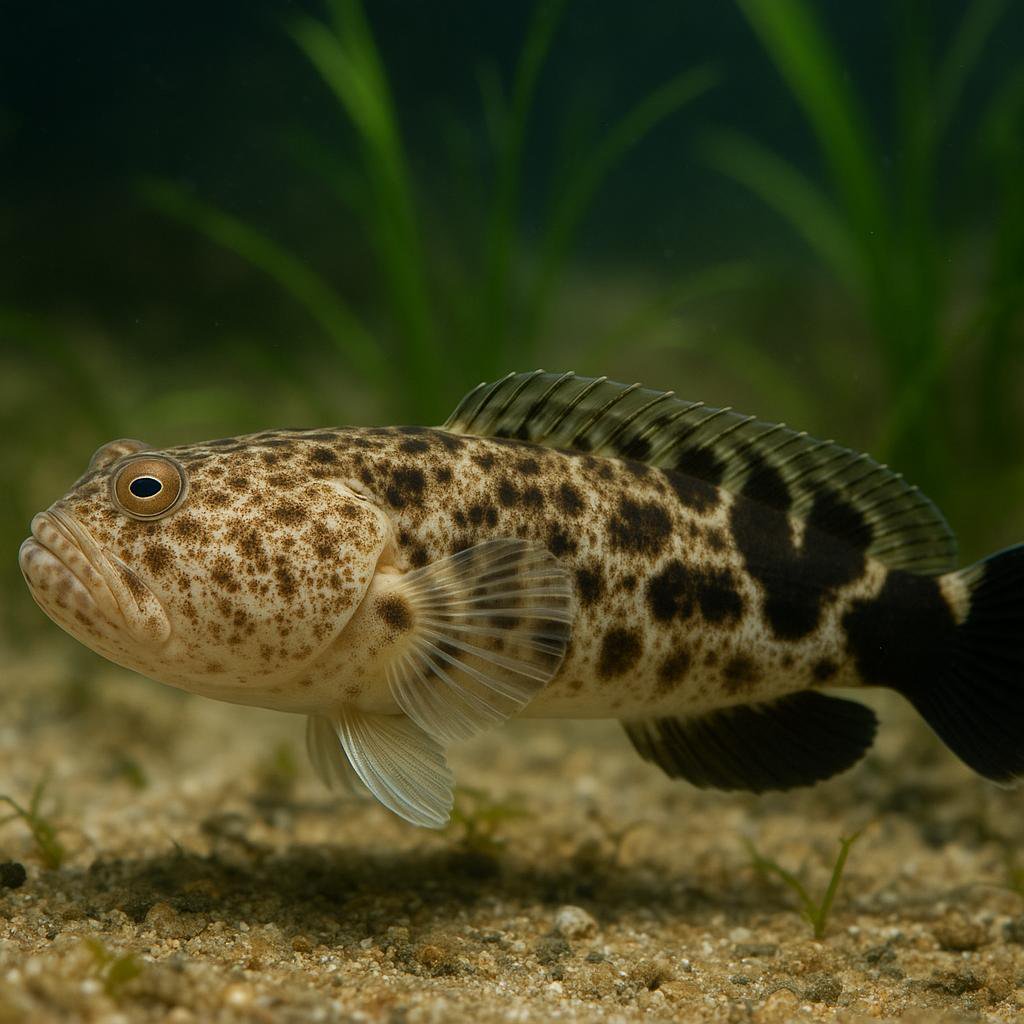
Blackfin stargazer
Ichthyscopus nigripinnis
This is a little sand-sitting stargazer from Australia that likes to lie in wait with its eyes up top and nail passing prey. That black mark on the front part of the dorsal fin is basically its signature. Cool fish, but its more of a wild marine predator than something you set up in a typical home aquarium.
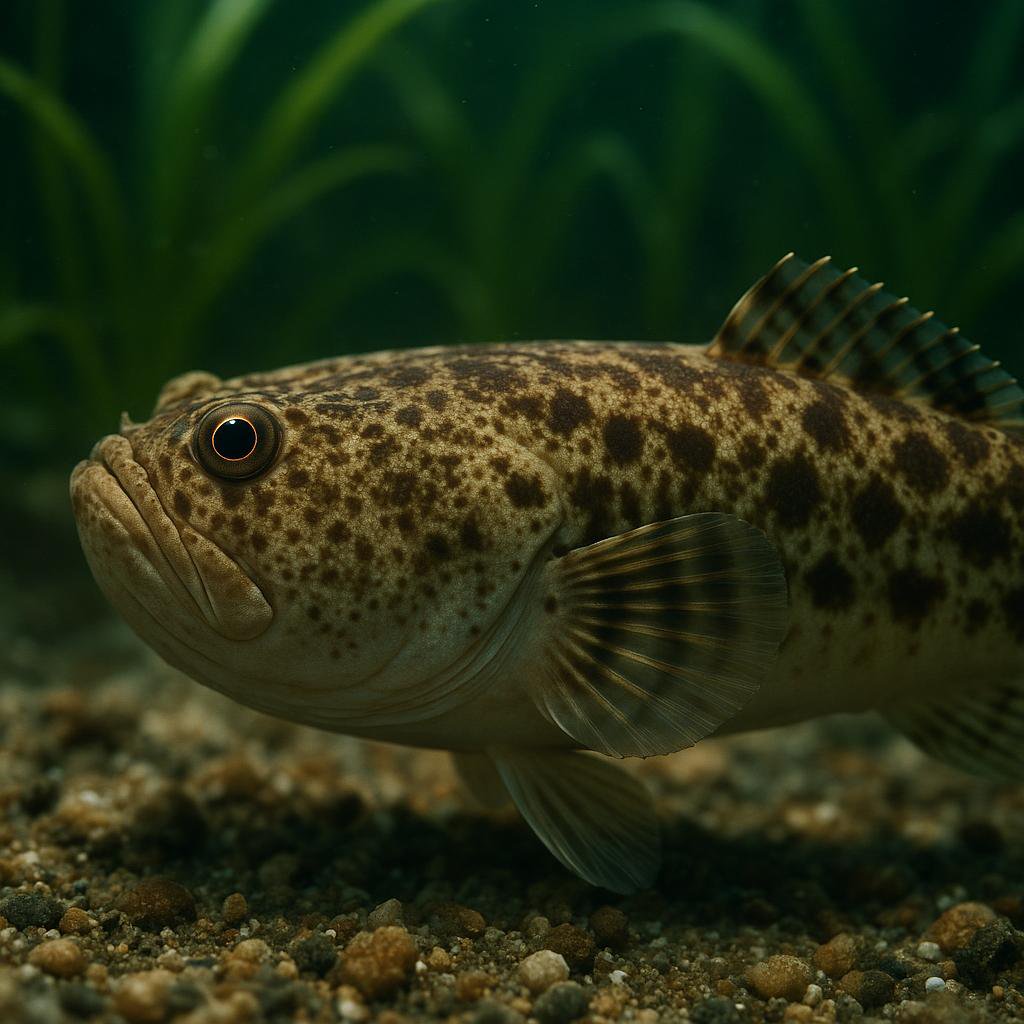
Brownspotted stargazer
Uranoscopus fuscomaculatus
A deep demersal stargazer recorded at 366–389 m that lies buried in sand or mud to ambush prey. Distribution is Southwestern Pacific (Vanuatu and Fiji). Given its deep, cold habitat and specialized requirements, it is not a practical aquarium species.
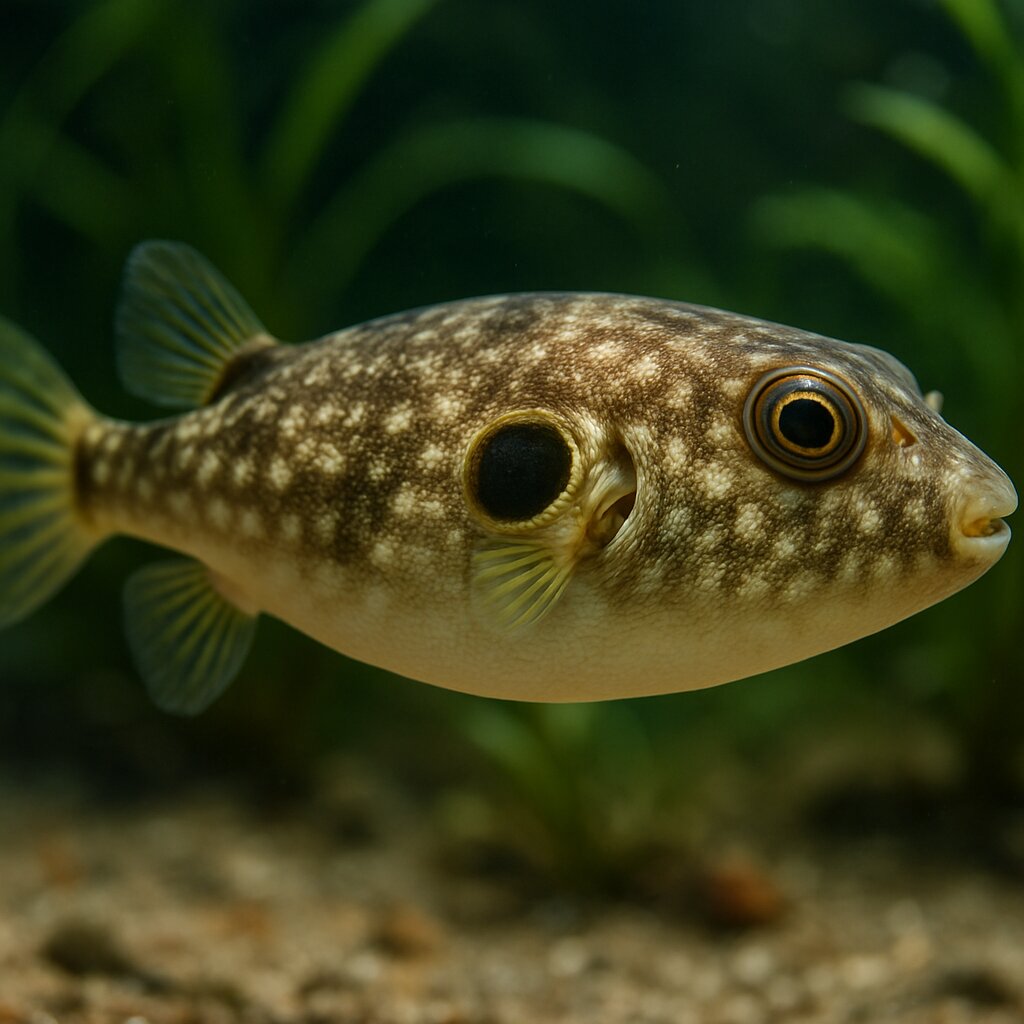
Bullseye puffer
Sphoeroides annulatus
Big personality in a football-shaped body with pale rings along the back that make a bullseye pattern. This is a stout Eastern Pacific puffer that crunches snails and crabs with ease and needs true saltwater and lots of room. Super cool to watch, but it turns nippy with tankmates and grows into a serious, messy eater.
More to Explore
Discover more marine species.
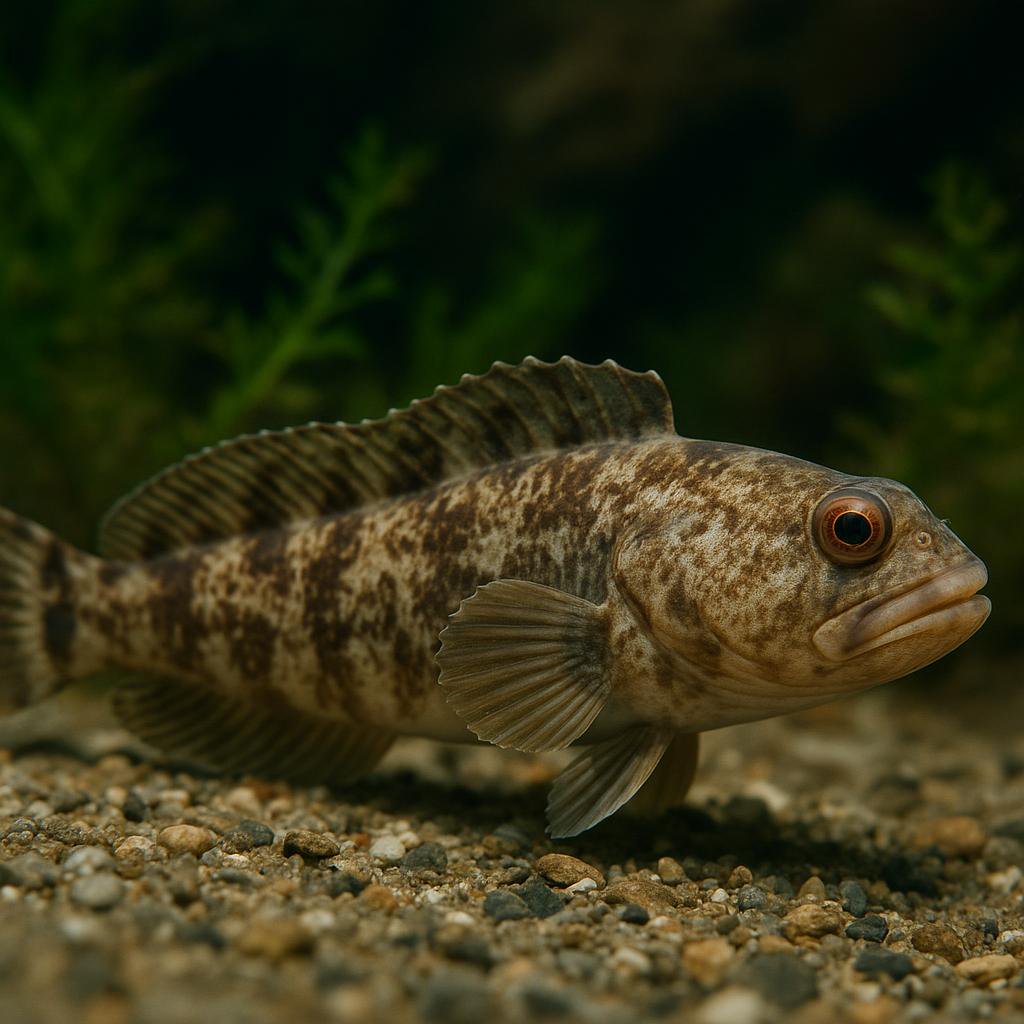
Abe's eelpout
Japonolycodes abei
Japonolycodes abei is a temperate, deepwater demersal eelpout (family Zoarcidae) endemic to Japan (Kumano-nada Sea reported; other sources also report Sagami Bay and Tosa Bay). It is the only species in the genus Japonolycodes and occurs roughly 40-300 m depth, making it an uncommon/atypical aquarium species.
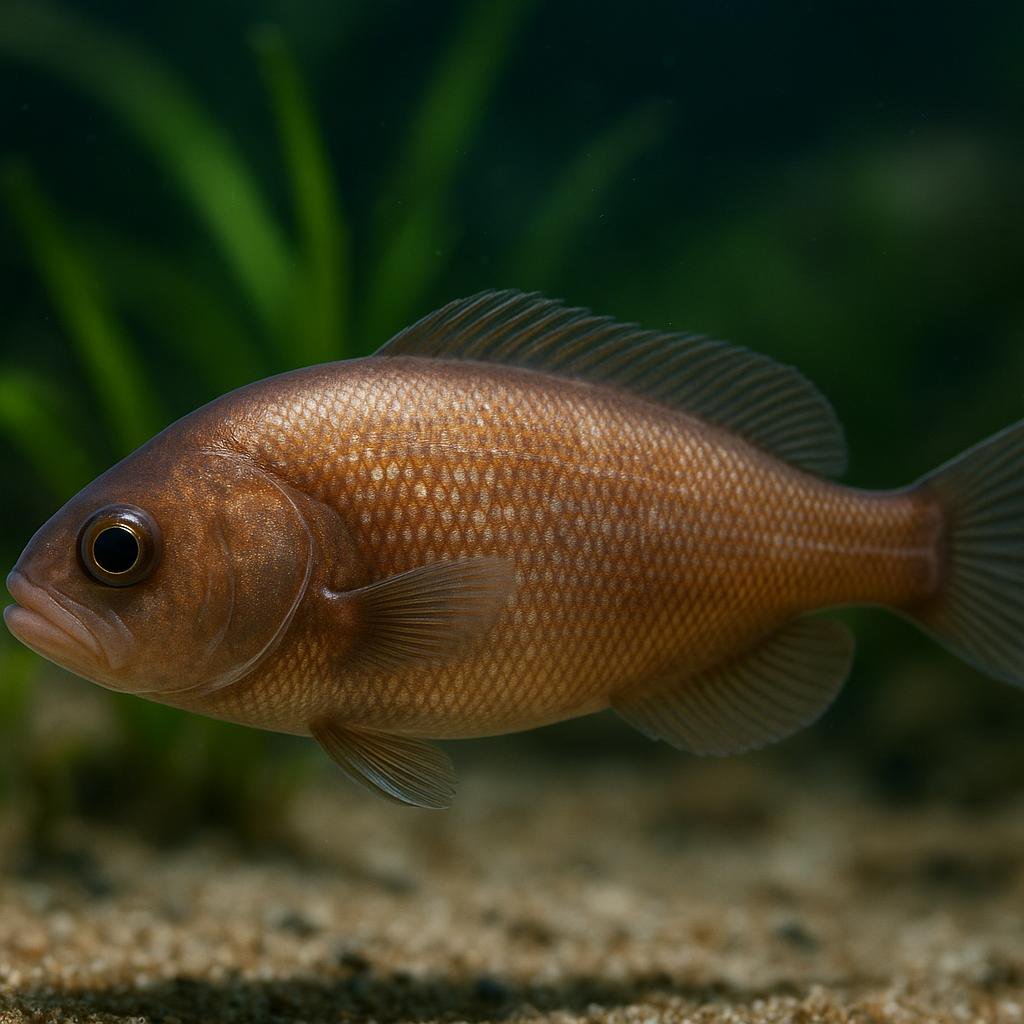
Affinis blind cusk-eel
Barathronus affinis
Barathronus affinis is a tiny, super-weird deep-sea blind cusk-eel from the western-central Indian Ocean. It is one of those gelatinous, loose-skinned brotula-type fishes that live way down in the dark and are basically never seen alive, so almost everything we know comes from preserved specimens and taxonomic work.
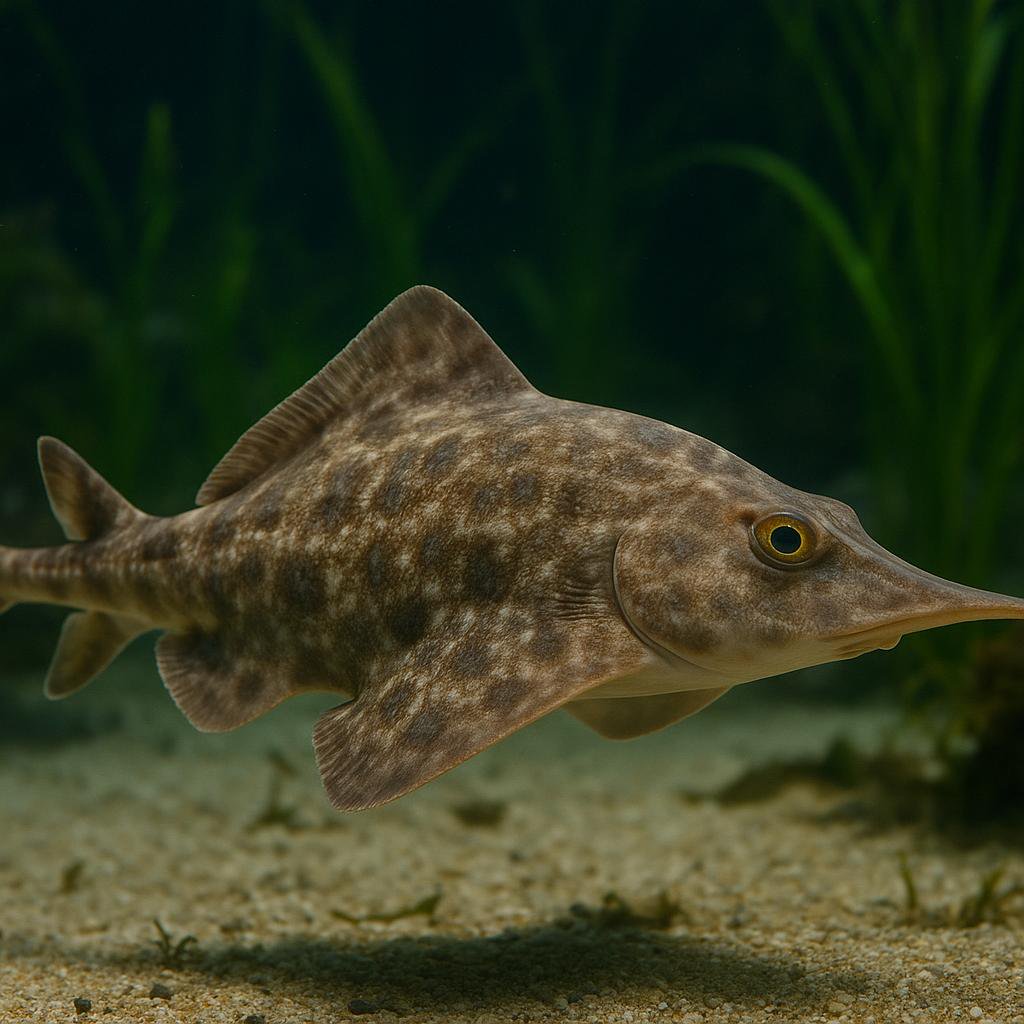
Aleutian skate
Bathyraja aleutica
This is a big, cold-water deep-slope skate from the North Pacific that cruises muddy bottoms and eats chunky benthic prey like crabs and shrimp. The really cool bit is its egg-laying skate life - it does distinct pairing (the classic skate "embrace") and drops those tough egg cases on the seafloor. Not an aquarium fish at all unless you're basically running a public-aquarium-style chilled system.
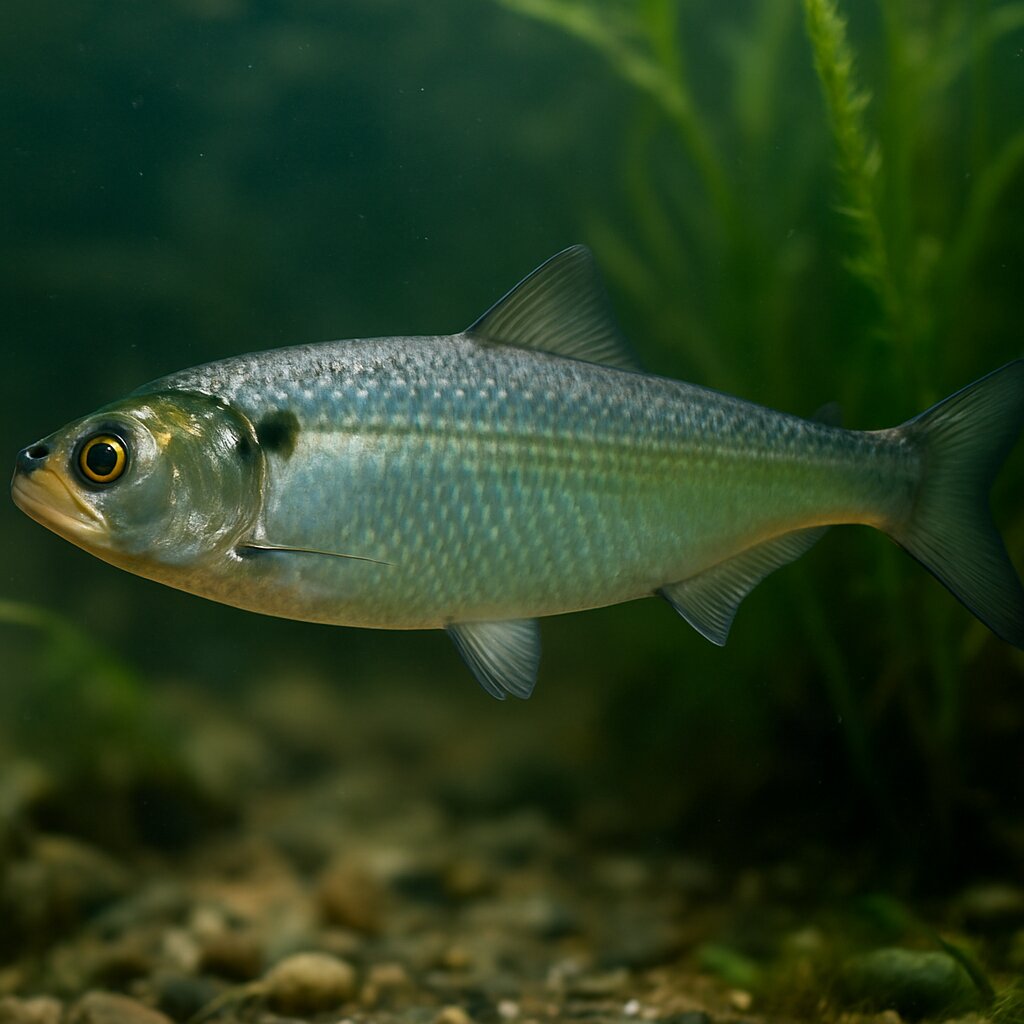
Allis shad
Alosa alosa
Gorgeous silver, fast-swimming shad that spends most of its life in the sea and then surges up big rivers in noisy, surface-spawning schools. It grows huge for a herring-type fish and needs cool, ultra-oxygenated water and tons of open space, so it is a public-aquarium species rather than a home tank fish.
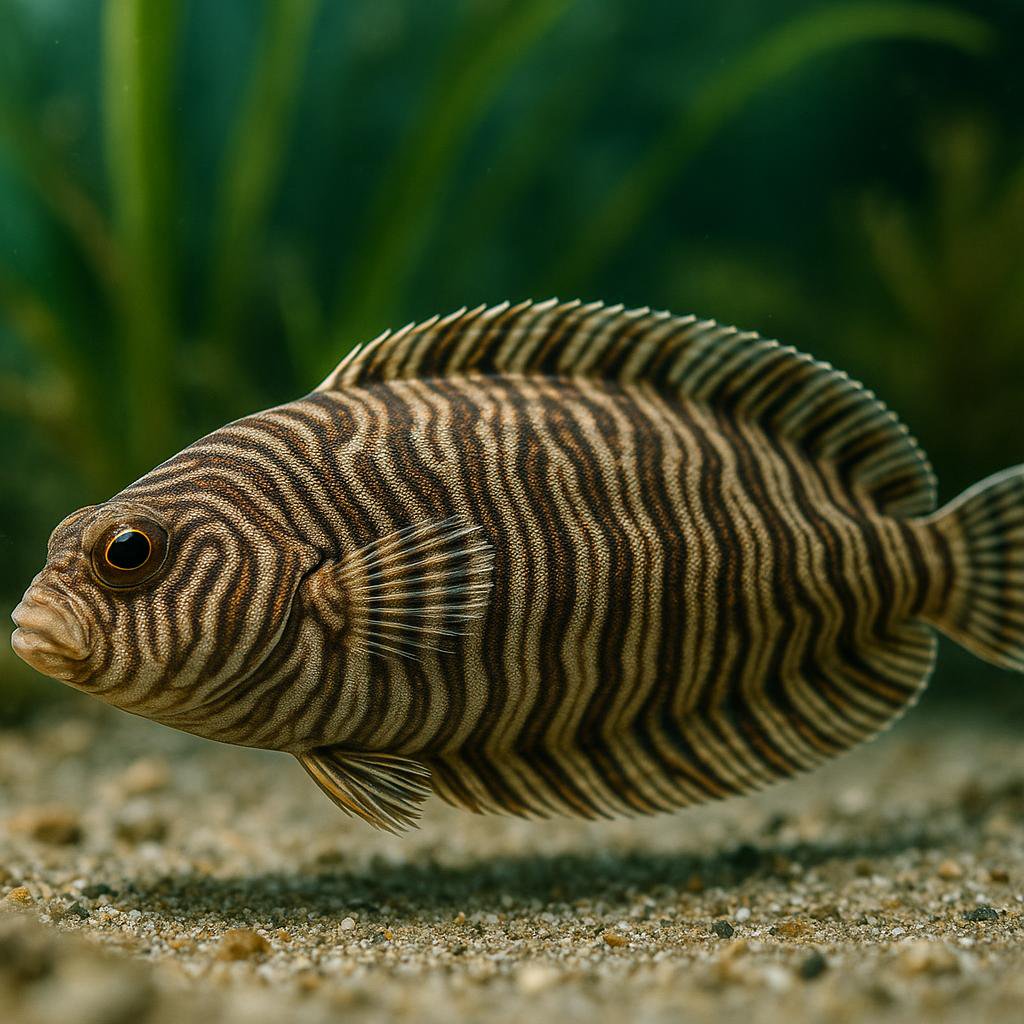
Annandale's zebra sole
Zebrias annandalei
Zebrias annandalei is a small demersal sole from coastal India that inhabits sandy or muddy bottoms and buries for camouflage. It is rarely kept in home aquaria and would require a specialized marine sand-bottom setup and appropriate feeding.
Antarctic dragonfish
Vomeridens infuscipinnis
Deep down around Antarctica, this sleek dragonfish cruises the water column like a little submarine, nearly neutrally buoyant so it can hover above the seafloor. It munches almost exclusively on Antarctic krill and lives in near-freezing water 500-800 m down, so it is a cool species to read about, not one for home tanks.
Looking for other species?