

Longnose eagle ray
Myliobatis longirostris
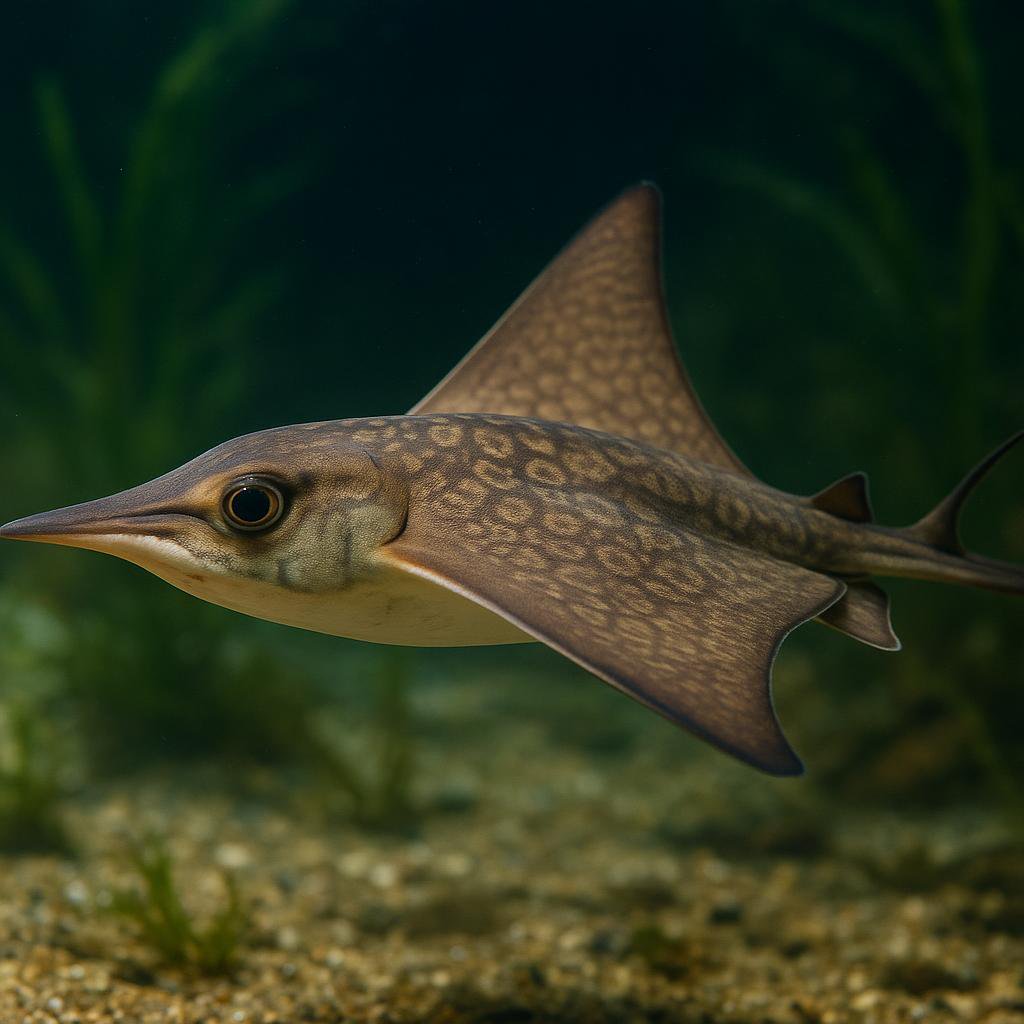
The Longnose eagle ray features a pronounced, elongated snout and a flat, disk-like body with a pattern of pale spots against a dark background.
This page includes AI-generated images. Why am I seeing AI images?
About the Longnose eagle ray
This is a snouted eagle ray from the eastern Pacific (Gulf of California down to northern Peru) that cruises sandy coastal areas and digs out crunchy stuff like clams and crabs. Cool fish, but in real life its a big, roaming ray - not something that belongs in normal home aquariums unless youre talking a true public-aquarium-scale setup.
Also known as
Quick Facts
Size
95 cm disc width
Temperament
Peaceful
Difficulty
Expert
Min Tank Size
2000 gallons
Lifespan
15-25 years
Origin
Eastern Pacific (Baja California and Gulf of California to Sechura, Peru)
Diet
Carnivore (hard-shelled benthic invertebrates like mollusks and crustaceans; in captivity meaty marine foods like clams, shrimp, squid)
Water Parameters
20-26°C
8-8.4
8-12 dGH
Need a heater for this species?
This species needs 20-26°C in a 2000 gallon tank. Use our heater calculator to find the right wattage.
Calculate heater sizeCare Notes
- Plan for a huge, open footprint tank - think public-aquarium scale (thousands of gallons) with long straight runs, not a tall reef box. Rounded corners or a soft perimeter (no sharp rock walls) helps prevent nose and wing damage when it spooks.
- Run a deep, fine sand bed so it can settle without scraping up its belly; skip crushed coral and jagged substrate. Keep rockwork minimal and locked down because a big ray will bulldoze anything that is not glued or bolted.
- Maintain stable marine conditions appropriate for large rays (consistent salinity, pH, and excellent water quality). Because species-specific parameter ranges for Myliobatis longirostris are not well documented in the authoritative species sources, avoid presenting a narrow temperature/pH window as definitive; prioritize stability and system scale.
- Feed like a predator that crushes shells: chopped clam, mussel, squid, shrimp, and whole marine meaty chunks, plus shell-on items to keep the plates worn right. Target feed with tongs or a feeding stick so it actually gets the food and you are not just feeding the tank.
- Tankmates need to be large, calm, and not bitey - think big, mellow fish that will not harass the ray or steal every bite. Avoid triggers, big wrasses, puffers, aggressive tangs, and anything that nips fins or picks at the ray's eyes and spiracles.
- Cover every intake with big strainers and use overflows that cannot trap it; rays get pinned and shredded fast. Also leave serious clearance under and around pumps and powerheads because they like hugging the bottom and edges.
- Watch for rostrum and wing edge abrasions, and for rapid breathing after a scare - both usually mean the tank is too cramped, too sharp, or too chaotic. If it stops eating, check for bullying and test ammonia right away because rays crash hard when water quality slips.
Compatibility
Good Tankmates
- Other mellow rays, especially similar Myliobatis-type eagle rays - they usually just cruise and ignore each other if the tank is massive and there is plenty of open sand and swimming room.
- Chill, non-nippy sharks that are used to ray setups (think bamboo sharks, epaulette sharks, and other laid-back benthic sharks) - they mostly keep to themselves and do not hassle a ray.
- Calm, larger open-water fish that do not pick fights - big, peaceful jacks/trevallies or similar steady swimmers can work if the system is huge and feeding is consistent so nobody gets competitive.
- Bigger, peaceful reef-safe-ish type fish that are not fin nippers (large tangs like Naso tang, some rabbitfish) - they stay out of the ray's way and do not compete much for the ray's meaty foods if you feed smart.
- Non-aggressive groupers and sea bass types that are not pushy at feeding time (the calmer species, and only if they are not big enough to view the ray as food when it is small) - works best when everyone is sized right.
- Peaceful bottom cruisers that are not spiky and not bitey (some larger goatfish can be OK) - they share the sand without constantly messing with the ray.
Avoid
- Triggerfish (especially undulate, queen, clown) - too nosy and too bitey, and they love to chew fins and go after rays and sharks.
- Big aggressive puffers (dogface, stars and stripes, porcupine, etc.) - they are notorious for taking chunks out of rays and going after the eyes and edges of the disc.
- Nippy wrasses and hogfish that get bold (bigger Thalassoma types in particular) - they can pester the ray nonstop and steal food right off it, turning feeding into a fight.
- Large predatory sharks (tigers, bulls, big requiem sharks) or any predator that can clamp down on a ray - even if it starts calm, it only takes one bite to ruin your week.
Where they come from
Snouted eagle rays (Myliobatis longirostris) are coastal rays from the eastern Pacific. You see them around sandy flats, bays, and near reef edges where they cruise and dig for buried prey. They're built for covering ground, not sitting in a corner like some benthic rays.
This is not a "big tank someday" fish. If you cannot house an adult-sized eagle ray right now, pass on it. They outgrow typical home systems fast, and they do not handle cramped quarters well.
Setting up their tank
Think less "aquarium" and more "indoor lagoon." What matters most is footprint and open swimming room. Height is nice, but long and wide is what keeps them from constantly bumping and scraping.
- Footprint: as large as you can manage, with long uninterrupted runs (public-aquarium scale is honestly where eagle rays make sense)
- Aquascape: minimal rock in the open area, and nothing sharp or jagged anywhere they can touch
- Substrate: fine sand (sugar-sized). Skip crushed coral or anything coarse that can abrade the belly and fin edges
- Flow: broad, even flow. Avoid strong, narrow jets that blast them or push them into walls
- Filtration: oversized and easy to service. These rays are messy eaters and produce a lot of waste
- Cover: they can spook-jump. Use a secure top or at least a perimeter barrier if your system allows it
I always plan the tank around their turns. If the ray cannot turn comfortably without folding up against glass or decor, the setup is too tight. Rounded corners (or a round/oval system) helps a lot if you have that option.
Never use copper in any system that will hold rays. Not "just a little" and not "only in quarantine." Copper and many ray species do not mix, and you will not like how that lesson ends.
Keep every intake guarded. They will investigate everything, and a ray can plaster itself to an overflow or intake fast. Big strainers and gentle weirs beat "strong suction and hope."
What to feed them
In the wild they hunt benthic inverts and small prey they can crunch. In captivity you want a varied, meaty menu and you want to train them to take food reliably from a consistent spot.
- Staples: shrimp (shell-on sometimes), squid, clam, mussel, scallop, crab pieces
- Great rotation items: chopped marine fish flesh, octopus (sparingly), prawn, conch
- Avoid as a main diet: feeder fish, freshwater meats, oily junk foods
- Supplements: soak in a good marine vitamin and use iodine support if your regimen lacks whole shellfish
Target feeding makes life easier. I use long tongs or a feeding stick and offer pieces on the sand in a clear "feeding lane" away from rocks. If you just broadcast food, tankmates will steal it and the ray will start bulldozing everything to find leftovers.
Watch the body line behind the head and across the disc. A ray that looks "pinched" or loses that smooth, filled-out look needs more calories or a parasite/competition check.
How they behave and who they get along with
They are active cruisers. Not constantly frantic, but they want to move and they will spook if something darts at them or if the room gets loud suddenly. Once settled, many learn the routine and will come over as soon as you approach with a feeding stick.
Compatibility is mostly about two things: nobody harassing the ray, and nobody getting eaten or crushed. They are not mean, but they are strong, and a feeding ray can accidentally bowl over fish that hover too close.
- Better tankmates: calm, larger marine fish that do not nip fins (think big, steady swimmers)
- Avoid: fin nippers, aggressive triggers, overly curious puffers, anything that pecks at eyes or wing edges
- Avoid: tiny fish and bottom dwellers that can get inhaled during feeding
- Avoid: stinging/biting inverts and sharp corals in their travel lanes
Rays and "reef tanks" usually clash. Even if the ray ignores corals, the swimming room, sandbed needs, and sheer bioload tend to turn a pretty reef into a constant compromise.
Breeding tips
Realistically, breeding snouted eagle rays in home systems is rare. They are livebearers (like many rays) and need big space, stable conditions, and a compatible pair. Most successful breeding reports come from very large exhibits rather than typical hobby setups.
If you ever do keep a pair long term, the best "tip" is boring: give them room, keep the diet varied, and keep stress low. Pregnancy in rays is a big energy drain, so females need consistent feeding without getting pushed off food by tankmates.
If you get a pregnant female (it happens in wild-caught rays), treat her like a high-stakes project: quiet tank, no bullying fish, and no drastic changes. Rays do not bounce back from stress the way many bony fish do.
Common problems to watch for
Most issues I see with large rays trace back to space, abrasions, and feeding problems. They are hardy in the "once established" sense, but they punish shortcuts.
- Nose and wing abrasions from tight turns, rough sand, or sharp rock
- Refusing food after shipping or after a tank change (often stress-related)
- Rapid breathing or constantly hugging corners (water quality, oxygen, or harassment)
- Bacterial infections starting from small scrapes
- Internal parasites (weight loss despite eating, stringy feces)
- Stray voltage and pump injuries (poorly protected intakes, failing equipment)
If you see repeated scraping marks, do not just medicate and hope. Fix the cause: sand grain size, decor, turning radius, and any place they can pin themselves. Rays keep reopening the same wounds if the environment is the problem.
The best early-warning sign is behavior. A ray that suddenly stops cruising, stops coming for food, or starts twitchy spooking is telling you something is off before test kits do.
Similar Species
Other marine peaceful species you might be interested in.
Abe's eelpout
Japonolycodes abei
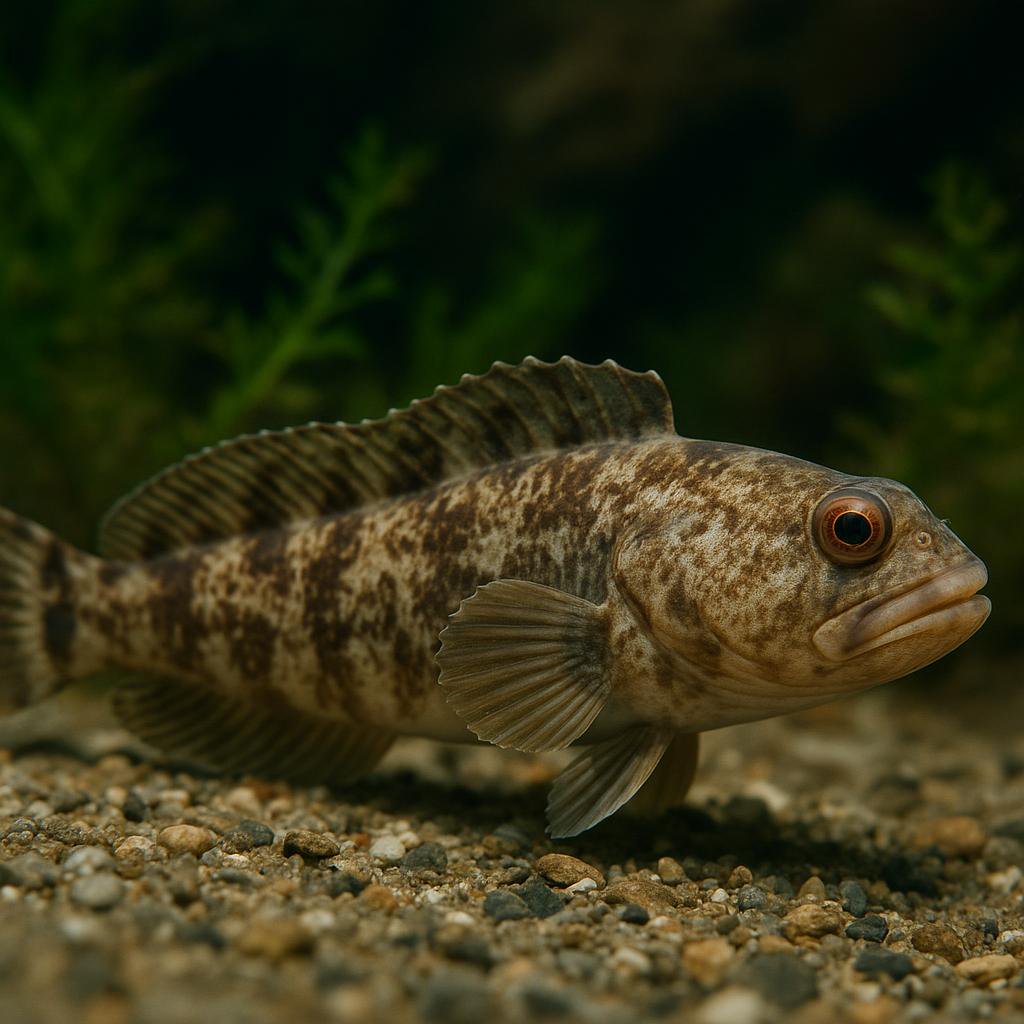
Japonolycodes abei is a temperate, deepwater demersal eelpout (family Zoarcidae) endemic to Japan (Kumano-nada Sea reported; other sources also report Sagami Bay and Tosa Bay). It is the only species in the genus Japonolycodes and occurs roughly 40-300 m depth, making it an uncommon/atypical aquarium species.
Affinis blind cusk-eel
Barathronus affinis
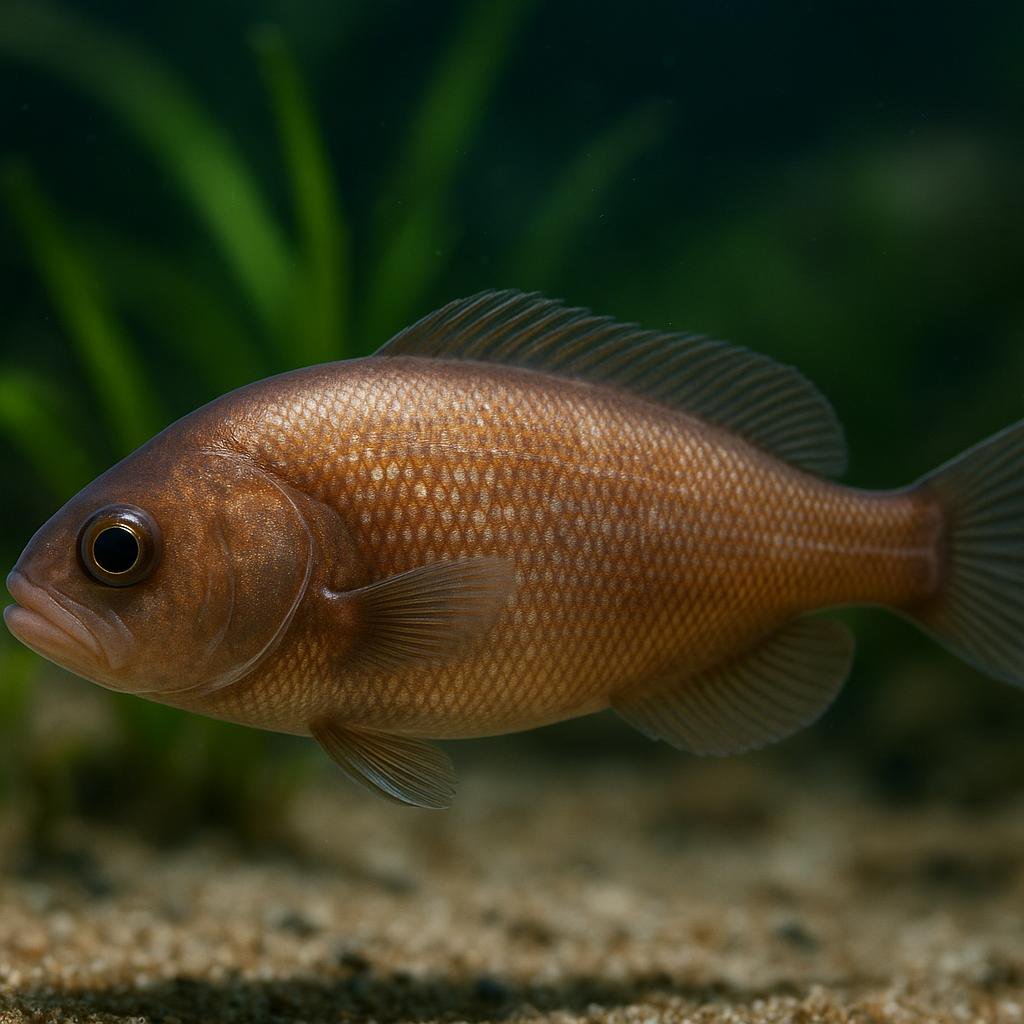
Barathronus affinis is a tiny, super-weird deep-sea blind cusk-eel from the western-central Indian Ocean. It is one of those gelatinous, loose-skinned brotula-type fishes that live way down in the dark and are basically never seen alive, so almost everything we know comes from preserved specimens and taxonomic work.
Allis shad
Alosa alosa
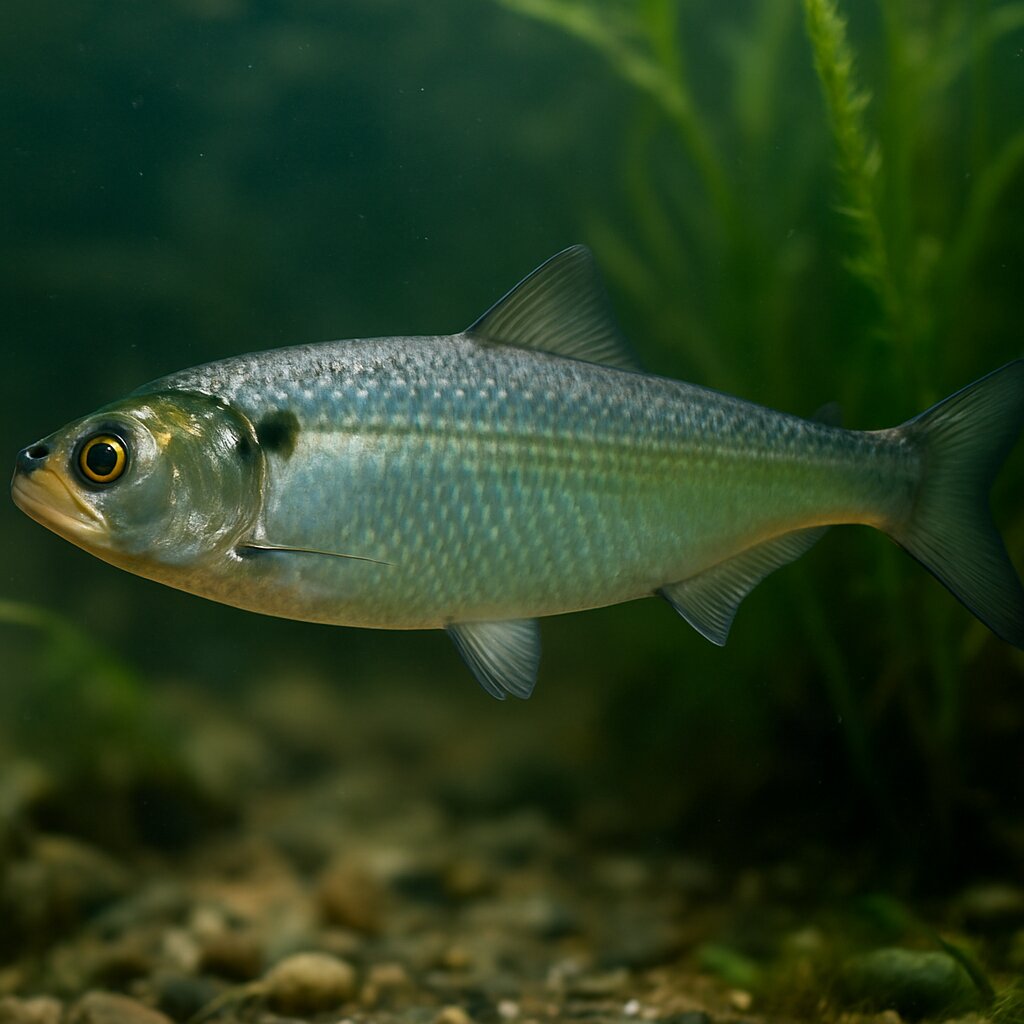
Gorgeous silver, fast-swimming shad that spends most of its life in the sea and then surges up big rivers in noisy, surface-spawning schools. It grows huge for a herring-type fish and needs cool, ultra-oxygenated water and tons of open space, so it is a public-aquarium species rather than a home tank fish.
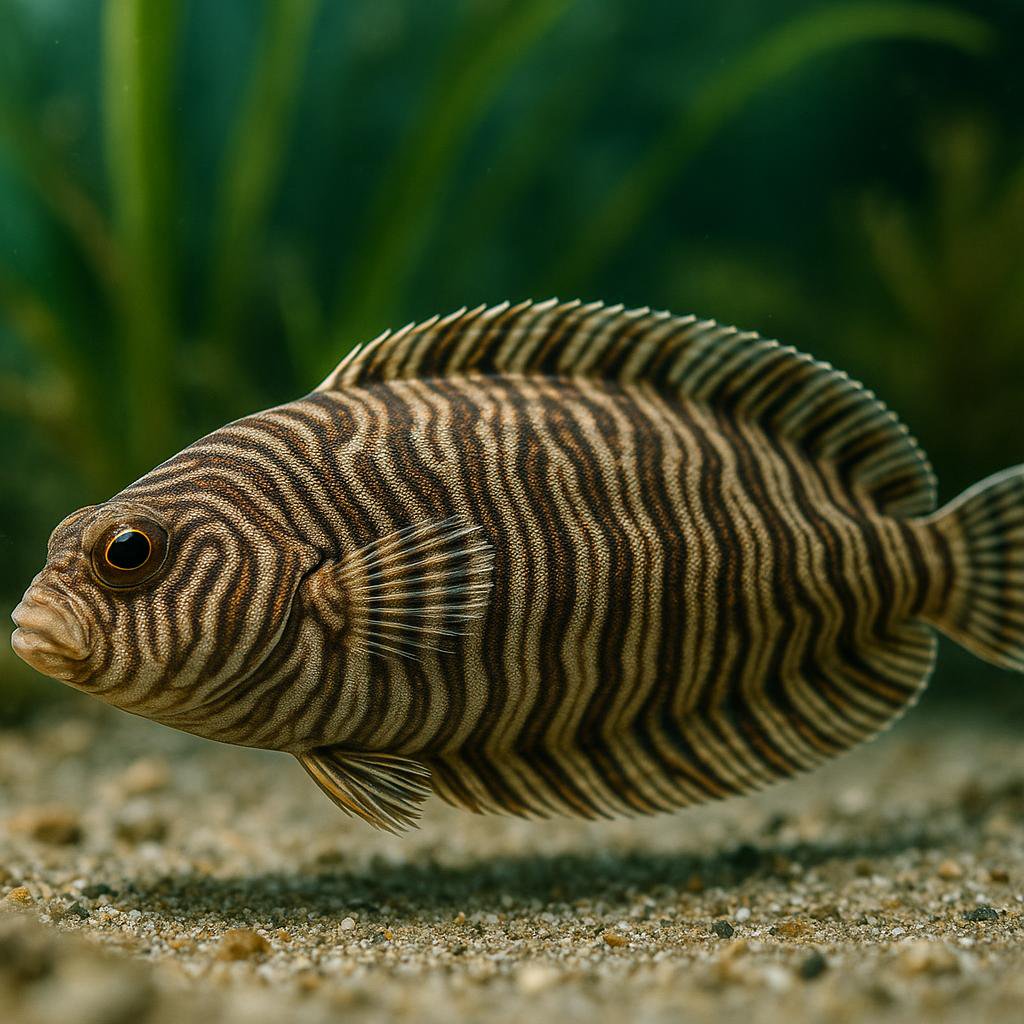
Annandale's zebra sole
Zebrias annandalei
Zebrias annandalei is a small demersal sole from coastal India that inhabits sandy or muddy bottoms and buries for camouflage. It is rarely kept in home aquaria and would require a specialized marine sand-bottom setup and appropriate feeding.
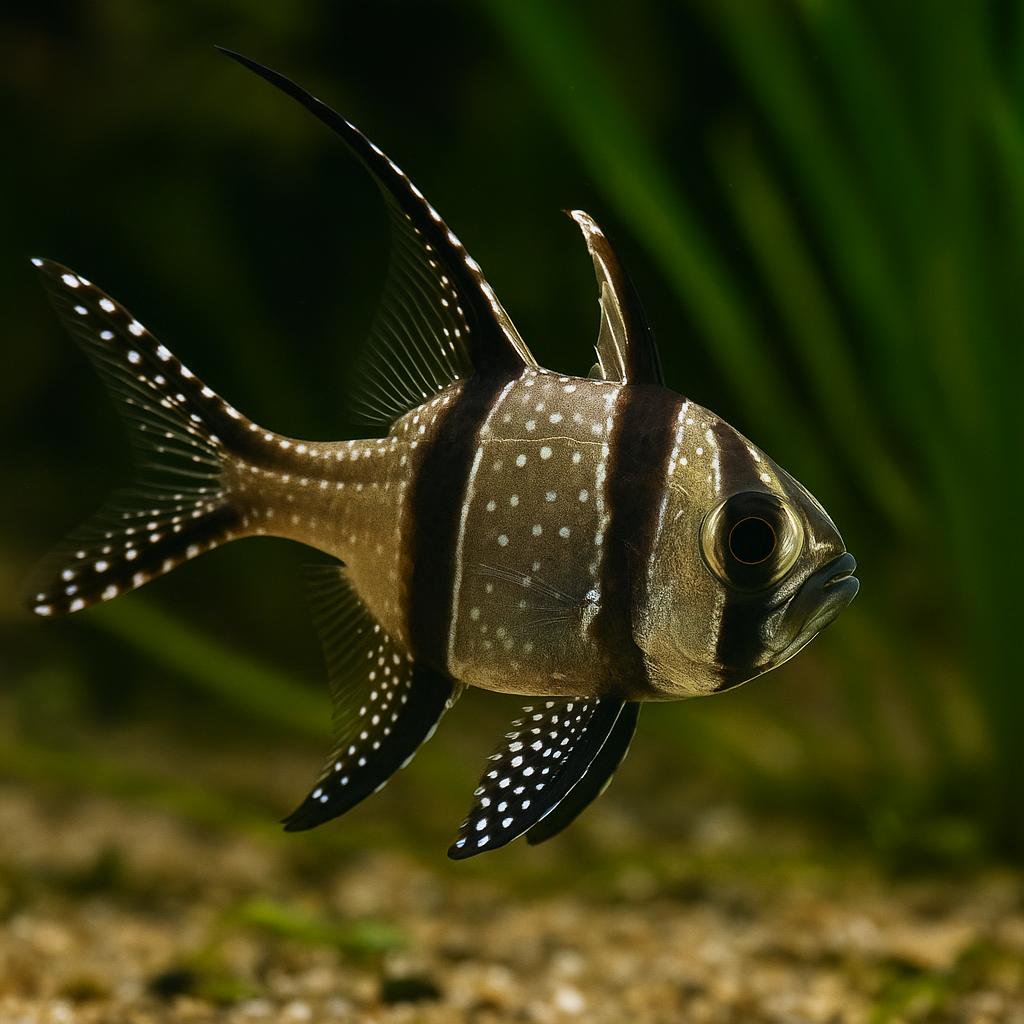
Banggai Cardinalfish
Pterapogon kauderni
Banggai cardinals just sort of hover like little underwater satellites, and the bold black bars with those long, polka-dotted fins look unreal under reef lighting. They're super chill most of the time, but once a pair forms you'll see real "fish drama," and the male will even mouthbrood the babies like a champ.
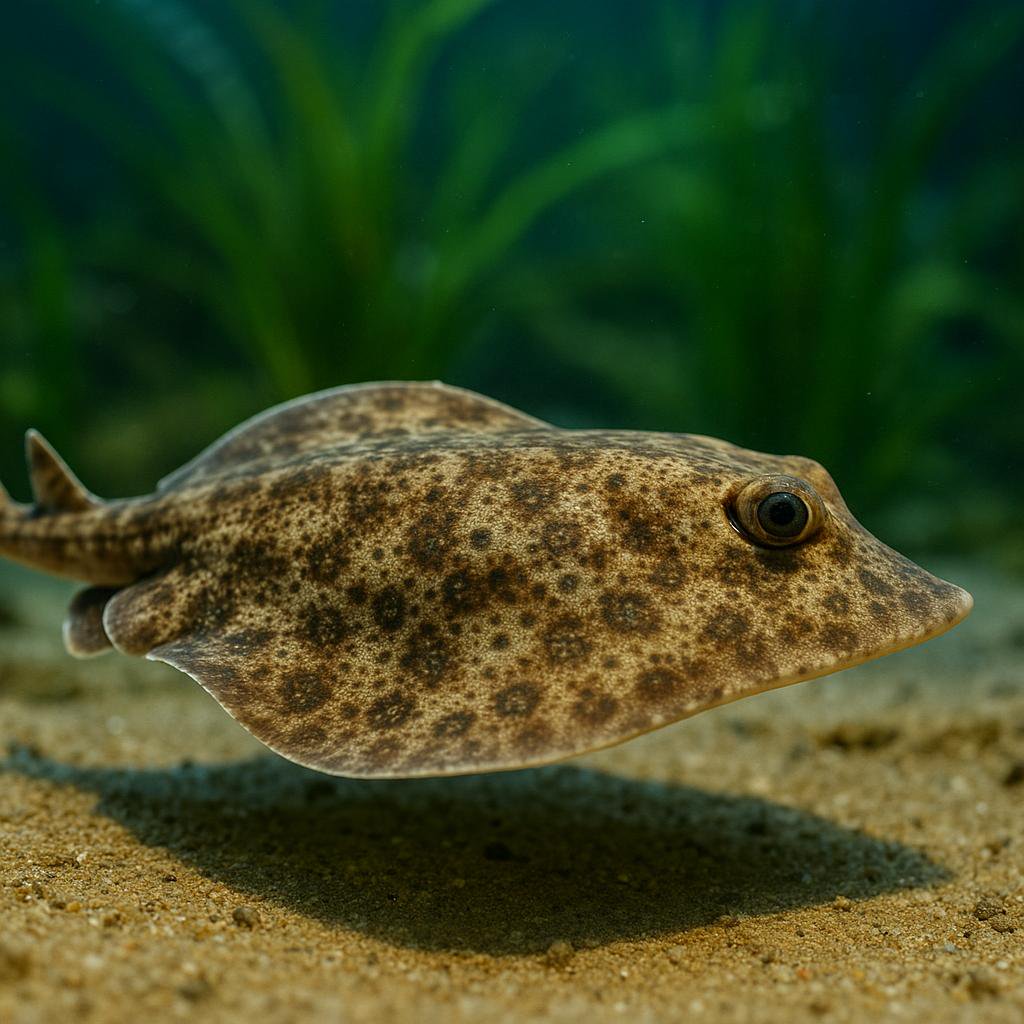
Barbedwire-tailed skate
Notoraja martinezi
Notoraja martinezi is a deepwater skate from the eastern Pacific (Costa Rica down to Ecuador) that lives way down on soft bottoms. The tail is the giveaway - it is lined with strong, hooked thorns that really do look like barbed wire. This is absolutely not an aquarium fish; it is a cold, high-pressure deep-sea animal with basically no practical home care info because it is not kept in the hobby.
More to Explore
Discover more marine species.
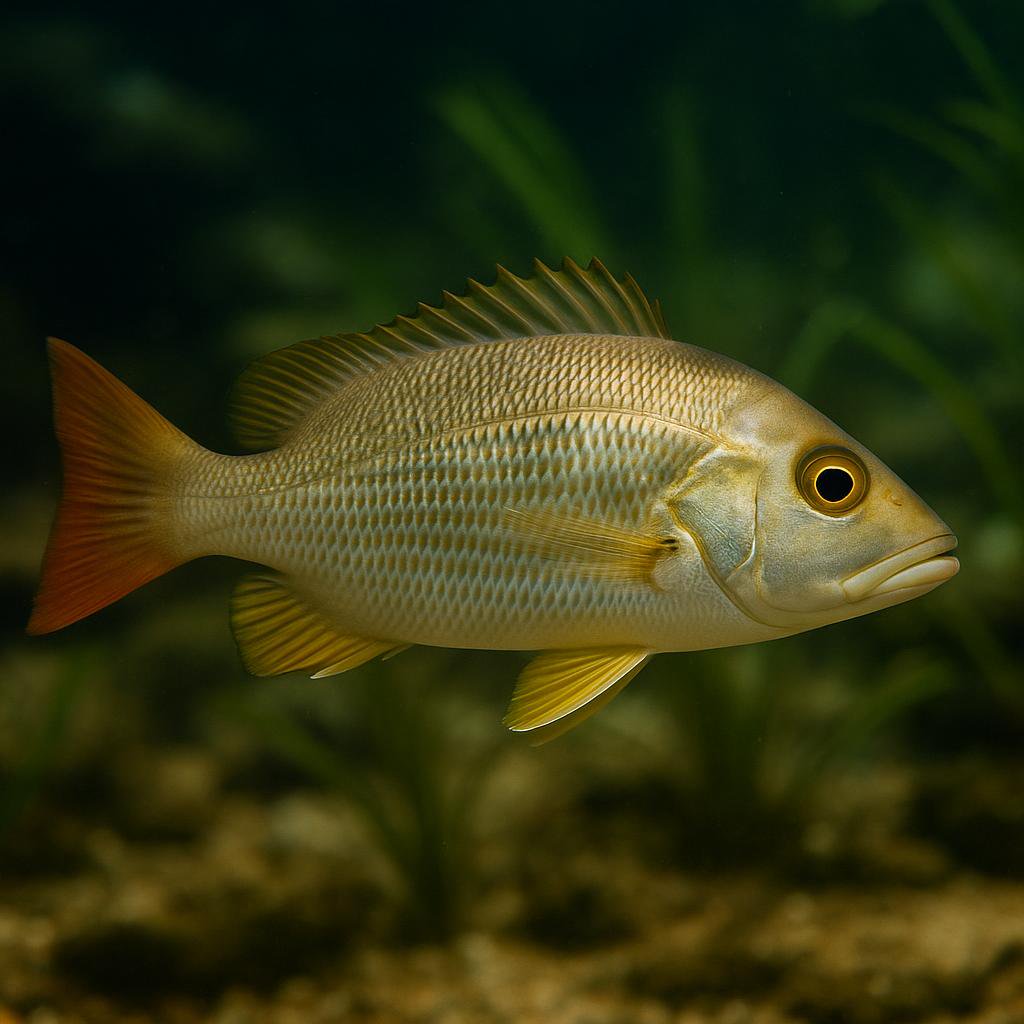
African red snapper
Lutjanus agennes
This is a true snapper from West Africa - a big, fast-growing predator that goes from coastal reefs to brackish lagoons and estuaries (especially as a juvenile). Super cool fish in the wild, but it gets absolutely huge and will eat smaller tankmates once it has the mouth for it, so its really more of a public-aquarium scale animal than a home-aquarium fish.
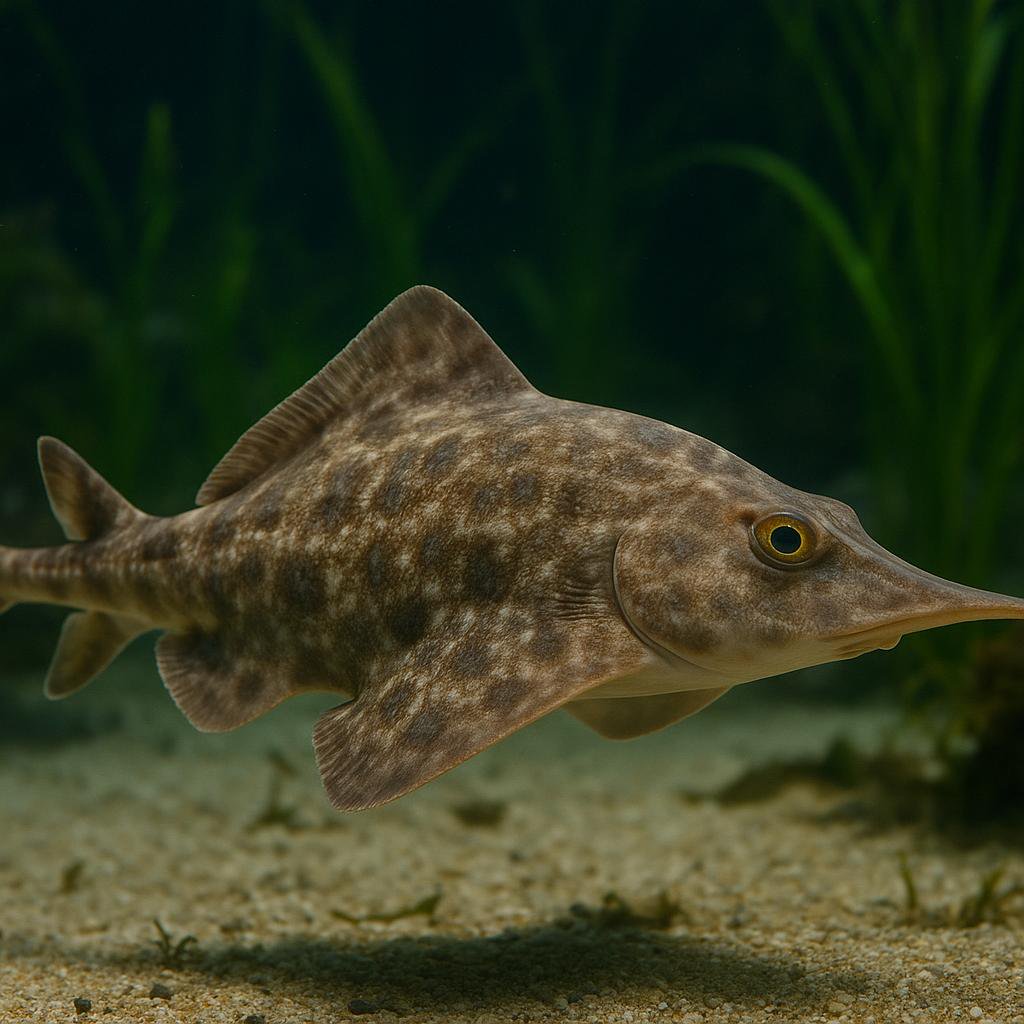
Aleutian skate
Bathyraja aleutica
This is a big, cold-water deep-slope skate from the North Pacific that cruises muddy bottoms and eats chunky benthic prey like crabs and shrimp. The really cool bit is its egg-laying skate life - it does distinct pairing (the classic skate "embrace") and drops those tough egg cases on the seafloor. Not an aquarium fish at all unless you're basically running a public-aquarium-style chilled system.
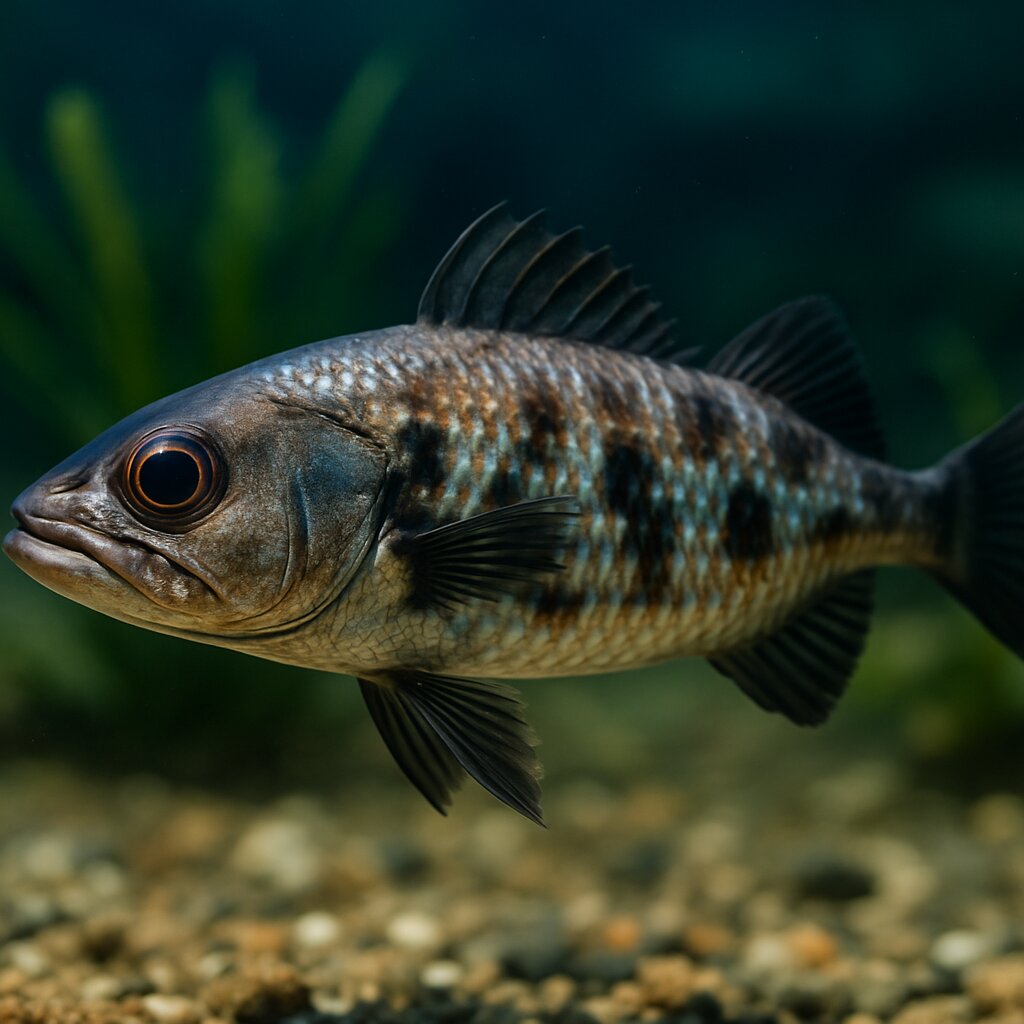
Antarctic dragonfish
Vomeridens infuscipinnis
Deep down around Antarctica, this sleek dragonfish cruises the water column like a little submarine, nearly neutrally buoyant so it can hover above the seafloor. It munches almost exclusively on Antarctic krill and lives in near-freezing water 500-800 m down, so it is a cool species to read about, not one for home tanks.
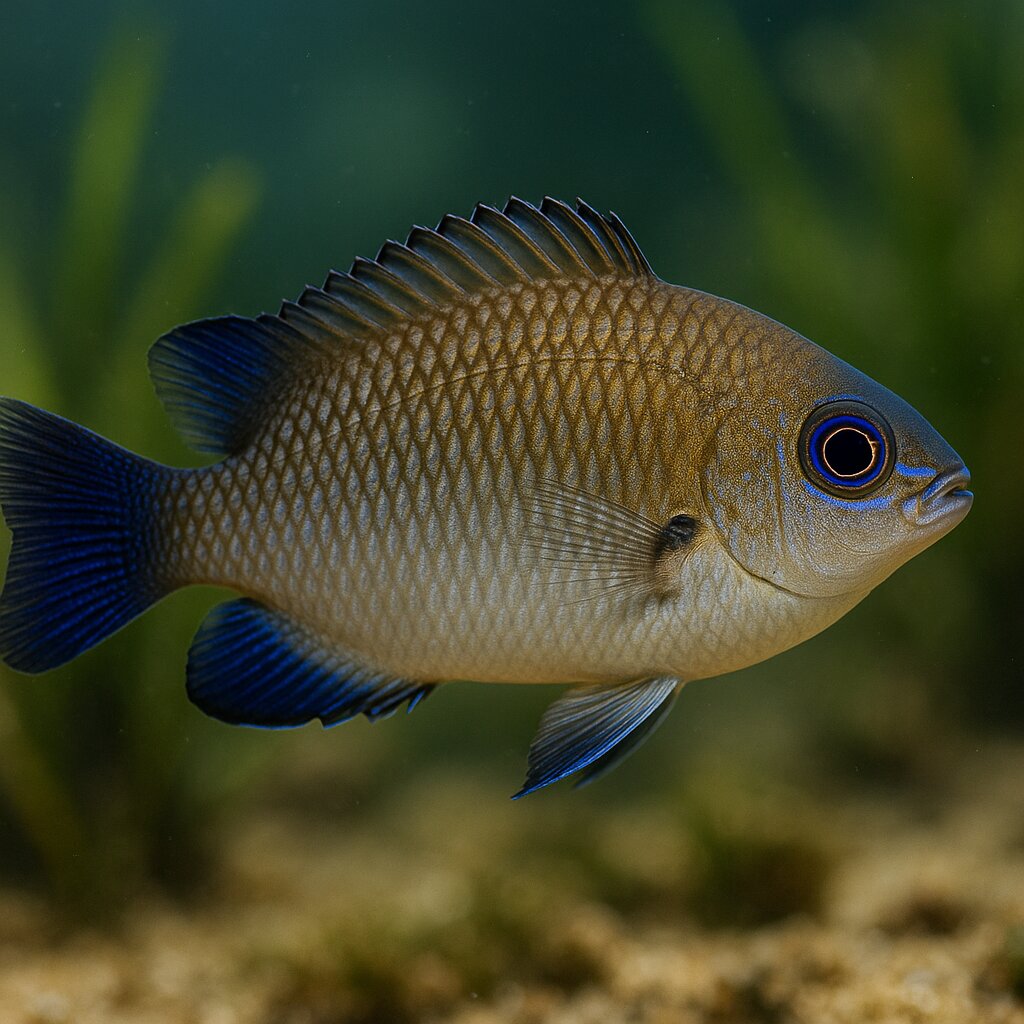
Arabian demoiselle
Neopomacentrus sindensis
A small lyretail damsel from the Persian Gulf and Arabian Sea, it hangs in loose groups around coral heads, rocks, and even pier pilings picking zooplankton from the flow. Think classic damsel toughness with a slightly milder attitude than the real bruisers, plus subtle yellow tail accents. Males clean a patch, get a mate to lay eggs there, and then stand guard fanning the clutch.
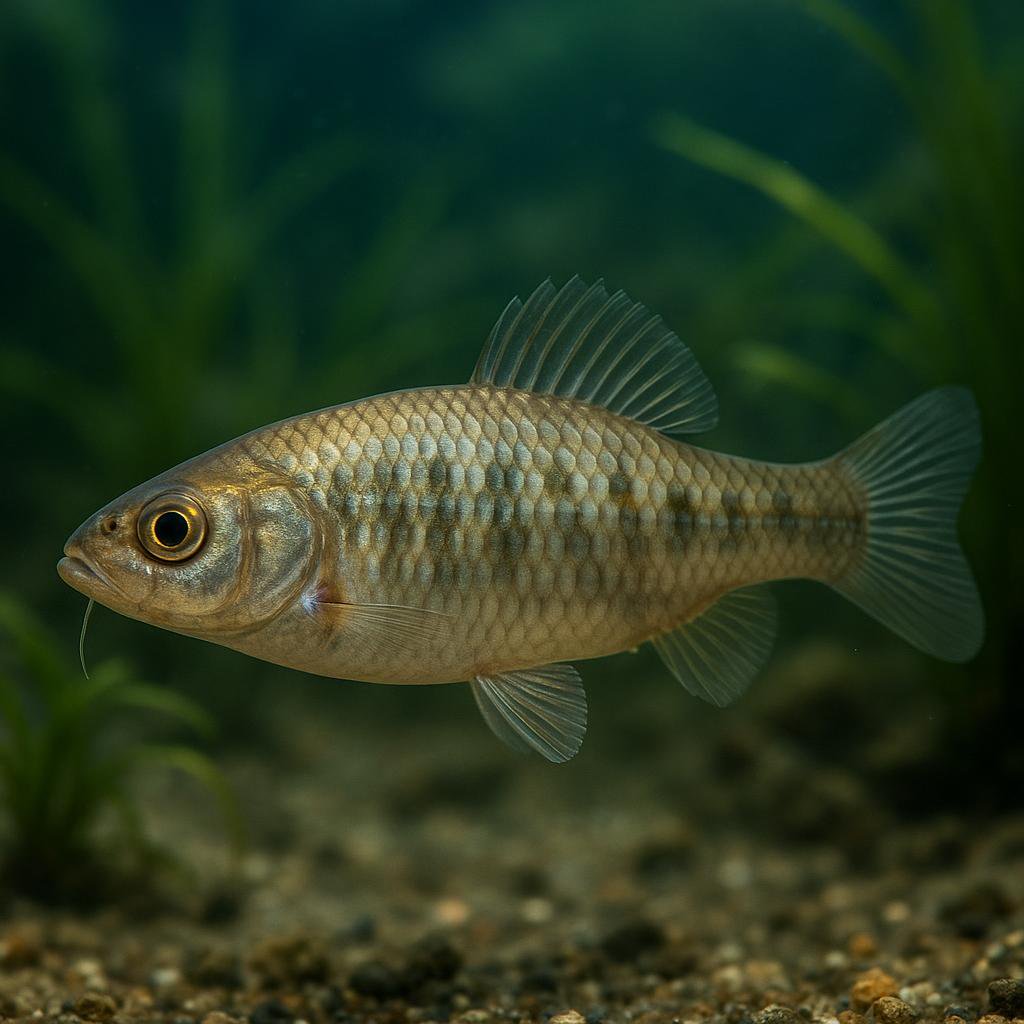
Arabian spiny eel
Notacanthus indicus
Notacanthus indicus is a deep-sea spiny eel (family Notacanthidae; not a true eel) known from the Arabian Sea on the continental slope at roughly ~960–1,046 m depth, with reported maximum length around 20 cm TL; it is a deep-water bycatch species and not established in the aquarium trade.
Arctic rockling
Gaidropsarus argentatus
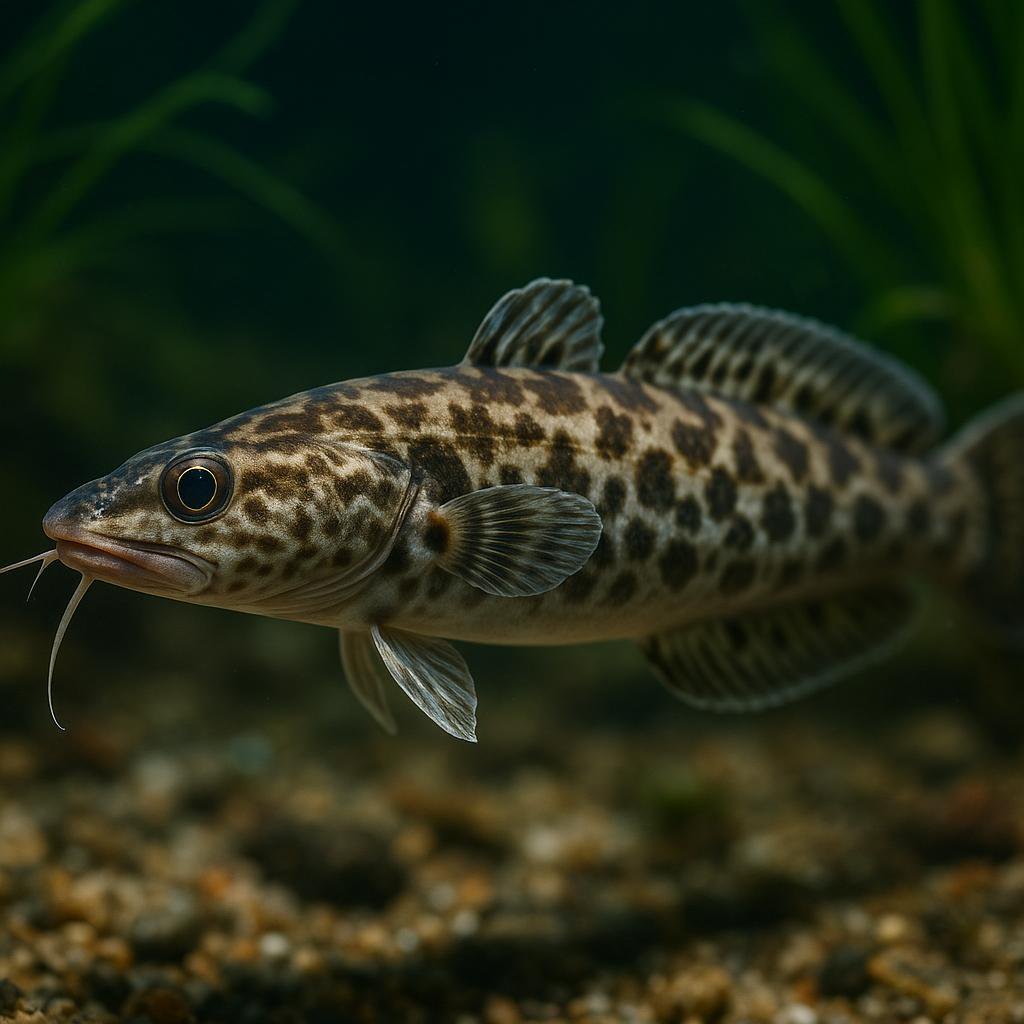
This is a deepwater North Atlantic rockling (a cod relative) that hangs out on soft bottoms way down the slope. It is a cold-water, bottom-hugging predator that snoots around for crustaceans and will also take small fish when it gets the chance.
Looking for other species?