

Broadbarred firefish
Pterois antennata
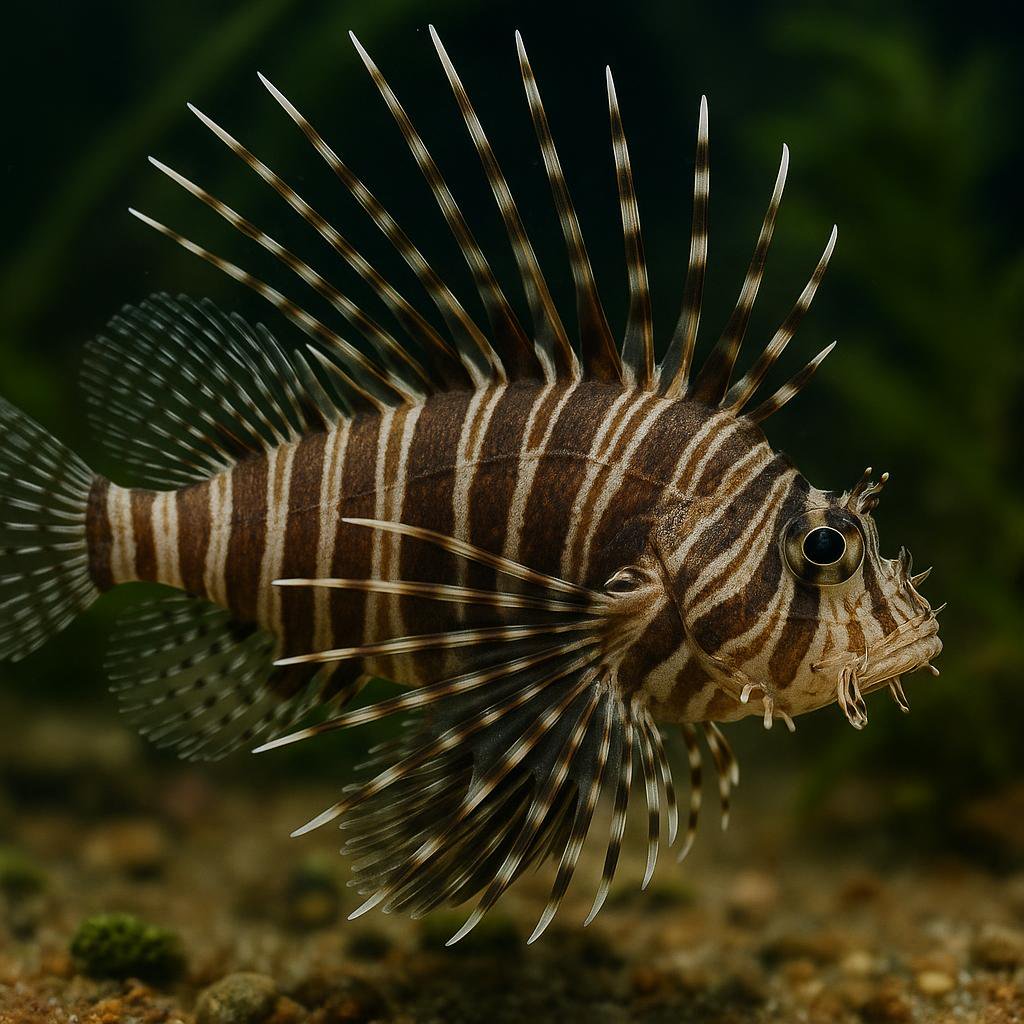
The Broadbarred firefish has distinctive elongated dorsal spines and striking red and white banding across its body.
This page includes AI-generated images. Why am I seeing AI images?
About the Broadbarred firefish
This is the lionfish with the long "antennae" (those banded tentacles above the eyes) and the ragged, spotty fins that make it look extra dramatic under reef lighting. It'll spend the day tucked under ledges and then cruise out at dusk to ambush shrimp, crabs, and any small fish it can fit in its mouth-also worth remembering it's venomous, so you treat it with respect when you're in the tank.
Also known as
Quick Facts
Size
20 cm
Temperament
Semi-aggressive
Difficulty
Intermediate
Min Tank Size
50 gallons
Lifespan
5-10 years
Origin
Indo-Pacific
Diet
Carnivore - meaty frozen foods (mysis, krill, shrimp, chopped seafood); may need live foods initially
Water Parameters
22-26°C
8.1-8.4
8-12 dGH
Need a heater for this species?
This species needs 22-26°C in a 50 gallon tank. Use our heater calculator to find the right wattage.
Calculate heater sizeCare Notes
- Minimum tank sizes published for Pterois antennata vary by source; many hobbyists find a larger footprint tank (often 75g+) is more comfortable long-term. Provide ample rockwork with caves/overhangs for daytime sheltering.
- Keep salinity stable (many sources list roughly 1.020-1.025 for fish-only systems; reef systems are often run around 1.024-1.026). As messy predators, lionfish benefit from strong filtration/skimming and good nutrient management.
- They're ambush predators, so feed meaty stuff: thawed shrimp, silversides, squid, scallop, chunks of marine fish-2-3 times a week for adults (don't overdo it or they get fatty).
- If it only takes live food at first, use ghost shrimp to get it eating, then wean onto frozen with feeding tongs; don't let it become a "live-only" diva.
- Tankmates should be too big to fit in its mouth and not hyper-aggressive-avoid tiny gobies/clowns/cleaner shrimp unless you're cool with them becoming snacks.
- Watch the venomous spines when you're cleaning or moving rock; use a container to corral it and don't try to net it like a clownfish.
- Common headaches: fin rot from beat-up fins and poor water, and "hunger strikes" after shipping-dim lights, offer food at dusk, and keep competition at feeding time low.
Compatibility
Good Tankmates
- Other larger, mellow predators that mind their own business (like a tang or a rabbitfish) - they're usually too big to be seen as food and they don't hassle the lionfish much.
- Bigger angels (emperors/majestic-type size range) - not the tiny dwarf angels; the big ones tend to hold their ground without constantly picking at the lion.
- Hawkfish (flame/longnose) - they're bold and perchy, but generally not fast fin-nippers, and they can handle the lionfish vibe as long as everyone's fed.
- Dottybacks that aren't miniature (like a solid, established orchid dottyback in a roomy tank with rockwork) - can work if the dottyback isn't tiny enough to become a snack.
- Sturdier wrasses that sleep in the rock/sand and aren't bite-sized (think a larger Halichoeres-type) - active, but usually not interested in shredding fins.
- Medium-to-large groupers or morays ONLY if the tank is big and the lion isn't the smallest fish - they can coexist, but you're basically balancing two 'if it fits, it ships' predators.
Avoid
- Any small fish that can fit in the lion's mouth (chromis, small clowns, tiny gobies/blennies, small cardinals) - if it's bite-sized, it's on the menu, usually overnight.
- Nippy fin-pickers (many triggers, some puffers) - they love sampling those long lionfish fins and it turns into a stressy mess fast.
- Super aggressive brawlers (big damsels, mean dottybacks in tight tanks) - constant harassment keeps the lionfish tucked away and not eating well.
- Other lionfish/scorpionfish in cramped quarters - sometimes fine, but you'll see territorial posturing and accidental fin stings; needs space and similar size to avoid bullying or one eating the other.
1) Where they come from
Broadbarred firefish (Pterois antennata) are lionfish from the Indo-Pacific—think reefs and rubble zones from the Red Sea across to the western Pacific. They’re the “hang out under ledges and pounce” kind of predator, and you’ll see that exact vibe in your tank once they settle in.
2) Setting up their tank
Give this fish space and shade. Mine spent a lot of time hovering under overhangs, then drifting out at feeding time like it owned the place. A cramped, brightly lit, bare tank makes them skittish and more likely to wedge themselves into dumb spots.
- Tank size: I’d start at 75 gallons for one, bigger is nicer (especially if you want tankmates). They get chunky and carry a lot of “presence.”
- Rockwork: Build caves/overhangs and leave open water in front. They like a home base with a clear view.
- Flow: Moderate. They’re not a high-flow surfer like some wrasses, but they shouldn’t be stuck in dead zones either.
- Lighting: Whatever your reef/fish-only setup uses is fine—just make sure there are dim areas and places to retreat.
- Filtration: Strong mechanical + biological. Lionfish are messy eaters and their food is rich.
- Cover: A lid helps. They’re not famous jumpers like gobies, but startled fish do weird things.
This is a venomous fish. Plan your aquascape so you can work in the tank without boxing yourself into a corner. Long tongs, a clear container, and moving slowly save you a lot of stress.
I also like to keep a “feeding zone” up front—an open patch where you can consistently deliver food with tongs. It trains them fast and keeps them from hunting behind the rocks where you can’t see what’s going on.
3) What to feed them
They’re predators and they want meaty foods. The big hobbyist win is getting them off live food and onto frozen/silversides/shrimp chunks early. Once they associate the tongs with dinner, life gets way easier.
- Great staples: thawed shrimp, squid, clam, chunks of marine fish, scallop, krill (as a treat, not the only thing).
- Feeding method: long feeding tongs or a feeding stick. Wiggle the food a bit—movement is the trigger.
- Frequency: juveniles can eat smaller meals more often; adults usually do well a few times a week. Don’t turn them into blimps.
- Vitamins: soak occasionally (especially if you’re heavy on one food type).
If yours refuses frozen at first, try offering a live ghost shrimp once, then immediately follow with a thawed shrimp on tongs right after the strike. A lot of them “get it” when the hunting switch is already flipped.
Skip feeder goldfish/rosy reds. They’re a nutritional mess for marine predators and can bring in problems. Stick to marine-based foods.
4) Behavior and tankmates
Broadbarred firefish are generally chill… until something fits in their mouth. They’re not usually looking to start fights, but they’re absolutely looking for snacks. Most “mystery disappearances” in lionfish tanks aren’t mysteries.
- Temperament: calm, predatory, more active around feeding time and dusk.
- Reef-safe? With corals, yes. With small fish and shrimp/crabs, no—expect losses.
- Good tankmates: larger angels, tangs, rabbitfish, bigger wrasses, triggers that aren’t fin-nippers (pick carefully), sturdy fish that won’t fit in the lion’s mouth.
- Avoid: tiny gobies/blennies, small cardinals, small clownfish, ornamental shrimp, and anything that sleeps on the sand looking bite-sized.
Watch for fin nippers. Some triggers, puffers, and even “mostly peaceful” fish can’t resist those flowing fins and spines. A nipped lionfish can go downhill fast.
One more real-world tip: introduce them with the lights low and the rockwork already set. They don’t love big changes. If you’re adding tankmates later, add the more assertive fish first, then the lionfish, so it doesn’t immediately claim the whole tank as its hunting ground.
5) Breeding tips (what’s realistic at home)
Breeding lionfish in home tanks isn’t impossible, but raising the babies is the hard part. Adults may spawn in larger, stable systems (often around dusk). They release buoyant egg masses that float—cool to see, but the larvae are tiny and need specialized live foods.
- If you ever see spawning behavior: dim-light courtship and a brief rush upward in the water column.
- Eggs: often float; overflows and pumps can shred them fast.
- Raising larvae: you’re in rotifers/copepods and dedicated rearing setup territory. Most hobbyists stop at “neat, they spawned.”
If breeding is your goal, plan for a separate larval system and a live food culture routine. Otherwise, just enjoy the behavior and don’t feel bad if you’re not trying to raise them.
6) Common problems to watch for
Most issues I’ve seen with antennata lionfish come down to three things: diet, stress/fin damage, and parasites. They’re hardy once settled, but they don’t bounce back from repeated harassment or lousy food.
- Refusing food: common after shipping. Offer dim lighting, a safe cave, and try tempting foods (shrimp/squid) with movement on tongs.
- Overfeeding: fatty liver and “lazy lump” behavior. Keep portions reasonable and don’t feed every time you walk by the tank.
- Fin damage/infection: often from nippers or scrapes in tight rockwork. Keep the aquascape roomy and choose tankmates wisely.
- Parasites (marine ich/velvet): lionfish aren’t immune. Quarantine new fish if you can, and don’t assume a tough-looking predator can shrug it off.
- Swallowing hazards: they can try to eat spiny fish or something too big and injure themselves internally. Avoid “maybe it fits” tankmate choices.
Use tools, not your hands, for feeding and moving things near the fish. Venom stings are the kind of lesson you only want once.
If you set them up with good rockwork, feed a varied meaty diet, and keep bite-sized tankmates out of the equation, they’re honestly a rewarding predator to keep. They’re interactive in their own way—mine learned the feeding stick routine and would “appear” the moment I walked up.
Similar Species
Other marine semi-aggressive species you might be interested in.
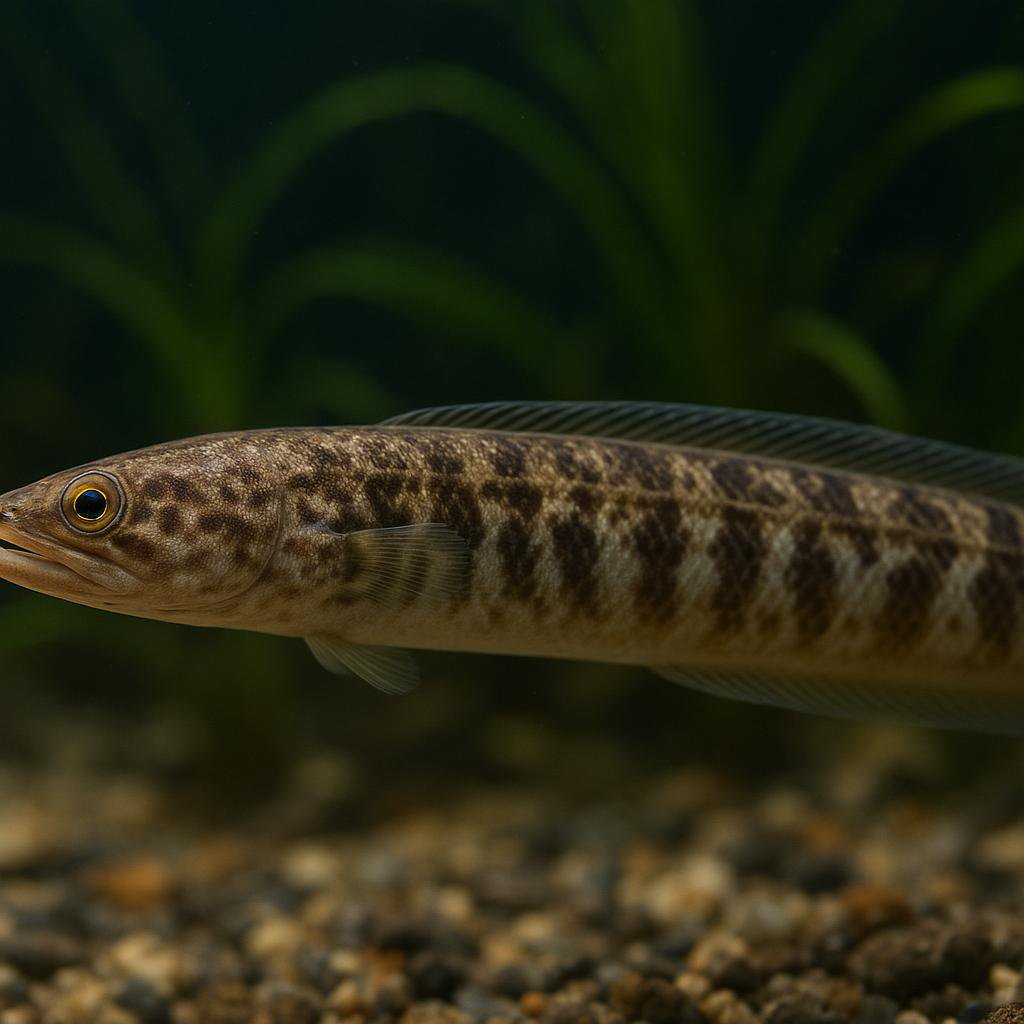
Blackspotted snake eel
Quassiremus ascensionis
A tropical marine snake eel that buries in soft substrates (sand/mud/gravel) with only the head exposed to ambush prey. Recorded to 71 cm TL and occurs mainly in the western Atlantic (also Brazil) and at Ascension Island; typically found in shallow inshore habitats to ~12 m, including sand and seagrass (turtle grass) areas.
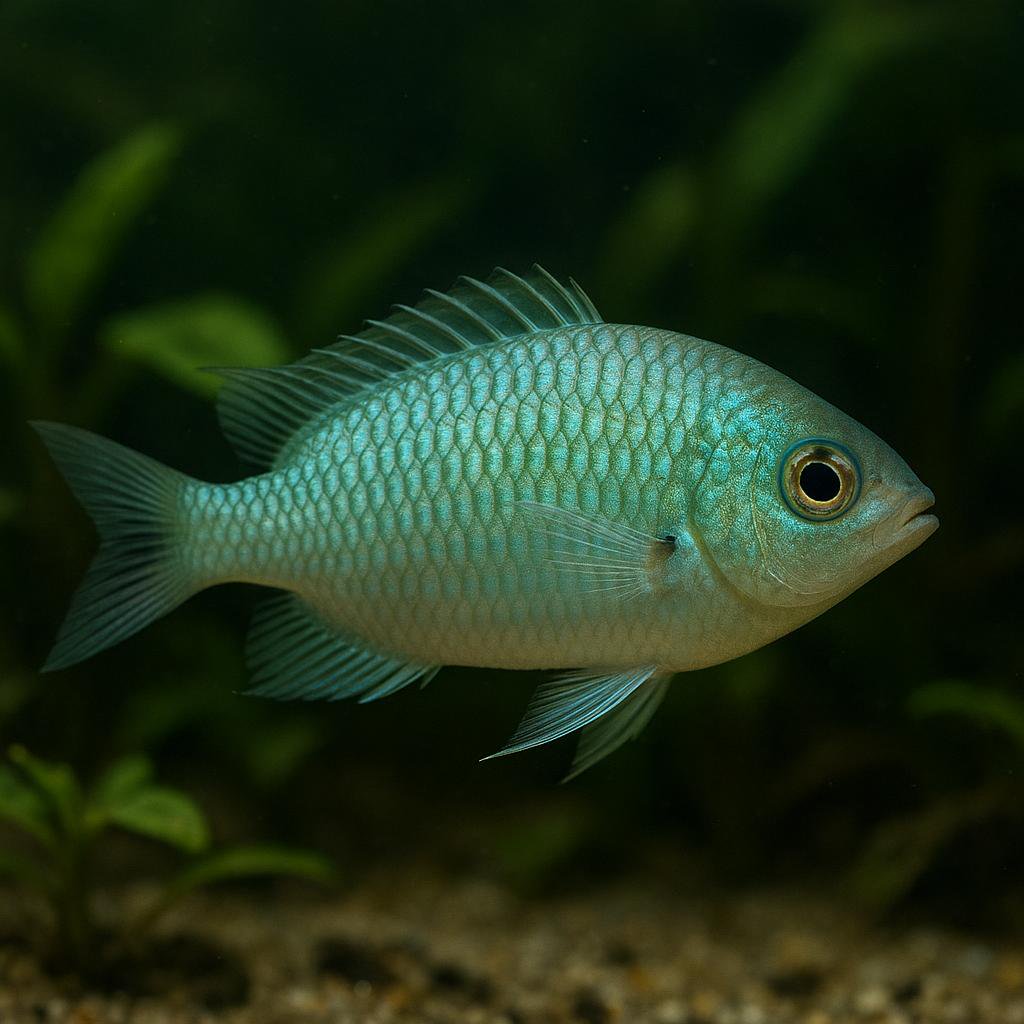
Blue Green Chromis (Green Chromis)
Chromis viridis
Blue Green Chromis are those shimmery little green-blue darts you'll see zipping around the top of a reef tank, always looking like they're catching the light just right. They're super fun in a group because they hover and cruise together, but they've got a bit of a "pecking order" thing going on if the tank's tight or the group's too small.
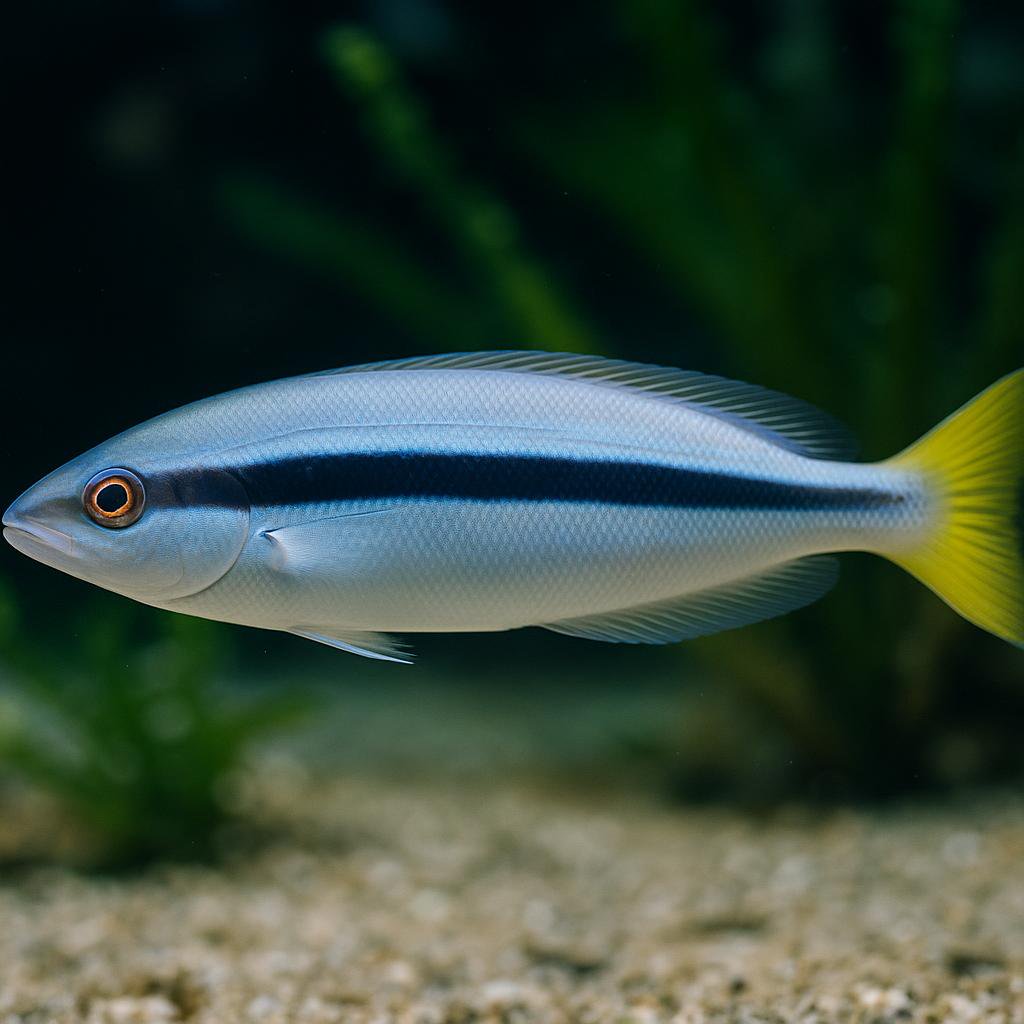
Blue blanquillo
Malacanthus latovittatus
A long, slim tilefish with a bold black side stripe and a blue head that fades down the body. It hovers high above the reef and darts back to a sand-rubble burrow, often living as a monogamous pair; in tanks it is fast, jump-prone, and will eat small crustaceans and tiny fish.
Blueline demoiselle
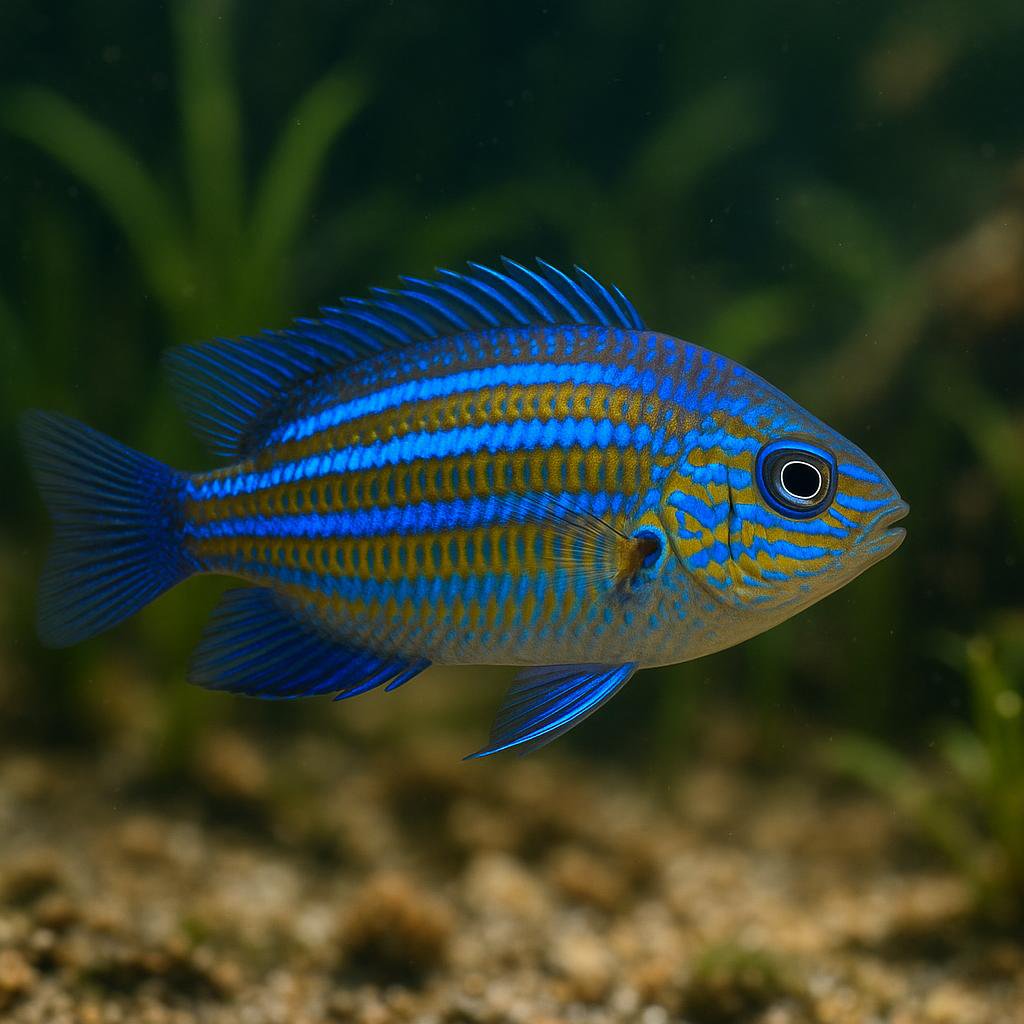
Chrysiptera caeruleolineata
A little reef damsel with a bright electric-blue line riding over a yellow body, it tends to live deeper on rubble slopes and hugs the bottom in small groups. In aquariums it prefers dimmer light, plenty of rock cover, and frequent small feedings of planktony foods; males guard eggs stuck to the substrate.
Bluespotted angelfish
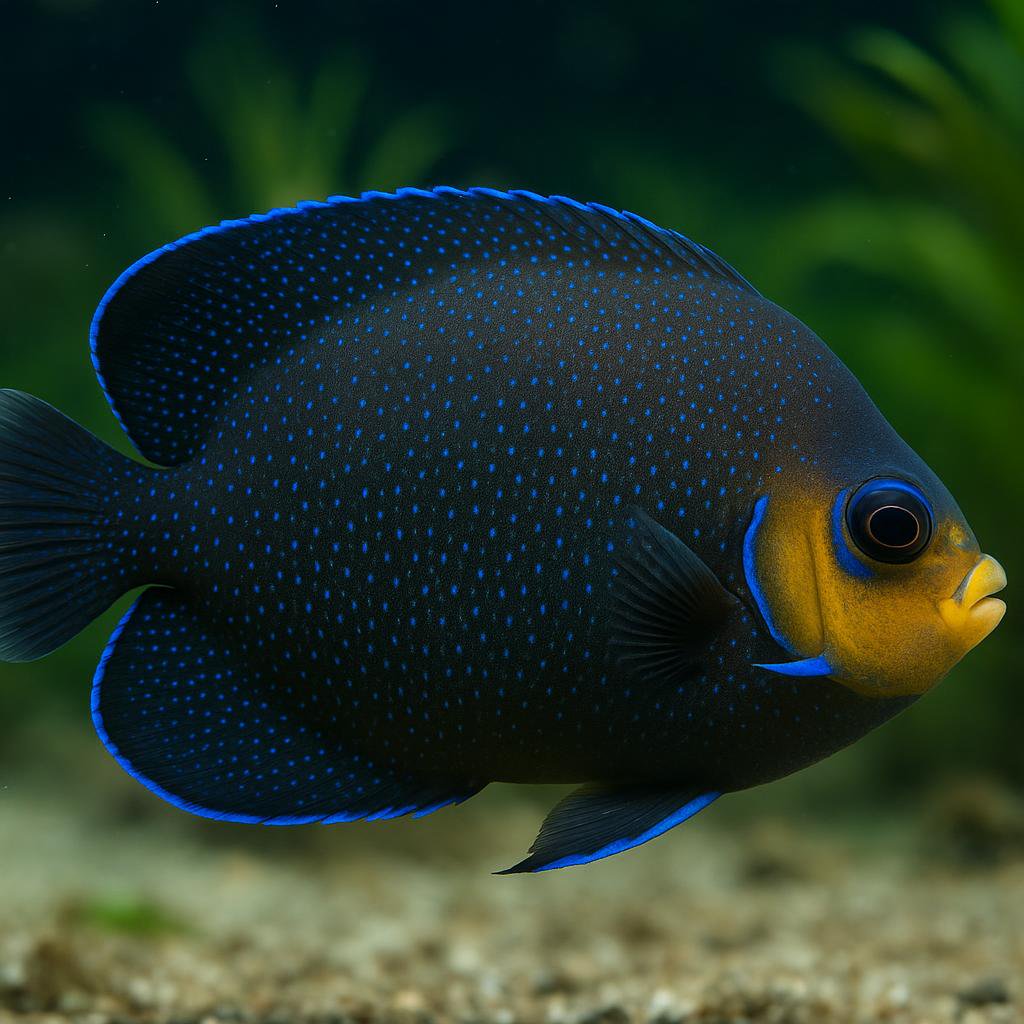
Chaetodontoplus caeruleopunctatus
A medium Pomacanthid from the Philippines, it has a dusky body dusted with tiny electric-blue spots and a yellow tail. In the wild it browses sponges and tunicates on deeper reefs, so it thrives only in mature tanks with lots of live rock and frequent feedings.
Comet
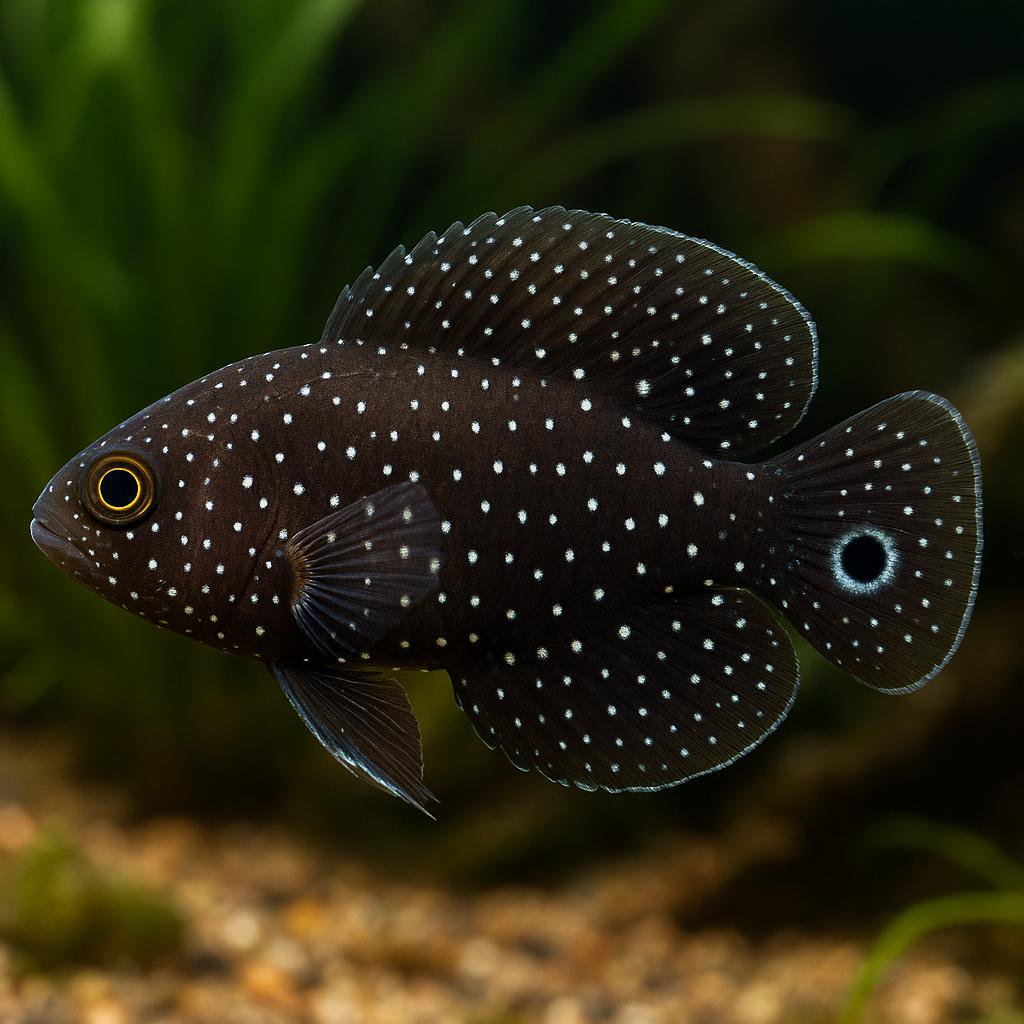
Calloplesiops altivelis
This is the famous "Marine Betta" look-alike: jet-dark with those starry spots, and that wild fake eye near the back that makes predators bite the wrong end. It's a super shy cave-dweller by day and then turns into a sneaky night hunter, cruising out for crustaceans and small fish.
More to Explore
Discover more marine species.
Banggai Cardinalfish
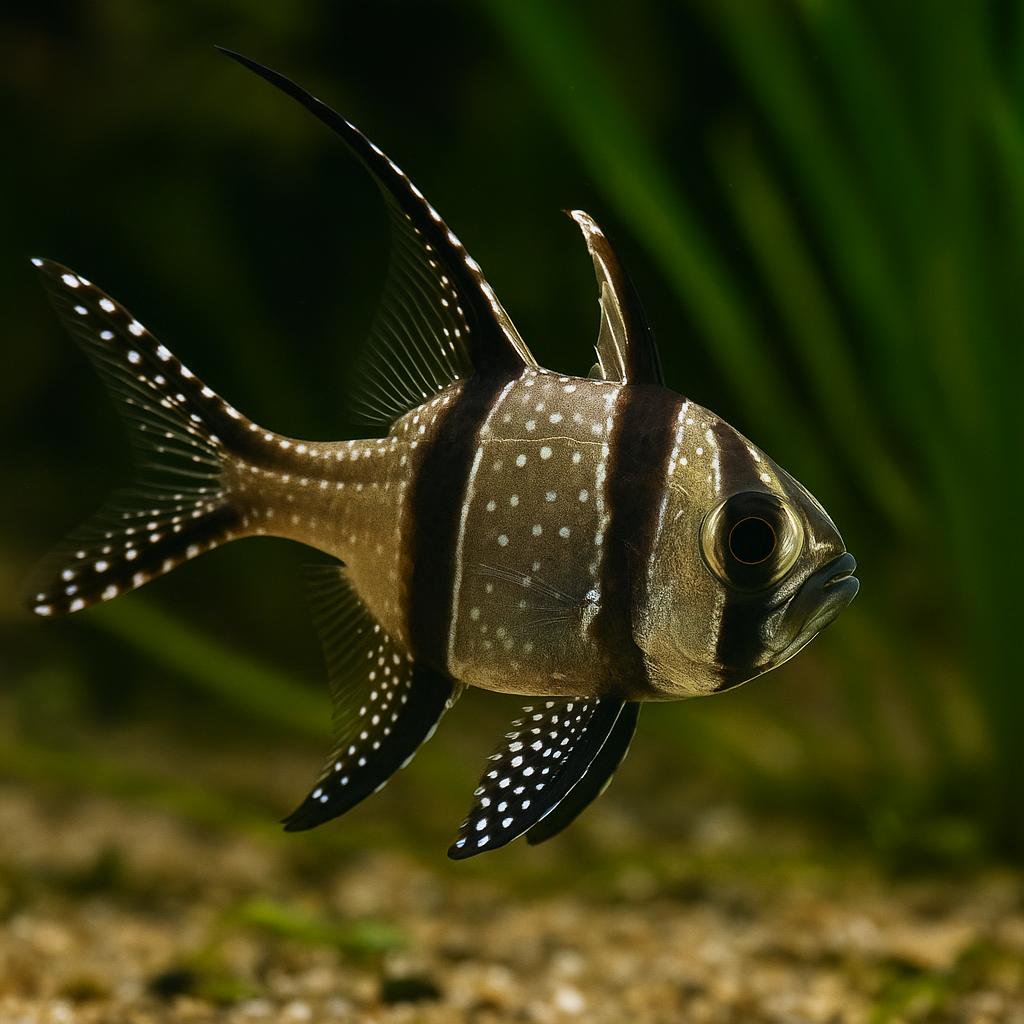
Pterapogon kauderni
Banggai cardinals just sort of hover like little underwater satellites, and the bold black bars with those long, polka-dotted fins look unreal under reef lighting. They're super chill most of the time, but once a pair forms you'll see real "fish drama," and the male will even mouthbrood the babies like a champ.
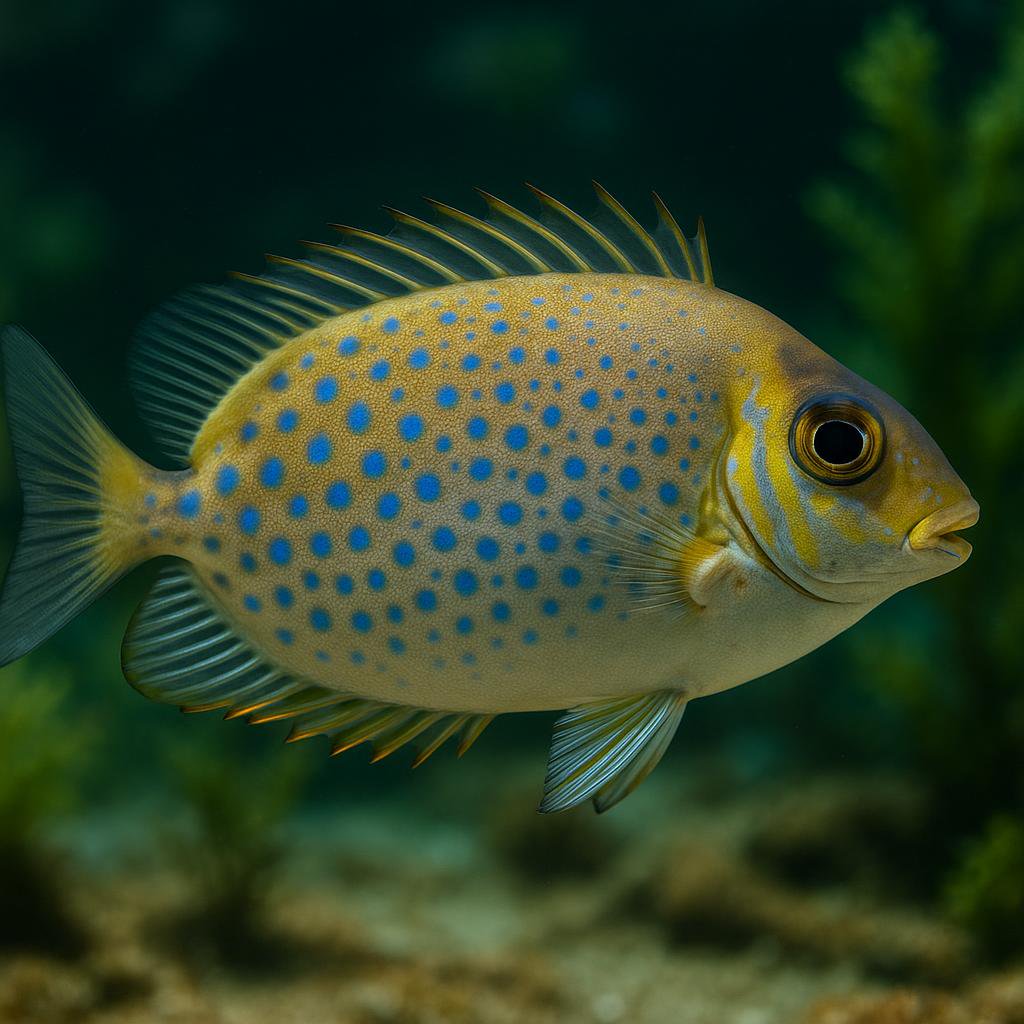
Bicolored foxface
Siganus uspi
A Fiji native with a sharp two-tone look, the bicolored foxface is half deep brown and half yellow with a crisp line between. It spends the day grazing algae and can snap into a mottled camouflage when spooked; those tall dorsal spines are venomous, so other fish usually keep their distance.
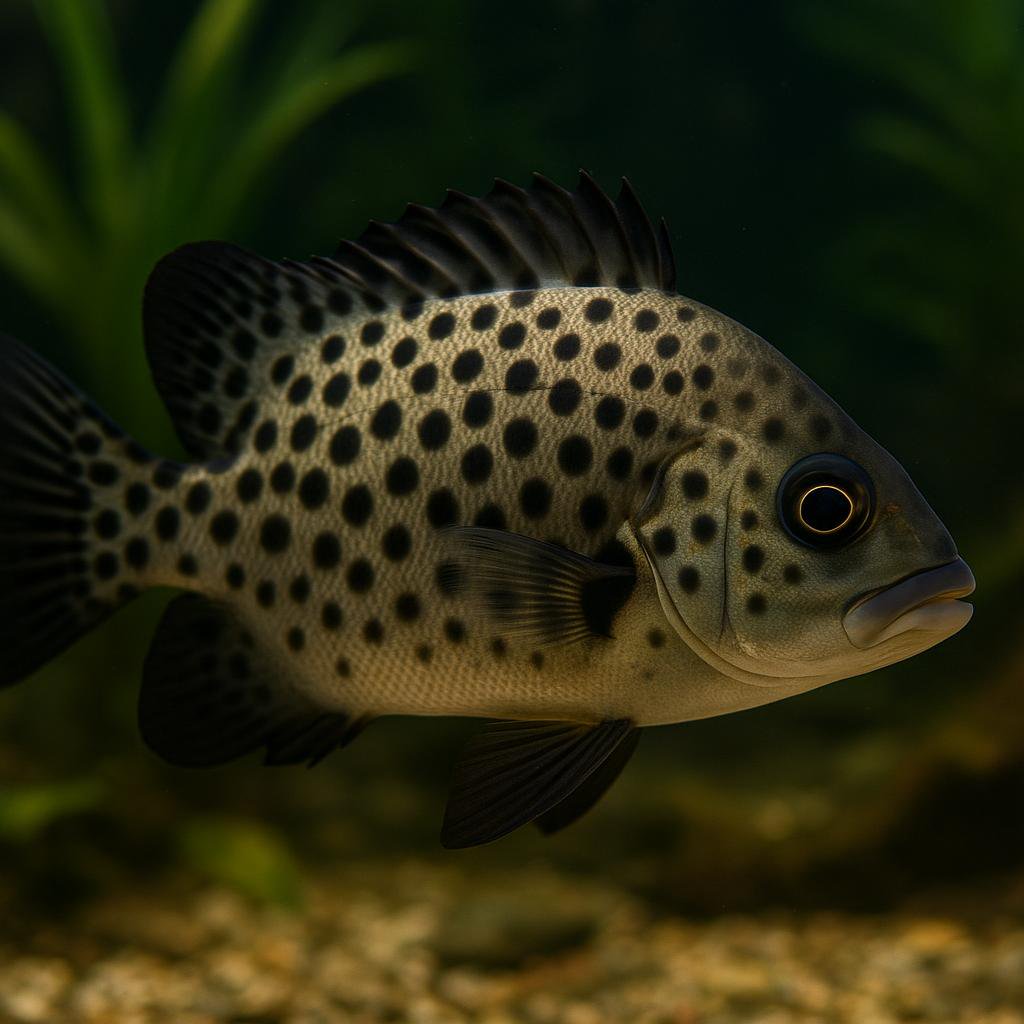
Blackfin slatey
Diagramma melanacrum
A large sweetlips from Southeast Asian reefs with a pale silvery-yellow body sprinkled in dark spots and distinct black pelvic and anal fins. Juveniles linger in silty shallows, while adults rest in small groups on deeper reef walls by day and roam at night to pick off crabs, shrimp, and other invertebrates.
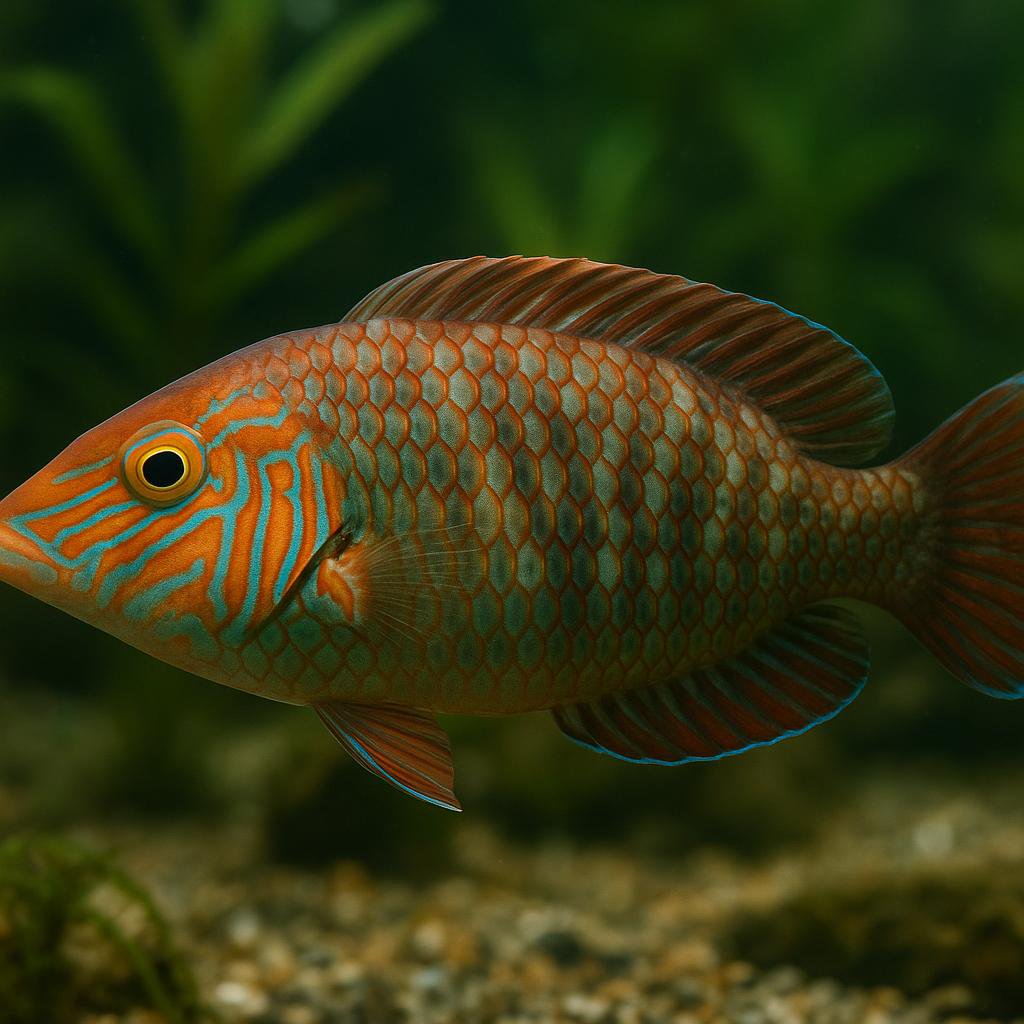
Blackspot razorfish
Iniistius dea
This is one of the coolest "knife-bodied" wrasses - it hangs over open sand and, when it gets spooked or wants to sleep, it literally torpedoes straight into the sand. Give it a deep, fine sand bed and it will act totally different (and way more natural) than a typical rock-hugging reef wrasse. Adults are usually shy and cruisy with tankmates, but they are not forgiving about rough handling or sketchy setups.
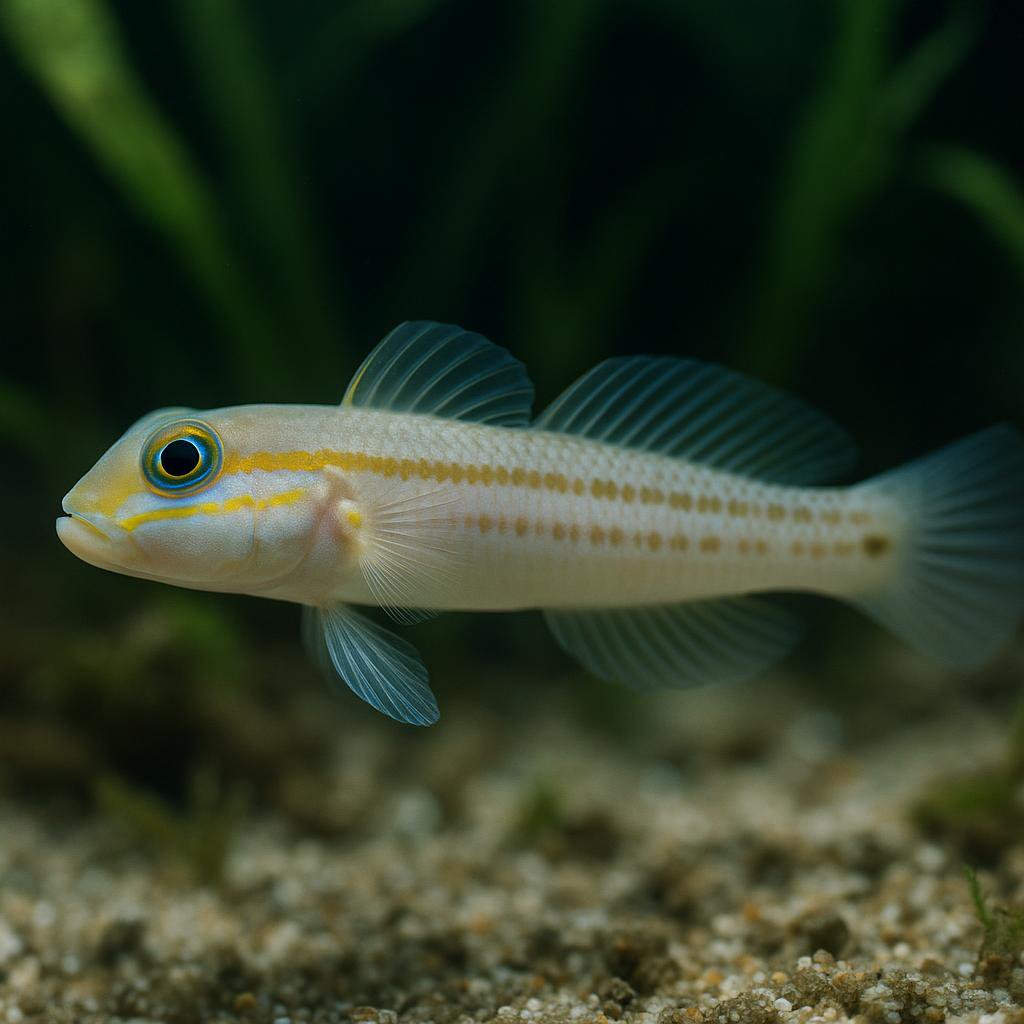
Blueband goby
Valenciennea strigata
This is that classic gold/yellow-headed sand-sifting goby with the little blue cheek stripe-always busy, always rearranging your sandbed. In a reef tank it'll spend the day taking mouthfuls of sand, filtering out tiny critters/foods, then "snowing" clean sand back out, and it'll usually claim a burrow area (often as a pair in the wild). It's super cool behavior-wise, but you really do need a mature tank with a proper sandbed and a lid because they can jump.
Bluespotted dottyback
Pseudochromis persicus
A striking dark-bodied dottyback covered in tiny blue spots from the Persian Gulf and nearby western Indian Ocean reefs. It grows larger than most dottybacks and throws a lot of attitude for its size, staking out caves and defending them hard. Best for roomy marine setups with robust tankmates and plenty of rockwork to break lines of sight.
Looking for other species?