

Blackspotted snake eel
Quassiremus ascensionis
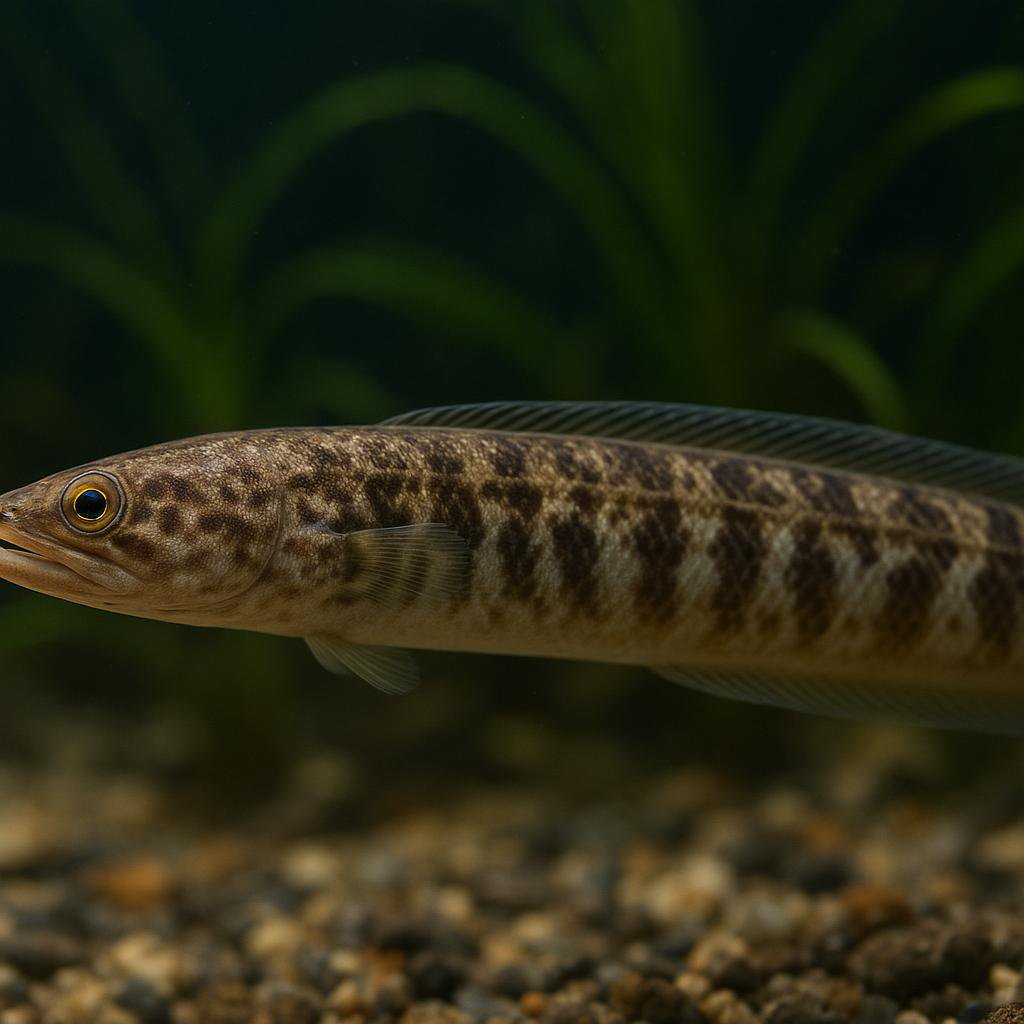
The Blackspotted snake eel features a slender body with distinct black spots on a pale to brownish background, aiding in camouflage in coral reefs.
This page includes AI-generated images. Why am I seeing AI images?
About the Blackspotted snake eel
A tropical marine snake eel that buries in soft substrates (sand/mud/gravel) with only the head exposed to ambush prey. Recorded to 71 cm TL and occurs mainly in the western Atlantic (also Brazil) and at Ascension Island; typically found in shallow inshore habitats to ~12 m, including sand and seagrass (turtle grass) areas.
Quick Facts
Size
71 cm
Temperament
Semi-aggressive
Difficulty
Expert
Min Tank Size
400 gallons
Lifespan
10-20 years
Origin
Western and southern Atlantic (Western Atlantic + Brazil; also Ascension Island in the eastern Atlantic)
Diet
Carnivore - meaty marine foods (shrimp, crab, fish pieces), preferably offered with tongs
Care Notes
- Give it a long tank with a deep sand bed (3-6 in) plus lots of rockwork caves - they hate feeling exposed and will spend half their life buried with just the head out.
- Lock the lid down tight and plug every gap around plumbing; if there is a way out, this eel will find it on a night walk.
- Keep water quality stable and consistent with a tropical marine system. Species references describe it from shallow tropical marine habitats; ensure good filtration and stable conditions appropriate for marine fish.
- Feed meaty marine foods after lights-out with tongs: shrimp, squid, clam, and chunks of fish; start with smaller pieces and work up, 2-3 solid meals a week beats daily snacking.
- Do not trust it with small fish or shrimp/crabs - anything that fits in its mouth will eventually vanish, usually overnight.
- Tankmates need to be chunky and confident (bigger wrasses, tangs, larger angels); skip fin-nippers and hyper-aggressive triggers that will stress it or bite at its face.
- Watch for sandbed issues: sharp crushed coral can wreck their skin, and they can scrape their snout on rough rock when they spook - fine sand and smooth-ish caves save you headaches.
- Breeding in home tanks is basically a no-show; assume wild-caught and focus on keeping stress low so it eats reliably and does not go on a hunger strike.
Compatibility
Good Tankmates
- Medium to larger tangs and surgeonfish (yellow tang, kole tang, etc.) - active, not easily bullied, and too big to be seen as food. They mostly ignore the eel once everyone is settled.
- Rabbitfish (foxface, one-spot) - tough, mellow algae grazers that keep to themselves. The eel usually stays in its holes and the rabbitfish just cruises around.
- Robust, non-prey-sized marine fishes (species-dependent) that do not harass the eel; avoid fish small enough to be eaten.
- Dwarf and medium angels (coral beauty, flame angel) - generally a solid mix if the angel is not a terror. The eel is more about ambush-feeding than picking fights in open water.
- Hawkfish that are not tiny (flame hawk) - perching fish that can hold their own. Just make sure you feed the eel well so it is not cruising at night looking for snacks.
- Larger clownfish pairs (maroon, big ocellaris) - they defend their corner, the eel keeps to its burrow. Works best in a roomy tank with lots of rockwork so they can each have zones.
Avoid
- Small, slender fish it can swallow (firefish, small gobies, dartfish, small cardinals) - if it fits in the eel's mouth, it is on the menu, usually after lights-out.
- Tiny bottom perchers and shrimp-associated gobies (watchman goby, neon goby) - they sit right where the eel hunts and they disappear fast, especially in a rock-and-sand setup.
- Aggressive hole-owning fish that fight for the same real estate (dottybacks, big damsels) - they will pester the eel in its hide and you get constant stress and scuffles.
- Crustacean-eaters you want to keep with shrimp or small crabs (some triggers, some large wrasses) - not because they hurt the eel, but because you end up with a tank where nothing 'cleanup crew sized' survives, and feeding gets messy and competitive.
Where they come from
Blackspotted snake eels (Quassiremus ascensionis) are Atlantic fish you see tied to rocky reefs and rubble zones, often hanging around crevices and tight holes. They are built to snake into places other fish cannot, and they spend a lot of time with just the head poking out, watching for food.
If you have ever kept other burrowy or crevice-eel types, the vibe is similar: secretive, strong, and way more capable of escaping than you think.
Setting up their tank
This is an expert fish mostly because of tank security and feeding. They do fine in normal reef salinity and temps, but they do not tolerate sloppy setups, and they will exploit every gap in your lid.
- Tank size: bigger is better, but think in terms of footprint and hiding options more than height. A 4 foot tank is a nice starting point for an adult, with room to upgrade if you end up with a larger specimen.
- Aquascape: lots of tight caves and rockwork that is stable. Use epoxy or putty if you stack rocks - eels shove and wedge.
- Substrate: sand is your friend. They like to rest against it and will root around. Avoid sharp crushed coral.
- Filtration: oversized skimmer and strong mechanical filtration. They are messy eaters and meaty foods foul water fast.
- Flow: moderate. Give calm pockets near the bottom where they can sit without getting blasted.
Lid it like you are keeping a prison break artist. Cover overflow teeth, seal cable cutouts, and weigh down lids. If a credit card can fit, an eel can fit eventually.
Secure your rockwork before the eel goes in. A panicked eel can bulldoze loose structures, and that can crack glass or crush tankmates.
Lighting does not matter much for them directly, but dimmer areas and overhangs make them show themselves more. If the tank is bright and open, expect a lot of hiding.
What to feed them
Think meaty marine foods. Mine did best on a steady rotation of chopped shrimp, squid, clam, and marine fish flesh. If you can get them onto frozen from the start, life gets easier.
- Staples: raw shrimp, scallop, clam, squid, chopped silversides or similar marine fish
- Treats: live blackworms (acclimation tool), live shrimp or small marine crustaceans if you need to kickstart a picky eater
- Avoid: freshwater feeder fish, goldfish, and anything oily that wrecks water quality fast
Use feeding tongs and aim the food right at the eel's face. They learn the routine and you keep fingers out of the bite zone. Eel teeth are no joke.
Frequency depends on size. Smaller individuals can handle smaller meals a bit more often, while bigger ones do fine with larger meals a few times a week. The big mistake I see is overfeeding because they look hungry all the time. They are opportunists.
Remove leftovers fast. A chunk of shrimp wedged behind rock can spike nutrients and start a nasty cycle of algae and bacterial blooms.
How they behave and who they get along with
They are mostly crevice-dwelling ambush predators. Daytime can be pretty chill: head out, watching, retreating. At feeding time they turn on, and at night they may cruise more.
- Good tankmates: robust fish that are too big to be swallowed and not likely to harass the eel (bigger tangs, larger angels, sturdy wrasses).
- Risky tankmates: small fish, slender fish, and bottom sleepers. If it fits in the mouth, it is on the menu sooner or later.
- Inverts: small shrimp and crabs are usually snacks. Larger, tough inverts may survive, but do not bet on it.
Most aggression issues are really feeding issues. A hungry eel patrols more, takes bigger risks, and tests tankmates. A well-fed eel still hunts, but it is less pushy.
They can spook easily during maintenance. Move slowly, keep hands out of their holes, and try not to rearrange their entire home every week. Give them a couple of favorite caves and leave them alone.
Breeding tips
Breeding this species in home aquariums is basically in the "not happening" category. Like many marine eels, they have a larval stage that drifts in open water, and replicating that life cycle is beyond normal hobby setups.
If you ever see two together, do not assume a pair. Multiple eels in one tank can work sometimes with a huge system and many hiding spots, but it can also turn into a stress and feeding competition problem fast.
Common problems to watch for
- Escapes: number one cause of "mystery disappearance." Check floors, sump cabinets, behind the stand.
- Starvation after import: some arrive refusing frozen. Use scentier foods (clam, squid) and tong feed in low light. Live food can be a temporary bridge.
- Injuries from rockwork: scrapes on the head and along the body from squeezing into sharp holes. Smooth out the eel caves and avoid jagged rock edges.
- Poor water from meaty feeding: rising nitrate and phosphate, cloudy water, nuisance algae. Skim wet, run carbon, and stay on top of mechanical filtration.
- Parasites and infections: watch for rapid breathing, excess mucus, flashing, or refusal to eat. Quarantine is tough with eels but worth the effort if you can pull it off safely.
Be careful with meds. Some treatments are harsh on scaleless fish and eels. If you have to treat, research the medication and dose strategy specifically with eels in mind, and keep oxygen high.
If your eel stops eating, do not panic on day one. Check the basics: salinity stable, no ammonia, good oxygenation, and no tankmate bullying. Most of my "picky" moments were either stress from a change (new rockwork, heavy maintenance) or food not being presented the way the eel wanted.
Similar Species
Other marine semi-aggressive species you might be interested in.
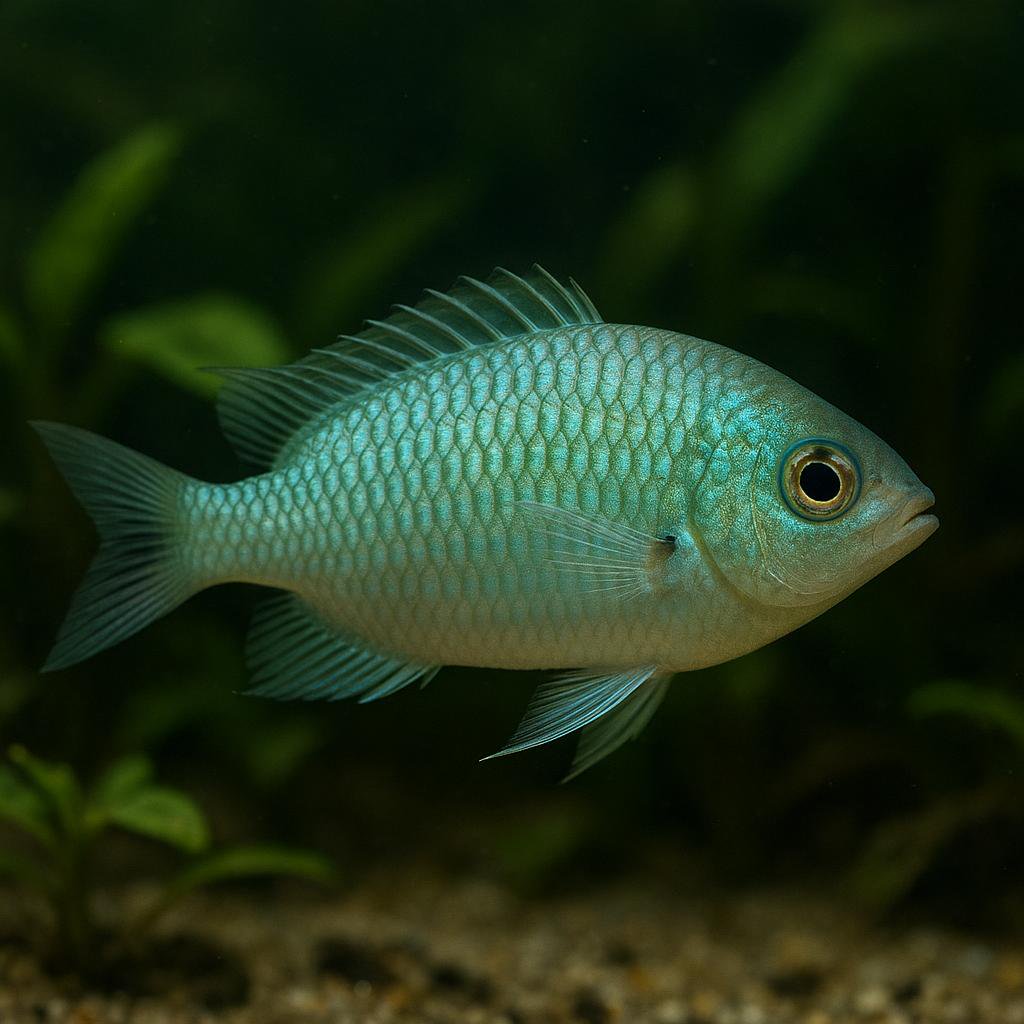
Blue Green Chromis (Green Chromis)
Chromis viridis
Blue Green Chromis are those shimmery little green-blue darts you'll see zipping around the top of a reef tank, always looking like they're catching the light just right. They're super fun in a group because they hover and cruise together, but they've got a bit of a "pecking order" thing going on if the tank's tight or the group's too small.
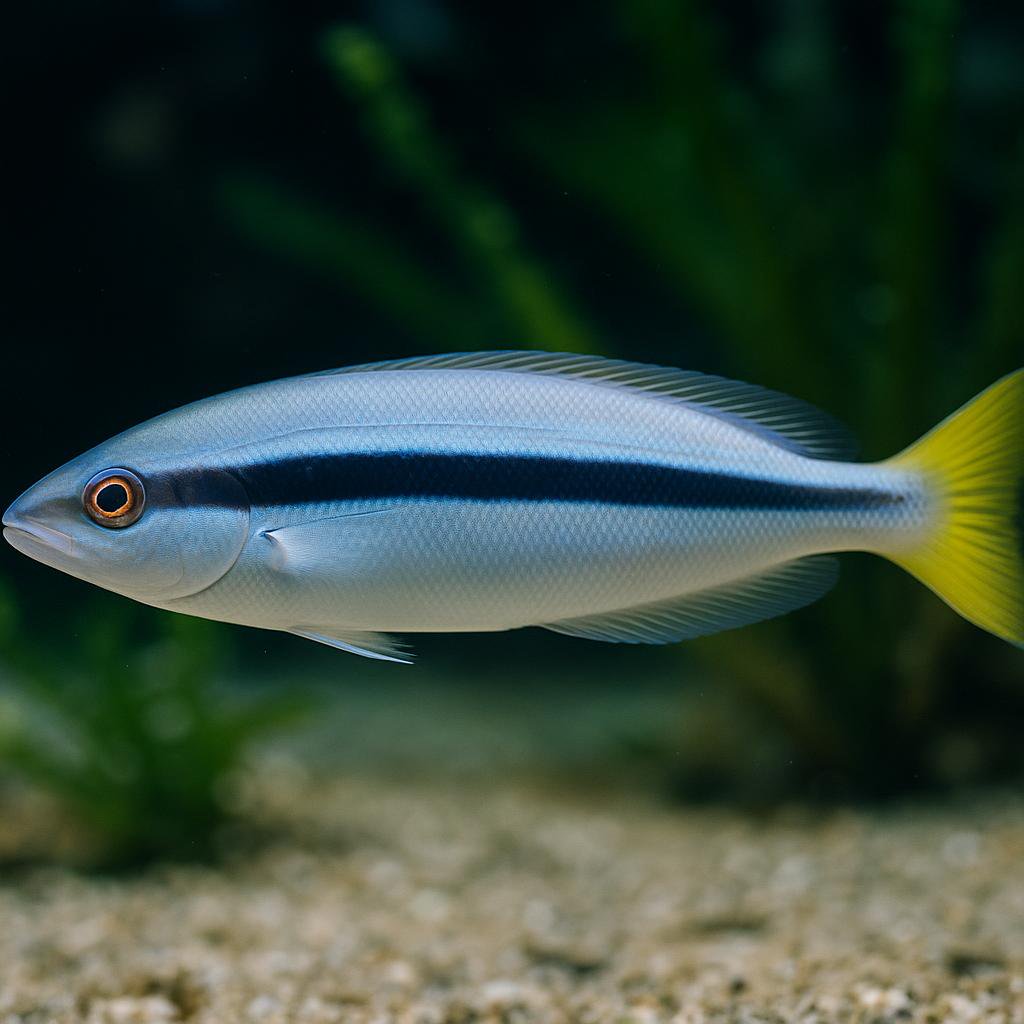
Blue blanquillo
Malacanthus latovittatus
A long, slim tilefish with a bold black side stripe and a blue head that fades down the body. It hovers high above the reef and darts back to a sand-rubble burrow, often living as a monogamous pair; in tanks it is fast, jump-prone, and will eat small crustaceans and tiny fish.
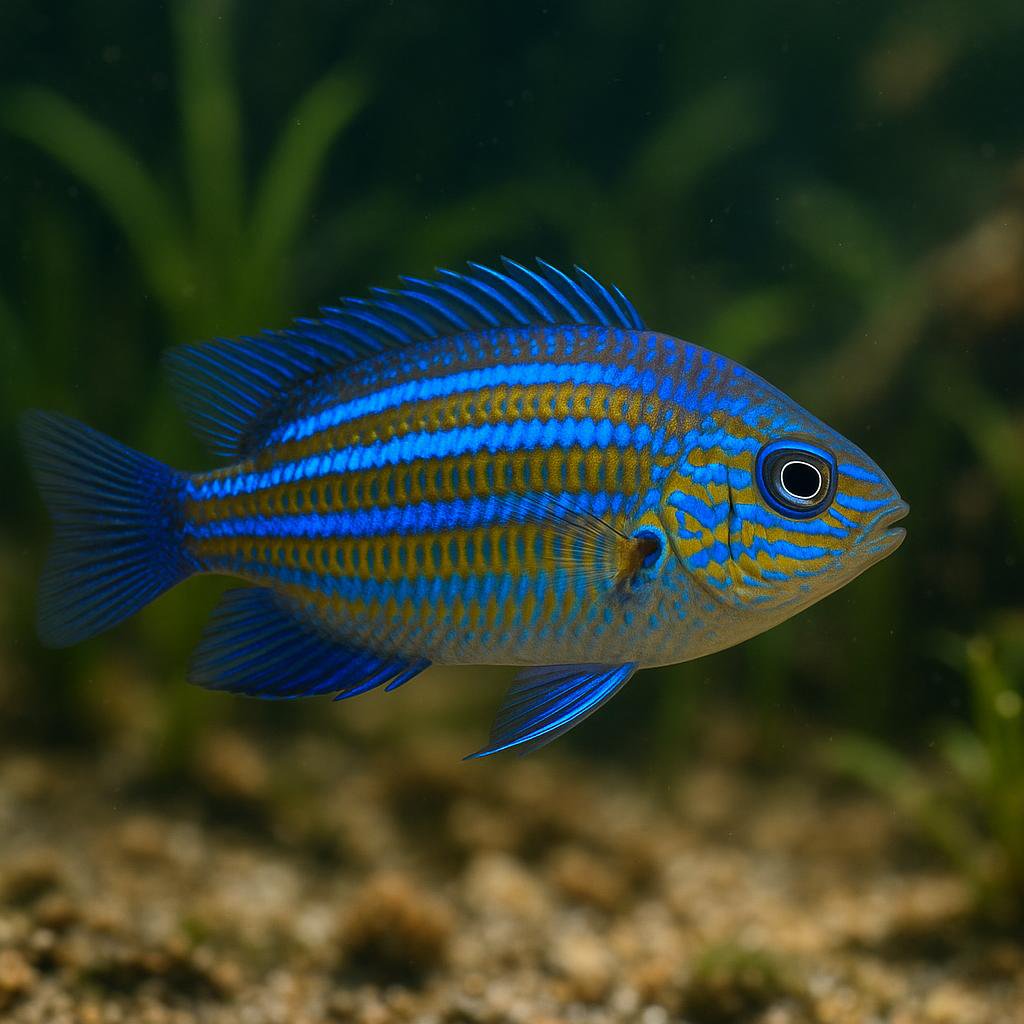
Blueline demoiselle
Chrysiptera caeruleolineata
A little reef damsel with a bright electric-blue line riding over a yellow body, it tends to live deeper on rubble slopes and hugs the bottom in small groups. In aquariums it prefers dimmer light, plenty of rock cover, and frequent small feedings of planktony foods; males guard eggs stuck to the substrate.
Bluespotted angelfish
Chaetodontoplus caeruleopunctatus
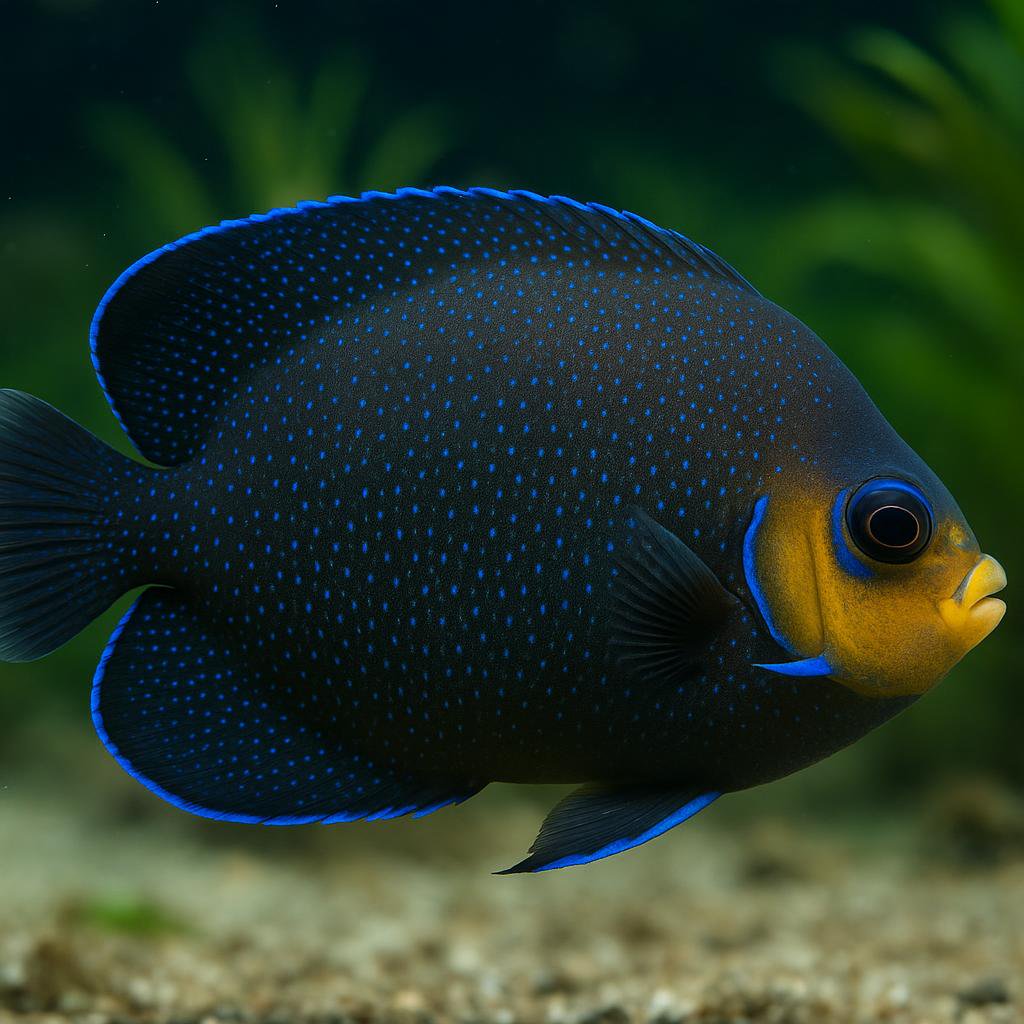
A medium Pomacanthid from the Philippines, it has a dusky body dusted with tiny electric-blue spots and a yellow tail. In the wild it browses sponges and tunicates on deeper reefs, so it thrives only in mature tanks with lots of live rock and frequent feedings.
Broadbarred firefish
Pterois antennata
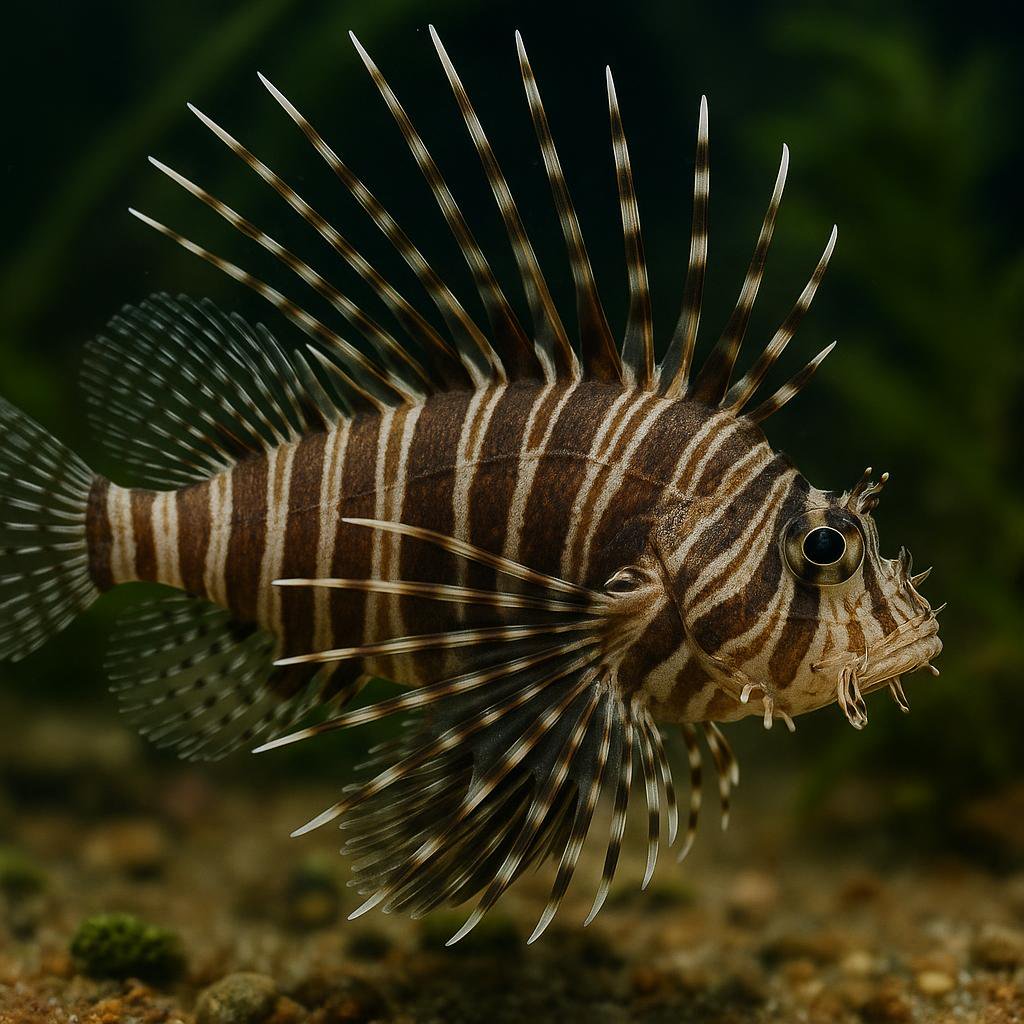
This is the lionfish with the long "antennae" (those banded tentacles above the eyes) and the ragged, spotty fins that make it look extra dramatic under reef lighting. It'll spend the day tucked under ledges and then cruise out at dusk to ambush shrimp, crabs, and any small fish it can fit in its mouth-also worth remembering it's venomous, so you treat it with respect when you're in the tank.
Comet
Calloplesiops altivelis
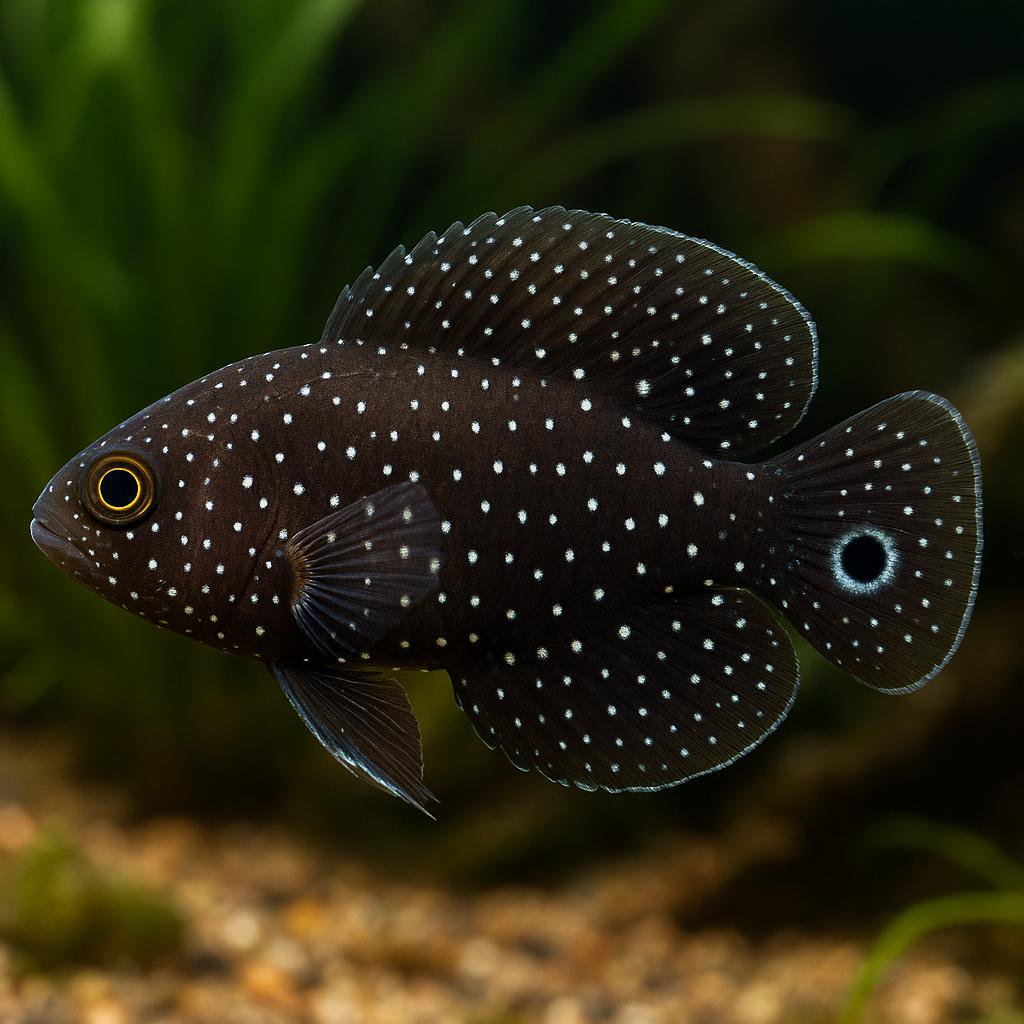
This is the famous "Marine Betta" look-alike: jet-dark with those starry spots, and that wild fake eye near the back that makes predators bite the wrong end. It's a super shy cave-dweller by day and then turns into a sneaky night hunter, cruising out for crustaceans and small fish.
More to Explore
Discover more marine species.
Banggai Cardinalfish
Pterapogon kauderni
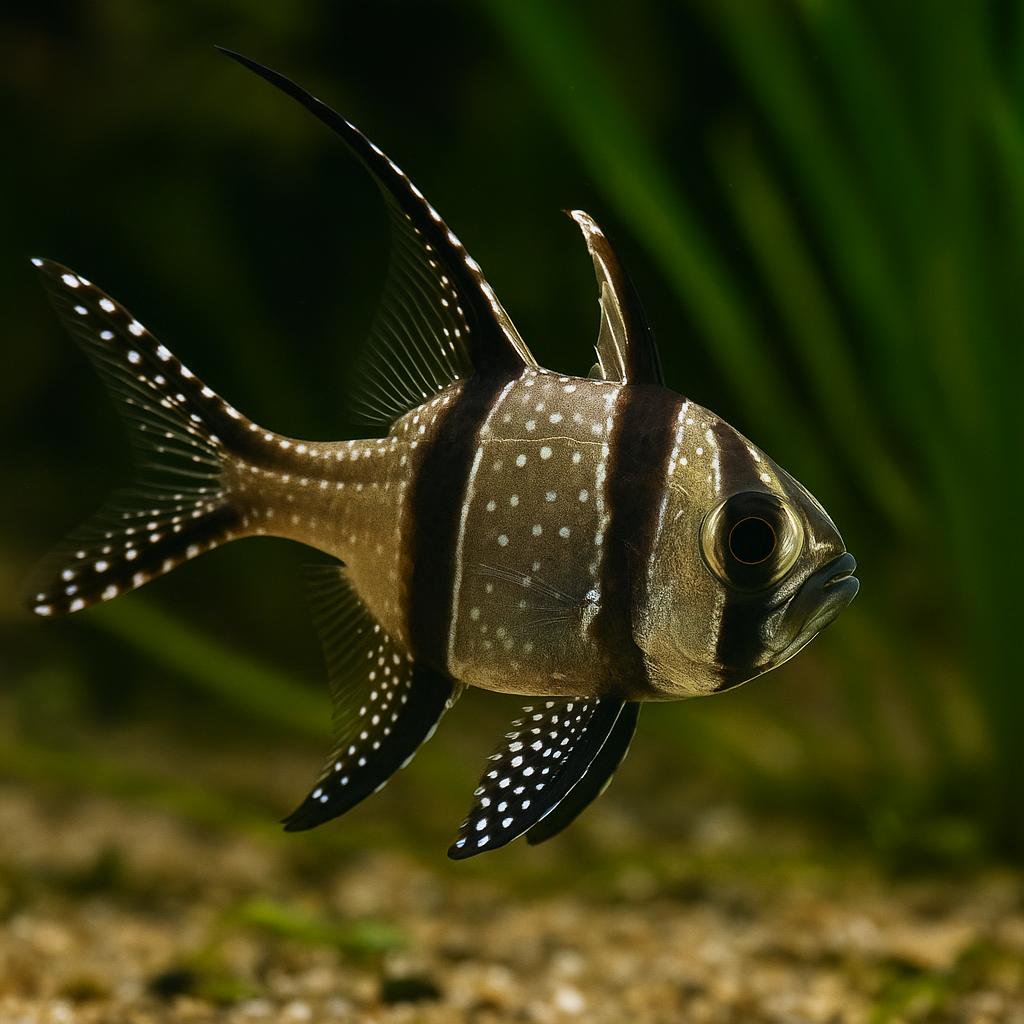
Banggai cardinals just sort of hover like little underwater satellites, and the bold black bars with those long, polka-dotted fins look unreal under reef lighting. They're super chill most of the time, but once a pair forms you'll see real "fish drama," and the male will even mouthbrood the babies like a champ.
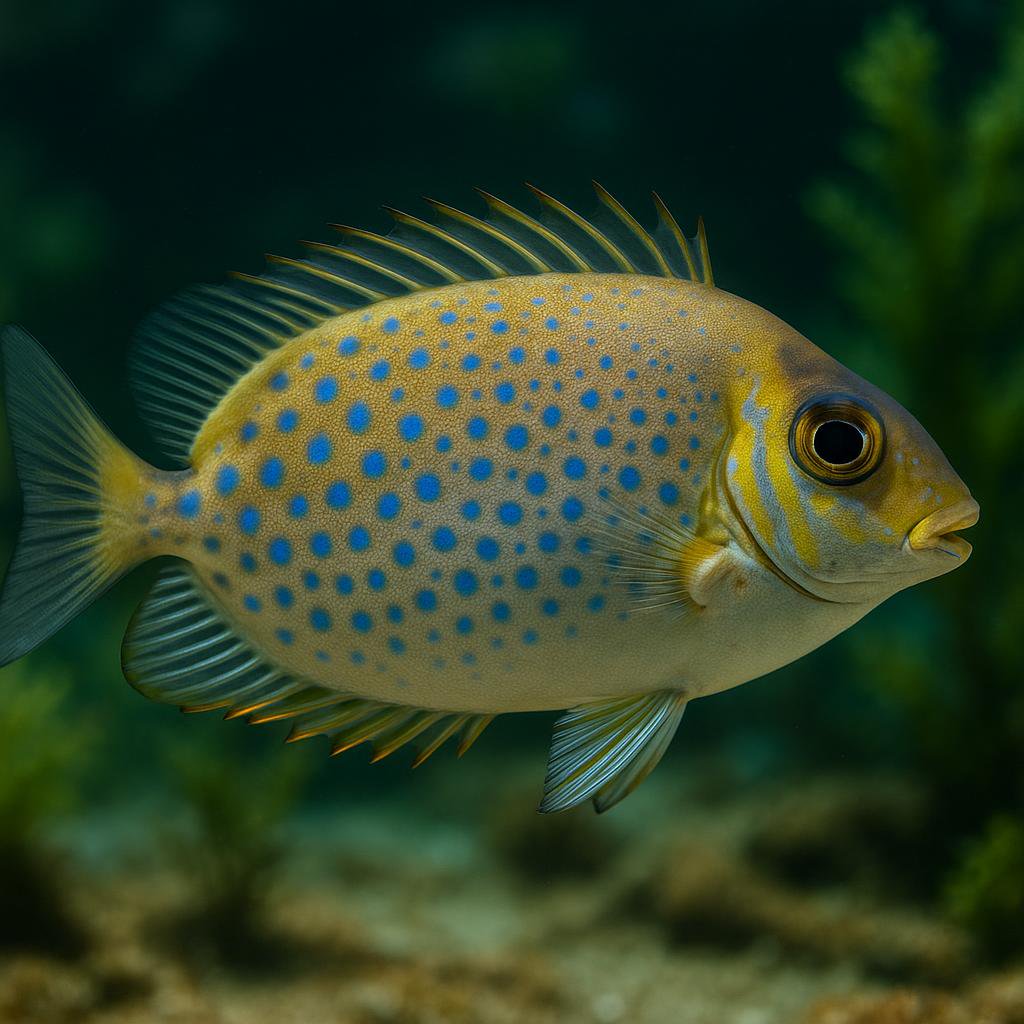
Bicolored foxface
Siganus uspi
A Fiji native with a sharp two-tone look, the bicolored foxface is half deep brown and half yellow with a crisp line between. It spends the day grazing algae and can snap into a mottled camouflage when spooked; those tall dorsal spines are venomous, so other fish usually keep their distance.
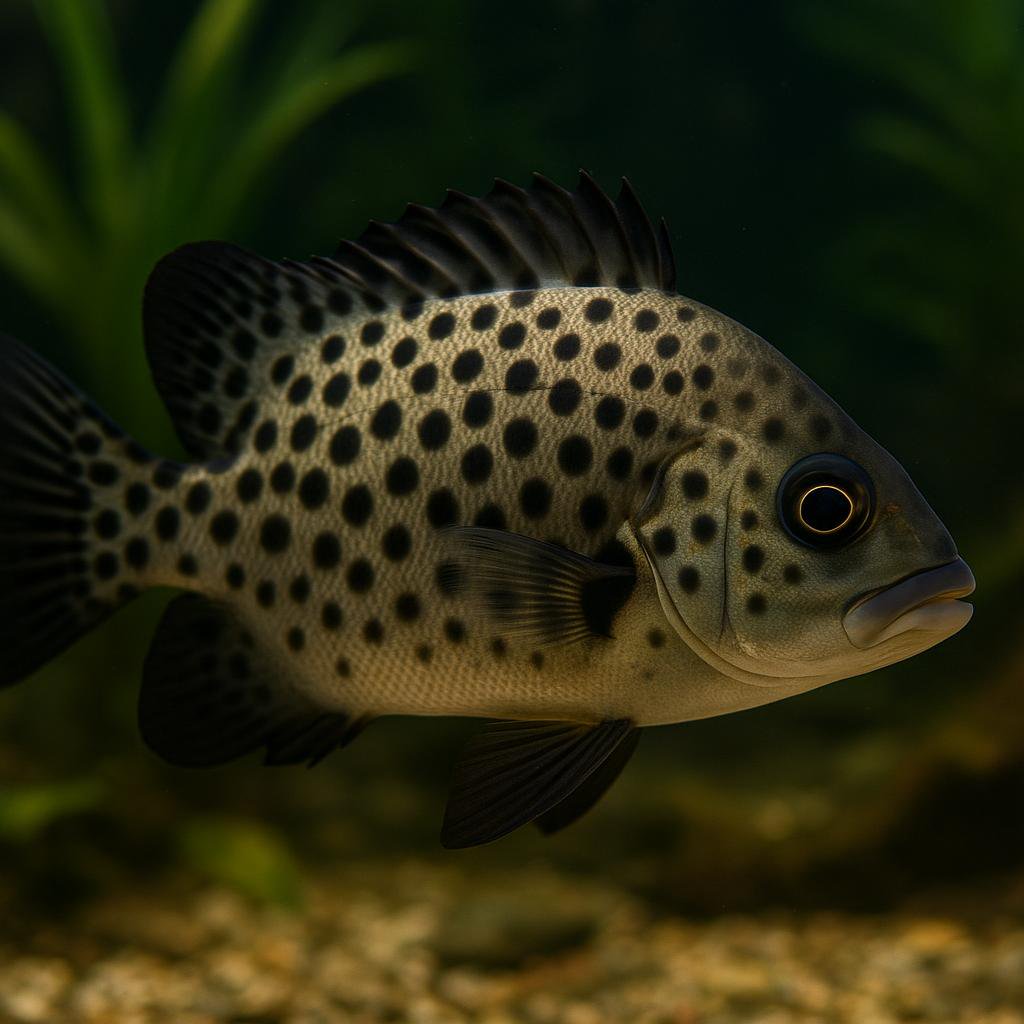
Blackfin slatey
Diagramma melanacrum
A large sweetlips from Southeast Asian reefs with a pale silvery-yellow body sprinkled in dark spots and distinct black pelvic and anal fins. Juveniles linger in silty shallows, while adults rest in small groups on deeper reef walls by day and roam at night to pick off crabs, shrimp, and other invertebrates.
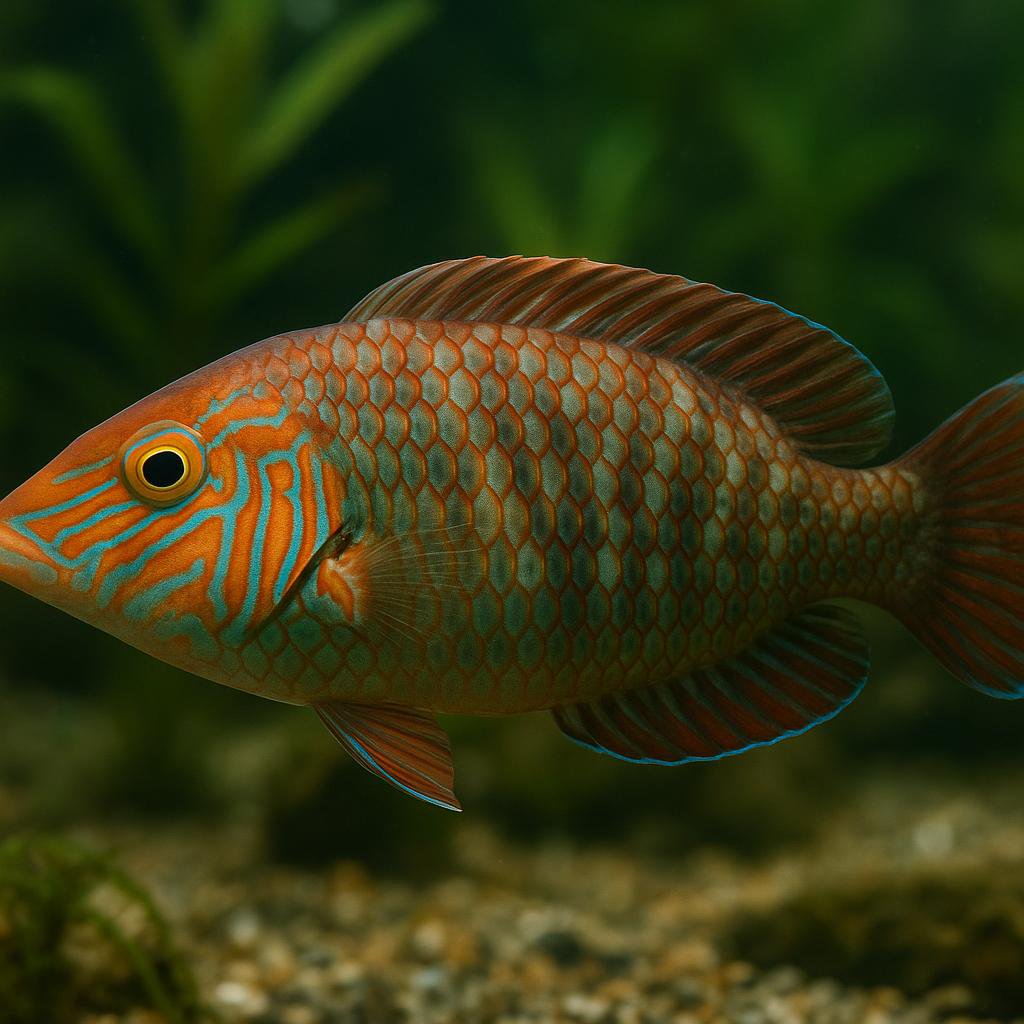
Blackspot razorfish
Iniistius dea
This is one of the coolest "knife-bodied" wrasses - it hangs over open sand and, when it gets spooked or wants to sleep, it literally torpedoes straight into the sand. Give it a deep, fine sand bed and it will act totally different (and way more natural) than a typical rock-hugging reef wrasse. Adults are usually shy and cruisy with tankmates, but they are not forgiving about rough handling or sketchy setups.
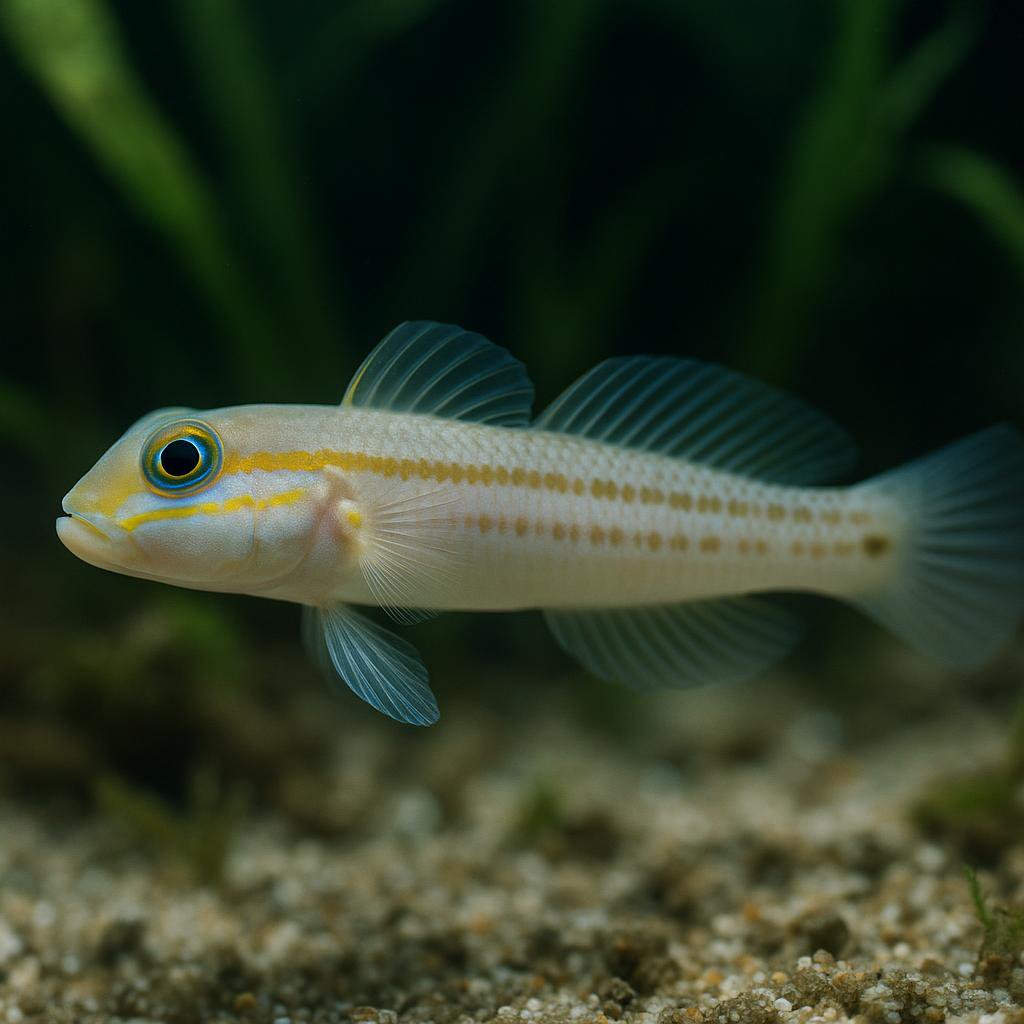
Blueband goby
Valenciennea strigata
This is that classic gold/yellow-headed sand-sifting goby with the little blue cheek stripe-always busy, always rearranging your sandbed. In a reef tank it'll spend the day taking mouthfuls of sand, filtering out tiny critters/foods, then "snowing" clean sand back out, and it'll usually claim a burrow area (often as a pair in the wild). It's super cool behavior-wise, but you really do need a mature tank with a proper sandbed and a lid because they can jump.
Bluespotted dottyback
Pseudochromis persicus
A striking dark-bodied dottyback covered in tiny blue spots from the Persian Gulf and nearby western Indian Ocean reefs. It grows larger than most dottybacks and throws a lot of attitude for its size, staking out caves and defending them hard. Best for roomy marine setups with robust tankmates and plenty of rockwork to break lines of sight.
Looking for other species?