

Longsnout Pipefish
Vanacampus poecilolaemus
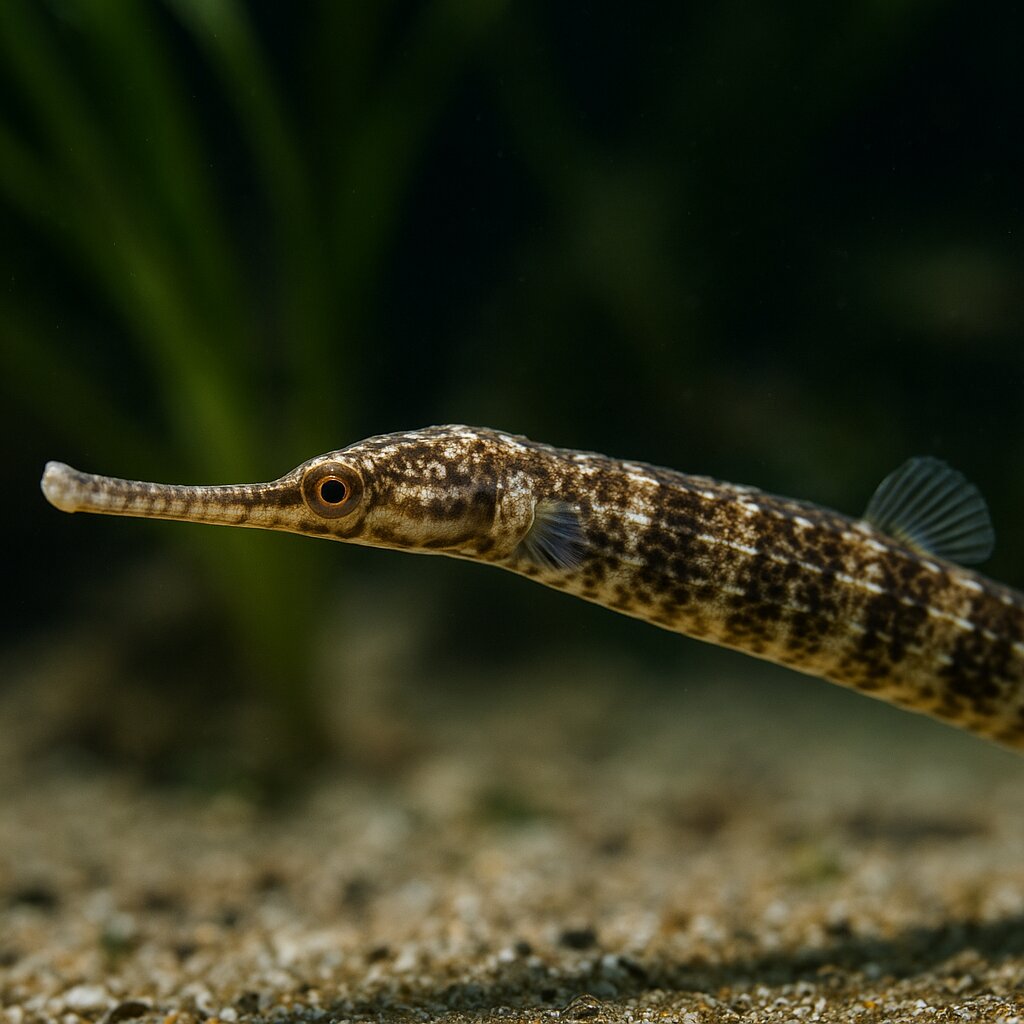
The Longsnout Pipefish features a slender, elongated body with a distinctive long snout and a mottled coloration of greens and browns for camouflage.
This page includes AI-generated images. Why am I seeing AI images?
About the Longsnout Pipefish
From southern Australia’s seagrass and macroalgal beds, this temperate pipefish threads through weedy shallows picking off tiny crustaceans with its straw-like snout. It does best in a chilled system with gentle-to-moderate flow and requires frequent small feedings of live or enriched meaty foods.
Also known as
Quick Facts
Size
30 cm
Temperament
Peaceful
Difficulty
Advanced
Min Tank Size
55 gallons
Lifespan
3-5 years
Origin
Southern Australia (including Tasmania)
Diet
Carnivore - live or enriched frozen mysis, copepods, and other small crustaceans
Water Parameters
15-20°C
8.1-8.4
300-400 dGH
Need a heater for this species?
This species needs 15-20°C in a 55 gallon tank. Use our heater calculator to find the right wattage.
Calculate heater sizeCare Notes
- Give them a long, quiet tank: 55+ gallons with at least a 3 ft run for a pair of larger pipefish, lots of macroalgae or fake seagrass to cling to, and gentle-to-moderate cross-flow with slack zones. Sponge-cover all pump intakes and overflow teeth so they do not get pinned.
- Keep it cool and steady: 59–68 F (15–20 C), SG 1.023–1.026, pH 8.1–8.4, zero ammonia/nitrite, and nitrate under 10 ppm. This temperate Australian species does best in a chilled system; higher temperatures increase disease risk.
- Start with live food and feed often: mysid shrimp, copepods, and amphipods, with enriched baby brine only as a bridge. Target-feed 3-4 small meals a day with a turkey baster or feeding station and use HUFA vitamins like Selcon.
- You can wean to frozen by mixing in finely chopped mysis with live and offering it in a low-flow corner so it twitches in place. Be patient and keep sessions short so they do not tire out.
- Tankmates need to be mellow and slow eaters; they are great with seahorses and other pipefish, plus small peaceful gobies, cardinalfish, and firefish. Avoid damsels, dottybacks, anemones, and most wrasses (especially sixline and other pod-hunters); some flasher/fairy wrasses may work only with care in large, low-flow systems.
- Quarantine gently and handle in a specimen cup, not a net. Avoid copper and harsh meds; use praziquantel for worms and only dose antibiotics in QT if you have clear signs of infection.
- Watch for early warning signs such as snout redness/snout-rot, rapid breathing, or stringy feces; isolate promptly, optimize aeration and water quality, and treat in a quarantine tank as indicated.
- Breeding is male-brooding; the dad carries the eggs and releases tiny planktonic fry. If you want to try, you will need a separate round rearing tank and dense live rotifers and copepods from day one.
Compatibility
Good Tankmates
- Captive-bred seahorses that cruise slow and ignore them
- Other gentle pipefish of similar size and vibe
- Tiny peaceful gobies like neon gobies (Elacatinus) or clown gobies (Gobiodon)
- Calm cardinalfish like pajama or banggai, as long as you target feed so the pipes get food
- Shy firefish/dartfish that keep to themselves and wont nip
- Small, non-nippy blennies like a tailspot blenny
Avoid
- Sixline and most pod-hunting wrasses; some flasher/fairy wrasses may work only with careful monitoring in large, low-flow systems
- Damsels and pushy clowns that defend territory and outcompete at feeding
- Dottybacks and pseudochromis that love to bite and ambush
- Hawkfish that perch and pounce on skinny, slow movers
Where they come from
Longsnout pipefish (Vanacampus poecilolaemus) are temperate-water syngnathids from southern Australia, weaving through seagrass beds and weedy reefs in sheltered bays and estuaries. Picture them camouflaged among strap-like leaves, picking tiny crustaceans all day while staying mostly out of the current.
Setting up their tank
Treat these more like seahorses than reef fish. They do best in a calm, cooler marine setup with lots of structure to cling to and hunt through.
- Tank size: 30-40 gallons for a pair or small group. Longer footprint beats tall.
- Temperature: 64-72 F (18-22 C). A chiller or a naturally cool room helps. Warmer water invites bacterial issues.
- Salinity: 1.023-1.025 SG. pH 8.0-8.3. Keep nutrients low and oxygen high.
- Aquascape: Sand and rubble with dense macroalgae (Caulerpa, Gracilaria, Halimeda) or artificial seagrass. They like to anchor and snake through it.
- Flow: Gentle and diffuse. Think steady glide, not a washing machine. 5-10x turnover with guarded intakes.
- Filtration: Sump is great, but cover overflows and powerheads with sponge or mesh so no one gets pinned.
- Lighting: Low to moderate. Enough for macros if you keep them, but they do not want blasting reef lights.
Give them hitching options at different heights. A mix of macroalgae clumps, faux seagrass, and twiggy rockwork keeps them relaxed and visible.
Acclimate slowly with a drip, dim the lights, and keep flow low the first day. Offer live food right away to settle them in.
What to feed them
Expect to start with live foods. Wild-caught pipefish rarely go straight to frozen, and starving them while you try to convert is the fastest way to lose them.
- Staples to start: Live copepods (Tigriopus, Tisbe), enriched adult brine (short-term only), live mysids if you can source them, small amphipods.
- Enrichment: Soak live brine/mysids in HUFA supplements (e.g., DHA/EPA) before feeding.
- Training to frozen: Start with frozen cyclops, Calanus, and finely chopped mysis. Target feed with a pipette near a calm corner or a feeding station.
- Frequency: Small meals 3-5x per day at first, then at least 2-3x daily once they take richer frozen foods.
- Signs they are eating: You will see quick strikes of the snout and a slight belly fill after the session. A pinched-in belly means you need to step it up.
Do not rely on your live rock to feed them. Even pod-rich tanks get hunted down fast by pipefish. Culture or buy live foods while you work on the frozen transition.
How they behave and who they get along with
They are deliberate, stealthy feeders and will lose every mealtime race against typical reef fish. Most of the day is slow cruising, tail-wrapping onto algae, and snicking tiny prey.
- Best tankmates: Other pipefish, seahorses, tiny peaceful gobies, small cardinals, snails, and very calm hermits.
- Risky or no-go: Wrasses, damsels, dottybacks, anthias, aggressive clowns, large shrimp that steal food, and anything that outcompetes at feeding time.
- Corals and anemones: Avoid strong-stinging corals and anemones. Softies and macros are safer if you want a planted look.
They are social in a low-drama way. A pair or small group is fine if the tank is large enough and you can keep up with the food.
Breeding tips
Like other syngnathids, the male carries the eggs. Courtship looks like gentle parallel swimming and quick little rises through the water column. If a pair clicks, the male will brood under his belly/tail area and release tiny, fully formed pipefish.
- Sexing: Look for the male's brood area along the underside, which appears more developed than the female's.
- Setup: Keep a peaceful species-only system, stable cool temps, and lots of cover. Consistent live food availability helps trigger spawning.
- Hatch and rearing: Move the male to a quiet nursery tank late in gestation if you want to save fry. Start fry on copepod nauplii or S-strain rotifers, then step up to newly hatched, enriched Artemia. Gentle circular flow and spotless water are key.
- Reality check: Raising fry is a project. Plan separate cultures for pods/rotifers before you try.
Common problems to watch for
- Starvation: The big one. A sunken belly or flat flanks means they are not getting enough. Increase live foods and reduce competition.
- Bacterial infections: Warm tanks and dirty water set the stage. Keep them cool, well-oxygenated, and do not let detritus build up. UV can help lower pathogen pressure.
- Snout injuries: They poke at hard surfaces. Keep glass clean, avoid sharp rock edges, and do not let them get trapped against intakes.
- Parasites and worms: Quarantine is worth it. Many keepers run a gentle deworming protocol (e.g., praziquantel) during QT. Avoid harsh copper treatments with syngnathids.
- Getting sucked into gear: Guard every intake, overflow, and powerhead.
- Refusal to take frozen: Be patient. Use a feeding station and mix live with frozen. Turn off flow during meals so food does not blow past them.
Consistency wins. Stable cool temps, quiet tankmates, and a steady stream of appropriately sized food will carry you a long way with this species.
Similar Species
Other marine peaceful species you might be interested in.
Abe's eelpout
Japonolycodes abei
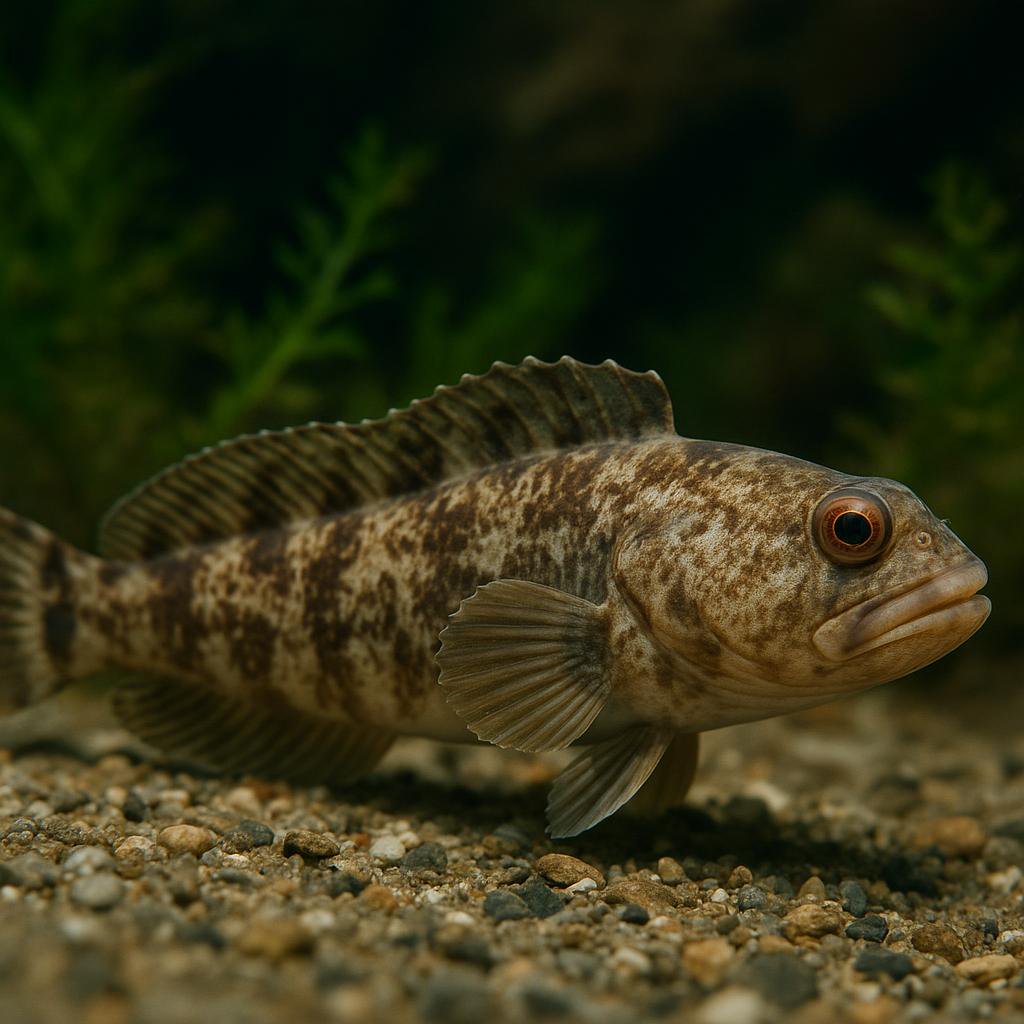
Japonolycodes abei is a temperate, deepwater demersal eelpout (family Zoarcidae) endemic to Japan (Kumano-nada Sea reported; other sources also report Sagami Bay and Tosa Bay). It is the only species in the genus Japonolycodes and occurs roughly 40-300 m depth, making it an uncommon/atypical aquarium species.
Affinis blind cusk-eel
Barathronus affinis
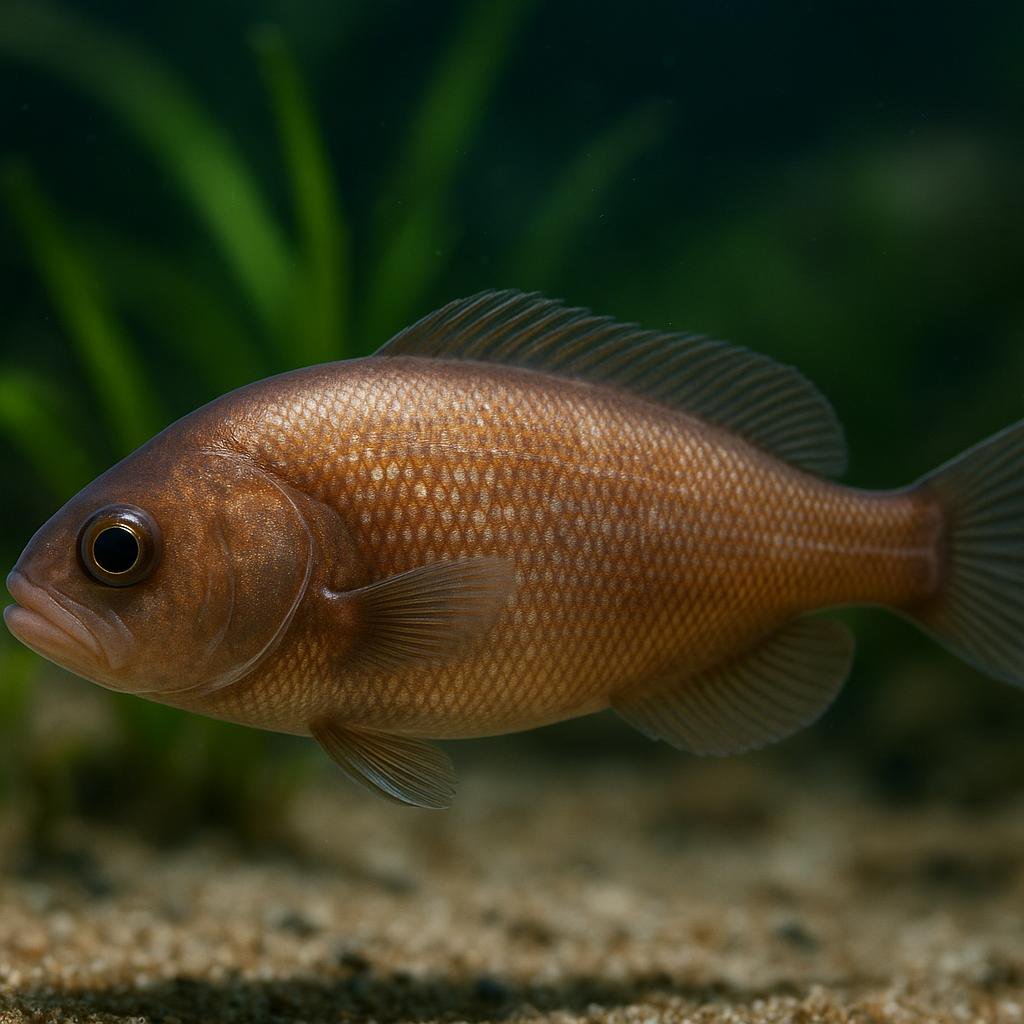
Barathronus affinis is a tiny, super-weird deep-sea blind cusk-eel from the western-central Indian Ocean. It is one of those gelatinous, loose-skinned brotula-type fishes that live way down in the dark and are basically never seen alive, so almost everything we know comes from preserved specimens and taxonomic work.
Allis shad
Alosa alosa
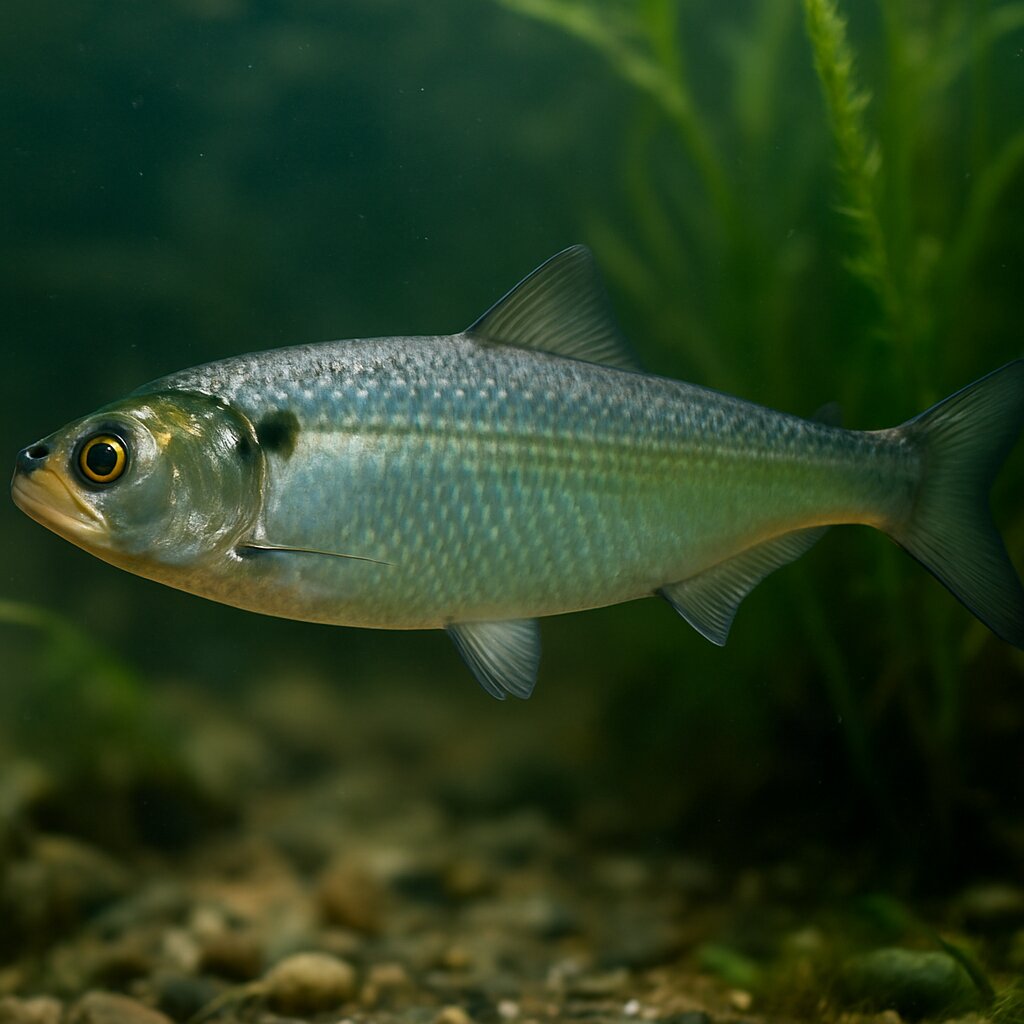
Gorgeous silver, fast-swimming shad that spends most of its life in the sea and then surges up big rivers in noisy, surface-spawning schools. It grows huge for a herring-type fish and needs cool, ultra-oxygenated water and tons of open space, so it is a public-aquarium species rather than a home tank fish.
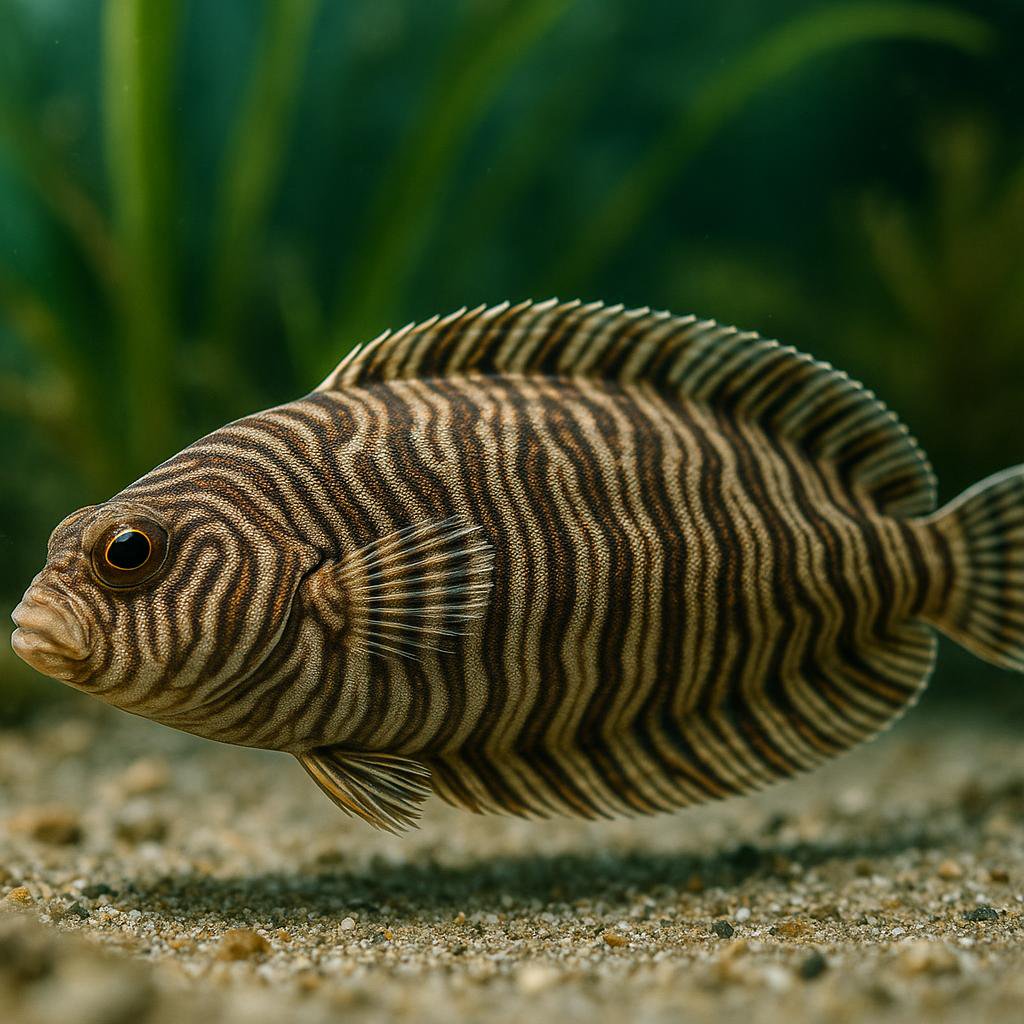
Annandale's zebra sole
Zebrias annandalei
Zebrias annandalei is a small demersal sole from coastal India that inhabits sandy or muddy bottoms and buries for camouflage. It is rarely kept in home aquaria and would require a specialized marine sand-bottom setup and appropriate feeding.
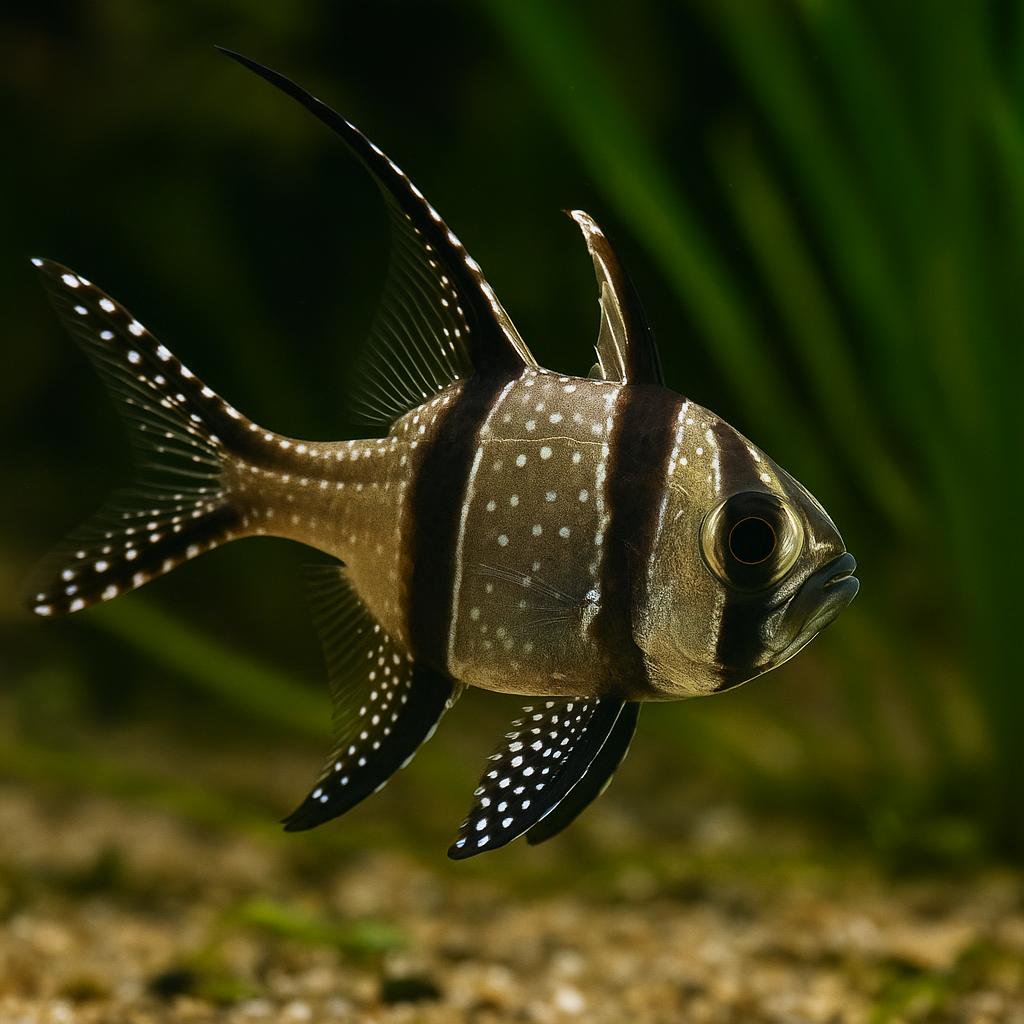
Banggai Cardinalfish
Pterapogon kauderni
Banggai cardinals just sort of hover like little underwater satellites, and the bold black bars with those long, polka-dotted fins look unreal under reef lighting. They're super chill most of the time, but once a pair forms you'll see real "fish drama," and the male will even mouthbrood the babies like a champ.
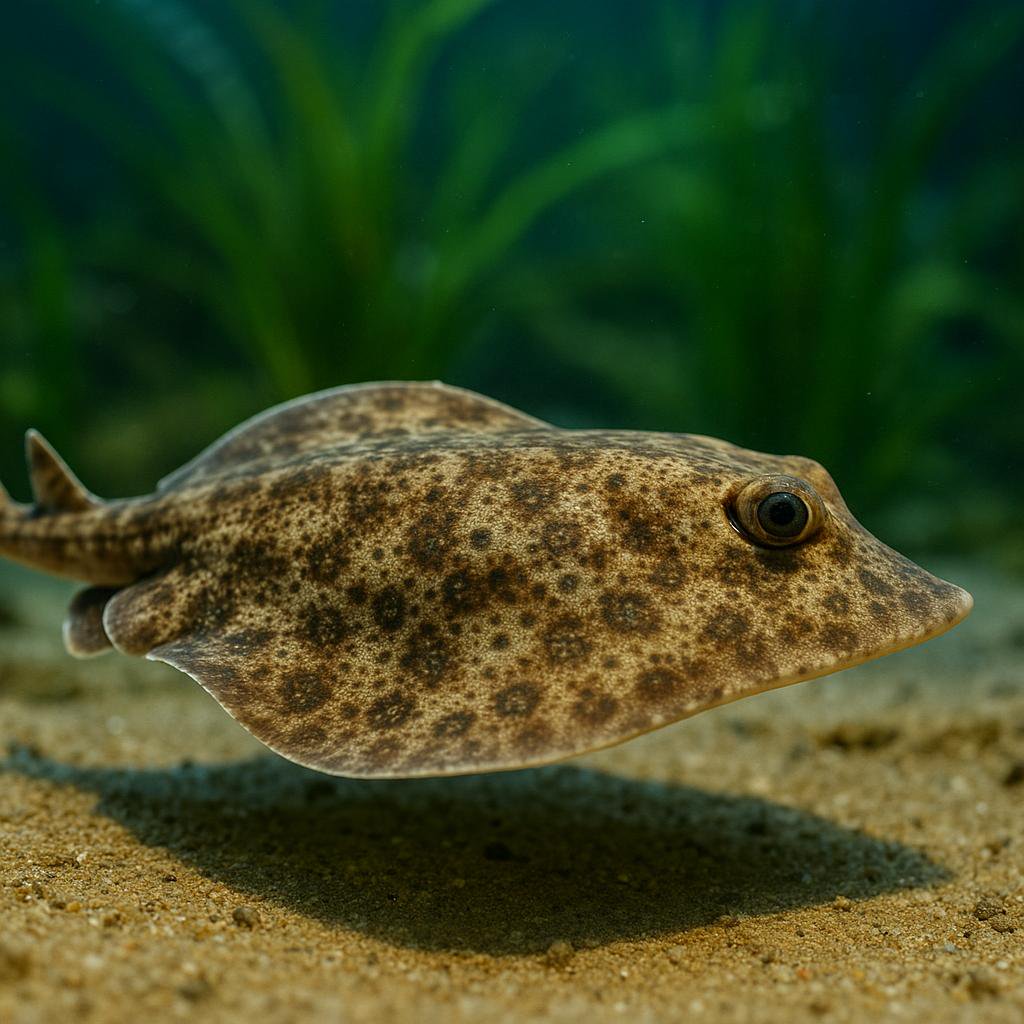
Barbedwire-tailed skate
Notoraja martinezi
Notoraja martinezi is a deepwater skate from the eastern Pacific (Costa Rica down to Ecuador) that lives way down on soft bottoms. The tail is the giveaway - it is lined with strong, hooked thorns that really do look like barbed wire. This is absolutely not an aquarium fish; it is a cold, high-pressure deep-sea animal with basically no practical home care info because it is not kept in the hobby.
More to Explore
Discover more marine species.
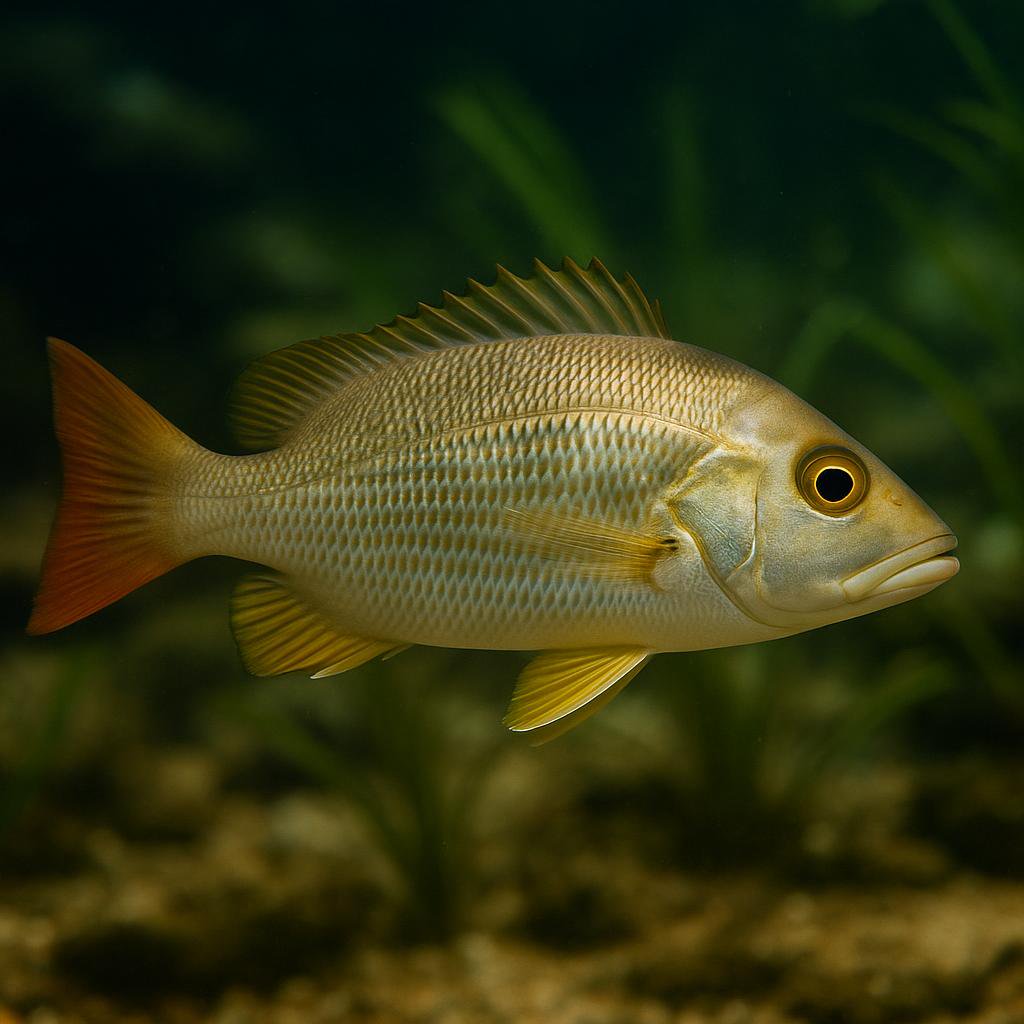
African red snapper
Lutjanus agennes
This is a true snapper from West Africa - a big, fast-growing predator that goes from coastal reefs to brackish lagoons and estuaries (especially as a juvenile). Super cool fish in the wild, but it gets absolutely huge and will eat smaller tankmates once it has the mouth for it, so its really more of a public-aquarium scale animal than a home-aquarium fish.
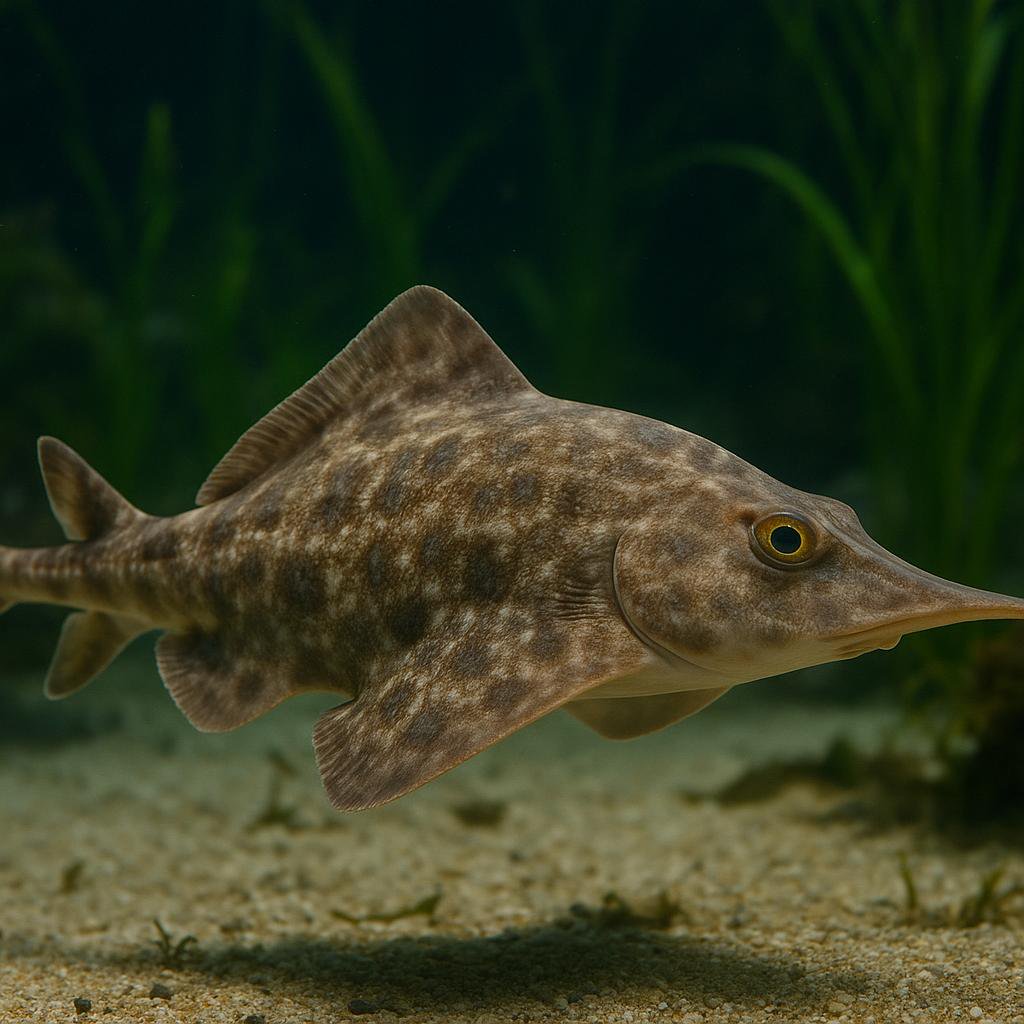
Aleutian skate
Bathyraja aleutica
This is a big, cold-water deep-slope skate from the North Pacific that cruises muddy bottoms and eats chunky benthic prey like crabs and shrimp. The really cool bit is its egg-laying skate life - it does distinct pairing (the classic skate "embrace") and drops those tough egg cases on the seafloor. Not an aquarium fish at all unless you're basically running a public-aquarium-style chilled system.
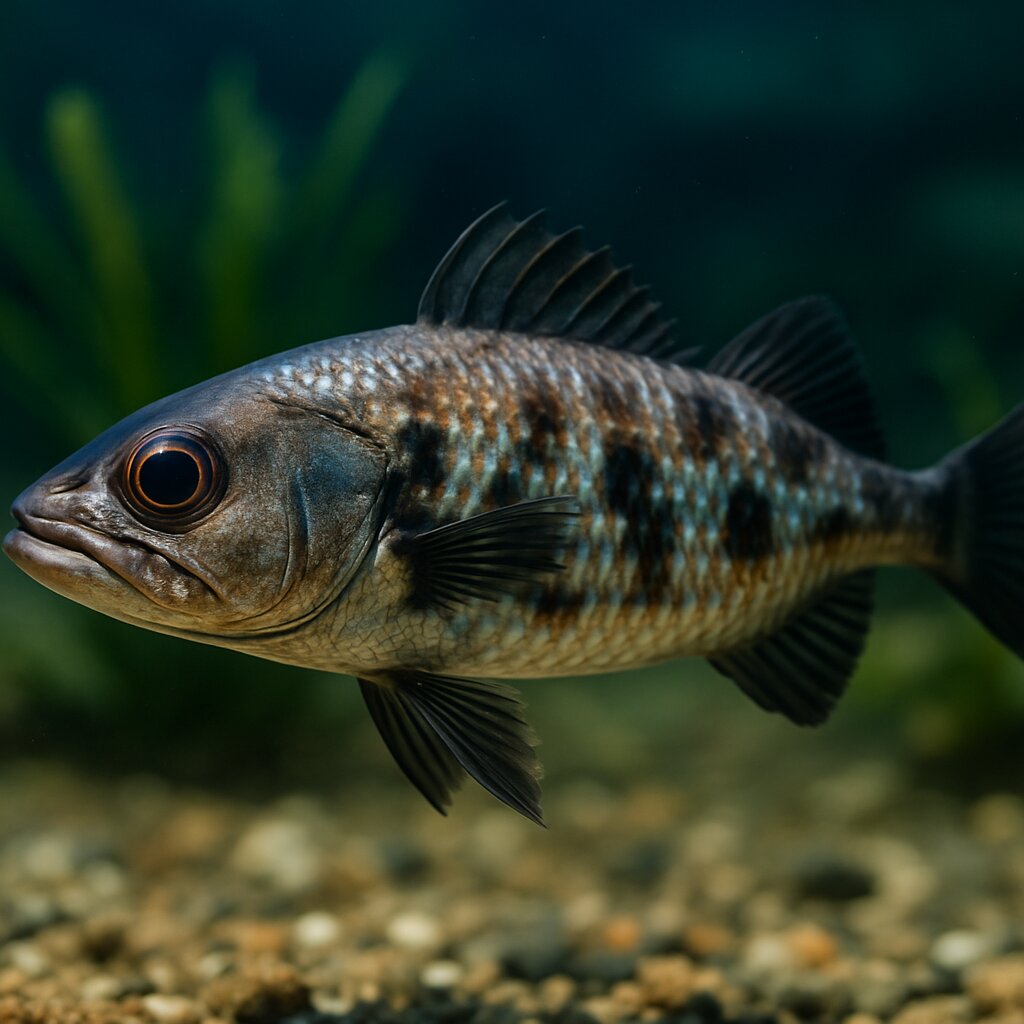
Antarctic dragonfish
Vomeridens infuscipinnis
Deep down around Antarctica, this sleek dragonfish cruises the water column like a little submarine, nearly neutrally buoyant so it can hover above the seafloor. It munches almost exclusively on Antarctic krill and lives in near-freezing water 500-800 m down, so it is a cool species to read about, not one for home tanks.
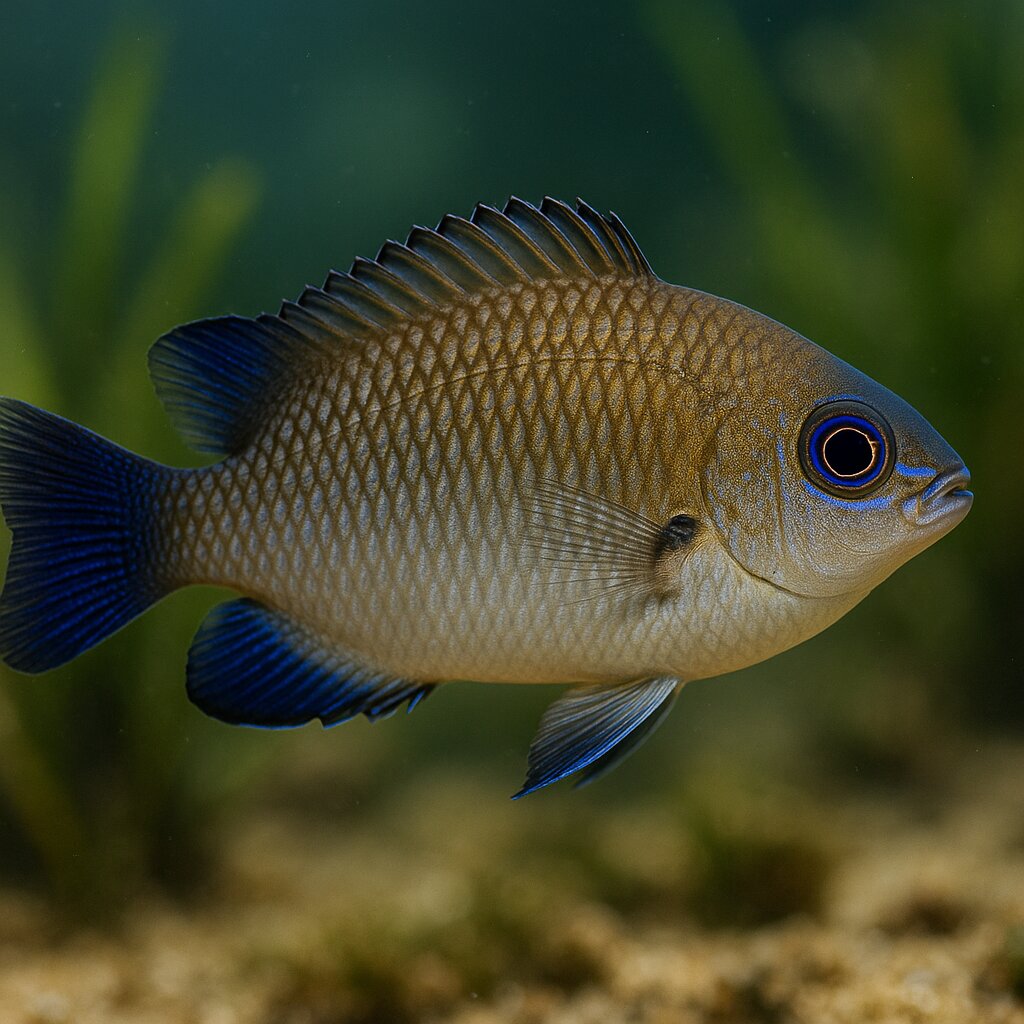
Arabian demoiselle
Neopomacentrus sindensis
A small lyretail damsel from the Persian Gulf and Arabian Sea, it hangs in loose groups around coral heads, rocks, and even pier pilings picking zooplankton from the flow. Think classic damsel toughness with a slightly milder attitude than the real bruisers, plus subtle yellow tail accents. Males clean a patch, get a mate to lay eggs there, and then stand guard fanning the clutch.
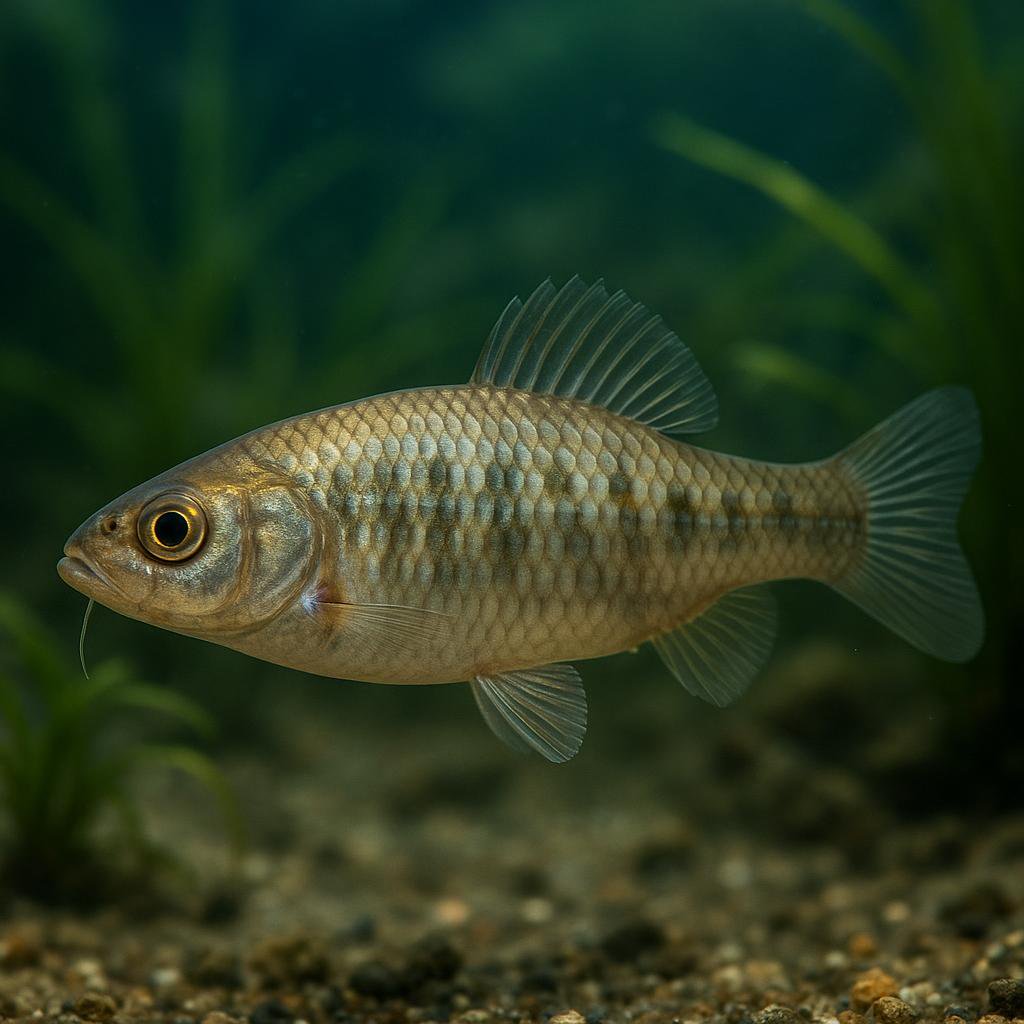
Arabian spiny eel
Notacanthus indicus
Notacanthus indicus is a deep-sea spiny eel (family Notacanthidae; not a true eel) known from the Arabian Sea on the continental slope at roughly ~960–1,046 m depth, with reported maximum length around 20 cm TL; it is a deep-water bycatch species and not established in the aquarium trade.
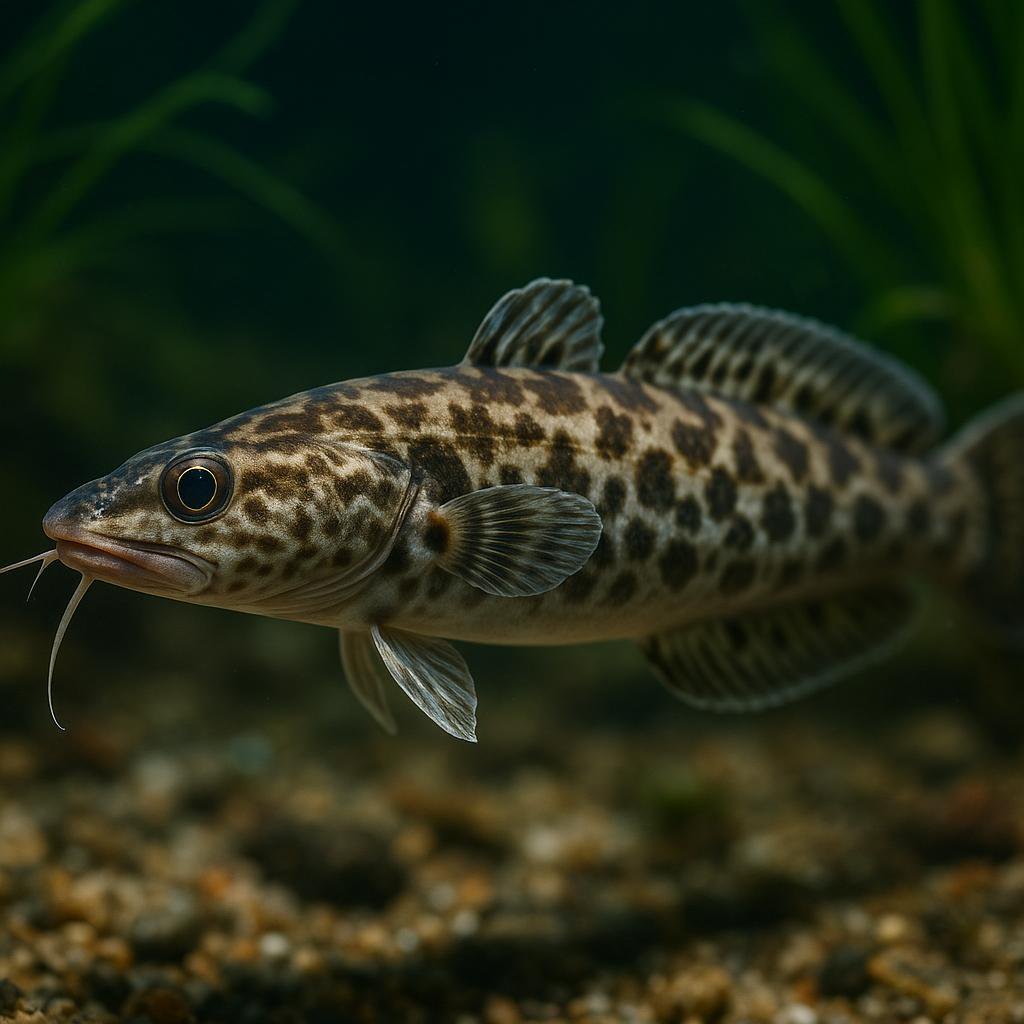
Arctic rockling
Gaidropsarus argentatus
This is a deepwater North Atlantic rockling (a cod relative) that hangs out on soft bottoms way down the slope. It is a cold-water, bottom-hugging predator that snoots around for crustaceans and will also take small fish when it gets the chance.
Looking for other species?