

Xenochromis hecqui (often listed without a stable aquarium common name; avoid confusing with Hecq's shell-dweller)
Xenochromis hecqui
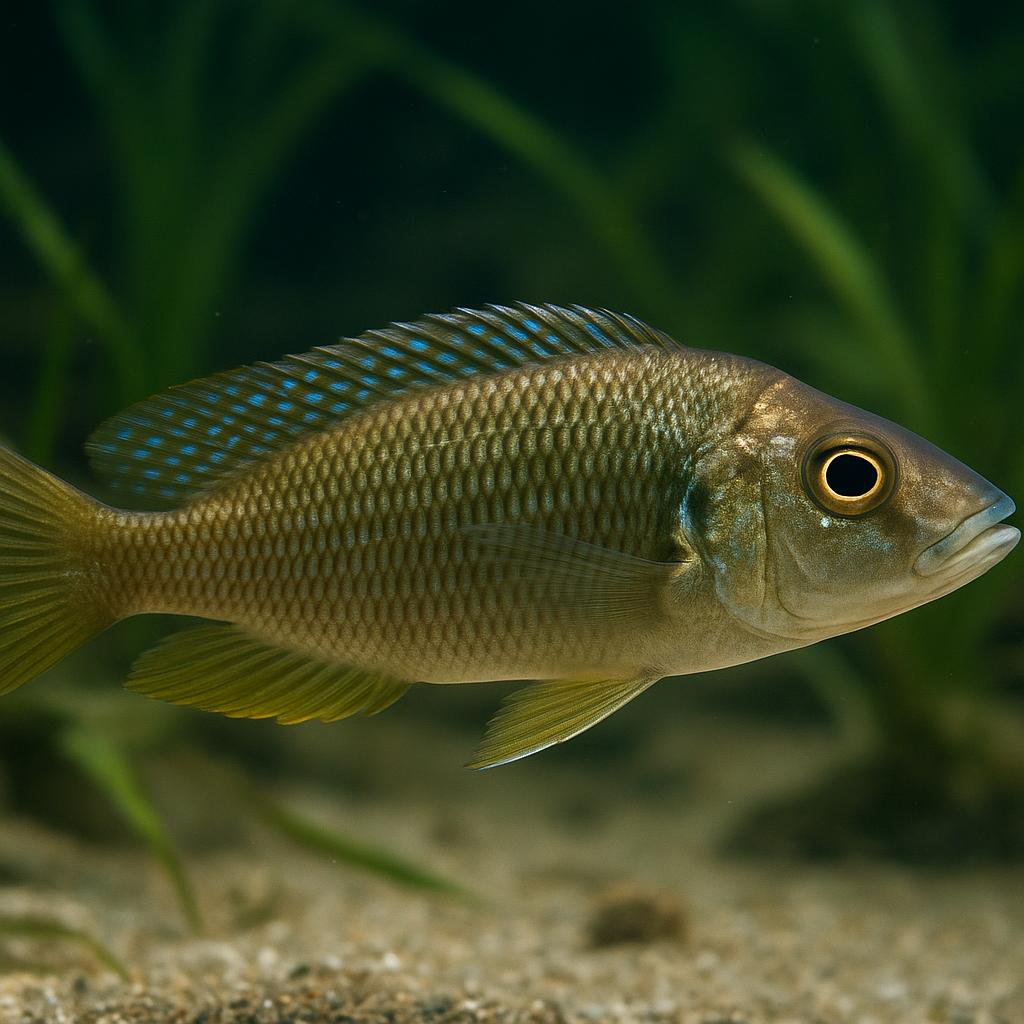
Hecq's cichlid exhibits a vibrant blue body with distinct yellow accents on the fins and a pronounced nuchal hump in mature males.
This page includes AI-generated images. Why am I seeing AI images?
About the Xenochromis hecqui (often listed without a stable aquarium common name; avoid confusing with Hecq's shell-dweller)
Xenochromis hecqui is a Lake Tanganyika cichlid associated with deep-water habitats (reported captures to ~100 m). It is a specialized scale-eater (historically placed in Perissodus as P. hecqui).
Also known as
Quick Facts
Size
11.8 inches
Temperament
Aggressive
Difficulty
Expert
Min Tank Size
125 gallons
Lifespan
8-12 years
Origin
East Africa (Lake Tanganyika)
Diet
Carnivore/scale-eater - meaty foods (shrimp, krill, fish-based frozen foods) and ideally a varied carnivore pellet; in the wild it also takes copepods and specializes on larger prey fish
Water Parameters
24-27°C
8-9
10-20 dGH
Need a heater for this species?
This species needs 24-27°C in a 125 gallon tank. Use our heater calculator to find the right wattage.
Calculate heater sizeCare Notes
- Give them a big footprint tank - think 4 ft long minimum for a trio, with lots of open sand and a few rock piles at the ends so they can get out of each other's face.
- They are Tanganyika fish: keep it hard and alkaline (around pH 8.0-9.0, high KH/GH) and keep nitrate low; they look fine right up until they don't if the water slides.
- They are sand-sifters, so use fine sand and skip sharp gravel; they will constantly mouthful-sift and spit it out, and they can wreck their lips on rough stuff.
- Feed like a predator that still needs variety: small meaty foods (krill, mysis, quality pellets) but keep portions tight - they bloat if you hammer them with rich food day after day.
- Tankmates need to be tough-but-not-psycho Tanganyikans; avoid mbuna, big Central/South American bruisers, and fin-nippy fast dither fish that will keep them stressed.
- They are not a 'community' cichlid - males can be relentless, so run 1 male with 2-3 females and have real line-of-sight breaks or the weakest fish will get pinned.
- Breeding is mouthbrooding (female carries); once she is holding, either move her to a quiet holding tank or be ready for her to get bullied and spit early in a busy display.
Compatibility
Good Tankmates
- Synodontis catfish (like S. multipunctatus or S. petricola) - tough, fast, and they mostly mind their business on the bottom. Great 'dither' cleanup crew that does not get bullied easily.
- Dither fish that are fast and sturdy in hard, alkaline setups - like larger Malawi-type rainbowfish. They help spread aggression and do not sit still long enough to get hammered.
Avoid
- Lake Malawi haps/peacocks and mbuna (different lake/biotope; mixing African rift lakes is generally not recommended).
- Aulonocara (Lake Malawi peacocks) as default tankmates for a Tanganyikan species.
- Mbuna (Lake Malawi rock-dwellers) as standard tankmates for Xenochromis hecqui.
- Any peaceful community fish like tetras, guppies, platies, or small barbs - they get chased, stressed, and eventually picked off. Hecqui are not 'community cichlids' at all.
- Slow fish with fancy fins (angelfish, gouramis, bettas) - the fins get shredded and the slow pace makes them an easy target. Also totally mismatched water params.
- Bottom dwellers that cannot defend themselves (corydoras, small loaches) - they get harassed nonstop, especially when the cichlid is fired up or breeding.
- Other nasty, hyper-territorial bruisers (big Central/South American cichlids like convicts, Texans, jaguars) - different water needs and you end up with nonstop fighting and stress battles.
Where they come from
Hecq's cichlid (Xenochromis hecqui) is a Lake Tanganyika fish. In the wild they hang around sandy areas and open bottoms where they can pick at tiny critters in the sand. They are one of those Tanganyikans that look calm in the store and then make you realize why "expert" gets slapped on the label.
If you have kept Malawi peacocks and think this will be similar, reset your expectations. These are Tanganyika fish with Tanganyika attitudes about water quality, space, and social structure.
Setting up their tank
Give them space first, decor second. They are active and they want room to move, but they also need a few visual breaks so one fish cannot stare down another all day.
- Tank size: I would not bother under 75 gallons for a small group. 100+ makes your life easier.
- Footprint matters more than height. Long tanks beat tall tanks for these.
- Substrate: fine sand. They sift, spit, and mouth sand constantly.
- Hardscape: a few rock piles at the ends or back corners, leaving the middle mostly open sand.
- Filtration: strong and steady. You want high turnover without blasting them with a jet stream.
- Water: hard, alkaline, and stable. Think Tanganyika numbers (high pH, high KH/GH).
For flow, I like to aim circulation along the back wall so the open sandy area stays calm. If the sandbed is constantly drifting, they get edgy and it becomes one more stressor.
Use darker backing and keep the lighting moderate. These fish can be jumpy, and bright lights over an open sand flat makes them feel exposed.
What to feed them
These are micro-predators and sand pickers. In my tanks they did best on smaller foods offered more often, not one big messy feeding. They will eat like pigs, but you will pay for it in water quality if you let that run the show.
- Staples: quality pellets sized for cichlids that lean carnivore/invertivore (not heavy plant-only herbivore formulas).
- Frozen: mysis, brine shrimp, cyclops, chopped krill (sparingly), daphnia.
- Occasional: live foods if you trust the source (blackworms can be great but can also foul a tank fast).
- Avoid as a main diet: fatty mammal meats and big chunks of food they chew and spit everywhere.
Go easy on super-rich foods. Overdoing it is a fast track to bloaty, stressed fish and a dirty sandbed. Small portions, watch their bellies, and keep the tank clean.
How they behave and who they get along with
They are not "community" fish in the usual sense. They are more like "you can keep a group if you manage the politics." Males posture a lot, and a dominant fish will happily make one weaker fish miserable if the tank is tight or too bare.
- Best grouping: 1 male with several females tends to be smoother than multiple males in most home tanks.
- If you try multiple males, you need a bigger footprint and more line-of-sight breaks.
- They appreciate open sand, but they also need places to retreat behind rocks.
- Expect chasing during feeding and during spawning cycles.
Tankmates should be chosen carefully. I have had the best luck with other Tanganyika species that are not timid and do not share the exact same niche. You want fish that can hold their own, but not ones that will escalate everything into a nonstop brawl.
- Usually workable: some midwater Tanganyikans that are robust and not overly aggressive, and certain rock-dwellers if the rockwork is clearly separated from the sand flat.
- Often problematic: very timid species (they get bullied), super-aggressive bruisers (they keep everyone stressed), and anything that needs the same open sand territory.
Watch the "one fish always hiding" situation. With Xenochromis, that can turn into a slow death even if you never see obvious damage. If one gets pinned, you may need to rehome, rearrange, or split the group.
Breeding tips
If you get them settled, they can breed in captivity, but they do not make it easy. Spawning behavior ramps up the aggression, and the whole group dynamic shifts for a while.
- Condition them with frequent small feedings and big water changes.
- Provide a broad, clean sand area. They like to use open substrate zones.
- Keep the water stable. Sudden swings in temperature or hardness can interrupt spawns and spike stress.
- Have a plan for separation if a female is being harassed too hard. A divider or spare tank saves fish.
If you are trying to raise fry, a species tank is your friend. In a mixed Tanganyika setup, the odds of fry making it are not great unless you have a lot of structure and you get lucky.
Common problems to watch for
Most issues I have seen with Hecq's cichlids come down to stress plus water quality. They do not tolerate "close enough" the way some hardy cichlids do.
- Bloat and digestive issues: usually tied to rich food, overfeeding, or chronic stress. Back off food, improve water changes, and reduce aggression triggers.
- Beat-up subdominant fish: torn fins, missing scales, hiding, not eating. Fix the social setup, not just the symptoms.
- Ich after new additions: they can break with stress. Quarantine new fish and keep your temps and parameters steady.
- Sandbed funk: uneaten food sinks into sand and rots. Feed smaller amounts and vacuum lightly without stripping the whole bed.
Do not skip quarantine with these. A minor parasite problem that a tougher fish shrugs off can spiral fast once Xenochromis get stressed.
If you want the "secret" to keeping them, it is boring: space, stable Tanganyika water, tight maintenance, and managing bullying early. Once the group settles, they are seriously rewarding to watch.
Similar Species
Other freshwater aggressive species you might be interested in.
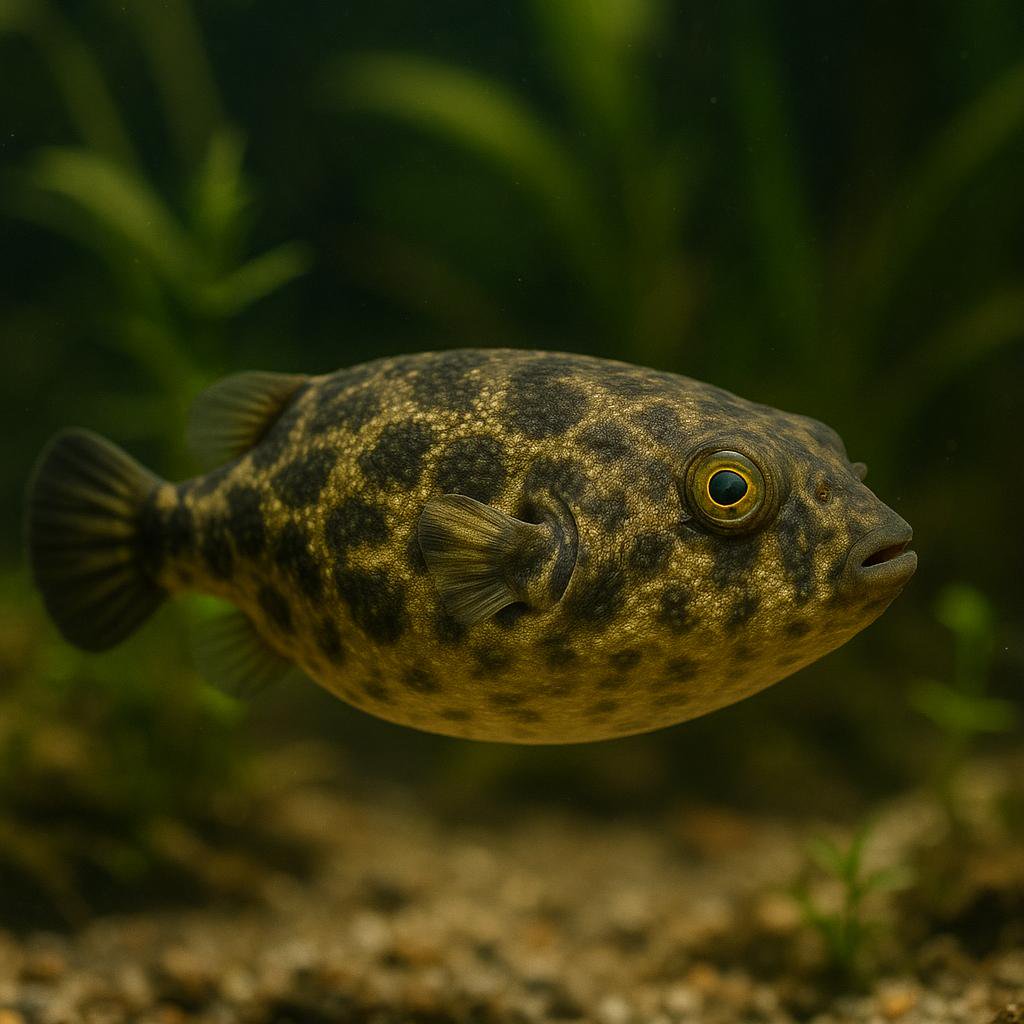
Arrowhead puffer
Pao suvattii
Pao suvattii is that sneaky Mekong puffer that likes to sit low and ambush food, and it has that super recognizable arrow/V pattern on its back. Gorgeous fish with tons of personality, but it is absolutely not a community guy - plan on a solo, species-only setup if you want everybody to stay in one piece.
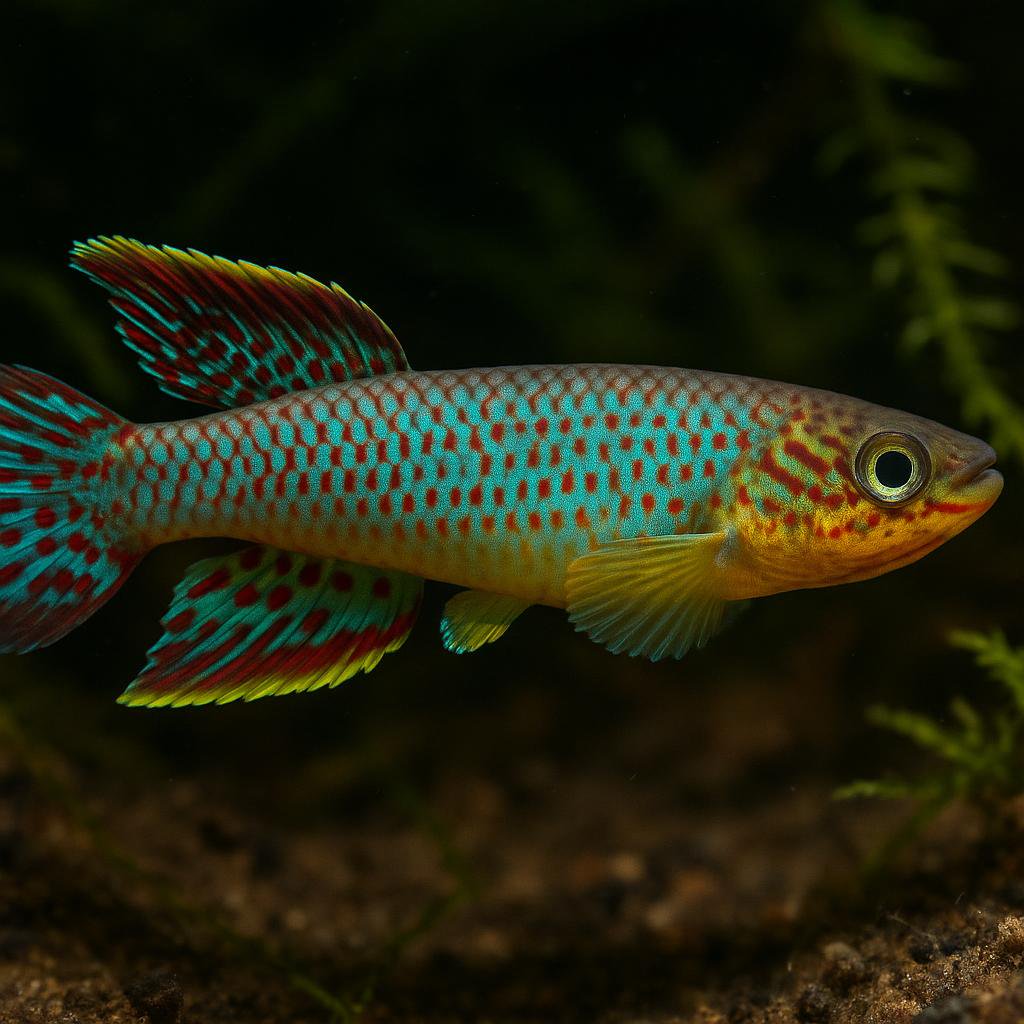
Blue gularis
Fundulopanchax sjostedti
This is the big, flashy West African killifish with the ridiculous triple-point tail and electric blue-green body covered in red spotting. Males can be real attitude machines with each other, but if you give them room, cover, and a tight lid, they make an awesome centerpiece fish that will absolutely demolish live and frozen foods.
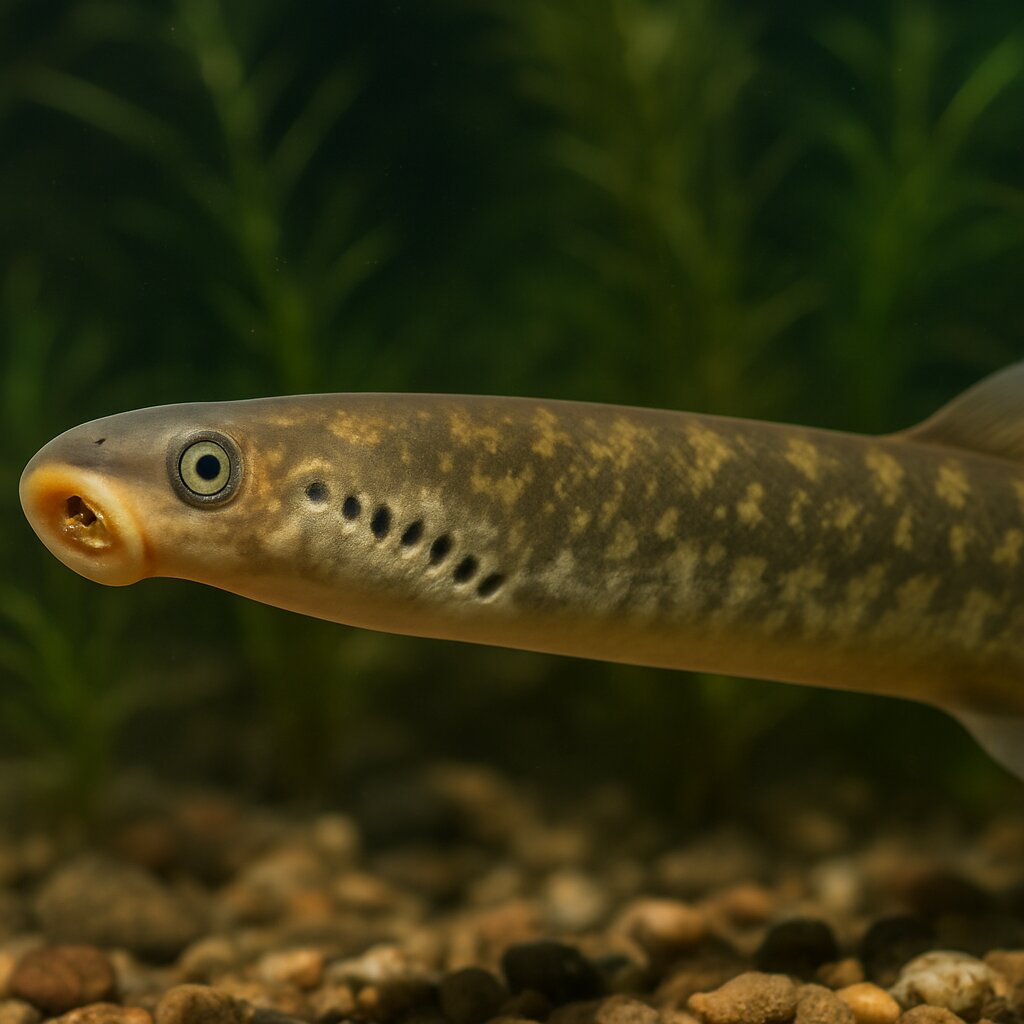
Chestnut lamprey
Ichthyomyzon castaneus
A native North American lamprey that spends 5–7 years as a burrowed, filter‑feeding larva before metamorphosing into a parasitic adult that attaches to fishes and feeds on blood and bodily fluids; adults spawn in spring and die shortly after. It inhabits flowing rivers and some lakes with cool, well‑oxygenated water and is not suitable for community aquaria.
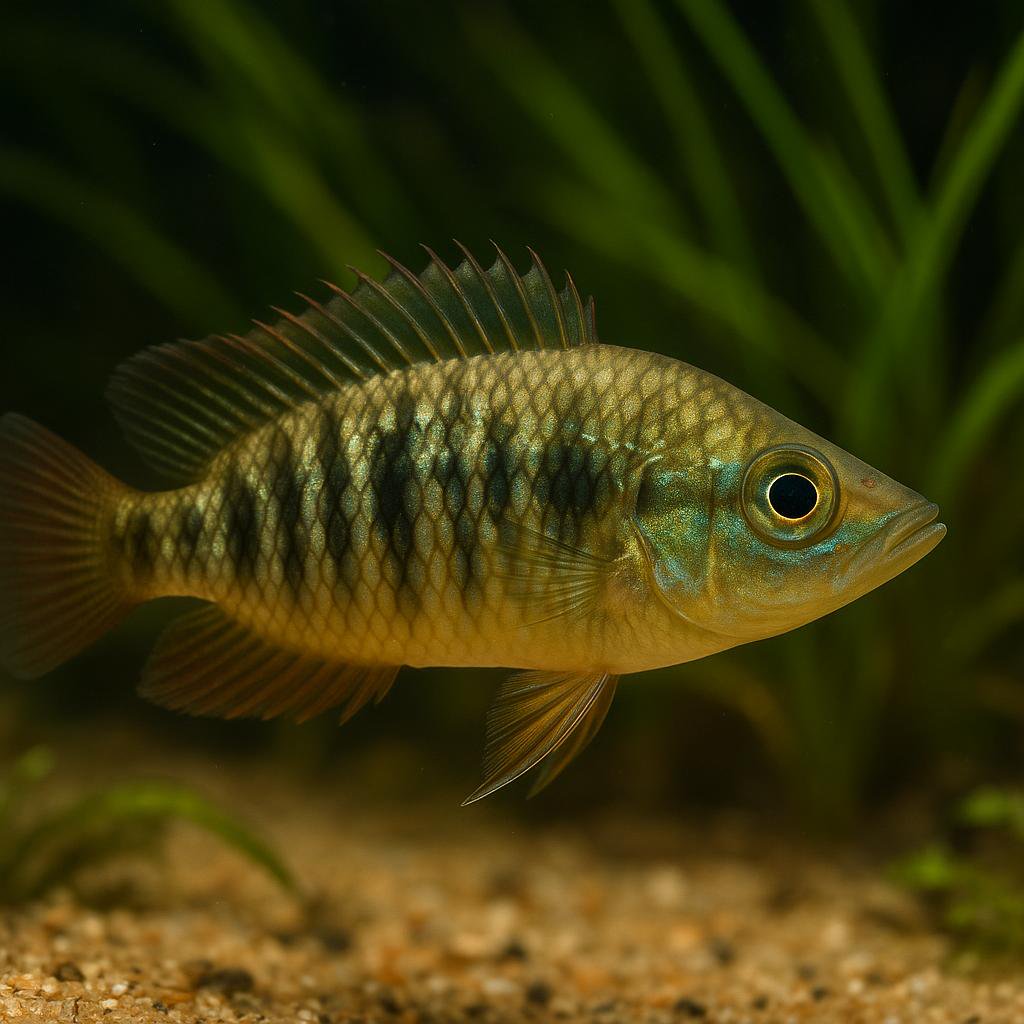
Compressiceps dwarf pike cichlid
Wallaciia compressiceps
This is one of those tiny pike cichlids that looks cute until you watch it start running the tank like a little biting terrier. It stays small, but it is a real predator with a ton of attitude, and it gets especially spicy with its own kind when pairs form.
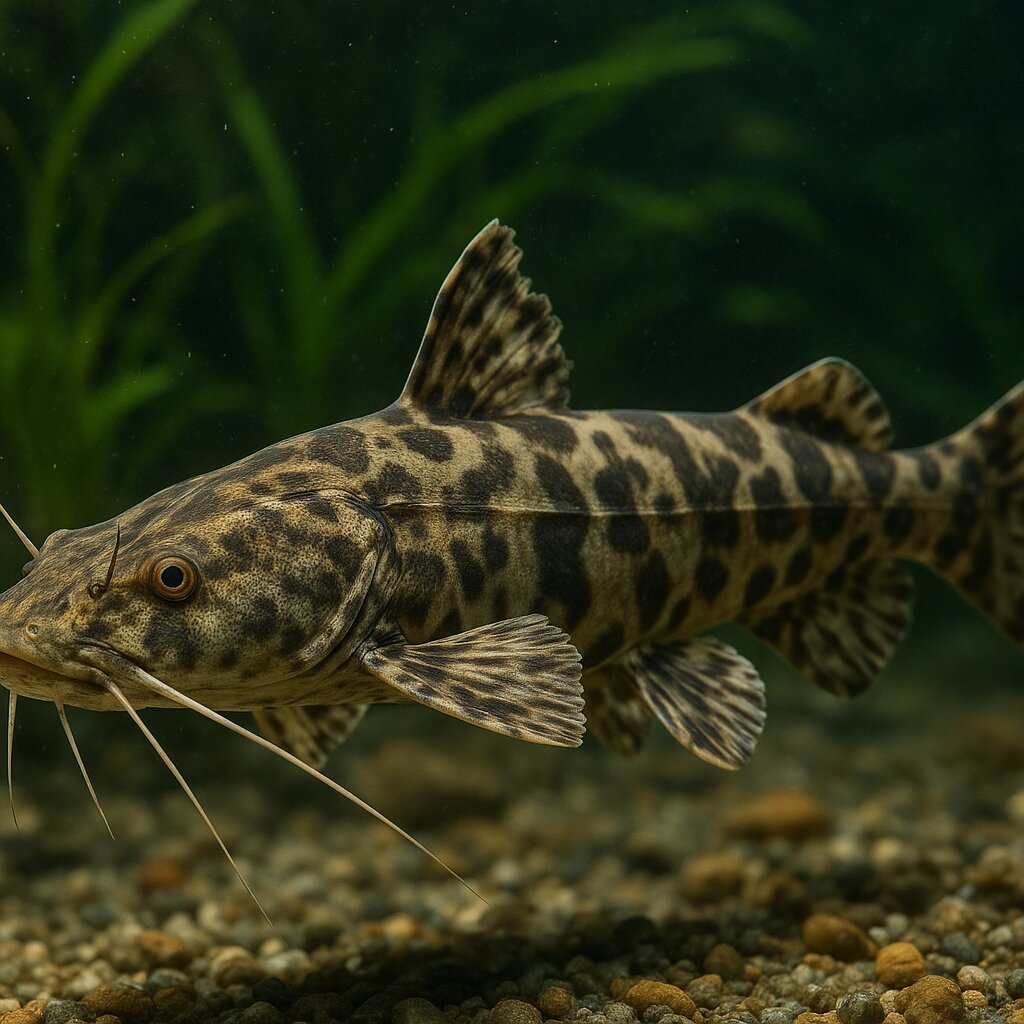
Goonch catfish
Bagarius bagarius
A true river monster with a shovel head and a mouth full of teeth, the goonch is built for blasting around boulder-strewn rapids. It is insanely strong, super predatory, and happiest in cool, fast, highly oxygenated water - think indoor-pond-with-a-river-flow setup, not a regular tank. If you love oddballs with attitude, this one is unforgettable, but it is for experts only.
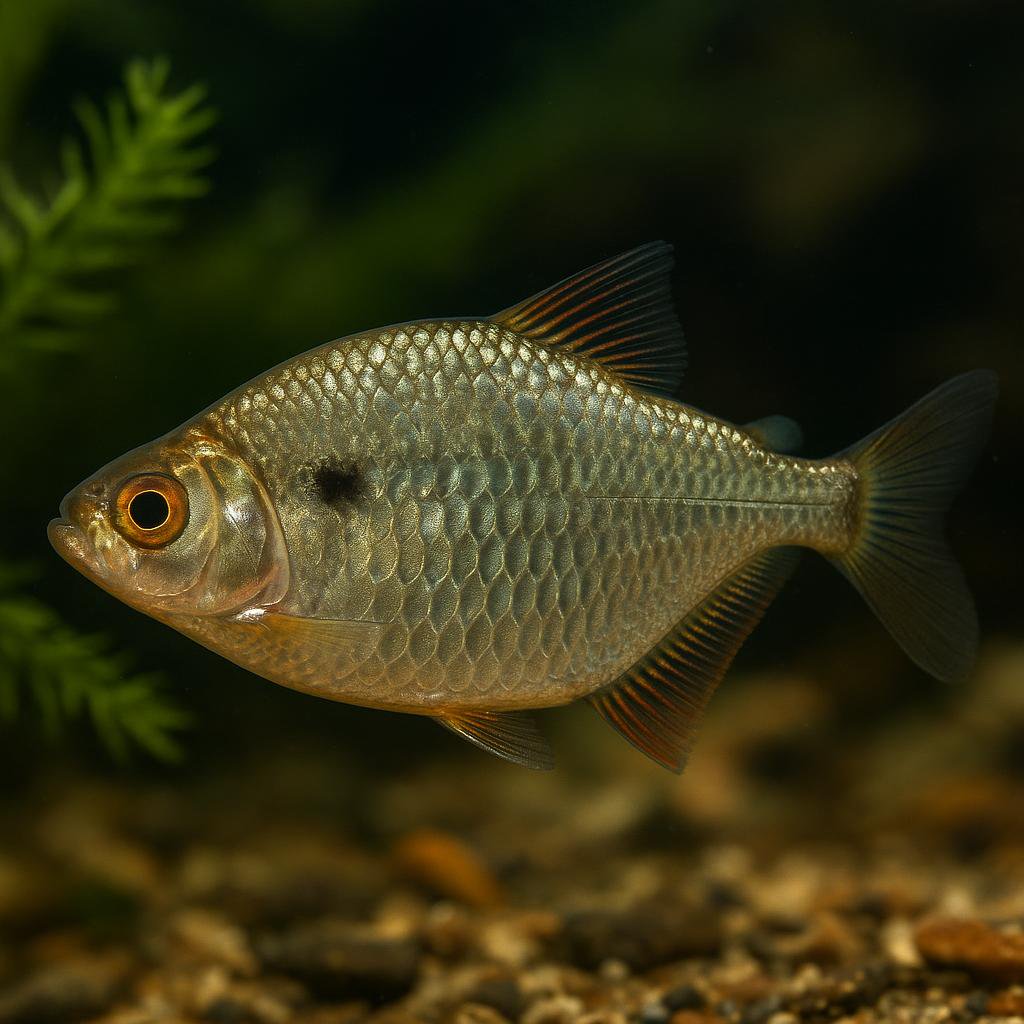
Guatemalan headstander
Roeboides guatemalensis
This is one of those oddball characins that gets lumped in with "predatory tetras" - it is built for nipping scales and mucus off other fish (lepidophagy), which is wild to watch in nature but a headache in a community tank. It is a super active, open-water swimmer, and in aquariums it usually does best treated like a specialty predator/oddity fish rather than a "tetra."
More to Explore
Discover more freshwater species.
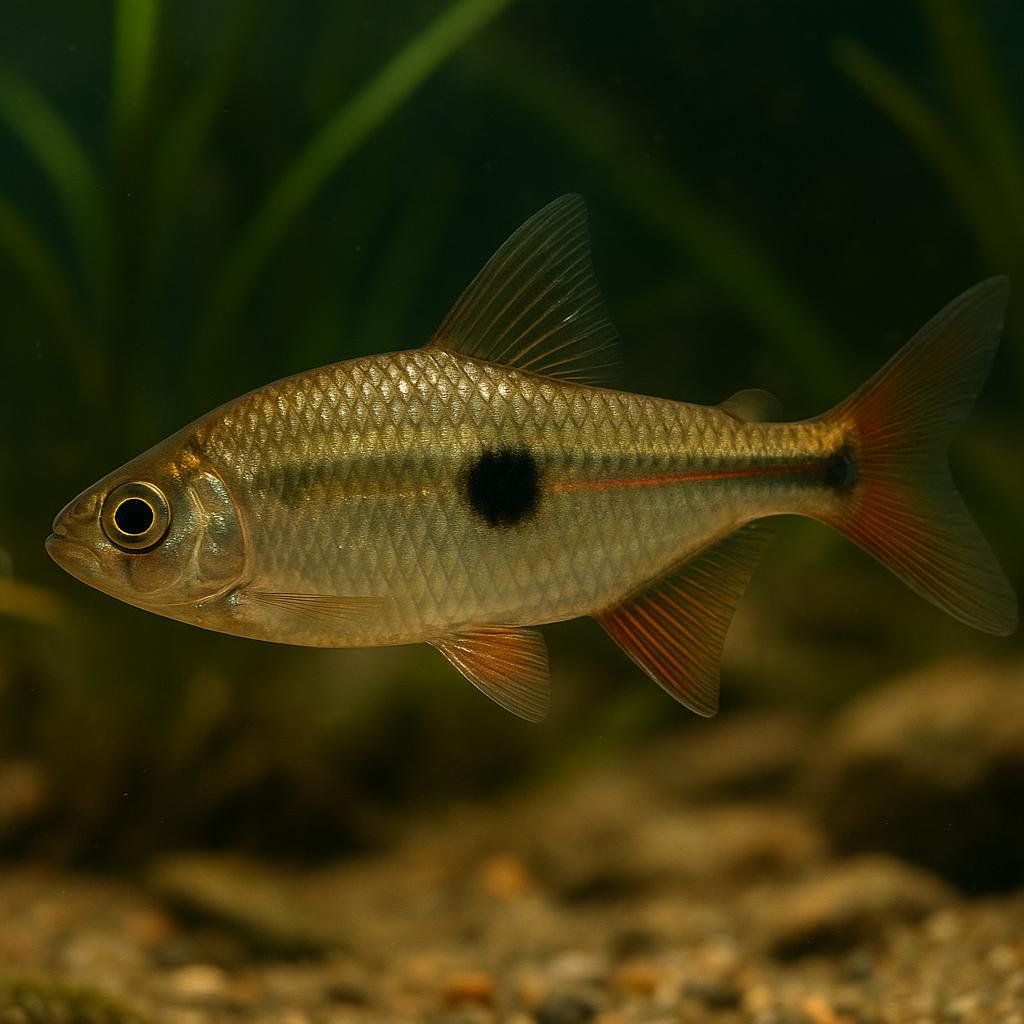
Jupiaba kurua
Small South American characin endemic to the upper rio Curuá (rio Xingu basin, Brazil). Reaches about 8.7 cm SL and inhabits clearwater rivers. Distinguished by dark dots on the bases of many lateral scales and a distinct dark caudal‑peduncle spot. Reported diet indicates omnivory, including aquatic insects, small fishes, and fragments of Podostemaceae and filamentous algae.
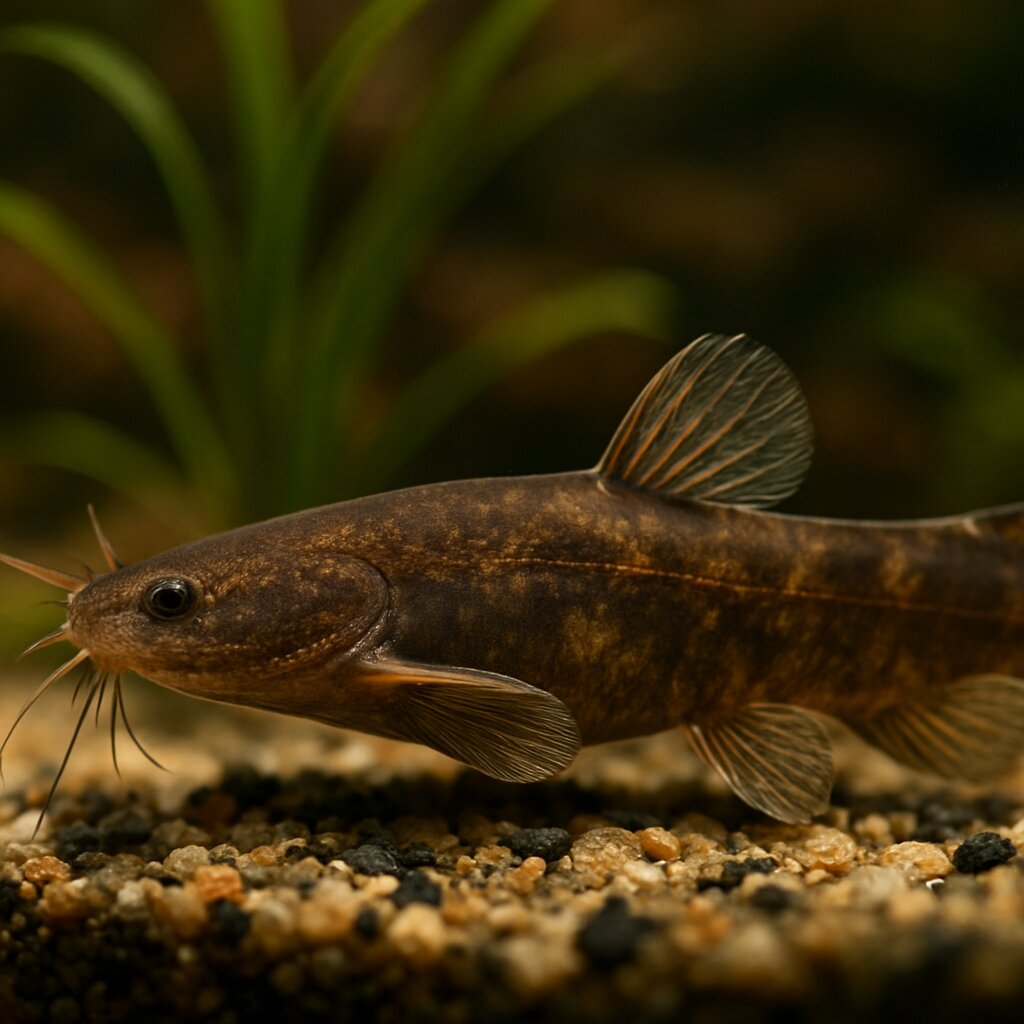
Amphilius dimonikensis
A small loach catfish endemic to the Mpoulou River in the Mayombe (Dimonika Biosphere Reserve), Republic of the Congo. Amphilius dimonikensis has a subtle banded pattern and inhabits fast, clear streams over rock and sand. In aquaria, prioritize strong, well-oxygenated flow with rounded stones and sand to mimic hillstream conditions.
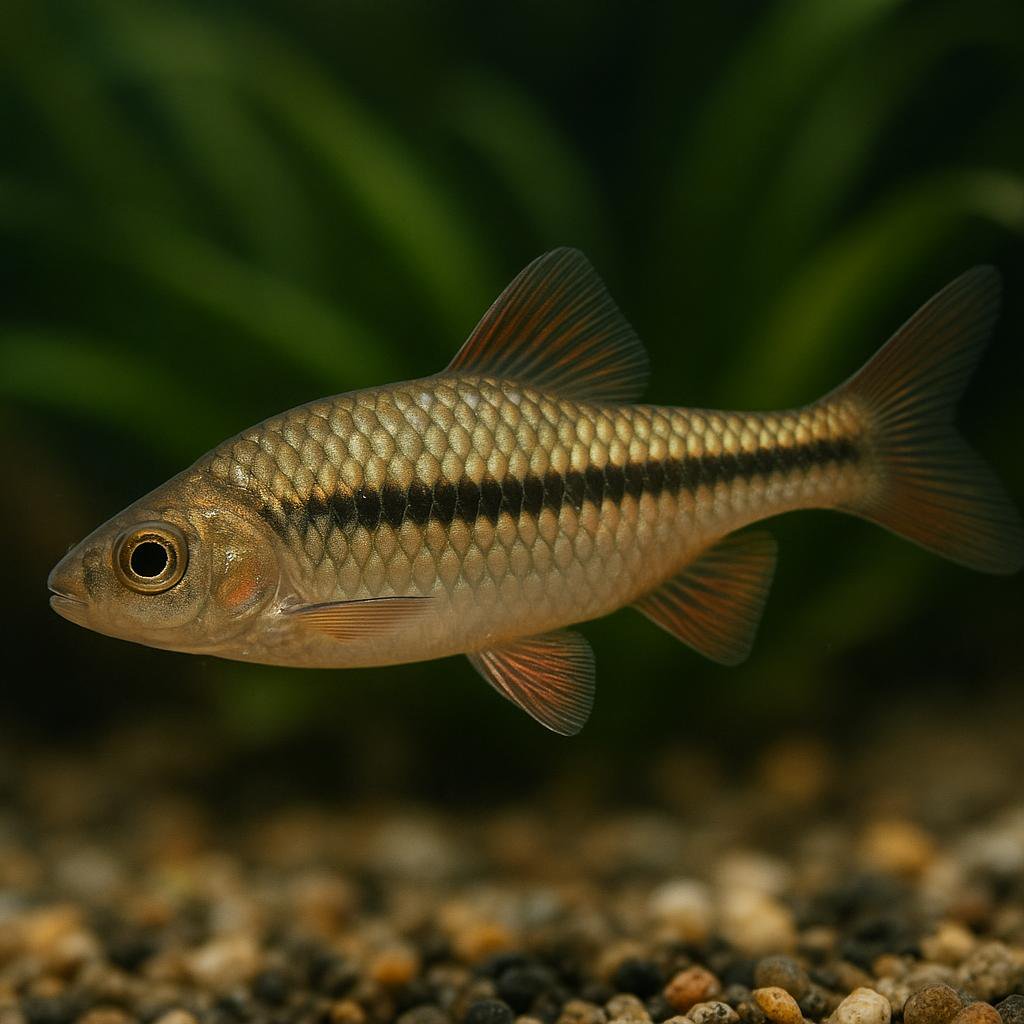
Aboina barb
Enteromius aboinensis
Enteromius aboinensis (the Aboina barb) is a small West African barb with a clean black midline stripe and a little spot right at the base of the tail. It does best when you treat it like a proper schooling fish - keep a decent group and give it plants around the edges with open swimming room in the middle.
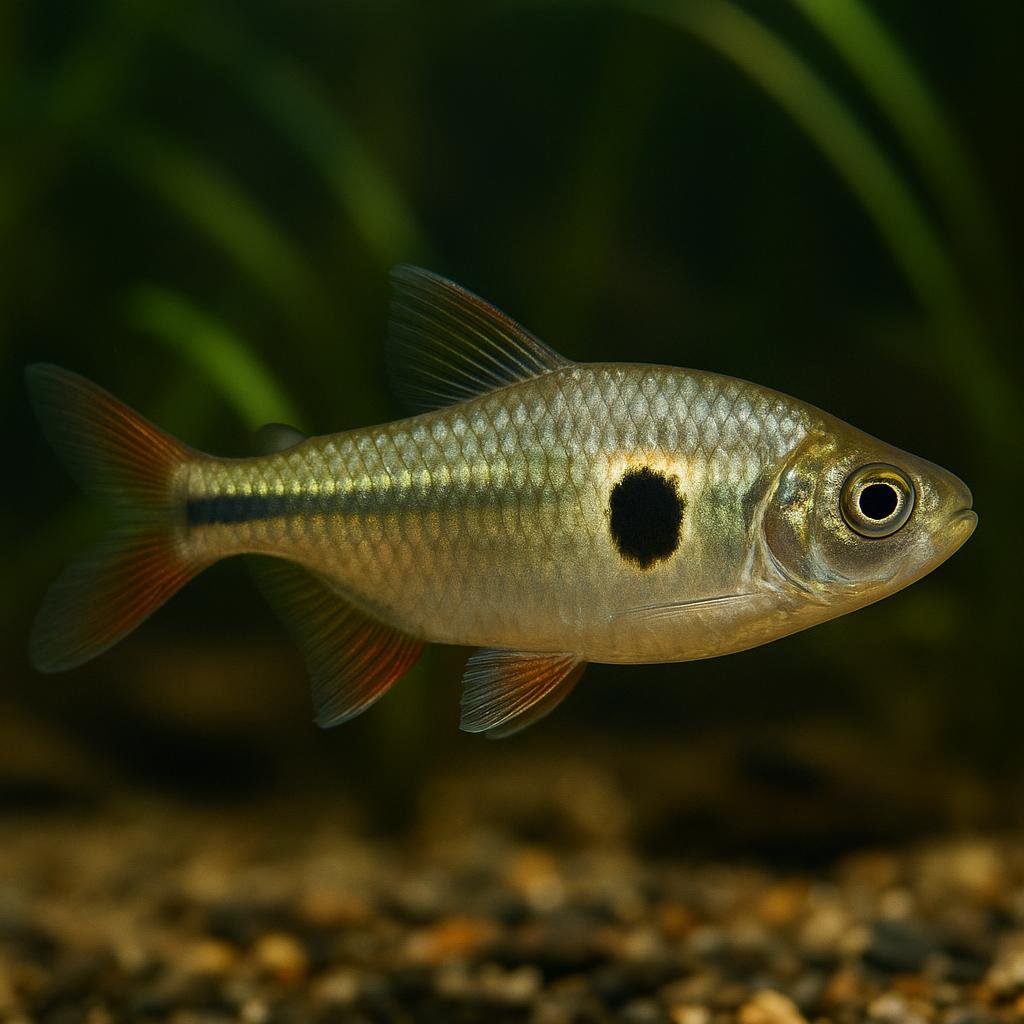
Ajuricaba tetra
Jupiaba ajuricaba
Jupiaba ajuricaba is a South American freshwater characin from the Amazon basin in Brazil (rio Negro, rio Solimões, and rio Tapajós basins). It reaches about 9.5 cm SL and is diagnosed by a narrow dark midlateral stripe, an elongated humeral spot, and an ocellated spot on the upper caudal-fin lobe. Wild specimens have been collected from blackwater forest streams and also oxbow-lake habitats.
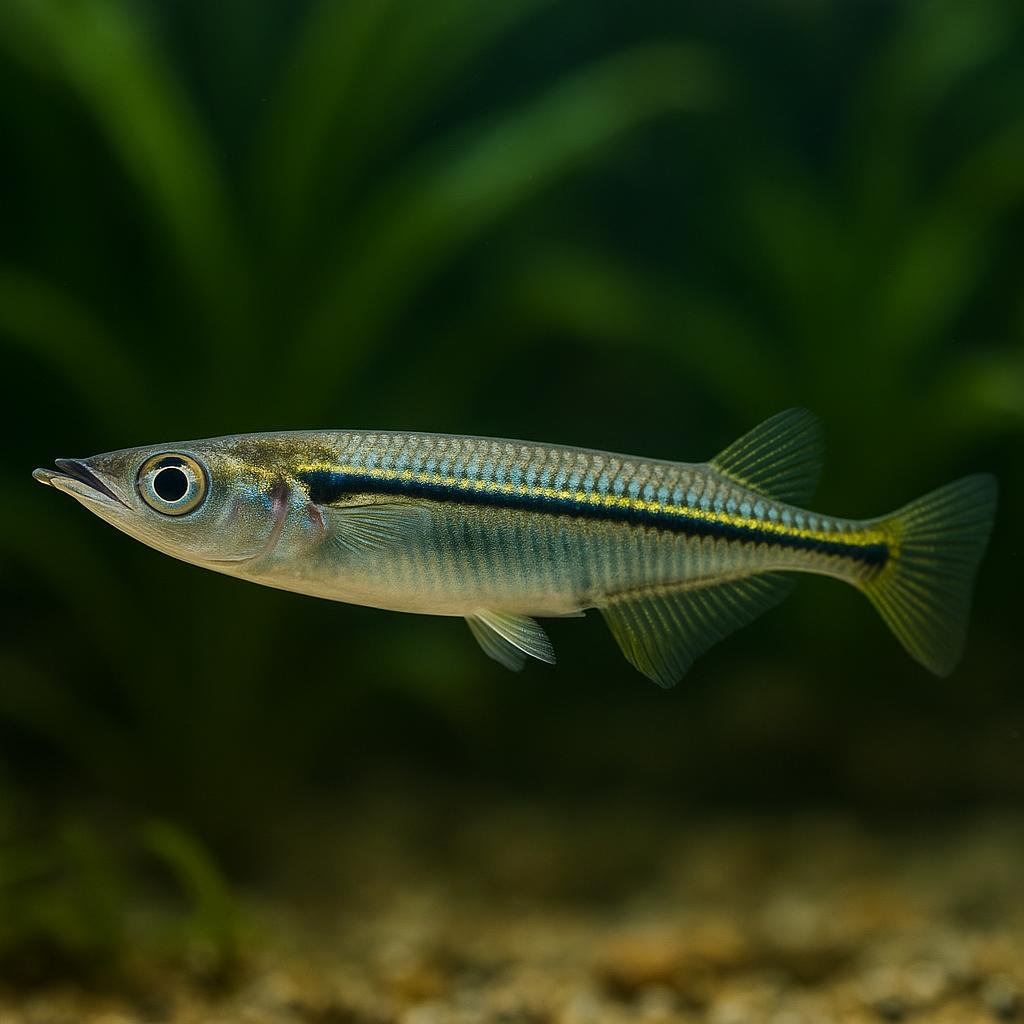
Allen's river garfish
Zenarchopterus alleni
A poorly known freshwater halfbeak endemic to West Papua (Mamberamo River), described from a single specimen (~13 cm SL). Beyond basic habitat/occurrence, little is published about its ecology or aquarium suitability; assume it is a surface-oriented, jump-prone halfbeak only by analogy with related taxa.
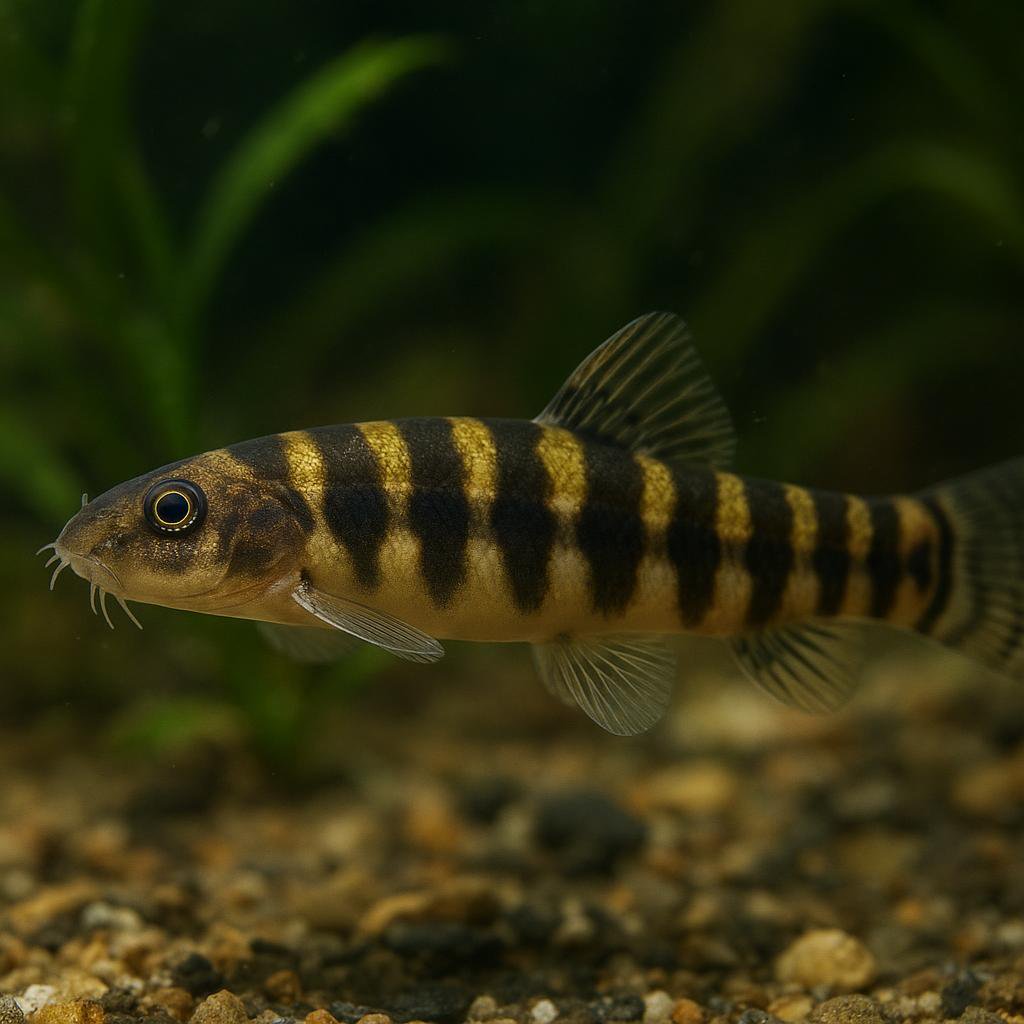
Altipedunculata stone loach
Schistura altipedunculata
Schistura altipedunculata is one of those little stream loaches that wants clean, well-oxygenated water and a bunch of rock nooks to claim as home. It is a bottom-hugger that will spend its day scooting from crevice to crevice, and it tends to get a bit spicy with its own kind if you do not give it enough hiding spots.
Looking for other species?