

Okhotsk Hookear Sculpin
Artediellus ochotensis
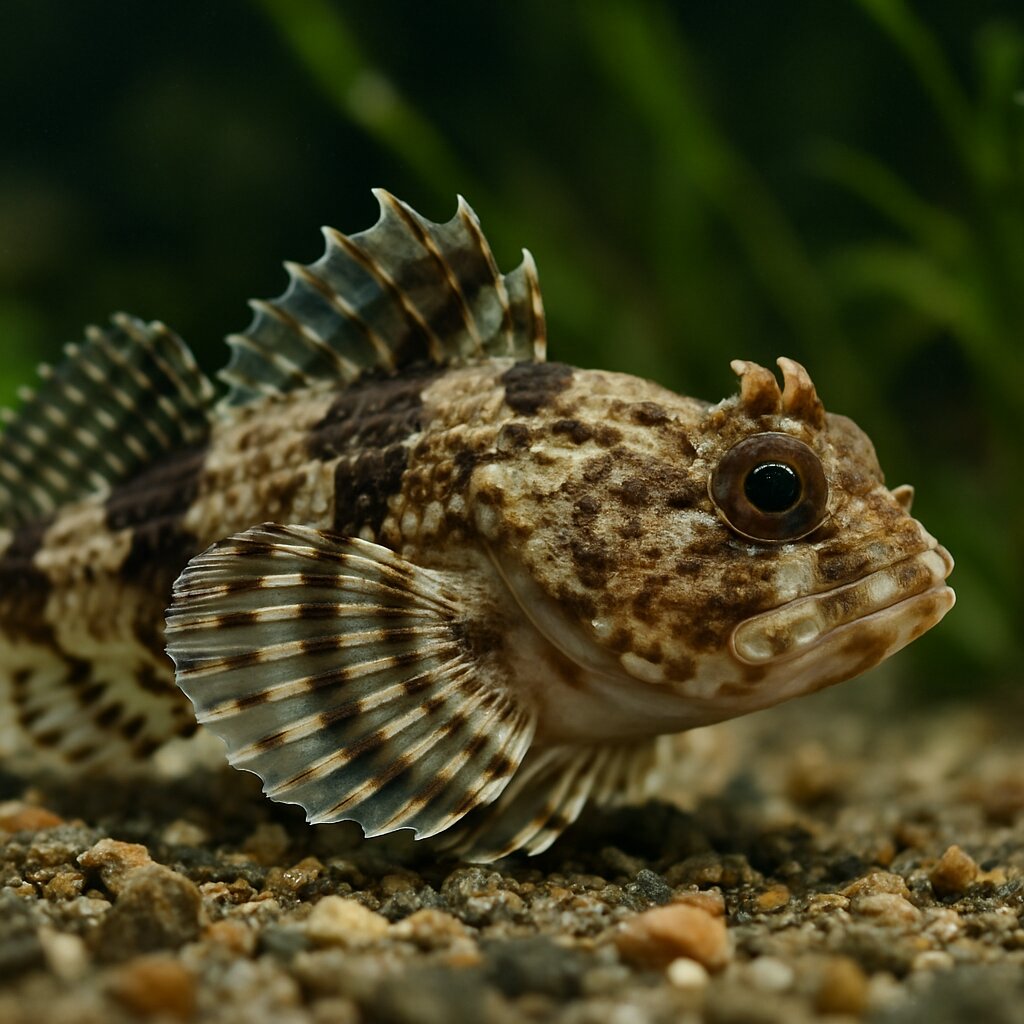
The Okhotsk Hookear Sculpin features a robust body, distinctive hooked ear lobes, and a mottled pattern of brown and yellowish hues.
This page includes AI-generated images. Why am I seeing AI images?
About the Okhotsk Hookear Sculpin
A tiny coldwater sculpin from the Okhotsk and Bering side of the North Pacific, it spends life parked on the bottom waiting to pounce on snacks. The hooked spine on the gill cover gives it a tough look, and it perches and scoots around rocks with a lot of personality for such a small fish.
Also known as
Quick Facts
Size
9 cm
Temperament
Semi-aggressive
Difficulty
Advanced
Min Tank Size
30 gallons
Lifespan
3-6 years
Origin
Arctic and Northwest Pacific
Diet
Carnivore - small crustaceans, worms, and tiny fish; will take frozen foods like mysis and krill once settled
Water Parameters
2-10°C
8.1-8.3
300-400 dGH
Need a heater for this species?
This species needs 2-10°C in a 30 gallon tank. Use our heater calculator to find the right wattage.
Calculate heater sizeCare Notes
- True coldwater fish - run a chiller at 2-8 C (36-46 F), 33-35 ppt (1.025 sg), pH 8.0-8.3, and strong gas exchange; they crash fast above 10-12 C.
- Give them a wide footprint tank (30+ gal, 24x18 in or bigger) with sand-rubble and tight rock caves; keep light dim and flow moderate with calm perches.
- They are ambush predators that ignore pellets at first; start with live mysids or small shore shrimp, then tong-feed thawed prawn, clam, or fish strips 2-3 times a week and siphon leftovers.
- House solo or with chilled, non-hyper tankmates that are too big to swallow; they will eat shrimp, small crabs, and small fish.
- Heat spikes and low oxygen kill these fast, so size the chiller generously, agitate the surface, and keep a battery air pump and ice bottles for outages.
- Wild-caught and scaleless - skip copper meds; quarantine in a chilled bare-bottom tank with hides, and if you treat, use gentle options and heavy aeration.
- Handle with a specimen container, not a net; their skin abrades easily and they have sharp spines.
- Breeding is a long shot without seasons - they lay demersal eggs and males guard, but you would need winter temps near 2-4 C and big photoperiod swings.
Compatibility
Good Tankmates
- Coolwater midwater schoolers like surfperch that cruise above the rocks and are too big to fit in its mouth
- Docile, chunky coldwater oddballs like similar-size lumpsuckers - they stick to glass and the sculpin usually ignores them
- Armored bottom fish like poachers that mind their own business - give each fish its own cave and it works fine
- Temperate gobies or blennies with some speed (think blackeye goby size or bigger) that perch in the rockwork but dont invade its ambush spot
- Hardy, non-nippy open-water fish from cold setups that stay busy in the water column and dont care about the bottom
Avoid
- Anything bite-size or slow like tiny gobies, pipefish, or juvenile sculpins - it will treat them as snacks
- Other sculpins or scorpionfish - same niche, they brawl over hides and somebody gets shredded
- Pushy predators like rockfish, greenlings, or wolf eels - they outcompete and may bully it into hiding
- Fin nippers like sticklebacks - constant picking stresses a sedentary sculpin
Where they come from
Okhotsk Hookear Sculpins are a coldwater, bottom-hugging sculpin from the North Pacific. Think Sea of Okhotsk, the Bering Sea, and chilly waters off northern Japan and the Russian Far East. They live on sand and rubble on the continental shelf, picking off little crustaceans and worms while pretending to be a rock.
This is a true coldwater marine fish. You need a chiller. Room-temp saltwater will cook them.
Setting up their tank
They spend most of their time perched and watching the world go by. Give them floor space, stable rockwork, and dark nooks. Mine always chose the quiet, shaded side of the tank with a steady bit of flow and high oxygen.
- Tank size: 40 gallons is the smallest I would do for one. More floor space is better. For two, think 55-75 gallons.
- Temperature: 2-8 C (36-46 F) long term. Brief flirt with 10 C (50 F) is usually fine, but keep it cold and steady.
- Salinity: 33-35 ppt (SG 1.024-1.027).
- Substrate: Fine sand with a shallow tray or pocket of muddy sand if you can manage it. They like to settle in softer spots.
- Rockwork: Solid caves and overhangs. Stack rocks on the glass, not on sand, so nothing shifts when they wiggle underneath.
- Flow and oxygen: Moderate flow with some calm pockets. Lots of aeration. A strong skimmer helps with both oxygen and waste.
- Filtration: Heavy biofiltration and frequent mechanical cleaning. Protein-rich diets add up fast in a cold tank.
- Lighting: Dim to moderate. They do not love bright reef lights.
- Lid: Tight cover. They can surge up when startled.
- Chiller sizing: Get a chiller that can hold setpoint in summer with a margin. Insulate the return line so you are not cooling the room.
Pre-chill your water change water. I keep jugs in a spare fridge so I do not spike the tank 3-4 degrees during changes.
Do not try this species in an uncycled or young cold tank. Let the system mature and stabilize first. Ammonia is extra nasty at low temps because they eat heavy and sit right in the muck.
What to feed them
They are ambush predators with a slow, deliberate strike. Start with moving foods, then transition to frozen. Mine took frozen within a week after a few target-feeding sessions.
- Live or thawed mysis shrimp (a great starter food).
- Pieces of raw marine shrimp, krill, or clam.
- Small strips of silverside or sand lance (not too oily, and in moderation).
- Marine worms like ragworms or pieces of lugworm.
- Amphipods and shore shrimp from a clean, quarantine source.
Turn off pumps, place the food on long tweezers, and lay it right in front of them. Let the tip just twitch a little. Give them a minute. Remove leftovers after 10-15 minutes.
Feeding schedule that worked for me: small meals 3-4 times per week. They do not need daily stuffing. I add a vitamin/omega soak to frozen food once a week.
How they behave and who they get along with
Mostly they sit, watch, and scoot a few inches at a time. They are not bullies, but they are very willing to eat anything that fits in their mouth. They will defend a favorite cave from another similar sculpin.
- Better bets: similar-sized coldwater, slow fish that do not compete hard for food. Think other small sculpins (with caution), small snailfishes, or a mellow prickleback that is not nippy.
- Usually safe: large snails and urchins. They ignore them.
- Usually not safe: shrimp, small crabs, tiny fish, and decorative inverts you care about. If it moves and is bite-sized, it is food.
- Avoid: large aggressive fish that will outcompete them, and fast pelagics that will eat all the food before it hits bottom.
Not reef-safe. They will eat ornamental shrimp and small fish, and they are unimpressed by corals anyway in a cold system.
Breeding tips
I have not seen confirmed home-breeding of Artediellus ochotensis. Most sculpins lay adhesive eggs in a crevice and the male guards them. Hatching and larval rearing are the tough parts, often needing chilled live plankton and very clean, stable flow.
- If you try, mimic seasons: several months at 2-4 C with short photoperiod, then a slow climb to 6-8 C and longer light.
- Offer several tight caves of different sizes. They like narrow entries.
- Keep only one pair per tank and watch for harassment. Have a divider ready.
- Prepare live feeds ahead of time (rotifers, copepods) in chilled culture if you ever get eggs.
Sexing is not well documented for this species. Do not buy multiple fish expecting a pair unless you have space to separate them.
Common problems to watch for
- Heat stress: above 10-12 C they breathe fast, stop eating, and go blotchy. Drop temp gradually and boost aeration.
- Low oxygen: power outages or pump failures hit coldwater fish hard. Battery air pump and surface agitation are your friends.
- Starvation in mixed tanks: they lose out to faster feeders. Target feed and slow the flow at meal time.
- Dirty substrate pockets: they sit in it, so trapped waste can cause skin issues. Vacuum lightly and keep flow moving across the bottom.
- Wild-caught hitchhikers: internal worms or crustacean parasites are not rare. Quarantine in a chilled setup.
- Overfeeding oily fish: leads to fatty deposits and messy water. Rotate foods and keep portions small.
- Injury from unstable rock: they wedge into cracks. Build rockwork sturdy and test for wiggle before filling.
- Mis-ID at purchase: different sculpins have different adult sizes and temp needs. Get a positive ID before you set equipment.
Handle with care. Dorsal spines are sharp and some sculpins have mild venom. Use a container to move them rather than a net, and wear gloves.
Similar Species
Other marine semi-aggressive species you might be interested in.

Aleutian skate
Bathyraja aleutica
This is a big, cold-water deep-slope skate from the North Pacific that cruises muddy bottoms and eats chunky benthic prey like crabs and shrimp. The really cool bit is its egg-laying skate life - it does distinct pairing (the classic skate "embrace") and drops those tough egg cases on the seafloor. Not an aquarium fish at all unless you're basically running a public-aquarium-style chilled system.

Antarctic dragonfish
Vomeridens infuscipinnis
Deep down around Antarctica, this sleek dragonfish cruises the water column like a little submarine, nearly neutrally buoyant so it can hover above the seafloor. It munches almost exclusively on Antarctic krill and lives in near-freezing water 500-800 m down, so it is a cool species to read about, not one for home tanks.

Arabian spiny eel
Notacanthus indicus
Notacanthus indicus is a deep-sea spiny eel (family Notacanthidae; not a true eel) known from the Arabian Sea on the continental slope at roughly ~960–1,046 m depth, with reported maximum length around 20 cm TL; it is a deep-water bycatch species and not established in the aquarium trade.

Arctic rockling
Gaidropsarus argentatus
This is a deepwater North Atlantic rockling (a cod relative) that hangs out on soft bottoms way down the slope. It is a cold-water, bottom-hugging predator that snoots around for crustaceans and will also take small fish when it gets the chance.
Atlantic pomfret
Brama brama
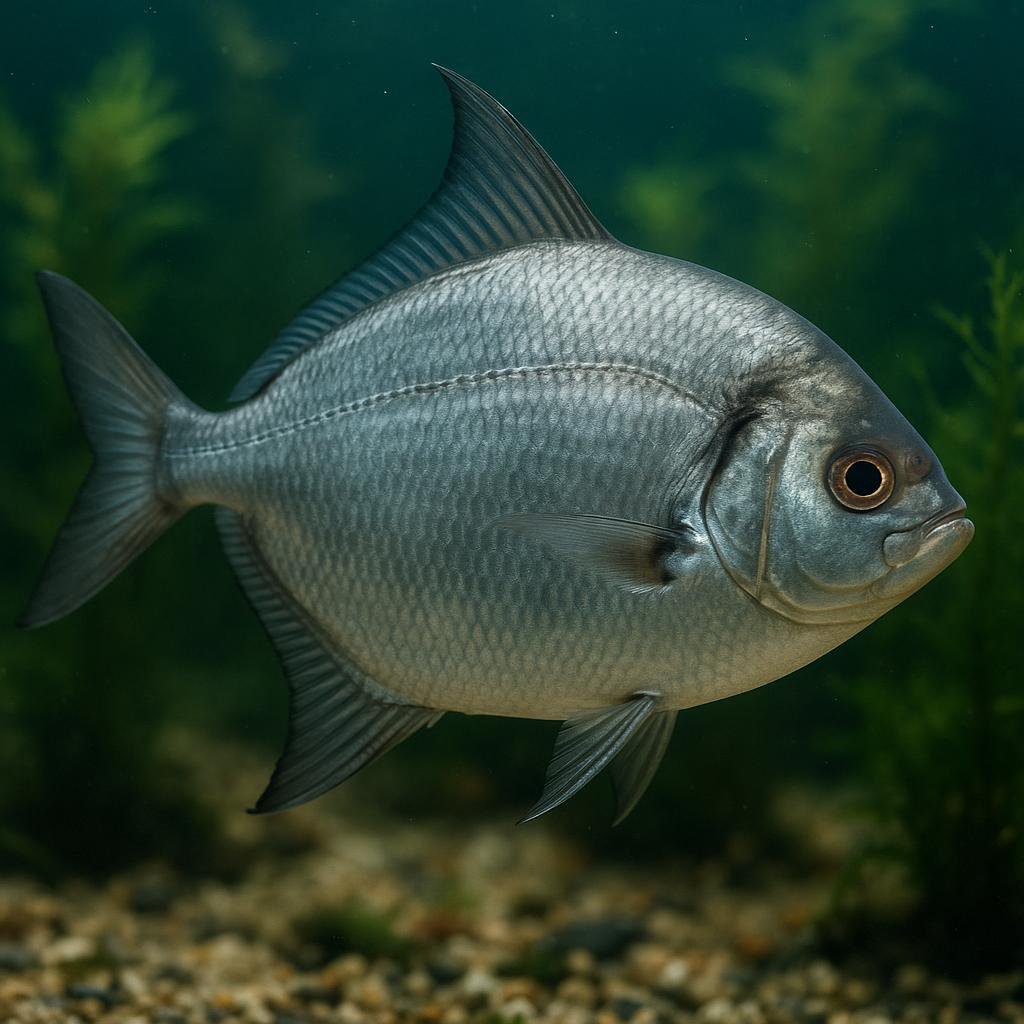
Brama brama is the Atlantic pomfret (aka Ray's bream) - a deep-bodied, open-ocean pelagic fish that cruises around in small schools and follows water temps. It is a legit big, wild marine species (not an aquarium fish) that eats other small sea critters like fish and squid, and it ranges across a huge chunk of the Atlantic plus parts of the Indian and South Pacific.
Australian sawtail catshark
Figaro boardmani
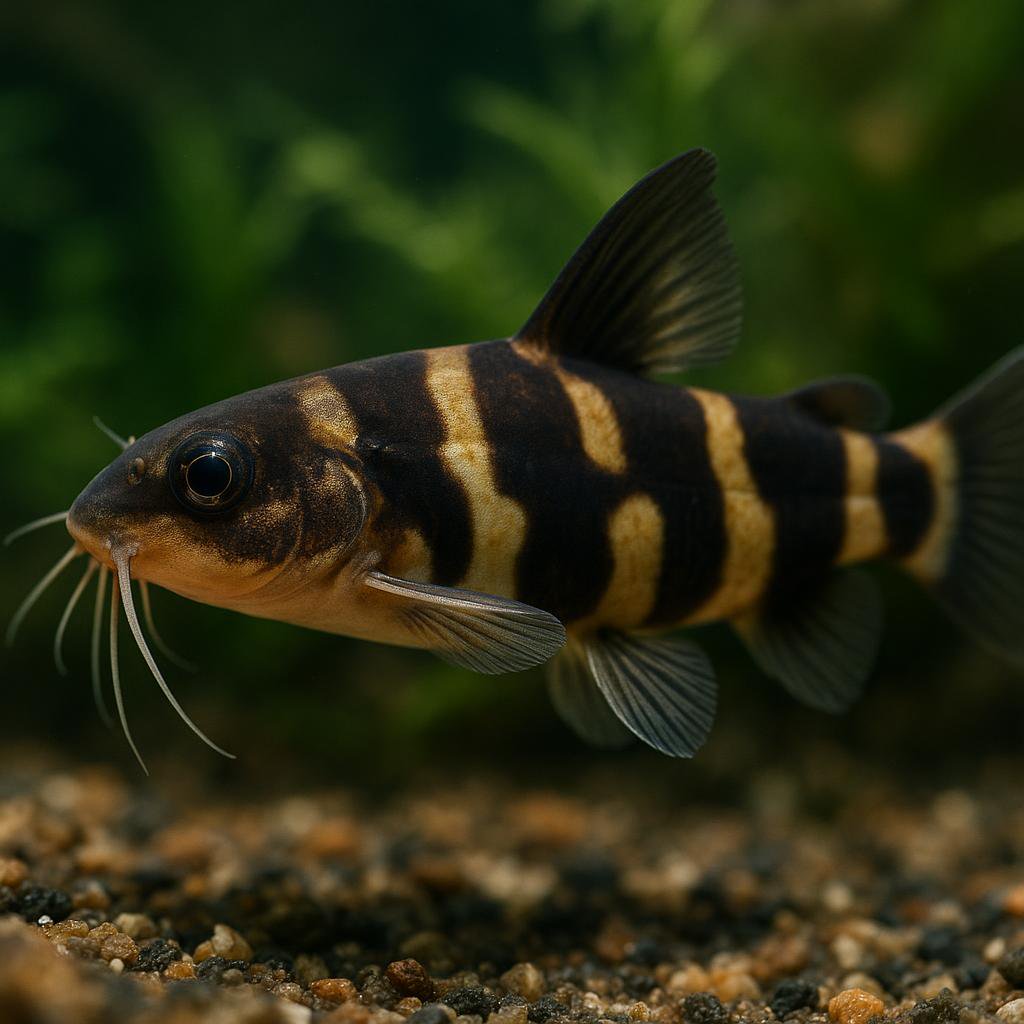
Figaro boardmani is a small, deepwater Australian catshark with these cool saw-like ridges of spiny denticles along the tail and a neat pattern of dark saddle bands. It lives way down on the outer continental shelf and slope, so its natural water is cold, dim, and stable - totally not a typical home-aquarium fish. Diet-wise its a predator that goes after fish, crustaceans, and cephalopods.
More to Explore
Discover more marine species.

Abe's eelpout
Japonolycodes abei
Japonolycodes abei is a temperate, deepwater demersal eelpout (family Zoarcidae) endemic to Japan (Kumano-nada Sea reported; other sources also report Sagami Bay and Tosa Bay). It is the only species in the genus Japonolycodes and occurs roughly 40-300 m depth, making it an uncommon/atypical aquarium species.

Affinis blind cusk-eel
Barathronus affinis
Barathronus affinis is a tiny, super-weird deep-sea blind cusk-eel from the western-central Indian Ocean. It is one of those gelatinous, loose-skinned brotula-type fishes that live way down in the dark and are basically never seen alive, so almost everything we know comes from preserved specimens and taxonomic work.

African red snapper
Lutjanus agennes
This is a true snapper from West Africa - a big, fast-growing predator that goes from coastal reefs to brackish lagoons and estuaries (especially as a juvenile). Super cool fish in the wild, but it gets absolutely huge and will eat smaller tankmates once it has the mouth for it, so its really more of a public-aquarium scale animal than a home-aquarium fish.

Allis shad
Alosa alosa
Gorgeous silver, fast-swimming shad that spends most of its life in the sea and then surges up big rivers in noisy, surface-spawning schools. It grows huge for a herring-type fish and needs cool, ultra-oxygenated water and tons of open space, so it is a public-aquarium species rather than a home tank fish.

Annandale's zebra sole
Zebrias annandalei
Zebrias annandalei is a small demersal sole from coastal India that inhabits sandy or muddy bottoms and buries for camouflage. It is rarely kept in home aquaria and would require a specialized marine sand-bottom setup and appropriate feeding.
Banded stargazer
Kathetostoma binigrasella
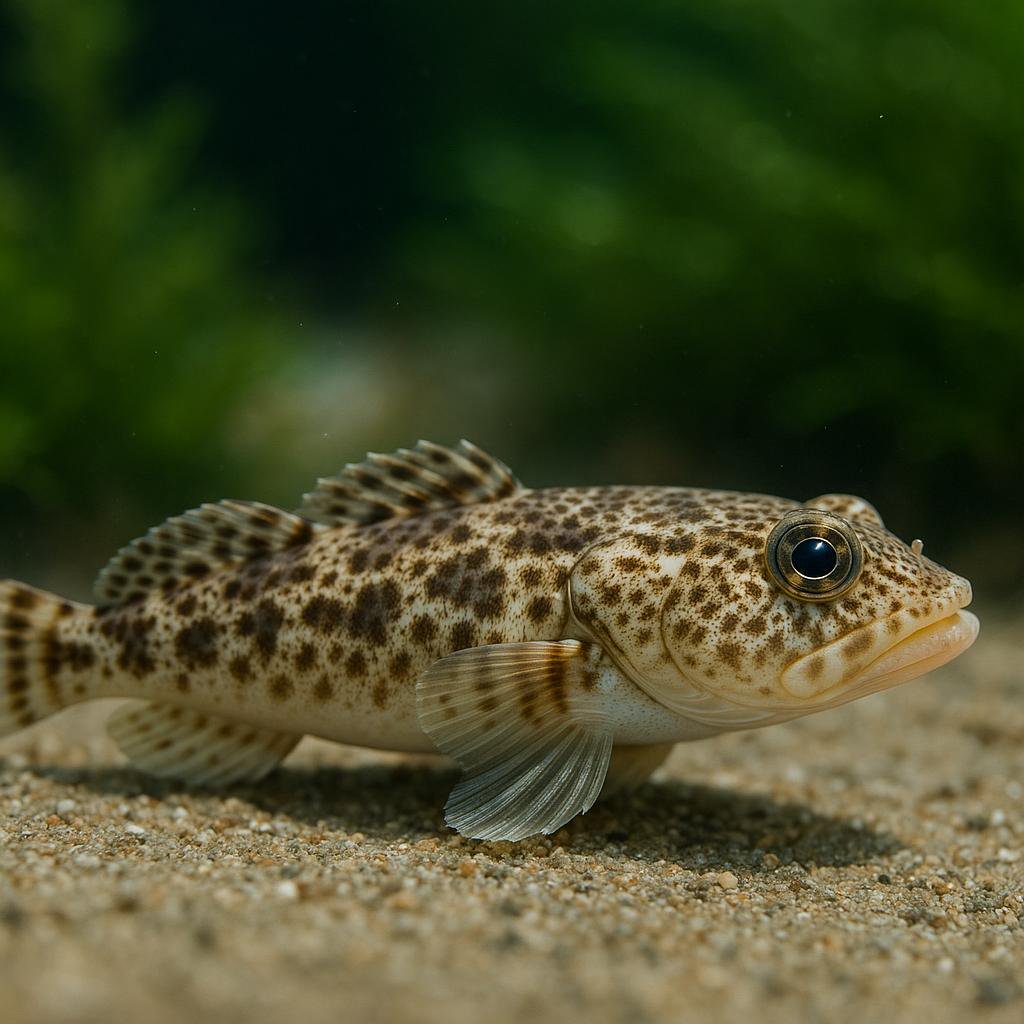
This is a New Zealand stargazer that lives half-buried in sand or mud with its eyes pointed up, waiting to rocket upward and nail passing prey. It has those neat dark saddle-bands across the back (especially as a juvenile), and like other stargazers it is venomous with spines near the gill cover/pectoral area - definitely a look-dont-touch fish.
Looking for other species?