

Japanese meagre
Argyrosomus japonicus
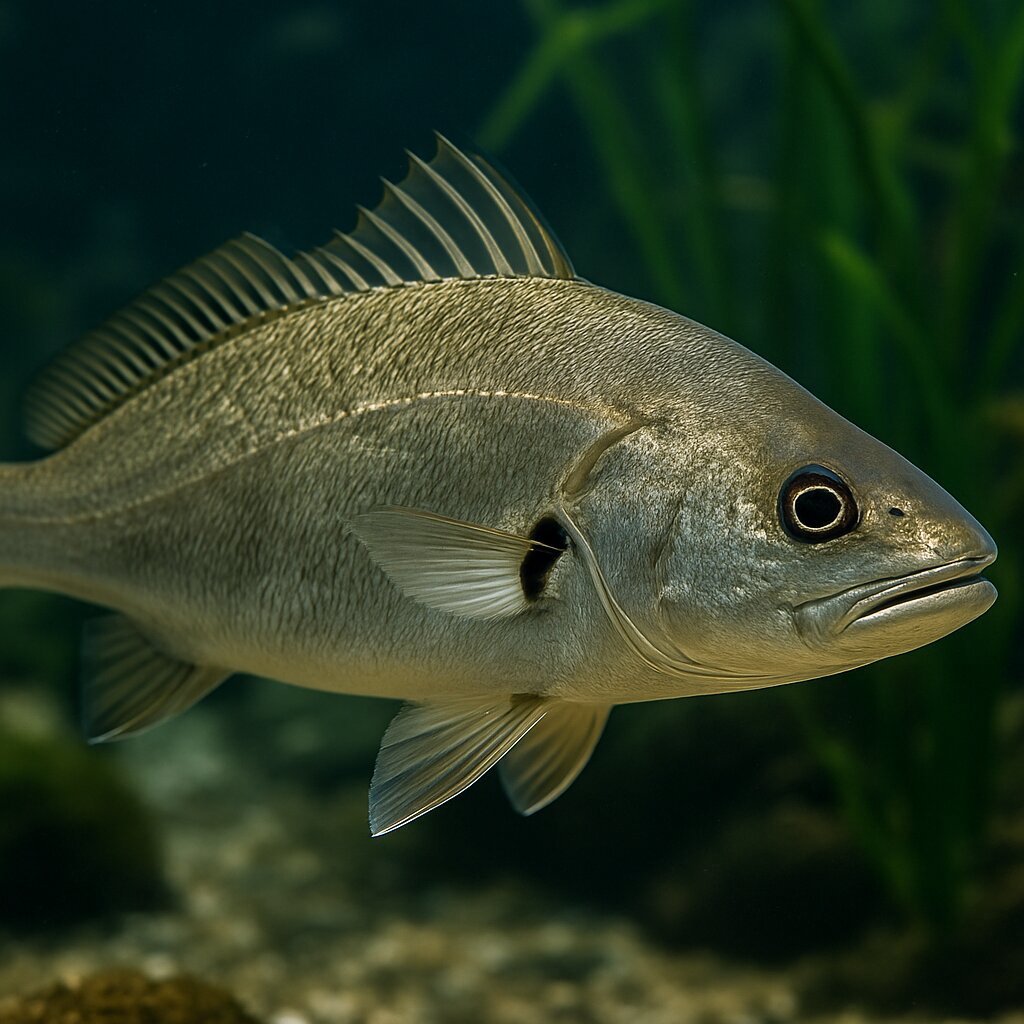
Japanese meagre has a streamlined body, silvery-gray coloration, and distinctive elongated dorsal fin with a prominent caudal fin.
This page includes AI-generated images. Why am I seeing AI images?
About the Japanese meagre
Big silver croaker from the Indo-Pacific, the Japanese meagre grows huge and makes those classic drum-like calls during courtship. Juveniles hang in estuaries, adults roam just beyond the surf and nearshore reefs. Super cool fish to admire in the wild, but way too big for home tanks.
Also known as
Quick Facts
Size
181 cm
Temperament
Semi-aggressive
Difficulty
Expert
Min Tank Size
3000 gallons
Lifespan
20-40 years
Origin
Indo-West Pacific
Diet
Carnivore - fish, prawns/shrimp, crabs, squid; juveniles take mysids
Water Parameters
16.7-27.8°C
7.8-8.4
10-18 dGH
Need a heater for this species?
This species needs 16.7-27.8°C in a 3000 gallon tank. Use our heater calculator to find the right wattage.
Calculate heater sizeCare Notes
- Plan for an indoor marine pond, not a tank: 2500+ gallons with 10+ feet of straight swim space, rounded corners, and a tight lid. Run an oversized skimmer (rated 2-3x system volume) and serious mechanical/bio filtration.
- They are oxygen hogs; aim for 5-8x hourly circulation with strong surface agitation and keep DO above 7 mg/L, especially after big feeds or on warm days.
- Run temp 16-22 C (tolerates 14-24), salinity 1.022-1.026, pH 8.0-8.3, and nitrate under 20 ppm to dodge HLLE, with ammonia and nitrite at zero. Juveniles handle brackish, but do not swing salinity fast.
- Feed chopped marine fish, squid, and shrimp or 10-14 mm high-protein marine pellets; juveniles 2-3x daily, adults daily or every other day. Rotate foods and add a vitamin soak to avoid thiaminase issues, and skip feeder goldfish.
- Anything bite-sized is food, so only pair with similarly huge, calm predators. Skip spiny or venomous species (lionfish, porcupinefish) and chronic fin-nippers.
- They spook hard at sudden light or movement; keep lighting on the dimmer side and approach slow or they will crash into walls. They can drum at night via the swim bladder, so do not be surprised by the rumble.
- Use a soft rubber sling or tub for moves, not a net, and avoid scraping their slime coat. Quarantine new arrivals for flukes and treat with praziquantel; if you use copper, go slow and keep O2 high.
- Breeding at home is a no-go; commercial setups use hormone cues and giant flow-through tanks. You might hear courtship drumming in warm months, but you will not get viable spawns in a hobby system.
Compatibility
Good Tankmates
- Other large, fast open-water cruisers that ignore tankmates and are too big to be swallowed - big jacks/trevallies or hefty temperate snappers
- Non-nippy bottom sharks in cool-water systems - smoothhounds or Port Jackson types that keep to the floor
- Large rays that stick to the bottom and do not harass swimmers
- Big, hardy mullet or similar temperate herbivores that are constantly moving and well beyond bite size
- Similar-sized croakers/drums raised together from juveniles so nobody sees the others as food
- Hefty, even-tempered pelagics like yellowtail kingfish when the tank is truly huge with strong flow and oxygen
Avoid
- Anything under about one third of its mouth size - small schooling fish become snacks
- Nippy bullies like triggers, big puffers, or aggressive damsels that target fins and gill covers
- Slow or delicate fish that cannot handle the pace or feeding frenzy - lionfish, scorpionfish, frogfish, seahorses
- Hyper-territorial ambush predators of similar size like big groupers that will clash and monopolize food
Where they come from
Japanese meagre, also called mulloway, are big coastal drums from Japan down through China and into Australia, plus parts of southern Africa. You find them in surf zones and estuaries, cruising sandy channels and river mouths. At night they drum with their swim bladders, which you can actually hear in a quiet room if you keep them.
Setting up their tank
Size reality check: this species gets huge. Adults can pass 1 m. Think public aquarium scale. If you do not have a five-figure-liter system and a plan for eventual placement, pick a smaller drum species.
- Footprint and volume: for juveniles under 40 cm, 8,000-12,000 L is a workable start. Adults need far beyond that. Long, oval, or raceway-style tanks help them cruise without smashing into corners.
- Temperature: 18-23 C. They are temperate-subtropical. A reliable chiller is as important as a heater.
- Salinity: 32-35 ppt. Juveniles tolerate brackish, but stable full marine is easiest once settled.
- Flow: steady, laminar flow they can swim against. 4-6x turnover through filtration plus extra circulation works well.
- Substrate: fine sand or bare bottom. They nose around but do not need deep beds.
- Aquascape: keep it open. Low rock ledges or a single bommie is plenty. Avoid maze-like scapes that trap a fast fish.
- Lids: tight, with netting or acrylic. They jump and they spook.
Filtration needs to be heavy-duty. Big mechanical prefilters to catch the mess, a skimmer rated way above system volume, and either a large fluidized bed or oversized biomedia. Plan on vigorous gas exchange and backup aeration. These fish suck down oxygen, especially after feeding.
- Equipment checklist:
- - Commercial-grade skimmer
- - Canister or drum filter for mechanical stage
- - Large biofilter or moving bed
- - Chiller with redundancy or alarm
- - Two air pumps on separate circuits or an oxygen cone
- - Big UV unit to keep water polished and reduce parasite load
- - Black background and minimal side reflections
Cut reflections during the first week. Black out the side panels or hang fabric so they do not see a mirror image and bolt into the glass.
Juveniles often pass through brackish creeks. If yours came from low salinity, step them up over a few days, not in one jump.
What to feed them
They are greedy carnivores. New arrivals usually take live shrimp or small fish first, then you can wean them onto dead foods and finally pellets. Consistency is everything.
- Good staples:
- - High-quality marine carnivore pellets sized for big fish
- - Chopped squid, cut fish fillet, and whole silversides
- - Prawns and mussels in rotation
- - Gel diets for predators if you can get them to accept it
Feed smaller portions 2-3 times per day while they are growing, then taper to once daily for big fish. Soak frozen items in a vitamin mix a few times a week. Do not rely on oily baitfish alone or you will end up with fatty liver and messy water. I skip feeder goldfish entirely. If you use raw shrimp or smelt regularly, balance it with pellet and squid to avoid thiaminase issues.
Target feed with tongs. They learn fast and will come to the front. Tongs keep your hands safe and help you count portions so you do not dump in too much.
How they behave and who they get along with
Juveniles like company and settle better in a small group if the tank is truly big. They are skittish in bright light, calm in dim light, and they drum at dusk. They are not bullies, but they are predators. Anything bite-sized is a snack. Adults get more independent and will ignore similarly large tankmates.
- Tankmate ideas for temperate or cool-marine setups:
- - Other large, even-tempered drums or croakers
- - Large, non-nippy jacks or trevallies that match the temperature
- - Rays from temperate water in truly huge systems
- Avoid: triggers, large wrasses that harass, and anything small or delicate.
Crabs, shrimp, and small fish will be eaten. Snails often survive but do not count on it.
Breeding tips
This is an aquaculture species, so it can be bred, but it takes giant tanks or ponds and careful control of light and temperature. Spawning adults drum, release pelagic eggs, and the larvae need live foods. It is not a home project.
- How farms do it, in broad strokes:
- - Condition a broodstock group on rich seafood and pellets
- - Ramp photoperiod and temperature to around 20-22 C
- - Induce or cue spawning in a very large, round tank
- - Collect floating eggs and hatch separately
- - Feed rotifers, then Artemia, then wean to microdiets
- - Maintain impeccable water quality throughout
If you are genuinely exploring this, talk to a hatchery. The space, live-food cultures, and staffing needs are beyond hobby scale.
Common problems to watch for
- Outgrowing the tank: plan an exit route. They do not stop getting bigger.
- Glass strikes and nose rub: reduce reflections, use rounded corners if you can, and keep lighting gentle.
- Low oxygen after big feeds: add aeration and surface agitation. Nighttime is the risky window.
- Parasites like Neobenedenia and Cryptocaryon: quarantine for 4-6 weeks. Praziquantel for flukes and a monitored copper treatment for marine ich are standard tools.
- Warm-water bacterial issues (Vibrio): keep temps in the target range, avoid big swings, and move quickly if you see red sores.
- Nutritional gaps: vary the diet and use vitamins. Too much oily fish leads to fatty liver and greasy skimmers.
- Ammonia spikes: heavy feeding will outpace filtration. Test often and clean mechanical filters before they clog.
- Jumping: tight lids and calm handling during maintenance.
Have an emergency oxygen plan. A battery air pump or a small oxygen cylinder with a diffuser has saved my fish during power cuts.
Similar Species
Other marine semi-aggressive species you might be interested in.
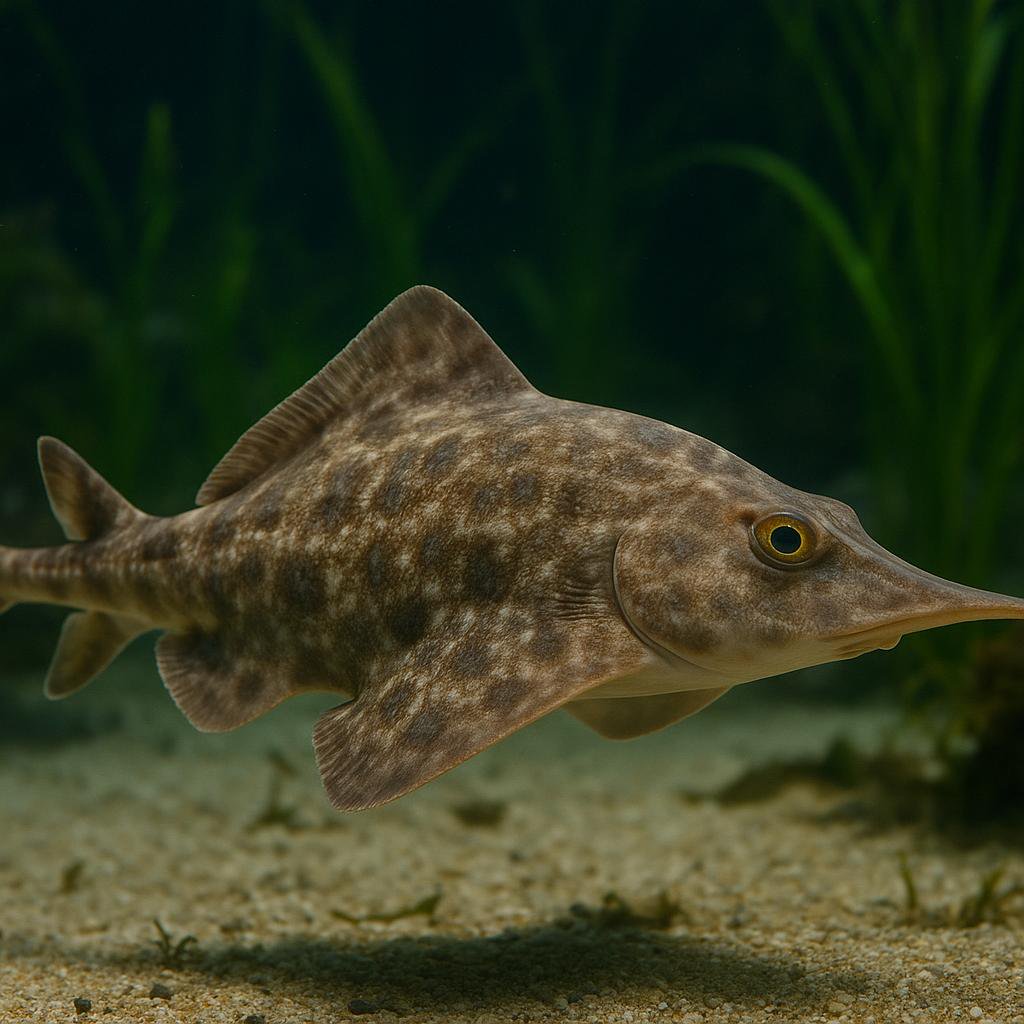
Aleutian skate
Bathyraja aleutica
This is a big, cold-water deep-slope skate from the North Pacific that cruises muddy bottoms and eats chunky benthic prey like crabs and shrimp. The really cool bit is its egg-laying skate life - it does distinct pairing (the classic skate "embrace") and drops those tough egg cases on the seafloor. Not an aquarium fish at all unless you're basically running a public-aquarium-style chilled system.
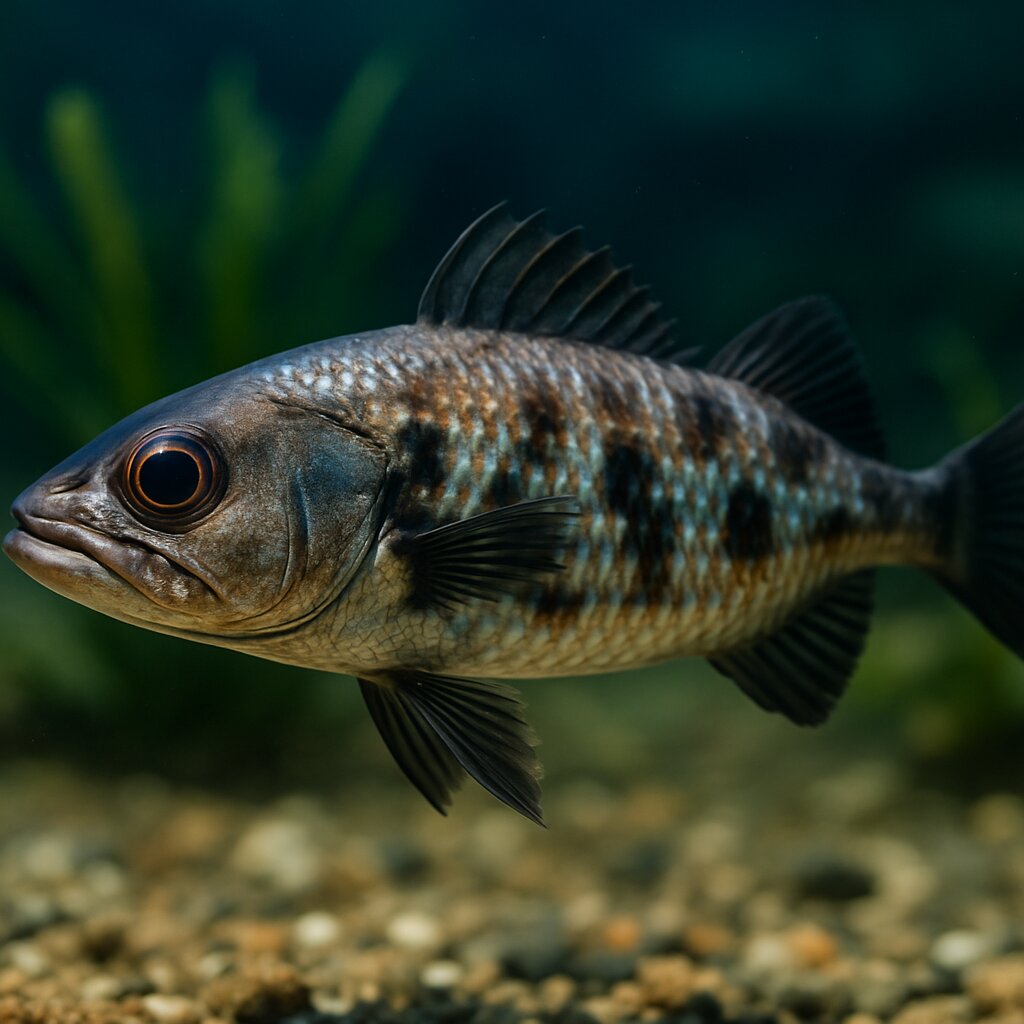
Antarctic dragonfish
Vomeridens infuscipinnis
Deep down around Antarctica, this sleek dragonfish cruises the water column like a little submarine, nearly neutrally buoyant so it can hover above the seafloor. It munches almost exclusively on Antarctic krill and lives in near-freezing water 500-800 m down, so it is a cool species to read about, not one for home tanks.
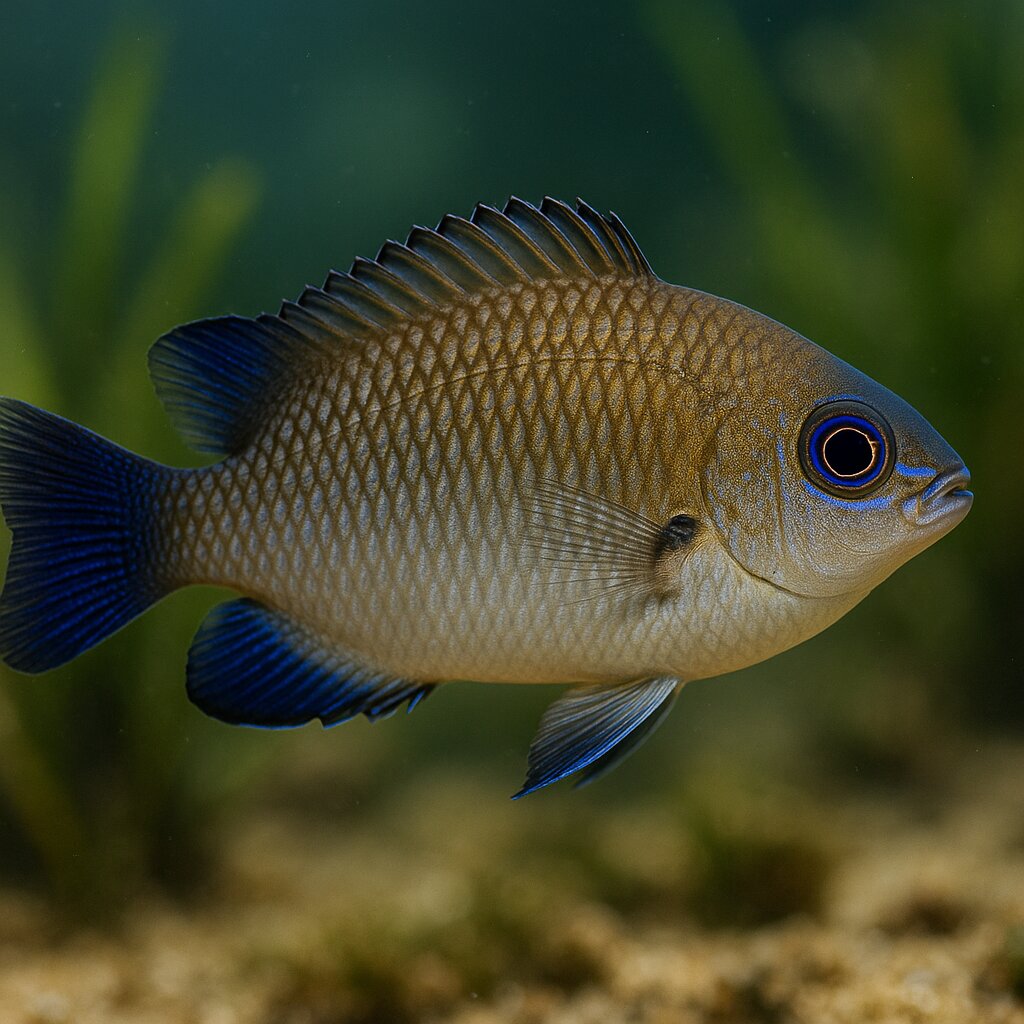
Arabian demoiselle
Neopomacentrus sindensis
A small lyretail damsel from the Persian Gulf and Arabian Sea, it hangs in loose groups around coral heads, rocks, and even pier pilings picking zooplankton from the flow. Think classic damsel toughness with a slightly milder attitude than the real bruisers, plus subtle yellow tail accents. Males clean a patch, get a mate to lay eggs there, and then stand guard fanning the clutch.
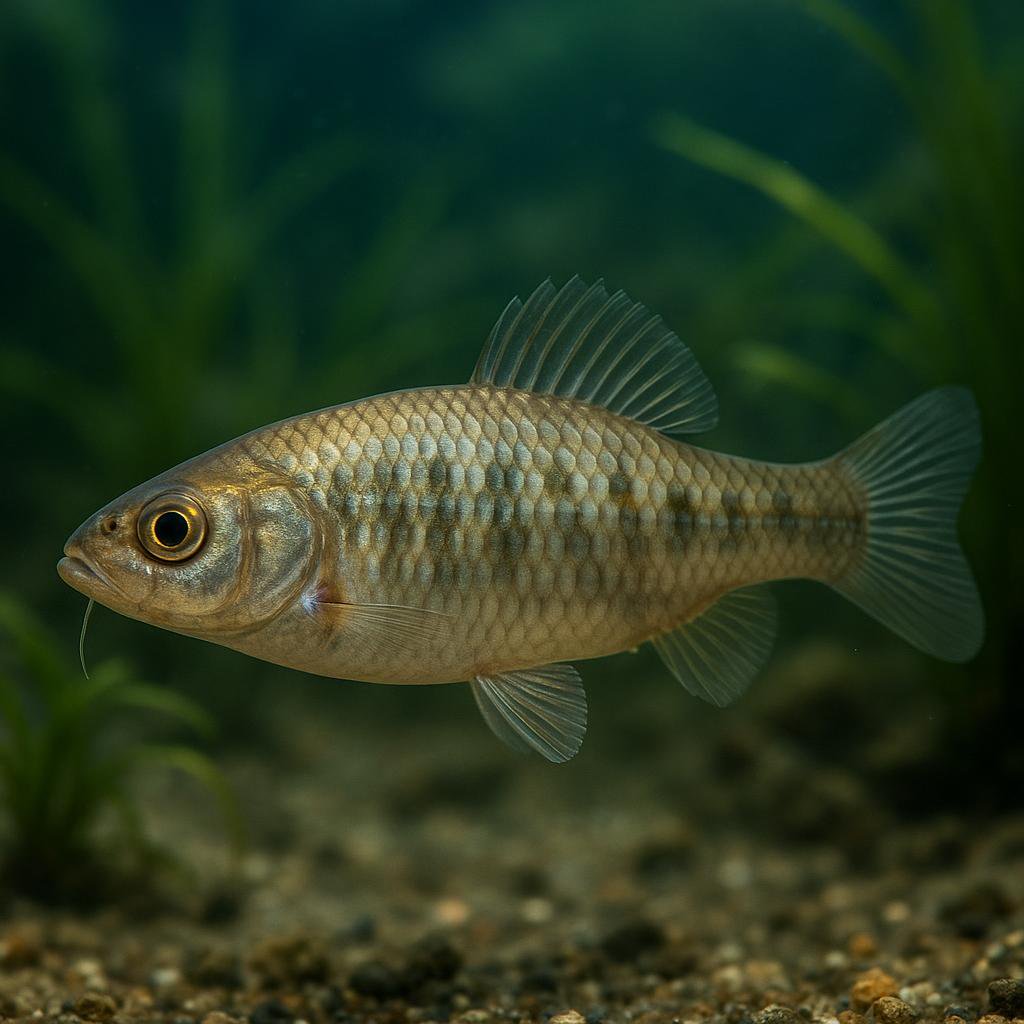
Arabian spiny eel
Notacanthus indicus
Notacanthus indicus is a deep-sea spiny eel (family Notacanthidae; not a true eel) known from the Arabian Sea on the continental slope at roughly ~960–1,046 m depth, with reported maximum length around 20 cm TL; it is a deep-water bycatch species and not established in the aquarium trade.
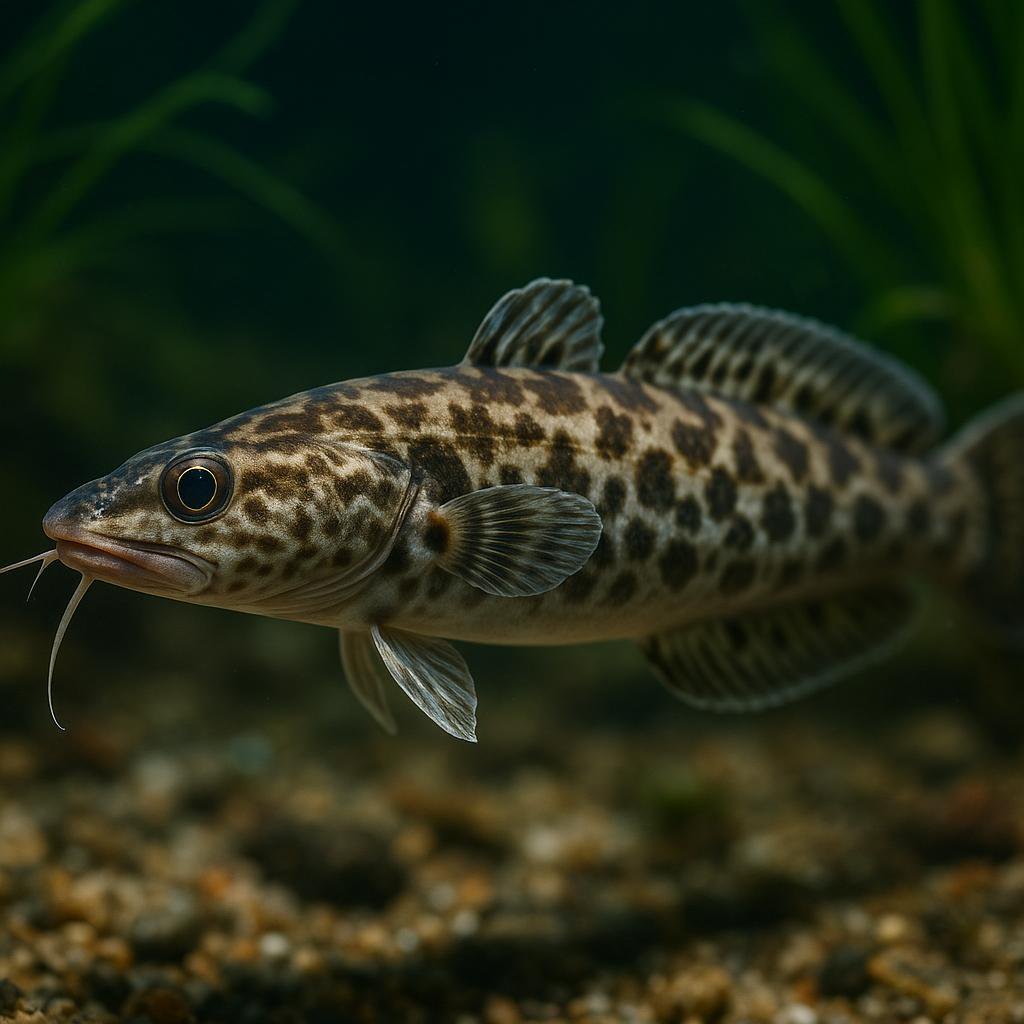
Arctic rockling
Gaidropsarus argentatus
This is a deepwater North Atlantic rockling (a cod relative) that hangs out on soft bottoms way down the slope. It is a cold-water, bottom-hugging predator that snoots around for crustaceans and will also take small fish when it gets the chance.
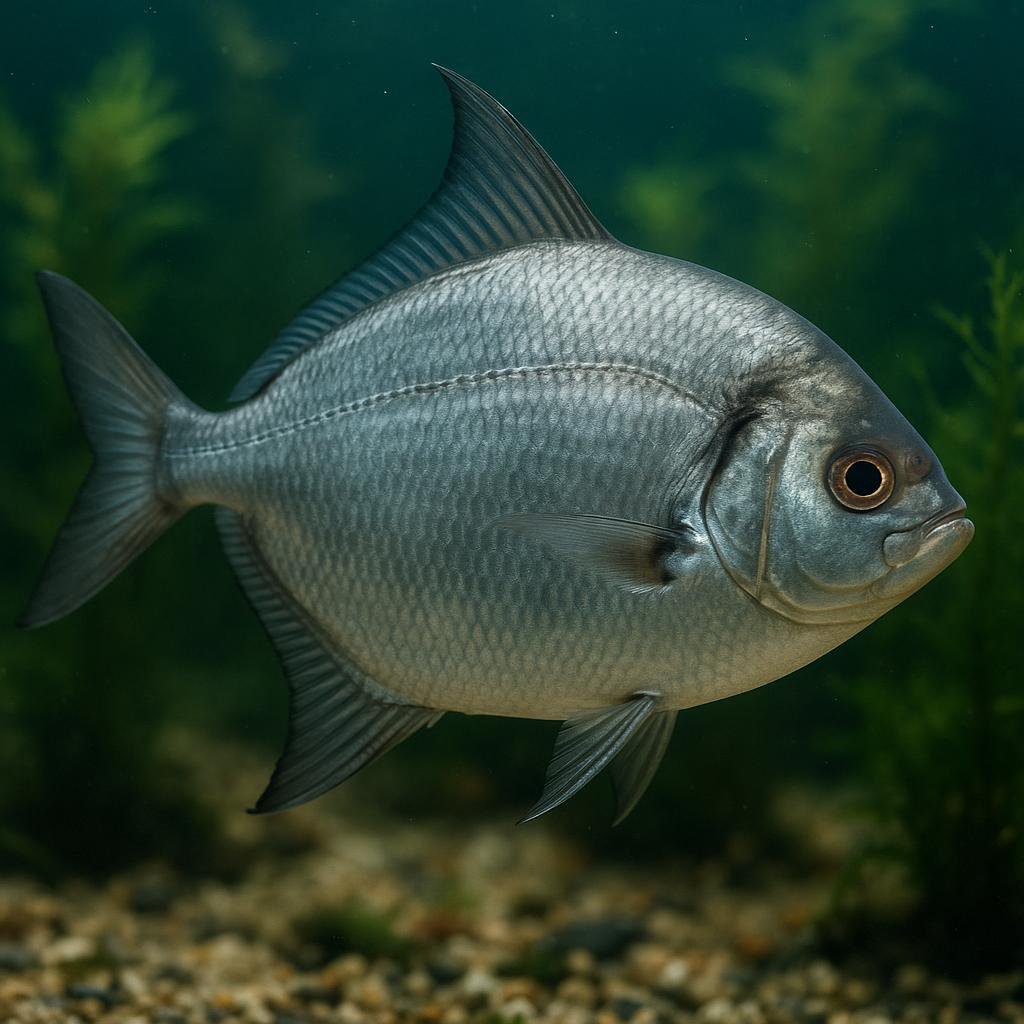
Atlantic pomfret
Brama brama
Brama brama is the Atlantic pomfret (aka Ray's bream) - a deep-bodied, open-ocean pelagic fish that cruises around in small schools and follows water temps. It is a legit big, wild marine species (not an aquarium fish) that eats other small sea critters like fish and squid, and it ranges across a huge chunk of the Atlantic plus parts of the Indian and South Pacific.
More to Explore
Discover more marine species.
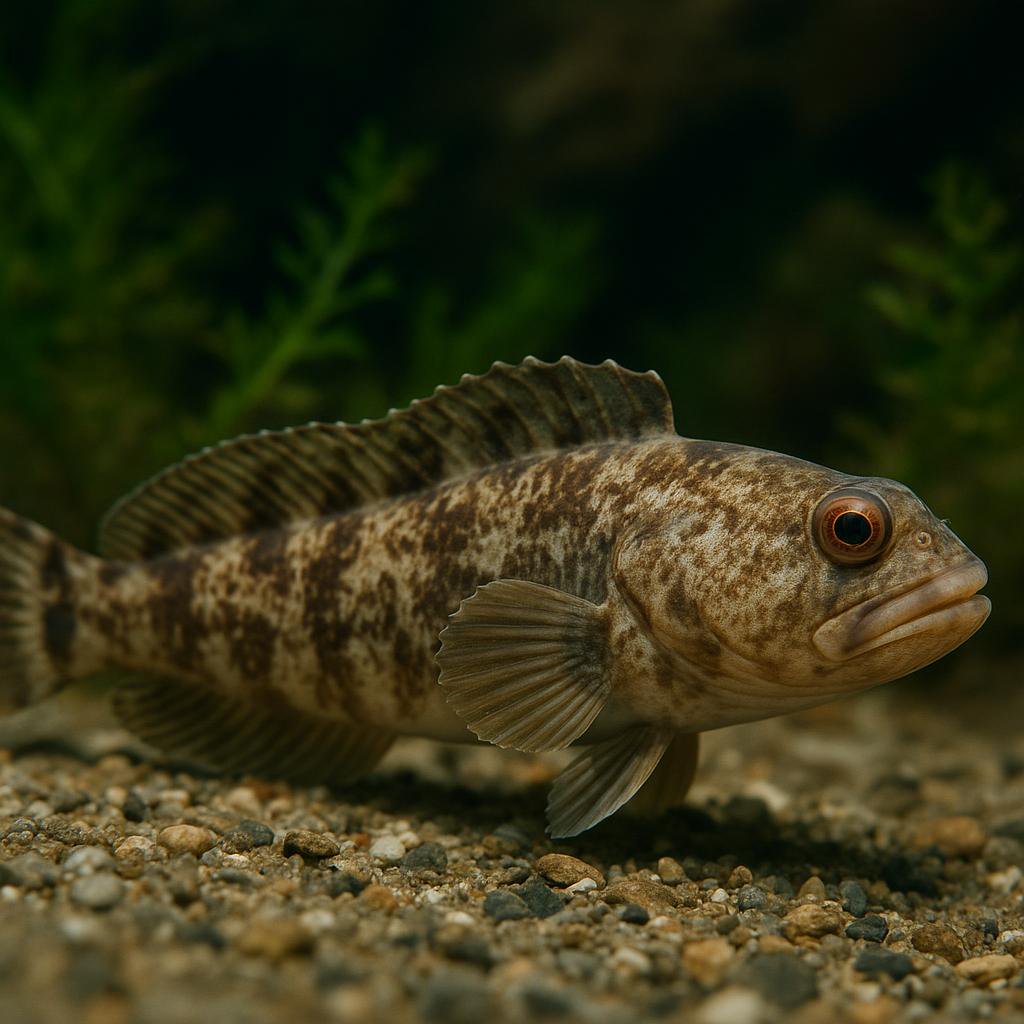
Abe's eelpout
Japonolycodes abei
Japonolycodes abei is a temperate, deepwater demersal eelpout (family Zoarcidae) endemic to Japan (Kumano-nada Sea reported; other sources also report Sagami Bay and Tosa Bay). It is the only species in the genus Japonolycodes and occurs roughly 40-300 m depth, making it an uncommon/atypical aquarium species.
Affinis blind cusk-eel
Barathronus affinis
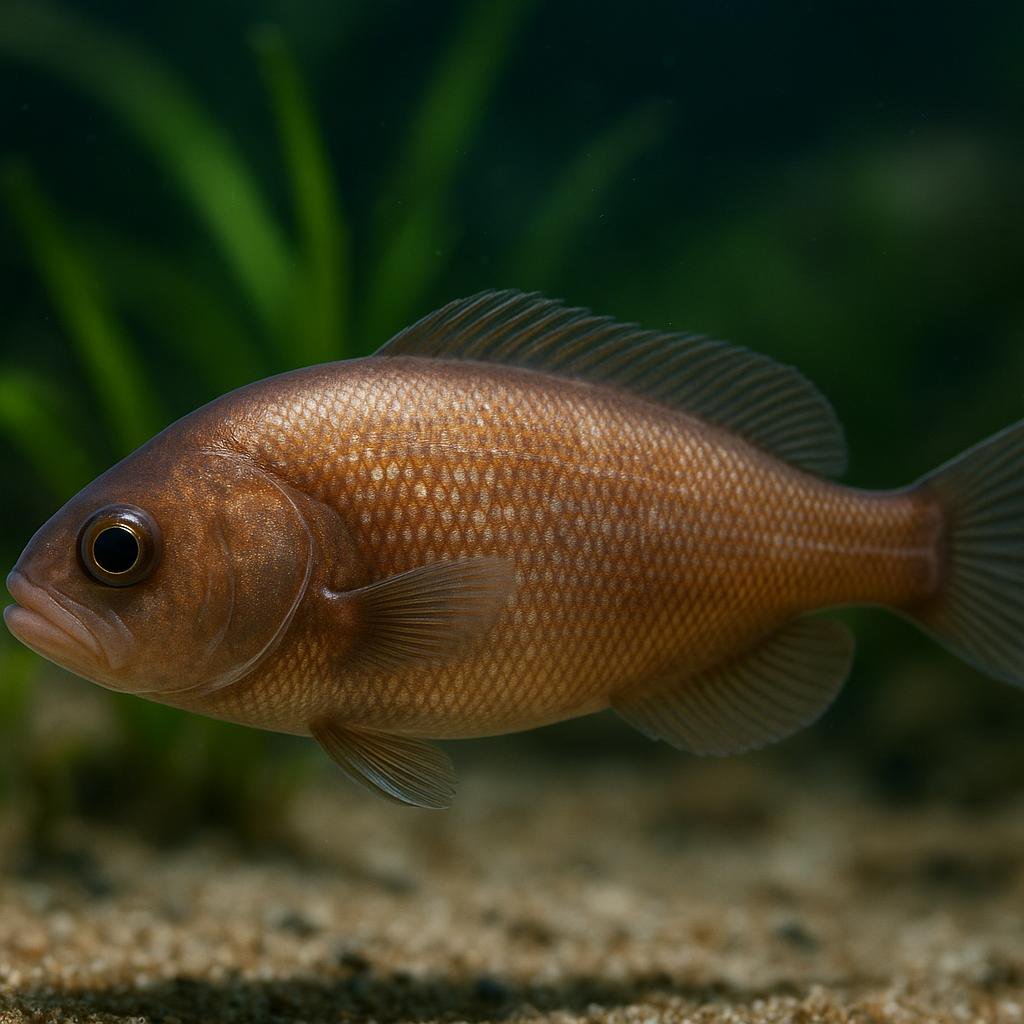
Barathronus affinis is a tiny, super-weird deep-sea blind cusk-eel from the western-central Indian Ocean. It is one of those gelatinous, loose-skinned brotula-type fishes that live way down in the dark and are basically never seen alive, so almost everything we know comes from preserved specimens and taxonomic work.
African red snapper
Lutjanus agennes
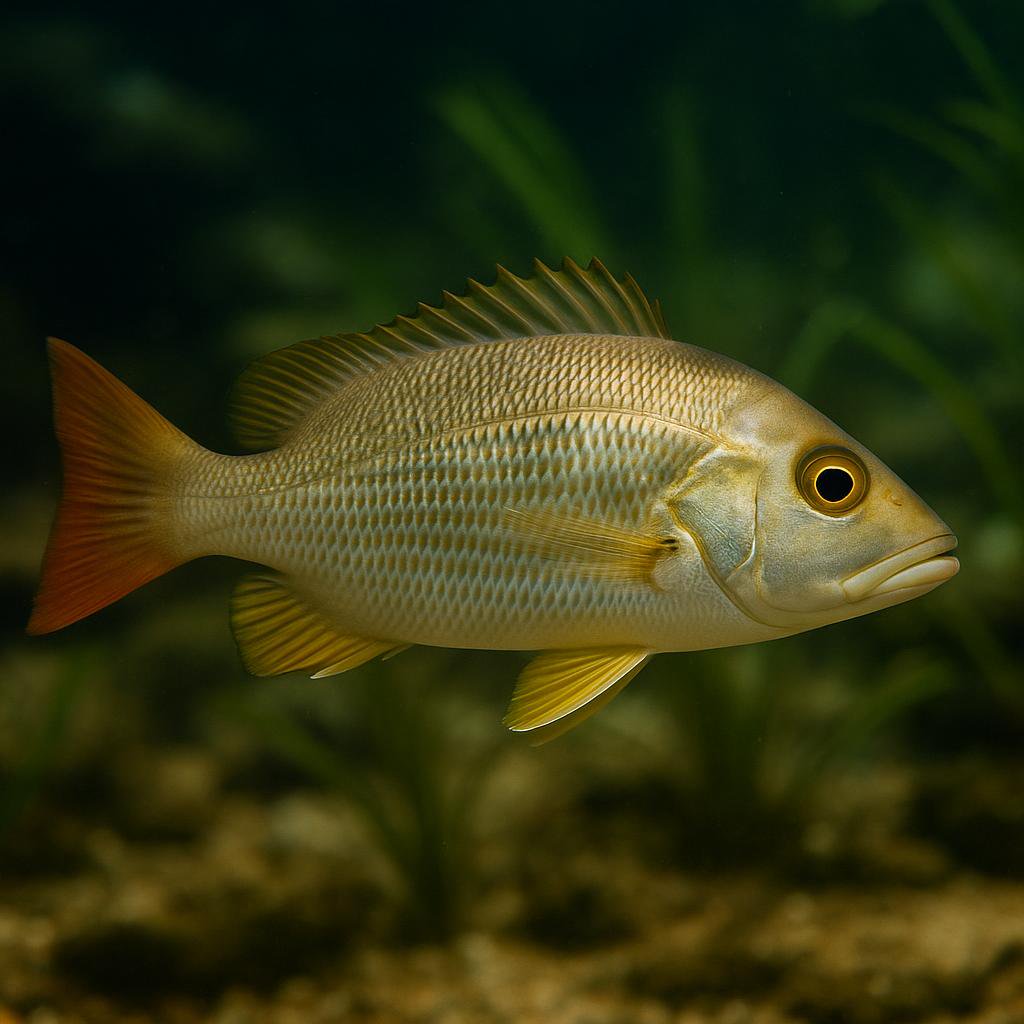
This is a true snapper from West Africa - a big, fast-growing predator that goes from coastal reefs to brackish lagoons and estuaries (especially as a juvenile). Super cool fish in the wild, but it gets absolutely huge and will eat smaller tankmates once it has the mouth for it, so its really more of a public-aquarium scale animal than a home-aquarium fish.
Allis shad
Alosa alosa
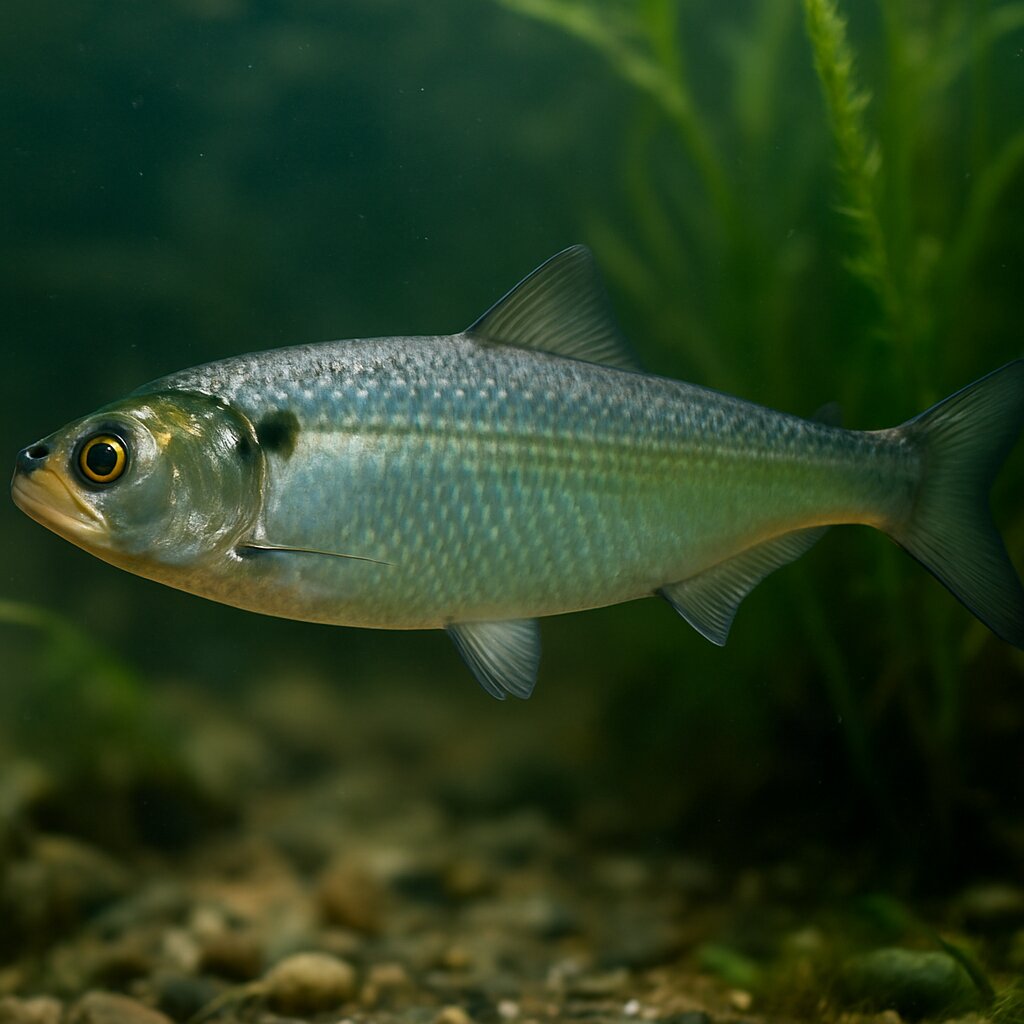
Gorgeous silver, fast-swimming shad that spends most of its life in the sea and then surges up big rivers in noisy, surface-spawning schools. It grows huge for a herring-type fish and needs cool, ultra-oxygenated water and tons of open space, so it is a public-aquarium species rather than a home tank fish.
Annandale's zebra sole
Zebrias annandalei
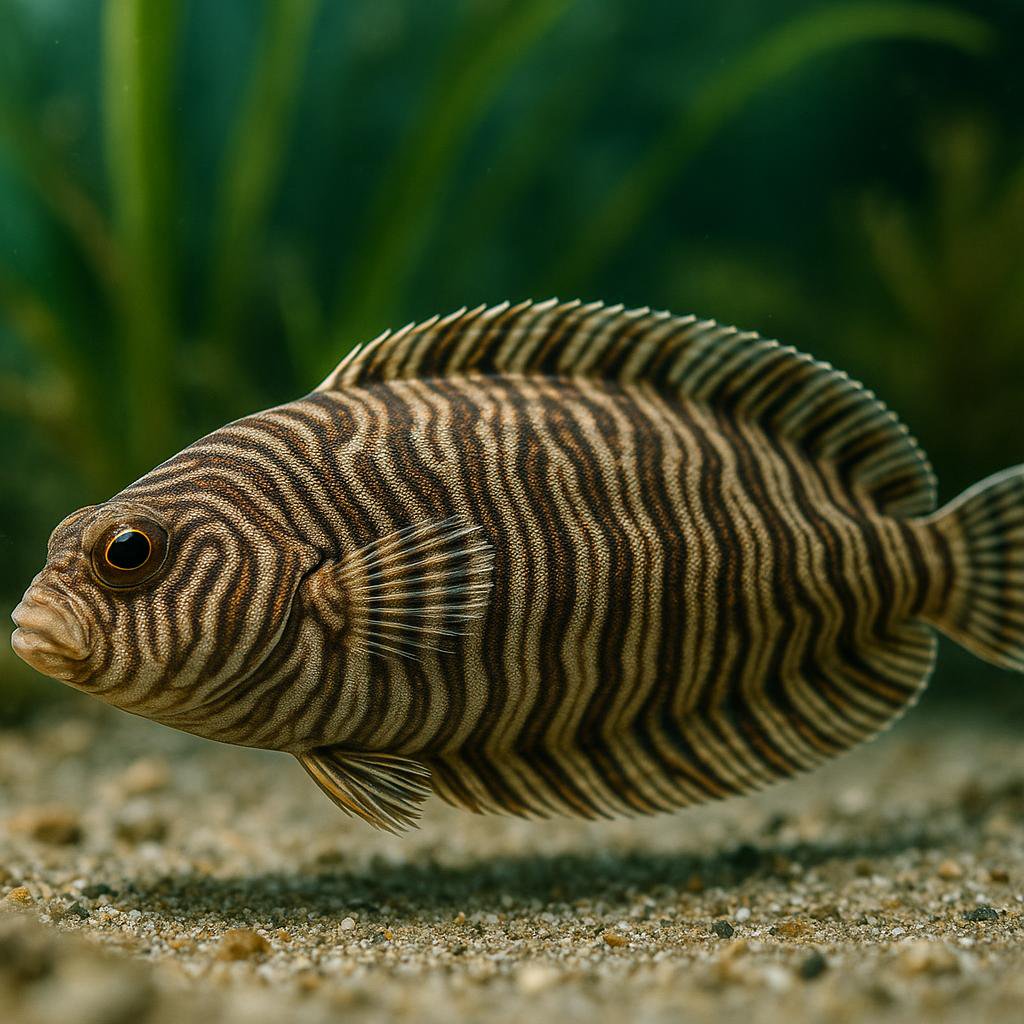
Zebrias annandalei is a small demersal sole from coastal India that inhabits sandy or muddy bottoms and buries for camouflage. It is rarely kept in home aquaria and would require a specialized marine sand-bottom setup and appropriate feeding.
Australian sawtail catshark
Figaro boardmani
Figaro boardmani is a small, deepwater Australian catshark with these cool saw-like ridges of spiny denticles along the tail and a neat pattern of dark saddle bands. It lives way down on the outer continental shelf and slope, so its natural water is cold, dim, and stable - totally not a typical home-aquarium fish. Diet-wise its a predator that goes after fish, crustaceans, and cephalopods.
Looking for other species?